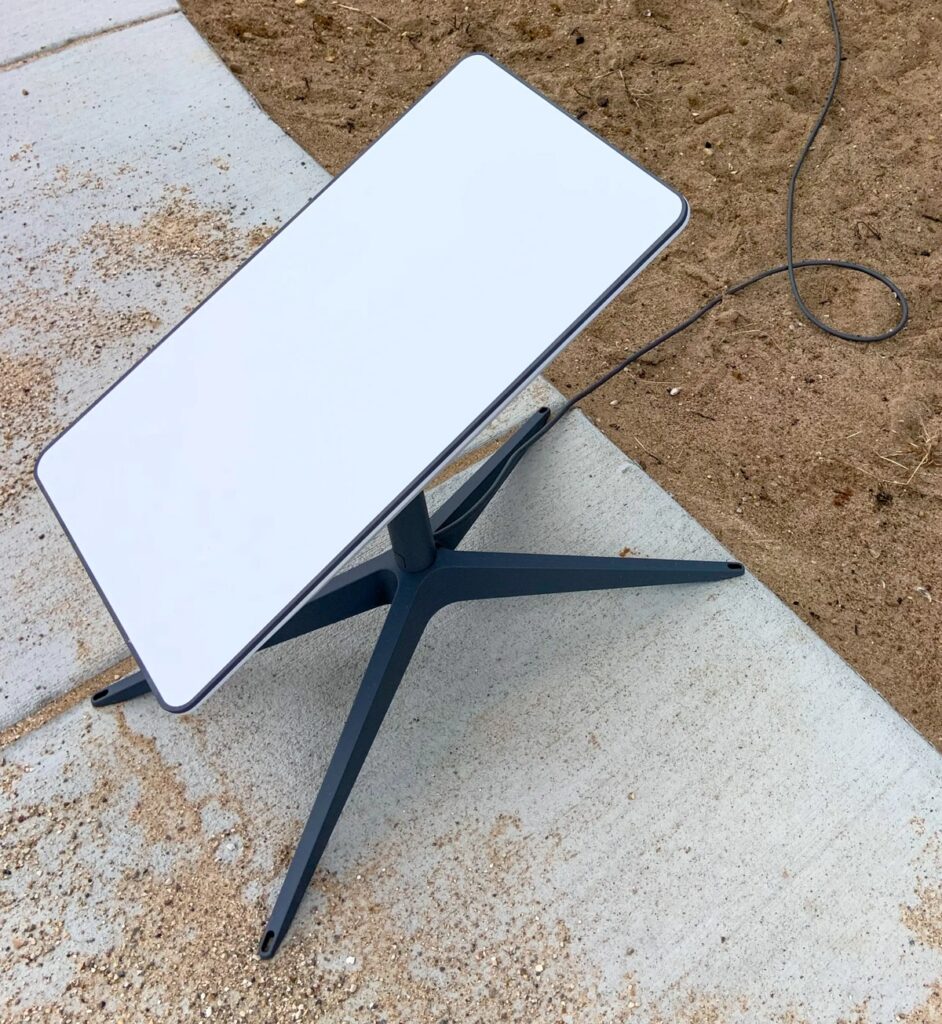
Wikideas1 / Wikimedia Commons / CC0 / archive, cropped
Starlink lists monthly prices of $104 to $156 for its Residential Max home-internet plan in its U.S. Broadband Facts disclosure, putting the same plan’s listed price range $52 apart depending on location.
For households comparing internet bills, the important number is the quote for their own address. The satellite-internet service, a division of SpaceX, tells customers to enter their service address to see the available plans, equipment cost and monthly service price. Its published range is not a single nationwide rate.
Three plans, three price ranges
The Broadband Facts labels on Starlink’s residential order page, checked Sunday, list Residential 100 Mbps at $44 to $66 a month and Residential 200 Mbps at $68 to $102, alongside the $104-to-$156 range for Residential Max. Those are monthly service prices; the labels separately list demand surcharges, shipping and handling, and taxes as costs that vary by location.
At the top and bottom of the Max range, 12 months of service would total $1,872 and $1,248, respectively, before any separate charges. That is a $624 difference over a year, calculated from the label’s monthly figures, not a claim that every subscriber’s bill is going up by that amount.
A Sunday check using a public Portland, Oregon, address showed why the range and an individual quote must be read separately. The order page displayed $66 a month for Residential 100 Mbps, while selecting Max displayed $130 a month. Neither quote establishes what a different address or an existing customer’s account will show.
Why the address matters
Starlink says its service-plan offerings vary with network capacity, regulatory approval and local demand. Available options are filtered by the service address, account and hardware, and a plan that does not appear is not currently available for that account.
The lower-priced tiers also differ from Max in what they offer. Starlink says the 100 Mbps and 200 Mbps plans have download-speed limits matching their names. Its Max label lists typical download speeds of 170 to 320 Mbps and unlimited residential data. The company cautions that advertised maximum speeds are not guaranteed and can be slower during congestion.
For someone deciding whether the service fits the household budget, the check is straightforward: use the exact service address, compare the monthly service charge with any equipment and one-time costs, and read the plan’s Broadband Facts label. Starlink’s cost guidance directs customers to preview that address-specific breakdown before ordering.
JBizNews Desk | New York
© JBizNews.com. All rights reserved. Unauthorized reproduction or redistribution is strictly prohibited.