
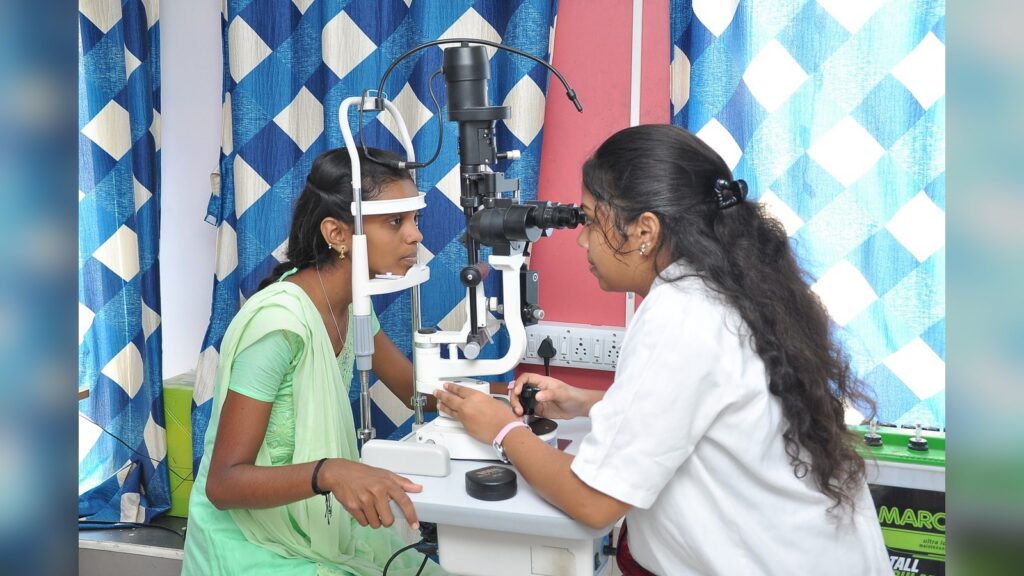
Jeeva Muthuramalingam / Wikimedia Commons / CC BY-SA 4.0
WASHINGTON – The Food and Drug Administration is requiring safety-label changes for all GLP-1 receptor agonist medicines to warn about a potential increased risk of a rare eye condition that can cause sudden vision loss, including permanent loss of sight. The November 9 action adds information to drug warnings; it does not ban the medicines or tell every patient to stop treatment.
The condition is non-arteritic anterior ischemic optic neuropathy, or NAION. In plain language, blood flow to the front of the optic nerve falls, damaging the connection that helps carry visual information from the eye. The FDA says the underlying cause is not completely understood. The warning concerns a potential increased risk, not a finding that every person taking these drugs will develop the condition.
The agency’s safety communication covers the whole drug class, including Ozempic, Wegovy, Mounjaro and Zepbound among the products on its list. These medicines are used for type 2 diabetes or long-term weight management; some also have other approved uses. The FDA is requiring manufacturers to add the NAION information to the Warnings and Precautions section of labeling.
For patients and families, the immediate message is about recognizing symptoms and getting help. The FDA says to contact a health care professional right away for sudden, painless vision loss in one eye, missing or blurred areas of vision, changes in how colors look, or reduced sharpness of vision. Some people may first notice a change when waking up.
The agency says people who have had a NAION event should discuss with their health care professional whether to continue or stop the medicine. It tells clinicians to refer suspected cases promptly to an ophthalmologist and to consider discontinuing the drug in patients who develop NAION unless the treatment’s benefits clearly outweigh the risk. Those are decisions for the patient and treating team, not a recommendation to stop a prescribed medicine simply because a new warning has appeared.
The trial evidence shows why both parts of the warning matter: the possible harm is serious, but the observed events were rare. The FDA pooled 126 randomized controlled trials involving 134,253 patients. It identified 15 probable NAION events: 10 among patients receiving GLP-1 medicines, five among those receiving placebo, and none among patients receiving other non-GLP-1 glucose-lowering medicines in those trials.
Because the treatment groups differed in size and follow-up time, the FDA also reported rates. There were 6.4 events per 100,000 person-years in the GLP-1 group, compared with 3.8 in the combined comparison group. A person-year is one person followed for one year, or an equivalent amount of follow-up spread across several people. These figures are not percentages of all users who will lose vision.
A separate FDA Sentinel study looked at adults with type 2 diabetes who started a GLP-1 medicine or another common diabetes treatment between 2019 and 2024. The result depended on the comparison. Against SGLT-2 inhibitors, the hazard ratio was 1.19, with a 95% confidence interval of 0.91 to 1.54, which was not a statistically significant increase. Against DPP-4 inhibitors, it was 1.43, with a confidence interval of 1.02 to 2.01, showing an increased risk in that comparison.
Those ratios describe relative differences over time in the studied groups, not a 19% or 43% chance that an individual patient will develop NAION. The studies also should not be collapsed into one simple risk number: the trial analysis and the real-world study involved different populations and comparisons.
The FDA says reports of NAION have occurred for all currently marketed products in the class. It reviewed clinical trials, animal data, observational studies and case reports before requiring the label changes. Animal data did not identify a mechanism explaining how the drugs might increase NAION risk. Case reports were difficult to interpret because risk factors for the eye condition overlap with illnesses common among patients taking these medicines.
That overlap is important. Diabetes, high blood pressure, sleep apnea, kidney disease, anemia and smoking are among the risk factors the FDA lists. Having NAION in one eye also increases the risk of an event in the other eye. A report that someone used a medicine and developed an eye problem does not, by itself, prove the medicine caused it.
What remains uncertain is the exact biological link, how much risk differs between individual medicines and which patients face the greatest added risk from treatment. The agency’s action makes the potential danger more explicit while leaving treatment decisions tied to each patient’s benefits, symptoms and medical history. It is a safety warning, not evidence that the drugs have lost all value or that every user faces the same risk.
JBizNews Desk | Washington
© JBizNews.com. All rights reserved. Unauthorized reproduction or redistribution is strictly prohibited.