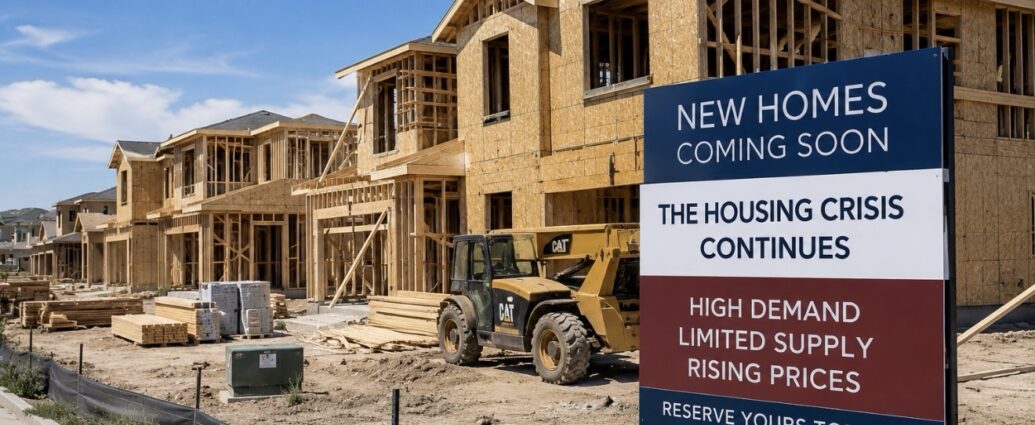
Here is what is happening, in plain terms. Your state has a housing agency. It borrows money from investors, then lends that money out to homebuyers at a lower interest rate than a bank would charge. Sometimes it helps with the down payment. Sometimes it lends to builders putting up apartments that rent below market.
That borrowing has doubled in a year. States raised about $19 billion this way over the past twelve months, roughly twice the year before.
The reason is simple. A regular 30-year mortgage now costs 6.69%, up from 6.63% a year ago. On a $300,000 loan, that is about $1,935 a month before taxes and insurance. Knock the rate down a single point and the payment drops roughly $200 a month — $2,400 a year, and about $72,000 over the life of the loan. For a lot of families, that one point is the difference between qualifying and being told no.
So more people are walking into these state programs, and states are borrowing more to fund them.
There is a second reason. Washington is spending less on housing. When federal money dries up, states either drop the program or borrow to keep it going. Most are borrowing.
Recent examples give a sense of the size. Illinois raised $200 million. New Mexico raised $120 million. South Dakota moved this month to authorize as much as $600 million for lower-rate mortgages in that state alone.
The people lending the money are, in large part, ordinary savers. Individuals hold close to half of all municipal bonds — the tax-free bonds that state and local governments issue. So the money helping a family in Illinois buy a first house is coming out of a retirement account in New Jersey. The lender gets tax-free interest; the buyer gets a cheaper mortgage.
The loans have been paid back reliably. Fewer than 1 borrower in 100 falls behind in these state pools. Most of the home loans carry a federal guarantee behind them, which is why the bonds get the highest credit ratings.
Investors have done well on them. This slice of the bond market returned 5.53% last year, against 4.41% for municipal bonds overall — better than a full point more.
Not everything in the category is equally safe. When a bond is backed by one apartment building instead of thousands of home loans, the risk sits on that single property, and investors demand about two extra percentage points of interest to take it. Rental buildings aimed at teachers, nurses and other middle-income workers are the softer spot right now, with costs rising and occupancy slipping.
Two things could push the numbers higher. A bipartisan bill sitting in the House Ways and Means Committee would loosen the tax rules so states can reach more buyers with these loans. And on November 3, California voters decide whether to let the state issue up to $25 billion in bonds for a program that would cover as much as 17% of the purchase price on a newly built home.
If you are a builder working on affordable units, the practical point is where the money now sits. It is at your state housing agency, not in Washington. Find out who issues in your state, when they issue, and what they require.
If you are a buyer, find out whether your state has a first-time buyer program and what rate it offers. Most people never check. It is a phone call.
And if you are an investor, the extra yield is real but it is payment for complexity, not a gift. The bond backed by thousands of federally guaranteed home loans and the bond backed by one apartment building are not the same thing, even when they sit on the same page.
JBizNews Desk | New York
© JBizNews.com All Rights Reserved. Reproduction or distribution without written permission is prohibited.