By JBizNews Desk | Monday, May 4, 2026

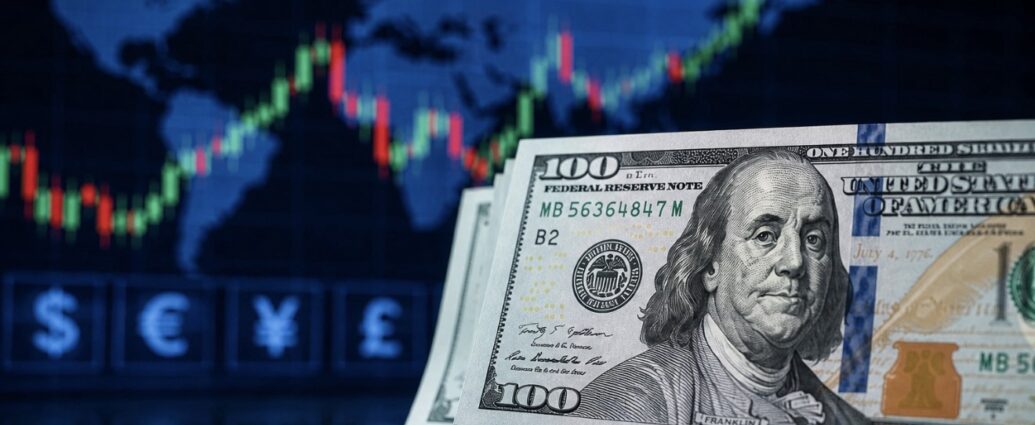
The U.S. dollar strengthened against major global currencies Monday as investors sought safety amid mounting uncertainty over global economic growth, reinforcing the greenback’s position as the world’s primary reserve currency during periods of market stress.

The dollar index rose steadily, supported by a combination of resilient U.S. economic data and weaker outlooks across key international economies. The move reflects a broader shift in investor positioning, with capital flowing away from risk-sensitive assets and toward dollar-denominated holdings.

Currency markets are being shaped by diverging economic trajectories. While the U.S. economy continues to show relative strength, growth in parts of Europe and Asia has slowed, prompting concerns about global demand and trade flows. These dynamics have widened interest rate differentials, further supporting the dollar.

Win Thin, Global Head of Currency Strategy at Brown Brothers Harriman, said “the dollar is benefiting from both relative economic strength in the U.S. and ongoing uncertainty abroad, making it the preferred safe-haven asset in the current environment.

A stronger dollar carries significant implications for global markets. For multinational corporations, it can weigh on earnings by reducing the value of overseas revenues when converted back into dollars. This currency headwind is particularly relevant for large U.S. firms with substantial international exposure.

Emerging markets face even greater challenges. Many developing economies carry significant levels of dollar-denominated debt, and a stronger dollar increases the cost of servicing that debt. This can strain public finances and limit economic growth, particularly in countries already facing fiscal pressures.

Commodity markets are also affected. Since most commodities are priced in dollars, a stronger currency can make them more expensive for buyers using other currencies, potentially dampening demand. This dynamic can influence prices for oil, metals, and agricultural products.

At the same time, the dollar’s strength is reinforcing global financial conditions. Tighter conditions can slow capital flows into riskier markets and increase volatility, particularly in emerging economies.

Kristalina Georgieva, Managing Director of the International Monetary Fund, has previously warned that “currency strength in advanced economies can create spillover effects that amplify vulnerabilities in emerging markets.

Despite these challenges, the dollar’s strength is underpinned by structural factors, including the depth of U.S. financial markets and the currency’s central role in global trade and finance. During periods of uncertainty, these attributes make the dollar a natural destination for capital.

Looking ahead, the trajectory of the dollar will depend on both domestic and global developments. If U.S. economic data remains strong and the Federal Reserve maintains a cautious stance on rate cuts, the dollar could continue to appreciate.

However, any signs of weakening in the U.S. economy or a shift in Fed policy could alter that trajectory, leading to increased volatility in currency markets.

What comes next: Investors will be watching global economic data and central bank signals closely, as shifts in growth expectations and policy divergence will continue to drive currency movements in the months ahead.

JBizNews Desk

By JBizNews Desk
May 11, 2026

Global financial markets opened the new week cautiously Monday as signs that U.S.-Iran peace negotiations had stalled pushed stock futures lower, lifted the dollar, and sent oil prices climbing again — a pattern that has become increasingly familiar to investors navigating nearly three months of geopolitical volatility tied to the war in the Persian Gulf.

The shift in sentiment followed a blunt statement from President Donald Trump, who announced Sunday that he had rejected Iran’s latest counterproposal aimed at ending the conflict and reopening the Strait of Hormuz.

“I have just read the response from Iran’s so-called ‘Representatives.’ I don’t like it — TOTALLY UNACCEPTABLE!” Trump wrote on Truth Social.

The post quickly erased much of the optimism that had fueled last week’s powerful market rally.

The S&P 500 and Nasdaq Composite had both posted their sixth consecutive weekly gains amid growing investor expectations that negotiations between Washington and Tehran were approaching a breakthrough.

By Sunday evening in Asia, however, markets were moving back into defensive positioning.

Futures tied to the Dow Jones Industrial Average fell roughly 143 points, or 0.3%, while futures linked to the S&P 500 and Nasdaq 100 also declined approximately 0.3%.

The U.S. dollar strengthened against a basket of major currencies as traders shifted toward traditional safe-haven assets, while both Brent crude and West Texas Intermediate oil prices moved higher on concerns that the disruption to Gulf energy flows may continue far longer than markets had recently hoped.

Iran’s latest proposal had reportedly been delivered through mediators in Pakistan and called for lifting U.S. Treasury sanctions on Iranian oil exports within 30 days alongside an end to Washington’s naval blockade of Iranian ports.

The Trump administration has consistently resisted those demands absent a broader nuclear and security agreement.

Secretary of State Marco Rubio reinforced the administration’s position Sunday, rejecting Tehran’s suggestion that Iran would reopen the Strait of Hormuz while maintaining effective operational control over the passage.

“That’s not opening the straits,” Rubio said. “Those are international waterways.”

Despite the broader diplomatic setback, markets did receive one modest operational sign that selective shipping movement through the region remains possible.

A QatarEnergy liquefied natural gas carrier, the Al Kharaitiyat, successfully crossed the Strait of Hormuz Sunday for the first time since the conflict began on February 28.

The vessel headed toward Pakistan’s Port Qasim after reportedly receiving transit approval from Iran as part of a limited confidence-building arrangement involving Qatar and Pakistan, both of which continue playing central mediation roles in the negotiations.

The transit offered a narrow but important signal that portions of Gulf shipping traffic may still be selectively allowed even while the broader waterway remains effectively closed to most commercial energy exports.

Elsewhere across the Gulf region, however, fresh security incidents underscored how fragile the situation remains.

The United Arab Emirates reported intercepting two drones launched from Iran, while Qatar condemned a drone strike targeting a cargo vessel operating in its territorial waters.

Kuwait additionally stated that its air-defense systems engaged hostile drones that briefly entered Kuwaiti airspace.

The incidents reinforced growing concerns among investors that tactical military escalations could rapidly destabilize already fragile diplomatic efforts.

For financial markets, the week ahead now carries heightened importance.

Investors are preparing for a series of critical economic reports expected to offer the clearest indication yet of how the Iran-driven oil shock is affecting the broader U.S. economy.

The Bureau of Labor Statistics is scheduled to release both the Consumer Price Index and Producer Price Index this week — key inflation readings arriving as the national average gasoline price remains above approximately $4.54 per gallon.

Wall Street increasingly fears that sustained energy inflation could begin feeding more aggressively into transportation, manufacturing, food, and consumer prices across the economy.

Analysts at Goldman Sachs recently raised their Brent crude forecast to $90 per barrel by late 2026, citing accelerating global inventory drawdowns estimated at roughly 11 million to 12 million barrels per day as the Hormuz disruption persists.

The bank warned that even a future diplomatic breakthrough may not immediately solve the underlying supply imbalance.

“Even if flows via Hormuz eventually resume, the lag in restoring supply, combined with depleted inventories, suggests sustained tightness,” said Billy Leung, investment strategist at Global X ETFs. “I’d argue the fat tail is still ahead of us, not behind.”

The ongoing energy shock is also placing the Federal Reserve in an increasingly difficult position.

The central bank held interest rates steady at its most recent meeting, but policymakers now face competing risks pulling in opposite directions.

Higher oil prices are pushing inflation expectations upward at the same time consumer confidence and discretionary spending continue weakening.

Additional rate hikes risk tipping the economy toward recession.

Rate cuts, meanwhile, risk allowing inflation expectations to become further entrenched after one-year consumer inflation expectations recently climbed to approximately 4.5%, according to the University of Michigan’s latest survey.

Corporate earnings this week will also receive heightened scrutiny.

Results from Cisco Systems and Under Armour are expected to offer additional insight into whether rising energy costs and geopolitical instability are beginning to pressure corporate supply chains, logistics expenses, and consumer demand.

But for global markets, the dominant variable remains the same one investors have watched for nearly ten weeks:

What happens next between Washington and Tehran — and whether diplomacy can reopen the narrow shipping corridor between Iran and Oman through which roughly one-fifth of the world’s oil supply once flowed freely.

JBizNews Desk
© JBizNews.com. All rights reserved. This article is original reporting by JBizNews Desk. Unauthorized reproduction or redistribution is strictly prohibited.
London — May 4, 2026 — The Bank of England is considering putting the digital pound project on ice, according to people familiar with the situation, as officials weigh a slower path forward while rival central banks race ahead with their own central bank digital currencies. Rather than a firm decision to approve or scrap the so-called Britcoin this summer, UK authorities are leaning toward a middle route that would slow progress on the CBDC, Bloomberg reported.

The shift marks a notable change in tone. Just three years ago, the Bank of England and HM Treasury said a digital pound was “likely to be needed.” Now the future of the project hangs in the balance as the current design phase runs through 2026, with a final decision on next steps still pending.

The economic stakes are significant. A full-speed digital pound was seen as a way for the UK to maintain competitiveness in digital payments and reduce reliance on private stablecoins and foreign payment systems. Delaying or slowing the project could leave British firms and consumers at a disadvantage as China’s e-CNY continues to expand and the European Central Bank advances its digital euro toward a potential 2029 launch. Analysts warn that hesitation could slow innovation in cross-border payments, limit the Bank of England’s ability to respond to future financial stability challenges, and reduce the UK’s influence in shaping global digital currency standards.

People familiar with the situation told Bloomberg that officials are now prioritizing a more cautious “wait-and-see” approach, evaluating whether a digital pound is truly necessary at this stage amid rapid private-sector developments in stablecoins and other digital payment innovations. The Bank of England has repeatedly stressed that no decision has been made on whether to introduce a digital pound, and any launch would require primary legislation passed by Parliament.

The ruling comes as global CBDC momentum accelerates elsewhere. China’s e-CNY has processed nearly $1 trillion in transactions and continues to evolve, while the European Central Bank is making steady progress on its digital euro with high-level political support across EU member states. The Bank of England’s more measured stance reflects growing concerns about privacy, financial stability risks, and the potential impact on commercial bank deposits — issues that have been central to the design phase work.

For the UK economy, the decision carries broad implications. A digital pound was intended to sit alongside cash and bank deposits as a new form of public money, potentially boosting efficiency in payments and supporting monetary policy in a digital era. Slowing the project could delay these benefits while increasing reliance on private-sector solutions that may not offer the same level of resilience or public trust. Economists note that the UK’s hesitation could also affect investment in related fintech infrastructure and the country’s attractiveness as a hub for digital finance innovation.

The Bank of England and HM Treasury are expected to complete their blueprint and assessment later this year, which will inform the next steps. In the meantime, the pause allows more time to study real-world use cases through the Digital Pound Lab and to monitor international developments.

The ruling underscores a broader global tension in CBDC development: balancing innovation and competitiveness against risks to financial stability, privacy, and the traditional banking system. As rivals push forward, the Bank of England’s cautious approach highlights the complex trade-offs facing central banks in the AI and digital payments era.

JbizNews- Desk – Central Banking

By JBizNews Desk | Monday May 4, 2026

GameStop has made an unsolicited $56 billion offer to acquire eBay, the online marketplace giant, in what would rank as one of the most stunning corporate takeover attempts in recent retail history — and a dramatic signal that CEO Ryan Cohen is done playing defense.

GameStop has built a roughly 5% stake in eBay and is offering $125 a share in cash and stock, Cohen told the Wall Street Journal in a direct interview Sunday. The offer represents a premium of about 20% to eBay‘s last closing price on Friday. “eBay should be worth — and will be worth — a lot more money,” Cohen said. “I’m thinking about turning eBay into something worth hundreds of billions of dollars.”

GameStop said in a news release that it submitted a non-binding proposal to buy 100% of eBay at $125 per share in cash and stock, split 50/50. The offer also represents a 46% premium to eBay’s closing price on February 4 — the day GameStop first began buying eBay stock. 

The Financing Behind the Bid

The sheer scale of the deal — eBay carries a market value of roughly $46 billion, nearly four times GameStop’s own $12 billion market cap — immediately raised questions about how Cohen plans to pay for it. He has lined up a multi-layered financing structure.

Cohen told the Wall Street Journal that GameStop has secured a commitment letter from TD Bank to provide about $20 billion in debt financing for the deal.  GameStop also holds about $9 billion in cash on its balance sheet.  To bridge the remaining gap, GameStop could seek support from external investors, including Middle Eastern sovereign wealth funds, according to people familiar with the matter. 

In its news release, GameStop said it expects to deliver $2 billion in annualized cost reductions within the first 12 months of closing the deal, including $1.2 billion in cuts from sales and marketing at eBay, $300 million from product development, and $500 million from general and administrative expenses. Cohen would become CEO of the combined company. 

Markets React

The news sent both stocks sharply higher. GME shares jumped more than 9% in after-hours trading, while eBay shares climbed between 10% and 15%, in a market reaction that recalled the 2021 short squeeze that briefly made GameStop a Wall Street obsession. 

The deal would combine GameStop’s collectibles expertise and growing cash war chest with eBay’s 130 million active buyers and global payments infrastructure — a combination Cohen argues could directly challenge Amazon’s dominance in the broader marketplace economy.

Cohen’s Expansion Play

The bid is the clearest expression yet of a strategic pivot Cohen has been building toward since early 2026. In January 2026, Cohen told the Wall Street Journal he was actively scouting deal targets in the consumer and retail sector as part of a plan to scale GameStop far beyond video games and collectibles.  His compensation package reinforces the ambition: it includes a performance-based stock option award valued at roughly $35 billion if fully earned, structured in nine tranches tied to escalating milestones, with the most demanding targets requiring GameStop to reach a $100 billion market cap. 

What Happens If eBay Says No

Cohen said he is prepared to run a proxy fight and take the offer directly to eBay shareholders if eBay’s board is not receptive. “There is nobody who is more qualified, based on my experience, to run the eBay business,” he told the WSJ. 

eBay had not responded to requests for comment as of Sunday evening. GameStop, eBay and TD Bank did not immediately respond to Reuters’ requests for comment.  Whether eBay’s board engages or resists, the proposal has already reshaped how Wall Street thinks about both companies — and about what Ryan Cohen is actually building.

— JBizNews Desk

© JBizNews.com. All rights reserved. This article is original reporting by JBizNews Desk. Unauthorized reproduction or redistribution is strictly prohibited.
JBizNews Desk | New York | Sunday, May 3, 2026

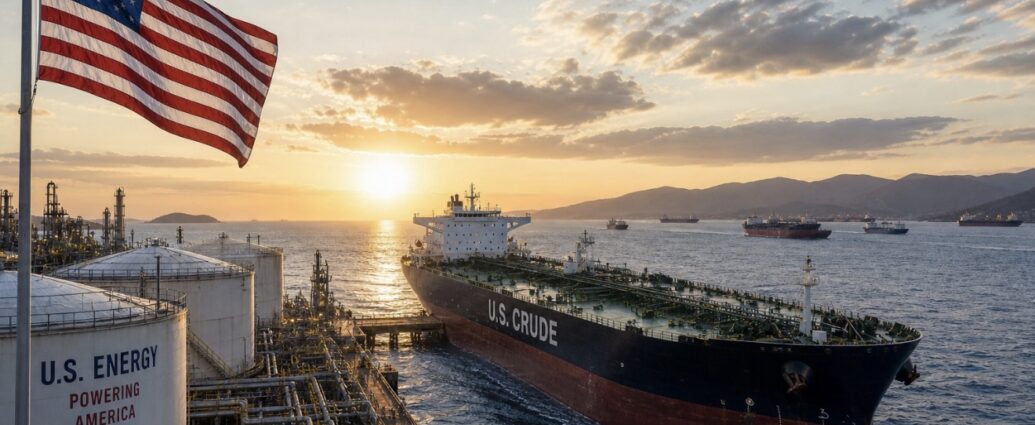
Tankers are loading up in Alaska and along the U.S. Gulf Coast and sailing to Japan, Thailand and Australia in unprecedented numbers. Nine weeks into the effective closure of the Strait of Hormuz, the United States has surpassed Saudi Arabia as the world’s top crude exporter and become the energy supplier global markets cannot function without — but energy executives and analysts warned this week that America’s supply cushion is running out faster than the world realizes.

Over the past nine weeks, more than 250 million barrels of crude from American oil wells and storage facilities have been shipped overseas, according to Bloomberg reporting published Sunday, May 3. That volume has made the U.S. once again the world’s number one crude exporter. But domestic oil and fuel stockpiles have drawn down for four consecutive weeks, falling below historical averages, raising serious questions about how long record exports can be sustained.

President Donald Trump told reporters Friday, May 2: “This has been amazing. The amount of oil and gas that we’re selling now is at a level that nobody’s ever seen.” He added: “We have more oil production right now than any time in history. And if you take a look at the ships, they’re all coming up to Texas, Louisiana, Alaska.”

Chevron chief executive Mike Wirth offered a starkly different assessment Friday, May 2, saying the global energy system is under “extreme stress.” The day before, Thursday, May 1, ConocoPhillips warned that “critical shortages” of oil are imminent. In anonymous survey comments published in late April by the Federal Reserve Bank of Dallas, energy executives said: “The unpredictable nature of the current administration makes business modeling near impossible.”

The Largest Supply Disruption in History

International Energy Agency Executive Director Fatih Birol has left no room for ambiguity about the scale of what has happened. Speaking on the podcast “In Good Company” hosted by Norges Bank Investment Management chief executive Nicolai Tangen on April 1, Birol said the energy crisis sparked by the war was “the worst in history” — worse even than the 1973 and 1979 oil shocks. “In both of them we lost each about 5 million barrels per day of oil. These oil crises led to global recession in many countries,” Birol said. “Today, we lost 12 million barrels per day — more than two of these oil crises put together.”

Crude and oil product flows through the Strait of Hormuz plunged from 20 million barrels per day before the war to just over 2 million barrels per day in March, according to the IEA’s April 14 monthly Oil Market Report. In early April, loadings through the Strait averaged just 3.8 million barrels per day, compared with more than 20 million barrels per day in February before the crisis, the IEA reported. Gulf producers including Iraq, Saudi Arabia, Kuwait, the UAE, Qatar and Bahrain collectively shut in an estimated 9.1 million barrels per day of crude production in April as onshore storage filled with oil that had nowhere to go.

Brent crude surged more than 60 percent over the course of March alone — the biggest monthly price gain since records began in the 1980s — before reaching a peak near $150 per barrel in physical markets, according to the IEA’s April Oil Market Report. JP Morgan warned that inventories are reaching minimum operational levels, with the actual shortage potentially doubling from 4 million barrels per day to as much as 8 million barrels per day as stockpiles and oil at sea are exhausted, according to analysis cited by Economics Help on May 2.

Birol told CNBC on April 1 that the IEA’s emergency reserve release of 400 million barrels — the agency’s largest ever, unanimously agreed by member countries on March 11 — was not a solution. “This is only helping to reduce the pain, it will not be a cure,” he said. “The cure is opening up the Strait of Hormuz.”

Rory Johnston, founder of Commodity Context, said April 21 that any reopening of the Strait would likely trigger an immediate drop of $10 to $20 in crude prices due to speculative positioning — but warned supply chain bottlenecks, infrastructure damage and production outages would keep the market tight, likely anchoring Brent in the $80 to $90 range even after a reopening. “This is still the largest oil supply shock in the history of the oil market,” Johnston said. “Without a sustained restoration of flows, prices may need to rise further to curb demand.”

Tony Sycamore, market analyst at IG, said in a note published April 30: “Prospects for any near-term resolution to the Iran conflict or a reopening of the Strait of Hormuz remain dim.”

Vitol chief executive Russell Hardy said April 21 that one billion barrels of oil production will be lost because of the war, with the current running total already between 600 and 700 million barrels. Naif Aldandeni, energy strategist, told Al Jazeera on March 15 that the IEA’s reserve release was “a small bandage on a large wound,” adding that the release would produce “only a temporary stabilising effect.”

What It Means at the Pump

For ordinary Americans, the consequences are direct. Retail gasoline prices have climbed to an average of $4.40 per gallon, according to Bloomberg. The U.S. Energy Information Administration reported March 30 that average retail gasoline stood at $3.99 per gallon and diesel at $5.40 per gallon — the highest levels in real terms in over two years. Gas prices have risen $1.16 per gallon since the start of the war, with prices expected to hit $5.00 per gallon if the Strait remains closed, according to the 2026 Iran War Fuel Crisis entry on Wikipedia. Jet fuel has spiked 95 percent since the war began, causing multiple airlines to raise baggage fees. Energy Secretary Chris Wright has repeatedly cited the $5-per-gallon threshold as the key political benchmark heading into November’s midterm elections.

U.S. domestic oil production has actually fallen roughly 100,000 barrels per day since the war began as drillers remain hesitant to invest amid deep uncertainty, according to Bloomberg. Exxon Mobil and Chevron are also managing disruptions to their Middle East operations, adding further constraints.

LNG and Fertilizer: The Hidden Crisis

The disruption extends well beyond crude oil. LNG supplies from Qatar and the UAE through the Strait of Hormuz have been cut by more than 300 million cubic metres per day since March 1, according to the IEA — reducing global LNG supply by roughly 20 percent. QatarEnergy declared force majeure on all export contracts after its Ras Laffan facility — the world’s largest LNG liquefaction plant — was struck on March 2 and went offline. The company warned repairs could take up to five years. Steven Wilson, a partner in the global energy practice at law firm Mayer Brown, said in late March that LNG suppliers were becoming more selective in negotiating long-term contracts because spot market pricing had become far more lucrative — squeezing buyers and driving prices higher.

Over 30 percent of global urea and significant volumes of ammonia and phosphate transit the Strait of Hormuz. Morningstar analyst Seth Goldstein projected that nitrogen fertilizer prices could roughly double from 2024 levels. The UN World Food Programme warned the disruptions are driving long-term increases in global food prices, threatening a scenario similar to the 2022 food crisis.

How Long Can Iran Hold Out?

Muyu Xu, senior crude oil analyst at Kpler, told Al Jazeera in late April that the U.S. naval blockade was already slowing Iranian oil loadings and exports, pressuring onshore inventories. “We expect any production reduction to be gradual over the coming week, with a higher likelihood of acceleration into May,” Xu said.

Kenneth Katzman, former Iran analyst at the Congressional Research Service in Washington, told Al Jazeera that Iran had between 160 million and 170 million barrels of oil “afloat” on tankers around the world — cargo that transited the Strait before the U.S. blockade began — potentially giving Tehran revenue flows through August. “Does President Trump have until August? Probably not,” Katzman said. “He’s probably going to have to look at kinetic escalation if he wants to bring this to the conclusion he wants, or he’s going to have to accept less than the deal he ideally wants.”

The question now facing energy markets, policymakers and businesses worldwide is whether diplomacy can reopen the Strait before the supply shock forces demand destruction on a scale not seen since the 1970s energy crisis — an outcome none of the parties to the conflict has yet fully prepared the world for.

JBizNews Desk
© JBizNews.com. All rights reserved. This article is original reporting by JBizNews Desk. Unauthorized reproduction or redistribution is strictly prohibited.
Global equity markets have staged a powerful rebound from early geopolitical shocks, climbing back to record highs even as the Iran conflict continues and energy markets remain volatile — a divergence that is drawing increasing concern from central bankers and market strategists.

The MSCI World Index, tracked by MSCI Inc., has fully erased losses tied to the outbreak of hostilities and pushed to new highs, reflecting a rapid shift in investor sentiment. On Wall Street, the S&P 500 and Nasdaq Composite, according to data from Bloomberg, recently reached fresh intraday records, supported by strong corporate earnings and easing fears of worst-case scenarios.

Much of the rally has been driven by a reversal in positioning. Billy Leung, investment strategist at Global X ETFs, said investors who had moved into defensive assets during the early stages of the conflict quickly reversed course as ceasefire expectations improved. “That repositioning has done most of the heavy lifting,” he said.

A similar view was expressed by Ray Farris, chief economist at Eastspring Investments, who noted that markets have largely discounted extreme outcomes. “Investors are taking out worst-case scenarios, particularly around oil prices, and refocusing on earnings,” he said in remarks reported by CNBC.

Corporate performance has reinforced the bullish outlook. Data from FactSet shows that a significant majority of S&P 500 companies reporting this earnings season have exceeded both profit and revenue expectations, providing a strong fundamental backdrop for equity valuations.

However, warnings are growing louder. Sarah Breeden, Deputy Governor at the Bank of England, told the BBC that markets may be underestimating risk. “There’s a lot of risk out there and yet asset prices are at all-time highs,” she said. “We expect there will be an adjustment at some point.”

Other strategists share that concern. Kristina Hooper of Man Group has expressed skepticism about the sustainability of the rally, while Craig Johnson of Piper Sandler warned that market technicals are becoming increasingly fragile following the rapid shift from oversold to overbought conditions.

Energy prices remain a key risk factor. Oil continues to trade at elevated levels amid uncertainty surrounding the Strait of Hormuz, and any renewed escalation could quickly reverse recent gains in equities.

The divergence between market performance and underlying macro risks is becoming more pronounced. While investors are betting that the worst of the geopolitical shock has passed, policymakers are signaling that volatility may not be fully priced in.

For now, momentum remains with the bulls. But as warnings from institutions like the Bank of England intensify, the sustainability of the rally is coming under increasing scrutiny.

Markets have proven resilient — but whether that resilience reflects strength or complacency remains an open question.

JBizNews Desk- World Markets

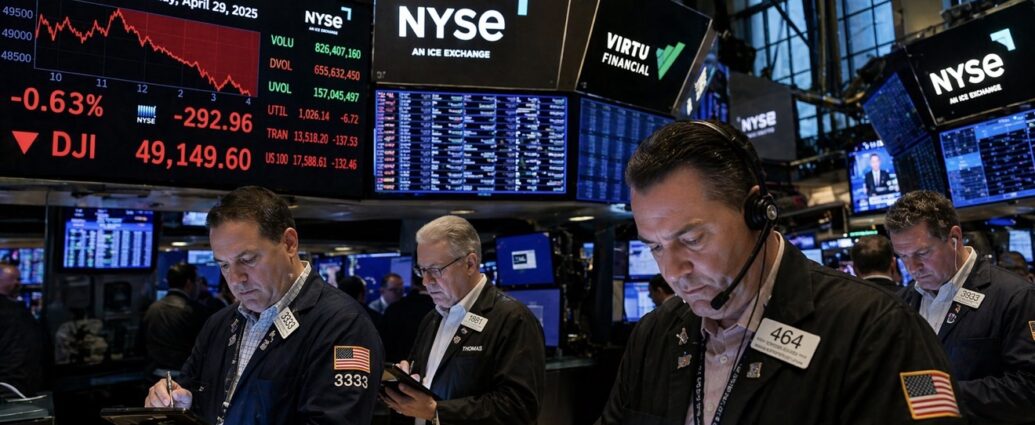
U.S. equity markets closed sharply lower Tuesday as investors reacted to escalating geopolitical risk, mounting uncertainty around Federal Reserve leadership, and a major corporate transition at Apple. The S&P 500 fell 0.63% to 7,064.02, the Dow Jones Industrial Average dropped 292.96 points to 49,149.60, and the Nasdaq Composite declined 0.59% to 24,259.97, while the Russell 2000 slid 1.16% to 2,760.47. The CBOE Volatility Index (VIX) surged 9.75% to 20.71, signaling heightened hedging activity. “The market is repricing geopolitical risk in real time,” said Art Hogan, Chief Market Strategist at B. Riley Financial.

The primary driver of the selloff was the deteriorating outlook for U.S.-Iran ceasefire negotiations ahead of a critical deadline. Iranian Foreign Ministry spokesperson Esmaeil Baghaei said Tehran’s hesitation stems from “contradictory messages, contradictory behaviors, and unacceptable actions by the American side,” according to statements carried by Iranian state media. Meanwhile, Pakistan Information Minister Attaullah Tarar said “a formal response from the Iranian side… is still awaited,” underscoring uncertainty around the planned talks in Islamabad.

At the White House, senior officials moved into emergency discussions as the timeline narrowed. President Donald J. Trump said it is “highly unlikely” he would extend the ceasefire, adding he expects “to be bombing” if no agreement is reached—remarks that intensified market anxiety. Oil prices surged in response, with U.S. crude rising 5.00% to $91.79 per barrel, reflecting fears over continued closure of the Strait of Hormuz. “Energy markets are reacting directly to the risk of supply disruption,” said Helima Croft, Global Head of Commodity Strategy at RBC Capital Markets.

Simultaneously, investors tracked a contentious confirmation hearing on Capitol Hill for Kevin Warsh, nominated to serve as Chair of the Federal Reserve. Testifying before the Senate Banking Committee, Warsh stressed that “central bank independence is essential,” as lawmakers pressed him on the implications of a Justice Department investigation into current Fed Chair Jerome Powell. “The economy’s potential is growing quite quickly,” Warsh added, pointing to artificial intelligence-driven productivity gains as a factor that could support lower rates.

The hearing quickly turned confrontational. Sen. Elizabeth Warren (D-Mass.) warned that the investigation into Powell is “designed to threaten all the members of the Fed to do Trump’s bidding,” while Sen. Thom Tillis (R-N.C.) stated, “Let’s get rid of this investigation, so I can support your confirmation.” With Powell’s term nearing its end on May 15, the unresolved probe leaves the nomination timeline uncertain and injects further instability into monetary policy expectations.

Adding to the day’s pressure, Apple (AAPL) shares fell 2.7% after the company announced a sweeping leadership transition. In an official statement, Apple confirmed that Tim Cook will become Executive Chairman, with John Ternus, Senior Vice President of Hardware Engineering, stepping in as CEO effective September 1, 2026. “It has been the greatest privilege of my life to be the CEO of Apple,” Cook said in the release.

Apple’s board emphasized continuity but acknowledged the magnitude of the shift. Arthur Levinson, Apple’s Chairman, said Cook’s “integrity and values are infused into everything Apple does,” while incoming CEO John Ternus said he is “humbled to step into this role,” pledging to uphold the company’s long-standing principles. “Leadership transitions at this scale inevitably introduce uncertainty in the near term,” said Dan Ives, Managing Director at Wedbush Securities.

By the closing bell, markets were contending with three converging risks: a potential breakdown in Middle East diplomacy, uncertainty at the Federal Reserve’s highest levels, and leadership change at one of the world’s most influential companies. “When geopolitical, policy, and corporate risks align, markets tend to de-risk quickly,” said Mark Haefele, Chief Investment Officer at UBS Global Wealth Management.

With the ceasefire deadline approaching and no confirmed diplomatic breakthrough, traders are bracing for near-term volatility. The next catalyst could arrive within hours—either a last-minute agreement that stabilizes energy markets or an escalation that further disrupts global risk sentiment heading into the next phase of earnings season.

JBizNews Desk

Hedge funds are sharply increasing bearish bets against the U.S. dollar, reflecting a growing shift in global currency markets as demand for traditional safe-haven assets fades and investors rotate into risk-sensitive positions.

Latest data from the Commodity Futures Trading Commission (CFTC) shows speculative traders significantly expanded net short positions on the dollar in recent weeks, marking one of the most pronounced bearish turns since late 2023. The shift highlights a broader repositioning among institutional investors as macro conditions evolve.

“We’re seeing a clear move away from defensive dollar exposure,” said Win Thin, Global Head of Currency Strategy at Brown Brothers Harriman, noting that improving global sentiment is reducing the need for dollar hedging. “As volatility declines and growth expectations stabilize, capital is rotating into higher-yielding currencies.”

The U.S. Dollar Index (DXY), which measures the greenback against a basket of major currencies, has come under renewed pressure as the euro, pound, and several emerging market currencies strengthen. Analysts point to shifting rate expectations and global capital flows as key drivers behind the move.

A major catalyst is the evolving outlook for Federal Reserve policy. Federal Reserve Chair Jerome Powell has emphasized a data-dependent approach, with markets increasingly pricing in that the Fed may be near the end of its tightening cycle. That shift is narrowing the interest rate advantage that previously supported the dollar.

“The dollar’s strength over the past two years was largely driven by rate differentials,” said Jane Foley, Head of FX Strategy at Rabobank. “If the Fed pauses while other central banks remain relatively firm, that support begins to erode.”

At the same time, easing geopolitical tensions and resilient equity markets are reducing safe-haven demand. Investors who previously sought protection in the dollar during periods of uncertainty are now reallocating toward equities, commodities, and higher-yielding currencies.

Still, some strategists warn the trade may be getting crowded. “The market is leaning heavily short on the dollar,” said Mark McCormick, Global Head of FX and EM Strategy at TD Securities. “Any shift in Fed messaging or resurgence in volatility could trigger a sharp reversal.”

For corporate America, a weaker dollar presents mixed implications. Multinational firms could benefit from improved overseas earnings translation, while import-heavy businesses may face rising costs. Currency swings also add complexity to global investment and trade decisions.

Looking ahead, the durability of the dollar’s decline will hinge on Federal Reserve policy, global growth trends, and geopolitical stability. For now, hedge funds are signaling a clear directional view: the dollar’s safe-haven dominance is softening as investors reposition for a more risk-on global environment.

JBizNews Desk