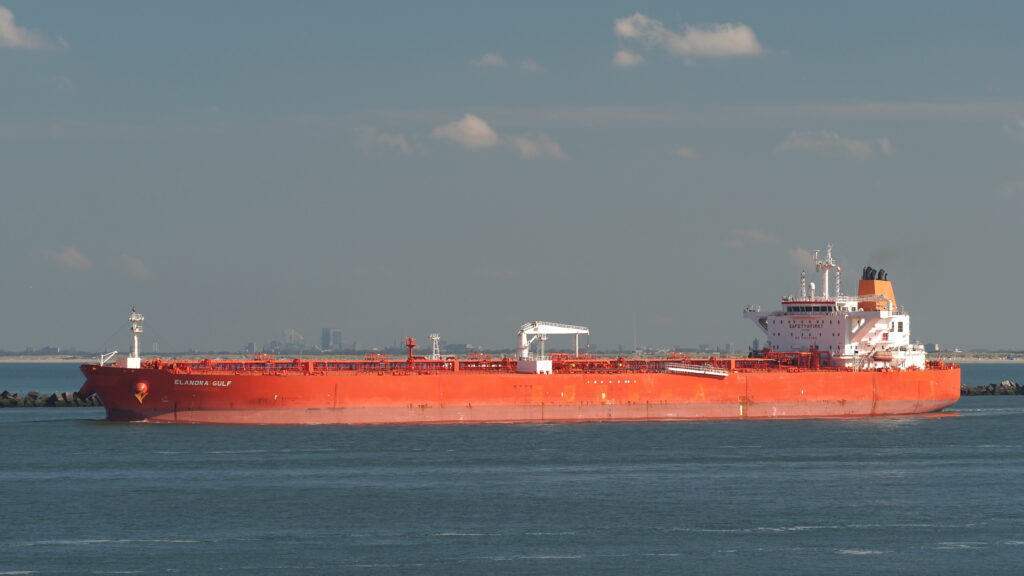
Alfvanbeem / Wikimedia Commons / CC0
A tanker fire forced a crew evacuation off Oman and another tanker reported being struck by an unknown projectile while leaving the Strait of Hormuz, according to late reports received by the United Kingdom Maritime Trade Operations on Sunday. The incidents occurred November 7, adding to a shipping threat that maritime advisers continue to rate as severe.
The new reports come as commercial traffic through Hormuz remains below its 2025 level and vessels wait at crowded anchorages outside the strait. The Joint Maritime Information Center expects that backlog to persist, keeping the movement of ships and cargo under pressure.
In its November 8 advisory, JMIC listed the fire as UKMTO incident 199-26. Military authorities had reported a tanker on fire about eight nautical miles northwest of Khasab, Oman, on November 7, resulting in its crew’s evacuation. UKMTO received the report a day later.
A separate late report, UKMTO 200-26, came from the company security officer of a tanker traveling outbound through the Strait of Hormuz. The officer reported that an unknown projectile struck the vessel November 7. All crew were safe and accounted for, with no environmental impact reported.
Severe threat, reduced traffic
JMIC kept the Strait of Hormuz threat level at “SEVERE,” describing deliberate attacks as highly likely under current conditions. It expected commercial traffic to remain reduced against the 2025 baseline and operators to continue exercising caution.
Outside the strait, JMIC estimated that about 162 vessels were at anchor near Fujairah and Khor Fakkan on November 8. It said congestion remained high, driven primarily by restricted transit, and expected the backlog to continue.
The cost is in cargo waiting to move
For shipowners and cargo customers, the practical problem is the gap between vessels waiting and vessels able to transit safely. The advisory expected reduced traffic and continued anchorage congestion over the next reporting period, leaving operators to plan around security restrictions and delays.
For businesses and households watching energy costs, the shipping reports put the physical movement of tankers at the center of the risk. The crew evacuation, separately reported projectile strike and continued congestion show the security obstacles facing vessels on the route.
The advisory urged continued caution through the Hormuz approaches. Its severe threat assessment means the safe passage of ships remains an operational concern even while traffic continues.
Archive photograph of Elandra Gulf leaving Rotterdam, not Hormuz or either tanker in this report.
JBizNews Desk | Gulf of Oman
© JBizNews.com. All rights reserved. Unauthorized reproduction or redistribution is strictly prohibited.