Federal Reserve | Saturday, April 25, 2026 | JBizNews Desk
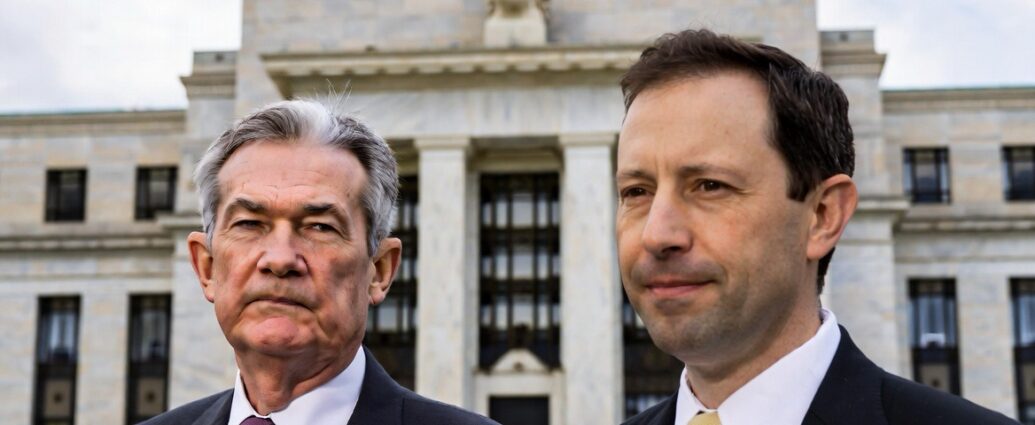
U.S. Attorney for the District of Columbia Jeanine Pirro announced late Friday that the Department of Justice is dropping its criminal investigation into Federal Reserve Chairman Jerome Powell, eliminating the last major roadblock to President Donald Trump’s effort to install Kevin Warsh as the next leader of the central bank before Powell’s term expires on May 15.
The decision, disclosed by Pirro on X, shifts oversight of the long-running inquiry into the Federal Reserve’s $2.5 billion headquarters renovation project to the central bank’s inspector general. It marks an abrupt policy reversal for Pirro, who as recently as Wednesday had vowed to press ahead with the probe. The move removes the primary obstacle cited by Senate Republicans for delaying Warsh’s confirmation and sets the stage for what could be one of the most consequential leadership changes at the Federal Reserve in decades.
Kevin Warsh, a former Federal Reserve governor and economic adviser to Trump during his first term, appeared before the Senate Banking Committee on April 21. His hearing drew intense scrutiny from both parties over questions of central bank independence, his policy views and his relationship with the president. Sen. Thom Tillis, a North Carolina Republican and influential member of the committee, had placed a hold on advancing the nomination until the Department of Justice investigation was resolved. With that condition now satisfied, Senate aides expect the hold to be lifted quickly, potentially clearing the way for a full confirmation vote as early as next week.
Powell, whose four-year term as chair ends May 15, has previously signaled he would step aside once a successor is confirmed and any pending investigations concluded. The timing is tight: confirmation would need to occur within the next three weeks to allow an orderly transition before the deadline.
Elizabeth Warren, the Massachusetts Democrat who serves as the ranking member on the Senate Banking Committee, denounced the Justice Department’s decision as politically motivated. “Dropping the investigation is nothing more than an attempt to ram through President Trump’s handpicked successor,” she said in a statement. Warren also noted that the DOJ has not dropped a separate probe involving Fed Governor Lisa Cook, whom Trump tried to remove last year and whose status remains before the Supreme Court.
During his confirmation hearing, Warsh walked a careful line. Asked whether he believed Trump had won the 2020 election, he responded only that the results “have been certified.” When pressed by Warren for an example of an economic policy where he diverged from the president, Warsh declined to offer one. On the critical issue of Federal Reserve independence, however, he was direct: “The president never once asked me to commit to any particular interest rate decision, period,” he testified. “Nor would I ever agree to do so. I will be an independent actor if confirmed.”
Trump himself has been less circumspect. In a recent CNBC interview, he said he would be “disappointed” if Warsh did not move quickly to lower interest rates upon taking office. Markets have priced in limited easing this year. CME FedWatch tool data currently implies at most one rate cut for the remainder of 2026, while a recent Reuters poll of economists showed a majority expecting the benchmark rate to remain unchanged through September.
Warsh, who has described himself as an inflation hawk, has in recent writings pushed back against concerns that Trump’s tariff policies will generate persistent price pressures. His elevation would represent a clear shift from the Powell era, which was marked by aggressive rate hikes to combat post-pandemic inflation followed by a cautious approach to cutting rates.
The Federal Reserve renovation project at the center of the now-dropped probe has drawn criticism for years over ballooning costs and delays. Trump personally toured the construction site with Powell last summer and later used the project as a frequent point of attack against the central bank’s leadership and spending practices.
Wall Street’s reaction to the news has been muted so far, with investors focusing more on the near-term policy implications than on the political drama. Treasury yields edged slightly lower in thin Saturday trading, while equity futures pointed to a modestly positive open on Monday. The broader question remains how much influence Trump might exert over monetary policy through Warsh, even as the nominee pledged fidelity to the central bank’s independence.
If confirmed, Warsh would inherit a Federal Reserve navigating a complex environment: moderating inflation that has yet to reach the 2% target on a sustained basis, elevated fiscal deficits, ongoing global trade tensions and the economic ripple effects of Middle East conflicts. His background as both a market participant—having worked at Morgan Stanley—and a policymaker positions him as someone likely to prioritize financial stability and growth alongside inflation control.
The rapid timeline reflects the high stakes for the administration. Installing a new chair before May 15 avoids any period of leadership uncertainty at the world’s most powerful central bank and allows Warsh to participate in the June policy meeting as chairman. Whether he can maintain the delicate balance between political expectations and institutional credibility will define the early months of his tenure.
This story is developing as Senate leadership finalizes the confirmation schedule.
JBizNews Desk