The Pentagon is planning for the possibility that the lights go out and stay out. Under a requirement now in development, each major base in the 48 contiguous states would need to function on its own for at least 90 days if a war cuts off the grid and supply chains. Fox News Digital first reported the news after reviewing internal Pentagon documents.
The Pentagon hasn’t said which adversary it has in mind, but in 2024 U.S. cybersecurity, intelligence, and law enforcement agencies warned Chinese state-backed hackers had broken into American energy, water, and communications networks, possibly to disrupt them during a future conflict. Under the program known as FORTRESS, the Pentagon’s independence would cover water, fuel, communications, and power.
Meanwhile, British households are hearing a scaled-down version of the same warning. The U.K. government’s Be Ready campaign, which was launched Oct. 22, urges families to keep enough water, shelf-stable food, and cash on hand to manage for three days if essential services fail.
These two warnings have come around the same time, but the ultrawealthy have been planning for these conditions for years. Many already plan for outages at home with backup generators, escape homes, and stockpiles of supplies, advisors and real estate agents who work with them told Fortune.
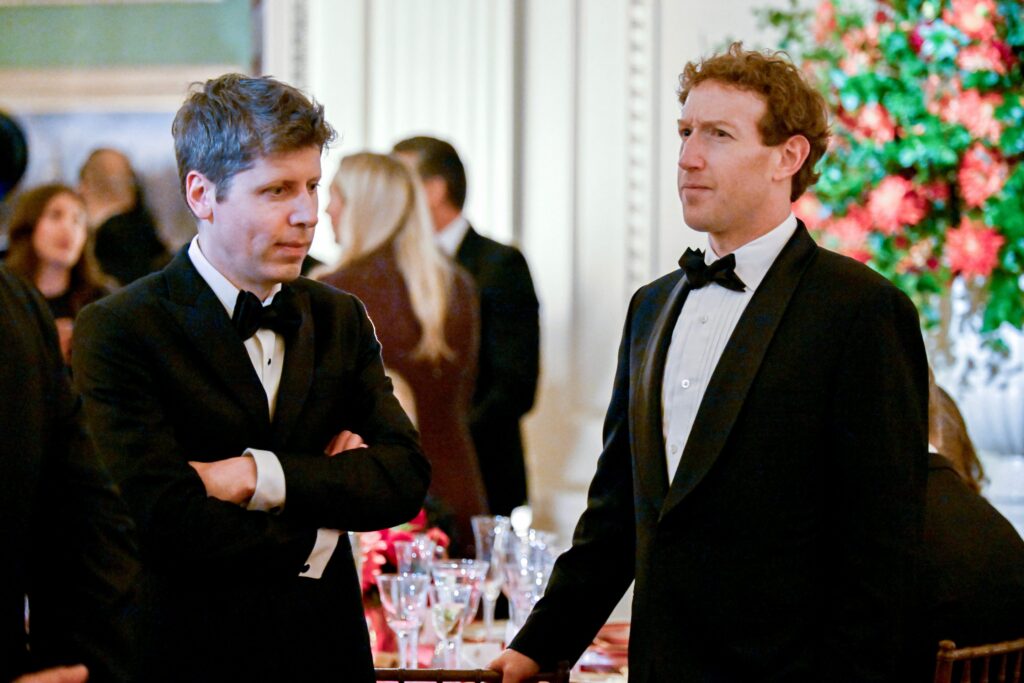
Take Meta CEO Mark Zuckerberg, as an example. In December 2023, Wired reported he was developing a compound of about 1,400 acres on Kauai, Hawaii, with an estimated price tag of roughly $270 million. Plans for the property Wired reviewed showed an underground shelter larger than 5,000 square feet, equipped with its own energy and food supplies. To be sure, Zuckerberg disputes it’s a doomsday bunker: “No, I think that’s just like a little shelter,” he told Bloomberg. “It’s like a basement.”
But some of his peers have spoken more freely about preparing for disaster. OpenAI CEO Sam Altman listed his own preparations in a 2016 New Yorker profile: “guns, gold, potassium iodide, antibiotics, batteries, water, gas masks from the Israeli Defense Force, and a big patch of land in Big Sur I can fly to.” In 2017, LinkedIn cofounder Reid Hoffman told the same magazine he believed more than half of Silicon Valley’s billionaires had invested in what those circles call “apocalypse insurance,” typically a retreat somewhere in the U.S. or overseas.
“Human motivation is complex, and I think people can say, ‘I now have a safety blanket for this thing that scares me,’” Hoffman told The New Yorker.
Still, many of the ultrawealthy have been more on the down low about preparing for a doomsday scenario. But the people who staff their homes, advise them on risk, and sell them real estate say the planning has picked up in recent years.
Generators, go-bags, and second homes
Brian Daniel founded The Celebrity Personal Assistant Network in 2007 to place assistants and household staff with wealthy families. He told Fortune his clients have grown more focused on safety, and the shift has sped up over the past five years.
“At the very minimum, my clients are installing back-up power systems and stocking up on supplies that would last months,” he said. Others are spreading their bets across multiple properties—at home and abroad—and often away from major cities, he said. Some are “even purchasing luxury underground bunkers that cost millions.” Clients worth $100 million or more keep security staff on the payroll full time, he added.
“They want peace of mind, and they will spend what it takes to get it,” Daniel said.
That emphasis on protection shows up in other wealthy enclaves, too. In Palm Beach, Fla., the stretch of South Ocean Boulevard that passes Mar-a-Lago, was shut down earlier this year over security concerns tied to the Iran war. It cut through a strip of oceanfront mansions known as Billionaires’ Beach. But local agents said buyers treated the closure as a selling point, not a nuisance.
“What used to be a temporary inconvenience has now become part of the infrastructure of doing business here,” Palm Beach–based luxury agent Jessica Julian told Fortune in April.
Philip Farina, chief advisor at Risky Business, a firm that counsels companies and high-net-worth families on getting ready for disasters and emergencies, told Fortune the latest wave of government preparedness campaigns has brought him more client inquiries. During the pandemic, he said, some clients left places with tighter COVID rules for second homes and “escape homes” in more remote areas.
“Many clients are looking for the complete package: real estate coupled with self-sufficient equipment, food and beverage stockpiles, Go-Bags, weapons training and communication plans for all family members,” he said.
For buyers in Miami, one of the main worries is the power grid, said Samuel Strauch, principal at Metrik Real Estate. Because the city is surrounded by water and exposed to hurricanes, he said, the topic comes up almost as soon as a wealthy buyer reaches out.
Clients also ask about how high a property sits and whether it has a generator or room to install one, he said.
“Impact glass and windproof construction are not add-ons here. They are expected features,” he added. “Serious, sophisticated buyers know exactly what happens in an outage. They want their fallback plans perfectly in place from day one.”
This story was originally featured on Fortune.com