
Five months ago, I wrote a column called “10 scenarios to prepare for in explaining the election.”
The goal of the column was to educate readers in advance, knowing that our elections could be used for or against Israel in the international court of public opinion.
The facts, of course, may not matter to brainless comedians like Michael Che, who “joked” on Saturday Night Live’s Weekend Update: “People voted in Israeli elections, which is great to see, regardless if you’re on the Right side, the Left side, or genocide.”
Thankfully, most of the world’s population still has better taste and a better sense of humor than him.
So for them, it’s important to look back at what I recommended back then and offer new explanations of our elections now that the results are in.
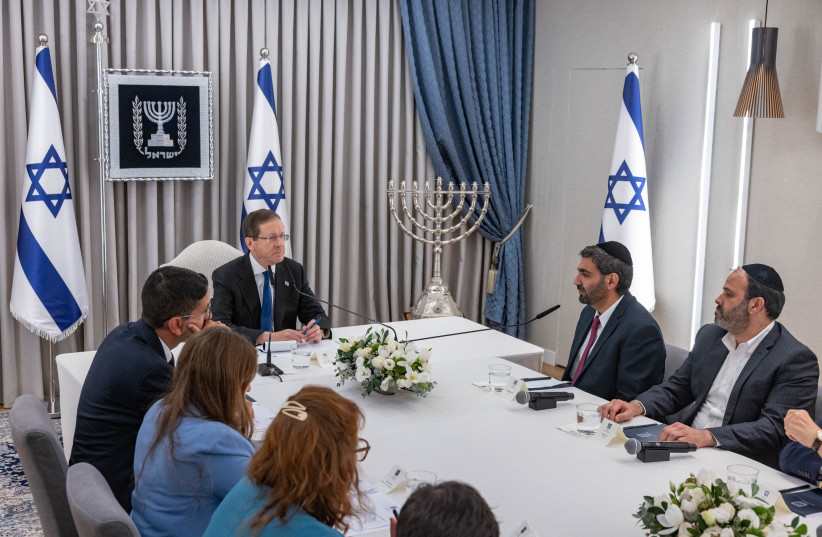
The 10 possible outcomes were: Prime Minister Benjamin Netanyahu gets reelected (still unclear); someone other than Netanyahu comes to power (unclear); National Security Minister Itamar Ben-Gvir doubles his mandates (didn’t happen); not enough Arabs elected (LOL); no party that wins any seats is led by a woman (happened); the IDF draft being a major issue (happened); a massive turnover (happened); elections delayed by all-out war (maybe next one); Netanyahu suffers health setback and quits at the last minute, Joe Biden-style (perhaps in the 2036 race); and multiple elections with no government (still quite likely).
Most of these scenarios will be addressed in the new explanations. But the issue of women not heading any elected slate remains a serious problem.
Former deputy foreign minister Sharren Haskel’s Israel First party received a very disappointing 955 votes, the Fair Trial party led by assassin Yigal Amir’s wife and mother won a surprisingly high 774, and the Women’s Voice/Vote party won only 712, perhaps because voters did not understand why it was led by a man.
For the reported 67,000 Israelis who came here to vote and are returning home, and for the rest of us sticking around, here are 10 talking points for explaining our election results to the world.
1. To Bibi or not to Bibi
Netanyahu’s coalition bloc fell from 67 seats to 53. This likely happened because Israelis vote on security and were upset about October 7 and his lack of accountability for the massacre.
Why did he not fall further? Because Israelis vote on security and they saw that their security situation has improved significantly on all fronts. As Netanyahu said when he addressed the UN General Assembly in September in a speech aimed more at readers back home: “Remember the beepers?”
2. ‘Apartheid’ abandoned
In August, I wrote a column called “The election that buries the apartheid myth.” That was proven correct in retrospect, with the 17 Arabs elected in Arab parties and the two Druze in Zionist parties proving how far away we are from a regime that prevented Blacks from voting.
Israel should be credited for empowering its minorities, and this is the news that Che should really be talking about.
3. No Arab minister ≠ racism
When this is written, it is still unclear whether Yashar leader Gadi Eisenkot will seek a minority government that relies on an Arab party (or two, in some way). But it appeared unlikely that there would be an Arab minister, despite the Arab turnout rising from 53.2% in 2022 to an estimated 77%.
It must be explained that this is not because of racism. If a minister could deal only with fighting crime and poverty in the Arab sector, there may be no objection, but when Ra’am was in the coalition, they were relied upon to vote on sensitive security issues. The same would have to happen to back a minority coalition, and the security situation is still too problematic for that.
When interviewed by i24NEWS’ Ariel Oseran live on election night, Ra’am leader Mansour Abbas declined to condemn Hamas as a terrorist organization, in what should have been an easy question.
4. You say you want a (half) revolution?
Out of the 120 MKs in the outgoing Knesset, only 61 will be returning. In a sign of a healthy democracy, there will be 47 new members of parliament and a dozen returnees. There were 5,716,665 ballots cast in a country of some 10 million people, of which more than 3 million are too young to vote. The voters took the election seriously.
A surprisingly small number (1,050) cast protest votes for the Pirate Party.
5. The October 7 MKs
The new Knesset will be blessed by plenty of representatives who became household names since October 7. There are family members of hostages: Zvika Mor (Religious Zionist Party), Talik Gvili (Likud), Sharon Sharabi (Yisrael Beytenu).
There are family members of victims: Eisenkot, Shira Shapira (Yashar), Omri Ronen (Democrats); there are war heroes: Yair Golan (Democrats), Noam Tibon (B’Yachad), Elisha Meidan (Likud), Itamar Eitam (Religious Zionist Party).
This will ensure that the massacre and the mistakes that precipitated it will remain on the agenda here. It must remain on the international agenda as well.
6. Empowering Arab Muslim women
There are no women in the parliaments of Yemen and Oman, but we have a trio of Arab Muslim women in the Knesset: Ben-Gurion University sociology professor Maha Karkabi-Sabbah (Joint List-Balad), Oranim College educator Nihaya Washahi (Joint List-Hadash), and hijab-wearing Iman Khatib-Yassin (Ra’am).
Karkabi-Sabbah studied at the University of London and is an authority on gender issues in the Israeli Arab sector. There are more Arab women in Congress and our Arab parties have a long way to go, but this is progress.
7. No LBT but 3 G
The new Knesset has three gay MKs: Amir Ohana (Likud), Eitan Ginzburg (B’Yachad), and new Knesset member Israel Zari (Yashar), the deputy mayor of Ramat Gan. None of them were chosen because of their sexual orientation, with only professional considerations taken into account.
8. New star Yafa Tabaja
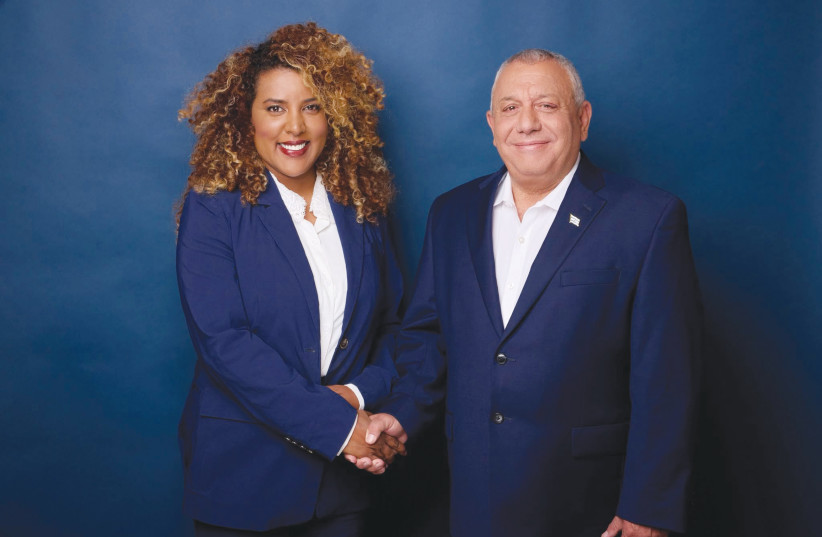
The final candidate elected in Yashar, Yafa Tabaja, should be the new face of the Knesset. The only MK of Ethiopian descent, she is from a traditional family of eight children whose parents made aliyah during Operation Moses.
Born in Karmiel, she grew up among Russian-speaking immigrants and speaks the language. She headed the student union at Ashkelon Academic College and led Ashkelon’s MTech Innovation Center, bringing hi-tech companies to help the disadvantaged. If her talents are harnessed smartly, she can change false impressions of Israel abroad.
9. Our new Congressmen
The Knesset has been blessed in the past 15 years with wonderful representatives of the native English-speaking community in Israel. Let’s hope our new Knesset members do as well and even outshine them in helping immigrants from English-speaking countries and improving Israel’s image abroad.
Yair “Yaya” Fink (Democrats) was born in Jerusalem to a mother from Brooklyn and a father from Scranton, Pennsylvania, and was one of the leaders against the outgoing government’s judicial reforms. Yonatan Shalev, 24 (B’Yachad), was born in Baltimore and lived in New York when his grandmother, Gabriela Shalev, was ambassador to the United Nations. Both fought and were activists for reservists since October 7.
10. Pay attention to Palestinian politics
In August, I wrote a column about how the international media needed to follow Palestinian politics as closely as they have been following our election. Since then, the Palestinian election set for this month was canceled.
They haven’t gotten their act together to hold a parliamentary election since January 2006, and a presidential election since a year before that, when Mahmoud Abbas was elected to a four-year term that still hasn’t ended nearly 22 years later. Palestinian politics clearly needs more scrutiny, because no explanation justifies what is happening.■
The writer is the author of The Blood Libel Machine: Exposing the Anti-Israel Hate Network and How to Fight Back, which can be ordered from Pomeranz books in Israel and Amazon around the world.







