Geopolitics & Markets | Saturday, April 25, 2026 | JBizNews Desk
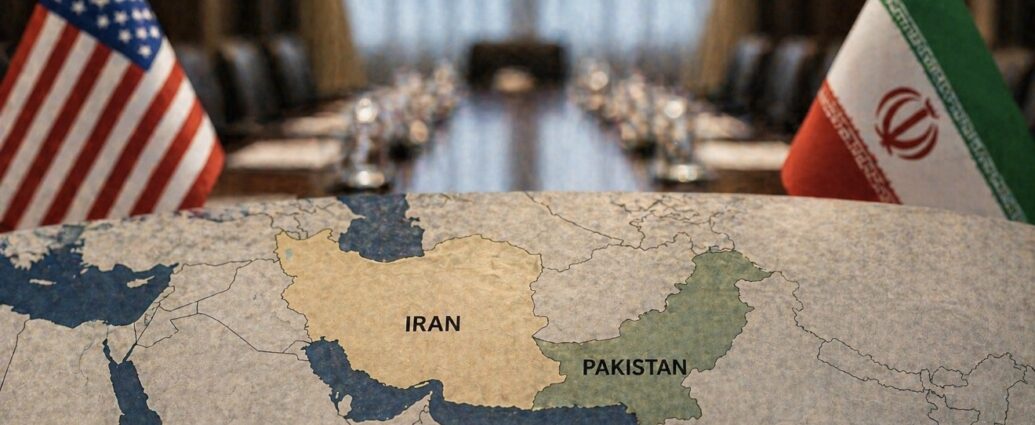
President Donald Trump abruptly canceled a planned diplomatic mission to Pakistan on Saturday, halting a high-stakes effort to restart direct U.S.-Iran negotiations and triggering an immediate reaction across global energy markets, where oil prices moved sharply higher on renewed fears of prolonged disruption in the Middle East.
The White House had earlier confirmed that Special Envoy Steve Witkoff and senior adviser Jared Kushner were scheduled to travel to Islamabad for talks facilitated by Pakistani officials. Within hours, however, Trump reversed course, pulling both officials off the trip just as Iranian Foreign Minister Abbas Araghchi was departing the Pakistani capital—effectively eliminating any possibility of in-person engagement between the two sides.
Trump announced the decision in a post on Truth Social, citing frustration with the pace and structure of negotiations. “I just cancelled the trip of my representatives going to Islamabad, Pakistan, to meet with the Iranians,” Trump wrote. “Too much time wasted on traveling, too much work!” He added that Iran could “call us anytime they want,” signaling a shift toward remote or indirect engagement rather than face-to-face diplomacy.
Speaking to reporters before boarding Air Force One in Florida, Trump expanded on his reasoning, pointing to dissatisfaction with a proposal submitted by Tehran. “They gave us a paper that should have been better,” Trump said. “And interestingly, immediately when I canceled it, within ten minutes, we got a new paper that was much better.” He described the Iranian position as offering “a lot, but not enough,” while also citing what he characterized as internal divisions within Iran’s leadership.
From Tehran, the response was measured but pointed. Abbas Araghchi, speaking to regional media and in posts on X, said his meetings in Pakistan were “very fruitful” but questioned Washington’s commitment to meaningful diplomacy. “We are waiting to see if the U.S. is truly serious about diplomacy,” Araghchi said, before departing for Oman for additional consultations. Iranian state media had previously indicated that direct engagement with U.S. officials was unlikely under current conditions, raising questions about whether a face-to-face meeting in Islamabad was ever diplomatically viable.
The breakdown marks the second failed attempt in a matter of days to convene both sides in Pakistan. Earlier in the week, a planned visit involving Vice President JD Vance was also called off after Iranian officials declined to engage under those terms. The initial round of Islamabad talks earlier this month—spanning more than 20 hours—ended without agreement, with disputes centered on Iran’s nuclear program and maritime security in the Strait of Hormuz.
The diplomatic setback comes against the backdrop of an escalating U.S. pressure campaign. The Biden administration’s prior framework has been replaced by a more aggressive posture under Trump, including a naval enforcement operation targeting Iranian-linked shipping. Secretary of Defense Pete Hegseth described the effort Friday as “ironclad,” with U.S. naval forces expanding enforcement beyond the Strait of Hormuz into broader international waters.
According to U.S. defense officials, dozens of vessels have been redirected or inspected as part of the operation, with several seizures reported for non-compliance. The campaign has added significant strain to global energy markets, where traders are closely watching both military developments and diplomatic signals for direction.
Oil prices reacted quickly to Saturday’s news. Brent crude rose to approximately $105 per barrel, while West Texas Intermediate climbed toward $98, reflecting a renewed geopolitical risk premium. Analysts at BCA Research noted that each failed round of negotiations increases the likelihood of prolonged supply disruption, particularly given the strategic importance of the Strait of Hormuz, which carries roughly 20% of global oil flows.
Even in the event of a future agreement, timelines remain uncertain. A report cited by The Washington Post indicates that clearing potential maritime hazards in the Strait could take months, suggesting that energy markets may face sustained volatility regardless of diplomatic progress.
On Capitol Hill, reaction from lawmakers reflected broader divisions over strategy. Sen. Lindsey Graham (R-S.C.) praised Trump’s decision, calling it “very wise” given what he described as Tehran’s negotiating posture. The White House has maintained that a ceasefire extension earlier in the week was intended to give Iran time to present a unified proposal—an objective officials say has not yet been met.
For markets, the cancellation reinforces a pattern of rapid shifts between diplomatic optimism and breakdown. Investors now head into the new week facing heightened uncertainty, as geopolitical developments once again take center stage alongside corporate earnings and macroeconomic data.
With talks stalled and military pressure intensifying, the trajectory of U.S.-Iran relations remains highly fluid. Whether negotiations resume—or tensions escalate further—will play a decisive role in shaping both global energy markets and broader investor sentiment in the weeks ahead.
JBizNews Desk