President Donald Trump announced Tuesday, July 14, that he is abandoning the proposed 20% “United States Reimbursement Fee” on cargo transiting the Strait of Hormuz, reversing the policy roughly one day after first unveiling it.
In a post on Truth Social, Trump said the cargo fee would instead be replaced by major trade and investment agreements that Gulf nations have pledged to make in the United States. The reversal came approximately 25 hours after the administration first announced the levy.
Trump said the decision followed conversations with leaders across the Middle East and described the expected investments as “massive,” although no financial commitments or participating countries were identified.
Blockade Remains in Effect
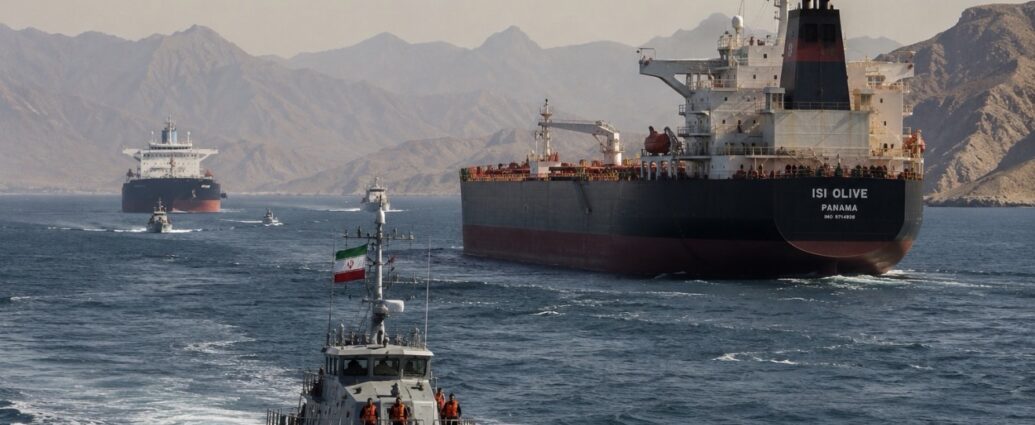
While the cargo fee has been withdrawn, the broader U.S. naval blockade targeting Iran remains unchanged.
The blockade formally took effect Tuesday at 4:00 p.m. Eastern Time, with U.S. Central Command (CENTCOM) confirming that American forces will continue enforcing restrictions on vessels traveling to or from Iranian ports and coastal areas.
Trump said the Strait of Hormuz remains open to international shipping except for vessels connected to Iran.
He credited Secretary of Defense Pete Hegseth, Joint Chiefs Chairman Gen. Dan Caine, CENTCOM Commander Adm. Brad Cooper, and U.S. military personnel for executing the operation.
Why the White House Changed Course
Speaking during a White House meeting with Iraqi Prime Minister Ali al-Zaidi, Trump said leaders from Saudi Arabia, the United Arab Emirates, Qatar, Bahrain, and Kuwait urged him to pursue investment agreements instead of imposing transit charges.
Asked why he reversed the policy, Trump said he preferred investment commitments over charging fees and added that he does not believe any nation should impose tolls on ships using the Strait of Hormuz.
The remark represented a significant departure from his position only one day earlier, when he argued the United States should be reimbursed for protecting one of the world’s most important shipping lanes.
No details accompanied the announcement.
Trump did not identify participating governments or specify investment amounts.
According to Bloomberg, citing an unnamed Gulf government source, at least one regional government told Washington it had made no new investment commitments in exchange for the policy reversal.
What the Proposed Fee Would Have Cost
Under Monday’s proposal, the United States would have charged a 20% reimbursement fee on cargo passing through the Strait of Hormuz as compensation for providing maritime security.
At current oil prices, the charge could have exceeded $32 million for a fully loaded supertanker, dramatically exceeding transit fees Iran had previously discussed, which were estimated at roughly $2 million per voyage.
Administration officials had not publicly determined which federal agency would collect the payments, with both the Treasury Department and Department of Energy reportedly under consideration.
Global Opposition
The proposal immediately drew criticism from governments, shipping companies and international organizations.
International Maritime Organization Secretary-General Arsenio Dominguez stated that international law provides no legal basis for mandatory transit fees through international straits.
Earlier this summer, Secretary of State Marco Rubio similarly stated that no nation has the legal authority to impose tolls on vessels transiting international waterways.
Major shipping companies and industry organizations quickly voiced opposition.
Hapag-Lloyd called the proposal fundamentally inconsistent with international shipping principles.
Industry groups including BIMCO and the European Community Shipowners’ Associations also rejected the concept.
In May, Chevron Chief Executive Officer Mike Wirth warned that allowing one country to impose transit charges could establish a precedent encouraging similar fees along strategic waterways worldwide.
Iran also responded.
Foreign Minister Abbas Araghchi suggested the proposed U.S. fee was excessive while indicating Iran would establish what he described as fairer transit charges if necessary.
Meanwhile, Oman, a longtime U.S. regional partner, called on all parties to respect international maritime law.
Oil Markets Remain Elevated
Although the cargo fee has been withdrawn, energy markets remain focused on the broader military situation.
On Monday, West Texas Intermediate crude climbed 9.4% to $78.14 per barrel, while Brent crude rose 9.6% to $83.30, marking the strongest one-day increase since 2020.
Brent futures briefly climbed as high as $85.92 Tuesday before giving back part of the gains following Trump’s announcement.
Fuel prices continue responding.
GasBuddy analyst Patrick De Haan said the national average gasoline price could approach $4 per gallon within one to two weeks as higher wholesale costs work through retail markets.
Shipping Disruptions Continue
Despite the policy reversal, commercial shipping remains severely disrupted.
According to Kpler, only 10 verified vessel crossings occurred on July 13, down from 16 the previous day.
Windward AI tracked only five overnight crossings, reflecting continued caution among commercial operators.
Approximately 230 loaded oil tankers remain inside the Persian Gulf awaiting safe passage.
Before hostilities intensified earlier this year, roughly one-quarter of global seaborne oil trade and approximately 20% of worldwide liquefied natural gas shipments moved through the Strait of Hormuz each day.
What Comes Next
Marine insurers remain cautious despite the elimination of the proposed cargo fee.
Ben Stone, head of marine hull insurance at Aon, said underwriters continue requiring an extended period of stability before reducing war-risk premiums.
Saul Kavonic, head of energy research at MST Financial, warned that continued Iranian efforts to influence shipping through the Strait could keep commercial traffic well below pre-conflict levels.
Rory Johnston, founder of Commodity Context, said global oil inventories that previously cushioned supply disruptions have now been significantly reduced, leaving markets more vulnerable to future interruptions.
For businesses, refiners and consumers, the immediate outcome is mixed.
The proposed U.S. transit fee has disappeared.
The naval blockade, elevated insurance costs, shipping delays and geopolitical risk premiums have not.
JBizNews Desk | Washington
© JBizNews.com All Rights Reserved. Reproduction or distribution without written permission is prohibited.