By JBizNews Desk | April 27, 2026
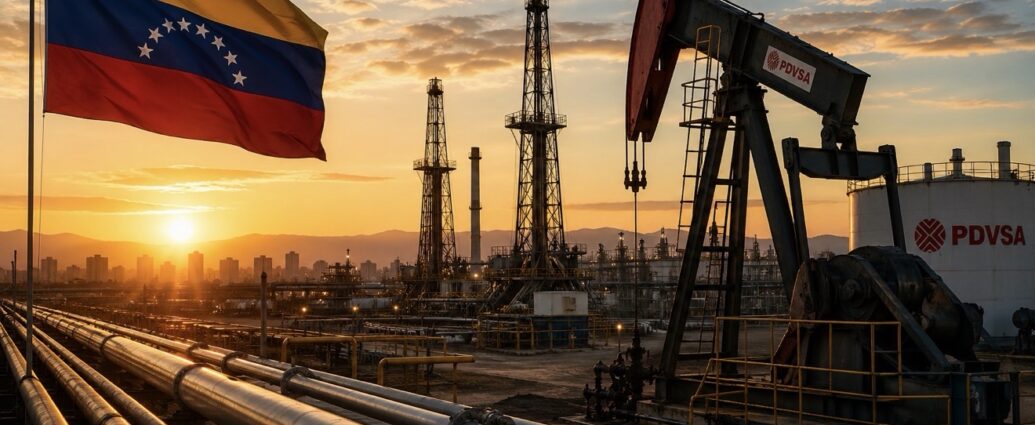
Private credit firms are moving aggressively into Venezuela’s oil sector, positioning themselves ahead of a broader wave of institutional capital following a major geopolitical reset tied to President Donald Trump’s Venezuela strategy.
At the center of that early push is ArtCap Strategies, a firm founded by former Credit Suisse bankers, which is deploying capital into Venezuela’s oil services ecosystem. Rather than investing directly in drilling operations, the firm is targeting local vendors that support production—an approach designed to accelerate output while limiting upfront capital exposure. “The opportunity is in rebuilding the infrastructure around production, not just the oil fields themselves,” said Andrés Martínez, Chief Executive Officer of ArtCap, speaking at the Venezuela Energética 2026 conference in Caracas.
The conference drew more than 900 executives, financiers, and government officials, marking one of the largest investment gatherings in Venezuela in decades and signaling a sharp shift in global sentiment toward a market that had been largely cut off from international capital.
That shift follows a dramatic geopolitical change earlier this year. In January, a U.S.-led operation aligned with the Trump administration’s Venezuela policy resulted in the removal of longtime leader Nicolás Maduro, opening the door to renewed economic engagement. Since then, Venezuela’s oil production has climbed above 1 million barrels per day, with further increases expected as partnerships expand with Chevron, Repsol, Eni, and Maurel & Prom under more flexible licensing frameworks.
Exports to the United States have surged alongside that recovery, averaging approximately 329,500 barrels per day, nearly three times 2025 levels. John Barrett, the U.S. chargé d’affaires in Caracas, described the moment as a turning point. “This is a historic opportunity to rebuild Venezuela’s energy sector and reconnect it to global markets,” Barrett said during remarks at the forum.
The Trump administration has framed Venezuela’s reopening as part of a broader three-phase strategy—stabilization, recovery, and democratic transition—with the energy sector at the core. To support that effort, the U.S. Department of Commerce’s International Trade Administration has launched a commercial information center in Caracas to help companies navigate sanctions, compliance requirements, and local operating conditions.
Investor confidence is also being supported by regulatory reforms inside Venezuela. The government has begun reshaping its Organic Hydrocarbons Law, introducing more favorable tax structures and allowing greater private-sector participation. Under the updated framework, minority partners in joint ventures with state-owned PDVSA can now manage operations, transact in foreign currencies, and independently market production—changes designed to attract foreign capital after years of underinvestment.
Interest is expanding beyond traditional oil majors. A recent delegation met with interim President Delcy Rodríguez, including Doug Lawler, Chief Executive Officer of Continental Resources, energy investor Bryan Sheffield, and former House Speaker Kevin McCarthy, signaling growing interest from U.S. business and political circles.
Despite the renewed momentum, large energy companies are proceeding cautiously. Major capital commitments remain tied to further stabilization, including sovereign debt restructuring and consistent regulatory enforcement. “Capital will scale with confidence, and confidence depends on policy consistency,” industry analysts said.
Private credit firms, however, are structurally positioned to move earlier. With shorter investment horizons and lower capital requirements, they can operate effectively in transitional environments—capturing returns as production gradually increases. That dynamic is placing firms like ArtCap at the forefront of Venezuela’s reopening.
Analysts estimate that restoring Venezuela’s oil output to its historical peak of 3.5 million barrels per day is achievable but likely to take seven to ten years, depending on the pace of reforms and access to global financial markets. In the near term, Venezuela is showing early signs of stabilization, including improved access to foreign currency, reduced exchange-rate volatility, and rising industrial activity.
For investors, the opportunity is clear but complex: high risk paired with potentially significant upside. Entering early allows exposure to a market still trading at distressed levels, with substantial growth potential if reforms hold and production continues to expand.
Looking ahead, Venezuela’s recovery will depend on the durability of its policy changes and its ability to rebuild trust with global investors. For now, the entry of private credit signals a decisive shift—capital is beginning to return, cautiously but meaningfully, to one of the world’s most resource-rich energy markets.
Simple Breakdown:
Venezuela has a lot of oil but was struggling for years. Now, after big changes, investors are putting money in early to help rebuild it—hoping it grows and becomes valuable again.
JBizNews Desk