Wednesday, May 6, 2026 | 2:45 PM ET
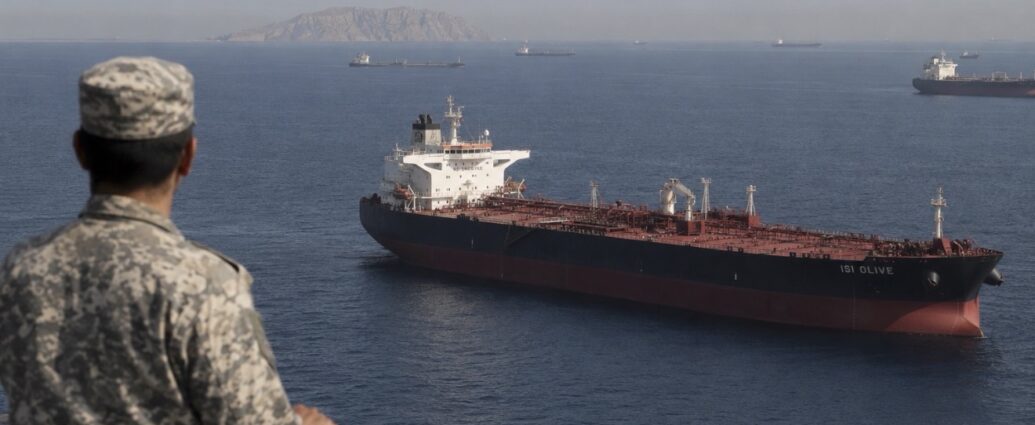
The United States and Iran edged closer to a formal agreement Wednesday to end their two-month conflict, even as President Donald Trump issued fresh warnings of intensified military action and the Strait of Hormuz remained effectively shut to global commercial traffic — a closure that has sent fuel prices surging and rattled supply chains worldwide.
Iran’s Foreign Ministry confirmed Wednesday that Tehran is actively reviewing the latest U.S. peace proposal, with spokesman Esmaeil Baqaei saying the government would convey its response to Pakistani intermediaries once it finalized its position. That review came as Iranian Foreign Minister Abbas Araghchi traveled to Beijing for talks with Chinese Foreign Minister Wang Yi — the first visit to China by a senior Iranian official since the war began on February 28. Wang Yi called for a comprehensive ceasefire, saying the two-month conflict has inflicted major harm and threatens global stability.
On Wednesday, Trump posted on Truth Social that Iran would face U.S. strikes “at a much higher level and intensity” unless it agreed to terms already on the table — though he did not specify what he described as a “big assumption” that prior agreements had been reached. A Pakistani source told Reuters that both sides are closing in on a one-page, 14-point memo to formally end the war and establish a framework for more detailed nuclear negotiations, with two U.S. officials separately confirming to Axios that the White House believes a deal is near.
The backdrop to the negotiations remains volatile. Defense Secretary Pete Hegseth affirmed at a Pentagon briefing this week that the nearly month-old ceasefire is “not over,” while Joint Chiefs Chairman Gen. Dan Caine stated that Iranian attacks on U.S. forces since the ceasefire was declared in early April have numbered more than ten — but remain “below the threshold of restarting major combat operations.” More than 100 U.S. military aircraft are currently patrolling the skies over the strait.
Trump paused a short-lived U.S. military operation called “Project Freedom” on Tuesday — a mission to escort stranded commercial vessels through the strait — saying the halt would create space for diplomacy. The U.S. naval blockade of Iranian ports, in place since April 13, remains active. The blockade has cut off Tehran’s primary source of oil revenue at a moment when Iran’s economy is already heavily sanctioned and under severe strain.
The commercial cost of the closure is severe and growing. The Strait of Hormuz carries roughly 20 percent of global petroleum and 20 percent of liquefied natural gas in normal times. Pre-conflict, approximately 3,000 vessels used the waterway each month. That number has dropped to around 5 percent of its prior level. Average gasoline prices in the United States climbed to $4.48 a gallon this week, according to tracking data, while global oil prices remain well above $100 per barrel. Airlines have raised fares, baggage fees, and food service prices to offset surging fuel costs. Spirit Airlines, which ceased operations recently, cited the cost of fuel as the final blow to its already struggling business.
Secretary of State Marco Rubio, who described stranded sailors in the strait as “sitting ducks” and said at least ten have already died as a result of the conflict, said China has a unique role to play given its close economic and political ties to Tehran. He expressed hope that Beijing would press Iran to reopen the waterway. Iran, for its part, has signaled it intends to establish a new governance arrangement for the strait that, according to state media, would reflect a changed balance of power in the region — with Iran and Oman playing a central role.
A Pakistani diplomatic source, who brokered the original April 8 ceasefire, praised Trump’s decision to pause “Project Freedom,” saying the halt was essential to preserving “diplomatic space for dialogue.” Whether that space produces a durable agreement — or another deadline, another ultimatum, and another near-miss — remains the central question for global energy markets, shipping companies, and everyday consumers paying more at the pump and the grocery store with every passing week.
JBizNews Desk
© JBizNews.com. All rights reserved. This article is original reporting by JBizNews Desk. Unauthorized reproduction or redistribution is strictly prohibited.