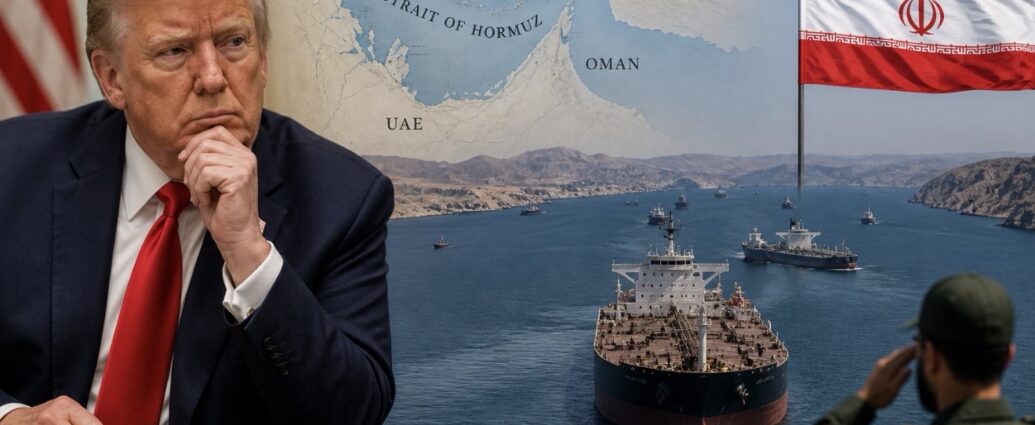
President Donald Trump said Saturday he is reviewing a new peace proposal from Iran but signaled he sees little chance of accepting it — with one academic saying he appeared to reject it before even being fully briefed — as the nuclear impasse and dueling blockades in the Strait of Hormuz keep global energy and shipping markets on edge more than nine weeks into the conflict.
“I will soon be reviewing the plan that Iran has just sent to us, but can’t imagine that it would be acceptable in that they have not yet paid a big enough price for what they have done to Humanity, and the World, over the last 47 years,” Trump wrote on his Truth Social platform. Speaking briefly to reporters in West Palm Beach, Florida before boarding Air Force One, he confirmed he had been briefed on the “concept of the deal” but declined to specify what could trigger new military action. “If they misbehave, if they do something bad, but right now, we’ll see. But it’s a possibility that could happen, certainly,” he said. Paul Musgrave, professor at Georgetown University, said Trump appeared to have rejected the proposal “without reading it or being briefed on it.”
The Nuclear Red Line
The central obstacle to any agreement is Iran’s nuclear program. In an April 29 phone interview with Axios reporter Barak Ravid, Trump was unequivocal: “At this moment there will never be a deal unless they agree that there will never be nuclear weapons,” adding that Iran is “choking like a stuffed pig” under the naval blockade. Washington has demanded Iran permanently dismantle its nuclear program and surrender its enriched uranium stockpile entirely. Iran insists its program is peaceful, refuses to transfer its uranium abroad, and demands the right to continue enriching uranium on its own soil — a position U.S. and Israeli officials call a non-starter. Secretary of State Marco Rubio told Fox News the Iranian proposal was “better than what we thought they were going to submit,” but added any deal must “definitively prevent them from sprinting towards a nuclear weapon at any point.”
Iran’s 14-Point Offer
Tehran’s latest proposal, a 14-point document conveyed through Pakistani intermediaries and reported Saturday by semi-official Tasnim News Agency, attempts to sidestep the nuclear deadlock entirely — proposing to reopen the Strait of Hormuz and end the war first, with nuclear talks deferred to a later stage. Other demands include guarantees against future U.S. and Israeli military strikes, withdrawal of U.S. forces from the region, release of frozen Iranian assets, war reparations, lifting of all sanctions, and an end to fighting in Lebanon. Iran also insists all issues be resolved within 30 days — at odds with Washington’s preference for a longer transition. Iran’s ambassador to Pakistan, Reza Amiri Moghadam, told state news agency IRNA Sunday that any breakthrough depends on a “change” in Washington’s behavior.
A White House Situation Room meeting on Iran is expected Monday, with Trump’s senior national security team including Vice President JD Vance, White House Chief of Staff Susie Wiles, and special envoy Steve Witkoff, according to officials cited by Axios. Senior Iranian military commander Mohammad Jafar Asadi said Saturday that “a renewed conflict between Iran and the United States is likely,” while the Islamic Revolutionary Guard Corps issued a 30-day ultimatum demanding the U.S. end its port blockade, warning Trump must choose between “an impossible military operation or a bad deal.”
Hormuz Stranglehold
The Strait of Hormuz, which carries roughly one-fifth of global oil and gas supplies, has effectively been shut down. The U.K. Royal Navy said Friday that shipping traffic has collapsed more than 90 percent since the conflict began in late February, warning of a “strangulation of international trade” and a humanitarian crisis for approximately 20,000 seafarers stranded in the waterway. Before the war, around 3,000 vessels transited the Strait monthly; in March that figure fell to just 154. U.S. Central Command confirmed Saturday that 48 merchant vessels have been turned back over the past 20 days, with three additional ships redirected in the past 20 hours.
The U.S. Treasury Department separately warned that any payment to Iran for safe passage — in cash, digital assets, or any in-kind transfer — could trigger secondary sanctions, raising the cost of doing business across the entire Gulf shipping corridor. Iran’s parliament is meanwhile advancing a 12-point law that would permanently restrict passage through the Strait, barring Israeli vessels entirely and requiring ships from “hostile nations” to pay war reparations before crossing, according to state outlet Press TV, citing Vice Parliamentary Speaker Ali Nikzad.
Monday’s Situation Room meeting is now the clearest signal of where this conflict heads next — whether Trump finds any basis for negotiation in Iran’s 14-point document, or moves toward resumed military pressure on a country he says has not yet paid a big enough price.
© JBizNews.com. All rights reserved. This article is original reporting by JBizNews Desk. Unauthorized reproduction or redistribution is strictly prohibited.