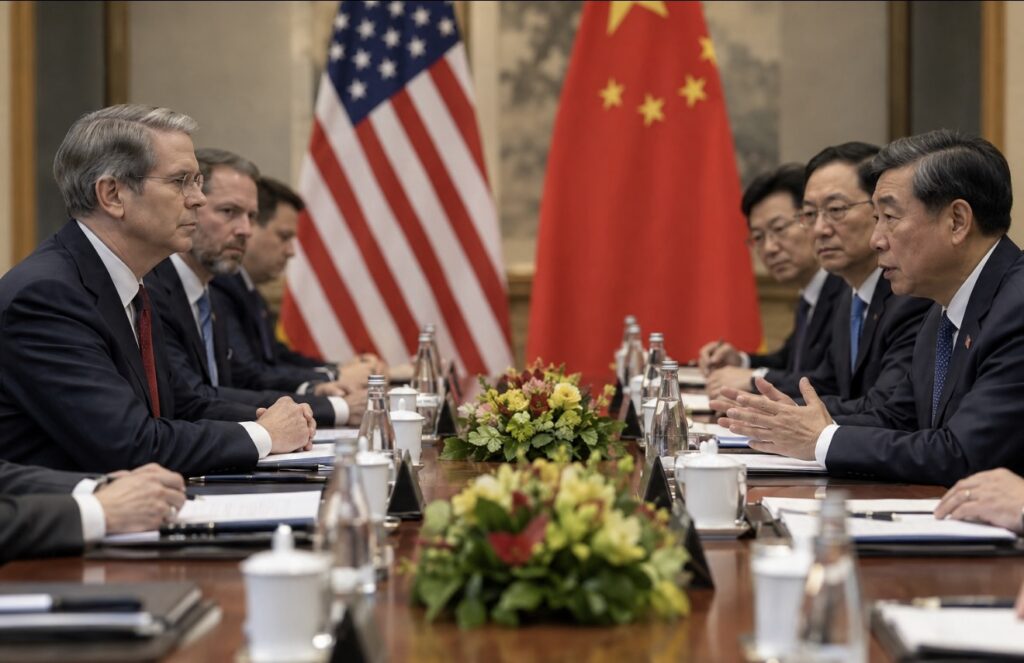
The United States and China are discussing cutting tariffs on tens of billions of dollars of each other’s goods, a potentially meaningful step toward easing the trade costs that businesses and consumers on both sides have been paying.
The talks are focused on roughly $30 billion of goods from each country, with officials looking primarily at products considered less sensitive to national security. China’s Commerce Ministry said last week that both sides were working toward reciprocal tariff reductions and hoped to reach an agreement soon.
The timing matters. President Donald Trump and Chinese President Xi Jinping are preparing for a possible September 24 meeting in Washington, and economic officials are trying to make progress before the two leaders sit down.
Treasury Secretary Scott Bessent is expected to meet Chinese Vice Premier He Lifeng this weekend as Washington and Beijing continue broader economic discussions. China has not yet formally confirmed the September 24 Trump-Xi meeting.
For American companies, even limited tariff reductions could remove costs that have become embedded in supply chains.
A 10% tariff on a $100,000 shipment adds $10,000 before transportation, warehousing and other expenses are counted. Companies can absorb that cost, demand lower prices from suppliers or pass some of it to customers. Most eventually use some combination of all three.
That is why tariff reductions that appear small on paper can matter to importers dealing with millions of dollars of merchandise each year.
The discussions are not expected to eliminate the broader U.S.-China trade barriers built up over years of disputes involving technology, manufacturing, national security and market access. Instead, negotiators appear to be targeting areas where both governments believe tariffs can be lowered without reopening their biggest political and strategic disagreements.
Agriculture is another important part of the relationship.
China purchased roughly 1 million metric tons of U.S. soybeans in recent days, according to traders cited by Reuters, adding to Chinese purchases ahead of the expected leaders’ meeting. American farmers have long been among the industries most directly affected when trade tensions rise or Chinese buying slows.
Lower tariffs could make additional U.S. agricultural products more competitive in China, while reductions on Chinese goods entering the United States could reduce costs for American companies that still depend on Chinese factories and components.
But the economic relationship has changed significantly from the first major U.S.-China tariff battles.
Companies have spent years shifting portions of their supply chains to Vietnam, India, Mexico and other countries to reduce reliance on China. Beijing has also worked to expand trade with markets outside the United States.
That means a $30 billion tariff agreement would not suddenly return U.S.-China commerce to where it was before the trade war.
It could, however, signal something businesses value almost as much as lower tariffs: stability.
Companies making manufacturing, inventory and investment decisions need to know whether tariffs are likely to rise, fall or remain in place. Sudden changes can leave goods sitting at ports with unexpected costs or force businesses to rewrite contracts with suppliers.
A limited agreement would therefore matter beyond the specific products receiving tariff relief.
Washington and Beijing are also discussing far larger issues, including technology restrictions, artificial intelligence, critical minerals and China’s economic relationship with Iran. Those disputes make a sweeping trade settlement significantly more difficult.
The tariff negotiations nevertheless show that both governments are looking for areas where economic tensions can be reduced without resolving every disagreement between the world’s two largest economies.
The next important test comes this weekend when Bessent and He meet.
If negotiators can finalize tariff reductions before Trump and Xi meet, businesses could get something they have rarely received during years of U.S.-China trade disputes: an actual reduction in the cost of moving goods between the two countries.
For importers, exporters and manufacturers, the details will matter most — which products are covered, how large the reductions are and when they take effect.
Those are the numbers businesses will be watching next.
JBizNews Desk | Washington
© JBizNews.com. All rights reserved. This article is original reporting by JBizNews Desk. Unauthorized reproduction or redistribution is strictly prohibited.