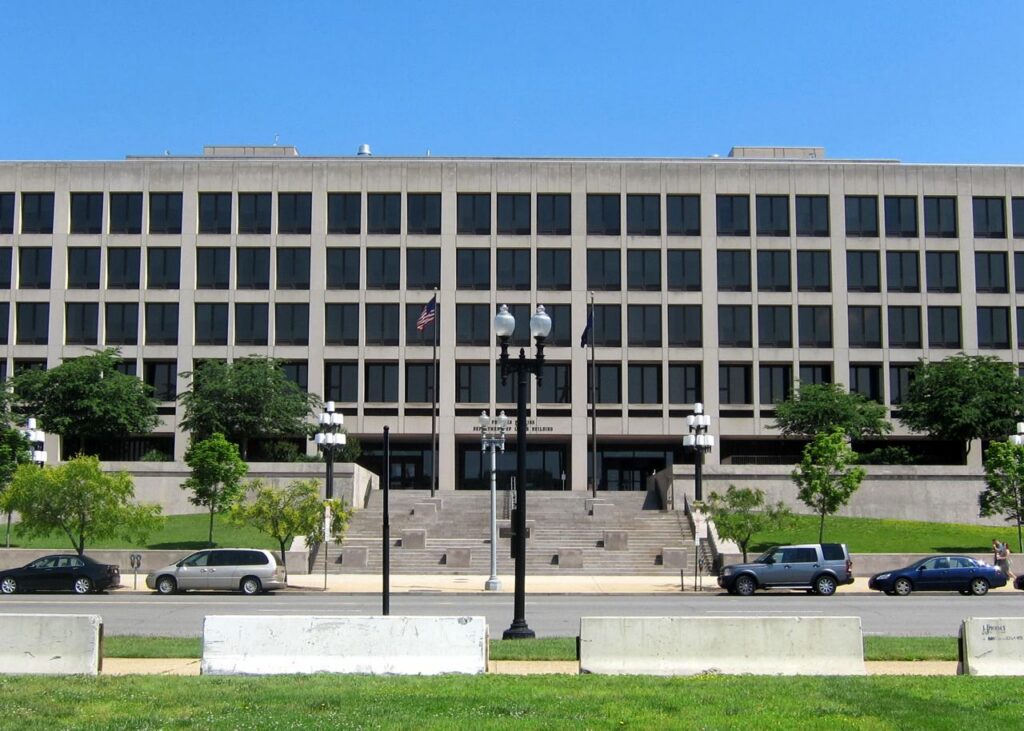
The Frances Perkins Building, U.S. Department of Labor headquarters in Washington, May 2010. Archive photo: AgnosticPreachersKid / Wikimedia Commons, CC BY-SA 3.0. Cropped.
U.S. employer compensation costs rose 0.8% in the third quarter, a slightly slower pace than in the previous three months, as wage growth eased while annual benefit-cost growth picked up, the Bureau of Labor Statistics reported Friday.
The Employment Cost Index for September showed civilian compensation costs increasing 0.8% from June on a seasonally adjusted basis, compared with a 0.9% increase in the quarter ended in June.
Wages and salaries rose 0.7% in the September quarter, down from 0.9% in the previous quarter. Benefit costs increased 0.9%, following a 1.0% rise.
Over the 12 months ended in September, total civilian compensation costs rose 3.4%, unchanged from June’s annual rate. Annual wage growth slowed to 3.1% from 3.2%, while benefit-cost growth increased to 3.9% from 3.8%.
Private-sector costs rise 3.4% over the year
Private-industry compensation costs increased 0.8% during the quarter, following a 0.9% increase in the three months ended in June. Wages and salaries rose 0.8%, while benefits increased 0.9%.
Private-sector compensation costs were 3.4% higher than a year earlier, compared with a 3.3% annual increase in June. Private-sector wages rose 3.1% over the year, and benefit costs increased 3.9%.
After adjusting for inflation, private-industry wages and salaries fell 0.6% from a year earlier, the BLS said. The decline in inflation-adjusted pay means the nominal wage increase did not keep pace with the price adjustment used in the report.
Private-industry health-benefit costs increased 6.4% over the year, compared with 6.0% in June. That measure covers one part of employer benefit costs, rather than total employee compensation.
Government compensation growth slows
Compensation costs for state and local government workers increased 0.6% during the quarter, down from 1.0% in the June quarter. Their wages rose 0.6%, and benefit costs increased 0.7%.
Over the year, state and local government compensation costs rose 3.5%, compared with 3.6% in June. Wages and salaries increased 3.2%, while benefits rose 3.8%. Inflation-adjusted wages and salaries for those workers declined 0.5% over the year.
The headline civilian measure combines private-industry workers with state and local government employees. Quarterly changes in Friday’s release are seasonally adjusted; the annual changes are not.
Union and nonunion workers show different annual gains
Within private industry, compensation costs increased 4.3% for union workers over the year, compared with 3.3% for nonunion workers. Wages and salaries rose 4.3% for union workers and 3.0% for nonunion workers, according to the release.
The report measures employer costs for wages, salaries and benefits. It does not by itself establish a change in hiring, employment or the Federal Reserve’s next interest-rate decision.
The BLS scheduled its next Employment Cost Index release, covering December 2026, for January 29, 2027, at 8:30 a.m. Eastern time. That release will introduce updated employment weights and remove workers’ compensation costs from the index, the agency said.
JBizNews Markets Desk | WASHINGTON
© JBizNews.com. All rights reserved. Unauthorized reproduction or redistribution is strictly prohibited.