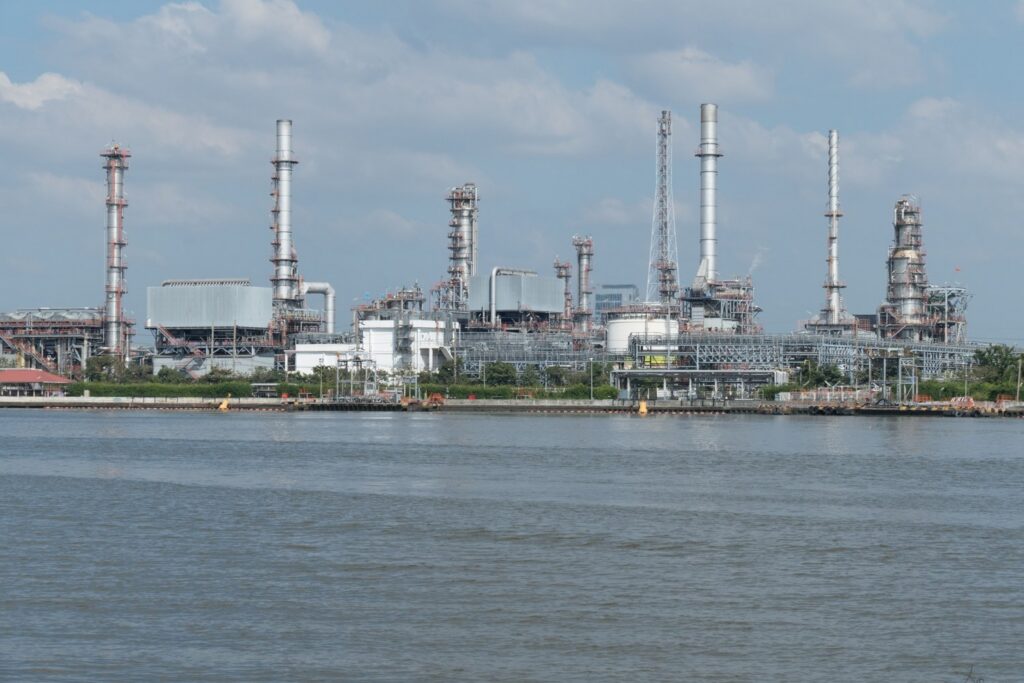
An oil refinery beside a waterway. Photo: Picas Joe/Pexels.
U.S. refiners devoted a smaller share of their output to gasoline in the first eight months of 2026 as stronger financial incentives pushed production toward diesel and jet fuel, according to the U.S. Energy Information Administration.
Gasoline refinery yields averaged less than 45% from January through August and fell below the 2021-2025 low for each corresponding month, the agency said in a November 5 report. The shift occurred despite high gasoline prices, as margins for distillate fuel oil and jet fuel were significantly higher.
What refinery yield means
Yield describes the share of a particular fuel produced from the crude oil a refinery processes. In the United States, gasoline yield typically runs between 45% and 50%. In plain terms, refiners generally produce about 45 to 50 barrels of gasoline for every 100 barrels of crude oil they process, the EIA explained.
The new figures show that gasoline accounted for a smaller part of that production mix through August. They do not, by themselves, establish a gasoline shortage or tell drivers what they will pay at the pump.
A fuel’s share of refinery production is also different from the total amount produced. A lower gasoline yield is not the same measurement as a decline of that size in total gasoline output.
Diesel and jet fuel took a larger share
Distillate fuel oil, often sold as diesel, had a refinery yield above its five-year average in every month covered by the report. For truckers, that means refiners were directing a larger-than-usual share of their production mix toward the fuel used by many trucks, rather than simply maximizing gasoline production.
The EIA said limits on global distillate supplies had kept refining margins elevated for much of the year. Those margins help explain why refiners favored diesel and jet fuel even while gasoline prices were high: the agency identified stronger financial incentives in those other fuels.
Jet fuel’s share was unusually high as well. The U.S. refining fleet first exceeded an average jet fuel yield of 12% in March 2026. It then remained at or above 12% through August, the latest month in the Petroleum Supply Monthly data used for the report.
Jet fuel yields had already reached five-year highs for much of 2025. Elevated margins in 2026 gave refiners a continuing incentive to maximize jet fuel production, the EIA said.
A look at the production mix, not a price forecast
Gasoline, distillate fuel oil and jet fuel typically account for 85% to 90% of the petroleum products produced by U.S. refineries, according to the agency. Shifts among those fuels can therefore change the mix of refinery output substantially.
The November 5 analysis describes historical production patterns through August. It does not establish a new change in pump prices, predict what drivers or truckers will pay next, or show that a local station is running short of fuel.
JBizNews Desk | Washington
© JBizNews.com. All rights reserved. Unauthorized reproduction or redistribution is strictly prohibited.