The US is examining the possibility of establishing a secure artificial intelligence base in Israel’s Negev Desert as part of a broader effort to protect advanced technology from Chinese espionage and cement American dominance in the AI race, Michael Doran and Zineb Riboua of the Hudson Institute wrote in a Wall Street Journal op-ed published last week.
According to Doran, a senior fellow at the Hudson Institute, and Riboua, a research fellow at the same Washington-based think tank, American and Israeli officials are discussing a joint initiative known in Israel as Project Spire. The proposed facility would combine the security standards of a US military installation with the research and engineering culture of a major technology hub.
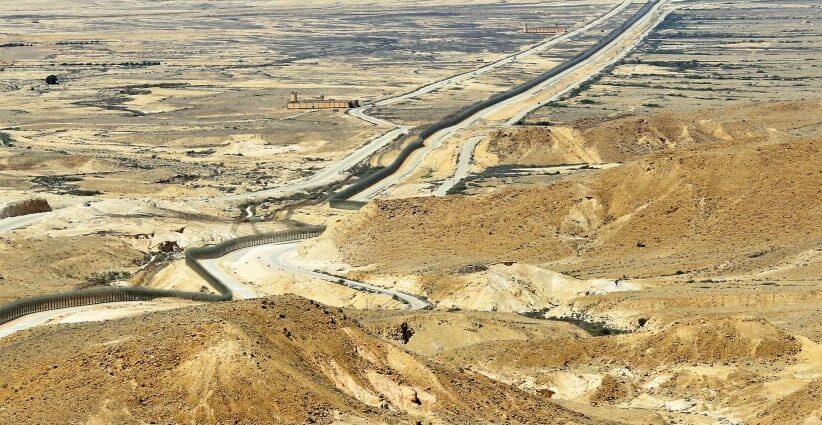
The plan, as described in the op-ed, centers on three Israeli-proposed sites in the western Negev. Israel would reportedly provide the land through a long-term lease for American use, while the facility itself would be designed to host research and development, major server infrastructure, dedicated energy systems, chip design, AI model training, and potentially advanced semiconductor production.
The strategic logic behind the project is not simply to build another tech campus. Doran and Riboua argue that the next stage of the US-China competition will require protected zones where trusted allies can work together on AI without exposing sensitive technology to theft. In their framing, Project Spire would be the first node in a network of hardened AI bases, allowing American companies and allied researchers to collaborate inside secure perimeters governed by strict US standards.
Israel seen as an unusually strong candidate
The op-ed links the project to the Trump administration’s Pax Silica initiative, which is described as an economic-security framework meant to strengthen trusted supply chains, reduce dependence on China, and protect the infrastructure behind advanced computing. The writers cite a January 16, 2026, declaration signed in Jerusalem by US Undersecretary of State Jacob Helberg and Erez Askal, head of Israel’s National AI Directorate, as a possible foundation for the initiative.
Israel, the writers argue, is an unusually strong candidate for the first such base because of its concentration of cyber, intelligence, military technology, chip architecture, and applied AI expertise. They also point to the presence of major American technology companies in Israel, including Nvidia, Intel, Google, and Microsoft, as evidence that the country already sits deep inside the US-led technology ecosystem.
The Negev, in their view, would also offer strategic continuity. The region already has a history of advanced US-Israeli industrial cooperation, including Intel’s long-running manufacturing activity in Kiryat Gat. A new AI base would build on that foundation while moving into a more sensitive domain: the computing power, energy capacity, software development, and chip capabilities needed for the next generation of artificial intelligence.
Doran and Riboua present the project as a way to strengthen both economies. Technologies developed at the base would remain under American ownership, they write, while still allowing production and scaling to take place in the US. That structure, they argue, would create high-value jobs in both countries and help American firms maintain leadership over critical AI systems.
The proposal is also framed as a response to the vulnerability of existing supply chains. Taiwan remains central to global semiconductor production but is exposed to geopolitical pressure from China. Other allies, including Britain, Japan, South Korea, and India, each have major strengths, but the writers argue that Israel offers a rare mix of operational speed, technological depth, battlefield-driven innovation, and trust with Washington.
If approved, Project Spire could become a model for similar secure AI facilities in other allied countries. The core idea is that the US would not retreat from global technological cooperation, but would move it into controlled environments where intellectual property, military applications, and sensitive infrastructure are better protected.
For Israel, the project would mark a significant expansion of its role in the AI and semiconductor race. For Washington, it would test whether a close ally can host a strategic technology base designed not only to produce innovation, but to shield it.