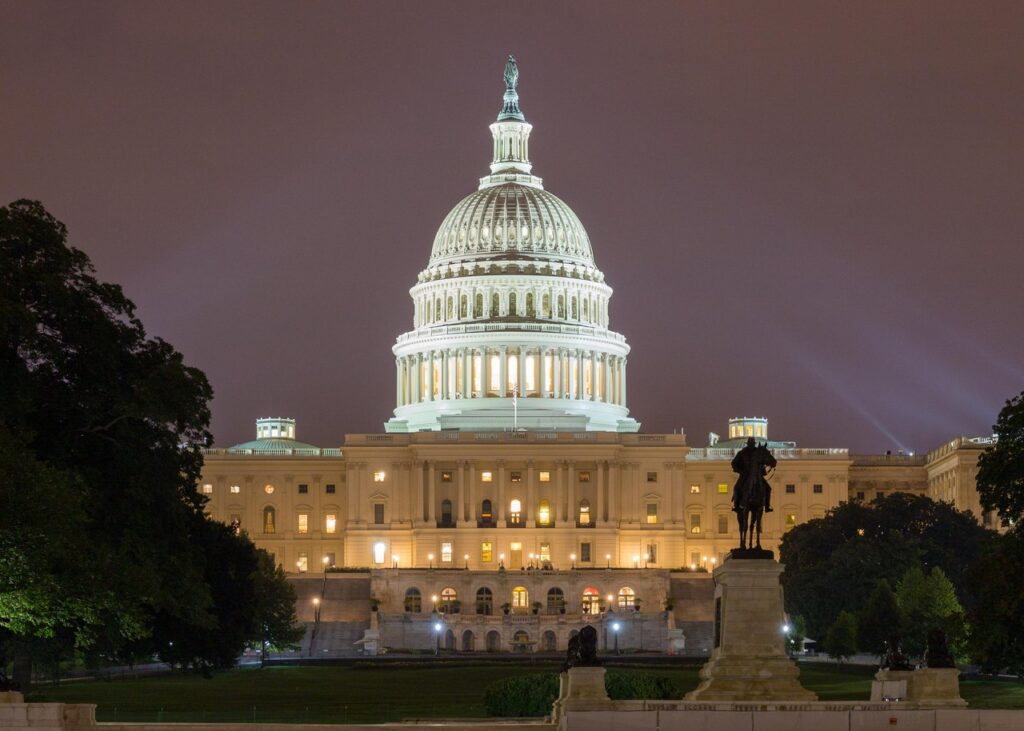
U.S. Capitol at night, August 16, 2017. Archive photo: Martin Kraft / Wikimedia Commons (photo.martinkraft.com), CC BY-SA 4.0. Cropped; adapted photo under the same license.
TD Cowen and Raymond James have publicly outlined expectations for Democratic gains in the November midterm elections, with their analysts examining how a change in congressional control could affect banking, housing and cryptocurrency policy.
The firms’ published views are forecasts, not election results. They also differ in confidence about the Senate: TD Cowen’s public election preview expected both chambers to change hands, while Raymond James described Senate control as a toss-up.
For investors, the policy question goes beyond which party wins. It includes who runs financial-services committees, which subjects get hearings and whether new legislation can pass a divided Washington.
Two firms, two levels of confidence
In an October 8 podcast published by TD Securities, TD Cowen Washington Research Group analyst Jaret Seiberg said the firm’s view was that Democrats would take control of both the House and Senate. The podcast was recorded September 30, so that forecast predates the final weeks of the campaign.
Seiberg said the election could drive policy through 2027 and 2028. His discussion focused on the financial sector, including housing legislation, bank mergers and the direction of cryptocurrency oversight.
Raymond James’s October 23 weekly strategy commentary, published by Chief Investment Officer Larry Adam, said its Washington Policy team saw Democrats as well positioned to win the House. It called Senate control a toss-up, while describing a Democratic sweep as its most likely scenario.
These public statements establish that analysts at the two firms were preparing for Democratic gains. They do not measure the views of all investors or establish a Wall Street-wide consensus.
Housing, bank oversight and crypto
Seiberg’s preview said a Democratic House could put more emphasis on housing policy, including assistance for first-time buyers, public-housing improvements and incentives to build homes affordable to working families.
He also distinguished tougher congressional scrutiny from an automatic reversal of bank regulation. Even under his Democratic-sweep scenario, he did not expect the party to have the Senate votes needed for major financial-sector re-regulation. He expected the administration’s regulators to continue pursuing deregulation, with a favorable environment for bank mergers extending into 2027.
On cryptocurrency, Seiberg expected a Democratic Congress to give more attention to investigations and oversight, including the president’s family’s cryptocurrency interests. That was his forecast of a possible agenda, not an announcement that any new investigation had begun.
Those scenarios illustrate why control of Congress can matter to particular industries without producing a single, predictable market outcome. Committee priorities, regulatory decisions and enacted laws are different steps; an election forecast does not settle any of them.
The result is still ahead
USAGov’s explanation of congressional elections says all 435 House seats and roughly one-third of the Senate are contested in each midterm cycle. The results determine which party holds a majority in each chamber for the next two years.
The primary-source record supports a specific conclusion: TD Cowen and Raymond James had publicly discussed Democratic gains and their potential policy consequences before the election. It does not support treating a sweep as certain, attributing a collective position to Wall Street or claiming that investors had already repositioned their portfolios on that basis.
JBizNews Washington Desk | WASHINGTON
© JBizNews.com. All rights reserved. Unauthorized reproduction or redistribution is strictly prohibited.