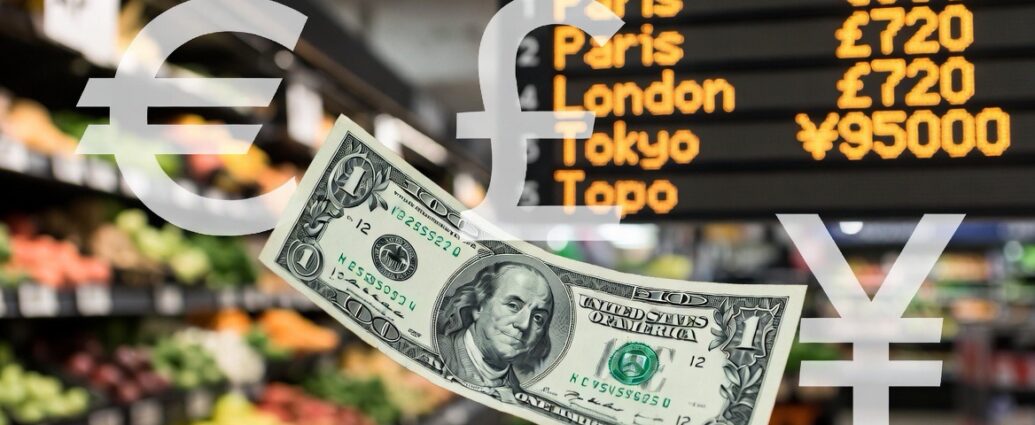
Washington — May 5, 2026 — The U.S. dollar has weakened by roughly 10% against a basket of major currencies since the start of the current Trump administration, driving higher consumer costs for groceries and international travel and adding fresh pressure to household budgets already strained by elevated fuel prices and lingering inflation.
The decline in the dollar’s value — tracked by the DXY index — has made imported goods more expensive for American shoppers and vacationers, according to economists and market analysts tracking the currency’s performance. A weaker dollar means foreign producers and suppliers receive fewer dollars for their products, prompting them to raise prices in the U.S. market to protect margins. The effect is now showing up at supermarket checkout lines and travel booking sites across the country.
Groceries have been hit particularly hard. Many everyday food items — from coffee and chocolate to fresh produce, olive oil, seafood, and packaged goods — rely heavily on imports. A 10% currency drop translates directly into higher landed costs for retailers, who are passing much of that increase along to consumers. Industry data shows supermarket prices for imported staples have risen 4-7% in recent months, contributing to the broader cost-of-living squeeze. Families in high-cost coastal cities report feeling the pinch most acutely, with weekly grocery bills climbing by $15–$30 on average for middle-income households.
International travel is facing a similar hit. A weaker dollar makes trips to Europe, Asia, and Latin America significantly more expensive for American tourists. Hotel rates, restaurant meals, and attractions priced in euros, yen, or pesos now cost 8–12% more in dollar terms than they did at the start of the administration. Airline tickets for overseas flights have also climbed, compounding the pain from the ongoing fuel-price crunch that has already battered carriers like Spirit Airlines and European budget operators Ryanair and easyJet. Travel booking platforms report a noticeable slowdown in demand for foreign destinations, with domestic travel gaining some share as families opt for cheaper U.S. vacations.
The currency weakness stems from a combination of factors. Persistent U.S. trade deficits, aggressive tariff policies that have strained relations with key trading partners, and expectations around Federal Reserve interest-rate decisions have all weighed on the dollar. Geopolitical uncertainty tied to the Iran conflict and its ripple effects on global energy markets has added volatility, as investors seek safety in other currencies and assets. While a weaker dollar can benefit U.S. exporters by making American goods cheaper overseas, the immediate pain for consumers — especially on imported essentials — has been more visible and politically sensitive.
Economists warn the trend could exacerbate inflationary pressures at a time when many households are still recovering from pandemic-era price spikes. Mohamed El-Erian, chief economic advisor at Allianz, noted in recent commentary that the dollar’s slide “is acting like a hidden tax on American consumers,” particularly those without the flexibility to substitute domestic products for imports. Retailers and travel companies are scrambling to hedge currency risk, but those costs ultimately flow through to pricing.
For businesses, the impact is mixed. Multinational corporations with heavy overseas revenue are seeing translated earnings boosted when converted back to dollars, but import-dependent sectors — food retailers, apparel, electronics, and tourism operators — face margin compression. The National Retail Federation has flagged rising input costs as a key concern heading into the summer season, while the U.S. Travel Association reports softening international bookings that could weigh on hospitality and airline revenues.
The broader economic picture remains complex. A weaker dollar can support manufacturing and agriculture exports, potentially creating jobs in those sectors. However, with consumer spending accounting for roughly 70% of U.S. GDP, any sustained increase in everyday costs risks cooling domestic demand and complicating the Federal Reserve’s path toward its 2% inflation target. Markets will be watching closely when trading resumes Monday for any signs that the currency move is being priced into equities, bonds, and commodities.
This latest development in the dollar’s trajectory adds another layer to the weekend’s breaking business news. From BlackBerry’s QNX software milestone powering 275 million vehicles to Israel’s cost-of-living crisis surpassing wealthy European nations, Warren Buffett’s warnings on crypto speculation, and the ongoing diplomatic standoff over Iran’s rejected peace proposal, investors and corporate executives are navigating multiple crosscurrents. For American families, the weaker dollar is translating into tangible pain at the grocery store and on vacation planning sheets — a reminder that currency moves have real-world consequences far beyond Wall Street trading floors.
JbizNews- Desk – Economy / Markets