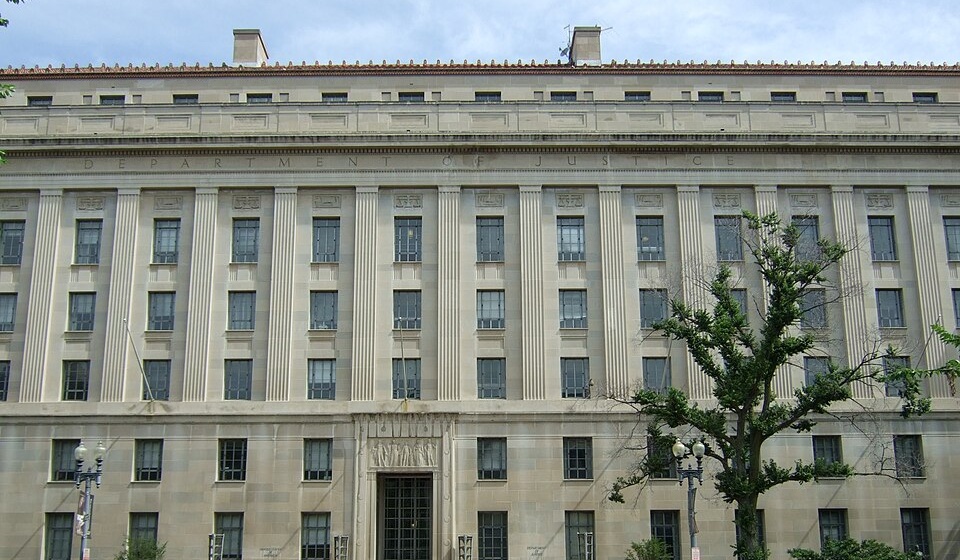
The Justice Department headquarters in Washington, photographed in June 2011. Photo: Baseball Watcher / Wikimedia Commons, CC BY-SA 3.0; cropped.
The Justice Department said Friday that the Drug Enforcement Administration is moving forward with more than 900 federal registrations for qualifying medical marijuana dispensaries in seven states. For patients and business owners, the distinction is important: this is a limited medical-marijuana framework, not nationwide legalization.
What was announced?
The initial registrations cover qualifying dispensaries in Alabama, Florida, Mississippi, South Dakota, Texas, Virginia and West Virginia. DOJ described them as the first phase of implementing the attorney general’s April order establishing federal oversight of qualifying medical marijuana activity.
The department said each dispensary must meet federal requirements, including successfully completing a DEA pre-registration investigation. Having a state medical marijuana license does not automatically provide federal registration.
Does this legalize recreational marijuana?
No. DOJ said the order does not authorize recreational marijuana or other activity outside its defined scope. Marijuana outside that framework remains subject to Schedule I controls. The broader proposal to reschedule marijuana is a separate administrative proceeding.
What does registration mean for a dispensary?
Registered dispensaries are subject to federal requirements for security, records, inventory and other controls. The April rule established an expedited registration process for entities with qualifying state medical marijuana licenses. Registration is not an exemption from oversight.
DOJ said DEA will continue reviewing dispensary applications in phases. Applications from manufacturers and distributors require additional review, including facility inspections, production controls and quota determinations.
What about applications still being reviewed?
DOJ said qualifying manufacturers, distributors and dispensaries that applied within the order’s initial 60-day period may continue certain medical marijuana transactions while their applications remain pending, subject to the order’s requirements. That provision is limited to qualifying applicants and transactions, not every business with a state license.
What should patients check?
The announcement does not provide a blanket authorization for every dispensary or every marijuana product. Patients should check the rules of their state program and ask their dispensary about its status.
The practical takeaway is narrow: qualifying medical dispensaries are entering a federal registration system. Friday’s announcement does not establish nationwide recreational access or remove the need to follow state and federal requirements.
JBizNews Desk | Washington
© JBizNews.com. All rights reserved. Unauthorized reproduction or redistribution is strictly prohibited.