Seven electoral lists have so far submitted nomination applications to the Palestinian Central Elections Commission (CEC), seeking seats in the Palestinian Legislative Council in the upcoming November elections.
The commission received applications from six lists on Saturday, the first day of the nomination period, before receiving a seventh application from Al-Finiq (The Phoenix) list on Sunday.
The seven lists are Al-Finiq (The Phoenix), E’tilaf Falastin Al-Mustaqbal (Palestine Future Coalition), Al-Adala Wal-Bina (Justice and Construction), Al-Mubadara Al-Wataniyya (National Initiative), Al-Wihdah Wa Attaghyeer Al-Democrati (Unity and Democratic Change), Masar Jadid (New Path) and Al-Amal (Labor).
The Palestinian CEC has stressed that submitting a nomination application does not mean that a list has been accepted. Applications remain subject to legal review and verification.
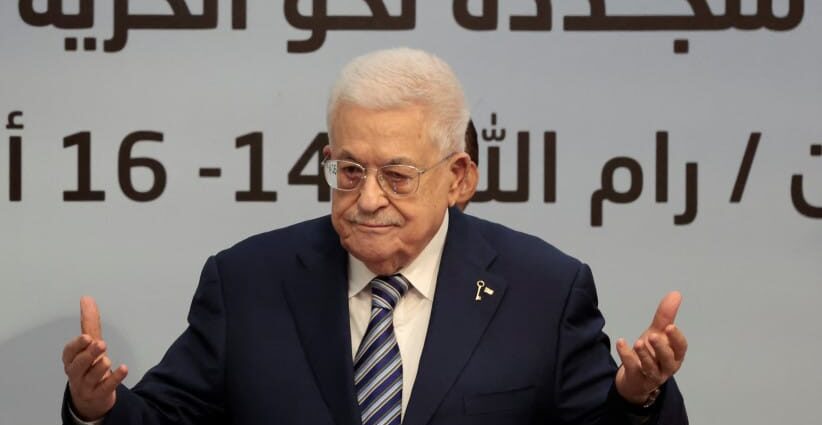
The growing number of groups seeking seats in the PLC came as Palestinian Authority President Mahmoud Abbas on Sunday extended the nomination period from 12 to 18 days. The legal nomination period will now run through October 13, while the Palestinian CEC said the November 28 polling date would remain unchanged. The commission is expected to revise the timetable for subsequent stages of the electoral process following the extension.
Al-Finiq
The latest list to submit a nomination application, Al-Finiq entered the race on Sunday, bringing the number of submitted applications to seven. The CEC has not yet published a final list of candidates or officially approved the application.
Ahmad Shadid, an International Relations expert regularly cited in the Arab world for his commentary and insights into Israeli politics, announced on Facebook that he was leading The Phoenix’s list.
Little information about the list’s political platform has been publicly reported so far.
E’tilaf Falastin Al-Mustaqbal
Headed by Rizq Al-Namoura, a member of the PLO Central Council and a former Palestinian ambassador to Bosnia and Herzegovina, the coalition was the first list to submit its application and received the number one position based on the order in which applications were submitted.
The coalition has 114 candidates from the West Bank, east Jerusalem, and Gaza. Women make up 40% of the list, and youth make up 33%, according to the coalition.
Its stated program focuses on Palestinian national unity, strengthening Palestinian institutions, social justice, and economic development and employment, as well as institutional reform, the rule of law, and judicial independence.
Al-Adala Wal-Bina
The Justice and Construction list is running as an independent list rather than under one of the major Palestinian political factions.
Available reporting describes the list as uniting social and professional figures and representatives of unions and associations. Its stated program focuses on social, cultural, and economic issues, marginalized groups, and combating corruption.
More detailed information about the current 2026 list and its candidates has yet to be widely reported.
Al-Mubadara
The Palestinian National Initiative list is headed by Mustafa Barghouti, its secretary-general, who has been a member of the PLC since 2006, and served as information minister in the Palestinian unity government formed in 2007.
The initiative has historically advocated for Palestinian statehood and political reform. In 2024, Barghouti publicly advocated for a democratic one-state solution with equal rights for Israelis and Palestinians while discussing the possibility of Palestinian statehood.
Barghouti has also indicated that the initiative remains open to cooperation with other Palestinian factions and political groups, notably Mohammed Dahlan’s Democratic Reform faction – and Hamas’s push for a unified list.
Al-Wihdah Wa Attaghyeer Al-Democrati
The Unity and Democratic Change list is headed by Majda Al-Masri, deputy secretary-general of the Democratic Front for the Liberation of Palestine (DFLP).
The list has 60 candidates from the West Bank, Gaza, and Jerusalem. Women account for 37% of its candidates and youth for 30%, according to the list’s organizers. The list also includes Palestinian prisoners.
The DFLP has presented the list as an effort to rebuild the Palestinian political system, restore national unity, and give Palestinians a greater role in choosing their representatives.
Masri has emphasized political reform, Palestinian national unity, and resistance to the Israeli occupation, while the list’s platform also addresses employment, health, education, agriculture, infrastructure, and social protections.
The list is headed by Masri, followed by Luay Abu Muammar, a DFLP member in the Gaza Strip and an official with the Union of Health Care Committees (UHCC) in Gaza; Muhammad Uthman Dweikat, an anti-wall activist arrested by Israel in 2009; and Nada Tuweir, president of the General Union of Palestinian Women.
Ibrahim Abu Hajla, a Palestinian prisoner sentenced to 24 years in prison for attempted murder and released as part of the 2011 Shalit prisoner exchange, is also on the list.
Masar Jadid
New Path President Samer Sinijlawi, a Fatah member and chairman of the Jerusalem Development Fund who frequently shares his criticism of Abbas with The Jerusalem Post, has spoken against radicals on both sides of the Israeli-Palestinian conflict, the pay-for-slay system, and the denial of Jewish history in the region.
Asked by the Post on Monday what New Path believes in, Sinijlawi said that Palestinian society “needs structural, not merely cosmetic, change.”
“We seek to replace personalized and factional rule with democratic institutions, regular elections, the rule of law, an independent judiciary, transparent public finances, and genuine accountability,” he said. “Our guiding principle is: one legitimate authority, one law, and one weapon.”
He added that “we also want to open political and economic life to a new generation. Women and young people must become decision-makers, not simply symbolic participants.”
Sinijlawi said it was essential that “public appointments should be based on competence rather than loyalty or connections,” and that “education, healthcare, and economic policy must be redesigned to improve people’s daily lives and create real opportunities.”
Repeating similar statements he made to the Post in May, he insisted that Palestinian politics must move from violence to dialogue, and direct engagement with Israel would allow the establishment of a Palestinian state “while ensuring security and dignity for both peoples.”
New Path’s founding conference elected Adel Al-Ghoul as vice president. Its executive members include Ibrahim Assalia, Huda Sandawi, Yaffa Al-Kafarna, Hossam Saad, Rami Rab’a, Mahmoud Abu Arar, Ahmed Dmeiri, Nail Mansour, Rawaa Abu Kamil, Jamal Abu Zayda, Adnan Al-Fleit, and Nasser Al-Ramlawi.
The group presents itself as a new political model focused on transparency, digital governance, and direct accountability, and it has sought to appeal to younger Palestinians who have been excluded from political decision-making.
“New Path’s message is simple: Politics must stop serving factions and begin serving citizens, from Gaza to Jerusalem and Jenin,” Sinjlawi said.
Al-Amal
Little information has so far been publicly reported about the Al-Amal, or Labor, list.
It was among the six lists that submitted nomination applications on the first day of the process.
As the nomination period has now been extended through October 13, additional lists may still enter the race before the field is finalized. The CEC must also complete its review of the seven applications already submitted.