Oil prices are elevated. The conflict involving Iran and disruptions around the Strait of Hormuz have injected fresh uncertainty into global energy markets, threatening a critical shipping route that normally carries roughly one-fifth of the world’s oil supply.
By the traditional rules of the oil business, that should be enough to trigger a wave of new drilling across the United States.
It hasn’t.
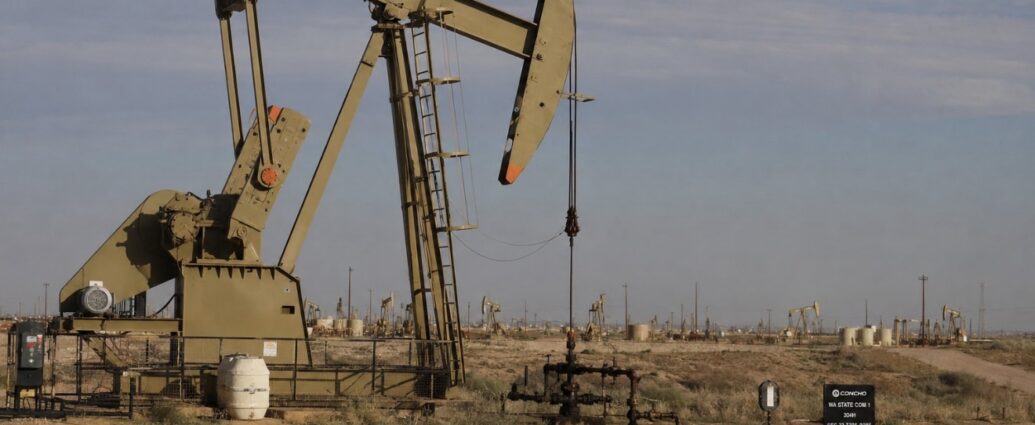
Instead, many of America’s largest oil producers are taking a wait-and-see approach, choosing caution over expansion despite a market environment that would once have sparked an aggressive drilling boom.
The reason is straightforward: oil companies do not believe today’s prices are guaranteed to last.
A new well is not an overnight project. It can take several months between the start of drilling and the point at which oil begins flowing to market. Producers making investment decisions today are effectively wagering that oil prices will remain attractive months from now.
Many executives are unwilling to make that bet.
Paul Mueller, an economist who follows the energy sector, noted that producers remain hesitant to commit large amounts of capital based on what could ultimately prove to be a temporary geopolitical shock.
That caution is reflected in data from the Federal Reserve Bank of Dallas, which surveyed 135 energy companies in its latest Energy Survey.
The industry’s outlook improved sharply during the first quarter. The survey’s business activity index climbed 27 points to 21, while the outlook index surged from negative territory to 32.2, signaling growing confidence in current conditions.
Yet optimism has not translated into major new drilling commitments.
Nearly 70% of large exploration and production companies reported no meaningful change to their drilling plans, while roughly half of all surveyed firms said they had not altered the number of wells they expect to drill this year.
Michael Plante, Assistant Vice President at the Dallas Fed, said uncertainty surrounding the Middle East conflict remains a significant factor affecting investment decisions.
Executives appear to be focused less on today’s oil price and more on where prices will be once geopolitical tensions eventually ease.
One producer surveyed by the Dallas Fed said the industry still lacks visibility into how quickly production and exports from the Persian Gulf region could normalize after the conflict. While some infrastructure damage could limit immediate supply recovery, the company estimated a long-term planning range of approximately $70 to $80 per barrel for U.S. crude.
Beyond the war itself, there is a deeper structural shift reshaping the industry.
For much of the shale boom, energy companies aggressively pursued growth, borrowing heavily and drilling aggressively whenever prices rose. Investors ultimately punished that strategy after repeated boom-and-bust cycles destroyed shareholder value.
Today, Wall Street rewards a different model.
Instead of prioritizing production growth at any cost, investors increasingly demand profitability, free cash flow, dividends, and stock buybacks. Industry executives refer to this approach as capital discipline, and it has become one of the defining characteristics of the modern U.S. energy sector.
The numbers illustrate the trend.
According to Baker Hughes, the U.S. drilling rig count has generally declined over the past year despite periods of elevated crude prices. Oil-focused drilling activity has softened while companies concentrate on maximizing returns from existing assets rather than pursuing aggressive expansion.
At the same time, drilling economics remain challenging.
The Dallas Fed reports that the average breakeven oil price required to profitably drill a new U.S. well now stands at approximately $66 per barrel. In the Permian Basin, America’s most productive oil region, the average breakeven price is approximately $67 per barrel.
With development costs elevated and future oil prices uncertain, many producers see little reason to rush into expensive new projects.
Instead, companies are increasingly turning to a faster and less risky option: completing wells that have already been drilled.
Diamondback Energy, one of the largest independent producers in the Permian Basin, has been working through its inventory of previously drilled wells, allowing it to increase production without committing to large-scale new drilling programs.
Because those wells already exist, companies can bring additional oil to market much faster and at lower risk than starting entirely new projects.
The willingness to expand is more visible among smaller producers.
According to the Dallas Fed survey, nearly 60% of smaller firms reported increasing the number of wells they expect to drill this year, suggesting that independent operators remain more responsive to higher prices than larger publicly traded companies.
Even so, industry expectations remain relatively modest.
Most executives surveyed by the Dallas Fed projected that current geopolitical disruptions would increase U.S. oil production by no more than 250,000 barrels per day during 2026—a meaningful figure but far short of the kind of explosive growth that characterized earlier shale booms.
For consumers, the implication is significant.
Even during a period of elevated prices and global supply uncertainty, the United States is unlikely to respond with the rapid drilling surge that once helped stabilize energy markets. That means higher fuel costs could persist longer than many motorists hope, while the inflationary effects of elevated energy prices continue to ripple throughout the economy.
The shale industry that once chased every price spike has evolved.
Today’s oil executives are less interested in betting on geopolitical turmoil and more focused on protecting shareholder returns. Until producers gain confidence that higher oil prices are sustainable, America’s drilling boom is likely to remain on hold.
JBizNews Desk — Energy
© JBizNews.com All Rights Reserved. Reproduction or distribution without written permission is prohibited.