There are three nonmilitary and nonprofessional issues that have infected and skewed all of the coverage about the likely impending or eventual Iran nuclear deal, which will govern much of the Middle East’s conflicts postwar.
How does the writer, media outlet, or political official who is commenting feel about returning to war, regime change in Iran, and the upcoming Israeli and American elections, which reduce the war to the oversimplistic formulation of whether it is a win or a loss?
While these three questions are important, for Israel to properly understand its security needs and risks for the future, it is also important to come to a dispassionate and apolitical evaluation of the major issues involved in the deal.
Those issues are:
• How much has the nuclear threat been pushed back?
• How much has the ballistic-missile threat been pushed back (specifically to Israel, since the UAE is a separate question?
• How secure will the Strait of Hormuz be from Iranian interference in the future?
• How much money will Iran get out of this deal, and how much more dangerous will that money make it and its proxies?
Zero progress for Iran on rebuilding nuclear threat
Iran’s nuclear threat has been pushed back by multiple years, given the combined impact of the 12-day war in June 2025 and the war this year.
One proof is that we are now a full year after the June 2025 operation, and Iran has made zero real rebuilding progress.
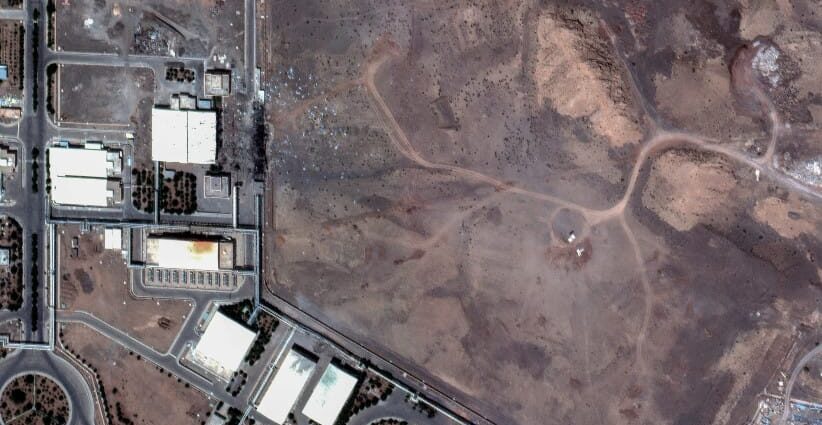
Another is that satellite footage shows Iran’s main bombed sites have not been rebuilt, and that where small rebuilding occurred in 2025, these were bombed again, usually in 2026.
It is also pretty clear that any nuclear deal will involve the 400-plus kilograms of 60%-enriched uranium being removed as a threat.
The ongoing negotiations are stuck on questions of whether the uranium will be removed from Iran physically, and if so, to where and how soon, or diluted down to be much farther away from being able to be weaponized.
They are also stuck on questions of how long Iran will freeze uranium enrichment – whether something like 15 years or 20 years – and how long there will be a complete freeze, versus a return to low-enriched uranium.
There are also fights about the sequence of when the uranium will be dealt with, versus when Iran will receive portions of its frozen funds and concessions for the removal of sanctions.
For the first time, there are no fights on the sequencing of when uranium enrichment will be frozen, since there has been no enrichment for more than a year, and all the centrifuges have been damaged or destroyed.
Iran’s missile stockpile reduced
The ballistic-missile picture is more complex.
The main achievements have been reducing Iran’s ballistic missile arsenal from 3,000 missiles in June 2025 to 1,000 or several hundred, and blocking it from growing to 5,000 or 6,000 missiles, which it could have done by now if left unimpeded.
It will also likely take multiple years for Iran to be able to return to a significant pace of producing new ballistic missiles, although if China provides unprecedented assistance in this area, the recovery could be faster. (China’s spokespeople consistently tell The Jerusalem Post Beijing never aids Iran with any weapons systems and contend it has the right to sell Iran dual-use materials.)
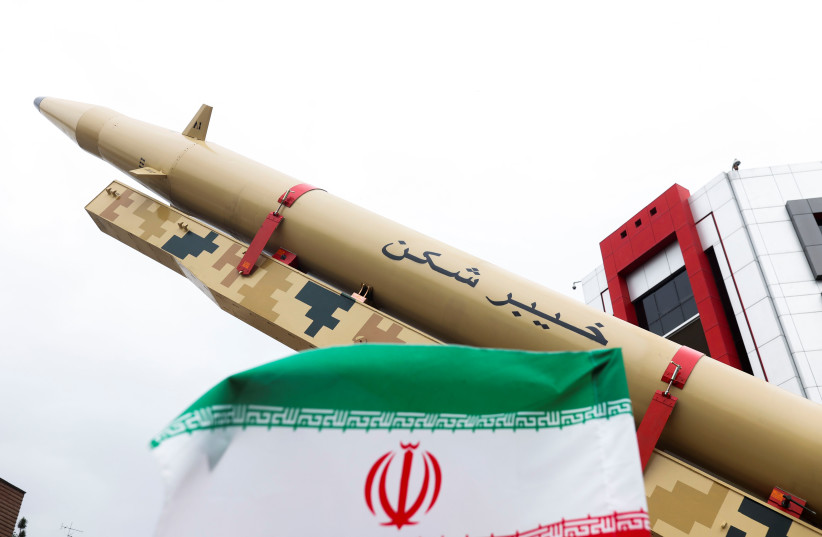
This issue will not be formally dealt with by the Iran deal. But in any case, Israel will reserve the right to strike again should Iran ever try to increase its ballistic-missile arsenal to a number larger than 3,000, which could potentially overwhelm Israel’s defensive missile shield.
Iran, US negotiating over Strait of Hormuz
There are tough negotiations going on about how much control and financial gain Iran can use the for, as well as how Washington and Tehran will each be able to guarantee that the other side will not interfere with their interests in the area.
The honest truth is that no negotiations this round will fully make Hormuz safe from a new potential Iranian incursion, given that Iran’s geography favors it heavily on this issue.

Regarding the nuclear issue, the US and Israel have the upper hand in the near and medium term, because they know exactly where Iran’s uranium is buried, and Iran cannot remove it without them getting a chance to strike.
Regarding Hormuz, Iran only needs to conceal a small number of sea mines or drones, which can be deployed at a surprise strategic moment, and it will be able to maintain the Strait as a critical chokehold on the US and the world as needed.
The US did not spend much time during the war eliminating Iran’s capabilities around Hormuz. To do so, it probably would require a very extended sea and air campaign focused on that area, and it might involve an extended ground invasion in that area, which Washington would never do at this stage.
Deal would always pay off for Iran
Regarding money, any deal was always going to give Iran lots of money. And it was always going to be able to use some of it to help partially rebuild proxies such as Hezbollah.
That was always the premise: nuclear restrictions for lifting financial sanctions.
Is this bad for Israel? Yes.
Is it worth it if there are real nuclear inspections – anytime and anywhere – that prevent Iran from restoring its nuclear program for 15 or 20 years? For sure, yes.
The only way that Iran would have stopped funding those proxies would have been regime change, and that was never going to happen, just by a short outside war with no ground troops, meaning it was not going to happen during this 2026 war.
Is regime change more likely in the next two years because of the 2025 and 2026 attacks? Also, yes.
Is it very unlikely in the near term when the Islamic Revolutionary Guard Corps is exercising emergency wartime powers? Another yes.
So, anyone who was promising imminent regime change made a mistake and does not look very good right now. But senior IDF and Mossad officers never promised imminent net regime change.
This is a complex picture that does not neatly fit into the paradigm of Israel or the US or Iran won or lost.
Those who say otherwise are conducting election campaigns, or they are trying to convince the parties involved to return to or avoid a return to war, and are less concerned with the convoluted factual picture.
Each side has achieved something significant during this war.
Overall, Israel is much better off than it was in June 2025, because the dual imminent nuclear and ballistic-missile threats have been pushed off, and any deal is likely to push the nuclear threat off even further.
But no deal is going to resolve all of Israel’s problems, and no deal during this specific period was ever going to.
In complex geopolitics, it is usually the right mix of war and diplomacy that achieves greater security and prosperity.
Israel’s goal at this point is to try to get the most it can under the circumstances and then take a needed extended breather to rebuild its diplomatic legitimacy, let its reservists rest, and invest in new military technologies so that if and when there is another round, it will maintain its qualitative edge.