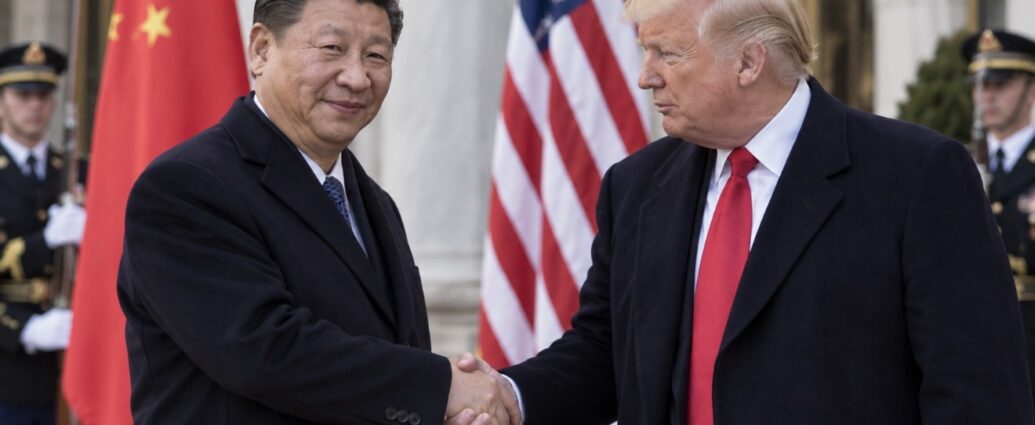
Chinese President Xi Jinping is preparing for a high-stakes Washington visit that could feature an unusually large delegation of Chinese business leaders as Beijing and the Trump administration look for concrete commercial agreements without attempting another sweeping trade deal.
Chinese President Xi Jinping is expected in Washington on September 24, and Beijing is considering bringing a significant group of corporate executives with him — a notable shift for a leader who rarely travels abroad accompanied by large business delegations.
The potential CEO presence signals that China wants the summit to produce more than political symbolism.
Both governments are increasingly focusing on practical business issues that could generate immediate economic benefits, particularly agriculture, market access and non-tariff trade barriers.
U.S. Trade Representative Jamieson Greer said the two countries are likely to make announcements involving agricultural trade and restrictions that prevent American products from reaching Chinese buyers.
But Greer has also made clear that Washington is not expecting a comprehensive new trade agreement.
The strategy instead appears to be managing the relationship sector by sector.
That matters because the two countries remain economically intertwined despite years of tariffs, export controls and restrictions on investment.
China is still one of the largest markets for American agriculture, aircraft, energy and industrial products.
The United States remains an enormous customer for Chinese manufacturers.
Agriculture could become one of the most immediate areas for progress.
China has previously agreed to purchase at least $17 billion annually in U.S. agricultural products through 2028, alongside existing soybean commitments.
It has also restored access for hundreds of American beef facilities and resumed poultry imports from qualifying U.S. states.
But barriers remain.
Chinese private soybean processors have recently struggled with expensive Brazilian supplies while a remaining tariff makes American soybeans less attractive commercially.
That puts additional pressure on both governments to find a solution.
The September summit could also expand the new U.S.-China Board of Trade, created earlier this year to give Washington and Beijing a formal mechanism for managing commerce in non-sensitive goods.
The two governments also established a separate Board of Investment to address disputes involving cross-border capital.
Another major issue will be critical minerals.
Washington remains heavily focused on maintaining access to Chinese rare-earth materials needed for automobiles, electronics, defense systems and advanced manufacturing.
China previously agreed to address American concerns involving materials including yttrium, scandium, neodymium and indium.
The potential corporate delegation adds another dimension.
If senior Chinese executives accompany Xi, companies could use the visit to announce investments, purchases, partnerships or other agreements timed to the summit.
Xi last traveled to the United States with a prominent group of Chinese business leaders in 2015, making another large delegation politically and economically significant.
What It Means for You
This summit may tell businesses something important about where U.S.-China relations are heading.
Neither side appears ready to dismantle the tariffs, export controls and strategic restrictions that now define the relationship.
Instead, Washington and Beijing are building a system where they compete intensely in sensitive areas while continuing to trade heavily everywhere else.
That creates opportunity.
American farmers could gain additional access to Chinese buyers.
Manufacturers could benefit from improved supplies of critical minerals.
Boeing and other exporters could potentially secure additional Chinese orders.
And Chinese companies may seek ways to preserve access to the American market through investments and commercial agreements.
But it also means businesses should not expect the old U.S.-China economic relationship to return.
The new model is increasingly clear:
Compete where national security matters. Negotiate where business still works.
Xi’s September 24 visit could become one of the clearest tests yet of whether that model can actually hold together.
JBizNews Desk | New York
© JBizNews.com All Rights Reserved. Reproduction or distribution without written permission is prohibited.