By JBizNews Desk
May 10, 2026 | JBizNews.com
One of Wall Street’s most influential financial executives is warning that the world is approaching a food supply catastrophe — and that most people are not paying attention. Ron O’Hanley, chairman and chief executive of State Street Corporation, told attendees at the Milken Institute Global Conference in Beverly Hills this week that the ongoing war with Iran is setting the stage for a severe global fertilizer shortage that could devastate next year’s planting season and send food prices sharply higher in ways the public has not yet felt. State Street oversees more than $54 trillion in client assets and manages $5.6 trillion through its investment management arm, making O’Hanley among the most closely watched voices in global finance.
“I personally worry about what happens if this goes on much longer,” O’Hanley said. “It’s the second-order products that don’t get the headlines. Fertilizer is a big one.” He added that industry contacts believe the world can likely get through the current crop year because significant fertilizer inventory was already in the supply chain before the conflict began in late February. But he warned that the following year’s planting season — particularly outside the United States — could face a genuine crisis if the disruption to shipping through the Strait of Hormuz continues.
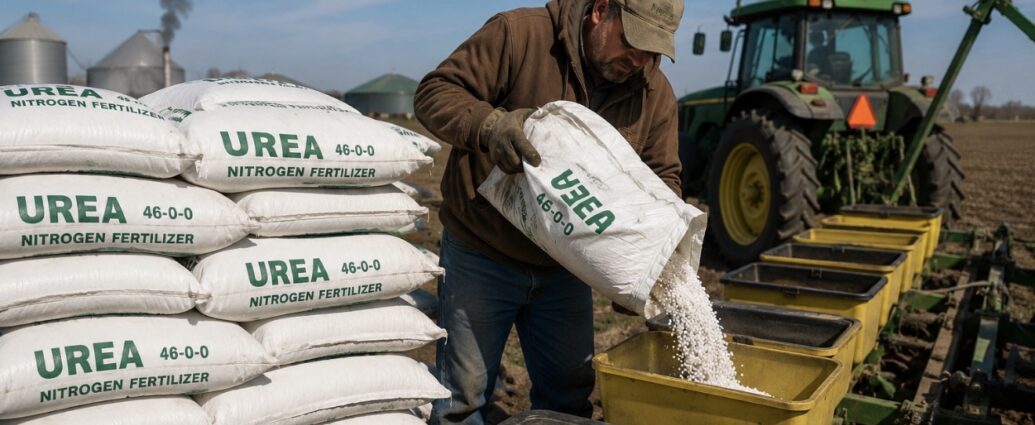
The concern is rooted in geography and trade patterns that most consumers never consider. Roughly one-third of all globally traded fertilizer moves through the Strait of Hormuz, the narrow waterway between Iran and Oman that has been nearly completely shut to commercial traffic since U.S. and Israeli forces launched strikes on Iran on February 28. The region’s Gulf states — Saudi Arabia, Qatar, Iran, Bahrain and others — together supply approximately 30 percent of the world’s traded urea, the most widely used nitrogen fertilizer, along with large shares of global ammonia, phosphate, and sulfur, all critical inputs for crop production.
QatarEnergy announced it would stop downstream production of urea after halting its liquefied natural gas operations following Iranian drone strikes on the Ras Laffan Industrial City complex in March — an attack that caused a 17 percent reduction in Qatar’s LNG production capacity, with repair estimates ranging from three to five years. China, another major fertilizer exporter, simultaneously imposed export restrictions to protect its own domestic market, compounding the supply crunch for importing nations. The result is a tightening global market arriving at the worst possible moment: spring planting season across the Northern Hemisphere.
The consequences for American farmers are already visible. A survey of 5,700 farmers conducted in early April by the American Farm Bureau Federation found that 70 percent of respondents could not afford all the fertilizer they need for the current planting season, and nearly 60 percent said their finances had deteriorated due to rising fertilizer and fuel costs. Diesel prices for agricultural use have climbed from roughly $3.80 per gallon before the war to more than $5.60 as of early May, according to U.S. Department of Agriculture data. The price of urea imports arriving at the port of New Orleans has risen more than 25 percent since late February. Morningstar analyst Seth Goldstein has projected that nitrogen fertilizer prices could roughly double from 2024 levels if disruptions persist, while phosphate prices could rise approximately 50 percent.
The human cost for farming families is direct. John Bartman, an Illinois farmer whose family has worked the same land since the mid-1800s, described the pressure as yet another blow in a string of difficult years. “It’s just another straw that breaks the camel’s back,” he said. The USDA projects that corn will cost roughly $5 per bushel to produce in 2026 but sell for $4.20 — meaning farmers lose money on every bushel. The situation is similar for soybeans, which cost an estimated $12.27 to produce but are expected to fetch only $10.30. Total U.S. farm debt is projected to hit a record $624.7 billion this year.
The crisis extends far beyond American borders. The UN World Food Programme has warned that if the Strait of Hormuz remains closed through June and crude oil prices remain at or above $100 per barrel, approximately 45 million additional people worldwide could be pushed into food insecurity. Asia is particularly exposed: India, Bangladesh, Thailand, and Indonesia rely heavily on Gulf-sourced fertilizers for rice and maize production — two of the most fertilizer-intensive staple crops. Brazil, which accounts for nearly 60 percent of global soybean exports, imports almost half its fertilizer supply through the Strait of Hormuz, creating a cascading risk for global agricultural trade. Sub-Saharan Africa, where over 90 percent of consumed fertilizer is imported and households spend a large share of income on food, faces some of the gravest exposure.
Wolfe Research chief economist Stephanie Roth estimated the disruption could raise food-at-home inflation in the U.S. by roughly two percentage points — adding approximately 0.15 percentage points to headline inflation on top of the roughly 0.40-point contribution already coming from energy. “If fertilizer supply tightens during this window, farmers may reduce application rates,” Roth wrote in a note to clients. “That could reduce yields for crops like corn, soybeans, wheat and rice, and increase agricultural costs.”
Food economist David Ortega, a professor at Michigan State University, warned that consumers should not expect immediate relief even if the conflict stabilized quickly. “It can take the better part of six months, or even longer, to feel the full impacts of this shock reflected in food prices,” Ortega said.
O’Hanley also noted that the war is reshaping global capital flows in broader ways. The conflict is generating deep tension with Gulf sovereign wealth funds — which together have deployed roughly $3.2 trillion globally — as those investors grow alarmed about regional instability and the rhetoric coming from Washington. Europe, forced to redirect fiscal resources toward defense and resilience spending, is stepping back as a global capital exporter, O’Hanley said, opening space for new emerging market investment opportunities even as the immediate crisis wears on.
For now, the food story is the one that matters most to ordinary people — and by O’Hanley’s assessment, the worst of it may still be ahead.
— JBizNews Desk
© JBizNews.com. All rights reserved.