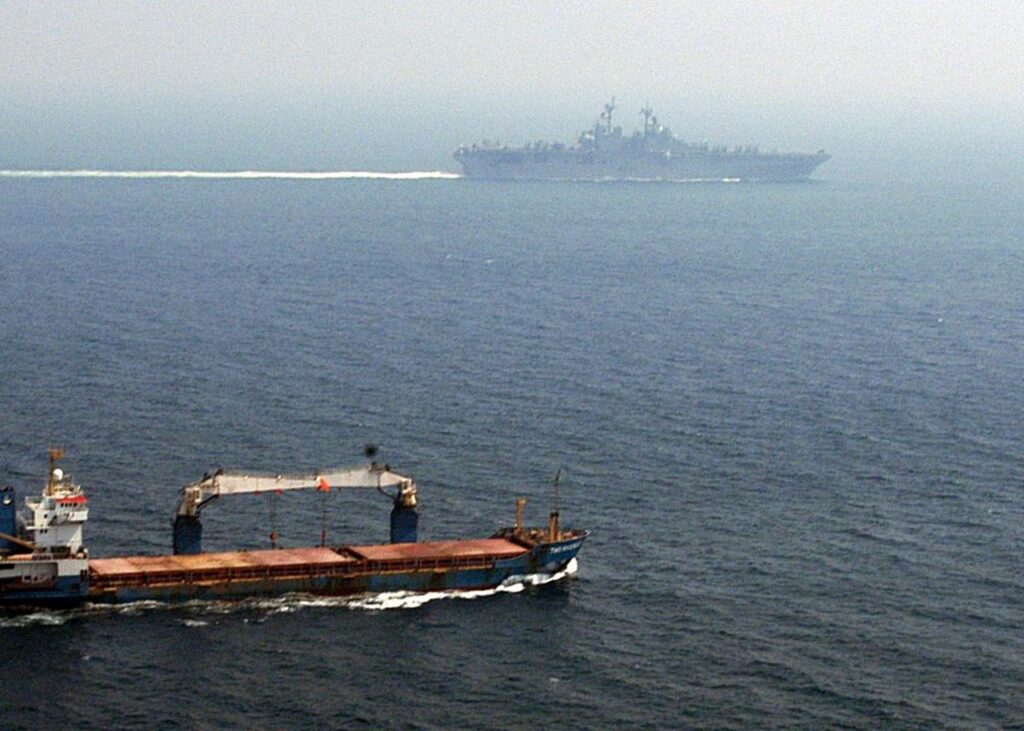
Photo: U.S. Navy, public domain
Commercial vessels with no need to transit the Gulf of Oman and Strait of Hormuz should stay clear, the U.S. Navy advised Wednesday, warning that blockade checks and increased traffic could lengthen voyages.
The advice appears in an October 28 Joint Maritime Information Center advisory carrying U.S. Naval Forces Central Command guidance. It concerns enforcement of the blockade of Iranian ports and coastlines, rather than announcing a new closure of the Strait of Hormuz.
The notice reiterates that the blockade applies to vessels regardless of flag or ownership. Neutral vessels carrying neutral cargo, or traveling in ballast between neutral ports, may face questioning, a visit or a search to confirm their intentions regarding the blockade.
Extra time and documents
Ships transiting the area are advised to allow additional time for increased traffic density and military enforcement operations. The warning describes possible delays; it does not quantify how much longer voyages will take or report a new blanket transit ban.
Vessels should have applicable port and customs clearance from their last port of call, bills of lading for loaded cargo, certificates of registry and signed or stamped agent appointment letters for the next port of call. The guidance says an email alone is not sufficient for the agent appointment.
It also calls for receipts or signed contracts covering provisions, fuel, spare parts, repairs or crew changes at the next port, together with terminal, port or berth booking confirmations. Documents must be signed or stamped and in PDF format.
Continuous radio watch
Neutral vessels should maintain a continuous listening watch on VHF Channel 16 and follow directions from U.S. forces, the notice says. Crews should be prepared to alter course, stop or come dead in the water if directed.
The advisory identifies the Gulf, Strait of Hormuz, Gulf of Oman and Arabian Sea as areas of concern and encourages owners, operators and mariners to contact NAVCENT’s Naval Cooperation and Guidance for Shipping team for further information.
JBizNews Desk | World
© JBizNews.com. All rights reserved.
Unauthorized reproduction or redistribution is strictly prohibited.