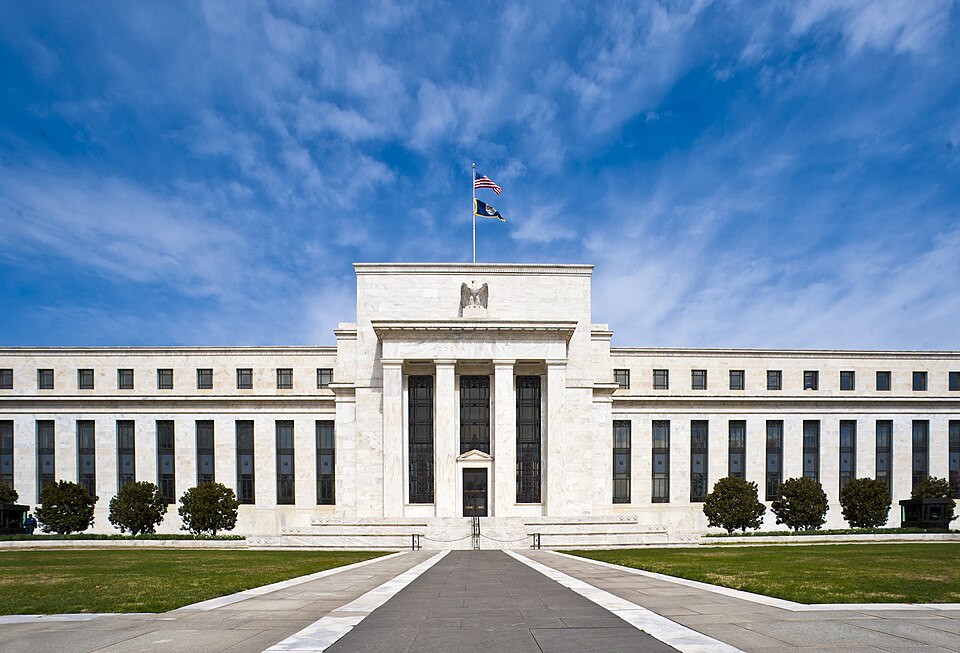
Photo: Federal Reserve (archive photo)
Analysis
The Federal Reserve’s latest bank-lending survey describes two different obstacles for borrowers: some banks are making loans harder to qualify for, while many businesses and households are asking for less credit in the first place.
Those trends can appear together, but they are not the same thing. Tighter standards concern a lender’s willingness to approve a loan. Weaker demand concerns borrowers’ interest in taking one out. Reading them separately gives a clearer picture than calling every decline in borrowing a credit squeeze.
The October Senior Loan Officer Opinion Survey generally covers the third quarter of 2026. It is a backward-looking account of changes reported by banks, not a real-time measure of the fourth quarter or a forecast for the whole economy.
For a small business, approval and price are separate questions
Banks said standards for commercial and industrial loans to small firms tightened, while those for large and middle-market firms were basically unchanged. Demand weakened among companies of all sizes.
That distinction matters for an owner deciding whether to seek financing. A broad statement that banks tightened business lending would miss the difference between small firms and larger ones. The Fed defines small firms here as businesses with annual sales below $50 million.
Loan terms also require a separate reading. Banks eased or left basically unchanged most business-loan terms, but increased premiums on riskier loans across firm sizes. For small firms, collateral requirements and interest-rate floors tightened.
The practical implication is to look beyond a quoted interest rate. Approval requirements, collateral and an interest-rate floor can affect a borrower’s flexibility even when some other contract terms are stable. That is an interpretation of the survey’s distinctions, not a prediction about what any individual bank will offer.
Commercial property shows both sides of the slowdown
The survey’s commercial real estate findings were broader. Domestic banks reported tighter standards and weaker demand in all three categories: construction and land development, nonfarm nonresidential property and multifamily property.
This combination points to pressure from both lenders and borrowers. It does not, by itself, tell us which force is more important, how many projects will be delayed or whether property prices will fall.
For a property owner or developer, the useful question is therefore specific: what financing is available for this property, from this lender, on these terms? The survey provides context for that conversation rather than an answer to an individual refinancing decision.
A stronger appetite for cards is not an all-clear for consumers
Consumer borrowing was mixed. Banks reported stronger credit card demand, weaker auto-loan demand and basically unchanged demand for other consumer loans. Overall standards were broadly stable, but banks tightened some credit card limits and auto-loan minimum credit scores.
Special questions about the past year add an important qualification. Banks said they were more likely to approve applications from prime and super-prime card borrowers and less likely to approve subprime applications. They most often linked stronger card demand to changing spending needs in response to the prices of goods and services.
Stronger card demand therefore cannot be treated as proof that household finances are improving. Nor does the survey establish that every additional dollar of card borrowing reflects financial distress. Its findings show a difference by borrower risk and loan type, not one uniform consumer story.
Why the survey is a signal, not a verdict
The results came from 61 domestic banks and 18 U.S. branches and agencies of foreign banks. Unless otherwise stated, the Fed’s summary describes domestic responses. Foreign banks reported stronger business and commercial property loan demand, illustrating why the scope matters.
The Fed’s “net” measures compare the share of banks reporting one direction of change with the share reporting the opposite direction. A net tightening does not mean every lender tightened, and a weaker demand reading is not a percentage decline in the dollar volume of loans.
The main lesson is to keep the questions separate. Is a borrower less willing to take on debt, is a bank less willing to lend, or have the terms of the loan changed? Monday’s survey offers evidence about each. Combining them into a single headline about an economy-wide credit freeze would say more than the data supports.
JBizNews Desk | Washington
© JBizNews.com. All rights reserved. Unauthorized reproduction or redistribution is strictly prohibited.