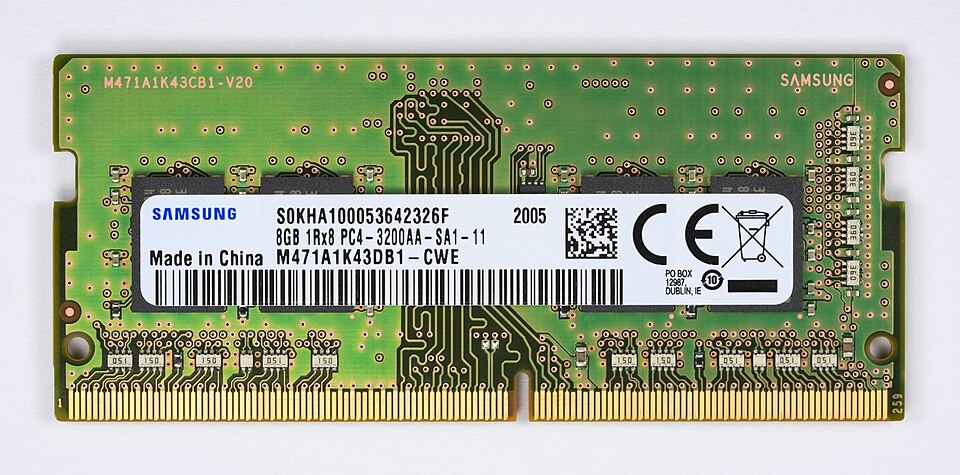
Photo: D-Kuru / Wikimedia Commons / CC BY-SA 4.0
Samsung’s chip rivals in China are competing for more than customers. They are recruiting experienced engineers who know how to make memory chips, offering pay, stock and help for their families as they try to close the technology gap.
The growing talent fight is putting more pressure on established chipmakers to keep key staff and protect their manufacturing knowledge, CNBC reported late Wednesday.
For chipmakers, the stakes go beyond a hiring bill: retaining experienced engineers and protecting know-how matter more as Chinese competitors grow stronger. That does not mean every employee who changes jobs takes trade secrets with them.
Pay packages reach beyond salary
Chinese semiconductor companies have recruited experienced overseas engineers with high salaries, stock options, housing and family support, Counterpoint Research senior analyst Jeongku Choi told CNBC.
Choi said their expertise has helped Chinese chipmakers work through technical bottlenecks as U.S. export restrictions limit access to advanced chipmaking equipment. Chinese manufacturers once dismissed as unlikely to catch up are becoming meaningful competitors, in her assessment.
Counterpoint’s Memory Tracker for the second quarter of 2026 projected that ChangXin Memory Technologies, or CXMT, would reach 10% of global DRAM revenue. That is an attributed projection, not confirmation that the company has reached that share. DRAM is a type of working memory used in electronic devices.
Keeping engineers, protecting knowledge
Established chipmakers are strengthening legal protections and internal security while changing compensation packages to keep key engineers, Choi told CNBC.
A former Samsung employee told the network that the company had used two-year non-compete agreements and monitored where some departing employees went. CNBC said the person asked not to be identified because the information was private.
The legal stakes are already visible. CNBC reported that a former Samsung engineer who later joined CXMT received a five-year prison sentence on appeal on October 22 for leaking Samsung technology, reduced from seven years at the first trial. The reported ruling was last month, not a new decision Wednesday night.
A job change is not proof of a leak
Lawyers interviewed by CNBC described a difficult boundary between an engineer’s general skills and a company’s protected information. Knowledge built through experience is not automatically a trade secret, and proving that a rival used a proprietary manufacturing method can be difficult.
Jamie J. Yang, a partner at Taiwan’s Innovatus Law, told the network that semiconductor production is so complex that one engineer is unlikely to know enough to reproduce an entire production line at another company.
For established manufacturers, the competitive challenge is therefore both practical and legal: make important employees want to stay, define which information is confidential and limit access to it. The report does not establish how many engineers have moved or what the competition will do to chip prices.
Samsung and CXMT did not respond to CNBC’s requests for comment, the network said.
JBizNews Desk | Global
© JBizNews.com. All rights reserved. Unauthorized reproduction or redistribution is strictly prohibited.