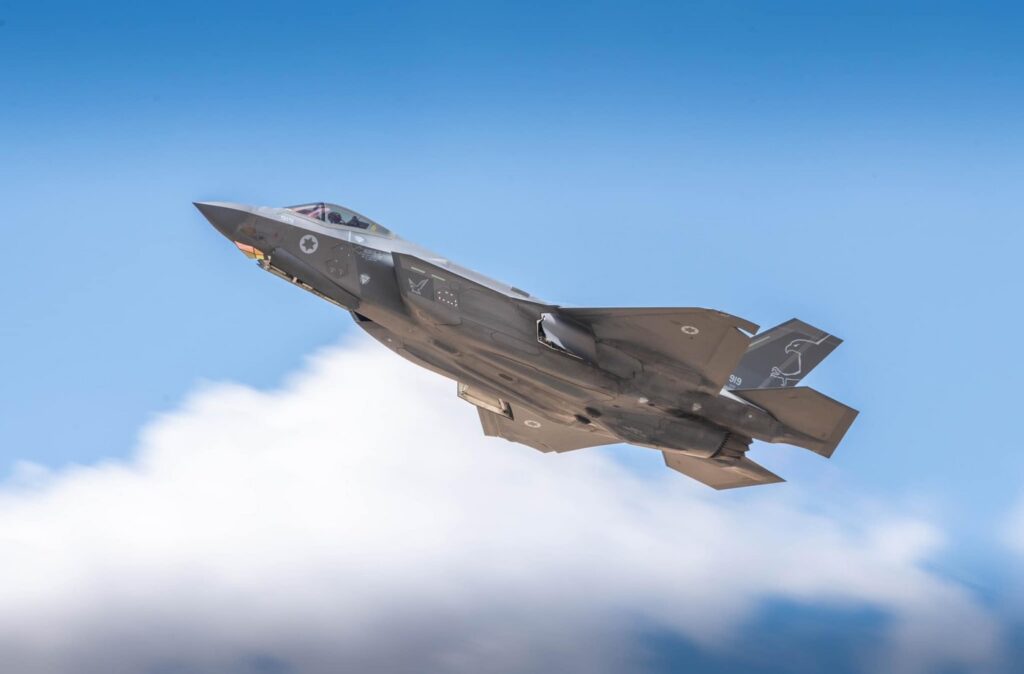
Photo: IDF Spokesperson’s Unit / Wikimedia Commons, CC BY-SA 3.0. An Israeli F-35I in June 2023. Archive illustration; this photo does not show the reported orders. Source frame trimmed and resized, with adaptations under the same license.
WASHINGTON – Israel needs about $10 billion beyond existing U.S. aid commitments to pay for outstanding American arms orders after 2028, according to a State Department document reviewed by the Wall Street Journal. The figure describes orders outstanding as of April 1, not a new purchase announced this week or a bill immediately due.
The Journal reported the finding in a November 4 story by Jared Malsin, published at 8 p.m. Eastern. It said the document was sent to Congress and that it was unclear how much the amount had changed since the April snapshot.
The question is who pays
The State Department letter, sent to the office of Rep. Joaquin Castro, said the outstanding obligations could be covered by Foreign Military Financing, Israeli national funds, or a combination of the two, according to Ynet and Globes, which also reported the Journal’s findings.
Foreign Military Financing, or FMF, is U.S. assistance used to purchase military equipment. The existing structure lets Israel make multi-year purchasing commitments using anticipated future aid. That can leave orders on the books whose payments extend beyond the current aid framework.
Ending future grants would not, by itself, decide how equipment already ordered gets paid for. If Israeli funds replace U.S. financing, the cost shifts to Israel’s own budget rather than disappearing.
What the current agreement covers
The current memorandum of understanding covers fiscal years 2019 through 2028. It provides a framework for $3.3 billion in annual FMF assistance and $500 million annually for joint missile defense, subject to congressional appropriations, according to the Congressional Research Service.
Those recurring commitments and the roughly $10 billion in orders described by the Journal are different measures. The latter is a dated stock of outstanding obligations beyond existing commitments, not an annual aid amount.
President Donald Trump’s comments about ending aid are proposed policy, not an enacted cutoff. Globes reported that his remarks did not specify when a termination would take effect or whether it would cover every component of assistance.
The immediate issue for governments and defense suppliers is therefore a financing question: how existing purchase commitments will be funded as officials debate what comes after the current agreement. The reported April 1 figure does not settle the size of today’s obligations, the timing of each payment, or the final division of costs.
JBizNews Desk | Washington, D.C.
© JBizNews.com. All rights reserved. Unauthorized reproduction or redistribution is strictly prohibited.