A new trial in England will assess whether blood tests can help family doctors identify abdominal cancers earlier in more than 20,000 NHS patients, before any decision on wider use of the tests.
The STRIDE-RCT study, announced November 4 by the UK government and the University of Birmingham, is planned across at least 200 general-practice offices in England. It will receive up to £8.49 million in government funding through the Office for Life Sciences and the National Institute for Health and Care Research.
The research programme will assess the tests before a decision on nationwide use.
Who the trial is designed to include
Participating patients will be aged 45 or older and visiting their general practitioner with abdominal symptoms such as persistent bloating or discomfort. The study is designed to examine a diagnostic tool for people with symptoms, not to offer population-wide cancer screening to everyone without symptoms.
The university says the trial will include practices serving inner-city, rural, coastal and deprived communities. That breadth is intended to help researchers assess how the approach works across the communities served by the NHS.
What the blood tests will look for
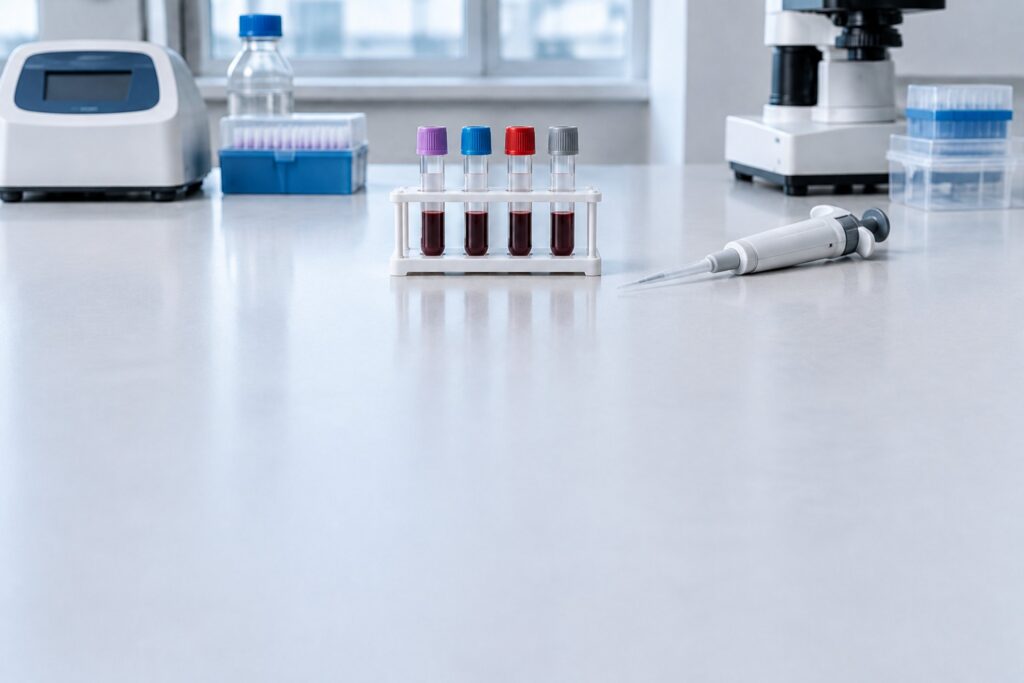
The tests will look for signs of several cancers in a single blood sample and suggest where in the body those signs may originate. Most tests will require one or two tubes of blood taken at the GP practice alongside routine blood tests, according to the university.
The technologies include measuring proteins in blood and using artificial intelligence. STRIDE-RCT is a platform trial assessing a range of tests.
The study covers cancers including bowel, pancreatic, stomach, liver, ovarian, kidney, bladder and prostate cancer. Researchers will assess how the tests work alongside a GP’s clinical judgment.
A positive blood-test result will not itself confirm a cancer diagnosis. The government says it would help the patient and doctor decide whether an urgent referral for further investigation is needed.
Earlier diagnosis is the aim, not yet a demonstrated result
Abdominal symptoms can overlap with less serious conditions, making it difficult to identify which patients need urgent investigation. Professor Aneel Bhangu, a co-chief investigator at Birmingham, said doctors need evidence that the blood tests can distinguish those patients before using them across the NHS.
The trial’s intended benefit is to direct patients toward the right further tests sooner. Researchers will evaluate the approach alongside GPs’ clinical judgment.
The study will inform an assessment of whether the approach should be rolled out more widely.
JBizNews Desk | London
© JBizNews.com. All rights reserved. Unauthorized reproduction or redistribution is strictly prohibited.