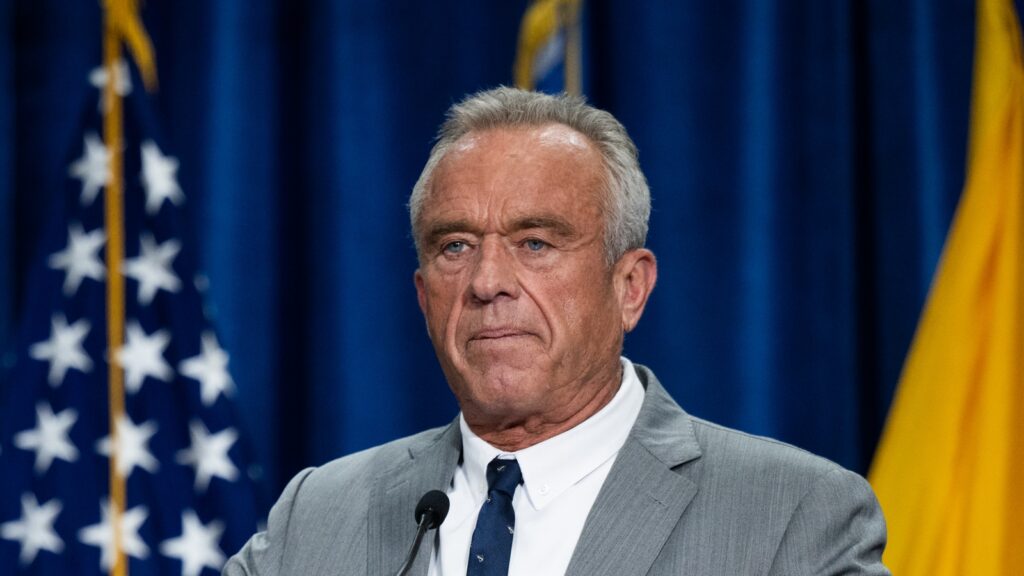
FILE: Health Secretary Robert F. Kennedy Jr. at HHS headquarters, January 8, 2026. Photo: Christophe Paul/USDA, public domain; cropped and resized.
The Department of Health and Human Services announced up to $4.9 million on November 12 to help prepare ibogaine for possible future studies as a treatment for post-traumatic stress disorder and other serious mental illnesses, including among veterans.
The money will support regulatory and manufacturing work, not patient treatment. HHS said the awards do not pay for human-subject research, authorize clinical trials or establish Food and Drug Administration approval.
Health Secretary Robert F. Kennedy Jr. announced the investment through the Advanced Research Projects Agency for Health, known as ARPA-H. The initial commitment covers up to five years, with funding tied to research milestones.
Teams led by Mark Cuban Cost Plus Drug Company and Beond will work on different parts of the effort. Cost Plus will help develop the regulatory and manufacturing foundation for an ibogaine hydrochloride product that could eventually be studied for PTSD. Beond will provide clinical data to help assess safety, dosing, effectiveness and how long any effects last.
That work is intended to support applications needed before future U.S. clinical trials can begin. It will also help secure clinical-grade ibogaine and develop a domestic manufacturing process. HHS did not give a date when a trial would start.
The distinction matters because ibogaine carries serious risks, including potentially life-threatening heart rhythm problems. HHS said any future clinical studies must address patient screening, heart monitoring and independent safety oversight, as well as whether the drug works.
Reports of benefits are a reason for research, not proof that the treatment is safe or effective. HHS said research findings would be made public whether they show benefit, no benefit or harm, while protecting patient privacy. The awardees will also make their research data openly available.
The agency expects additional awards focused on ibogaine as a possible treatment for substance use disorders, including opioid use disorder. It is pursuing more than one regulatory application rather than relying on a single route to development.
In a separate announcement, the National Institute of Mental Health opened a $20 million funding opportunity for a research network to study fast-acting psychiatric drugs. HHS named ketamine, esketamine and psilocybin among the treatments that could be studied. Recipients are expected to be announced in summer 2027; the $20 million is not part of the ibogaine awards.
HHS said the new work follows President Donald Trump’s April directive to accelerate research into psychedelic treatments. If ibogaine development succeeds and wins FDA approval, the department’s stated goal is pricing at production cost plus a fair margin. The announcement did not establish a patient price or make treatment available.
Source: U.S. Department of Health and Human Services
© JBizNews.com. All rights reserved. Unauthorized reproduction or redistribution is strictly prohibited.