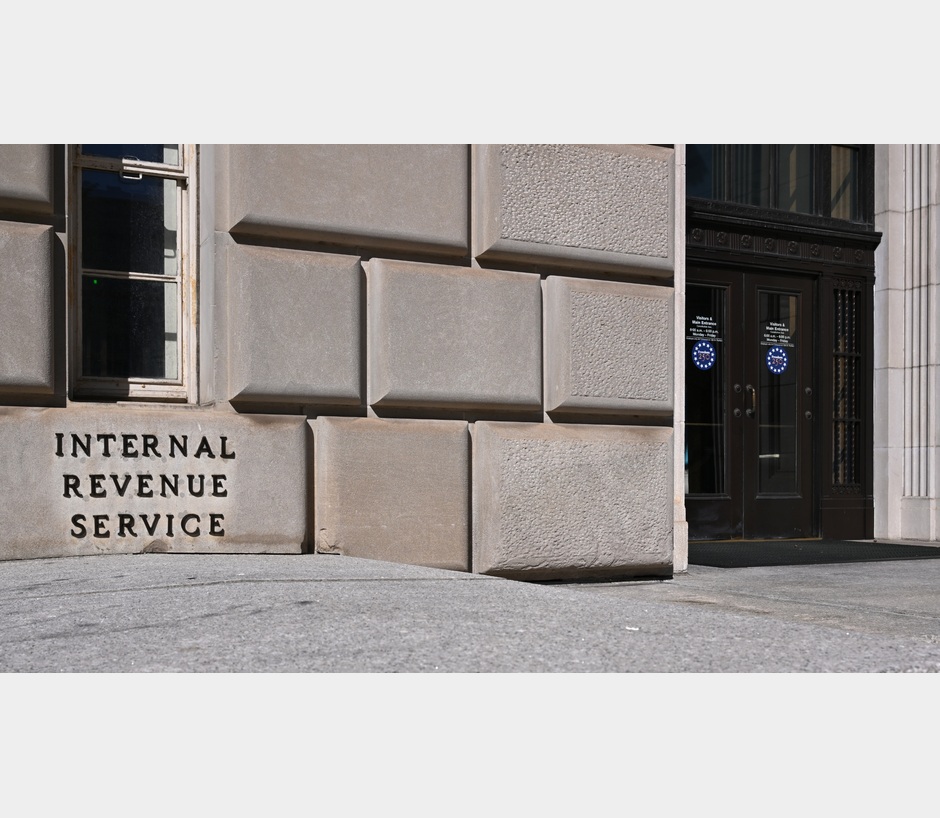
File photo: The Internal Revenue Service building entrance in Washington, October 7, 2026. Photo: G. Edward Johnson / Wikimedia Commons / CC BY 4.0. Cropped and resized.
Workers will be able to contribute up to $25,500 to their 401(k) plans in 2027, a $1,000 increase from this year’s limit, the Internal Revenue Service announced Thursday.
The new retirement-account limits also raise the general catch-up contribution for workers age 50 and older to $8,500 from $8,000. That brings the combined annual employee contribution limit to $34,000 for eligible participants in most covered workplace plans.
The $25,500 employee limit applies to 401(k) plans, 403(b) plans, governmental 457 plans and the federal government’s Thrift Savings Plan. The increase takes effect for 2027 contributions; it does not raise the limit for 2026.
A higher catch-up limit for ages 60 through 63
Workers who are 60, 61, 62 or 63 can use a higher catch-up contribution of $11,750 in 2027 instead of the general $8,500 catch-up limit. Combined with the regular $25,500 contribution, that allows eligible workers in those age groups to contribute up to $37,250.
The higher catch-up provision comes from the SECURE 2.0 Act. It does not apply to every worker age 50 or older: the larger amount is reserved for the specified ages.
IRA contribution limit stays unchanged
The annual Individual Retirement Account contribution limit will remain $7,500 in 2027. The IRA catch-up contribution for people age 50 and older will also remain $1,100, allowing a combined $8,600 for eligible older savers.
Although the IRA contribution ceiling is unchanged, the income ranges that determine eligibility for Roth IRA contributions and certain traditional IRA deductions will rise.
For single taxpayers and heads of household, the Roth IRA contribution phase-out range will be $158,000 to $173,000, up from $153,000 to $168,000 in 2026. For married couples filing jointly, it will rise to $250,000 to $260,000 from $242,000 to $252,000.
A phase-out range is not an additional contribution allowance. It determines how much a taxpayer can contribute as income rises through the range. Traditional IRA deductions have separate rules that depend on income, filing status and workplace retirement-plan coverage.
The IRS published the changes as part of its annual cost-of-living adjustments for retirement plans. Savers and employers can use the new limits to plan contributions for the coming year, subject to their plan’s rules and applicable eligibility requirements.
© JBizNews.com. All rights reserved. Unauthorized reproduction or redistribution is strictly prohibited.