


Trump says ‘1,000 missiles locked and loaded’ if Iran attempts to assassinate him – report
US President Donald Trump responded to alleged Iranian assassination threats, saying “1,000 missiles are locked and loaded” in a Truth Social post on Saturday,
“Orders have already been given, and the US Military is ready, willing, and able, for a one-year period of time, subject to extension, to completely decimate and destroy all areas of Iran,” warned Trump.
On Friday, Trump told the New York Post he left instructions for the US to retaliate if Iran succeeds in assassinating him.
“I’ve left instructions, if anything happens, to just literally bomb them at levels that they’ve never seen before,” the New York Post cited Trump as saying.
This comes a day after the Wall Street Journal wrote that Israel shared intelligence about an Iranian assassination plot with the US president, though Trump subsequently disputed the report.
“No, no, Israel came up with nothing,” Trump said, adding that he had been Iran’s primary target for “a long time.”
“It’s the way life is, you know,” he said.

Trump left instructions in 2025
Trump previously stated that he had left instructions in the case of his assassination in January of 2025, saying that Iran would be “obliterated” if their assassins succeeded.
However, the New York Times cited experts saying that a president cannot leave instructions for military action after his death. All authority would transfer to his successor, the new commander in chief.
Iranian mourners call for Trump’s death
Trump’s claims come as Iranian crowds called for his death at the week-long funeral for Iran’s former supreme leader Ayatollah Ali Khamenei.
“I swear by the blood of the Supreme Leader, Trump, we will kill you!” they shouted, with women holding up placards reading “Kill Trump.”
The roads leading to the shrine were a sea of black-clad mourners on Thursday, some responding to shouted chants in praise of Khamenei and against Iran’s enemies, including the old revolutionary slogan of “Death to America.”

New Israel Fund decries House GOP investigation over its alleged Israeli election spending
The New Israel Fund cited freedom of speech in pushing back Friday against a congressional investigation alleging that the US nonprofit violated its tax-exempt status by funding political campaign activity in Israel in 2019.
“NIF will not be deterred in our work to defend democracy, promote equality, and advance peace in Israel,” New Israel Fund CEO Mickey Gitzin said in a statement to the Jewish Telegraphic Agency. “And we will stand firmly for the right of Jewish Americans to express their views, and their First Amendment rights through their philanthropic support of any and all charitable institutions in Israel and the United States.”
In a letter sent to the New Israel Fund Thursday, Reps. Jim Jordan and Jason Smith, Republican chairs of the House Judiciary and Ways and Means Committees, respectively, alleged that the nonprofit had provided “millions of dollars in funding to groups that engaged in political campaign activities in the 2019 Israeli elections.”
“Reports that the New Israel Fund engaged in prohibited political campaign activity – while telling the IRS that it did not – demonstrate the need for stronger enforcement,” Smith wrote in a post on X/Twitter. “The Ways and Means Committee will continue conducting rigorous oversight to protect American tax dollars and ensure that those who abuse our tax code are held accountable.”
According to a Jerusalem News Syndicate story the Judiciary Committee posted on its website, one of the alleged offenses includes bussing Bedouin citizens of Israel to the polls on election day. The criticism echoes Republican attacks on groups that assist and encourage Black voters to get to the polls in the United States.
The letter also alleged that the New Israel Fund had provided funding to Adalah, a group that provided legal representation to an alliance of Arab parties that “centered their campaign around ousting Prime Minister Netanyahu in favor of his opponent, Benny Gantz.”
A GOP-led House Judiciary Committee letter to two mainstream Jewish philanthropies, the Jewish Communal Fund and the PEF Israel Endowment Funds, also raised eyebrows in May when it appeared to accuse the groups of funding protests against the Netanyahu government’s proposed judicial overhaul. The groups are clearinghouses for donations to a wide range of groups, including those aligned with Netanyahu’s government.
‘Radical anti-government campaigns’
The May letter alleged that the philanthropies may have violated their nonprofit status by “funding groups engaged in radical anti-government campaigns in Israel.”
The New Israel Fund supports progressive Jewish and Arab organizations in Israel and is often criticized by the Israeli government and its allies in the United States.
“NIF adheres fully to both US and Israeli law as it relates to our charitable work and status,” Gitzin said. “That has always been the case and continues to be.”
Gitzin said that the House letter was “drawn heavily from a lawsuit filed against NIF that was dismissed in the Southern District of New York in 2021, and wherein the State of New York declined to intervene.”
‘Allegations entirely lack merit’
“NIF believed then, as we do now, that these allegations entirely lack merit,” Gitzin said.
The allegations by the Republican lawmakers drew quick condemnation by Jewish New York Democratic Rep. Jerry Nadler, who called their behavior “outrageous” in a post on X.
“Those seeking to undermine democracy on both sides of the ocean seem now to have found common cause,” Nadler wrote. “All people of good faith must rise up and oppose this ridiculous and meritless inquisition seeking to eviscerate American Jews’ fundamental First Amendment rights.”
Netanyahu has in different contexts welcomed US conservatives weighing in on Israeli internal politics. A conservative US nonprofit helped Netanyahu publish the Hebrew version of his autobiography just prior to the last election.

IDF holds redesigned Arrowhead agility competition for combat soldiers, special units
The IDF announced on Thursday that it held its first Arrowhead agility test in three years, reintroducing the multi-brigade fitness competition after a years-long hiatus.
Troops from the Paratroopers Brigade, Givati Brigade, Golani Brigade, Nahal Brigade, Kfir Brigade, Lotar Unit, and Refaim Unit competed in multiple events, including running, shooting, and Krav Maga.
The competition doubles as one of the last fitness tests the soldiers will face before finishing their training courses.
According to the IDF, this year’s competition differed from previous ones and was modeled after conditions similar to what they will encounter in the field.
This year, rather than having participants run on a flat course, soldiers ran on a course through forest and sand dunes, each carrying 20 kg. of weight. Soldiers also practiced running carrying stretchers together.
At the end of the run, troops also immediately participated in shooting exercises.
The second part of the competition consisted of two Krav Maga practice scenarios. In one, soldiers were tested on skills such as defending against a fellow soldier, playing the role of an “attacker,” attempting to take their weapons and stab them.
The second part of the Krav Maga section was direct hand-to-hand combat.

At the end of the tests, each brigade is scored based on running times, shooting accuracy, and Krav Maga skills.
The overall winner of the competition was the Paratrooper Brigade, with the Givati Brigade in second place and the Lotar Unit in third.
Arrowhead competition adjusted to reflect modern battlefield conditions
The head of the IDF’s Training and Research at the Combat Capability Directorate, Major M., said that changes to the competition format were made to ensure soldiers were prepared for battlefield conditions before deployment.
“These changes are rooted in drawing lessons from prolonged combat,” he explained. “We realized that the things we were tested on in the past no longer illustrate what happens on the battlefield in the best way.”
Commander of the Combat Fitness Division, Col. (res.) Avi Dahan, further elaborated that the activities were designed to occur in quick succession to test the troops’ physical and mental resilience.

Iran’s missile arsenal, not Gulf deterrence, is the Middle East’s real problem – opinion
The debate over Iran’s missile arsenal has resurfaced following an argument that it is unfair to ask Iran to give up its missile capabilities while other countries in the region possess similar ones.
And yet this line of reasoning overlooks a more fundamental question: Is the problem the existence of missiles held by states seeking to defend themselves, or a vast offensive arsenal built over decades that has become an instrument of regional influence and threat?
Herein lies the paradox. The issue is less about a mutual arms race between comparable actors and more about a strategic imbalance that has imposed itself on the region over decades, one that Iran’s neighbors are then expected to adapt to rather than seek to address or counterbalance.
Iran has not only built a massive missile program; it has turned missiles into a standalone strategic language, using them as a deterrent, a means of pressure, and a message of influence that reaches past its immediate borders.
In contrast, for decades, the Gulf has been on the receiving end, buying defense while lacking the capacity to counterbalance the offensive threat on its own terms.
The deeper problem is that major powers manage this issue not by the logic of fairness or balance, but by the logic of leverage over the parties’ behavior. The Gulf ally is always told to exercise restraint because it is the actor whose conduct can be influenced.
Iran, having imposed its missile program as a strategic fact, is managed through containment, negotiation, and risk management rather than through preventing the capability in the first place.
The Iranian attacks on Gulf states during the 2026 war laid bare this imbalance in its starkest form, showing that Gulf countries can become direct targets of missile strikes even when they are neither the architects of the war nor a principal party to it.
The UAE was the most striking example, hit by intense waves of ballistic missiles, cruise missiles, and drones. The significance of these attacks lay not only in the volume of munitions but in the lesson they imparted: a stable, open Gulf state integrated into the global economy can find itself at the center of the confrontation when Iran seeks to widen the war’s costs for its adversaries.
A deeper truth emerged here. The attacks were more than a fleeting military event; they showed that economic stability and global openness offer no automatic immunity against the logic of missile power. They also showed that a Gulf state, however successful in its development or integrated into the world economy, can become a direct target when missiles are wielded to impose political or strategic costs on others.
Strategic imbalance
More importantly, the 2026 war showed not just the scale of the threat but the limits of the assumptions that informed regional security thinking for decades. A long-standing belief held that international partnerships, economic strength, and integration into the global system could reduce the likelihood of being directly targeted or raise the political cost for an attacker.
What happened, however, demonstrated that an adversary’s possession of a vast offensive capability remains a decisive factor that overrides many conventional political calculations. From this vantage point, the war was more than another military confrontation; it was a strategic turning point affirming that sustainable security rests not on prosperity alone, nor on external partnerships alone, but on a deterrent capability that raises the cost of aggression above any conceivable gain.
But the lesson of the war reaches past military calculations to how the threat itself is perceived. This is where the double standard in the dominant narrative becomes most evident.
When Iran or its proxies strike, the world is often absorbed in managing escalation, de-escalating, and preventing a wider conflagration, rather than starting from a simpler question: Why is an offensive arsenal of this magnitude allowed to become an almost normalized regional feature?
Why is the Gulf always expected to act as the more rational and less impulsive party, even as it is the most exposed to fire and bears the highest cost of defending itself?
Then there is the economic dimension, far from a minor detail; it is another core of the equation. Past the military shock, Iran is betting on a straightforward attrition formula: relatively cheap offensive tools against exorbitantly expensive defenses.
Each wave of attack is a test not only in the sky but also in the budgets. Gulf states pay not just the security cost of the threat, but the economic cost of continuously deterring it and defending their cities, infrastructure, ports, and vital fields.
The Gulf thus becomes a forced underwriter of a lopsided regional stability, while the attacking party retains the advantage of lower cost and greater capacity to sustain attrition.
Gulf states certainly bear some responsibility for their slow progress in forging a more independent collective deterrence doctrine and for their prolonged reliance on an external guarantor. But that does not change the fundamental fact that the missile imbalance was never the Gulf’s doing – it was imposed by Iran through decades of military accumulation.
Any serious talk about regional security must start from an unambiguous principle: either unified, genuine restrictions on offensive missile capabilities in the region, first and foremost on Iran, or an explicit recognition of the Gulf states’ right to build deterrence that breaks this imbalance.
The problem is no longer the Gulf’s pursuit of its own security, but the continued treatment of a chronic strategic imbalance as a fait accompli to be adapted to.
Anything short of that is no balanced regional security policy, but the diplomatic management of a chronic strategic imbalance, whose security and economic costs are borne by the Gulf while others merely manage its consequences.
The writer is a UAE political analyst and former Federal National Council candidate.
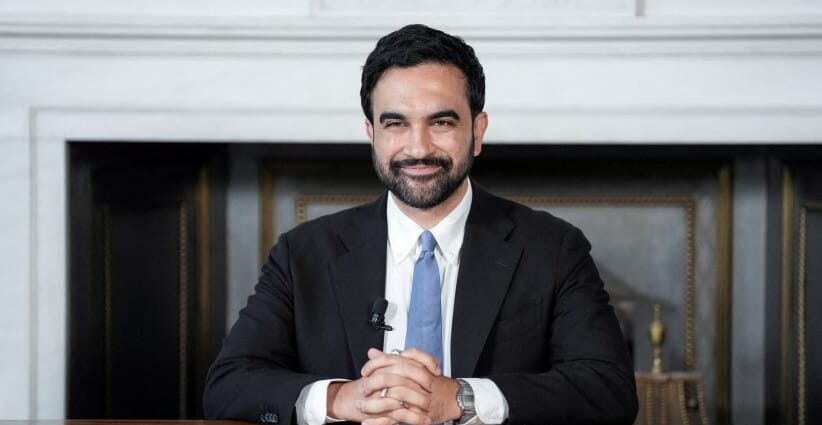
Top Mamdani official ordered to cancel meeting with Iran’s UN representative – report
The commissioner of New York City Mayor Zohran Mamdani’s Office of International Affairs, Ana Maria Archila, was scheduled to meet with an Iranian official before the US State Department intervened, according to a City Journal report on Thursday.
According to the report, Archila was scheduled to meet with Iran’s representative to the United Nations, Amir-Saeid Iravani, on Tuesday with two other senior officials from the Mayor’s Office for International Affairs.
Archila reportedly did not inform the US State Department or Mamdani of the meeting in advance.
A State Department official told City Journal that, upon learning about the meeting, the State Department met with the Mamdani administration to clarify that it was unacceptable. Following the State Department visit, Archila was reportedly reprimanded and ordered to cancel the meeting.
A spokesperson for the Mayor’s Office for International Affairs told City Journal that Archila’s meeting with the Iranian official “did not and will not take place.”
Mamdani administration reportedly using Office for International Affairs to advance political agenda
According to City Journal, the meeting is not the first instance of Archila or the Mamdani administration using city resources to advance agendas unrelated to New York City.
In April, according to the report, a message was sent to staff in the Mayor’s Office for International Affairs asking them to prioritize engagements with foreign diplomats, in part, based on whether or not the officials were “in political alignment/leftist.”
The Mayor’s Office for International Affairs, City Journal claimed, is not intended to be used to shape foreign policy and is instead meant to focus on bringing foreign businesses to the city and supporting the city’s diplomatic community regardless of political leanings.

NY congressional candidate Avila Chevalier doubles down on attending Oct. 8 pro-Palestinian rally
Democratic congressional candidate Darializa Avila Chevalier defended her presence at a pro-Palestinian rally the day after Hamas’ Oct. 7, 2023, attacks on Israel during a wide-ranging interview Friday with progressive Jewish author Peter Beinart.
“I think the targeting of civilians is wrong in any context, including on Oct. 7,” Avila Chevalier said when asked by the editor-at-large of the leftist Jewish Currents about slogans legitimizing “resistance” that appeared at the rally. Avila Chevalier previously defended her attendance at the rally to City & State in June.
“I think what matters is international law, and what international law condemns and protects,” she said. “And it condemns the targeting of civilians, and it also protects the right to resist.”
Beinart, who is an outspoken critic of Israel and a journalism professor at the City University of New York, pushed back, saying that he “didn’t see any discussion of international law in that rally on the signs or the slogans of the kind that you are offering now… Were you uncomfortable by that?”
Avila Chevalier responded that, at any protest, there will always be “folks who are voicing opinions that you might not agree with.”
“I knew even as early as Oct. 8, right, where this cycle was headed, and I knew the things that I did have power over,” Avila Chevalier said. “The thing that we have power over is the fact that our tax dollars are going towards an apartheid state that has a pattern of engaging in this type of retribution against civilians.”
Avila Chevalier, a democratic socialist who helped organize pro-Palestinian encampments at Columbia University, ousted incumbent Rep. Adriano Espaillat last month in the Democratic primary for New York’s 13th Congressional District, which covers parts of Upper Manhattan and the Bronx.
Cheers of ‘Free Palestine’
“Today we make it clear. The politics of the past ends today,” Avila Chevalier told attendees at an election night watch party, where the crowd erupted into cheers of “Free Palestine.”
She joined two other progressive and Israel-critical candidates backed by New York City Mayor Zohran Mamdani in winning upset primary victories, cementing the anti-Israel mayor’s influence in the city’s politics and likely extending the left’s gains in Congress since the wins came in deeply Democratic districts.
Beinart’s interview offered an extensive look into the Israel-related positions that became flashpoints during Avila Chevalier’s campaign, including her attendance at the Oct. 8 rally, which was condemned at the time by Mamdani and fellow congressional candidate Brad Lander, and past criticism of former President Joe Biden’s policy toward Israel and Gaza in a since-deleted X account.
Many of the attendees on Friday’s Zoom call appeared unimpressed by the candidate’s responses.
“She is well-intentioned, but also clearly is not familiar with the nature of the Israeli-Palestinian conflict,” said Hillel Schenker, a veteran American-Israeli peace activist.
Other attendees defended Avila Chevalier.
“I am surprised and disturbed by many of the comments made here that are just dismissing her comments and her approach to expressing her belief in human rights and a world without hierarchies of peoples,” wrote an attendee with the screen name Benjy Ben Baruch.
To kick off the interview, Avilia Chevalier described her internship in the West Bank as a 20-year-old Columbia University student, saying that at the time she observed “systems and how they were impacting Palestinian people and Jewish folks, and how people were being treated based off of those state structures.”
Beinart then asked Avila Chevalier why she believed Israel had become so “central for progressive politics.”
An ‘insatiable war machine’
“I think there is a war machine that is insatiable,” Avila Chevalier replied. “An American war machine, the Israeli war machine, that we fund with our tax dollars as Americans, and instead what we could be funding is our communities.”
When asked by Beinart what she wanted to see as the region’s future, Avila Chevalier voiced her support for a one-state solution, which she described as “one governing body, one state that sees everyone as equal before the law, regardless of race, religion, identity, ethnicity.”
“We have seen over the course of history that attempts at two states have failed, and even so, I think in this question of like, well, do we partition to begin with, that inherently is divisive,” Avila Chevalier said.
Avila Chevalier also stopped short of saying that “Zionism is racism” when asked if she agreed with the statement by Beinart.
“Zionism is an ideology that creates this type of hierarchy that I’m talking about, and I just don’t believe that we should be striving for a world where there is a hierarchy among people,” Avila Chevalier replied.
Towards the end of the conversation, Beinart referenced scrutiny Avila Chevalier had drawn for her 2022 statements in which she condemned Dominican nationalism and said it was the reason she didn’t put the flag in her social media bio.
“What do you see as the fundamental differences between Zionism as a form of Jewish nationalism, the Dominican nationalism that you have had some concerns about, and Palestinian nationalism,” Beinart asked Avila Chevalier, whose parents are Dominican immigrants.
In response, Avila Chevalier referenced racist attacks she had endured for those comments in the lead-up to the election.
“While it’s not the majority of Dominicans, I would never say that, I think there is a faction that supports this ideology that I have just always found incredibly violent, and the type of rhetoric that I was subjected to, I think, is reflective of the very thing I was criticizing, and I see a lot of that in Zionism as well,” Avila Chevalier responded.
The candidate added that, in contrast to Zionism and Dominican nationalism, Haitian and Palestinian discussions of “liberation” were rooted in “a more universalist understanding of human rights before the law.”
“When I was there in Palestine, you know, some of the most dehumanizing language I’ve ever heard, right, was coming from Israeli soldiers towards children,” Avila Chevalier said, adding that she saw the movements “in very different lights.”
When asked whether she worried that “Hamas’s version of Palestinian nationalism may have exclusionary elements as well,” Avila Chevalier replied: “That’s why I worry about nationalism point blank.”
“Nationalism itself always gives me pause, but I think it’s important to also consider the context in which we’re talking about, like what group is engaging in this conversation, right, and the power dynamics at play there,” Avila Chevalier continued.

The Alaska perspective: A reminder that the world doesn’t revolve around Israel – comment
In most visitors, Alaska inspires wonder at its beauty, awe at its wildlife, and admiration for the hardiness of those who make their lives in its vast backcountry, enduring some of the harshest conditions on earth.
For Israelis, it can also inspire humility. Not because the Jewish state is smaller than Denali National Park, but because in Alaska, one is reminded that the world neither revolves around Israel nor is obsessed with it.
That realization came on a trip The Wife and I took to America’s Last Frontier last month.
“Where is your final destination today?” the woman checking us in for our flight home at the Anchorage airport asked chirpily.
“Tel Aviv,” I replied. “Where’s that?”
When I said it was in Israel, she smiled and said, “Oh.”
Lest one think this was just a fluke: on the plane a few hours later, another Alaskan asked where we were going. When we answered “Tel Aviv,” she said she had never heard of it.
Granted, two people do not a Pew Poll make, but they do offer a small corrective to the perception – fed by the media most of us follow – that the world is preoccupied with Israel, thinking about us obsessively, talking about us constantly, and cursing us unremittingly.
The last part, at least in Alaska, is also not true. During our two weeks there, we saw no “Free Palestine” graffiti, nor were we subjected to dirty looks or “child killer” comments when we said we were from Israel.
All of America, it turns out, is not Mamdani’s Manhattan, nor does social media present a proportionate picture of that country’s reality.
One of the problems with social media is that every incident of antisemitism is posted online. The incidents are real and rising at an alarming rate, but seeing them all in one place creates a disproportionate sense of how likely you are to encounter them while traveling.
Watch enough clips of a Jewish kid harassed on a New York subway or an Israeli couple berated at a hotel in California, and you begin to wonder whether the same thing awaits you when you ride an American subway or check into a hotel.
It doesn’t. Yet the cumulative effect is that you begin to wonder how open to be about your Israeliness. You don’t decide to hide it, but simply having to ask the question adds a mini-layer of apprehension before every trip.
When Israel comes along for the ride
You also learn to read the Uber.
“Honey,” I urged The Wife before we got into an Uber in Chicago during a brief layover, “you don’t have to say you’re from Israel.”
“Nonsense,” she said. “I’m not going to hide who I am.”
“Wonderful sentiment,” I replied. “The driver’s name is Rabah. Humor me.”
We didn’t volunteer our place of origin, nor did he ask.
But on the entire trip, that was the only time we consciously withheld that nugget of biographical information. Everywhere else, we proudly said we were from Israel – and it was fine. More than fine: it was often a conversation starter.
On a whale-watching excursion, we sat across from a young couple from China who work at Google. They were intrigued that we lived in Israel, and even more fascinated that we passed on the chicken sandwiches being served.
Instead of looking for sea creatures, The Wife spent a good part of the trip explaining why some of the fish in the sea we can eat and others we can’t.
“Honey,” I whispered at one point, a bit annoyed. “We didn’t pay all this money for you to give an introductory lecture on kashrut. Look for the damn puffins.”
Since October 7, another layer has been added to the anxiety of travel: whether your flight will be canceled at the drop of a ballistic missile.
One doesn’t just hop over to Alaska on a whim; it takes planning and a special occasion to justify the expense. For us, it was 40 years of wedded bliss, so we booked back in October after being warned that rental cars sell out months in advance.
We chose United. But just days after the war with Iran broke out, United – typically – canceled flights until mid-June, four days after our planned departure. We acted quickly – well, The Wife acted quickly – and switched to El Al. Still, it complicated the trip further.
Then came the more serious question: Do you leave the country when one of your sons or your son-in-law is in miluim in Lebanon, Gaza, or Syria?
My first instinct was no: you don’t leave when one of your children is serving. That may have worked before Oct. 7, when reserve duty meant a few weeks a year and could be planned around.
But today, when they have each logged upward of 350 days, saying you won’t leave while they are serving essentially means that you won’t leave at all.
Which, by the way, is hardly the end of the world. But what can I say? I like to travel.
So we went, even though as we were watching bears and sea otters, my youngest son was dodging drones in Lebanon.
“Go,” he said. “What are you going to be able to do by being here? And if, God forbid, something happens, you’ll come back.”
“That’s not the point,” I said. “How can we enjoy it if we are worrying about you?”
“You’ll figure out a way,” he teased.
And he was right. Sure, we worried, but less than if we were here. Distance, it turns out, has its advantages. I wasn’t glued to the news, tracking every development on his front.
Perhaps that was Alaska’s greatest gift. Not the calving glaciers, surfacing whales, or foraging bears, magnificent though they were. It was the realization that while Israel is the center of our world, it is not the center of everyone else’s. Every now and then, regaining that perspective is refreshing. ■

Is Lionel Messi a Zionist? The Argentine soccer star’s long history with Jewish and Israeli life
Argentine soccer icon Lionel Messi, widely regarded as one of the greatest players in the history of the sport, has built one of football’s most decorated careers.
Throughout his illustrious career, Messi has cultivated a measured public image, rarely commenting on politics or becoming involved in major public controversies.
But the 39-year-old has occasionally made headlines for expressing support for Jewish causes and Israeli companies – and at times for being pulled into the tense geopolitical landscape of the Middle East by no doing of his own, including when a grandmother originally from Argentina credited him for saving her life when her Israeli kibbutz was attacked on Oct. 7, 2023.
Messi’s past has roared into public view during this year’s World Cup, with Argentina playing Switzerland in the quarterfinals on Saturday. Some critics of Israel have surfaced his past activities and affiliations to make the case that opposing Argentina is the anti-Zionist choice. Many Israelis, meanwhile, favor the team.
Ahead of the game, here’s a look back at 10 moments from Messi’s career – presented chronologically – where he and his fame intersected with Jewish and Israeli culture through public appearances, peace initiatives, controversies and more.
Messi’s message to Argentine Maccabiah team
1. In July 2013, Messi sent a message to the Argentine Maccabiah team, a greeting before the national delegation departed for the “Jewish Olympics” in Israel. It wasn’t the first time he demonstrated support for his country’s Jewish community – in 2011, he participated in a campaign for justice and memory of the victims of the 1994 AMIA Jewish center bombing that killed 85 people in Buenos Aires.
2. One month later, he visited the Western Wall on a “peace tour” with Barcelona F.C., the famed Spanish team with which Messi spent the majority of his career. The club hosted skills clinics for Israeli and Palestinian children and met Jerusalem Mayor Nir Barkat, President Shimon Peres and Prime Minister Benjamin Netanyahu.
3. In September 2014, Messi supported a “match for peace” in Rome organized by Pope Francis to promote peace between Israelis and Palestinians, but he did not play due to an injury. Fellow Argentine great Diego Maradona and Israeli player Yossi Benayoun also participated, alongside stars from Russia, Cameroon, Italy, France and Brazil.
4. In 2016, Messi was slammed as “Jewish” and a “Zionist” by Egyptian officials after donating his soccer cleats to a charity in Egypt. Then-Egyptian Football Federation spokesman Azmi Mogahed phoned in to the show to criticize Messi: “I know he’s Jewish, he donated to Israel and visited the Wailing Wall and whatever. …We don’t need his shoes and Egypt’s poor don’t need help from someone with Jewish or Zionist citizenship.”
5. In June 2018, Argentina’s national team canceled a friendly match with Israel’s national team following pressure from the Boycott, Divestment and Sanctions movement. A boycott campaign sponsored by BDS Argentina was launched using the motto “Argentina don’t go,” or #ArgentinaNoVayas. The Israeli embassy in Buenos Aires tweeted that the match was canceled due to “the threats against Messi that logically generated the solidarity of his teammates.”
6. Two months later, FIFA suspended the head of the Palestinian soccer body for threats against Messi. Jibril Rajoub, who had lobbied FIFA to take action against Israel, was suspended for a year after he urged supporters to burn photos and player jerseys if Messi or the Argentinian national team had shown up for the canceled friendly match.
7. In 2019, Argentina’s national soccer team announced it would play a friendly match against Uruguay in Tel Aviv that November, following the cancellation a year prior. The match was again targeted by the BDS movement, with protestors demonstrating outside a training camp in Barcelona and calling on Messi not to participate. Despite the opposition, the game went on as planned, with Messi scoring a goal in front of a sold-out crowd of 29,000 fans – including Israeli President and soccer fan Reuven Rivlin – at Bloomfield Stadium.
8. In 2020, Messi signed a three-year contract to become a brand ambassador for the Israeli company OrCam, which makes devices to help the visually impaired. It wasn’t his first time promoting an Israeli company: in December 2017, the Tel Aviv-based Sirin Labs hired him as its global ambassador.
9. On Oct. 7, 90-year-old Kibbutz Nir Oz resident Esther Cunio name-dropped Messi to a Hamas terrorist who had come to kidnap her, likely saving her life. During the attack, Cunio asked the assailant if he liked soccer before telling him, “I’m from where Messi is from.” Cunio then appealed to Messi for help in rescuing her grandson.
‘Jewish lobby’ blamed for Algerian World Cup loss
10. Last month, after Messi scored a hat trick in a 3-0 Argentina victory over Algeria in the World Cup, an Algerian broadcaster blamed the “Jewish lobby” for a controversial non-call on a potential penalty that could have penalized Messi. “Messi is protected by the Jewish lobby,” analyst Mustafa Mazzouzi said.
“This lobby controls the world; they run it however they want, as if they were the mafia. [FIFA President] Infantino doesn’t want us to do well.” He added, “We have political stances regarding Western Sahara and the Palestinian issue, and therefore they don’t want us to do well.” Elsewhere, a Palestinian TikTok content creator with over 350,000 followers suggested that Argentina deserved to lose the World Cup because of Messi’s numerous associations with Israel.
Messi wears No. 10 – typically reserved for the best player on a soccer club, but since there are 11 players on the pitch, we’ll add a bonus.
11. The World Zionist Organization used a play on words involving Messi in a 2020 Hebrew educational video, explaining that the Hebrew word “mesibah” means “party,” or “fiesta” in Spanish. In Spanish, it sounds like “Messi va,” or “Messi goes.” In other words, “if Messi goes, it’s a party.”


Meta shuts down AI tool after backlash over public Instagram accounts
Meta on Friday discontinued an artificial intelligence feature that allowed users to generate images by referencing public Instagram accounts, days after introducing the tool as part of a broader rollout of AI-powered creative features on Instagram.
The company announced the decision in an update to its Instagram blog.
“Earlier this week, we announced that one way for people to generate images in Meta AI is by @-mentioning public Instagram accounts that they want to reference,” the company wrote. “Our intent was to provide a useful creative tool and to give people control over whether their public content could be referenced in this way. We’ve heard the feedback that this feature missed the mark, so it’s no longer available.”
FOUR STATES SEEKING $1.4 TRILLION IN PENALTIES IN CHILD SOCIAL MEDIA ADDICTION TRIAL, META SAYS
The feature was announced Tuesday alongside more than 30 new AI-powered effects for Instagram Stories using Muse Image, the first image-generation model from Meta Superintelligence Labs. According to Instagram, the new effects allow users to transform photos with a single tap, while a redesigned editing composer lets users preview AI-generated edits before sharing them.
As part of the rollout, Meta also introduced a feature allowing users to @-mention public Instagram accounts in Meta AI to generate creative images featuring those accounts, including personalized birthday cards, group trip memes and other edited images.
“We want our community to have control over how their content is used for creation,” Instagram said in Tuesday’s announcement. The company said users who did not want their public Instagram content used through the AI feature could disable it through the app’s Sharing and Reuse settings.
JUDGE LETS STATES PURSUE CLAIMS THAT META DESIGNED FACEBOOK AND INSTAGRAM TO ADDICT CHILDREN
SAG-AFTRA, which represents performers across film, television and other media, urged members Thursday to opt out of the feature, writing on social media, “Take action to protect your likeness.”
Neal K. Shah, an NIH-funded caregiving researcher and CEO of CareYaya, said he has already seen AI-generated ads misuse his likeness to promote supplements falsely claiming to help people with dementia.
“I think the major alarm bells that went off for me was I saw fraud actually happening in real time,” Shah told FOX Business. He said followers began messaging him after seeing advertisements that appeared to show him endorsing products he had never promoted.
“All of these older people have been scammed, and my image has been used to scam them, and I can’t do anything about it,” Shah said, adding that he has spent hours responding to followers to warn them the advertisements were fake.
Shah said he has since started warning viewers in his own videos not to trust advertisements that appear to show him promoting products and has spent hours responding to followers who asked whether the endorsements were real. He also said he repeatedly reported the advertisements to Meta but said they remained on the platform.
Friday’s update removes the ability to generate images by @-mentioning public Instagram accounts, while leaving the broader rollout of Instagram’s new AI-powered creative tools in place.
CLICK HERE TO GET FOX BUSINESS ON THE GO
Meta has made artificial intelligence a central focus of its business, expanding AI-powered features across Facebook, Instagram, WhatsApp and Messenger while investing heavily in AI infrastructure and its Llama family of AI models.
In response to a request for comment from FOX Business, Meta directed Fox Business to the updated Instagram blog post announcing the change.
This post was originally published here

‘Once-in-a-generation’ expedition sets sail to survey famed polar expedition ships
A “once-in-a-generation” expedition led by the Royal Canadian Geographical Society (RCGS) and the Woods Hole Oceanographic Institution (WHOI) to survey ships belonging to two of the most important Antarctic explorers set sail earlier this week.
Quest, a schooner-rigged steamship captained by Sir Ernest Shackleton, and Terra Nova, Captain Robert Falcon Scott’s whaler and polar expedition vessel, are the targets of these new surveys.
While both Shackleton’s and Scott’s polar expeditions had set sail in the early half of the 1900s, the Terra Nova Expedition between 1910 and 1913 and the Shackleton–Rowett Expedition in 1921-1922, the ships sunk much later in the century.
Terra Nova, after returning from Scott’s expedition in 1913, was repurchased by her former owners to resume work as a whaling vessel.
Thirty years later, in 1942, she was chartered by Newfoundland Base Contractors to carry supplies to stations in Greenland.
Terra Nova, Quest sink years after their expeditions
A year later, on September 12 of 1943, Terra Nova issued an urgent SOS that her pumps were not working and she was beginning to take on water.
Rescue ships arrived a day later, saving her crew from the catastrophe. She was sunk by gunfire that same day.
Her wreckage was rediscovered off the coast of Greenland in 2012 by the Schmidt Ocean Institute’s flagship R/V Falkor during routine testing. The wreck was confirmed as Terra Nova over a decade later by maritime archaeologists aboard the MY Legend.
Quest, however, outlived Terra Nova by some 20 years.
A year after sailing from London in 1921, Shackleton died onboard as Quest and her crew prepared to enter Antarctic waters. The expedition was lost along with its captain. Instead, led by British Antarctic explorer Frank Wild, she carried out a desultory survey of the Weddell Sea before turning back.
Seven years later, having been refitted, Quest joined the rescue effort to save survivors of the Italia Arctic airship crash. She returned as a sealing vessel in the 1930s, and was used as a minesweeper by the British navy during World War II.
On May 5, 1962, while on a seal-hunting expedition Quest’s hull was pierced by ice. She sunk off the north coast of Labrador.
Her wreckage was discovered in 2024 at a depth of 390 meters in the Labrador Sea by RCGS’s Expedition Leader John Geiger.
First comprehensive survey of Quest, Terra Nova
The new expedition will be the first comprehensive visual survey of the two ships in order to the digitally produce recreations of them both for further study, RCGS announced in a statement last week.
Researchers will use high-definition 5.2K video cameras and Canadian VOYIS photogrammetric technology to document the wrecks and surrounding debris fields.
The vessels set to take part in the mission are the research vessel Atlantis, operated by WHOI, and will serve as the “mothership” to the human occupied vehicle (HOV) Alvin and a remotely operated vehicle (ROV).
Alvin was the first submersible to ever survey Titanic’s wreckage.
“The discovery of Quest in 2024 was only the beginning” said Geiger. “On Canada Day, we will gather to embark on the largest and most ambitious expedition in the 96-year history of the RCGS.”
“By combining Canadian and American technologies, and an international team of experts, we will document Quest and Terra Nova in unprecedented detail, creating an extraordinary record of two historic shipwrecks and sharing these important stories with the world.”
WHOI Director of Ocean Imaging Dwight Coleman and co-chief scientist on the mission said that by using the advanced imaging tools, researcchers will be able to “see and re-create two historically significant shipwrecks and bring the stories of two great explorers to life.”
“The bravery and leadership demonstrated by these two polar heroes have inspired generations of explorers over the years, and our hope is that by documenting their last ships with the latest technology we too can inspire the next generation of explorers worldwide,” said shipwreck expert and expedition co-chief scientist David Mearns, characterizing the expedition as an “once-in-a-generation” opportunity.
Updates on the mission and footage of the wrecks will be posted on Canadian Geographic’s website here.

US begins process to remove Syria from terrorism list, signaling major shift in relations
The United States on Wednesday officially began the process of removing Syria from its list of State Sponsors of Terrorism after US President Donald Trump notified Congress of his decision to rescind the designation, which had been in place since 1979.
The move could mark a major turning point in relations between Washington and Damascus and pave the way for increased American investment and economic engagement in Syria.
Under US law, Congress now has a 45-day review period before the decision can take effect. In a formal letter addressed to Syrian President Ahmed al-Sharaa, President Trump said Washington intends to remove the “obstacles” preventing Syria’s reconstruction, adding that American companies are now “ready to invest” in the country.
The decision represents one of the most significant shifts in US policy toward Syria in decades. It ends a designation that has shaped bilateral relations for nearly 47 years and follows a series of gradual American steps in recent months, including easing certain restrictions and expanding engagement with Syria’s new government following the country’s political transition.
Although the move does not lift all US sanctions imposed on Syria, it removes one of the most significant legal and political barriers that has discouraged international banks and foreign companies from reentering the Syrian market.
Syria was first designated a State Sponsor of Terrorism on December 29, 1979, becoming one of the earliest countries placed on the list following its establishment under the US Export Administration Act. At the time, Washington justified the designation by accusing Damascus of supporting organizations that the United States classified as terrorist groups, as well as hosting leaders of Palestinian and Lebanese factions included on US terrorism lists.
For more than four decades, Syria remained on the list despite changes in successive US administrations, making it one of the longest-serving countries under the designation. During that period, Washington imposed a broad range of restrictions, including bans on arms exports, limitations on US economic assistance, tighter controls on dual-use exports, and additional financial and banking restrictions.
Congressional notification signals shift in US approach
Syrian political analyst Abdul Karim believes that notifying Congress was far more than a legal procedure required before removing a country from the terrorism list.
“The notification reflects profound political and economic implications that signal a shift in Washington’s approach toward Damascus,” Karim told The Media Line.
He said President Trump’s letter to al-Sharaa went beyond simply announcing the beginning of the legal process.
“It included a commitment to remove the obstacles preventing Syria’s reconstruction, while also confirming that American companies are prepared to invest in the country. This is the first official indication at this level linking a change in US policy toward Damascus with direct economic engagement,” he told The Media Line.
Karim added that the decision follows a series of steps taken by the US administration in recent months, including easing several restrictions on Syria and opening channels of communication with the country’s new government, as part of a broader policy that differs from the one that governed bilateral relations for decades.
From a legal standpoint, Syrian legal expert Ibrahim Hussein said the decision does not mean Syria will be removed from the list immediately, as US law grants Congress a 45-day review period before the measure can take effect.
Not the end of all US sanctions
“The removal of the designation does not automatically lift the other US sanctions imposed on Syria, many of which are based on separate laws and executive orders,” Hussein told The Media Line. “However, it removes one of the most politically significant classifications affecting how international financial institutions and companies engage with Damascus.”
For more than four decades, Syria’s designation as a State Sponsor of Terrorism served as one of the principal obstacles limiting its economic ties with the United States and Western countries. The designation imposed restrictions on US assistance, exports, financial transactions, and significantly increased the legal and commercial risks facing banks and companies considering business with Syria.
Syrian economist Osama Qadi said that completing the removal process would give international financial institutions and foreign companies greater confidence to explore opportunities in Syria, even if other sanctions remain in place.
“The State Sponsor of Terrorism designation carried legal and psychological consequences that extended far beyond the direct sanctions themselves,” Qadi told The Media Line.
He added that the US president’s explicit reference to American companies being ready to invest in Syria represents a notable shift in US rhetoric.
“For years, official US statements focused primarily on sanctions, counterterrorism, and humanitarian assistance,” he said. “The current message is the first to present a vision in which the American private sector could participate in rebuilding Syria’s economy, provided the necessary legal and political procedures are completed.”
Qadi argued that these messages are directed not only at Damascus but also at international banks, financial institutions, and American and European companies.
“They are intended to demonstrate that US policy toward Syria has entered a new phase based on gradual engagement rather than comprehensive isolation,” he told The Media Line.
Meanwhile, Syrian political analyst Abdullah al-Abdoun said Damascus views the decision as one of its most significant diplomatic achievements since the formation of the new government.
“The decision provides Syria with an important opportunity to advance its efforts to reintegrate into the global economy, attract foreign investment, and convince Western governments that the country’s political landscape has fundamentally changed,” al-Abdoun told The Media Line.
At the same time, he cautioned that Syria’s full return to the international financial system remains a long-term process.
“The success of this step will ultimately depend on the future of the remaining sanctions, as well as Syria’s ability to implement economic and institutional reforms and provide the legal and security environment necessary to attract investors,” he said.
If the process is completed following Congress’ review period, Syria would become the first country to be removed from the US State Sponsors of Terrorism list since Sudan in 2020. Iran, North Korea, and Cuba would remain on the list, highlighting the significance of Washington’s changing approach toward Damascus.
Despite the importance of the decision, it does not mark the end of the broader US sanctions regime on Syria. Rather, it represents one step within a wider legal and political process that has gradually emerged following Syria’s political transition. Understanding the significance of the move requires looking back at the evolution of US sanctions policy over the past four decades.
Following the outbreak of Syria’s uprising in 2011 and the subsequent civil war, Washington dramatically expanded its sanctions regime against Damascus. Then-President Barack Obama signed a series of executive orders targeting former President Bashar Assad, senior government officials, and key state institutions.
The measures included asset freezes, restrictions on financial transactions, a ban on new US investment in Syria, and sanctions targeting the country’s oil, energy, and banking sectors.
In 2019, Congress passed the Caesar Syria Civilian Protection Act, which took effect in June 2020. The legislation significantly broadened the scope of US sanctions by targeting individuals, companies, and foreign governments that provide financial, technical, or engineering support to the Syrian government or participate in reconstruction projects without US authorization.
The Caesar Act became one of Washington’s most powerful economic pressure tools against Damascus, discouraging many international companies and financial institutions from entering the Syrian market for fear of becoming subject to secondary US sanctions.
Despite its political and legal significance, removing Syria from the State Sponsors of Terrorism list does not automatically eliminate the broader US sanctions regime. Most of the restrictions imposed over the past decade are rooted in separate legislation and executive orders, particularly the Caesar Act.
As a result, removing Syria from the terrorism list would eliminate one of the most consequential legal and political obstacles facing the country, but it would not dismantle the wider framework of US sanctions.
For that reason, many analysts view the Trump administration’s decision as the beginning of dismantling one of Washington’s oldest pressure mechanisms against Syria rather than the end of the sanctions architecture that has evolved over several decades and intensified after 2011.
While removing Syria from the State Sponsors of Terrorism list does not mark the end of US sanctions, it does bring to a close one of the longest-standing instruments of American pressure on Damascus, dating back to the late 1970s.
The real test now is whether Washington will follow the decision with additional legal and economic measures capable of reopening Syria to international finance and investment, or whether the move will remain a significant political gesture without being matched by broader policy changes that fundamentally reshape US-Syrian relations.

Syria arrests senior ISIS leader, exposes criminal financing network
Syrian authorities announced Wednesday that they had dismantled several Islamic State (ISIS) cells operating in southern Syria and arrested senior ISIS figure Firas al-Dagher, who officials say held several high-ranking positions within the organization, including serving as the group’s so-called “Governor of Lebanon and Palestine” and later as a personal aide to ISIS’s “Caliph.”
The operation, carried out jointly by Syria’s Interior Ministry and the General Intelligence Service, marks one of the most significant counterterrorism operations announced by Damascus since the country’s political transition.
According to the Interior Ministry, investigations revealed that al-Dagher steadily rose through ISIS’s command structure.
The security operation also resulted in the arrest of several ISIS operatives responsible for assassinations and financing following a series of coordinated raids across southern Syria.
The ministry said the investigation found that the cell financed its activities through assassinations and armed robberies targeting gold merchants in Daraa province. The stolen gold was later sold to generate funds for the group’s operations.
Authorities also said the detainees confessed to killing two Interior Ministry personnel, carrying out an attempted assassination inside a barber shop that resulted in the death of a civilian, and surveilling another victim and his wife before later killing them.
Significance of Syrian counterterrorism efforts extends beyond al-Dagher’s arrest
Syrian political writer and researcher Bassam Abu Adnan said the significance of the operation extends well beyond the arrest of a senior ISIS commander.
“The investigation sheds light on how ISIS cells in southern Syria have adapted their methods, increasingly relying on assassinations, armed robberies, and criminal activity to finance their operations after losing the traditional sources of revenue they once controlled during the years they ruled large parts of Syria and Iraq,” Abu Adnan told The Media Line.
He added that the operation also reflects growing coordination between the Interior Ministry and the General Intelligence Service as Syrian authorities continue pursuing ISIS sleeper cells despite the group’s territorial defeat several years ago.
Although Syrian authorities have not disclosed exactly how security forces located al-Dagher and the other members of the cell, the nature of the operation suggests it followed an extended intelligence effort.
A security source at the Interior Ministry told The Media Line that the arrests were the result of a lengthy intelligence operation conducted jointly by the Interior Ministry and the General Intelligence Service. The raids targeted multiple suspects simultaneously, suggesting they were preceded by an extended period of surveillance and intelligence gathering.
The significance of al-Dagher’s arrest lies not only in his seniority within ISIS but also in the range of positions he held during his years inside the organization. Al-Dagher began by taking responsibility for what the group referred to as the “Jaidour Sector” and the “Western Region” before being appointed to oversee the self-proclaimed “Province of Lebanon and Palestine.”
His career trajectory suggests he was among the organization’s trusted senior cadres. Such positions typically require more than battlefield experience, reflecting close ties to the group’s leadership structure and responsibility for managing sensitive operational and organizational affairs.
Syrian security services growing ISIS-fighting capabilities
Orabi Orabi, a Syrian researcher specializing in jihadist movements, said the capture of someone who occupied such senior positions would not normally result from a routine security raid.
“Operations of this nature are usually the outcome of extensive intelligence work involving surveillance of suspects, monitoring financial and communication networks, and, in some cases, information obtained through previous arrests or investigations into crimes linked to the cell,” Orabi told The Media Line.
He noted that investigators had linked the group to a series of assassinations and robberies targeting gold merchants in Daraa province, adding that such findings point to growing capabilities within Syria’s security services to penetrate ISIS sleeper cells and reach senior operatives rather than merely arresting field-level militants.
Orabi also said ISIS has fundamentally transformed the way it finances its operations since losing its territorial strongholds in Syria and Iraq and shifting from a quasi-state structure to a decentralized network of clandestine cells.
“At the height of its territorial control, ISIS relied on oil and gas revenues, taxation, extortion, and control of border crossings and local resources,” he told The Media Line. “Today, its cells increasingly finance themselves through criminal activity such as armed robbery, gold theft, extortion, and kidnapping for ransom.”
He said the Interior Ministry’s findings – that the cell targeted gold merchants in Daraa and sold the stolen gold to finance its activities – fit this broader transformation.
“Criminal activity has become one of ISIS’s primary funding mechanisms since the group lost its traditional sources of income,” Orabi said. “This model also allows sleeper cells to operate with greater flexibility and remain concealed, as many of these crimes initially appear to be ordinary criminal incidents before investigations reveal links to terrorist financing networks.”
The operation, therefore, represents more than the arrest of a senior ISIS commander. It also provides insight into how the organization has evolved in recent years, both in its command structure and in the way it finances and sustains clandestine operations.
As Syrian authorities continue dismantling ISIS networks, analysts say the long-term success of the campaign will depend not only on arresting individual operatives but also on disrupting the group’s leadership structure, financial networks, and intelligence infrastructure that enable sleeper cells to survive despite the organization’s territorial defeat.

US imposes new sanctions on Iran, IRGC-linked entities following attacks in Strait of Hormuz
The US Treasury Department announced that it had imposed new sanctions on individuals and groups linked to Iran, according to a department press release on Friday.
Those sanctioned include Ali Ansari, an alleged financier to Iranian Supreme Leader Mojtaba Khamenei and other senior Iranian officials.
According to the Treasury, Ansari is responsible for institutionalizing large-scale embezzlement within Iran’s government, including the diversion of public health funds to benefit Iranian elites, as well as the Islamic Revolutionary Guard Corps (IRGC).
Ansari, based in Dubai, is alleged by the Treasury to have invested regime funds in holdings in the United Arab Emirates, Europe, and other non-sanctioned nations.
In addition, Iranian shadow exchange houses, which use shell companies to move billions of dollars annually on behalf of Iran’s already-sanctioned banks, were also sanctioned, the press release noted.
Three separate exchange houses were targeted by the new sanctions, along with seven individuals involved and two additional front companies based in Hong Kong and the UAE.
The sanctions require any US-based involvement in the aforementioned companies to be reported to the Treasury’s Office of Foreign Assets Control (OFAC).
Bessent: US will ‘preserve’ assets for Iranian people
“The so-called Supreme Leader is hiding in seclusion while his regime crumbles,” said Treasury Secretary Scott Bessent. “Treasury will continue using every tool at its disposal to isolate him and other regime elites from the global financial system.”
“We will preserve these assets for the Iranian people,” he added.
The sanctions come after the US revoked a general license on Tuesday that allowed the sale of Iranian oil in response to Iran’s “wholly unacceptable” strikes on commercial tankers in the Strait of Hormuz.
The strikes, targeting three vessels, included at least five Iranian drones and missiles, a source told The Jerusalem Post.
Oil prices rose by over 5% following Tuesday’s announcement, with the Treasury noting that a wind-down period would be in effect until July 17 to allow for the completion of active transactions.
Amichai Stein and Reuters contributed to this report.

Macron’s Damascus visit opens door to French investment in Syria – analysis
French President Emmanuel Macron’s visit to Damascus on July 6 to 7, 2026, marked the most visible sign yet of a thaw in French-Syrian relations, as both governments sought to move beyond years of diplomatic estrangement toward cooperation centered on diplomacy, economic recovery, and reconstruction.
The meeting between Syrian President Ahmed al-Sharaa and Macron produced more than symbolic declarations about restoring dialogue. The two sides announced a series of practical initiatives, including French technical assistance for Syria’s banking sector, transportation-related cooperation, procedures to return assets confiscated in France from members of the Assad family, and the return of Syrian antiquities held in Paris for years.
The visit also carried broader geopolitical significance. Damascus is seeking to rebuild its international legitimacy after years of isolation, while Paris appears eager to reestablish its influence in Syria before reconstruction opportunities are claimed by competing regional and international actors.
Al-Sharaa described the visit as “an important development” in bilateral relations and said France had played a constructive role in supporting Syria’s reintegration into the international community. He said the next phase of cooperation would focus on infrastructure, financial reform, and other sectors in which French investment and expertise could contribute to rebuilding the country.
The visit comes against the backdrop of a complex relationship dating to the French Mandate in Syria from 1920 to 1946. Following independence, ties fluctuated between periods of cooperation and political tension, although diplomatic, economic, and cultural contacts continued through the 1990s and early 2000s.
Major milestones included former French President Jacques Chirac’s visit to Damascus in 1996 and then-Syrian President Bashar al-Assad’s participation in France’s Bastille Day celebrations in 2008 at the invitation of then-President Nicolas Sarkozy.
Relations collapsed after the outbreak of Syria’s uprising in 2011. France withdrew its ambassador, closed its embassy in Damascus, and became one of the leading European advocates of sanctions against Assad’s government. Syria’s political transition has since prompted Paris to reassess its approach, with Macron’s visit representing the clearest indication yet that France is prepared to engage with Syria’s new leadership.
Significance in the substance
Ayman Abdelnour, a US-based Syrian reformist and economist affiliated with the Arab Christian Congress and the Middle East Institute’s Syria Program Advisory Council, said the significance of the visit lay not simply in the presence of a French president in Damascus, but in the substance of the talks.
“Paris and Damascus have moved beyond testing each other’s intentions toward building shared interests,” Abdelnour told The Media Line. “France understands that Syria is entering a new phase in which the country’s economic landscape will be reshaped. Remaining absent would allow other regional and international players to cement their positions in reconstruction, energy, and infrastructure projects.”
He said the practical measures announced during the visit distinguished it from previous diplomatic contacts and suggested an intention to turn political rapprochement into sustained cooperation.
The composition of Macron’s delegation reinforced that message. Alongside senior government officials, the French president was accompanied by representatives of major French companies, showing that economic cooperation featured as prominently as political and security issues.
Samir Tawil, a Syrian economic journalist based in France, said the delegation reflected growing recognition in Paris that future relations with Syria would depend as much on economic partnerships as diplomatic engagement.
“The agreements announced during the visit – from financial-sector cooperation to transportation and asset recovery-show that France is not simply testing the waters,” Tawil told The Media Line. “Paris is seeking to establish an early foothold in what is expected to become an increasingly competitive reconstruction environment.”
For Damascus, Macron’s visit represented more than a diplomatic breakthrough. Syrian officials see it as an opportunity to strengthen the country’s international legitimacy, persuade Western governments that the post-Assad political transition has created conditions for a different relationship with Europe, and encourage other European governments to reopen political and economic channels.
Dr. Faten Ramadan, a Syrian political and human rights activist who heads the organization Sans Menottes, said the visit provided the new leadership with important diplomatic momentum because it came from a country that had long helped shape Europe’s Syria policy.
“A French president’s visit to Damascus after years of diplomatic estrangement carries significance far beyond protocol,” Ramadan told The Media Line. “It reflects recognition that Syria’s political landscape has changed and that engagement with the new leadership is becoming part of a different European approach.”
She cautioned that rebuilding relations with Europe would require more than a single visit, adding that France’s move could encourage other European capitals if the new Syrian authorities deliver tangible results.
That assessment was echoed by Mazen Alloush, director of relations at Syria’s General Authority for Border Crossings and Customs, who attended the meetings between the two presidents. “The economic agenda featured prominently alongside political discussions,” Alloush told The Media Line. “Talks focused on rebuilding state institutions, modernizing infrastructure, and creating an environment capable of attracting foreign investment.”
He said Damascus views cooperation with France as the beginning of a broader economic partnership rather than a series of isolated agreements. “The objective is also to reassure European investors that Syria is open to partnerships and investment opportunities during the next phase,” he said.
Kenana Khalaf Alkorde, a Syrian political activist, journalist, and media figure from Deir ez-Zor, said the participation of business leaders demonstrated that France increasingly views Syria as a future economic partner, not merely a political or security issue.
“French interest extends to infrastructure, energy, transportation, financial services, and public-sector rehabilitation,” she told The Media Line. “These sectors will require significant investment and international expertise after years of conflict.”
France offers technical support to Central Bank of Syria
Among the visit’s most consequential announcements was France’s commitment to provide technical assistance to the Central Bank of Syria, a move economists describe as essential for rebuilding investor confidence.
Mohammad Faroun, a Syrian economist working in the exhibitions and conferences sector, said banking reform is fundamental to attracting foreign capital. “Any serious investor needs a banking system capable of handling international transactions, providing financing, and operating according to globally recognized standards,” he told The Media Line.
Faroun said modernizing Syria’s financial institutions would help reconnect the country’s economy to international markets and create conditions necessary for long-term investment.
Another significant outcome was France’s decision to initiate procedures to return €51 million, approximately $58 million, in assets confiscated from members of the Assad family. Faroun said the announcement carries political as well as financial significance. “It demonstrates France’s willingness to cooperate with Damascus on sensitive legal and financial issues that would have been politically difficult only a short time ago.”
He added that the move could encourage similar initiatives elsewhere while reinforcing the Syrian government’s efforts to recover public assets through internationally recognized legal mechanisms.
France’s renewed engagement with Damascus is driven by more than bilateral diplomacy. According to analysts, Paris is responding to a rapidly changing regional landscape in which Syria’s political transition has created strategic and economic openings.
Mosab Al-Saoud, a France-based Syrian journalist and member of the Oversight and Transparency Board of the Syrian Journalists Association, said the emergence of a new leadership in Damascus has prompted French policymakers to reassess a policy that remained largely unchanged for more than a decade.
“The new authorities have presented themselves as a government committed to rebuilding state institutions and reopening Syria to the international community,” Al-Saoud told The Media Line. “That has created a different political reality for Paris.”
He argued that France’s calculations extend beyond diplomacy. “Security remains a key consideration,” he said. “Stability in Syria affects European interests through counterterrorism, migration, and security in the Eastern Mediterranean.”
Paris is also aware, he added, that remaining on the sidelines would leave reconstruction opportunities to competing regional and international powers.
Tawil said the business presence showed France’s intention to secure an early position in sectors expected to drive Syria’s recovery. “The cargo-handling agreement at Damascus International Airport should be viewed as more than a stand-alone project,” Tawil said. “It could become the first practical step toward the return of French companies to the Syrian market.”
He said successful implementation would likely encourage additional European firms to consider investment if Syria succeeds in providing a stable legal and economic environment.
The visit also produced a symbolic cultural breakthrough with France’s decision to return 23 Syrian antiquities that had remained at the Arab World Institute in Paris. The number was modest, but the timing lent the move political weight, as the return coincided with the restoration of high-level ties between the two countries.
Alkorde described the decision as an important confidence-building measure. “Cultural cooperation is often one of the first signs that political trust is being rebuilt,” she noted. “Returning these artifacts could pave the way for broader cooperation in protecting Syria’s cultural heritage and recovering additional antiquities held abroad.”
The visit unfolded against a reminder that Syria’s security challenges have not disappeared. Two improvised explosive devices detonated in Damascus while Macron was in the capital, injuring several people, including police officers. Syrian security forces launched an investigation, but the French president continued his schedule unchanged.
Abdelnour said that the decision carried political significance. “Paris does not intend to allow a single security incident to dictate the future of its relationship with Damascus,” he said. “Continuing the visit demonstrated that France views engagement with Syria’s new leadership as a long-term strategic choice.”
The attacks showed that attracting international investment will depend not only on political engagement but also on the state’s ability to provide lasting security and institutional stability. As one of the European Union’s most influential members, France could become the first major European power to test a new model of engagement with Damascus.
Ramadan said the visit has the potential to influence broader European policy-but only if its promises are translated into measurable results. “The agreements announced this week represent an important opportunity for both sides,” she said. “Ultimately, they will be judged by implementation rather than political declarations. That is what will determine whether this visit marks a genuine turning point in Syrian-French relations.”
Whether Macron’s trip becomes a lasting reset will depend on what follows: implementation, institutional reform, and the survival of French-Syrian economic cooperation amid Syria’s security and political tests.

Israel to approve West Bank settlement road budget worth over NIS 1 billion
The Israeli government is set to approve a budget on Sunday worth over NIS 1 billion for road construction to and between West Bank settlements, according to a statement released by the Finance Ministry.
The budget, led by Finance Minister Bezalel Smotrich, will primarily involve new settlements already approved for construction by Israel’s cabinet, including four that were previously evacuated.
The plan’s pending approval is in response to a need for safe and secure access to the settlements, the statement read.
According to the ministry, the budget, planned in conjunction with the Settlement Administration, will be split between the Defense Ministry and the Transportation Ministry.
Smotrich noted that the plan also involves establishing “critical security components,” saying he is working to “ensure safe and regulated movement in the new settlements.”
“The historic decision we approved will allow the establishment of dozens of settlements at strategic points in Judea and Samaria,” said Smotrich. “We are leading a settlement-security revolution, with over 100 settlements and 160 farms that fortify the security of the State of Israel and will kill the terrible idea of establishing a terrorist state in the heart of the State of Israel.”
The plan will span three years and include the construction of new roads, improvements to existing ones, and security components, the ministry stated, adding that any new settlements approved in the future will be included in the plan.
West Bank hotel budget
The road budget’s approval on Sunday will follow the July 5 approval of NIS 27 million allocated to the development and construction of hotels in the West Bank aimed at tourism promotion.
The hotel budget, financed through the Tourism Ministry, will be distributed through 2030 and include grants supporting hotel establishment, conversion, and expansion.
“For the first time, we will lead a comprehensive initiative combining planning, infrastructure development, the creation of land reserves for hotels, and a dedicated track to encourage hotel construction,” said Tourism Minister Haim Katz, noting that the budget will “enable the realization of the enormous tourism potential in Judea and Samaria.”
“We will remove barriers in the sector, create certainty for investors, and lay the groundwork that will increase the supply of accommodation rooms, attract tourists, and strengthen the local economy,” added Katz.
Keshet Neev contributed to this report.


Trump celebrates $250B Micron investment, says America is ‘GETTING SHOVELS IN THE GROUND’
President Donald Trump on Friday touted Micron Technology’s plans to invest $250 billion in U.S. semiconductor manufacturing, including what the company says will become the largest chip manufacturing site in American history.
The Boise, Idaho-based company announced Thursday that it is accelerating its U.S. manufacturing and research investments with a goal of producing 40% of its DRAM memory chips in the United States.
“BIGGER INVESTMENTS JUST KEEP COMING!” Trump wrote on Truth Social, calling the announcement “The Trump Effect.”
“Micron is accelerating its U.S. spending to a MASSIVE 250 BILLION DOLLARS to build Memory Chips right here in the U.S.A.,” Trump wrote. “For years, the Do Nothing Dumocrats bogged down American Industry with crushing Red Tape, complete Economic Mismanagement, and ridiculous Woke Mandates.”
MICRON CEO SAYS AI BOOM DRIVES ‘UNPRECEDENTED’ MEMORY DEMAND AS COMPANY INVESTS $250B
Trump blamed previous Democratic administrations for slowing American manufacturing.
“They stalled everything. Not anymore! We are slashing the Radical Left’s Job killing Regulations, and actually GETTING SHOVELS IN THE GROUND. We are reshooting Manufacturing to America, and securing our Supply Chains. This means THOUSANDS of GREAT JOBS for Hardworking Patriots all across our Country. True Economic Security is MADE IN AMERICA.”
The company said it expects to spend more than $250 billion through 2035, driven by surging demand for memory chips in the AI era.
Micron said construction of the New York facility will require thousands of skilled workers, creating opportunities for union trades, apprentices, local training program graduates, specialty contractors and suppliers.
APPLE ACCUSES OPENAI OF TELLING RECRUITS TO BRING APPLE PROTOTYPES TO INTERVIEWS
The company said the project, which marked its first concrete pour at the Clay, New York, site on Thursday, is the largest private investment in New York state history and is expected to create 50,000 jobs statewide, including 9,000 direct Micron jobs.
Micron said its semiconductor facilities in Idaho and Virginia, combined with the New York project, are expected to support an additional 90,000 jobs while advancing U.S. economic and national security goals.
Trump also highlighted comments from Micron President and CEO Sanjay Mehrotra, who said the company was increasing its planned U.S. manufacturing and research investment from $200 billion to $250 billion.
WORKERS WHO DON’T USE AI MORE LIKELY TO BE LAID OFF, SURVEY FINDS
“Last week, I shared with President Trump that, because of his leadership and policies, Micron would announce today that we are ahead of schedule and increasing our U.S. manufacturing and R&D investment from $200 billion to $250 billion—creating 100,000 American jobs,” Mehrotra said in a statement.
“It’s another example of the Trump effect driving historic private-sector investment, American manufacturing, and job creation,” Mehrotra added.
OPENAI UNVEILS CHATGPT WORK TO AUTOMATE WORKPLACE TASKS AS AI RACE INTENSIFIES
Commerce Secretary Howard Lutnick praised the announcement, saying, “The Trump economic model clearly shows there has never been a better time to invest in the United States.”
Kelly Loeffler, Administrator of the U.S. Small Business Administration, said the $250 billion investment is “exactly the kind of bold, American-made commitment that President Trump’s agenda was designed to unleash.”
GET FOX BUSINESS ON THE GO BY CLICKING HERE
Small Business Administration Administrator Kelly Loeffler said the investment would strengthen domestic semiconductor manufacturing while creating opportunities for small businesses across the country.
FOX Business’ Nora Moriarty contributed to this report.




Wall Street Review: Tech Stocks Regain Market Lead Amid Rising Oil Prices and Bond Yields
For the week, the Dow Jones Industrial Average edged 0.50 percent lower, closing at 52,637. The S&P 500 rose 1.23 percent to 7,575, near its weekly high reached on July 10. The Nasdaq Composite fared far better, up 1.74 percent. The Russell 2000 fell 0.61 percent.
The Chicago Board Options Exchange Volatility Index closed the week at 15.03, down 3.47 percent.
Stocks opened the week sharply higher on July 6, led by the tech sector. The sector rebounded from a sell-off at the end of last week, as buy-the-dip investors returned to the market. The tech-heavy Nasdaq gained 1.12 percent for the day. The S&P 500 rose 0.72 percent. The Dow Jones and the Russell 2000 posted moderate gains of 0.30 percent and 0.61 percent….


Less than half of Milwaukee Jews identify as Zionists despite strong Israel ties, survey finds
Yet another survey has found that fewer than half of Jews in an American city identify as Zionists, this time in Milwaukee, the childhood home of Golda Meir, the Zionist icon and former Israeli prime minister.
The survey, released last week by the Milwaukee Jewish Federation, found that 43% of Jewish adults said they identified as Zionist, while 42% said they did not. A much higher share, 69%, said they feel somewhat or very “emotionally attached to Israel.” At the same time, 52% of respondents agreed that “Israel regularly violates the human rights of the Palestinian people.”
The results join a growing number of similar data points generated by Jewish groups that point to evolving, and at times seemingly contradictory, views about Israel among American Jews. A survey released in February by Jewish Federations of North America, an umbrella group, found that 37% of Jews identified as Zionist even as 88% believed that “Israel has the right to exist as a Jewish, Democratic state.”
The findings cut across North American Jewish communities of different regions and sizes and are prompting Jewish leaders to reexamine their assumptions at a time when Israel is shedding support among Americans of all backgrounds.
“A year ago I really would have had a knee-jerk reaction where I was stuck on the word, because I am a Zionist,” Miryam Rosenzweig, the Milwaukee federation’s president and CEO, told the Jewish Telegraphic Agency about her views on the survey. “What I needed to overcome and understand is that, as a brand, it’s tarnished.” The word, she said, “is tainted.”
‘The values are still there’
Yet, Rosenzweig insisted, for her Jewish community, “the values are still there.”
The Milwaukee area is home to an estimated 27,500 Jews who attend more than a dozen synagogues and six Jewish schools. The local federation operates a number of programs directly and supports a wide range of education, cultural, religious and security initiatives meant to strengthen the Jewish community. (It also gives to a number of national Jewish organizations, including a small grant to 70 Faces Media, JTA’s parent company.)
The local survey, completed by 980 families, was conducted between December 2024 and March 2025, at a time when criticism over Israel’s handling of the war in Gaza was sharply mounting. More than 100 hostages taken when Hamas attacked Israel on Oct. 7, 2023, triggering the war, were still in captivity at the survey’s start, while dozens were released during a temporary ceasefire midway through the survey period.
Conducted by researchers at Brandeis University and the University of Chicago’s NORC social research firm, the survey is the federation’s first deep dive into its Jewish population since 2011. It was conducted by email, mail and phone, with options to complete the survey online or over the phone, and has an overall margin of error of 6.5%.
The survey asked about a wide range of topics and, Rosenzweig said, has illuminated unique challenges for the federation, including the region’s aging Jewish population and its relatively lower average household income when compared to similarly sized Jewish communities.
High levels of Jewish ‘participation’
The data also offered unique bright spots, such as high levels of what Rosenzweig classified as Jewish “participation.”
Three-quarters of Jewish children in the area’s interfaith households are being raised Jewish, for example, and nearly one in four of all Jewish children in Milwaukee are enrolled in a Jewish day school or yeshiva, higher than the national average.
But it is the Zionism question that has seized public interest, in part because it was asked at all.
For decades, according to Matthew Boxer, a researcher at Brandeis’s Cohen Center for Jewish Studies who led the Milwaukee study and has worked on many others, local federations conducting population studies would ask about topics such as emotional attachment to Israel, but largely refrained from directly asking their communities whether they identified as Zionists.
That changed with the 2020 Chicago federation survey, also led by Boxer’s team, which found that 40% of the region’s Jewish adults self-identified as Zionist while 80% agreed with the statement “It’s important for Israel to be a Jewish state.”
Since then, Boxer said, around a dozen federations have opted to ask some version of the Zionism question on their surveys. Recently released findings from the federations in Boston and St. Louis found similar results to Chicago’s and Milwaukee’s; new survey results in Austin, Texas, and Orange County, California, are expected later this year. (Some have decided against including the question, too.)
The findings have functioned as something of a Rorschach test for American Jews. Those who are deeply critical of Israel say the fact that a minority of American Jews identify as Zionists prove that American Jewish groups should roll back their support for and engagement with Israel. Those who want to preserve the historic relationship urge looking beyond the label and focusing on the fact that a significant majority of Jews are aligned in their support for traditional tenets of Zionism.
In an essay for JTA published after the national federations group released its survey, Mimi Kravetz, JFNA’s chief impact officer, concluded that most Jews still believe in the “historic definition” of Zionism, while conceding that the term has gone through “definition creep.” She urged federations to “open pathways for learning and belonging,” and avoid “responding with anger when the moment calls for steady leadership.”
For Rosenzweig, who came to Milwaukee in 2019 after years working with Jewish young professionals at Detroit’s federation, polling her community about Zionism was a no-brainer even when they were first conceiving the survey before Oct. 7. “We have to ask the question,” she said.
“The demographic study is not meant to answer what we want to hear,” she said. “We need to know where they stand, where do people agree and disagree?”
While the survey found a split on Zionist identification, it found broad consensus on other issues, sometimes ones that are in tension with each other. For example, 84% of Milwaukee Jews somewhat or strongly agreed with the statement, “I consider it important for Israel to be a Jewish state.” At the same time, 88% agreed that “Israel should be a democratic state for all of its citizens, regardless of religious identity.”
Two ideas could coexist
Rosenzweig said she believes the two ideas could coexist. “Our community can support Israel and support Israel’s right to exist and be a Jewish state, and they’re concerned for the human dignity of Palestinians. It’s not binary,” she said. “And I think that’s really an important message about who American Jews are.”
Rabbi Noah Chertkoff, who leads the Reform Congregation Shalom in the suburb of Fox Point, said he wasn’t surprised by the survey results on Zionism but cautioned against drawing too many conclusions from them.
“I proudly identify as a Zionist, but I also recognize that the word itself has been badly distorted and, at times, deliberately defamed by people more interested in vilifying Jews than engaging seriously with Jewish history, Jewish belief and the Jewish people’s own understanding of our story,” he wrote in an email to JTA.
Chertkoff added that his own congregants have expressed both “real anguish” over Oct. 7, as well as concerns for democracy in Israel and “the suffering of civilians on all sides of the conflict.” He added that the survey should be read as a “mandate”: “If we want the next generation to inherit a durable connection to Israel and Zionism, we cannot rely only on inherited labels.”
Rabbi Lex Rofeberg, a Milwaukee native who runs the alternative Jewish engagement network Judaism Unbound from his current home in Rhode Island, said he believed the survey is surfacing more than mere confusion over the word Zionism.
“As a person who would self-identify as ‘not a Zionist,’ I hope that Jewish organizations in Milwaukee, and beyond, would respond to this finding not by trying to shift my beliefs, or by insisting that I don’t really know what I’m opposing,” he wrote in an email. “I’d hope instead they’d recognize the reality that ‘I’m not a Zionist’ is a sincere, deeply-held belief for a lot of Jews all around the world, and that includes just over 40% of Jews in the greater Milwaukee area.”
Jewish institutions, he suggested, “should respond to lower support for Zionism not with ‘how do we re-brand Zionism’ but rather ‘how can we create meaningful Jewish experiences for folks who are actively not Zionists?’”
Jewish Milwaukee, which Rofeberg calls “awesome” and credits with having “shaped me as a person and a Jew,” could achieve this, he insists.
What the federation does with this new information is still to be determined. Rosenzweig is currently drafting “a very extensive strategic plan,” she told JTA, but said it was too early for specifics. She does hope to focus on points of commonality, rather than trying to convince half of the local Jews they are, or should be, Zionists.
For inspiration, Rosenzweig has been dusting off Milwaukee’s community survey from exactly a century ago. (Meir had already moved to Palestine by way of Denver at the time.) Back then, she said, the community was roughly the same size it is now, and its Jewish funding arms were raising roughly the same amount of money, adjusted for inflation.
“It was talking about the ‘Campaign for Palestine,’ in 1926, because the Jews of Eastern Europe had nowhere to go,” Rosenzweig said. “They were worried about it then. And so today, we’re responding to the moment. And yes, it looks dark. There were dark days, and we survived because we came together. We know how to do this.”

UK Jewish groups express concern as the likely next PM Andy Burnham criticizes Israel over Gaza
Andy Burnham, who is on track to become Britain’s next prime minister following Keir Starmer’s resignation last month, apologized for his party’s handling of the aftermath of the Oct. 7, 2023, Hamas mass killings in Israel, saying that it should have done more to push for a ceasefire and called for exerting greater pressure on the Jewish state today.
His comments prompted a joint response from the Board of Deputies of British Jews and the Jewish Leadership Council, which said they had contacted his team to express “significant concerns” about his remarks.
Burnham made his comments in a video statement on Thursday in response to questions from the public. Burnham is likely to become the next prime minister after gaining the overwhelming support of sitting Labour members of Parliament. To date, no one has challenged him for the party’s leadership ahead of a July 17 deadline.
“I know many people feel that at the start of Israel’s military action in Gaza, my party didn’t get it right, and I am sorry about that,” he said. He added that he supported further sanctions on Israelis involved in the violence in Gaza, measures to ban trade with Israeli settlements and restrictions on arms licenses to Israel, saying there was “increasing evidence that war crimes appear to have been committed.”
He also condemned increased antisemitism in Britain, and said that tackling antisemitism did not contradict holding Israeli Prime Minister Benjamin Netanyahu’s government to account.
Lawmakers are pushing for Israel criticism
His comments came as lawmakers across the political spectrum have pushed for increased condemnation of Israel and sanctions on the country.
“The unbearable suffering in Gaza is a scar on our collective conscience,” Burnham said. “The killing of innocent Palestinians, including children,” was “completely unacceptable,” he added, declaring that Britain had to do more to “put pressure on the Israeli government.”
He described the country as “too slow to call for a ceasefire” and that “we must now do more to strengthen our approach” as “Israel continues to violate the ceasefire agreement, killing innocent Palestinians.”
In their response, the Board and JLC said they shared “concern for the humanitarian situation in the Gaza Strip” but stated that the conflict “cannot be understood without reference to the role of Hamas not only in launching the conflict but in perpetuating the war through the holding of hostages, war-fighting entirely from within the civilian population, and [their] ongoing refusal to cede power and disarm, in line with the 20 point peace plan.”
They added that the conflict also could not be understood without reference to Hamas’ regional backers and allies, including Iran and Hezbollah. Burnham addressed none of this in his comments.
Burnham condemned UK antisemitism as ‘appalling’
Burnham did, however, reiterate his condemnation of Hamas, describing the Oct. 7 attacks as “monstrous,” stressing that he denounced them “as strongly today as I did in the immediate aftermath.”
He said that he also condemned “the increase in appalling antisemitic attacks here in the UK and those who seek to divide our communities by targeting Jewish people.”
“I felt first-hand the anxiety in our Jewish community and the very real threat they face,” the former mayor of Greater Manchester said, referring to the Yom Kippur 2025 attack on the city’s Heaton Park synagogue in which two people were killed.
The Board and JLC welcomed Burnham’s “zero tolerance approach to antisemitism” and affirmed his assertion that “there is no contradiction between fighting antisemitism and disagreeing with actions of the Israeli government.”
However, they said, “Antisemitism cannot be confronted without addressing all its drivers,” arguing that in Britain that includes “Islamist, far left and far right extremists who go beyond criticism of the Israeli government to a place of hatred directed at Jews and Israelis.”
Their joint statement pointed out that Burnham knew “first hand the links between hatred of Israel, antisemitic extremism and deadly violence against British Jews,” adding that, “in a country in which antisemitism has become more normalized, more extreme and more violent, we call on our leaders to show the utmost care in their rhetoric in relation to the conflict.”

Trump emphasizes end of US-Iran ceasefire, claims Iran requested to resume negotiations
US President Donald Trump claimed the US has accepted a request from Iran’s leadership to resume negotiations, but emphasized that the ceasefire between the nations is over in a post on Truth Social on Friday, after having previously declared that the Washington-Tehran Memorandum of Understanding (MoU) was also over.
“The Islamic Republic of Iran has asked us to continue ‘talks.’ We have agreed to do so, but the United States has stated to them, in no uncertain terms, that the Cease Fire is OVER!” Trump asserted.
According to Iranian state media reports, a spokesperson for Iran’s Foreign Ministry denied that any requests were made regarding the continuation of talks and stated that any US breaches of commitments would be met with “reciprocal action.”
The spokesperson noted that Iran had agreed to a visit by Qatari mediators.
Qatari officials discuss US-Iran tensions with Iranian, Pakistani officials
According to semi-official Iranian news outlet Tasnim, a Qatari delegation arrived in Iran on Friday to consolidate Doha’s role as a mediator between Tehran and Washington after clashes in the Strait of Hormuz reignited hostilities between the two nations.
Tasnim reported that Iranian officials will also discuss Doha’s condemnation of Iran’s recent strikes on commercial vessels transiting the strait.
Qatar’s Emir Sheikh Tamim bin Hamad Al Thani held a phone call with Pakistani Prime Minister Shehbaz Sharif on Friday, according to his office, to discuss the US-Iran situation and Pakistan’s role in negotiations.
According to a statement regarding the call, both leaders stressed the importance of continuing talks, reducing regional tensions, and resolving the disputes through diplomatic means.

Iran rehabilitating damaged nuclear sites, satellite imagery shows – report
Iran is attempting to restore nuclear sites damaged during the US and Israel’s Operation Epic Fury and Operation Roaring Lion, according to a Friday CNN report based on satellite imagery of the sites.
The imagery was reportedly captured in June and July and allegedly showed nuclear sites in Iran’s Parchin and Pickaxe Mountain being repaired.
American and Israeli airstrikes struck and damaged the sites multiple times over the course of the operations.
Analyzed by CNN in conjunction with the Institute for Science and Security, the Parchin imagery reportedly showed temporary coverings placed over impact holes from US and Israeli strikes, which were then replaced with mesh coverings a few weeks later.
Concrete mixing trucks were also visible in the imagery, indicating that Iran may be preparing to seal the impact holes, experts told CNN.
Additional imagery from Iran’s Pickaxe Mountain facility showed construction vehicles moving in and out of the underground site, which CNN noted may amount to a violation of the recently signed US-Iran Memorandum of Understanding (MoU).
The MoU requires Iran to maintain the status quo at all nuclear sites, CNN noted.
US President Donald Trump on Wednesday claimed that the MoU was over during a press conference at the NATO summit in Ankara, Turkey.
No repairs seen at Isfahan, Fordow, Natanz
Images of Iran’s Isfahan, Fordow, and Natanz nuclear sites did not seem to indicate any restoration efforts, CNN reported.
In addition to nuclear sites, CNN shared imagery of repair attempts at damaged Iranian missile bases. Repairs are also visible at Iran’s Tabriz airbase, which showed what appeared to be a runway crater being filled in with concrete.
According to CNN, regional satellite imagery was initially censored by the US government, but a recent loosening in restrictions allowed outlets to share such photos more easily.
US insists Iran commit to stopping attacks in Hormuz, American officials say
The United States is demanding that Iran publicly state it will stop attacks on ships in the Strait of Hormuz and that all lanes in the strait will be open to shipping with no tolls, senior US officials said on Friday.
Iran has adamantly refused to give up control of the strait, the strategic waterway through which a fifth of the world’s oil supply typically flows.
The officials said conversations between the two countries had been productive in recent days. They made the comments to a small group of reporters in a conference call.
“What we’re demanding is that the Iranians issue a public statement that acknowledges all channels of the Strait of Hormuz are open, and they’re not shooting at ships anymore. They’re either going to give us that statement, or we’re not having a good outcome for them,” one official said.
“Either we make a deal, or we don’t,” an official added, despite noting that conversations with Iran have been productive.
The official emphasized that the US has military options to ensure Iranian nuclear sites remain inaccessible.
Iran has told Washington that recent attacks on shipping in the strait were from “an errant part of their system,” one senior official said.
Iranian power struggle
There seems to be a power struggle unfolding in real time between hardliners in Iran and pragmatists, an official said.
Three Qatari and Saudi commercial tankers came under fire this week, prompting the US to hit Iranian sites, and Iran to respond with strikes on US military sites in Gulf states. US President Donald Trump has declared that a June ceasefire the two sides signed is over.
Iranian Foreign Minister Abbas Araghchi will travel to Oman on Saturday for talks on bilateral relations and regional developments, particularly the situation in the strait, Iran’s official news agency IRNA reported.
“We are hoping to get to a place where they publicly say that they will stop shooting at ships and sort of explicitly or at least implicitly acknowledging that they screwed up. We are working on that now,” one official said.
“The president has directed us to talk, but as he’s shown a willingness to do, if they keep on shooting at ships or they engage in any other hostile acts, then we’re going to hit ’em back,” the official said.
Iran’s ‘nuclear dust’
The fundamental demand from the US side is that Iran turn over its nuclear materials. Tehran is believed to possess more than 900 pounds of highly enriched uranium, which Trump and other US officials call “nuclear dust.”
The nuclear issue is supposed to be addressed within a 60-day negotiation period, based on a memorandum of understanding signed in June by the two countries.
“I just want to be clear here that if we don’t get the dust, we do not have a deal with Iran,” one official said.
The official said “we have a lot of options” if Iran refuses, including military and economic options.

‘Go big and go home’: North American families make aliyah in the shadow of war
On a warm Monday evening in early June, on the grounds of a synagogue in a New Jersey suburb, several hundred people gathered to celebrate a decision most of them had not yet finished carrying out.
For those actually making the move, it was still unfinished business: a house not yet sold, an apartment not yet found, a job that ends in a matter of weeks. For one afternoon, Nefesh B’Nefesh (NBN) had given them somewhere to set it all down.
Two large tents had gone up on the grounds. One, on the grass, was for the children; the other, beside the synagogue, held the food, a barbecue of burgers and hot dogs, salads, and salmon.
Just outside, an Israeli entertainer, DJ Raphi, himself an oleh (a new immigrant to Israel), had a crowd of kids waving their arms in unison, and they were, without exaggeration, delighted.
A face painter worked on a patient queue of small clients. A photo booth was stocked with props from the journey everyone attending was about to make: a cardboard suitcase and placards naming various cities.
The mood was celebratory and loud with music. But running underneath it was something I can only describe as excited stress, the particular tension of people who have made the biggest decision of their lives and now have to execute it, box by box.
That was the afternoon NBN had built: a community pausing, mid-upheaval, to be told that someone understood exactly what they were going through, and would hold their hand the rest of the way.
The gathering was the New Jersey launch of Nefesh B’Nefesh’s 2026 summer aliyah season, held on June 2, alongside Israel’s Aliyah and Integration Ministry, the Jewish Agency for Israel, Keren Kayemeth LeIsrael-Jewish National Fund, and JNF-USA.
More than 450 people came through the doors; a second event in Toronto the following night drew over 200 participants.
Across the coming months, NBN expects to bring about 2,300 North American olim to Israel on 47 group flights, departing from New York, New Jersey, Miami, Boston, and Los Angeles, some 478 families among them.
The round numbers, though, don’t tell the full story. Nearly everyone in it was a story caught mid-sentence.
Alana Goldsmith’s story involved reaching the packing stage. “That’s the million-dollar question,” she told the Magazine when I asked what makes the cut and what gets left behind.
“We’re bringing mementos, a little bit of furniture, and my kitchen,” she said. The family’s visas had come through the week before, and they flew to Beit Shemesh around two months later.

An educator of 18 years, Goldsmith described a decision 17 years in the making.
“It was never why or how,” she said. “It was really just a matter of when.”
Her son is 15, her daughter 12 – an age, she reckoned, where you can still settle a child into a new country before the joins begin to show. Her husband, a consultant, plans to look for work once they land, while she helps the children acclimate.
NBN had already lined up doctors in Israel for a family medical issue, she said, and taken the sting out of the paperwork. Her parents made aliyah two summers ago, and a brother and sister are there already. One sister is staying behind.
For Rebecca Catan, who flies on August 10 to Karmiel, the pull was harder-edged. She is still hunting for an apartment, which she put down, half-laughing, to the fact that “everyone’s going where we’re going.”
When I asked what had moved her, she didn’t pause. “Since the war started, I think we’ve just been more interested.” She and her husband want their children to grow up somewhere they feel at home, she said.
She lives, for now, in a community she described as friendly to Jews. “But I don’t think it’ll stay that way forever. And we want a forever home.”
That word, “forever,” kept surfacing. So did the war, though rarely as a reason to hold back.
Stan and Karen, a couple bound for Ramat Beit Shemesh, had done everything “except selling the house” – the one piece, Karen noted, refusing to move.
They had begun the process a year earlier. Two of their children and several grandchildren are already in Israel; four children and 16 grandchildren remain in the US, a split the family is still learning to talk about.
They had been in Israel, as it happened, two days before the war began, and spent it moving in and out of the reinforced safe room, right through to the airport on the way home.
Israel ‘probably the safest place’
“That’s part of life now, unfortunately,” Karen said. Had it given them second thoughts? It had done the reverse. “If you look at what’s going on in the world, in this country now, it’s probably the safest place,” she said. “Strange, but true.”
No one held that contradiction – the fear and the conviction side by side – more openly than Marla Rattenshark, who is becoming Mira when she lands.
Hers is a 21-year story of, in her words, “no more excuses”: a lone-soldier daughter already serving in Jerusalem, an older daughter about to begin graduate school there, and a son heading to a gap-year program.
She works for an Israeli organization, and said she had spent years feeling she was living a lie, comfortable in New Jersey. “We’re running away from nothing,” she was careful to add.
She had been in Israel during the war, running to shelters for the first time in her life. “It almost compromised my conviction,” she admitted. “It did, honestly.”
And then, in the same breath, she pulled herself back. “I do everything with an extreme,” she said. “They say go big or go home. I’m actually doing both. Go big and go home.”
A chef with a brand-new kitchen, a fitness studio, and a house with a backyard, she is trading all of it for a smaller flat in either Jerusalem’s Baka or Katamon neighborhoods.
Her wider family, secular Jews who she said do not identify with Israel, are unlikely to visit. “It’s going to be a little lonely,” she said, and did not attempt to soften it.
For Sarah and Steve Clark, heading to Netanya to be near a daughter in Zichron Ya’acov, the reasoning ran down the generations. Sarah had just retired after 38 years of teaching.
The idea, Steve explained, was to become a fixed point, “Saba (grandpa) and savta (grandma) as a base” for grandchildren who come to Israel for a gap year and, the couple hoped, decide to stay.
“We’ll bring the grandchildren over one at a time,” Sarah said. “So we’ll see what happens.” Of Nefesh B’Nefesh, she was unequivocal: it had been “holding your hand across the line,” an adviser once answering a handful of her questions with six links apiece.
Not everyone on the grounds was leaving. Aaron Bernstein has no plans to make aliyah; his daughter did through NBN a few years ago. He had seen an advertisement for the party and decided to come along, and to cheer on people he had never met.
“I’m here to support people,” he told me. “A lot of people are indifferent. You’re going to Israel. So what? And I think people should know that what they’re doing is exceptional.”
The companion beside him admitted she had never set foot in Israel. It was, she said, a dream. Next year, perhaps.
The same thread ran through nearly every conversation. Each of these people had, at some point in the last three years, been handed an obvious reason to wait. None of them took it.
The war came up again and again, in the safe rooms, in the news from home, but never once as a reason to stay. If anything, it had sped things up. It turned a “someday” into a date on a boarding pass.
The only person I interviewed in Hebrew that afternoon was Yohanan Mali, director-general of the Development of the Negev, Galilee, and National Resilience Ministry. To watch families make aliyah while Israel is still absorbing hard news, he told me, is deeply moving, and it sharpens the state’s obligation to give each of them a soft landing.
The security situation dictates the agenda, he admitted, and he hopes it will change. But the building does not stop. “Three years at war,” he said, “and we keep going the entire time.”
He listed the projects: a university going up in Kiryat Shmona, a planned rail line to reach it, and money going into health and education across the North and South.
“In five or 10 years,” he said, “you won’t recognize these areas when you see them.”
It is not an empty pitch. Through Go Beyond, a joint NBN and KKL-JNF initiative, some of this summer’s olim will settle not in the established Anglo enclaves but in the very regions Mali is working to rebuild. The families in that synagogue garden are, whether they would put it this way or not, part of a national project.
By the time these words are published, the season that opened that evening is well underway. Catan has her August flight. Goldsmith is somewhere among the boxes in Beit Shemesh. Mira is, more than likely, in Baka. The 47 flights are running.
Near the synagogue, the photo booth kept a steady queue all afternoon: guests posing with a cardboard suitcase and a placard with the phrase “Now more than ever.” A dress rehearsal, in props, for a departure that for most of them was then only weeks away.
Many, by now, have made it for real and are quite possibly reading these words in Israel.

As global antisemitism rises, demand for Israeli real estate is growing
For over 40 years, Shelly Levine, founder and CEO of Tivuch Shelly Real Estate, has presented Israeli real estate to clients worldwide, selling thousands of apartments and helping build communities for her Anglo clientele.
During that time, Levine has organized and participated in hundreds of housing fairs, community presentations, and private meetings across the United States, Canada, and England.
For most of those years, these events were welcomed as opportunities for prospective buyers to learn about life in Israel, find homes or investment properties, and strengthen their connection to the Jewish homeland.
Today, when she travels for these fairs, she finds herself on the front lines of the Israel-Arab conflict.
Never before has Levine experienced the kind of hostility that has emerged over the past three years.
What was once a straightforward real estate presentation is now met with aggressive demonstrations against Israel and the Jewish community, requiring heightened security measures.
During a recent visit to the New York Tri-State area to present Israeli housing opportunities to interested buyers, Levine was met with large-scale demonstrations.
In Teaneck, New Jersey, she was forced to change locations at the last minute and hire private security to ensure a safe environment for herself and the attendees.
After decades of presenting Israeli real estate opportunities, helping families settle in established Anglo communities, and building new ones, she suddenly found herself facing demonstrations, intimidation tactics, and media scrutiny unlike anything she had encountered in her professional career.
Yet despite the protests, attendance remained strong.
“The people attending these events are not looking for conflict,” she said. “They are looking for information, options, and a connection to Israel. Many are thinking about their future and where they want their families to have a place to call home.”
Following the New Jersey event, things escalated. After several hundred pro-Palestinian demonstrators disrupted an event at Park East Synagogue on Manhattan’s Upper East Side, The New York Times published a particularly critical article about the event, highlighting Shelly Levine as the veteran representative.
Rather than report on the angry chants of “from the river to the sea” and “long live the intifada,” Levine felt the coverage lacked important context regarding the anti-Israel and antisemitic views expressed by many of the protesters.
Soon afterward came a wave of hateful messages on her social media accounts and company website.
The controversy followed her overseas to London, where she participated in another Israel property housing fair.
Event organizers instructed exhibitors not to market certain projects located in areas that could raise legal or political concerns under UK regulations.
Levine said she fully complied by covering the relevant projects on her display materials, keeping her brochures (which contained her contact information and a broad range of property listings) under the table, and did not present those locations during the event.
She said she provided a brochure to one individual who specifically requested her contact information and believes the interaction may have been part of an effort to ‘set her up.’
After the event, Levine was contacted by a Sky News reporter whose questions reflected what she perceived as several misconceptions about Israeli communities described as disputed or illegal.
During their conversation, Levine explained the history and legal status of several of these areas, noting that neighborhoods such as Ramat Eshkol and Givat HaMatos are recognized as part of Jerusalem.
After learning that the reporter had never visited Israel, Levine invited her to come as her guest, even offering to cover her travel expenses so she could see the communities firsthand and better understand the country’s history and realities on the ground.
According to Levine, what began as a tense conversation became a respectful dialogue, although she still disagreed with portions of the published article.
Sky News quoted Levine as saying: “Ma’aleh Adumim is not an expansion; it’s an urban renewal. It’s a 40-year-old city, not a new development. The project is knocking old buildings down and building new modern ones. They are not expansion settlements.”
Neither protests, intimidation, nor sensational headlines will deter Tivuch Shelly from its mission. For more than 40 years, Shelly Levine has helped thousands of families and investors turn their dream of owning a home in Israel into a reality, and that commitment remains stronger than ever.
‘The writing on the wall’
As antisemitism continues to rise around the world, many of her clients, including children of Holocaust survivors, tell her they “see the writing on the wall.”
They recognize the importance of having a place to call home in Israel, whether for today, for their children, or for future generations.
There has never been a more important time to begin the conversation about owning property in Israel.
From Jerusalem and Netanya to emerging communities like Carmei Gat, Tivuch Shelly is committed to helping clients every step of the way, from the initial search to receiving the keys and beyond.
Whether making aliyah or investing in a future home in the Jewish homeland, her experienced team provides honest guidance, expertise, and personal attention.
For Shelly Levine, this has never been just about selling real estate. It has always been about helping Jews build their future in Israel. If the past three years have changed anything, it is not her mission; it is the urgency with which many families now approach it.
More and more clients tell her that owning a home in Israel is no longer simply something they hope to do one day.
In a world of rising antisemitism and growing uncertainty, they see it as a need rather than a want. And despite the hostility she now encounters, Levine remains committed to helping them make that future a reality.■
The writer is marketing manager at Tivuch Shelly. Learn more about the company: (02) 566-2499; www.tivuchshelly.com

Maine Senate candidate Graham Platner formally withdraws from race
Maine Democratic Senate nominee Graham Platner has officially withdrawn from the state’s US Senate race, the Maine secretary of state’s office said in a statement on Friday, meaning his name will not appear on the November 3 ballot, and his political party has until July 27 to name a replacement.
Platner’s formal withdrawal came one month after he earned the Democratic Party nomination to challenge Republican Senator Susan Collins. Platner easily won the June 9 Democratic primary and became crucial to Democrats’ drive to win control of the Senate from Republicans in the November 3 election.
His fall came following a series of accusations this week, including one of rape, which he has denied.
“I write to formally withdraw my candidacy for United States Senate,” Platner wrote in a letter to the Maine secretary of state’s office.
Platner calls to ‘free Palestine’ in withdrawal letter
The letter outlined major themes of his now-doomed campaign, including his drive for national healthcare. He concluded with an expletive aimed at the US Immigration and Customs Enforcement agency that is at the center of US President Donald Trump’s deportation program and a call for a “Free Palestine.”
There already are six Democrats who have formally announced campaigns to replace Platner, in a procedure yet to be detailed by the Maine Democratic Party.
An outline of the process has been announced that would have party delegates gathering at a nominating convention, occurring before the July 27 deadline for submitting the new nominee’s name that will appear on November ballots.




Opinion | One Plus One Doesn’t Add Up: Iran Wants the President Dead, and Washington’s Big Demand Is “Open the Strait by Saturday”
By Duvi Honig, Founder and CEO of the Orthodox Jewish Chamber of Commerce
Start with the tell. This week President Trump flew home from the NATO summit in Turkey on the old Air Force One — not the gleaming, Qatari-gifted jet he’s been showing off. Why? Because the older plane carries the full set of defensive measures and the new one doesn’t, and multiple reports tied the switch directly to the Iran threat. The President wasn’t coy about it. “I’m number one on the kill list for Iran,” he said. Israel had just handed Washington fresh intelligence — reported by The Wall Street Journal and confirmed by CNN and Fox News — pointing to a new Iranian plan to assassinate him. At the Ayatollah’s funeral, crowds waved “Kill Trump” signs and posters offering $100 million for his head.
So the commander in chief accepts, publicly, that a foreign regime is actively trying to murder him. He changes planes over it.
Now look at what that same administration put at the top of its agenda this week. A Saturday deadline — delivered to Tehran through Axios by three U.S. officials — demanding that Iran publicly declare the Strait of Hormuz open and pledge to stop shooting at tankers. Open the shipping lane by the weekend, or else.
Read those two paragraphs back to back and tell me the math works. One plus one doesn’t add up.
We are being asked to treat a plot to kill the President of the United States and a dispute over oil-tanker tolls as if they’re the same negotiation, on the same clock, with the same regime. They are not apples to apples. They are not even in the same orchard. A shipping-lane deadline has exactly nothing to do with whether Iran gets to put a bullet in the president. Reopening the strait by Saturday does not lower the kill list. It does not recall the assassins. It does not make the man safer on the older plane. So what, precisely, does it have to do with our security?
Here’s the part nobody in Washington seems willing to say out loud: you cannot run a routine maritime haggle with a government you simultaneously believe is trying to assassinate your head of state. Either the threat is real — in which case the strait is a sideshow and the entire posture should be built around the President’s life — or the threat isn’t real, in which case somebody explain the old plane. It can’t be both. Pick one. Right now the government is behaving as if both are true at once, and that is the definition of asleep at the wheel.
And let me say this as a businessman, because the strait is my beat. I know exactly what that waterway is worth. It carries roughly one-fifth of the world’s oil. War-risk insurance that was a rounding error before the war now runs 2% to 6% of a ship’s value — a $6 million toll to move one tanker — and transits have collapsed by as much as 90%. Every dollar of it lands at the American pump and on the American shelf. I have built my career arguing that these everyday costs matter. They do.
But a shipping crisis is a commercial problem. A plot to kill the President is an existential one. Confusing the two — putting a Saturday tanker deadline in the same news cycle, the same breath, the same priority slot as an active assassination threat — is not strategy. It’s a scrambling of first things and last things.
Comparing apples to apples would mean this: the number-one item on every desk in that administration is keeping the President alive. Full stop. The strait, the tolls, the insurance premiums, the oil price — real as they are — come after. Instead we got a weekend ultimatum about a waterway and a president slipping onto the safer plane, and we’re all supposed to nod along as if that adds up.
It doesn’t. One plus one still equals two. Secure the President first. Then, and only then, worry about who opens the strait and when. Anyone treating those as the same equation is either not doing the arithmetic — or asleep at the wheel.

Treasury Sells 30-Year Bonds at Highest Yield Since 2007
The U.S. Treasury sold $22 billion of 30-year bonds on Wednesday, July 8, at a high yield of 5.058%, the steepest rate the government has paid at a long-bond auction since 2007, according to the Treasury Department’s official auction results. The sale completed this week’s series of Treasury coupon auctions and underscored how investors are demanding higher returns to lend money to the federal government for the long term.
Wednesday’s offering was a reopening of the 5% coupon bond first issued in May and maturing in 2056. The auction followed May’s historic sale, when the government crossed the 5% threshold for 30-year borrowing costs for the first time since 2007.
Demand proved stronger than many expected, led by overseas investors. International buyers took nearly 78% of the auction, well above the six-auction average, while domestic participation came in below normal levels. The auction also cleared slightly stronger than market expectations. The when-issued yield immediately before bidding closed stood at 5.061%, while the auction stopped at 5.058%, indicating investors were willing to accept a slightly lower yield than the market had anticipated.
Long-term Treasury yields climbed sharply this week as oil prices surged following renewed geopolitical tensions involving the United States and Iran. The benchmark 30-year Treasury yield rose to about 5.07%, while the 10-year Treasury note, a key benchmark influencing mortgage, auto loan and other consumer borrowing rates, climbed to approximately 4.571%. The 2-year Treasury also moved higher to around 4.206%.
Markets reacted after President Donald Trump, speaking at the NATO summit in Turkey, said he believes the ceasefire with Iran is over. Oil prices have climbed nearly 10% over the past two sessions as the United States carried out additional strikes on Iran, revoked a waiver allowing Iranian crude exports, and tensions escalated following attacks on commercial vessels transiting the Strait of Hormuz. Brent crude climbed above $80 per barrel, fueling renewed concerns that higher energy costs could reignite inflation.
Higher oil prices feed directly into inflation expectations, and inflation is one of the biggest factors influencing long-term Treasury yields. Investors committing money for three decades demand greater compensation when they believe inflation could remain elevated, forcing the government to offer higher borrowing costs.
Markets also adjusted expectations for monetary policy. Traders increased their expectations that the Federal Reserve could raise interest rates again in September. Federal Reserve Chairman Kevin Warsh has maintained a hawkish stance since assuming office in May, repeatedly emphasizing that inflation remains above target while also supporting continued reductions in the Fed’s balance sheet, particularly its holdings of longer-term Treasury securities. Minutes from the Fed’s June meeting also indicated that several policymakers viewed persistent inflation and continued labor-market strength as supporting additional policy tightening.
For consumers and businesses, the implications extend well beyond Wall Street. Higher Treasury yields typically translate into more expensive mortgages, auto loans, business financing and other forms of long-term credit. Mortgage rates have remained near 6.5%, keeping pressure on home affordability at a time when housing inventory remains constrained in many parts of the country.
The government also faces growing borrowing costs. Every increase in Treasury yields raises the amount Washington must pay to finance its expanding national debt, increasing federal interest expenses and reducing fiscal flexibility over time.
Wednesday’s sale concluded a week of Treasury coupon auctions that also included three-year and 10-year notes. The strong participation from international investors demonstrated that global demand for U.S. government debt remains solid despite higher yields, while weaker domestic participation highlighted investors’ growing caution toward locking money into long-term securities amid elevated inflation and geopolitical uncertainty.
The last time the Treasury paid yields this high on newly issued 30-year bonds was in 2007, before the global financial crisis transformed interest-rate markets for more than a decade. The return of borrowing costs above 5% marks another milestone in the economy’s transition away from the era of ultra-low interest rates and signals that financing costs for both the government and consumers are likely to remain elevated.
JBizNews Desk | Washington
© JBizNews.com All Rights Reserved. Reproduction or distribution without written permission is prohibited.

MGM Resorts in Deal Talks With Barry Diller

Fake Chinese Air Bag Parts Have Killed 10 U.S. Drivers as Federal Safety Crackdown Expands
Federal safety regulators are warning drivers, repair shops and used-car buyers about a growing threat from counterfeit air bag parts after defective inflators linked to at least 10 deaths and multiple serious injuries were found in vehicles across the United States.
The National Highway Traffic Safety Administration (NHTSA) has prohibited the sale and import of the defective inflators, identified by the marking DTN60DB, after investigators connected them to fatal crashes involving airbags that exploded with excessive force instead of protecting vehicle occupants.
Transportation Secretary Sean Duffy called the counterfeit components “illegal Chinese airbag parts responsible for 10 deaths.”
Air Bags Became Deadly Instead of Protective
Rather than inflating normally during a collision, investigators found the defective inflators ruptured when deployed, sending metal fragments into drivers and passengers.
Victims suffered severe injuries to the head, neck, chest and face in crashes that authorities say otherwise may have been survivable.
The inflators carry markings associated with Jilin Province Detiannuo Safety Technology (DTN) of China. The company has stated it does not export the affected products to the United States and believes many of the components may themselves be counterfeit.
Regardless of their origin, NHTSA says inflators marked DTN60DB should be considered unsafe.
Why Regulators Can’t Simply Recall Them
Unlike factory-installed airbags, these counterfeit inflators are generally installed after a vehicle has already been involved in a collision.
Many enter the market through independent repair shops, online marketplaces and unauthorized parts suppliers, often costing around $100, compared with $1,000 or more for genuine replacement components.
Because they are installed after the vehicle leaves the factory, the parts are not linked to a vehicle’s VIN, meaning traditional recall searches cannot identify affected vehicles.
Officials say that makes locating every defective inflator significantly more difficult.
Used-Car Buyers Face Greater Risk
Investigators have identified many of the incidents in previously damaged vehicles, particularly used Chevrolet Malibu and Hyundai Sonata sedans, although regulators caution the problem may extend to additional makes and models.
Vehicles carrying salvage or rebuilt titles may face elevated risk because airbags are often replaced following previous accidents.
The FBI and Department of Homeland Security are assisting in efforts to identify the supply chain responsible for distributing the counterfeit components.
Industry Faces Growing Liability
The discovery has increased scrutiny across the automotive repair industry.
Automakers, insurers, dealerships, salvage auctions and collision repair facilities all face growing legal exposure as investigations continue.
General Motors’ global brand protection team has warned that counterfeit safety components frequently use inferior materials that dramatically increase the likelihood of catastrophic failure during a crash.
The situation has also drawn comparisons to the massive Takata air bag crisis, although regulators note the counterfeit inflator problem presents additional challenges because the parts entered vehicles outside traditional manufacturer supply chains.
What Drivers Should Do
NHTSA advises owners of vehicles previously involved in accidents—particularly those with salvage or rebuilt titles—to have their airbags inspected by an authorized dealership or qualified repair facility.
Since VIN searches cannot identify counterfeit replacement parts, a physical inspection may be the only way to determine whether a dangerous inflator has been installed.
Federal officials say removing counterfeit components already circulating throughout the marketplace will likely require years of inspections and enforcement efforts.
JBizNews Desk | Washington
© JBizNews.com All Rights Reserved. Reproduction or distribution without written permission is prohibited.

LARRY KUDLOW: America’s Central Command, not Iran, controls the Strait of Hormuz
If you read the press releases from the United States Central Command, you would know that Iran does not control the Strait of Hormuz. Let me quote: “since early May, U.S. forces have helped facilitate the successful transit of more than 800 commercial vessels and 380 million barrels of crude oil through the vital international trade corridor.”
Let me repeat those numbers. Actually it’s 825 commercial vessels and 380 million barrels of crude oil just since early May. That’s why oil prices have fallen nearly 40 percent. West Texas crude is priced at $71. About the same as it was one year ago, way before the Iran conflict. Stock markets are no longer dancing to the Iranian-Hormuz oil threat tune. Of course profits are breaking records. And profits are the mothers’ milk of stocks.
Yet there’s more to the story. There may be an oil production war developing with the weakening of OPEC. The United Arab Emirates wants to move from around 2 million barrels a day to as much as 5 million.
How about Iraq? Remember Iraq? Well they’re going to move from just over a million barrels per day to somewhere around 4 million to 5 million barrels per day. The Saudis are diverting oil exports through their East-West pipeline to the Red Sea. The UAE and other countries have shifted their tankers to the Southern Hormuz channel adjacent to Oman’s coastline. This is killing the Iranian strategy of bottling up the world economy.
The United States, meanwhile, is moving toward 14 million barrels per day. And the Energy Information Administration is now forecasting that worldwide crude production and other trade flows will rebound to near pre-conflict levels by the end of the year.
Hundreds of oil tankers are still sitting in the upper part of the Arabian Gulf. And they are filled to the brim with oil that will soon hit world markets. And meanwhile, while oil supplies are rapidly recovering, Chinese oil demand has plunged as a result of their continued economic slump. All of this shows how Iran’s supposed Hormuz oil weapon has been neutered.

Apple accuses OpenAI of telling recruits to bring Apple prototypes to interviews
Apple accused OpenAI on Friday of telling Apple employees interviewing for jobs to bring confidential prototypes, engineering artifacts and hardware components to interviews as part of an effort to accelerate the artificial intelligence company’s push into consumer devices.
The allegation is among the most explosive claims in a sweeping trade secrets lawsuit Apple filed in federal court against OpenAI, former Apple executives and engineers, accusing them of systematically misappropriating confidential information to build OpenAI’s hardware business.
“At Apple, our teams are constantly developing breakthrough technologies to create the best products and services in the world, and protecting their work and intellectual property is something we take very seriously,” an Apple spokesperson said in a statement to FOX Business.
“Recently, significant evidence has emerged suggesting individuals employed by OpenAI wrongfully took Apple’s secret and confidential information regarding our unreleased technologies, processes, and products. We will always defend our teams’ hard work and innovations, and we are taking all appropriate steps to do so.”
APPLE TO INVEST $30 BILLION IN US CHIP MANUFACTURING
An OpenAI spokesperson did not immediately respond to FOX Business’ request for comment.
According to Apple’s complaint, OpenAI instructed candidates to prepare “Technical Deep Dive” presentations on their Apple work and to bring “CAD/design artifacts,” “prototypes” and “Actual parts” to interviews. Apple alleges candidates were specifically asked to bring batteries, systems-in-package, multi-layer logic boards, shields and other hardware components for “show and tell” sessions with interviewers.
Apple also alleges Tang Yew Tan, Apple’s former vice president of product design for the iPhone and Apple Watch who is now OpenAI’s chief hardware officer, used confidential Apple project codenames during interviews to question candidates about unreleased Apple products.
One Apple employee allegedly responded that he “didn’t even know we could take those from the office,” according to the complaint.
OPENAI UNVEILS CHATGPT WORK TO AUTOMATE WORKPLACE TASKS AS AI RACE INTENSIFIES
The iPhone maker alleges the recruiting practices were part of a broader strategy to obtain Apple’s trade secrets as OpenAI races to develop its own consumer hardware. Apple says OpenAI now employs more than 400 former Apple workers, including engineers involved in hardware development.
The lawsuit includes additional allegations that former Apple engineer Chang Liu improperly accessed Apple’s internal systems after leaving the company, downloaded confidential engineering files while employed by OpenAI and coached another Apple employee on how to avoid Apple’s security procedures before joining OpenAI. Apple also alleges OpenAI used confidential knowledge of Apple’s supplier relationships in its efforts to build a competing hardware business.
CLICK HERE TO GET FOX BUSINESS ON THE GO
Apple is seeking damages and court orders preventing any further use of its alleged trade secrets, along with the return of confidential materials and preservation of evidence. The company also alleges former employees breached the confidentiality agreements they signed while working at Apple.
The lawsuit marks a dramatic escalation between two companies that remain business partners through Apple’s integration of ChatGPT into Apple Intelligence, even as Apple accuses OpenAI of unlawfully exploiting its confidential technology to compete in the emerging AI hardware market.

Cuisinart stainless steel propane grill sold at Lowe’s and Walmart recalled over shattering glass risk
Thousands of grills sold online and at Lowe’s and Walmart are being recalled due to the risk of glass shattering while the grill is in use, raising the risk of serious injury.
Roughly 12,660 stainless steel Cuisinart Propel+ Four Burner 3-in-1 Gas Grills are covered by the U.S. recall, which the Consumer Product Safety Commission (CPSC) announced on Thursday, while about 83 grills were sold in Canada.
The model number of the recalled grills is CGG-6331 and may be found on the label inside of the right-hand metal door of the grill, which is also where its serial number is located.
The grill includes a griddle, a stove-top burner and a pizza oven with tempered glass on the lid of the grill. The company and the CPSC have urged customers to stop using the grills and to check whether theirs is covered by the recall.
MORE THAN 1.7M GRILL BRUSHES RECALLED OVER BRISTLE HAZARD, RISK OF ‘SERIOUS INTERNAL INJURIES’
“Consumers should stop using the recalled Cuisinart Propel+ Four Burner 3-in-1 Gas Grill immediately and visit Conair’s website to check if their grill is included in the recall,” the CPSC explained.
“If affected, follow the instructions to safely remove the tempered glass window on the pizza oven and upload two photographs to the firm’s website; one of the removed glass, and one of the grill’s serial number,” the CPSC explained.
MORE THAN 550,000 KOBALT YARD TOOLS RECALLED OVER BATTERY FIRE HAZARD
Once a customer’s grill is confirmed as being covered by the recall, affected consumers will receive a $500 refund by check or be reimbursed for the original purchase amount with proof of receipt.
Refunds will be issued via check within 10–15 days of a grill being confirmed as subject to the recall. The recall website noted that a receipt isn’t needed to qualify for the refund.
The CPSC and company directed consumers to write the word “Recall” with a black sharpie marker on the tempered glass after receiving a refund and to dispose of it.
CHECK YOUR AC: 13,000 UNITS RECALLED OVER FIRE RISK
Consumers who purchased a grill that may be covered by the safety recall may visit a website set up to guide them through the process of verifying whether a grill was covered by the recall, identify and share the serial number, and submit documentation that can allow the company to verify the recalled grill and provide a refund.
Grills covered by the recall were sold at Lowe’s, Walmart and online at cuisinart.com from December 2024 through May 2026 for between $500 and $750, the CPSC said. They were imported by Conair LLC, which does business as Cuisinart, and were manufactured in China.
GET FOX BUSINESS ON THE GO BY CLICKING HERE
The CPSC’s recall page noted that the company has received 37 reports of shattered glass during the grill’s use, while one fire was reported. No injuries have been linked to the issue, the agency noted at the time of the recall.






Opinion | Trump, Turkey and the F-35s



片山氏のGPIF発言、全東信の破産ショック、物価の権威が利上げ予測─1週間のニュース5選



NATO Unveils Billions in Arms Deals as Allies Court Trump in Turkey
NATO leaders gathered in Ankara, Turkey, this week for a summit centered on defense spending, military production and alliance commitments, as member nations sought to demonstrate to President Donald Trump that they are increasing defense investment and strengthening the alliance’s industrial base. The meeting, held Tuesday and Wednesday at the Beştepe Presidential Complex and chaired by NATO Secretary General Mark Rutte, brought together leaders from all 32 member countries against a backdrop of billions of dollars in newly announced defense contracts.
Rutte focused the summit on three priorities: increasing allied defense spending, expanding defense manufacturing capacity and maintaining support for Ukraine. Ahead of the gathering, he called for what he described as a “transatlantic defense industrial revolution,” pointing to tens of billions of dollars in expected defense-related contracts and a defense industry forum that brought together senior government officials and major weapons manufacturers. NATO used the summit to highlight military procurement projects, underscoring how increased defense budgets are translating into production orders and industrial expansion.
The spending initiative builds on commitments made at last year’s NATO summit in The Hague, where member nations agreed to work toward spending 5% of gross domestic product on defense and security by 2035, including 3.5% for core military capabilities and 1.5% for broader security investments. This year’s summit focused on measuring progress toward that goal. Matt Whitaker, the U.S. ambassador to NATO, said the alliance would evaluate how quickly members are moving toward the benchmark. He noted that Poland, the Nordic nations and the Baltic states have made the fastest progress, while Germany expects to reach the target by 2029.
The United States continues to account for the largest share of NATO defense spending. The U.S. defense budget for 2026 totals approximately $901 billion, representing about 3.3% of the nation’s GDP. NATO officials say European allies and Canada have collectively increased defense spending by roughly $1.2 trillion over the past decade, including an approximately 20% increase during the past year. Despite that growth, analysts note that many European militaries remain heavily dependent on U.S. equipment, logistics and operational support.
The Trump administration has promoted a broader strategy often referred to as “NATO 3.0,” encouraging European allies to assume greater responsibility for conventional defense while allowing the United States to shift more military resources toward other strategic priorities. The approach has been reinforced by Defense Secretary Pete Hegseth’s review of U.S. force deployments in Europe and by repeated calls from President Trump for allies to increase their financial contributions to collective defense.
The summit also produced significant defense-industry news involving Turkey. During a bilateral meeting with Turkish President Recep Tayyip Erdoğan, President Trump said the United States would lift sanctions on Turkey and would consider resuming sales of Lockheed Martin F-35 fighter aircraft, a move that could reopen a major defense procurement relationship between the two NATO allies. The potential return of Turkey to the F-35 program would represent one of the most significant defense export developments discussed during the summit.
Regional security concerns also shaped discussions. The summit took place amid renewed tensions involving Iran, ongoing instability near the Strait of Hormuz and continued Western support for Ukraine. Ukrainian President Volodymyr Zelenskyy attended the gathering as allies increasingly highlighted Ukraine’s battlefield innovations in drone technology and electronic warfare alongside continued military assistance.
For the defense industry, the summit underscored a clear trend: long-term NATO spending commitments are increasingly translating into contracts, manufacturing expansion and new procurement opportunities for defense companies across Europe and the United States. As governments accelerate military modernization, defense contractors are expected to remain among the primary beneficiaries of higher alliance spending over the coming decade.
JBizNews Desk | Ankara, Turkey
© JBizNews.com All Rights Reserved. Reproduction or distribution without written permission is prohibited.

After 50-years of Jewish outreach, pioneering American Rabbi Ephraim Buchwald steps down
In 1975, Lincoln Square Synagogue on Manhattan’s Upper West Side had become the hottest ticket in town. And no ticket was required to attend services at the 600-seat Orthodox congregation that, under the leadership of the charismatic young rabbi, Steven (later Shlomo) Riskin, was filled to overflowing each Shabbat.
More than 1,500 people were attending the dozens of weekly adult education classes offered, from simple Hebrew to advanced Talmud.
At that point, the synagogue’s energetic educational director, Ephraim Buchwald, 29, suggested that Lincoln Square create a Shabbat service with the potential to reach the majority of American Jews, those who were unaffiliated or marginalized and felt disenfranchised from traditional synagogues and much of Jewish life.
The result was the Beginners Service, a weekly gathering that included a selection of prayers in Hebrew and English, a summary and discussion of the weekly Torah portion, and most important, an open environment that encouraged questions, comments and give-and-take between Rabbi Buchwald, and a wide range of several dozen attendees.
Fifty years later, on June 27, the rabbi, now known as a pioneer in the world of Orthodox Jewish outreach, stepped down from his post.
The enormous impact of the ‘Beginners Service’ learning program
Toward the end of a long conversation a few days later, I asked him to provide contact information for some of the program’s more memorable participants, past and present, so I could interview them.
The next day he emailed me a list he compiled of “noted notables, by category,” which included one-line bios of 117 Beginners Service attendees in “academia, business, celebrity, celebrity relatives, education, Jewish communal activism, journalism/media/publishing, law, law enforcement, medicine and psychology, philanthropy, science and math, show business and entertainment, and Torah.”
The list, and his preparation of it, gave me a glimpse into the depth of Rabbi Buchwald’s reach and impact on the spiritual lives of thousands of men and women for the last five decades.
Each of the former and current students of his that I subsequently spoke with described him as having re-energized and enriched them in profound ways through his teachings, not only of Jewish ritual and text but of modeling a life of meaning and purpose.
Each said they had been a guest at the Buchwald Shabbat table more than once, where they were welcomed warmly by the rabbi and his wife, Aidel.
Allan Leicht, a writer and producer for theater, movies and television, discovered the Beginners Service more out of curiosity than commitment, after moving from Brooklyn to the Upper West Side with his actress wife, Renee Lippin, in 1980.
“I was looking for a synagogue to go to on Saturday mornings, but after meeting this young, enthusiastic rabbi, he won me over completely,” the soft-spoken Leicht explained. “Rabbi Buchwald’s lively discussions” about the prayers and Torah portion “were addictive,” he recalled. The rabbi “never invalidated anyone’s point of view.”
Leicht began to observe Shabbat and Jewish holidays more fully, despite the challenges presented in working in the entertainment world. He credits Rabbi Buchwald for his transformation. “I became re-awakened to my Judaism.
More than 40 years later, Rachel Priester, who was raised Christian, had a similar reaction to Rabbi Buchwald’s impact on her spiritual life.
“He helps people find their way to, or back to, Judaism,” said Priester, who moved to the Upper West Side a year and a half ago and sought out Lincoln Square’s Beginners Service on her path toward Judaism.
Rabbi Buchwald “welcomes you warmly and reaches out to everyone on their own level and makes you aware that you are part of something bigger, part of a community of tradition and prayer.”
Priester completed her Orthodox conversion shortly before Shavuot this year and now attends the early Shabbat morning “hashkama” minyan at Lincoln Square each week in addition to the Beginners Service, which she says “continues to bring me great comfort.”
Short in stature, prodigious in enthusiasm, charisma and compassion
Short in stature, prodigious in enthusiasm, charisma and compassion, Rabbi Buchwald, 80, has become an inveterate selfless promoter, using his educational and marketing talents to showcase the beauty of Judaism.
A favorite story he tells is of the 19th century Chasidic leader, the Kotzker Rebbe, who was asked about two people on a ladder, one on the fourth rung and one on the 10th. “Which one is higher?” his students asked. “It depends on which one is climbing up and which one is going down,” the Rebbe answered.
“As long as you’re going in the right direction, that’s our motto,” Rabbi Buchwald told me. “It’s about giving people a positive, joyous Jewish experience. And the key ingredients are passion and follow-up.”
Tom Steinberg, CEO of a diversified investment firm and a Judaics educator at Orthodox yeshivas in Israel, views his time as a Beginners Service attendee in the early 1980s as a pivotal waystation between his Reform childhood in the San Francisco area and the many years he has spent in the Israeli yeshiva world.
He says he met Rabbi Buchwald soon after he moved to New York to start a job in finance and had decided he wanted to become observant.
“On my first visit to Lincoln Square, I met the rabbi, and he immediately invited me to lunch for that Shabbat,” Steinberg recalled. He found the rabbi’s teachings “masterful,” and was moved by the warmth of the Buchwald family, where he was a frequent Shabbat guest.
Over time, Steinberg moved toward a more “yeshivish” life in Jerusalem and, like his mentor, became involved in kiruv, or outreach, to young people.
He has remained close to Rabbi Buchwald, and says he deeply appreciates “the amazing energy it takes to create a new organization” and keep it growing for decades. “He literally carried me on his shoulders at my wedding,” Steinberg said, attributing the feat to the rabbi’s “spiritual strength.”
In reflecting on how the Beginners Service has changed in recent years, Rabbi Buchwald said that since the Covid pandemic, the number of those who attend the three-hour sessions has decreased a bit from about 50 people a week to between 30 and 40.
He estimates that half of the regulars now are not Jewish, about equally divided between those who have a Jewish spouse or partner and those who are spiritual seekers drawn to Judaism on their own.
Educator and opera singer Jennifer Moore, raised Catholic, was interested in Judaism before she met her observant Jewish boyfriend. “Seeing his devotion to his faith and how he lives his life made me draw closer,” she said, and Rabbi Buchwald’s “generosity of spirit and personal interest in each person’s journey” was instrumental in her decision to convert to Judaism.
She said that becoming a Jew after Oct. 7 felt like “the right thing to do. I wouldn’t do it if it wasn’t aligned with my values.”
Adrianne McMillan, an African-American woman who was born Episcopal, said Rabbi Buchwald made her feel comfortable the first time she attended the Beginners Service four years ago, and over time, “he made me feel like a daughter.”
Her conversion took place in 2024, and she still walks four miles from her Harlem home to Lincoln Square on Shabbat.
Rabbi Buchwald launched the National Jewish Outreach Program (NJOP) in 1987
Rabbi Buchwald launched the National Jewish Outreach Program (NJOP) in 1987, and promoted its first project, the Hebrew Reading Crash Course, through an ad campaign developed by the late copywriter Jesse Cogan. It included jingles on the radio, toll-free numbers, and billboards on buses and subways with catchy slogans like, “This Rosh Hashanah, Pray in the Original,” and “This Passover, Experience the Exodus From Right to Left.” The course began at Lincoln Square, with 5,000 people signing up at the outset, and later went national.
Rabbi Buchwald said reading Hebrew was key for feeling comfortable at synagogue, that learning it was relatively easy and that “it was neutral and non-threatening” compared to Shabbat observance. “For many who took the course, Hebrew reading became the gateway to greater Jewish involvement,” the rabbi has said.
Over the years NJOP has helped establish Beginners Services at synagogues around the country as well as programs like “Turn Friday Night Into Shabbat,” based on a phrase Cogan created and which became NJOP’s motto, and Shabbat Across America, a once-a-year synagogue service for unaffiliated and marginally affiliated Jews that has drawn more than 1.5 million people and now takes place in more than 40 countries, according to Rabbi Buchwald.
The Beginners Service will continue, Lincoln Square has assured its community, and though he will miss those weekly encounters, Rabbi Buchwald plans to keep busy with a highly ambitious list of projects. They include raising “billions of dollars” to allow Jewish day schools around the country to provide a free education, and promoting a campaign to have Jews around the world recite Sh’ma Yisrael twice a day “with love.” Perhaps most challenging: “convincing people to stop talking in shul,” Rabbi Buchwald said.
If anyone can do it, he can.
Gary Rosenblatt, a Pulitzer Prize finalist, is the former editor and publisher of The Jewish Week of New York. You can follow him as a free or paid subscriber at garyrosenblatt.substack.com.

Ukraine wants joint investigation in Monaco bomb case after suspect found dead, top prosecutor says
Ukraine’s Prosecutor General Ruslan Kravchenko said he held consultations with his Monaco counterpart on Friday as authorities are looking into a high-profile bombing targeting a Ukrainian-born businessman.
Kravchenko called for a joint group to continue the investigation after a major suspect was found dead near Ukraine’s capital in a statement on Telegram on Tuesday.
“I have assured that Ukraine is open to full cooperation in accordance with international legal procedures. I am counting on the same stance from our partners in the Principality of Monaco,” he said.
This news comes after three people were wounded on June 29 in a parcel bomb explosion in the wealthy principality, which was believed to be an attack on a Ukrainian-born oligarch. The female suspect, Anastasiia Berezovska, was believed to have fled on foot to France, which does not have border checks with Monaco. She then allegedly drove to Germany via several European countries, including Italy.
Though authorities initially issued an arrest warrant for the suspect, Ukrainska Pravda, a Ukrainian news outlet, reported that the woman was shot and her body was found close to 11 p.m. local time (2 a.m. Israel time) on July 3.
This was later confirmed by Ukraine’s prosecutor-general’s office.
Two suspects for the bomber’s death are in custody
Two suspects for Berezovska’s murder have reportedly already been detained in connection with the case, one of whom is an officer with the Main Directorate of Intelligence (HUR). The other is a former law enforcement officer, Ukrainska Pravda said.
In a statement on Thursday, the Prosecutor General’s Office said the court in Kyiv had ordered the two suspects to be held in detention without bail.
Ukrainian media, citing court proceedings, said the HUR employee had retracted his confession, saying the other defendant had fired the shots and that he had confessed out of fear for his life.
Berezovska was wanted by authorities in Monaco on charges of attempted murder, placing an explosive device in a public place with criminal intent, and criminal conspiracy.
Monaco prosecutor Stephane Thibault told reporters he held a video call with Ukrainian prosecutor Ruslan Kravchenko earlier on Friday to exchange information.
Thibault said investigators were looking at “all options,” and that there was no information yet on the motive for the bomb or where it came from.
Kravchenko said an international investigative team should be set up quickly.
The initial attack targeted members of the Monaco Jewish community
Cypriot-Ukrainian Vadym Yermolaiev, who was wounded in the targeted explosion, is Jewish and an active member of the Dnipro Jewish community.
Vadym Yermolaiev, his wife, Anna Innokentiivna Yermolaeva, and their 13-year-old son David were hospitalized after an explosive device was set off at the entrance to their house.
According to Ukrainska Pravda, both of Yermolaiev’s wife’s legs were partially severed in the explosion, and doctors performed a double amputation.
Regional outlets in the Côte d’Azur reported that Yermolaiev sustained burns and shrapnel injuries, but he is reportedly conscious. The boy reportedly sustained burns and bruises, and a bolt from the explosive device is said to have lodged in his leg.
Mathilda Heller and Ruby Sadikman contributed to this report.

What to watch this week: Larry David’s new HBO comedy, talking sheep, and Kim Novak
The Israeli television industry continues to release series at a breakneck pace, and the latest one to be coming our way is On Standby, which will be coming up on Yes on July 21.
While episodes have not yet been released to the press, the premise sounds interesting: It’s a comedy about a depressed security screener at the airport, played by and starring Gitit Fisher, who lives with her father and has given up on her personal life, until a series of events pushes her to come out of her shell.
It seems like those endless rounds of asking, “Did you pack by yourself?” might be a perfect subject for some black comedy. We’ll find out soon how well this works.
Some fight for the right to party, while others, specifically Larry David, fight for the right to kvetch. Kvetching has worked well for David, whether it was when he was writing complaints for characters on Seinfeld or for himself on Curb Your Enthusiasm.
While it may be redundant to kvetch about kvetching, that’s what his new series, Life, Larry and the Pursuit of Unhappiness: An Almost History of America, on HBO, has inspired me to do.

Don’t you just hate it when comedy isn’t all that funny? This series, which was produced by the Obamas, consists of sketches that feature David taking part in key events in US history, which is a funny idea, and there are some laughs.
Larry David writes the first draft of the Constitution
David plays Richard Livingston, a member of the Continental Congress, who gets to write a first draft of the Constitution, which he wants to load with David-like wisdom, like a prohibition on sharing umbrellas. “You forgot your own umbrella? Too bad!” he insists, to the dismay of Benjamin Franklin (Chris Parnell, who played Dr. Leo Spaceman on 30 Rock), John Hancock (Henry Winkler), and Thomas Jefferson (Alan Tudyk). Of course, it’s amusing to find a guy as down-to-earth as David at an event where the others are concerned with the highest ideals. But it goes on. And on.
That’s the trouble. Each skit could last for two to three minutes and be good, but they outlive their funniness. A sketch about David as a World War I soldier telling a fellow soldier that his girlfriend isn’t good-looking after the doomed soldier proudly shows him her photo falls completely flat.
Another one with David as Alexander Graham Bell, who invites a crowd to hear him speak on a telephone for the first time, only to have the onlookers ask whether the new invention will have all the features of a cellphone, a woman asks if she can choose her own ring, etc., as David seethes in response, reminds me of something you might see in a college revue.
At these college shows, everyone’s friends laugh, but it doesn’t mean it’s that funny. David and his buddies, including Jerry Seinfeld, who plays Clark to his Lewis in the second episode, seem to have had a good time making this, but it isn’t much fun to watch.
The second episode features the final performance by Rob Reiner, who was murdered in December by his mentally ill son.
He plays President George Washington announcing that he will not run for a third term and suggesting that a constitutional amendment be passed to forbid presidents from staying in office more than two terms.
David plays a heckler in the crowd who raises the possibility of the emergence of a con man president, who would not accept the results of the election and would try to foment a January 6-like insurrection. Reiner plays Washington straight, convincingly showing how the leaders of that day could not envisage an unprincipled man like the current US president ascending to the office.
It stings to remember what a good actor Reiner was, as well as a writer/director, but it’s some consolation that his last role was about issues in which he believed deeply.
Sheep take on crime in England
Audiences have embraced the new live-action movie The Sheep Detectives, which tells the story of a flock in England that can speak, although only they understand each other, and love to hear detective stories that their shepherd/owner, George (Hugh Jackman), reads to them, and eventually get busy solving an actual murder.

The movie, which was just in theaters, is already available to stream in Israel on Amazon Prime Video, and while the meadows are scenic, it hasn’t lost much in its move to the small screen.
I am not as charmed by talking animals as some people. Other than Charlotte’s Web and Animal House, I haven’t always loved this genre, and at first, The Sheep Detectives seemed too cutesy to get through.
But the clever writing and the voice actors, who include Patrick Stewart, Brett Goldstein, Chris O’Dowd, Julia Louis-Dreyfus, Regina Hall, and Bryan Cranston, won me over, as did the human cast members like Jackman, Emma Thompson, Molly Gordon, and Michael Wildman eventually won me over.
The movie is at its best when the sheep try to understand human ways, such as who this guy, God, who lives in the church, is. Sebastian (Cranston), one of the flock, explains that God is a shepherd, but also a lamb, who “dams” things, and the parishioners eat him on Sundays.
It’s also funny to hear them expertly sketch out theories for the murder, the police always say it’s a drifter at first, the will is always read, and the beneficiaries are always the prime suspects, etc. Some people will want to watch this with children, but I would caution them that there is an actual murder, and young kids are not likely to be charmed by hearing about British detective-story cliches.
A new biography of Alfred Hitchcock, A Century of Hitchcock: The Man, the Myths, the Legacy, by Tony Lee Moral, was just published, and it contradicts decades of rumors and accusations that he sexually harassed Tippi Hedren, the star of The Birds and Marnie, and that he behaved sadistically toward his actresses in general. So, it’s the perfect time to watch the new documentary, Kim Novak’s Vertigo, a portrait of Novak, who starred in Vertigo, one of Hitchcock’s most iconic films, which is streaming on Hot VOD and Yes VOD.

Novak is one of the only stars of Hollywood’s golden age who is still alive and compos mentis, and the movie is a loving portrait of this actress, who bowed out of movies gracefully when she was still in her prime and devoted herself to living a quiet life on the Oregon coast and painting.
She is modest, forthcoming, and funny, and is perfectly fine with the fact that people are most interested in her today because she starred in Vertigo and other classics, such as Pal Joey with Frank Sinatra and Picnic with William Holden. She has mostly kind words for Hitchcock, and she is honest about how the bizarre psychodrama in Vertigo mirrored her life as an actress, and also showcased Hitchcock’s and the movie studios’ penchant for transforming and manipulating actresses, although she does not accuse him of any inappropriate behavior.
Novak played a showy double role in Vertigo, as Judy, a tough, working-class girl, and Madeline, a worldly socialite, in a performance that gave her a place in the pantheon of Hollywood icons. “Of course, [Vertigo] is the story of Madeline and Judy, but it’s my story, too,” she says.
“I was so green in the business, I had never seen an Alfred Hitchcock movie, so I didn’t fully appreciate what I was getting into until I got into it. But when I read that script, I felt it was so right for me. I was Judy, in a lot of ways. I think I’ve always resented being made over. That’s why I was so right for the role in hb because it’s all about that.”
About Jimmy Stewart, her costar in the movie, who played a traumatized detective suffering from vertigo, she says, “Jimmy Stewart, he was always himself, he always brought something to it. We had so much to react to with each other. He was reacting off of me, I was reacting off of him. We weren’t acting, we never acted.”
For Hitchcock fans, this documentary, which shows her unboxing her costumes from Vertigo, is a must-see.

Venice art installation grapples with its Jewish history at 61st International Art Exhibition
Synagogues often give those inside them a sense of connection to the heavens, although they do not normally float through the sky. But in Nabatele, a large, outdoor installation by artist and architect Anna Kamyshan, a shtetl-style synagogue appears to hover over Venice, perched on a massive rock suspended above water.
The work, an official collateral event of the 61st International Art Exhibition of La Biennale di Venezia, will be on view from July 16 to September 16 at Arsenale Nord in the Castello district of Venice.
It will be presented in collaboration with the Montreal Jewish Museum and curated by Maria Veits and Yevgeniy Fiks.
At once playful, spiritual, and unsettling, Nabatele imagines a Jewish house of worship without ground beneath it.
Its windows are continuously lit, evoking the Ner Tamid, the light that is always kept lit in synagogues to symbolize God’s presence and the Temple, thus suggesting a fragile but persistent source of illumination at a time of war, displacement, and uncertainty.
Grappling with Venice’s Jewish history
“Nabatele is a very personal project, created while I was in search of my personal identity,” Kamyshan, who lives in London, has said.
That personal search is embedded in the work. Kamyshan is Ukrainian, of Jewish heritage and Russian origins, and her biography echoes the questions the installation raises about belonging, exile, memory, and the impossibility of neatly containing one’s identity within borders.
The title itself carries several layers of meaning. It draws on nabat, a Biblical Hebrew word meaning a call of warning or alarm in moments of danger, and softens it with the Yiddish diminutive suffix “-ele.”
What follows from this is a word that suggests both danger and tenderness, an alarm transformed into something more intimate, evoking a soft voice that refuses to disappear.
The image of a synagogue suspended above Venice also resonates deeply with the city’s own Jewish history.
Venice was home to the world’s first Jewish ghetto, established in 1516, and its synagogues were tucked away, often hidden on upper floors.
Kamyshan’s installation reverses that history of concealment. Here, the synagogue is elevated, visible, and illuminated, not hidden from view but held aloft above the city.
Further, the work draws on the memory of the wooden synagogues of Eastern European shtetls, most of which were destroyed in the Holocaust.
Rather than reconstructing one of these vanished buildings as a conventional memorial, Nabatele turns it into an apparition: A structure that is present but unreachable, rooted in memory rather than in land.
The floating rock inevitably recalls René Magritte’s 1959 painting The Castle of the Pyrenees, part of the Israel Museum’s collection, in which a stone mass crowned by a castle hovers over the sea.
But Kamyshan’s version replaces the castle with a synagogue, shifting the image from surrealist fantasy toward Jewish history, specifically the longings of Jews in exile and the concept of a homeland that may exist only culturally and spiritually.
“Nabatele explores the tension between gravity and buoyancy, the gentle effort of existing uprooted,” Kamyshan said.
“Whether the structure ever had roots or a foundation, or instead always floated freely above the ground; whether it seeks a place to land or prefers its airy autonomy… these questions remain a mystery.”
She also described the light in the synagogue windows as central to the work’s meaning. “The constant light from the synagogue windows symbolizes for me that inner flame that is not extinguished by any turbulence, and that persists in instability.”
“It is not trying to represent a state or a flag,” Kamyshan added. “It is more like a condition. Something floating, something that refuses to be pinned down.”
On a technical level, the work is ambitious as well. The installation is a helium-filled, double-membrane structure that rises to 25 meters, combining architecture, engineering, and visual illusion.
Its design and engineering were led by Aerotrope’s Christopher Hornzee-Jones, with calculations and engineering analysis by Tensys.
But despite its scale and technical complexity, Nabatele is not a monument in the usual sense, because it is constantly in motion. It moves with the wind, soars into the sky, or hovers near the water and the rock.
“We understand the project as a point of connection over the long term,” said Alyssa Stokvis-Hauer, the artistic director of the Museum of Jewish Montreal, where Nabatele will eventually find a home.
“Conceived to travel, Nabatele seeks to broaden its cultural reach and foster dialogue across communities and cultures,” she said.
According to Stokvis-Hauer, “These goals are what led our museum to organize the project as a collateral event at 61st International Art Exhibition of La Biennale di Venezia and become its future North American host.”
US Personal Bankruptcy Filings Rise for 3rd Straight Year
There were 549,577 personal bankruptcy filings last year, loan marketplace LendingTree said in a study published July 6. That equals an average of 1,489 Americans filing for bankruptcy each day.
The total marked an 11 percent increase from 494,201 filings in 2024 and a 46.9 percent jump from 374,240 filings in 2022, when filings reached a recent low.
Chapter 7 bankruptcies accounted for the majority of personal filings in 2025, making up 62.3 percent of the total. Chapter 7, often referred to as the “clean slate” or liquidation bankruptcy, can involve the sale of nonexempt assets to repay creditors….

More than 550,000 Kobalt yard tools recalled over battery fire hazard
Greenworks Tools is recalling about 554,780 Kobalt-branded yard power tools and lithium-ion batteries after dozens of reports of batteries smoking, sparking or catching fire while charging, according to the U.S. Consumer Product Safety Commission.
The voluntary recall covers select Kobalt 24V and 48V outdoor power equipment sold with USB-C rechargeable batteries, including string trimmers, leaf blowers, lawn mowers, chainsaws, pruning saws, power cleaners and other tools.
The CPSC said charging the lithium-ion batteries through the USB-C port while the batteries remain inserted in the tool can cause the battery to short-circuit, creating a fire hazard that poses a risk of serious injury.
MILLIONS OF PRESCRIPTION EYE DROPS RECALLED NATIONWIDE OVER CONTAMINATION CONCERNS
Greenworks has received 34 reports of recalled batteries producing smoke, sparking or catching fire while they were inserted in a tool and charging through the USB-C port. No injuries or property damage have been reported.
The recalled products were sold at Lowe’s stores nationwide and online at Lowes.com between January 2026 and May 2026. Prices ranged from about $20 for standalone batteries to $482 for complete tool kits.
Only Kobalt products equipped with the recalled USB-C batteries are included in the recall. The affected batteries were sold in 3.0Ah, 4.0Ah, 5.0Ah, 6.0Ah and 8.0Ah capacities. Certain 3.0Ah and 6.0Ah batteries were also sold separately.
KIA ISSUES NEW RECALL OF 460,000 VEHICLES AFTER PREVIOUS FIX TO FIRE RISK FAILED
Consumers should immediately stop charging the batteries through the USB-C port while the batteries are inserted in the tool and contact Greenworks for a free replacement battery.
As part of the remedy, Greenworks will provide replacement batteries without the USB-C charging port, a charger adapter, an updated product manual, a warning label for the tool and a prepaid shipping label to return the recalled battery.
CLICK HERE TO GET FOX BUSINESS ON THE GO
Consumers can register for a replacement by visiting Greenworks’ recall page or contacting the company at 888-266-7096 or recalls@greenworkstools.com.
The recalled products were manufactured in China and Vietnam and imported by Greenworks North America LLC, doing business as Greenworks Tools, of Mooresville, North Carolina.

National debt interest and entitlement spending push FY2026 federal budget deficit toward $2 trillion
This year’s federal budget deficit is now outpacing last year’s as federal spending is growing at a faster rate than tax revenue, pushing the annual shortfall closer to $2 trillion.
The nonpartisan Congressional Budget Office (CBO) on Thursday released its monthly budget review for the month of June, which showed the FY2026 deficit was $1.373 trillion through the first nine months of the fiscal year.
That represents a $35 billion increase in the budget deficit compared with the same period a year ago. The larger deficit was the result of a larger increase in federal spending, which is up $178 billion from a year ago while tax receipts have risen $142 billion.
Increased spending was primarily driven by the cost of servicing the federal government’s more than $39 trillion national debt as well as rising expenses for the government’s three largest mandatory spending programs – Social Security, Medicare and Medicaid.
US NATIONAL DEBT SURPASSES SIZE OF THE ECONOMY FOR FIRST TIME SINCE WORLD WAR II
Net interest on the national debt was the largest category of increased spending in the first nine months of FY2026 and rose $98 billion compared with the same period a year ago, an increase of 13%. This was caused by the growth in the size of the national debt, as well as higher long-term interest rates – though some declines in short-term rates mitigated some of the total increase.
Social Security was the next largest driver of the increased spending, with benefit payments up $62 billion, or 5%, from a year ago due to higher average benefits and a larger number of beneficiaries. The CBO noted the increase would’ve been larger but for onetime retroactive payments that began in March 2025 under the Social Security Fairness Act.
Medicare spending rose $58 billion from a year ago, an 8% increase, due to higher enrollment and higher payment rates for healthcare services provided through the program. Medicaid spending was up $49 billion, or 10%, which was largely attributed to rising costs per enrollee.
Increased tax revenues were driven mostly by higher receipts of individual income and payroll taxes, which combined to rise by $169 billion, or 5%, despite income tax refunds rising by $31 billion, or 10%, due to the One Big Beautiful Bill Act.
Customs duties – a category which includes tariffs – were up $55 billion from a year ago. That amounts to an increase of 51%, which CBO attributed to President Donald Trump’s executive actions that raised tariffs on U.S. trading partners.
However, tariff refunds began to be paid following a Supreme Court ruling in February that struck down some of the tariffs, which reduced tariff revenues by about $70 billion in May and June.
US NATIONAL DEBT BREACHES $39 TRILLION MILESTONE FOR FIRST TIME AMID SPENDING SURGE
Maya MacGuineas, president of the nonpartisan Committee for a Responsible Federal Budget (CRFB), noted in a statement that this year’s deficit has now surpassed the prior year’s deficit and it’s “likely to stay that way for the rest of the fiscal year.”
“We will likely borrow $2 trillion or more this fiscal year – an astounding figure given that the economy keeps growing and unemployment is low,” she explained. “This is likely the tip of the iceberg; borrowing will soar if policymakers fail to get our entitlements under control, enact further unpaid-for tax cuts or spending increases, and otherwise ignore the need to cut spending and increase revenues.”
MacGuineas noted that Social Security and Medicare are within seven years of exhausting their trust funds, which would trigger across-the-board benefit cuts to both programs, and urged lawmakers to take steps to rein in federal budget deficits.
GET FOX BUSINESS ON THE GO BY CLICKING HERE
“None of this is normal. Policymakers should instead be targeting a much more sustainable deficit at 3% of GDP, putting together a bipartisan commission to address our fiscal situation and entitlements, and perhaps most importantly, being honest with the public about the grave dangers we face by remaining on this unsustainable path,” she added.

JPMorgan Chase Builds New Team to Chase Smaller Business Sales as Boomer Owners Plan Exits
JPMorgan Chase & Co. is launching a dealmaking team aimed at small companies, targeting businesses valued between $100 million and $500 million, according to an internal memo issued Wednesday and confirmed by the bank. The move pushes the nation’s largest bank further down the market, into a segment long dominated by boutique investment banks and regional advisory firms.
The new unit, described in the memo as a small-cap investment banking group, will complement an existing mid-cap operation that handles larger transactions. John Richert, who leads the mid-cap business and serves as global head of business services investment banking, said the effort expands the firm’s ability to serve smaller companies operating in specialized industries. The mid-cap group has grown steadily over the past decade to nearly 400 bankers worldwide, generating more than $1 billion in annual revenue while expanding at a rate exceeding 20% a year.
Richert pointed to two major trends behind the decision. The first is a generational transition as thousands of companies founded by baby boomers prepare for ownership changes, creating what he expects will be a significant pipeline of business sales over the coming years. The second is the continued flow of capital into private equity firms focused on lower- and middle-market businesses, creating increased demand for acquisition opportunities. Together, those forces are expected to drive more transactions involving companies that historically have not been a primary focus for JPMorgan.
The bank said the expansion will allow it to build relationships with entrepreneurs earlier in their business lifecycle while entering a market where many of its largest Wall Street competitors have only a limited presence. Richert noted the firm’s broad capabilities, saying few financial institutions can advise on the sale of a family-owned business while also helping take a company the size of SpaceX public. JPMorgan Chase participated in SpaceX’s June initial public offering.
The small-cap investment banking team will be led by Michael Flynn, a middle-market adviser with more than two decades of experience who joined JPMorgan Chase from G2 Capital Advisors, a Boston-based boutique investment bank. He will be joined by managing director Arash Farin, whose career includes roles at Centerstone Capital, Goldman Sachs, Blackstone and Lehman Brothers, along with executive director Jamie Eastham, a longtime JPMorgan banker who most recently worked in the firm’s strategic financing solutions group. The bank plans to expand the new division to more than 75 bankers.
The group will operate from Atlanta, Chicago, Dallas, Los Angeles and New York, placing advisers closer to business owners across the country instead of concentrating operations in a single financial center. Initial industry coverage will focus on consumer and retail companies, business services and other diversified sectors.
For small and mid-sized business owners, the move could have significant implications. Selling a privately owned company is often the largest financial transaction an entrepreneur will ever complete and, for many baby boomers, represents the primary source of retirement wealth. Historically, businesses valued below $500 million have relied on boutique advisory firms for mergers and acquisitions advice. The arrival of JPMorgan Chase could increase competition, provide greater access to financing and potentially improve valuations for sellers while intensifying pressure on smaller investment banking firms that have traditionally dominated the market.
The expansion comes as JPMorgan Chase continues to rank among Wall Street’s leading dealmakers. According to Dealogic, the bank has advised on more than $500 billion in U.S. transactions so far this year, trailing only Goldman Sachs. By moving further into the small-cap market, the bank hopes to establish relationships with growing companies earlier, positioning itself to serve them as they expand into larger corporate clients.
Whether the strategy succeeds will depend on how quickly the anticipated wave of baby boomer business sales develops and whether private equity firms continue investing aggressively in smaller acquisitions. For now, the message is clear: one of the world’s largest financial institutions sees the market for selling privately owned American businesses as large enough to warrant a dedicated national investment banking platform.
JBizNews Desk | Wall Street
© JBizNews.com All Rights Reserved. Reproduction or distribution without written permission is prohibited.

S&P 500 Up 1.2%, Nasdaq Up 1.7% on the Week; Dow Slips 0.5% as SK Hynix’s $26.5 Billion Debut Leads AI Rally
Wall Street closed a volatile week higher on Friday, July 10, as a record-setting chip listing and easing Middle East tensions lifted technology stocks and papered over a shaky stretch for the broader market. The S&P 500 rose 0.42% Friday to 7,575.39, finishing the week up about 1.2%. The Nasdaq Composite added 0.29% to 26,281.61 for a weekly gain near 1.7%. The Dow Jones Industrial Average climbed 149.60 points, or 0.29%, to 52,637.01 on Friday but still slipped roughly 0.5% on the week — a divergence that tells the real story of the past five sessions. The money moved into chips and artificial intelligence, and the blue-chip index that carries more old-economy names got left behind.
The week ran in three acts. It opened Monday with the Dow setting a record close above 53,000 for the first time, at 53,055.91, riding the momentum of a strong pre-holiday run and the recent addition of Alphabet to the 30-stock index. The mood flipped Tuesday and into Wednesday, when semiconductor stocks sold off hard on worries their valuations had outrun reality. Micron Technology fell 4.7% Tuesday, with KLA Corporation, Marvell Technology, Broadcom and AMD all sliding, and even a record quarterly profit from Samsung Electronics failed to steady the group. “Expectations are up, and fundamentals are struggling to meet these sky-high demands,” said Mike Bailey, director of research at FBB Capital Partners. Then Thursday and Friday brought the rebound, as bargain hunters and a blockbuster IPO pulled the chip trade back to life.
That IPO was the week’s centerpiece. On Friday, SK Hynix, the South Korean memory-chip maker and a critical Nvidia supplier, made its Nasdaq debut under the ticker SKHYV. The company priced its American depositary receipts at $149 and watched them open near $170, a gain of about 14%, after raising $26.5 billion — the largest U.S. share sale ever by a foreign company, with orders running more than seven times the shares available. For investors, the listing was a direct bet on the memory chips that feed AI data centers, and its success reset sentiment across the sector heading into the weekend.
The other hand on the wheel was geopolitics. Markets spent the week tracking the sharpest U.S.-Iran fighting since the two sides agreed to a ceasefire. Oil jumped early after the Treasury Department moved to revoke the license allowing Iranian crude sales, sending Brent up more than 5% in a single session, and a U.S.-led naval coalition raised the threat level for tankers in the Strait of Hormuz to “severe.” The pressure eased later in the week after President Donald Trump said Iran had reached out to make a deal, with Qatar and Pakistan working to restart talks and an administration official saying technical negotiations would continue even after the exchange of strikes. Crucially, laden tankers kept crossing Hormuz throughout, which steadily bled the risk premium out of oil and cleared a path for stocks.
Market movers. Big Tech supplied most of the week’s fuel. Meta Platforms was the single biggest winner, soaring nearly 15% — its best week since early 2024 — and jumping about 6% Friday. Bank of America kept its buy rating on the stock, citing an internal memo, reviewed by Reuters, that pointed to a leaner cost structure for Meta’s AI buildout; separately, the company said it aims to produce its own AI chip by September. Nvidia rose about 4% Friday. Chip-equipment names ran hot early after Morgan Stanley lifted price targets on Lam Research, Applied Materials and KLA Corporation, briefly pushing all three up around 4%. In dealmaking, Vertex Pharmaceuticals agreed to acquire Crinetics Pharmaceuticals for $85 a share, a roughly $10 billion deal that nearly doubled Crinetics stock. On the losing side, AstraZeneca dropped close to 8% after its heart-disease drug Wainua missed in a late-stage trial, Rivian Automotive fell about 10% on a 75-million-share stock offering, and Deutsche Bank analyst Omotayo Okusanya downgraded mall owner Simon Property Group to hold from buy, calling it “fully valued” at 16.3 times price to funds from operations. Amazon also lined up a $25 billion bond sale.
The rally masks a genuine debate about whether the AI trade has gone too far. The run has been staggering: Micron has surged more than 200% in 2026, while Lam Research, Marvell Technology and Intel have all more than doubled. That kind of move makes even bulls nervous. “There’s been so much euphoria around the AI boom going all the way back to the summer of 2023,” said Eric Parnell, chief market strategist at Great Valley Advisor Group. “We’re clearly in a boom phase right now, but I do have genuine concerns about some sort of bust coming in the second half of the year.” The week’s whipsaw — record highs Monday, a chip rout midweek, a sharp bounce to close — is exactly the kind of two-way action that shows up when valuations are stretched and every headline moves the tape.
Commodities and volatility. West Texas Intermediate crude settled near $71 a barrel and Brent held above $76, both well off their midweek spikes as the Iran risk faded. Gold slipped 0.65% Friday to $4,113.90 an ounce, extending its long retreat from a late-January peak above $5,500. The CBOE Volatility Index, Wall Street’s fear gauge, fell about 5% to 15.05, ending the week near the low end of its recent range and signaling that, for all the noise, investors were not bracing for a shock. In the bond market, the 10-year Treasury yield edged up to around 4.49% from 4.37% a week earlier, a quiet sign that inflation worries have not gone away.
The economic data cut against the optimism. The National Association of Realtors said existing-home sales unexpectedly fell to 4.09 million units in June, missing forecasts and underscoring how stubbornly high mortgage rates keep buyers frozen out. Weekly jobless claims held low at 215,000, but the May trade deficit widened to $77.6 billion, and recent hiring has cooled. That leaves the Federal Reserve boxed in: soft jobs data argues against another rate increase, yet pricey oil and heavy AI spending keep inflation sticky, and a few strategists warned the next move could still be a hike rather than a cut.
For everyday investors, the takeaway is the same one that has defined 2026. The market’s fate rests on a narrow band of technology giants and the chips inside them, while housing, trade and the Fed pull in the other direction. The next real test comes fast: the big banks kick off second-quarter earnings season in the days ahead, and analysts tracked by FactSet expect S&P 500 companies to post average profit growth of 23.3%. If those numbers hold, the bulls get fresh cover. If they disappoint, a market priced for perfection has a long way to fall.
JBizNews Desk | New York © JBizNews.com All Rights Reserved. Reproduction or distribution without written permission is prohibited.



Plaintiffs oppose Veterans United motion to dismiss amended RESPA class-action suit
Fifteen named plaintiffs allege that Veterans United Home Loans — the nation’s largest lender of Department of Veterans Affairs (VA) mortgages — ran an illegal kickback and steering scheme that funneled borrowers into overpriced loans. The accusations were reiterated Thursday in court filings as the plaintiffs opposed a motion to dismiss an amended complaint that was filed by the lender in June.
The case, which is being overseen by the U.S. District Court for the Western District of Missouri, began in February when the plaintiffs sued Veterans United and Realty Search Solutions LLC, the lender’s real estate arm that does business as Veterans United Realty.
The original complaint accused Veterans United, a private, for-profit corporation, of misleading homebuyers to believe it’s connected to the U.S. Department of Veterans Affairs (VA). Court documents said that multiple real estate agents and loan officers say they often lose business because prospective borrowers believe they must obtain financing through Veterans United due to incorrect assumptions that it’s affiliated with the VA.
Missouri-based Veterans United filed a motion to dismiss the original complaint in April. A company spokesperson said at the time that “this meritless lawsuit gets next to nothing right.” The plaintiffs are represented by Hagens Berman, a law firm that has also been involved in litigation against Zillow and Rocket Companies, following settlements tied to real estate brokerage commissions that totaled more than $1 billion.
In May, the plaintiffs filed an amended complaint, which increased the number of named plaintiffs from three to 15 while doubling the number of claims from four to eight. These included two counts of violations of the Real Estate Settlement Procedures Act (RESPA) along with violations of consumer protection laws in Missouri, Illinois, New York, Ohio and Texas.
Last month, Veterans United Home Loans and Veterans United Realty urged the court to dismiss the amended complaint. They characterized the expanded class-action suit as a baseless copycat case driven by anonymous competitor complaints rather than actual consumer harm. The defendants sought dismissal with prejudice, which would preclude the plaintiffs from filing the same claims again.
Opposition to dismissal request
According to Thursday’s court filings, the plaintiffs say the request by Veterans United to dismiss the amended complaint should be denied. They argued that they paid for settlement services covered under RESPA, and that “illegal kickbacks” fostered by the lender and its network of real estate agents inflated the cost of their transactions through higher mortgage rates and fees.
The filings say that Veterans United was founded by three individuals with no military service, yet it deliberately selected a name and branding that allows them to trade on the trust and reputation that veterans associate with the VA. The plaintiffs say the company promotes itself as the nation’s No. 1 VA lender and features a panel of “military advisers” on its website while burying disclaimers about non-affiliation with the VA.
Chad Moller, corporate communications manager for Veterans United Home Loans, issued a statement to HousingWire in which he said the plaintiffs’ attorneys “undermine the foundation of their claims in their brief, abandoning the false assertion in their complaint that Veterans United claimed to be part of the VA.”
Moller pointed to language in the filing that states “Defendants also charge that Plaintiffs did not find any instances in which they ‘held themselves out as the VA’ … but Plaintiffs never claim they expressly did so.”
“We are a private mortgage lender — not a government agency, and we have always been clear about that,” Moller said. “What sets us apart is service: the hands-on guidance and support that gets Veterans and military families, including many first-time buyers, through one of the most important financial decisions of their lives. That commitment shows in hundreds of thousands of reviews from the people we’ve served.”
Steering allegations centered on higher costs
The plaintiffs also reiterated their claims that the companies operate a business model in which agents who receive referrals are required to steer buyers to Veterans United Home Loans for financing. The company uses an app, AgentDash, to ensure agents comply with the steering arrangement, they say. Agents allegedly pay the company about 35% of their commissions — or roughly 1.05% of the home’s sale price — upon closing.
In a documented example provided to the court, the plaintiffs say that a customer was offered a loan with a 6.5% rate but was locked in at 6.75% three days later, even as market rates moved lower. This allegedly cost the borrower more than $6,000 at closing. Testimony given by loan officers say that loans from competitors cost $5,000 to $10,000 less than comparable products from Veterans United.
“Veterans United has a deliberate ‘bait and switch’ policy to lure in clients with enticing terms, only to change the terms as the transaction advances,” the filings state.
The plaintiffs go on to provide more alleged evidence of steering by citing high agent referral rates to a variety of Veterans United loan officers. Three agents cited in the filings used the company to finance more than half of their clients’ transactions. In every instance where Veterans United was chosen, a different LO was utilized.
The plaintiffs say these high referral rates, combined with a rotating group of originators, rule out any legitimate professional relationships and demonstrate widespread steering.
While the amended complaint initially included alleged consumer protection violations in five states, the plaintiffs this week dropped claims in Texas that were time-barred. Additionally, one plaintiff in Ohio was removed from the case due to statutory time restrictions for litigation.

Nominee for key federal health role has a history of questioning vaccines
WASHINGTON — The Trump administration’s pick to oversee preparedness and response to public health emergencies and disasters has questioned the use of the hepatitis B vaccine in infants and raised the disproven link between vaccines and autism in past comments reviewed by STAT.
Those comments by Sean Kaufman, nominated to be Assistant Secretary for Preparedness and Response, are part of an undercurrent of vaccine skepticism among some high-ranking Department of Health and Human Services officials under Secretary Robert F. Kennedy Jr. — despite efforts from White House officials to steer the conversation away from vaccines.
Rechat’s Testimonials tool turns client praise into marketing content
Rechat has launched Testimonials, a new feature that enables real estate agents to collect, manage and use client reviews directly within the Rechat platform.
The feature is integrated alongside contacts, transactions and marketing tools, allowing testimonials to automatically populate marketing materials, listing presentations and campaigns without requiring agents to switch between platforms.
The feature is now available at no additional cost to Rechat users.
In a referral-driven industry, online reputation remains a key factor in winning business. According to the National Association of Realtors’ 2025 Profile of Home Buyers and Sellers, reputation is the most important factor sellers consider when selecting an agent, while 49% of consumers trust online reviews as much as personal recommendations.
Rechat said many agents currently rely on multiple platforms, leaving reviews scattered across third-party websites or stored as screenshots and emails.
“Buyers and sellers have read your reviews before you ever walk in the door. In this business, reputation decides who gets the listing. And now there’s a new buyer in real estate, and it’s not a person. It’s AI,” said Shayan Hamidi, CEO of Rechat. “AI assistants are already deciding which agents get recommended, and they make that call based on your online reputation. Testimonials exists so that when an AI is choosing who works and who doesn’t, your track record is impossible to miss.”
The company said the growing use of AI assistants to research agents and recommend professionals makes online reviews increasingly important, as those systems rely on ratings, testimonials and other digital signals when generating recommendations.
Once a testimonial is collected, it automatically becomes available in Rechat’s Marketing Center, where it can be incorporated into listing presentations, social media content and marketing campaigns.
This article was generated using HousingWire Automation and reviewed by a HousingWire editor before publication.





Ticket Prices Tumble 65% for World Cup Quarterfinals After U.S. and Mexico Crash Out
Ticket resale prices for the final stretch of the 2026 FIFA World Cup have plunged after the United States and Mexico were eliminated, underscoring how strongly host-nation teams drive demand. According to figures reported Friday by secondary ticket marketplace TickPick, the cheapest resale ticket for Friday’s quarterfinal between Belgium and Spain in Los Angeles fell to about $1,100, down roughly 65% from approximately $3,200 before the U.S. was knocked out earlier this week.
The reason is simple: home fans buy tickets to watch home teams. With all three co-hosts—the United States, Mexico and Canada—eliminated before the quarterfinals, demand in the resale market dropped sharply almost overnight. The U.S. was defeated 4-1 by Belgium in Seattle on Monday, while England eliminated Mexico 3-2 on July 5. Canada exited the tournament the previous weekend after losing to Morocco.
The United States had generated enormous local demand throughout the tournament, drawing a sellout crowd of 66,925 fans in Seattle for its final match. Mexico’s passionate fan base created even stronger demand in many host cities, helping push resale prices to record highs during the knockout rounds.
The decline extends well beyond one match. Ticket marketplace Gametime reported that entry prices across all quarterfinal matches have fallen by roughly 50% since July 4. Belgium-Spain in Los Angeles dropped from $3,047 to $1,072. Norway vs. England in Miami fell from $3,756 to $1,975, while Argentina vs. Switzerland in Kansas City declined from $2,470 to $1,186. Thursday’s France-Morocco quarterfinal also saw resale prices tumble by roughly 66% before kickoff.
For fans who waited, the selloff has created a rare opportunity. Tickets that were financially out of reach just days ago are now selling for roughly one-third of their previous prices, allowing many more spectators to attend one of the world’s biggest sporting events.
The impact extends well beyond ticket marketplaces. Businesses that expected weeks of spending from American and Mexican supporters are now adjusting their forecasts. Tom’s Watch Bar, which operates 18 sports bars across the United States, counted World Cup matches involving the U.S. and Mexico among its busiest days of the year.
Co-founder and Co-Chief Executive Brooks Schaden said games featuring the two host nations delivered “massive lifts” in sales but expects World Cup business to fall by roughly half now that both teams have been eliminated. He noted that Mexican supporters typically spent more and stayed longer, making their absence particularly noticeable. Even so, the remaining World Cup matches continue generating approximately 25% more revenue than an average business day.
The changing ticket market reflects the broader economics surrounding major sporting events. Hotels, restaurants, bars, rideshare drivers and retailers in host cities benefited most when local fans had teams to support. With the host nations gone, demand now depends primarily on traveling supporters from Europe, South America and Africa—a smaller but still enthusiastic group.
Attention now shifts toward the tournament’s final stages. The semifinals will be played in Dallas and Atlanta, while the World Cup Final is scheduled for July 19 at MetLife Stadium in New Jersey. Historically, championship matches continue commanding premium prices regardless of who qualifies, suggesting demand could strengthen again as the tournament reaches its climax.
For now, the quarterfinals remain a bargain by World Cup standards. The stadiums are still expected to be full—but the fans sitting in those seats are paying far less than they would have just a week ago.
JBizNews Desk | New York
© JBizNews.com All Rights Reserved. Reproduction or distribution without written permission is prohibited.

Meta’s Twin Outages Expose a Hidden Risk for Businesses
Two significant outages at Meta Platforms within an 11-day span last month disrupted advertising campaigns for businesses around the world, highlighting how dependent many companies have become on a single digital platform for customer acquisition and sales.
On June 12, problems within Meta’s authentication systems triggered widespread outages affecting Facebook, Instagram, and the company’s advertising tools. Outage-tracking service Downdetector logged more than 100,000 reports from users experiencing problems with Facebook alone, while Meta’s own business status page showed major disruptions affecting ad creation, campaign management, reporting and delivery.
For businesses relying on Meta’s advertising ecosystem, the impact was immediate. Marketing teams found themselves unable to launch new campaigns, pause existing advertisements, adjust budgets or access reporting tools. Many advertisers were forced to simply wait while active campaigns continued running without the normal level of oversight or control.
Less than two weeks later, on June 23, Meta experienced another major outage. Facebook, Instagram, and Ads Manager again suffered widespread service interruptions. As during the earlier incident, Meta acknowledged the disruption but provided little immediate information beyond saying it was working to restore services.
The outages highlighted a reality many businesses rarely consider. Unlike many enterprise software providers, Meta does not offer advertisers a formal service-level agreement (SLA) guaranteeing platform availability. When the advertising system becomes unavailable, companies generally receive no contractual compensation for lost business opportunities or interrupted marketing campaigns.
For businesses whose customer acquisition depends heavily on Facebook and Instagram advertising, even several hours of downtime can translate into missed sales opportunities, delayed product launches and advertising budgets that cannot be adjusted in response to changing market conditions.
The broader lesson extends beyond Meta itself. Over the past decade, many small and medium-sized businesses have concentrated a significant portion of their digital marketing on a single platform because of its massive audience and sophisticated advertising tools. While that strategy has often delivered strong returns, it also creates a single point of failure capable of disrupting revenue generation with little warning.
The outages underscore the importance of diversification. Companies that spread customer acquisition across search engines, email marketing, multiple social media platforms and owned marketing channels are generally better positioned to continue operating when one platform experiences technical problems. Building direct relationships with customers through email lists, loyalty programs and company-owned websites also reduces dependence on third-party platforms.
Despite the recent disruptions, Meta’s platforms remain among the world’s most resilient and widely used digital advertising networks, serving billions of users and millions of businesses every day. However, the twin outages serve as a reminder that even the largest technology companies are not immune from technical failures.
For business owners, the lesson is increasingly clear: digital marketing should be diversified just as investment portfolios are. Companies that rely too heavily on a single platform assume risks that may not become visible until that platform unexpectedly goes offline.
JBizNews Desk | New York
© JBizNews.com All Rights Reserved. Reproduction or distribution without written permission is prohibited.






AI Companies Absorbing Office Space at Record Pace: Report
National AI office demand was up 85 percent in the 12 months through May and spiked 179 percent in major AI hubs, a new AI report published on July 9 by AI-powered commercial real estate platform VTS states.
AI companies represented office demand of 16.8 million square feet across 17 markets during the period, VTS senior research manager Rene Moreira noted….

Israel’s ‘Tinder for pets’ is helping shelter animals match with loving homes

Ela Sayag Lipman got a distressing phone call from her cousin on the second day of Passover 2023. He’d just found an ailing Central Asian Shepherd dog in the woods near Petah Tikva. Knowing that she’d been caring for stray, sick, and abandoned animals since childhood, he hoped she could tell him what to do.
Lipman contacted several animal-welfare organizations, but everyone she approached was too overwhelmed to help. So, she advised her cousin to take the dog to a nearby veterinary hospital, and she’d take it from there.
The vet scanned a microchip under the dog’s skin, leading Lipman to its Arab owner. He explained that he’d abandoned the large animal because he couldn’t afford to feed him anymore.
Lipman, 33, decided to foster Namer at her home in Jaffa until he was healthy. She and her husband already had an adopted dog and a handful of cats.
“Namer couldn’t even stand; he weighed just 40 kilos and had a lot of skin diseases. Now he’s 70 kilos and has an amazing, healthy coat. But when I started to look for a home for him, I discovered a messy situation,” she says.
“There are hundreds of shelters and charities, even businesses like pet pensions, that try to help dogs by taking them in and finding them new homes. They each have their own Facebook or Instagram page or WhatsApp group. The data is not sorted or updated. Everything is done manually, with no management system beyond an Excel sheet, and no communication with local government authorities.”
Tinder for pets and adopters
Having worked in hi-tech for 11 years as a quality assurance manager, Lipman realized she needed to create a digital platform, “a marketplace where we’d collect, organize, and analyze all the data” on pets needing owners.
She’d met her husband through the swipe-left, swipe-right Tinder dating app, “so this was the format that came to mind: a ‘Tinder’ for dogs and cats looking for homes.”
This notion turned into Adopt Me Israel, a nonprofit putting tech expertise to the task of matching shelter animals with forever homes based on personality, lifestyle, family situation, and needs.
Lipman, the CEO, recruited more than 80 volunteers from the hi-tech, marketing, design, animal-welfare, and nonprofit sectors. Her former coworker, Tomer Chechik, chairs the board.
Adopt Me Israel strives to make order out of chaos for the benefit of the animals, potential adopters, and municipalities struggling with an ever-growing population of stray and abandoned cats and dogs.
Lipman and fellow volunteers made a thorough assessment by visiting animal shelters and talking to national and local officials.
The initiative began several months before October 7, but even then, she remembers that the shelter in Sderot was overwhelmed with hundreds of dogs and cats from surrounding towns and from Gaza.

Once the war started, the situation in the western Negev and the Galilee reached crisis proportions, with countless animals in dire straits. Today it’s even worse across the country, particularly for dogs.
“While cats are allowed to live on the streets, dogs by law must be put in shelters and can be shot or poisoned if they’re on the street. These dogs are getting euthanized because the municipalities have very little budget for animal control, and it’s cheaper to euthanize them than trying to give them a chance to be adopted,” Lipman explains.
“Through our app, which now has over 10,000 downloads on Android and iOS, we have collected a lot of data over the past year and a half.”
The website has an English version, and the app will soon be available in English, too.
“We focus on municipal shelters because no one is promoting them. Our technology division is developing tools to help them.”
About 60 of Israel’s 150 animal shelters are already working with Adopt Me Israel.
As a result, Adopt Me has rehomed more than 250 dogs and cats by streamlining the shelter adoption process and ensuring that the animals are healthy upon arrival. This last goal is especially relevant now that Israel is experiencing a rise in rabies reports.
So many sweet dogs
Veterinarian Dr. Tal Assif, director of the Lod municipal animal shelter serving municipalities from Holon and Bat Yam to Hod Hasharon and Rosh Ha’ayin, said the shelter handles approximately 700 dogs and cats per year, plus another 100 animals of other types. Only about 160 shelter animals are adopted annually.
“We started working about a year ago with Adopt Me,” Assif says. “We work with a few other animal advocate organizations, and our cooperation with Adopt Me is unique. It’s a direct route of getting dogs of all breeds, sizes, ages, and temperaments to adoption events that they organize, and we upload available dogs through their app. The more exposure, the more chances you’ll get a home for the dog. It’s a great technology advancement that we really appreciate.”
Through Adopt Me, Assif made a connection with the Agriculture Ministry, which has agreed to fund and launch a shelter renovation project across the country. While the Lod Municipality has been exceptionally supportive of the local shelter, Assif adds, cooperation on the national level didn’t exist. “We felt we were actually being heard for the first time,” he says.
Lipman explains that whereas some animal-welfare organizations are antagonistic to the government, Adopt Me has forged good working relations with the Agriculture Ministry and the Environmental Protection Ministry.
“We are a nonpolitical organization and don’t use the animals as a tool against the government,” she says. “Unfortunately, the Agriculture Ministry is really disconnected from the situation in animal shelters; they haven’t assessed it for a decade. The ministry’s veterinarians work with cows and chickens, not dogs and cats. We are here to work with the ministry and with other animal-welfare associations to make the process more efficient.”
On July 1, Adopt Me Israel held a conference of leaders from all Israeli animal-welfare charities and shelters, with the aim of forming working relationships and sharing ideas. The gathering was hosted at Microsoft Reactor in Tel Aviv.
“The most important thing,” says Assif, “is people being aware that so many sweet dogs are waiting for a loving home – waiting for you to come and adopt them.”
Social media, in-person adoption days
Adopt Me Israel’s marketing division works with shelters’ social-media teams and with influencers to raise awareness of the situation and encourage people to adopt rather than buy dogs from pet shops or breeders.
Adopt Me Israel volunteers also work offline, bringing puppies on weekends from the overburdened shelters to cafés in Tel Aviv or Modi’in, where there are many people open to pet adoption.
“People are having breakfast and hugging puppies. Hopefully they will fall in love with them and take them home. It’s a nicer experience than going to a shelter, which can be traumatizing,” says Lipman. “So many people are not aware that there are shelters near where they live. We have a long way to go in spreading awareness of how people can adopt dogs.”
Cats are in need of homes, too.
Adopt Me Israel volunteer Shani Peretz, an Instagram influencer, posted a humorous, awareness-raising reel in which her boyfriend proudly shows her a cat he adopted in reaction to a text message. The SMS seemingly indicated that Peretz wanted a pet of her own (ani rotzah ba’al hayim sheli). She really meant she wanted a husband (ani rotzah ba’al, hayim sheli) but left out the comma.
In reality, of course, the adoption of Thiago the cat was carried out with full intention.
Izzy finds a family
Last February, Yavne residents Eilat and Yossi and their 10-year-old daughter, Ariel, were seeking a new pet after Oshrit, one of their two dogs, died at age 17. The remaining dog, Hugo, was lonely.
“First we searched Facebook groups, Yad2, and Google. We saw hundreds of posts about dogs for adoption, but the spark hadn’t happened yet. We hadn’t yet met the dog that felt right for us,” Eilat says.
Then they tried the Adopt Me app. “It really felt like Tinder, only for animals. You swipe right if there’s a spark, or move on to the next star.”
Eilat swiped left until she came across Romi, “a small, brown lump of sweetness and wisdom” waiting for a home at the Gilboa animal shelter. At the first opportunity, the family drove two hours north to meet Romi, whom they renamed Izzy.
“As soon as we met her, we knew we had made the right choice,” Eilat says. “All the information we received about her – her age, size, character, energy level, and needs – was completely accurate. This is a very important detail for any family adopting a dog.”
Eilat notes that the efficient coordination between Adopt Me Israel and the shelter made Izzy’s adoption process “exciting, accessible, simple, and convenient.”
After the family headed home with its new pet, “Izzy slept the entire way on Ariel’s lap, and all our hearts were filled again,” Eilat says. When Izzy was introduced to Hugo, “he received her gently and patiently like a true gentleman.”
Izzy’s brother is still living at the shelter. “Like him, thousands of other dogs across the country are still waiting for a family to choose them,” Eilat says. “I wish more people would choose to adopt instead of buy.”
Dramatically reducing failed adoptions
Reuven Ashenberg, a QA engineer and fundraiser who volunteers with Adopt Me, notes that many people become frustrated with the fragmented process that Adopt Me is striving to change, and eventually choose to purchase animals instead of adopting them.
At the same time, more pets are homeless than ever before due to rising abandonment, neglect, abuse, and violent acts, including intentional poisoning.
“The founders believed that Israel, the Start-Up Nation, had the talent, technology, and innovation to solve this problem. While hi-tech had transformed many industries, animal welfare had largely been left behind.”
Adopt Me’s app not only provides real-time information about available pets but also offers educational content, articles, and videos designed to help adopters make informed decisions and become responsible pet owners.
The organization provides post-adoption support as well, helping owners navigate issues that may arise after bringing a new pet home.
“By supporting families after adoption, Adopt Me aims to dramatically reduce failed adoptions and keep animals in permanent homes,” he says.
Ashenberg adds that people who cannot adopt a pet can help shelter animals through the organization in other ways.
“You can provide a temporary home for pets in need, with support and benefits; you can assist with pet transport, events, and community efforts; or you can donate to help us continue making a meaningful difference in the lives of animals and families,” he says.
The nonprofit also is supported by the Merit Spread Foundation, Check Point, Intel, and IBI Investment House.
“The Torah teaches compassion toward all living creatures and emphasizes humanity’s responsibility to care for animals with dignity and kindness,” he says.
“Through education, adoption, and community involvement, Adopt Me seeks to bring those values into practical action by protecting vulnerable animals and helping them find loving homes.
“To achieve that goal, the organization is seeking sponsors, strategic partners, investors, and supporters who share the belief that Israel can lead not only in technology, but also in compassion.”

Two injured in light aircraft crash at Ein Vered airfield
A light aircraft crashed at the Ein Vered airfield, sparking a fire at the scene, Magen David Adom Spokespersons Unit said Friday.
Magen David Adom paramedics evacuated the aircraft’s two occupants to Meir Medical Center in Kfar Saba.
A man in his 50s suffered moderate injuries to his head and limbs, and the second occupant was lightly injured.
Firefighters were deployed in reinforced teams to bring the blaze under control and prevent it from spreading.
The aircraft reportedly crashed in an area with solar panels, causing the fire.
MDA found both occupants conscious, evacuated them.
“We received a report of a light aircraft that had crashed in an open area,” said Dr. Omri Gorga, an MDA physician who was dispatched to the scene.
“When we arrived, we saw flames and a large amount of smoke coming from the aircraft. Nearby were two occupants who had managed to exit the plane. They were fully conscious. We immediately began treating and examining them, provided medical care, and then evacuated them in MDA ambulances to the hospital.”

Our future rests on prioritizing the common good, not the elections – opinion
As Americans conclude celebrations of the 250th anniversary of the greatest democratic experiment in modern history, Israelis find themselves entering yet another election season. The timing is striking. One nation reflected on the endurance of its democratic institutions; the other prepares for what many already predict will be one of the most bitter and divisive political campaigns in its history.
The contrast should cause every Israeli to pause. For me, given that my family has been American for more than half of the 250 years, and now, as an American Israeli, I find myself way beyond that moment of pause, and instead to the serious concern for our future.
We often define democracy by its institutions: free elections, freedom of speech, an independent judiciary, a free press, and the peaceful transfer of power. These are indispensable pillars of any democratic society.
But they are not what makes democracy resilient.
Democracy’s greatest strength has always rested upon something deeper: the belief that despite our disagreements, there exists a common good that is worth pursuing together.
Citizens may disagree passionately about how to achieve that common good. They may debate security policy, economic priorities, judicial reform, religion, education, or diplomacy. Vigorous disagreement is not democracy’s weakness; it is its strength.
The danger begins when we stop believing there is any common good at all.
Israel today confronts perhaps the most complex strategic environment in its history. Iran continues pursuing regional dominance. Terrorist organizations remain committed to Israel’s destruction. Information warfare, diplomatic isolation, economic pressure, and efforts to delegitimize the Jewish state have become permanent features of the international landscape.
Yet history teaches that nations rarely fail because their enemies become stronger alone. They fail because internal cohesion becomes weaker.
No missile can destroy a society that refuses to surrender its unity. But internal hatred can accomplish what foreign adversaries only dream of achieving.
Perhaps that is why the words of Israel’s Declaration of Independence remain so relevant today. Our founders did not merely proclaim sovereignty; they appealed to the Jewish people to unite in rebuilding their homeland while committing the new state to freedom, justice, peace, and the welfare of all its inhabitants. Their vision was not simply political independence. It was the creation of a shared national purpose.
Jewish tradition understood this long before modern democracies existed.
Many Jews begin each morning by accepting upon themselves the commandment to love their fellow before standing in prayer. The sequence matters. Before speaking to God, we are reminded of our obligations to one another. It is a profound recognition that a nation cannot hope to receive blessings while allowing contempt to define relationships among its own people.
That wisdom has never been more relevant.
Imagine, for a moment, a different kind of election. Imagine an election in which slogans and political buzzwords were outlawed. No labels. No manufactured outrage. No campaigns devoted to convincing voters that the greatest danger facing Israel is another Israeli.
Instead, every candidate would be required to answer four simple questions.
What problem are you trying to solve? Exactly how will you solve it? Where has your approach succeeded before? Why should the Israeli public trust you to deliver?
Imagine televised debates where credibility mattered more than charisma. Imagine campaigns built around evidence instead of emotion. Imagine applause following practical solutions rather than clever insults. Imagine candidates asking for our vote because they had earned our confidence, not because they had persuaded us to hate someone else.
That is not naïve. It is what democracy was always intended to be.
Perhaps we are asking the wrong question.
In recent months, many Israelis have wondered whether America is abandoning Israel. It is a legitimate concern. Alliances matter. Strategic partnerships matter. The relationship between Israel and the United States remains one of the most important in the world.
But perhaps that is not the most important question before us. Perhaps we should instead ask: Have we begun abandoning ourselves? Have we allowed outrage to become our political currency? Have we accepted that campaigns built on fear and resentment are somehow inevitable? Have we permitted those who profit from polarization to define the national conversation?
We must demand solutions
Israel’s enemies understand something that we sometimes forget: a divided democracy is easier to weaken than a united one.
The objective of modern information and cognitive warfare is not merely to spread falsehoods. It is to convince citizens that they have more in common with their political tribe than with their fellow countrymen. Once that happens, democracy begins consuming itself from within.
The antidote will not come from another political party. Nor will it come from another election. It must come from us.
Israel does not need another political revolution. It needs a civic revolution. A peaceful revolution led not by politicians, but by citizens – a revolution in expectations.
Every Israeli, Jew, Muslim, Christian, Druze, religious, secular, Left, Right, and Center, should begin demanding something profoundly simple from every candidate seeking public office.
Bring us solutions. Bring us evidence. Bring us integrity. Bring us hope.
Do not bring us hatred. Do not ask us to vote for you because you are not someone else.
Ask us to vote for you because your ideas, your experience, and your character offer the best path toward strengthening the State of Israel.
The strongest democracies are not those without disagreement. They are those whose citizens refuse to allow disagreement to destroy their shared future.
America’s founders understood that free people could govern themselves only if they believed they belonged to something larger than themselves. Jewish civilization has taught for millennia that our covenant with one another is inseparable from our covenant with God. Israel inherits both traditions.
As this election season begins, perhaps the most patriotic act any of us can perform is not merely casting a ballot. It is demanding that every person asking for that ballot first demonstrate how they intend to serve the common good.
The day Israelis stop rewarding slogans over substance, outrage over solutions, and division over vision will mark the beginning of a revolution, not in our government, but in ourselves.
That may prove to be the greatest victory any democracy can achieve.
For Israel, failure is not an option.
The writer is a global strategist and a strategic adviser at the Jerusalem Center for Security and Foreign Affairs. He can be reached at globalstrategist2020@gmail.com.

Turkey says it hopes US will lift sanctions soon, continues push for F-35 fighter jets
Foreign Minister Hakan Fidan said on Friday that Turkey hopes to achieve a result on lifting US sanctions and its desire to purchase F-35 fighter jets soon, adding there should be no defense industry restrictions between allies.
US President Donald Trump, who visited Ankara this week for a NATO Summit, announced on Tuesday that he would lift US sanctions imposed on Turkey over its purchase of Russian S-400 defense missile systems.
Speaking to state broadcaster TRT Haber, Fidan said there was political will from both Ankara and Washington on removing the sanctions, and that the relevant ministers were working to resolve the issue.
In 2020, Washington imposed sanctions on Turkey under the Countering America’s Adversaries Through Sanctions Act (CAATSA) over its acquisition of the S-400s. It also removed Ankara from the F-35 stealth fighter jet program. The US Congress passed legislation requiring Turkey to end possession of the S-400s in order to rejoin the F-35 program.
Fidan said that there were two matters to be resolved in Turkey-US relations that are subject to US legislation.
“CAATSA is one of them. The issue of the F-35 jets is another… God willing, we will reach a conclusion soon; in other words, I do not think there will be any problems in this regard,” Fidan said in his remarks broadcast on TRT.
Turkey pushes for F-35 jets, but Trump hasn’t ‘made up his mind’
Two sources told Reuters this week that Trump was expected to throw his support behind the potential sale of F-35s during the visit to Ankara. Trump said he “has not totally made up his mind” on the issue.
Turkish daily newspaper Hurriyet reported on Friday that Turkey could announce it would resell the S-400s to one of the Gulf nations as soon as Friday in order to persuade the US to sell F-35 jets to Ankara.
Asked on Friday about the media report and whether Turkey had sought Russia’s permission for such a deal, Kremlin spokesman Dmitry Peskov said Moscow had been in contact with Ankara over what he described as an “extremely sensitive issue.”

Ryanair Boeing 737 Makes Emergency Landing in Greece After Window Failure Injures Passenger
A Ryanair flight made an emergency landing in Greece after a cabin window failed shortly after takeoff, forcing the aircraft to rapidly descend and return to the airport while leaving one passenger injured.
Flight FR1879, operated by Malta Air for Ryanair, departed Thessaloniki bound for Memmingen, Germany, before the crew declared an emergency and safely returned to the airport.
Window Failure Triggers Emergency
According to Ryanair, a passenger window became dislodged during the aircraft’s climb, causing cabin depressurization and the automatic deployment of oxygen masks.
Flight crews immediately initiated emergency procedures, descending the aircraft to a lower altitude before returning safely to Thessaloniki.
One passenger was transported to a local hospital with injuries that authorities described as non-life-threatening.
Investigation Underway
The cause of the incident remains under investigation.
Initial reports indicate debris from an apparent engine-related event may have struck the fuselage and damaged the window, although investigators have not yet determined the exact sequence of events.
Boeing acknowledged the incident and said it is working with Ryanair as authorities continue their investigation.
Passengers Continue on Replacement Aircraft
Following the emergency landing, Ryanair arranged a replacement aircraft to transport passengers to Germany.
The airline praised the flight crew for following established emergency procedures and ensuring the aircraft landed safely.
Attention Returns to Boeing’s Best-Selling Aircraft
The incident again places attention on the Boeing 737, the world’s most widely used commercial aircraft family.
Although investigators have not determined whether the window failure resulted from the airframe, engine or another mechanical issue, aviation experts note that any cabin depressurization event receives extensive regulatory review.
Should investigators determine the damage originated from an engine failure, the focus could expand beyond Boeing to include the engine manufacturer and maintenance history of the aircraft.
Safety Procedures Worked as Designed
A rapid cabin depressurization is considered one of the more serious in-flight emergencies commercial flight crews train to handle.
In this case, emergency oxygen systems deployed properly, pilots executed a controlled descent and the aircraft landed safely without further injuries.
Regulators will now examine maintenance records, flight data and physical evidence from the aircraft to determine what caused the failure and whether any additional inspections are warranted across similar aircraft.
JBizNews Desk | London
© JBizNews.com All Rights Reserved. Reproduction or distribution without written permission is prohibited.

Carnival begins building record-breaking Destiny cruise ship that boosts number of ocean-facing balcony cabins
Carnival Cruise Line hosted a traditional steel-cutting ceremony on Friday at the Fincantieri shipyard in Monfalcone, Italy, marking a major milestone in the construction of its newest next-generation ship, Carnival Destiny, set to debut in summer 2029.
The event featured a high-tech 3D hologram giving onlookers a first look at the vessel, which will lead Carnival’s brand-new “Ace Class” fleet.
Two additional Ace Class sister ships are set to hit the water in 2031 and 2033.
DISNEY CRUISE CANCELED AFTER BOARDING LEAVES PASSENGERS WAITING HOURS AND QUESTIONING RESPONSE
The name Carnival Destiny goes back more than three decades to the original Carnival Destiny, which made waves as the world’s largest cruise ship at the time.
Carnival released a statement following the event noting it is looking to redefine the cruise experience yet again with what they call the most “outward-facing megaship at sea.”
Key features of the upcoming ship include an unprecedented number of ocean-view balcony cabins, a reimagined lanai deck, and more than 4.5 acres of glass — including expansive, multi-story glass walls designed to bring the ocean into constant view.
DISNEY ANNOUNCES MAJOR PLANS TO COMMEMORATE AMERICA’S 250TH ANNIVERSARY
Onboard spaces will also be revolutionized, with more than 70% of the ship’s venues and attractions consisting of entirely new concepts for the cruise line, spanning next-generation dining, bars and entertainment.
“Carnival Destiny builds on a legacy that changed cruising once before, reimagining what guests can experience at sea,” said Carnival Cruise Line president Christine Duffy. “With this ship, we’re elevating the guest experience again creating a ship that feels more expansive, while helping guests feel more connected and ultimately have more fun.”
Once completed, the Carnival Destiny will sail to destinations in the “Paradise Collection by Carnival,” which the cruise line boasts is the largest portfolio of exclusive destinations in the Caribbean, Bahamas and Mexico across the entire cruise industry.
CLICK HERE TO READ MORE ON FOX BUSINESS
More features and details about the ship are scheduled to be released later this year.

Delta CEO Ed Bastian says airline fares will stay elevated even if jet fuel prices fall
Delta Air Lines sees higher fares staying in place for consumers amid higher costs for fuel and other expenses, even if oil prices return to more moderate levels and allow jet fuel costs to decline in turn.
Delta CEO Ed Bastian said on the company’s quarterly earnings call that the dynamics of the airline industry have changed significantly as higher fuel prices, as well as increases in other categories of operational expenses, have made it more difficult for low-cost carriers to compete through lower airfares.
“Most U.S. carriers were already struggling to earn their cost of capital against a backdrop where industry airfares have meaningfully trailed inflation, costs have reset higher, and consumer preferences have evolved,” Bastian said.
“As we predicted, structural change has accelerated, enabling the industry to recapture this year’s fuel cost inflation at the fastest pace of any recent cycle,” he added.
DELTA ROLLS OUT CHEAPER FIRST-CLASS, BUSINESS FARES WITH FEWER PERKS: ‘MORE WAYS TO CHOOSE’
Bastian said that Delta sees those shifts in the industry continuing to play out, which will allow airfares and the revenue outlook to remain steady even if energy prices return to their pre-Iran war levels.
“Even after recent fare increases, airfares remain 10 to 15 points below overall inflation since COVID,” Bastian said, adding that much of the industry is still earning returns below the cost of capital.
“We believe that current revenue momentum should remain sustainable even if fuel prices moderate,” Bastian said.
DELTA CEO ED BASTIAN REVEALS WHAT HE SAYS MUST HAPPEN FOR AIRLINE TICKET PRICES TO FALL
Airlines are facing not only higher fuel costs, but increased expenses for labor, airport infrastructure, technology and airplanes, which Bastian explained is forcing companies in the industry to build more resilience into their operational strategy.
“What that tells you is that you need to figure out a change to the business model that will enable you to build resilience in your price and durability, and that’s what we’ve done over time,” he said, noting that includes higher airfares as well as the diversification of revenue streams, such as through Delta’s partnership with American Express.
DELTA, SOUTHWEST HIKE CHECKED BAG FEES AS AIRLINES FACE SURGING FUEL COSTS
Bastian added that “even with the improvements we’ve seen in pricing for the industry, the low end of the market still has to increase fares by another 5%, by our estimate, just to get to breakeven at today’s fuel environment.”
“There’s nothing to be gained by trying to grow in that environment. What the opportunity has to be in finding ways to secure higher revenues, not higher market share,” he added.
The most recent consumer price index (CPI) inflation data released by the Bureau of Labor Statistics showed that airline fares rose 2.7% on a monthly basis in May, and were 26.7% higher than a year ago.
GET FOX BUSINESS ON THE GO BY CLICKING HERE
The BLS is set to release updated CPI inflation data for the month of June next week.



AMNH to celebrate Manhattanhenge with free block party this weekend

The American Museum of Natural History is offering a new way to experience Manhattanhenge as the phenomenon makes its final appearance of 2026. The twice-yearly spectacle occurs when the setting sun aligns perfectly with Manhattan’s street grid, creating iconic views and photo opportunities across the borough. To celebrate the cosmic event on Saturday, museum astronomer Jackie Faherty will lead a ticketed 3D presentation using cutting-edge software, followed by a free outdoor viewing experience accompanied by live music.

Coined by astrophysicist Neil deGrasse Tyson, Manhattanhenge is a play on “Stonehenge,” the prehistoric stone circle in England built to align with the sun’s movement. Manhattan’s street grid does not run perfectly north-south and east-west because the island is rotated roughly 29 degrees clockwise, as 6sqft previously reported.
During the summer solstice, the sun sets about 32 degrees north of true west. In the weeks before and after the solstice, the sun sets at roughly the same angle as Manhattan’s grid, which sits about 29 degrees north of true west.
The phenomenon has become a beloved tradition among New Yorkers, who flock to prime vantage points across the city to take photos and experience the striking display. This year, the half sun and full sun appeared along the street grid on May 28 and 29, respectively.
Manhattanhenge returned as a half sun on Sunday, June 12, at 8:21 p.m. A full sun will be seen on Saturday, July 11, at 8:20 p.m.
Before Saturday’s display, American Museum of Natural History astronomer Jackie Faherty will lead a 3D presentation in the LeFrak Giant-Screen Theater at 7 p.m. exploring the science and history behind Manhattanhenge using the museum’s OpenSpace visualization software. Tickets to the lecture are $20.
Following the presentation, the museum will host an outdoor viewing event featuring live music from the Williamsburg Salsa Orchestra. The event is supported by Manhattan Borough President Brad Hoylman-Sigal.
For soccer fans attending the presentation, the museum will host a free block party starting at 3 p.m. on Saturday that celebrates the sports culture of the five boroughs, including soccer. The event will highlight local traditions while exploring the impact of extreme heat and sunlight on play, performance, and community life around the world.
Inside, the museum will also show FIFA World Cup quarterfinal matches between Norway and England and Argentina and Switzerland. Learn more here.
Those who cannot attend the museum’s event can still experience Manhattanhenge from the city’s major east-west streets, including 14th Street, 23rd Street, 34th Street, 42nd Street, and 57th Street. Other popular viewing spots include the Tudor City Overpass in Manhattan and Hunter’s Point South Park in Long Island City, Queens.
RELATED:
- Manhattanhenge 2024: NYC’s stunning sunset returns
- 6 best under-the-radar museums in New York City
- 7 green infrastructure projects shaping NYC’s climate future
The post AMNH to celebrate Manhattanhenge with free block party this weekend first appeared on 6sqft.



Wealthy Families and Elite Students Are Betting on AI Over the Traditional Path
The traditional roadmap to success—earn top grades, attend an elite school, secure a prestigious internship and climb the corporate ladder—is beginning to shift as artificial intelligence reshapes education and the workplace. From wealthy families enrolling children in AI-powered schools to top university students leaving campus to build startups, a growing number of Americans are betting that mastering AI and entrepreneurship may provide a greater advantage than following conventional career paths.
The trend reflects a broader belief that the skills most valued in tomorrow’s economy will differ dramatically from those that defined previous generations.
AI Is Reshaping Education
One example is Forge Prep, a new private school in Livingston, New Jersey, which combines artificial intelligence with project-based learning focused on practical skills such as public speaking, negotiation, leadership and entrepreneurship.
Nationally, Alpha School, an AI-powered private education network, has attracted significant attention for its personalized learning model. Tuition reaches approximately $75,000 per year, and the organization continues expanding into new markets across the country.
Rather than relying on traditional classroom instruction throughout the day, students complete AI-guided academic lessons in a fraction of the time, allowing more hours for collaborative projects, problem-solving, business development and real-world experiences.
Supporters argue that as AI increasingly performs routine knowledge work, schools should place greater emphasis on creativity, communication, critical thinking and leadership.
Elite Students Are Taking a Different Path
The same transformation is unfolding at America’s top universities.
Instead of pursuing highly competitive internships on Wall Street or at major technology companies, increasing numbers of students are choosing to launch AI startups while still in college.
Several have postponed graduation or taken gap years to build companies full-time, attracted by growing venture capital investment in artificial intelligence and changing employment opportunities.
Student entrepreneur communities have expanded rapidly around institutions including Yale, Princeton, MIT and Harvard, where startup incubators and founder residences are becoming alternatives to traditional recruiting pipelines.
AI Is Changing the Economics of Careers
Part of the shift reflects changes within the labor market itself.
As artificial intelligence automates many entry-level tasks once assigned to interns and junior employees, some students believe building companies may offer greater long-term opportunities than competing for positions that increasingly rely on AI tools.
Venture capital firms have responded by investing earlier, funding student-led startups before graduates even enter the workforce.
For many aspiring entrepreneurs, the calculation has changed: rather than waiting years to build a business after gaining corporate experience, they see AI allowing smaller teams to launch companies much earlier.
Not Without Risks
Despite the enthusiasm, experts caution that both AI-driven education models and student startups remain largely unproven over the long term.
Most startup companies ultimately fail, while many AI-based educational programs have only recently opened and have yet to demonstrate long-term academic outcomes.
Some researchers have also questioned the accuracy of AI-generated educational content, emphasizing the continued importance of human oversight.
The high cost of many AI-focused private schools has also raised concerns that access to these new learning models may remain limited primarily to affluent families.
A New Definition of Career Success
Whether in elementary schools or elite universities, one theme is becoming increasingly clear: many families and students now believe artificial intelligence is fundamentally changing the skills needed for future success.
Instead of viewing AI as simply another classroom subject or workplace tool, they increasingly see it as a platform capable of reshaping education, entrepreneurship and career development.
Whether those bets ultimately outperform the traditional path will take years to answer. What is already evident is that more students, parents and investors are willing to rethink long-held assumptions about how the next generation should prepare for the future.
JBizNews Desk | New York
© JBizNews.com All Rights Reserved. Reproduction or distribution without written permission is prohibited.

Beloved American ice cream chain shuttering dozens of stores nationwide
The financial pressures battering the U.S. restaurant industry have reached one of America’s most iconic legacy brands.
Multiple news outlets reported Friday that Dairy Queen has shuttered dozens of locations nationwide. From the heart of Texas to the interior of Alaska, local communities are losing long-standing businesses as independent franchisees grapple with a tightening economic climate and strict corporate compliance mandates.
In late June, a single franchisee in Alaska closed its three locations in Anchorage, Wasilla and Palmer, the Anchorage Daily News first reported. The closures left just one Dairy Queen operating in the state, in Soldotna.
PAPA JOHNS SHUTS DOWN DOZENS OF LOCATION ACROSS 17 STATES AS FAST-FOOD COMPETITION INTENSIFIES
Weeks earlier, a Dairy Queen franchisee in Great Falls, Montana, shut down his restaurant after 39 years in business. He told local news outlet KRTV that he was converting the location into a Mediterranean restaurant to bring “something fresh and exciting” to the area.
However, the bulk of the national closures stems from a corporate compliance dispute. According to the Austin American-Statesman, Dairy Queen’s U.S. parent company revoked the franchise rights of Texas-based operator Project Lonestar after it failed to complete required building remodels.
Because the operator was blocked from ordering official Dairy Queen inventory, the move forced the immediate closure of 42 Texas locations between February and March.
Dairy Queen did not immediately respond to Fox News Digital’s request for comment.
GET FOX BUSINESS ON THE GO BY CLICKING HERE
Dairy Queen’s international headquarters are based in Minneapolis and operates as a subsidiary of Warren Buffett’s Berkshire Hathaway. To date, Dairy Queen has roughly 7,800 locations in more than 20 countries.
According to a recent Dairy Queen press release, the company’s growth strategy appears focused on expanding into new markets, including plans to open 20 “DQ Grill & Chill” restaurants in Puerto Rico.

Ryanair passenger partially sucked out of broken window after takeoff from Greece
A passenger on a Ryanair flight was reportedly nearly sucked out of a broken window in midair on Friday morning.
The incident occurred on Flight 1879 from Thessaloniki, Greece, to Memmingen, Germany, after a piece of debris came off one of the airliner’s engines and broke the window shortly after takeoff, Greek media outlets reported.
A woman who was on the flight and witnessed the incident told Radio Thessaloniki that most of the passengers on the flight were asleep and “immediately realized there had been a decompression” when they were awoken by a noise that sounded “like tire bursting.”
“The masks dropped and there was a strong smell. The head and shoulders of one passenger were outside the window. Fortunately, he hadn’t taken off his seat belt,” the woman explained.
RYANAIR ‘RELUCTANTLY’ ENDS MANDATORY FEES FOR PARENTS TO SIT WITH CHILDREN AMID INVESTIGATION
Reuters reported that two industry sources indicated that the passenger was partially sucked out of the broken window.
Greek media reports indicated that passengers, including his wife, held him in his seat amid the incident, which prompted the flight to return to Thessaloniki after it occurred following takeoff.
The passenger was described as a 61-year-old tourist from Serbia, and authorities said he was being treated for friction burns and shock but was otherwise in good condition.
RYANAIR CEO RIPS TRUMP AS A ‘LIAR’ WHO IS ‘HISTORICALLY WRONG’
Ryanair told FOX Business in a statement that the “flight returned to Thessaloniki shortly after take-off when a passenger window dislodged inflight.”
“The aircraft landed normally and passengers returned to the terminal. One passenger requested and received medical assistance on the ground in Thessaloniki,” the company said, adding that a replacement aircraft was arranged to bring passengers to Memmingen.
The airline’s statement did not discuss the nature of the incident that prompted the need for medical assistance or injuries incurred.
RYANAIR CEO FIRES BACK AFTER MUSK FLOATS BUYING EUROPE’S LARGEST AIRLINE
A similar incident occurred on a 2018 Southwest Airlines flight, when engine debris broke a window causing a passenger to be partially sucked out of the window. The passenger died of her injuries in that incident.
In January 2024, the door plug of an Alaska Airlines flight blew out shortly after takeoff and caused a decompression of the plane’s cabin. Several minor injuries were reported in the decompression, but all passengers and crew survived.
GET FOX BUSINESS ON THE GO BY CLICKING HERE
Reuters contributed to this report.



Inside the IDF’s cutting-edge ‘targeting cell’ course, shaped by lessons from the Gaza war
The IDF is now running a cutting-edge “targeting cell” officers’ course, with The Jerusalem Post recently exclusively interviewing four officers in connection with it.
A “targeting cell” is a term that refers to a specific kind of command center that coordinates between parts of the IDF’s heavier power, from aircraft to drones to tanks to artillery to the navy, should the military attack a target.
The targeting cell unit reviews the latest multifaceted intelligence, receives and gives directions to ground forces nearby, evaluates risk to innocent civilians who are close by, and assesses the best kind of munition for the attack.
Notably, in the recent war in Gaza, a targeting cell also carried out an assessment regarding the likelihood of danger to Israeli hostages.
Speaking to IDF Lt.-Col. and course commander “R,” who has served in the IDF for 24 years and who has conducted two such courses, he said that “following a jump in the evolution of how war is fought, the training has to be unique, innovative, different, and cutting-edge.”
The dynamics of the war have taught new lessons and need to adapt
“This war has been a climax for new situations, variations, and learning, so we have accumulated tremendous lessons from the last three years, especially regarding new ways to work better and more rapidly when it comes to different arms of the military,” R said.
The need for this fresh course was emphatically operational.
According to R, “We need to inculcate the right approach from the start of officers’ training as a young officer. It is harder when someone comes from another area of the military. Part of this training involves working directly with other overlapping arms of the military from the very start of officer training.”
“Officers from our new training course will already ‘speak the language’ and already know how to work much more smoothly with other arms of the military when there is crossover,” he said.
In other words, until now, targeting cells were thrown together haphazardly on an ad hoc basis when needed.
The downside is that this sometimes meant that portions of the IDF personnel serving in the cell were less trained for aspects of the mission and had miscommunication issues when there was crossover work with non-ground forces arms of the military.
The ethics dimension
“The course teaches all of the issues related to war, ethics, and proper values. You need to avoid harming an innocent person [including Palestinians],” R said.
“Officers are trained to closely analyze these issues to understand all the specifics of the battlespace, including whether there are citizens [like Israeli hostages] nearby, in order to carry out complex missions. We specifically discussed hostage situations and the full spectrum of situations.”
Next, R was questioned about rising threats that soldiers, especially those involved in decisions like targeting, could face. These might include future International Criminal Court (ICC) arrest warrants.
One way to address this, for instance, might be to generally prevent targeting cell members from flying overseas lest they be arrested or harassed in a variety of European and other countries.
It is important to note that over 120 countries are bound by the ICC’s arrest warrants, and some foreign countries conduct their own local efforts to arrest or harass Israeli soldiers.
“I don’t think we are worrying about them or their impact [in terms of] our future ability to fly overseas or not,” R replied. “In our operations, we focus on the good of the country and accomplishing the mission.”
“Our own values and ethics are the reasons we avoid harming innocent people. We do not worry about outsider standards. We follow our ethics and established IDF values,” R continued.
“We trust that the [Israeli legal] authorities and the IDF will protect us” from external prosecution when fulfilling military duties.
The lessons learned from field experience
Addressing experience in the field, R stated, “I was operational in a targeting cell in Gaza during the early months of the war. We helped multiple attack cells to elevate the ground forces’ performance level.”
“When you carry out operations, you need to make lots of quick and complex decisions,” R said. “Major challenges had to do with the proximity to our forces, where we were directing heavy fire, the speed with which we needed to assist them, and selecting which category of munition to use.”
All this, R continued, “while balancing, maximizing, and achieving the mission next to minimal collateral damage.”
Moreover, he said, “Connecting to the field on the front lines improved me a lot as an army educator.”
“I can compose drills that are much more precise and relevant. This really helps new cadets – they hear from someone speaking from firsthand experience in the battle space. It is easier to connect to that.”
A large part of the targeting cells’ new officer training course focuses on artificial intelligence.
R told the Post, “The enemy is changing its tactics rapidly, but we can change even faster by using AI to analyze the new enemy tactics and then by quickly coming up with a way to adapt.”
Using AI has also radically changed targeting cells’ ability to strike enemy forces at a much closer range than ever before.
Other IDF officials have told the Post about cases where they were able to strike Hamas terrorists with IDF troops only being 150-350 meters away.
These are close distances that would never have been approved in prior wars, out of concern that harm to friendly forces would have been unavoidable.
R would not address specific distances, but replied, “We need to be more precise than ever, and we have extensive processes to increase that precision.”
On officers, subcommanders in the course
Lt. “A” is a new graduate of the targeting cell officer program.
Prior to moving to the targeting cell officer track, she was a combat fighter, dating back to September 2023.
A then attended portions of the navy captain’s course before transferring to training with the Zik (the Elbit Hermes 450) drone system in the Artillery Corps in support of special forces, where she spent eight full months during her mandatory IDF service.
A told the Post, “If you didn’t come from this world or if you came from the world of drones, it is a different and significant challenge to learn a new role and to be tested on it, then succeed.”
“I needed to invest a lot of time and energy to make this change from 0 to 100,” she noted.
Next, A stated, “If you are being tested or look at a military situation merely on paper, you can figure out problems after the fact.”
“But when an operation is really happening, it is a different kind of challenge,” where after-the-fact salutations do not exist or it would be too late to adapt by then.
During the final set of drills to conclude the training period, “there were crazy scenarios that no one could really be fully ready for,” according to A.
Describing the drill in more detail, she said, “They try to construct an event that will push you beyond your comfort zone.”
For instance, “They wake you up suddenly for a middle-of-the-night emergency when you are tired and groggy. Even those who come from this world, if they are woken up suddenly to confront a hard dilemma, they find it challenging.”
“When you have a high-pressure situation and multiple challenges, you need to decide what to prioritize first,” she added.
A also told the Post, “It can be hard for a female soldier to have an impact in the field, so this is a great place to be able to do that, and we have new classified weapons.”
“During this existential war, more things have become open to women, and the best of them can get into new places,” she noted.
A is now on a 30-month minimum career track, designated to serve with the Gaza 143rd Division.

IDF Lt. “I” said that serving in the targeting cell was a change she made in order to be directly connected to the battlespace.
“Pretty quickly, I could already understand the lingo of what targeting cell people were saying, and I could already help, though I did need to fill in some holes of how to do certain aspects of the role,” “I” said.
“We helped soldiers who were formally more senior than us by rank, but they didn’t know the new systems as well,” she went on to say.
Moreover, “I” noted, “Twice I helped a senior commander. Now there are lots of reservists who come from a different time period and army experience, because our military has really changed.”
“With my background, I could explain to them more about drones, which are having new developments all the time,” she added.
Further, “I” said, “I also know more about using AI, which needs to be used as part of our well-oiled machine. Reservists are now fully trained to know how to perform all of the new AI actions and to use more precise language to form better and more efficient tools for the given situation.”
IDF Capt. “O” said that she “had already learned some of the targeting cell roles, and then I did supplemental training.”
According to O, she has been in the IDF since 2019. “I was in the air force at the crossover of coordination between the air force and the ground forces. I was a subcommander at the IDF Officers’ School at Bahad 1 and then went all in for the targeting cell, and I loved it.”
Discussing the background of the latest officer-cadets, she said that “most of this round of cadets come from mandatory service backgrounds, as opposed to other places where there is a mix of mandatory and reserve officers.”
“Running a course for supplementary targeting cell training has been my life project. How do we best build focal points and connections to multiply the value of our knowledge? Most people do not start with a targeting cell background,” O pointed out.
“So it is hard for them. But skills they learned in the Navy and the Air Force can be very useful if you think about them the right way,” she explained.
Continuing, she noted, “To lead the process, one session at a time, to hear how much Lt. A has learned, as she is now one of our leaders … this course gave her new tools. I feel that all of the staff and I succeeded. It was an incredible and spellbinding project.”
In addition, O said, “Many of the officers who are joining might have left the IDF if they had not joined, because in their specific area, they did not necessarily have an obvious path to promotion.”
“But now, they can advance. Whether it is this round of cadets or the next, there is a lot to be proud of with this incredible progress.”

IDF killed 12 terrorists in Gaza, including senior Hamas figures, Oct. 7 perpetrators
The IDF killed 12 terrorists in the Gaza Strip in recent days, including a commander in Hamas’s production headquarters, a commander in the Nuseirat Battalion, and the head of a Nukhba cell that raided Camp Re’im on Oct. 7, the IDF Spokespersons Unit announced Friday.
According to the IDF, the Israeli Air Force struck northern Gaza on Wednesday, killing Khalil Jamal Khalil Manaa, a commander in the production headquarters of Hamas’s military wing.
During the war, Manaa commanded workshops that produced launchers and oversaw their final stages of production.
He also played a central role in the headquarters’ operations and production processes and took part in efforts to rebuild it during the ceasefire.
In another strike in northern Gaza on Friday, the IDF killed Osama Walid Dib Maharb, a platoon commander in Hamas’s Nuseirat Battalion.
Terrorists posed a threat to Israeli forces
The military said Maharb had recently been in possession of explosive devices intended to harm IDF troops operating in the Strip.
The IDF said the terrorists posed a threat to Israeli forces and were struck from the air to remove that threat.
Another terrorist killed was the head of a Nukhba cell that raided Camp Re’im during the Oct. 7 massacre.
The IDF struck southern Gaza on Friday, killing Yahya Sa’id Muhammad Hamdan, head of a Nukhba cell in Hamas’s military wing.
According to the military, Hamdan had recently advanced terrorist plans against IDF troops and attempted to help restore Hamas’s capabilities. He was also killed in a precise airstrike.

Bardugo admits discussing alleged Shin Bet leaks to Channel 12 in private meeting with Zini
Channel 14 commentator Yaakov Bardugo revealed that he asked Shin Bet (Israel Security Agency) Head David Zini to investigate leaks within the organization, despite not being a journalist but rather “a media personality,” on Friday on Galei Israel radio.
Bardugo described meeting Zini in the luxurious offices at the Shin Bet headquarters and said that another person was also present in the room.
The TV channel i24 reported that the additional person was a Shin Bet official related to one of Channel 14’s staff members.
In response to the story, the Yashar party, led by Gadi Eisenkot, issued a strongly worded statement.
“David Zini owes the public an explanation: Why did he discuss this matter with someone who openly declared he is not a journalist, who has a clear political agenda, who is a close associate, one of the prime minister’s biggest mouthpieces and loyal advocates, and who came with the goal of persuading him to launch an investigation against a media outlet in Israel?” the statement asked.
“If a political figure or someone close to the government is able to influence decisions concerning the exercise of security powers, this is a grave incident. The public deserves to know who made the request, who applied pressure, what was said during the meeting, and why it took place. Israeli democracy is not a plaything in the hands of any public official, and no political commentator should have the ability to influence it,” the statement continued.
Legal group demanded disclosure
The Movement for Quality Government in Israel sent an urgent letter on Wednesday to Prime Minister Benjamin Netanyahu, Zini, and Attorney-General Gali Baharav-Miara, demanding full disclosure of the reported meeting between Zini and Bardugo.
According to the movement, the meeting allegedly took place at the Shin Bet chief’s office in the agency’s Tel Aviv headquarters and concerned calls to examine Channel 12 over alleged leaks about the timing of an Israeli Air Force strike in Iran in late February.
Legal group says public interest overrides secrecy
The movement said the Shin Bet’s exemption from the Freedom of Information Law should not prevent disclosure in this case, arguing that the exemption is intended to protect operational secrecy, methods, and employee identities.
It argued that the reported meeting did not involve classified material because Bardugo does not hold a security clearance, and that one of the meeting’s alleged participants had already publicly discussed its existence and contents.
The Shin Bet, the movement wrote, is a public authority and a trustee of the public, adding that when the agency can share information without harming security, it must do so through law, discretion, and common sense.
Israeli philanthropies expand educational centers for injured children in Ukraine
An initiative to establish education centers for children in Ukrainian hospitals is underway as a partnership between the Center for Jewish Impact, the SASA Setton organization, the Foreign Ministry, and the Israeli Embassy in Ukraine, the Center for Jewish Impact announced last week.
The educational centers will be established in children’s hospitals in Chernivtsi and Bila Tserkva, allowing injured children to continue learning, creating, playing, and receiving emotional support throughout their hospital stays.
According to SASA Setton’s website, their mission is “to ensure that hospitalization is not a barrier to the societal and educational advancement of children.” The organization provides educational programs for children receiving hospital care in Israel.
The new centers will offer classrooms, technology and robotics facilities, a library, games, and spaces for art and other creative activities. The initiative will design the facilities around the educational, emotional, and medical needs of hospitalized children, while also providing local staff with professional training and ongoing guidance.
The educational center at Barzilai Medical Center in Ashkelon will provide professional support for the Chernivtsi facility, including staff training and the exchange of expertise developed through its work with hospitalized children in Israel.
Organizers are considering expansion to other areas of Ukraine
A similar educational center has already opened in Odesa, and organizers are considering expanding the initiative to additional parts of Ukraine.
“Israel attaches great importance to assisting Ukraine, not only in responding to the immediate challenges of the war, but also in strengthening the resilience of the younger generation,” Israeli Ambassador to Ukraine Michael Brodsky said of the project. “The establishment of educational centers for hospitalized children reflects Israel’s ability to share the knowledge and experience it has accumulated and turn them into tangible assistance on the ground.”
Robert Singer, chairman of the Center for Jewish Impact and the SASA Setton organization, also spoke about Israel’s comittment to supporting Ukraine throughout their ongoing war with Russia.
“This initiative reflects our commitment to partnership with the Ukrainian people,” he said. “Through the knowledge and experience accumulated in Israel in the field of education for hospitalized children, we are bringing the children of Ukraine not only a learning environment, but also hope, resilience, and a sense of childhood during a complex period.”
Since the outbreak of the Ukraine-Russia War, Israel’s support for Ukraine has focused on three main areas: humanitarian aid, medical and rehabilitation assistance, and civilian and educational programs.
The initiative is among several projects by Israeli organizations since the beginning of the war. It reflects Israel’s broader effort to provide practical assistance to Ukraine by sharing professional knowledge and experience and developing long-term partnerships.

German military to leave base in Erbil, northern Iraq by September, Spiegel reports
Germany will withdraw troops from the northern Iraqi city of Erbil and close a field camp there, after US moves to remove a protection force as part of its own drawdown plans, Spiegel reported on Friday.
The troops will go by the end of September, Spiegel said, citing a parliamentary defense committee briefing. There are currently around 30 German soldiers stationed in the camp on the edge of the airport there, it added.
Germany has already sharply reduced its presence in the Middle East due to security risks posed by the Iran war.
A German defense ministry spokesperson said a briefing had taken place and that Germany was planning to reduce the number of soldiers there over the long term, without giving details on the timing or numbers involved.
“I want to emphasize that we are merely reducing our footprint; vital support services, such as those for the Peshmerga, will be maintained. To this end, a team of military advisers will remain at the embassy,” the spokesperson added.
German soldiers have been in Iraq for years
German troops have been stationed in Erbil for years as part of Berlin’s contribution to the international coalition against Islamic State, providing training, advice and support to Kurdish Peshmerga forces.
When asked if the US plans had contributed to the move, the spokesperson said the decision was taken in coordination with partners.
“No single partner is decisive here. Rather, it is all of them together,” the spokesperson told a press conference.
American Real Estate Association warns Missouri ballot measures could raise homeownership costs
The American Real Estate Association (ARA) is joining the Missouri Association of Realtors and a coalition of organizations opposing Amendments 4 and 5 on Missouri’s Aug. 4 statewide ballot.
Amendment 5 would authorize the state legislature to expand sales taxes to a wide range of goods and services without a public vote.
ARA said the measure could reopen the door to transfer taxes on home sales, impose new taxes on services and lead to combined sales tax rates that opponents warn could exceed 20%.
Results from the legislation would be higher costs for Missouri homeowners, homebuyers and the real estate professionals who serve them, according to ARA.
ARA said Amendment 4 compounds the risk by making it substantially harder for citizens to place initiatives on the ballot — the same process Missouri voters used to enact taxpayer protections in 2010 and 2016.
Taken together, the association said, the two measures would allow lawmakers to raise taxes while limiting the public’s ability to respond. ARA is urging Missourians to vote no on both.
“Missourians didn’t nickname this the ‘Everything Tax’ by accident,” said Jason Haber, c0-founder of ARA. “It would make owning a home more expensive and hand politicians a blank check to keep raising taxes with no vote and no limit. Agents see every day what a home means to a family, and we’re not going to stand by while Jefferson City makes that harder. ARA is proud to stand with Missouri’s Realtors to defeat both.”
According to Mauricio Umansky, co-founder of ARA, “Amendment 4 would make it far harder for citizens to fight back. That is a bad deal for hard-working agents and for every Missouri family trying to buy or keep a home. When Missouri’s Realtors stood up to stop it and asked for a national partner, ARA answered. We urge a no vote on both.”
ARA said its opposition is not a position on income tax policy but a defense of protections Missouri voters have already approved and of their right to decide future tax questions at the ballot box.
“We are thrilled to have the American Real Estate Association stand with us in this critical statewide effort,” Missouri Association of Realtors President Brian Jared added. “I have sold real estate in Missouri my entire career, and I know what Amendment 5 would mean on Main Street. It would raise costs every time someone buys or sells a home, add new taxes on the services families use, and hit seniors on fixed incomes the hardest, all without a vote of the people.”
ARA said it will support the campaign by amplifying the “no on both” message through its national platform and member network — helping mobilize real estate professionals across Missouri and providing financial support to the effort to defeat the measures.
Recent statewide polling has shown broad, bipartisan opposition to both amendments. ARA said its goal is to help ensure Missouri voters understand the measures before the Aug. 4 election.
This article was generated using HousingWire Automation and reviewed by a HousingWire editor before publication.




Art Deco bricks from original Lincoln Tunnel entrance are for sale

The Port Authority of New York and New Jersey is selling historic Art Deco bricks from the Lincoln Tunnel’s original retaining walls, built between 1937 and 1945, as they are dismantled to make way for the new Midtown Bus Terminal. The distinctive bricks were used in the walls outside the New York approach of the New Jersey-bound north tube and along Dyer Avenue. As part of a broader effort to promote sustainability and reuse, the agency will list the bricks for $2.25 each, allowing New Yorkers and architecture buffs to own a piece of history from the same era that produced the Empire State Building, Radio City Music Hall, and other Art Deco landmarks.

The bricks are being removed as part of the Midtown Bus Terminal project. During the first phase of the $10 billion transit hub redevelopment, a new 50,000-square-foot ramp structure is being built to connect directly to and from the Lincoln Tunnel, requiring the disassembly of the existing retaining walls.
Rather than send the bricks to be crushed and disposed of in landfills, the Port Authority hopes to put them “back to work.” The agency says the bricks deserve to be preserved for their historical value, with their distinctive vertical bands and stylized columns offering a glimpse into the golden age of Deco architecture.

The bricks were designed by an architectural team led by Aymar Embury II, who served as consulting architect to the former Port of New York Authority before collaborating with Robert Moses on the design of hundreds of projects across the five boroughs, including bridges, parks, and college campuses.
According to Orbit, an online marketplace that sells salvaged construction materials, the retaining walls were “patterned with vertical, recessed brick bands with concave ridges and capped with concrete coping.”
Sustainability is also a key motivation behind the preservation effort. The initiative addresses embodied carbon, or the emissions generated throughout the lifecycle of building materials such as steel, concrete, and brick, from production through installation and disposal. Reusing existing materials instead can significantly reduce the environmental cost associated with new construction.
According to the Authority, this approach is known as the “circular economy” model in the construction industry, which the agency is looking to explore for future projects.
The initiative is serving as a test of the circular economy concept, with support from the Transit Tech Lab, a public-private partnership between the Partnership Fund for New York City and regional transit agencies.
With help from Chief Bricks, a specialist in salvaged materials, and Orbit, a web-based marketplace for recirculating construction materials, the agency is recovering as many bricks as possible. The bricks are cleaned, stripped of mortar, and resold.
The Authority is also preserving some bricks for future repairs to the remaining tunnel walls. The rest are being sold to businesses, organizations, and individuals across the region through Orbit, here.
RELATED:
- Construction begins on new $10B Port Authority Bus Terminal
- Port Authority secures $1.9B federal loan for bus terminal replacement before Trump takes office
- 46 years ago, a herd of circus animals trekked through the Lincoln Tunnel
The post Art Deco bricks from original Lincoln Tunnel entrance are for sale first appeared on 6sqft.

Trump Refuses to Sign Landmark Housing Bill, but It Becomes Law at Midnight Anyway
President Donald Trump said Friday he will not sign the biggest housing bill in decades, even as the measure heads toward becoming law at midnight without his signature.
In a post on Truth Social, Trump said he was withholding his signature “in PROTEST” because the Senate has failed to pass the SAVE America Act, the voter-identification legislation he has repeatedly urged lawmakers to approve. He stopped short of issuing a veto, meaning the legislation will become law automatically under the Constitution if Congress remains in session and the president neither signs nor returns the bill within the required 10-day period.
The 21st Century ROAD to Housing Act passed both chambers of Congress with broad bipartisan support in June and was formally delivered to the White House on June 29, starting the constitutional review period.
A Major Housing Overhaul
The legislation represents one of the most significant federal housing reforms in decades, aiming to increase the nation’s housing supply while improving affordability.
Among its major provisions, the law streamlines portions of the federal permitting process to accelerate residential construction, places new restrictions on large institutional investors purchasing single-family homes, and creates incentives for developers to convert vacant commercial and abandoned properties into residential housing.
Supporters argue the package addresses one of the country’s most pressing economic challenges—a shortage of available housing that has driven home prices to record levels.
Housing Affordability Remains a Major Challenge
According to the National Association of Realtors, the median price of an existing U.S. home reached $440,660 in June, an increase of 1.8% from a year earlier.
Industry groups have long argued that lengthy permitting requirements, limited land availability and increasing construction costs have slowed new housing development, contributing to the nation’s housing shortage.
The legislation seeks to address those issues while also responding to concerns that large corporate investors have purchased significant numbers of single-family homes, reducing inventory available to first-time homebuyers.
Politics Overshadow the Policy
While the housing legislation received bipartisan support, Trump’s decision not to sign it reflects his continued focus on election-related legislation.
The president has repeatedly urged Congress to approve the SAVE America Act, which would require proof of citizenship for voter registration and establish stricter voter-identification standards nationwide.
Trump has also encouraged Senate Republicans to reconsider the legislative filibuster in an effort to move the proposal forward.
House Speaker Mike Johnson previously indicated that Trump was unlikely to block the housing legislation, saying the president could either sign the measure or allow it to become law without his signature.
Industry Watches for Implementation
For builders, developers, lenders and local governments, the practical effect remains the same regardless of whether the president signs the legislation.
Attention now shifts toward implementation, with the housing industry closely watching how quickly the new permitting reforms, redevelopment incentives and investment restrictions translate into additional housing construction and improved affordability.
Whether the legislation meaningfully expands the nation’s housing supply will likely depend on how rapidly federal, state and local governments implement the new provisions over the coming months.
JBizNews Desk | Washington
© JBizNews.com All Rights Reserved. Reproduction or distribution without written permission is prohibited.
The most overlooked source of homes for first-time buyers
One of the most consistent mistakes that buyers’ agents make today is ignoring one of the best sources of affordable housing available to their clients: distressed properties — short sales in particular.
After more than 40 years in the real estate business and involvement in over 25,000 distressed property transactions, I’ve watched agents make this mistake repeatedly. They avoid short sales because they believe the process takes too long, too complicated or may never close. That thinking is outdated and it’s costing both agents and their buyers real opportunities.
Let’s start with what’s actually happening in the market. Every month, more than 40,000 homeowners receive foreclosure notices. Today, more than 2 million American homeowners are behind on their mortgage payments and looking for a way out. Some of those borrowers still have equity. Many do not. For a meaningful number of them, a short sale is the most practical resolution available and often the only one. That represents a substantial pipeline of inventory that most buyer’s agents are just not pursuing.
Instead, agents continue chasing the same listings as everyone else, competing against multiple buyers and investors on the same properties and treating affordability as an unsolvable problem. Meanwhile, some of the most accessible opportunities in the market are going largely unnoticed.
Distressed sellers operate with different motivations than traditional sellers
Most homeowners want top dollar while a distressed homeowner wants a resolution. They’re navigating financial hardship and their sole priority is moving forward, not maximizing proceeds. In a short sale, the seller isn’t receiving any money from the transaction anyway, which means these properties are frequently priced at or below market value to facilitate a faster sale. That can mean all the difference in the world for first-time buyers struggling with affordability.
REO properties can carry similar advantages. Many are priced aggressively from the outset. In certain government-backed and institutional programs, First Look periods restrict investor participation for a defined window of time. Owner-occupant buyers can make offers without competing against cash investors during that period. For a first-time buyer with a conventional or FHA loan, that’s a meaningful structural advantage usually unseen in traditional listings.
For many buyers, though, short sales remain the larger opportunity, primarily because agent perception of them hasn’t kept pace with how the process actually works today.
The short sale process has improved substantially
Lender systems are more automated. Furthermore, documentation requirements are more standardized and communication has improved at nearly every stage. Most importantly, lenders have a sizeable financial incentive to resolve these files efficiently. Foreclosure is expensive. It requires legal action, property preservation, ongoing carrying costs and eventual resale. A successfully negotiated short sale typically reduces the lender’s losses and resolves the situation faster. As a result, lenders are not looking to foreclose when a legitimate short sale can be approved.
When short sales move slowly, it’s usually not because of the lender. If anything, most delays trace directly back to listing agents who submit incomplete files, use outdated financial documentation or simply haven’t made themselves familiar with the process. When the listing agent knows what they’re doing, short sales close considerably faster than most buyer’s agents assume.
One of the more reliable indicators a buyer’s agent can use to evaluate a short sale opportunity is whether the listing agent holds specialized training. A Certified Short Sale Expert, for example, understands the documentation requirements, lender procedures, and timeline expectations well enough to keep a file moving. In some cases, the package has already been submitted to the lender and a preapproved net figure may already be in place before an offer even arrives.
The business case to consider
Agents frequently cite a two-month approval timeline which causes buyers to move away from short sales. Leaving aside that timelines are often shorter than that now, a transaction under contract represents a future commission in the pipeline. The agent is free to continue working with other buyers in the meantime.
The alternative, spending those same two months showing the same buyer additional properties, writing offers that lose in competitive situations and, in all likelihood, renegotiating repeatedly, is not actually more efficient. All too often, agents who build strong businesses tend to think in terms of pipeline, not just speed to close. But it’s impossible to deny that a buyer under contract is an asset. A buyer still shopping is not.
There’s also social value to be had here. As affordability challenges continue across much of the country, distressed properties represent one of the more accessible entry points for first-time buyers who are being priced out of conventional listings. Properly priced short sales and REO properties offer better value and reduced competition, not to mention access to inventory that most buyers and agents never seriously consider. A substantial service gap is addressed with a straightforward solution.
Agents who develop working fluency in REO and short sale transactions will be helping more families become homeowners. That’s not because distressed inventory is always ideal, but because understanding it expands what’s actually available to clients in a constrained market. That fluency will only grow in importance as delinquency rates continue rising and distressed inventory builds through servicer pipelines.
When an agent continues to ignore short sales because of assumptions formed during a different market environment are, they’re effectively making a decision for their clients. They’re deciding that the complications of an unfamiliar process outweigh the benefits of an affordable, accessible property, and that’s a trade-off worth reconsidering, especially now.
Michael P. Krein is President of the National REO Brokers Association (NRBA) and Managing Partner of House Karma.

Data centers emerge as real estate’s newest pricing wildcard
This is part 1 of a 3-part HousingWire special series on the impacts of data centers on housing.
Data centers are creating a split-screen effect in housing markets: They can boost regional demand and land values, while homes near controversial sites may face buyer resistance over noise, water use, construction activity and long-term uncertainty.
That tension is creating a new challenge for real estate professionals, who must assess how data center development could raise regional home values while potentially reducing demand — and prices — for properties closest to the sites.
The sometimes massive facilities generally house computer servers, storage systems and networking equipment that support websites, cloud computing and artificial intelligence. For sellers near proposed or operating data centers, the challenge may be overcoming buyer concerns about noise, water use and future land use.
For buyers, the question is whether they are purchasing ahead of an economic boom — or too close to a project that could make resale harder.
Jerry Allen — a Realtor with eXp Realty and member of the Granbury, Texas, planning and zoning commission — told HousingWire effects are becoming increasingly evident in his market, with nearby homeowners facing significant challenges. “The people that live next to [proposed data center and other local industrial sites] are obviously not very happy about it, and they’re having a hard time [selling] their property,” he said.
Bernadine Anderson, a real estate agent and licensed appraiser working near the same area as Allen, agrees that the impact is already being felt. “There [are] million-dollar homes on two acres that are right next to some proposed data centers,” she said. “They’re trying to sell as fast as they can, but the problem is they’re not able to sell because of the data center issue.”
Building pipeline is striking
The U.S. has thousands of operating data centers, with industry databases putting the count anywhere from roughly 2,000 operating facilities to more than 4,500 listed sites, depending on methodology.
The pipeline is even more striking: Aterio, that provides data on U.S. developments, tracks 774 under-construction and 3,724 announced U.S. data centers, while Pew’s analysis of Data Center Map data found more than 1,500 new data centers in development nationally, with most planned projects shifting into rural areas.
The states to watch are Texas, Virginia, Georgia, Pennsylvania, Ohio, Utah, Illinois, Arizona, Indiana and Nevada — not just because of current inventory, but because the proposed pipeline is enormous.
Data from CBRE shows vacancy rates in primary data center markets shrinking to 1.4% in the second half of last year.
Researchers said scarce available inventory continues to limit large-scale projects — prompting pre-leasing and off-market activity.
Allen said the sheer number of proposed facilities is alarming residents, as well as potential buyers looking to move to the area. Anderson cited that multiple data centers are planned within a relatively small radius in the area, adding to the uncertainty. “Somebody said nine, but I’ve only heard about four or five,” she said. “They’re all within five miles of each other, and it’s all rural, because that’s where you have all the land. Everybody’s wondering, ‘Why all of a sudden? Why so many? Why do we need them right next to each other?’”
Effect on property values
According to Allen, the arrival of data centers is skewing the entire appraisal process. A data center developer may pay a significant premium for a large tract of land, creating an outlier in the market.
“Do you value [the home] up because the data center is there, or do you value it down because the data center is there?” Allen said. “So, we’re in a state of flux.” Granbury has seen home prices fall 8.2% to $380,000 over the past year, with more than 50% of listings taking price cuts, HousingWire Data shows. However, it’s unclear whether this drop is caused by data centers or is more about current market forces.
On the flip side, Anderson noted that the financial incentives for landowners can be staggering — describing one case where a data center company offered an extraordinary price to reluctant sellers. “They got $360,000 an acre,” Anderson said. “They were older, in their 90s, and they took it. Acreage in that area was normally going for about $25,000. They’re offering ungodly amounts of money for this land.”
Allen shared an example of a friend who was offered a contract for his land near a data center development. The premium offered was hard to believe. “The cash price to buy the place was like $16 million for this tract,” he said. “It probably would have been around $3 million if not for the data center. We’re talking a major difference in money.”
The buyer also paid half a million dollars annually for a four-year option on the property — just to keep the land off the market, according to Allen.
“That part is really screwing us up on real estate, because it’s skewing the appraisal values on land,” he said. “The appraisal industry hasn’t really caught up with that yet.”
Studies measuring the effect on property values have brought back mixed results.
University of Rochester research found data center development has little measurable effect on nearby home prices — while a separate George Mason University-led study found new data centers slowed local home-price growth.
Fears unfounded, so far
While data center developments in Texas have sparked fears of plummeting property values and mass seller exodus, one Ohio Realtor says the impact in her market is more nuanced — rooted in resident distrust rather than immediate sales disruption.
Donna Deaton, a real estate agent with REMAX Victory + Affiliates in the greater Cincinnati area, said she has not seen clients abandon home purchases due to a planned data center.
Over the past year, HousingWire Data shows the Cincinnati-Middletown market holding strong — with median list prices rebounding to $399,000. Trenton currently sits at $282,500.
“So far, no one has said, ‘Oh, I’m not going to move there because they’re getting a data center,’” she said. Instead, Deaton says the most vocal concerns come from existing residents in the area, particularly in Trenton, where a significant data center project is planned.
Deaton also said many residents felt blindsided by the project, though she suggested a lack of local engagement may have contributed.
“The construction is a little bit of a concern, but they’re building it in an industrial area. It’s land that’s already zoned for industrial, so it’s not like they’re going into the neighborhood to build it. Now, is it close to homes? Yes, because [Trenton] is a smaller area.”
Deaton acknowledged the possibility of land price escalation similar to what Allen and Anderson reported in Texas.
“I have not heard that yet, but I wouldn’t be surprised,” she said. “The further out we go, we’re almost locked in with our area for farmland. We don’t have a whole lot of it left. You have to go out to the more farmland counties.”
Room for optimism?
While data center developments have sparked anxiety in some markets, one Florida real estate team leader views the industry’s growing interest in Polk County as a positive signal for the region’s economic future.
Jen Lay — team leader of eXp Realty-affiliated The Lay Group in Lakeland — said she sees the proposed data center projects as part of a broader economic transformation. “Real estate has always been about the job growth,” she said. “One large employer comes in, then they create demand and then that brings more people to the area.”
Lay said she has not yet had a buyer decline a home purchase due to data center concerns.”I haven’t had any buyer go, ‘No, I don’t want to live there because of a data center,’” she said. “But I’m sure it’ll come.”
Lakeland sits in a highly contested region for data centers due to its strategic position between Tampa and Orlando. While some established data center facilities operate in the area, a massive proposed development named “Project Swan” recently sparked intense debate and a proposed one-year development moratorium.
Lay acknowledged that water and infrastructure are legitimate concerns.
“Water is a big problem in Polk County,” she said. “If they can do [these projects] responsibly, then I believe it’s going to strengthen the housing demand over the next decade. I don’t think one project alone is going to change home values overnight. Real estate responds to sustainability — job growth, wage growth and population growth. We literally just had Orlando Health open their hospital two weeks ago in Lakeland. We don’t know what the impacts of that are going to be yet.
HousingWire data supports Lay’s assessment. Lakeland-Winter Haven, Florida, remains a relatively balanced market — with prices hovering near $350,000 and little momentum in either direction over the past 12 months.
“This [data center] project has the potential to contribute to those trends, but it’s just one tiny piece of, in my opinion, a larger economic future.”
For real estate professionals navigating client concerns about data centers, Lay recommends encouraging civic engagement. “What I love is that we do have the option to hold our city leaders accountable,” she said. “Are the residents asking the right questions about how they’re tapping into the aquifer, and how we’ll get water? I don’t know, but they need to ask.”
Broader economic impact
While community backlash against data centers has dominated headlines, the economic impact on local housing markets follows a predictable pattern that real estate agents can navigate, according to Selma Hepp, chief economist at Cotality.
“The impact has been something similar to what we’ve experienced, sort of like energy booms, or where there’s an energy town that experiences a demand shock,” Hepp said. “They don’t necessarily have the housing infrastructure, so the influx of the workers and the sheer number of workers is what makes the impact so great on these markets.”
Data centers often require hundreds or even thousands of construction workers during the building phase — creating intense short-term demand for housing.
“The wages of these employees tend to be a little bit higher — engineering facilities, electrical positions that are higher paying — so they have more income to work with, and that adds to the pressure on rents,” Hepp said.
The pattern is consistent; rents increase first, followed by home prices if the economic impact proves lasting, she added.
Hepp pointed to Reno, Nevada, as an example where data center development has created more permanent housing demand. Abilene, Texas, was also cited, where Hepp said data center construction contributed to rents going up 33% year-over-year.
In northern Virginia’s “data center alley,” developers are competing directly with new housing construction for available land, putting significant pressure on the cost of land, Hepp added.
Still, she has not seen consistent research showing negative impacts on home prices from data centers. “If [a homebuyer] is not in the midst of this volatility that’s happening during the construction, if you come in before, you’re more likely to benefit from it,” she said. “That’s because prices are likely to go up. If you’re on the back end, the prices have already gone up, so they’re likely to stay where they are.”
Data centers are creating a real estate tale of two neighborhoods; one seller may face buyer concerns about noise, traffic, utility costs and disruption, while another watches land values climb or rents rise as investment pours in.
A nearby homeowner could see challenges at resale, while a landowner may receive multimillion-dollar offers.
For agents, these projects are becoming a new map marker — a local factor that can reshape demand, pricing and the future of surrounding communities.

New policy impact may ignite a manufactured housing blue-sky era
With a major policy win at hand, one of America’s most promising housing affordability solutions hidden in plain sight may get the close-up moment its stakeholders have fought for decades to earn.
The 21st Century ROAD to Housing Act – on a white-knuckle countdown to midnight before going into law as expected – includes a provision that would eliminate a 1974 mandate that required manufactured homes to be built on a permanent steel chassis.
Removing the steel chassis could cut costs, and bend affordability curves favorably toward would-be homeowners. But industry stakeholders say the greater opportunity lies in the new measure’s enabling larger, more innovative designs that can reach new customers, penetrate new urban infill and close-in markets and gain broader acceptance among residents and local officials.
Manufactured housing, which costs 50% less per square foot than traditional site-built homes, according to the Manufactured Housing Institute, provides one of the most attainable forms of housing in the United States. There are 7.2 million occupied manufactured homes in the U.S., representing nearly 5.5% of the nation’s occupied housing stock.
However, the number of new manufactured home shipments is way down from its peak, five decades ago. In 2025, there were just over 100,000 new manufactured home shipments. In 1998, new shipments were about 373,000 homes, and in the early 1970s, that figure peaked at roughly 600,000 homes annually.
Outdated perceptions and provisions, such as the permanent chassis requirement, have thwarted the industry, but Lesli Gooch, CEO at the Manufactured Housing Institute, told HousingWire TBD that the sector’s producers have been improving and innovating manufactured home building envelopes and systems for years in a bid to overcome past stigmas and earn back some of that lost ground.
Removal of the chassis will accelerate that innovation, a necessary step towards broader acceptance and adoption. The chassis has become emblematic of chronic reputational challenges that have virtually relegated manufactured housing to rural outlying areas and trailer park communities. This rule change could be one of several safety, aesthetic and land-planning advances that encourage more local municipal stakeholders to welcome manufactured homes as an organic part of neighborhood housing stock.
“Instead of forcing everyone to accept us, let’s get to a point where they’re saying ‘yes, please come’ and ‘yeah, we need more of that’, Gooch said.
Opportunities for new product types
Manufactured homes must comply with HUD code, which offers regulatory efficiency and structural quality and safety oversight. Unlike traditional site-built housing that may require approvals from multiple jurisdictions, manufactured homes go through a centralized HUD oversight process, with inspections and quality checks throughout factory production.
The removal of the permanent chassis requirement would complement earlier policy decisions from HUD that have gradually expanded manufactured housing options. These moves include a decision to enable more townhouse-style designs by permitting zero-lot-line allowances, and a 2024 rule to allow duplex homes and multifamily buildings with up to four units.
More recently, HUD published a proposed rule to allow upper-level sections of multi-story manufactured housing to be transported and assembled without a permanent chassis. Industry insiders say that this rule would make building multi-story manufactured homes a viable new product and business opportunity.
All of these changes open up channels for manufacturers to design a wider array of products. Removing the ground-floor chassis will add to that momentum. Manufacturers, for example, will have the ability to go vertical and build higher-density housing.
“When you remove the chassis, you’re going to get a lot more options for elevations and for size. They will be brought in by a crane, or there are other different ways of bringing those houses in. Our industry is innovative, and we’re excited about expanding that range,” Gooch said.
Opportunities to dispel outdated misconceptions
The chassis removal, in addition to enabling a wider array of product types, will further eliminate the reputational and aesthetic lines that separate manufactured homes from traditional site-built housing, manufactured housing advocates say.
“I think it will change the perception of people automatically associating them with being movable,” said Arica Young, Director, Housing Access and Affordability at the Lincoln Institute of Land Policy.
That misconception, Young explained, extends to some lenders and bankers, many of whom still assume the homes can simply be transported away, even though that’s not how they function once installed. Eliminating the permanent chassis requirement could allow manufactured homes to be classified as real property, giving buyers access to traditional 30-year and government-backed mortgages instead of higher-cost chattel loans.
Removing the chassis will also allow for homes with more curb appeal, more easily blending into established communities. The design flexibility could mean that manufactured homes will begin to look far more similar to site-built homes from traditional homebuilders.
“I think it also changes the look of the homes, frankly. It gives them a lower profile, it brings them even closer to looking like a site-built home without having to do additional touches in terms of architectural details to mask the fact that it’s raised a little bit higher. I think aesthetically it makes it easier for them to blend into existing communities,” Young said. “It kind of helps dispel some of the myths about what these homes are, and their actual ability to be moved.”
The end of the chassis mandate could also signal an inflection on improved performance of manufactured homes.
“Removing the steel frame and placing the house on the foundation could allow for better and quieter heating and air conditioning systems while boosting aesthetic appeal,” said Sam Landy, President at UMH Properties.
Given the potential, the innovation potential spurred by the chassis removal could help manufactured housing improve its image. Once more people see the aesthetic appeal and higher performance of newer manufactured homes, some old misconceptions could go by the wayside. While new manufactured housing communities are much higher-quality than the trailer park communities of old, this perception persists in the minds of some residents and lawmakers.
Gooch pointed to CrossMod homes, which are built to HUD standards but designed to resemble site-built homes, as evidence that developers are already adopting more advanced manufactured housing products.
“There is some stigma against our traditional manufactured home. Zoning is a challenge. A lot of times, that elevation [required by the chassis] is really what keeps us out, even though they’re quality, brand-new homes that those entry-level buyers would embrace over the other options they have,” Gooch explained. “But by removing the chassis, you’re overcoming some of that stigma and those hurdles. People will say, ‘Oh, yeah, we want more of that in our neighborhood,’ or ‘That works.’”
Opportunities for new reach
With the opportunity to build larger, higher-density homes with more aesthetic appeal, manufacturers could gain access to market opportunities that were previously out of reach. Building on HUD’s previous changes allowing townhome-style homes, duplexes and small multifamily properties, manufactured housing could expand into higher-cost markets, major metropolitan areas and infill sites in established suburban and urban communities.
“People are looking to manufactured housing for infill development in cities. You’re not going to need a chassis there at the end of the day. It’s going to be a fee simple project or a developed community that may have a homeowners association,” Young explained. “We’re already seeing a lot of infill projects that are happening right now with manufactured housing the way it is. I think it’s just going to open that up more.”
During a Q4 2025 earnings call last year, Cavco Industries’ President and CEO, William Boor, also noted the market opportunity that the chassis removal provides.
“If you think about those kinds of opportunities, you start to see the opportunity for product innovation for urban and suburban markets, and that opens up a whole new market opportunity for this industry,” Boor said during the call.
The opportunity extends beyond expanding manufactured housing’s geographic footprint. With the ability to build better and larger homes, manufacturers could also broaden their customer base and compete more directly with traditional homebuilders.
“Many families have more than three children. When you have two stories, our residents benefit from much more space, including having four bedrooms or even six bedrooms. This could really accommodate larger families, which are increasingly common,” Landy said.
Then, of course, there are zoning regulations. While some municipalities continue to stigmatize manufactured housing, local lawmakers have increasingly loosened zoning laws to allow manufactured housing as the industry has innovated. Removing the chassis will only make it more accepted.
“A lot of those zoning regulations are there because of biases against the old mobile homes. I think the more we can show that these homes are regular houses, the more it facilitates the removal of those barriers,” Young explained.
Opportunities for affordability
Many headlines place the cost-saving measures of removing the chassis between $5,000 and $10,000 per home. While that sounds promising, Young cautioned against broad claims about these cost savings, noting that estimates vary widely. She added that any savings would also depend on whether homes are purchased individually or in bulk, with developers buying dozens or hundreds of homes potentially seeing different economics. As a result, quantifying the savings and the extent to which consumers will benefit can be tricky.
Boor, in a Q4 2026 earnings call in May, framed the chassis removal as more of an innovation opportunity as opposed to a cost-cutting measure.
“I haven’t really thought about chassis as much as a cost-driven thing as I think about it as an innovation-driven thing,” he said.
Gooch argued that the biggest affordability impact of removing the chassis requirement is not necessarily the direct cost savings from eliminating the steel chassis. Instead, it lies in the ability to expand the supply of attainable homes for entry-level buyers to more communities and more customers.
Manufactured housing already provides one of the most attainable paths to homeownership. Greater design flexibility and faster delivery could help address the shortage of homes available to the “missing middle, she argued.
“We’re providing the American Dream with a brand new house, with all of the resilience and quality features that today’s consumers want, at price points within reach,” Gooch said. “We’re excited because we think that, with the chassis removal, it really opens up that opportunity for more individuals.”
Where the permanent chassis might remain
The big benefit of removing the permanent chassis requirement is that it is only optional. Manufacturers, in many cases, will still deliver homes with a permanent chassis.
Both Gooch and Landy argued that the most affordable manufactured homes will probably still be the single-section home on a chassis.
Additionally, chassis-built homes will likely remain common for replacement homes in manufactured housing communities and in rural or land-lease markets, where minimizing costs and simplifying installation are key considerations.
How quickly can the industry adapt?
Young argued that the manufactured housing industry is already preparing for the changes that the chassis removal will bring. HUD is evaluating what updates to the building code would be needed, and engineers at larger manufacturers are doing the same. While the exact timeline is uncertain, new designs could likely be introduced within a year or two, if not sooner, because much of the groundwork is already underway.
Boor, on a recent earnings call, said that Cavco Industries’ factories are ready to immediately move forward with chassis-free designs when they are permitted to.
“When you make a modular home, you’re generally making it to have a removable chassis. Our factories that do modular, from an engineering and factory perspective, are in a position to make HUD-code homes without a chassis as soon as that law gets changed, the wording gets changed and the definition, and as soon as states kind of conform to it,” he said.
Gooch explained that the manufactured housing industry itself is ready to adapt to the policy change, but the timeline will largely depend on the regulatory process rather than the manufacturers themselves. HUD must first update the manufactured housing code through its advisory committee process, public comment period and final rulemaking, and states will also need to update laws governing manufactured housing. Once those steps are complete and HUD approves new home designs, manufacturers can begin producing homes that comply with the updated requirements.
Before manufacturers can move forward with new chassis-free designs, they will need to wait for the HUD code to be updated and for the regulatory framework to be established. Once that happens, they will submit their designs for review and approval by HUD-approved third-party inspection agencies. After the designs are approved, manufacturers can begin producing the homes, with those agencies continuing to oversee construction through factory inspections and quality assurance processes.
“This doesn’t just happen. There are steps, and as the industry trade association, we’ve been trying to do what we can to make those steps move as quickly as possible,” Gooch said.
“I think the industry is ready,” she added.
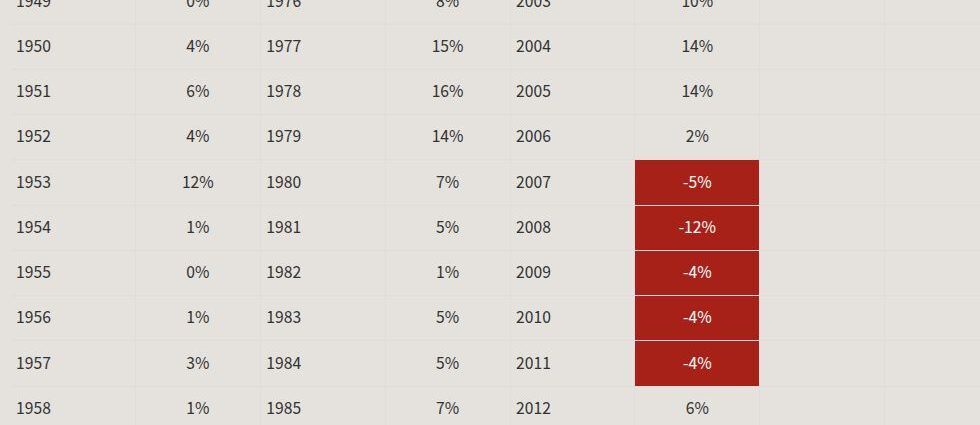
Housing affordability is improving as wages outpace home-price growth
Existing home sales came out yesterday showing slight year-over-year growth, but the headlines were all about home prices at an all-time high. However, most people weren’t focused on the fact that wages have been outpacing home prices for some time now, which is a positive.
Yesterday I went on Yahoo Finance to talk about how the housing market is getting healthier, and today’s episode of the HousingWire Daily podcas dives into that conversation as well. So lets talk about slower price growth being a positive for affordability.
History of home prices
It’s very normal for home prices to rise. In fact, if I exclude 2007-2011, home prices have not fallen by even 1% since 1942. In 1990, we were down 0.7%, and in 1991, we were down 0.02%.
However, as you can see below, we have had many years when real home prices fell, meaning the growth rate of prices is lower than the growth rate of inflation. This year is a good example of this, where the growth rate of prices is running below the growth rate of inflation and wage growth.
For example, assume home prices are up 1% this year, but wage growth is running at 3.5% and inflation is running at 3% — this kind of year helps with affordability over time. The fact that inflation is higher than home-price growth shows that home-price growth is actually soft this year.
I am very excited about this data because the housing market is no longer savagely unhealthy, but healthy again. My 2025 price forecast was for 1.77%; we ended the year at 1.3%. Wages rose faster than home prices. So far this year, home prices are performing a smidge better than I forecast, which was at a -0.62%, but wages are still outpacing them. These facts are a positive for the housing market, not a negative.
Housing inventory
Even though inventory fell month-to-month and we aren’t back to normal inventory levels, per the NAR data, inventory is at levels I would never describe as low. My rule of thumb has been simple: as long as we have 1.52 million -1.93 million active inventory with over four months’ supply, we are good, and we can see that to be the case in 2025 and 2026.
Now, inventory is very seasonal, and in a few months it will see its traditional seasonal decline, but price growth cooling down because of this is a positive, not a negative. Normal inventory is between 2-2.5 million, and in yesterday’s report we stood at 1.56 million with 4.6 months of supply. For context, the peak in 2007 was 4 million. More supply means more choices for buyers, and sellers can’t dictate the terms as much, which slows down price growth and increases affordability.

Conclusion
Home-price growth was 1.8% in the last existing home sales report, a bit firmer than my forecast for 2026, but still lower than wage growth, which is running at 3.5%. Over time, as long as this type of price growth continues, with wage growth outpacing it, it’s a huge plus.
Just remember how unhealthy home-price growth was in 2020, at 10%, and in 2021, at 19%. Now price growth below wage growth is just what the housing doctor ordered for this marketplace.


Delta Travel Demand Withstands Fuel Costs



Stocks Enter Earnings Season With Little Room for Error
The U.S. stock market has climbed to record highs in 2026 on the strength of corporate profits, and over the next several weeks investors will learn whether companies can continue delivering the earnings needed to justify those gains. Second-quarter earnings season officially begins the week of July 13, with JPMorgan Chase and several other major U.S. banks reporting results on July 14, launching what is expected to be one of the most closely watched reporting seasons in years.
According to LSEG IBES data, Wall Street analysts expect S&P 500 companies to deliver earnings growth of more than 20% compared with the same quarter a year ago. Those expectations reflect continued confidence in corporate America but also leave little room for companies to disappoint investors.
The optimism follows an exceptionally strong first quarter. Corporate earnings grew 29.4%, roughly double what analysts had projected before reporting season began and marking the strongest quarterly profit growth in more than four years. Much of that performance was fueled by continued investment in artificial intelligence infrastructure, resilient consumer spending and stronger-than-expected economic activity. As a result, analysts have raised full-year earnings expectations to approximately 26.4% growth for 2026, which would represent the strongest annual expansion since 2021.
Higher expectations, however, also create greater risk. With stock prices already reflecting significant optimism, companies that merely meet expectations may find investors looking for more. Joe Mazzola, Head Trading and Derivatives Strategist at Charles Schwab, warned that steadily rising earnings estimates raise the likelihood of increased market volatility as investors react sharply to even modest disappointments. Bruce Zaro of Granite Wealth Management similarly noted that many technology and growth companies may need to significantly exceed forecasts to justify additional gains after such a strong rally.
Recent trading has already demonstrated that reality. Even companies reporting solid financial results have sometimes seen their shares decline as investors judged the performance against exceptionally high expectations. Strong earnings from Samsung Electronics, for example, were followed by weakness across portions of the semiconductor sector as investors questioned future growth rather than current results.
Technology remains the primary driver of expected earnings growth. LSEG projects technology-sector profits will rise roughly 65% during the second quarter, while energy companies are expected to benefit from higher oil prices, potentially doubling earnings from a year earlier. Materials companies are also forecast to post significant gains. That concentration means much of the broader market’s performance continues to depend on a relatively small group of large technology and energy companies, with Nvidia, one of the market’s most influential stocks, not scheduled to report until late August.
Investors are also confronting higher borrowing costs. Long-term Treasury yields have climbed sharply in recent weeks, with the 30-year Treasury bond trading near 5% and the 10-year Treasury note around 4.6%. Rising yields increase financing costs for businesses while also making bonds more attractive relative to equities. Combined with persistent inflation concerns and the Federal Reserve’s cautious approach toward interest-rate cuts, higher bond yields have become an increasingly important headwind for stock valuations.
Market valuations themselves remain elevated. The widely followed Shiller CAPE ratio continues to rank among the highest levels on record, suggesting investors are paying historically expensive prices for future earnings. While elevated valuations alone do not guarantee a market correction, they reduce the margin for error if corporate results fail to meet expectations.
For businesses, earnings season offers far more than insight into quarterly profits. Company guidance on hiring, capital spending, consumer demand, artificial intelligence investment and tariff costs often provides one of the clearest real-time snapshots of the broader economy. Investors will be paying close attention not only to what companies earned during the second quarter but also to what executives expect for the remainder of the year.
For millions of Americans whose retirement savings are invested in stock market indexes, the coming weeks could determine whether this year’s rally continues or begins to cool. Corporate America enters earnings season from a position of strength, but expectations have rarely been higher. With profits, valuations and interest rates all elevated simultaneously, even small disappointments could trigger outsized market reactions.
JBizNews Desk | New York
© JBizNews.com All Rights Reserved. Reproduction or distribution without written permission is prohibited.
Trump says he won’t sign ROAD Act, which could automatically become law tonight
The 21st Century ROAD to Housing Act, after months of deliberation and delays, has encountered yet another curveball.
On Friday morning, President Donald Trump confirmed in a Truth Social post that he won’t sign the legislation, although he didn’t say that he would veto it. Assuming that Trump doesn’t veto or sign the bill today, it is set to automatically go into law at midnight Eastern time, a result that many housing stakeholders expect.
If Trump does issue a veto, Congress could have the votes to override it, but it would cause further delays.
“I will not sign the Housing Bill, which has been fully approved by Congress and sent to the White House, in PROTEST over the fact that the United States Senate is not capable of passing THE SAVE AMERICA ACT…”, Trump said in the post.
The news comes after Trump delayed a signing ceremony for the bill on June 24, instead insisting that Congress first pass the SAVE America Act, a bill aimed at strengthening voter identification and registration requirements. In the days after the cancellation, Trump downplayed the significance of the bill, calling it a “big yawn” in comparison to the SAVE America Act.
Mike Johnson (R-La.), the speaker of the House of Representatives, formally sent the bipartisan housing package — which passed the House on June 23 by a margin of 358-32 — back to the White House on June 29. That triggered a 10-day deadline for Trump to sign the bill, veto it or allow it to become law without his signature. With Sundays excluded, the countdown will end at midnight Saturday after Friday’s deadline passes.
Housing industry stakeholders, who have almost unanimously backed the legislation, are eagerly awaiting its passage.
“The bipartisan 21st Century ROAD to Housing Act is a landmark step toward protecting the American Dream of homeownership. By expanding our housing supply and removing barriers to ownership, this legislation will help more Americans achieve their dream, strengthen communities and build generational wealth,” said Colin Allen, executive director of the American Property Owners Alliance.
Build-to-rent lifeline
The housing package effectively bans institutional investors that already own 350 or more single-family homes from purchasing additional single-family properties. But the final version removed a pair of controversial provisions that largely froze new investments into build-to-rent (BTR) projects.
One of the excluded provisions, which was included in a previous Senate version of the bill, would have included an institutional investor ban without carve-outs for BTR communities. Another would have mandated that new BTR communities be sold to individual homeowners within seven years of completion.
Both proposals, which were ultimately excluded from the final bill, would have significantly undermined the ability of BTR developers to generate returns on their investments.
The final text aligns with Trump’s executive order from January aimed at limiting institutional homebuying, while eliminating the broader restrictions on build-to-rent that raised significant concerns and opposition among housing industry stakeholders.
Streamlining homebuilding
The 21st Century ROAD to Housing Act aims to streamline the development of housing, primarily by cutting red tape.
For example, the bill would exempt new categories of relatively small-scale development under the HOME program from review under the National Environmental Policy Act of 1969 (NEPA). The legislation would also limit duplicative environmental reviews in the HOME program and make other adjustments to reduce red tape associated with NEPA reviews.
Another provision aimed at removing the permanent chassis requirement from manufactured homes has generated a lot of buzz in the industry. Manufactured housing is an attainable source of housing for millions of Americans, but it is primarily located in rural areas far from city centers. Removing the chassis rule could lower costs while expanding design flexibility, unlocking new opportunities for manufactured housing in higher-cost, infill and urban markets.
Shawn King, executive vice president of national sales and co-founder of Arrive Home, called the bill “the most consequential piece of manufactured housing policy in decades.”
“In the past, federal rules have forced builders to permanently attach a steel chassis to every manufactured home, even though fewer than 7% of these homes are ever moved after they’re installed,” King said. “That requirement alone has been adding $5,000 to $10,000 to the cost of every single home for no real benefit to the homeowner.
“Eliminating it doesn’t just lower the price tag; it opens the door to basements, multi-story designs and layouts that let manufactured homes fit naturally into neighborhoods instead of standing apart from them,” King added.
The legislation also creates grant programs to help state, local and tribal governments update regulatory processes and improve permitting capacity. Another grant program will help communities adopt pre-reviewed building plans that can streamline approvals.
The bill additionally simplifies approvals for multifamily buildings, expands affordable housing financing, supports the conversion of vacant commercial properties into housing, and improves access to developable land through the establishment of a database that enables better tracking of publicly owned land.
“The 21st Century ROAD to Housing Act will help expand the nation’s housing supply by reducing regulatory barriers and encouraging local governments to reform zoning and land-use policies that have limited home building,” Bill Owens, the chairman of the National Association of Home Builders, said in a statement.
Mortgage and financing provisions
The bill includes several provisions that directly affect the mortgage industry and housing financing.
Key provisions include a Federal Housing Administration (FHA) loan pilot program for small-dollar mortgages below $100,000, along with a requirement that the Consumer Financial Protection Bureau issue a report to Congress to study how loan originator compensation rules affect the availability of small-dollar mortgages.
Additionally, the housing package raises FHA multifamily statutory loan limits for the first time since 2003 and authorizes a three-year Community Development Block Grant–Disaster Recovery program.
Another key provision aims to bolster the appraiser workforce by expanding training programs and providing grant funding to attract new talent.
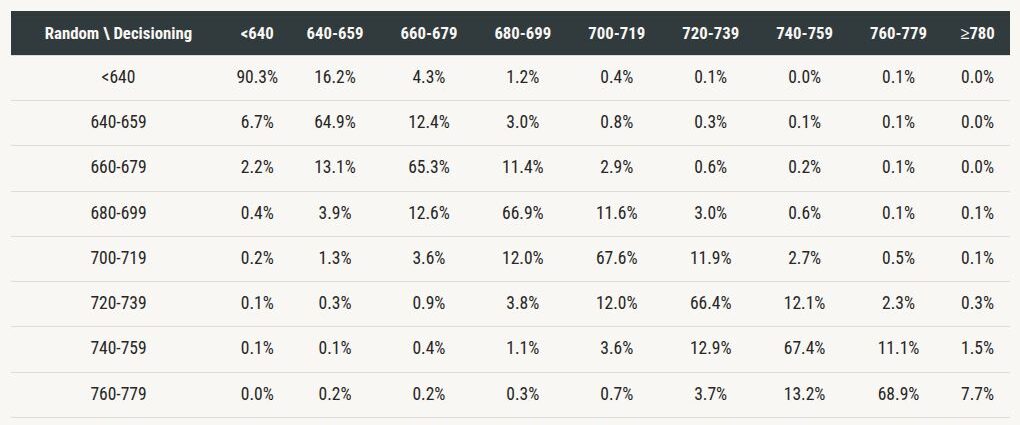
MBA analysis finds minimal pricing impact from single credit score approach
An analysis published Friday by the Mortgage Bankers Association (MBA) suggests that using a single randomly selected credit bureau score, rather than the current multiscore “decisioning” method, would have little effect on loan pricing or guarantee fee revenue for the government-sponsored enterprises (GSEs).
The MBA examined nearly 105,000 mortgage applications from the first half of 2025 using Intercontinental Exchange (ICE) McDash loan application data.
Researchers found that a randomly selected credit score landed in the same Fannie Mae loan-level price adjustment (LLPA) bucket as the current decisioning score roughly two-thirds of the time, with about 90% of scores falling within one pricing bucket above or below the decisioning score.
The findings come as the mortgage industry continues to debate changes to credit scoring requirements, including proposals to move away from the longstanding practice of requiring multiple credit bureau scores for mortgage underwriting.
For the analysis, the MBA used the methodology outlined in Fannie Mae’s Selling Guide to calculate decisioning credit scores. When three borrower credit scores were available, researchers used the middle score; when two scores were available, they used the lower score; and when only one score was reported, that score became the decisioning score.
The sample excluded loans with co-borrowers and applications containing credit scores below 500.
Researchers then simulated a single-file approach by randomly selecting one available bureau score for each application and comparing its corresponding LLPA pricing bucket with the decisioning score.
Among borrowers with decisioning credit scores between 700 and 719, nearly 68% of randomly selected scores fell into the same pricing bucket, while about 91% landed either in the same bucket or one bucket higher or lower. The MBA said upward and downward movements between adjacent pricing buckets occurred at roughly equal rates, indicating little net change in LLPA revenue.
The association said these patterns remained consistent across the entire LLPA matrix, leading it to conclude that moving to a single credit file would likely have little impact on either mortgage credit risk or loan-level price adjustment revenue.
This article was generated using HousingWire Automation and reviewed by a HousingWire editor before publication.
Compass, MRED, Zillow trade post-hearing briefs in Chicagoland MLS lawsuit
Legal battling between Zillow, Compass and Midwest Real Estate Data (MRED) continued Thursday with all parties filing competing post-hearing briefs — Zillow alleging an “unlawful conspiracy” to cut off its access to Chicagoland listing data while defendants Compass and MRED counter that the company’s harm is “self-inflicted.”
The filings come after a two-day hearing earlier this week on Zillow’s motion for a preliminary injunction that would prevent MRED from suspending its listing data feeds to the online portal.
Judge John Tharp Jr. is now weighing whether to grant the injunction, with replies to the new briefs due Monday.
In a 48-page supplemental brief, Zillow argued that MRED and Compass International Holdings worked “in lockstep” to block its Listing Access Standards, which discourage private listing networks that hide properties from public view.
Zillow’s brief accuses MRED — working with Compass — of revising its display rules to target Zillow’s listing standards and create a pretext for terminating its feed access.
It’s also alleged that defendants terminated or discouraged Zillow’s direct broker feeds, eliminating its only alternative source of Chicagoland listings.
Finally, Zillow claimed that MRED and Compass formed an alliance through which Compass “laundered its failed private exclusive listings through MRED, triggering an ostensible violation of MRED’s rules to justify termination of Zillow’s feed access.”
Attorneys for Zillow pointed to an October 2025 email from Compass CEO Robert Reffkin to multiple MLSs urging them to “discipline” Zillow by terminating its feed access if its standards were not “immediately repealed.”
Zillow also said that Compass terminated direct broker feed agreements nationwide and that MRED warned its members against providing Zillow with direct feeds.
The company argued that losing access to MRED’s feeds — which cover nearly all Chicagoland listings — would cause irreparable harm by triggering a “downward spiral” of lost audience and revenue that would be impossible to quantify.
“If Zillow’s listing supply is reduced to less than 50% in Chicagoland, that would directly undermine Zillow’s brand promise and audience-driven business model in ways that are difficult, if not impossible, to quantify,” the brief states.
Defendants reject conspiracy claims
In their joint 40-page brief, MRED and Compass painted a dramatically different picture — arguing that Zillow’s ban on listings previously marketed outside the MLS is the true anticompetitive conduct.
“Zillow is not entitled to the extraordinary relief it seeks because any harm, if it exists at all, is self-inflicted,” the defendants wrote. “If Zillow wants MRED’s feed, the ‘lifeblood’ of its business that it receives virtually for free, all Zillow has to do is not subjectively ban listings. It is as simple as that.”
Compass and MRED argued that Zillow’s Listing Access Standards policy, announced in April 2025, blocks listings from appearing on Zillow’s website if they were previously marketed outside the MLS — a policy designed to discourage brokers from using private listing networks and “coming soon” marketing strategies.
“Zillow pretends it favors ‘transparency,’ but in truth its ban achieves the opposite,” the brief stated. “Zillow only bans listings that were publicly marketed off-MLS and, as such, it encourages listings to be truly secret; it knowingly and deliberately withholds the fact that a home is for sale from its users.”
Defendants also argued that private listings are procompetitive and that MRED’s rules requiring “objective criteria” for listing filters are neutral and lawful.
They also contended that Compass and MRED each acted independently, not as part of any conspiracy.
“The evidence shows that neither Defendant wanted Zillow’s data feeds permanently suspended,” the brief stated. “Defendants simply wanted Zillow to stop banning and misrepresenting listings.”
Long-running dispute over listing access
Litigation traces back to Zillow’s broader antitrust lawsuit alleging that MRED and Compass conspired to cut off the listing portal’s access to the Chicagoland MLS listing feed.
The preliminary injunction motion requires Zillow to show it would suffer irreparable harm without the injunction and that it is likely to prevail at trial.
MRED suspended Zillow’s feed access on May 20, but the suspension lasted only two days after the court issued a temporary restraining order restoring access.
Dispute centers on Zillow’s Listing Access Standards, which ban listings from its platform if they are not available for display on IDX or VOW feed-powered websites within one business day of the property being publicly marketed.
That policy impacts listings that Compass markets as private exclusives before taking them public via the MLS.
Zillow has argued that its policy is pro-competitive and good for consumers because it promotes transparency, while MRED’s enforcement of its display rules hurts consumers and protects Compass from competition.
MRED has maintained that its rules are neutral and derive from a 2008 settlement between the Department of Justice and the National Association of Realtors that prevented MLSs from selectively hiding listings from consumer-facing portals.
It remains unclear how long the court will take to rule on the motions.
This article was written by Jonathan Delozier and generated with the assistance of HousingWire Automation. It was reviewed by a HousingWire editor before publication.

Walmart to Pay Texas $13 Million Over Spark Driver Tips
Walmart has agreed to pay more than $13 million to settle a Texas investigation into whether the retailer misled the gig workers who deliver its groceries about how much they would earn, Texas Attorney General Ken Paxton announced Monday. The settlement resolves allegations that Walmart gave drivers in its Spark Driver program inaccurate information about tips, base pay and bonus opportunities, while requiring the company to change how it presents driver compensation going forward.
Roughly half of the settlement—about $6.69 million—has already been paid directly to affected Texas drivers as restitution, according to the attorney general’s office. An equal amount will go to the state to cover civil penalties, attorneys’ fees and investigation costs, bringing the total settlement to more than $13.3 million. The agreement, filed June 19 in Collin County District Court as an Assurance of Voluntary Compliance under the Texas Deceptive Trade Practices Act, does not require Walmart to admit wrongdoing.
Walmart’s Spark Driver platform, launched in 2018, connects independent contractors with grocery and retail deliveries from local Walmart stores and fulfillment centers. Drivers accept delivery offers through a mobile app and are paid per trip. According to court filings, Texas alleged that since at least 2021, Walmart represented that drivers would receive the full amount of customer tips even though some tips were allegedly split among multiple drivers or not paid in full. The state also alleged Walmart reduced base pay on modified delivery offers without adequate disclosure and provided misleading information regarding incentive bonuses.
Beyond the financial settlement, Walmart agreed to implement significant operational changes. The company must establish an earnings verification system designed to ensure drivers receive the compensation shown when they accepted delivery offers. Walmart must also improve transparency regarding driver pay, bonuses and incentives. The Texas Attorney General’s Office said it will continue monitoring the company’s records and compensation practices to ensure ongoing compliance.
Attorney General Ken Paxton called the settlement a victory for Texas workers, saying it ensures drivers receive the wages and tips they were promised while reinforcing that large corporations must honor the compensation they advertise. Walmart responded that it values its Spark drivers, has already issued remediation payments to eligible drivers and continues working to improve its compensation systems to promote fairness and transparency.
The settlement highlights growing regulatory attention on the rapidly expanding gig economy. As retailers compete to offer faster home delivery, millions of independent contractors increasingly rely on app-based platforms where earnings can be difficult to verify. Rather than challenging the independent contractor model itself, Texas focused on the accuracy and transparency of compensation disclosures—an approach that other states could potentially adopt.
For Walmart, the financial cost is relatively small compared with its overall size, but the operational requirements could have broader implications across the delivery industry. If earnings verification and greater compensation transparency become industry standards, competing delivery platforms may also face pressure to modify how they present pay offers to drivers.
As same-day delivery becomes an increasingly important part of modern retail, regulators appear increasingly focused on ensuring that gig workers receive exactly what they are promised. The Texas settlement may ultimately serve as an early blueprint for how states oversee pay transparency throughout the rapidly growing app-based delivery economy.
JBizNews Desk | Bentonville
© JBizNews.com All Rights Reserved. Reproduction or distribution without written permission is prohibited.


West Capital Lending opposes loanDepot bid to dismiss TILA comp suit
West Capital Lending (WCL) is pushing back against loanDepot‘s attempt to dismiss a lawsuit that accuses the lender of using an illegal compensation structure to gain an unfair competitive advantage in the mortgage market.
In an opposition brief filed June 18 in the U.S. District Court for the Central District of California, WCL argued that its complaint sufficiently alleges loanDepot violated the Truth in Lending Act (TILA)’s loan originator compensation rule by tying production managers’ compensation to the pricing terms offered to borrowers.
TILA’s application to production managers
WCL filed the lawsuit in March, alleging loanDepot’s consumer direct division violated the Truth in Lending Act’s loan originator compensation rule by tying production managers’ compensation to loan profitability and pricing concessions. WCL argues the rule applies to production managers because they negotiated loan terms with borrowers, despite also serving in supervisory roles.
The complaint alleges loanDepot used the compensation structure to gain pricing flexibility unavailable to compliant lenders. This allowed it to selectively undercut competitors — including WCL — while reducing managers’ compensation, causing WCL to lose customers, market share and revenue.
To support its claims, WCL cited declarations from former loanDepot production managers and executives who said managers regularly negotiated rates and fees with borrowers, and that their pay decreased when they approved pricing concessions.
The filing also points to an internal compensation formula that allegedly reduced production managers’ bonuses based on the number of pricing exceptions granted to borrowers. WCL argues the policy directly linked compensation to loan terms in violation of Regulation Z.
WCL further alleges former employees were instructed to match or beat offers from WCL regardless of profitability. According to the declarations, loanDepot was willing to lose money on individual loans to prevent borrowers from choosing the rival lender, using profits from higher-priced loans and reduced manager compensation to subsidize the discounts.
The company also argues it has standing to pursue claims under California‘s Unfair Competition Law because it allegedly lost customers, market share and revenue as a result of the practices. It contends that California law allows unfair competition claims to be based on alleged TILA violations, even though TILA itself does not provide competitors with a private right of action.
Legal battle on multiple fronts
WCL is asking the court to deny loanDepot’s motion to dismiss or, alternatively, allow it to amend its complaint if the court identifies any pleading deficiencies. The case remains pending, and neither WCL nor loanDepot returned HousingWire‘s requests for comment at the time of publication.
The suit isn’t the first time WCL and loanDepot have gone toe to toe in the courtroom.
In October 2025, loanDepot accused WCL and its founders of poaching hundreds of loan officers, misappropriating trade secrets and customer data, and violating LO compensation and labor laws. That case is still ongoing.
The lender also alleged that WCL improperly classified hundreds of loan officers as independent contractors and compensated them through revenue-sharing arrangements that gave the brokerage an unfair competitive advantage. WCL has denied the allegations.
WCL also faces a separate but similar lawsuit filed in June 2025 by consumer-direct lender Griffin Funding. That suit alleges several former LOs diverted company leads and customers after leaving for WCL. Griffin alleges the former employees misappropriated trade secrets and caused more than $3.7 million in lost revenue, claiming that WCL benefited from the alleged misconduct.
This article was written by Sarah Wolak and generated with the assistance of HousingWire Automation, then reviewed by a HousingWire editor before publication.


Coffee Industry Presses Trade Officials to Keep Brazil Beans Tariff-Free
The National Coffee Association told the Office of the U.S. Trade Representative on Wednesday, July 8, that Brazilian coffee should stay out of a new round of import taxes, warning that fresh duties would push already-steep grocery prices higher for the tens of millions of Americans who drink coffee every day.
William Murray, president and chief executive of the National Coffee Association, made the case in testimony at a public hearing in Washington tied to the government’s review of trade with Brazil. He asked officials to protect green, unroasted coffee that is already exempt and to add unflavored instant coffee to the tax-free list, calling both essential to keeping coffee affordable and U.S. coffee companies competitive.
The economic stakes are substantial. Murray told the panel that protecting coffee matters for more than 176 million daily American coffee drinkers and a domestic coffee economy he valued at about $343 billion. Instant coffee alone, he said, is consumed by nearly 30 million adults each day and serves as a base for cold brew, flavorings, extracts and the fast-growing category of canned, ready-to-drink coffee.
The hearing is part of a Section 301 investigation run by the Office of the U.S. Trade Representative into Brazil’s trade practices, spanning complaints from digital-commerce rules to illegal deforestation. Out of that review, the government could place a 25% tariff on a list of Brazilian goods. A separate measure has already added a 12.5% charge on products from more than 60 countries, instant coffee among them.
Brazil is the world’s largest coffee producer and supplies about a third of what the United States drinks, which makes any tax on its beans hard to dodge at the register. Last year, Washington imposed a 50% tariff on Brazilian imports that threw the U.S. coffee trade into turmoil before officials carved out green coffee. Instant coffee stayed taxed at 50% until the Supreme Court struck down most of the administration’s blanket tariffs; it now carries a 10% global rate.
Murray said the earlier duties fed what he called “highly visible price inflation on popular products,” squeezing the companies that turn beans into everyday goods. His core argument to regulators was practical: the country cannot grow its way out of a coffee tax. Farms in Hawaii and Puerto Rico cover only a sliver of demand, and the United States produces less than 6% of the instant coffee it uses.
The pain would not stop at the supermarket shelf. Higher bean costs ripple through corner coffee shops, diners and national restaurant chains that price a cup on thin margins, through grocery retailers that lean on coffee to draw shoppers, and through the food manufacturers that fold coffee into syrups, creamers, ice cream and bottled drinks. The National Coffee Association notes that roughly 99% of U.S. coffee is imported, so there is no domestic supply to cushion the blow.
Brazilian producers pressed the same point from the other side of the table. Representatives of Abics, the Brazilian Soluble Coffee Industry Association, and the exporter group Cecafe appeared at the Washington hearings alongside the American association. Aguinaldo José de Lima, executive director of Abics, said more than 90% of Brazil’s instant coffee is bound for the U.S. market — about 15,500 metric tons a year — and that no other supplier can match that volume at a similar price. The first hit from any new tariff, he said, would land on companies and jobs before reaching shoppers.
Relief at the register looks distant regardless of the ruling. In a London interview reported by Bloomberg, Giuseppe Lavazza, chairman of the Italian roaster Lavazza, said retail coffee prices are unlikely to fall for at least two years, citing tight global supply, weather damage to crops in Brazil and Vietnam, and speculation that has driven futures to record levels. He described the market’s instability as “the new constant.”
Coffee has become a recurring flashpoint in the tariff fight precisely because almost none of it grows on American soil. Lawmakers in both parties, including Representative Don Bacon and Representative Ro Khanna, have pushed the White House to leave the drink alone, arguing that taxing a product the country cannot realistically produce simply raises costs for households.
For now the decision sits with trade officials weighing the Section 301 findings. Murray asked them to extend the existing exemptions rather than reopen them, telling the panel that keeping coffee tariff-free would benefit both the broader economy and the millions of Americans who start each day with a cup. A ruling is expected in the weeks ahead.
JBizNews Desk | Washington
© JBizNews.com All Rights Reserved. Reproduction or distribution without written permission is prohibited.

JBIZ Leadership AI Summit Opens Monday and Tuesday as Businesses Prepare for the Next Generation of Essential Workplace Skills
EATONTOWN, N.J. — As businesses across every industry race to improve productivity and prepare their workforce for a rapidly evolving workplace, the Orthodox Jewish Chamber of Commerce and the Parnassah Network Foundation will host the JBIZ Leadership Multi-Platform AI Summit this Monday and Tuesday, July 13–14, at the Sheraton Eatontown Hotel in Eatontown, New Jersey.
The two-day executive program is designed for business owners, executives, managers, employees, entrepreneurs and individuals entering the workforce, providing practical, hands-on training in the business platforms that are increasingly becoming essential in today’s workplace.
Just as Word, Excel, Outlook and Email Became Workplace Essentials…
Twenty years ago, knowing how to use Microsoft Word, Excel, Outlook and email separated job candidates from the competition. Today, those programs are standard requirements in virtually every workplace.
Organizers say the workplace is experiencing another transformation.
Today’s leading business platforms—including ChatGPT, Claude, Microsoft Copilot, Google Gemini, Grok, Perplexity, Meta AI and Mistral—are quickly becoming the next generation of must-have workplace skills. Just as previous generations were expected to master Word and Excel, today’s professionals are increasingly expected to understand how and when to use these platforms effectively.
Knowing how to use these platforms has become as essential as knowing Word, Excel and email. Employees who can use them independently complete tasks faster, improve accuracy, reduce administrative work and free up valuable time for higher-level responsibilities.
Why Businesses Are Investing in These Skills
Research continues to demonstrate measurable returns from integrating these platforms into everyday business operations.
According to the London School of Economics, professionals save an average of 7.5 hours per week through effective use of these workplace platforms.
The GoTo 2025 AI in Business Report found employees save an average of 2.3 hours per day, enabling organizations to improve productivity while reducing repetitive administrative work.
The PwC Global AI Jobs Barometer, which analyzed more than one billion job postings worldwide, found that positions requiring AI-related skills command an average 72% earnings premium, reflecting the growing demand for professionals who know how to use these technologies effectively.
Meanwhile, FOX Business reported that survey data suggests as many as 70% of laid-off workers were not actively using artificial intelligence tools, highlighting the growing importance many employers are placing on technology adoption and workforce readiness.
Whether You’re a Business Owner, Executive, Manager, Employee or Entering the Workforce—This Summit Is for You
The summit is designed to deliver practical value for professionals across every stage of their careers.
Business owners will learn how to increase productivity, reduce operating costs, improve customer service and grow revenue by empowering their workforce with today’s leading business platforms.
Executives and managers will discover how to streamline operations, delegate repetitive work more efficiently and build higher-performing teams.
Employees will learn how to draft professional emails, prepare reports and presentations, analyze spreadsheets, review contracts, conduct research, summarize documents and automate repetitive office tasks—allowing them to focus on work that creates greater value.
Individuals entering the workforce or returning from seminary will gain practical skills that employers increasingly expect, helping them stand out in today’s competitive job market.
Built on Nearly Two Decades of Business Leadership
The JBIZ Leadership Multi-Platform AI Summit is built on the Orthodox Jewish Chamber of Commerce’s nearly 20 years of empowering businesses, entrepreneurs and professionals.
Over that time, the Chamber has presented more than 1,000 workshops, conferences and executive education programs, becoming a recognized leader in workforce development, business growth and economic stimulation.
Developed over months by industry professionals, the summit teaches attendees which platform to use, when to use it and how to apply it across writing, research, marketing, sales, spreadsheets, presentations, document analysis, customer service and everyday office operations. Every participant will receive a Certificate of Completion.
Event Information
The JBIZ Leadership Multi-Platform AI Summit will be held Monday and Tuesday, July 13–14, at the Sheraton Eatontown Hotel, 6 Industrial Way East, Eatontown, New Jersey.
Information: Esther@OJChamber.com
Phone: (212) 659-5270 ext. 104
JBizNews Desk | Eatontown, New Jersey
© JBizNews.com All Rights Reserved



Qatar in talks with US, Iran to de-escalate crisis as the two nations trade blows – report
Qatar has been in talks with the US and Iran to de-escalate the current crisis, according to a Friday New York Times report citing two anonymous officials familiar with the matter.
Iranian armed forces launched attacks on US military infrastructure in Gulf states on Thursday following US strikes on Iran’s southern coastal and eastern provinces, further eroding a three-week-old ceasefire.
Iranian media later reported multiple explosions across southern Iran, including Bushehr, where one of the country’s nuclear plants is located, along with Konarak, Choghadak and Bandar Abbas.
Attacks on Qatari and Saudi shipping vessels earlier this week upended the ceasefire, with US President Donald Trump declaring the truce “over.”
A Qatari delegation also visited Iran on Friday in what is believed to be an effort by Doha to consolidate its role as a mediator after a recent escalation in hostilities in the Gulf, Iran’s semi-official Tasnim news agency reported.
Tasnim said the visit followed what it described as Qatari accusations against Iran over an alleged incident in the Strait of Hormuz and subsequent US attacks on Iranian military and civilian targets.
A source with knowledge of the situation told Reuters on Friday that Qatari negotiators were meeting Iranian officials in an effort to de-escalate tensions and create conditions for broader negotiations, adding that the talks were being conducted in coordination with the United States.
Axios also cited a diplomat as saying that “it’s clear both sides want to come back to the MOU.”
CENTCOM says US forces struck about 90 military targets in Iran
US Central Command said on Wednesday its forces had struck approximately 90 Iranian military targets, including air defense systems, coastal surveillance assets, and missile and drone storage sites.
The US military said its strikes were aimed at keeping the strait open after it accused Iranian forces of attacking three tankers in the area.
“This is in retribution for yesterday’s bombing of ships by Iran. If it happens again, it will get much worse!” Trump wrote on his Truth Social platform.

Esther Marcus helped Israelis recover from October 7 – then she became a war widow
‘Stevie is everywhere, and he’s nowhere, and I find myself looking for him, and he’s not there,” said Esther Marcus wistfully.
Marcus, a resident of Kibbutz Alumim, which was attacked on October 7, and whose husband Stevie passed away just three months later of a broken heart, never dreamed that she would need to utilize her skills as a therapist in maintaining her own resilience in the face of the personal tragedy that she had to face.
The 61-year-old Marcus, born Esther Blau, is soft-spoken and reserved, grew up in the London neighborhood of Golders Green, and was raised in an Orthodox, Zionist family. She was a member of the Bnei Akiva youth movement and participated in its post-high-school hachshara (preparation) program in Israel on Kibbutz Lavi.
Encouraged by her father to remain in Israel (her mother acknowledged that she needed to spread her wings but said that there was always a place for her at home if her aliyah did not succeed), she made aliyah in 1984 at the age of 19 and studied at the Hebrew University, where she received her bachelor’s degree in social work.
Shortly after receiving her degree, Esther was surprised to receive a draft notice from the IDF. “At the time, the law was that if you came on aliyah before age 20, you could be drafted into the army. But no shaliach (representative) in England had told me about it,” she recalled with a smile. “I was 23 at the time, somewhat older than the other women who had been drafted.”
Despite her misgivings, Esther joined not only out of obligation but also from a sense of idealism.
“I really believe that religious men and women should join the army, because I think it’s an opportunity to blend and for religious people to meet non-religious people, and a way to show that you can be religious and you can go into the army. Those are my values, and those are my principles,” she shared.
Esther is glad that she had the opportunity to join the IDF: “Looking back, it’s remarkable that I did because it led me to where I am now.” She took an officer’s course with other psychologists and social workers and became a mental health officer (kabanit), serving from 1989 until 1992.
Esther & Stevie: Their story
In 1990, she met Stevie Marcus, a devoted soccer fan and AC/DC aficionado who had made aliyah in 1984 and was part of a group of young people (garin) living on Kibbutz Alumim, a religious kibbutz founded in 1966 in the Gaza Envelope.
“He was the only one in his garin that wasn’t married,” said Esther, with a smile. “They suggested to him to take a year off to search for a wife, and he came to Jerusalem, and that’s how we met. He was on this mission to find a wife, and he succeeded.”
Esther and Stevie married in 1991, and she joined him in Alumim, traveling to Jerusalem daily for the last six months of her army service. They raised their four children there. She worked in Sha’ar Hanegev for 12 years as a social worker, and then spent four and a half years working in a rape crisis center in Beersheba.
During that time, she received her master’s degree in social work and art therapy. She also provided individual and group therapy to teenage girls at a boarding school in Kibbutz Saad. For the past 10 years, she has been the clinical director of the Resilience Center Clinic in Sdot Negev.

Stevie started out working in irrigation in the kibbutz and moved on to the dairy farm, where he was the assistant director. “Stevie was a very passionate person,” said Esther. “With anything and everything, he went right into it. He really learned, trained, and understood. He was in charge of herd health, and over the years, the dairy farm grew.”
In addition to his formal job, Stevie took on voluntary tasks in the kibbutz, working on metal recycling, handling safety regulations, and serving as banquet manager for bar mitzvahs and weddings. In recent years, he became interested in photography and became a self-taught expert through YouTube, posting his creations on Alumim and eventually on social media.
“Stevie loved living on the kibbutz,” said Esther. “He was extremely funny, and he loved whisky.”
October 7
On the weekend of October 6 and 7, 2023, Esther was celebrating her 59th birthday with her husband and two of her children – her newly married son and his wife, along with her daughter, son-in-law, and their two young children.
“I had gotten up very early on the morning of Oct. 7,” said Marcus. “I was up before the alarms started. I remember seeing my neighbor go off for a run, and then, within minutes, we heard all the sirens and the ‘tzeva adom’ warning.”
She explained that over the years, the alarm system had become more sophisticated, such that individual sirens would sound for each kibbutz in the area. On that morning, she recalled, all of the alarm sirens from each kibbutz sounded at once, and the words ‘tzeva adom’ (code red) were sounded repeatedly.
“We knew that something was different this time, and then we received messages ordering us to go into our safe room,” she said.
The eight family members quickly went into the safe room. When she heard the message that they needed to make sure that the children were quiet, Marcus set up her computer for her two-year-old grandchild to watch television, which would keep him quiet during the emergency. Her daughter held the younger grandchild most of the day.
In the meantime, Stevie was on the phone speaking with the Thai and Nepalese workers in the dairy farm.
“They were telling him that they saw the terrorists come in,” said Marcus. “We could hear him on the phone saying to them, ‘Go into the safe room, go into the safe room.’ He was trying to calm them down, saying that it would be okay and that the army was coming.”
Marcus, whose job is to match therapists with people in need, was already receiving phone calls from worried residents asking what was happening. Many of the calls were coming from outside the area, including family members of the Nova survivors who were looking for their children.
Her two children, who were in the safe room, also had friends who had been at the Nova festival, and they were trying to find out what had happened. While they were on the phone, they heard shooting outside.
The emergency squad of Kibbutz Alumim heroically fought the Hamas terrorists, and later that day, the army came in and cleared the area of terrorists. Most of the action took place near the agricultural area of the kibbutz, where the terrorists killed 324,000 chickens, demolished the dairy farm, and destroyed the living area of the Thai and Nepalese workers.
At the end of the day, the residents learned that Hamas terrorists had massacred 22 Nepalese and Thai workers and kidnapped two others.
On Saturday evening, the army came and took Stevie to the dairy farm to see the damage. “He was blown away because it meant that he saw the bodies of the workers,” said Esther. One of the workers, she related, had managed to save himself by moving the ceiling tiles and hiding in the crawl space in the ceiling. Another worker jumped from a window and hid amidst the cow dung for hours.
At 3 p.m. the following day, the residents of Alumim were evacuated and taken to two hotels in Netanya because there wasn’t enough room in a single hotel to accommodate all the kibbutz residents.
“The kibbutz had to start functioning in this emergency situation, but because we have people who are already leading the kibbutz, they really stepped up,” said Marcus.
Resilience tested
Stevie went back to Alumim to help reconstruct the dairy farm, and Esther went straight to work with the Resilience Center. She set up the center in Netanya so that people from Alumim could start receiving assistance. She then set up 10 additional resilience centers with therapists throughout the country for the evacuees in Eilat, the Dead Sea, the Arava, and other locations.
Addressing the subject of resilience centers, Esther pointed out that the concept of resilience centers is believing in people.
“In America, they’re called trauma centers. The focus is on the trauma. In Israel, they’re called resilience centers. The focus is on the resilience. The focus is on knowing that we can bounce back,” she said. “Now we might bounce back wounded and lacking, with various difficulties. But we’re doing it. That’s the Jewish spirit, and that’s the Israeli spirit. You see it again and again. What the soldiers have been through, families like mine, the people in the area, the hostages.”
Two months later, Esther’s resilience was tested again. On the fourth night of Hanukkah, Stevie, who was spending much of his time rebuilding the dairy farm together with a small crew of workers while spending evenings sleeping on a mattress in the kibbutz’s operations center, went to his home to take a shower. It was there that he suffered a massive heart attack and died on his 62nd birthday. His body was not discovered until the next morning.
Esther, who was en route to Alumim for a meeting, received a phone call bearing the tragic news. She notified her children, including one of her sons who was serving in Gaza, but by chance had been allowed to leave to attend another funeral. She also had to break the news to Stevie’s sister and father in the UK, who was 87 at the time, and organize the funeral.
Due to security considerations, the funeral took place at Kibbutz Yavne, where one of their sons lives. During the service, the music of Aerosmith, one of Stevie’s favorite rock groups, played in the background. Stevie was buried in Kibbutz Alumim, as explosions from the war echoed nearby.
Stevie’s death was attributed directly to the war, and Esther was recognized as a war widow by the National Insurance Institute (bituah leumi) and has received benefits from the organization. In 2024, residents began returning to Alumim, but Esther decided to live in Jerusalem while commuting daily to the Gaza Envelope. She returned to Kibbutz Alumim in August of 2025.
How has she dealt with the trauma and grief? “I was definitely in denial for a long time,” she acknowledged.
“The fact that I wasn’t living in the kibbutz and I wasn’t with the community helped me develop even more denial because then I could keep in my mind and have this fantasy that he was still alive and he was still working on the kibbutz.”
“Denial was very powerful, which I’ve always known as a therapist,” she shared. “You can use denial. It’s a defense mechanism, if you know how to use it, for a certain amount of time. I kept working. I was doing a lot of traveling. I have to say the journeys in the car also helped me because I’d be talking to myself. I’d be talking to him.”
Esther was very focused on her work, and she said that helped her survive. “I had to help other people. I had to set up those resilience centers, and my family and close friends kept pushing me through.”

‘Saba Stevie had a camera’
Today, Marcus is memorializing her husband’s photography skills with a 24-page children’s book in Hebrew, titled Saba Stevie had a camera. The book features Stevie’s photographs, with a cartoon-like figure of Stevie on each page to explain the photos.
Esther said that while the purpose of the book is to honor his memory, it also helps people cope with their grief: “It’s my personal story, but there are hundreds of people in Israel, unfortunately, who are now dealing with grief. I can’t believe there isn’t somebody in this country who hasn’t been touched.
“Yes, people die, but the focus is on what he did with his life. The focus is on his photography – the fact that he had a hobby and developed it and left us these treasures, which are his beautiful photographs, which also show us how beautiful the world is while we’re all going through despair and losing faith. One of the biggest challenges that we had was with people who went into depression and felt this sense of despair.”
Esther added that the varied photographic angles of Stevie’s images also play a role.
“It’s like saying you can look at life in this way, or you can look at life in that way,” she said. “And we see his macro photography – you figure out what you want to focus on in your life? There are so many things.”
She recognized that the book is not going to become a best-seller: “I did it more to encourage people to take on a hobby and develop that hobby as Stevie did, and to see the world as a beautiful world, that with what we’ve been going through the last few years, we’ve seen so many awful things. And I think he really taught us that the world is beautiful.”
Esther acknowledged that, while she has her ups and downs in life, she feels fortunate. “I can see it’s brought out the best in my children, in our relationship, in who we are, and with my sister-in-law. For all that, I have so much to be grateful for. I think of these young women who were married for a year, two years, three years, [and lost their husbands].
“When I used to ask Stevie what kept him going in miluim (reserve army service), he’d say, ‘When we’d be on a march, I’d turn around. If someone was behind me, then I was okay because there was someone worse off than me.’ And I adopt that as well.”

After the IDF mistakenly killed her son in Gaza, Yotam Haim’s mother chose forgiveness and hope
On December 10, 2023, 29-year-old Yotam Haim, of Kfar Aza, who had survived 42 days in Hamas captivity since Oct. 7, escaped from his captors, along with two other hostages – Alon Shamriz and Samer Talalka. The trio survived for five days by hiding in abandoned houses in the Shejaia neighborhood of Gaza City. Five days later, on December 15, they were killed by IDF troops, who mistook them for Hamas terrorists.
“It would have been easier for me to succumb to despair and visit his grave every day,” says Iris Haim, Yotam’s mother, who spoke with this writer recently over Zoom. “I could sit at home and be angry at the army that killed my son, and the government that abandoned me on Oct. 7, but that was not an option for me.”
After Yotam’s tragic death, Haim became famous for her graciousness in forgiving the soldiers who had mistakenly shot her son. During the shiva period of mourning, she recorded a message of comfort and forgiveness to the soldiers who had mistaken her son and the others for terrorists. She has since spoken at numerous venues across the country, delivering her message of consolation and a call to remain united.
Two-and-a-half years since her son’s death, Iris is actively engaged in the development of a project that is directly tied to the essence of her son – Beit Yotam, a center for mental health and trauma recovery that is planned for the Gaza border area. The center, she explains, will be built on the same foundations that strengthened Yotam throughout his life – family support, music, sports, and animals.
“First and foremost, it’s about supporting the family,” says Haim. “The family is the most important anchor in the life of a person facing difficulties. Through conversations with many families, I’ve seen the challenges they face – the shame, the tendency to hide what they’re going through, and the lack of communication that can develop between family members.
“With Yotam, we built a strong support network around him, and it helped him tremendously. That is the foundation of Beit Yotam. Before anything else, it will serve as a resilience center for families, providing them with the support, guidance, and tools they need to cope with these challenges together.”
Second is the person himself. Sports, music, and animals are all important tools for helping people, she explains. “Yotam loved CrossFit and played basketball,” says Iris. “CrossFit strengthened him.”
Despite his mental health issues and emotional difficulties, Yotam was a skilled drummer. He was scheduled to perform with his band on the night of Oct. 7 in Tel Aviv. Haim calls music “a frequency of love.” “Many musicians suffer from depression and use it for health and healing,” she says.
Iris acknowledges that the kidnapping of Yotam and his death changed her life.
Growing up in a secular home in Haifa, she never attended synagogue, didn’t fast on Yom Kippur, and was not Shabbat-observant.
“If you had asked me before Oct. 7 whether I was Jewish or Israeli, I would have told you unequivocally: Israeli. To me, ‘Jewish’ referred to religious people. Today, first and foremost, I am Jewish –and then, Israeli. This is a profound change that I have undergone.”
Change catalyst
Iris Haim is just one half of this story. For Rafi Shalev, an IDF reservist and company commander in the Givati Brigade, Friday, December 15, 2023, will remain forever ingrained in his memory. For him, the death of Yotam Haim was a catalyst for change.
“On that Friday morning,” he recalls, “I received a phone call from my battalion commander who informed me that there was a possibility that our brigade had mistakenly killed a hostage.
“My commander said, ‘Take the brigade rabbi with you, retrieve the body, and identify him.’”

Shalev and the rabbi drove in a military Hummer with a stretcher to the perimeter – it was not safe to take the jeep any further, and they were handed a body bag. When they opened it, they identified the remains as Yotam’s.
“That moment hit me very, very hard,” says Shalev. “I had evacuated bodies and dealt with casualties throughout the war, but I never expected something like this. To me, it felt like a tremendous failure. This was someone we should have brought home alive – not like this. The feeling was incredibly difficult.
“Together with the soldiers, we loaded the stretcher into the Hummer. We were extremely careful to treat the body with dignity. In the Hummer, there was a way to elevate the stretcher rather than place it on the floor, so I raised it and positioned him higher.”
Shalev and the brigade rabbi continued to Kibbutz Be’eri, where representatives of the Military Rabbinate were waiting to receive the body.
Four days later, Shalev was heading home from his base in Mitzpe Keramim, adjacent to Kochav Hashahar, overlooking the Jordan Valley. Along the way, he read a post that Iris had shared on Facebook, noting that the family was observing Yotam’s shiva at Moshav Shoeva in the Jerusalem Hills, near Shoresh. Shalev turned the car around and headed in that direction.
When Shalev arrived, the home was crowded with hundreds of people. Though he was told that no one could enter, he walked into the home and saw Iris – whom he had never met – along with others, looking at him in complete surprise.
“I introduced myself and said, ‘Hello. My name is Rafi. I came from the south. I was the one who evacuated your son’s body, and I want to tell you what happened.’”
Shalev told the story of what he had experienced. Iris began to cry and then played the recording that she had made in which she said that she was not angry with the soldiers who had shot her son and invited them to her home.
“You are the first soldier to come to us directly from the battlefield,” said Iris. “I want every soldier to hear this.”
Shalev says it is difficult to express the emotions he was feeling at that moment. “I left the house and immediately sent the recording to all of my commanders and soldiers. As it turned out, someone else in our unit also circulated it, and eventually the entire country heard it.”
When Rafi finally arrived home later that evening, he encountered a friend who told him he was in the final stages of approval as a kidney donor.
“I remember thinking to myself,” he says, “that there are no coincidences. This wasn’t random.”
Rafi, moved by his experiences handling Yotam’s remains and meeting Iris, decided he wanted to do something meaningful. He decided to donate a kidney. Rafi shared the news of his decision with Iris and wrote to her, “Thanks to Yotam, we are adding life.”
Two days later, he contacted Matnat Chaim, the Israeli organization that coordinates kidney donation, and underwent a battery of tests, which culminated in his donating a kidney in August 2024 to a young man named Nir Barzilai.
Iris accompanied Rafi and Nir throughout the process and presented Nir with a necklace that had the inscription “to believe, to see that there is good.”
“We’re partners in advancing the idea of adding life – adding goodness and adding light in the midst of darkness,” says Rafi. “It’s a message that transcends sectors and communities. Everyone wants it. Each person expresses it in their own way. I spend a great deal of time talking about it and trying, in my own way, to live it. The kidney donation is one part of that.”

Yotam lives on
Beit Yotam is in the midst of its fundraising campaign, and Iris says that Rafi’s central role in raising funds for the center stems from his understanding that Yotam’s death was not the end.
“A great deal of life will come forth from Yotam for the Jewish people,” she says.
“Beit Yotam will be for people who find it difficult to cope with the challenges of daily life – those facing personal struggles, depression, or mental illness, as Yotam did.
“Our philosophy follows Yotam’s example: never give up. People may fall, but they can always rise again. That’s the message we want to share – that we can choose hope, choose positive words, and look ahead, rather than destroy what we have or turn against one another.”
Haim says that Beit Yotam will also house a visitors’ center that will enable those who are unfamiliar with the struggles of those who are suffering from mental illness.
“The goal is to provide an immersive experience that allows visitors to see the world through the eyes of someone like Yotam. Much like programs that simulate life without sight to help people understand the experience of blindness, this center will help people better appreciate the realities and struggles faced by those dealing with mental health challenges.
“There is not enough awareness about who these people are. People think they are crazy or sick, but they are people just like you and me, who experience crises in life, and I believe they came to this world to make a change. We are all here to change something.”
Perhaps what best epitomizes Yotam’s mental health struggles and those of others is the semicolon symbol that Yotam had tattooed on his arm when he was 26.
Explains Iris, “The semicolon is an international symbol for coping with mental issues. It means that every person has a choice – they can choose to end their lives with a period and give up or choose a comma and continue.
“Yotam had to deal with these issues every day and every hour. He spoke about death and thought about harming himself. Life for him was a challenge, and it is so for many others like him.
“During our week of shiva, we adopted the symbol and said that we are also not ending things and stopping. People said to me, ‘You must continue to speak and deliver your messages, because they are life-changing. We used the semicolon in the campaign.
“Even when Yotam was in captivity, he encouraged people to continue, giving them his food. And even at the end, he chose to run away rather than hide, and he said to the army, ‘We are here.’ These are the choices that a person makes.”
Rafi suggests that people who have donated to the Beit Yotam campaign have made a conscious choice to be part of a force for good.
“During the fundraising campaign, I met many people, and what motivated them to reach into their pockets and donate was their connection to the message we are trying to promote – the belief that we must continue to do good. Iris embodies that message through her actions every day. People connect with that idea. They want to see more goodness in the world.
“Ultimately, that is our choice. As a society, we can focus on those who give, contribute, and make a positive impact, or we can be drawn to what is lacking, negative, and missing. We choose to focus on the good and to help it grow.”
Haim concludes that Israel is at a pivotal moment, with crucial decisions ahead about the country’s future.
“We have seen enough destruction caused by hatred among fellow Jews.
“Soon we will mark Tisha B’Av and read Eicha [Lamentations]. I say this almost like a rabbanit – even though I never imagined I would. The more I learn, the more I understand that this kind of division and hatred has existed throughout our history.
“But for those of us in this generation, Oct. 7 was a painful wake-up call. It struck us with tremendous force.
“I hear the same message from so many bereaved families: Why do we continue to hate one another? Why do division and hostility persist, even after everything we have been through? When more places like Beit Yotam are built, the better it will be for our country.”
As Iris Haim and others, including Rafi Shalev, carry forward the mission of doing good in Yotam Haim’s memory, she reflects on what Yotam would say if he could see how profoundly his life continues to touch people in Israel and beyond.
“He would say – he still does – ‘Keep going.’”

Qatar vetoes Volkswagen deal with Israeli defense company Rafael in Germany – report
The Qatar Investment Authority (QIA), a major Volkswagen shareholder, blocked a proposed agreement between Volkswagen and Israeli defense company Rafael to manufacture Iron Dome components at a factory in Germany, according to German newspaper Bild.
Qatar’s sovereign wealth fund, Volkswagen’s third-largest shareholder, reportedly vetoed a plan to repurpose the automaker’s struggling plant in Osnabrück, putting hundreds of additional jobs at its German factories at risk.
A potential solution to save the plant appeared to have been found in late April, when Volkswagen signed a letter of intent with Rafael. Under the proposal, the Israeli company would manufacture components for the Iron Dome missile defense system at the facility.
The Qatari shareholders have since expressed reservations about the agreement because of tensions between Qatar and Israel, according to the report.
The state-owned Qatar Investment Authority, or QIA, holds 17% of Volkswagen’s voting rights and 10.4% of its total share capital, giving it significant influence over decisions made at the company’s headquarters in Wolfsburg.
Senior Qatari officials sit on Volkswagen’s supervisory board
QIA CEO Mohammed Saif Al Sowaidi and two former members of the Qatari government serve on Volkswagen’s supervisory board.
Qatar, which for years was considered a major financial supporter of Hamas in the Gaza Strip, opposes the proposed production of weapons components intended solely to defend Israel against rocket attacks.
Security expert Peter R. Neumann of King’s College London warned in an interview with Bild that although investments from Gulf states are welcome, “the same principle applies here as elsewhere: We must not become dependent on anyone.”
Neumann argued that “we need to take a more pragmatic approach to this region.”
Rafael seeks to expand Iron Dome production overseas
The Jerusalem Post previously reported that Rafael was holding talks with defense companies in India about establishing a production line for Iron Dome interceptors in the country.
Should the plan move forward, it is expected to expand Rafael’s production network beyond Israel and the US while giving the company greater flexibility in supplying the system to customers worldwide.
Iron Dome interceptors are currently manufactured at a Rafael plant in northern Israel. Another production line began operating in the US last year as part of a partnership with Raytheon, according to the report.
The US line is intended to supply interceptors for the US Marine Corps’ new air defense system. It could also reinforce Israel’s production capabilities if necessary.
Establishing a production line in India would serve several objectives. It could allow Rafael to expand sales to additional countries, reduce production costs, provide backup for its existing production lines, and strengthen its position in the Indian defense market.
The move would also carry strategic implications for Rafael’s business operations.
India requires foreign defense companies seeking to sell products to its military to manufacture them in the country and, in some cases, export them from India.
The policy is intended to strengthen local industry and the Indian economy, making it a significant consideration for international defense companies seeking to operate in the country.


Real estate agents: Make your drive time work for you
Let me ask you something. How much time do you spend in your car each week?
If you’re like most real estate agents, the answer is a lot. Showings, appointments, closings, more appointments — this business keeps you moving. Here’s what I want you to consider: that drive time is either working for you or it’s being wasted. Right now, for most agents, it’s being wasted.
Here’s the math. Even a modest 30 minutes each way adds up to roughly five hours a week. Over a year? We’re talking several full work weeks. Can you imagine knowingly throwing several weeks of your career out the window? Of course not. But that’s exactly what’s happening when you treat your windshield time as nothing more than getting from Point A to Point B.
So, what do you do with it instead?
Feed your mind something that builds you. Load up a training program, an audiobook on negotiation, a coaching session. Put something in your ears that makes you sharper. In this business, nobody is handing you continuing education after you get your license. That gap between the agent who keeps growing and the one who plateaus? A lot of it comes down to self-directed learning. Your car is a rolling classroom. Start treating it like one.
Focus on the positive. I’ve always said, be informed, not infected. There’s a real performance cost to spending your most focused hours absorbing stress that isn’t even yours. Stay aware of what’s happening, absolutely. But don’t let your drive become an hour of other people’s negativity draining the life right out of you.
Use the quiet for actual thinking. Turn everything off and be present with yourself. Think through your pipeline, your clients, where you want to take your business. The car is one of the rare places where nobody can interrupt you — no inbox, no ringing phone. That’s gold.
Dictate while the ideas are hot. When a great thought hits you, grab your phone and talk it out. Have a client email you’ve been putting off? A campaign idea bouncing around in your head? Dictate it. When you get back to your desk, hand it to an AI and clean it up into a polished draft. You did the hard part — the thinking — in time that would’ve evaporated otherwise.
Make it stick
Here’s the thing about good intentions: they fade without structure. Decide in advance what each type of trip is for. Queue up your training material. Check in with yourself periodically — what did you actually learn this week? What did you capture?
The goal is to turn a passive habit into an active system. Because the time is already being spent either way. The only question is whether it’s working for you.
I’ll leave you with this: two real estate professionals can log the exact same miles every week, serve similar markets, and look identical on paper. But over a few years, one of them emerges sharper, better prepared, and more current — and the other is right where they started. The difference often comes down to what happened inside that car.
The time is already yours. Cash it in.
Darryl Davis, CSP, is a real estate coach, speaker, and bestselling author with more than 40 years in the industry. Through his POWER AGENT® Coaching Program, he helps real estate professionals build careers and lives worth smiling about. Learn more at DarrylSpeaks.com.
This column does not necessarily reflect the opinion of HousingWire’s editorial department and its owners.
To contact the editor responsible for this piece: tracey@hwmedia.com

White House, gas stations point fingers over stubborn prices while locations that slashed prices see boom
As oil prices react to the latest back-and-forth between the United States and Iran, fingers are being pointed as to why gas prices remain closer to $4 a gallon than $3 a gallon.
The price of a barrel of oil influences the price of gas. Within the cost of a gallon, oil producers sell the oil to a refinery that in turn sells the gas to a station. Also, in the price consumers pay are state and local taxes, environmental maintenance for the station, and a credit card transaction fee.
White House executive director of the National Energy Dominance Council, Jarrod Agen, says the administration sees more room for gas stations to lower costs. He says President Donald Trump personally watches the national price of gas very closely.
“The margins on gas at the pump have increased significantly ever since COVID,” Agen said. “And so, they’ve kind of gotten out of control at this point. Traditionally, it is a very low margin area. But I think they’ve used the Iran war as a way to grow that margin.”
FIRST FREEDOM FUEL NETWORK OPENS AS TRUMP-BACKED DISCOUNTS ROLL OUT
He offered the example of the Freedom Fuel Network, which owns 25 stations around Philadelphia and New Jersey. The company deeply discounted the gas it sells, saying it reduced profit margin. Agen adds company executives told him, “We can sell it wholesale plus some of our cost and still save consumers about 50 cents per gallon, which is, that’s real savings, and you know once one person does it, then kind of the rest of the market will follow.”
Aged said Freedom Fuel stations make up in volume what they are shrinking in profit margin.
JET FUEL SPIKE KEEPS AIRFARES HIGH FOR BUSY SUMMER TRAVEL SEASON
In a FOX Business exclusive, a White House official said the network of gas stations saw fuel volumes increase 51.3% in July at the launch of their discount on July 3. The move forced 320 gas stations within a 40-mile radius to cut gas prices by 10 cents a gallon, according to the official who has seen the company data.
The White House official said 600 stations reduced prices in a ripple effect related to the competition benefiting drivers in the areas around Philadelphia and New Jersey.
National groups representing smaller gas stations pushed back on the growing profit margin narrative. Vice President of the National Association of Convenience Stores Jeff Lenard blamed some of the loss in profit margins on credit card companies.
“Approximately 90% of the cost of a gallon of gas is determined before the retailer takes possession of the fuel, and after expenses — especially credit card fees — retailers typically make about 5% profit (before taxes) on the fuel that they sell,” Lenard said in a statement to FOX Business.
DOJ AND FTC PRESS STATES TO TARGET ANY ILLEGAL ACTIVITY CONTRIBUTING TO HIGH GAS PRICES
He added that, historically, the margin of profit before taxes has not changed. The president of the Energy Marketers of America, Rob Underwood, backed that up.
“Fuel marketers are small businesses operating on thin margins in a transparent, fiercely competitive market where crude oil prices are set globally, but pump prices are set locally on the street corner,” Underwood added in a statement. “Regardless of market conditions, credit card companies profit on every gallon through percentage-based interchange fees — often collecting more per gallon than the retailer nets — while bearing none of the fuel costs, environmental compliance burdens, or competitive pressure to reduce their take.”
Senior White House officials believe Trump policies have reduced oil prices from where they could be. Those officials point to temporarily waiving the Jones Act, invoking the Defense Production Act for some industry moves, allowing California to produce its own oil and granting EPA waivers as working together to subdue price increases.
Agen believes when we see a dip in oil prices, gas prices should quickly follow.
“There’s no reason why it spikes up so fast but then it comes down very slowly,” he said. “We want to come down just as fast as it went up.”
GET FOX BUSINESS ON THE GO BY CLICKING HERE
Underwood, running the Energy Marketers of America, believes the system is to blame for the slower fall in gas prices. “Retail prices are already declining in response to lower crude oil prices, though a typical two-to-three-week lag occurs as retailers sell off higher-cost inventory; competition then forces these savings to consumers as stock turns over.”
CLICK HERE TO READ MORE ON FOX BUSINESS
Gas prices have dropped more than 6% since a month ago, according to AAA.


STAT+: Pharmalittle: We’re reading about bigger drug discounts in Germany, drugmakers embracing secrecy, and more
Good morning, everyone. Damian Garde here, filling in for Ed Silverman at Pharmalot’s satellite campus along the East River, where today’s cup of stimulation is filled not with coffee but rather a smoothie of curious color and questionable contents (what exactly is an “adaptogen”?). Anyway it’s Friday, as you’re almost certainly aware, and here are some tidbits to help you through the waning hours of another working week. …
German lawmakers passed a bill that would more than double the discount on branded medicines drugmakers must provide to the government, Reuters reports. The policy, part of an effort to plug a sizable budget gap in the country’s health insurance system, would increase the mandatory rebate from 7% to 15.5%. Industry groups have said the bill, if it clears Germany’s upper chamber, would deter investment and imperil the country’s access to new medicines.
The rapid rise of China’s biotech industry has led some American drug developers to do their work in near total secrecy, the Wall Street Journal observes. U.S. startups are increasingly loath to publish early data, disclose their scientific ambitions, or even publicize which diseases they hope to treat, all in fear that nimble Chinese firms will use that information to whip up competing drugs and beat them to the punch of starting clinical trials.

STAT+: Roche ends Huntington’s gene-silencing programs
Want to stay on top of the science and politics driving biotech today? Sign up to get our biotech newsletter in your inbox.
ARPA-H has unveiled a $160 million effort to speed bespoke gene-editing therapies for rare diseases into the clinic. Meanwhile, Roche has abandoned two Huntington’s gene-silencing drugs after disappointing data, and drugmakers have stepped in to promote Medicare’s new obesity drug discount program.
I got coffee with my cousin this morning here in SF. Before leaving for his job at an AI behemoth, he said the bone-chilling July gloom is perfect “working weather.”



Putin rejects peace talks and prepares to escalate war after Ukrainian strikes – report
President Vladimir Putin is rejecting calls to negotiate peace with Kyiv, three sources close to the Kremlin told Reuters, with Ukraine’s recent drone strikes on Russia’s oil refineries and ports strengthening his resolve to keep fighting for now.
Two of the sources, speaking on condition of anonymity, said that Putin was instead likely to escalate the conflict, now well into its fifth year. One of them, who meets regularly with the president, described a “high probability” of escalation in the coming months.
The comments come after US President Donald Trump on Monday said that Putin wanted the war to end and that a resolution was “closer than people realize.” Trump held separate phone calls with Putin and his Ukrainian counterpart Volodymyr Zelensky last week. He met Zelensky at the NATO summit on Wednesday, where the Ukrainian president said they discussed “ideas to bring peace closer.”
One of the people familiar with Putin’s thinking said he had “dug in his heels” to achieve the key objective of capturing the remainder of Ukraine’s eastern Donbas region, where Russian advances have slowed this year. The same source said Putin recently rebuked a group of advisers suggesting a compromise based on a ceasefire along the current front lines. The second source said Putin believes Russia will soon capture the Donbas.
The Russian president publicly rebuffed a call by Zelensky in June for a meeting and a ceasefire.
Putin ‘dug in heels,’ heightened tensions with NATO
“Russia is ready for a peaceful resolution but has enough capability to act independently and continue the special military operation,” Kremlin spokesman Dmitry Peskov said in response to a request for comment for this story.
In response to a request for comment to Zelensky’s office, a senior Ukrainian official said Kyiv’s intelligence reports in recent months reflected that Putin was preparing for further steps in the war rather than for peace, including new operations in Ukraine or a possible attack on another European country.
Some Western military analysts believe Russia would need a mandatory draft of fighting-age men to achieve the goal of taking the Donbas. The draft is a politically unpopular move Putin has been reluctant to make since early in the war.
Russian military experts have increasingly discussed escalation in public, including the possibility of hitting European targets such as NATO bases in Baltic countries.
Such a step would risk drawing Russia into direct confrontation with the US-led alliance, testing the NATO commitment that an attack on one member nation constitutes an attack on all.
Russia could seek to sow tensions within NATO with isolated attacks, comparable to a recent Russian drone strike on Romania, according to Jack Watling of the Royal United Services Institute (RUSI), a defense and security think tank in London.
“The Russians would not be aiming for a war with NATO. But it could be used to divide NATO over how to respond,” Watling said. He added that heightened tensions with NATO could help give Putin a political justification within Russia for military conscription.
Strikes on refineries, ports, infrastructure create devastating shortages
Repeated strikes on oil refineries, ports and storage depots in Russia and Russian-occupied Ukraine have caused severe fuel shortages, bringing the impact of the war home to millions of Russians. Putin’s approval rating remains high but recently hit its lowest point since the war started in 2022, a poll showed.
Ukraine’s allies have seized on what they call a momentum shift in the war. Some call for additional economic sanctions to force Putin to end the conflict.
Ukraine’s recent successes, however, have made Putin angrier and more determined to give a tough response, according to the person who meets Putin regularly.
Russian forces have launched two major drone and missile attacks on Ukraine in the last week, including the capital Kyiv, killing dozens of civilians. Moscow said the assaults had struck military targets.
Speaking to generals last week in televised comments, Putin said Ukraine’s strikes on energy infrastructure meant Russia would seek to capture more Ukrainian land along the border, beyond Donbas, as a “security zone.”
A former Russian defense ministry official, Andrei Ilnitsky, said in a June 29 column for Kommersant newspaper that escalation in the conflict could start with the destruction of 30 major industrial sites in Ukraine, including a steel plant and Odesa port.
Russia has already caused widespread damage to commercial enterprises and ports across Ukraine. Production and exports have also been impacted by Russia’s repeated strikes on power facilities.
Ilnitsky added that the next phase could be strikes on NATO bases in the Baltic states and Romania as well as facilities in the European Union producing long-range drones and missiles for Ukraine.
Asked about Ilnitsky’s column, Kremlin spokesman Peskov told reporters this week that Russia should strengthen its own security and cannot “close its eyes” to the militarization of Europe.
A grinding ground war in Donbas, millions dead
The talk of Russian escalation comes as its slower progress on the battlefield has raised the prospect that considerable time and casualties will be needed to take Donbas.
To date, about two million soldiers have been killed, wounded, or missing since the full-scale invasion in early 2022, 1.4 million of them Russian, according to a recent estimate by the Center for Strategic & International Studies. Neither side releases military casualty data.
Russia’s troops have struggled to advance this year along the 1,200-km (745-mile) front line as Ukraine’s drones counter Russia’s numerical advantage in troops. In recent weeks, Russia has been grinding into the eastern city of Kostiantynivka, one of several towns in Ukraine’s ‘fortress belt,’ a critical defensive front in the Donetsk region.
On July 3, Putin said Russian forces had seized Kostiantynivka. Ukraine denied it.
A day later, during a call with Trump, Putin sought to convince him that Russia would take the remaining fifth of the Donetsk region of Donbas that Ukraine still controls.
Putin, the source who meets him regularly said, considers winning control of the region a matter of principle, saying the Russian president “needs some kind of victory.”

For $2.75M, this West Village co-op exemplifies timeless, sophisticated design

On a tree-shaded West Village street, this elegant co-op at 104 Bedford Street takes pre-war bones and out-of-the-box angles and adds sophisticated interiors that landed it in the pages of Architectural Digest. Asking $2.75 million, the home’s highlights include two wood-burning fireplaces, a cozy dining nook, generous closets, and a guest room optimized with a built-in bed.

Through an arched entryway wrapped in Pierre Frey wallpaper, the lush living room is light-filled and layered with lush texture and color. A wood-burning fireplace is set within a black marble hearth.


The kitchen’s cabinetry wears a deep slate blue, punctuated by knobs and pulls of burnished brass. Top-of-the-line appliances include a Viking range and a Miele dishwasher and refrigerator. Framed by a tall archway, a bespoke dining nook offers an upholstered banquette beneath a vintage light fixture.



A suitably lush primary bedroom suite gets another wood-burning fireplace and a walk-in closet. The second bedroom maximizes its compact square footage with a built-in bed for convenience, while not cutting any corners on charm.


The home’s two bathrooms feature the same design-minded details with luxurious materials and fixtures. In the primary bath, deep blue Waterworks tile joins a Grigio Carnico marble bath and a custom vanity. The guest bathroom is done in moss green Waterworks tile, with a Calacatta Viola marble backsplash.
Built in 1890, the five-story elevator co-op offers common laundry facilities (though the apartment has an in-unit washer/dryer) and bike storage. Accessed by several subway lines, the pretty, historic West Village enclave is one of New York City’s most coveted neighborhoods.
[Listing details: 104 Bedford Street #2DE at CityRealty]
[At The Corcoran Group by Sara Schwartz and Carter M. Wilcox]
RELATED:
- For $3.25M, this West Village duplex puts angles and corners in their best light
- This $585K Village studio makes a fine pied-à-terre in a fabulous neighborhood
- This $3M co-op is like a European loft in the West Village
- $2.4M co-op adds an eccentric twist to a historic West Village townhouse
The post For $2.75M, this West Village co-op exemplifies timeless, sophisticated design first appeared on 6sqft.

GOP billionaire reveals whether he would back Vance or Rubio in 2028
Asked by media figure Andrew Ross Sorkin on Wednesday whether he would back Secretary of State Marco Rubio or Vice President JD Vance in a 2028 Republican presidential primary contest, multibillionaire Ken Griffin indicated that he had backed Rubio in the past and would be predisposed to do so again, Axios reported.
The exchange occurred during an interview at the Allen & Company conference in Sun Valley, Idaho, according to the outlet, which noted that Griffin did not state what he would do to assist Rubio.
Axios reporter Alex Isenstadt noted in the article that in his 2025 book, “Revenge: The Inside Story of Trump’s Return to Power,” he reported that Griffin urged then-former President Donald Trump not to pick Vance as his 2024 running mate.
KEN GRIFFIN FIRES BACK AT MAMDANI, SAYS BUSINESS LEADERS MUST ‘FIGHT FOR THEIR CITY’
Griffin supported Rubio when Rubio unsuccessfully sought the GOP presidential nod about a decade ago.
During the last White House election cycle, Griffin shelled out $5 million in donations to a super PAC supporting GOP presidential primary candidate former U.S. Ambassador to the United Nations Nikki Haley, Griffin’s spokesperson noted, The Associated Press reported.
Griffin said after the general election in 2024 that he voted for Trump.
A BILLIONAIRE’S BACKING – AND LIFELONG LOVE OF SOCCER – HELPED BRING MAURICIO POCHETTINO TO TEAM USA
Rubio has indicated that he will not challenge Vance if the vice president throws his hat into the ring for the upcoming presidential race.
“If JD Vance runs for president, he’s going to be our nominee, and I’ll be one of the first people to support him,” Rubio said, according to a 2025 Vanity Fair report.
The founder and CEO of the hedge fund Citadel, Griffin is worth more than $51 billion, according to Forbes.
HEDGE FUND BILLIONAIRE EXPANDS MIAMI DEVELOPMENT PLANS AFTER MAMDANI FEUD
CLICK HERE TO GET FOX BUSINESS ON THE GO
FOX Business reached out to Citadel on Thursday.
Fox News Digital’s Eric Revell contributed to this report

Delta Posts Record $17.7 Billion Revenue as Strong Travel Demand Offsets Fuel Pressure
ATLANTA — Delta Air Lines reported record second-quarter revenue on Friday, according to the company’s earnings release, as robust demand for premium travel, corporate bookings and loyalty programs helped the carrier deliver its strongest spring revenue ever despite significantly higher fuel costs. The Atlanta-based airline reaffirmed its full-year outlook, signaling confidence that travel demand remains resilient.
Delta reported $17.7 billion in adjusted operating revenue for the quarter, a 14% increase from a year earlier and the highest quarterly revenue in the company’s history. Adjusted net income totaled approximately $1.6 billion, down about 25% from the prior year as soaring fuel expenses weighed on profitability. Adjusted earnings came in at $1.56 per share, ahead of Wall Street expectations.
The airline’s biggest challenge remained fuel. Delta said it paid an average of $3.93 per gallon for jet fuel during the quarter, roughly 75% higher than the same period a year ago, making it the most expensive fuel quarter in company history. Although higher fares and strong passenger demand offset much of the increase, they were not enough to completely absorb the added costs.
“We delivered record revenue while navigating one of the most challenging fuel environments our industry has experienced,” Chief Executive Officer Ed Bastian said in the company’s earnings release. He said Delta remains confident in its strategy and expects strong customer demand to support continued earnings growth through the remainder of the year.
Premium travel continued to be one of Delta’s strongest growth drivers. Revenue from premium cabins, including first class and Delta One, reached $6.92 billion, surpassing main-cabin revenue for the quarter. Premium revenue increased 17% year over year, reflecting travelers’ continued willingness to pay for added comfort and flexibility.
The airline’s loyalty business also remained a major contributor. Revenue tied to Delta’s partnership with American Express climbed 16% to approximately $2.4 billion, while broader loyalty-related revenue rose 19%. Corporate travel continued improving as well, led by customers in the aerospace, defense, banking and automotive sectors, with premium corporate bookings posting particularly strong gains.
Speaking following the earnings release, Bastian said demand remains healthy across both leisure and business travel. He pointed to disciplined capacity growth across the airline industry and continued consumer willingness to purchase premium products as factors supporting fare stability despite easing fuel prices in recent weeks.
Chief Financial Officer Erik Snell also expressed confidence in the company’s booking trends, noting that a significant portion of third-quarter travel demand has already been booked. Strong international demand and higher-than-expected travel tied to the ongoing World Cup also contributed to the quarter’s performance.
Reflecting that confidence, Delta reinstated its full-year financial outlook after withdrawing guidance earlier this year amid heightened uncertainty in energy markets. The airline now expects adjusted earnings of $6.50 to $7.50 per share for 2026 and projects $3 billion to $4 billion in free cash flow. For the current quarter, Delta forecast adjusted earnings between $2.00 and $2.50 per share, generally in line with analysts’ expectations.
Delta continues to distinguish itself from many competitors. Several major U.S. airlines have reduced or suspended their financial outlooks this year as fluctuating fuel prices and geopolitical uncertainty complicated forecasting. Delta’s decision to reaffirm guidance reflects management’s confidence that strong customer demand can continue offsetting higher operating costs.
Travelers may also notice continued changes to the airline’s fare offerings. Delta recently introduced its new Basic Business fare, providing customers with a lower-priced entry into premium cabins while removing certain benefits such as lounge access and refundable tickets. The move expands the airline’s pricing strategy while encouraging more customers to upgrade into higher-margin seating options.
For consumers, the earnings report suggests airfare pricing is likely to remain firm. Industry demand remains elevated, aircraft supply remains constrained, and airlines continue exercising discipline when adding capacity. Even if fuel prices moderate, carriers appear focused on protecting margins rather than aggressively discounting fares.
Investors will now watch whether Delta can maintain its pricing power through the second half of the year while keeping costs under control. Friday’s results demonstrated that customer demand remains exceptionally strong. The next question is whether continued premium travel and disciplined capacity can keep profits growing even if fuel markets remain volatile.
JBizNews Desk | Atlanta
© JBizNews.com All Rights Reserved. Reproduction or distribution without written permission is prohibited.




SK Hynix Set to Make Record-Setting US Debut



Iran: Israel will ‘not be spared’ in future attacks, Qatari negotiators in Iran to defuse tensions
The Secretary of Iran’s Supreme National Security Council, Mohammad Bagher Zolghadr, stated on Friday that any attacks on Iranian infrastructure will be met with retaliation, adding that “Israel will not be spared from the response,” according to Iranian state media.
His comments followed a statement from US President Donald Trump indicating that Washington is considering strikes on Iranian electrical manufacturing facilities, power plants, and desalination plants if tensions escalate.
Zolghadr also referred to Trump as “the world’s most hated figure” and criticized remarks he claimed were directed at the Iranian people, according to an Iran International report.
Qatari negotiators in Iran for talks to de-escalate US-Iran tensions, source says
Qatari negotiators are in Iran to meet Iranian officials to de-escalate tensions and create conditions for broader negotiations to continue, a source with knowledge of the situation told Reuters on Friday, adding that the talks are being conducted in coordination with the United States.
The talks aim to address the implementation of the US-Iran memorandum of understanding and the issues that triggered the recent escalation between Washington and Tehran, including disputes over navigation in the Strait of Hormuz, the source said.
This is a developing story.

Housing groups push FHFA to delay, revise GSE condo loan changes
Three housing organizations sent a letter this week to leaders at Fannie Mae, Freddie Mac and their regulator, the Federal Housing Finance Agency (FHFA), regarding pending changes to condominium lending rules through the government-sponsored enterprises (GSEs).
On July 8, the Community Home Lenders of America (CHLA), the Community Associations Institute (CAI) and the National Association of Mortgage Brokers (NAMB) told federal housing officials that they have “significant concerns” about affordability, access and inventory as they relate to the GSEs’ condo policy changes announced in March.
The letter, dated July 8, was addressed to FHFA Director Bill Pulte, Fannie Mae acting CEO Peter Akwaboah and Freddie Mac CEO Kenny Smith.
The letter addressed the role of community associations in the housing market, stating that they aren’t a “niche segment.” The groups cited 2025 data from the Foundation for Community Association Research showing that roughly 35% of the nation’s housing is located in a community association — including planned communities, condo associations and co-ops. About 78 million people live in the 373,000 community associations in the U.S.
“For many first-time buyers, moderate-income households, seniors and buyers in higher-cost markets, condominiums remain one of the most attainable paths to homeownership,” the groups said.
Higher costs, lower participation
CHLA, CAI and NAMB wrote that while they support “thoughtful efforts” to build financial resilience across condo communities, they believe the “scope, pace and operational impact” of the changes could unintentionally raise costs for borrowers and associations alike. They could also disincentivize lender participate in GSE condo loan programs while limiting credit availability for “otherwise qualified purchasers and financially stable communities.”
The groups cited the pending elimination of limited reviews in favor of full reviews — a change that’s set to take effect Aug. 3. Historically, many condo projects have qualified for streamlined treatments. But full reviews across the board are likely to increase documentation requirements, third-party review costs and processing times, they said.
“These operational burdens will fall on lenders, community managers, volunteer boards and homeowners, and the added costs will ultimately be borne by consumers,” the groups wrote, estimating that some borrowers could pay more than $1,000 in additional costs for a full review.
The letter also argued that raising required condo project reserves from 10% to 15% — a change that goes into effect Jan. 4, 2027 — will push monthly association dues higher while creating the need for additional special assessments and increased insurance costs. The groups say that while “reserve adequacy is important,” across-the-board increases are excessive as they don’t account for different risk profiles among condo projects.
Similarly, the increase in required condominium project reserves from 10% to 15% will lead to higher HOA fees, additional special assessments and increased insurance costs. While reserve adequacy is important, a uniform increase applied across widely varying project types may reduce affordability for current owners and prospective purchasers without fully accounting for differing project risk profiles.
The letter went on to say there is “continuing ambiguity” tied to the definition and application of “critical repairs” for condo projects. “Lenders have reported instances where performing loans were subjected to repurchase demands involving relatively minor repair items that appeared unrelated to material safety or structural concerns. Greater clarity and consistency would improve lender confidence and reduce unnecessary costs while preserving prudent risk management,” the groups explained.
Lastly, the groups believe that smaller lenders will have a “competitive disadvantage” as limited access to condo project eligibility creates friction. “As full condo reviews become mandatory, broader access to project status information becomes increasingly important for efficient market functioning — otherwise key stakeholders are shut out of direct access to condo project eligibility status information,” they said.
Suggested improvements
The letter encouraged the FHFA and GSEs to consider multiple options that could “preserve affordability and access while maintaining strong safety and soundness standards.”
First, the agencies could offer temporary underwriting exceptions that would speed reviews on transactions with lower risk factors. These include mortgages with strong borrower credit profiles and lower loan-to-value ratios, as well as projects that have a demonstrated history of financial health.
The CHLA, CAI and NAMB also called for delaying the implementation of the new reserve study funding standards and related reserve funding requirements for at least a year beyond the current effective date of Jan. 4, 2027. That idea was also recently mentioned by Mat Ishbia, chairman and CEO of United Wholesale Mortgage (UWM) — the nation’s largest lender.
“Overall, the industry is saying, ‘We understand what you’re trying to do, but we’ve got to delay this because it’s going to cause a major disruption in the condo market,’” Ishbia said.
The groups want to “clarify and standardize” the definitions of critical repairs and thresholds for loan repurchases as they seek to ensure enforcement is commensurate with actual transaction risk. They also wish to reevaluate the need for a single underwriting standard across all types of condo projects. For example, they say that an oceanfront high-rise carries more risk than a garden-style property in the Midwest, but both are subject to the same underwriting burdens.
The letter seeks “greater alignment” between the GSEs and the Federal Housing Administration (FHA) to share condo project eligibility details. This would reduce duplicative reviews and inconsistencies while removing unnecessary costs from the process, the groups say.
“A one-year delay and collaborative review would avoid potential market disruption, allow time to develop more flexibilities with clearer implementation guidance and prevent the problems that would otherwise arise in market adjustment to the policies,” the groups concluded.
“We fully support policies that protect taxpayers, strengthen collateral quality and promote long-term market stability. We believe these objectives can be achieved while also preserving access to one of the nation’s most affordable forms of homeownership.”






Ryanair plane makes emergency landing after window ‘dislodged,’ partially sucking passenger out
Ryanair said one of its planes was forced into an emergency landing at Thessaloniki airport in Greece shortly after take-off on Friday after its window was “dislodged,” with two industry sources saying a passenger was partially sucked out of a window.
The airline said one person received medical assistance, but did not elaborate on the cause.
The plane was flying from Thessaloniki to Memmingen airport in Germany.
“The aircraft landed normally and passengers returned to the terminal,” Ryanair said in a statement.
A piece of the engine broke off, smashing the window
Local media in Greece reported that a piece of engine broke off and smashed a window, causing the cabin to decompress and sucking one passenger partially out of the window.
Two sources with knowledge of the incident relayed the same details to Reuters.
Unverified videos posted on social media from the inside of the plane showed a broken window and oxygen masks dangling from the ceiling.

WATCH: Border Police rescue Israeli citizen who accidentally entered Palestinian territory
Jerusalem Border Police rescued an Israeli citizen on Thursday who accidentally entered the village of A-Ram, just north of Jerusalem, in Area A of the West Bank.
Israeli citizens are strictly prohibited from entering Area A; police emphasized in their statement following the event that entering Area A is “extremely dangerous and can be life-threatening.”
On Thursday evening, police received a report of a 30-year-old Israeli man from the Givat Ze’ev settlement who unwittingly found himself in A-Ram.
Border Police in the Jerusalem area were dispatched to the scene and quickly located and escorted the man to safety.
IDF, Border Police rescue ten civilians who entered Kalkilya to search for stolen motorcycle
On Monday, the IDF and Border Police officers rescued ten Israeli civilians who had entered the West Bank town of Kalkilya, located in Area A, forbidden to Israeli citizens.
The Israelis entered the area to search for a stolen motorcycle, according to Israel Police.
Locals surrounded the Israelis upon noticing them, with the IDF and Border Police arriving soon after to separate the groups and extract the Israelis.
Goldie Katz and Ariella Roitman contributed to this report.

China halts helium exports amid renewed Middle East conflict
China announced on Friday a temporary export ban on helium, effective immediately, as resumption of military conflict in the Middle East threatens to trigger new shortages of the gas critical for chip manufacturing.
Earlier this year, the US-Israeli war on Iran led to helium shortages, disrupting companies globally, including in China, where the AI industry increasingly relies on domestic chips for training and running AI models. Helium is essential for heat management in semiconductor production.
The helium ban is the latest example of Beijing seeking to prevent domestic shortages of critical materials by curbing exports. It has previously imposed similar measures on fuel, fertilizers and sulphuric acid.
China is also looking to boost domestic chip manufacturing capacity and reduce the industry’s dependence on cutting-edge Nvidia semiconductors that fall under US export controls.
China re-exports helium
China is heavily dependent on overseas helium despite efforts to expand domestic production.
Still, the export ban could squeeze global supply further because Chinese companies have increasingly acted as intermediaries, importing Russian helium and re-exporting some volumes to overseas markets, including Europe.
Analysts estimate China imports around 85% or more of its helium requirements. Qatar accounts for a major share of global helium output and has supplied more than half of China’s imports in recent years.
Helium is extracted from natural gas fields with unusually high helium concentrations and cannot be quickly manufactured from other industrial processes.
In chipmaking, it is used for wafer cooling, plasma etching, chemical vapor deposition, atomic layer deposition, lithography support and leak detection.

My Word: Courting constitutional disaster – opinion
The question, “Is Israel facing a constitutional crisis?” echoed across the country’s airwaves this week.
Arguably, the crisis has existed for a long time – from the days of the 2021 government’s judicial reform proposals and the resulting mass demonstrations, and even further back. There’s a reason, after all, that the reform was raised.
Perhaps Israel is not so much facing a constitutional crisis as facing elections, which must be held by October 27. Political camps need battle cries. On the Left, there are slogans about the end of democracy; on the Right, fears that a juristocracy has taken control, making it impossible for the elected government to rule.
This week’s trigger unexpectedly centered on the decision regarding the Second Authority for Television and Radio regulatory body that oversees commercial broadcasting, which was handling an attempt to buy the relatively small Channel 13.
Due to a wave of resignations when a new council was approved by the government in March, the Second Authority was left without the quorum needed to authorize a buy-out. The government maintains that without the quorum, the Second Authority could not legally approve a purchase (whose backers, not coincidentally, are considered to oppose the Netanyahu government).
Last month, the High Court ruled that the Second Authority can continue to function even without the 10-member quorum, and without the voices of the outgoing members, while it hears the challenges to the new appointments.
Communications Minister Shlomo Karhi and Justice Minister Yariv Levin spearheaded a resolution on Sunday that the government would not recognize the actions of the Second Authority’s old council (without the legally required number of members) despite the High Court’s approval.
Criticism of the government’s resolution was voiced by President Isaac Herzog, embattled Attorney-General Gali Baharav-Miara, and a slew of party leaders from the opposition.
Former and wannabe prime minister Naftali Bennett, who heads the Together joint list with former premier Yair Lapid, issued a statement saying non-compliance with the court would lead to “anarchy in the streets and to the collapse of our state,” adding: “Soon we will fix everything. There will be one law for everyone.”
At the annual Israel Hayom conference on Sunday, Levin said: “With all due respect, the Supreme Court is not above the other two authorities, above the Knesset and above the government. It is equal to them. This is the essence of democracy.”
Trying to avert the crisis, or at least ameliorate it, Cabinet Secretary Yossi Fuchs posted on X/Twitter: “Contrary to reports, there is no word in the statement that calls for non-compliance with the High Court of Justice ruling but rather sharp criticism of a ruling that contradicts the explicit language of the law; the government stated that it will act with all the legal tools at its disposal to annul the decision in the future. How do legal tools become non-compliance with the ruling?”
The crisis, of course, goes way beyond the fate of Channel 13 or the status of pro-Bibi Netanyahu Channel 14, which opposition members threaten to close if elected. It hits at the heart of a dilemma that has been dividing Israel for years. Who ultimately rules the country: the courts or the government?
Since the judicial activism of former Supreme Court head Aharon Barak in the 1990s, the rhetoric has grown stronger but the answer less clear. Barak’s guiding principle was “Hakol shafit,” everything is justiciable. This enabled the courts to assume more power to overturn laws passed by the Knesset.
As a result, the Supreme Court has become involved in decisions which are essentially political ones. It was on Barak’s watch that the Knesset in 1992 enacted two Basic Laws that the courts consider to be a version of a constitution.
Among the hundreds of thousands of demonstrators who took to the streets in the first few months of 2023, rhythmically chanting “Demo-crat-ia,” many if not the vast majority fought against the government’s plans to amend the so-called Reasonability Clause – the clause that allowed judges to strike down a law, government appointment, and pretty much whatever else they saw fit not on the basis of legal facts and precedents but on a subjective, value-laden interpretation of what they judged to be “reasonable.”
There is little doubt that Israel’s enemies perceived Israel to have been severely weakened by the civil unrest – and threats of civil war – ahead of the October 7, 2023, Hamas mega-atrocity and subsequent war on seven fronts. When reservists threaten not to serve, the message is picked up by ayatollahs in Tehran and not just ministers in Jerusalem.
The shock of the brutal invasion and war brought Israelis together, but the politics did not disappear. Neither did the judicial intervention. Just last week, the High Court determined that the four most significant sections of the report into October 7 drawn up by outgoing State Comptroller Matanayahu Englman could not be published; separately, the court ordered a revote by the Knesset of his elected replacement, Michael Rabello, as some MKs recorded themselves despite it being a secret ballot.
Balance between majority and minority
It is at once both the most normal and abnormal phenomenon that Israel is arguing about domestic politics, while still embroiled in a war spreading from Iran to Gaza and Lebanon.
Last week, headlines focused on Netanyahu’s ongoing trial. The judges, for the second time in three years, called for the state prosecutor to drop the bribery charge in Case 4000, the most serious charge of the three cases that the prime minister is facing. In Case 4000, the so-called Walla-Bezeq Affair, Netanyahu is accused of granting regulatory favors to Shaul Elovitch, the former chairman of the telecommunications giant, in return for positive coverage on the Walla website that he also owned.
The claims of “positive coverage” were later changed to allegations of “unusually favorable and responsive treatment,” although it was hard to see evidence that the news site treated Bibi unusually favorably (or even minimally favorably).
The name most frequently raised in the current talk of a judicial-constitutional crisis is Baharav-Miara. Members of this government aren’t the first to propose that the roles of attorney-general and state prosecutor should be split, but Baharav-Miara has provided them with more ammunition.
In several key cases, rather than defending the government that she is meant to advise, she has advocated prosecuting it. Although a government appointee and public employee, she has also refused to resign even though she clearly cannot work with her current boss, Netanyahu.
Several of her decisions have been overruled by the courts, most recently her attempts to prevent the appointment of Roman Goffman as head of Mossad (replacing David Barnea) and David Zini as Shin Bet (Israel Security Agency) head, replacing Ronen Bar, who had been the service’s head on October 7, 2023. Bar, like Baharav-Miara, initially refused to be fired.
The attorney-general even made an attempt to keep Bar on via the courts after he agreed to resign, making the courts play devil’s advocate in a case it did not want, and Bar hadn’t asked for.
The heads of the Mossad and the Shin Bet are not meant to appoint their successors, although they can make recommendations, and the courts and attorney-general aren’t meant to have the last word in determining who holds those sensitive positions. Add to that the situation in which the judges want to appoint themselves, leading to the absurd situation in which Justice Minister Levin refuses to recognize Yitzhak Amit as head of the Supreme Court.
It’s easy to see why the country is in such a mess – and not so easy to see how to get out of it. The country can’t function when the elected government tries to take it in one direction, and the unelected and unimpeachable courts push it in the other. There needs to be a balance between protecting the rights of minorities and the right of majority rule. The politicians and the justice establishment need to step back and lower the flames.
No government will be able to govern if every decision is overruled by the courts and citizens lose faith in the courts if they are perceived to be acting out of political convictions.
Israel’s democracy is not in danger – but neither the judiciary nor the political establishment can be a law to themselves.