


SK Hynix Set to Make Record-Setting US Debut



Iran: Israel will ‘not be spared’ in future attacks, Qatari negotiators in Iran to defuse tensions
The Secretary of Iran’s Supreme National Security Council, Mohammad Bagher Zolghadr, stated on Friday that any attacks on Iranian infrastructure will be met with retaliation, adding that “Israel will not be spared from the response,” according to Iranian state media.
His comments followed a statement from US President Donald Trump indicating that Washington is considering strikes on Iranian electrical manufacturing facilities, power plants, and desalination plants if tensions escalate.
Zolghadr also referred to Trump as “the world’s most hated figure” and criticized remarks he claimed were directed at the Iranian people, according to an Iran International report.
Qatari negotiators in Iran for talks to de-escalate US-Iran tensions, source says
Qatari negotiators are in Iran to meet Iranian officials to de-escalate tensions and create conditions for broader negotiations to continue, a source with knowledge of the situation told Reuters on Friday, adding that the talks are being conducted in coordination with the United States.
The talks aim to address the implementation of the US-Iran memorandum of understanding and the issues that triggered the recent escalation between Washington and Tehran, including disputes over navigation in the Strait of Hormuz, the source said.
This is a developing story.

Housing groups push FHFA to delay, revise GSE condo loan changes
Three housing organizations sent a letter this week to leaders at Fannie Mae, Freddie Mac and their regulator, the Federal Housing Finance Agency (FHFA), regarding pending changes to condominium lending rules through the government-sponsored enterprises (GSEs).
On July 8, the Community Home Lenders of America (CHLA), the Community Associations Institute (CAI) and the National Association of Mortgage Brokers (NAMB) told federal housing officials that they have “significant concerns” about affordability, access and inventory as they relate to the GSEs’ condo policy changes announced in March.
The letter, dated July 8, was addressed to FHFA Director Bill Pulte, Fannie Mae acting CEO Peter Akwaboah and Freddie Mac CEO Kenny Smith.
The letter addressed the role of community associations in the housing market, stating that they aren’t a “niche segment.” The groups cited 2025 data from the Foundation for Community Association Research showing that roughly 35% of the nation’s housing is located in a community association — including planned communities, condo associations and co-ops. About 78 million people live in the 373,000 community associations in the U.S.
“For many first-time buyers, moderate-income households, seniors and buyers in higher-cost markets, condominiums remain one of the most attainable paths to homeownership,” the groups said.
Higher costs, lower participation
CHLA, CAI and NAMB wrote that while they support “thoughtful efforts” to build financial resilience across condo communities, they believe the “scope, pace and operational impact” of the changes could unintentionally raise costs for borrowers and associations alike. They could also disincentivize lender participate in GSE condo loan programs while limiting credit availability for “otherwise qualified purchasers and financially stable communities.”
The groups cited the pending elimination of limited reviews in favor of full reviews — a change that’s set to take effect Aug. 3. Historically, many condo projects have qualified for streamlined treatments. But full reviews across the board are likely to increase documentation requirements, third-party review costs and processing times, they said.
“These operational burdens will fall on lenders, community managers, volunteer boards and homeowners, and the added costs will ultimately be borne by consumers,” the groups wrote, estimating that some borrowers could pay more than $1,000 in additional costs for a full review.
The letter also argued that raising required condo project reserves from 10% to 15% — a change that goes into effect Jan. 4, 2027 — will push monthly association dues higher while creating the need for additional special assessments and increased insurance costs. The groups say that while “reserve adequacy is important,” across-the-board increases are excessive as they don’t account for different risk profiles among condo projects.
Similarly, the increase in required condominium project reserves from 10% to 15% will lead to higher HOA fees, additional special assessments and increased insurance costs. While reserve adequacy is important, a uniform increase applied across widely varying project types may reduce affordability for current owners and prospective purchasers without fully accounting for differing project risk profiles.
The letter went on to say there is “continuing ambiguity” tied to the definition and application of “critical repairs” for condo projects. “Lenders have reported instances where performing loans were subjected to repurchase demands involving relatively minor repair items that appeared unrelated to material safety or structural concerns. Greater clarity and consistency would improve lender confidence and reduce unnecessary costs while preserving prudent risk management,” the groups explained.
Lastly, the groups believe that smaller lenders will have a “competitive disadvantage” as limited access to condo project eligibility creates friction. “As full condo reviews become mandatory, broader access to project status information becomes increasingly important for efficient market functioning — otherwise key stakeholders are shut out of direct access to condo project eligibility status information,” they said.
Suggested improvements
The letter encouraged the FHFA and GSEs to consider multiple options that could “preserve affordability and access while maintaining strong safety and soundness standards.”
First, the agencies could offer temporary underwriting exceptions that would speed reviews on transactions with lower risk factors. These include mortgages with strong borrower credit profiles and lower loan-to-value ratios, as well as projects that have a demonstrated history of financial health.
The CHLA, CAI and NAMB also called for delaying the implementation of the new reserve study funding standards and related reserve funding requirements for at least a year beyond the current effective date of Jan. 4, 2027. That idea was also recently mentioned by Mat Ishbia, chairman and CEO of United Wholesale Mortgage (UWM) — the nation’s largest lender.
“Overall, the industry is saying, ‘We understand what you’re trying to do, but we’ve got to delay this because it’s going to cause a major disruption in the condo market,’” Ishbia said.
The groups want to “clarify and standardize” the definitions of critical repairs and thresholds for loan repurchases as they seek to ensure enforcement is commensurate with actual transaction risk. They also wish to reevaluate the need for a single underwriting standard across all types of condo projects. For example, they say that an oceanfront high-rise carries more risk than a garden-style property in the Midwest, but both are subject to the same underwriting burdens.
The letter seeks “greater alignment” between the GSEs and the Federal Housing Administration (FHA) to share condo project eligibility details. This would reduce duplicative reviews and inconsistencies while removing unnecessary costs from the process, the groups say.
“A one-year delay and collaborative review would avoid potential market disruption, allow time to develop more flexibilities with clearer implementation guidance and prevent the problems that would otherwise arise in market adjustment to the policies,” the groups concluded.
“We fully support policies that protect taxpayers, strengthen collateral quality and promote long-term market stability. We believe these objectives can be achieved while also preserving access to one of the nation’s most affordable forms of homeownership.”






Ryanair plane makes emergency landing after window ‘dislodged,’ partially sucking passenger out
Ryanair said one of its planes was forced into an emergency landing at Thessaloniki airport in Greece shortly after take-off on Friday after its window was “dislodged,” with two industry sources saying a passenger was partially sucked out of a window.
The airline said one person received medical assistance, but did not elaborate on the cause.
The plane was flying from Thessaloniki to Memmingen airport in Germany.
“The aircraft landed normally and passengers returned to the terminal,” Ryanair said in a statement.
A piece of the engine broke off, smashing the window
Local media in Greece reported that a piece of engine broke off and smashed a window, causing the cabin to decompress and sucking one passenger partially out of the window.
Two sources with knowledge of the incident relayed the same details to Reuters.
Unverified videos posted on social media from the inside of the plane showed a broken window and oxygen masks dangling from the ceiling.

WATCH: Border Police rescue Israeli citizen who accidentally entered Palestinian territory
Jerusalem Border Police rescued an Israeli citizen on Thursday who accidentally entered the village of A-Ram, just north of Jerusalem, in Area A of the West Bank.
Israeli citizens are strictly prohibited from entering Area A; police emphasized in their statement following the event that entering Area A is “extremely dangerous and can be life-threatening.”
On Thursday evening, police received a report of a 30-year-old Israeli man from the Givat Ze’ev settlement who unwittingly found himself in A-Ram.
Border Police in the Jerusalem area were dispatched to the scene and quickly located and escorted the man to safety.
IDF, Border Police rescue ten civilians who entered Kalkilya to search for stolen motorcycle
On Monday, the IDF and Border Police officers rescued ten Israeli civilians who had entered the West Bank town of Kalkilya, located in Area A, forbidden to Israeli citizens.
The Israelis entered the area to search for a stolen motorcycle, according to Israel Police.
Locals surrounded the Israelis upon noticing them, with the IDF and Border Police arriving soon after to separate the groups and extract the Israelis.
Goldie Katz and Ariella Roitman contributed to this report.

China halts helium exports amid renewed Middle East conflict
China announced on Friday a temporary export ban on helium, effective immediately, as resumption of military conflict in the Middle East threatens to trigger new shortages of the gas critical for chip manufacturing.
Earlier this year, the US-Israeli war on Iran led to helium shortages, disrupting companies globally, including in China, where the AI industry increasingly relies on domestic chips for training and running AI models. Helium is essential for heat management in semiconductor production.
The helium ban is the latest example of Beijing seeking to prevent domestic shortages of critical materials by curbing exports. It has previously imposed similar measures on fuel, fertilizers and sulphuric acid.
China is also looking to boost domestic chip manufacturing capacity and reduce the industry’s dependence on cutting-edge Nvidia semiconductors that fall under US export controls.
China re-exports helium
China is heavily dependent on overseas helium despite efforts to expand domestic production.
Still, the export ban could squeeze global supply further because Chinese companies have increasingly acted as intermediaries, importing Russian helium and re-exporting some volumes to overseas markets, including Europe.
Analysts estimate China imports around 85% or more of its helium requirements. Qatar accounts for a major share of global helium output and has supplied more than half of China’s imports in recent years.
Helium is extracted from natural gas fields with unusually high helium concentrations and cannot be quickly manufactured from other industrial processes.
In chipmaking, it is used for wafer cooling, plasma etching, chemical vapor deposition, atomic layer deposition, lithography support and leak detection.

My Word: Courting constitutional disaster – opinion
The question, “Is Israel facing a constitutional crisis?” echoed across the country’s airwaves this week.
Arguably, the crisis has existed for a long time – from the days of the 2021 government’s judicial reform proposals and the resulting mass demonstrations, and even further back. There’s a reason, after all, that the reform was raised.
Perhaps Israel is not so much facing a constitutional crisis as facing elections, which must be held by October 27. Political camps need battle cries. On the Left, there are slogans about the end of democracy; on the Right, fears that a juristocracy has taken control, making it impossible for the elected government to rule.
This week’s trigger unexpectedly centered on the decision regarding the Second Authority for Television and Radio regulatory body that oversees commercial broadcasting, which was handling an attempt to buy the relatively small Channel 13.
Due to a wave of resignations when a new council was approved by the government in March, the Second Authority was left without the quorum needed to authorize a buy-out. The government maintains that without the quorum, the Second Authority could not legally approve a purchase (whose backers, not coincidentally, are considered to oppose the Netanyahu government).
Last month, the High Court ruled that the Second Authority can continue to function even without the 10-member quorum, and without the voices of the outgoing members, while it hears the challenges to the new appointments.
Communications Minister Shlomo Karhi and Justice Minister Yariv Levin spearheaded a resolution on Sunday that the government would not recognize the actions of the Second Authority’s old council (without the legally required number of members) despite the High Court’s approval.
Criticism of the government’s resolution was voiced by President Isaac Herzog, embattled Attorney-General Gali Baharav-Miara, and a slew of party leaders from the opposition.
Former and wannabe prime minister Naftali Bennett, who heads the Together joint list with former premier Yair Lapid, issued a statement saying non-compliance with the court would lead to “anarchy in the streets and to the collapse of our state,” adding: “Soon we will fix everything. There will be one law for everyone.”
At the annual Israel Hayom conference on Sunday, Levin said: “With all due respect, the Supreme Court is not above the other two authorities, above the Knesset and above the government. It is equal to them. This is the essence of democracy.”
Trying to avert the crisis, or at least ameliorate it, Cabinet Secretary Yossi Fuchs posted on X/Twitter: “Contrary to reports, there is no word in the statement that calls for non-compliance with the High Court of Justice ruling but rather sharp criticism of a ruling that contradicts the explicit language of the law; the government stated that it will act with all the legal tools at its disposal to annul the decision in the future. How do legal tools become non-compliance with the ruling?”
The crisis, of course, goes way beyond the fate of Channel 13 or the status of pro-Bibi Netanyahu Channel 14, which opposition members threaten to close if elected. It hits at the heart of a dilemma that has been dividing Israel for years. Who ultimately rules the country: the courts or the government?
Since the judicial activism of former Supreme Court head Aharon Barak in the 1990s, the rhetoric has grown stronger but the answer less clear. Barak’s guiding principle was “Hakol shafit,” everything is justiciable. This enabled the courts to assume more power to overturn laws passed by the Knesset.
As a result, the Supreme Court has become involved in decisions which are essentially political ones. It was on Barak’s watch that the Knesset in 1992 enacted two Basic Laws that the courts consider to be a version of a constitution.
Among the hundreds of thousands of demonstrators who took to the streets in the first few months of 2023, rhythmically chanting “Demo-crat-ia,” many if not the vast majority fought against the government’s plans to amend the so-called Reasonability Clause – the clause that allowed judges to strike down a law, government appointment, and pretty much whatever else they saw fit not on the basis of legal facts and precedents but on a subjective, value-laden interpretation of what they judged to be “reasonable.”
There is little doubt that Israel’s enemies perceived Israel to have been severely weakened by the civil unrest – and threats of civil war – ahead of the October 7, 2023, Hamas mega-atrocity and subsequent war on seven fronts. When reservists threaten not to serve, the message is picked up by ayatollahs in Tehran and not just ministers in Jerusalem.
The shock of the brutal invasion and war brought Israelis together, but the politics did not disappear. Neither did the judicial intervention. Just last week, the High Court determined that the four most significant sections of the report into October 7 drawn up by outgoing State Comptroller Matanayahu Englman could not be published; separately, the court ordered a revote by the Knesset of his elected replacement, Michael Rabello, as some MKs recorded themselves despite it being a secret ballot.
Balance between majority and minority
It is at once both the most normal and abnormal phenomenon that Israel is arguing about domestic politics, while still embroiled in a war spreading from Iran to Gaza and Lebanon.
Last week, headlines focused on Netanyahu’s ongoing trial. The judges, for the second time in three years, called for the state prosecutor to drop the bribery charge in Case 4000, the most serious charge of the three cases that the prime minister is facing. In Case 4000, the so-called Walla-Bezeq Affair, Netanyahu is accused of granting regulatory favors to Shaul Elovitch, the former chairman of the telecommunications giant, in return for positive coverage on the Walla website that he also owned.
The claims of “positive coverage” were later changed to allegations of “unusually favorable and responsive treatment,” although it was hard to see evidence that the news site treated Bibi unusually favorably (or even minimally favorably).
The name most frequently raised in the current talk of a judicial-constitutional crisis is Baharav-Miara. Members of this government aren’t the first to propose that the roles of attorney-general and state prosecutor should be split, but Baharav-Miara has provided them with more ammunition.
In several key cases, rather than defending the government that she is meant to advise, she has advocated prosecuting it. Although a government appointee and public employee, she has also refused to resign even though she clearly cannot work with her current boss, Netanyahu.
Several of her decisions have been overruled by the courts, most recently her attempts to prevent the appointment of Roman Goffman as head of Mossad (replacing David Barnea) and David Zini as Shin Bet (Israel Security Agency) head, replacing Ronen Bar, who had been the service’s head on October 7, 2023. Bar, like Baharav-Miara, initially refused to be fired.
The attorney-general even made an attempt to keep Bar on via the courts after he agreed to resign, making the courts play devil’s advocate in a case it did not want, and Bar hadn’t asked for.
The heads of the Mossad and the Shin Bet are not meant to appoint their successors, although they can make recommendations, and the courts and attorney-general aren’t meant to have the last word in determining who holds those sensitive positions. Add to that the situation in which the judges want to appoint themselves, leading to the absurd situation in which Justice Minister Levin refuses to recognize Yitzhak Amit as head of the Supreme Court.
It’s easy to see why the country is in such a mess – and not so easy to see how to get out of it. The country can’t function when the elected government tries to take it in one direction, and the unelected and unimpeachable courts push it in the other. There needs to be a balance between protecting the rights of minorities and the right of majority rule. The politicians and the justice establishment need to step back and lower the flames.
No government will be able to govern if every decision is overruled by the courts and citizens lose faith in the courts if they are perceived to be acting out of political convictions.
Israel’s democracy is not in danger – but neither the judiciary nor the political establishment can be a law to themselves.

Crude Stockpiles Post First Build Since April Even as Iran War Lifts Oil
The U.S. Energy Information Administration reported Wednesday that the nation’s commercial crude oil inventories rose by 3 million barrels in the week ended July 3, marking the first weekly build in 11 weeks, according to the agency’s Weekly Petroleum Status Report. The increase left commercial stockpiles, which exclude the Strategic Petroleum Reserve, at 411.4 million barrels, a level the EIA said remains about 6% below the five-year average for this time of year.
Ordinarily, an unexpected increase in crude supplies would put downward pressure on prices. Instead, oil has continued climbing. Brent crude, the global benchmark, surged above $80 a barrel after rising nearly 10% over two trading sessions as renewed tensions between the United States and Iran fueled fears of disruptions to Middle East energy supplies. The disconnect reflects a market focused less on current inventory levels and more on the growing geopolitical risks facing global oil flows.
According to Ole S. Hansen, Head of Commodity Strategy at Saxo Bank, U.S. crude inventories increased primarily because exports slowed to 3.3 million barrels per day, their lowest level since November. Crude that would normally have been shipped overseas instead remained in domestic storage. At the same time, U.S. production climbed to 13.86 million barrels per day, approaching last year’s record high and adding further to domestic supplies.
While crude inventories increased, refined fuel supplies continued tightening. The government withdrew another 6.2 million barrels from the Strategic Petroleum Reserve, reducing holdings to 319.5 million barrels, down from 403 million barrels a year ago and near the lowest level in four decades. Refiners operated at a robust 95.8% of capacity, yet fuel inventories still declined. Distillate inventories, which include diesel fuel, dropped 5 million barrels to a four-year low, while gasoline inventories fell 1.9 million barrels to their lowest seasonal level since 2012.
That combination carries significant implications for the broader economy. Diesel powers freight transportation, agriculture and construction, making it one of the most important fuels for the movement of goods. Tight diesel supplies can quickly translate into higher shipping costs that ultimately reach consumers through increased grocery, retail and manufacturing prices. Meanwhile, shrinking gasoline inventories during the height of the summer driving season leave motorists vulnerable to additional price spikes if geopolitical tensions worsen.
The export picture also highlights America’s increasingly important role in global energy markets. Hansen noted that U.S. refined-product exports climbed to a record 8.7 million barrels per day, lifting total oil and refined-product exports, including crude, to approximately 12 million barrels per day. American refiners continue supplying international markets even as domestic inventories of finished fuels become increasingly constrained, a balancing act that could become more challenging should global supply disruptions intensify.
The report also illustrated how volatile current market conditions have become. The American Petroleum Institute, whose industry survey is released one day before the government’s official report, estimated a modest crude draw of approximately 399,000 barrels for the same reporting week—moving in the opposite direction from the EIA’s reported build. Such differences often reflect tanker arrival schedules and shipment timing but can become more pronounced when geopolitical events disrupt normal trade flows, as they have around the Strait of Hormuz.
Despite the inventory increase, traders continued pushing oil prices higher, viewing the risk of future supply disruptions as more significant than one week of rising U.S. stockpiles. Over the past four weeks, U.S. crude imports averaged roughly 5.4 million barrels per day, approximately 11.4% below the same period last year, suggesting the flow of foreign oil into the United States has already slowed.
The coming weeks will determine whether this inventory build proves temporary or signals a broader shift in supply. With diesel and gasoline inventories remaining tight, refiners operating near full capacity, and the Strait of Hormuz continuing to pose a significant geopolitical risk, markets appear focused on the possibility that today’s crude surplus could quickly disappear. If that happens, higher fuel costs could ripple through transportation, manufacturing and consumer prices across the economy.
JBizNews Desk | Washington
© JBizNews.com All Rights Reserved. Reproduction or distribution without written permission is prohibited.

FDA quietly pushes back deadline on electric shock ban
Get your daily dose of health and medicine every weekday with STAT’s free newsletter Morning Rounds. Sign up here.
In case you missed the launch of Bob Herman’s incredible “Out of Pocket, Out of Reach” series about the soaring costs of employer-based health insurance, he will be talking about the series during his office hours later this month. Sign up here.



Jobless Claims Fall to 215,000 as Layoffs Stay Low
The number of Americans filing new claims for unemployment benefits fell last week, the U.S. Labor Department reported Thursday, the latest sign that employers are holding onto workers even as hiring cools. Initial claims for state jobless benefits slipped by 2,000 to a seasonally adjusted 215,000 for the week ended July 4, according to the department, below the roughly 218,000 that economists polled by Reuters had expected. The prior week’s figure was revised up to 217,000.
The four-week moving average, which smooths out weekly swings, dropped by 3,750 to 218,750. Continuing claims, which track people still collecting benefits, edged up by 8,000 to 1.81 million for the week ended June 27—the highest since late March, but still low by historical standards.
The picture beneath the seasonally adjusted headline was a bit busier. Unadjusted filings actually rose by 9,967 to 224,583, with applications jumping by 8,467 in California, 5,872 in Missouri, and 4,401 in Michigan, likely as some automakers idled assembly lines for summer maintenance and retooling. General Motors and Ford Motor Company, however, have canceled summer shutdowns at many plants, which should limit those layoffs going forward. Claims filed by federal employees, watched closely amid the administration’s push to shrink the public workforce, fell by 40 to 404.
Economists treat weekly filings as the fastest read on the job market because they capture how many workers employers are actively letting go. The message this week was continuity: layoffs remain scarce. Analysts have taken to calling the current environment “low-hire, low-fire,” a labor market where companies are reluctant both to add staff and to cut jobs.
That reluctance matters because the hiring side has weakened sharply. The report follows a disappointing June jobs report in which employers added just 57,000 nonfarm positions, far below the 115,000 forecasters had projected. The unemployment rate ticked down to 4.2% from 4.3%, but much of that improvement came from people leaving the labor force rather than finding work, while revisions erased 74,000 jobs from the April and May totals.
For businesses, the steadiness in claims is a double-edged number. Low layoffs help keep household incomes and consumer spending—the engine of roughly two-thirds of the U.S. economy—intact, supporting everything from retail sales to loan repayment. But weak hiring reflects growing caution in corporate boardrooms as companies contend with uncertainty stemming from the conflict with Iran, higher oil prices and persistent inflation.
The data also feed directly into the debate at the Federal Reserve. A resilient labor market gives Federal Reserve Chairman Kevin Warsh and his colleagues room to keep interest rates elevated to combat inflation rather than cutting them to support employment. With jobless claims remaining near the low end of their recent range and inflation risks still elevated, the report does little to strengthen the case for near-term rate cuts and reinforces the view that the Fed remains more concerned about inflation than layoffs.
The coming weeks will reveal whether that stability continues. Seasonal auto-sector layoffs should ease as factory retooling concludes, but the sharp slowdown in hiring combined with workers leaving the labor force suggests the employment market rests on a narrower foundation than the low claims figures alone may indicate.
JBizNews Desk | Washington
© JBizNews.com All Rights Reserved. Reproduction or distribution without written permission is prohibited.

In a dangerous region, Israel remains America’s most reliable return – opinion
The debate in Washington regarding the relationship between the United States and Israel has long been binary: Is Israel a strategic asset or a liability?
Since the regional upheaval following October 7, 2023, this question has shifted from the theoretical to the urgent. As America recalibrates its global posture to prioritize partners rather than friends who required US protection, Israel serves as the ultimate “model ally,” in the words of the Pentagon’s National Defense Strategy. In fact, Israel is the only partner that delivers a 400% return on investment with no American “boots on the ground,” and provides a definitive ROI that bolsters US national security, economic interests, and technological supremacy.
As the current 10-year memorandum of understanding (MoU) nears its 2028 expiration, the time has come to transition our bilateral tie from a model of security assistance to a deep strategic partnership, built upon the unique characteristics and strengths of the Israeli model. The era of 20th-century “foreign aid” is over. We are moving toward a 21st-century strategic merger.
The security dividend
The military-to-military relationship is often characterized as a one-way street of American generosity. The reality, though, is a rapid cycle of mutual benefit. Israeli innovations and battle-proven technologies are force multipliers for the US military, allowing the Pentagon to skip costly R&D cycles and adapt to modern warfare in real-time.
Joint developments – most notably in multi-layered air defense – serve as the blueprint for protecting US forces globally. Israel acts as a “battlefield incubator” for US power: Every time Israeli forces deploy battle-proven technologies – be it F-35 fighter jets or an Arrow missile defense system – the feedback loop to the Pentagon is immediate.
This allows the United States to skip costly research and development cycles and adapt to modern warfare in real time. This synergy saves American lives and assets, and the flow of Israeli intelligence provides a “silent” shield without requiring a permanent US troop presence on Israeli soil.
The historic synergy witnessed during Operations Roaring Lion and Epic Fury has only cemented this view. US Secretary of Defense Pete Hegseth recently lauded this cooperation, noting that the tactical and intelligence integration between Washington and Jerusalem during the campaign against Iran reached unprecedented levels, saving American lives and proving that Israel is an indispensable node in the Western defense architecture.
The economic case for cooperation
The economic dimension of this partnership is equally vital. Approximately 90% of US security assistance to Israel is immediately reinvested into the American defense industrial base, supporting hi-tech jobs from California to Alabama. Far from a one-way street, US security assistance to Israel acts as a massive stimulus for the American defense industry, returning approximately $15 billion annually to the US economy, according to a study we have conducted in MIND Israel. Joint programs such as the F-35 and Iron Dome illustrate how Israeli operational feedback improved system reliability and reduced development costs for the United States.
The potential for further joint research and development (R&D) is best exemplified by bi-national funds like BIRD and BARD. These programs illustrate a “small input, large return” model where seed funding for collaborative ventures translates into global market dominance. While the absolute sums invested in civilian cooperation are relatively modest, their return on investment points to enormous economic and technological potential for expanding the partnership between the two countries.
This can be a significant booster for the US-Israel relationship as technology is increasingly likely to determine both winners and losers in international politics. In the global race, the fusion of Israeli agility and American scale is an indispensable weapon.
A triple ecosystem for the 21st century
As the current MoU nears its 2028 expiration, we propose a new 10-year “bridge” that evolves the relationship into a triple-layered ecosystem. A sudden cut in support would send a dangerous signal of retreat to our common enemies; instead, we must use this decade to guarantee that Israel emerges as a fully self-reliant partner – a permanent, hi-tech fortress for our joint interests.
The proposed framework rests on three pillars:
- The Industrial Defense Ecosystem
Maintain the current $3.3 billion baseline alongside $500 million for air defense, but with a new focus: building the “Golden Dome” together. By the end of the decade, the entire aid model must transition into a partnership model that realizes President Trump’s vision for a Golden Dome, ensuring the skies of both the United States and Israel remain protected. This Joint Security Fund would focus on missile defense and shared industrial capacity. Under this pillar, Israel would serve as a rapid innovation sandbox for US defense, integrating into the American Defense Industrial Base (DIB) to accelerate procurement for both nations. Israel should also commit to increasing independent, non-aid procurement from American firms.
- The tech ecosystem for AI supremacy
The US and Israel should dedicate a combined investment of around $10 billion dollars over a decade specifically for AI and emerging technologies: quantum computing, energy, semiconductors, and rare materials. This AI supremacy alliance” would operate under a trusted ecosystem, with Israel ensuring its tech sector remains resilient according to US standards, while the US provides Israeli researchers with access to national laboratories and the National Science Foundation (NSF).
- The Regional Ecosystem
Leveraging the spirit of the Abraham Accords, Israel and the US can deepen regional ties. By connecting Gulf infrastructure with Israeli brainpower and American power, we can create a pro-American innovation bloc and promote normalization. In fact, technology can serve as an accelerator for normalization, enabling the creation of solutions for the challenges facing all people in the Middle East: food security, water, and energy. This architecture, rooted in the spirit of the Abraham Accords, allows Washington to shape the Middle East as a winner, further pushing Russian and Chinese influence to the margins.

Conclusion: future-proofing the alliance
The innovation in this proposed model lies in its resilience. Unlike previous frameworks, this strategic merger is designed to be immune to the shifting winds of domestic politics. It is not about managing Israeli dependence; it is about cementing a high-value partnership that secures the future for both nations.
By the end of this 10-year bridge, the transition from “aid recipient” to “strategic partner” will be complete. Securing AI supremacy together, building the Golden Dome together, and leading the Middle East together is the very definition of a win-win partnership. It will ensure that Israel remains a power-multiplier for the United States for decades to come.
Middle Israel: Why Netanyahu’s political formula no longer works – opinion
Talk about poetic justice.
Hardly two days after intimidating soccer’s governing body to cancel a Team USA footballer’s red card, the president of the United States saw his mighty superpower’s World Cup squad, along with its reinstated player, trounced by Lilliputian Belgium, 4-1.
It was a typically Trumpian tale of ignorance, absurdity, scandal, and farce.
The ignorance was about soccer’s laws. “That’s not fair,” ruled the president, who had just learned of soccer’s red-card rule. In itself, this quip is actually reasonable. It’s what my wife said when she first saw a football tackle as the husband she had just married watched one of the NFL games, which, she then realized, are part of his cultural diet. Nurit, however, didn’t follow her statement with a call to the NFL’s commissioner demanding that the rule she disliked exclude her husband’s beloved New England Patriots.
Donald Trump did call Gianni Infantino, the president of the International Association of Football Federations (FIFA), and demand that striker Folarin Balogun’s red card be canceled. That was the absurdity. The scandal was that Infantino heeded Trump’s demand, thus confirming longstanding claims that his Qatari-funded outfit is corrupt to the bone.
Then again, this tale of poetic justice was but a comic storm in a teacup.
Netanyahu’s political formula no longer works
That cannot be said of what was happening at the same time in Israel, where two unfolding tales of poetic justice suggested that Benjamin Netanyahu’s political formula no longer works, and the social base it was designed to cement is cracking at its core.
The backgrounds of Gadi Eisenkot and Yuli Edelstein are very different. One is a retired general, the other a veteran politician. One hailed from sunbaked Eilat, the other from frozen Moscow. One spent years as an infantry officer in Lebanon, the other as a prisoner of Zion in a Siberian jail.
The pair’s current situations are also entirely different: one is the moment’s political meteor, the other, having this week announced his departure from the Likud, is in his political twilight.
Even so, between them the two’s transitions jointly reflect the sunset of Netanyahu’s career.
Edelstein, whose three political decades included stints as minister of health, speaker of the Knesset, and chairman of the defense and foreign affairs committee, was appalled by the draft-evasion bill that ultra-Orthodoxy’s leaders demanded, and Netanyahu vowed to pass.
By doing so, Edelstein voiced the revulsion of hundreds of thousands of Orthodox right-wingers who have borne the brunt of the fighting this country has endured since autumn 2023, with families left fatherless and businesses shuttered for hundreds of days.
Eisenkot, at the same time, became an emblem of this ordeal’s worst part: bereavement.
The lifelong warrior’s loss in Gaza of one son and two nephews, Gal and Maor Eisenkot, and Yogev Pazi, made him a potent symbol of what the serving population endured while the non-serving population’s leaders labored to etch non-service in constitutional stone.
Moreover, Eisenkot’s zenith and Edelstein’s rebellion show that Netanyahu’s loss of political altitude is about much more than the current war’s events.
Edelstein and Eisenkot are representatives of two populations disconnected from Netanyahu
Edelstein and Eisenkot are representatives of two populations that were wheels of the social wagon Netanyahu rode to Israel’s helm: the so-called Moroccans and Russians.
The latter included the past 40 years’ immigrants not only from Russia, but also from the rest of the former Soviet Union and its neighbors. The former refers to the immigrations of the ’50s and ’60s, which were predominantly from Morocco, but also from many other Muslim lands.
Both immigrations generally identified with Netanyahu’s hawkishness. In addition, the “Russians” liked his economic policies, and the “Moroccans” liked his rhetorical embrace of tradition (though there was little of it in his private life). In between these electorates stood the religious Zionists, who hailed mostly from veteran, Ashkenazi Israel, but were fashioned as the lynchpin of Netanyahu’s rainbow coalition of minorities.
It all worked well for him until the outbreak of this decade’s multiple wars. Now the “Russians” feel what Edelstein feels: that Netanyahu abused them. That while he had them fight war after war, he had other citizens get away with serving not one day. And that while he happily collected their votes, he did nothing to solve their problems, like allowing civil marriages, or easing the conversion rules that he abandoned to ultra-Orthodoxy’s devices.
That’s also what happened with the “Moroccans.”
When this electorate sees Gadi Eisenkot, they see a role model, a success story of a humbly born “Moroccan” like them. When considering his tragedy, they identify with him, and fume at his detractors. And when juxtaposing his humility and sacrifice with his rival’s arrogance and conceit, a growing number of them side with Gadi, and loathe his antithesis.
The Netanyahu operation’s clumsy effort to disparage Eisenkot’s imperfect English only underscores the threat they detect. Eisenkot’s English is actually fluent, he is a graduate of the US Army War College in Carlisle, Pennsylvania. The attempt to lie about his English only shows that Netanyahu doesn’t know how to deal with this kind of “Moroccan,” one who refuses to play the role of the servile extra that Bibi has given other “Moroccans” over the years.
Looking at Netanyahu’s continuous cultivation of Shas, a machinery that deliberately prevents non-Ashkenazi Israelis’ military service and educational enlightenment, and thus sabotages the emergence of more self-made “Moroccans” like Gadi Eisenkot, many “Moroccan” voters are finally asking: What has Bibi done to us?
What has he done to you? He did to you what he did to “the Russians.” He took you for a ride. It’s been way too long, and the damage has been catastrophic, but it’s still not too late for you to finally get off his bus and hand Bibi Netanyahu the poetic justice that the career he built on your backs demands.
The writer, a Hartman Institute fellow, is the author of the bestseller, The Jewish March of Folly (Yedioth Books 2026), now available in English on Amazon.

Israel might be headed towards its own January 6 moment – opinion
Is Israel headed toward a January 6 moment? After this week, it is impossible to rule out the possibility.
On Sunday, the government openly declared that it would not respect a ruling by the High Court of Justice. The decision in question – allowing the Council of the Second Authority, the commercial broadcasting regulatory body, to resume operations – might seem inconsequential. But that was beside the point. Here was the government of Israel, the country’s executive branch, openly signaling that it no longer considered itself bound by a ruling of the nation’s highest court.
Then came Wednesday, when Justice Minister Yariv Levin called for defying another High Court ruling, this one ordering the Knesset to hold a new vote for State Comptroller after the original vote a few weeks ago was tainted by lawmakers who violated the principle of a secret ballot and filmed themselves voting.
Again, it might seem inconsequential. It was, after all, just one minister speaking. But this is far from trivial. Ever since taking office in January 2023, this coalition has done everything it possibly could to undermine the legitimacy of the Supreme Court and the attorney-general.
While it ultimately failed to carry out the sweeping judicial overhaul that Levin unveiled just days after the coalition took office almost four years ago, it has succeeded in something else: eroding public trust in Israel’s judicial system and in the rule of law itself.
For nearly four years, Israelis have been told repeatedly that the Supreme Court is responsible for the country’s problems, that the attorney-general prevents the government from governing, and that a so-called “deep state” stands in the way of Israel defeating its enemies.
Many people heard those arguments and found them persuasive. To some extent, they had legitimacy. Over the years, for example, I have repeatedly written in these pages about the lack of transparency in Israel’s judicial appointments process.
I also saw firsthand how legal advisers in ministries sometimes overextend their authority and insert themselves into policymaking, at times attempting to dictate the direction of a minister’s agenda.
But there is a fundamental difference between criticizing a system and seeking to improve it, and trying to dismantle that system altogether.
Over time, the attacks on the courts and the attorney-general became less about genuine reform and more about avoiding difficult policy decisions. There was a problem with drafting haredim (ultra-Orthodox) into the IDF? Blame the courts. Illegal outposts were being demolished? Blame the attorney-general. Whatever the issue, there was always an institutional scapegoat.
It became a politics of deflection rather than one of accountability.
Viewed in light of what happened this past week – with ministers, and ultimately the cabinet itself, openly declaring that they will refuse to adhere to Supreme Court rulings – it becomes clear that this campaign was never simply about judicial reform. Each attack, each accusation, and each attempt to delegitimize the judiciary served as another building block toward the moment Israel finds itself in today.
Not random choices
Democracies do not unravel overnight. Governments do not simply wake up after an election and refuse to accept the results. The public first has to be conditioned to believe that the institutions responsible for safeguarding democracy – the courts, the attorney-general, the election commission – are themselves illegitimate. That is a process, and it happens gradually through a constant process of delegitimization.
That helps explain what we have witnessed over the past several years. The Supreme Court has been portrayed as an enemy of the people. The attorney-general has been accused of preventing elected officials from governing.
Knesset Speaker Amir Ohana refuses to recognize Justice Yitzhak Amit as president of the Supreme Court or invite him to state-level events at the Knesset while giving him the ceremonial status traditionally afforded to the role. Levin has refused to convene the Judicial Selection Committee because doing so would acknowledge the legitimacy of the court as it currently exists.
And now, with elections just months away, ministers and the cabinet are openly declaring that Supreme Court rulings need not be obeyed.
Notice also which rulings they chose to challenge.
Neither involved an emotionally charged national issue that dominates headlines or divides the country.
One concerned an obscure broadcasting regulator that most Israelis have never heard of, and the other involved the Knesset’s vote for State Comptroller – a decision the coalition can easily portray to its supporters as judicial interference in parliamentary affairs, even though the vote itself was compromised after Likud lawmakers were instructed to photograph their ballots, violating the principle of a secret vote.
These were not random choices. They were chosen because they are relatively neutral and most people will look at the calls to defy and simply shrug and move on, thinking the issues are small and inconsequential. That might be true, but that is only temporary. What is happening is the normalization of the idea that Supreme Court rulings are optional and not binding.
It is, in other words, another building block and step toward eroding a central pillar of Israeli democracy.
What happens next is impossible to know.
Perhaps nothing. Perhaps this is simply another way for Prime Minister Benjamin Netanyahu to preserve maximum political flexibility, allowing him to decide later whether to escalate or pull back.
What happens, though, doesn’t have to be something big and all at once. There can be efforts to discourage voter turnout among Arabs, attempts to undermine confidence in the election committee overseeing the voting, or a refusal to recognize legitimate results after votes are counted.
None of those outcomes is inevitable. Yet after this week’s unprecedented challenge to the authority of the Supreme Court, they can no longer be dismissed out of hand.
Years later, January 6 is still remembered as a scar on American democracy. Without getting into the politics of it, it demonstrated that even the world’s most powerful democracy is not immune from attempts to overturn constitutional norms when someone wants to cling to or seize power.
Israelis have always believed that our democracy is resilient enough to withstand any political crisis. But resilience is not automatic. It depends on people respecting the institutions that constrain power.
After this week, that can no longer be taken for granted.
The writer is a co-founder of the MEAD Forum, a senior fellow at the Jewish People Policy Institute, and former editor-in-chief of The Jerusalem Post. His latest book (with Amir Bohbot), While Israel Slept, is a bestseller in the United States.


FDA moves to expose hidden foreign drug factories, strengthen domestic production in sweeping rule proposal
The Food and Drug Administration is moving forward with a regulatory overhaul to limit U.S. reliance on foreign drugs and cut red tape to allow American manufacturers to fill the space, FOX Business has learned.
The FDA is proposing a new rule Friday that aims to streamline processes for American drug manufacturers while toughening regulation for foreign ones.
The FDA is launching a new website to go along with the overhaul that details all the ways the agency can assist U.S. manufacturers. A major loophole the changes look to solve is foreign factories producing raw drug materials that stay completely invisible to the U.S. by routing the products through intermediate facilities overseas.
“The FDA is proposing changes to our establishment registration regulations that would reflect how distributed manufacturing actually works — as one single establishment,” Dr. Michael Davis, acting director of FDA’s Center for Drug Evaluation and Research, said in a statement.
“The proposed changes would make it easier for innovative manufacturers to operate efficiently, and give the FDA a clearer, more accurate picture of how and where drugs are being made,” he added.
THE OVERLOOKED REASON WHY NEW DRUGS TAKE SO LONG — AND THE $10 TRILLION FIX
“When an active ingredient in a medicine reaches an American patient, the FDA should be able to trace exactly where it came from,” said Davis. “Closing this registration gap for foreign establishments is a concrete step toward increasing the supply chain transparency that patients deserve.”
Officials say current regulations force American companies to register every single production unit as a completely separate factory. The new regulations will allow these to be streamlined into a single registration.
19 DRUG APPROVALS IN 2024 THAT HAD ‘BIG CLINICAL IMPACT,’ ACCORDING TO GOODRX
The website will also provide tracking on the progress of the FDA’s other anti-red tape programs, such as TrialBlazer, the PreCheck Pilot Program and others.
CLICK HERE TO GET FOX BUSINESS ON THE GO
TrialBlazer seeks to boost the development of new drugs in the U.S. by relying more on computation during the development and approval process as well as allowing more flexible rules for clinical trials.
The pilot program seeks to help U.S. companies build manufacturing facilities in the U.S.


Home Sales Slide in June as Prices Set a Record High
Sales of previously owned U.S. homes declined in June even as prices climbed to a record high, the National Association of Realtors reported Thursday, underscoring how elevated borrowing costs continue to limit affordability during what is typically the busiest season for the housing market.
Existing-home sales fell 2.4% from May to a seasonally adjusted annual rate of 4.09 million, below economists’ expectations of approximately 4.21 million, according to FactSet. Despite the monthly decline, sales remained 2.8% higher than a year earlier.
At the same time, the median existing-home price reached a record $440,600 for the month of June, extending a long streak of annual price increases. The combination of slowing sales and record prices continues to challenge prospective buyers, many of whom remain priced out of the market despite modest improvements in housing inventory.
Dr. Lawrence Yun, Chief Economist for the National Association of Realtors, attributed much of the market’s weakness to mortgage affordability. He said monthly fluctuations in existing-home sales continue to track even modest changes in mortgage rates, demonstrating just how sensitive buyers remain to financing costs. While Yun pointed to continued job growth as a positive long-term factor supporting housing demand, he emphasized that affordability remains the industry’s biggest obstacle and reiterated the need for substantially more housing supply.
Mortgage rates remain central to the market’s direction. According to Freddie Mac, the average 30-year fixed-rate mortgage stood at 6.43% as of July 2, marking a seven-week low and down slightly from 6.49% the previous week and 6.67% one year earlier. Because existing-home sales are recorded at closing, June’s figures primarily reflect purchase contracts signed in April and May, when mortgage rates were moving higher.
Those borrowing costs continue to be influenced by Treasury yields, which have risen as investors respond to higher oil prices, persistent inflation concerns and renewed geopolitical tensions in the Middle East. As long as long-term Treasury yields remain elevated, mortgage rates are likely to remain under pressure as well, limiting affordability for many prospective buyers.
The composition of homebuyers also reflected the affordability challenge. First-time buyers accounted for 33% of June transactions, up from 30% a year earlier but still well below the 40% share that the National Association of Realtors considers representative of a healthy housing market. Meanwhile, approximately 25% of all purchases were completed with cash, illustrating the continued advantage enjoyed by buyers less dependent on financing.
Housing inventory showed modest improvement. Roughly 1.56 million existing homes were available for sale at the end of June, about 1.3% higher than one year earlier. Even so, that represents only a 4.6-month supply, remaining below the level generally considered balanced between buyers and sellers.
The slowdown has now persisted for several years. Existing-home sales have remained near an annual pace of 4 million since 2023, well below the long-term historical average of roughly 5.2 million. Through the first half of 2026, total sales were only 0.7% above the same period a year earlier, reflecting a market that continues to struggle despite solid employment and resilient consumer demand.
The housing slowdown affects far more than homebuyers and real estate agents. Every home sale typically generates additional spending on furniture, appliances, home improvements, moving services, insurance, mortgage financing and numerous local businesses. When housing activity slows, those industries often experience weaker demand as well, reducing economic activity across a broad range of sectors.
Lawmakers continue debating measures designed to increase housing supply and improve affordability, but meaningful expansion of inventory will take time. In the meantime, economists generally expect mortgage rates to remain above historical norms, limiting affordability for many households.
With home prices at record highs, mortgage rates still above 6%, and inventory remaining relatively limited, June’s housing report suggests the market continues to face significant affordability pressures. Until either financing costs decline meaningfully or substantially more homes become available, many prospective buyers are likely to remain on the sidelines.
JBizNews Desk | Washington
© JBizNews.com All Rights Reserved. Reproduction or distribution without written permission is prohibited.


Consumers shouldn’t expect prices to fall anytime soon, top economist warns
American consumers hoping for a swift end to years of inflationary pressures are facing a harsh reality check.
While recent relief at the gas pump offered a temporary reprieve, corporate supply chain strains and the lingering effects of global trade and geopolitical shocks are expected to keep prices elevated for the foreseeable future. According to The Conference Board Chief Economist Dana M. Peterson, everyday Americans will continue to feel the squeeze at the grocery store, with the Federal Reserve’s 2% inflation target remaining out of reach until at least 2028.
“I think that consumers are going to continue to complain about elevated prices going forward because CEOs don’t really have much of a choice… Inflation, including the two big shocks of tariffs and the war, probably peaked in the second quarter of this year, and we’ll see inflation slowly decelerate over the course of this, but it’s still gonna be high,” Peterson told Fox News Digital.
“Headline [personal consumption expenditures] will probably peak in the third quarter of this year, again, as it’s going to reflect those pass-through prices from the shock from the war,” she added. “And of course, the [consumer price index] numbers are going to probably be higher because… they’re just different measures. But nonetheless, we’re not going to be anywhere close to 2% inflation by the end of this year, and probably not until sometime in 2028.”
FED’S FAVORED INFLATION GAUGE REMAINED ELEVATED IN APRIL
The result, the economist said, is a significant shift in how Americans are spending their money.
“Consumers are spending less on expensive goods and services and more on cheaper options. They’re also shifting the composition of their spending to things that are more necessary rather than discretionary,” Peterson said. “Consumers are shying away from those big-ticket items.”
In June, The Conference Board’s Measure of CEO Confidence, conducted in collaboration with The Business Council, surveyed 141 CEOs and found the overall score fell to 47 in Q2 from 59 in Q1. Any reading below 50 means negative economic outlooks outnumber positive ones.
Only 15% of CEOs say the economy is better than six months ago, down from 39% in Q1, while 47% say it’s worse, up from 8%. Additionally, 40% of respondents expect economic conditions to worsen over the next six months, compared with 13% who felt that way last quarter.
“It certainly wasn’t surprising that CEO confidence fell because the survey took place in the span of May 4 through May 18, which was the height of the conflict in the Middle East,” Peterson said, adding that peace negotiations with Iran are underway and thus alleviate immediate worries.
“So I would imagine CEOs’ confidence would be materially better today, even if it’s still somewhat negative. And indeed, the industries that would probably be the most harmed are those who use inputs like fossil fuels, fertilizer, chemicals like ammonia and sulfur to produce derivative products like groceries, and also aluminum in terms of construction. But also, the services around those things like restaurants and retailers – who are basically going to be feeling the crunch – will need to pass those costs onto consumers.”
The recent survey also found that 31% of executives plan to reduce their workforce. Peterson said those planned cuts are heavily concentrated in industries investing in automation.
“Most of the layoffs are concentrated in industries that are actually creating new technologies like AI and quantum computing, the earlier adopters, and jobs that are easily automated. So those sectors definitely include tech… anything in finance,” she said. “I would also include transportation and warehousing industries because a lot of what they’re doing can be automated. And then finally, I would say retail businesses that have very large online footprints and can outsource a lot of the customer service are also letting people go.”
While post-pandemic wages are technically higher on paper than the historical averages seen between the 2008 financial crisis and 2020, structural costs like housing, insurance and healthcare have fundamentally altered consumers’ purchasing power, according to the economist.
“Many services are actually becoming more expensive like housing, utilities, healthcare and insurance. Prices are also rising due to these structural changes like aging populations, technological advancement, natural disasters, increasing demand for healthcare, and also a dearth of affordable housing coupled with elevated mortgage rates. So all of these pricing pressures are forcing consumers to make tough decisions.”
Despite the pessimism among C-suite executives and many consumers, Peterson said she does not expect the U.S. economy to enter a downturn within the next six months.
“Do I expect slower growth because of the inflation shocks? Sure, but the U.S. economy can grow anywhere from 1.5% to 2% and be just fine,” she said. “One-percent [GDP growth] is kind of stall speed, and it feels like a recession, and it also increases the likelihood that you do go into a recession. That’s not what I’m anticipating.”
GET FOX BUSINESS ON THE GO BY CLICKING HERE
Instead, Peterson advised consumers to look past Wall Street’s day-to-day market swings and monitor government labor market data instead.
“I would not look at the stock market because financial markets are financial markets. They are not the real economy,” she said. “I think an easy measure for most people is jobless claims… They’re basically the number of people who file for unemployment insurance every month. And so far, that number’s been very low, close to historical lows. So if you start seeing that number [in] the course of a month – or several months – start to rise precipitously, that’s a signal that something’s wrong.”

Police foil terror plot targeting Beersheba police, central bus stations, four arrested
Police and the Shin Bet arrested four Negev residents suspected of planning to carry out a terror attack in Beersheba. An indictment was filed against them on Friday morning.
The arrests followed a joint investigation by the Southern District Police Central Unit and the Shin Bet that lasted several weeks during May and June. All four suspects are residents of Segev Shalom, a Bedouin town in the Negev.
During the investigation, police found that one of the detainees had posted social media content that allegedly constituted incitement to terror activity. Following this lead, investigators determined that all four suspects were involved in a conspiracy to promote terror activity and plan attacks.
The Shin Bet found that the suspects planned to open fire on the Segev Shalom police station, carry out an attack at Beersheba’s central bus station, and establish terrorist infrastructure aimed at harming security forces operating in the town.
IDF soldiers arrest twenty suspects in overnight raids across West Bank
The IDF arrested 20 suspects across the West Bank in an overnight operation between Tuesday and Wednesday, the military announced.
Among those arrested were individuals suspected of planning a terror attack, arms dealing, drug smuggling, human trafficking, and Hamas affiliation, the IDF said.
In Jenin, the military said it searched over 50 structures, while soldiers exchanged gunfire in Hebron before arresting five suspects.
Meanwhile, IDF soldiers operating jointly with Border Police officers in Tulkarem arrested four people suspected of Hamas affiliation, along with an additional person in Funduq suspected of terror incitement.

As Iran fades, Turkey emerges as Israel’s biggest strategic threat
History, Prime Minister Benjamin Netanyahu said in a recent Channel 14 interview, “teaches that when one regional power declines, another rises. Our task is to make sure Israel continues rising faster than anyone else.”
This explains why Netanyahu launched a public campaign in the US this week against President Donald Trump’s apparent willingness to sell the state-of-the-art F-35 fighter to Recep Tayyip Erdogan’s Turkey, the state now furiously jockeying to replace Iran as the region’s dominant power.
Indeed, with the sun setting on Iran’s regional hegemony, despite diplomatic missteps that let Tehran off the ropes before a knockout blow, its military capabilities and web of regional proxies have been severely degraded, the sun is rising on Turkey’s ambitions.
Already entrenched in Syria, steadily expanding an indigenous defense industry capable of producing sophisticated drones, naval vessels, and eventually advanced fighter aircraft, and seeking a foothold in Gaza, Ankara increasingly appears intent on filling the regional vacuum Iran leaves behind.
Turkey is interested in surrounding Israel with a Sunni ring of fire
As former national security adviser Giora Eiland observed this week, Iran sought to surround Israel with a Shi’ite ring of fire. Turkey, he warned, increasingly appears interested in building a Sunni one.
That explains why Netanyahu went on American television networks to lobby publicly against an administration policy still under consideration. If Iran’s decline is creating a regional vacuum, Israel fears Turkey is positioning itself to fill it, and that American F-35s, coupled with Trump’s embrace of Erdogan, might help it do so.
Trump, however, sees matters much differently.
Standing beside Erdogan during the NATO summit, the president again spoke warmly of the Turkish leader. “I like Erdogan,” Trump said. “He’s an extraordinary leader.”
Netanyahu, on CNN, disputed that assessment. Erdogan’s Turkey, he said, “has aggressive aspirations,” “is not a force for peace and security,” and F-35 planes in its hands would “destroy the power balance” in the region.
A day later, Trump appeared to temper his remarks, saying no final decision had yet been made regarding the aircraft.
The fact that Trump appeared to soften his position only a day later suggests the proposal may already have encountered headwinds in Washington. Netanyahu’s intervention appears designed not to create those headwinds, but to make them considerably stronger. If the decision is still reversible, now is the moment to mobilize opposition.
The issue is sufficiently important for Netanyahu to do something he has generally avoided doing with Trump as president: publicly take issue with one of the president’s policies in an attempt to get it overturned. This is no trifling matter.
Trump has repeatedly emphasized his close relationship with Erdogan.
Indeed, he has gone even further, portraying himself as the man who prevented Turkey from entering the recent war against Iran on the opposite side.
“He could have gone into the war,” Trump said. “He didn’t because of me.”
Why the president would want to sell state-of-the-art weaponry to a leader who he himself said had contemplated joining a war against the United States and Israel is almost beside the point. The point is that Trump has made clear both where he stands and what he wants.
Netanyahu willing to take on ‘the boss’
Netanyahu “knows who the boss is,” Trump said on Saturday. That might be the case, but Netanyahu showed this week that he is willing to take on “the boss” over an issue that he deems cardinal to Israel’s security: preserving qualitative military superiority over any potential regional rival.
“Turkey is a great country, but it is governed by a man who openly calls for the annihilation of Israel,” Netanyahu said on Fox News, adding that it occupies half of Cyprus and regularly threatens Greece.
Netanyahu continued: “[Erdogan’s] foreign minister, his number two, has said that the Jewish state has no place among humanity and, essentially, has to be wiped out. His interior minister has said that he looks forward to becoming the governor of Jerusalem. This is a regime infected by the Muslim Brotherhood, an extremist movement that hates America and chants ‘Death to America’ from that side [the Sunni side] of the [Islamic] ideological spectrum.”
Selling them the F-35s or engines for their own fighter planes, he argued, would upset the balance of power in the Middle East, which is “ultimately guaranteed by Israel’s air superiority.”
Those are fighting words. Not so much against Erdogan, Netanyahu has minced no words in the past when it came to what he thinks of Turkey’s president, but against a Trump foreign policy objective.
But here Netanyahu, at least at the start of the battle, appears to be doing what military strategists caution against: fighting the current war with the playbook from the last one.
In previous clashes over US foreign policy, Israel’s strategy was to appeal over the administration’s head to Congress and the American public, where for decades it could count on broad bipartisan support.
When Yitzhak Shamir battled President George H.W. Bush over loan guarantees in the early 1990s, he sought to take his case directly to Congress. When Netanyahu fought Barack Obama’s nuclear agreement with Iran two decades later, he again appealed over the administration’s head, making his case directly to the American public and to lawmakers on Capitol Hill.
Neither effort ultimately succeeded. Shamir lost the loan guarantee battle. Netanyahu failed to stop the Iran nuclear agreement, and that was when public opinion and Congress were more favorably disposed toward Israel than they are today.
At first glance, Netanyahu appears to be returning to a familiar tactic: use American television to appeal directly to the US public, hoping to build enough political opposition on Capitol Hill to block, or at least complicate, the administration’s plans.
But this time there is one crucial difference. Although Israel no longer enjoys the level of public and congressional support it could count on during those earlier battles, it may not have to fight this battle alone.
Why not? Because Turkey’s ambitions are hardly viewed with alarm only in Jerusalem.

Turkey threatens regional, Mediterranean, stability
For Greece, Ankara’s increasingly assertive posture is reflected in repeated airspace violations over the Aegean and long-running disputes over maritime boundaries. For Cyprus, it is embodied in Turkey’s continued occupation of half of the island. For Armenians, opposition to a stronger Turkey is rooted in the national trauma of the Armenian Genocide and Ankara’s continued refusal to acknowledge it.
The reasons differ. The conclusion does not: Turkey should not emerge from the current regional upheaval significantly stronger militarily.
That convergence matters because Washington is influenced not only by governments but also by constituencies.
The American Israel Public Affairs Committee is by no means the only influential lobby in Washington. Greek-American organizations have spent decades mobilizing congressional opposition to Turkish policies toward Greece and Cyprus. Armenian-American organizations have done the same over the Armenian Genocide.
With characteristic arrogance, Erdogan, at the closing press conference ending the two-day NATO summit, dismissed objections to the sale registered by Netanyahu and Greek Prime Minister Kyriakos Mitsotakis. These objections, he said, “have no place in my world.”
They should. The question is not whether Israel can defeat the sale alone. It is whether several different constituencies, approaching the issue from entirely different directions, can together create sufficient political resistance to scuttle the sale.
Interestingly, but by no means coincidentally, Netanyahu’s offensive against the sale comes just a couple of weeks after the cabinet voted to recognize the Turkish slaughter of Armenians at the onset of World War I as a genocide.
Why now, after so many years? many asked.
The conventional answer was that relations with the Israel-baiting Erdogan had deteriorated to such a low point that there was no realistic prospect of salvaging them. If that was the case, Israel had nothing left to lose by recognizing the genocide and little reason to remain concerned about Turkish sensitivities.
Seen within the context of the F-35 debate, however, there may be another layer to the timing of the Armenian Genocide recognition: what diplomats sometimes call “weaponizing history,” using historical memory in pursuit of political or military objectives.
The target audience here was not Erdogan. This was not Israel trying to get back at the Turkish leader for his implacably hostile rhetoric and actions. The audience was Washington.
Whether that was the government’s intention or merely a by-product, recognizing the Armenian Genocide has the effect of placing Israel alongside one of Washington’s oldest and best-organized ethnic lobbying communities. By recognizing the genocide, Israel is aligning itself with a powerful domestic constituency, most notably Armenian-American organizations, that have long opposed strengthening Turkey militarily.
The move also reinforces efforts by Israel and organizations already opposed to the sale to portray Turkey as an erratic, unrepentant human rights violator that cannot be trusted with fifth-generation stealth technology.
In addition, Congress has already passed a legally binding law barring Turkey from receiving F-35s due to its purchase of the Russian S-400 missile system, and the powerful Greek lobby can help use this to deflate the sale. It is unlikely to be a coincidence that a joint resolution to block a $700 million sale of jet engines for Turkey’s homemade fighter plane was introduced last month by Dina Titus, a prominent Greek-American lawmaker from Nevada and a leading voice in the Hellenic Caucus.
Netanyahu has spent years developing an alliance in the Eastern Mediterranean with Greece and Cyprus as a way to counterbalance Turkey. Cooperation between the countries also translates into cooperation between lobbying organizations in Washington.
Clearly, Israel is increasingly worried about Turkey’s strength and ambitions. But, as Eiland said this week in his radio interview, “complaining is not a work plan.”
His point was that Israel cannot simply warn about Erdogan’s ambitions and hope Washington reaches the same conclusion. It needs partners. And in this case, it actually has some.
If Netanyahu is right that the Middle East is entering a post-Iran era, then stopping the F-35 sale is not the end of the story. It is merely the opening battle in what could become Israel’s defining strategic competition over the next decade.

Delta Opens Airline Earnings Season With a High Bar to Clear
Delta Air Lines will start the airline industry’s earnings season on Friday, July 10, reporting June-quarter results before markets open, the Atlanta-based carrier said in an investor-relations announcement setting the release and a 10 a.m. Eastern conference call. In its last public guidance, issued with March-quarter results in April, Delta told investors to expect June-quarter pre-tax profit of around $1 billion even as its fuel bill rose by more than $2 billion.
As the first major U.S. airline to report, Delta sets the tone for how Wall Street reads the health of American travel heading into the back half of the year. The picture is mixed but leaning positive. The Zacks Consensus Estimate calls for adjusted earnings of about $1.44 a share, down roughly 31% from $2.10 a year earlier as higher labor costs and a heavier fuel bill press on profit. Revenue tells a friendlier story at an estimated $17.72 billion, up about 6.5% from the same quarter last year.
Delta enters with momentum. It has topped profit forecasts in each of the last four quarters, and in the March quarter it earned an adjusted 64 cents a share against a 61-cent estimate, on revenue of about $14.2 billion. Chief Executive Ed Bastian has spent the year describing steady demand for higher-end travel while holding off on raising full-year targets, citing uncertainty over fuel.
The biggest change since Delta issued its April outlook has been fuel. Crude oil has eased in recent weeks to some of its lowest levels of the year, taking pressure off the airline’s largest cost after labor. Delta also owns a refinery near Philadelphia, an asset it has long framed as a hedge that benefits when crude falls, giving it a cushion rivals lack.
Investors have already rewarded the stock. Delta shares have climbed about 30% in 2026, far outpacing the broad market, and recently traded in the high $80s to low $90s, giving the carrier a market value near $61 billion. That rally raises the stakes: the company now has to show the summer earned it.
Bank of America struck an upbeat note ahead of the report, telling clients it sees a constructive setup for the quarter and raising its estimate for how fast Delta’s revenue is growing on each seat it flies. The firm kept its buy rating, citing the airline’s strength in premium cabins, corporate travel and its co-branded credit-card partnership with American Express, and called Delta the cleanest opening act of the season.
Those premium and corporate travelers are the heart of the case. Delta has leaned into higher-fare cabins, international routes and loyalty income, betting that customers with money to spend keep flying even when budget leisure demand softens. Business travel typically rebuilds after Memorial Day, and summer flights to Europe peak in the June quarter, both of which favor the carrier’s mix.
The read matters well beyond one company. Airlines are a rough gauge of how freely Americans are spending, and premium-heavy carriers like Delta track the higher-income traveler in particular. Strong demand and firm pricing would signal that households are still willing to pay up for trips; softer numbers would raise fresh questions about the summer.
There are real cautions. Carriers are adding flights later in 2026, and more seats across the industry could chip away at the pricing gains they have enjoyed once peak season passes. Higher wages from recent labor contracts are permanent. That combination is why profit is expected to fall even as revenue rises.
The next signposts come quickly. United Airlines reports on July 16, and rivals follow through the month, so Delta’s results — and, more importantly, its outlook — will shape expectations for the entire group. Delta has held a cautious full-year forecast all year; any move to raise its profit target would tell investors that management believes the summer strength can carry into the fall.
With cheaper fuel, a premium-heavy customer base and a stock near its highs, Delta has a chance on Friday to show its rally was earned. The numbers, and what Bastian says about the months ahead, will tell travelers and investors alike whether the rest of the industry is cleared for the same climb.
JBizNews Desk | Atlanta
© JBizNews.com All Rights Reserved. Reproduction or distribution without written permission is prohibited.





Police uncover massive weapons cache in Druze village, complete longstanding investigations
Israeli security forces seized several weapons and a large amount of ammunition during a Border Police raid on Friday morning in Yarka, a Druze village in Israel’s North.
During the raid, police officers entered a residential building and found a weapons cache containing a Carlo submachine gun and cartridges for it, M16 cartridges, cartridges for Israeli Jericho pistols and Kalashnikovs, the shoulder stock and handle of a long gun, a gas grenade, and lots of rifle and pistol ammunition.
The suspect, a 22-year-old resident of Kfar Yarka, was arrested and taken to the local police station for questioning, after which he was detained.
The raid was part of a larger initiative by Israel Police to clamp down on crime among the Arab-Israeli population.
All the weapons and ammunition were also taken to the police station for further inspection and evidence collection. Police are expected to petition the court for an extension of the suspect’s detention following a preliminary investigation.
Police arrest two illegal residents, discover they are repeat offenders
Police on June 17 arrested two men in Nazareth who they suspected were in the country illegally, according to a Friday police statement.
During routine activity in Nazareth, police identified a suspicious vehicle whose license plate number did not appear in their database, and pulled it over. The driver, a 27-year-old man, told officers he was a Jerusalem resident and that the passenger, a 21-year-old man, was his brother. It turned out that both men were residents of the Palestinian territories in the West Bank – not Israeli citizens – who had entered the country illegally.
What is more, the driver did not possess a valid driver’s license.
After the two men were arrested and taken to the station for further questioning, police found that the vehicle, originally suspected of being stolen, had been legally purchased but had forged license plates. They also found that the two men had a history of entering Israel illegally and traveling with fake license plates under false identities.
After completing the criminal investigation, police filed an indictment against the suspects for counts of illegal entry and residence in Israel, impersonation, obstruction of justice, use of fake license plates, driving without a driver’s license and driving without a vehicle license.
Man sets car on fire after deadly hit-and-run, reports vehicle stolen
On Thursday, after several weeks of investigations, police filed an indictment and a request to detain a 40-year-old Umm el-Fahm resident on counts of reckless driving after an accident, manslaughter, tampering with evidence, obstructing justice, providing false information, reckless and negligent acts, and speeding.
The suspect was involved in a car accident on June 12 in which an off-duty IDF reserve soldier was killed on Highway 6 in northern Israel.
Early that morning, police and emergency medical teams responded to two calls within minutes of each other. The first reported a critically injured motorcyclist found about 200 meters away from a vehicle on fire. The second call came from the owner of the burning car, reporting that the vehicle had been stolen.
Medical teams determined that the motorcyclist, an IDF reservist, had been killed in the accident. He was on his way home after a period of active duty in the North.
During initial investigations, witnesses told police that they saw a person setting fire to the car involved in the accident, and suspicions arose that the owner was the culprit and that his report of vehicle theft was a lie. Based on this, police arrested the Umm el-Fahm resident.
Upon further investigation, police were able to link the owner to the accident and to offenses of reckless driving, collecting evidence indicating that he was traveling at about 130 kph (80 mph) at the time of the accident. This data led to Thursday’s indictment and request for detention.

Politicians condemn replica of mosque set alight in anti-migrant bonfire in Northern Ireland
A replica of a mosque, placed on a bonfire in a pro-British town near Belfast, was set alight on Thursday night before police had a chance to remove what they described as a “hate display” that was condemned by politicians across the region.
Bonfires are lit across the British region in mainly Protestant “loyalist” neighborhoods on the eve of July 12 commemorations of William of Orange’s victory over the Roman Catholic King James at the Battle of the Boyne in 1690.
The replica mosque on a tall structure of wooden pallets, erected a month after anti-migrant violence swept Belfast, was due to be set alight in front of large crowds on Friday but was lit a day early as police were preparing to remove it, organizers said on Facebook.
“Had the bonfire not been lit, police would have secured the site and removed the offending material and seized it as evidence. Hate crime has no place in our society and will not be tolerated,” Police Chief Superintendent Norman Haslett said in a statement.
A 56-year-old man charged with incitement to hatred is due to appear in court on Friday.
Politicians condemn anti-migrant imagery and violence
Britain’s minister for Northern Ireland, Hilary Benn, described the display on Thursday as a “sickening and cowardly act of intimidation.”
Anti-migrant imagery has in some instances replaced pictures and effigies of Catholic Irish politicians and anti-Catholic slogans commonly placed on some of the bonfires.
A model of refugees in a boat was set alight last year at the same location in Moygashel, 65 km (40 miles) west of Belfast. That also followed a period of violence in which migrants’ homes were attacked.
Rioters attacked homes and businesses of ethnic minorities in riots last month after a viral video showed a stabbing in which a man lost an eye. A man police say is from Sudan or Chad has been charged with attempted murder.
The replica of the mosque had an effigy of a person in one window holding an item that looked like a knife. Banners below it read “secure our borders” and “end the threat of radical Islam.”

Australian academics sign open letter calling on Dan David winner to return ‘genocidal’ prize
Professor Matthew Champion, the Australian academic who won the Dan David Prize earlier this month, rejected calls from dozens of academics to boycott the prize due to its links to Israel.
More than 100 academics, including activist Randa Abdel-Fattah and National Museum chair Clare Wright, signed an open letter calling on University of Melbourne associate Professor Matthew Champion to rescind his acceptance of the largest history prize in the world, The Australian reported.
The open letter reportedly said that keeping the award would contribute to “the ongoing normalization of the genocide and scholasticide in Palestine.” Scholasticide is a term coined by Palestinian scholar Karma Nabulsi in 2009, meaning the systematic destruction of a society’s education system.
Champion was one of nine scholars awarded the 300,000 USD prize this year for his research into how medieval societies experienced, perceived and structured time.
The prize was founded by Dan David, a survivor of Nazi and Communist persecution in Romania.
On the Dan David Foundation’s website, it explains that “he was persecuted for his Zionism and arrested by the Communist regime. Years later, his contribution would be recognized by the Israeli government with the ‘Lochamei Hamedina’ medal, awarded to those who fought for the establishment of the state.”
Champion’s colleagues signed an open letter condemning the prize
Champion was the first academic from the University of Melbourne to win the prize, which the university’s Faculty of Arts dean called “the highest possible recognition for scholars studying the human past.”
His success was not celebrated by all of his fellow academics, as more than 30 of his colleagues and over 100 Australian academics condemned his acceptance of the prize, which they accused of “normalizing the colonial occupation of Palestine, and Israel’s apartheid regime, “The Australian reported.
In the letter, the academics claimed that the Dan David Foundation had made “minimal” statements about that war in Gaza, and had failed to describe the conflict as a “genocide” when calling for an immediate end to the war.
In the foundation’s statement, they expressed “growing concern and alarm” about the war, and said civilian lives must be protected.
The open letter claimed that “the foundation’s focus on history and archaeology serves a key part of the Israeli and Zionist project of attempting to rewrite, and write over, the story of Palestinian land.”
University of Melbourne’s response to the letter
Interim vice-chancellor of the University of Melbourne, Glyn Davis, publicly rebuked the letter, saying that the university would celebrate Champion’s recognition.
Davis said he was “disappointed some would petition Associate Professor Champion to reject this award,” The Australian reported.
“We are steadfast in our ongoing support for Associate Professor Champion, his scholarly work and this outstanding international recognition.”
According to The Australian, Champion is thought to have received scores of messages since the academics published their call for him to rescind his acceptance of the prize.
Chief executive of the Executive Council of Australian Jewry, Alex Ryvchin, said the letter was an example of anti-Israel activists “propagating the double lie that Israel’s defense of its people and territory was criminal and that every Israeli institution and citizen was a knowing tool of its government.”
“This is as preposterous as claiming that the academics who signed this boycott petition are complicit in the policies and decisions of the Australian government,” he said.
He added that “the aim of this petition and the decades-old anti-Israel boycott campaign is to create permanent separation between Jewish-Israelis and all other people. This ensures that Israelis can never be seen as individuals endowed with opinions and humanity and are instead defined by those intent on eradicating their identities and their country,” according to reports from The Australian.

Parashat Matot-Masei: Slow and steady
The Book of Numbers concludes with a description of the places where the Children of Israel encamped during their 40 years of wandering in the desert. The Torah portion opens with the words, “These are the journeys of the Children of Israel” (Numbers 33:1).
This wording puzzled many Torah commentators: If the emphasis is on the places where they encamped, why does it not say: “These are the encampments of the Children of Israel?”
The question is sharpened in light of the words of the Ba’al Shem Tov (Degel Machaneh Ephraim, beginning of the parasha), who explained that the 42 journeys of the Children of Israel reflect the spiritual journey of every person, from birth until entry into the “higher land of life.” If so, it would seem more fitting to emphasize the stopping points – the destinations reached – rather than the path leading to them.
Hassidic teachings explain that the Torah thereby teaches an important principle for life: a person is meant to always be in motion. Even when one “encamps,” one must not stand still, as one who stops growing risks being left behind.
This idea is further strengthened when we examine the structure of the journeys. At first glance, it seems that 42 journeys spread over 40 years would imply a move roughly every 10 months. This is a demanding pace. It is not easy to pack up every few months and move on. However, the sages present a different picture.
Rashi, citing Rabbi Moshe Hadarshan, wrote: “Why were these journeys recorded? To show the kindness of the Omnipresent One, that although He decreed upon them to travel and wander in the wilderness, you should not think they were constantly moving and unsettled for 40 years with no rest, for there are only 42 journeys here. Subtracting the 14 that all took place in the first year before the decree, and another eight after Aaron’s death, it turns out that during the remaining 38 years they traveled only 20 journeys.”
Thus, among the list of journeys, there were places where the Israelites stayed only one day, and others where they remained for 19 years.
It is difficult to say which is more burdensome: leaving after a single day, or remaining in one place for nearly two decades with the feeling that nothing is changing. But one who views the journey from a broader perspective understands that there is no essential difference between the two. The total span of the journey was already determined in advance; each station, whether short or long, was an inseparable part of the path.
Every stop has a purpose
This understanding deepens when we remember that every place the Israelites stopped, there was a process they had to undergo in order to advance toward their destiny. Both journeys and encampments were directed by the will of God, not by human choice.
The hidden meaning of these journeys can be learned from the following halachic teaching:
“It is written in the book Tzror Hamor that the 42 journeys in Parashat Vayelech must not be interrupted, as they correspond to the Divine Name of 42 letters” (Magen Avraham, Orach Chaim 428:8).
In other words, when reading the Torah, one must read the list of journeys continuously without interruption, because they correspond to one of God’s sacred names composed of 42 letters. Even if the full meaning of this idea is hidden from us, it teaches that every journey and every encampment carries deep significance. Therefore, there is no difference between a stop spanning one day and a stay of many years; each has its unique role in the overall journey.
This idea can serve as a guide for every person’s life journey. Each of us passes through different stages, each of which is an inseparable part of the path. There are years when life seems to move rapidly forward, with major changes happening one after another. Time passes quickly. At other times, it feels as though nothing is progressing. A person invests effort, prays, and waits, yet feels stuck in place.
The journeys in the desert teach us that this feeling is misleading. Not all progress is measured in speed, and not every pause is stagnation. Sometimes, precisely in the quieter and less dramatic years, the biggest changes take place – changes not visible at the moment, but which in hindsight prove to have shaped one’s character, strengthened faith, and built inner strength for the next stage.
Even when the path seems to get longer, a person must not cease internal movement: to continue learning, developing, gaining experience, and adding meaning to life. The most important movement is not always what is visible externally, but what takes place within a person.
Only when looking back from the endpoint does it become clear that every station played an indispensable role. Even the waiting, the challenges, and the delays were not wasted time, but milestones that prepared the ground for the continuation of the journey.
Thus all the stages – fast and slow, joyful and difficult – come together into one complete journey with meaning and direction – a journey in which a person can ultimately look back with satisfaction and understand that every stage contributed to fulfilling their purpose and reaching their personal “promised land.” ■
The writer is rabbi of the Western Wall and Holy Sites.

Parashat Matot-Masei: Don’t borrow identity
Everything was finally in place. Our enemies had been defeated, the nation had been counted, and we stood at the threshold of Eretz Yisrael, ready to enter the land promised to us for centuries.
At that very moment, two tribes approached Moses with an unexpected request. Rather than cross the Jordan, they asked to remain on the eastern bank.
Moses was initially shaken by memories of the previous generation, which had rejected the opportunity to enter Eretz Yisrael. He could not erase the image of the spies and their rebellion.
Eventually, however, he looked beyond the painful memories of the spies and recognized the sincerity of the request. He agreed to their petition. He bound them to a carefully crafted agreement that left nothing to chance or misinterpretation. Moses spelled out every contingency, and this agreement became the halachic model for contracts that contain stipulated conditions.
The two tribes, eventually joined by half of a third tribe, pledged to fight alongside the rest of the nation until the conquest of the land was complete. It would have been morally unacceptable for them to remain safely behind while their brothers risked their lives for the nation.
They fulfilled their promise in full. Not only did they fight throughout the seven years of conquest, but they remained for an additional seven years while the land was surveyed and divided among the tribes. For 14 years, these two-and-a-half tribes lived apart from their families. They honored their commitment and did not waver even when it became difficult.
Standing by our word, independent of any contractual obligation, is the mark of honor, honesty, and integrity.
Knowing when to change
Before turning to the story of the eastern tribes, the Torah begins parashat Matot with the laws governing oaths and verbal commitments.
Yet instead of simply commanding us to honor our word, it focuses on the circumstances in which an oath may be rescinded. In the Torah, certain vows made by a young woman can be annulled by the adult responsible for her, either her father or, if she is married, her husband. This protects her from an ill-advised or impulsive declaration.
Our Sages expanded this concept, allowing any vow made by an adult or a minor to be annulled through hatarat nedarim before a panel of three judges. This process forms the basis of the familiar custom of hatarat nedarim performed on the eve of Rosh Hashanah. Before entering a new year, we seek release from vows that we may not have properly fulfilled.
Sometimes life requires us to change our minds, and Halacha provides a responsible way to repeal verbal commitments that can no longer be honored.
A delicate balance
Taken together, these two sections of parashat Matot offer a balanced perspective. The story of the tribes underscores the importance of standing by our commitments.
Commitments lose their meaning if they are abandoned whenever circumstances become difficult or enthusiasm fades. A person who continually revises his commitments eventually finds it difficult to build anything lasting, whether a relationship, a community, or a larger mission.
By contrast, the laws of annulling vows remind us that there are times when changing our minds is the right course of action.
Halacha recognizes two broad grounds for releasing a person from a vow. One is regret, when the vow was made impulsively or without fully appreciating its consequences. The other is a change in circumstances. Sometimes we make decisions before we fully understand ourselves, but more often the world around us moves in unexpected directions. We are then required to adapt to new realities rather than stubbornly cling to commitments that no longer fit the situation.
The wisdom to reconsider
My rebbe, Rabbi Yehuda Amital, whose 16th yahrzeit falls this week, was unafraid to change his mind when circumstances warranted it.
He understood that history is not static. As the State of Israel entered new chapters in its development, he refined his understanding of its religious and historical significance.
He also famously reconsidered his views on women’s Torah education. In his earlier years, he did not believe that women required intensive text-based Torah study. As society changed, he revisited that position and became one of the driving forces behind the establishment of a major institution for women’s Torah study.
A student once wrote an entire thesis analyzing Rav Amital’s willingness to revise his opinions and asked him to read it. After reviewing the paper, Rav Amital remarked that he disagreed with several of its conclusions. A few moments later he called the student back and said that he had changed his mind. On further reflection, he agreed with many of the paper’s observations. My rebbe had changed his mind about a paper describing his willingness to change his mind.
Identity before ideology
Why is the ability to change our minds such an essential human trait? And why, despite its importance, is it often so difficult?
It all comes back to the question of identity. Human beings need an answer to the question “Who am I?”
If that answer is not supplied by enduring values, it will be supplied by something else. Political movements, ideological camps, and cultural movements offer an immediate sense of belonging. They become an easy answer to the question “Who am I?” But the identity they offer is borrowed rather than one built through character and commitment.
Ideally, our identity should be rooted in values that transcend changing circumstances. Our relationship with God, our moral conduct, our character, our relationships, our idealism, and our dreams and aspirations should define who we are.
These are the anchors of identity because they do not depend on shifting fashions or historical circumstance. Even if we had lived 200 years ago, or if we were to be transported 200 years into the future, we would have wanted, or would still want, to build our identity on these same lasting values.
Opinions become identity
When we fail to build an authentic identity on lasting values, we inevitably replace them with shallower identity markers. Instead of grounding our identity in character and values, we define ourselves by our opinions, our ideology, and our politics.
Political beliefs and ideological positions should guide our decisions about public affairs and contemporary questions, but they should never define who we are. They offer a sense of belonging and certainty, but the identity they provide is borrowed rather than rooted in religious character, moral conscience, and lasting values.
The problem is that borrowed identities demand constant defense. Changing our minds becomes painfully difficult. As long as our opinions remain separate from our identity, we can revise them when facts change. But when our opinions become our identity, changing them feels like surrendering a part of ourselves. Every disengagement from an opinion feels personal. We defend our positions not only because we believe they are correct, but because we believe they define who we are.
Much of modern polarization stems from this confusion. Public debate has become louder, more bitter, and less capable of self-correction because opinions have hardened into identities. Politics and hashkafa (ideological outlook) have become substitutes for identity.
Parashat Matot presents two virtues that stand in tension: the resolve to keep our commitments and the humility to reconsider our opinions. They are not opposites at all. When identity is rooted in enduring values, we can remain faithful to our commitments without becoming captive to our own opinions.■
The writer is a rabbi and educator at Yeshivat Har Etzion (Gush) in Israel. His latest book, Reclaiming Redemption,
Vol. II: Faith, Identity, Peoplehood, and the Storms of War, is available at mtaraginbooks.com.

Likud weighs reserving slot for Smotrich as RZP risks falling below electoral threshold
A senior Likud official said during talks this week that the party has not ruled out reserving a slot for Bezalel Smotrich on the Likud slate.
Likud has held talks in recent days with senior coalition figures about possible alliances within the right-wing bloc and the need to prevent votes from being lost among parties running to Likud’s right.
Until now, Likud had focused on bringing together Itamar Ben-Gvir’s Otzma Yehudit and Bezalel Smotrich’s Religious Zionist Party.
That strategy, however, now appears to be changing, and a merger with Ben-Gvir is no longer considered likely because Smotrich alienates some of Ben-Gvir’s voters, while Ben-Gvir alienates some of Smotrich’s supporters.
Meanwhile, the religious-Zionist community, particularly residents of the West Bank, has consistently supported Likud in large numbers.
In the most recent election, approximately 20% of voters in the West Bank cast their ballots for Likud, according to data from the Yesha Council. That made Likud the second-largest party in the region, behind the Religious Zionist Party.
Likud aims to ensure religious-Zionist votes
Likud officials therefore believe that adding Smotrich to the party’s slate could ensure that religious-Zionist votes are not lost if his party fails to cross the electoral threshold. A significant portion of Smotrich’s achievements in the West Bank were made possible through cooperation with Likud Defense Minister Israel Katz.
The discussions come amid controversy surrounding Likud’s primary and the reserved slots on the ruling party’s electoral slate.
Reports this week said Likud was working on a proposal that would give Prime Minister and Likud chairman Benjamin Netanyahu 10 reserved slots on the party’s Knesset slate. Nine would be placed among the first 30 spots, with an additional reserved slot at No. 35.
Under the emerging proposal, which Maariv reported Monday morning, Netanyahu’s reserved slots would be at Nos. 2, 4, 6, 8, 11, 15, 18, 22, and 29, with an additional reserved slot at No. 35.
Likud officials emphasized, however, that last-minute changes could still be made before the proposal receives final approval.
Likud losing ground to Eisenkot
The party is also concerned about its performance in the polls, which show Likud losing ground to Gadi Eisenkot’s Yashar! party.
Channel 13’s weekly poll, published Wednesday, showed a slight reversal, with Eisenkot’s Yashar! overtaking Likud. The parties received 23 and 22 seats, respectively.
In a Channel 13 poll conducted the previous week, Netanyahu led Eisenkot by only one seat.
Naftali Bennett’s party also fell by two seats from the previous poll, dropping to 15. The alliance between Yoaz Hendel and Chili Tropper, announced the previous day, failed to cross the electoral threshold.
The poll also showed Yisrael Beytenu, led by Avigdor Liberman, receiving 10 seats, as did the Democrats, led by Yair Golan.
The Haredi parties Shas and United Torah Judaism, along with Ben-Gvir’s Otzma Yehudit, each received eight seats.
Hadash-Ta’al received six seats. Smotrich’s Religious Zionist Party received five seats, as did Mansour Abbas’s Ra’am.
The Hendel-Tropper alliance, Benny Gantz’s Blue and White, and the Balad party also failed to cross the electoral threshold.

RealTrends Verified City Rankings reveal where top agents and teams are building scale
The 2026 RealTrends Verified City Rankings recognize nearly 75,000 real estate agents and teams whose combined production reached $1.63 trillion in sales volume and 2.5 million transaction sides. The results reveal where the industry’s highest-performing professionals are concentrated — and how differently agents and teams are building scale across local markets.
The rankings include 74,906 entries across 5,249 cities, with 24,382 agents and teams qualifying specifically for city-level recognition. The expanded rankings offer a more local view of the professionals and businesses driving residential real estate production across the country.
“The RealTrends Verified City Rankings were built around a simple idea: If real estate is local, recognition should be too,” says Caroline Scanlon, director of the RealTrends Verified program. “Every year, we’re expanding our reach so we can recognize more cities, celebrate more local leaders and continue setting the standard for excellence in residential real estate.”
New York City dominates the combined rankings
The five boroughs of New York City led the country with 1,378 ranked agents and teams. Scottsdale followed with 785, while Houston had 690, Los Angeles had 654 and Dallas had 643.
New York City also led combined production volume by a wide margin, with nearly $58 billion. Dallas ranked second at $32.64 billion, followed closely by Los Angeles at $31.8 billion. Chicago generated $29.66 billion, while Phoenix rounded out the top five with $25.93 billion.
The numbers show that cities can reach the top through different combinations of price point, transaction activity and business scale. New York and Los Angeles benefit from high-value luxury markets, while Dallas, Phoenix and other growth markets generate substantial production across broad metropolitan footprints.
Scottsdale’s second-place finish by number of ranked professionals is particularly notable. Although smaller than most cities on the list, it has developed a deep pool of high-producing agents and teams supported by luxury, second-home and relocation business.
Individual agents remain the largest group
The overall rankings include 54,283 individual agents, of which 20,142 are city-ranked only. Compared with 20,623 teams, of which 4,240 were city-ranked only.
Individual agents generated $792.7 billion in volume and more than 1.2 million sides.
New York City had the largest number of ranked agents, with 818. Scottsdale followed with 658, then Houston with 530, Los Angeles with 512 and Atlanta with 421.

Beverly Hills led individual-agent production by volume at $13.19 billion, surpassing New York City’s $11.69 billion and Los Angeles’ $11.4 billion. Scottsdale ranked fourth with $9.56 billion, followed by Houston at $8.46 billion.
The results illustrate the influence of price point on agent production. Beverly Hills had fewer ranked agents than several leading cities but still generated the most volume, reflecting the market’s concentration of high-value properties and luxury specialists.
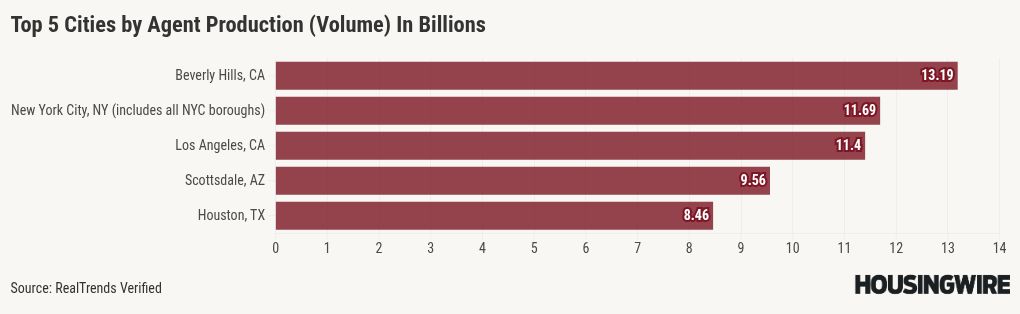
By sides, Scottsdale ranked first with 16,248.4, followed by New York City with 14,386.7, Houston with 12,981.5, Los Angeles with 11,924.8 and Atlanta with 10,103.2.
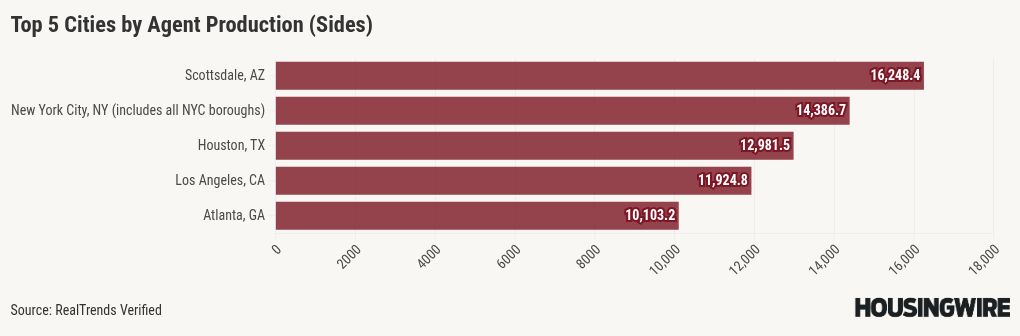
That list reflects a different kind of strength. Scottsdale, Houston and Atlanta demonstrate how agents can build nationally significant businesses through transaction velocity, geographic reach and repeatable operating systems — not only through luxury pricing.
Teams generate more production with fewer entries
Although teams represented less than one-third of all entries, they generated $832.69 billion in volume and nearly 1.29 million sides — surpassing individual agents in both measures.
New York City led with 560 ranked teams, followed by Chicago with 241, Dallas with 200, Austin with 195 and Denver with 180.

New York teams produced $46.26 billion in sales volume, nearly twice Dallas’ second-place total of $24.39 billion. Chicago followed with $23.87 billion, Austin with $22.95 billion and Phoenix with $21.44 billion.

New York also led team production by sides with 58,943.8. Chicago ranked second with 32,517.4, followed by Dallas with 31,876.1, Phoenix with 29,684.9 and Austin with 28,992.7.
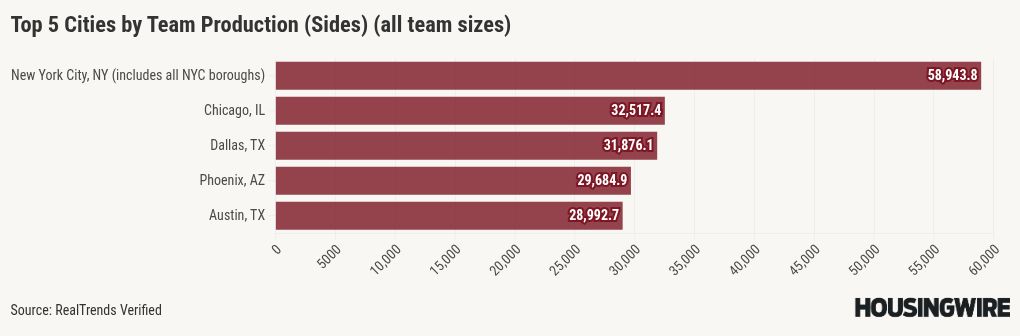
The team results underscore how leverage is reshaping top production. Teams can distribute lead generation, client service, marketing and transaction management across specialized roles, allowing them to handle more business than most individual practitioners.
Small teams form the industry’s broadest production base
New York led the small-team category with 392 ranked teams, followed by Chicago with 172 and Dallas with 161.
New York small teams generated $28.46 billion and 36,412.5 sides. Dallas ranked second by volume at $12.85 billion, while Chicago ranked third at $11.93 billion. Chicago edged Dallas in sides, with 16,843.9 compared with 16,208.7.
The category shows that scale does not necessarily require a massive organization. Small teams remain a major production engine because they can combine the flexibility of an agent-led business with enough operational support to increase capacity.
Larger team models concentrate production
New York also led the medium-team category with 97 ranked teams, followed by Dallas with 58 and Austin with 53. Those markets also led medium-team sides, with New York recording 12,487.3, Dallas 6,921.8 and Austin 6,408.5.
Among large teams, New York ranked first with 38, followed by Dallas with 27 and Phoenix with 25. New York led large-team volume at $9.68 billion and sides at 9,158.6. Phoenix ranked second in both measures, followed by Dallas.
The concentration became even more pronounced among mega and enterprise teams. New York had 18 ranked mega teams and 15 enterprise teams, while Phoenix had 16 mega teams and eight enterprise teams.
New York led mega-team sides with 7,914.2 and enterprise-team sides with 5,218.7. Phoenix ranked second in both categories, while Dallas ranked third.
The larger-team rankings show how a relatively small number of businesses can account for substantial production within a market. As teams grow, their results depend increasingly on recruiting, technology, lead conversion and operational discipline rather than the production of a single rainmaker.
Taken together, the City Rankings show that real estate production remains intensely local — but the business models behind that production are becoming increasingly sophisticated. Luxury specialists, high-velocity individual agents and scaled teams can all lead their markets, but they are taking very different paths to get there.
This article was written by Tracey Velt with the assistance of HousingWire Automation, then reviewed by a HousingWire editor before publication.









Fed Chair Warsh Rolls Out Names for New Task Forces
Warsh announced last month the creation of five task forces to review the Fed’s monetary policymaking framework, with officials examining everything from data utilization to the balance sheet.
Among the names are former Bank of England Gov. Mervyn King, who will be one of three individuals reviewing how the Fed communicates with the public during times of uncertainty.
As part of the new central bank leader’s reforms, communication has been a top priority, with Warsh abandoning forward guidance. Minutes from the June policy meeting suggest he has the backing of his colleagues….

STAT+: How a Boston doctor built a following as a ‘loud and unafraid’ voice in the Trump era
Jeremy Faust cuts through a hallway of Boston’s Brigham and Women’s Hospital on his way to see a patient who is struggling to breathe. It’s the start of his evening shift, and the emergency department hums with ambient sound: bleeping monitors, the rumbling wheels of medical carts, the squeaky soles of hustling staff. People on gurneys line the corridor, some wincing in pain, others chatting with relatives.
On this Wednesday evening in May, Faust is working what is typically a quieter shift, as far as emergency departments go. Still, he is overseeing a team of doctors, students, and physician assistants, and will tend to more than two dozen patients before signing off for the night.
It’s an understatement to say Faust likes to keep busy. Minutes earlier, he’d posted an article on his influential Substack newsletter, Inside Medicine, providing an update on a major international news story. An alert sent to the newsletter’s nearly 85,000 subscribers announced his “scoop”: Twenty-six passengers aboard the MV Hondius, the hantavirus-hit cruise ship docked at the time off Cape Verde, had disembarked much earlier than previously known — raising the possibility they could spread the rare virus in the United States.

New York boys club has a time-tested recipe to protect members’ mental health
NEW YORK — A couple of years ago, a reporter approached the Boys’ Club of New York looking to interview some of its middle-schoolers for a story about the mental health crisis in boys.
It’s easy to see why. Many of the about 2,500 boys who participate in the 150-year-old organization’s after-school and weekend activities come from disadvantaged socioeconomic backgrounds, often living in single-parent households or facing the threat of immigration enforcement. With limited access to academic and developmental support, the risk factors are plentiful.

Opinion: The primary care crisis paradox
In March, the Medicare Payment Advisory Commission (MedPAC) released its annual report to Congress on Medicare payment policy. The data related to physician payment are clear: By every metric we track, primary care in America is succeeding, and it has been for years. Nearly all Medicare beneficiaries have a primary care provider (PCP). Over three-quarters can see their PCP within two weeks. Patients in rural environments have less trouble finding a PCP and even shorter wait times. Services and spending on evaluation and management codes are increasing, and compensation among PCPs is rising faster than the rest of the field.
Yet this runs counter to the pervasive narrative that investing more in primary care is the key to solving the American health care crisis.






Israel willing to assist US against Iran if Trump requests, despite no plans to join war – report
Israel is willing to join the United States in striking Iran should US President Donald Trump request it, sources in Jerusalem told the New York Post on Thursday.
“We’re willing to do it again, if needed,” one source said.
“We’ve proved that we stand with the US. I’m not sure it will be of interest to the US that Israel will join on this – but, you know, we realize that we need to stretch our muscles.”
Also on Thursday, IDF officials told The Jerusalem Post that Israel was not planning to be drawn into the US-Iran exchanges at this time, though they said the military is ready for any eventuality.
Additionally, the officials said that the current assumption is that Iran doesn’t plan to drag Israel into the conflict, with no expected Iranian strikes in the near future.
US, Iran renewed strikes this week
According to US Central Command (CENTCOM), the renewed strikes came in response to Iran’s attempts to “impose heavy costs for targeting and attacking commercial shipping crewed by innocent civilians in an international waterway.”
On Wednesday, Trump said he felt that the Memorandum of Understanding (MoU) with Iran was nullified following overnight strikes between the US and Iran in the Strait of Hormuz.
“To me, I think it’s over,” he said at the NATO summit in Ankara, Turkey, in comments to the press.
Trump also stated he felt the US had “wasted a lot of time” negotiating with Iran, and he did not wish to continue talks.
Yonah Jeremy Bob and Amichai Stein contributed to this report.

Push for diplomacy continues even as strikes in Iran, Hormuz intensify, US official says
A senior US official said that “diplomacy is continuing” despite intermittent strikes in Iran, CNN reported Friday.
The night passed without military action by either the US or Iran, but tensions remained high across the Middle East following the escalation in recent days.
Friday marked the third day of the latest round of escalation. It began with an attack on tankers in the Strait of Hormuz, followed by US strikes in Iran and Iranian missile and drone attacks targeting US bases in the Gulf region.
Meanwhile, former Iranian supreme leader Ali Khamenei was laid to rest four months after he was assassinated. His funeral procession passed through several Shiite holy cities.
His son, Iranian Supreme Leader Mojtaba Khamenei, was not seen during the procession, although other senior officials from the ayatollah-led regime attended.
Israel warns US of new Iranian plot to assassinate Trump as tensions in region grow
Israel shared intelligence with the US about a new Iranian plot to assassinate US President Donald Trump, the Wall Street Journal reported.
The Israeli Embassy in Washington declined to comment. Iran’s mission to the UN did not immediately respond to a request for comment.
According to the report, the White House referred the Wall Street Journal to remarks Trump made Wednesday while speaking to reporters in Ankara, Turkey, during the NATO summit. Trump alluded to threats against his life.
“They want to eliminate the leader of the US, me,” he said. “I am on every list. I saw this morning, I am on every one of their lists. And so far, I suppose I have been a little lucky, but that may not last much longer.”

Four injured in Tayibe apartment fire, including mother and children
Firefighters and rescue crews responded to a fire in a residential building in Tayibe on Friday morning, following reports that people may be trapped inside, according to a statement from Israel’s Fire and Rescue Authority.
So far, four individuals have been rescued from the apartment, including a mother and her two children, who are in serious condition, as well as another individual in moderate condition.
Magen David Adom (MDA) paramedics have reportedly provided on-site medical treatment to all those evacuated and have transported the four injured individuals to the hospital.
All residents of the building were accounted for
After conducting a thorough search of the building, Fire and Rescue teams confirmed that no additional individuals were found trapped inside.
Firefighters have brought the fire under control and are continuing operations to fully extinguish the blaze, clear the smoke, and investigate the circumstances surrounding the outbreak.
Israel Fire and Rescue Commissioner Eyal Caspi and Central District Commander Roni Kedem are at the scene, conducting a situation assessment and closely overseeing the rescue and firefighting operations.
This is a developing story.

Natural Intelligence marketing firm wins Dun award for advancing women in Israeli high-tech sector
Marketing company Natural Intelligence (NI) was named the leading Israeli high-tech company for advancing women in the workplace, receiving the “Dun’s 100 Women Tech Leadership Impact Award” at the WO.men CEO Summit at Bloomfield Stadium in Tel Aviv this week.
The award, presented annually by Dun’s 100, part of Dun & Bradstreet, and the Israel High-Tech Association, recognized NI for demonstrating a systematic, measurable, and sustainable organizational model for female leadership, according to the press release.
NI was described as a company that integrates a values-driven approach with data-based business management.
The company’s methodology reportedly includes setting quantitative diversity targets, ongoing monitoring of outcomes, and adapting recruitment and promotion processes.
According to NI’s reports, women make up 43% of the company’s management ranks and 52% of its overall workforce, outpacing the country’s average of 34% in the first three quarters of 2025. On the executive board, three of the eight leaders are women: Noa Talmon, Chief People Officer; Smadar Levi, Chief Financial Officer; and Hila Gil, Chief Marketing Officer.
Shila Zabro Weiss, Senior Director at Dun’s 100, described the model NI developed as demonstrating “how gender diversity is managed as a driver of business growth rather than as an isolated initiative.”
What does Natural Intelligence do?
Founded in 2009 by Nir Greenberg, who is currently serving as Executive Chairman, NI operates a network of comparison platforms that match consumers with brands across categories like insurance, personal finance, and consumer services.
NI is now led by Jonathon Edelshaim, CEO, and has grown into one of Google’s top advertisers worldwide, with over 500 employees and generating hundreds of millions of dollars in revenue.
Dun’s 100 is Israel’s long-running business ranking system, evaluating companies across dozens of sectors using criteria developed and measured by Dun and Bradstreet Israel’s economists.
Inclusion in its rankings is widely treated in Israeli business circles as a mark of quality for a company and its management.
First year of the award for advancing women in high-tech
The WO.men CEO Summit is co-organized by the Israel High-Tech Association and began in 2024 as an annual conference held around International Women’s Day to honor trailblazing women in Israeli tech.
This award is part of an initiative that Dun’s 100 and the Israel High-Tech Association are institutionalizing this year, expanding this singular annual event into an ongoing strategic partnership.
2026 marks the debut of its dedicated award for advancing women in high-tech.
Both organizations are working to establish a standing forum of senior women from Israeli’s tech and industrial sectors.
The forum is aimed at advancing women professionally into leadership and management roles and to increase their representation on boards and executive teams.
“I was pleased to see that this year, despite existing challenges, the Israeli high-tech sector continues to drive the integration of women, with companies spearheading strategic, large-scale initiatives of exceptional business importance,” said Shila Zabro Weiss, Senior Director at Dun’s 100.

Scientists identify nearby ‘super-Earth’ as promising candidate in search for alien life – study
Extraterrestrial life may be closer than previously thought, on a nearby super-Earth called GJ 3378 b, according to a study published in The Astrophysics Journal last week.
First discovered in 2024, the exoplanet, a planet outside of our solar system, sits just 25 light-years away from Earth in a nearby star system, a small distance compared to the size of the Milky Way galaxy.
The peer-reviewed study, led by researchers at the University of California, Irvine, analyzed GJ 3378 b in depth and found that it may lie within the habitable zone, the region with just the right amount of solar radiation to support liquid water.
Due to its proximity to Earth, researchers have believed that the super-Earth, a rocky planet with a mass two to ten times Earth’s, was a perfect candidate for further study.
This idea is supported by the exoplanet’s temperature being almost 0 °C and the fact that it receives 91% of the energy Earth receives from the Sun.
The exoplanet could have a similar atmosphere to Earth
In the study, scientists also recalculated the mass of GJ 3378 b, finding that it’s only 2.3 times Earth’s mass, down from a previous measurement of five times Earth’s mass. This lower mass suggests it could be a rocky planet like Earth and have a similar atmospheric pressure, placing the exoplanet in the habitable zone and increasing the likelihood of extraterrestrial life.
Despite the promising revelations published in the study, it’s important to note that there isn’t any evidence yet that GJ 3378 b actually has an atmosphere or liquid water, and stellar winds may have eroded any atmosphere it once had.
Because so many unknowns remain about this exoplanet, scientists hope to conduct further research to better understand the possibility of extraterrestrial life on GJ 3378 b.
NASA plans to launch the Habitable Worlds Observatory in the 2040s, a mission whose goal is “to image Earth-like planets around other sun-like stars,” according to NASA’s website.
Through this mission, scientists will determine whether GJ 3378 b truly has an atmosphere, and, if it does, they’ll study the planet for signs of biological life.
Opinion: Why the dual credit score mandate raises costs for small businesses without clear benefits
Washington says it wants to lower costs and expand access to credit. For millions of entrepreneurs, access to credit depends not only on the health of their businesses but also on their personal credit profiles. That is why regulatory decisions that make borrowing more complex or expensive deserve close scrutiny.
Recent disclosures obtained through a Freedom of Information Act (FOIA) request by the Housing Policy Council raise important questions about the Federal Housing Finance Agency’s (FHFA) decision to require the use of two credit scores for mortgages sold to Fannie Mae and Freddie Mac.
As part of an FHFA-directed review of credit score models, Fannie Mae and Freddie Mac were asked to evaluate and recommend which models should be approved. Both Enterprises recommended moving to a single modernized credit score that incorporates trended credit data and advised against requiring an additional score as part of the transition. FHFA overruled that recommendation and instead required a dual-score framework.
That decision carries real consequences for borrowers, lenders and small businesses by raising costs and introducing uncertainty into mortgage underwriting, and it warrants reconsideration before implementation is locked in.
Unanswered questions in the FHFA review process
The FOIA disclosures are noteworthy because they show that FHFA’s own review process produced a different recommendation than the one ultimately adopted. FHFA itself stated that “requiring two different scores for each borrower is a significant change” and acknowledged that implementation would be a multiyear effort because of the “complexity and broad impact to the industry.” The agency also noted that credit scores are used throughout the mortgage process and that determining how two different scores will operate across systems will require extensive coordination among lenders, investors, mortgage insurers and other stakeholders.
FHFA argues that requiring multiple scores will improve accuracy, prevent adverse selection and promote competition within the mortgage market. Its determination states that requiring lenders to deliver both scores would prevent lenders from choosing which score to use for eligibility or pricing. But if the Enterprises themselves, after conducting the requested evaluations, did not conclude that two scores were necessary, it is reasonable to ask what evidence justifies overriding that recommendation. FHFA has also stated that it is not publicly releasing the underlying testing results, making it difficult for outside stakeholders to independently evaluate the agency’s conclusions.
Systemic costs and real-world consequences
For mortgage lenders, implementation extends beyond simply obtaining an additional score. In practice, it can mean updates to loan origination systems, pricing engines, compliance procedures, quality-control reviews, secondary-market delivery processes and investor reporting requirements. Mortgage technology providers and lenders alike will need to test, validate and monitor how multiple scores affect underwriting and pricing decisions. Those investments may be manageable for large institutions, but they still carry costs that ultimately flow through the mortgage system.
For small businesses, this is not an abstract debate. Personal and business finances remain closely linked for many entrepreneurs. Federal Reserve survey data show that 59% of small businesses with debt rely on a personal guarantee, while more than half of firms facing financial challenges reported using personal funds to support their businesses. Changes that affect the cost, availability or predictability of consumer credit can ultimately affect the ability of small business owners to invest, hire and grow.
When lenders face new operational mandates, those costs do not remain confined to compliance departments. Over time, lenders often incorporate added complexity and uncertainty into pricing models, risk management practices and underwriting standards. That can mean higher rates, tighter credit or reduced flexibility for borrowers near approval thresholds, including self-employed applicants, entrepreneurs with thin credit files, first-time homebuyers and borrowers whose risk characteristics may be assessed differently across models.
Preserving flexibility in credit modernization
Supporters of the dual-score framework point to competition and pricing concerns. But requiring two scores does not automatically resolve those concerns. Credit scores represent only one component of the mortgage process, while broader cost pressures stem from technology investments, regulatory compliance obligations, operational requirements and other market factors. Introducing parallel scoring frameworks risks adding costs for lenders without clearly reducing costs for borrowers.
Importantly, the issue is not whether the mortgage market should adopt newer credit scoring models. Updating credit scoring models to reflect evolving data and risk patterns is appropriate and necessary. The question is whether requiring both models simultaneously creates benefits sufficient to justify the added operational burden.
A simpler approach would preserve flexibility while reducing risk: Allow lenders to rely on a single modernized score, with the option to use additional models where appropriate. That approach would promote innovation without forcing unnecessary complexity into a system that directly affects borrowing costs.
FHFA still has time to reconsider how this transition is implemented. Before moving further, the agency should publicly release the analysis underlying its decision, explain why it departed from its own Enterprise review process and demonstrate that the benefits outweigh the costs lenders, borrowers and small businesses will ultimately bear.
John Stanford, Co-executive Director, Small Business Roundtable
This column does not necessarily reflect the opinion of HousingWire’s editorial department and its owners. To contact the editor responsible for this piece: zeb@hwmedia.com.



FTSE 100 Outperforms European Tech Weakness



The capital stack evolution: How proprietary preferred equity behind Freddie Mac loans solves a key borrower dilemma
The multifamily capital stack is evolving. As elevated interest rates and tighter loan proceeds continue to reshape acquisition and refinancing strategies, investors are challenged by a market where senior loan proceeds and liquidity preservation are constrained. One effective solution is proprietary preferred equity behind Freddie Mac conventional loans.
As demand for preferred equity Freddie Mac structures grows, investors are increasingly using the strategy to create more flexible and efficient capital stacks. Jean-Laurent Pouliot, managing director and senior production officer at Arbor Realty Trust, discusses how the product works, the borrower challenges it helps solve, the advantages of combining preferred equity and Freddie Mac financing through a single lender, and why he believes flexible capital solutions will play an increasingly important role in multifamily finance.
Preferred equity’s role in today’s multifamily market
HW: Preferred equity behind Freddie Mac conventional loans is becoming an increasingly viable financing option among multifamily investors. What is it, how does it work and why is demand growing?
Jean-Laurent Pouliot: At its core, preferred equity sits between senior mortgage financing and common equity. It gives sponsors access to additional capital without sacrificing meaningful control over an asset or locking them into inflexible financing structures.
Most investors use it as a tool for flexibility. While pref equity increases leverage, borrowers often use it strategically to preserve liquidity, reduce the amount of common equity required and execute their business plan. It can help fund capital expenditures, value-add business plans, lease-up initiatives or recapitalizations while preserving ownership economics.
Demand has increased as interest rates remain elevated and loan proceeds are often lower than borrowers expected. At the same time, many loans originated during the low-rate environment are approaching maturity.
Preferred equity can help bridge financing gaps while allowing investors to continue executing business plans and capturing future upside.
Why certainty of execution matters more than ever
HW: Investors are increasingly focused on efficiency and certainty of execution. How is that influencing financing decisions?
JLP: Historically, investors relied on two primary sources of capital: debt and equity. Preferred equity itself is not new. What is new is the ability to provide preferred equity alongside Freddie Mac financing through the same lender.
Arbor now fills the two formerly separate roles of Freddie Mac lender and preferred equity provider. For years, third-party preferred equity providers often caused delays because they operated under different incentives, timelines and underwriting processes. When preferred equity and senior debt are managed separately, coordination becomes more difficult.
By bringing both components under one roof, everyone is aligned around the same transaction objectives. The underwriting teams, the borrower and the lender are all working toward the same timeline and execution goals. In today’s environment, certainty of execution has become one of the most important considerations for investors. When underwriting, documentation, execution and servicing are coordinated, it significantly improves the overall borrower experience.
Solving borrower challenges with a unified structure
HW: What borrower challenges does this structure solve that traditional financing approaches may not address?
JLP: From Freddie Mac’s perspective, the goal was to create greater consistency around how preferred equity works within agency financing. For borrowers, the benefits are both operational and financial. Integrating senior debt and preferred equity streamlines duplicate reports, appraisals and legal work, creating meaningful cost savings.
More importantly, borrowers gain alignment across the transaction. Instead of coordinating multiple parties with different objectives, they work with a single lender that manages both components of the capital stack. That creates a smoother process, improves execution and helps keep transactions on schedule.
The advantages of a preferred equity Freddie Mac one-stop shop approach
HW: How does securing senior debt and preferred equity through the same lender improve the borrower experience?
JLP: Freddie Mac financing requires specialized expertise. Arbor has spent years developing a deep understanding of how Freddie evaluates risk, structures transactions and approaches underwriting. That experience helps us anticipate challenges and structure deals in ways that align with Freddie’s framework.
When that knowledge is combined with proprietary preferred equity, borrowers benefit from a more integrated process. Because we’re working closely with Freddie throughout the transaction, we can create efficiencies, streamline execution and help move deals smoothly from underwriting through closing and servicing. Then, with the senior loan and the pref equity piece serviced under one roof, borrowers receive big advantages not just upfront but throughout the life of the loan. That’s the value of a true one-stop-shop approach.
Determining when preferred equity is the right fit
HW: How should investors evaluate whether preferred equity belongs in their capital strategy?
JLP: The answer depends on the business plan. A straightforward example is an acquisition where loan proceeds cover only part of the purchase price, but the sponsor wants to preserve liquidity and avoid raising additional common equity. Preferred equity can provide that additional capital while allowing the sponsor to maintain control.
Another powerful feature is phased contributions, available only through Arbor. A transaction may qualify for $10 million in preferred equity, but the borrower may only need $2.5 million initially for renovations. The remaining capital can be accessed later as the business plan progresses, helping investors avoid paying for unused capital while maintaining flexibility. Although future preferred equity fundings remain subject to updated underwriting requirements.
Preferred equity can also be effective in refinancing situations, particularly as loans originated during the low-rate environment face today’s higher rates. In some cases, it can help bridge the gap between existing loan balances and new loan proceeds.
The strategy becomes even more compelling when paired with Freddie Mac’s supplemental financing programs. As property performance improves, borrowers may be able to access supplemental financing and use those proceeds to pay down preferred equity.
The future of the multifamily capital stack
HW: Looking ahead, how do you see the multifamily capital stack evolving?
JLP: The multifamily capital stack will continue evolving toward greater flexibility and sophistication. Interest rates remain elevated, senior loan proceeds are constrained in many cases, and investors are increasingly focused on preserving liquidity. Those dynamics should continue supporting demand for preferred equity.
We’re also seeing investors move away from viewing preferred equity as a last-resort financing tool. It is becoming an increasingly intentional component of the capital stack because it can complement acquisition, refinancing and recapitalization strategies. Preserving liquidity has become the principal reason sophisticated borrowers are using Arbor preferred equity.
The most effective capital structures going forward will be those that provide optionality throughout the life of an investment. Features such as phased contributions, prepayability, the ability to right-size capital needs over time and compatibility with Freddie Mac supplemental financing give investors the flexibility to adapt as business plans evolve.
Click Here

SK Hynix Prices $26.5 Billion Nasdaq Listing, Eclipsing Alibaba’s Record
SK Hynix priced its U.S. share sale on Thursday at $149 per American depositary receipt, according to the offering terms and the company’s registration filing with the U.S. Securities and Exchange Commission. The South Korean memory-chip maker offered 177.9 million ADRs, equivalent to 17.79 million common shares Bloomberg — each receipt equal to one-tenth of a common share — to raise about $26.5 billion. That would be the largest ever first-time share sale in the US by a foreign company, topping Alibaba Group Holding’s $25 billion debut. Yahoo Finance
The listing lands on the Nasdaq Global Select Market, where the receipts begin when-issued trading Friday under the symbol SKHYV, switching to SKHY when regular-way trading starts July 13. Yahoo Finance The price sits about 3.1% above the Thursday closing price of the common shares in Seoul, which ended at 2.186 million won, or roughly $1,445 each. Bloomberg
Demand ran far ahead of supply. The offering drew demand approaching $200 billion, according to the deal term sheet, Bloomberg and the sale was more than seven times oversubscribed. Yahoo Finance Buyers included global long-only funds, technology sector-focused funds, sovereign wealth funds and Asia-focused global investors. Yahoo Finance Baillie Gifford, Coatue Management and Situational Awareness Partners alone signaled indications of interest for as much as $7 billion worth of ADRs. Yahoo Finance The offering was led by Bank of America, Citigroup, Goldman Sachs and JPMorgan Chase, with nine other firms participating. Yahoo Finance
For American investors, the sale opens a direct door to a company whose parts already sit inside products they own. SK Hynix, the second most valuable company in South Korea behind only Samsung, CNBC is one of three main makers of the memory used in phones, laptops and the servers running artificial-intelligence systems. The other two are Samsung and U.S.-listed Micron.
The timing is bold. SK Hynix shares ended Thursday down 25% from a record-high close in late June, though they remain more than triple where they started the year Yahoo Finance — up 235% in 2026 AOL as the AI-driven memory shortage sent prices and profits soaring. First-quarter revenue tripled to about $34.5 billion, and profit quintupled to $26.5 billion. AOL Rival Samsung this week reported operating profit increased 19-fold last quarter, AOL while Micron’s margins climbed toward 85% from 38% a year earlier. AOL
That heat cuts both ways. South Korea’s benchmark KOSPI Composite Index fell into a bear market on Wednesday, closing more than 20% below last month’s all-time high, AOL dragged down by the same two chipmakers that carried it up. The Roundhill Memory ETF is up 141% over the past 12 months, while the iShares Semiconductor ETF is up 140%. Stocktwits
SK Hynix plans to put the proceeds toward new production facilities in South Korea and the extreme-ultraviolet lithography scanners used to manufacture advanced semiconductors Stocktwits — tools only made by ASML in the Netherlands and costing up to $400 million each. CNBC The buildout is part of an $880 billion South Korean government-led initiative that SK Hynix and Samsung are ramping up investment behind. Yahoo Finance In the United States, the company is putting up a $4 billion advanced-packaging plant in West Lafayette, Indiana, scheduled for completion in 2028, with up to $458 million in CHIPS Act funding and as much as $570 million in federal loans. CNBC SK Square, demerged from SK Telecom in 2021, holds a 20.5% interest in the chipmaker. CNBC
Not everyone is cheering. Jim Cramer of CNBC warned that bankers highlighting the heavy oversubscription were playing “a dangerous game,” and has spent much of 2026 flagging the building IPO pipeline as the market’s biggest short-term risk. Stocktwits Analysts at HSBC took the other side, hiking their SK Hynix price target to 4 million won from 2.9 million and saying the Nasdaq listing could boost the company’s valuation by as much as 20% and narrow its long-standing gap with Micron. Stocktwits
For SK Hynix, the payoff runs past cash. A U.S. listing widens its investor base to funds that never touched the Seoul shares and hands it a stronger currency for future deals, all while the memory business rides the sharpest upswing in its history. The risk is the one this industry knows well: the AI-spending wave paying for these new factories could cool before the concrete is dry.
JBizNews Desk | New York © JBizNews.com All Rights Reserved. Reproduction or distribution without written permission is prohibited.





Israeli startup raises $36 million to build world’s first ‘Iron Dome for drone swarms’
Skapion, an Israel defense tech company developing a Native Counter Swarm system for the next generation of unmanned aerial threats, announced Thursday that it raised $36 million during its Seed round.
The round was co-led by UP.Partners and Khosla Ventures, with participation from early backers Fusion VC, Stratos Ventures, TBD VC and q Fund.
The announcement comes as drones and one-way attack UAVs continue to have a significant impact on the battlefield. What emerged as an improvised military tactic used first by the Islamic State in Syria and later by Ukraine has made its way back to the Middle East as Hezbollah continues to field cheap fiber-optic drones, hitting IDF troops and platforms.
Skapion is developing a mobile, end-to-end system designed not only to detect but also to engage and neutralize drones and UAVs at swarm scale. At the same time, the system can operate independently in communications-limited and environmentally challenging conditions (conditions frequently exploited by swarm drones), alongside maneuvering forces, fixed installations, and critical infrastructure.
While past interceptors could detect and neutralize more expensive, distinct aerial threats, Skapion’s system is built for mass onslaught, lower-cost attacks.
According to Ido Bar-On, Skapion’s co-founder and CEO, “the question is no longer whether a single drone can be detected or hit. The question is whether modern militaries can neutralize swarms at the speed, scale and cost required by today’s battlefield.
[Garnering $36 million, the round helped] accelerate development, expand the engineering organization and keep building the team required to solve one of the most urgent defense challenges of the coming decade,” he added.
The company argues that since 2022, low-cost UAS have moved from a “specialized tactical capability to a structural air-defense challenge for military forces, bases and critical infrastructure.” Used at volume, these platforms impose an asymmetric burden and force defenders to use expensive interceptors against cheaper and more numerous threats like swarms. By doing that, hostile forces like Hezbollah have exposed a gap in systems not built for large-scale simultaneous engagements.
With troops facing imminent FPV and fiber optic drone threats on a daily basis in Lebanon, Israeli defense tech companies have announced new C-UAS platforms. Nevertheless, many of those technologies cannot handle drone swarms. Used at high volume, these expendable drones are able to bypass many systems.
“The Iron Dome changed the calculus for rockets and missiles. Skapion is doing the same for drone swarms. The threat has evolved from single, expensive projectiles to cheap drones attacking in numbers, and defense needs to evolve with it,” said Ben Marcus, Co-Founder & Managing Partner, UP.Partners.
Skapion’s founding team is made up of former Israel Air Force officers who specialize in air defense, including Founding Architect and co-founder Brig.-Gen. (Res.) Pini Yungman, who acted as General Manager of Rafael’s Air and Missile Defense Systems division and President and CEO of TSG Group. Yungman is deeply rooted in Israel’s defense ecosystem and recognized for his contributions to the David’s Sling and Iron Dome programs.
Bar-On previously led the defense and government business across international markets at XTEND, and is also a former IDF special-operations Lieutenant Colonel (reserve).
The team is rounded out by Gal Goren, Co-founder and Chief Technology Officer (CTO), who is a multidisciplinary engineering leader with experience developing complex technology systems. Zafrir Yoeli previously co-founded Enlight Renewable Energy, and Yaron Karp is a veteran defense entrepreneur.
Established in late 2025, Skapion has several dozen employees, including senior engineering, defense, aerospace, robotics, autonomy and deep-tech talent.
The $36 million raised in the round will support hiring, engineering development, system validation alongside government, defense and partner engagement in Israel, the United States and allied markets.
Skapion is headquartered in Washington, DC, with a research and development center in Ramat Gan, Israel.
Pennsylvania man arrested for alleged antisemitic threats against Gov. Josh Shapiro
A Pennsylvania man was arrested on Wednesday after reportedly making verbal antisemitic threats toward Pennsylvania Governor Josh Shapiro at the office of State Representative Leanne Kruger, according to Pennsylvania State Police.
Richard John Franklin, 65, had reportedly visited the district office to seek assistance with paying outstanding taxes.
While being helped by a staff member, he began using antisemitic slurs directed at Governor Shapiro and threatened to commit arson at the governor’s mansion, police stated.
After making these threats, state troopers from the Political Violence Threat Unit met with Franklin at his home later that day, where he provided inconsistent accounts of the incident at the district office, CBS News reported.
Suspect tried to frame the threats as ‘postive’
According to the police report, Franklin admitted to using an antisemitic slur and claimed that his statements about burning the governor’s mansion were ‘sympathetic’ and ‘positive in nature’ because the Governor and his family had previously survived an arson attack.
Franklin was taken into custody and charged with terrorist threats, ethnic intimidation, harassment, and disorderly conduct.
He was taken to Pennsylvania’s Delaware County Prison after he was unable to post $100,000 bail, and scheduled for a preliminary hearing next week, according to CBS News.
Previous arson attack on Shapiro’s home
Shapiro and his family had previously survived an arson attack last year while celebrating Passover.
Their residence was set on fire overnight, prompting the family’s evacuation.
This previous attack was reportedly motivated by Shapiro’s perceived stance on Palestine.
The attacker, Cody Balmer, called 911 shortly after the incident occurred early on a Sunday morning, identifying himself and telling the operators that Shapiro needed to know he “will not take part in his plans for what he wants to do to the Palestinian people,” according to the police search warrant.
Reuters and the Jerusalem Post Staff contributed to this report.



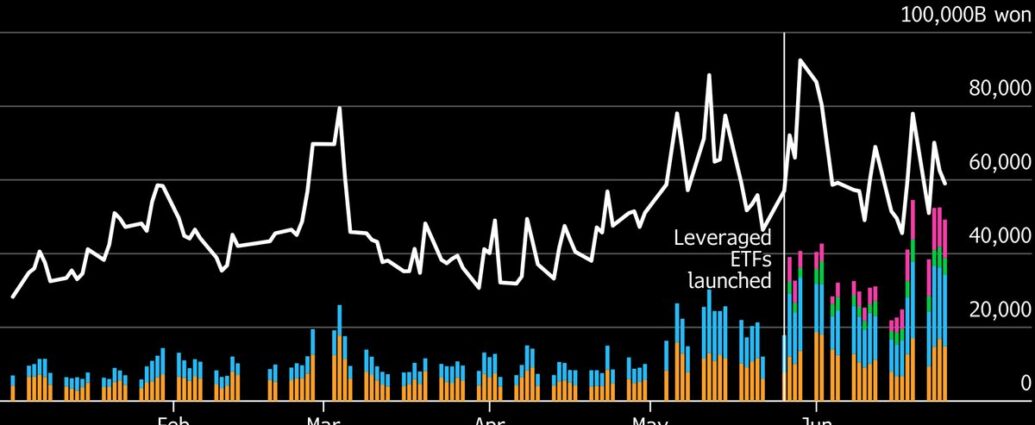


South Korea Plans New Fund Using AI Chip Profits to Support Young Workers
South Korea is preparing to create a new national investment fund using tax revenue generated by the country’s booming semiconductor industry, with the goal of helping younger generations afford housing, create businesses and find jobs while strengthening the nation’s artificial intelligence leadership.
Presidential Chief of Staff Kang Hoon-sik outlined the proposal during a high-level government policy meeting, saying the extraordinary tax revenue generated by South Korea’s world-leading chip industry should be invested in the country’s future rather than absorbed into routine government spending.
“We must not spend this money carelessly,” Kang said while describing what officials have called a Future Response Fund.
The proposal would direct additional tax revenue generated by record profits at semiconductor leaders Samsung Electronics and SK Hynix into long-term national investments.
Government officials said the fund would help finance artificial intelligence development, semiconductor infrastructure, startup financing, youth employment initiatives and housing programs targeted at younger South Koreans.
The plan remains under development, with details expected to be reviewed during upcoming fiscal strategy meetings before legislation is introduced.
South Korea’s semiconductor industry has experienced unprecedented growth as worldwide demand for artificial intelligence hardware continues accelerating.
Memory chips produced by Samsung Electronics and SK Hynix have become essential components inside AI servers and advanced data centers, producing record earnings and significantly increasing corporate tax revenue.
Officials have not announced the final size of the proposed fund.
However, Korean media estimates suggest the additional semiconductor-related tax revenue could total 50 trillion to 70 trillion won, creating one of the country’s largest long-term investment vehicles.
The proposal accompanies an even broader national strategy to strengthen South Korea’s semiconductor leadership.
The government recently unveiled plans supporting hundreds of billions of dollars in semiconductor investment, including expanded manufacturing capacity, advanced research and artificial intelligence infrastructure.
Officials have also discussed funding additional purchases of high-performance graphics processors needed for AI development while encouraging greater investment in domestic semiconductor manufacturing.
The proposal reflects growing concern that the benefits of South Korea’s technology boom have not been shared equally across society.
Although the country’s semiconductor companies have generated enormous profits, younger workers continue facing high housing prices, slower wage growth and a competitive employment market.
Government leaders argue that reinvesting part of today’s semiconductor windfall into education, entrepreneurship and affordable housing could help spread the industry’s long-term economic benefits more broadly.
Not everyone agrees on the best approach.
Some policymakers favor creating a broader sovereign wealth fund that would invest across multiple industries, while others have proposed direct payments to citizens or expanded support for rural communities and startup businesses.
Economists also caution that semiconductor profits remain cyclical.
Global memory-chip prices have historically fluctuated sharply, meaning government revenue generated during today’s AI boom may not remain at current levels indefinitely.
That makes long-term fund management particularly important if policymakers hope to sustain future investments during weaker market cycles.
For businesses, the proposal demonstrates how governments increasingly view artificial intelligence and semiconductor manufacturing as strategic national assets rather than simply private industries.
Countries around the world are expanding public investment to strengthen domestic chip production, secure AI supply chains and improve long-term competitiveness.
South Korea’s proposal seeks to accomplish both goals simultaneously—supporting future economic growth while helping younger generations participate more fully in the country’s expanding technology economy.
If approved, the fund would become one of the most significant examples yet of a government using AI-driven corporate tax revenue to finance long-term national development.
JBizNews Desk | Seoul
© JBizNews.com All Rights Reserved. Reproduction or Distribution without Written Permission is Prohibited.
The leaders steering Israel Bonds through a historic moment
At a special Israel Bonds Council meeting in New York City on May 20, senior leaders gathered to mark the organization’s 75th anniversary and to celebrate the appointment of Laura Stein, a Los Angeles-based attorney, as chair of the National Campaign Advisory Council.
Stein succeeds Larry Olschwanger, a longstanding Dallas-based advocate who was instrumental in the organization’s response following the devastating October 7, 2023, Hamas attacks.
Dani Naveh, president and CEO of Israel Bonds, said of the new chair, “Laura Stein is a role model of unconditional support for the State of Israel and its people. Our lay leaders play a decisive role in Israel Bonds campaigns—I am deeply grateful to Larry Olschwanger for his tireless dedication and the profound impact he made during one of the most consequential periods in Israel Bonds’ history. I look forward to seeing Laura inspire new investors, new leaders, and new expressions of solidarity with Israel.”
Andrew M. Hutter, MD, National and International Chairman of the Board of Israel Bonds, added, “Laura Stein’s election reflects both the strength and continuity of leadership within Israel Bonds at a pivotal moment in its 75-year history. Her deep commitment to the mission and proven record of service ensure that this next chapter will continue to strengthen the vital bond between the State of Israel and global investors. I have had the pleasure of working with Laura in her role as board member the past few years and I am excited about working with her in her new position.”
Dr. Hutter went on to say: “I also want to express deep appreciation to Larry Olschwanger for his dedicated service and leadership as chair, particularly during a period marked by extraordinary challenges and significance for Israel Bonds and the State of Israel.”
When Passion Turned Into Purpose

Olschwanger became involved with Israel Bonds after a formative first trip to Israel in 2010.
For someone who grew up in Dallas, where Jewish residents made up just one percent of the population, stepping off the plane in Tel Aviv and seeing the Star of David emblazoned across the many stationed aircraft and terminal flags was enough to move him to tears.
“When I came back to Dallas, the people I was close with saw my passion towards Israel and encouraged me to get involved,” said OIschwanger. “I got started in a very small way on my local council, and the work just resonated with me.”
Olschwanger continued, “Israel Bonds is a unique organization because people aren’t donating. They are investing – and they get a good return. It’s the most impactful way to support the State of Israel.”
Leading Through Crisis
Olschwanger was elected the Council chair in March 2023. His tenure was shaped almost immediately by the events of October 7, which prompted Israel Bonds to launch a sweeping emergency investment campaign unlike any other in the organization’s history.
Within 30 days of October 7, after a sprint of daily calls, Zooms, and lay leader outreach, the organization generated over $1 billion globally for the State of Israel.

“It was a galvanizing campaign,” Olschwanger said. “The economic cost to the country was tremendous; Israel essentially shut down, so it was the most fulfilling period of leadership I’ve had in any organization. Hopefully, we never face it again, but it was a unique opportunity to contribute to our beloved Israel.”
He was also among the first to travel to Israel on a solidarity delegation with Israel Bonds, visiting the grounds of Kibbutz Kfar Aza, the community whose residents were brutally attacked by militants, and the memorial site of the Nova music festival, where concert-goers were victims of terrorism.

Since October 7, 2023, Israel Bonds has raised more than $7.7 billion globally, bringing its total to more than $57 billion since its founding over 75 years ago.
A Lifetime of Pro-Israel Advocacy
Stein, a Los Angeles native, brings to the role a distinguished professional record and decades of deep institutional involvement with Israel Bonds. She is Of Counsel at Robbins Geller Rudman & Dowd LLP, where she has practiced securities class action litigation and asset recovery law for more than three decades.
Her relationship with Israel Bonds is as personal as it is professional. “When I was Bat Mitzvah-ed on Masada, my mother gave me my first Israel bond,” she said. “When my daughter was Bat Mitzvah-ed on Masada, we did the same thing. Israel Bonds has always been the most direct path to show my Zionism and support my ancestral homeland.”

Her leadership within Israel Bonds spans many years, including her service as Chair of the Los Angeles Women’s Division and Chair of the Los Angeles Leadership Council. She has also served with distinction on the National Campaign Advisory Council, and is a member of the US Board of Directors of the Development Corporation for Israel. Her broader communal footprint is equally expansive: she serves on the Boards of StandWithUs, WIZO (Women’s International Zionist Organization), the Los Angeles Board of JNF and Beat the Streets Los Angeles, among other important efforts.
To Stein, those commitments are not competing priorities.
“I see what Israel Bonds does as complementary and supportive of the work of every other organization I’m involved with,” she said. “It’s about opportunity and education – once people understand the real impact of investing in Israel Bonds, they see that this is a very effective, efficient way to make a difference.”
Cultivating New Champions for Israel
Central to Stein’s work ahead will be reactivating a community that has given enormously over the past few years but feels the fatigue of supporting Israel during a difficult period.
“We’ve all been through a lot,” Stein said. “But I want our lay leaders to understand we still need them more so than ever.”

The current network of geographically diverse lay leaders is also part of Olschwanger’s legacy as national chair. During his tenure, Israel Bonds expanded into cities with sizable Jewish populations, like Phoenix and Denver, that lacked local representation by the organization.
“I want to engage them, reset, and encourage them to reach out to their networks to have conversations and create opportunities to talk about the real impact that Israel Bonds has,” Stein said.
The Significance of 75 Years
Since its founding in 1951, Israel Bonds has pursued a single mission: to raise capital for Israel’s economic development. The 75th anniversary arrives at a moment that underscores the urgency and the enduring relevance of that mission.
For Stein, the role carries a weight that is historic and deeply personal. “I couldn’t imagine a greater honor,” she said. “I feel like I’m filling the big shoes of my mother, who played such an active role in so many important Jewish organizations. I welcome this chance to make a real difference.”

_______________________________________________________________________________________________________
Development Corporation for Israel/Israel Bonds (DCI) is a broker-dealer that sells Israel bonds. The content in this article was prepared by DCI and The Jerusalem Post as part of a paid advertising campaign for DCI. This is not an offer that can be made only by prospectus. Read the prospectus carefully before investing to fully evaluate the risks associated with investing in Israel Bonds. Member FINRA. www.israelbonds.com
Written in collaboration with Israel Bonds

Ukraine, US reach political agreement on Patriot missile production licenses, Zelensky says
Ukraine and the US have reached a political agreement on licenses for the production of PAC-3 Patriot interceptors, President Volodymyr Zelensky said on Thursday, adding that key supplies of the missiles were to arrive in the next few days.
The Patriot is a US-made air defense system. Its PAC-3 interceptor – short for Patriot Advanced Capability-3 – is one of the few Western weapons capable of shooting down the ballistic missiles Russia has increasingly fired at Ukrainian cities.
Zelensky, speaking to reporters after returning from a NATO summit and talks with US President Donald Trump in Turkey, also said that talks were proceeding with the US on a “drone deal” or joint drone production.
“I believe this was a productive summit for Ukraine. In the coming days, we’ll receive a package from the United States, and there were also some separate agreements,” Zelensky said, referring to securing the PAC-3 interceptors.
“We resolved this issue politically,” he said of producing Patriot missiles for Ukraine. “It’s now very important that our technical teams, all our representatives from different ministries, representatives of the executive branch, start working on this without delay, so that we can get licenses very quickly and start production in Ukraine as soon as possible.”
Zelensky has long pleaded for faster supplies of interceptors capable of bringing down Russian ballistic missiles, a need accentuated by recent assaults on the Ukrainian capital and other cities.
Zelensky said no drone deal had yet been signed with Washington, “but there are some documents that have already been signed so that the American side can get from Ukraine various types, different, different kinds that the United States is interested in for testing. And they’re getting them from us.”
He said these included “both aerial drones and marine drones, as well as other technological things.”
He also said discussions would proceed with Ukraine’s European allies on developing a separate anti-missile system, with a meeting planned for France in the near future.
“It’s for ballistic targets, similar to Patriot, but more, I would say, mass-produced and a cheaper system,” Zelensky said.
“At least, that was the task I set for our manufacturers. This is a European model. Our meeting on this will be in France. And it will be very soon.”
Trump now ‘positive about Ukraine,’ Zelensky says
The Ukrainian president has improved his relations with Trump through a series of meetings after an encounter last year in the Oval Office descended into a shouting match.
Zelensky told reporters Trump was now “positive about Ukraine.”
“We definitely discussed a great many different things. We need to follow up, prepare for diplomacy, and there are a few other things, but all of this is the right direction,” he said. “During the meeting, he was very constructive.”
US-brokered talks aimed at moving toward a peaceful resolution have stalled, with Washington focused on the conflict in Iran.
Trump said on Wednesday that he and Zelensky had developed a “very good” relationship and both Moscow and Kyiv wanted to end the war that began with Russia’s invasion in February 2022.
Trump spoke to both Zelensky and Russian President Vladimir Putin ahead of the summit. Putin has said he will press ahead with his war despite mounting difficulties like fuel shortages linked to Ukrainian drone strikes on oil industry targets.
Moscow has demanded that Kyiv cede the rest of its eastern Donetsk region that it has been unable to conquer in more than four years of fighting.


Chip Rebound Lifts Asian Stocks Friday, Kospi Up 3.5% and Nikkei 1.7%
Asian stock markets were trading sharply higher on Friday, July 10, after Micron Technology said it would lift spending on new U.S. plants to $250 billion to meet demand from the artificial-intelligence boom, and as South Korea’s SK Hynix prepared for its U.S. market debut. South Korea’s Kospi had climbed about 3.5% to 7,545.51 by 11:20 a.m. in Seoul, according to Korea Exchange data, while Japan’s Nikkei 225 rose roughly 1.7% to trade near 68,900. Both markets were still open as this was written.
The move marked a second straight winning session for the two markets and a sharp recovery for Seoul, which had tumbled nearly 8% on Thursday when fears over stretched AI valuations sparked heavy foreign selling. The rebound followed Wall Street’s overnight gains, where the Nasdaq Composite rose 1.3%, the S&P 500 added 0.81% and the Dow Jones Industrial Average climbed 139 points.
Semiconductors are doing the heavy lifting. Micron’s commitment to a quarter-trillion dollars of U.S. capacity handed the whole memory-chip complex a lift, and traders across the region are watching SK Hynix’s U.S. listing, which priced at $149 a share and was reported more than seven times oversubscribed — one of the largest first-time foreign offerings on record. In Seoul, Samsung Electronics rose about 3.8% and parts affiliate Samsung Electro-Mechanics jumped 6.4%. In Tokyo, memory maker Kioxia advanced more than 4% and technology investor SoftBank Group surged close to 7%, pushing past the 60,000-yen mark.
The other tailwind is easing geopolitical risk. A U.S. official said late Thursday that Washington remains committed to a resolution with Iran, with technical talks continuing and regional mediators pushing to revive a nuclear deal. That cooled the war premium that had gripped markets this week, kept oil in a narrow range, and reassured investors that tanker traffic through the Strait of Hormuz would keep moving despite the recent exchange of strikes. With the immediate energy-shock fear receding, money rotated back into risk assets.
Japan’s session carried a second storyline in bonds and currencies. The yen firmed and the 10-year Japanese government bond yield pulled back from a three-decade high after Finance Minister Satsuki Katayama said Tokyo would explore steps to encourage the country’s giant public pension fund, the GPIF, to hold more domestic assets. Adding to the backdrop, Japan reported that June producer prices rose 7.1% from a year earlier, the fastest pace since 2023 and above forecasts, keeping the Bank of Japan on track toward another rate increase.
Market movers: SoftBank Group was the standout in Tokyo, up nearly 7%, while Kioxia and SK Hynix both gained on the memory-demand story. On the downside, chip-equipment supplier Tokyo Electron slipped, a reminder that the rally is concentrated in memory names rather than the whole sector. On the calls, Goldman Sachs told clients that Nvidia looks compelling at about 21.7 times forward earnings after a product-delay scare faded, and Citigroup kept a $75 base-case forecast for Brent crude in the third quarter, betting on a U.S.-Iran deal and a reopened Hormuz.
Commodities and volatility: Crude held steady in Asian hours, with Brent hovering in the high $70s after this week’s spike, as the absence of fresh escalation calmed nerves. Gold traded near $4,133 an ounce and silver around $59 after a soft stretch earlier in the week, pressured by expectations that the Federal Reserve may keep rates high. Wall Street’s fear gauge, the VIX, closed near 16 on Thursday, well below the level that signals real stress, pointing to a market that is watchful but not panicked.
The near-term test comes when SK Hynix actually begins trading in New York. A strong debut could extend the semiconductor rally across Asia into the back half of the year; a weak one would revive the valuation worries that hammered Seoul just a day earlier. Investors are also looking ahead to the Fed’s rate meeting late this month, where sticky inflation and higher energy costs have put at least one more increase back on the table. For now, with chips leading and the Iran risk fading, Asia is ending its week on the front foot.
JBizNews Desk | New York © JBizNews.com All Rights Reserved. Reproduction or distribution without written permission is prohibited.

Yashar overtakes Likud, Netanyahu as Zionist opposition bloc nears 61-seat majority – poll
Gadi Eisenkot’s Yashar party overtook Prime Minister Benjamin Netanyahu’s Likud for the first time in a Maariv poll released Friday, as the coalition continues its legislative blitz ahead of the Knesset’s dissolution.
Yashar placed first with 22 seats, up two from the previous poll and 10 seats higher than it polled after the April merger between Naftali Bennett and Yair Lapid. Likud remained at 21 seats, while Bennett and Lapid’s Together party dropped by one seat to 18.
The new party led by former culture minister Chili Tropper and Reservist leader Yoaz Hendel received 2.9% of the vote and did not cross the electoral threshold.
However, the party drew support from Religious Zionist Party voters, pushing the party down to four seats and reducing the Netanyahu bloc to 49 seats. The Arab parties maintained their strength at 11 seats.
When asked which party they would vote for if elections were held today, respondents gave Yashar 22 seats, up from 20; Likud 21, unchanged; Yisrael Beytenu and the Democrats unchanged at 10; Otzma Yehudit, Shas, and United Torah Judaism unchanged at eight; Hadash-Ta’al six, unchanged; Ra’am five, unchanged; and Religious Zionist Party four, down from five.
Bennett-led merger with Tropper-Hendel party would reach 35 seats
In a scenario in which Together and Yashar unite under Bennett’s leadership, the merged party would receive 35 seats, two more than in the previous poll but five fewer than the two parties would win separately.
In that scenario, the Tropper-Hendel party would cross the electoral threshold with five seats, with seats coming partly at the expense of Yisrael Beytenu and the Democrats, and partly from Religious Zionist Party voters.
The Religious Zionist Party would then fail to cross the electoral threshold in that scenario, receiving only 2.4% of the vote.
The bloc map in that scenario gives the Netanyahu bloc 48 seats, the Zionist opposition 56, the Tropper-Hendel party five, and the Arab parties 11. If the Tropper-Hendel party joined the Zionist opposition parties, the combined bloc would reach the 61-seat majority needed to form a government.
If Eisenkot headed the joint Yashar-Together list, the merger would receive 39 seats, two more than in the previous poll. The Tropper-Hendel party would also cross the electoral threshold in that scenario, with four seats, while Religious Zionism would remain below it with 2.9%.
Eisenkot-led merger would reach 63-seat majority for Zionist opposition
The bloc breakdown under an Eisenkot-led merger gives Netanyahu’s coalition 46 seats, the Zionist opposition 59, the Tropper-Hendel party four, and the Arab parties 11. In that case, cooperation between the Zionist opposition and Tropper-Hendel would produce a more stable majority of 63 MKs.
The poll also found that Bennett’s lead over Netanyahu on suitability for prime minister narrowed from four percentage points in the previous poll to two points, 43% to 41%. Eisenkot, by contrast, continued to widen his lead over Netanyahu, now leading him by eight points, 48% to 40%.
The Maariv poll was conducted by Lazar Research in cooperation with Panel4All on July 8-9 among 500 respondents, representing a sample of Israel’s adult population aged 18 and over, including Jews and Arabs. The maximum margin of error was 4.4%.

At least 12 killed as over 100 firefighters battle wildfires raging across southern Spain
Twelve people were killed in a wildfire in Almería in southern Spain, with 150 firefighters working to put out the blaze, the Emergency Agency of Andalucía said early on Friday.
Spanish Presidency, Health, and Emergencies Minister Antonio Sanz called the fire “the most devastating fire to date in our region” and described the situation as an “unprecedented tragedy”.
Earlier, there were reports of six deaths from the wildfire.
“Our deepest condolences to the families of the six people who lost their lives in the Los Gallardos and the affection from all of us to the municipalities affected by the fire,” Juanma Moreno, the leader of Spain’s southern Andalusia region, wrote in a post on X/Twitter.
Some 500 evacuate in Catalonia
Earlier this week, wildfires originating in southwest France spread to the Spanish side of the border, ravaging 2,200 hectares, 97% of them in the protected natural area of Les Gavarres.
Police had arrested an employee of a company contracted by Catalonia’s regional government who is suspected of having sparked the wildfire by using an angle grinder at the side of a road.
South of Catalonia, in the eastern Castellon province, 500 people were evacuated after a wildfire entered the Sierra de Espadan national park, home to a significant cork oak forest.

Jailed US citizen, former marine taken to Russian hospital for undisclosed illness – report
Former US Marine Robert Gilman, who is serving a long prison sentence in Russia, has been admitted to a hospital, Kommersant newspaper reported on Thursday.
The business daily quoted Gilman’s lawyer as saying he was receiving treatment but that it was too early to talk about a diagnosis.
A US State Department spokesperson said: “We are aware that an American, Robert Gilman, is detained in Voronezh, Russia, and the Department is providing appropriate consular assistance. We take our commitment to assist Americans abroad seriously and will continue to track closely Mr. Gilman’s case.”
Gilman was first jailed in 2022 for assaulting a police officer while drunk, and his sentence was extended in 2024 following subsequent convictions for assaulting prison officials and a state investigator.
State media reported last December that he was facing a total sentence of 10 years after a further conviction for assaulting prison staff.
Russian media have previously cited Gilman’s lawyers as saying that he originally came to Russia to study and obtain citizenship.
Gilman’s supporters in the US say he was ill when he was first arrested, and that he was provoked while in prison into actions that led to the further charges.
Hearing postponed due to Gilman’s illness
Kommersant said that because of Gilman’s unspecified illness, a court in the southern city of Voronezh had postponed a hearing into a prosecutor’s appeal against the latest sentence.
A source close to the Kremlin told Reuters last year that Gilman was one of nine people on a list of Americans jailed in Russia that Washington wanted to be released and returned to the US
The State Department spokesperson said: “The Trump Administration has no higher priority than the safety and security of Americans.”


Palm Beach officially changes name of its airport in honor of Trump, his support in Florida
Palm Beach, Florida, officially renamed its airport after US President Donald Trump on Thursday, becoming the latest in a series of institutions, buildings, government programs, warships, and money to adopt the Republican’s identity.
The renaming of Palm Beach International Airport to President Donald J. Trump International Airport was a high-profile nod to the Republican leader’s support in his adopted state of Florida, home to his ornate Mar-a-Lago resort.
“I don’t think there’s anybody more synonymous with Palm Beach than Donald Trump in maybe all of Florida,” Trump’s son Eric Trump said in an interview with Fox News.
Trump’s name widely used
Since he took office for a second White House term last year, Trump’s name has been imprinted on a planned class of Navy warships, a visa program for wealthy foreigners, a government-run prescription drug website and federal savings accounts for children.
He has also pursued an ambitious remaking of Washington. While the Trump name was added to the United States Institute of Peace building, courts have rejected an attempt to affix it to the John F. Kennedy Center for the Performing Arts.
Republican Florida Governor Ron DeSantis signed legislation in March to rename the southeast Florida city’s airport after Trump.
The Federal Aviation Administration three-letter identifier code for the airport was changed from PBI to DJT on Thursday. But passengers will need to use PBI to book flights until August 18, the airport said on its website, when it will be reflected on baggage tags, tickets and airline reservation systems.
The airport said the name change cost $5.5 million.
Eric Trump and his family were aboard the first flight to land at the newly named airport in the pre-dawn hours on a private plane.
“There’s no way in hell I was letting UPS be the first plane to land,” Eric Trump said in an interview with “Fox & Friends.”
JetBlue Airways is the largest carrier in Palm Beach and, along with Delta Air Lines and American Airlines operates about two-thirds of flights.
Other US airports have been named for politicians, including Little Rock, Arkansas’s airport after former President Bill Clinton and former Secretary of State Hillary Clinton, but it retained the LIT airport code.
Other airports have been renamed after former lawmakers, including in Las Vegas and San Jose, California.

Meta Launches Its First Paid Coding AI at a Fraction of Rivals’ Prices
Meta launched its first paid coding artificial intelligence model on Thursday, July 9, marking a significant shift in the company’s AI strategy as it moves beyond free, open-source models to compete directly with OpenAI, Anthropic, Google, and Microsoft in the fast-growing market for software-development tools.
Speaking with CNBC, Meta Chief AI Officer Alexandr Wang unveiled Muse Spark 1.1, calling it the company’s most capable model yet for coding and AI agents. It is also the first Meta-developed AI model that developers must pay to use.
Wang said the company deliberately priced the service well below competing products in an effort to quickly attract developers.
“We wanted pricing that is very aggressive and attractive,” Wang said.
Every new developer account receives $20 in free credits. After that, Meta charges $1.25 per million input tokens and $4.25 per million output tokens, pricing that undercuts many competing enterprise coding models.
The move represents a major strategic change for Meta. The company built much of its AI reputation by releasing its Llama family of models under open-source licenses, encouraging developers to build freely on its technology. Muse Spark takes a different approach by generating direct revenue from enterprise users.
Wang emphasized that Meta remains committed to open-source AI and said the company is developing a version of Muse Spark that it eventually plans to release openly, although he did not provide a timeline.
The launch comes as competition intensifies among the world’s largest AI companies.
Anthropic has gained significant traction with its Claude Code platform, while OpenAI continues expanding enterprise adoption through Codex. Microsoft has integrated AI coding tools into GitHub Copilot, and Google is investing heavily in similar developer platforms.
Although Meta entered the coding market later than many rivals, the company hopes lower pricing and tight integration with existing developer tools will encourage businesses to test its platform.
The financial stakes are enormous.
Chief Executive Mark Zuckerberg has committed tens of billions of dollars toward AI infrastructure, including data centers and specialized computing hardware. Investors have increasingly questioned when those investments will begin generating meaningful revenue.
Paid developer services offer one of the company’s clearest paths toward monetizing its expanding AI portfolio.
Performance also remains a competitive battleground.
On the widely followed SWE-Bench Pro software-engineering benchmark, Meta’s original Muse Spark model achieved a score of 52.5%, trailing OpenAI’s GPT-5.5, which scored 58.6%. Wang said Muse Spark 1.1 delivers significant improvements in both software development and AI-agent capabilities.
The company also designed the model to work seamlessly with popular coding frameworks already used by software engineers, reducing the friction involved in adopting a new platform.
For enterprise customers, pricing increasingly matters as much as performance.
Many software companies now test multiple AI coding models simultaneously, selecting whichever delivers the best balance of speed, accuracy and cost. Because switching between providers has become relatively easy, pricing has emerged as one of the industry’s most powerful competitive tools.
Meta appears determined to use that advantage.
Analysts say an aggressive pricing strategy could pressure competitors to lower their own prices, accelerating a broader price war across the AI industry as companies compete for developer loyalty and enterprise market share.
The implications extend well beyond technology companies.
Lower-cost AI coding tools could reduce software development expenses for businesses of all sizes, allowing startups and smaller companies to automate programming tasks that previously required larger engineering teams. Faster software development also has the potential to shorten product-launch timelines and improve productivity across industries.
Whether Meta can convert lower prices into lasting market share remains uncertain. The company entered the enterprise coding market after several competitors had already established strong positions, and developers have shown they are willing to switch platforms quickly when better models become available.
Still, Thursday’s launch marks one of Meta’s clearest attempts yet to transform its massive AI investments into a sustainable business. By combining lower prices with increasingly capable technology, the company is signaling that it intends to compete aggressively for one of artificial intelligence’s fastest-growing commercial markets.
JBizNews Desk | Menlo Park, Calif.
© JBizNews.com All Rights Reserved. Reproduction or Distribution without Written Permission is Prohibited.

Venezuela earthquakes death toll rises to 3,889 as health risks mount
The death toll from Venezuela‘s earthquakes has risen to 3,889, the country’s National Assembly President Jorge Rodriguez said on Thursday, adding another 78 deaths to Wednesday’s numbers.
Meanwhile, the number of injured stands at 16,740, and the number of homeless at 17,907, with people harboring in more than 80 temporary shelters.
Two earthquakes, one of magnitude 7.2 and the other of magnitude 7.5, struck the country’s capital, Caracas, nearby coastal La Guaira, and their surroundings on June 24.
Interim Venezuelan President Delcy Rodriguez renewed calls on Wednesday for international sanctions to be lifted to assist recovery efforts following increasingly stringent sanctions imposed by the US, the European Union, and other countries over the last two decades.
“Venezuela has resources blocked around the world that could address this process of reconstruction,” she said on state television channel VTV.
She added that funds were also needed for employment and education programs.
This comes amid growing frustration among Venezuelans, who have described the government’s response to the disaster as belated and inadequate. The claims were met with defiance from Rodriguez, who claimed that security forces were deployed
Although many sanctions remain in place, the US relieved some targeting Venezuela’s oil sector following the capture of ousted Venezuelan President Nicolás Maduro.
Additionally, following the earthquakes, Washington authorized earthquake relief that would have otherwise been banned by sanctions.
A deteriorated health system
Meanwhile, the head of the Pan American Health Organization warned on Thursday that health risks, including interruptions to regular medical care, crowded shelters, and lack of access to clean water, are now widespread.
“In the coming weeks, the greatest health risks may stem not only from injuries caused by the earthquakes, but also from disruptions to health services, overcrowded conditions, deficiencies in water and sanitation, and reduced access to vaccination and routine healthcare,” PAHO director Jarbas Barbosa said.
Venezuela’s health system has deteriorated significantly over years of economic crisis, contributing to a lack of immediate care after the quake, said Ciro Ugarte, PAHO’s director for health emergencies.
The migration of healthcare professionals in recent years – part of broader waves of people leaving the country – also left Venezuela in a difficult position.
“The shortage of essential services in the immediate aftermath was critical, and facilities that had not been intended for trauma care or emergency patient treatment had to be adapted for that purpose throughout Venezuela,” Ugarte said.
Care has improved with international assistance, personnel from other regions, and field hospitals, he said.

Sudan army says US peace plan must call for full RSF withdrawal from cities, documents show
The Sudanese army has conditioned any broad acceptance of a US proposal for ending the country’s three-year-old civil war on the full withdrawal by the Rapid Support Forces (RSF) from cities it has occupied, according to documents seen by Reuters.
The documents, the contents of which were confirmed by senior Sudanese officials, show that a US proposal last month called for both sides to agree to an immediate 90-day humanitarian truce, allowing for negotiation of a permanent ceasefire and a civilian-led transition to elections.
It also called for a UN-led mechanism to support limited withdrawals by the RSF, prioritizing North Darfur, where the RSF recently took over the city of al-Fashir in a violent attack, and North Kordofan, a current target of RSF drone strikes.
The army-led Sudanese government accepted most of the proposal but objected to only a limited withdrawal, saying the plan must include “the withdrawal of (the RSF) from all the cities it has occupied since May 11, 2023,” the documents showed.
The army demand for broad RSF withdrawal has been a repeated stumbling block in previous peace efforts.
The US State Department did not respond to a request for comment. The Sudanese Foreign Ministry did not immediately respond to a request for comment.
US calls for unified national army, civilian-led political process
The US proposal also called for a unified national army with disarmament, demobilization and reintegration arrangements, as well as a Sudanese civilian-led political process excluding the Muslim Brotherhood or militia elements that committed atrocities.
After initially telling the UN Security Council that Sudan had rejected the proposal, US Senior Adviser for Arab and African Affairs Massad Boulos said in a social media post last week that he was “extremely pleased” to hear that Sudanese army head General Abdel Fattah al-Burhan “has apparently accepted, rather than rejected, the latest peace proposal.”
The US has led previously unsuccessful attempts to end the conflict, which has displaced millions, killed hundreds of thousands by multiple estimates, and spread hunger and disease.
UN experts accuse RSF of genocide
UN experts have accused the RSF of committing genocide in the Darfur region, an area the size of France where it retains control and has begun setting up a parallel government. The RSF denies targeting civilians.
A senior RSF official told Reuters the force had received and welcomed the latest proposal and made a written response, but gave no further details. The RSF has previously welcomed peace offers while pressing on with attacks.
The paramilitary force is currently conducting a drone-led campaign in the Kordofan region that lies between Darfur and the army-controlled eastern half of the country.
The war broke out in April 2023 after the army and RSF fell out over plans to integrate their troops and a transition to civilian-led democracy.

Armenia’s Jews hope Israeli recognition of 1915 Ottoman genocide will jumpstart bilateral ties
Last Friday night, 13 mostly Russian-speaking Jews and three Arab Muslims gathered under a cherry tree next to the popular Common Grounds coffee shop in Yerevan, capital of the world’s oldest Christian country, to welcome Shabbat.
Samson Karapetyan, the son of an Armenian Christian father and a Jewish mother from Azerbaijan, recited the Hebrew blessing for wine over a glass of Georgian Palavani kosher merlot. Karapetyan, 29, stood at the head of a table piled high with hummus, falafel, pita, stuffed grape leaves, babaganoush and other Middle Eastern delicacies supplied by a local Lebanese caterer.
Then everyone, including the three invited Arabs, joined in a spirited rendition of “Lecha Dodi”, with printed transliterations in English for those not familiar with the traditional Jewish melody.
“I’m so glad we have a community here,” said Ekaterina Goldschmidt, 32, a tattooed landscape architect who showed up to the Shabbat dinner with Teya, her little black Kokoni dog.
The dinner was organized by Yerevan Jewish Home, a social network formed by Russian-born journalist and blogger Nathaniel Trubkin in the wake of Vladimir Putin’s 2022 invasion of Ukraine. That ongoing war spurred a large exodus from both countries and brought as many as 2,000 Jews to Armenia , boosting the ex-Soviet republic’s tiny Jewish population tenfold and injecting new blood into what had been a stagnant, dwindling community of mostly pensioners.
The explosion of Jewish life came against the backdrop of frosty ties between Armenia and Israel, the country that absorbed the most Ukrainian and Russian Jewish emigres since the war’s start. The chill has been a consequence of Armenia’s close relations with neighboring Iran as well as Israel’s unwillingness to offend Turkey by naming as a genocide the Ottoman massacre of 1.5 million Armenians during World War I.
Another key obstacle has been resentment over Israel’s extensive weapons sales to neighboring Azerbaijan, with which Armenia has fought several border wars in the Nagorno-Karabakh region.
Those obstacles may be falling away. Last year in Washington, predominantly Muslim Azerbaijan and mostly Christian Armenia signed a peace treaty at the urging of US President Donald Trump , garnering praise from Jewish leaders in both countries.
And on June 29, Israel’s Cabinet unanimously passed a resolution recognizing the 1915 genocide. That declaration now goes to the full Knesset where, despite intense lobbying from both Turkey and Azerbaijan, it will likely be ratified , making Israel the 36th country to take that step.
“The Jewish community here is happy that Israel has finally recognized this genocide,” Trubkin told the Jewish Telegraphic Agency. “Every self-respecting Jew knows what happened to the Armenians, though of course many Armenians are asking, ‘Why only now?’ It’s all about politics.”
Added Karapetyan: “Everyone understands that our two nations have a similar heritage, with a similar destiny. It is impossible, when you speak about the Shoah, to not also speak about the Armenian genocide. If we study one of them, we need to study the other.”
Both Turkey and its ally, Azerbaijan, immediately condemned the Cabinet vote; the chief rabbi of Azerbaijan’s Ashkenazi congregation in Baku, Shneur Segal, has already urged Israel to reverse it immediately.
The reaction from Armenian Prime Minister Nikol Pashinyan was cold. Suggesting that Israel is motivated purely by geopolitics, he told reporters the day the change was announced: “We believe that not entering into the issue of the weaponization of the Armenian genocide is in the interests of the Republic of Armenia. Therefore, we do not see any need for a response.”
What is drawing Yerevan and Jerusalem closer together?
Other external factors appear to be drawing Yerevan and Jerusalem closer together.
Late last month, some 350 women representing the Israeli labor federation Histadrut gathered at Yerevan’s Megerian Carpet Restaurant to mark International Day of Women in Diplomacy. The event featured popular songs in Hebrew by prominent Georgian vocalist Kristi Japaridze as well as a performance of traditional Armenian music and dance.
The Histadrut visit, the largest such Israeli delegation to tour Armenia in years, was organized with help from Israeli House, an NGO based in Jerusalem. Founded in 2012 by former Jewish Agency official Itsik Moshe, the network promotes Israeli culture and business, and now operates in 30 countries including both Azerbaijan and Turkey.
Moshe, who is also president of the Israel-Georgia Chamber of Business, said Israeli House will open its next outpost in Armenia sometime in August or September.
Assisting Moshe is Andranik Arakelyan, an educational consultant at Yerevan’s National Polytechnic University, though a specific location has yet to be decided. In its final form, he suggested, Israeli House could include a business center to showcase Israeli tourism as well as innovations in agriculture and medicine.
“I consider Israeli House as a cultural first step for strengthening ties between our two nations. The rest is up to politicians and diplomats,” said Arakelyan, 36, a Christian who spent four years in Glendale, California, a predominantly Armenian suburb of Los Angeles.
“This is the best time for our countries to get closer,” Arakelyan said, while acknowledging that “a small minority” of Armenians hold antisemitic views. “Many parties here question the timing of this [genocide] recognition, calling it a political maneuver. But when the draft becomes resolution in the Knesset, Armenians will see that it wasn’t fake.”
Marina Kozliner, a community activist who has long campaigned for this recognition, said reaction among the 10,000 or so Armenian Jews and Christian living in Israel has been mixed.
“On one hand, there is real happiness. Our community has waited for this for decades,” said Kozliner, the daughter of a Jewish father and an Armenian atheist mother who is based in Bat Yam, just south of Tel Aviv. “On the other, many people feel it came at the wrong political moment. Because of that, something that should have been a moral decision has become a political tool, and that has taken away part of the joy.”
She added: “Still, I prefer to look ahead. Armenia is making real efforts to move toward peace and to normalize relations with its neighbors, including Azerbaijan. That gives many of us hope for a more stable future in the region.”
In fact, the same day Trubkin and his friends were celebrating their Shabbat dinner in Yerevan, Narek Mkrtchyan, Armenia’s ambassador to the United States, received prominent pro-Israel philanthropist and Trump supporter Miriam Adelson in Washington, DC.
“We had an interesting and substantive conversation regarding the Armenia-US agenda, investment opportunities in Armenia, and the country’s rich historical and cultural heritage,” Mkrtchyan posted on Facebook, adding, “Mrs. Adelson expressed great interest in considering a visit to Armenia.”
Long-term view of Israel’s recognition needed
Eric Hacopian, a political analyst who made his career advising Democratic candidates in southern California, suggested that such a meeting “could not have happened a few months ago.”
But when it comes to Armenian-Israeli relations, he said, it’s important to take a long-term view of the genocide declaration from Jerusalem.
“I think something like this five to 10 years ago would have meant a lot more. It means a lot less now,” he said. “One reason is that [Prime Minister Pashinyan] is particularly anti-nationalist and more focused on normalization of ties with Turkey and Azerbaijan, so they won’t engage directly with Israel.”
He predicted a long-term shift. “I’m very confident that over the next 10 or 15 years, we’re going to see a switcheroo, in which Israel will have much better relations with Armenia, and more problematic relations with Azerbaijan,” Hacopian said. “I see relations improving, mostly because Turkish-Israeli relations are going downhill, and Israel’s relations with Azerbaijan are entirely transactional , oil for weapons and access to Iran.”
And if and when the Islamist regime in Iran collapses, Azerbaijan’s strategic importance to Israel declines as well, and Armenia’s increases. For one thing, Hacopian noted, Armenia’s economy is booming. In 2018, per-capita GDP was around $4,500; this year, it’ll likely surpass $10,000 , helped along by the presence of information technology giants including AMD, Synopsis and Invidia.
“The one ‘X factor’ no one notices is that the IT business is booming. Israeli IT firms are already here, and data centers are being built,” he said. “You cannot be in the IT business in this region if you don’t have relations with Israel.”
Meanwhile, Jewish life is taking root in Armenia, thanks largely to the efforts of Trubkin and his friends in the Yerevan Jewish Home network.
Goldschmidt, the tattooed landscape artist with the dog, was born and raised in Saratov , a major city southeast of Moscow. She left Russia in 2023, about a year after it attacked Ukraine.
“When everything started, I shared my opinions and told everyone what I thought. Eventually, I had to leave; otherwise I’d have ended up in jail,” said the young woman, who moved to Berlin and then spent four years in Limassol and Nicosia with her Cypriot ex-boyfriend. She’s now been in Armenia for the past six months , where she proudly wears a Star of David necklace , and wants to open an art gallery here.
Karapetyan, who recently spent a semester at the European Institute for Jewish Studies in Sweden, sees a future for liberal Judaism among the newcomers to Armenia.
“Jews here cannot relate to the Orthodox way of life. They like their freedom, and they’re not used to having separate seating for men and women,” he said. Karapetyan said that he has discussed joint projects with Rabbi Gershon Burshteyn, who has led Yerevan’s only synagogue , the Mordechay Navi Jewish Religious Center of Armenia , since 1996.
Trubkin says his Telegram chat has around 600 people.
“Every week, I meet several new people asking about Jewish life in Armenia , people from Russia, from Israel, from Moldova. For some of them, it’s their second round of emigration,” he said, adding that he’s looking to establish a physical presence for Yerevan Jewish Home. “And we’re also establishing a new Armenian-Israeli organization for business and culture.”
The sense of optimism is palpable, even with an undercurrent of concern about the influence that Turkey plays in the region. But if Israel fails , for whatever reason , to formally recognize the Armenian genocide after raising expectations, all bets are off.
“I sincerely hope that the Israeli government will complete this process and that the Knesset will adopt an official resolution recognizing the Armenian genocide,” said former Knesset member Alexander Tsinker, co-chair of the Armenia-Israel Public Forum. “Otherwise, it would be, to put it mildly, unacceptable.”

Federal grand jury indicts eight men over alleged plot to attack White House UFC event, DOJ says
A federal grand jury has indicted eight men over an alleged plot to attack the Ultimate Fighting Championship (UFC) mixed martial arts event on the White House lawn in June, the US Department of Justice (DOJ) said in a statement on Thursday.
The FBI said last month that it had thwarted a planned attack on the White House UFC event.
All eight men,aged from 19 to 32, were charged together on Thursday in a two-count indictment returned in Columbus, Ohio. The first arrest took place in Ohio. The Justice Department said the remaining defendants have also since been arrested.
The indictment charged all of them in two conspiracies: “conspiracy to provide material support to terrorists” and “conspiracy to commit murder on federal government territory and to murder a federal government official,” the DOJ said.
The defendants allegedly planned to murder US President Donald Trump, Vice President JD Vance, US officials, Prime Minister Benjamin Netanyahu, billionaire Elon Musk and “other high value targets” at the event, the DOJ said.
Trump attended the event, which was staged without incident on his 80th birthday, along with several senior Republican lawmakers, donors and administration officials to commemorate the 250th anniversary of US independence.
Netanyahu did not attend the event.
The defendants could not be reached for comment.
Plan involved striking White House with explosive drones, snipers
The eight men allegedly participated in online chat groups and forums on Signal, SimpleX, Discord, TikTok and Instagram, the DOJ said.
The plot involved using explosive-laden drones to strike the north side of the White House with the aim of funneling attendees toward an exit where snipers planned to open fire on fleeing politicians and others, the FBI alleged last month.

Editor’s Notes: Israel-US alliance after the aid is gone must become a partnership, not an MoU
A very senior defense official told me something this week that most Americans arguing about Israel have not caught up to. Israel’s goal in the new defense talks with Washington, he said, is to move from the status of “aid” to the status of “partnership.”
Our senior military correspondent, Yonah Jeremy Bob, gave the idea a name: not an MOU, an MOP. A memorandum of partnership.
Remember that term, because Washington is about to have a loud fight over “ending aid to Israel,” and almost nobody in the fight has noticed that both governments already want it to end.
The current memorandum of understanding, $38 billion over 10 years, expires in 2028. Talks on its replacement opened last month, led on our side by Defense Ministry Director-General Maj.-Gen. (res.) Amir Baram and Israeli Ambassador to the US Yechiel Leiter. The ministry’s announcement said the goal is to “gradually transition from aid to a completely reciprocal partnership.”
Prime Minister Benjamin Netanyahu put it in writing with a letter backing a resolution by Rep. Marlin Stutzman (R-Indiana) to phase out the annual $3.8b.: “The time has now arrived for us to move from aid recipient to partner.”
Even Gil Pinchas, the military’s outgoing chief financial adviser, waved off the “free money” as the least important part of the relationship.
So, the coming fight in Washington is over the wrong question. The aid era ends either way. What matters is what replaces it, and whether Americans have any idea what they get out of the deal.
For 50 years, the alliance has been sold in the vocabulary of charity. Aid. Assistance. Generosity. That vocabulary was never accurate, and it has become the relationship’s biggest political weakness. If it is charity, it is a gift, and gifts get withdrawn when the giver’s mood changes.
The mood is changing.
Everyone is attacking the same deal
Rahm Emanuel, the former White House chief of staff, US ambassador to Japan, and possible 2028 presidential candidate, came to Tel Aviv this week and gave the mainstream Democratic version: Israel is rich, US voters are drifting, end the subsidies, sell Israel weapons like any other ally.
Rep. Thomas Massie (R-Kentucky), from the America First flank, attacked the new US-Israel defense technology initiative. Rep. Ro Khanna (D-California), a progressive, attacked it from the other side.
The Quincy Institute, a Washington think tank that advocates a smaller US footprint abroad, warns of a “disappearing aid check” and visible grants reorganized into Pentagon procurement pipelines that are harder to monitor.
Pro-Palestinian activists say co-production is just a new pipe for taxpayer money to Israeli defense firms.
Read those critiques again. Not one of them claims the relationship is shrinking. Quincy, the sharpest of the bunch, argues the opposite: The partnership is getting deeper, more industrial, less visible. On the description, the critics are right. They just skip the only question that matters in alliance politics. Is it a good deal for America?
The polling explains the urgency. A survey this month by AP-NORC, the Associated Press’s polling arm, found that 31% of Americans, including roughly half of Democrats, say Israel’s actions in Gaza constitute genocide.
Israel denies the accusation, Washington denies it, and I reject it. But the political fact stands. The generation that took this alliance for granted is leaving the stage. The one replacing it wants a transactional case. Israel had better have one.
Two numbers before we go further
The loudest American argument against the MOU has nothing to do with strategy: Why send billions to Israel when Americans cannot afford health care?
Fair anger, bad math. US health spending hit $5.3 trillion in 2024. The MOU is $3.8b. a year, roughly 0.07% of that. Real money, worth scrutinizing, and irrelevant to why an insulin prescription costs what it costs.
Second number: where the money goes. Almost none of it is cash handed to Jerusalem. The financing gets spent overwhelmingly on American aircraft, munitions, and components, and the agreement phases out Israel’s right to spend any of it at home. By 2028, essentially every dollar lands in US factories and US jobs.
Strip away the charity language and the MOU starts to look like an American industrial policy tool that arms an ally and buys Washington influence over Israeli procurement and strategy that no treaty could.
What America gets
Israel has learned air defense because it has been attacked. The US has unmatched military scale, but no American system has faced what Israeli defenses have faced: rockets from Gaza, missiles from Lebanon, drones from Yemen, ballistic missiles from Iran, and mixed barrages built to saturate and exhaust layered defenses.
Trump’s “Golden Dome” homeland-defense concept drew directly on Israel’s multitiered architecture. America can simulate missile barrages. Israel has had to intercept them over its own cities. That education flows to Washington at a fraction of what it would cost to buy alone.
Cyber runs on the same asymmetry. The US is the dominant cyber power. Israel has built rare strength in specific niches because it is attacked constantly, and the best-known example of the combination, according to foreign reports, remains the operation against Iran’s nuclear program, which The Washington Post attributed to US and Israeli experts working together.
AI-enabled warfare is the uncomfortable one. Israel’s battlefield use of decision-support and digital command systems raises hard legal and moral questions, and it should. But that is exactly why the experience matters to the Pentagon: real data on what worked, what failed, and what must be constrained, before America faces a peer war. Some of these lessons should be copied. Some should be restrained. All should be studied.
And the quietest item on the ledger may be the biggest. Israel has no NATO-style treaty. No American soldier is obligated to defend Tel Aviv. Israel absorbs the pressure from Iran and its proxies directly – in a region Washington cannot ignore but no longer wants to garrison. A weaker Israel would not make the Middle East calmer. It would make America’s choices harder.
Where the critics are right
The move from visible grants to industrial integration could weaken oversight. Take that seriously. A deeper partnership needs more accountability, not less: congressional review, reporting requirements, end-use monitoring. A democracy asking allies for support has to be able to explain how it fights.
And we should be honest about our own side of the ledger. Dependence on Washington is a vulnerability. Future administrations may attach conditions Israel cannot accept. A serious country builds its own production capacity, and Washington will respect Israel more for doing it, not less.
The bottom line
Sell the next agreement as charity, and it will lose, because charity is the weakest possible case for $3.8b. a year in a country arguing about insulin prices. The stronger case has been sitting in plain sight the whole time: a strategic investment with a measurable American return in production, technology, intelligence, deterrence, and battlefield learning. That case holds up in front of any audience, including the skeptics.
Israel should stop talking like a needy recipient. America should stop pretending this is philanthropy. Both governments have decided the aid era is over. Now they should have the confidence to name what comes next.
Not an MOU, an MOP.

Sasa Obradovic takes the reins in Hapoel Jerusalem’s quest for glory as new head coach
There’s a new sheriff in town at Hapoel Jerusalem as the club held a festive press conference to welcome in a new era with veteran Euroleague tactician Sasa Obradovic appointed as the team’s new head coach.
Obradovic is widely regarded as one of the most accomplished and respected coaches in European basketball, having built an outstanding career both as a player and as a coach. Over more than two decades on the sidelines, the 57-year-old Serb has led several Euroleague clubs, including AS Monaco, Crvena Zvezda Belgrade, and ALBA Berlin, achieving significant success in both domestic and international competitions.
Among his most notable accomplishments is transforming AS Monaco into one of Europe’s elite clubs and guiding the team to its first-ever Euroleague Final Four in 2023, an unprecedented milestone in the club’s history. Throughout his coaching career, Obradovic has won numerous titles, including two French championships, the French Cup, the German championship, four German Cups and a Russian Cup.
“I am very happy to join Hapoel Jerusalem,” Obradovic began. “I have been coaching in the Euroleague for many years and I chose Hapoel because I was deeply impressed by the club’s vision, its standards, and its high ambitions. I truly believe in the bright future that awaits us together in the years ahead. Our goal is clear: to build a strong, talented, high-quality, and competitive team that reflects my basketball philosophy, competes for every title and fights to achieve all of the ambitious goals we have set for ourselves.
Club owner Matan Adelson added: “I am extremely happy and proud to welcome Sasa Obradovic to the Hapoel Jerusalem family. Appointing an experienced, highly respected Euroleague coach of Sasa’s caliber reflects our determination to fulfill the ambitious goals we have set for ourselves and our commitment to doing everything necessary to turn those ambitions into reality. We have chosen to lead the club in a new direction under Sasa’s leadership. It is time to write a new chapter in the history of this club, and we believe that, with Sasa at the helm, it will be an especially exciting one.
Taking Hapoel Jerusalem to new heights
“I have said this before, and I will continue to emphasize it: I will do everything in my power to ensure that this club succeeds, grows, and competes at the highest levels of European basketball as quickly as possible. I am convinced that Sasa is the right person to lead us on this journey, and I believe that together we can take Hapoel Jerusalem to new heights and achieve accomplishments the club has never reached before.”
Gal Mekel, part owner of the Reds, also commented on the hiring.
“I’m super happy to have Sasa with us as I have known him for many years and played against his teams. As a player you knew when you left the court that his team’s were extremely well coached. Defensively they knew what they wanted. Sasa’s resume speaks for itself and as the leader of the team he can take us where we want to go. We are confident that we can find the right players to fit Sasa’s philosophy.”
General Manager Dan Shamir shared his thoughts as well.
“We are very excited for this new chapter and spending time with Sasa has been wonderful. Of course Sasa’s hiring will be a change and the team will be exciting. I want to help us succeed and get to where we want to be. It’s always challenging to build a team and to have Coach Obradovic here is a plus.”
Obradovic spoke about some of the goals that are ahead of him and the team that is still in the process of being built.
“I’m really confident that we will attack all of our goals and titles both in Israel and in Europe and I’m sure we will be in the Euroleague after this season. My own philosophy is that I can promise we will play aggressive on both ends. The EuroCup will be much stronger than in the past which will be challenging but with the help of our fans we will be able to achieve our goals and be better than past years but there are no guarantees. There is trust and I believe in the people here.”
Adelson noted what stood out to him when they met for the first time during the Final Four in Athens back in May.
“This is a very special appointment for the club and we didn’t achieve our goals in the past. If our goal is to play in the Euroleague it was important to bring in someone who had the leadership, experience, presence and personality and it was clear that Sasa checked all of the boxes. What stood out was his hunger, leadership and will to take the job. He was open and willing to take the opportunity and we are thrilled that made the right match and combination that will be here for many years.
“Leadership qualities in a coach is the most important factor. As an owner, I don’t care what style we play, the most important thing for me is to win. The personality, charisma and desire to succeed needs to be there but someone with leadership capabilities is imperative. Actions speak louder than words.”
A Euroleague coach stepping into position
Obradovic talked about how he saw in the club to attract him to the position.
“I consider myself as a Euroleague coach but the first time we met in Athens during the Final Four I quickly saw many reasons why I should accept the position. I really like to work at one place for some time so you can really see the results.
Everywhere that I stayed for a while, I made an impact on the organization. The energy that I saw and the desire to go to the highest possible level made the decision pretty easy and I’m not afraid of a security situation which is something that I will always promote.”
One of the most important and successful projects that Obradovic worked on was at Monaco, but he didn’t want to use a comparison to Jerusalem.
“There aren’t many similarities. The owner of Monaco is actually more similar in his personality to the owner of Hapoel Tel Aviv. One way to achieve success is with a big budget and I had a big budget there, but that’s not the only way to build something. Patience and continuity are the keys, creating a strong foundation. Monaco is a great example of a club that has managed to stay at the top over time. I believe that here, with these people, we’ll get there in the future as well.”
See more Israeli sports coverage at www.sportsrabbi.com/en

Withdrawal cannot be a gesture of faith: US, Israel must align on Lebanon – editorial
US President Donald Trump believes Israel will withdraw from southern Lebanon. Defense Minister Israel Katz says Israel is staying.
Those two positions cannot simply coexist.
Speaking at the NATO summit in Ankara on Wednesday, Trump said he believed Israel would withdraw its forces from southern Lebanon, citing ongoing discussions and a mutual desire to move forward. A day later, Katz rejected that suggestion in unusually blunt terms.
“We did not ask anyone’s permission to enter Lebanon, and we do not need permission to stay in Lebanon,” he said, adding that Israeli forces would remain until Hezbollah is disarmed.
The disagreement is not a minor matter of messaging. It concerns the future of Israel’s northern border, the fate of Hezbollah, the sovereignty of Lebanon, and the credibility of the US-Israel alliance.
Hezbollah entrenched itself despite international arrangements in the past
Israel has every reason to be skeptical of promises concerning Lebanon. For years, international arrangements were supposed to prevent Hezbollah from entrenching itself along the border. Instead, the terrorist organization built an arsenal, dug in across southern Lebanon, and turned Lebanese territory into a forward base for Iran.
Israel cannot return to the conditions that existed before the war. No Israeli government can responsibly ask residents of the North to return home on the basis of another promise that Hezbollah will eventually be disarmed.
On that point, Katz is right. Withdrawal cannot be a gesture of faith. It must follow verifiable changes on the ground.
But Katz’s formulation is also needlessly confrontational. The United States is not just “anyone.” It is Israel’s most important ally, the mediator of the recent Israel-Lebanon security arrangement, and the country whose diplomatic and military support has been indispensable throughout the regional conflict.
Strategic independence does not require publicly dismissing Washington.
Trump, for his part, should not announce an Israeli withdrawal before Israel has agreed to one. The US may be eager to advance a broader regional settlement, and that goal deserves serious consideration. But Israel, not Washington, will live with the consequences if Hezbollah reestablishes itself along the border.
The problem is not simply that Trump and Katz disagree. Allies disagree all the time. The problem is that the public is being presented with two incompatible policies.
Is Israel’s presence in southern Lebanon temporary?
Is Israel’s presence in southern Lebanon temporary? If so, what are the conditions for withdrawal? What does “disarming Hezbollah” mean in practice? Who will verify it? What role will the Lebanese Armed Forces play? What happens if the Lebanese state proves unwilling or unable to enforce the agreement?
These questions need answers.
The US-Israel relationship has always been strongest when disagreements are handled seriously rather than theatrically. Strategic ambiguity can be useful when directed at enemies. Among allies, it can create confusion that enemies exploit.
Hezbollah should not be left wondering whether Washington is pressuring Israel to leave or whether Israel intends to stay indefinitely. The Lebanese government should not be allowed to play one ally against the other. Israelis living near the northern border deserve to know what security arrangement is supposed to protect them.
There is also a larger opportunity.
Lebanon has a chance – perhaps its best in decades – to restore genuine sovereignty over its own territory. A weakened Hezbollah and a changing regional order have created possibilities that once seemed remote. Israel should not remain in Lebanon one day longer than its security requires. But it should not leave one day before a credible alternative is in place.
That alternative cannot be another document filled with promises. It must include enforceable benchmarks: the removal of Hezbollah’s military infrastructure from the border region, the deployment of effective Lebanese state forces, mechanisms for verification, and clear consequences for violations.
Washington and Jerusalem should be working together to define those conditions now.
Trump’s instinct to seek a diplomatic breakthrough is understandable. Katz’s insistence that Israel will not outsource its security is equally understandable. But diplomacy and security are not opposing goals. A durable agreement requires both.
The US should not promise an Israeli withdrawal that Jerusalem has not approved. Israeli ministers should not speak about America as though its position were irrelevant.
Before either side makes another public declaration, the two governments need to agree on the answer to a simple question: What must happen for Israel to leave Lebanon?
Until they can answer it together, both would be wiser to speak less.

Europe’s smallest Jewish community gets a home of its own, complete with geothermal mikvah
Until recently, this city located near the Arctic Circle was one of the few places in Europe where organized Jewish life did not exist. No synagogue, no ritual bath, no communal building. That changed this week, as the Jewish community in Iceland opened the Beit Shvidler Jewish Center of Iceland, the country’s first-ever Jewish center.
The center is housed in a renovated, roughly 9,000-square-foot building in downtown Reykjavik that once operated as a bar and, before that, as the headquarters of a political party. It sits just minutes from where the husband-and-wife team of Rabbi Avraham and Mushky Feldman have lived and worked since arriving on the island in 2018. The project has been funded largely through community donations.
The center includes a synagogue, a seminar room seating nearly 80 people, a kosher shop, a community kitchen, a youth center, a library lounge, and a security center, amenities the community has never had access to in one place.
There is also a mikvah, or ritual bath, that is heated geothermally, using the abundant underground volcanic heat that provides much of the country’s power.
“Jews here were yearning for a synagogue, for a rabbi, for some sort of a community,” Avraham Feldman said of the years before the couple’s arrival, “and it has been amazing to fill that need.”
Community members agree.
“Iceland has a highly diverse, dispersed and diffused Jewish community; given that we’re an isolated island, we all kind of washed up here,” said Michael Klein, an American Jew living in Iceland since 2020.
“The Feldmans managed to pull together the resources, the building and the work to turn a disused political party headquarters and restaurant into a Jewish center that can serve not only our small community but the far larger group of visitors from all over the Jewish world who come for our natural beauty and peaceful isolation,” added Klein.
Jewish life survives
Jewish life in Iceland has always been sparse and intermittent. Jewish traders are known to have passed through as early as the 1600s. Still, the organized Jewish presence dates to the late 1800s, and the first practicing Jew believed to have settled permanently was Fritz Natan, a businessman who, in 1917, built Iceland’s first five-story building.
For decades afterward, Jewish life in Iceland survived on the efforts of a handful of dedicated volunteers who coordinated informal gatherings, often meeting in rented spaces or in the basement of Hallgrímskirkja, the country’s most recognizable church. The US Navy base in the town of Keflavík, near the international airport, occasionally provided Jewish chaplains until it closed in 2006. But there was still no permanent institution, no resident rabbi, and no dedicated building, a gap that led some to call Reykjavik the only European capital without a synagogue.
That began to change in 2018, when the Feldmans relocated from the United States to Reykjavik to establish a Chabad-Lubavitch presence, becoming Iceland’s first rabbi and his wife to be permanently stationed in the country’s documented history of a thousand years. The couple started small, hosting Shabbat dinners and holiday services out of their living room. Estimates of the community’s size hover around 300 self-identified Jews, out of Iceland’s total population of about 400,000.
Momentum built quickly. In 2020, the Jewish community celebrated its first native Torah scroll, commissioned by a donor in Switzerland and completed with the help of the Icelandic congregation. A year later, the Icelandic government formally recognized Judaism as an official religion, opening the door to officially recognized Jewish weddings and allowing residents to direct part of their religious tax to the community. How many have done so is not public information.
By 2024, the community had outgrown its rented rooms and church basements and purchased the building that became the new Jewish center, roughly tying one in Fairbanks, Alaska, as the northernmost Chabad houses in the world. The building sits in Reykjavik’s compact downtown, just blocks from the iconic Rainbow Street and Harpa Opera House that make the city one of the most Instagram-friendly sites in the world.
In a city that caters to tourists, and for a community built largely from immigrants, longtime Icelandic Jewish families, and people who married into Icelandic life, the new center represents something rare: a shared physical home.
“It’s been clear for a long time that we need a home for our community,” said one Jewish resident in Iceland, who spoke on the condition of anonymity because not all of his colleagues know he is Jewish. (Iceland’s relatively small number of Jews means that there is little record of antisemitism; anti-Israel sentiment is strong, with the country one of five to boycott the Eurovision song contest this year over Israel’s participation.)
Seeing center open ‘very moving and important’
“It’s not like we’ve been hiding or aren’t a strong community; we celebrate holidays together, and there are Shabbat dinners,” he continued. “But I think it’s important that we have this center. Seeing it open is very moving and important.”
Like many Jewish institutions in Europe, the center will ensure security by being open only to community members or to visitors who reach out in advance.
Avraham Feldman said the space will hold a display case with three small prayer books donated by early Jewish residents, the only known surviving physical remnants of Jewish life in Iceland before his arrival, a reminder of how recent, and how hard-won, this permanence has been.
“The result of this center is a combination of home, family, and permanence that was unimaginable when I started visiting 14 years ago and was only a mere dream when I moved here in 2020,” Klein said.





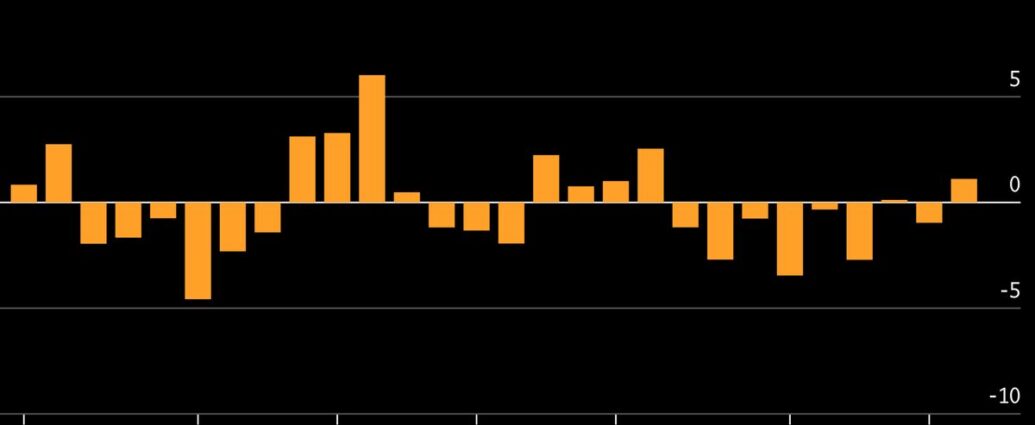

Boeing’s Smallest 737 MAX Closes In on FAA Sign-Off After Years of Delay
The smallest jet in Boeing’s 737 MAX family is finally near the end of its certification marathon, with Federal Aviation Administration Administrator Bryan Bedford saying the agency has found nothing that would stop the MAX 7 from winning approval this summer. Speaking at an aviation forum in Washington in late May, Bedford said regulators had not identified any issue that would push certification of either the MAX 7 or the larger MAX 10 past the end of 2026 — the clearest signal yet after a program that has slipped repeatedly since 2019.
Boeing Chief Executive Kelly Ortberg backed that up at the Bernstein Strategic Decisions Conference on May 27, telling investors the company had completed roughly 80% of the certification flight-test program for both variants and had already received every Type Inspection Authorization it needed from the FAA. “There’s clearly light at the end of the tunnel here,” Ortberg said, adding that the MAX 7 would be certified first, with the MAX 10 following close behind. The MAX 10 entered the final stage of certification flight testing, known as Type Inspection Authorization Phase 2, during the first quarter.
The delays trace back to a single stubborn problem. The engine anti-ice system on the jets’ CFM International LEAP-1B engines could overheat the inlet inner barrels and, in rare cases, cause them to fail — a defect Boeing disclosed in 2023 that forced a full redesign and years of extra testing. Boeing has also built a revised crew-alerting system that Congress mandated after the two MAX crashes in 2018 and 2019 that killed 346 people, and it plans to retrofit the change across the fleet. The program has operated under intense scrutiny since a door plug blew out of an Alaska Airlines MAX 9 in January 2024, prompting the FAA to cap 737 output at 38 jets a month.
No customer has more riding on the MAX 7 than Southwest Airlines, which holds roughly 90% of all orders for the type — about 289 aircraft. Southwest CEO Bob Jordan has said he expects FAA approval by August, with the airline putting the jet into service in the first quarter of 2027. The 138-to-153-seat MAX 7 will replace Southwest’s aging 737-700s and ease capacity pressure at slot-constrained hubs such as Dallas Love Field. At 116 feet long, the MAX 7 is Boeing’s answer to the Airbus A220 in the smallest slice of the single-aisle market.
The business stakes reach well beyond one model. Boeing closed the first quarter with a record backlog of about $695 billion, including more than 6,100 commercial jets, and its 737 MAX order book alone tops 4,850 aircraft. The company delivered 143 planes in the first quarter, up 10% from a year earlier. Certifying the MAX 7 and MAX 10 lets Boeing start converting that backlog into cash, and it clears the way for a production ramp the FAA has already blessed — from 42 jets a month toward 47, then 52 in early 2027, aided by a fourth 737 line at Boeing’s Everett, Washington, plant.
The MAX 10 carries the heavier commercial load. With about 1,431 orders, it is Boeing’s closest competitor to the Airbus A321neo and long-range A321XLR in the high-capacity narrowbody segment that Airbus has dominated. United Airlines leads the book with 277 on order, followed by Alaska Airlines with about 105, along with American Airlines, Delta Air Lines, Pegasus Airlines and Ryanair, which holds 150 firm orders plus 150 options. Combined orders for the two variants exceed 1,700 aircraft, with first deliveries planned for 2027.
What remains is the flight testing itself. Ortberg framed it as running out the clock — working through the last test points rather than clearing new technical hurdles — but the FAA has shown it will take its time and could still surface issues before signing off. If the summer window holds, Boeing closes the final major certification gap in its narrowbody lineup and hands airlines the jets they ordered years ago. If it slips again, carriers that have already rebuilt fleet plans around the aircraft will be waiting a while longer.
JBizNews Desk | New York © JBizNews.com All Rights Reserved. Reproduction or distribution without written permission is prohibited.




Why Young Investors Are Taking On So Much Market Risk
Nearly two-thirds of American investors under 35 — 62% — say they believe they have to take big risks to reach their financial goals, according to a survey from the Financial Industry Regulatory Authority, the brokerage industry’s self-funded watchdog. Those numbers drew fresh scrutiny on Thursday as the behavior behind them came into sharper focus: 43% of that group has traded options, 29% has bought meme stocks, and 22% has invested with borrowed money. The takeaway is a generation treating the market less like a savings account and more like a lottery ticket.
The why is not hard to trace. For many under-35 investors, the old markers of building wealth — a house, a stable career ladder, a paid-off mortgage — feel out of reach, so the calculus on risk shifts. Wealth has grown more concentrated among older and richer households, housing remains unaffordable in much of the country, and steady jobs are harder to land. Most investors under 30 have also only ever traded through a bull market, which tends to make speculative, high-beta bets look like the normal way to make money rather than the exception.
That appetite is showing up in hard credit numbers. U.S. margin debt — what investors borrow from their brokers to buy securities — rose 54% from a year earlier to a record $1.4 trillion in May, according to FINRA data. And that figure leaves out the fastest-growing forms of borrowing entirely: leveraged exchange-traded funds, which aim to double or triple the daily move of an index, plus the embedded leverage baked into futures and options.
Citadel Securities put hard figures on the pileup. Assets in leveraged ETFs have reached a record of roughly $218 billion, up about $82 billion, or 60%, since the end of March alone. Leverage tied to technology has grown 136% over that stretch, while leverage linked to semiconductors has nearly tripled, climbing 175%. Retail traders are also loading up on short-dated contracts, trading a record $7 billion in options premium a day in June, up from $5.8 billion in May, with new participation records set almost weekly on the firm’s platform.
The line between investing and gambling is blurring in the process. A survey from Northwestern Mutual found 32% of Gen Z respondents gamble in crypto or sports betting, 35% of millennials own crypto, and 24% bet on sports. The same survey carried a wrinkle worth noting: despite a year of wild swings, more young people reported feeling financially secure than a year earlier — 39% of Gen Z, up from 36%, and 52% of millennials, up from 43%. Confidence and risk-taking are rising together.
Wall Street is building for the trend rather than fighting it. Brokerages, leveraged-ETF issuers and prediction-market operators are rolling out products aimed squarely at young, active traders, and the demand is feeding the supply. Social media is doing the marketing. A J.P. Morgan Personal Investing survey found many Gen Z and millennial investors now source ideas from financial influencers, Reddit forums and online tips rather than advisers or newspapers. Claire Exley, head of financial advice and guidance at the firm, cautioned that engaging with online sources can help build knowledge but urged young investors to verify information and seek guidance before acting.
The concern among market veterans is less about the whole market cracking than about individual traders blowing themselves up. Margin debt at record highs partly reflects a market at record highs — it is a concurrent signal, not automatically a warning. But borrowed money and triple-leveraged funds cut deep in a downturn, and the AI-driven rally powering these bets has already shown tremors in recent weeks. The risk for this cohort is simple: the tools that magnify gains in a rising market magnify losses just as fast when it turns, and a generation that has never traded through a real bear market is about to learn how that math works.
JBizNews Desk | New York © JBizNews.com All Rights Reserved. Reproduction or distribution without written permission is prohibited.


California city urges a drive-thru restrictions after residents voiced concern about the proposed addition
of the steak chain.
Last month, the City Council in Culver City, California, enacted a 45-day moratorium to obstruct allows for fresh drive-throughs while team was developing a possible restrictions, according to LAist. Following the city’s mobility subcommittee’s vote in May to propose staff draft the ban, this comes after.
Only new businesses may be affected if a ban was approved by the city government.
According to a report from the town workers, In-N-Out would be the first new drive-through in Culver City since 1997. A drive-thru street and 61 parking spots would be included in the proposed fast-food restaurant, which could accommodate 26 vehicles.
IN-N-OUT TO GET A BILL OF MULTIPLE RESTAURANTS EVERY YEAR: A Statement
When the town passed the embargo, the burger chain had not yet completed the proper application for a force it was developing, a city official told LAist.
In-N-Out was contacted by FOX Business for remark.
We typically don’t comment publicly on business matters because we are a secret, family-owned company, according to an In-N-Out spokesman, according to LAist.
The proposal has been criticized by In-N-Out’s critics because it has the potential to harm the city’s ability to become accessible and safe.
According to Vanessa Martin, a area resident who is organizing assistance for the drive-thru restrictions, “density is expected, and development is expected.” We want to take initiative and make wise decisions.
The In-N-Out “mega drive-thru,” according to Martin’s family Cynthia, will cause traffic congestion, increase air excellent, and pose safety risks for both pedestrians and cyclists.
Paul Hewitt, a neighbor, started distributing flyers to his companions, calling the job a “terrible idea.”
Bubba Fish, a member of Culver City Council’s flexibility subcommittee, said that “drive-throughs are the epitome of that” and that the city needs to have “more accessible, bikeable, safer streets for people of all modes.”
However, drive-throughs are significant choices for customers, including those who have disabilities and those who have children, according to the ban’s competitors.
Drive-thru restrictions are typically” shortsighted,” according to Jot Condie, leader of the California Restaurant Association.
Condie claimed that you “re largely banning quick-service eateries without particularly stating that.”
A DAD RECRETED A DAD’s FAMILY OF 5 EATS AT CHICK-FIL-A FOR MORE THAN$ 45.
Clicking HERE WILL GET FOX BUSINESS ON THE GO.
The American Planning Association estimates that drive-thru orders account for 70 % of fast-food sales.
The Golden State’s second drive-thru restrictions is not currently in place.
Drive-throughs are already prohibited in Culver City’s city, while Santa Barbara and San Luis Obispo, according to LAist, have been prohibited for years. A nationwide restrictions that began in the late 1990s was just lifted in Carlsbad to allow for case-by-case account of fresh drive-throughs.
The California Restaurant Association argued in a letter to San Diego that a limited drive-thru ban would stop some groups, including those with disabilities, from using products and services, according to the outlet.
This post was originally published here





Israel not expected to get involved in new round of US-Iran fighting, officials tell ‘Post’
The current round of fighting between the United States and Iran is not expected to spill over to Israel, The Jerusalem Post learned on Thursday.
IDF officials do not expect Israel to be drawn into the US-Iran exchanges at this time, though they said that the military is ready for any eventuality.
Additionally, the officials said that the current assumption is that Iran doesn’t plan to drag Israel into the conflict, with no expected Iranian strikes in the near future.
This might change in case the US tells Israel that it needs the IDF to join in striking Iran, sources told the Post.
Iranian missiles trigger sirens in Jordan, 150km away from Israeli border
One of the latest Iranian attacks triggered sirens in Jordan, with Jordanian authorities saying that ten missiles were intercepted over its territory.
According to the Islamic Revolutionary Guard Corps, the attack targeted the Azraq Air Base of the US Air Force, which is located some 150 kilometers away from the Israeli border.
Iranian strikes also targeted US assets in several Gulf states, with sirens sounding in Bahrain and Kuwait, among other areas targeted by the Islamic regime.
Iran’s air force is flying fighter jets to “secure the skies over the funeral procession” of the former supreme leader Ali Khamenei in Mashhad, the regime-affiliated Fars news agency said.
US strikes key targets in Iran
The US struck several sites in Iran, with one of the main targets reportedly being a railway bridge connecting Tehran and Mashhad, state broadcaster Islamic Republic of Iran Broadcasting (IRIB) claimed.
“Following the criminal US attack early this morning on a section of the Tehran-Mashhad railway, passenger train services have been disrupted,” IRIB posted on X/Twitter on Thursday.
Passengers stranded due to the disruption reportedly began chanting, “Iranians do not accept humiliation, even at the cost of their own lives.”
A Russian-built nuclear power plant was also reportedly hit in US strikes on Iran’s Bushehr province early Thursday morning, according to Iranian state media.
The deputy governor of Bushehr Province said that a US projectile hit the perimeter area of the facility, which had already been hit several times during the current conflict prior to the April 8 ceasefire.
The US Central Command (CENTCOM) said in a statement on X/Twitter that it had struck approximately 90 sites throughout southern Iran to “further degrade Iran’s ability to attack commercial shipping and innocent civil mariners in the Strait of Hormuz.”
Shoshana Baker contributed to this report.

Replacing Graham Platner: US Senate replacement options split over Israel policy
Following the implosion of Graham Platner, a harsh critic of Israel who lobbed a parting shot about “genocide” in Gaza in his video Wednesday, quitting the Maine Senate race, a number of possible replacements have emerged. And as their names have surfaced, interest and questions about their positions on issues of concern to the Jewish community also have arisen.
There is a significant range of views among the possible candidates on the American Israel Public Affairs Committee pro-Israel lobby, arms sales to Israel and whether there was a genocide in Gaza, based on their past and recent comments.
In statements to JTA, pro-Israel groups Democratic Majority for Israel and the Jewish Democratic Council of America both urged the party to nominate a candidate aligned with their values; Platner had drawn concern from a number of Jewish groups because of his covered-up Nazi tattoo and stance on Israel.
DMFI’s president and CEO, Brian Romick, said he doesn’t understand why progressives had supported “a candidate with so many obvious red flags, including an allegation of sexual assault and a Nazi tattoo.” (Platner has denied the assault allegation and claimed to not know what the tattoo represented when he got it.) He added, “We urge Maine Democrats to nominate a viable candidate who reflects our Democratic values and can actually win.”
The JDCA, meanwhile, wrote that it “never supported Graham Platner because he doesn’t share the values of our community,” and said it hopes to back “a Democratic candidate who reflects the priorities — and morals — of Jewish Americans, and will beat Susan Collins in November.”
Some of Platner’s former volunteers have said they want his replacement to fit his mold as a progressive and Israel critic who is taking on establishment politics in the effort to unseat GOP Sen. Susan Collins. After Platner dropped out, the Maine Democratic Party announced on Wednesday that to fill the candidate vacancy it will hold a nominating convention made up of about 600 people selected by county-level Democratic committees. The timing of the convention is not yet clear; the deadline for naming a replacement is July 27.
“There is an unprecedented amount of energy and enthusiasm among Maine Democrats, driven in part by many of the dedicated volunteers and supporters who were inspired by Graham Platner’s campaign,” the party said in a statement. “We look forward to coming together and harnessing that energy around our new nominee as we work to defeat Susan Collins in November.”
Here are some of the replacements being mentioned and what they’ve said about Jewish-related issues, Israel and AIPAC. None of the possible nominees responded to JTA’s requests for comment.
Nirav Shah, epidemiologist and healthcare executive
Nirav Shah, who ran for the Democratic gubernatorial nomination in June, finishing second in ranked-choice voting, told Semafor reporter David Weigel on Tuesday that he supports an arms embargo on Israel, and he accuses the country of having committed genocide. Shah also said that in keeping with his policy, he would not accept funds or an endorsement from AIPAC.
Shah has touted himself as a political outsider like Platner and said Tuesday that he had “no establishment support, and no major political endorsements” when he was running for governor. He has called on possible Platner replacement to participate in a televised debate and “multiple” town halls across the state to make the nomination process transparent.
Troy Jackson, logger and union leader
Troy Jackson, who has backing from the left, had a close political alliance with Platner until calling for him to step aside on Monday and officially launching his campaign for the nomination on Wednesday.
A number of Platner’s supporters have called for the party to nominate Jackson, who finished third behind Shah in the gubernatorial primary. He’s said little publicly related to Israel, but in his run for governor, Jackson had the backing of a number of left-wing, strongly pro-Palestinian politicians, including Vermont Sen. Bernie Sanders and California Rep. Ro Khanna, as well as Maine’s Democratic Socialists of America chapter.
Sanders’ group Our Revolution and left-wing streamer Hasan Piker — a staunch Israel critic who’s drawn accusations of antisemitism — are both backing Jackson to be the new Senate nominee.
In 2024, at the Maine State Democratic Convention, Jackson, who served as convention chairman, reportedly attempted to quiet down a small group of protesters who called for a ceasefire in Gaza and called Maine Rep. Jared Golden a “war criminal” during a video celebrating the Jewish congressman.
“I believe in the ability of people to demonstrate and protest,” Jackson said amid the outburst. “There is a time for that.”
Jackson, who previously ran unsuccessfully for the House in 2014, is a former Maine state senator and Senate president; he is a member of the Painters and Allied Trades and the Machinists unions.
Shenna Bellows, Maine secretary of state
Before assuming her current role, a position that is appointed by state lawmakers every two years, Shenna Bellows served as the executive director of the Holocaust and Human Rights Center of Maine.
In May, Bellows spoke at the Jewish-Asian Friendship Dinner, hosted by the Jewish Community Alliance of Southern Maine. Bellows said she began working with the JCA during her time leading the Holocaust museum, and said she’d attended numerous events that discussed “many stories of Holocaust survivors and of genocide around the world, and how important it is that we stand up for all of each other, and for unity, and the love that we have for all of each other.”
Bellows also commended the JCA for its response to the surge of Immigration and Customs Enforcement presence over the winter, which included mutual aid to support people who felt unsafe leaving their homes.
Bellows does not appear to have commented extensively on Israel, although she signed Maine Gov. Janet Mills’ 2023 proclamation recognizing the 75th anniversary of the founding of modern Israel that wished the country “a peaceful and prosperous future.”
Jordan Wood, ex-congressional staffer
A former staffer for former California Rep. Katie Porter, Jordan Wood spoke extensively about his views on Israel and AIPAC in an interview as a Senate candidate in Maine last fall. He was the first Democrat to enter the race for Collins’ Senate seat before being overshadowed by Platner and later suspending his campaign to run for the House.
Wood told Democratic commentator Kaivan Shroff that he would support Sanders’ resolution to restrict offensive weapons sales to Israel but backs the continuation of aid to the Jewish state with conditions.
Wood said he believes Israel has committed war crimes in Gaza, but stopped short of accusing the country of genocide, pointing to a connection between that accusation and a rise in antisemitism.
“I’ve hesitated on it because I’m also seeing a real rise in antisemitism in the United States,” Wood said. “My husband is Jewish, and the acts of violence toward Jewish Americans is very much connected to the language that we use.”
Wood added that it would be “a huge deal for the United States Congress to designate what’s going on in Gaza as a genocide officially.”
“There could be consequences to that for US citizens that have served in the IDF,” he said. “Do they get prosecuted?”
Wood also said he would not take money from AIPAC, and added that there is a “huge amount of distrust” of the lobbying organization among Democratic voters.
“I believe the only way to truly prove to a voter that you are voting and prioritizing policies in their best interest, and for our country’s best interest, is to remove any perception of corruption or misdealing,” Wood said.
Dan Kleban, brewery owner
Dan Kleban, who announced on Wednesday that he is back in the race for Senate after having suspended his campaign in October and endorsing Gov. Janet Mills, who dropped out before the primary after trailing in the polls, has a very different approach from Platner to the U.S.-Israel relationship.
In an interview with CNN on Wednesday, Kleban refrained from accusing Israel of committing genocide, instead calling the military campaign in Gaza an “absolute tragedy.” Kleban said he would condition arms sales to Israel.
When Kleban — a political novice and co-founder and co-owner of the Maine Beer Company — first launched his Senate campaign last fall, he told Politico that he did not support the recent resolution from Sanders to block certain arms sales to Israel.
“I believe Israel has a right to defend itself,” he said. “I don’t think that we solve the horrific humanitarian crisis in Gaza by disarming Israel and exposing them to harm.”
Valli Geiger, state representative
Valli Geiger, one of Platner’s most ardent supporters, both before and after the sexual assault allegations were reported, wrote in a Facebook post on Wednesday that Platner told her to put her name forward along with several other as possible candidates to replace him, because he sees her as “a fighter who will work to protect the movement during this transition.”
Her post focused on Platner’s economic platform and did not mention Israel or Jewish-related matters, and she does not appear to have commented much on the issues publicly.
In May, Geiger shared a Facebook post by an environmental page called “Unwaste the Planet,” which criticized Donald Trump, Vladimir Putin and Israeli Prime Minister Benjamin Netanyahu, the latter of whom, the post said, “wants Greater Israel.” Geiger shared it with the added caption, “This! Just this!”
She has served in the Maine House of Representatives since 2020.

Jersey City Rejects 15% Property Tax Hike as $255 Million Budget Crisis Deepens
The Jersey City Council unanimously rejected a proposed 15% municipal property tax increase on Wednesday, July 8, leaving New Jersey’s second-largest city without an adopted budget and still facing an estimated $255 million budget shortfall, according to city officials.
The vote came just one day after New Jersey lawmakers approved a $120 million state rescue package for the city, the largest municipal loan in state history. Several council members who had previously indicated support for the tax increase reversed course following strong public opposition, saying they wanted more time to review the city’s finances before asking residents to pay substantially higher property taxes.
Council members Jake Ephros, Eleana Little and Joel Brooks said homeowners deserved a complete budget before voting on such a significant increase. Ephros warned that delaying action could ultimately result in an even larger fourth-quarter tax bill, calling it a potential “death blow” for many residents.
Despite the council’s vote, city officials cautioned that the financial problems remain unresolved.
Finance Director Bill Viqueira told council members that New Jersey’s Department ofCommunity Affairs (DCA) will closely oversee the city’s finances and has the authority to reject the city’s budget and impose its own tax rate if necessary.
Mayor James Solomon said state officials have indicated Jersey City may ultimately need a tax increase of approximately 20% to stabilize its finances.
“The state has been clear—the only other solution is mass layoffs,” Solomon told the council.
The budget crisis marks a dramatic reversal for a city that spent more than two decades transforming itself into one of the nation’s fastest-growing urban centers. Luxury residential towers reshaped Jersey City’s waterfront, thousands of businesses opened and tens of thousands of new residents moved across the Hudson River from Manhattan.
According to the mayor’s administration, however, years of rising spending outpaced revenue growth. Budget gaps were filled through one-time solutions including property sales, borrowing and federal pandemic relief funding. Solomon, who took office in January, has argued those temporary measures are no longer available.
The administration originally proposed a 20% property tax increase, estimating it would add roughly $1,666 annually to the tax bill of a median-valued home. Following the approval of state financial assistance and public criticism, the proposal was reduced to 15%.
Even at the lower level, city officials estimated the increase would generate approximately $60 million in recurring annual revenue while still leaving roughly $20 million in additional budget reductions and another $10 million in restricted funding necessary to close the remaining gap.
The administration says it has already reduced spending by approximately $55 million, with additional departmental restructuring planned later this year.
The financial impact extends beyond homeowners. Property tax increases typically translate into higher rents as landlords pass along higher costs to tenants. At the same time, large-scale layoffs of city employees could reduce consumer spending and affect businesses throughout Jersey City’s local economy.
The city’s financial pressures have also drawn attention from the credit-rating industry. Moody’s Ratings downgraded Jersey City in December, citing rising labor costs, increasing healthcare expenses and years of insufficient revenue growth. Higher borrowing costs could make future infrastructure and capital projects more expensive.
Mayor Solomon has also ordered a review of more than 100 long-term tax-abatement agreements, including several involving major waterfront developments. He argues many of the agreements generate little tax revenue while providing limited affordable housing benefits.
The city’s fiscal problems have also become a political dispute between the current and former administrations. Solomon has blamed former Mayor Steven Fulop for relying on emergency borrowing, selling city assets and using approximately $100 million in federal COVID-19 relief funds to finance a one-time property tax reduction rather than addressing long-term structural deficits.
Fulop, who left office earlier this year to run for governor, has rejected those claims and maintains the budget could have been balanced without a major property tax increase.
The $120 million state aid package was included in a broader $358.8 million supplemental appropriations bill tied to Governor Mikie Sherrill’s fiscal 2027 budget. Hudson County lawmakers, including Raj Mukherji and Katie Brennan, helped assemble the legislation.
Mayor Solomon plans to present a revised budget on July 15, with final adoption expected in August. However, because the Department of Community Affairs now has significant oversight authority, the ultimate size of any property tax increase may rest with the state rather than the City Council.
JBizNews Desk | Jersey City
© JBizNews.com All Rights Reserved. Reproduction or Distribution without Written Permission is Prohibited.

Ukraine’s Drones Reach 1,700 Miles Into Siberia, Squeezing Russia’s Fuel Supply
Ukraine’s armed forces General Staff said Monday that its drones struck the Gazprom Neft–operated Omsk refinery in western Siberia, the largest fuel-processing plant in Russia and a target that had until this week sat far beyond Kyiv’s reach. The facility lies roughly 2,500 kilometers — about 1,550 miles — from Ukrainian-held territory, near the border with Kazakhstan. Vitaly Khotsenko, governor of the Omsk region, confirmed the attack, saying several drones broke through layers of air defense before igniting a fire at the plant.
The strike carried a message as much as a payload. Iryna Terekh, chief executive of the Kyiv-based defense firm Fire Point, said the company’s upgraded FP-1 drones flew the mission and called it a record for strike drones anywhere in the world. Fire Point’s chief designer, Denys Shtilierman, said the newest jet-launched version of the FP-1 can travel more than 2,100 miles, comfortably clearing the distance to Omsk. President Volodymyr Zelenskyy, in his nightly address, described the operation as an important achievement and said Siberia now sits within range of Ukrainian precision strikes.
Two days later, the campaign widened again. On the night into Wednesday, Ukrainian long-range drones hit the Rosneft-operated Saratov refinery, the TANECO and TAIF-NK complexes in Tatarstan, and a Transneft-Ural pumping station near Ufa in Bashkortostan, according to Ukrainian military statements and regional officials. Saratov’s governor confirmed one person was killed and several injured. The pattern is deliberate: Kyiv is now going after refining, petrochemicals and the pipeline logistics that move crude, not just the refineries themselves.
For Vladimir Putin, the harder problem is arithmetic. Russia spans 11 time zones, and its air defenses were built to guard cities and military sites, not thousands of miles of energy infrastructure scattered across the map. Every deep strike forces Moscow to spread limited interceptors and radar over a far larger area, and the Omsk hit proved that even Siberia — long treated as a safe rear — is no longer off the target list.
The economic damage is already visible at the pump. Gasoline production has fallen roughly 17% to about 850,000 barrels a day, according to Russian government statistics, and analysts estimate that between a fifth and a quarter of the country’s refining capacity is now offline. The International Energy Agency this week called the level of disruption unprecedented in the history of the war. The Omsk plant’s main crude-distillation unit, which accounts for a large share of its output, was reported knocked offline, and the plant processes more than 20 million tons of oil a year.
That shortfall is rippling through daily life. By late June, more than 50 of Russia’s 83 regions were reporting fuel rationing or supply disruptions, with drivers in Moscow waiting hours to fill up and some stations limiting purchases to 20 to 30 liters per car. Crimea has seen sales to ordinary motorists halted outright. The government has banned gasoline and jet-fuel exports, is weighing a diesel export ban, and has loosened fuel-quality rules to keep lower-grade product flowing. To plug the gap, Moscow has started importing gasoline from Kazakhstan and Belarus and is exploring larger purchases from India.
The strain is showing up in the broader economy. The Bank of Russia has flagged rising gasoline prices as an inflation risk, with the rate running near 6% against a 4% target, and the government has cut its 2026 growth forecast to just 0.4%. Repairs are slow and costly because many refineries need specialized imported equipment that sanctions have made hard to source; the Moscow-area Kapotnya plant is expected to stay offline into next year.
The global market has stayed surprisingly calm about the Russian damage, largely because a separate shock is dominating traders’ attention. Brent crude traded near $78 a barrel on Wednesday, up sharply on the week, though the move was driven mainly by renewed U.S.-Iran hostilities and fresh worries over the Strait of Hormuz rather than events in Siberia. Russia’s Urals grade continues to sell at a discount to Brent, and with export terminals and shadow-fleet tankers now under attack, the risk is that Russian barrels reaching market keep shrinking.
There is a cross-border wrinkle for energy buyers, too. Gazprom said Wednesday that drones struck the Krasnodarskaya pumping station, which feeds the Blue Stream pipeline carrying gas to Turkey, though it said exports were not interrupted. Blue Stream and TurkStream are the last pipeline routes moving Russian gas into Turkey and onward toward Central Europe, and repeated hits on that infrastructure keep a tail risk hanging over those supplies.
For now, the race is between Ukraine’s attackers and Russia’s repair crews. Kyiv has struck all 11 of Russia’s largest gasoline producers, and with longer-range drones and domestically built missiles entering the mix, Moscow’s ability to patch and reroute is being tested as never before. Whether that pressure bends the Kremlin toward talks, or simply deepens the pain at Russian gas stations, is the question now hanging over every barrel.
JBizNews Desk | New York © JBizNews.com All Rights Reserved. Reproduction or distribution without written permission is prohibited.



Mortgage Rates Climb Above 6.7% as Middle East Tensions Push Borrowing Costs Higher
Mortgage rates moved higher this week, adding another hurdle for homebuyers as renewed tensions in the Middle East pushed oil prices and Treasury yields upward.
According to Zillow, the average interest rate for a 30-year fixed-rate mortgage rose to 6.72% on Thursday, up from 6.66% a day earlier, marking one of the highest levels in recent weeks.
The increase follows renewed fighting involving Iran, which has driven crude oil prices higher and fueled concerns that inflation could remain elevated for longer.
Higher inflation expectations typically push Treasury yields upward, and mortgage rates closely follow movements in the 10-year U.S. Treasury note.
As Treasury yields climbed this week, mortgage lenders responded by increasing borrowing costs for new home loans.
The move comes during the heart of the summer homebuying season, when many families traditionally purchase homes before the new school year begins.
While Freddie Mac’s weekly mortgage survey reported a lower average rate earlier in the week, daily market pricing has moved noticeably higher as geopolitical events unfolded.
Housing analysts say the broader outlook for mortgage rates remains uncertain.
Recent comments from Federal Reserve officials indicate policymakers continue watching inflation closely, making near-term interest-rate cuts less likely if price pressures persist.
Although the latest employment data showed slower hiring growth, economists say inflation remains the primary factor influencing long-term borrowing costs.
Higher oil prices also threaten to increase transportation and manufacturing costs, creating additional inflationary pressure throughout the economy.
For homebuyers, the impact is immediate.
Every increase in mortgage rates raises monthly payments and reduces purchasing power, making homes less affordable for many first-time buyers.
Housing affordability remains near multi-decade lows as elevated borrowing costs combine with limited housing inventory and still-high home prices.
Many homeowners also remain reluctant to sell because they locked in mortgage rates near 3% during previous years.
Selling today would often require replacing those loans with mortgages carrying rates more than twice as high.
That “lock-in effect” continues limiting the supply of existing homes available for sale, helping keep home prices elevated despite slower buyer demand.
Real estate economists expect mortgage rates to remain above 6% through much of the year unless inflation eases significantly or financial markets begin anticipating Federal Reserve rate cuts.
Some housing markets are showing modest signs of improvement as inventory slowly increases and sellers become more willing to negotiate pricing.
Still, affordability remains a major challenge across much of the country.
For buyers who remain active, financial experts continue recommending mortgage preapproval, comparison shopping among lenders and locking interest rates once purchase contracts are signed to reduce exposure to further market swings.
For the housing market, renewed geopolitical uncertainty has become another factor influencing borrowing costs alongside inflation, Federal Reserve policy and economic growth.
Unless inflation moderates or global tensions ease, mortgage rates are likely to remain elevated, keeping pressure on affordability for millions of prospective homebuyers.
This article is for informational purposes only and should not be considered financial advice.
JBizNews Desk | New York
© JBizNews.com All Rights Reserved. Reproduction or Distribution without Written Permission is Prohibited.

Khamenei, four family members buried in Mashhad as Iranian mourners chant for Trump’s killing
Iran’s former supreme leader Ayatollah Ali Khamenei was buried in the country’s holiest shrine, state media said early on Friday, after huge crowds gathered for his funeral with his son and successor Mojtaba Khamenei still hidden from public view.
Trucks carrying the bodies of Khamenei and his family arrived on Thursday in Mashhad, where Iran’s holiest shrine is located. Black-clad mourners pressed close behind, waving Iranian flags, photographs of the late Khamenei and red placards with revolutionary slogans.
A helicopter lifted Khamenei’s coffin from the truck over the impenetrable crowd for the final short stretch to a blue-tiled arched recess at the shrine.The official IRNA news agency reported early on Friday that the burials of Khamenei and four family members killed alongside him were completed.
The burial in Mashhad in northeast Iran follows a week of mass funeral processions, rallies and mourning ceremonies that have coincided with a renewed burst of conflict with the United States following weeks of truce.
Khamenei’s body was carried by truck slowly through the crammed Mashhad streets towards the gilt dome and minarets of the Shrine of Imam Reza, flanked by white-turbaned clerics walking on either side. Black-clad mourners pressed in close behind, waving Iranian flags, photographs of the late Khamenei and red placards with revolutionary slogans.
Videos released by Iranian state media show no senior Iranian officials present in the front row of the event. Some officials, however, such as Ghalibaf, Ejei, Mokhber and Hassan Khomenei were seen attending, Iran International reported.
Videos released by Iranian state media showed that no senior Iranian official was present in the front row of funeral prayers for Ali Khamenei in Mashhad, led by his eldest son Mostafa. However, some officials including Ghalibaf, Ejei, Mokhber and Hassan Khomeini were seen… pic.twitter.com/pcalfD8a64
— Iran International English (@IranIntl_En) July 9, 2026
The burial will be the culmination of a week of funeral events in both Iran and Iraq that the Islamic Republic’s clerical leaders have been encouraging huge crowds to attend in an effort to vaunt the might and ideological fire of their theocratic state.
However, despite it having survived a months-long blitz by its strongest enemies, the United States and Israel, Iran faces huge internal challenges, and the legacy of Khamenei’s 37-year rule is bitterly disputed.
Mojtaba Khamenei’s whereabouts remain a mystery
The whereabouts of Mojtaba Khamenei, proclaimed Supreme Leader by a clerical assembly a week after his father’s death, have remained a mystery to Iranians.
He has not appeared in public since the war began with the strike that killed his father on February 28, and while he has issued written statements, no image, video, or voice recording of him has been shared by the regime.
According to the regime’s officials, he suffered debilitating injuries in that same strike, his face was disfigured, and his limbs were badly wounded.
Senior sources in Tehran have said he is recovering but that he has not yet been well enough to manage public appearances and state security services are also trying to limit his exposure in case of more US attacks.

‘Kill Trump’ placards appear at burial ceremony
As crowds jostled in Mashhad awaiting Khamenei’s funeral cortege, the crowd chanted slogans demanding revenge on US President Donald Trump for his killing.
“I swear by the blood of the Supreme Leader, Trump, we will kill you!” they shouted, with women holding up placards reading “Kill Trump.”
The roads leading to the shrine were a sea of black-clad mourners on Thursday, some responding to shouted chants in praise of Khamenei and against Iran’s enemies, including the old revolutionary slogan of “Death to America.”
As the crowds awaited the coffins of Khamenei and his family in the sweltering July heat, hoses pumped water high into the air to spray across the mourners and keep them cool.
Khamenei’s remains, along with those of four family members killed alongside him, have already been paraded through Tehran, the Shi’ite Muslim clerical center of Qom, and the Iraqi shrine cities of Najaf and Karbala.
At each event, huge crowds have thronged the streets to the mournful accompaniment of sung Shi’ite laments and chanted revolutionary slogans.
Martyrdom holds a central place in Shi’ite theology, and Khamenei’s death at the hands of foreign enemies has played into a religious and political tradition that runs deep through the Islamic Republic.

Over four years later: Leviev family drops criminal complaint against ‘Tindler Swindler’
Members of Israeli diamond tycoon Lev Leviev’s family have called to withdraw the criminal complaint filed against Simon Leviev (born in Bnei Brak as Shimon Yehuda Hayut), aka the “Tinder Swindler,” after an agreement between the two was reached, Walla learned on Thursday.
The agreement was submitted for approval to the Tel Aviv Magistrate’s Court after more than four years of legal proceedings.
Under the agreement, the complaint will be dropped without an acquittal. It was also agreed that the defendants would undertake, as part of the court’s decision, not to present Hayut, directly or indirectly, as connected to the Leviev family or to the various LLD companies.
In addition, the defendants stated that despite the dismissal of the charges against them, they would not be entitled to reimbursement of legal costs or attorneys’ fees. The agreement is still subject to court approval.
Attorney Guy Ophir, who represents the Leviev family, said the agreement was reached after the court raised on its own a legal issue, according to which most of the acts attributed to Hayut were carried out outside Israel’s borders, and therefore the attorney general’s approval was required in order to conduct the proceedings.
Most of offenses happened abroad
According to Ophir, the Leviev family brought witnesses and evidence from abroad regarding Hayut’s alleged actions, but Judge Itai Harmelin ruled that since most of the charges relate to offenses allegedly committed outside Israel, the case could not continue without the attorney-general’s approval.
Ophir argued that the defense never raised any argument about extraterritorial offenses, and that it was not appropriate for the court to raise the issue on its own after the prosecution’s case had ended.
He also claimed that some of the offenses actually did take place in Israel, including the acquaintance with the Leviev family, Hayut’s name change at the Interior Ministry, and sending of Hebrew-language publications abroad.
According to him, the family asked to submit additional evidence to support that claim, but the court rejected the request.
Ophir said that because interlocutory appeals are not possible in a criminal case, continuing the trial was expected to take another two to three years, including appeals, and would end no earlier than 2030.
“Since these were acts carried out in the previous decade, there is no point in continuing such a lengthy process,” he said.
He said the agreement does not amount to an acquittal for Hayut.
“We reached an agreement that does not absolve the defendants of our claims against them, but does ensure in a judicial decision that they will not present Simon as connected to the Leviev family or to the various LLD companies,” he said.
He added that in his view, the public should examine the testimony of the witnesses who came from abroad and judge Hayut’s conduct for itself.
Because this is not an acquittal, he said, the attorney general still retains the authority to file an indictment over the alleged extraterritorial offenses attributed to Hayut. He added that he regretted that, so far, in his words, neither the police, nor the prosecution, nor other foreign authorities had found it appropriate to act against Hayut.
The criminal complaint was filed in February 2022 with the Tel Aviv Magistrate’s Court by four of Lev Leviev’s nine children, through attorneys Guy Ophir and Victoria Reznik.
The complaint alleged that Hayut, following his name change, had presented himself for years as Lev Leviev’s son and as a member of the Leviev family in Israel and around the world.
It was also alleged that Hayut used that identity to gain his victims’ trust and receive benefits from them, while creating the impression that the Leviev family would cover any expenses and repay the money spent.
According to the family, he also used the trademark of the diamond company LLD Diamonds and presented himself as the company’s CEO and as a family member. The complaint said that as a result of his actions, the alleged frauds became associated with the Leviev family’s name, harming its reputation in Israel and abroad.
Damage to Leviev family’s professional reputation
In one of the hearings in the case, Zbulon Leviev, Lev Leviev’s son, testified that the impersonation had also hurt the family in the business world.
“As a businessman, people came up to me and said he was connected to the case. It created confusion. He used the name ‘Simon Zbulon Leviev’ and there is no greater impersonation than that. Instead of talking about business, they immediately talked about how it was connected to us. There was a claim that someone named Simon Zbulon Leviev had rented a yacht, and that is definitely not me. It was even published in the media as if it had been sent through our office in the US,” Zbulon Leviev testified.
Zbulon Leviev added that “in our field, in diamonds, a word is the most important thing, more than any contract. Once someone impersonates you, it damages people’s trust. This is very damaging, especially when he is impersonating you and he is a famous con man.”
A criminal complaint is a relatively unusual procedure, in which a private individual files a criminal charge instead of the state, for offenses that the law allows.
Hayut became known worldwide following the documentary “The Tinder Swindler,” which dealt with the method attributed to him.
According to reports, he contacted women through the app Tinder, won over their trust, and later said he was threatened by enemies and therefore could not use his family’s money. Using that pretense, he allegedly asked his victims to fund flights, hotel stays and other expenses, while promising to repay the money within a short time, a promise the complainants said was never fulfilled.
In December 2019, Hayut was sentenced to 15 months in prison after being extradited to Israel from Greece. He was convicted as part of a plea deal on four separate counts, including stealing checks, forgery of signatures and passing a stolen check. He was also fined and ordered to pay compensation to the victims.
Simon Leviev’s attorney, Sharon Nahari, said in response: “We are pleased to announce that after dialogue between the sides, an agreement was reached under which all charges against Simon Leviev [Hayut] will be dropped.”
“Simon will continue on his path, in creation, in action and in developing his ventures, and we are happy that the proceeding has ended with understandings between the sides.”
Simon Leviev said that he is “so happy that all the charges against me will be dropped. That was also the case in Germany and in other places around the world. I am moving on with my life to work and action.”
This brings to an end, at least for now, the private criminal proceeding the Leviev family pursued against Simon Leviev for more than four years.
However, according to the family’s lawyer, the dismissal of the complaint does not amount to an acquittal, and the attorney general still has the authority to examine filing an indictment, if deemed appropriate, over the extraterritorial offenses allegedly attributed to Yehuda Hayut.


Germany Heat Wave Death Toll Tops 5,100 as Economic Costs Rise
Germany recorded an estimated 5,120 heat-related deaths during the first half of the year, the Robert Koch Institute said Thursday, July 9, as the country’s public health agency warned that increasingly severe heat waves are becoming both a growing health emergency and a mounting economic burden.
According to the Robert Koch Institute’s latest weekly report, about 4,270 of the deaths were among people aged 75 and older. Women accounted for more fatalities than men, largely because they make up a greater share of Germany’s oldest population. The total already exceeds Germany’s annual average of roughly 2,900 heat-related deaths recorded between 2023 and 2025.
Most of the deaths occurred during a single week of extreme temperatures between June 22 and June 28, when much of Germany experienced its most intense heat of the year. The institute estimated that approximately 4,310 heat-related deaths occurred during that week alone, compared with about 810 deaths recorded from early April through June 21.
Temperatures climbed above 40 degrees Celsius (104 degrees Fahrenheit) in several parts of the country, with a new national high of approximately 41.3 degrees Celsius recorded near Saarbrücken. Public temperature displays in Berlin also registered about 41 degrees Celsius during the heat wave.
Germany’s experience reflects a broader trend across Europe. The Copernicus Climate Change Service, the European Union’s climate monitoring agency, reported Thursday that Western Europe experienced its hottest June on record, with average temperatures reaching 20.74 degrees Celsius. France, Belgium, Spain and the Netherlands together also reported more than 4,700 excess deaths during the same late-June heat wave.
Beyond the tragic loss of life, economists warn that extreme heat is increasingly weighing on Europe’s economy. Many German homes, hospitals and care facilities were built for a cooler climate and lack widespread air conditioning, forcing governments and businesses to invest heavily in cooling systems, building upgrades and public-health protections.
Allianz Trade estimates that climate-related losses could reduce the European Union’s cumulative economic output by 5% to 7% between 2026 and 2030. Germany alone could face economic losses of approximately $131 billion during that period, according to the insurer’s projections.
Industries that rely on outdoor labor face some of the greatest risks. Construction, agriculture, transportation and delivery services all experience productivity declines as temperatures rise, while recurring drought conditions continue to pressure crop yields and food production across Europe.
The European Central Bank has previously warned that prolonged drought and extreme heat contribute to higher food prices and slower economic growth. Officials increasingly view climate-related disruptions as both an inflation risk and a long-term challenge for economic planning.
As climate events become more frequent, businesses are also confronting rising insurance costs, higher energy demand for cooling, increased workplace safety requirements and disruptions to supply chains. Many economists now view extreme heat as an ongoing business risk rather than an occasional weather event.
German officials expect the death toll to increase further as additional reports from the hottest days of the summer are finalized.
For businesses, insurers and governments alike, Thursday’s report underscores that extreme heat is no longer simply an environmental issue—it has become an increasingly important economic challenge affecting productivity, infrastructure, healthcare spending and long-term growth across Europe’s largest economy.
JBizNews Desk | Berlin
© JBizNews.com All Rights Reserved. Reproduction or Distribution without Written Permission is Prohibited.



Europe Pushes to Break Its Dependence on Visa and Mastercard
Europe is accelerating efforts to build its own payment network and reduce its dependence on American financial giants Visa Inc. and Mastercard Inc., turning what was once a long-term policy goal into a strategic economic priority. European Central Bank President Christine Lagarde has emerged as the initiative’s strongest advocate, arguing that Europe cannot claim true economic sovereignty while relying on foreign-controlled payment systems.
The concern is backed by significant market share. Visa and Mastercard together process an estimated $24 trillion in transactions annually, while handling roughly 61% of euro-area card payments. In 13 of the eurozone’s 21 member states, cross-border card transactions rely exclusively on international payment networks. European officials increasingly view that dependence as both an economic and geopolitical vulnerability.
At the center of Europe’s response is Wero, a digital payment platform launched in 2024 by the European Payments Initiative (EPI). The service began by offering instant person-to-person transfers before expanding into online payments. In-store tap-to-pay capability is scheduled to roll out during 2026 and 2027. The platform has already attracted more than 43 million users across Germany, France and Belgium while processing billions of euros in transactions, with additional expansion into the Netherlands, Luxembourg and Spain.
Momentum increased earlier this year when the European Payments Initiative reached an agreement with the EuroPA Alliance, connecting national payment systems including Spain’s Bizum, Italy’s Bancomat, Portugal’s MB WAY and the Nordic Vipps MobilePay platform. Together, the partnership links roughly 130 million users across 13 European countries, allowing consumers to make payments across borders without routing transactions through American card networks.
The financial incentives are substantial. Traditional card networks generally charge merchants interchange and processing fees, while Wero relies on the Single Euro Payments Area (SEPA) instant payment infrastructure to move money directly between bank accounts. For retailers processing millions of transactions each year, even modest savings can translate into significant reductions in payment costs while keeping customer payment data within Europe’s banking system.
European policymakers are advancing broader reforms alongside the new payment network. The European Parliament has backed development of a digital euro targeted for introduction later this decade, while major European banks continue developing a euro-backed stablecoin. Updated European Union payment regulations have also expanded open-banking access and tightened fee rules, increasing competition with established card providers.
The challenge remains significant. Mastercard alone has more than 900 million branded cards in circulation across Europe, far exceeding Wero’s current user base. Adoption has also been gradual in some markets. Analysts note that consumers generally choose payment methods based on convenience, speed and reliability rather than questions of economic sovereignty, meaning any new platform must match the seamless experience customers already expect.
Supporters argue that recent geopolitical events have strengthened Europe’s resolve. The suspension of Visa and Mastercard operations in Russia following the 2022 invasion of Ukraine demonstrated how globally dominant payment networks can become tools of international policy. Combined with broader trade tensions between Europe and the United States, policymakers say the experience reinforced the need for independent European payment infrastructure.
For businesses, the outcome could eventually mean lower transaction costs and greater control over payment data. For consumers, the success of Europe’s strategy will depend on whether the new payment systems prove as convenient and reliable as the global networks they are attempting to challenge.
JBizNews Desk | Brussels
© JBizNews.com All Rights Reserved. Reproduction or distribution without written permission is prohibited.



Warsh Names 15 Outside Experts to Lead Sweeping Federal Reserve Review
Federal Reserve Chairman Kevin Warsh named 15 economists, former central bankers and business leaders on Thursday, July 9, to lead five task forces reviewing how the U.S. central bank operates, launching one of the broadest internal examinations of the Federal Reserve in years.
The Federal Reserve said the panels will work independently while drawing on Fed staff for support. Their mission is to evaluate key areas of the central bank’s operations and deliver recommendations to the Federal Open Market Committee by the end of the year.
The review comes less than two months after Warsh became chairman. He first announced the initiative following the Fed’s June policy meeting, saying the institution should examine whether its communications, policy tools and economic models remain effective in a rapidly changing economy.
The list of outside advisers includes some of the biggest names in economics, finance and technology. Among them are venture capitalist Marc Andreessen, Microsoft executive Asha Sharma, former Bank of England Governor Mervyn King, former Reserve Bank of India Governor Raghuram Rajan, former Central Bank of Brazil President Arminio Fraga, Harvard University economists Greg Mankiw, Karen Dynan, Jeremy Stein and Raj Chetty, Stanford University economist Charles Jones, Nobel Prize-winning economist Thomas Sargent, former Walmart Chief Executive Doug McMillon, and University of Chicago economist Kevin Murphy.
The task forces will focus on five major areas: Federal Reserve communications, the central bank’s balance sheet, economic data and forecasting, productivity and artificial intelligence, and the framework the Fed uses to measure and respond to inflation.
“I am honored that the best minds from a range of disciplines have agreed to work with us to sharpen our performance as an institution,” Warsh said in the Fed’s announcement.
One of the most closely watched reviews will examine the Fed’s roughly $6.7 trillion balance sheet. Any future recommendations to speed or slow the reduction of those holdings could influence interest rates, bond markets and borrowing costs throughout the economy.
Another task force will study how advances in artificial intelligence and productivity should influence monetary policy. Economists have increasingly debated whether AI-driven productivity gains could allow stronger economic growth without generating additional inflation, potentially giving the Fed more flexibility when setting interest rates.
The review also arrives as businesses, investors and consumers closely watch the timing of future rate cuts. Any changes to how the Fed measures inflation, interprets economic data or communicates policy decisions could affect financial markets and borrowing costs for mortgages, auto loans and business financing.
Before becoming chairman, Warsh had publicly argued that the Federal Reserve needed significant institutional changes. Thursday’s announcement signals a more collaborative approach, bringing in outside experts while emphasizing that any recommendations will still require approval from the Fed’s governors and regional bank presidents before implementation.
Market analysts said the broad review could eventually reshape how the Federal Reserve communicates with investors and how it approaches future monetary policy decisions.
Scott Clemons, chief investment strategist at Brown Brothers Harriman, described the effort as one of the most significant institutional reviews the Fed has undertaken in years. Rick Rieder, chief investment officer of global fixed income at BlackRock, said the initiative could mark the beginning of a new chapter for U.S. monetary policy.
While no immediate policy changes were announced, Thursday’s action signals that the Federal Reserve is preparing for a comprehensive reassessment of how it conducts monetary policy in an economy increasingly shaped by technological change, shifting labor markets and evolving inflation dynamics.
The task forces are expected to complete their work later this year, with recommendations then considered by Federal Reserve policymakers.
JBizNews Desk | Washington
© JBizNews.com All Rights Reserved. Reproduction or Distribution without Written Permission is Prohibited.
Florida county’s impact fees put new Live Local projects at risk
Indianapolis-based apartment developer Milhaus started building an apartment project in Manatee County, Florida, under the state’s Live Local Act after securing its funding earlier this year.
It may be one of the few to be built in the county, next to Sarasota, under the law, until lawsuits over a major increase in impact fees are resolved.
Manatee has quickly emerged as a broader litmus test of how municipalities continue to hinder housing development, even as laws change to encourage more housing. Fights over Live Local projects continue.
In Manatee County, the fight isn’t about the Live Local Act, but a law enacted last year to limit impact fees in hurricane-stricken areas.
County officials raised fees dramatically last year for all development, invoking the “extraordinary circumstances” exception under Manatee County’s 2021 impact fee law. They said the increase would pay for the infrastructure needed to handle growth. Officials made the move despite Senate Bill 180 freezing major fee increases through October 2027.
Housing advocates and developers say the fees offset the financial incentives that make Live Local projects attractive, including workforce housing.
Developers sued the county over the fees. The county joined a lawsuit against the state over last year’s bill.
While that dispute unfolded, state lawmakers closed more loopholes in the 2023 Live Local law that preempted local zoning. Live Local is now in its 4.0 version.
The math behind the increase
Manatee County commissioners raised impact fees to the state maximum on June 5, 2025. The vote was unanimous, 6-0, with one commissioner absent earlier in the process.
Fees jumped from roughly $13,442 to $16,328 per unit. Under the new schedule, some categories now reach $33,875 per unit, an increase of 69% to 169% depending on housing type.
Consultant Benesch argued 2015-based rates left millions of dollars uncollected. Commissioners framed the increase as growth paying for itself, not as housing policy.
The new rates took effect in early September last year. Developers who filed permits by Sept. 4 locked in the old, lower fees. Anyone filing after that date absorbed the full increase.
Legal fights add uncertainty
Developers sued the county, arguing the fee hike violates SB 180. That law bars more burdensome development rules in hurricane-affected areas for roughly two years.
Florida’s Department of Commerce sent a warning letter last August. Secretary Alex Kelly said the fee increase potentially violated SB 180. The state also withheld $3 million tied to the dispute.
Manatee County pushed back. Commissioners voted in July 2025 to fight SB 180 directly, directing lobbyists to seek its repeal. The county also joined a separate lawsuit challenging the law’s constitutionality.
Beginning with Live Local
Under Live Local, housing developments bypass zoning hearings. The county’s own resolution describes Live Local procedures as supporting its affordable housing goals.
Milhaus entered with the county’s first Live Local project. A couple of others are now in the pipeline. The process has been a learning curve for everyone involved.
“We took the brunt of a learning curve,” Brad Vogelsmeier, Milhaus’s vice president of development, told HousingWire TBD.
Officials were new to Live Local. They were still figuring out, for example, what belongs in a land use restriction agreement that locks in affordability for a set period.
“We’re not technically supposed to go through public vote council approval,” Vogelsmeier said. “That was probably the highest barrier.”
Milhaus now has 231 units under construction, with completion targeted for November 2027.
Atlanta-based Rangewater Development has a 300-unit Live Local project underway in Manatee after winning approval earlier this year.
What comes next
Future Live Local projects in Manatee will likely sit on the shelf now that fees are high enough to erase much of their advantage.
Manatee is still trying to recover the nearly $3 million in withheld state funds. Until a court rules or the fee schedule changes, developers face a math problem.
“LLA projects will likely become less feasible if the county wins the case, but so will all development,” Kody Glazer, Florida Housing Coalition’s chief legal and policy director, told HousingWire TBD.

Micron CEO says AI boom drives ‘unprecedented’ memory demand as company invests $250B
Micron CEO Sanjay Mehrotra detailed the company’s new $250 billion U.S. investment as the chip-making giant responds to surging demand for memory storage in the age of artificial intelligence.
The Boise-based technology company announced Thursday the billion-dollar investment will help Micron’s long-term objective of producing 40% of its DRAM chips in the United States.
“The demand for memory is at unprecedented levels. Memory is in deep shortage right now,” Mehrotra told “The Claman Countdown” on Thursday.
With existing semiconductor facilities in Idaho and Virginia, Micron is expanding its footprint by opening a new manufacturing site in central New York.
OREGON DATA CENTERS FACE SHARP ELECTRICITY RATE HIKE UNDER NEW LAW
FOX Business’ Liz Claman joined the CEO during the first concrete pour at the new location.
🔍 Got a story tip? Email nora.moriarty@fox.com
Mehrotra told Claman that memory is the key enabler of AI innovation and said data centers make up more than 50% of the demand.
“Memory is essential to AI,” he said. “AI is driving the demand, and that’s where the value of memory is really high because it enables the performance of AI.”
More memory allows AI to increase accuracy, speed and intelligence, Mehrotra explained.
But while data centers are driving demand for Micron, the need for memory also stems from virtually every modern technology, including smartphones, computers and cars, that rely on data storage.
WORKERS WHO DON’T USE AI MORE LIKELY TO BE LAID OFF, SURVEY FINDS
“The demand is very strong for memory today,” the CEO said. “Memory is critical for AI across data center, consumer devices, automotive, industrial, defense, aerospace.”
“Your phone, your PC, your car, they all need memory,” he added. “Automobiles, fully self-driving cars are like data centers on wheels. They require a lot of memory and storage.”
📲 More stories at @newswithnora on X
Micron’s technologies, including DRAM, NAND and NOR chips, support the evolution of compute-intensive applications and artificial intelligence platforms. The company plans to invest $3 billion in the domestic semiconductor industry to strengthen America’s manufacturing footprint.
Mehrotra said demand will only grow as advanced technologies continue to evolve, noting that more sophisticated systems require greater computing power and memory capacity.
“In the future, when we look at robotics coming in, fully self-driving cars, these all need intelligence. Intelligence is about data. Where does data live? It lives in the memory,” he said.
Micron expects the initiative will create thousands of direct and indirect jobs while expanding domestic chip manufacturing.
GET FOX BUSINESS ON THE GO BY CLICKING HERE
Mehrotra said he hopes the investment will help boost domestic production, though surging demand continues to outpace supply.
“Despite our best efforts to accelerate bringing up supply here, as well as globally… The demand continues to build up and we do not see when supply catches up with demand,” the CEO said.


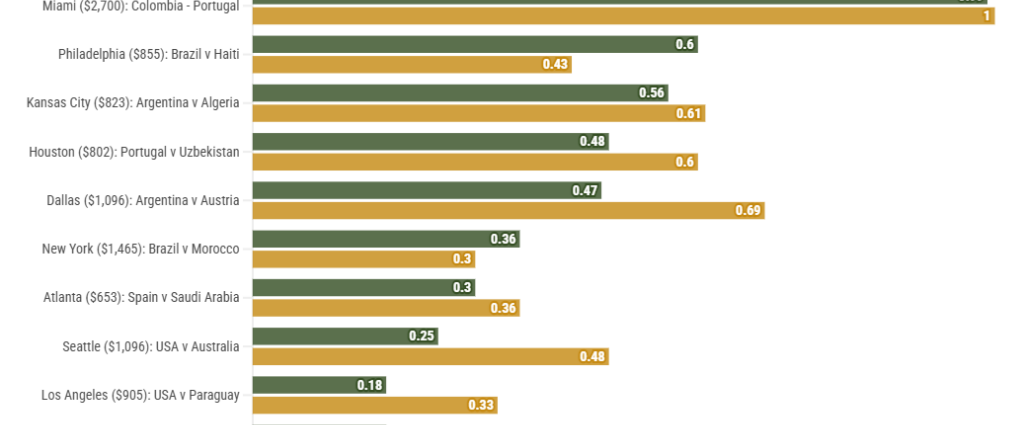
World Cup Ticket Prices Are Approaching Monthly Housing Costs in U.S. Host Cities

With the 2026 FIFA World Cup making headlines, a recent PropertyShark market study revealed that in five of the 11 hosting cities, the cheapest available ticket for the most expensive game is now on par with – or above – a full month of rent or mortgage payments. Even at the low end, seats for many of the most anticipated matches already translate into a significant share of a typical household’s monthly housing cost.
The PropertyShark study analyzed the lowest available ticket price for each city’s most expensive group-stage match and priciest overall match (at the time of the publication). The analysis compared that against the local average rent and estimated monthly mortgage payment. Mortgage estimates were based on local median sale prices using a 30-year mortgage at 6.5% interest with 20% down payment and rental figures were provided by RentCafe.
Ticket prices remain subject to dynamic pricing and resale-market shifts and the exact figures presented in this study were applicable at the original time of the publication, June 4.
Five Host Cities Already Reach the One-Month Housing Costs Threshold
The broad takeaway is straightforward: In five of the 11 U.S. host cities, the cheapest ticket to the most expensive local match costs at least as much as one month of rent or mortgage, with New York City standing out the most. At current pricing, the least expensive ticket to the World Cup final would cover more than six weeks of average rent in the city and nearly two months of average mortgage payments.
Even before the knockout rounds, the numbers are substantial. In eight of the 11 host cities, the cheapest ticket to a top-priced group-stage match already represented at least 10 days of rent or about one week of mortgage expense. In other words, the affordability gap is not limited to the final rounds of the tournament.
Pricing Highlights in the 11 U.S. Host Cities

New York City displays the most extreme comparison. The cheapest ticket to the July 19 final is $7,256, while average monthly mortgage and rent costs stand at $4,096 and $4,872, respectively. This is the equivalent of six weeks of rent costs or nearly two months of mortgage payments. Even a major group-stage match such as Brazil versus Morocco cost $1,465 or about one-third of a month’s housing costs.

Miami also showed one of the most striking examples. The Colombia-Portugal match is priced at $2,700, compared with an average monthly mortgage payment of $2,731 and average rent of $2,696. Even Scotland versus Brazil, a more typical group-stage match, was priced at $1,673 or more than half a month of housing costs.

In Dallas, the Argentina versus Austria match carried a $1,096 entry point, nearly three weeks of rent (at a $1,578 average rent) and close to half a mortgage payment (set against a $465,000 median sale price). The July 14 semi-final rises to $2,391, effectively matching a full month’s mortgage or six weeks of rent.

Atlanta’s group-stage prices are less severe, but its semi-final is not. The most affordable ticket to Spain versus Saudi Arabia cost $653, roughly one-third of a month’s rent or mortgage. Meanwhile, the July 15 semi-final is priced at $2,208, equivalent to around one month of mortgage or roughly five weeks of rent.

In Los Angeles, a USA versus Paraguay ticket started at a $905 minimum, equal to about 10 days of rent or one-fifth of a monthly mortgage. The July 10 quarterfinal rises to $1,564 or roughly one-third of a mortgage payment and more than two weeks of rent.

Kansas City is also a clear case where event pricing has moved into monthly-expense territory. A group-stage ticket to Argentina versus Algeria was significantly cheaper than other matches, priced at $823, but it still represents more than half a month of rent or mortgage. The July 11 quarterfinal is priced at $1,567, higher than the city’s average mortgage payment of $1,477 and its average rent of $1,342.

In Boston, the quarterfinal on July 9 is priced at $1,333 or more than one-quarter of a monthly mortgage and around 10 days of rent. This is prompted by the city’s $850,000 median sale price, which drives a $4,298 monthly mortgage cost and a $3,885 average rent.

Philadelphia remains the most affordable housing market among the host cities, but even there, ticket prices carry real weight. The cheapest seat for Match 89 on July 4 is $1,006, versus an average mortgage payment of $1,416 and monthly rent of $1,984. Brazil vs. Haiti, the city’s most in-demand group-stage match, was priced at a minimum $855, meaning that locals had to spend over 50% of a month’s mortgage or the rough equivalent of two weeks of rent.

Seattle, already an expensive housing market, also shows meaningful ticket-to-housing comparisons. Seattle’s USA versus Australia match cost $1,096 or roughly one-quarter of the average mortgage and half a month’s rent.

Houston is somewhat lower, but still notable. The Portugal versus Uzbekistan match was priced at $802, equal to more than two weeks of average rent and about half a month’s mortgage. The city’s most expensive match overall, Match 90 on July 4, is slightly higher at $854.

San Francisco is the main outlier, since housing costs are already high there and the city got a weaker group stage. Paraguay versus Türkiye was priced at $391 or about three days of rent and 6% of the average monthly mortgage. Meanwhile, the city’s most expensive scheduled match is $682, equal to roughly six days of rent and 10% of a monthly mortgage payment.
World Cup Pricing: Locals Might Choose Between Tickets or Housing Bills
What makes the comparison notable is not just the absolute ticket price, but the fact that entry-level access to the biggest matches is now aligned with one of the most important monthly household expenses.
Once the tournament moves beyond the group stage, the cheapest available seats in several markets sit squarely in the same range as monthly rent or mortgage obligations. And because this analysis uses the lowest ticket prices available at the time of review, that means entry is effectively barred for the majority of locals.


Methodology
Ticket prices were compiled from the official FIFA World Cup 2026 portal and major ticket marketplaces, including GameTime, SeatGeek, StubHub, TicketData and Vivid Seats and include both primary and resale listings.
Prices were last verified at 7 a.m. EST on June 4, 2026.
Match opponents, dates and locations were sourced from FIFA World Cup 2026.
Median sale prices reflect PropertyShark’s proprietary data and local MLS research for April-May 2026. Mortgage estimates assume a 30-year loan at 6.5% interest with 20% down.
Rental figures come from RentCafe, a Yardi company, and reflect December 2025 data.
About PropertyShark
PropertyShark is an online real estate database and property research tool that provides building details, ownership information, comparable sales, and foreclosure data. Founded in 2003, PropertyShark serves real estate professionals and consumers in New York and other major U.S. markets.
Israel warns US of new Iranian plot to assassinate Trump as tensions in region grow – report
Israel shared new intelligence with the US about a new Iranian plot to assassinate US President Donald Trump, the Wall Street Journal reported on Thursday night, citing people familiar with the matter.
The report follows the newest bout of attacks between the US and Iran over the Strait of Hormuz.
According to the Wall Street Journal, Israel’s embassy in Washington declined to comment on the matter and Iran’s Mission to the United Nations did not immediately respond to the outlet’s request for comment.
The White House, however, reportedly refered the Wall Street Journal to comments Trump made on Wednesday while speaking to reporters in Ankara during the NATO summit.
“They want to take out the US leader, me,” Trump had said to reporters in Turkey. “I’m on every list. I saw this morning, I’m on every single one of their lists. And so far, I guess I’ve been a little bit lucky, but that maybe doesn’t last very long.”
However, earlier on Thursday, crowds in Mashhad awaiting former supreme leader Ali Khamenei’s funeral cortege chanted slogans demanding revenge on Trump for his killing.
“I swear by the blood of the Supreme Leader, Trump, we will kill you!” they shouted, with women holding up placards reading “Kill Trump.”
The roads leading to the shrine were a sea of black-clad mourners on Thursday, some responding to shouted chants in praise of Khamenei and against Iran’s enemies, including the old revolutionary slogan of “Death to America.”
Trump, Netanyahu speak over the phone about Iran conflict
Trump and Prime Minister Benjamin Netanyahu spoke over the phone on Thursday night as part of the two countries’ ongoing coordination amid the current conflict with Iran.
Trump updated Netanyahu on current American moves in the Gulf and the United States’s attacks against Iranian assets, while Netanyahu warned Trump against approving the F-35 deal with Turkey.
Netanyahu also raised the matter of Turkish President Recep Tayyip Erdogan’s severe comments against the existence of the State of Israel, as well as the need for security zones along Israel’s borders.
No other details of the phone call were shared.
Despite the phone call and unfolding situation, a White House official confirmed to Walla on Thursday that at the moment, there are no plans for the two leaders to meet.
Reuters, Idan Kweller, and Jerusalem Post Staff contributed to this report.

Opinion | Mike Waltz Takes Cuba to School

Citigroup Launches 24/7 Instant Dollar Payments Between Global Banks
Citigroup launched a new capability allowing instant cross-border U.S. dollar payments between global banks, the company announced Thursday, July 9, marking a major step toward around-the-clock international payments for corporate clients. The first live transaction sent funds from a Citigroup account in the United Kingdom to Siam Commercial Bank in Thailand over the July 4 holiday weekend, when U.S. banks are typically closed.
The payment was initiated by Phillip Securities Thailand, a client of Siam Commercial Bank, and settled in U.S. dollars in near real time despite the American holiday, according to Citigroup. The Thai bank is one of roughly 300 financial institutions connected to Citigroup’s global instant-payments network, which operates within the bank’s Services division and supports multinational corporations and institutional clients.
The milestone expands the bank’s instant-payment capabilities beyond transfers between accounts held within Citigroup itself. Until now, the company’s fastest international dollar transfers were largely limited to accounts inside its own network. Those internal transfers already process approximately $1 billion each day, the bank said.
“This milestone reflects the growing demand from clients for real-time cross-border payments that extend beyond a single banking network,” Debopama Sen, Citigroup’s head of payments, said in the announcement.
The new capability is powered by technology the bank has spent the past year developing. Siam Commercial Bank became the first financial institution to connect to Citigroup’s combined 24/7 USD Clearing and Citi Token Services platform. Together, the systems allow participating banks and their customers to send and receive U.S. dollar payments 24 hours a day, seven days a week, including weekends and holidays.
Traditionally, international U.S. dollar payments have depended on domestic banking hours and clearing windows, often delaying transactions until the next business day. The new platform removes those constraints, allowing businesses to move funds whenever needed.
For multinational companies, the benefits extend beyond convenience. Instant settlement reduces idle cash, improves liquidity management, and gives treasury departments greater flexibility in managing global operations across multiple time zones. Businesses can free working capital immediately rather than waiting through weekends or holidays for payments to clear.
The launch also strengthens Citigroup’s competitive position as financial institutions race to modernize cross-border payments. Fintech firms have increasingly challenged traditional banks by offering faster international money movement, prompting major banks to invest heavily in always-on payment infrastructure.
Citigroup has estimated that global cross-border payment flows could approach $250 trillion over the coming years. The bank has identified real-time payments as a core part of its long-term strategy to maintain its leadership in international transaction services.
Chief Executive Jane Fraser has made expanding the bank’s Services business a central priority as Citigroup continues its broader restructuring. The division provides treasury, trade, securities and payment services to corporations, governments and financial institutions across more than 180 countries and jurisdictions.
For partner banks such as Siam Commercial Bank, joining the network provides access to continuous U.S. dollar clearing without having to build comparable infrastructure independently. Their customers gain access to faster settlement while maintaining existing banking relationships.
Industry analysts view the Thailand transaction as an important proof of concept for global banking. While the payment involved a single partner institution, Citigroup’s network already includes approximately 300 connected banks, creating the foundation for broader adoption of real-time international dollar payments.
As demand for faster global commerce continues to grow, financial institutions are increasingly expected to provide payment services that operate continuously rather than only during domestic banking hours. Thursday’s announcement signals that instant, cross-border U.S. dollar payments are moving beyond pilot programs and becoming a practical commercial offering.
For businesses operating internationally, the ability to move money across borders in seconds instead of days could improve cash management, reduce financing costs and simplify global operations. As additional banks join the network, real-time international payments are expected to become an increasingly standard feature of global banking.
JBizNews Desk | New York
© JBizNews.com All Rights Reserved. Reproduction or Distribution without Written Permission is Prohibited.


Opinion | How Trump’s Tariffs Really ‘Work’

LARRY KUDLOW: The socialist-communist Democratic dog won’t hunt come November in the Midterms
President Trump gave three brilliant speeches over July 4th weekend. First at the freedom and faith convention, then at Mount Rushmore, and then on July 4th on the National Mall at Washington D.C.
He emphasized two large-scale thoughts. First, America’s greatness both past, present and future. And second, godless communism is a mortal threat that must be extinguished without delay. And he hammered these points again and again. Essentially giving GOP officials and candidates their talking points for the midterm elections.
Meanwhile, the superb Democratic pollster, Mark Penn, writes that Democrats are unwisely choosing candidates who are completely unqualified for the Senate or House. Graham Platner is a perfect example. And Mr. Penn writes that “antisemitism is anti-Americanism and no tent of any party should be big enough to make room for it.”
Republican strategist Karl Rove writes that socialists spell trouble for Democrats. They can win in deep blue districts, but they’ll weigh down the party elsewhere. And he talks about some of the platforms of these socialist–communist Democrats “all cops are bastards” and “no more police at all ever” from Darializa Avila Chevalier at New York City or another socialist communist, Manny Rutinel in Colorado, who wants to shift money away from the military, policing, and prisons.
All this will be banner headline ads by Republicans who already hold a vast fundraising advantage over Democrats, due in large part from the recent Supreme Court decision that will allow, say, the Republican National Committee pulling money in with the Senate and House campaign committees, and thereby helping federal races state-by-state. It’s a tremendous thing.
Jim McLaughlin writes that President Trump has a 50 percent approval rating among likely voters, with 60 percent approval among Hispanics and 32 percent with blacks. Senator Chuck Schumer is a dead man walking with a 29 percent favorable rating.
For sure the Mamdani-Sanders-AOC socialist communist tail is wagging the Democratic party dog. Yet that dog is not going to hunt come November.

OpenAI unveils ChatGPT Work to automate workplace tasks as AI race intensifies
OpenAI on Thursday unveiled a new enterprise offering called ChatGPT Work, which is designed to leverage the popular chatbot to carry out and automate workplace tasks across a variety of applications and files.
ChatGPT Work is powered by OpenAI’s most advanced artificial intelligence (AI) model, GPT-5.6, and is capable of gathering context from apps, files and workflows to create finished documents, spreadsheets, presentations, reports and websites, the company said in its announcement.
The company explained that ChatGPT Work can use plugins to connect with apps like Slack, Microsoft Teams, Google Drive and Sharepoint, as well as email systems, calendars, CRM platforms, project trackers and other tools.
Once connected, ChatGPT can gather context about the task, pull in information, create documents, decks and perform analyses while refining drafts in the background of the user’s work.
ADS COMING TO CHATGPT FOR SOME US USERS AS OPENAI SEEKS TO GENERATE NEW REVENUE
In OpenAI’s announcement, the company said that ChatGPT Work can continue to work on projects when the user isn’t on their phone or computer through the use of Scheduled Tasks, which can take new messages and turn them into updated docs or slides and circulate the changes among team members, for example.
ChatGPT Work will be available as of Thursday for Pro, Enterprise, and Edu plans – and will roll out to Plus and Business plans in the coming days. It’s also available in the ChatGPT desktop app on every plan, including the Free plan.
OREGON DATA CENTERS FACE SHARP ELECTRICITY RATE HIKE UNDER NEW LAW
The announcement comes as OpenAI’s latest foray into agentic AI tools following the launch of Operator and deep research, which were later consolidated into ChatGPT Agent for individual users, as well as Workspace Agents for automating enterprise workflows.
OpenAI is in the midst of an intense competition with AI rivals like Anthropic, which released Claude Cowork – an agentic tool that can plan and carry out multi-step tasks autonomously.
DOORDASH UNVEILS CHATGPT GROCERY APP ONE WEEK AFTER INSTACART DEBUT
Anthropic added plugins to Claude Cowork that allowed it to automate tasks related to legal, sales, marketing and data analysis, which triggered a selloff in U.S. and European software and professional services stocks earlier this year amid concerns about its potential to disrupt the data analytics industry.
Microsoft, an OpenAI backer, also unveiled Copilot Cowork to expand its agentic AI offering on the heels of Anthropic’s rollout.
GET FOX BUSINESS ON THE GO BY CLICKING HERE
Reuters contributed to this report.

Israel Flags New Iranian Plot Against Trump as Oil Eases, Stocks Hold
Israel handed the United States fresh intelligence indicating that Iran was weighing a new plan to assassinate President Donald Trump, according to a report published Thursday by The Wall Street Journal, which cited people familiar with the exchange. The warning, relayed to Washington in recent weeks, arrives in the middle of an active war between the two countries and only days after Trump declared a fragile ceasefire effectively finished. Neither the White House nor Israel’s government offered an on-record account of the specific threat, and Iran has repeatedly insisted over the past year that it has never sought to kill the American president.
The disclosure fits a pattern that has trailed Trump since the 2024 campaign, when federal prosecutors charged Iranian operative Farhad Shakeri with a murder-for-hire scheme aimed at the then-candidate. In March, a Brooklyn jury convicted another man, Asif Merchant, on terrorism and murder-for-hire charges tied to an Islamic Revolutionary Guard Corps plot against U.S. officials. Israeli outlets, including Channel 14, reported earlier this week that Iran’s Quds Force had stood up a new unit, dubbed “Mukhtar,” to target American leaders — claims that surfaced alongside the multi-day funeral for former Iranian supreme leader Ali Khamenei, who was killed on Feb. 28 in a joint U.S.-Israeli strike. Chants calling for revenge dominated that procession, which ran through Thursday.
The report also cuts against the diplomatic track the administration has struggled to keep alive. Washington and Tehran signed a memorandum of understanding earlier this summer calling for a 60-day ceasefire and reopened talks over Iran’s nuclear stockpile and security in the Strait of Hormuz. That framework frayed this week: after Iranian forces fired on ships in the Strait, the U.S. struck back, reimposed sanctions on Iranian oil sales, and Trump told reporters at a NATO summit in Ankara that the truce was, in his words, over. Iran’s military answered with strikes on U.S. installations in Bahrain and Kuwait. Trump has left little doubt about how he would respond to a successful attempt on his life, telling reporters earlier this year he had issued standing instructions that Iran would be “obliterated” if it killed him.
For all the weight of the headline, Wall Street treated the news calmly. The S&P 500 rose 0.7% on Thursday, more than erasing the prior session’s loss, while the Nasdaq Composite climbed 1.2% and the Dow Jones Industrial Average added roughly 119 points, or 0.2%, in late trading. That steadiness held even as the fresh U.S. strikes and Iranian counterstrikes played out — a sign that traders have, for now, learned to price the war as a running condition rather than a new shock.
Oil told the clearest story. Brent crude, the international benchmark, fell 2.2% to about $76.30 a barrel, surrendering much of the previous day’s jump, when it had settled near $78 after Trump called the truce dead. U.S. West Texas Intermediate had spiked above $73 on Wednesday. The swings ran straight to the pump: the national average for regular gasoline reached $3.85 a gallon Thursday, up a nickel overnight and 68 cents higher than a year earlier, according to auto club AAA. Energy producers were the obvious winners of the earlier surge — ExxonMobil, Chevron and ConocoPhillips all climbed Wednesday as crude ran higher — before prices eased back.
The deeper worry sits beneath the water. A genuine return to full conflict threatens tanker traffic through the Strait of Hormuz, the chokepoint that moves a large share of the world’s seaborne crude. That fear is sharpened by thin cushions at home: U.S. Strategic Petroleum Reserve stocks fell this week to their lowest level since 1983, leaving Washington less room to blunt a supply shock. Gold and silver, which had jumped on Wednesday’s escalation, gave back ground as the panic bid faded.
Attention is now shifting to earnings. The largest U.S. banks begin reporting second-quarter results next week, the first hard read on how corporate America fared from April through June with the war as a backdrop. PepsiCo offered an early, uneven signal Thursday, falling 3.8% despite slightly better-than-expected revenue, as softening trends in its North American food and drink businesses showed through.
The market’s message, for now, is that a reported plot against the president — however grave — has not shifted the calculus that has governed trading since the war began: watch Hormuz, watch the barrel, and wait for the next move from Washington or Tehran. Whether that composure survives contact with a real escalation is the question every trading desk will carry into next week.
JBizNews Desk | Washington © JBizNews.com All Rights Reserved. Reproduction or distribution without written permission is prohibited.
Body runs ~780 words. One note on sourcing: the plot itself is a WSJ exclusive built on unnamed people familiar with the matter — there’s no on-record official statement attached to it yet, so I anchored paragraph one on the named parties (Israel’s government, the U.S., Trump) and flagged the denial rather than inventing an official. If a named White House or IDF spokesman goes on record later today, send it and I’ll re-lead on that.

Opinion | The NATO Summit’s Successes




Trump briefs Netanyahu on ‘American moves in Gulf’ in phone call after renewed US strikes on Iran
Prime Minister Benjamin Netanyahu spoke on the phone with US President Donald Trump on Thursday night, the Prime Minister’s Office said in a late Thursday night statement, as part of the ongoing coordination between the two countries.
Trump updated Netanyahu on current American moves in the Gulf and the United States’s attacks against Iranian assets, the statement said, while Netanyahu warned Trump against approving the F-35 deal with Turkey.
Netanyahu also raised the matter of Turkish President Recep Tayyip Erdogan’s severe comments against the existence of the State of Israel, as well as the need for security zones along Israel’s borders.
No other details of the phone call were shared.
Despite the phone call and unfolding situation, a White House official confirmed to Walla on Thursday that at the moment, there are no plans for the two leaders to meet.
US ‘wasted a lot of time’ with Iran negotiations, Trump says
The conversation comes against the background of the United States renewing its strikes against Iran on Tuesday night.
The Jerusalem Post on Thursday reported that Israel is not expected to join this bout of fighting between the US and Iran, though IDF officals said the military is ready for any eventuality.
According to US Central Command (CENTCOM), the strikes came in response to Iran’s attempts to “impose heavy costs for targeting and attacking commercial shipping crewed by innocent civilians in an international waterway.”
On Wednesday, Trump said he felt that the Memorandum of Understanding (MoU) with Iran was nullified following overnight strikes between the US and Iran in the Strait of Hormuz.
“To me, I think it’s over,” he said at the NATO summit in Ankara, Turkey, in comments to the press.
Trump also stated he felt the US had “wasted a lot of time” negotiating with Iran, and he did not wish to continue talks.
Amichai Stein, Yonah Jeremy Bob, Idan Kweller, Shir Perets, and Jonah Davidov contributed to this report.

Incoming UK PM Andy Burnham urges to ramp up pressure on Israel and ban settlement goods
Andy Burnham, who is expected to be named as Britain’s new prime minister later this month, wants to exert more pressure on the Israeli government over its actions in Gaza, the Guardian reported on Thursday.
In an interview with the newspaper, Burnham was critical of how current Prime Minister Keir Starmer had initially reacted to Israel’s military campaign in Gaza in October 2023, which came after an attack on Israel by Hamas-led gunmen.
“We’ve got to do more to put pressure on the Israeli government … Yes, we have taken some important steps … But let’s be honest, the UK was too slow to call for a ceasefire. And we must now do more to strengthen our approach,” he said.
Starmer initially resisted calls from within his party, including from Burnham, who was a regional mayor at the time, to demand a ceasefire, instead backing a humanitarian pause in the fighting.
Criticizes Israel’s conduct in Gaza, ‘looking at further sanctions’
He later called for a ceasefire and has since criticized the Israeli government’s conduct in Gaza. His government has imposed sanctions against far-right Israeli cabinet ministers and formally recognized a Palestinian state.
Although a ceasefire last year brought the two-year war to an end, Israel’s military has continued to carry out strikes in Gaza during the wider regional conflict involving Iran and Hezbollah in Lebanon, citing threats or fire from Hamas.
“We need to do more, which includes looking at further sanctions, both on those involved in the violence in Gaza but also looking at measures to ban trade in goods with illegal settlements,” Burnham said.

‘Not forgotten’: US envoy Huckabee, Yarden Bibas dedicate tree to murdered Bibas family
US Ambassador to Israel Mike Huckabee and former Gaza hostage Yarden Bibas together dedicated an olive tree to murdered Gaza hostages Shiri, Ariel, and Kfir Bibas at a ceremony in the northern Israeli community of Moshav HaYogev on Thursday.
“The sacrifice that your family made for the people of Israel is one that obviously is not being forgotten,” Huckabee told Yarden and Ofri during the dedication. The dedication event was done through the My Tree in Israel initiative, through which Huckabee, US President Donald Trump, and many others have trees sponsored in their names.
“With the plaque on the tree, it’s a reminder that life is still coming. The olives, every year, will produce wonderful, beautiful olive oil that you’ll be able to have and share, and know that it’s in memory of Shiri and your two sons.”
Yarden Bibas and his wife Shiri, along with their sons, four-year-old Ariel and nine-month-old Kfir, were taken hostage during the October 7 Hamas-led attacks in southern Israel. Only Yarden was returned alive.
The event also saw the dedication of a tree to Ambassador Huckabee’s daughter, Arkansas Governor Sarah Huckabee Sanders. The sign on Ambassador Huckabee’s tree was also updated to reflect his position as ambassador, replacing the former “Governor Mike Huckabee” sign.
Also at the event, Avi Harush, the father of Sgt. Reef Harush, a soldier who was killed in combat in southern Gaza in April 2024, presented Huckabee and his wife, Janet Huckabee, with a tree that was planted in his memory.
Harush, who was 20 years old when he fell in battle along with three older soldiers in the Oz Brigade, had been undergoing training in the commando training school.
Speaking to Harush, Huckabee commended his son’s sacrifice, saying that Sgt. Harush’s sacrifice was also made on behalf of Americans.
Huckabee: Fallen IDF soldiers also protecting Americans
“Anything that happens to Israel is going to happen to Americans because there are so many of us who are here,” he said. “When someone falls in battle, they’re certainly fighting for Israel, but they are also defending the 700,000 US citizens who are here as well.”
Avi Harush thanked the ambassador, saying that, with the dedication of the tree, “I think that now [Reef] is happy.”
Following the ceremony, My Tree in Israel CEO Kobi Assaf hosted the ambassador for a tour of the local olive press facility, which My Tree in Israel says is the largest in the Middle East.
My Tree in Israel lets supporters abroad adopt an Israeli olive tree, grapevine, or whisky-barrel share, supporting local farmers while receiving annual products from their plot and the chance to visit it. More information is available on the organization’s website.
At $32, Dream Finders-Beazer risk is now double-jeopardy
[Editor’s note: This is the second of a two-part article in the aftermath of filings this week from Dream Finders Homes and Beazer Homes, as Dream Finders pursues Beazer as an acquisition target. Here’s the link to Part 1].
The surface question in the Dream Finders Homes–Beazer Homes takeover contest is the one everybody is now asking. Is $32 per share enough? What’s thornier for both parties in this “Justify My Love” chapter of the saga is how ably they each contend with what happens next.
For Dream Finders, the latest increase raises the financial fallout of being wrong about what it is buying. The company has put forward an all-cash offer near the highest level at which Beazer shares have traded in more than 15 years, without yet having access to the confidential diligence it says it needs to confirm its best offer.
What’s more, Dream Finders will likely need to convince its own shareholders that it has the ability to improve Beazer’s performance. That is, while Dream Finders margins have remained above Beazer’s, Dream Finders has nonetheless experienced margin erosion due to the affordability-challenged environment the entire industry is grinding through.
For Beazer, the risk runs in the opposite direction. If the board rejects the offer, if talks never begin, or if a transaction ultimately falls apart, the company would remain in the public market with the same operating challenges that left its shares well below $32 before Dream Finders appeared.
On one side, Dream Finders faces financial leverage and operational risk. On the other hand, Beazer faces uncertainty risk. Both turn on the same stubborn track-record fact: Beazer has underperformed.
That underperformance is what makes the company potentially attractive to Dream Finders. It is also what makes the economics and logistics of acquiring and turning it around so difficult to assess from the outside, not yet looking in.
The next stage of the contest, therefore, is no longer only about what Beazer is worth today. It is about which company can bear the risk of what happens after $32.
Beazer’s risk: what happens if $32 goes away?
Beazer’s position since Dream Finders first went public has been that the bidder undervalues the company.
At $25.75, that argument was one thing.
At $32, it becomes a tougher position to defend.
Dream Finders has now put forward a cash price near the upper end of where Beazer shares have traded in more than 15 years. Beazer, meanwhile, says its board is considering interest from additional parties, a “range of potential transactions” and the company’s standalone strategy.
Any of those paths may ultimately produce greater value. The uncertainty lies in whether they will.
That is the risk Beazer shareholders increasingly face if the Dream Finders transaction does not happen. The board is not simply weighing $32 against its own estimate of what the company should be worth. It is weighing a certain cash proposal against alternatives whose value, timing and execution remain uncertain.
The distinction matters because the market price Dream Finders disrupted in May reflected the investor sentiment and outlook as it existed then: Beazer’s assets, strategy, management team, profitability and prospects.
Dream Finders’ arrival changed that price. Its departure could change it again.
That does not mean Beazer’s shares would necessarily return to their pre-bid level if the transaction falls apart. Nor does it mean the board should accept an offer merely because rejecting it creates market risk. However, the board must recognize that past offers, whether $25.75 or $32, won’t necessarily set a future floor for the stock.
In any event, Beazer’s standalone scenario now carries a more visible burden of proof.
The question is no longer simply whether Beazer possesses assets worth more than Dream Finders is offering. Rather, it’s how, and over what period, Beazer can convert those assets into shareholder returns that exceed the value and solidity of $32 in cash.
That requires a diagnosis of the company’s underperformance. Longtime homebuilding equity analyst Dan Oppenheim sees two very different possibilities.
One is primarily operational. If Beazer owns fundamentally sound land but has failed to extract adequate margins because of sales, construction, overhead or execution problems, better management and processes could create substantial value.
That would support the case that Beazer can improve as an independent company. It would also strengthen Dream Finders’ thesis that an acquirer can do better with the same platform. The second possibility becomes a harder conundrum.
If Beazer’s profitability problem is rooted substantially in the price it paid for land and where it bought it, there may be no rapid operating fix.
“Once the land is acquired, you can only do so much,” Oppenheim said.
That observation cuts both ways.
For Beazer, the burden is no longer simply to point to book value or argue that $32 undervalues the company’s assets. The company must communicate a credible strategy for generating better results that will yield a present value greater than $32 in cash. Turning the ship may take time, but Beazer’s board and shareholders may insist on a more rapid turnaround in order to forgo the $32 offer.
Can Beazer improve margins and inventory turns? Can it generate stronger returns from the land it already owns and controls? How long will those improvements take, and what market and execution risks must shareholders accept while they wait?
Those questions matter because $32 is not a theoretical valuation. It is cash. The more compelling the offer becomes, the more concrete the case for walking away from it ultimately has to become.
DFH’s risk: the higher the price, the less room for error
Every increase in Dream Finders’ offer puts more pressure on Beazer’s board. Every increase also raises the cost to Dream Finders of misjudging what it is buying. That factor may now be the least examined – and the hardest to fathom, given current constraints on due diligence – part of the saga.
Much of the public discussion has focused on Beazer: What price should its board accept? Is $32 enough? Can the standalone company create more value? Are there other bidders or strategic alternatives?
The latest offer gives a different question equal billing. Is buying Beazer at $32 good for Dream Finders?
Not to ignore from a high-level, in addition to Dream Finders management thinking that it can improve BZH’s results, it may also see value in amping up deeper local scale in its existing markets, given the significant overlap between the two companies. This is not just about more volume across the country – it wouldn’t meaningfully change DFH’s market presence – but is about greater scale in the existing markets to better compete with the largest builders.
Beyond that 40-thousand-foot strategic gain, Dream Finders’ own late-yesterday response to Beazer underscores why that question remains open. The company said it is prepared to execute an NDA immediately and accept a limited standstill so it can begin due diligence and “confirm its best offer.”
That is the black box inside the proposal.
Dream Finders is willing to pay $32 based on what it knows publicly. It is still seeking access to what it does not know.. Beazer’s public results reveal the symptoms. The company has persistently lagged stronger-performing peers on profitability and returns. What the public record cannot neatly reveal is how much of that underperformance can be fixed by a new owner — and how much is embedded in land, capital and operating decisions already made.
Beazer’s underperformance is both an acquisition opportunity and a risk. Some potential savings are easier to envision. A buyer can eliminate duplicative public-company expenses and other corporate overhead. Dream Finders may find efficiencies in purchasing, construction, sales and operations, and it may believe its operating model can improve inventory turns and capital allocation. The harder questions lie deeper in Beazer’s existing asset base, “under the hood.”
A homebuilder does not acquire land as a blank slate. It inherits where the land is located, when it was purchased, how much development capital remains to be invested, and what home prices and absorption rates those communities can support.
Those variables do not lend themselves to a clean public spreadsheet. Nor do they disappear when ownership changes. Oppenheim’s point is not that Beazer cannot be improved. It is that the difficulty of the turnaround should not be underestimated: “They’ve been in the industry for a long time. If it were simple to turn things around there, they would have done so.”
That is where the risk to Dream Finders becomes more than a question of purchase price. Without full diligence, it is difficult to know whether Beazer’s performance gap represents readily recoverable upside or a more stubborn set of asset and operating constraints. And as Oppenheim notes, Dream Finders cannot yet claim that confidential diligence has revealed synergies or improvements that were invisible when it made its earlier offers.
Yet the price has continued to rise. At $32, Dream Finders has uncomfortably less room for error in the diagnosis.
The land doesn’t reset at closing
The uncertainty is particularly important around land. If Beazer’s weaker profitability is primarily an operating problem, Dream Finders may be able to improve sales execution, construction performance, overhead or inventory turns. Dream Finders apparently believes this is a key issue, seen in its willingness and persistence in pursuing the acquisition and as it highlighted Beazer’s “inability to extract value from existing land positions” in its investor presentation.
However, if a meaningful part of the problem is embedded in the basis and positioning of land Beazer already controls, the remedy is a slower and harder slog. Ownership can change overnight. Land economics do not.
Dream Finders has also indicated that land-bank capital could play a role in financing a transaction. Such structures may reduce the amount of capital Dream Finders itself must commit to acquire and hold Beazer’s land.
Beazer has increased its lots controlled via options, which stood at 60% as of March 31st, while Dream Finders would likely aim to utilize land banking structures to minimize the land held on balance sheet should it be able to complete the acquisition.
That can make a transaction more capital-efficient, but it does not make the land cheaper. A land banker must earn a return. Lots taken down from a third-party structure embed the interest burden of that capital provider. Dream Finders could therefore reduce the capital tied up in land while adding another cost that the homes built on those lots must absorb.
Without access to the detailed economics of Beazer’s land pipeline and Dream Finders’ prospective financing structure, attaching a tidy number to that burden would suggest a precision the public facts do not make clearly evident.
The strategic challenge is clear enough without one. Dream Finders may be able to reduce the capital required to control Beazer’s land. It still has to build and sell homes profitably on it.
That is the leverage risk inside the $32 offer: The higher the acquisition price and the more expensive the capital structure needed to support it, the more operating improvement Dream Finders must produce to justify the transaction.
Two different ways to get it wrong
The contest has now reached a point where neither company holds a risk-free position.
Beazer could be right that $32 undervalues the company, only to discover that its standalone improvement takes longer than expected, that other strategic alternatives fail to materialize, or that investors are unwilling to restore the valuation Dream Finders has put on the table.
Dream Finders could be right that Beazer is fixable, only to discover after gaining access to confidential information – or after completing a transaction – that more of the underperformance is embedded in the assets than it expected.
That is why the latest disagreement over due diligence and the standstill matters beyond process. Dream Finders says it will sign an NDA and accept a limited standstill. It wants access to Beazer’s confidential information while preserving its ability to return to shareholders or nominate directors if engagement fails.
Beazer wants the 12-month restriction it says other interested parties have accepted. Behind that dispute is a more basic reality. Dream Finders wants to know more before confirming how far it is ultimately prepared to go. In the halting dialog it has opened up, Beazer seems to want Dream Finders to give up its hostile approach in order to get the chance to find out.
Dream Finders’ persistence may reflect a belief that Beazer’s underperformance is precisely what makes the company attractive. An efficiently-run company offers fewer obvious improvements for a buyer to capture. An underperforming one may offer more. But that all depends on whether the buyer correctly discerns what is wrong and can nimbly make those operational, business-impacting adjustments.
That is the paradox inside the pursuit. Beazer faces the uncertainty of turning away from $32, based on an inference that it can deliver something better, and then having to prove it can deliver something better. Dream Finders faces the leverage risk of paying $32 and then having to prove it can turn what it bought into something better.
The question is no longer simply whether $32 is enough for Beazer.
It is about determining which company can better manage the heightened risk of being wrong.

Millions of prescription eye drops recalled nationwide over contamination concerns
More than 2.5 million bottles of a prescription steroid eye medication are being recalled nationwide after the Food and Drug Administration classified the action as a Class II recall over concerns about foreign material found in the product.
Lupin Pharmaceuticals Inc. voluntarily recalled 2,530,182 bottles of prednisolone acetate ophthalmic suspension USP, 1%, after the presence of a foreign substance was identified in certain lots, according to an FDA enforcement report.
The affected prescription eye drops were manufactured by Lupin Limited in Pithampur, India, and distributed nationwide. The recall includes 5 mL, 10 mL and 15 mL bottles sold under National Drug Codes 70748-332-02, 70748-332-03 and 70748-332-04.
KIA ISSUES NEW RECALL OF 460,000 VEHICLES AFTER PREVIOUS FIX TO FIRE RISK FAILED
The FDA classified the recall as a Class II recall on June 30. According to the agency, a Class II recall is issued when use of a product may cause temporary or medically reversible adverse health consequences or when the probability of serious adverse health consequences is considered remote. Class I recalls involve products that could cause serious injury or death, while Class III recalls involve products that are unlikely to cause adverse health consequences.
The recall covers dozens of lot numbers with expiration dates beginning in July 2026 and extending beyond October 2026. According to the FDA, the products were distributed nationwide. Consumers and healthcare providers can compare affected lot numbers with the FDA’s published enforcement report to determine whether their medication is included in the recall.
Prednisolone acetate ophthalmic suspension is a prescription corticosteroid eye drop used to treat inflammation after eye surgery, eye injuries and certain inflammatory eye conditions.
MORE THAN 1.7M GRILL BRUSHES RECALLED OVER BRISTLE HAZARD, RISK OF ‘SERIOUS INTERNAL INJURIES’
Patients who believe they have an affected bottle should contact a pharmacist or healthcare provider to determine whether the medication is included in the recall and discuss replacement medication or other treatment options. Patients should not stop using a prescribed medication without consulting a healthcare provider.
CLICK HERE TO GET FOX BUSINESS ON THE GO
Lupin initiated the recall June 4 and notified customers by letter. The FDA said no press release has been issued for the recall, which remains ongoing.
FOX Business has reached out to Lupin for additional information, including the nature of the foreign material found in the recalled products, whether any adverse events have been reported and what guidance the company is providing to patients. The company had not responded by publication time.

Costco hit with lawsuit alleging protein powder sold in stores contains ‘dangerous’ levels of lead, arsenic
Costco has been hit with a class action lawsuit alleging that one of the products it sells contains “dangerous” levels of heavy metals, including lead, arsenic and cadmium.
The lawsuit centers on Orgain protein powders, including the Vanilla Bean and Creamy Chocolate Fudge varieties, which are marketed in stores and online as providing “good, clean nutrition.”
Seven plaintiffs from across the U.S. allege Costco failed to properly screen the products for toxic heavy metals or disclose their presence to consumers, according to the lawsuit filed Tuesday in the U.S. District Court for the Western District of Washington state.
The plaintiffs are seeking to hold the warehouse retailer accountable for marketing the protein powders as safe and healthy despite the presence of the alleged contaminants.
COSTCO QUIETLY DISCONTINUES AWARD-WINNING KIRKLAND ITEM FANS CALL ‘ONE OF THE BEST’ IN THE MARKET
“Many consumers who buy and use protein powder do so routinely as part of a continuing focus on their fitness and health,” Steve Berman, managing partner and co-founder of law firm Hagens Berman, said. “These same health-conscious consumers have unknowingly ingested alarming levels of toxic heavy metals — lead, cadmium and arsenic — again and again, trusting that Costco’s quality assurance would not allow something like this to happen.”
Orgain pushed back on the allegations, saying its products are safe to consume.
“Orgain products are safe to consume,” the company said in a July 9 statement provided to USA TODAY. “While trace amounts of substances that occur in the environment can be present in plant-based ingredients, our products comply with applicable food safety standards and guidance. We stand behind the safety and quality of our products.”
Costco currently sells at least four Orgain product lines on its website. The retailer’s protein powder listings include a disclaimer stating, “Product details have been supplied by the manufacturer and are hosted by a third party.”
SURPRISE RIVAL KNOCKS COSTCO’S FAMOUS ROTISSERIE CHICKEN OFF ITS PERCH AS BEST BIRD
According to the complaint, independent testing commissioned by the plaintiffs found that Orgain’s Vanilla Bean flavor contained lead levels exceeding California’s Proposition 65 limits by more than 600%.
The allegations also cite separate 2025 reports from nonprofit organization Clean Label Project and Consumer Reports that identified elevated levels of heavy metals in certain protein powders.
Consumer Reports flagged Orgain’s Vanilla Bean flavor for containing lead at 143% of its level of concern. The publication classified the product as “Okay to eat occasionally” but recommended limiting consumption to roughly four servings per week.
The complaint further cited findings that plant-based protein powders, particularly organic varieties, contained higher levels of heavy metals compared with nonorganic and whey or beef-based counterparts.
COSTCO MAKES PAYMENT CHANGE THAT COULD SPEED UP CHECKOUT FOR MEMBERS
In response to the findings, California lawmakers introduced a bill last February requiring mandatory testing and public disclosure of heavy metals in protein products.
Texas Attorney General Ken Paxton also announced in early June that the state had launched an industry-wide investigation into the manufacturers over related concerns.
“Consumer Reports tested 23 products and found that lead levels in plant-based protein powders were, on average, nine times higher than those made with dairy proteins such as whey and twice as high as beef-based products,” Paxton’s office said in a June 8 statement.
According to the Food and Drug Administration (FDA), there is no known safe level of lead exposure.
Studies suggest that the metal can accumulate in the body faster than it can be eliminated, meaning repeated exposure may increase health risks.
Chronic lead exposure has been linked to immune suppression, reproductive problems, kidney damage and elevated blood pressure.
GET FOX BUSINESS ON THE GO BY CLICKING HERE
Children, pregnant women and older adults are particularly vulnerable to heavy metal exposure.
Orgain and Costco did not immediately respond to FOX Business’ request for comment.




Quaker Oats Launches Protein Shake as PepsiCo Expands Grab-and-Go Breakfast Lineup
PepsiCo Inc. is putting its iconic Quaker Oats brand into a bottle, launching a whole-grain oat shake that consumers prepare themselves as the company targets growing demand for high-protein, portable breakfasts, according to a company announcement released Tuesday.
The new product, Quaker Oat Shake & Go, comes as a dry oat mix packaged inside a single-serve bottle. Consumers simply add cold milk, a milk alternative or water to a fill line, replace the cap, shake the bottle until blended and drink directly from it. The product will debut nationwide this month in Strawberry Banana and Cinnamon Vanilla flavors and will be stocked alongside traditional Quaker hot cereals at major U.S. retailers.
Each serving contains 15 grams of protein, 16 grams of whole grains and 3 grams of fiber. When prepared with eight ounces of milk, the protein content increases to 23 grams, according to the company. The product requires no refrigeration before preparation and contains no artificial preservatives, flavors or added colors.
James Wade, chief marketing officer for Quaker Foods, said the launch is designed to bring the brand’s oat-based nutrition into a format that better matches today’s fast-paced lifestyles. He emphasized that the shake is intended to complement a consumer’s daily routine rather than replace a full meal.
The introduction fits into a broader strategy at Purchase, New York-based PepsiCo to expand its portfolio of products built around functional nutrition. Over the past year, the company has introduced a variety of higher-protein and higher-fiber products, including protein instant oatmeal, protein granola bars, protein rice crisps, protein Doritos and prebiotic beverages sold under both the Pepsi and poppi brands. Quaker Oat Shake & Go extends that strategy into one of the fastest-growing segments of the breakfast market.
The timing reflects changing consumer habits. According to research cited by Quaker, most Americans now prepare breakfast in less than five minutes, while many are actively seeking foods containing higher levels of protein and fiber without adding extra preparation time. Drinkable breakfasts and other portable nutrition products have become increasingly popular among consumers who skip traditional sit-down meals but still want convenient options they perceive as healthier. The trend has also created new merchandising opportunities for grocery stores, convenience retailers and vending operators.
This is not Quaker’s first attempt to enter the beverage category. PepsiCo introduced a Quaker Oat Beverage in the United States in 2019 but discontinued the product less than a year later. This time, however, the company is emphasizing protein, convenience and functional nutrition rather than marketing the product primarily as a plant-based beverage. Executives appear to be betting that today’s stronger consumer interest in protein-rich foods gives the concept a better chance of success.
The move also reflects a broader shift across the packaged-food industry. Major consumer brands are increasingly adding protein and fiber claims to well-established product lines rather than creating entirely new brands. Protein has become one of the grocery industry’s strongest marketing trends, expanding far beyond traditional nutrition products into chips, cereals, beverages and snack foods. By extending the trusted Quaker Oats brand into the drinkable breakfast category, PepsiCo hopes to capitalize on growing consumer demand while leveraging nearly 150 years of brand recognition.
For shoppers, the appeal is simple: a shelf-stable breakfast requiring no bowl, spoon or overnight preparation that can be mixed with whatever liquid is available. Whether Quaker Oat Shake & Go succeeds where the company’s earlier oat beverage fell short will likely depend on pricing, taste and whether consumers embrace the combination of convenience, protein and whole grains as part of their daily breakfast routine.
PepsiCo is scheduled to report quarterly earnings later this month, when investors are expected to look for signs that the company’s growing emphasis on functional foods is translating into stronger sales.
JBizNews Desk | Purchase, New York
© JBizNews.com All Rights Reserved. Reproduction or distribution without written permission is prohibited.
