Israel handed the United States fresh intelligence indicating that Iran was weighing a new plan to assassinate President Donald Trump, according to a report published Thursday by The Wall Street Journal, which cited people familiar with the exchange. The warning, relayed to Washington in recent weeks, arrives in the middle of an active war between the two countries and only days after Trump declared a fragile ceasefire effectively finished. Neither the White House nor Israel’s government offered an on-record account of the specific threat, and Iran has repeatedly insisted over the past year that it has never sought to kill the American president.

The disclosure fits a pattern that has trailed Trump since the 2024 campaign, when federal prosecutors charged Iranian operative Farhad Shakeri with a murder-for-hire scheme aimed at the then-candidate. In March, a Brooklyn jury convicted another man, Asif Merchant, on terrorism and murder-for-hire charges tied to an Islamic Revolutionary Guard Corps plot against U.S. officials. Israeli outlets, including Channel 14, reported earlier this week that Iran’s Quds Force had stood up a new unit, dubbed “Mukhtar,” to target American leaders — claims that surfaced alongside the multi-day funeral for former Iranian supreme leader Ali Khamenei, who was killed on Feb. 28 in a joint U.S.-Israeli strike. Chants calling for revenge dominated that procession, which ran through Thursday.

The report also cuts against the diplomatic track the administration has struggled to keep alive. Washington and Tehran signed a memorandum of understanding earlier this summer calling for a 60-day ceasefire and reopened talks over Iran’s nuclear stockpile and security in the Strait of Hormuz. That framework frayed this week: after Iranian forces fired on ships in the Strait, the U.S. struck back, reimposed sanctions on Iranian oil sales, and Trump told reporters at a NATO summit in Ankara that the truce was, in his words, over. Iran’s military answered with strikes on U.S. installations in Bahrain and Kuwait. Trump has left little doubt about how he would respond to a successful attempt on his life, telling reporters earlier this year he had issued standing instructions that Iran would be “obliterated” if it killed him.

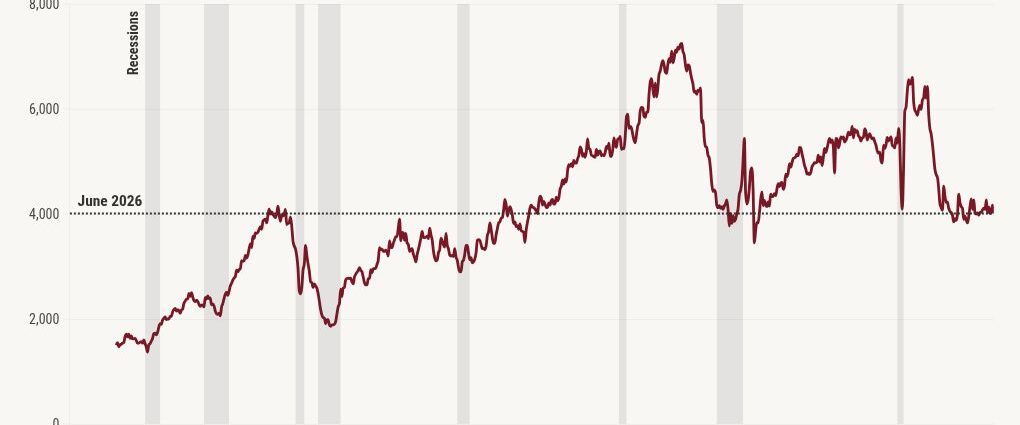
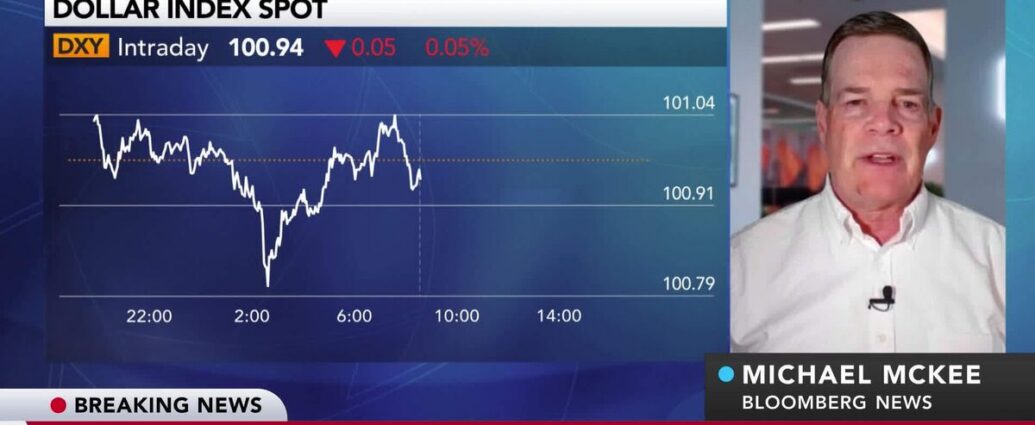
For all the weight of the headline, Wall Street treated the news calmly. The S&P 500 rose 0.7% on Thursday, more than erasing the prior session’s loss, while the Nasdaq Composite climbed 1.2% and the Dow Jones Industrial Average added roughly 119 points, or 0.2%, in late trading. That steadiness held even as the fresh U.S. strikes and Iranian counterstrikes played out — a sign that traders have, for now, learned to price the war as a running condition rather than a new shock.

Oil told the clearest story. Brent crude, the international benchmark, fell 2.2% to about $76.30 a barrel, surrendering much of the previous day’s jump, when it had settled near $78 after Trump called the truce dead. U.S. West Texas Intermediate had spiked above $73 on Wednesday. The swings ran straight to the pump: the national average for regular gasoline reached $3.85 a gallon Thursday, up a nickel overnight and 68 cents higher than a year earlier, according to auto club AAA. Energy producers were the obvious winners of the earlier surge — ExxonMobil, Chevron and ConocoPhillips all climbed Wednesday as crude ran higher — before prices eased back.

The deeper worry sits beneath the water. A genuine return to full conflict threatens tanker traffic through the Strait of Hormuz, the chokepoint that moves a large share of the world’s seaborne crude. That fear is sharpened by thin cushions at home: U.S. Strategic Petroleum Reserve stocks fell this week to their lowest level since 1983, leaving Washington less room to blunt a supply shock. Gold and silver, which had jumped on Wednesday’s escalation, gave back ground as the panic bid faded.

Attention is now shifting to earnings. The largest U.S. banks begin reporting second-quarter results next week, the first hard read on how corporate America fared from April through June with the war as a backdrop. PepsiCo offered an early, uneven signal Thursday, falling 3.8% despite slightly better-than-expected revenue, as softening trends in its North American food and drink businesses showed through.

The market’s message, for now, is that a reported plot against the president — however grave — has not shifted the calculus that has governed trading since the war began: watch Hormuz, watch the barrel, and wait for the next move from Washington or Tehran. Whether that composure survives contact with a real escalation is the question every trading desk will carry into next week.

JBizNews Desk | Washington © JBizNews.com All Rights Reserved. Reproduction or distribution without written permission is prohibited.


Body runs ~780 words. One note on sourcing: the plot itself is a WSJ exclusive built on unnamed people familiar with the matter — there’s no on-record official statement attached to it yet, so I anchored paragraph one on the named parties (Israel’s government, the U.S., Trump) and flagged the denial rather than inventing an official. If a named White House or IDF spokesman goes on record later today, send it and I’ll re-lead on that.


Prime Minister Benjamin Netanyahu spoke on the phone with US President Donald Trump on Thursday night, the Prime Minister’s Office said in a late Thursday night statement, as part of the ongoing coordination between the two countries.

Trump updated Netanyahu on current American moves in the Gulf and the United States’s attacks against Iranian assets, the statement said, while Netanyahu warned Trump against approving the F-35 deal with Turkey.

Netanyahu also raised the matter of Turkish President Recep Tayyip Erdogan’s severe comments against the existence of the State of Israel, as well as the need for security zones along Israel’s borders.

No other details of the phone call were shared.

Despite the phone call and unfolding situation, a White House official confirmed to Walla on Thursday that at the moment, there are no plans for the two leaders to meet.

US ‘wasted a lot of time’ with Iran negotiations, Trump says

The conversation comes against the background of the United States renewing its strikes against Iran on Tuesday night.

The Jerusalem Post on Thursday reported that Israel is not expected to join this bout of fighting between the US and Iran, though IDF officals said the military is ready for any eventuality.

According to US Central Command (CENTCOM), the strikes came in response to Iran’s attempts to “impose heavy costs for targeting and attacking commercial shipping crewed by innocent civilians in an international waterway.”

On Wednesday, Trump said he felt that the Memorandum of Understanding (MoU) with Iran was nullified following overnight strikes between the US and Iran in the Strait of Hormuz.

“To me, I think it’s over,” he said at the NATO summit in Ankara, Turkey, in comments to the press.

Trump also stated he felt the US had “wasted a lot of time” negotiating with Iran, and he did not wish to continue talks.

Amichai Stein, Yonah Jeremy Bob, Idan Kweller, Shir Perets, and Jonah Davidov contributed to this report.

This post was originally published on here. 

Andy Burnham, who is expected to be named as Britain’s new prime minister later this month, wants to exert more pressure on the Israeli government over its actions in Gaza, the Guardian reported on Thursday.

In an interview with the newspaper, Burnham was critical of how current Prime Minister Keir Starmer had initially reacted to Israel’s military campaign in Gaza in October 2023, which came after an attack on Israel by Hamas-led gunmen.

“We’ve got to do more to put pressure on the Israeli government … Yes, we have taken some important steps … But let’s be honest, the UK was too slow to call for a ceasefire. And we must now do more to strengthen our approach,” he said.

Starmer initially resisted calls from within his party, including from Burnham, who was a regional mayor at the time, to demand a ceasefire, instead backing a humanitarian pause in the fighting.

Criticizes Israel’s conduct in Gaza, ‘looking at further sanctions’

He later called for a ceasefire and has since criticized the Israeli government’s conduct in Gaza. His government has imposed sanctions against far-right Israeli cabinet ministers and formally recognized a Palestinian state.

Although a ceasefire last year brought the two-year war to an end, Israel’s military has continued to carry out strikes in Gaza during the wider regional conflict involving Iran and Hezbollah in Lebanon, citing threats or fire from Hamas.

“We need to do more, which includes looking at further sanctions, both on those involved in the violence in Gaza but also looking at measures to ban trade in goods with illegal settlements,” Burnham said.

This post was originally published on here. 

US Ambassador to Israel Mike Huckabee and former Gaza hostage Yarden Bibas together dedicated an olive tree to murdered Gaza hostages Shiri, Ariel, and Kfir Bibas at a ceremony in the northern Israeli community of Moshav HaYogev on Thursday.

“The sacrifice that your family made for the people of Israel is one that obviously is not being forgotten,” Huckabee told Yarden and Ofri during the dedication. The dedication event was done through the My Tree in Israel initiative, through which Huckabee, US President Donald Trump, and many others have trees sponsored in their names.

“With the plaque on the tree, it’s a reminder that life is still coming. The olives, every year, will produce wonderful, beautiful olive oil that you’ll be able to have and share, and know that it’s in memory of Shiri and your two sons.”

Yarden Bibas and his wife Shiri, along with their sons, four-year-old Ariel and nine-month-old Kfir, were taken hostage during the October 7 Hamas-led attacks in southern Israel. Only Yarden was returned alive.

The event also saw the dedication of a tree to Ambassador Huckabee’s daughter, Arkansas Governor Sarah Huckabee Sanders. The sign on Ambassador Huckabee’s tree was also updated to reflect his position as ambassador, replacing the former “Governor Mike Huckabee” sign.

Also at the event, Avi Harush, the father of Sgt. Reef Harush, a soldier who was killed in combat in southern Gaza in April 2024, presented Huckabee and his wife, Janet Huckabee, with a tree that was planted in his memory.

Harush, who was 20 years old when he fell in battle along with three older soldiers in the Oz Brigade, had been undergoing training in the commando training school.

Speaking to Harush, Huckabee commended his son’s sacrifice, saying that Sgt. Harush’s sacrifice was also made on behalf of Americans.

Huckabee: Fallen IDF soldiers also protecting Americans

“Anything that happens to Israel is going to happen to Americans because there are so many of us who are here,” he said. “When someone falls in battle, they’re certainly fighting for Israel, but they are also defending the 700,000 US citizens who are here as well.” 

Avi Harush thanked the ambassador, saying that, with the dedication of the tree, “I think that now [Reef] is happy.”

Following the ceremony, My Tree in Israel CEO Kobi Assaf hosted the ambassador for a tour of the local olive press facility, which My Tree in Israel says is the largest in the Middle East.

My Tree in Israel lets supporters abroad adopt an Israeli olive tree, grapevine, or whisky-barrel share, supporting local farmers while receiving annual products from their plot and the chance to visit it. More information is available on the organization’s website.

This post was originally published on here. 

[Editor’s note: This is the second of a two-part article in the aftermath of filings this week from Dream Finders Homes and Beazer Homes, as Dream Finders pursues Beazer as an acquisition target. Here’s the link to Part 1]. 

The surface question in the Dream Finders Homes–Beazer Homes takeover contest is the one everybody is now asking. Is $32 per share enough? What’s thornier for both parties in this “Justify My Love” chapter of the saga is how ably they each contend with what happens next.

For Dream Finders, the latest increase raises the financial fallout of being wrong about what it is buying. The company has put forward an all-cash offer near the highest level at which Beazer shares have traded in more than 15 years, without yet having access to the confidential diligence it says it needs to confirm its best offer.

What’s more, Dream Finders will likely need to convince its own shareholders that it has the ability to improve Beazer’s performance. That is, while Dream Finders margins have remained above Beazer’s, Dream Finders has nonetheless experienced margin erosion due to the affordability-challenged environment the entire industry is grinding through.  

For Beazer, the risk runs in the opposite direction. If the board rejects the offer, if talks never begin, or if a transaction ultimately falls apart, the company would remain in the public market with the same operating challenges that left its shares well below $32 before Dream Finders appeared.

On one side, Dream Finders faces financial leverage and operational risk. On the other hand, Beazer faces uncertainty risk. Both turn on the same stubborn track-record fact: Beazer has underperformed.

That underperformance is what makes the company potentially attractive to Dream Finders. It is also what makes the economics and logistics of acquiring and turning it around so difficult to assess from the outside, not yet looking in.

The next stage of the contest, therefore, is no longer only about what Beazer is worth today. It is about which company can bear the risk of what happens after $32.

Beazer’s risk: what happens if $32 goes away?

Beazer’s position since Dream Finders first went public has been that the bidder undervalues the company.

At $25.75, that argument was one thing.

At $32, it becomes a tougher position to defend.

Dream Finders has now put forward a cash price near the upper end of where Beazer shares have traded in more than 15 years. Beazer, meanwhile, says its board is considering interest from additional parties, a “range of potential transactions” and the company’s standalone strategy.

Any of those paths may ultimately produce greater value. The uncertainty lies in whether they will.

That is the risk Beazer shareholders increasingly face if the Dream Finders transaction does not happen. The board is not simply weighing $32 against its own estimate of what the company should be worth. It is weighing a certain cash proposal against alternatives whose value, timing and execution remain uncertain.

The distinction matters because the market price Dream Finders disrupted in May reflected the investor sentiment and outlook as it existed then: Beazer’s assets, strategy, management team, profitability and prospects.

Dream Finders’ arrival changed that price. Its departure could change it again.

That does not mean Beazer’s shares would necessarily return to their pre-bid level if the transaction falls apart. Nor does it mean the board should accept an offer merely because rejecting it creates market risk. However, the board must recognize that past offers, whether $25.75 or $32, won’t necessarily set a future floor for the stock.

In any event, Beazer’s standalone scenario now carries a more visible burden of proof.

The question is no longer simply whether Beazer possesses assets worth more than Dream Finders is offering. Rather, it’s how, and over what period, Beazer can convert those assets into shareholder returns that exceed the value and solidity of $32 in cash.

That requires a diagnosis of the company’s underperformance. Longtime homebuilding equity analyst Dan Oppenheim sees two very different possibilities.

One is primarily operational. If Beazer owns fundamentally sound land but has failed to extract adequate margins because of sales, construction, overhead or execution problems, better management and processes could create substantial value.

That would support the case that Beazer can improve as an independent company. It would also strengthen Dream Finders’ thesis that an acquirer can do better with the same platform. The second possibility becomes a harder conundrum.

If Beazer’s profitability problem is rooted substantially in the price it paid for land and where it bought it, there may be no rapid operating fix.

“Once the land is acquired, you can only do so much,” Oppenheim said.

That observation cuts both ways.

For Beazer, the burden is no longer simply to point to book value or argue that $32 undervalues the company’s assets. The company must communicate a credible strategy for generating better results that will yield a present value greater than $32 in cash. Turning the ship may take time, but Beazer’s board and shareholders may insist on a more rapid turnaround in order to forgo the $32 offer.

Can Beazer improve margins and inventory turns? Can it generate stronger returns from the land it already owns and controls? How long will those improvements take, and what market and execution risks must shareholders accept while they wait?

Those questions matter because $32 is not a theoretical valuation. It is cash. The more compelling the offer becomes, the more concrete the case for walking away from it ultimately has to become.

DFH’s risk: the higher the price, the less room for error

Every increase in Dream Finders’ offer puts more pressure on Beazer’s board. Every increase also raises the cost to Dream Finders of misjudging what it is buying. That factor may now be the least examined – and the hardest to fathom, given current constraints on due diligence – part of the saga.

Much of the public discussion has focused on Beazer: What price should its board accept? Is $32 enough? Can the standalone company create more value? Are there other bidders or strategic alternatives?

The latest offer gives a different question equal billing. Is buying Beazer at $32 good for Dream Finders?

Not to ignore from a high-level, in addition to Dream Finders management thinking that it can improve BZH’s results, it may also see value in amping up deeper local scale in its existing markets, given the significant overlap between the two companies. This is not just about more volume across the country –  it wouldn’t meaningfully change DFH’s market presence – but is about greater scale in the existing markets to better compete with the largest builders. 

Beyond that 40-thousand-foot strategic gain, Dream Finders’ own late-yesterday response to Beazer underscores why that question remains open. The company said it is prepared to execute an NDA immediately and accept a limited standstill so it can begin due diligence and “confirm its best offer.”

That is the black box inside the proposal.

Dream Finders is willing to pay $32 based on what it knows publicly. It is still seeking access to what it does not know.. Beazer’s public results reveal the symptoms. The company has persistently lagged stronger-performing peers on profitability and returns. What the public record cannot neatly reveal is how much of that underperformance can be fixed by a new owner — and how much is embedded in land, capital and operating decisions already made.

Beazer’s underperformance is both an acquisition opportunity and a risk. Some potential savings are easier to envision. A buyer can eliminate duplicative public-company expenses and other corporate overhead. Dream Finders may find efficiencies in purchasing, construction, sales and operations, and it may believe its operating model can improve inventory turns and capital allocation. The harder questions lie deeper in Beazer’s existing asset base, “under the hood.”

A homebuilder does not acquire land as a blank slate. It inherits where the land is located, when it was purchased, how much development capital remains to be invested, and what home prices and absorption rates those communities can support.

Those variables do not lend themselves to a clean public spreadsheet. Nor do they disappear when ownership changes. Oppenheim’s point is not that Beazer cannot be improved. It is that the difficulty of the turnaround should not be underestimated: “They’ve been in the industry for a long time. If it were simple to turn things around there, they would have done so.”

That is where the risk to Dream Finders becomes more than a question of purchase price. Without full diligence, it is difficult to know whether Beazer’s performance gap represents readily recoverable upside or a more stubborn set of asset and operating constraints. And as Oppenheim notes, Dream Finders cannot yet claim that confidential diligence has revealed synergies or improvements that were invisible when it made its earlier offers.

Yet the price has continued to rise. At $32, Dream Finders has uncomfortably less room for error in the diagnosis.

The land doesn’t reset at closing

The uncertainty is particularly important around land. If Beazer’s weaker profitability is primarily an operating problem, Dream Finders may be able to improve sales execution, construction performance, overhead or inventory turns. Dream Finders apparently believes this is a key issue, seen in its willingness and persistence in pursuing the acquisition and as it highlighted Beazer’s “inability to extract value from existing land positions” in its investor presentation.

However, if a meaningful part of the problem is embedded in the basis and positioning of land Beazer already controls, the remedy is a slower and harder slog. Ownership can change overnight. Land economics do not.

Dream Finders has also indicated that land-bank capital could play a role in financing a transaction. Such structures may reduce the amount of capital Dream Finders itself must commit to acquire and hold Beazer’s land.

Beazer has increased its lots controlled via options, which stood at 60% as of March 31st, while Dream Finders would likely aim to utilize land banking structures to minimize the land held on balance sheet should it be able to complete the acquisition.

That can make a transaction more capital-efficient, but it does not make the land cheaper. A land banker must earn a return. Lots taken down from a third-party structure embed the interest burden of that capital provider. Dream Finders could therefore reduce the capital tied up in land while adding another cost that the homes built on those lots must absorb.

Without access to the detailed economics of Beazer’s land pipeline and Dream Finders’ prospective financing structure, attaching a tidy number to that burden would suggest a precision the public facts do not make clearly evident.

The strategic challenge is clear enough without one. Dream Finders may be able to reduce the capital required to control Beazer’s land. It still has to build and sell homes profitably on it.

That is the leverage risk inside the $32 offer: The higher the acquisition price and the more expensive the capital structure needed to support it, the more operating improvement Dream Finders must produce to justify the transaction.

Two different ways to get it wrong

The contest has now reached a point where neither company holds a risk-free position.

Beazer could be right that $32 undervalues the company, only to discover that its standalone improvement takes longer than expected, that other strategic alternatives fail to materialize, or that investors are unwilling to restore the valuation Dream Finders has put on the table.

Dream Finders could be right that Beazer is fixable, only to discover after gaining access to confidential information – or after completing a transaction –  that more of the underperformance is embedded in the assets than it expected.

That is why the latest disagreement over due diligence and the standstill matters beyond process. Dream Finders says it will sign an NDA and accept a limited standstill. It wants access to Beazer’s confidential information while preserving its ability to return to shareholders or nominate directors if engagement fails.

Beazer wants the 12-month restriction it says other interested parties have accepted. Behind that dispute is a more basic reality. Dream Finders wants to know more before confirming how far it is ultimately prepared to go. In the halting dialog it has opened up, Beazer seems to want Dream Finders to give up its hostile approach in order to get the chance to find out.

Dream Finders’ persistence may reflect a belief that Beazer’s underperformance is precisely what makes the company attractive. An efficiently-run company offers fewer obvious improvements for a buyer to capture. An underperforming one may offer more. But that all depends on whether the buyer correctly discerns what is wrong and can nimbly make those operational, business-impacting adjustments.

That is the paradox inside the pursuit. Beazer faces the uncertainty of turning away from $32, based on an inference that it can deliver something better, and then having to prove it can deliver something better. Dream Finders faces the leverage risk of paying $32 and then having to prove it can turn what it bought into something better.

The question is no longer simply whether $32 is enough for Beazer.

It is about determining which company can better manage the heightened risk of being wrong.

This post was originally published on here. 

More than 2.5 million bottles of a prescription steroid eye medication are being recalled nationwide after the Food and Drug Administration classified the action as a Class II recall over concerns about foreign material found in the product.

Lupin Pharmaceuticals Inc. voluntarily recalled 2,530,182 bottles of prednisolone acetate ophthalmic suspension USP, 1%, after the presence of a foreign substance was identified in certain lots, according to an FDA enforcement report.

The affected prescription eye drops were manufactured by Lupin Limited in Pithampur, India, and distributed nationwide. The recall includes 5 mL, 10 mL and 15 mL bottles sold under National Drug Codes 70748-332-02, 70748-332-03 and 70748-332-04.

KIA ISSUES NEW RECALL OF 460,000 VEHICLES AFTER PREVIOUS FIX TO FIRE RISK FAILED

The FDA classified the recall as a Class II recall on June 30. According to the agency, a Class II recall is issued when use of a product may cause temporary or medically reversible adverse health consequences or when the probability of serious adverse health consequences is considered remote. Class I recalls involve products that could cause serious injury or death, while Class III recalls involve products that are unlikely to cause adverse health consequences.

The recall covers dozens of lot numbers with expiration dates beginning in July 2026 and extending beyond October 2026. According to the FDA, the products were distributed nationwide. Consumers and healthcare providers can compare affected lot numbers with the FDA’s published enforcement report to determine whether their medication is included in the recall.

Prednisolone acetate ophthalmic suspension is a prescription corticosteroid eye drop used to treat inflammation after eye surgery, eye injuries and certain inflammatory eye conditions.

MORE THAN 1.7M GRILL BRUSHES RECALLED OVER BRISTLE HAZARD, RISK OF ‘SERIOUS INTERNAL INJURIES’

Patients who believe they have an affected bottle should contact a pharmacist or healthcare provider to determine whether the medication is included in the recall and discuss replacement medication or other treatment options. Patients should not stop using a prescribed medication without consulting a healthcare provider.

CLICK HERE TO GET FOX BUSINESS ON THE GO

Lupin initiated the recall June 4 and notified customers by letter. The FDA said no press release has been issued for the recall, which remains ongoing.

FOX Business has reached out to Lupin for additional information, including the nature of the foreign material found in the recalled products, whether any adverse events have been reported and what guidance the company is providing to patients. The company had not responded by publication time.

This post was originally published here. 

Costco has been hit with a class action lawsuit alleging that one of the products it sells contains “dangerous” levels of heavy metals, including lead, arsenic and cadmium.

The lawsuit centers on Orgain protein powders, including the Vanilla Bean and Creamy Chocolate Fudge varieties, which are marketed in stores and online as providing “good, clean nutrition.”

Seven plaintiffs from across the U.S. allege Costco failed to properly screen the products for toxic heavy metals or disclose their presence to consumers, according to the lawsuit filed Tuesday in the U.S. District Court for the Western District of Washington state.

The plaintiffs are seeking to hold the warehouse retailer accountable for marketing the protein powders as safe and healthy despite the presence of the alleged contaminants.

COSTCO QUIETLY DISCONTINUES AWARD-WINNING KIRKLAND ITEM FANS CALL ‘ONE OF THE BEST’ IN THE MARKET

“Many consumers who buy and use protein powder do so routinely as part of a continuing focus on their fitness and health,” Steve Berman, managing partner and co-founder of law firm Hagens Berman, said. “These same health-conscious consumers have unknowingly ingested alarming levels of toxic heavy metals — lead, cadmium and arsenic — again and again, trusting that Costco’s quality assurance would not allow something like this to happen.”

Orgain pushed back on the allegations, saying its products are safe to consume.

“Orgain products are safe to consume,” the company said in a July 9 statement provided to USA TODAY. “While trace amounts of substances that occur in the environment can be present in plant-based ingredients, our products comply with applicable food safety standards and guidance. We stand behind the safety and quality of our products.”

Costco currently sells at least four Orgain product lines on its website. The retailer’s protein powder listings include a disclaimer stating, “Product details have been supplied by the manufacturer and are hosted by a third party.”

SURPRISE RIVAL KNOCKS COSTCO’S FAMOUS ROTISSERIE CHICKEN OFF ITS PERCH AS BEST BIRD

According to the complaint, independent testing commissioned by the plaintiffs found that Orgain’s Vanilla Bean flavor contained lead levels exceeding California’s Proposition 65 limits by more than 600%.

The allegations also cite separate 2025 reports from nonprofit organization Clean Label Project and Consumer Reports that identified elevated levels of heavy metals in certain protein powders.

Consumer Reports flagged Orgain’s Vanilla Bean flavor for containing lead at 143% of its level of concern. The publication classified the product as “Okay to eat occasionally” but recommended limiting consumption to roughly four servings per week.

The complaint further cited findings that plant-based protein powders, particularly organic varieties, contained higher levels of heavy metals compared with nonorganic and whey or beef-based counterparts.

COSTCO MAKES PAYMENT CHANGE THAT COULD SPEED UP CHECKOUT FOR MEMBERS

In response to the findings, California lawmakers introduced a bill last February requiring mandatory testing and public disclosure of heavy metals in protein products.

Texas Attorney General Ken Paxton also announced in early June that the state had launched an industry-wide investigation into the manufacturers over related concerns. 

“Consumer Reports tested 23 products and found that lead levels in plant-based protein powders were, on average, nine times higher than those made with dairy proteins such as whey and twice as high as beef-based products,” Paxton’s office said in a June 8 statement. 

According to the Food and Drug Administration (FDA), there is no known safe level of lead exposure. 

Studies suggest that the metal can accumulate in the body faster than it can be eliminated, meaning repeated exposure may increase health risks. 

Chronic lead exposure has been linked to immune suppression, reproductive problems, kidney damage and elevated blood pressure.

GET FOX BUSINESS ON THE GO BY CLICKING HERE

Children, pregnant women and older adults are particularly vulnerable to heavy metal exposure.

Orgain and Costco did not immediately respond to FOX Business’ request for comment.

This post was originally published here. 

PepsiCo Inc. is putting its iconic Quaker Oats brand into a bottle, launching a whole-grain oat shake that consumers prepare themselves as the company targets growing demand for high-protein, portable breakfasts, according to a company announcement released Tuesday.

The new product, Quaker Oat Shake & Go, comes as a dry oat mix packaged inside a single-serve bottle. Consumers simply add cold milk, a milk alternative or water to a fill line, replace the cap, shake the bottle until blended and drink directly from it. The product will debut nationwide this month in Strawberry Banana and Cinnamon Vanilla flavors and will be stocked alongside traditional Quaker hot cereals at major U.S. retailers.

Each serving contains 15 grams of protein, 16 grams of whole grains and 3 grams of fiber. When prepared with eight ounces of milk, the protein content increases to 23 grams, according to the company. The product requires no refrigeration before preparation and contains no artificial preservatives, flavors or added colors.

James Wade, chief marketing officer for Quaker Foods, said the launch is designed to bring the brand’s oat-based nutrition into a format that better matches today’s fast-paced lifestyles. He emphasized that the shake is intended to complement a consumer’s daily routine rather than replace a full meal.

The introduction fits into a broader strategy at Purchase, New York-based PepsiCo to expand its portfolio of products built around functional nutrition. Over the past year, the company has introduced a variety of higher-protein and higher-fiber products, including protein instant oatmeal, protein granola bars, protein rice crisps, protein Doritos and prebiotic beverages sold under both the Pepsi and poppi brands. Quaker Oat Shake & Go extends that strategy into one of the fastest-growing segments of the breakfast market.

The timing reflects changing consumer habits. According to research cited by Quaker, most Americans now prepare breakfast in less than five minutes, while many are actively seeking foods containing higher levels of protein and fiber without adding extra preparation time. Drinkable breakfasts and other portable nutrition products have become increasingly popular among consumers who skip traditional sit-down meals but still want convenient options they perceive as healthier. The trend has also created new merchandising opportunities for grocery stores, convenience retailers and vending operators.

This is not Quaker’s first attempt to enter the beverage category. PepsiCo introduced a Quaker Oat Beverage in the United States in 2019 but discontinued the product less than a year later. This time, however, the company is emphasizing protein, convenience and functional nutrition rather than marketing the product primarily as a plant-based beverage. Executives appear to be betting that today’s stronger consumer interest in protein-rich foods gives the concept a better chance of success.

The move also reflects a broader shift across the packaged-food industry. Major consumer brands are increasingly adding protein and fiber claims to well-established product lines rather than creating entirely new brands. Protein has become one of the grocery industry’s strongest marketing trends, expanding far beyond traditional nutrition products into chips, cereals, beverages and snack foods. By extending the trusted Quaker Oats brand into the drinkable breakfast category, PepsiCo hopes to capitalize on growing consumer demand while leveraging nearly 150 years of brand recognition.

For shoppers, the appeal is simple: a shelf-stable breakfast requiring no bowl, spoon or overnight preparation that can be mixed with whatever liquid is available. Whether Quaker Oat Shake & Go succeeds where the company’s earlier oat beverage fell short will likely depend on pricing, taste and whether consumers embrace the combination of convenience, protein and whole grains as part of their daily breakfast routine.

PepsiCo is scheduled to report quarterly earnings later this month, when investors are expected to look for signs that the company’s growing emphasis on functional foods is translating into stronger sales.

JBizNews Desk | Purchase, New York

© JBizNews.com All Rights Reserved. Reproduction or distribution without written permission is prohibited.

.

Federal regulators believe that after an earlier remember involving the same automobiles failed to solve the issue, Kia is is issuing a new recognize for more than 460, 000 vehicles.

The National Highway Traffic Safety Administration announced on Thursday that the recall affects 462 869 Kia Telluride cars from the ages 2020 to 2024.

Due to the possibility of fire while driving or parked, users are advised to area inside and aside from other vehicles and structures.

HONDA RECALLS MORE THAN 325 000 Cars FOR POTENTIAL CASH RISK

For the same problem, the exact cars were recalled in 2024.

The change may be dislodged, misaligned, or damaged, causing the chair motor to continue operating and overheating if the front energy seat slide cover or knob is struck or unwittingly struck.

The past recall’s poor repair also could cause the motor to start overheating and catch fire.

Seat vehicles and 11 instances of desk fires have been reported.

Lincoln RECALLS MORE THAN 110, 000 MUSTANG VEHICLES OVER WINDSHIELD WIPER AND DRIVETRAIN Flaws

FOX BUSINESS ON THE GO: Press HERE.

On August 13, owners may receive letter of alert.

Owners can then get their vehicles to a Kia vendor where an electronic wire assembly may be installed to stop the seat motor from working continuously if the seat switch is damaged, misaligned, or otherwise misaligned privately.

This post was originally published here

, but they are slightly higher.

Freddie Mac, a lease customer, reported on Thursday that while mortgage rates increased this week, they have remained relatively stable over the past few weeks.

The benchmark 30-year fixed mortgage’s average interest rate increased to 6.49 % from last week’s 6.43 % reading, according to Freddie Mac’s most recent primary mortgage market survey, which was released on Thursday.

A 30-year fixed-rate loan had a rate of 6. 72 % a year ago on regular.

Landlord, HOMEOWNER, AND OTHER HOUSING AFFORDABILITY TO IMPROVE. Projections Web

According to Freddie Mac’s chief economist Sam Khater,” the 30-year fixed-rate mortgage averaged 6.49 % this week.”

Although mortgage rates have never significantly changed recently, Khater continued to see improvement in home value and economic growth as homebuyers look for homes in the current market.

A 15-year set mortgage’s ordinary rate increased somewhat to 5.82 %. That’s an improvement over last week’s 5.79 %, but it’s still below the previous week’s average of 5.86 %.

RECORD DECLINE IN HOME ASKING PRICES OFFERS AFFORDABILITY BOOST BUYERS

The Federal Reserve and politics are just two examples of how mortgage rates are affected by various aspects. Mortgage rates closely monitor the 10-year Treasury yield, despite not being directly affected by the Fed’s interest level choices. As of Thursday evening, the supply for the 10-year was only 4.5 %.

The most recent mortgage information comes as consumers ‘ housing market conditions have improved a little bit, with many of them watching as inventory increases and mortgage rates remain relatively flat.

Realtor.com released a mid-year update to its 2026 housing market forecast, which predicts that home prices will increase by 1.2 % this year, which is lower than the previous forecast and slower than the current rate of inflation. In other words, home prices may actually be falling in inflation-adjusted conditions.

Developers SAY THAT THE GOVERNMENT REGULATIONS ADD ABOUT$ 132K TO THE COST OF NEW HOMES.

The business has proven to be resilient in the face of both old and new challenges. In consequence, the housing market’s second quarter of 2026 was more stable than momentumful,” according to Realtor.com senior economist Danielle Hale.

According to Hale,” the housing market is moving forwards as sellers update their expectations, price growth slows, and buyers gain more negotiating leverage.” We anticipate momentum to increase as more neglected buyers and sellers find solutions that work for both sides as the year progresses.

Clicking HERE WILL GET FOX BUSINESS ON THE GO.

A rebound in inflation brought on by the Iran conflict, which could have prevented interest charges from being cut in the first quarter of the year, which is expected to keep mortgage rates at the same degree as they were when they were at when they ended in 2025, is expected to remain unchanged.

This post was originally published here

Tellers and bankers at a Wells Fargo branch in Egg Harbor, New Jersey, voted 5-4 on Wednesday to keep their union, according to unofficial results tallied by the National Labor Relations Board. The single-vote margin defeated a petition to decertify the Communications Workers of America unit the employees had formed in February 2024, and it broke a run of Wells Fargo branches that had spent much of this year cutting ties with the same union. The matter is docketed at the labor board as Case No. 04-RD-388660.

The outcome is small in raw numbers but pointed in its timing. Every other recent test of worker sentiment inside the bank had gone against the CWA. Workers at five branches across five states have dissolved their unions since the winter, including a Wells Fargo location in Seaside Park, New Jersey, and another in Casper, Wyoming. Earlier this year, employees at a branch in Connecticut voted the union down in the only certification election Wells Fargo has seen in 2026. Against that backdrop, the Egg Harbor vote is the first time in months that a decertification drive at the bank has failed.

Union organizing is close to unheard of in American banking. Fewer than one in a hundred bank employees is represented by a union, a share that has held for years. That is what made the CWA campaign notable: between 2023 and 2024, workers at 28 Wells Fargo locations voted to join Wells Fargo Workers United, the CWA affiliate behind the drive, in what labor advocates billed as the first serious union push at a major U.S. lender. The question ever since has been whether those wins would spread across the industry or stall out.

The momentum has clearly cooled. There were only four branch elections at Wells Fargo in 2025, down sharply from the burst of activity the year before. The petition to unwind the Egg Harbor unit was filed with free legal help from the National Right to Work Legal Defense Foundation, a nonprofit that represents workers seeking to remove unions and has been involved in most of the recent Wells Fargo cases. The group backed the Egg Harbor petition and four of the five successful decertifications elsewhere.

Decertification votes are uncommon on their own terms. The labor board fields only a few hundred petitions to remove a union each year, against thousands of certification elections, and they tend to succeed most easily at small workplaces — which describes nearly every Wells Fargo branch that has organized. The units are tiny, often fewer than ten non-managerial employees, so a handful of departures or a couple of changed minds can tip a branch either way. Egg Harbor, decided by one vote out of nine cast, is a plain case in point.

The foundation has argued that some unionized Wells Fargo employees soured on the CWA because the union has not landed a single contract with the bank since the first branch organized in late 2023. More than two years in, none of the unionized branches has a ratified agreement. The union tells a different story, accusing Wells Fargo of dragging out talks and refusing to bargain in good faith. Last month the CWA filed an unfair labor practice complaint with the labor board accusing the bank of making unilateral changes to working conditions at the Egg Harbor branch without first bargaining with the union.

Wells Fargo has not answered that complaint and did not comment on Wednesday’s vote. The bank has generally denied wrongdoing in the dozens of cases the union has filed against it, many of which have since been withdrawn or thrown out. The CWA and the National Right to Work Legal Defense Foundation did not respond to requests for comment.

The fight sits on top of the workplace complaints that fueled the organizing wave in the first place: thin staffing, pay that workers say has not kept up, and steady pressure to hit sales targets — the same pressure that produced the bank’s unauthorized-accounts scandal a decade ago and still shadows its branches. Those grievances have not gone away. But this year’s results suggest that frustration with the bank and frustration with the union can push workers in opposite directions.

For Wells Fargo, the result is a rare setback in a year that has mostly broken its way on the labor front, and it keeps at least one organized branch on the board as contract talks grind on. For the CWA, holding Egg Harbor by a single vote is thin comfort, but it stops the bleeding and preserves a foothold the union can point to as it presses the bank to negotiate.

In the legal lineup, Jerry Walters of Littler Mendelson represented Wells Fargo, Nicholas Hanlon appeared for the CWA, and Bart Valad of the National Right to Work Legal Defense Foundation represented the worker who brought the petition. The labor board’s tally stays unofficial until certified, and either side can file objections. What happens next at the bargaining table — where nothing has been signed in more than two years — will say more about the campaign’s future than any single 5-4 count.

JBizNews Desk | Egg Harbor, New Jersey

© JBizNews.com All Rights Reserved. Reproduction or distribution without written permission is prohibited.


Wall Street pushed higher on Thursday as a sharp rebound in semiconductor stocks and a retreat in oil prices carried the major indexes back into the green, even as the United States and Iran traded fresh military blows across the Middle East. The Nasdaq Composite led the advance, closing up 1.30%, or 336.24 points, at 26,206.89. The S&P 500 rose 0.81%, or 60.93 points, to 7,543.64. The Dow Jones Industrial Average added 139.02 points, or 0.27%, to 52,487.41. The small-cap Russell 2000 gained 1.22%, or 36.15 points, to 2,992.54, nearly matching the Nasdaq’s pace after lagging badly the day before.

The bounce reversed part of a punishing Wednesday, when the Dow shed 576.76 points, or 1.09%, and the S&P 500 slipped 0.28% after President Donald Trump told the NATO summit in Turkey that the U.S. ceasefire with Iran was over and oil prices spiked. Thursday brought no letup in the fighting — the U.S. launched airstrikes on roughly 90 Iranian targets and Tehran retaliated against U.S.-allied Gulf countries, according to reports cited by the Associated Press — yet investors chose to look through the conflict and back toward the artificial-intelligence spending boom that has driven equities all year. The willingness to buy despite the headlines marked a shift from the risk-off crouch of the prior session.

The clearest expression of that mood was in chips, which had been the market’s biggest drag earlier in the week. The iShares Semiconductor ETF climbed more than 5%, and a broader Bloomberg gauge of chipmakers rose about 4%. Micron Technology jumped 4.5% after announcing plans to spend as much as $250 billion building new U.S. plants to meet AI-driven demand. Sandisk popped 7.6%. The rally helped repair some of the damage in the PHLX Semiconductor Index, which had fallen roughly 16% from its June 22 peak and dropped below its 50-day moving average for the first time since early April. Notably, the pivot came at the expense of the megacap “hyperscalers”: the Roundhill Magnificent Seven ETF slipped 0.6% as money rotated out of the largest AI platform names and into the chipmakers that supply them.

Much of the day’s attention centered on SK Hynix, the South Korean memory giant set to price its U.S. offering Thursday and begin trading Friday. Demand ran hot, with the listing reported to be more than seven times oversubscribed, and the stock closed 5.3% higher in Seoul ahead of the debut — a fresh signal that appetite for anything tied to AI memory and data-center buildout remains strong even against a wartime backdrop.

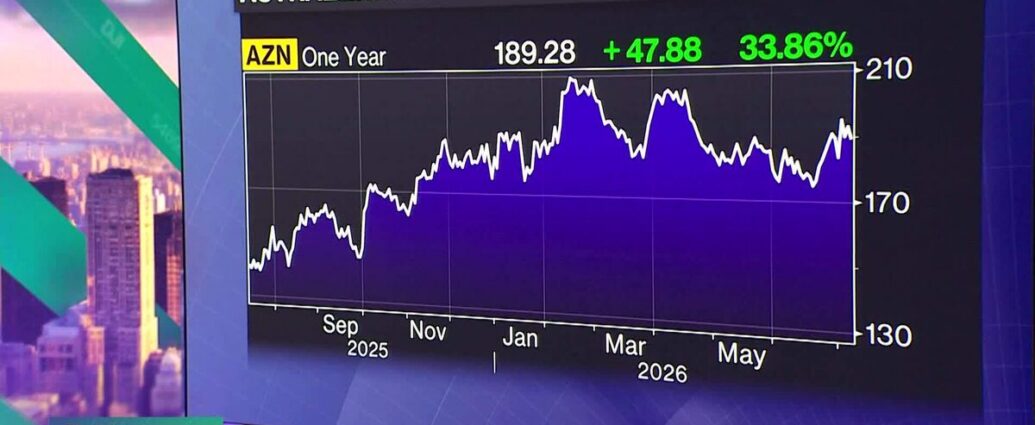
Market movers. PepsiCo fell 1.8% to about $140 after mixed second-quarter results. The company posted adjusted earnings of $2.20 a share, a penny short of the $2.21 analysts expected, though revenue rose 6.4% from a year earlier to $24.18 billion on strong international sales. Drug stocks swung hard on trial data: Ionis Pharmaceuticals tumbled about 21% and British partner AstraZeneca dropped nearly 8% — its worst day since March 2020 — after their heart-disease drug Wainua failed to meet its primary goal in a late-stage study, while Alnylam Pharmaceuticals surged 17.5%. Defense contractor CACI International fell 7.7%. Among analyst calls, Citi‘s Jason Basinet cut his Netflix price target to $100 from $115 but kept a buy rating, citing soft viewership and the market’s shift toward semis. KeyBanc Capital Markets downgraded Salesforce to sector weight from overweight and pulled its target, saying it saw no clear momentum catalyst. S&P Global Ratings downgraded Oracle one notch to BBB-, the lowest rung of investment grade, on rising business risk and weaker cash flow, though the stock still advanced.

Commodities and volatility. Oil gave back a chunk of Wednesday’s surge as traders weighed whether the flare-up stays contained. Brent crude fell more than 2% after topping $78 a barrel the day before, and West Texas Intermediate slid toward $72. The CBOE Volatility Index, Wall Street’s fear gauge, dropped 6.3% to 15.84 after jumping to 16.90 on Wednesday. Gold rose about 1.2% to roughly $4,132 an ounce as some investors kept a safe-haven hedge in place. In the bond market, Treasury yields held firm rather than retreating: the 30-year yield stayed above the 5% mark at about 5.08%, reflecting lingering worry that renewed energy-price pressure could keep inflation sticky — the same concern flagged in minutes from the Federal Reserve’s June meeting, which showed some policymakers open to another rate hike if price growth stays elevated.

On the economic calendar, the National Association of Realtors reported that existing-home sales unexpectedly fell in June, a reminder that higher-for-longer rates continue to weigh on housing even as equities climb.

Overseas markets firmed alongside New York. The pan-European Stoxx 600 closed up about 0.8%, led by basic resources up 3.2% and technology up 2.8%. Germany’s DAX rose 0.83%, France’s CAC 40 gained 0.9% and Italy’s FTSE MIB added 1.1%, while the U.K.‘s FTSE 100 slipped 0.2%. In Asia, Japan’s Nikkei 225 rose 1.4%, South Korea’s Kospi added 0.62%, mainland China’s CSI 300 gained 2.5% and Hong Kong’s Hang Seng fell 0.5%.

The unresolved question is whether the market’s composure lasts. Some strategists warned that investors may be growing numb to an on-again, off-again conflict that still carries real economic weight. Vikas Dwivedi, global energy strategist at Macquarie Group, said he expects the tensions to prove relatively short-lived because both countries face practical limits, but cautioned against chasing the rally given a large underlying oversupply in oil that he said leaves room for prices to fall once the current standoff eases. Others put inflation at the center of the risk: renewed Middle East pressure on energy, stacked on top of heavy AI investment and resilient consumer spending, could keep price growth stubborn through the back half of the year and leave the door open to a Fed rate increase before December.

For now, the focus turns to Friday’s SK Hynix debut and to next week, when June’s Consumer Price Index and congressional testimony from Fed Chair Kevin Warsh land alongside the first big bank earnings, including JPMorgan Chase.

JBizNews Desk | New York © JBizNews.com All Rights Reserved. Reproduction or distribution without written permission is prohibited.

The Federal Reserve on Thursday outlined a slate of five new task forces led by prominent academics and business leaders. They will scrutinize how the central bank communicates, manages its balance sheet, interprets data, evaluates productivity and jobs, and responds to inflation.

The initiative, detailed in Fed press release, is aimed at advancing “the conduct of monetary policy” at a time when structural changes in the U.S. economy and advances in technology are testing longstanding policy frameworks.

“The Federal Reserve‘s commitment to price stability and maximum employment is unwavering. As is our resolve to pursue our mandate with rigor,” Fed Chairman Kevin Warsh said in a statement announcing the task forces. He framed the effort as a broad review of the tools and methods used by policymakers, emphasizing that the goal is to ensure the Fed is “best positioned to achieve our objectives in this consequential time.”

Warsh announced the coming formation of the task forces on June 17 during his first press conference as Fed chair. The groups themselves represent a shift in Fed policy as Warsh has explicitly stated the central bank will move away from the forward guidance given under former Chair Jerome Powell.

“Taking a fresh look at all of these areas should ultimately make the Fed operate more efficiently and effectively over time,” Marty Green, principal at Polunsky Beitel Green, previously told HousingWire. “It will also allow the Fed to perhaps better adjust policy in an economy that may evolve more quickly as artificial intelligence has a greater impact.”  

HousingWire Lead Analyst Logan Mohtashami said the task forces may signal Warsh’s desire to move away from the Fed’s dual mandate by Congress to achieve maximum employment and price stability.

“Look for the task force to eventually recommend losing the dual mandate that also includes maximum employment,” Mohtashami wrote. “But that move will need congressional approval, and I highly doubt he can muster the political support right now to make it happen. Warsh wants new ways to track labor and inflation data, which is fine.”

The five task forces will focus on areas central to the formation and communication of monetary policy and will be co-led by external advisers with experience in academia, business and central banking. They will be supported by Federal Reserve staff but are expected to operate independently and provide “candid feedback” and “rigorous findings” to the Federal Open Market Committee (FOMC).

Task force areas and leaders

Communications. This group will review how the Fed conveys policy deliberations and decisions, particularly under uncertainty. Its leaders are:

  • Peter R. Fisher, professor of practice, Foster School of Business, University of Washington
  • Arminio Fraga, founder and chairman, Gávea Investimentos, and former president of the Central Bank of Brazil
  • Mervyn King, former governor of the Bank of England

Balance-sheet policy. This task force will examine the costs, benefits and institutional implications of the Fed’s current balance-sheet regime, an issue that has become central since the expansion of quantitative easing and ongoing balance-sheet runoff. Its leaders are:

  • Karen Dynan, professor of economics, Harvard University
  • Raghuram Rajan, professor of finance, University of Chicago Booth School of Business, and former governor of the Reserve Bank of India
  • Jeremy Stein, professor of economics, Harvard University, and former Federal Reserve Board governor

Data. This group will focus on improving the quality and timeliness of real-economy signals that feed into policy judgments, a key issue for markets that increasingly trade on high-frequency data and alternative indicators. Its leaders are:

  • Raj Chetty, professor of economics, Harvard University
  • Doug McMillon, former president and CEO of Walmart Inc.
  • Kevin Murphy, professor of economics, University of Chicago

Productivity and jobs. This task force will assess how new general-purpose technologies, including artificial intelligence, are affecting productivity, employment and wage dynamics, with the goal of better informing policy judgments on growth and labor markets. Its leaders are:

  • Marc Andreessen, co-founder and general partner, Andreessen Horowitz
  • Charles I. Jones, professor of economics, Stanford University, currently on leave at Anthropic
  • Asha Sharma, executive vice president and XBOX CEO, Microsoft Corp.

Inflation frameworks. This group will revisit how the Fed understands and responds to the drivers of inflation, including the framework it uses to target and communicate about price stability. Its leaders are:

  • Greg Mankiw, professor of economics, Harvard University, and former chairman of the White House Council of Economic Advisers
  • Thomas Sargent, professor of economics, New York University and Nobel laureate
  • William White, senior fellow, C.D. Howe Institute, and former economic adviser at the Bank for International Settlements

The Fed said more information on the task forces and their topics will be posted periodically on its website.

This article was written by Neil Pierson with the assistance of HousingWire Automation, then reviewed by a HousingWire editor before publication.

This post was originally published on here. 

Chicago-based mortgage lender Rate announced on Thursday that more than a dozen loan officers have joined the company from California-headquartered New American Funding (NAF), bringing “nine figures in production volume with them.”

The group includes 14 loan officers: Lori Crabb, Maria Castorena, Cory Graciano, Donaciano Garcia Amaya, Jim Butz, Samuel Wagner, Kristi Hernandez, Andy Thom, Michael Giganti, Joe McCaslin, Kyle Travers, Peter Strahler, Jay Kunkle and Chad Geyer.

Per Modex data, the top producers among the group are Geyer with a year-to-date volume of $12.21 million and Travers with a year-to-date volume of $9.426 million.

Rate said several of the loan officers are returning to the company after spending time with other lenders, pointing to the company’s platform, technology and product offerings as factors behind the moves.

New American Funding did not return HousingWire‘s request for comment at the time of publication.

“The best in the business are making intentional decisions about where they can win,” said Shant Banosian, president of Rate. “They’re choosing the platform with the product depth, pricing, technology, execution and collaborative culture of sharing built to grow their business and give themselves and their partners a real competitive edge.

“When experienced producers look closely at what Rate offers, including those who have been here before, the decision speaks for itself.”

Some of the returning LOs cited Rate’s technology and lending platform as reasons for rejoining the company.

“I wasn’t actively looking to make a move, but after reconnecting with someone at Rate whom I greatly respected, I took a fresh look at the platform and everything that had evolved since my previous time there,” Kunkle said.

“The more I explored, the clearer the decision became. What ultimately brought me back was the combination of industry-leading technology, a broad product offering, competitive pricing, and a platform that truly allows me to better serve my clients and agent partners while continuing to grow my business.”

Geyer said Rate’s technology, products and pricing were among the factors influencing his decision to return.

“It’s great to be back at Rate,” Geyer said. “The tech, product, and rates are as good as it gets. My business is taking off, and I can better serve my borrowers and partners.”

This post was originally published on here. 

In Salida, a small town in Central Colorado with about 6,000 residents, a long-vacant property serves as a reminder of the community’s past while offering a glimpse into the future. 

Cleora, a small railroad town established in 1880 in what is now the Salida area, served as an early settlement in the region. The town declined quickly after its founding and was officially abandoned in 1882 after its post office closed. For more than 150 years, the historic site remained vacant. 

Now, the 55-acre property is set to become an experimental residential development with 106 3D-printed homes, which will make it one of the largest 3D-printed communities in the United States. 

In that sense, the property represents a bridge between an early chapter in Salida’s history and an emerging future where new building methods could play a key role in expanding the nation’s housing supply.

Cleora at Salida East, where construction is now underway, has the makings of a transformational real estate project for the town of Salida. Beyond its local impact, the project could serve as a proving ground for emerging 3D-printing technology and its potential to alter how homes are built. 

Fine-tuning the 3D-printed process

The developers behind Cleora identified the property as a strong site for a 3D-printed development because it offered the scale, environment and market conditions needed to test and refine the technology. For one, the project provides enough housing volume to improve efficiency over time and make the project more economically viable. 

Additionally, Colorado’s challenging climate, mountainous terrain, labor constraints and high construction costs make Salida a good proof-of-concept setting for the technology. 

Cleora Managing Partner Greg Kenny told HousingWire TBD that the team is still refining its construction process.

“This is a great project to focus on. We can hit a large volume of homes and get to a point where we can value engineer this as we go. Like I said, out of the gate, it’s not cheaper or faster. It takes some time. It’s a steep learning curve,” Kenny said. 

Cleora partnered with RIC Robotics to integrate robotics into the construction process. The robotic printer acts like a large-scale construction worker, automatically placing layers of concrete to build wall systems on the job site, layer by layer. This process, in some respects, mirrors the way traditional construction workers stack masonry materials to form a building envelope.

3D-printed homes
Cleora is leveraging robotic printers to build 3D-printed homes on-site in Salida, Colorado. (Photo courtesy of Cleora)

The robotics technology, which is intended to make the construction process more efficient, can be useful in areas where construction labor is scarce. However, Ziyou Xu, founder of RIC Robotics, stressed that robotics isn’t meant to make humans obsolete. In fact, Cleora has partnered with Colorado Mountain College to give students hands-on training in the construction process. 

“We want to use robotics to subsidize labor, but this is not robots replacing labor,” Xu said. “The old generation is retiring. The new generation doesn’t want to use their hands to do manual labor anymore. They want to use the big robot, and now you can see teenagers on the job site operating the robot…that is the most fundamental change.”

The 3D-printed homes are designed to be more resilient than traditional wood-frame construction because their concrete walls offer greater resistance to wildfires, high winds, mold and severe weather. In an area like Salida, which is susceptible to wildfires, resiliency is key. 

Robotic construction can help bring the cost of the 3D-printed concrete homes closer to the cost of conventional stick-built homes, but the Cleora team acknowledged that there are still improvements to be made before the process can scale. The cost of building is still higher, and the process isn’t quite up to speed, but the robotics and continued improvements have helped. 

“As of right now, is it quicker? No, because we are still learning. But with that being said, we’re getting quicker every day and with every wall, quite frankly. At some point, I think it definitely will be quicker than stick-built. But we still want to make sure that the home is being built right,” said Jeff Post, another Managing Partner at Cleora. 

The road to mainstreaming 3D-Printed homes

The hype for 3D-printed homes is real, but 3D-printed housing has yet to scale in any sort of meaningful way. Lennar partnered with ICON to deliver 100 3D-printed homes in Georgetown, TX, but the technology, by and large, has failed to break out into the mainstream.

Kenny believes that 3D-printed homes haven’t yet scaled extensively because there are still improvements that need to be made.

“Why hasn’t it been adopted? It is more cost-ineffective out of the gate because you’re ramping up a new skill set,” Kenny said. “We’re one of the first to do something of this magnitude, leveraging this innovation in a commercial way.”

Broader adoption will depend on proving the technology at scale through commercially viable developments. Construction speeds and costs will also need to improve through experience and value engineering before wider adoption. 

Then, the robotics technology needs to become more widely accessible. RIC Robotics CEO Ryan Cox argued that one of the biggest barriers to widespread adoption of 3D-printed construction is the high cost and technical complexity of deploying robotic systems.

“One of the biggest obstacles that the industry’s had to overcome was the barrier to market entry in robotics. Previously, you were looking at millions of dollars in robotics mobilization and then a highly technical skill set,” Cox said. “The barrier to market entry in the beginning was just hard as heck to overcome.”

“Ric Robotics has kind of lowered that barrier by providing the opportunity to share equipment, the opportunity to share personnel, the opportunity to share knowledge, and not holding that in a capsule that you know you have to pay for, but instead giving it freely so we can expand not only the industry but our abilities within it,” Cox added. 

Robotics innovation gains steam

The U.S. Department of Housing and Urban Development (HUD) recently opened applications for a program that would provide up to $10 million in funding to advance robotics and artificial intelligence in homebuilding. The goal of the program is to foster innovation and determine whether these technologies can accelerate construction, improve labor productivity, lower costs and ultimately increase housing supply. 

While the funding is geared toward factory-built housing, HUD’s initiative reflects a growing interest in using robotics and automation to improve residential construction and potentially lower the cost of housing. Any advancements in robotics could potentially benefit 3D-printed housing by improving efficiency, reducing costs and helping the technology move closer to broader adoption.

HUD has also previously supported efforts to test 3D-printed housing. In 2023, the agency awarded a $600,000 grant to the city of Nome, Alaska, to fund a portable 3D printer that would evaluate the technology’s performance in extreme sub-Arctic conditions. 

Whether or not HUD will provide future funding for 3D-printed homes is yet to be determined. However, the developers behind Cleora and RIC Robotics see their project as a crucial testing ground for the technology. As the industry looks for new ways to build faster and more cost-effectively, projects like Cleora may provide the real-world testing and refinement needed to move 3D-printed housing from experimentation to mainstream adoption.

This post was originally published on here. 

Prime Minister Benjamin Netanyahu is taking fire for overpromising. At the start of the war, he pledged “total victory,” and at least a slice of his electorate now feels let down by that promise – all the more so in light of recent events in Iran and Lebanon.

Ultra-Orthodox leaders are wrestling with an identical problem. They, too, promised their constituents total victory, which in their context means total draft evasion. 

And as some strategists would argue about Gaza, the resemblance runs deeper than rhetoric: both promises were unachievable from the outset. Since October 7 and the 500-odd days of reserve duty that followed, drafting at least some of the haredi population has been inevitable.

The polling makes this hard to avoid. The numbers vary mainly by wording – “should the exemption end / should haredim be drafted” lands around 70%, “should there be sanctions on draft dodgers” around 85%, and “should full service apply to all haredi men” lower, at 57% – but the direction is unmistakable. 

Israel is a democracy, and short of truly extraordinary political gymnastics, 80/20 issues of this importance rarely get ignored. Neither the haredim’s best friend in Likud nor the surprisingly sympathetic religious-Zionists can stand before their voters and call this issue unwinnable.

That left haredi leaders with a choice: concede and spare most of their community, or double down. The concession was there for the taking – “those who don’t study will be drafted,” a line both self-evident, given their own claim that Torah study is a form of National Service, and fairly mainstream within the community. They chose to double down anyway.

The choice has a logic to it, ideological and economic alike. Ideologically, the fear isn’t National Service but secularism: if large numbers of non-learners serve and drift away from religious life as a result, the haredi world would count it a catastrophe – and the fallout would land on the advocates themselves. The moderate leaders would be discredited and lose their flock; the hardliners would be vindicated and gain at their expense.

Behind closed doors, the leadership knows it can’t win. Recordings published by Channel 13 caught Rabbi Moshe Barzovski – head of the Slonim Yeshiva, a member of the Council of Torah Sages and a driving force behind Agudat Yisrael’s hardline anti-draft stance – voicing pragmatic support for drafting haredi youth who don’t study full-time.

“Those who study Torah need exemptions,” he says plainly. “But those who don’t study Torah – all those who don’t study Torah – they should be drafted.”

But they promised total victory, not compromise, and compromise does not drive turnout. The haredi public is bitterly disappointed with its representatives, blaming them for the sanctions and the arrests and judging that they failed to deliver. That won’t produce mass defection – there will be no breakaway haredi faction storming the Likud primaries – but it may well keep voters home on Election Day.

So the leadership is throwing everything at the wall: a Basic Law, road-blocking protests organized by the party, voting boycotts in the Knesset – anything to convince their base they can still deliver. 

The trouble is that they can’t. The draft is coming. A more responsible leadership would recognize that the protests only deepen Israeli society’s resentment toward them, would tell their community the truth, and would give voice to the hidden minority – Barzovski among them – who already believe that those who don’t learn should serve.

The truth is, non-learners may only be the beginning. But haredi society is on a collision course with the Israeli mainstream, and the face of the community will have to change to meet the moment – something a radically conservative society resists on principle.

All I can say is: Welcome to the State of Israel, where the majority rules.

The writer serves as the English director of the Ribo Center and the editor of Amit Segal’s newsletter, It’s Noon in Israel.

This post was originally published on here. 

After Egypt’s elimination by Argentina in the World Cup on Tuesday, Egyptian commentator Mohammed Nour published a video in which he blamed Israel for the 3-2 loss.

In the video, he claimed, among other things, that Yair Netanyahu, the son of Prime Minister Benjamin Netanyahu, was the one who brought Lionel Messi to Inter Miami.

“We played against Argentina, but also against FIFA and Israel. Very strange things happened there,” Nour claimed. “They set boundaries for Egypt – and it was forbidden to cross them. They didn’t allow the Palestinian flag to be brought in, in front of billions of viewers.”

Later in the video, Nour claimed that “the Argentina national team is an Israeli team par excellence. The president of Argentina is one of Benjamin Netanyahu’s best friends. Messi has visited Israel several times, even worn a kippah, and prayed at the Western Wall.

“He met with Benjamin and Sara Netanyahu and is a friend of Yair Netanyahu, who took him to America to play for Inter Miami. Messi and Argentina’s relations with Israel are well known. We played like heroes, but Israel – meaning FIFA and the referees – had something to say about it, and we couldn’t overcome these circumstances,” he added.

Messi’s visit to the Western Wall, zero grounding for FIFA-Israel claims

Messi did indeed visit Israel and pray at the Western Wall back in 2013, when he came with the Barcelona delegation, where he then played. But the alleged influence of Yair Netanyahu to bring him to the United States to play in the MLS is completely unfounded.

Additionally, claims that Israel has the power to determine the outcome of a match in the World Cup are not a reflection of the country’s current relationship with FIFA, which has been strained since Hamas’ October 7 attacks.

Since 2023, even after several ceasefires were established and amid periods of relative peace in the country, both the Israeli national team and Israeli clubs are still forbidden from hosting matches at home and must travel to other countries to play international games.

Netanyahu: ‘Messi, Xavi, and Iniesta are formula for peace’

“There is a simple formula for peace: put Messi, Xavi, and Iniesta in the negotiations,” Prime Minister Benjamin Netanyahu joked when he hosted Messi and the Barcelona players in Israel in the summer of 2013.

“I watch you all the time; sports carry a message and can unite people. You also have big goals – to score against the opponent, but also to defend the front, the goal. Your goal, and ours, is to fulfill the human potential inherent within us; that is the aspiration of us all. We hope that one percent of your fans in the world – 3 billion people – will visit us in Israel. It will greatly boost our economy and advance the peace process.”

This post was originally published on here. 

The 43rd Jerusalem Film Festival opened Thursday night at the Sultan’s Pool, with 6,000 spectators and guests attending the festive ceremony under the stars.

Ukrainian director Sergei Loznitsa, one of the most acclaimed filmmakers working today, was the festival’s guest of honor and received an award in recognition of his cinematic achievements.

Loznitsa, who will also serve as chairman of the jury for the Israeli competition, is one of the leading voices in contemporary European cinema and is known for both his documentary and narrative films.

Despite the complex period, the festival will host more than 30 international guests this year, including filmmakers who will serve as jurors in the various competitions and accompany screenings of their films.

The festival, which runs until July 19 at the Jerusalem Cinematheque and the Lev Smadar theater, features more than 100 of the best movies from around the world, as well as the latest in Israeli cinema. Israeli movies that have premiered at this festival have gone on to win awards around the world and to receive Oscar nominations. 

Israeli premiere of Tell Me Everything by Moshe Rosenthal kicks off festival

This was the first year since 2023 that the festival has not taken place in the shadow of war, and while there is still the possibility of fighting on several fronts, movie lovers celebrated both local and foreign cinema at the opening. The festival reported that tickets were selling briskly.

The festival opened with the Israeli premiere of Tell Me Everything, the new film by Moshe Rosenthal, which had its world premiere at the Sundance Film Festival. The film stars Assi Cohen in his first film role in 15 years, along with Keren Tzur, Yair Mazor, Ido Tako, Mor Dimri, and Neta Orbach, all of whom attended the opening event.

The ceremony was held in the presence of Jerusalem Mayor Moshe Lion and his wife, Stavite; Dani Mimran, chairman of the Jerusalem Cinematheque’s executive board; former president Reuven Rivlin; Roni Mahadav-Levin, CEO of the Jerusalem Cinematheque and director of the festival; Orr Sigoli, the festival’s artistic director; as well as film lovers, supporters, dignitaries, ambassadors, and diplomatic representatives from around the world.

Among them were North Macedonian Ambassador to Israel Shpend Sadiku, Acting German Ambassador to Israel Helena Marks, and Pavel Bobek, head of the Czech Embassy branch in Jerusalem.

Loznitsa, who was born in Belarus in 1964, has long been a fixture at the world’s leading film festivals. He has also spoken out strongly in favor of freedom of expression and against cultural boycotts, statements that have often come at a personal and professional cost.

Movies an attempt to understand ‘what happened to us throughout history’

Twelve of his films have been screened at the Jerusalem Film Festival, and he has won awards at the festival in the In the Spirit of Freedom competition for The Invasion and in the Chantal Akerman competition for Babi Yar. 

Loznitsa opened his speech with the words, “Shalom Yerushalyim.” He thanked the festival for the award and spoke about the difficult times in Israel and in his native Ukraine. He said that all his movies are an attempt “to understand what has happened to us throughout history and what is happening now.” 

Speaking at the opening ceremony, Mahadav-Levin said, “We are opening tonight the 43rd edition of the Jerusalem Film Festival. In recent years, we have opened too many festivals with the words, ‘This is not an ordinary year.’ And this year, too, is not an ordinary year.”

He said that a film festival is not an escape from reality, but a way to look at it more closely and imagine how it might be different.

“Over the next 10 days, we will encounter hundreds of stories here,” he said. “Some will be funny, some painful, some will offer answers, but in cinema, it is more important to ask questions than to ‘find answers,’ as Godard said. If we have learned anything in recent years, it is that even when there are no good answers, it is still important to ask the questions.”

Mahadav-Levin also said he hoped the films screened at this year’s festival would “ask, challenge, and refuse to accept easy answers.”

The founder of the festival and the cinematheque, the late Lia van Leer, established the festival to bring international attention to Israeli films, and to create a world-class festival in Israel’s capital. Guests at the festival have included Warren Beatty, Robert De Niro, Lillian Gish, Marcello Mastroianni, Kirk Douglas, Jane Fonda, Liv Ullmann, Wim Wenders, and hundreds of others. 

This post was originally published on here. 

Why does getting family health insurance through a job cost as much as buying a new car? How did a whistleblower take on an insurance contractor? And who might be the new Food and Drug Administration commissioner?

We discuss all that and more on this week’s episode of “The Readout LOUD,” STAT’s weekly biotech podcast. 

Read the rest…

This post was originally published here. 

Minority-owned and woman-owned businesses in Newport News, Virginia, won only a small fraction of the city’s contracting dollars over a five-year period compared with the number of qualified firms available to perform the work, according to an independent disparity study presented to the Newport News City Council during a June 23 work session.

The study, conducted by BBC Research & Consulting and presented alongside Sheila White, the city’s director of finance, examined more than $814 million in construction, professional services and goods contracts awarded between July 2019 and June 2024. The review measured how much work went to small and diverse businesses, how many qualified firms existed in the marketplace and whether significant gaps suggested barriers to participation.

The findings showed substantial disparities. Researchers used a disparity index that compares the percentage of contract dollars awarded to a business group with that group’s estimated availability in the marketplace. An index below 0.80 is widely recognized as indicating substantial underutilization and may support an inference that barriers to participation exist.

Minority-owned businesses collectively received just 1.8% of the city’s contracting dollars despite representing an estimated 14.9% of available firms, producing a disparity index of 0.12. White woman-owned businesses received 3.4% of contract dollars compared with 10.4% availability, resulting in an index of 0.33. Service-disabled veteran-owned businesses recorded the lowest participation, with a disparity index of just 0.04. Every category examined in the study fell well below the accepted 0.80 benchmark.

Individual business groups experienced similar results. Black-owned businesses received 1.0% of contract dollars despite representing 5.2% of available firms. Hispanic-owned businesses received 0.5% compared with 2.8% availability. Asian-Pacific-owned businesses captured 0.2% of contract spending despite representing 4.6% of the marketplace. Businesses owned by individuals of Middle Eastern and North African descent received virtually no contracting dollars during the study period.

Researchers also found city contracting dollars were concentrated among a relatively small number of vendors. For contracts valued below $1 million, just 12.9% of participating businesses received half of all contract dollars awarded, a pattern researchers said can make it more difficult for newer and smaller businesses to compete for government work.

City officials emphasized that the study measures outcomes rather than making legal findings of discrimination. Under federal law, race- or gender-conscious contracting programs generally require evidence demonstrating identifiable barriers to participation. Disparity studies such as this one are commonly used by state and local governments to determine whether additional contracting programs may be legally justified.

In response to the findings, Newport News is preparing to launch a new initiative known as Bridge Forward Business Access, designed to expand opportunities for small businesses and firms owned by minorities, women, veterans and individuals with disabilities. The City Council reviewed the proposal during its work session and is expected to vote on the program later this month. Officials say increasing participation by qualified businesses will strengthen competition, improve procurement and support broader economic growth throughout the community.

The Newport News study reflects a broader trend seen across the country. Similar disparity studies have been conducted by numerous cities, counties and state governments, including a recent statewide review in Virginia examining contracting practices across state agencies and public universities during the same July 2019 through June 2024 period. Such studies have become the primary analytical tool governments use when evaluating supplier diversity initiatives and defending them against legal challenges.

For minority business owners, the report provides quantitative evidence supporting long-standing concerns that public contracting opportunities remain concentrated among an established group of vendors. Whether the proposed Bridge Forward Business Access program narrows those gaps will depend on the final policies adopted by the City Council, including outreach efforts, procurement practices and ongoing measurement of participation. Supporters say success will ultimately be measured by whether public contracting opportunities more closely reflect the diversity of qualified businesses available to compete.

JBizNews Desk | Newport News, Virginia

© JBizNews.com All Rights Reserved. Reproduction or distribution without written permission is prohibited.

The Knesset’s House Committee approved on Thursday to advance the contentious bill that seeks to enshrine Torah study as a fundamental value in the country’s Basic Law, ahead of its final second and third readings required to become law.

The haredi (ultra-Orthodox) parties – Shas and United Torah Judaism – had reached an agreement with Prime Minister Benjamin Netanyahu’s coalition shortly before the vote to amend the bill following legal warnings about a section of the legislation.

The agreement comes just before the expected end of the Knesset summer session, after the haredi parties had boycotted votes on coalition legislation when their bills were not advancing quickly enough.

The bill’s second section, which called to “create a balance” through Torah study as a fundamental value, had been the clause that threatened to stall the bill’s progress before it was removed.

The House Committee vote is subject to revision, and both coalition and opposition lawmakers have warned that even with the change to the wording, the essence of the law has not been altered.

The bill is part of a proposal that critics argue encourages draft evasion and changes the status of yeshiva students who do not serve, enabling them to continue receiving state benefits, even amid the IDF’s severe manpower shortage.

Netanyahu, Haredi parties agree to amend controversial Basic Law: Torah Study bill

Knesset legal adviser Sagit Afik warned that the bill’s previous wording could grant haredim who evade military service benefits similar to those available to IDF reservists. She had called for the legislation to be changed so that it would be purely declarative.

The joint statement from the haredi parties on the coalition agreement said that, under the instruction of senior Torah leaders, it was agreed that “the law will include only the first and central clause, which states that Torah study is a fundamental value in the heritage of the Jewish people.”

Coalition whip Ofir Katz (Likud), who also chairs the committee on which the bill is advanced, said that an agreement with the haredi parties was reached, under which the section on the “balance of values” would be removed from the bill.

MK Moshe Gafni, leader of the haredi Degel HaTorah faction of United Torah Judaism, had previously demanded on Wednesday that Netanyahu advance the bill unchanged.

Gafni’s demand threatened to stall the bill, which the haredi parties have been pushing for.

The move to change the wording has been seen as a way for the haredi parties to back down so that the legislation can progress amid the sharp legal criticism and backlash.

Combat veterans suffering from PTSD react during a House committee meeting at the Knesset, the Israeli Parliament in Jerusalem on, July 9, 2026.  (credit: YONATAN SINDEL/FLASH90)

IDF veterans with PTSD confront haredi MKs, demand support

During the committee meeting to debate the bill on Thursday ahead of the vote, clashes broke out after combat veterans confronted haredi lawmakers demanding that the government address their needs and provide greater support for soldiers suffering from post-traumatic stress disorder before advancing the contentious legislation.

The group of combat veterans stood up and approached the lawmakers directly. One of the veterans, Yossi Sardi, left his seat and confronted United Torah Judaism leader MK Yitzhak Goldknopf, shouting that legislation should be passed to support IDF soldiers rather than advancing the bill.

Another combat veteran told the committee that the country’s political leadership had been delaying proper support for IDF veterans and soldiers for six years.

“You’ve been making promises for six years; how much is too much?” he said. “We’ve paid with our blood.” Due to the outburst, the meeting had to be stopped and went on a break before returning to continue deliberating the legislation.

Earlier in the meeting, Einav Danino, the mother of Ori Danino, who was murdered in Hamas captivity, told the panel that soldiers must be prioritized, speaking on how the IDF had brought the remains of her son back to her from Gaza.

“My Ori was murdered after 11 months in captivity, and I live with that pain thanks to the soldiers who brought him back to me, and they carry that burden with them. I would never have gotten Ori back without them,” she said.

The Torah study bill is part of a series of haredi-backed bills being advanced, amid numerous reports of agreements between the haredi parties and Netanyahu.

The coalition has been pushing a legislative blitz ahead of the Knesset’s final week of its summer session to advance as much legislation as possible before the upcoming elections.

The haredi parties boycotted coalition voting last month – stalling coalition bills – arguing that their legislation was not being advanced quickly enough.

Among the most controversial haredi-backed legislation is the Basic Law: Torah Study bill, as well as separate legislation that would temporarily freeze the arrests of haredi draft evaders.

The bill to freeze such arrests will continue to be debated in the Knesset’s Foreign Affairs and Defense Committee on Thursday after a week of marathon meetings on the matter.

The Basic Law: Torah study bill proposal calls for Torah study to be “a fundamental value in the heritage of the Jewish people and in the State of Israel.

It had previously also proposed that the country recognize “Torah study as a fundamental value in the State of Israel in order to create a balance of justice in relation to other fundamental values in the state.”

That clause was removed after the coalition agreement was made.

Israel does not have a constitution, and instead has a series of Knesset-legislated basic laws on various subjects that hold a high legal status.

There had also previously been contentious wording in the bill’s proposal that equated those who study Torah with those who serve in the IDF. This comparison has since been removed from the legislation’s new draft.

Critics argued that the legislation could implicitly allow the comparison despite the change in wording. Lawmakers in Netanyahu’s coalition have publicly opposed the legislation and voted against it.

Netanyahu arrived at the plenum last week to vote in favor of the legislation when it passed its first reading.

The haredi parties have continuously encouraged the coalition to advance legislation that would not increase haredi enlistment. The IDF has repeatedly warned of an urgent manpower shortage after more than two years of war.

In April, the High Court of Justice ordered that the state take concrete steps to revoke key financial benefits from draft evaders and to move toward criminal enforcement against haredi men who evade military service.

In March, IDF Chief of Staff Lt.-Gen. Eyal Zamir said the IDF could soon collapse if no solution was found for the manpower shortage.

This post was originally published on here. 

Anduril has secured its first contract with NATO to provide its Lattice software for the alliance’s Enhanced Air Command and Control (eAirC2) Data Platform initiative, the US defense technology company announced on Wednesday. The contract was one of three awarded.

According to the alliance, the program “is a key part of NATO’s broader initiative to enhance warfighting effectiveness in a rapidly evolving technological landscape and will enhance the Alliance’s ability to respond to evolving air and missile threats.”

The announcement was made on the sidelines of the 36th NATO Summit Defense Industry Forum in Ankara, Turkey, in the presence of representatives from the NATO Communications and Information Agency, the NATO Independent Program Office, and industry partners.

“Another important step towards our goal of stitching together every platform, even the ones built decades ago,” Anduril CEO Palmer Luckey wrote on X/Twitter following the announcement.

Lattice is an AI platform that uses computer vision, machine learning, and mesh networking to fuse real-time data from disparate sources into a single, autonomous operating picture. The open‑architecture suite is designed to fuse sensors, autonomous platforms, and command‑and‑control tools, enabling faster threat detection and more resilient battlefield networks.

Anduril, through its UK branch and European team, will deploy Lattice inside the NATO platforms. The trial will integrate air traffic control, surveillance, and force‑management functions to assess whether the system meets NATO’s operational requirements.

Other companies awarded the contract included Palantir and Athea SAS. NATO said that it would select a single solution for long-term implementation at the end of the assessment period.

NATO’s air operations depend on the ability to rapidly and securely share trusted information among 32 member states, each with its own systems, authorities, and security rules. The alliance’s modernization of its Air Command and Control architecture aims to allow allied air forces to operate together while maintaining national control over sensitive data.

“These contract awards represent an important milestone in delivering improved situational awareness, better coordination, and faster decision-making across the NATO Command and Force Structures,” said NCIA General Manager Dr Dylan Browne. “The project is a tangible demonstration of NATO innovation and cooperation with industry to ensure we’re deploying state-of-the-art technology that can evolve and be scaled as needed.” 

Lattice is designed to connect existing systems through an open architecture rather than replace them. According to Anduril, the platform enables operational data to move securely between organizations while allowing nations to retain sovereignty over their information.

The system is built to function in contested environments, continuing to synchronize, orchestrate, and distribute data even when communications are disrupted or degraded. The company said the platform is intended to ensure that commanders maintain a trusted operational picture during high‑pressure operations.

NATO modernization push

The eAirC2 Data Platform initiative is part of NATO’s transition to a modular, data‑centric architecture for allied air operations. The selection allows Anduril to demonstrate how Lattice can help NATO securely connect legacy and modern systems, share operational information, and improve coalition command and control.

The move also builds on Anduril’s expanding work with European governments seeking to modernize command and control through open, software‑defined architectures. Last November, the company took part in Digital Shield 1.0 in Tallinn, Estonia, to support the alliance’s Eastern Flank’s Deterrence Line amid heightened tensions with Russia. 

The company joined the US Army’s 10th Army Air and Missile Defense Command and the Estonian Defense Forces to link national and allied sensors into a single network. It used its Menace-T compute and communication kits and established Lattice nodes in the cloud, creating a resilient network.

“By connecting these systems through Lattice, Anduril enabled real-time data fusion across previously separate radar, acoustic, and commercial networks,” the company said at the time. 

“Feeds that once operated independently were synchronized and shared instantly across US and Estonian command nodes, allowing operators at radar sites, the Estonian Control and Reporting Centre, and US Army Europe’s G-3 Operational Data Team to see the same tracks simultaneously, distinguishing drones from birds, validating detections, and coordinating faster responses.”

As the war between Russia and Ukraine continues to push countries around the globe to increase their defense spending, NATO has been actively modernizing its defense posture. During the summit in Ankara, Secretary-General Mark Rutte announced that the alliance will be investing $40 billion in counter-drone defenses and joint procurements for critical air and maritime surveillance assets.

Last week, NATO announced that it had reached full technical operational capability of Maven Smart System (MSS). The command and control platform developed by Palantir is powered by AI and tracks Russian troop movements and provides timely warnings to commanders about possible threats and identifies possible targets.

According to The Times, Maven is already in use by the British Defense Ministry.

While it’s already in use by the British Defense Ministry, last month France’s domestic intelligence agency DGSI announced that it would replace tools from Palantir in favour of a French ‌rival, ChapsVision.

Reuters, however, quoted Palantir as saying that its ​long-term contract with the DGSI, which was renewed at the end of ⁠2025 for several more years, “remains fully in force.” Lecornu’s office clarified that Palantir’s tools ​would continue to be used until ChapsVision’s could be integrated “to avoid a capability gap”.

European governments have grown increasingly wary about dependency on US tech platforms, and particularly on Palantir Technologies. Germany’s military has ​said it will ​no longer use Palantir, ⁠while Britain is reviewing the National Health Service’s £330 million ($440 million) data contract with Palantir following political and parliamentary pressure.

 The logo of US software company Palantir Technologies is seen in Davos, Switzerland, May 22, 2022.  (credit: REUTERS/ARND WIEGMANN)

Anduril in Israel

Anduril was founded by Palmer Luckey in 2017 and has since been awarded numerous contracts by the Pentagon and around the world for its defense solutions. Anduril was founded as a company to develop a command-and-control system for the US-Mexico border and later expanded to all security products, including drones, interceptors, cruise missiles, UAVs, and even fighter jets. 

In March, Anduril was awarded one of the largest technology-focused contracts issued by the Army in recent years at $20 billion to integrate Lattice into a unified, mission-ready capability supporting the Army’s evolving operational needs. 

Luckey, a vocal supporter of Israel, is interested in establishing the company’s own factory in Israel, in addition to taking advantage of local R&D. 

Officials from the company, including Luckey and CEO and co-founder Brian Schimpf, have visited Israel several times, meeting with Prime Minister Benjamin Netanyahu, Defense Minister Israel Katz, the Defense Ministry’s Directorate of Defense Research and Development (DDR&D), as well as several defense primes and startups.

This post was originally published on here. 

Prime Minister Benjamin Netanyahu spoke on Thursday with the Commander of the Israeli aid delegation to Venezuela and Chief of Staff of the Home Front Command, Brig. Gen. Elad Edri, as well as Israel’s ambassador-designate to Mexico, Yoed Magen.

“You are showing the people of Venezuela, and also the government of Venezuela, the true face of the State of Israel,” Netanyahu told the two representatives, noting that Venezuela severed diplomatic ties with Israel almost 20 years earlier. 

“We didn’t ask questions about who and what,” the prime minister said. “We asked: ‘What needs to be done to help?'”

Israel sent a delegation to Venezuela after the June 24 earthquakes that have killed more than 3,800 people, injured nearly 17,000, and left nearly 18,000 people homeless. As of Thursday, approximately 300 people have been buried without being identified, according to Armando De Negri Filho of the Pan American Health Organization (PAHO).

Netanyahu also noted that Brig. Gen. Edri – and Israeli disaster relief infrastructure in general – have “a lot of experience dealing with ruins due to the rocket barrages of our enemies.”

The full delegation, according to Edri, consists of over thirty people from the Foreign Affairs Ministry, Home Front Command, and various Israeli military bodies. They have been in Venezuela since the end of June, helping the government to plan their eventual reconstruction effort. 

“We are operating day and night, together with the local government and the Venezuelan Infrastructure Ministry,” Edri said. “We are very proud to represent the country here.”

Overcrowding, lack of clean water among biggest health risks from Venezuela quakes says PAHO

The biggest risks to residents’ health following devastating twin earthquakes that ripped across Venezuela’s northern coast last month include interruptions to regular medical care, overcrowding in shelters and lack of access to clean water, Jarbas Barbosa, the director of the Pan American Health Organization, said on Thursday.

The organization is working closely with Venezuela’s health ministry to trace any outbreaks of respiratory or digestive illnesses, especially in shelters set up for those who lost their homes, other PAHO officials added in a call with journalists.

However, the country must guarantee access to vaccines, Barbosa added, especially since vaccination rates in Venezuela were below target prior to the disaster and the country’s health system was already suffering from sustained problems due to its economic crisis.

Reuters contributed to this report.

This post was originally published on here. 

US Ambassador to Israel Mike Huckabee says he’s had no updates on the prospects of a return to the heavy US strikes on Iran seen in the early months of the war, but it won’t “work well” for Tehran, the ambassador told The Jerusalem Post on Thursday.

“Decisions [to return to a larger conflict] will be made by the president and by CENTCOM,” Huckabee said. “I usually find out about the time they do it.”

He asserted that he had no information about the status of those decisions, and that to make an assessment on the matter would be “pure speculation.”

“But here’s what I would say,” Huckabee added, “I wouldn’t be overconfident if I were the Iranians that they will be able to make this work well for them.”

In other comments to Israeli media, the ambassador said that, despite having ample opportunities to broker an agreement with the US, the Iranian regime has proven itself to be “not serious people when it comes to making peace” and has “not decided to behave like civilized people.”

Regime change ultimately up to the people

Nevertheless, he said, as far as he knew, there had been no decision about pursuing regime change in Tehran, and that such a step would have to be taken by the Iranian people.

“Ultimately up to the Iranian people whether there’s going to be a regime change, not to outside forces as much,” Huckabee said.

On the topic of Lebanon, the ambassador affirmed Israel’s right to defend itself and said that the IDF wouldn’t be able to withdraw from southern Lebanon until the Lebanese Armed Forces (LAF) reclaimed and asserted its control over the areas where Hezbollah remains active.

IDF won’t withdraw from Lebanon until LAF asserts control over Hezbollah

“Everyone understands that Israel has an absolute right to defend itself against attacks,” he said, adding that the communities in northern Israel, like Metula and Kiryat Shmona, cannot perpetually live under the threat of Hezbollah rocket fire.

“What really came out of the meetings in Washington that I thought was significant was everyone finally understood that Israel is not looking to annex Lebanon. It doesn’t want to stay there – that’s not its goal,” Huckabee said.

“They’d love to get out, but they can’t completely until the Lebanese are able to take, piece by piece, the land where Hezbollah has strongholds, and from which they attack Israel. When that happens, and the LAF is able to manage that ground, Israel will send everybody back home.”

Huckabee’s remarks came during a visit to Moshav Hayogev in northern Israel, where he took part in the dedication of an olive tree to Shiri, Ariel, and Kfir Bibas, a mother and two young children who were murdered while in captivity in Gaza.

Yarden Bibas and his wife Shiri, along with their sons, four-year-old Ariel and nine-month-old Kfir, were taken hostage during the October 7 Hamas-led attacks in southern Israel. Only Yarden, who was present for the dedication with his sister Ofri, was returned alive.

The event took place as part of the My Tree in Israel initiative, in which Huckabee has been active.

“The sacrifice that your family made for the people of Israel is one that obviously is not being forgotten,” Huckabee told Yarden Bibas during the dedication. “With the plaque on the tree, it’s a reminder that life is still coming.”

This post was originally published on here. 

An attempt to smuggle thousands of cigarettes into the Gaza Strip, hidden inside hundreds of pineapples, was thwarted at the Lachish crossing on Wednesday, according to the IDF.

Personnel from the Land Crossings Authority at the Defense Ministry detected the smuggling attempt and turned the findings over to representatives of the Coordination of Government Activities in the Territories (COGAT). 

The cigarette-filled pineapples were transported in a truck carrying a shipment purchased by an Israeli company, intended to reach the Kerem Shalom Crossing as part of humanitarian aid. The shipment had been previously approved under the mechanism for bringing in aid through the private sector. 

Company’s access to the Gaza Strip suspended by COGAT

The truck and all its contents were confiscated and transferred to customs and other relevant authorities for further handling. 

In response to the incident, the Head of COGAT, Maj. Gen Yoram Halevi ordered the immediate suspension of the company’s approval to bring aid into the Gaza Strip until further notice.

This post was originally published on here. 

Prime Minister Benjamin Netanyahu has dismantled Israel’s relationship with the United States and has become a “burden” to US President Donald Trump, Yisrael Beytenu leader MK Avigdor Liberman told The Jerusalem Post in a recent interview, as he laid out his vision for leading the country after the upcoming elections.

“Trump wants to distance himself from him (Netanyahu). The relationship has become a burden, and it is already hurting him in the upcoming US midterm elections,” Liberman said.

Liberman has served in key security and diplomatic positions in previous governments, including as defense minister, foreign minister, and finance minister. He has been in the political sphere for over three decades.

The Yisrael Beytenu leader has been open about his aim of becoming prime minister, and is a fierce critic of Netanyahu and his government.

His party is a core part of the opposition bloc seeking to replace Netanyahu in the upcoming elections, which are set to take place no later than October 27.

‘A severe blow to Israel’s standing in American public opinion’

Regarding Netanyahu’s relationship with Trump, Liberman told the Post that the US president has “understood that he had given too much,” and was being harmed by Netanyahu “both electorally and politically.”

“This is also a severe blow to Israel’s standing in American public opinion,” Liberman added.

“There has never been such a negative attitude. The more Gaza declines, the more Israel’s image declines as well.”

“And they are doing nothing about it. They have managed to deteriorate both the security situation and the diplomatic situation,” he said.

When asked whether he would be willing to say no to Trump if he were prime minister, Liberman did not hesitate.

“I would,” he said. “I’ve been involved in the leadership of this country for about 20 years, and Israel has already weathered some of its toughest disputes with the United States.”

“With all due respect, we need to act. We are still a sovereign country. We are not a banana republic.”

Liberman noted that Netanyahu once could “stand his ground” and had done so in the past with former US presidents, such as Bill Clinton and Barack Obama.

However, Liberman explained that this was no longer the case for Netanyahu, telling the Post that the reason for the shift was that the premier’s priorities had changed.

He explained that Netanyahu was focused on canceling the criminal trial and the ICC arrest warrant against him, as well as maintaining his coalition bloc.

Liberman stated that Netanyahu’s bloc was “an anti-Zionist coalition.”

He slammed the contentious legislation being advanced by the haredi (ultra-Orthodox) parties with government backing, which critics argue encourages draft evasion amid the IDF’s severe manpower shortage.

Liberman said that Netanyahu “is willing to sacrifice everything. This is truly a coalition that is willing to sacrifice soldiers, the IDF, and Israeli society as a whole, only to preserve the bloc and remain in power.”

Liberman added that, if he were prime minister, the October 7 attacks would have never happened. He warned that Israel’s current security standing was worse than on the eve of the Hamas massacre in 2023.

Speaking on his own plans for his party ahead of the elections, Liberman explained that he was taking a hardline stance toward haredi conscription to the IDF, in which legislation would be passed to ensure that there would be no exemptions, and that those who do evade service would be blocked from receiving any financial aid from the state.

Liberman said he was against Yashar Party leader Gadi Eisenkot’s approach to drafting haredim.

Eisenkot’s plan includes granting exemptions to 3% of each annual haredi cohort to study Torah, similar to exemptions given to outstanding musicians and athletes. Notably, the Yashar Party has become the largest party in the opposition bloc in recent polls.

Liberman said that he “greatly appreciates” Eisenkot.

“Obviously, his worldview and mine are different, but I respect him,” he said. “He is a man of values.”

When asked if he was in favor of having Eisenkot lead the opposition bloc, Liberman responded that his first priority was to replace the government. Secondly, Liberman said that he wanted to become prime minister himself.

“First, we must replace the government. The question of who will be prime minister and who receives which role should be left for stage two,” he added.

When asked if he was considering running in a political alliance in the elections, Liberman said that option was not on the table.

Yisrael Beytenu holds a hawkish security stance and advocates for expanding Israeli settlements in the West Bank. It also strongly advocates for a separation of religion and state.

Yair Golan, Benny Gantz, Yair Lapid, and Avigdor Liberman hold a joint press conference at the Knesset, in Jerusalem, November 6, 2024 (credit: YONATAN SINDEL/FLASH90)

Growing support for alternate parties in Israel

Liberman explained that there was growing support for his party from different sectors in the country.

“There are many people in hi-tech. I also see some of the Likud movement shifting,” he said of those moving to support his party.

When asked whether the opposition bloc could form a government without relying on Arab or haredi parties, Liberman said he believed it was possible.

He noted that a majority of the TV polling was only showing a small sample of the population, and that the opposition bloc had far more support than what was being presented.

He said that, according to his party’s own in-depth surveys, the opposition bloc was currently polling at around 62-63 mandates and that Yisrael Beytenu was expected to gain over 13 seats.

Liberman sharply criticized Blue and White Party leader MK Benny Gantz, who has indicated that he would be willing to sit in a government with Netanyahu.

He said that Gantz was “seeking revenge” on the entire opposition bloc amid his recent calls to form a “broad Zionist government.”

Liberman said that Netanyahu’s separate calls to form a “broad national government” were “a manipulation.”

“He does not want to deal with the real issues. He does not want the security failures of October 7 to be discussed,” Liberman said of Netanyahu.

“He does not even define what he means by a ‘broad national government.’ There already was such a government, the one formed with Benny Gantz. We remember how that ended.”

“Clearly, this is all a show. The only thing that interests Netanyahu is how he survives and how he maintains his position.”

“The challenges from Hezbollah, Hamas, and Iran’s revolutionary forces are not going away,” he noted.

“Right now, he [Netanyahu]  is playing politics. I am optimistic that, in the end, we will win,” Liberman said.

This post was originally published on here. 

The Italian Parliament has introduced a bill that would allow the government to create a restitution process for art and cultural property lost under Fascist laws and during the broader Holocaust period.

Bill 2834 would enable the Italian Government to create a framework for reparations for art and other cultural items that were seized or otherwise looted due to antisemitic persecution that was codified and permitted by law under Benito Mussolini’s Fascist government in 1938.

The bill was reviewed by the Chamber of Deputies’ VII Committee on Culture, Science, and Education on June 24. During the hearing, the President of the Union of Italian Jewish Communities (UCEI), Livia Ottolenghi, affirmed her support for the proposal.

“There is no need to repeat how deeply the wounds inflicted by the racial laws are still felt today by Italian Jews and our communities,” Ottolenghi stated.

“Before they were subjected to persecution and death at the hands of the Nazi-Fascist regime, Jewish individuals were progressively stripped of their property. Many were forced to dispose of their assets under coercion, while others had their property outright confiscated. Even as the war had already been lost and Italy lay in ruins, the Fascist regime remained obsessed with confiscating Jewish property. 

Filling gaps in Italian law, justice ready to be served 

“With the bill under discussion, Italy is finally taking steps to fill a gap, through an initiative aimed at clearly establishing, in our country as well, a right to redress, certainly not for the lives lost and the suffering endured, but for the dispossession of artistic heritage – which a legal system that respects fundamental human rights must, in any case, ensure.”

Italy, unlike some other European countries, never established a procedure for restitution, despite publicly backing the 1998 Washington Conference Principles on Nazi Confiscated Art as well as the 2009 Terezin Declaration, an international agreement aimed at correcting the massive economic and social wrongs suffered by victims of Nazi persecution during World War II.

The consequences of Italy’s lack of a clear framework were reflected in a 2024 WJRO progress report, which found that Italy made only “some progress” over 25 years on fascist-era restitution.

Italy eyes new process to return Nazi and Fascist looted art

This bill will help ensure progress in restitution by creating an independent committee with the authority to enforce restitution and by removing bureaucratic hurdles that previously made returning property stolen during the fascist era a challenge.

Gideon Taylor, President of the World Jewish Restitution Organization (WJRO), also welcomed the advancing legislation.

“The bill offers a historic opportunity to finally deliver justice to victims of Nazi and fascist persecution and their heirs,” Taylor said. 

“In comparison to the experience of neighboring Western democracies during the past two decades, families seeking the return of their cultural heritage in Italy have faced considerable resistance. While operational and legal details remain to be resolved as the bill moves forward, this is a vital step toward creating a framework for restitution.“

This post was originally published on here. 

Existing home sales declined in June as higher mortgage rates continued to weigh on buyer activity, although sales remained above year-earlier levels and home prices reached a new record, according to the National Association of Realtors (NAR).

Existing home sales fell 2.4% from May to a seasonally adjusted annual rate of 4.09 million units. Compared with June 2025, sales increased 2.8%.

Sales rose month-over-month only in the Northeast, while the Midwest, South and West posted declines. On an annual basis, sales increased in the Midwest, South and West and were unchanged in the Northeast.

“The back-and-forth in monthly home sales activity, driven by mild fluctuations in mortgage rates, shows how sensitive home buyers are to affordability conditions,” said NAR Chief Economist Lawrence Yun. “However, job gains — more than half a million since the beginning of the year — will continue to provide support for the housing market.”

Inventory slips as prices continue climbing

Housing inventory totaled 1.56 million units at the end of June, down 0.6% from May but 1.3% higher than a year earlier. That represented a 4.6-month supply of unsold homes, up from 4.5 months in May and unchanged from June 2025.

The median existing home sales price rose to a record $440,600, up 1.8% from $432,700 a year earlier. June marked the 36th consecutive month of year-over-year price gains.

“The median home price has reached an all-time high. Even so, affordability is better than a year ago because wage growth is outpacing home price growth,” Yun said. “However, progress on long-term housing affordability could be hampered if inventory growth continues to stall. Without consistent gains in inventory, home prices can accelerate. It is critical to introduce more supply to the market to widen the opportunity for homeownership.”

The Housing Affordability Index improved to 102.3 from 95.5 a year earlier, with affordability increasing in every region.

Single-family sales outperform condominiums

Single-family home sales declined 2.4% from May to an annual rate of 3.73 million but increased 3.3% from a year earlier. The median single-family home price rose 1.8% year-over-year to $446,400.

Condominium and co-op sales fell 2.7% from May to an annual rate of 360,000 and were down 2.7% from June 2025. The median condo price increased 1.6% to $380,000.

“Today’s report reflects the uncertainty in the overall market,” said NewHomeSource Chief Economist Ali Wolf. “Discretionary buyers who have the flexibility to pause their buying plans will stay in this holding pattern until they feel conditions are more stable. Sellers too may be more cautious about listing their homes, and the combined effect is putting a damper on sales.

“This isn’t limited to existing home sales either; the majority of builders say demand is slower than expected, even with incentives being more commonplace than they were a year ago.”

Northeast posts the only monthly gain

Regionally, the Northeast was the only area to record a monthly sales gain, rising 2.1% to an annual rate of 480,000. Sales were unchanged from a year earlier, while the median price increased 3.9% to $564,800.

In the Midwest, sales fell 3.0% from May to an annual rate of 980,000 but increased 2.1% year-over-year. The median price rose 2.7% to $346,600.

Southern sales declined 3.6% month-over-month to an annual rate of 1.89 million, while increasing 3.8% from June 2025. The median price climbed 0.9% to $377,700.

Sales in the West decreased 1.3% from May to an annual rate of 740,000 and increased 2.8% year-over-year. The median sales price rose 0.9% to $633,600.

Buyer profile and mortgage rates

Homes remained on the market for a median of 28 days in June, down from 29 days in May but up from 27 days a year earlier.

First-time buyers accounted for 33% of purchases, down from 35% in May but up from 30% in June 2025. Cash sales represented 25% of transactions, unchanged from the previous month and down from 29% a year earlier.

“Until buyers and sellers gain more confidence in where the market is headed, both sides are likely to stay cautious, and sales activity may stay subdued,” Wolf added.

Individual investors and second-home buyers made up 13% of transactions, compared with 14% in both May and June 2025. Distressed sales, including foreclosures and short sales, accounted for 2% of transactions, up from 1% the previous month but down from 3% a year ago.

According to Freddie Mac, the average 30-year fixed mortgage rate was 6.49% in June, up from 6.44% in May but down from 6.82% a year earlier.

This article was written by Jonathan Delozier and generated with the assistance of HousingWire Automation. It was reviewed by a HousingWire editor before publication.

This post was originally published on here. 

American Express on Thursday broke ground on a new global headquarters at 2 World Trade Center, the final commerical tower of the Lower Manhattan campus. Developed by Silverstein Properties and designed by Foster+Partners, the tower at 200 Greenwich Street measures roughly 2 million square feet across 55 floors, with enough space for 10,000 American Express employees. Completion is scheduled for 2031.

Credit: Foster + Partners

The tower is rising on land owned by the Port Authority of New York and New Jersey under a long-term ground lease. Construction is expected to generate more than 2,000 union jobs and 3,200 total jobs across New York City, while contributing an estimated $5.9 billion to the city’s economy and $6.3 billion to the state’s economy.

Standing 1,226 feet tall, the headquarters will feature flexible, modern workspaces designed to support collaboration, along with more than an acre of outdoor space spread across landscaped terraces and gardens offering skyline views.

The project will prioritize sustainability through smart-building technology, fully electric and energy-efficient systems, and a planned pursuit of LEED certification.

American Express moved into its current headquarters at 200 Vesey Street in 1986 and will remain there until the new tower is completed. The company has maintained a presence in NYC since its founding in 1850.

Denise Pickett, president of enterprise shared services at American Express, said the project reflects the company’s long-standing commitment to the city.

Credit: Ed Reed/Mayoral Photography Office on Flickr

“For American Express, this project is far more than a new headquarters,” Pickett said. “It is a reaffirmation of our belief in this city, our commitment to our colleagues, and our enduring connection to the community we have proudly called home for nearly two centuries.”

“Since our founding in 1850, New York has shaped who we are, and in turn, we have sought to contribute to its growth, vitality and success,” she added. “Today’s groundbreaking marks the next chapter in that shared story.”

The tower marks the final office component of the World Trade Center master plan, a 16-acre redevelopment of the site designed by Studio Libeskind after the firm won a design competition held in the aftermath of the attacks. The groundbreaking comes nearly 25 years after the September 11 attacks.

The plan includes office towers, a transportation hub, a visitor pavilion, and the 9/11 Memorial and Museum, according to Adamson Associates.

The history of the tower dates back to 2005, when Foster + Partners first unveiled a striking design featuring four columns topped by a diamond-shaped crown. Negotiations between Silverstein Properties and Fox Corporation later prompted a complete redesign, with Bjarke Ingels Group unveiling its vision in 2015.

After Fox ultimately decided to remain at its Midtown headquarters, Foster + Partners returned with a new design that removed the diamond crown. In 2022, the firm unveiled its latest iteration after American Express emerged as a potential tenant.

Updated visuals released in May 2025 showed subtle modifications while preserving the tower’s overall massing, as 6sqft previously reported.

RELATED:

The post American Express breaks ground on 55-story headquarters at 2 World Trade Center first appeared on 6sqft.

This post was originally published here. 

Saudi Arabia is exploring a significant shift in the proposed India–Middle East–Europe Economic Corridor (IMEC), seeking to sideline Israel from the trade initiative by rerouting the corridor through Syria instead, according to two sources familiar with the discussions who spoke to The Jerusalem Post.

The IMEC, unveiled by then-US president Joe Biden during the G20 Summit in New Delhi in September 2023, was conceived as a transformative infrastructure and trade project linking India with Europe through the Gulf and the Eastern Mediterranean.

The initiative envisioned a network of railways, ports, and shipping lanes connecting India to the United Arab Emirates, Saudi Arabia, Jordan, Israel, and Greece, providing a faster alternative to traditional maritime routes while strengthening economic integration across the region.

From its inception, Israel’s role in IMEC was viewed as inseparable from a broader US-backed effort to broker normalization between Israel and Saudi Arabia.

Under the original blueprint, freight would travel by rail from Saudi Arabia through Jordan into Israel before being shipped to European markets via the Port of Haifa, positioning Israel as a critical logistical gateway between Asia and Europe.

But nearly three years after the project was announced, the regional landscape has changed dramatically. The war in Gaza and the collapse of momentum toward Israeli-Saudi normalization have forced Riyadh to reassess the route of the project.

According to the two sources, Saudi officials are now actively examining alternatives that would remove Israel from the corridor.

A potential railway through Syria

One of the leading options under discussion would redirect the railway through Syria, creating a land bridge from the Gulf to the Mediterranean without passing through Israeli territory.

This reflects Riyadh’s willingness to explore new regional alignments as prospects for normalization with Israel remain uncertain and the Hormuz Strait, Persian Gulf, and Bab el-Mandeb are becoming unstable.

“They are contemplating different options – one of them is Syria,” a source with knowledge of the discussions told the Post.

The Saudis’ decision underscores how shifting geopolitical realities are reshaping one of the most ambitious connectivity projects launched in recent years.

If implemented, rerouting IMEC through Syria would represent a major strategic setback for Israel, which had expected the corridor to become both an economic asset and a cornerstone of deeper regional integration following a normalization agreement with Saudi Arabia.

This post was originally published on here. 

Several explosions were heard in southern parts of Iran, including Bushehr, where one of Iran’s nuclear plants is located, Konarak, and Choghadak, Iran’s Mehr news agency reported on Thursday.

Iran had activated its air defense systems in three different regions shortly beforehand, according to Ma’ariv citing local reports. 

US officials told Walla that America was not responsible for the explosions. 

US reportedly strikes Bushehr nuclear power plant, over 90 sites across Iran

A Russian-built nuclear power plant was reportedly hit in US strikes on Iran’s Bushehr province early Thursday morning, according to Iranian state media.

According to the deputy governor of Bushehr Province, a US projectile hit the perimeter area of the facility, which had already been hit several times during the current conflict prior to the April 8 ceasefire. 

The most recent round of US strikes on Iran was completed early Thursday morning. The US military struck approximately 90 sites throughout southern Iran “to further degrade Iran’s ability to attack commercial shipping and innocent civil mariners in the Strait of Hormuz,” the US Central Command (CENTCOM) said in a statement on X/Twitter.

Iranian officials said the US attacks had killed 14 people and injured 78 across five provinces on Wednesday and Thursday, state media reported.

Civilian infrastructure targeted, rail services disrupted as bridge struck by US 

Iranian passenger train services between Tehran and Mashhad were temporarily suspended following a reported US strike on a railway bridge connecting the two cities, state broadcaster Islamic Republic of Iran Broadcasting (IRIB) claimed.

“Following the criminal US attack early this morning on a section of the Tehran-Mashhad railway, passenger train services have been disrupted,” IRIB posted on X/Twitter on Thursday.

Passengers stranded due to the disruption reportedly began chanting, “Iranians do not accept humiliation, even at the cost of their own lives.”

Repair teams are currently working to fix the damage and restore the route, and other arrangements are being made to transport passengers to Mashhad by road, according to IRIB.

The transportation disruption comes as mourners travel to farewell Iran’s former supreme leader, Ayatollah Ali Khamenei, before he is scheduled to be laid to rest in the city of Mashhad.

IRGC claims US attempt to overshadow Khamenei’s burial

The Islamic Revolutionary Guard Corps (IRGC) allegedly claimed on Thursday that the US strike on the railway was a deliberate attempt to overshadow Khamenei’s burial, as reported by Iranian state media.

Iran’s state-organized funeral processions, which began last week, serve both as a religious commemoration and a demonstration of continuity for the Islamic Republic following the death of the leader who ruled Iran for nearly four decades.

The week-long procession, which carried Khamenei’s body, included public events in Qom, Najaf, and Karbala – important Shiite centers in Iran and Iraq – before reaching the final destination of Mashhad, home to the country’s holiest pilgrimage shrine.

US strikes target key Iranian trade route

The Aq Taqeh Khan railway bridge in northern Iran’s Golestan province was also reportedly hit by US strikes overnight, according to IRGC-run Fars news agency.

The particular rail line on which the bridge was located serves as a vital trade link connecting Tehran with its strategic partners, China and Russia. Fars reported that the route continues through Turkmenistan and Kazakhstan, making it an important land corridor to China in particular.

This link has gained significance, especially during this year’s blockade of Iran’s Gulf ports by the US. Additionally, this route has been utilized by Russia for cargo shipments to Iran since late 2025.

The agency said repairs to the bridge were expected to be completed quickly.

A new wave of strikes?

Following the US strikes overnight, reports of several explosions were heard in Iran’s Bushehr province, home to Iran’s nuclear power plant, on Thursday morning, according to Iran’s semi-official Mehr news agency. 

Later, Iranian state media reported that the perimeter of the Bushehr nuclear power plant was struck by a US projectile.

Additionally, explosions were also heard in Iran’s Bandar Abbas on Thursday, according to Mehr.

Reuters and Jonah Davidov contributed to this report.

This post was originally published on here. 

Take this podcast to go: • Apple Podcasts • Spotify • More

Watch this episode with no interruptions.

Former White House chief of staff Rahm Emanuel arrived at our Tel Aviv studio hours after delivering what may prove to be the most consequential speech an American Democrat has given on Israeli soil in a decade.

But the first thing we talked about was Chicago. He was my city’s mayor for eight years. “I’m sure for you it felt like 80,” he offered before I could finish my compliment. 

That is the Emanuel experience in miniature: He answers the question he prefers, lands the joke first, and dares you to interrupt.

Over the next half hour, I interrupted often. With him, there is no other way.

‘Post’ editor-in-chief speaks to Democratic presidential hopeful Rahm Emanuel

As US president Barack Obama’s White House chief of staff, a former Chicago mayor, a congressman, and a US ambassador to Japan, by his own coy admission this year, “If I was thinking of doing it, which I am.” Emanuel is circling a 2028 US presidential run. 

His Tel Aviv University speech was billed as an honest conversation about the US-Israel relationship. 

What he delivered, however, was closer to an indictment: Israel as a “territorial pariah” that has “lost Europe,” a prime minister who “led Israel into a dead end,” a promise to sanction violent settlers along with the officials who enabled them, and the companies and banks that financed settlement building.

That, and more, an end to American military aid and a declaration that the two-state solution is “now discredited,” replaced by what he called a 23-state solution.

In our conversation, Emanuel went further than that speech on nearly every count. He described, in detail, reported nowhere else, what he told New York Mayor Zohran Mamdani to his face in a private meeting. 

He said flatly that in a presidential run, he would not accept the American Israel Public Affairs Committee’s (AIPAC) backing. 

Emanuel confirmed to the Post that his sanctions logic extends to Israel’s banking system. And he closed the most conspicuous gap in his Tel Aviv text: Asked why the speech never mentions a Palestinian state, he told me, “I’m for a state.”

I asked him why a man weighing a presidential campaign would fly to Tel Aviv to deliver a speech he knew would enrage much of his audience.

“I believe in honesty,” he said. “Almost the candor to a fault.” Then came the numbers, because with Emanuel, there are always numbers.

Rahm Emanuel says he supports a Palestinian state, criticizes Netanyahu

“Israel’s at its lowest standing since 1948 in America. Among kids 30 and younger, it’s in the tank. There’s a poll out today that Mamdani is more popular than [Prime Minister Benjamin] Netanyahu among American Jews. That is an unsustainable foundation for a political alliance.”

Whose fault is that? I pressed him directly because, by my count, his speech named Netanyahu a dozen times, and one man cannot be responsible for the opinions of an entire generation of Americans.

“He is your longest-serving prime minister,” Emanuel shot back. “He is your prime minister for the 19 years in which you went from one place to the other. I could pick a taxi driver, but I don’t think that taxi driver is responsible for it.”

“You have four tools in your national security toolbox: military power, political persuasion, economic statecraft, and cultural attraction. Three of the four have been totally atrophied, and you’ve decided military power is not a tool, but the toolbox,” he went on to say.

Netanyahu, Emanuel said, “has directed this ship into a wall. You are economically, politically, and strategically more isolated than you have ever been since 1948.”

I told him the truth: it was a depressing speech. “You didn’t see the end,” he replied. “I gave you a choice.”

When I objected that a relationship has two sides, he insisted he had been “an equal opportunity” critic. 

“I blame the Palestinian leadership for being corrupt. I blame the Arab League for using the Palestinian people and paying lip service,” the politician said.

“And I blame us for not telling you the truth along the road when you were messing up,” while others, he added, “were silent” for years. “I have a bad gene when it comes to candor,” he repeated. 

That much is verifiable. His fights with Netanyahu date to 2009, when, in his capacity as Obama’s chief of staff, he challenged the prime minister over settlements in a clash that prompted Netanyahu to label Emanuel a “self-loathing Jew.” 

He has worn the insult ever since; this week, he wore it as armor.

This is where I pushed onto ground I suspect he found less comfortable. His party, I told him, was part of the problem. Israelis have watched the Democratic Left turn hostile, and Jewish Democrats increasingly describe a party in which they no longer feel at home.

Emanuel refused the premise and turned it around with a line that will sting Israeli ears, one he repeated across a local media blitz this week that included Yediot Aharonot, Ynet, and the N12 news site. 

“You don’t have a problem with the Democratic Party. You have an America problem.” 

Saying that Israel had enjoyed a 60% approval rate among Americans, the percentage has now dropped to 32%.

“And among kids 30 and younger, who are the future of America, you’re at 20%,” he added.

When I countered that Israelis have learned in recent months that the Republican Party is not reliably with us either, he did not soften. 

“You have a problem with America. You can only sustain a relationship without political support [for so long], and then at some point it breaks. I’m trying to prevent that break. You don’t like my medicine? Tell me what you want to do,” Emanuel countered.

It is a fair debating point, and an incomplete one. Emanuel would be running in a Democratic primary whose energy belongs to a wing that regards Israel with open contempt.

As for his medicine, ending military aid, sanctioning Israeli officials, pressuring Jerusalem, this is exactly what that electorate wants to hear from a candidate whose middle name is, incidentally, Israel.

When I suggested Israelis view him through a specific prism, and not a moderate one, he bristled. 

“I have fought for Israel, as I say in the speech, when it was unpopular.” That is the puzzle of Rahm Emanuel in 2026: The son of a Jerusalem-born father who fought in the War of Independence now stakes out positions his former colleagues would have called unthinkable, and insists nothing has changed but the facts.

New York City Mayor Zohran Mamdani speaks during a primary-night watch party for NYC Congressional candidate Claire Valdez at 99 Scott Studio on June 23, 2026 in the East Williamsburg neighborhood of the Brooklyn borough in New York City.  (credit: JTA/Michael M. Santiago/Getty Images)

‘I told Mamdani river to the sea means destroying the Jewish people’

The name missing from his Tel Aviv speech was the one American Jews are searching for more than any other. Mamdani, the Democratic socialist mayor of New York and the most prominent anti-Zionist elected official in America, appeared only as an unnamed chanting crowd. I asked why.

His answer produced the interview’s most striking disclosure. The two met privately when the newly elected Mamdani sought advice from former mayors. 

Emanuel opened with a joke: “I’m not sure who’s gonna hate this meeting more, AOC [Rep. Alexandria Ocasio-Cortez] or my rabbi.” (“Both,” he suspected.)

Then, by his account, the conversation turned serious. “I said, look, you’re your father’s son. I’m my father’s son. I’m gonna break the news to you. There will never be a river to the sea,” Emanuel said he told Mamdani.

“I have fought against the idea of a greater Israel. You haven’t. Let me be clear to you: When I hear you chant ‘river to the sea,’ I hear you calling not just for the destruction of Israel, but the destruction of the Jewish people.”

He paired this with a mirror-image warning to the Israeli Right: “I happen to think both philosophies are fantasies chanted by fanatics who want endless perpetual violence.”

Later, when I noted that I kept returning to Mamdani because our American readers cannot stop reading about him, Emanuel made the confrontation a point of pride. 

“Of course it’s an issue. And unlike other people, I actually said it to his face. Like [when] I said [what I said] to the prime minister, who I think is wrong, to his face.”

The centerpiece of Emanuel’s Tel Aviv address was his proposal to replace the two-state framework with a 23-state solution.

This would encompass the 22 current members of the Arab League, Israel, and a Palestinian entity. The Arab states, he said, would finally be forced to become “the adult in the room” with the Palestinian leadership. 

They would set up a governing authority that accepts the Jewish connection to the land, ends payments to terrorists’ families, and stops teaching children to hate Israelis. 

In turn, Israel would halt unilateral moves in the West Bank. The payoff: Full diplomatic relations with the entire Arab world.

The idea’s lineage is the Arab Peace Initiative of 2002, which offered normalization in exchange for a Palestinian state. 

What has changed, Emanuel argued, is the Gulf’s economic exposure. “They now have a vested interest” in stability. 

“You’ve got to stop using the Palestinian cause as lip service. You’ve got to put some sweat equity in this deal.”

I told him that parts of the framework appeal to me, particularly the demand that the Arab world stop hiding behind the Palestinian cause while doing nothing for actual Palestinians.

But Emanuel’s speech was strangely silent on the endpoint. It invoked Palestinian “sovereignty and self-determination” while never using the word “state.” I asked about the omission.

“I’m for a state,” he said without hesitation before repeating his conditions: Recognition of a Jewish connection to the land that “is not a post-’48 phenomenon,” an end to rewarding “people for killing Jews for being Jewish.” 

This would be coupled with an end to incitement in schools and in institutions “that could serve as an independent entity, make peace, and enforce it.”

Readers should note what happened here. A formulation engineered for a Tel Aviv audience collapsed under one direct question. 

The man who declared the two-state solution “discredited” on Wednesday endorsed a Palestinian state in our studio, on the record, a day later.

He was less careful with history elsewhere. Defending his claim that the Palestinians squandered three offers of sovereignty, he repeated the figure former prime minister Ehud Barak allegedly offered to the first president of the Palestinian Authority, Yasser Arafat.

Emanuel said that it contained “98% of what the Palestinians were seeking” at the 2000 Camp David Summit, a number most historians of the negotiations regard as inflated, before delivering the most Rahm sentence of the morning: “My wife, Amy, has never offered me 75%, and I say yes.”

On Iran, Emanuel mounted an unapologetic defense of the 2015 nuclear deal his old boss negotiated. 

“Under JCPOA [the Joint Comprehensive Plan of Action], Russia and China were enforcing an isolated Iran.”

“Today, they’re supplying them with the weapons they need to kill you. The uranium was at 3% and outside of Iran. Today, it’s in Iran, and it’s at 90%. You had international inspectors with boots on the ground. Today, they’re kicked out of the country,” Emanuel said.

His conclusion: “You are not more secure having chosen the path of this government.”

Many in Israel’s security establishment, surveying the deaths of Hamas leader Yahya Sinwar, Hezbollah chief Hassan Nasrallah, and Iranian supreme leader Ali Khamenei, would contest every step of that argument. 

Nevertheless, for Emanuel, Israel “has failed to convert its military wins into strategic advantages.”

He offered one piece of evidence that deserves examination in Jerusalem. 

“For the first time, you have a Syrian government, not [Basher al-]Assad, that says that Israel and Syria have a common enemy, Iran. I’ll pay the calling charges. Has anybody called?” 

When I noted that Damascus appears to want a security agreement rather than peace, he waved it off: “That’s halfway. You have the most promising opportunity, and nobody calls.”

The sharpest exchange of the interview concerned Emanuel’s pledge, should he have “anything to say about it,” to sanction three categories: Israelis who attack Palestinian civilians, the officials who facilitate that violence, and “every construction company or bank building or financing illegal settlements.”

I put to him what any Israeli reader would: All of Israel’s major banks have branches in the settlements. Sanctioning them means sanctioning the Israeli financial system itself.

He did not retreat a centimeter. “Well, then, America uses its tools to achieve its policy goals. We believe in a two-state solution. You want to pursue a greater Israel? You pay full price for it. Everything. That’s a choice you make.”

Emanuel was similarly unambiguous when I asked whether he supported US president Joe Biden’s decision to withhold certain weapon shipments during the Israel-Hamas War. 

“There is no doubt that during the war effort, you tie policy changes to weapons,” he said. Of Biden’s broader record, he was protective: “President Biden showed support for Israel in its hour of need. That is in America’s interest and character.” 

The failure, in Emanuel’s telling, was Jerusalem’s refusal to produce a day-after plan for Gaza, “driven by your domestic politics, not your strategic interests.”

With his staff signaling from the control room, I asked the question that has been on American Jews’ minds all year: Assuming he runs for president, would Emanuel accept backing from AIPAC?

“No,” he said. Then, in the same breath, the hedge: “Well, first of all, AIPAC’s not for my 23-state solution.” 

The lobby, whose political arm has existed only since 2021, would, he implied, refuse him before he refused it. 

In this, he joins a trend: Sen. Cory Booker has stopped accepting AIPAC-bundled contributions, and California Gov. Gavin Newsom has pledged never to take the group’s money.

On J Street, the dovish lobby whose platform his Tel Aviv speech at times resembled, Emanuel would not be pinned. “I’m not looking for their support or not support. J Street will make its decision. AIPAC will make its decision. I’m not scared of that.”

Then Emanuel turned the lens on me, on this newspaper, and on Israeli journalism generally. We are, he charged, “not fully conveying the depth of [our] isolation.”

“Jews have walked away from Israel. If you think that is sustainable for another year, you should have the courage to say: We enjoy our isolation, and this is worth it.”

I told him it is not much fun. “Okay,” he said, “well, then you have to change it.”

Former White House chief of staff Rahm Emanuel attends an event at Tel Aviv University in Tel Aviv, Israel, July 8, 2026 (credit: REUTERS/AMIR COHEN)

By the time we sat down for this interview, the reaction was telling its own story. Israeli commentators largely received Emanuel’s speech as an attack rather than counsel. 

Journalist Hagai Segal wrote that Emanuel is demanding that Israel withdraw to the 1967 lines to please Americans, and that if Israel obeys and is attacked from those lines again, as was the case on October 7, “Emanuel will once more explain why Israelis are to blame.” 

Parts of the religious press simply asked whether Emanuel still loves Israel at all. Netanyahu had pointedly not responded, perhaps because a brawl with a Democratic presidential hopeful is an October election gift he is still deciding how to unwrap.

The criticism reached Emanuel from the opposite shore as well. James Zogby of the Arab American Institute dismissed the speech as rooted in pro-Israel talking points, the soft launch of a presidential campaign. 

In a single week, the congressman had managed to be too anti-Israel for Jerusalem and too pro-Israel for the anti-Israel Left.

A word of my own, though I do not usually put my opinion into an interview. This was Emanuel’s first high-profile visit here since October 7, and I expected an American Jew arriving at this hour to pay more attention, in the speech and in our conversation, to what Israelis have lived through these past two and a half years. 

He did not. 

When Biden landed here days after the massacre and told us about sitting with Prime Minister Golda Meir as a young senator, he lifted a wounded country. Emanuel came from 180 degrees in the other direction: No comfort and no embrace, only a bill of particulars.

And yet, in one respect, he deserves credit the comforters do not always earn. With Rahm Emanuel, what you see is what you get. He is not trying to make anything look pretty, nor is he making promises he cannot keep. Israelis will argue about whether that is friendship. 

It is, at least, the truth as he sees it, delivered to our faces, which is more than most of his party now bothers to do.

Take this podcast to go: • Apple Podcasts • Spotify • More

This post was originally published on here. 

A UN agency on Thursday produced a map summarizing data for all alleged extremist violent Jewish attacks on Palestinians in the West Bank from 2023 until April of this year.

According to the United Nations Office for the Coordination of Humanitarian Affairs (OCHA), since 2023 there have been “over 5,330 settler attacks resulting in casualties, property damage or both.”

For these kinds of statistics, OCHA does not distinguish between Israeli Jews who live in the West Bank and those who live within the Green Line, referring to anyone who perpetrates a West Bank attack as a “settler.”

The report said that the Palestinian regions which have been hit hardest by extremist Jewish attacks have been the Ramallah area (1,352), the Nablus area (1,226), and the Hebron area (935), with Jenin and Tulkarm down to 115 and 111, respectively.

OCHA added that 64 West Bank Palestinians “have been killed and 5,173 injured in that context alone by Israeli forces or settlers.”

Within the UN report, there is no apparent distinction between Hamas and Islamic Jihad terrorists and innocent Palestinian civilians.

Although at press time the IDF had not yet responded to the report, in January of this year, the IDF told The Jerusalem Post and other Israeli media outlets that the number of Palestinians the IDF killed in 2025 was 240, down from 500 in 2024 and 504 in 2023.

The number was still higher than the 155 total in 2022 and the 77 total in 2021.

While the IDF has said that 96% of those killed were terrorists, it has acknowledged that the number of those Palestinians killed who were an imminent threat, such as in a gunfight, dropped in 2025 to 42% from 72% in 2024.

There was an obvious disparity between the IDF and the UN numbers, with possibly the UN only or mostly counting Palestinians killed by non-IDF violent Jewish extremists, though it mentioned Israeli forces in some parts of the report.

The IDF considers Palestinians terrorists if they were caught in a terror scene and resisted arrest, even if it turns out later, after the fog of battle clears, that they were not armed at the time.

In addition, the same would apply to known terrorists who are resisting arrest by fleeing, where the IDF soldiers believe the terrorist will escape if they do not open fire.

In contrast, many human rights groups and most of the world have said that at least some, if not many, of the Palestinians killed in the West Bank could have been avoided had they been arrested or dealt with more delicately in cases where the IDF soldiers on the scene clearly have the upper hand.

IDF officials frustrated with inability to reduce violence

In December 2024, the IDF told the Post and a group of Israeli media outlets that there had been 663 extremist Jewish incidents in 2024, that in 2023 there were 1,045, and that in 2022 there were 947, seeming to show an improvement.

But 663 was still far above prior years, with 446 in 2021, 353 in 2020, and 339 in 2019.

The IDF said that Jewish extremist violence against Palestinians had increased correspondingly to increased Palestinian terror, but does not really have an answer yet for bringing down the levels to pre-2022 levels.

IDF officials remain frustrated with their failure to bring down the violence.

In January 2025, Defense Minister Israel Katz blocked any new administrative detention orders against even the worst Jewish extremists.

The unanimous defense establishment view has been that canceling such administrative detention orders has undermined the ability to contain Jewish extremist violence.

The IDF and Shin Bet (Israel’s Security Agency) have also slammed the police under National Security Minister Itamar Ben-Gvir as not sufficiently enforcing the law against such Jewish extremists.

Next, the OCHA report said that more than 5,900 Palestinians have been “displaced due to settler attacks and access restrictions.”

In addition, the UN agency said that “45 communities [have been] displaced fully and 72 partially,” without defining what partially displaced would mean.

IDF announced new policy to prevent terror 

SINCE JANUARY 2025, the IDF announced a new policy in which it has occupied whole or significant portions of refugee camps in Jenin, Tulkarm, Nur al-Shams, Nablus, and Tubas, to prevent terrorists from using those areas as command centers and for organizational purposes.

Prior to those moves, the Palestinian Authority had tried to bring down terror emanating from the Jenin refugee camp, but ultimately was weaker than the local Jenin gangs.

It was unclear exactly how much the report was counting anti-terror IDF actions, or if the report was fully focused on non-IDF actions by violent Jewish extremists.

Finally, the report said that about 77,000 trees and saplings planted by Palestinians and over 2,400 Palestinians vehicles have been damaged.

To date, the IDF has not provided numbers of damaged or destroyed Palestinian trees or cars.

However, in August 2025, the IDF Central Commander Maj.-Gen. Avi Bluth ordered the clearing of a large number of trees to improve security oversight of the area around Al-Mughayir village near Ramallah.

Palestinians and the outlet Haaretz at the time claimed that Bluth did not act only out of narrow security considerations, but also out of some attempt to deter Palestinian terror through collective punishment, citing his statements about making problematic villages pay for the actions of terrorists coming from those villages.

Haaretz publisher Amos Schocken went as far as to call Bluth a “war criminal” whom the International Criminal Court should stop and arrest.

The IDF responded that the massive tree removal took place both in order to catch the terrorist from Al-Mughayir who had recently shot a Jewish Israeli civilian in the head near the Malachi Hashalom area, northeast of Ramallah, as well as to improve the ability of security forces to intercept such terrorists in advance, following multiple incidents along the Alon Corridor roads.

In May 2025, Palestinian terrorists murdered Tzeela Gez, a 30-year-old mother of three, in a drive-by shooting on Route 446 near Peduel junction in the Binyamin region of the West Bank.

That terrorist cell perpetrated a number of terror attacks in the area.

The Palestinian terrorist who murdered 14-year-old Binyamin Ahimeir in April 2024 came from the Al-Mughayir area.

The Post understands that this terror attack also influenced the decision to implement clearer oversight in the Alon Corridor area.

Besides those incidents that are reported and are among the most deadly terror incidents – the Post understands that there has also been – often unreported – regular rock throwing from the area, with the rock throwers often using the trees for cover to approach the road and then escape.

But violent Jewish extremists who are not part of the IDF’s security operations have also ransacked a large number of trees and cars, and it is not clear if the IDF has a handle on those numbers.

This post was originally published on here. 

US President Donald Trump did not announce in Ankara on Tuesday that the United States would sell F-35 fighter jets to Turkey. He did something more important: alongside Recep Tayyip Erdogan, at the opening of the NATO summit, he explained why, from his perspective, opposition to the deal was no longer self-evident.

“This is a decision we are going to make,” he said, adding that the United States would consider the move because its ties with Turkey are better than with other countries that Washington had expected would be more loyal. Erdogan quickly completed the message, saying that Turkey had already been promised five aircraft and that Trump “always keeps his commitments.”

It was there, more than in the official statement itself, that the real debate was exposed. Trump does not see Erdogan the way he is seen in Israel. To him, Turkey is a NATO power with a strong army, a country that could have chosen “a different path” on Israel and Iran and chose not to do so. He praised Ankara for not joining the fighting “on the other side,” and even hinted that it may have refrained from doing so because of him.

In Israel, the reading is completely different. Ankara hosts Hamas, is intensifying its diplomatic confrontation with Israel, has considered, according to the US president, attacking Israel alongside Iran, is clashing with Greece and Cyprus, and is trying to expand its influence in the eastern Mediterranean.

Behind the debate over the arms deal lies a much heavier question: What is Erdogan’s Turkey today in the eyes of Washington and in the eyes of Trump?

Trump wants to bring Turkey back to the West

The F-35 has become a symbol of that dispute. Trump wants to bring Turkey back to the center of the Western system. After years in which Ankara paid a price for purchasing Russia’s S-400 system, US sanctions imposed in 2020 under CAATSA and removal from the F-35 program, Trump is signaling that this chapter, in his view, can be closed.

“I don’t want to impose sanctions on friends,” he said, opening the door to easing pressure on Turkey and to a more forgiving approach toward a wayward, but still vital, ally.

His logic is not complicated. Turkey controls the passage between the Black Sea and the Mediterranean, has influence in Syria, knows Iran well, has one of the largest armies in NATO, and, in Trump’s perspective, it could help stabilize the region, curb Russian influence and keep Ankara inside the Western camp. In his view, pushing Turkey away has not changed its behavior; bringing it back into the American framework may, perhaps, better serve the American interest.

In Israel, this reading is difficult to accept. Erdogan’s Turkey is no longer seen there as a complex Western ally whose deviations can be tolerated. In recent years it has gradually become a regional rival. Political support for Hamas, the harsh statements against Israel since October 7, involvement in Syria, the clashes with Greece and Cyprus, and Turkish ambitions in the eastern Mediterranean are not seen in Jerusalem as a random series of crises.

They point, in Israel’s view, to a pattern of behavior by a state expanding its influence at the expense of its neighbors. The Israeli question, therefore, is not limited to Turkey’s NATO membership. It concerns the possibility of continuing to see it as a “normal” Western ally.

This is also the source of Israel’s opposition to the deal, which is not limited to the Air Force. In recent years, the defense establishment has developed a view that the maritime arena will be one of the main friction points in the coming decade.

Gas discoveries, trade routes, energy facilities, and the project to connect Israel to the European power grid via an undersea cable through Cyprus and Greece have turned the eastern Mediterranean into a strategic asset.

At the same time, Turkey is advancing the “Blue Homeland” concept, which expands its claims and influence in the maritime domain and challenges some existing arrangements. The concern in Israel is that a military buildup in Turkey will not only affect the balance of power in the air, but also Ankara’s confidence as it applies pressure around those strategic assets.

Israel makes statement after Trump, Erdogan meeting

Against that backdrop, Prime Minister Benjamin Netanyahu’s highly publicized appearance alongside the navy commander, shortly after the statements by Trump and Erdogan, does not seem accidental. It was a deliberate signal.

Israel wanted to make clear that it does not see Turkey only as a future aerial threat, but as a broader strategic challenge, one that could affect freedom of navigation, energy infrastructure, and deepening cooperation with Greece and Cyprus.

In Athens and Nicosia as well, developments are being closely followed. For them, the issue is not limited to the number of aircraft Turkey may receive, but to the renewed legitimacy Washington may grant Ankara’s regional policy.

For Erdogan as well, the F-35 is much more than an aircraft. Returning to the procurement track would be a diplomatic victory for him. He could argue that despite the S-400 affair, despite the sanctions and despite the clashes with Israel, the United States recognizes Turkey’s status as a regional power without which the new order cannot be shaped. From his perspective, opening the door is almost as important as the deal itself; it restores Ankara to the standing it was pushed from years ago.

Still, the gap between Trump’s statements and a signed deal remains wide. The S-400 is still a legal and political obstacle, and opposition in the US Congress is expected to be significant. Beyond the political issue, there is also professional opposition, the concern that a Russian system stationed in Turkey could help gather information on the stealth capabilities of the F-35, and thus harm not only Israel but all the countries operating the aircraft. Even a determined president will have difficulty turning the statements in Ankara into a deal without a complicated fight in Washington.

Even if the deal is not completed soon, the message Trump delivered in Ankara is clear. For years it seemed that preserving Israel’s qualitative military edge was the starting point of every American discussion about the sale of advanced weapons in the region. His remarks suggest a change in emphasis: Israel remains a close ally, but it is no longer the only consideration. In Trump’s view, Turkey too is a strategic asset that should be brought back to the center of the game.

That is why the debate over the F-35 goes beyond the aircraft themselves. It concerns how the United States balances its relations with its two important allies in the eastern Mediterranean. If Trump does succeed in returning Turkey to the F-35 track, the significance will not be limited to another arms deal. It would be an American declaration that the new regional order will also be built around Turkey. For Israel, this is not only a security problem, it is a possible shift in the starting point of American policy in the region.

This post was originally published on here. 

Greece has voiced its strongest public concerns yet over the possibility that the Trump administration could pave the way for Turkey’s return to the F-35 fighter jet program, warning that advanced American weapons should not be used against fellow NATO allies.

Greek Defense Minister Nikos Dendias, speaking Thursday at the 30th Economist Roundtable, said Greece “would not welcome” Turkey receiving either F-35 fighter jets or engines for its next-generation Turkish “Kaan” combat aircraft.

At the same time, Dendias emphasized that the decision ultimately rests with Washington.

“We are simply asking one question,” he said. “Is this truly in the interest of the United States? That is for the US government and the American people to decide.”

Dendias said any transfer of advanced military platforms within NATO should include restrictions preventing their use against another member of the alliance.

“NATO, and particularly stability in the Eastern Mediterranean, is of fundamental importance to the United States,” he said. “Providing such a platform without the condition that it cannot be used against another allied state raises the question of whether that truly serves American interests.”

He added that it should be “a basic principle” that military platforms sold between NATO members are never used against fellow allies.

F-35 should only be sold if guarantee given not to use it against allies

Earlier Thursday, a senior Greek diplomatic source said weapons sold by one ally to another “cannot be used against a fellow ally,” underscoring Athens’s concern that a future Turkish F-35 fleet could alter the military balance in the Eastern Mediterranean.

Greece is expected to receive its first F-35s in 2028.

The official stressed that while Greece cannot dictate the defense procurement decisions of other countries, it has both the right and the obligation to present its security concerns to Washington. Those concerns are sharpened by Turkey’s longstanding “casus belli” declaration over the possible extension of Greek territorial waters in the Aegean Sea.

Although Greece has no ability to impose conditions on a US arms sale, the official said Athens has raised the issue “through every available diplomatic channel.”

Erdogan dismisses Greece, Israel’s worries

Speaking Wednesday, Erdogan dismissed objections from Greece and Israel to a potential F-35 sale, saying there was “no place” for such opposition.

“Greek Prime Minister Kyriakos Mitsotakis should not have made the mistake of opposing Turkey’s purchase of the aircraft,” Erdogan said. “We have the right to acquire aircraft and defensive equipment, and we are holding talks on this matter.”

On Thursday, Israeli Prime Minister Benjamin Netanyahu appeared to allude to Turkey during a speech, though he did not mention it by name.

“The war has not yet ended,” the Israeli prime minister said. “Alongside the old challenges, new challenges are emerging. We are paying close attention to them and are prepared for every scenario. Preserving Israel’s air superiority is a fundamental pillar of our national security.”

Despite renewed optimism in Ankara following discussions between Trump and Erdogan, Greek officials said Turkey remains far from rejoining the F-35 program.

According to the senior Greek diplomatic source, Turkey has yet to secure any tangible breakthrough because the legal and political pathway remains highly restrictive.

The source pointed to the requirement that Ankara first prove it no longer possesses the Russian-made S-400 air defense system before any process to restore its eligibility for the F-35 could begin. Even then, officials noted, changes to US legislation, including provisions of the National Defense Authorization Act, would likely be required.

Turkey was removed from the multinational F-35 program in 2019 after taking delivery of the Russian S-400 system. Washington argued at the time that operating both systems simultaneously could compromise sensitive F-35 technology.

This post was originally published on here. 

The first so-called pilot zone in Lebanon, in which the Lebanese army will assume control of an area now occupied by Israeli forces, will launch in “a matter of days,” with further zones being mapped out and planned, a US official said on Thursday.

This is a developing story.


This post was originally published on here. 

Bright MLS is set to implement a series of rule updates later this summer designed to give agents more options and sellers greater control over property data.

Changes also establish new protections around the use of listing information in artificial intelligence (AI) applications.

Other moves include a streamlined listing submission process, unified consumer display standards, new privacy controls for sellers and expanded pre-marketing options.

A central change reaffirms the requirement that all listings must be submitted to the MLS within two calendar days of signing a listing agreement. Bright is introducing a new option for situations where a property is not yet ready for public marketing.

Agents will be able to file the listing with the MLS in a new “Registered” status while they and their sellers prepare for its marketing launch.

This allows agents to remain compliant with the two-day submission rule without triggering public exposure before the seller is ready.

“The two days has been policy for a long time,” said Rajeev Sajja, chief artificial intelligence and product officer at Bright MLS. “However, with the additional options we’re giving them, they can add it in the MLS within two days — but still restrict exposure and take the journey with the visuals that were probably shared with you anyway.”

Sajja noted that agents have multiple layers of control available in the rule updates, including office exclusive status, coming soon status and active status with internet display options.

“There are stages that they can fully control exposure while still being compliant and not worrying about more exposure than before they’re ready for it,” he said.

New reporting option, privacy controls

Bright is consolidating its IDX and VOW rules into a single “Policy on Display for Consumer Search” with uniform display standards.

While the underlying display rules remain largely unchanged, the update introduces a mechanism for agents to report websites that fail to remove information added to their listings.

Sajja said agents may submit compliance tickets through Bright’s system — with the MLS pursuing enforcement against publishers that violate display rules.

“We have a strong compliance follow-through framework,” he said. “We get a few hundred compliance issues every month, so agents can report it, and we’ll obviously go after the publisher for that reason.”

The updates also introduce two advanced settings giving sellers more control over how their property data appears online. Photo suppression allows sellers to request that all but one exterior photo be suppressed from public-facing websites — while all photos remain fully visible to professionals within the Bright MLS system.

This expands upon a listing photo control option for off-market listings introduced in December.

Price suppression gives sellers the option to withhold the listing price from public sites.

“Our goal at an MLS is to truly empower any broker’s marketing strategy or an agent’s marketing strategy, so that they don’t say, ‘I can’t do this in an MLS because my seller is asking for it,’” Sajja said. “If they feel like we want to suppress the price for those, we have a path for that. If they want full exposure, we have a path for that.


“I think our goal is give them more options and have them choose the options that best fit their strategy.”

Sajja emphasized that Bright’s role is not to direct marketing strategy.  

“We are a neutral, transparent, cooperative marketplace,” he said. “We want to empower them with all the options they need.”

AI protections, data governance

Bright is taking what Sajja described as a proactive stance on how broker data is used — and not used — in AI applications.

The MLS is prohibiting anyone from downloading MLS data and uploading it to train AI models.

“The pitfalls [of uploading data directly to AI tools] is having AI models train on our data. We want to do it the right way and give them access,” Sajja said, referring to plans to provide subscribers with secure access to MLS data through tools like model context protocol servers.

Bright is also developing an application that will allow subscribers to utilize AI to ask questions and receive answers grounded in Bright’s market data.

Sajja added that he recently tested three large language models by asking for the list-to-sale price ratio in his neighborhood, and each gave a slightly different answer.

“If it was all connected to Bright’s trusted data, the answer would be exactly the same, and that’s where we’re headed,” he said. “We want to empower our brokers and agents to win at the client conversations, the kitchen table.”

Sajja also pointed to Bright’s recent efforts to enforce data use policies — including calling out large language models that were scraping listing photos without permission.

“We think we’re taking a proactive stance on how brokers’ data is used and not used in AI,” he said.

Broader strategy, launch date

Sajja said the rule changes preserve flexibility while protecting cooperation.

“We want to give the freedom to the broker to market the way they want as they work with their sellers to supports their strategy, and we don’t really pivot to one broker strategy over the other,” he said. “Our role, we think, is to empower every broker in our marketplace to compete on their strategy and give them the options to do that in the MLS.”

Bright has not finalized a specific date for the rule updates — saying that they will take effect later this summer.

Sajja said the timing is intended to give data feed recipients time to adapt to the changes, particularly photo suppression, which requires technical adjustments. “

“Photo suppression is a big thing,” he said. “I’m a technologist and I know coding. It takes a while to get that going, and we’ve heard that initially. So, we want to leave the window a little open and give them, respectfully, some time to get the changes done.”

Bright said it will provide additional details in the coming weeks to help subscribers navigate the new tools and settings.

This post was originally published on here. 

Mexico is pressing the Office of the U.S. Trade Representative (USTR) to exempt more of its exports from a proposed U.S. tariff tied to forced labor, as federal hearings on the measure opened this week in Washington and a separate tariff deadline approaches later this month, according to the Mexican Economy Ministry and USTR filings.

The dispute centers on a proposal announced by the U.S. Trade Representative on June 2 under Section 301 of the Trade Act of 1974. Following an investigation into labor enforcement practices across 60 economies, the agency concluded that many trading partners had failed to adequately prevent imports produced with forced labor. It proposed additional tariffs of 10% on imports from 15 countries, including Mexico, and 12.5% on goods from the remaining countries under review.

U.S. Trade Representative Jamieson Greer said countries that fail to block forced-labor goods create an unfair competitive disadvantage for American workers and manufacturers. Public hearings before the agency’s Section 301 Committee began Tuesday and continue through Thursday following the close of the written comment period.

Mexico quickly sought to minimize the impact. After consultations with USTR officials in early June, the Mexican Economy Ministry said products qualifying under the United States-Mexico-Canada Agreement (USMCA) rules of origin—representing roughly 85% of Mexico’s exports to the United States—would remain exempt from the proposed 10% tariff. Products already covered under separate Section 232 national security tariffs, including automobiles, steel and aluminum, also remain outside the scope of the proposal, although many of those products continue to face tariffs of up to 50% under separate trade actions.

That leaves approximately 15% of Mexico’s exports potentially subject to the new tariff, and it is that remaining share Mexico is attempting to protect. Economy Minister Marcelo Ebrard is leading negotiations with U.S. officials during a 45-day consultation period, arguing that Mexico has strengthened efforts to prevent forced-labor goods from entering its supply chains and deserves broader exemptions.

The legal backdrop adds urgency to the negotiations. The proposed Section 301 tariffs are widely viewed as replacing earlier duties that encountered legal challenges. A 25% tariff imposed on many Mexican imports under the International Emergency Economic Powers Act (IEEPA) was later struck down by the U.S. Supreme Court, while a temporary 10% surcharge imposed under Section 122 of the Trade Act is scheduled to expire around July 24. Many trade analysts believe the administration intends to have the Section 301 framework ready before that deadline to preserve tariff authority under a more durable legal basis.

Unlike traditional labor disputes, the proposal focuses less on Mexico’s domestic labor practices and more on preventing goods produced with forced labor in third countries—particularly China—from entering the United States through Mexican supply chains. Business groups have expressed concern that companies could increasingly bear the burden of proving their supply chains are free of forced labor before products are allowed into the U.S. market.

The administration has also attempted to limit the impact on American consumers. The proposal includes dozens of pages of product exemptions covering numerous food products, agricultural goods and industrial materials. Items including certain coffee, bananas, tomatoes and selected metals would either remain exempt or face lower tariff rates. A special quota system would also allow limited volumes of qualifying textile and apparel imports to enter under reduced duties.

The tariff discussions come as the United States and Mexico continue broader negotiations over the future of the USMCA trade agreement. The two governments completed a second round of consultations in June and are scheduled to meet again on July 20 in Mexico City, where Mexico will also continue pressing Washington to remove the 50% Section 232 tariffs on steel and aluminum exports that have sharply reduced shipments to the United States.

No new forced-labor tariffs will take effect until the Office of the U.S. Trade Representative completes the hearing process and issues a final determination. Until then, manufacturers, importers and cross-border businesses are watching closely as both governments negotiate over one of North America’s most important trading relationships.

JBizNews Desk | Washington

© JBizNews.com All Rights Reserved. Reproduction or distribution without written permission is prohibited.

United Airlines must face a lawsuit filed by passengers who say they paid extra for window seats that had no actual windows.

On Monday, U.S. District Judge James Donato in San Francisco rejected the airline’s attempt to have the lawsuit dismissed.

UNITED FLIGHT RETURNS MIDAIR AFTER BLUETOOTH DEVICE NAME REPORTEDLY SPARKS SECURITY SCARE

The airline offered a defense that “window” referred to the location of a seat relative to the cabin wall and aisle, and that the carrier never contractually promised that seats in the window position would have views outside, Reuters reported. 

Donato rejected United’s argument that federal law blocked the passengers’ claims, saying the airline’s own ticketing terms, boarding passes and reservation screens promised window seats to customers who paid for them.

“No more is needed at this stage for the breach claims to go forward,” the judge said.

UNITED AIRLINES DROPS MERGER PURSUIT WITH AMERICAN, CEO KIRBY DETAILS WHY

United and Delta Air Lines both face class-action lawsuits after passengers said they found themselves seated next to walls on Boeing 737, Boeing 757 and Airbus A321 planes.

In a statement to FOX Business, United declined to comment on the lawsuit itself but noted that in 2025 it “added more detail to our seat selection process, so customers can have more information about what to expect when they choose a seat.” 

Delta, which is seeking to dismiss its lawsuit in the Brooklyn, New York, federal court, said it does not comment on pending litigation.

CLICK HERE TO GET FOX BUSINESS ON THE GO

Passengers typically buy window seats to address a fear of flying and motion sickness, keep children occupied, get more light or take in the view, according to the lawsuit. Both lawsuits seek millions of dollars in damages for more than 1 million passengers per carrier.

This post was originally published here. 

President Donald Trump is returning from the annual NATO summit in Turkey having secured several deals involving allies investing in U.S. defense companies and moving to expand production in Europe.

The White House on Thursday released a fact sheet outlining $3 billion in deals and joint ventures involving U.S. defense companies and America’s European allies that will boost the defense industrial base on both sides of the Atlantic. It comes amid the Trump administration’s push for NATO members to increase spending on defense.

The announcement noted that Lockheed Martin will work to establish a Patriot Advanced Capability-3 (PAC-3) missile sustainment facility in Europe, which would boost the NATO alliance’s air and missile defense capabilities.

Lockheed Martin said the commitment involves the U.S., Germany, the Netherlands, Poland and Sweden, adding that the facility would provide in-region maintenance and sustainment capabilities for the in-demand air defense missiles after Patriot interceptors have seen heavy use in Ukraine and the Middle East in recent years.

LOCKHEED MARTIN CEO UNVEILS AI-POWERED WARFARE TECH BUILT TO STOP DRONE SWARMS

The company will also partner with German defense firm Rheinmetall to produce the Army Tactical Missile System (ATACMS), which has also been in high-demand after the U.S. provided the precision guided missile to Ukraine to use in its war with Russia.

Lockheed Martin said the co-production of the munitions through the joint venture in Germany will meet demand for locally produced weapons and strengthen NATO’s European members with production expected to begin as early as next year after the expansion of Rheinmetall’s Unterluess facility. 

Four NATO member countries signed a letter of interest in acquiring Northrop Grumman’s MQ-4C Triton aircraft, a maritime surveillance drone that’s similar to the RQ-4D Phoenix variant of the Global Hawk drone that NATO operates in Italy.

TRUMP WEIGHS SALES TO UKRAINE OF RAYTHEON’S TOMAHAWK MISSILES: WHAT TO KNOW

RTX, formerly known as Raytheon, will work with the U.S. Department of War on a feasibility study to expand production of its Advanced Medium-Range Air-to-Air (AMRAAM) missile in Europe.

The company’s announcement noted that the AMRAAM has been used by more than 40 countries, and production in Europe would make supply chains more resilient.

RTX will also work with European companies, including German manufacturer Diehl Defence and Dutch suppliers, toward the goal of doubling production of Stinger missiles, a shoulder-fired surface-to-air missile system in use by 24 countries, including 10 NATO members, the company said.

CBO ESTIMATES TRUMP’S GOLDEN DOME MISSILE DEFENSE SYSTEM COULD COST $1.2T OVER 20 YEARS

The White House’s announcement also noted that aerospace and defense giant Boeing will work with Rheinmetall-Italy on a potential partnership to expand production and sustainment for Boeing’s Small Diameter Bomb for Europe.

Additionally, Anduril will partner with Polish defense company PGZ on producing surface-launched Barracuda-500M cruise missiles in Bydgoszcz, Poland. Anduril and PGZ aim to increase the localization of the supply chain over time to make the Polish Barracuda with a majority of European components.

GET FOX BUSINESS ON THE GO BY CLICKING HERE

The Barracuda-500M is designed to serve as a long-range precision missile that can go through mass production at a lower cost than traditional precision strike weapons. The U.S. Department of War announced a framework agreement earlier this year to rapidly scale production of the surface-launched Barracuda.

This post was originally published here. 

America’s largest airlines are redesigning air travel around their highest-paying passengers, pouring money into first-class cabins, private lounges and luxury perks while the experience for ordinary coach flyers grows tighter and pricier — a divide that industry executives and analysts spelled out this week.

The split is now impossible to miss. At Delta’s newest first-class lounges, open kitchens plate dishes like hamachi crudo, cocktail bars mix drinks to order, and travelers unwind in soundproof pods or on outdoor decks overlooking the tarmac. American Airlines has teamed with the James Beard Foundation to upgrade its lounge menus and redesigned its newest Boeing 787-9 Dreamliners around private business-class suites with sliding doors, lie-flat seats longer than a twin mattress, and amenity kits stocked with premium skincare.

For everyone else, the trip looks different: a line at every step, a café selling $16 sandwiches, a late boarding group, and a cramped middle seat once the overhead bins fill up.

The reason is money. Premium cabins have become the airlines’ most valuable real estate, throwing off outsized revenue from a small share of seats. That has pushed carriers to keep expanding the front of the plane while packing more travelers into the back. The shift didn’t happen overnight. Delta rewrote the industry’s playbook in the early 2010s, using sophisticated pricing tools to sell first-class seats to coach passengers willing to pay a bit more, rather than simply handing them out as free upgrades, said Henry Harteveldt, president of travel advisory firm Atmosphere Research Group.

Not every airline chief accepts the idea that the industry has abandoned regular flyers. United Airlines CEO Scott Kirby pushed back on the notion that carriers chase only big spenders, saying the company is “investing nose to tail for all customers.” He pointed to upgrades such as seatback entertainment and a better mobile app as improvements that reach every traveler, not just those up front.

Still, the direction is clear, and it reshapes what flying costs for families and budget travelers. As airlines devote more space and investment to premium seats, the cheapest fares increasingly arrive stripped of what used to be standard — seat selection, carry-on baggage, the ability to change or refund a ticket — through basic economy fares. The gap between a comfortable trip and a bare-bones one has widened dramatically, and closing it increasingly means paying more.

For the New York region, the trend hits close to home. Newark Liberty International Airport, a major United hub, along with JFK and LaGuardia, funnels millions of travelers into exactly this two-tier system every year. The business traveler who can expense a lounge pass and a lie-flat seat glides through; the family watching every dollar often pays extra just to sit together or bring a roller bag onboard.

The bigger question is where premiumization stops. Airlines have discovered that affluent travelers are willing to pay substantially more for comfort, convenience and exclusivity, and that finding is steadily reshaping aircraft cabins themselves. More premium suites, larger business-class cabins and expanded lounges are becoming the industry’s growth strategy, while economy passengers are asked to pay separately for services that were once included in the ticket price.

For most travelers, the skies remain open. They simply cost more to navigate comfortably than they did just a few years ago.

JBizNews Desk | Chicago

© JBizNews.com All Rights Reserved. Reproduction or distribution without written permission is prohibited.

Justin and Hailey Bieber paid $12 million for a luxury condo at the Herzog & de Meuron-designed 160 Leroy Street in the West Village. As first reported by the Wall Street Journal, the 2,800-square-foot residence is the couple’s first known home in New York City. The four-bedroom, four-and-a-half-bath condo features sweeping views of the Hudson River. The seller is real estate developer Steven Brauser, who purchased the unit for $10.5 million in 2018 and listed it for $12 million in April.

Photo © Travis Mark

The purchase comes at an eventful time for the couple. Justin recently released his seventh studio album, “Swag II,” and headlined this year’s Coachella music festival, while Hailey sold her skincare brand, Rhode, to e.l.f Beauty last year in a $1 billion deal, according to the Robb Report.

One of the four bedrooms was staged by New York-based luxury design firm Interior Marketing Group as a children’s room, featuring a custom chalkboard wall that the couple reportedly plans to keep for their son, Jack Blues.

Photo © Travis Mark

Brauser was represented by Adam Heller, Amanda Rosenberg, and Michael Gavin of the Heller Organization, while Romy Hechinger of Compass represented the Biebers in the transaction. Heller told 6sqft that he also closed on a three-bedroom at the building a day prior to the deal; unit #9BS sold for $8 million.

The condo joins the Biebers’ real estate portfolio. The couple’s properties include an approximately $25.8 million estate in Los Angeles, a $16.6 million getaway in La Quinta’s Madison Club, and a large lakefront retreat in Ontario, Canada.

160 Leroy Street © Ondel Hylton

Developed by the Ian Schrager Company, 160 Leroy was completed in 2017. Overlooking the Hudson River, the tower is known for its privacy features, including an on-site garage and porte cochere that offer residents privacy.

Photos © Travis Mark

The building includes a 70-foot indoor swimming pool, a fitness center, a spa, and a children’s playroom. Among its notable residents is Michael Rubin, founder and CEO of Fanatics, who purchased a five-bedroom penthouse for about $43 million in 2018 and acquired the adjacent penthouse from Ryan Seacrest in 2022 with plans to combine the two units, according to the Robb Report.

[Listing details: 160 Leroy Street, #10BN at CityRealty]

RELATED:

The post Justin and Hailey Bieber buy West Village condo for $12M first appeared on 6sqft.

This post was originally published here. 

AeroVironment Inc. reported record financial results and announced a major new U.S. Army contract in updates released during the first week of July, sending shares sharply higher and reinforcing investor enthusiasm for companies developing next-generation military technologies. The drone manufacturer has emerged as one of Wall Street’s strongest-performing defense stocks as governments worldwide increase spending on unmanned aircraft, counter-drone systems and advanced battlefield technology.

The company’s latest earnings report highlighted one of the strongest years in its history.

For its fiscal fourth quarter, AeroVironment reported revenue of $641.6 million, an increase of more than 130% compared with the same period a year earlier and well above Wall Street expectations. Adjusted earnings also exceeded analyst forecasts, while full-year revenue approached $2 billion, another company record.

Investors were equally encouraged by AeroVironment’s growing backlog of future business.

The company ended the fiscal year with approximately $1.2 billion in funded backlog while booking roughly $2.7 billion in new orders. That strong pipeline reflects increasing demand from governments seeking modern battlefield technologies following years of rising geopolitical tensions and evolving military strategies.

Adding to investor optimism, the U.S. Army awarded AeroVironment a $500 million contract to supply advanced counter-drone systems through 2029. The award further strengthens the company’s position as one of the Pentagon’s leading suppliers of unmanned and autonomous defense technologies.

Chief Executive Officer Wahid Nawabi described the current fiscal year as transformational for the company, pointing to recent acquisitions that significantly expanded AeroVironment’s technology portfolio. Those acquisitions broaden the company’s capabilities beyond its well-known Switchblade loitering munitions into advanced defense electronics, autonomous systems, directed energy and next-generation aerospace technologies.

While AeroVironment initially built its reputation through small tactical drones used by military forces around the world, management believes some of its fastest future growth may come from defending against drones rather than launching them.

Counter-drone technology has become one of the defense industry’s fastest-growing markets as militaries increasingly seek systems capable of detecting, tracking and neutralizing unmanned aircraft. Governments worldwide continue investing billions of dollars in these capabilities following lessons learned from recent conflicts where inexpensive drones have demonstrated outsized battlefield impact.

Wall Street has taken notice.

Shares of AeroVironment have surged following the earnings release, making the company one of the strongest performers in the aerospace and defense sector. Investors increasingly view companies specializing in drones, artificial intelligence, autonomous systems and electronic warfare as beneficiaries of long-term defense modernization programs.

The broader defense industry has experienced similar momentum.

Growing military budgets across the United States, Europe and Asia continue supporting demand for advanced defense technologies. Rather than focusing solely on traditional military equipment such as tanks and fighter aircraft, governments are allocating increasing resources toward software, autonomous systems, surveillance platforms and precision technologies.

For investors, AeroVironment represents a broader shift occurring throughout the defense sector.

Modern warfare increasingly depends on unmanned systems, artificial intelligence, electronic warfare and networked battlefield communications. Companies supplying those technologies are attracting higher valuations as investors anticipate years of sustained government spending.

The implications extend well beyond one company.

Suppliers throughout the defense technology ecosystem—including semiconductor manufacturers, software developers, communications companies and advanced electronics firms—stand to benefit as military modernization accelerates globally. Defense procurement is becoming increasingly technology-driven, creating opportunities for companies operating far beyond traditional aerospace manufacturing.

Despite the company’s strong performance, management cautioned that government contracting remains dependent on budget approvals and procurement timing. Delays in congressional appropriations or shifts in defense priorities could affect the pace of future contract awards.

Still, AeroVironment’s latest results reinforce a larger trend reshaping both the defense industry and financial markets. Investors are increasingly rewarding companies developing the technologies expected to define future conflicts, positioning drone manufacturers and defense technology firms among the sector’s fastest-growing businesses.

JBizNews Desk | Arlington, Va.

© JBizNews.com All Rights Reserved. Reproduction or distribution without written permission is prohibited.

HighTechLending is marketing a home equity line of credit (HELOC) targeted at older homeowners as an alternative to traditional reverse mortgages, amid a long-term decline in federally insured loan volume.

In a recent webinar, “Beyond Reverse — Winning the 55+ Borrower,” Paul Fiore, vice president of sales at HighTechLending and a former executive at American Advisors Group, positioned HighTech’s EquitySelect product as one option for borrowers 55 and older who want to tap home equity but are wary of reverse mortgages.

Fiore noted that annual Home Equity Conversion Mortgage (HECM) endorsements have fallen “about 78%” from their 2009 peak, now standing at roughly 25,000 to 30,000 loans a year.

“The 55-plus community is doing HELOCs and cash-outs, about a million loans a year,” he said. “If you just sell reverse mortgages today, you’re only capturing 50,000 of the borrowers that over a million are currently transacting in the demographic that you are marketing to.”

Recent data supports Fiore’s claims. Reverse Market Insight (RMI) reported that the top 100 HECM retail lenders logged 2,064 loans in June, a 6% increase from May but down 9.8% year to date. And while retail lender endorsements were up in June, HECM Mortgage-Backed Securities (HMBS) issuance fell to $456 million, ranking as the 10th-lowest month for HMBS issuance since the program began in 2009, according to New View Advisors.

Fiore cited higher interest rates, increased closing costs and ongoing perception issues as reasons many older borrowers who inquire about reverse mortgages ultimately do not close on them. “No matter how much we advertise, no matter how much we educate, the borrowers are choosing different products,” he said.

EquitySelect is structured as a HELOC that can be set up in a first- or second-lien position. According to Fiore’s presentation, line-of-credit sizes can reach up to $4 million in first position and $1 million in second position, with the product generally aimed at borrowers with combined loan-to-value ratios below about 60%.

Borrowers select a minimum payment based on a percentage of the outstanding balance. For borrowers 60 and older, plans range from 1% to 5% annually, and the selected plan is fixed for the life of the loan.

Fiore described EquitySelect as a “non-recourse, non-recast, no prepayment penalty loan” with a 40-year balloon term. It includes a seven-year draw period for first liens and five years for second liens.

Qualification is based on a capped minimum payment rather than a fully amortizing principal-and-interest payment, which changes how debt-to-income ratios are calculated.

“What that means is they will likely qualify for more money than they would have with a traditional mortgage lien, and they might actually qualify in situations where they otherwise would not have,” Fiore said.

As of Thursday, the EquitySelect 1st and 2nd Lien HELOC is now available in Illinois and Michigan, per a company press release.

Fiore framed the product as part of a broader strategy to give loan officers more options for older borrowers. “People buy outcomes, not products,” he said. “If you can have optionality in what you present, it boosts your credibility with the borrower.”

The product mirrors other offerings in the reverse space, including Longbridge Financial‘s HELOC for Seniors and Finance of America’s HomeSafe Second line of credit.

This post was originally published on here. 

Citadel founder and CEO Ken Griffin took direct aim at rising socialist sentiment in America, telling progressive politicians to “read a damn history book” while warning that high taxes and poor public services are driving Wall Street out of blue states.

Speaking at a Goldman Sachs symposium, the billionaire hedge fund manager detailed how he believes fiscal mismanagement in cities like New York is accelerating a financial migration toward business-friendly hubs in Florida and Texas, according to audio obtained exclusively by Fortune.

“I believe Citadel will be a principal player in financial services for far longer than [New York City Mayor Zohran Mamdani] will be mayor,” Griffin said according to Fortune. “We intend to be here for decades. And he will be here for a few years.”

“How have we ended up with so many 20- and 30-year-olds who actually think socialism is the path to prosperity?” Griffin asked, while noting World Bank data showing that when China shifted toward free-market policies, it lifted roughly 800 million people out of poverty over a 40-year period.

A BILLIONAIRE’S BACKING – AND LIFELONG LOVE OF SOCCER – HELPED BRING MAURICIO POCHETTINO TO TEAM U.S.A.

“It’s the greatest success story in the history of humanity,” he continued, saying that “whether it’s Bernie Sanders, whether it’s Mamdani,” to “read a damn history book for once and then tell us how to run our country.”

Griffin’s comments come after similar remarks he made at the World Economic Forum in Davos, Switzerland, earlier this year. The CEO has also publicly criticized Mamdani over taxes, wealth distribution and the city’s business climate, as well as a viral advertisement that called out Griffin’s New York City penthouse.

Shortly after the pandemic, Citadel relocated its headquarters to Miami, where the firm is constructing a 1.7 million-square-foot office tower in the city’s downtown financial district.

During the Goldman Sachs symposium, Griffin also questioned the corporate hype surrounding artificial intelligence, arguing that companies often confuse genuine technological advances with marketing buzzwords.

At a dinner with top CEOs “about two years ago,” Griffin said many executives were enthusiastic about artificial intelligence, but he was skeptical.

“I couldn’t help myself. I’m like, ‘Let’s go around the table and share stories about how AI is transforming your business,’… not one involved AI.”

“There is a technological revolution happening, of which AI is a component of the story,” he told Goldman Sachs executive Ashok Varadhan Mahajan, “but it’s just a piece.”

Griffin also warned that a Chinese blockade of Taiwan would trigger an immediate economic shock in the United States by cutting off access to Taiwan Semiconductor Manufacturing Co. (TSMC), the world’s largest contract chipmaker, and shrinking the U.S. economy by an estimated 8% within six months.

GET FOX BUSINESS ON THE GO BY CLICKING HERE

“As an American I get frustrated by this,” he said. “Simply put, we go into a Great Depression in the blink of an eye. Unlike any we’ve seen before… everything freezes.”

Citadel did not immediately respond to Fox News Digital’s request for comment.

READ MORE FROM FOX BUSINESS

This post was originally published here. 

Former Maccabi Haifa soccer star Anan Khalaili, currently playing for professional Belgian club Union Saint-Gilloise, has agreed a move to the current Italian league champion, Inter Milan, in what will be the highest transfer fee ever paid for an Israeli player, Israeli media reported Thursday. 

According to eports, Khalaili will be transferred to Inter Milan for 25 million euros, with a salary of approximately 2 million euros per season, including bonuses.

Khalil’s old team, Maccabi Haifa, still holds 15% of his contract and is expected to receive approximately 3.5 million euros from this deal. 

The right wing-back had a strong 2025/26 season with the Belgian club Saint-Gilloise, where he started in 44 of 46 appearances, and finished the season with six goals and five assists in 3,800 minutes, Ynet reported. 

The Belgian club Union Saint-Gilloise won the league championship, “Croky Cup”, on a 3-1 victory over RSC Anderlecht in Brussels back in mid-May, where Khalaili recorded an assist in the final to put the team up 1-0 in the 74th minute

Khalaili is expected in Milan within 48 hours

The Haifa-born, 21-year-old star is listed at 1.83 meters and plays along the right flank. Khalaili is expected in Milan in 48 hours for a medical evaluation. 

This post was originally published on here. 

Over one in four women in Israel, some 27%, have experienced violent behavior from a partner or relative, according to data collected by The Israel Women’s Network (IWN) and presented in the “Great Women’s Survey 2026,” published on Tuesday. 

This figure represents at least 900,000 women, according to the IWN. 

The survey also found that 10% of women, about 350,000, reported experiencing an injury inflicted by a partner or a relative. Additionally, 12%, or about 400,000 women, reported the use of threats or physical force against them for sexual purposes. 

According to the survey, 10% of women experienced a partner or family member exerting control over their finances, and 17% reported obsessive jealousy, surveillance, or ongoing attempts at control. 

The female population understands that violence does not begin with murder, but develops gradually through control, threats, jealousy, surveillance, and economic harm, according to the IWN. 

“The picture that emerges from the findings of the Great Women’s Survey is very, very worrying, with hundreds of thousands of women in Israel who are threatened by their partner or a family member,” said Tomer Maron, head of research at the Women’s Lobby. 

“Femicide is the tip of the iceberg. The violence begins much earlier. We identify it in jealousy, surveillance, threats, and extortion with money, in effect, in every systematic undermining of the sense of security,” Maron added.

Most women believe domestic violence not a private matter, believe police have ability, responsibility to prevent

The survey also examined public attitudes regarding state responsibility for preventing violence against women. 

Some 81% of women reject the claim that domestic violence is a private matter that should be resolved within the family, and 61% of women oppose the claim that the police have no ability to prevent or reduce domestic murder cases, and place significant responsibility on the police for early intervention and enforcement of protective orders. 

According to the survey, one third of respondents labeled the Israel Police as the central body responsible for preventing violence against women. The Welfare Ministry ranked second with 25%, followed by the Israeli government with 18%. 

The survey was conducted among 1,003 women through the Geocartography Institute. It was designed to examine women’s sense of security in Israel and their personal experiences, beyond the extreme cases that make the headlines, and to present decision-makers with a broad picture of the scope of gender-based violence in the country. 

This post was originally published on here. 

Every citizen who sends their loved ones into the hell of the battlefield should understand one thing: put your children in the right societal uniform – white shirt, black pants – and they will have in their hands an instant, legal, institutionalized, fast-tracked exemption from military duty and from the call to arms. It’s that easy.

In a reckless legislative blitz, Knesset committees are now holding feverish and cynical hearings on two parallel bills. Under the guise of concern for the world of Torah, two bills are on the table: the Basic Law: Torah Study on the one side, and the Law of Exemption from Arrests on the other. 

These are two heads of the same dragon, and that dragon threatens to devour the nation’s army. These two laws are designed to circumvent the conscription law, better named the evasion law, which already failed to clear the Knesset.

The Women Partnership in Service forum arose a few months after the start of this difficult war, out of the shock and the deep recognition of the urgent, existential need for a fundamental change to the current reality. Our 15 leaders – women from the very heart of Religious Zionism who represent a range of professions – are working tirelessly to enlist the haredi public.

We have come together due to a sense of civic duty and national emergency, determined to secure the country’s future. We see a screaming injustice: an entire sector, now roughly a quarter of everyone eligible for the draft, has exempted itself wholesale from the duty of defending the homeland. It does so through a cold, cynical, and supposedly sacred invocation of the Torah.

The non-conscription of these tens of thousands of young men is no longer a political question or a dispute between communities. It is a direct blow to the country’s national security that endangers our very existence here. We are determined to change this reckless reality.

We are all women from serving homes and serving families. We live with the constant reality of the crushing, inhuman burden that the war has laid on those who serve: the burden of reserve and regular duty that shows no sign of easing in the coming years and has every sign of getting worse. 

And so, while our loved ones risk their lives at the front, we sit in the Knesset committee rooms and watch despairingly as a set of legislation gets written with a single purpose: to release haredi society, permanently, from any shared fate, and from any part in defending our home.

Scales of justice

The first bill is the constitutional anchor meant to enshrine this disgrace: the Basic Law: Torah Study. The bill seeks to establish “Torah study as a foundational constitutional value and to create scales of justice alongside the nation’s other Basic Laws.” But this law debases the Torah and those who study it. Its real purpose is to install Torah students as an aristocracy, legally superior to every other citizen of the state. 

The remainder of the bill reveals the author’s intent: the return of the clause that grants haredim a blanket exemption from the draft under the definition of “Torah is his vocation” (torato umanuto). The moment this Basic Law is approved, and in the shadow of that “constitutional supremacy,” all the enormous budgets and benefits denied to the haredi public these past two years over its refusal to serve in the military, will be handed back.

Moreover, since Torah study now outweighs everything else on these new “scales of justice,” the door is open to rewarding those who evade the draft more richly than those who actually serve. To turn the Torah into a tool for dodging a civic duty is the greatest desecration of God’s name.

In parallel, a second mutation is under debate: the “Arrests Law,” or, more accurately named, the Total Exemption Law. Out of MK Boaz Bismuth’s original non-conscription framework, far-reaching safe-harbor clauses have been concocted that grant sweeping criminal immunity. Haredi politicians proclaim from every podium that their urgent mission is to stop the arrest of draft dodgers, now and forever. 

The images of blocked highways and the anguished cries over those detained serve as instruments of pressure, yet the numbers are an embarrassment: against some 90,000 deserters, the number of draft dodgers who have actually been arrested this year ranges between a mere 16 and 46. Under the pretext that arrests “only drive young men further from enlistment,” the bill now advancing through the Foreign Affairs and Defense Committee grants a full pardon not only going forward, but orders existing prosecutions halted and binding verdicts frozen. 

This is the wholesale laundering of a lawbreaker, one that will begin as a temporary provision of three months, be extended to six months under cover of the elections, and harden into a permanent, entrenched arrangement that will shield even future draft-age youth who choose to flout the law. All of it comes while canceling the economic sanctions that had begun to take effect and the steps to increase the scope of enlistment. Instead, state funds will be channeled anew into the pockets of the haredim.

We have to ask: what, exactly, troubles the Religious Zionist Party about this moral disgrace? Not the grievous injury to equality. Not the collapse of the nation’s army. Not the reversal of the enlistment trend. And not the abandonment of the soldiers at the front.

Most of the party’s Knesset members have shown that they are loyal to a short-lived political pact with the haredi factions far more than to the covenant made with us at Sinai – a covenant that obligates mutual responsibility and coming to the aid of Israel against its enemies.

Most of them declare openly that they will vote for both bills, offering a feeble and threadbare excuse that they are acting “to protect the Zionist hesder yeshivas.” The claim is patently false, since separate, dedicated legislation already governs the status of the Zionist yeshivas. This is yet another instance in which the Religious Zionist Party turns its back and forsakes the serving, bleeding public as a whole, and on its own religious-national voters in particular.

Under these circumstances, retreating into silence, or casting an “abstention,” is not enough. In practice, both amount to actively supporting the passage of these discriminatory laws. To halt this moral ruin, one must courageously stand up and vote against the laws unequivocally. Anything else will constitute the final moral and ethical bankruptcy of those who take the name of Zionism and religion in vain.

The writer is a leader of Shutafot Lasherut.

This post was originally published on here. 

Prime Minister Benjamin Netanyahu said on Thursday that Iran will not have a nuclear weapon, “either with or without a deal.”

“The skies of the Middle East have seen unprecedented activity over the past year – and in particular the two successful operations we launched against Iran. If we had not acted, Iran would have armed itself with nuclear weapons,” Netanyahu said.

“The Iranian terrorist regime has suffered a very severe blow – and our policy is clear: with or without a deal – Iran will not have nuclear weapons,” he added.

Netanyahu gave a speech at the graduation ceremony for the IDF’s 192nd pilot course, held at Hatzerim Air Force Base on Thursday, with most of the defense and political authorities present.

Later in his speech, Netanyahu said that the military is prepared for any scenario, with preserving air superiority being a fundamental pillar of national security. “We are promoting a policy of weapons independence, and equipping the pilots with the most tools,” he added.

Preemptive strikes on Iran keep policy established in Six-Day War

Netanyahu also pointed out the operations carried out with the United States over Iran, saying that they averted “a  threat of immediate annihilation, and also a danger to the entire Western world.”

“Our pilots carried out thousands of sorties and attacks. They landed a powerful opening blow on Iran. These preemptive strikes are in line with operations that we all know from the past, such as Operation Focus that opened the Six-Day War,” he added.

Defense Minister Israel Katz also spoke at the ceremony, remarking on his previous speech at the 190th pilot course graduation: “Exactly a year ago, I sent a direct message to the dictator [Ali] Khamenei and the group of ayatollahs in Iran, that Israel’s long arm will catch up with them in Tehran, Tabriz, Isfahan, and wherever if they try to harm Israel.”

“About four months ago, we returned to operating in the skies of Iran; we eliminated many of the regime’s seniors, and in the historic opening blow of Operation Roaring Lion, we eliminated [Ali] Khamenei and severely wounded his successor, Mojtaba Khamenei.”

“Today, too, I would like to begin my remarks with a message to the Iranian regime and all those who seek our harm: The State of Israel today is stronger, more determined, and more powerful,” he added.

He also spoke about the current IDF operations, pointing out that the IDF is currently in the security zones in Gaza, Lebanon, and Syria and will not withdraw from them. “It is our right and duty to protect the residents of the Galilee and the citizens of Israel from jihadist enemies who seek to destroy the State of Israel,” he said.

Zamir: ‘IDF is on immediate alert for takeoff’

IDF Chief of Staff, Lt.-Gen. Eyal Zamir, also spoke at the ceremony, saying that the military is ready to respond to any threat: “In recent weeks, hundreds of the force’s aircraft have been on immediate alert for takeoff. Hundreds of aircraft and behind them tens of thousands of people: technicians, controllers, inspectors, administrative and logistics personnel – planners at headquarters and controlling the command center.”

Zamir later clarified that “Even at these moments, we are closely monitoring what is happening in Iran and Lebanon and are ready for immediate action. We will respond forcefully to anyone who tries to harm us.”

The Israel Air Force commander, Maj.-Gen. Omer Tischler, also spoke to the new IDF pilots: “Your standing here, on the parade ground, after three years of training during war is an expression of resilience, determination, and standing the physical, professional, and moral test.”

“The Air Force fought in a spirit of partnership and destiny, shoulder to shoulder with the fighters on the ground, maneuvering in all theaters of war – Gaza, Judea and Samaria, Syria, Lebanon, and to the far horizon, 2,000 kilometers from here in Yemen and the heart of Tehran. Together, we thwarted the Axis leaders, achieved air superiority, and destroyed military capabilities throughout Iran,” he added.

President Isaac Herzog pointed out during his speech that this new generation of pilots spent all of their training fighting a war, something that was previously unheard of in the history of Israel.

“Already in the midst of training, you took part in the campaign missions and did so in an exemplary manner that arouses wonder and appreciation. The Air Force has proven time and again in recent years what we have always known – the State of Israel has the best Air Force in the world, without competitors,” Herzog said.

He added, “You, the graduates, belong to the generation that teaches us – the previous generations – what warrior courage looks like! What responsibility looks like! A generation that shows us – what heroism looks like in this time! And most of all – what unity looks like!”

This post was originally published on here. 

The IDF killed Palestinian Islamic Jihad commander Rashid Al-Qadhi on Wednesday in a targeted strike in the southern Gaza Strip, the military announced Thursday.

Al-Qadhi was a commander in the PIJ’s Production Array, the IDF said, adding that he played a central role in producing and supplying weapons to the organization’s military wing. 

Also on Wednesday, the IDF conducted a strike in northern Gaza, killing Hamas sniper Abdullah Baha al-Din Razak Al-Souti.

Steps were taken before the strike to mitigate harm to civilians, including using “precise munitions” and aerial surveillance, the IDF added. 

IDF strike kills October 7 terrorist, kidnapper in Gaza Strip

On Tuesday, the Israeli military conducted a targeted strike in the southern Gaza Strip using Shin Bet intelligence, killing terrorist Wahid Abu Salam, who previously served as commander of the Western Company in Khan Yunis.

On October 7, 2023, Salam raided Israeli territory and took part in the kidnapping of Israeli civilians in the Gaza Strip, and even took part in holding them captive in the southern Gaza Strip, according to the military.

The IDF added that Salam was also involved in more recent terror plots and posed an immediate threat to Israeli forces in the area. 

Also on Tuesday, Gazan sources claimed that Mohammad al-Waheidi, a senior Palestinian member of Egypt‘s main aid organization, was also killed in a strike on his taxi in Gaza City. The strike killed three others, including two children aged 10 and 8, according to Reuters, citing local medics.

Asked for comment on his death, the Israeli military told Reuters it had struck a Hamas militant and was aware of claims that uninvolved individuals were killed in the strike. It did not respond to a query on the identity of the target.

This post was originally published on here. 

An Ebola treatment center was burned down, and a police officer was killed during clashes over the body of an Ebola victim in Bafwabango, in Ituri province in the Democratic Republic of the Congo on June 1, the latest in a series of community resistance incidents in response to Ebola restrictions. 

The Ebola outbreak, which was first confirmed in May, has killed at least 600 people and comprises at least 1,759 confirmed cases, and has sparked a wave of misinformation that health officials linked to violent assaults on healthcare workers and attacks on healthcare centers. 

Rumors that Ebola is a hoax and fears over healthcare workers killing patients in order to harvest organs or take control over territory have led to attacks on health centers in order to retrieve patients under quarantine and bodies of victims who have died. 

Burial practices have been at the center of multiple incidents, including the fire in Bafwabango, the burning of another medical center in the Ituri province, and an attack on Red Cross workers that left four hospitalized. 

The Ebola virus can be transmitted through bodily fluids, and the bodies of Ebola victims are particularly contagious. The bodies must be completely wrapped before burial, and any contact poses a risk.

However, with misinformation spreading, the inability to see, wash, and care for the bodies as is traditional is seen by some as proof of healthcare workers’ sinister intentions. 

Decades of neglect, conflict contribute to mistrust

Suspicion of healthcare workers, especially foreign workers, is not necessarily a result of superstition, but may be of “historical neglect,” Dr. Gighinji Gitahi, group chief executive of Amref Health Africa, told the Telegraph. 

“When a health system has struggled to address daily emergencies but suddenly scales up for a single disease, communities draw their own conclusions,” Gitahi added. 

Gitahi pointed to the other medical dangers communities face, including malaria, malnutrition, and maternal complications, explaining that communities grow suspicious when they see a response to the new Ebola outbreak and not to the problems of their daily realities. 

“You have a very strong base of being very distrustful of anything coming from outside, including the central government,” Dr. Jean-Vivien Mombouli told the BBC. 

The BBC cited experts as saying that outside interference and competition over gold and coltan contributed heavily to mistrust. 

M23, Islamic State complicate Ebola response

Response and community trust are further complicated by the conflict in the DRC. 

Cases located in territory controlled by the Rwandan-backed rebel group M23 and by the Islamic State-affiliated Allied Democratic Forces are significantly harder to identify and treat. 

Ebola has become extremely politicized in the M23-controlled South Kivu province, with the New York Times reporting that medical workers refused to comment for fear of their safety. 

One healthcare worker who was willing to comment told the NYT that sharing information, including situation reports which are normally widely shared, was not allowed. 

M23 has been accused of using the outbreak as a financial opportunity, the NYT wrote, citing a healthcare worker who said that the rebels were constantly reaching out to health authorities in the area to ask about Ebola funding. 

The worker accused M23 of trying to divert money intended for the Ebola response. 

This post was originally published on here. 

A sea turtle tangled in fishing line was found off the coast of Caesarea by marine researchers earlier this month. 

A group of marine researchers on the EcoOcean team had planned to set out for Sdot Yam to collect research data when they received a report from kayakers who had spotted a sea turtle tangled in fishing lines. The team immediately set out to help the situation. 

The kayakers had stayed with the turtle the entire time and helped the EcoOcean team locate it. Rescuing it from the water required a careful, delicate operation to bring it aboard the vessel while minimizing the risk of further injury. 

Shortly after the team rescued the turtle, it was transported to the National Sea Turtle Rescue Center to receive treatment.

Notably, Israel is currently facing a severe pollution crisis, with air and water pollution recognized as the country’s leading environmental health threat. 

Pollution in Israel on the rise

Israel also heavily relies on landfills, combined with high levels of waste generation and single-use plastic consumption, creating a growing waste management crisis. Illegal waste dumping and open burning release toxic smoke into nearby communities, while plastic and other pollutants increasingly contaminate the Mediterranean Sea, which supplies most of the country’s drinking water and is home to many different species.

The team emphasized that fishing lines are among the primary threats to sea turtles in Israel, citing multiple reports of turtles entangled in them. The turtle’s neck and limbs were tangled in the line, which could have caused severe injuries such as starvation, suffocation, or death.

Due to Israel’s rising population, waste pollution is increasing as well. The constant beach littering and oil spills along the Mediterranean coast have exposed many marine species to toxic chemicals and left them tangled in fishing lines and other plastics. 

All types of marine life are becoming increasingly vulnerable to the dangers present in their environment. It is not unusual for fish to become entangled in discarded garbage or abandoned fishing lines, both of which pose a serious threat to their lives and well-being. 

In situations where a marine animal is found in distress, EcoOcean recommends promptly calling the Nature Parks Authority hotline to report the incident and seek professional assistance. This is crucial because it ensures that an experienced expert can oversee the rescue operation, thereby guaranteeing that the animal receives proper treatment without causing any additional harm. 

This post was originally published on here. 

Remodeling contractors remained optimistic in the second quarter of 2026 even as material costs and economic uncertainty delayed larger jobs, according to new data from the National Association of Home Builders (NAHB).

The NAHB Remodeling Market Index (RMI) came in at 61 in Q2 2026, down one point from the prior quarter but solidly above the break-even level of 50, NAHB reported on its Eye on Housing blog. The index has held in the low 60s for the past year and continues to outperform sentiment in both the single-family and multifamily new construction sectors.

The RMI is based on a national survey of professional remodelers who rate current conditions and future expectations for the residential remodeling market as “good,” “fair” or “poor.” Readings above 50 indicate more remodelers view conditions as good than poor.

Lock-in, low inventory and equity keep demand flowing

NAHB economists attributed the resilience of remodeling to several structural tailwinds that matter directly to builders, remodelers and suppliers.

  • Mortgage rate lock-in: With current mortgage rates sitting above the median outstanding rate for existing homeowners, many households are opting to remodel rather than move, especially given lean for-sale inventory.
  • Record home equity: Homeowners are sitting on record-high real estate gains, giving them the capacity to finance kitchen, bath and whole-house projects through cash-out refis, home equity lines or cash.
  • Inventory constraints: Limited existing-home supply and affordability pressures in new construction continue to push demand toward improving the current home rather than trading up.

For residential construction firms with both building and remodeling operations, the data reinforces that remodeling remains a comparative bright spot in a housing market still constrained by rates, prices and regulatory burdens.

Small and mid-size jobs hold up better than big-ticket projects

The RMI’s Current Conditions Index, which averages sentiment for small, medium and large projects, held at 70 in the second quarter, unchanged from Q1.

  • Sentiment for moderately sized projects between $20,000 and $49,999 rose four points to 73.
  • The small projects component (under $20,000) was steady at a strong 74.
  • The large projects component ($50,000 and above) fell three points to 64.

That pattern mirrors what many design-build and remodeling firms have reported anecdotally: smaller tickets are easier for homeowners to greenlight in an uncertain macro environment, while large, discretionary additions and whole-house jobs are facing more scrutiny, scope reductions or delays.

For builders and trades that rely heavily on high-dollar renovation work, the shift toward mid-range and smaller projects may require adjustments in pipeline management, pricing strategy and crew allocation.

Future indicators soften but stay positive

The Future Indicators Index, which aggregates remodelers’ views on leads and backlogs, slipped two points to 52 in Q2, NAHB said. Both components remain just above the 50 threshold:

  • The index for the backlog of remodeling jobs declined two points to 54.
  • The index tracking the rate of leads and inquiries edged down one point to 51.

The modest drop suggests demand is easing from the peak levels seen during the pandemic-era remodeling boom but remains consistent with a solid, sustainable pipeline rather than a cliff in activity.

Inflation and fuel costs pressure margins

Cost and pricing pressures continue to shape project timing and profitability:

  • 74% of remodelers said their suppliers raised material prices since March due to higher fuel costs.
  • Those remodelers reported an average 6.7% increase in material prices over that short period.

NAHB noted that inflation and broader economic uncertainty are driving more project delays, particularly for large jobs. For remodelers and homebuilders with renovation divisions, the data underscores the need to:

  • Tighten estimating and contingencies on long-duration projects
  • Revisit escalation clauses and price-adjustment language in contracts
  • Communicate early with clients about potential cost changes tied to fuel and freight

With operating costs moving higher and homeowners still price sensitive, firms that can manage procurement efficiently and lock in costs where possible will be better positioned to protect margins.

Why this matters for homebuilders and residential construction

NAHB’s baseline forecast calls for remodeling spending to remain “robust” in both the near term and over the long run. For The Builder’s Daily and broader HousingWire homebuilding audience, the RMI results highlight several strategic implications:

  • Counter-cyclical hedge: Remodeling continues to provide diversification for production builders, specialty trades and suppliers facing choppy for-sale demand.
  • Product strategy: Stronger demand in small and mid-range projects favors systems and finishes that support partial kitchen/bath upgrades, energy retrofits and exterior refreshes over full gut rehabs.
  • Land and spec strategy: Builders in supply-constrained markets may see more opportunity in “build and remodel” models, acquisition-rehab programs or partnerships with remodeling firms targeting aging stock.
  • Labor planning: A still-healthy backlog suggests firms should be cautious about cutting crews in remodeling operations, even if new-home starts slow.

For now, NAHB’s latest read on the RMI confirms that remodeling remains one of the most resilient segments in the housing ecosystem, supported by rate lock-in, equity and aging housing stock—even as cost inflation and macro uncertainty test budgets and timelines.

This post was originally published on here. 

A federal judge has denied the Federal Trade Commission’s request for a partial summary judgment in its antitrust challenge of Zillow Group’s partnership with Redfin, finding that disputed issues in the case must be resolved at trial.

U.S. District Judge Anthony Trenga ruled Wednesday that factual disputes in the antitrust case require a full trial rather than an early decision.

Bloomberg reported that Trenga, who declined to temporarily block the partnership between Zillow and Redfin, said, “Too many disputes exist in the case to decide it before a trial.” The trial is expected to start on Aug. 24.

Zillow released a statement on its website regarding the news: “The FTC asked the court to partially resolve this case before Zillow has the opportunity to present its full evidence at trial — evidence that will demonstrate the pro-competitive effects of this partnership for renters and housing providers. We are pleased with the court’s decision today, and look forward to presenting the full record at trial next month.”

Neither the FTC nor Redfin responded to HousingWire’s requests for comment at the time of publication.

The backstory

The news comes just months after Trenga denied Zillow and Redfin’s motion to dismiss the antitrust lawsuit filed by the FTC and attorneys general from Virginia, Arizona, New York, Connecticut and Washington.

The FTC and several states sued Zillow and Redfin over a February 2025 agreement under which Zillow paid $100 million to become the exclusive provider of multifamily rental listings on Redfin, Rent.com and ApartmentGuide.com, with two optional two-year extensions.

Zillow also operates several rental listing platforms, including Zillow Rentals, HotPads and Trulia.

Originally filed as two separate lawsuits in September 2025 and consolidated in November, the case alleges the agreement effectively paid Redfin to exit the multifamily rental listings market, eliminating it as a competitor.

According to the FTC’s complaint, Redfin also agreed to stop selling multifamily advertising, terminate its existing advertising contracts and transition those customers to Zillow.

The FTC alleges the arrangement effectively combined two of the three largest online apartment listing services and violates federal antitrust and merger laws.

This post was originally published on here. 

The Dream Finders-Beazer situation has now moved beyond a standard merger-and-acquisition negotiation. It has become a live case study in public company governance, board discretion, shareholder rights, and the limits of process as a defense.

On the surface, this resembles a familiar public-company takeover dispute. One homebuilder has made an all-cash offer for another. The target board says it is evaluating options. The bidder claims the board is not engaging constructively.

Both sides use the language of fiduciary duty, shareholder value, and process.

Beneath that familiar structure, however, lies a more important question: when does a board’s right to manage a sale process become a tool to prevent shareholders from deciding for themselves? That is the issue surrounding Dream Finders Homes’ pursuit of Beazer Homes.

Dream Finders’ latest public statement is not merely an argument about price. It is a call-out on how Beazer’s board is exercising its gatekeeping power. The company is effectively saying that Beazer’s board is not only negotiating hard but also using procedural controls to limit the ability of a credible bidder and a Beazer shareholder to engage directly with the company’s owners.

Boards are supposed to protect shareholders from opportunistic bids, incomplete information, inadequate financing and rushed decisions. They are not supposed to use governance mechanics to insulate themselves from credible proposals that shareholders may reasonably want to consider.

Standstill as a management tool

The most telling issue is the reported 12-month standstill requirement that prevented Dream Finders from accessing due diligence. A standstill can be a legitimate tool. Companies often require bidders who enter a data room to agree not to misuse confidential information, to launch a hostile bid based on inside materials, or to disrupt the process while the board evaluates alternatives.

In a normal context, that is defensible. But a full year is different.

A 12-month standstill is not simply about confidentiality. It can work as a muzzle. It can prevent a bidder from returning to shareholders if the board delays, refuses to engage or steers the process in another direction. That is especially significant when the bidder is already a shareholder.

In that situation, the standstill is not merely a confidentiality agreement. It becomes a governance weapon. If a board requires a yearlong silence period just to allow a bidder into the data room, shareholders should ask whether the purpose is protection or entrenchment. There is a difference between running an orderly process and disabling a competing viewpoint. The practical effect is clear. Dream Finders would be allowed to look under the hood only if it agreed to surrender its ability to pressure the board publicly or go directly to shareholders for a meaningful period. That may be convenient for Beazer’s board. It may reduce noise. It may give directors greater control over the timeline. But the question is whether that control benefits shareholders or merely protects the board’s preferred process.

That is where this dispute becomes broader than Beazer. Public company governance is often discussed in abstract terms. Annual reports and proxy statements speak of independence, ethical conduct, shareholder alignment and disciplined oversight. But governance is not proven in boilerplate. It is proven under pressure.

All-cash at a premium is a bright line

A live premium bid is one of the clearest pressure tests a board can face. When a credible buyer appears with cash, financing support and a premium over the undisturbed trading price, the board’s job is not to make the offer disappear. Nor is it to manage the optics until shareholders lose interest. The board’s job is to determine whether the proposal is genuine, whether better alternatives exist and whether shareholders should be given a clear path to evaluate the choice.

That does not mean every premium bid should be accepted. Boards are not auctioneers with an obligation to sell to the first bidder. A board may conclude that the company’s standalone value is higher. It may be that the timing is poor. It may have other strategic alternatives. It may have legitimate concerns about execution, financing, regulatory approvals, or buyer credibility. But if the board chooses to reject or slow-walk a cash premium offer, it needs to show its work.

That is the second major issue in this dispute: the references to “other interested parties.” Beazer’s board may well be pursuing alternatives. It may have other parties interested in the company. It may be believed that a more attractive transaction is possible. But shareholders deserve to understand whether those alternatives are concrete or theoretical.

Dream Finders is openly challenging Beazer to confirm whether any unnamed parties have submitted a comparable all-cash offer at or above $32 per share, with committed financing support and a clear path to closing. That is a fair question.

In public M&A, “interest” is not a proposal. A phone call is not a bid. A non-binding expression of interest is not a financed offer. Strategic chatter is not the same as value. Shareholders do not own hypothetical upside. They own shares that can be sold, held, voted, or tendered based on real alternatives. If there are other credible bidders, Beazer should be able to say so, at least in general terms, without compromising the process. If there are not, the board is effectively asking shareholders to trust an undefined process over a visible cash proposal.

That is a much harder argument.

Where due diligence meets risk

The reported premium is also central. If the Dream Finders offer represents a 60% to 70% premium over Beazer’s undisturbed trading price, it is not a marginal proposal. It is the kind of offer that requires serious, transparent engagement. Shareholders may still prefer the standalone plan. They may believe that book value, land holdings, future earnings, or cycle timing justify a higher price. But they are entitled to compare that belief with actual cash. This is especially important in the homebuilding sector.

Public homebuilders often trade in complex territory. Book value, land inventory, option exposure, debt, absorptions, gross margins, backlog, cycle risk, and local market mix all matter. A company may look cheap on paper yet be difficult to unlock in practice. Conversely, a builder may trade below book because the market does not believe the assets will generate attractive returns over the cycle.

For asset-heavy companies trading below book value, management teams and boards often argue that public markets are undervaluing the company. Sometimes they are right. But when a strategic buyer appears and offers cash at a substantial premium, the conversation shifts.

The board can no longer rely solely on the premise that the market misunderstands the story. It must explain why shareholders should continue to accept public-market discounts rather than monetize the asset base today. That is the core tension.

Measuring ‘intrinsic value’

Beazer may believe its standalone plan is worth more than Dream Finders’ offer. It may believe the bid opportunistically captures value at the wrong point in the housing cycle. It may believe shareholders would be better served by waiting for rates to normalize, margins to recover, or investor sentiment toward small- and mid-cap builders to improve. Those arguments may be legitimate, but legitimacy requires evidence.

What is the board’s view of intrinsic value? What assumptions underpin that view? What is the probability-weighted outcome compared with cash today? What execution risk is embedded in the standalone plan? How long will shareholders have to wait? What happens if the housing cycle weakens? What happens if capital costs remain elevated? What happens if Beazer continues to trade at a discount despite operational progress? These are the questions shareholders should be asking.

The real issue is not whether $32 is the perfect number. It is whether the board allows shareholders to make a clear comparison between the bid and the alternative. That is why the standstill issue matters so much. A board confident in its standalone plan should not need to impose a broad gag order on a shareholder bidder. It should be willing to test the proposal, run a process, communicate with shareholders, and defend its conclusion. If the offer is inadequate, make that case. If other bidders are real, show enough evidence to establish that. If the standalone plan is superior, explain the math.

But using restrictive process terms to control the narrative invites suspicion. Governance risk often arises when a board’s legal rights and shareholder expectations diverge. Directors may have the authority to manage the process and may have counsel advising them that certain defensive steps are permissible. Yet the fact that something is legally available does not make it persuasive to owners.

Shareholders care less about technical governance language than about practical outcomes. Did the board engage? Did it test the offer? Did it preserve optionality? Did it communicate clearly? Did it allow the owners to make an informed judgment? Or did it hide behind the process? That is why this matter has become a referendum on Beazer’s board as much as on Dream Finders’ bid.

Rules of engagement

Dream Finders’ reservation of rights to nominate directors and re-engage shareholders ahead of Beazer’s 2027 annual meeting is not a throwaway line. It signals that if the board will not run what the bidder views as a real process, Dream Finders may take the question directly to the owners.

That is the classic escalation path in public company control disputes. First comes the proposal. Then the public letter. Then the pressure on the board. Then the possibility of a proxy contest or director nominations. The message is simple: if the board controls the door, shareholders control the board. That is the part every public company should pay attention to.

The modern governance environment is less tolerant of boards that speak the language of shareholder alignment while acting as though shareholders are a constituency to be managed rather than the company’s owners. Investors may not always agree with activists or hostile bidders, but they generally dislike being told to trust a process they cannot assess.

In this case, Dream Finders seeks to portray Beazer’s board as the obstacle to a premium cash exit for shareholders. Beazer, in turn, must position itself as a disciplined fiduciary protecting shareholders from an inadequate or premature offer. The side that wins will likely be the one that presents the more credible case on process, value, and owner choice. For Beazer, the path forward is clear, even if difficult.

If the company has better alternatives, it should demonstrate their legitimacy. If the Dream Finders offer undervalues the business, it should present a convincing valuation framework. If the standstill is necessary, it should explain why a less restrictive agreement would not protect the company. If the board is truly acting in shareholders’ best interests, it should welcome scrutiny rather than rely on procedural opacity.

For Dream Finders, the challenge is also clear. It must continue to prove that its offer is credible, financed, executable, and superior to the alternatives. It must persuade shareholders that this is not merely an opportunistic attempt to buy assets cheaply but a legitimate premium proposal that deserves direct consideration. That is the battle now. Not just price. Not just process. Trust.

Do shareholders trust Beazer’s board to evaluate the bid fairly? Do they trust Dream Finders to close at the proposed price? Do they trust the standalone plan enough to reject cash today? Do they trust references to other interested parties without seeing comparable economics? Those questions will shape the next phase.

Macro implications

The broader lesson for public homebuilders is unmistakable. In an asset-intensive industry where book value, land position and cycle timing can create persistent valuation gaps, boards cannot assume that public market discounts will remain a private frustration. Those discounts invite strategic interest. Once a credible buyer appears, governance shifts from theory to practice.

A proxy statement can say “shareholder-aligned.” A board deck can say “best-in-class governance.” An annual report can say “ethical conduct.” But when a premium cash bidder shows up, the market watches what the board actually does.

Does it engage? Does it negotiate? Does it test the market? Does it explain the math? Does it allow shareholders to choose? Or does it hide behind NDAs, standstills, and process control?

That is why the Dream Finders–Beazer situation matters beyond the two companies. It is a reminder that governance is not a slogan, a committee structure or a paragraph in the proxy. Governance is behavior under pressure. At some point, the question becomes very simple. If shareholders own the company, should they be allowed to decide between the status quo and cash? 

This post was originally published on here. 

Howard Hanna NYC has added 26 real estate agents as the brokerage continues to expand its Manhattan operations.

The additions include the Andrew Klima Team, which joined from SERHANT. The team closed $58 million in sales across 90 transactions in 2025, according to Howard Hanna, and works in both the Pittsburgh and New York City markets.

Team founder Andrew Klima said the move will help the team serve clients relocating or investing across multiple markets.

“In this industry, agents are often forced to choose between the scale and resources of a large brokerage and the personal support of a family-run firm, but it’s rare to find both under one roof,” he said. “Howard Hanna has built a culture that combines institutional strength with genuine accessibility and care from leadership. For our team, the move creates an opportunity to better serve clients across Pittsburgh and New York City while leveraging a powerful national platform that still feels entrepreneurial, collaborative and personal.”

Howard Hanna NYC also added agents from several competing brokerages, including members of the FAST Advisory Group. Christopher Avesian, James Ferrando and Elizabeth Steele joined from Corcoran.

The brokerage said additional hires have been integrated into existing teams. Bert Johnson’s team added Nadia Sunn and Renee Bulles.

New agents joining the firm also include Alexandra Czapelski, Bess Sullivan and Malik Allen.

Michael Rossi, executive vice president of Howard Hanna NYC, said the additions reflect the brokerage’s growth strategy.

This article was generated using HousingWire Automation and reviewed by a HousingWire editor before publication.

This post was originally published on here. 

San Francisco pet owners are set to lose access to one of the pet care industry’s biggest brands with the upcoming closure of the city’s lone PetSmart location.

PetSmart’s store located in the City Center shopping center on Geary Blvd. is set to close on July 19, according to a report by SFGate.

The pet store chain confirmed the planned closure in an email to SFGate, explaining that the company remains “committed to serving pet parents throughout San Francisco, who will continue to have access to nearby PetSmart locations, including our Daly City store, as well as online shopping with convenient delivery options.”

BLUE CITY’S LARGEST MALL NOW 93% VACANT AS VALUE PLUNGES $1 BILLION OVER THE PAST DECADE

The company also told the outlet that it’s expanding fulfillment capabilities at the Daly City store to better serve the community.

San Francisco PetSmart employees who will be affected by the closure are being offered resources to help in their transition and “information about opportunities at nearby PetSmart locations,” SFGate reported.

SAKS FIFTH AVENUE SHUTTING DOWN SAN FRANCISCO LOCATION AFTER NEARLY 45 YEARS

PetSmart’s San Francisco location has provided boarding services for customers’ dogs and cats, along with grooming services, though those services aren’t currently available at the location, according to the company’s website – though pet training and adoption services remain available.

The company cited “a number of factors” as contributing to the decision to close in its comment to SFGate, noting that with increasing numbers of customers using online shopping, autoship and same-day delivery services, PetSmart is adapting how to best serve pet owners.

FOX Business reached out to PetSmart for comment.

BLOOMINGDALE’S TO CLOSE STORE IN DOWNTOWN SAN FRANCISCO

San Francisco’s retail sector has faced headwinds in recent years, with a number of Walgreen’s stores closing as well as the San Francisco Centre shopping mall losing brands like Adidas, American Eagle, Bloomingdale’s, Nordstrom and Michael Kors.

PetSmart was acquired by private equity firm BC Partners in 2015 for $8.7 billion and the firm remains its majority shareholder, though Apollo made a strategic investment in the chain in 2023.

GET FOX BUSINESS ON THE GO BY CLICKING HERE

The company acquired Chewy – a rival pet product retailer that focuses on e-commerce – through a deal in 2017, though BC Partners moved to separate the two companies in 2023.

This post was originally published here. 

The global pharmaceutical industry is experiencing one of its busiest acquisition periods in years, with drug manufacturers announcing roughly $134 billion in mergers and acquisitions during the first half of 2026, according to PitchBook and other industry trackers. The wave of deals has already surpassed the value of all pharmaceutical acquisitions completed during 2025 and reflects an industry racing to replace future revenue before some of its biggest blockbuster medicines lose patent protection.

The acquisition surge has produced more than 30 billion-dollar transactions during the first six months of the year, making 2026 one of the strongest years for pharmaceutical dealmaking in recent memory.

Driving the activity is what industry executives call the “patent cliff.”

Over the next several years, patents protecting many of the world’s highest-selling medicines will expire, allowing lower-cost generic drugs and biosimilars to enter the market. Once exclusivity ends, pharmaceutical companies often see billions of dollars in annual revenue disappear as competition quickly drives prices lower.

Rather than relying solely on internal research, many companies are choosing to purchase promising biotechnology firms already developing the next generation of treatments.

One of the year’s largest transactions involves Sun Pharmaceutical Industries, which agreed to acquire Organon, headquartered in Jersey City, New Jersey, in an approximately $11.75 billion deal. The acquisition strengthens Sun Pharma’s global presence while adding an established portfolio of women’s health and specialty medicines.

The New Jersey connection highlights the state’s continued importance as one of the world’s leading pharmaceutical hubs.

Often called the “Medicine Chest of the World,” New Jersey remains home to numerous major pharmaceutical companies, biotechnology firms and research facilities. Large transactions involving New Jersey-based companies continue reinforcing the state’s central role in global life sciences.

Several other major acquisitions have reshaped the industry this year.

AbbVie announced a multibillion-dollar acquisition of Apogee Therapeutics, expanding its immunology pipeline as it prepares for future competition facing some of its largest products. GSK, Merck and Eli Lilly have also completed or announced significant acquisitions designed to strengthen future drug portfolios across cancer treatments, immunology, obesity therapies and neurological diseases.

The obesity market has become one of the industry’s hottest areas.

Growing demand for GLP-1 weight-loss medications has triggered intense competition among pharmaceutical companies seeking new treatments capable of competing in what analysts expect to become one of healthcare’s largest markets. More than one hundred experimental obesity medicines remain under development worldwide, making biotechnology companies attractive acquisition targets.

Cancer treatments continue attracting significant investment as well.

Many recent acquisitions involve companies developing next-generation oncology drugs, targeted therapies and precision medicine technologies that pharmaceutical giants hope will replace revenue from older medicines approaching patent expiration.

For patients, the acquisition wave carries both opportunities and concerns.

Large pharmaceutical companies often possess the financial resources, manufacturing capacity and global distribution networks necessary to bring promising medicines through final clinical trials and regulatory approval. Acquisitions can therefore accelerate commercialization of new therapies that smaller biotechnology firms might struggle to develop independently.

At the same time, healthcare economists caution that continued industry consolidation could reduce competition in some therapeutic areas and potentially influence long-term drug pricing if fewer companies control larger portions of the market.

The broader business implications are equally significant.

Biotechnology startups continue attracting billions of dollars in venture capital investment because successful innovation increasingly leads to acquisition by larger pharmaceutical manufacturers. That cycle continues fueling research into treatments for cancer, Alzheimer’s disease, autoimmune disorders and other major health conditions.

Industry analysts expect acquisition activity to remain strong throughout the remainder of 2026 as pharmaceutical companies continue preparing for upcoming patent expirations. With substantial cash reserves still available across many major drug manufacturers, observers believe additional multibillion-dollar transactions remain likely before year-end.

For consumers, today’s corporate acquisitions may ultimately determine tomorrow’s medicines. Many of the treatments expected to reach pharmacies later this decade are changing hands today, making this historic buying spree one of the pharmaceutical industry’s most consequential periods in years.

JBizNews Desk | Jersey City, N.J.

© JBizNews.com All Rights Reserved. Reproduction or distribution without written permission is prohibited.

According to a recent announcement from Canada’s Department of Finance, a group of allied governments is moving ahead with plans to establish the Defence, Security and Resilience Bank (DSRB), a multilateral financial institution designed to help member nations finance military modernization and defense projects. The proposed bank, modeled after the World Bank, would provide long-term financing for weapons procurement, military infrastructure and defense manufacturing while helping participating countries borrow at lower costs. Canada has agreed to host the institution’s headquarters.

The proposal comes as defense spending across the Western alliance accelerates at the fastest pace in decades. At its recent summit, NATO members committed to increasing defense expenditures toward 5% of gross domestic product over the coming years, placing significant pressure on government budgets already strained by higher borrowing costs and slowing economic growth.

The International Monetary Fund, in its April World Economic Outlook, warned that the renewed global military buildup could significantly increase public debt while forcing governments to make difficult fiscal choices. The IMF found that major defense expansions historically add roughly 14 percentage points to national debt-to-GDP ratios within three years while placing pressure on spending for healthcare, education and other domestic priorities.

Supporters argue the DSRB offers a practical solution. Like other multilateral development banks, member governments would contribute capital, allowing the institution to secure top-tier credit ratings and raise funds in global debt markets at favorable interest rates. The bank would then lend those proceeds to participating nations over extended periods, making expensive defense investments more affordable while helping smooth annual budget pressures.

Backers also hope the institution will attract significant private-sector investment. By providing guarantees and co-financing arrangements, the DSRB could encourage commercial banks and institutional investors to participate in defense projects that have traditionally relied almost entirely on government funding. Officials have discussed an initial lending capacity approaching $135 billion, with additional private capital expected to expand the bank’s overall financing power.

The proposal reflects a broader shift in how governments view defense spending. Rather than treating military investment solely as a security expense, policymakers increasingly describe it as an industrial policy capable of supporting manufacturing, technology development and skilled employment. Defense companies, aerospace manufacturers, electronics suppliers and advanced materials producers all stand to benefit from a more predictable pipeline of long-term financing.

One proposal under discussion would use frozen Russian central-bank assets held in Europe as part of the bank’s capitalization, though that idea remains politically sensitive and has not been adopted. Supporters argue such an approach would reduce the financial burden on taxpayers while helping fund Ukraine’s long-term security and allied defense capabilities.

For financial markets, the bank could create an entirely new category of government-backed defense financing, opening opportunities for institutional investors while providing manufacturers with greater certainty as they expand production capacity. Large defense contractors, suppliers and commercial lenders could all benefit if governments begin financing procurement through a permanent multilateral institution rather than relying exclusively on annual appropriations.

Questions remain over governance, membership, lending criteria and how much private capital will ultimately participate. Even so, the direction is becoming increasingly clear. As geopolitical tensions reshape national priorities, allied governments are not only increasing military spending — they are building the financial infrastructure needed to sustain it for decades to come.

JBizNews Desk | Ottawa

© JBizNews.com All Rights Reserved. Reproduction or distribution without written permission is prohibited.

José Batista Sobrinho S.A., the world’s largest meat company, has formally stepped back from its promise to reach net-zero greenhouse gas emissions by 2040, in a filing with the U.S. Securities and Exchange Commission that drew wide attention this week. The disclosure marks the clearest retreat yet from a climate commitment the Brazilian giant once promoted as a first for the global meat industry.

José Batista Sobrinho S.A. first announced the goal in March 2021, and global chief executive Gilberto Tomazoni reinforced it at a New York Times event in September 2023, saying the company aimed for net zero by 2040 rather than 2050 because it recognized the urgency. In the recent filing, the company frames that ambition far more cautiously, acknowledging that achievement of a goal of this magnitude was never under the control of any one company and noting the legal exposure the pledge has created.

That exposure is real. In February 2024, New York Attorney General Letitia James sued José Batista Sobrinho S.A., alleging it violated state consumer-protection laws with “sweeping representations” about a net-zero goal the state said the company had no actual plan to achieve. The two sides settled in late 2025, with the company agreeing to present “net zero by 2040” as a goal rather than a pledge or commitment, disclose specific actions and conduct annual internal reviews for three years, funded by a $1.1 million settlement supporting climate-smart agriculture in New York.

The company’s claims had already begun to shift. In January 2025, global chief sustainability officer Jason Weller told Reuters the 2040 target was an “aspiration” and “was never a promise that José Batista Sobrinho S.A. was going to make this happen,” citing the company’s limited control over farms and customers. The company later said its climate ambitions had not changed.

The challenge is rooted in the company’s supply chain. By José Batista Sobrinho S.A.’s own reporting, Scope 3 emissions — chiefly from suppliers — account for 97% of its total greenhouse gas footprint, while its estimated methane emissions exceed those of oil giants ExxonMobil and Shell. In March 2024, the Science Based Targets initiative, widely regarded as the leading benchmark for corporate climate goals, removed the company from its register after it failed to submit a validated emissions-reduction plan.

The retreat comes at a sensitive moment for the company’s finances. José Batista Sobrinho S.A. listed on the New York Stock Exchange in 2025, completing a comeback after paying billions of dollars in fines to Brazilian and U.S. authorities to settle bribery and corruption cases. The listing expanded the company’s access to American capital markets as it continued investing in new facilities, including operations in Nigeria and expanded U.S. beef production.

Environmental groups quickly criticized the latest disclosure, arguing they had warned for years that the company was using the net-zero commitment to improve its public image while continuing business largely unchanged. They point to reported links to more than 118,000 hectares of Amazon deforestation between 2022 and 2024. The company says it continues investing in supply-chain initiatives, including cattle-tracking systems in the Brazilian state of Pará and programs worth tens of millions of dollars to help farmers reduce emissions.

For the broader food industry, the retreat reflects a wider reassessment of ambitious climate commitments. José Batista Sobrinho S.A. was the first major global meatpacker to announce a 2040 net-zero target, but a growing number of companies across industries are revising environmental goals that proved more difficult to achieve than initially expected. At the same time, regulators in states including New York and California are increasingly requiring companies to support climate-related marketing claims with measurable plans and documented progress.

For shoppers and suppliers, the takeaway is straightforward. Environmental claims attached to beef, chicken and pork products — including brands such as Swift and Pilgrim’s — face growing scrutiny from regulators and investors alike, making documented progress increasingly important alongside public commitments.

JBizNews Desk | São Paulo

© JBizNews.com All Rights Reserved. Reproduction or distribution without written permission is prohibited.

Tehran is using military coercion to force Gulf states to accept the Islamic Republic’s administration over the vital Strait of Hormuz, according to a new assessment by the Institute for the Study of War.

The recent attacks on Gulf nations are an attempt to circumvent the intent of Clause 5 of the memorandum of understanding, which calls for dialogue with Oman and Persian Gulf littoral states to define the future administration and maritime services in the Strait of Hormuz within the framework of international law.

Parliamentary National Security and Foreign Policy Commission member Alaeddin Boroujerdi insisted on Wednesday that commercial vessel traffic through the strait must occur under Iranian oversight and management, specifically through the IRGC Navy.

Similarly, on Tuesday, Iranian Foreign Ministry Spokesperson Esmail Baghaei claimed that Clause 5 confirmed Iran’s responsibility to determine arrangements for safe passage of vessels.

Baghaei, writing off an allegation that a Qatari vessel was targeted as “questionable,” asserted that Iran was taking the necessary steps to absorb the responsibility for the administration of Hormuz, and insisted that ships not following Iranian orders were responsible for disrupting “Iran’s efforts to facilitate safe navigation through the Strait of Hormuz,” according to the Foreign Ministry.

MoU: the absence of any real ‘durable’ peace framework in the Gulf

Bahraini analyst Dr. Ahmed Alkhuzaie wrote to The Jerusalem Post to say that Iran’s recent escalations against Gulf nations proved that the MoU, which was “intended as a vehicle for de-escalation,” has exposed the absence of any real “durable” peace framework in the Gulf.

“The collapse of the MoU was virtually predetermined by its design flaws. From inception, it lacked a commencement date, structured sequencing, and concrete deadlines. Without a timeline, there were no objective benchmarks to measure compliance, rendering the agreement unenforceable from day one.

“This procedural weakness was compounded by the absence of enforcement mechanisms;  the text contained no penalties or escalation clauses if commitments were broken, leaving Iran with zero deterrent against violating the spirit of the deal,” he explained.

“For Gulf capitals, the MoU was already viewed with skepticism – seen less as a genuine security guarantee and more as an American attempt to temporarily manage tensions. Iran’s renewed aggression has validated these anxieties, reinforcing the perception of US unreliability and leaving Washington caught in a dangerous strategic trap; the  US must now either launch a kinetic military retaliation that risks the wider war it sought to avoid, or stand down and finalize the erosion of its regional credibility.”

Dr. Kristian Alexander, a geopolitical analyst based in Dubai, claimed Tehran has not entirely abandoned its diplomatic approach, but is now trying to combine both to pressure regional acceptance of its claim to Hormuz.

Tehran used the MoU to assert its claim to Hormuz had political acknowledgment, but reverted to maritime attacks when that MoU began to unravel to “preserve leverage,” he explained.

As Iran’s “most important strategic bargaining chip,” Hormuz has become increasingly perceived as the regime’s “golden weapon” with more immediate usefulness than its nuclear file, he continued. Beyond perceiving the vital waterway as a weapon, it also provides the opportunity for the regime to survive its mounting economic challenges, “Whether through formal transit charges or other mechanisms.”

“Iran is trying to redefine the Strait from an international waterway into a zone of Iranian-managed security. That is unacceptable to Washington, Gulf states, and global shipping markets, but it explains Tehran’s pattern: threaten disruption, negotiate relief, then reassert control when diplomacy fails,” Alexander highlighted.

Though Iran has already begun intensive attacks on Middle Eastern nations, with Bahrain and Kuwait seemingly receiving the brunt of the aerial assaults, Alexander predicted Iran would become more aggressive should the MoU formally collapse.

“Tehran may avoid a formal, total closure of Hormuz because that would invite overwhelming military and diplomatic pushback. Instead, it may rely on calibrated harassment such as ship inspections, seizures, drone overflights, mining threats, insurance-risk escalation, and pressure on vessels linked to US allies,” he predicted.

“Naval mines deserve particular attention because they provide Iran with one of its most effective asymmetric tools. Mines are relatively inexpensive to deploy, difficult to detect quickly, and can disrupt commercial shipping long before they actually strike a vessel.

“Their strategic value lies less in sinking ships than in creating uncertainty, forcing costly minesweeping operations, driving up insurance premiums, and deterring shipping companies from entering the Strait altogether.”

In short, Iran doesn’t need to attack shipping, only create the fear of a threat to raise uncertainty and leave the West and its neighbors to feel the economic consequences.

This post was originally published on here. 

VantageScore on Wednesday announced the release of VantageScore 5.0, a new tri-bureau credit scoring model that the company says is designed to improve lenders’ ability to assess consumer creditworthiness, particularly for unsecured loans and auto financing.

The new model is available through the three major U.S. credit reporting companies — Equifax, Experian and TransUnion — and is built using post-pandemic consumer credit data. VantageScore said it better reflects changes in borrowing behavior since 2020.

According to the company’s press release, VantageScore 5.0 provides up to a 9% improvement in predictive performance for unsecured lending products — including credit cards, retail cards, personal loans and auto loans — compared with VantageScore 3.0.

“VantageScore 5.0 uses an innovative and simplified credit score model design that minimizes credit score migration, maintaining a more consistent credit score within an ever-changing credit environment,” the release stated. “VantageScore 5.0 also reduces variability across credit bureau files, ensuring 96% of scores remain within a 40-point range across all three bureaus.”

VantageScore claims that the new model, which is “optimized for unsecured lending and auto loans,” is the only nationwide tri-bureau credit score currently trained on post-pandemic consumer loan performance.

The company said the model incorporates new patent-pending credit attributes designed to provide lenders with more detailed insights into borrower risk. It also said the model is intended to produce more consistent credit scores over time and reduce differences in scores generated from the three national credit bureaus.

“The credit landscape has evolved rapidly,” Andrada Pacheco, VantageScore’s executive vice president and chief data scientist, said in a statement. “VantageScore 5.0 is at the forefront of a new generation of VantageScore credit scoring models built on today’s challenges and tomorrow’s opportunities.”

The release comes as competition in the credit scoring market has intensified. Federal housing regulators have recently expanded the use of newer credit scoring models in mortgage lending, including VantageScore 4.0 and FICO 10T.

This article was written by Sarah Wolak and generated with the assistance of HousingWire Automation, then reviewed by a HousingWire editor before publication.

This post was originally published on here. 

ARPA-H, the U.S.’ “moonshot” agency for health research, announced Thursday that it will spend up to $160 million to push forward custom gene editing treatments for a spate of rare diseases. 

The program, called THRIVE, will back seven different teams pursuing various groups of conditions affecting different organ systems. 

Each team has a deadline of starting clinical trials by year three of the program, although some may start much sooner.  

Continue to STAT+ to read the full story…

This post was originally published here. 

NEW YORK — Nearly 1,000 people in Michigan have been diagnosed with a parasitic infection that can cause weeks of watery diarrhea, making it the largest such outbreak in state history and one of the nation’s largest in years.

No deaths have been reported and the source of the cyclospora infections hasn’t been identified. Meanwhile, investigations into similar illnesses have been going on in 28 other states, including in Ohio, where people just across the Michigan border are also becoming sick.

Read the rest…

This post was originally published here. 

The White House is preparing for what could turn into a multi-day or even multi-week exchange of fire with Iran over the Strait of Hormuz, US officials told Axios on Thursday.

The duration and intensity of the new campaign depend entirely on Iran’s upcoming actions, according to US officials who spoke with Axios. They noted that the current escalation could last anywhere from one day to a month, depending on whether Iran continues its attacks on commercial ships in the Strait of Hormuz.

“We’re going to slap them a bit so they understand we’re not f***ing around,” One official said, referring to recent US strikes on Iranian targets.

US officials also told Axios that the White House believes it has more room to escalate because hundreds of oil tankers have successfully navigated through the Gulf via the strait in recent weeks.

“That has eased concerns within the administration that a renewed clash would immediately trigger a major oil price spike,” the officials said.

“Iran saw its leverage in Hormuz slipping as hundreds of ships transited through the southern route close to the Omani coast,” they added.

Another US official source claimed that the current escalation stems from frustration among more radical members of Iran’s fractured leadership, who believe the Memorandum of Understanding (MoU) has not delivered any real benefits for Tehran.

“They started shooting, and we decided it’s time to slap them back hard. It’s a process. We have patience. If we don’t feel we’re getting the deal we want, we are not going to do it,” the official said.

End of MoU, US strikes on Iran

The US military completed its latest round of retaliatory strikes against Iran on Thursday morning, as confirmed by US Central Command (CENTCOM).

This latest escalation follows comments from US President Donald Trump, who stated on Wednesday that he felt the MoU with Iran was nullified after overnight strikes occurred between the US and Iran in the Strait of Hormuz.

“To me, I think it’s over,” he said at the NATO summit in Ankara, Turkey, during a press conference. Trump also remarked that he felt the US had “wasted a lot of time” negotiating with Iran and that he did not wish to continue talks.

 “I don’t want to deal with them [Iran] anymore. They’re scum. They’re sick people.”

Shortly after this, Trump indicated that the US was open to de-escalation, telling reporters on Air Force One that Iranian officials had “called a little while ago” and “want to make a deal.”

“I just don’t know if they’re worthy of making a deal. I don’t know if they’ll honor the deal,” Trump added. “They’re sort of crazy, to be honest.”

Iran has not yet publicly responded to the President’s claims. However, Iran’s chief negotiator, Mohammad Bagher Ghalibaf, accused the United States of “bullying and breaking promises” and warned that the Strait of Hormuz would only be reopened on Iran’s terms.

Ghalibaf stated on X, “Let me put it plainly: If you strike, you’ll get hit. The Strait of Hormuz will only open with ‘Iranian arrangements,’ not American threats.”

Tzvi Jasper, Jonah Davidov, Shir Perets, Esther Davis, and Jerusalem Post Staff contributed to this report.

This post was originally published on here. 

WNC & Associates has closed a $210 million Low-Income Housing Tax Credit fund that will finance 18 affordable housing communities across 13 states, adding or preserving more than 2,000 rental homes.

The vehicle, WNC Institutional Tax Credit Fund 59, L.P., will invest in 2,015 units across Alaska, California, Florida, Indiana, Kentucky, Massachusetts, Maine, Minnesota, Missouri, Nebraska, New Hampshire, Nevada and Texas, the company announced.

The portfolio includes seven new-construction communities and 11 preservation deals, two of which involve historic rehabilitations. Five of the properties will serve seniors, while 13 will provide family housing.

For homebuilders and developers, the fund represents another pool of equity capital targeting affordable projects at a time when higher rates, construction costs and tighter capital markets are squeezing project feasibility. LIHTC equity remains one of the few scalable tools available to fill gaps in the capital stack for income-restricted rentals.

Fund 59 will primarily use LIHTCs but also includes properties leveraging Energy Tax Credits and Historic Tax Credits. Layering multiple credit types has become increasingly common as sponsors work to cover rising hard costs and finance energy upgrades that are now embedded in many state allocation plans.

WNC framed the fund as part of a broader response to the national housing shortage. Citing National Low Income Housing Coalition data, the company noted a 7.2 million-home gap in affordable and available rental units for extremely low-income renters.

Founded in 1971, Irvine, California-based WNC and its affiliates have acquired about $21.7 billion in assets across 49 states, including more than 1,770 affordable rental properties serving over 1 million residents, according to the announcement. The firm said it has partnered with more than 400 developers and 175 institutional investors.

The fund is a potential capital source for for-sale builders with affiliated multifamily arms or those partnering on mixed-use or mixed-income communities where LIHTC rentals are part of a larger master plan.

As federal and state policymakers consider expanding LIHTC and related incentives, national funds like WNC’s are positioned to deploy capital quickly into shovel-ready affordable projects, including those embedded in larger master-planned communities where homebuilders play a lead role.

This post was originally published on here. 

After shuttering last year and a brief stint as a light installation, Macy’s former Downtown Brooklyn flagship will become a massive five-floor “experiential destination.” United American Land on Monday unveiled plans for BKX, a 440,000-square-foot retail hub at 422 Fulton Street. The project, the largest block of retail space available in New York City, could accommodate “flagship retail, immersive entertainment, food halls, destination dining, wellness concepts, cultural programming, and large-format branded experiences,” according to the developers.

The light installation at the former Macy’s Downtown Brooklyn flagship. Credit: Downtown Brooklyn Partnership

After closing in January 2025, Macy’s transformed into an interactive light installation that pulsed along with the sounds of Fulton Street. The exhibition ran through March of that year and featured street sounds, including music, conversations, traffic, pigeons, crosswalk signals, and subway noise, which controlled the light patterns.

More than a year later, the building is set to welcome shoppers once again, this time as a large-scale experiential destination. The project team, which also includes The Jackson Group and Dreamscape Retail & Entertainment, describes BKX as one of the city’s “largest and most ambitious retail developments.”

“When we acquired this property, we saw an opportunity to reimagine one of New York’s most iconic sites for the next generation,” Albert Laboz, principal of United American Land, said.

“Rather than pursuing a traditional retail redevelopment, we’re creating a destination that reflects how people want to spend time today—bringing together entertainment, dining, retail and community under one roof.”

BKX will be designed to accommodate flagship retailers, entertainment venues, immersive attractions, food and beverage concepts, and emerging brands seeking a high-profile urban location. Potential uses include multi-level anchor spaces and curated specialty retail, giving brands flexibility to create customized flagship locations.

Dreamscape is working with experiential design firm iCrave to design BKX’s central atrium, a shared gathering space intended to serve as the centerpiece of the destination.

Dreamscape is behind projects including Pier 17 at the South Street Seaport, the Rio Las Vegas hotel and casino, and Nashville’s Arcade shopping complex, according to Curbed. iCrave has worked on projects including Las Vegas’ Sphere, TSX Broadway in Times Square, and Mercado Little Spain in Hudson Yards.

“BKX represents a once-in-a-generation opportunity to create a first-of-its-kind urban entertainment destination,” Joshua Strauss, president of Retail & Entertainment at Dreamscape, said.

“Consumers today are looking for more than a traditional shopping experience. They’re excited by places that blend retail, entertainment, dining, culture and community, and BKX has been envisioned to meet that demand under one roof, at a scale that simply doesn’t exist elsewhere in New York.”

Located above one of the city’s busiest transit hubs, BKX will have direct access to 11 subway lines and the Long Island Rail Road. Thousands of commuters and visitors pass through the area on a daily basis. Leasing is currently underway.

RELATED:

The post Macy’s former Downtown Brooklyn flagship to become five-floor ‘experiential’ retail destination first appeared on 6sqft.

This post was originally published here. 

You’re reading the web edition of D.C. Diagnosis, STAT’s twice-weekly newsletter about the politics and policy of health and medicine. Sign up here to receive it in your inbox on Tuesdays and Thursdays.

I’m only just learning about the Norse soccer god Erling Haaland, who lives on copious amounts of organ meat and raw milk. Send news tips and “ancestral diets” to John.Wilkerson@statnews.com or John_Wilkerson.07 on Signal.

ACA premium spikes, and a thong-clad chicken suit

There are many reasons to care about the skyrocketing cost of ACA marketplace plans costs. One of them is the impact on small businesses.

Continue to STAT+ to read the full story…

This post was originally published here. 

Prime Minister Benjamin Netanyahu told a Sunday cabinet meeting on July 5 that the proposed $4.2 billion sale of Israeli shipping company Zim Integrated Shipping Services to Germany’s Hapag-Lloyd is “not on the agenda at all,” throwing the deal into serious doubt and erasing much of the premium built into Zim’s stock. Defense Minister Israel Katz backed him, telling ministers the government still holds a “golden share” in Zim and will use its legal authority to step in if national security requires it.

The turning point came when Deputy Minister Almog Cohen raised the sale during the meeting and warned that handing control to a buyer with Gulf ownership would be a disaster. He said Israel would be giving away the key to its maritime gateway to a company under Qatari and Saudi influence. Days earlier, the Defense Ministry had formally concluded that the deal, in its current form, does not adequately protect Israel’s security interests — a position Katz adopted and disclosed to the media.

Investors reacted fast. Zim shares fell about 6.8% on Monday on the New York Stock Exchange, closing near $23.70 and pushing the company’s market value below $3 billion — well under the $4.2 billion the buyers agreed to pay. The stock now trades at a steep discount to the $35-per-share cash offer, a sign the market sees a real chance the sale never closes.

The deal was signed in February. Under its structure, Hapag-Lloyd would take over most of Zim’s international routes, including lanes between East Asia and the Americas, while Israeli private equity fund FIMI Opportunity Funds, led by Ishay Davidi, would carve out the Israeli operations into a separate company called New Zim. That smaller carrier — roughly a dozen vessels — was designed to satisfy the state’s golden-share rules, which require Zim to keep a fleet of Israeli-owned ships and maintain freight service to and from Israel.

Officials say that is exactly the problem. With few commercial land crossings and a single major international airport, Israel depends on the sea for about 90% of its imports. Critics argue that a slimmed-down New Zim, with limited reach and capacity, could not carry that load during a war or blockade, especially if foreign shipping lines stay away. A Knesset committee earlier warned that Zim vessels played a direct role during the recent conflict, moving ammunition, food and medicine when it mattered most.

The ownership of Hapag-Lloyd has drawn the sharpest objections. Among its largest shareholders are Qatar Holding, an arm of Qatar’s sovereign wealth fund with a 12.3% stake, and Saudi Arabia’s Public Investment Fund, which holds about 10.2%. The Ministry of the Economy wrote that relying on a shipping company whose major owners include states hostile to Israel during a national emergency is completely detached from strategic reality. The Defense Ministry also flagged Chile’s government, a shareholder that has grown increasingly critical of Israel, as an added concern.

Katz confirmed the government retains a golden share that lets it intervene when national security is at stake. The February agreement itself says the transaction cannot close without sign-off from Israeli regulators and the state under that special share, alongside approvals from the Israel Companies Authority and the Israel Competition Authority. That gives the government a hard stop, not merely a voice.

Opposition has been building for months. Before Netanyahu and Katz weighed in, the Economy, Agriculture and Transportation ministries, together with Israel’s Shipping and Ports Authority, had already moved to block the sale. Zim’s workers’ union and the naval officers’ union oppose it as well. Union chairman Oren Caspi called Zim the world’s ninth-largest shipping line, controlling about 40% of Israel’s import and export market, and said it is not an ordinary commercial company.

Hapag-Lloyd is not backing down. A spokesperson said the company still expects to complete the acquisition and is pursuing approvals from regulators and the government, adding that it believes it will receive them all. The German carrier has hired former IDF Chief of Staff Gabi Ashkenazi to help move the bid forward. For Hapag-Lloyd, losing Zim would be a major setback to its growth strategy.

Some parties close to the deal believe the review is being slowed on purpose to push any final decision past Israel’s November elections, leaving it to a future government. FIMI’s Davidi, who has clashed with Netanyahu politically, argues that New Zim would launch debt-free with $700 million in equity and meet every state requirement. For now, the sale sits stalled at the top of Israel’s government, and the market is pricing in the doubt.

JBizNews Desk| Jerusalem © JBizNews.com All Rights Reserved. Reproduction or distribution without written permission is prohibited.

Sirens sounded across the Middle East as Iran launched retaliatory strikes on US assets in the Gulf Region on Thursday. 

Iran’s air force scrambled fighter jets to “secure the skies over the funeral procession” of the former supreme leader Ali Khamenei in Mashhad, the regime-affiliated Fars news agency said.

The retaliatory strikes come after the US struck around 90 sites overnight from Wednesday to Thursday in Iran.

The most recent round of US strikes was completed early Thursday morning in Iran. The US military struck various sites throughout southern Iran “to further degrade Iran’s ability to attack commercial shipping and innocent civil mariners in the Strait of Hormuz,” the US Central Command (CENTCOM) said in a statement on X/Twitter.

Iranian officials said the US attacks had killed 14 people and injured 78 across five provinces on Wednesday and Thursday, state media reported.

Fars said one US strike had hit a rail bridge used for trade with Russia and China, while Mehr news agency reported several explosions in the Bushehr province, which is home to a Russian-built nuclear power plant.

Sirens sound through Middle East: Strikes, interceptions in Kuwait, Jordan, Bahrain

Iran’s army said in a statement released by state media that it had launched attacks at US Patriot systems with drones in Kuwait, an early warning site in Qatar (satellite antenna) and a fuel storage facility of the US army in Bahrain.

Kuwait said its armed forces had engaged with a cruise missile, three ballistic missiles and 10 drones in its airspace, and that one person had been injured from falling shrapnel.

Sirens also sounded in Jordan on Thursday after missiles launched from Iran were detected in Jordanian airspace, the state news agency reported. Eight of ten missiles, which were fired at Jordan’s Azraq military base, were intercepted.

No injuries or damage were reported, the news agency said.

A government spokesperson said the Jordanian Armed Forces are on high alert and ready to deal with any threat targeting the kingdom’s security.

Sirens were sounded in Bahrain on Thursday morning, the Interior Ministry confirmed on X. Sirens were also sounded overnight as Iran launched missile and drone attacks on the Gulf State.

The ministry called on citizens and residents to seek shelter.

A drone attack hit a camp belonging to an Iranian Kurdish opposition group northeast of Iraq’s Erbil, security sources told Reuters on Thursday.

No casualties were immediately reported in the attack.

Qatar calls for calm, Iran demands full control of Strait

Qatar, which hosts the largest US military base in the region and has often mediated between Washington and its adversaries including Tehran, called for a return to diplomacy.

In a phone call with Iranian Foreign Minister Abbas Araqchi, Qatar’s Prime Minister Sheik Mohammed bin Abdulrahman al-Thani also condemned attacks against commercial shipping in the Strait of Hormuz.

While Iran has not claimed responsibility for the ship attacks, analysts say Tehran uses such actions to gain leverage in negotiations.

The Strait of Hormuz handled about a fifth of global oil supplies before the war erupted on February 28 with US and Israeli strikes against Iran.

Tehran has since taken effective control of the strait, allowing it to force a stalemate in its confrontation with the world’s most powerful military.

“The US has yet to learn that bullying and breaking its commitments no longer come without a cost. Let me be clear: If you strike, you will be struck back,” Iran’s top negotiator, Mohammad ​Baqer Qalibaf, wrote on X.

“The Strait of Hormuz will be reopened only under Iranian arrangements, not through US threats.”

US-Iran diplomacy falling through, Trump says MoU ‘over’

However, the US leader, who was attending a NATO summit in Turkey, also said he did not think the latest military strikes would escalate into a full-fledged conflict with Iran.

“Anything that happens is going to be over very quickly… and will only make it safer, including for oil,” he told reporters in Ankara.

Asked before the NATO summit on Wednesday whether the memorandum of understanding with Iran was over, Trump said: “It’s a very interesting question. To me, I think it’s ​over. I don’t want to deal with them.”

Jonah Davidov and Shoshana Baker contributed to this report. 

This post was originally published on here. 

US President Donald Trump’s ‘Trump Accounts’ have officially launched this week, with supporters of the program ranging from the founder of Dell Technologies to rapper Nicki Minaj, who was welcomed by the president at the White House as he celebrated his new initiative.

The program will provide US citizens born between 2025 and 2028 a government-funded investment account of $1,000 that families can build on, adding a new savings vehicle to a raft of other tax-efficient college savings plans and retirement accounts.

In celebration of the first trading day for Trump accounts, the president  rang the opening bell of the New York Stock Exchange (NYSE) from the White House, and hosted lunch for supporters of his plan, including Minaj, who herself has pledged between $150,000 and $300,000 to “the children of her incredible fans.”

Trump, Minaj have become fans of each other during president’s second term

“She’s a big Trump supporter or Trump fan. Nicki makes a lot of money, and she’s generously stepping up,” Trump said in January.

Minaj, who was critical of Trump during his first term over his immigration policies, has since declared herself “probably the president’s number one fan.”

For his part, Trump has shared his love for the rapper, calling her “so hot” and “respected” during Monday’s event.

Reuters contributed to this report.

This post was originally published on here. 

The Tel Aviv Regional Labor Court blocked Walla from advancing planned layoffs and organizational changes before completing talks with the Union for Journalists in Israel, rejecting the company’s request to prevent the union from taking organizational action over the dispute.

In a decision issued on Wednesday, Senior Judge Kamel Abou Kaoud ruled that Walla had not fulfilled its duty to hold genuine consultations with the union before moving ahead with what the company described as an efficiency plan – a cost-cutting process that included restructuring parts of the company and reducing staff.

The decision explained that, in a unionized workplace, a company cannot move forward with layoffs and major structural changes before giving the workers’ representatives the information needed to understand the plan, question it, and suggest alternatives.

Should Walla still choose to pursue the plan, the court said, it must first complete the process set out in its collective agreement with the union. That includes providing relevant financial and organizational information, including the economic basis for the cuts, the savings the company seeks, the alternatives it considered, and the criteria used to decide which workers would be affected.

The dispute began after Walla informed the union in May, during discussions on another matter, that it intended to carry out an efficiency plan involving organizational changes and workforce reductions. The union asked for data that it said was necessary to understand the plan, its scope, and its justification, but the talks did not lead to agreement.

The dispute began in May when discussions discussed prospective layoffs and workplace changes

Walla argued that it had provided the information required at that stage and that other material was commercially sensitive. The union argued that the company had withheld essential information and was seeking to present workers with decisions that had already been made.

The court sided mainly with the union.

“Consultation is not tested by the number of meetings held, nor by the amount of time devoted to negotiations,” the court said. “The question is substantive: whether the workers’ organization was given a real opportunity to understand the basis on which the efficiency plan rests, examine its necessity and propose alternatives.”

The court said that question could not be answered in the affirmative.

According to the decision, Walla did not provide sufficient information about its economic condition, the size of the financial cut it sought to achieve, the expected savings from layoffs, the alternatives considered before deciding to reduce staff, or the criteria used to determine which workers would be affected.

Without those details, the court said, the union could not fulfill its role.

“One cannot propose an alternative without knowing the economic target the company seeks to achieve,” the decision said. “One cannot propose another mechanism for reducing expenses without knowing the scope of the savings sought.”

The court also rejected Walla’s attempt to separate the organizational restructuring from the layoffs, saying that the two were intertwined in practice. Even if a company can make structural changes as part of its managerial authority, the court said, those changes triggered the consultation mechanism because they were tied to workforce reductions and directly affected organized workers.

The ruling emphasized that employers generally have the authority to run their businesses, reorganize, and make cost-cutting decisions. But that authority is not unlimited in a unionized workplace. Where a collective agreement requires consultation before layoffs, the company must conduct a real process in good faith before making irreversible decisions.

The court also rejected Walla’s reliance on the collective agreement’s “industrial quiet” clause – a provision meant to prevent labor disruptions while the agreement is in force – to block union action.

Industrial quiet, the court said, is not a one-sided obligation imposed only on workers. It is part of a wider set of mutual commitments: the union is expected not to take disruptive action on matters covered by the agreement, while the company is expected to follow the agreement’s procedures, including consultation and disclosure of relevant information.

Accepting Walla’s position, the court said, would lead to a harsh result: an employer could refuse to provide information, advance a cost-cutting plan unilaterally, create irreversible facts on the ground, and at the same time prevent the union from using organizational tools to enforce the agreement.

Such an interpretation, the court said, would turn industrial quiet into a “one-way undertaking.”

A clear business justification for the efficiency plan must be presented

The court further noted that Walla had claimed a clear business justification for the efficiency plan, but had not presented the court with financial statements, forecasts, revenue-decline data, a savings target, alternatives considered, or the data used to draw up the list of affected workers.

The panel acknowledged that some of the information sought may be commercially sensitive, but said that did not erase Walla’s obligation to provide relevant information. The parties may use confidentiality mechanisms, including professional representatives, to protect sensitive material, the court said.

However, the court rejected the idea that Walla could show the data only to a financial expert on behalf of the union, who would then relay only general conclusions. The right to consultation belongs to the workers’ organization itself, the court said, not to an accountant or outside expert acting in its place.

The court therefore ordered Walla to refrain, at this stage, from making or implementing irreversible decisions regarding layoffs, organizational changes, or other parts of the efficiency plan until the consultation process is completed.

The parties were ordered to continue talks in good faith. If they failed to reach an agreement within 30 days from service of the decision, then either side may return to court.

A hearing in the main proceeding was set for August 25.

This post was originally published on here. 

Clashes broke out during a Knesset House Committee debate on the Basic Law: Torah Study bill on Thursday after combat veterans confronted haredi (ultra-Orthodox) lawmakers demanding that the government address their needs and provide greater support for soldiers suffering from post-traumatic stress disorder (PTSD) before advancing the contentious legislation.

The group of combat veterans stood up and approached the lawmakers directly. One of the veterans, Yossi Sardi, left his seat and confronted United Torah Judaism leader MK Yitzhak Goldknopf, shouting that legislation should be passed to support IDF soldiers rather than advancing the bill.

Another combat veteran told the committee that the country’s political leadership had been delaying proper support for IDF veterans and soldiers for six years.

“You’ve been making promises for six years; how much is too much?” he said. “We’ve paid with our blood.”

Due to the outburst, the meeting had to be stopped and went on a break before returning to continue deliberating the legislation. 

Soldiers must be prioritized, Veterans tell Knesset 

Earlier in the meeting, Einav Danino, the mother of Ori Danino, who was murdered in Hamas captivity, told the panel that soldiers must be prioritized, speaking on how the IDF had brought the remains of her son back to her from Gaza.

 “My Ori was murdered after 11 months in captivity, and I live with that pain thanks to the soldiers who brought him back to me, and they carry that burden with them. I would never have gotten Ori back without them,” she said.

The House Committee had convened to hear revisions on the contentious bill that seeks to enshrine Torah study as a fundamental value in the country’s Basic Law, ahead of its final second and third readings. 

The bill is part of a proposal that critics argue encourages draft evasion and changes the status of yeshiva students who do not serve, enabling them to continue receiving state benefits.

The revisions came after the Knesset legal adviser, Sagit Afik, warned this week that the legislation, in its current wording, could provide haredim who evade military service with benefits, such as scholarships for academic aid, that are similar to those available to IDF reservists.

Following the legal warnings, MK Moshe Gafni, leader of the haredi Degel HaTorah faction, demanded on Wednesday that Prime Minister Benjamin Netanyahu advance the bill unchanged.

Ganfi’s demand threatened to stall the bill, which the haredi parties – Shas and United Torah Judaism – have been pushing for, causing tensions in Netanyahu’s coalition ahead of the Knesset’s expected last week to advance legislation.

Coalition whip Ofir Katz (Likud), who chairs the House Committee where the legislation is being advanced, said that lawmakers were able to submit reservations about the bill. 

His remarks raised the possibility that disagreements over the bill could prevent it from advancing.

The bill is part of a series of haredi-backed bills being advanced, amid numerous reports of agreements between the haredi parties and Netanyahu.

The coalition has been pushing a legislative blitz ahead of the Knesset’s final week of its summer session to advance as much legislation as possible before the upcoming elections.

The haredi parties boycotted coalition voting last month – stalling coalition bills – arguing that their legislation was not being advanced quickly enough.

Separate legislation would temporarily freeze arrests of haredi draft evaders

Among the most controversial haredi-backed legislation is the Basic Law: Torah Study bill, as well as separate legislation that would temporarily freeze the arrests of haredi draft evaders.

The bill to freeze such arrests will continue to be debated in the Knesset’s Foreign Affairs and Defense Committee on Thursday after a week of marathon meetings on the matter.

The Basic Law: Torah study bill proposal emphasizes that Torah study is “a fundamental value in the heritage of the Jewish people and in the State of Israel.”

It proposes that the country recognize “Torah study as a fundamental value in the State of Israel in order to create a balance of justice in relation to other fundamental values in the state.”

The existing wording, enshrined in the country’s Basic Law, is expected to facilitate the granting of benefits and rights to haredi men who evade service.

There had also previously been contentious wording in the bill’s proposal that equated those who study Torah with those who serve in the IDF. This comparison has since been removed from the new draft of the legislation.

Critics argue that the legislation could implicitly allow the comparison despite the change in wording. Lawmakers in Netanyahu’s coalition have publicly opposed the legislation and voted against it.

Netanyahu arrived at the plenum last week to vote in favor of the legislation when it passed its first reading.

The haredi parties have continuously encouraged the coalition to advance legislation that would not increase haredi enlistment. The IDF has repeatedly warned of an urgent manpower shortage after more than two years of war.

In April, the High Court of Justice ordered that the state take concrete steps to revoke key financial benefits from draft evaders and to move toward criminal enforcement against haredi men who evade military service.

In March, IDF Chief of Staff Lt.-Gen. Eyal Zamir said the IDF could soon collapse if no solution was found for the manpower shortage.

This post was originally published on here. 

Israel’s Ambassador to the United Nations, Danny Danon has requested the full release of all communications between Pramilla Patten, the Secretary-General’s Special Representative on Sexual Violence in Conflict, and Secretary-General Antonio Guterres to “expose” the Secretary-General’s influence over her decision to include Israel on the UN blacklist.

At the end of May 2026, the United Nations added Israeli entities to a blacklist of countries that commit sexual violence in conflict zones, a list which includes Hamas and other terrorist organizations. Israel alleged that heavy pressure was exerted on UN Secretary-General Antonio Guterres to include Israel on the list following Hamas’s inclusion.

During Wednesday’s Security Council discussion, Danon strongly condemned Patten’s conduct in producing the report.

“She caved to the Secretary General. She was not a bystander in this shameful process. She gave it credibility, she defended it. And when asked whether she had seen the evidence with her own eyes, she answered, ‘No, because this is not my job.’ She also said: ‘It is not the responsibility of my office to do any verification.'”

Danon also pointed out that the report cites 13 alleged incidents attributed to Israel in 2025, while other conflicts documented in the report contain thousands of cases.

Danon demands full release of communication between Patten and Guterres

Patten defended the decision, saying the list is not intended to be political, but rather a preventive tool.

She maintained the accusations against Israel, claiming that sexual violence continues in detention facilities, at checkpoints, and during military operations, with victims being pressured not to file complaints.

Danon proceeded to demand the full release of all communication between Patten and Guterres.

“You will release the email. You will reveal the pressure. You will admit what really happened.”

He argued that the only reason for Israel’s inclusion on the list was because Guterres wanted it to be as his “final chapter” before leaving the post in a few months.

“If you have nothing to hide, show us,” Danon said. “Prove that this decision was not fast-tracked. Prove that there was no political pressure. In the interest of transparency, release your communications with the Secretary-General.”

“Any credible institution should not be scared of transparency. You tried to stain Israel. But the stain is not on Israel. It is on this report. It is on this process. Ms. Patten, the stain is on you,” he said.

He proceeded to call for Patten’s resignation: “You could have defended the independence of your mandate. You could have resigned. You failed to do so then, you should resign now.”

This post was originally published on here. 

Purchase mortgage demand gained momentum in June as overall mortgage rate-lock activity increased and lenders continued adjusting to a higher interest rate environment, according to Optimal Blue’s June 2026 Market Advantage report, released Thursday.

The report found total mortgage rate-lock volume increased 10% from May and 15% from a year earlier. Purchase lock volume rose 10% month over month and 14% year over year, reaching its highest level since early spring. Purchase loans accounted for more than 81% of all rate locks during the month.

Refinance activity also remained stable, with refinances representing 19% of total lock volume. Cash-out refinance volume increased 11% from May and 10% from a year earlier, while rate-and-term refinances rose 6% month over month and 32% year over year.

“June wasn’t defined by a single headline number. Purchase demand strengthened, refinance activity held up and pull-through improved after softening in May,” Mike Vough, Optimal Blue’s senior vice president of corporate strategy, said in a statement. “Together, those trends point to a market that is battle-tested and that has adapted to a higher-for-longer rate environment.”

The report also showed continued changes in loan composition. Conforming mortgages accounted for 49% of total production in June, remaining below the 50% threshold for the second consecutive month. Non-conforming loans grew to more than 19% of production, their highest share in several years, while non-qualified mortgages represented 9% of total lock volume, up 1.4 percentage points from a year ago.

Government-backed lending remained a significant portion of the market, with Federal Housing Administration (FHA) loans making up nearly 19% of production and U.S. Department of Veterans Affairs (VA) loans accounting for almost 13%.

Mortgage rates were little changed during the month. Optimal Blue’s Mortgage Market Indices 30-year conforming fixed rate rose 1 basis point to 6.45%, though it remained 22 basis points below its level a year earlier. The yield on the 10-year Treasury note ended June at 4.44%, down 1 basis point from May, widening the spread between the Treasury yield and the 30-year conforming mortgage rate to 201 basis points.

On the secondary market, agency mortgage-backed securities executions declined for a second straight month, falling to 40% of funded loan sales, while best-efforts executions increased to 3%.

“We saw lenders continue to fine-tune execution strategy in June,” Vough said. “Agency MBS executions declined again while best-efforts activity increased, showing that lenders are evaluating all potential loan sale options.”

The report also found signs of improving borrower performance. Purchase pull-through rates rose to 81.4% after declining in May, while refinance pull-through increased to 71.1%.

First-time homebuyers accounted for 45% of conforming purchase locks, nearly 3 percentage points higher than a year earlier. Average debt-to-income ratios remained below 2025 levels across conforming, FHA and VA loans, while the average borrower credit score held steady at 731.

The average locked loan amount increased to just over $399,000, approaching record highs as home prices continued to appreciate and purchase activity remained concentrated in higher-cost markets.

This article was generated using HousingWire Automation and reviewed by a HousingWire editor before publication.

This post was originally published on here. 

Fewer Americans applied for unemployment benefits last week, as the labor market continues along at a brisk pace, new government data show.
Initial jobless claims declined by 2,000 to 215,000 for the week ending July 4, according to the Department of Labor. This is the lowest level since late May.
This came in below economists’ expectations of 218,000. The previous week’s reading was revised slightly up to 217,000.
Unemployment claims have been edging higher over the past two months, which economists attribute to non-teaching staff in various states applying for jobless benefits during the summer holiday.
The latest claims data, meanwhile, come one week after the Bureau of Labor Statistics reported that hiring momentum over the past few months had stalled….

This post was originally published here. 

Want to stay on top of the science and politics driving biotech today? Sign up to get our biotech newsletter in your inbox.

A father fights to create and then save his daughter’s gene therapy, the White House nears a decision on an FDA chief, and the Trump administration pushes drugmakers to reshore generics manufacturing.

A quest to save Grace — and help rare disease patients everywhere

With $70 million and seemingly every fiber of his being, Matt Wilsey built a gene therapy company from scratch — recruiting Nobel laureates and biotech veterans to will an experimental treatment into existence for his daughter Grace. The treatment, for the ultra-rare disorder NGLY1 deficiency, landed her back in the hospital before she slowly began to recover, STAT’s Jason Mast and Matt Herper write.

Continue to STAT+ to read the full story…

This post was originally published here. 

President Isaac Herzog met Thursday with Central Elections Committee chairman Justice Noam Sohlberg and Shin Bet (Israel Security Agency) head David Zini, warning that hostile actors in Israel and abroad were seeking to undermine the integrity of the country’s upcoming election.

The meeting, held at the President’s Residence and convened at Zini’s initiative, focused on preparations for the next national election and on coordination between state bodies to ensure a secure, fair and trusted vote. Herzog said the meeting was meant to give backing to the Central Elections Committee and ensure that the election would be held “according to the rules and according to the law.”

“Elections are not a civil war,” Herzog said. “Elections are a social, democratic and political process, very significant and important in the life of a nation.”

He warned that Israel faces “many hostile foreign digital influences,” as well as actors “from within, and especially from outside,” who seek to harm election integrity and “break apart our society.”

“We are here to guarantee that this will not happen,” Herzog said.

Zini said the Shin Bet’s election-related work would be carried out under Sohlberg’s authority.

“When it comes to elections, the Shin Bet is directly subordinate to the chairman of the Central Elections Committee, in order to do everything in our power to maintain the statesmanship and integrity of the elections,” Zini said.

Sohlberg, who also serves as deputy president of the Supreme Court, said election integrity was the committee’s central concern.

“We want election day to be not only a day of elections, but also a holiday of elections,” he said.

Sohlberg said the committee currently has 60 employees, will later grow to 1,300, and on election day will reach 90,000 workers. He said the committee was aware of the challenges ahead, but stressed that its employees were working professionally and intensively to prepare.

Election set for October 27

Israel’s next election is currently scheduled for October 27, 2026, unless the Knesset passes a dissolution law setting an earlier date.

The warning came two days after outgoing State Comptroller Matanyahu Englman published a special audit finding that Israel still has no national policy or designated government body leading the response to foreign influence campaigns in the digital sphere.

The report said election periods are especially vulnerable to attempts to manipulate public debate, deepen social divisions, and undermine trust in election results. It also found gaps in coordination between the bodies handling such threats, no formal mechanism for the public or civil society groups to report suspected foreign influence campaigns, and no permanent government body responsible for public awareness on the issue.

Yesh Atid MKs demand committee deal with foreign election interference

Separately on Thursday, Yesh Atid MKs Karin Elharrar and Vladimir Beliak wrote to Sohlberg demanding that the committee urgently formulate a policy for dealing with foreign influence attempts online ahead of the election for the 26th Knesset.

The MKs said the comptroller’s report presented an “extremely worrying picture” of the state’s preparedness for the campaign. They warned that the lack of one coordinating body and the absence of a clear national policy could harm election integrity and citizens’ ability to form their opinions freely.

They also cited a September 2024 text-message attack described in the comptroller’s report, in which some five million messages were sent to Israelis by actors identified with Hezbollah and Iran, including messages that mimicked emergency alerts in an effort to influence public opinion and sow panic.

Elharrar and Beliak called for the committee to implement the comptroller’s recommendations, draft procedures for monitoring and thwarting foreign influence on social media, strengthen public information efforts, and establish a dedicated interministerial team with relevant security, cyber and legal bodies.

They warned that, given the comptroller’s finding that 58% of Israelis get most of their information from social media, the absence of organized preparation could seriously harm Israeli democracy and the integrity of the election.

This post was originally published on here. 

There is a war taking place in Israel today. It is not the war most people are watching. It is not being fought by two armies facing each other across a battlefield. It is a one-sided war, waged openly by right-wing extremists and their violent settler agents against Palestinians in the West Bank.

The Palestinians are the immediate victims. Their homes, fields, cars, olive trees, livestock, villages, and daily lives are under attack. Families are being frightened off their land. Shepherds are being driven from grazing areas. Farmers are prevented from reaching their fields. Water supplies are being cut off. Entire communities are forced to live under constant threat.

But we Israelis must understand something deeper and more frightening: The Palestinians are the victims, but the target is liberal democratic Israel.

This is a war against the rule of law, against equality, against human dignity, against the authority of the courts, against the army as a state institution, and against the idea that the state must serve all of its citizens rather than one messianic cause – creating the kingdom of God.

The political right-wing extremists and their violent settler agents and soldiers do not want the Israel promised in our Declaration of Independence. They do not want a state based on freedom, justice, peace, and equality. They want a messianic, religious, halachic kingdom of God. They want sovereignty without democracy, Judaism without morality, power without restraint, and land without Palestinians.

For them, even the current reality is only a stage on the way to their largest religious project: changing the status quo on the Temple Mount by destroying the mosques and rebuilding the Temple.

Finance Minister Bezalel Smotrich and those who share his ideology are not merely expanding settlements and building new facts on the ground. They are advancing a revolutionary project. There are no secrets. The plan was written and published years ago by Smotrich himself.


Their goal is to replace democratic Israel with a religious-nationalist regime in which Jewish supremacy becomes law, Palestinian existence is treated as a problem to be removed, and liberal Israelis are dismissed as traitors, anarchists, or obstacles to be defeated.

The true extent of the danger of settler violence

This is why settler violence is not a side issue. It is not “hilltop youth” misbehavior. It is not the work of a few wild boys or a handful of rogue ranchers. It is not marginal. It is the street-level expression of an ideology that now sits inside the government of Israel, the Israeli army, the Shin Bet (Israel Security Agency), and soon deep inside our judicial system.

It is strategic, systematic, and advancing according to plan. Its representatives control key levers of state power: the Finance Ministry, the Civil Administration, large parts of the policing system in the West Bank, and growing influence inside the army and the security establishment. They do not need to overthrow the state from the outside. They are hollowing it out from within.

They are moving forward all the time, and they are succeeding. Tens of Palestinian communities have already been displaced. Hundreds of new settlements have been established. Settler control has expanded over vast areas of the West Bank through outposts, farms, roads, security zones, infrastructure, intimidation, and direct violence. More and more land is being brought violently under their control while the Israeli public barely notices.

This is how they are defeating us.

When Palestinians are attacked and the state does not protect them, Israel is being changed. When soldiers protect settlers while settlers rampage, Israel is being changed. When ministers justify, excuse, or encourage this violence, Israel is being changed.

When the state connects settlements and outposts – even those illegal under Israeli law – to water, electricity, roads, and security, Israel is being changed. When the law is applied differently to Jews and Palestinians, democracy is being hollowed out from within. 

Israel cannot remain democratic while tolerating violence carried out in the name of Judaism and Jewish land. A Jewish state cannot remain morally Jewish while allowing Jews to terrorize another people. A free society cannot survive when violent extremists are permitted to rule by fear because their violence serves a larger ideological goal.

We must be clear: Opposing violent settlers is not anti-Israel. It is an act of loyalty to Israel. Defending Palestinians from settler terror is not only a Palestinian cause. It is an Israeli democratic necessity. It is also a Jewish necessity, because Judaism that becomes a tool of domination, revenge, and supremacy is not the Judaism that can sustain a moral national home for the Jewish people.

The struggle today is not only between Israelis and Palestinians. It is also between two visions of Israel. One vision is democratic, Jewish, liberal, pluralistic, humane, and committed to the rule of law. The other is messianic, supremacist, authoritarian, and violent. One vision understands that Jewish self-determination must be joined to moral responsibility. The other believes that Jewish power cancels the rights of others.

The right-wing extremist politicians and their violent settler agents know what they are fighting for. They are organized, determined, and protected. They have an ideology, a strategy, political leadership, rabbis who give religious language to their actions, ministers who open doors for them inside the state, and an army that too often protects them rather than restrains them. They are not waiting for permission from the Israeli majority. They are moving forward.

What about us? The majority of Israelis want quiet. We want to live our lives, raise our children, recover from trauma, and avoid another internal battle. Many of us speak of a desire for unity. Many of us do not see what is happening in the hills and valleys of the West Bank. Many of us prefer not to see it. Some of us tell ourselves that it is far away, that it concerns only Palestinians, or that the army and police know what they are doing.

But silence is not neutrality. Silence is surrender.

While the majority of us look away, a determined minority is reshaping our country. While we Israelis argue about politics as usual, this war is being fought with almost no resistance from those who claim to care about Israel’s democratic future.

The question is whether we understand what we are losing.

We are losing the rule of law. We are losing the moral authority of the army. We are losing the possibility of future peace. We are losing our standing in the world. We are losing the Judaism of human dignity. We are losing the Israel that promised equality to all its citizens and sought peace with its neighbors.

If we do not stop them, the Palestinians will continue to suffer first. But Israel – democratic Israel, liberal Israel, decent Israel, the Israel that still has a chance to live in peace with its neighbors – may be the final casualty.

This is a war. It is time for democratic Israelis to understand that we are already in it.

This post was originally published on here. 

Norwegian police have dismissed a complaint against a university professor who called the October 7 massacre “the most beautiful thing that has happened in our century,” The Jerusalem Post has learned on Thursday.

The Post previously reported on the incident in May 2026, when Bassam Hussein, a project management professor at the Norwegian University of Science and Technology (NTNU) in Trondheim, made the comments during an April 21 lecture organized by the Socialist Forum.

At the time, Vikas Thakur, Dean of the Faculty of Engineering at NTNU, told the Post that NTNU was not responsible for the event, as it was held at a venue outside the university campus.

When asked whether NTNU considers Hussein’s statements to be glorification of terror, Thakur said “We understand that the statement may be perceived that way” but that “he spoke as an individual citizen with a background from Gaza, not on behalf of the university.”

Anti-antisemitism activist group StoppNRK then lodged a complaint against Husseein with Norwegian police.

Case dismissed because conduct is not criminal offense

On Thursday, Investigator Arild Hansen and Prosecutor Sunniva Tronvoll notified StoppNRK that the case has been dismissed because “the reported conduct is not considered a criminal offense.”

In the letter, seen by the Post, the police inform StoppNRK that the dismissal may be appealed to the nearest higher prosecuting authority. The deadline for filing an appeal is three weeks.

On Elpeleg, the head of StoppNRK, said: “This effectively means that the genocidal organization Hamas, in theory and in practice, is de facto accepted in Norway.”

“We must appeal this decision. It is no longer safe for Jews — or others — in Norway.”

This post was originally published on here. 

A man was seen carrying an axe close to an IDF recruitment center in Haifa, Israel Police confirmed on Thursday.

Police officers arrived at the scene shortly after the suspicious behavior was reported, and the man was detained and brought in for investigation.

There were no injuries or perceived danger to the public, the police stated, and the incident remains under investigation.

This is a developing story.

This post was originally published on here. 

In a recent article published in this newspaper, Yisrael Medad inadvertently captured the central crisis facing Israeli archaeology today. In just a few short paragraphs, he demonstrated exactly how the discipline is being hijacked by messianic extremists. These actors are doing everything in their power to weaponize archaeology, transforming it from a scientific tool for understanding the region’s diverse history into a political mechanism to dispossess Palestinians and violate both Israeli and international law.

Medad is, in fact, an expert in this weaponization. A quick look at his biography reveals that in 1981 he moved to the settlement of Shiloh – established two years earlier under the guise of an “archaeological camp” to thwart the ongoing peace negotiations with Egypt.

While the settlers failed to derail that historic peace agreement, they have spent the decades since perfecting the use of archaeology to promote their messianic ideology and sabotage future diplomatic efforts. Their crowning achievement is the creation of the “archaeological settlement.”

The weaponization of archaeology 

Pioneered by the Elad Foundation, this model has for the past 30 years been evolving at the archaeological site in Silwan to become a tourist attraction that ostensibly tells the story of ancient Jerusalem. In reality, archaeology serves as a facade for displacing the local Palestinian community.

Over the past decade, this model has been replicated across the West Bank, making archaeology an integral tool for violating Palestinian rights and creeping toward de facto annexation.

For years, much of Israel’s archaeological community served as a silent accomplice to this weaponization. Many professionals believed that if they stuck to their research and avoided politics, the settlers would view them as a strategic asset and leave them alone.

But as demonstrated in the past four years, the messianic Right now demands active ideological submission: In April 2025, Heritage Minister Amichai Eliyahu – a member of the extreme-right Otzma Yehudit party – said that he will not allow the 49th Annual Archaeological Congress of the Israel Exploration Society to take place in the IAA headquarters unless a professor critical of politicized archaeology was banned from participation.

Since August 2024, the Knesset has advanced a bill utilizing archaeology as a pretext for West Bank annexation. In May, the same minister appointed Esti Schreiber to manage the Israel Antiquities Authority, despite her being glaringly underqualified for the role. Since then, the proposed appointment was canceled by the Senior Appointments Committee in Israel due to lack of compliance with the threshold conditions for the role. 

The common denominator in these maneuvers is not the protection of heritage. Rather, they expose a political faction willing to sacrifice the professional credibility and international standing of Israeli archaeology on the altar of political gain.

Pushback from the archaeological community

Fortunately, the archaeological community is finally waking up. Their recent pushback played a crucial role in thwarting some of these threats, proving that professionals can indeed defend their discipline when they choose to.

The Israel Exploration Society – with the backing of the rest of the archaeological community – decided to conduct the conference in the Hebrew University of Jerusalem rather than ban a fellow archaeologist just because he was critical of the minister’s ideology.

Members of the archaeological community openly objected to the bill to use archaeology as a first step for the annexation of the West Bank throughout the proceedings conducted in the Knesset, as well as to Schreiber’s appointment as the new director of the IAA.

As Medad inadvertently highlighted, archaeology is at a crossroads. Down one path lies complete submission to political benefactors. This route would strip the discipline of its ability to conduct critical research, deepening its isolation from the international academic community.

If the settlers complete their attempt to annex the discipline, Israeli archaeologists would be left to collaborate solely with religious institutions specializing in pseudo-archaeology – groups whose goal is not to uncover historical truth but to corroborate the New Testament and hasten Armageddon. (Tellingly, the only international participants in the “international” conference Medad recently attended were Evangelical representatives.)

It should be stressed that this isn’t even just my opinion. In a recent interview to Makor Rishon, the deputy manager of the Staff Officer for Archaeology stated that “researchers are fleeing Judea and Samaria like wildfire, we are in a free fall.” 

Down the other path lies the courageous, less-trodden route that some archaeologists have cautiously begun to navigate this past year. It will not be easy. It requires fighting not only for the integrity of the profession but against its use as an instrument of dispossession and messianic fervor. Time will tell which path the Israeli archaeological community will choose.  

The writer is an archaeologist and head of research at Emek Shaveh. 

This post was originally published on here. 

The humanitarian situation in the Gaza Strip has remained stable throughout the ceasefire period between Israel and Hamas, the Coordinator of Government Activities in the Territories (COGAT) announced on Thursday.

In its report, COGAT stated that the amount of food and other humanitarian supplies entering the Gaza Strip between October 2025 and June 2026 had “significantly exceeded” the amounts that the United Nations had identified as necessary for the population.

According to COGAT, approximately 1.78 million tons of food entered the Gaza Strip during that time period, which is over three times more than the requirements set by the World Food Programme (WFP).

COGAT also reported that food prices in Gaza had declined by 72% between September 2025 and May 2026, reflecting the amount of food entering. Price levels, COGAT’s report also stated, are mainly influenced by taxes imposed by Hamas and other internal market conditions.

The report also examined the field of water, sanitation, and hygiene (WASH) in the Gaza Strip, concluding that the amount of water supplied exceeded 70,000 cubic meters per day, which COGAT stated was more than sufficient by international humanitarian standards.

COGAT infographic on food prices dropping in Gaza Strip, published July 9, 2026. (credit: COGAT)

In addition, over 18,000 tons of medicine and medical supplies entered Gaza since the beginning of the ceasefire, and hospital bed capacity increased by over 55%. 

Hamas attempting to distort humanitarian picture, COGAT says

COGAT Chief Major-General Yoram Halevy, stated that the report had been published due to attempts by Hamas and other actors to “distort the humanitarian picture in the Gaza Strip.”

The data are clear, Halevy stated, adding, “Anyone who ignores these facts is amplifying Hamas propaganda, which exploits the humanitarian space for its military and governing purposes.”

This post was originally published on here. 

Buffalo Bills star quarterback Josh Allen understands that recovery is just as important as training.

The 2024 NFL MVP said quality sleep plays a critical role in helping him perform at his best, which is why he and Natrol announced an expanded partnership Wednesday.

As part of the collaboration, Allen will incorporate Natrol Ultra Sleep and Natrol Ultra Energy into his overall wellness routine. According to the company, Natrol is a drug-free sleep aid brand.

CLICK HERE FOR MORE SPORTS COVERAGE ON FOXBUSINESS.COM

In an interview with FOX Business, Allen spoke about the importance of how much of a role sleep has played in his football career.

“As we all know, quality of sleep, it’s not a luxury. It’s the foundation of overall performance,” Allen said. “Now being a dad, it’s given me a whole new perspective on sleep. Introduced a whole new reality on interrupted sleep and the unpredictability of it. 

“The training aspect, making sure you’re sleeping well enough to get the recovery that you need to then wake up and feeling good to go and get back at it again. … And with Ultra Sleep helping supporting my sleep and overall wellness and then the Ultra Energy, which helps your overall wellness, I think it’s been a really good pair.”

Allen further noted that the wider partnership is about more than football, emphasizing his commitment to recovery and overall wellness.

JOSH ALLEN SURPRISES KIDS AT RECESS AND THE REACTION FROM YOUNG BILLS FANS IS PURE JOY

“It’s about being present for my family, my teammates and the people that count on me every day. Sleep is the foundation for everything I need, while Ultra Energy provides the sustained cellular support to show up as my best self regardless of what the day brings,” Allen said in a news release.

Allen followed up his 2024 NFL MVP campaign by leading the Bills to a wild-card round victory in January, scoring the decisive rushing touchdown in a thriller against the Jacksonville Jaguars. He finished the 2025 regular season with 25 touchdown passes.

Allen and his wife Hailee Steinfeld welcomed their first child together in April.

GET FOX BUSINESS ON THE GO BY CLICKING HERE

“Our baby girl has arrived!!” Steinfeld wrote in a Substack titled “Special Delivery” at the time. “We’re feeling incredibly grateful and blessed and savouring these early moments. Thank you so much for the love and well wishes.”

This post was originally published here. 

The Federal Aviation Administration on Thursday began transitioning Palm Beach International Airport to its new Donald J. Trump International Airport designation, changing the airport’s FAA locational identifier from PBI to DJT as the renaming officially took effect.

The name change was required under legislation signed by Florida Gov. Ron DeSantis on March 30, which renamed the airport and directed Palm Beach County to obtain the necessary federal approvals and begin implementing the transition.

Beginning Thursday, the FAA’s locational identifier is DJT, while the airport’s International Civil Aviation Organization (ICAO) identifier is KDJT. Those identifiers are used by pilots, air traffic controllers and aviation systems for flight planning, navigation and other operational purposes.

FIRST FREEDOM FUEL GAS STATION OPENS AS TRUMP-BACKED DISCOUNTS ROLL OUT

The code passengers see on airline tickets, baggage tags and travel websites is different.

While the FAA’s operational identifier changed immediately, the transition will occur in phases.

According to the airport, travelers should continue using PBI when searching for flights, booking flights and checking baggage until Aug. 18, when the International Air Transport Association (IATA) is scheduled to implement the commercial code change to DJT. Airport officials said the change was initiated by IATA at the request of several airlines serving the airport.

Officials said the phased rollout is designed to ensure a smooth transition as airlines, reservation systems and airport partners update their platforms. Flights, airline schedules and airport services will continue operating normally throughout the transition.

Airport officials also emphasized that the renaming does not affect ownership or governance of the airport. Palm Beach County will continue overseeing airport operations, finances and strategic decisions, describing the transition as a branding change rather than an operational one.

Motorists are already beginning to see the new name. Florida Department of Transportation highway signs directing travelers to the airport have been updated, while airport officials said onsite signage and branding will be replaced in phases over time.

The airport also said local property taxes will not fund the transition. Instead, costs will be covered through airport revenues or other airport funding sources, with the possibility of additional state funding.

CORPORATE AMERICA BACKS TRUMP ACCOUNTS AS INVESTOR BRAD GERSTNER PREDICTS $100B IN NEW COMMITMENTS

One of the first high-profile arrivals following the transition was expected to be Eric Trump, whose aircraft, Trump Force One, was scheduled to land shortly after the new FAA identifier took effect. Ahead of the flight, Eric Trump celebrated the milestone on social media.

“I am deeply honored that at 5:01 a.m., Trump Force One will be the first plane to land at the newly renamed Palm Beach International Airport — now and forever President Donald J. Trump International Airport (DJT),” he wrote. “There is no person who has done more for Florida and our country, and no one more deserving of this incredible honor.”

Eric Trump, who said he flies through the airport “nearly every day,” added that he would “forever be proud to see the initials ‘DJT’ on my boarding pass.

“Congratulations Dad — I’m happy to have played a big role in making this happen,” he wrote.

CLICK HERE TO GET FOX BUSINESS ON THE GO

Airport officials said they will continue providing updates through the airport’s website and social media channels as additional signage, branding and passenger-facing systems are updated in the coming weeks.

This post was originally published here. 

You’re reading the web edition of STAT’s Health Tech newsletter, our guide to how technology is transforming the life sciences. Sign up to get it delivered in your inbox every Tuesday and Thursday.

Good morning health tech readers!

Today, new research backed by OpenEvidence counters a high-profile study from a few weeks earlier. Plus: a look at Dexcom’s new clearance and an interesting AMA survey on wearables.

Continue to STAT+ to read the full story…

This post was originally published here. 

Good morning, Jason Mast here filling in for Ed Silverman again. Today, in STAT’s Brooklyn outpost we’re drinking — yes, heresies of heresies — plain old water. Sometimes you have to give the heart a rest. The news, though, never stops. Here are the headlines. …

The White House is reviewing a list of top contenders for the FDA commissioner post, STAT reports. The shortlist includes Heidi Overton, a White House adviser; Jeffrey Vacirca, an oncologist and health system executive; and Stephen Ferrara, a health affairs official at the Defense Department. The role has been filled, on an acting basis, by Kyle Diamantas, since Marty Makary resigned earlier this year.

A closely watched heart failure drug from AstraZeneca and Ionis failed in a pivotal trial, STAT tells us. The drug, called Wainua, was a core part of AstraZeneca’s plans to reach $80 billion in annual sales, and the news sent both companies’ stocks tumbling. Some analysts partly blamed the recent spate of approvals of other medications for the disease, called ATTR-cardiomyopathy, from Alnylam and BridgeBio. Many patients were already on another drug, making it harder to demonstrate Wainua’s effect. 

Continue to STAT+ to read the full story…

This post was originally published here. 

Hotter, drier weather could nearly double household water bills in some American cities by midcentury, according to a Stanford-led study published July 8 in Nature Sustainability. The research, led by Jennifer Skerker, a doctoral student in civil and environmental engineering, is the first to model how climate change, the cost of new infrastructure and household demand combine to push an already growing affordability problem toward a breaking point.

The team built its model around Santa Cruz, California, a small coastal city that draws almost entirely on local surface water and a single reservoir with barely a year of storage. That makes it unusually exposed to drought and a useful test case, the authors said, because the city has already used up cheaper conservation options such as restricting irrigation and switching to water-efficient appliances.

The numbers are stark. Under a dry-climate scenario, median monthly water bills for the poorest residents could rise from about $60 to $111 in today’s dollars. Paying for the needed infrastructure could push the share of local households above the U.S. Environmental Protection Agency (EPA) affordability threshold from 19% to 35%. More than 5% of households could end up spending as much as a third of their income on water, forcing hard trade-offs against food, health care and other basics.

“Climate change stresses water supplies and forces utilities to build expensive new infrastructure to maintain reliability,” Skerker said. That construction — desalination plants, water-reuse systems, new pipelines — is costly, and utilities pass the expense on to ratepayers.

How a city pays for resilience matters as much as the climate itself. The study found that a build-early approach adding large desalination capacity delivered reliable supply but at a steep cost to affordability, while a wait-and-see approach kept bills lower but provided reliable water in only six of ten years on average.

“Under today’s financing and regulatory models, climate adaptation and water affordability are on a collision course,” said senior author Sarah Fletcher, an assistant professor at the Stanford Woods Institute for the Environment.

The warning sits atop a longer trend. The average cost of tap water in the United States has risen three times faster than inflation over the past two decades, driven largely by aging pipes and deferred maintenance. Water has long been one of the cheapest lines on a household budget, in part because most communities draw from nearby sources and are shielded from the global forces that move gas and food prices.

That is changing. When Hurricane Helene tore through western North Carolina in 2024, it caused nearly $3.7 billion in damage to the region’s water systems, and in Asheville it took 53 days to restore drinkable tap water to the whole city. In Corpus Christi, Texas, four years of drought pushed the city to approve nearly half a billion dollars for new water sources, and the city manager has said residents will likely see rates double over the next few years.

The researchers said the framework can be applied to other exposed cities, naming Los Angeles, San Diego, San Francisco, and abroad Cape Town and Melbourne. Even places that look secure could grow vulnerable as utilities raise rates.

The finding fits a wider pattern. A separate analysis from MIT Sloan economists Christopher Knittel and Catherine Wolfram, with UCLA’s Kimberly Clausing, estimated that climate change is already adding hundreds of dollars a year to household budgets — more than $1,000 in some regions — through insurance premiums, utility bills and disaster losses, including an average $360 increase in home insurance premiums between 1990 and 2023.

For families, the throughline is simple. The cost of a warming climate is not only wildfires and floods on the news; it turns up on the monthly water, power and insurance bills households pay whether or not they follow the science.

JBizNews Desk | Stanford, California

© JBizNews.com All Rights Reserved. Reproduction or distribution without written permission is prohibited.

A former executive is claiming that the MA insurer recorded millions of dollars as capital expenditures that should have been operating expenses, inflating its value. Alignment strongly denied the allegations.

This post was originally published here. 

The first deadlines set by President Donald Trump’s executive order on artificial intelligence have now arrived, putting hard dates on a policy the administration spent months shaping. The order, titled “Promoting Advanced Artificial Intelligence Innovation and Security” and signed at the White House on June 2, gave federal agencies 30 days to begin strengthening government cybersecurity systems, with a broader set of actions due by August 1.

The order was notable because the White House substantially revised an earlier draft before it was signed. Trump had postponed a tougher version, telling reporters he did not want regulations that could slow American leadership in artificial intelligence. “We’re leading China, we’re leading everybody, and I don’t want to do anything that’s going to get in the way of that lead,” he said, adding that he did not want the policy to become a barrier to innovation. The final version shortened a proposed government review period for advanced AI models from 90 days to 30 and relies primarily on voluntary industry cooperation instead of mandatory requirements.

The administration’s concern centers on cybersecurity risks posed by increasingly powerful artificial intelligence systems. Treasury Secretary Scott Bessent and then-Federal Reserve Chair Jerome Powell met with major Wall Street executives earlier this year to discuss emerging AI-related cyber threats and the potential risks advanced models could pose to financial institutions and critical infrastructure.

The executive order directs the Department of War and the Committee on National Security Systems to prioritize strengthening cybersecurity protections across their networks within roughly 30 days. It also instructs the Cybersecurity and Infrastructure Security Agency (CISA) to accelerate protections for civilian federal systems while expanding cybersecurity assistance to state and local governments and operators of critical infrastructure, including community banks, rural hospitals and local utilities.

The next major milestone arrives on August 1. By then, the Treasury Department, the National Security Agency (NSA) and CISA are directed to establish a classified process for determining when an artificial intelligence system qualifies as a “covered frontier model.” The framework also calls for a voluntary process allowing developers to provide the federal government with up to 30 days of early access before releasing certain advanced AI models. The order specifically states that it does not create a mandatory licensing or government pre-approval requirement.

The decision to place the Treasury Department in a leading role reflects the administration’s view that cybersecurity risks now extend well beyond the technology sector into banking, financial markets and the broader economy. The order also instructs the Attorney General to prioritize prosecution of individuals who use artificial intelligence to illegally access, disrupt or damage computer systems under existing federal criminal laws.

The policy marks a significant shift from the administration’s earlier approach. Upon returning to office, Trump rescinded a Biden-era executive order that required leading AI developers to share certain safety testing information with the federal government. The administration also renamed the federal AI Safety Institute, removing the word “Safety” from its title. Some lawmakers have noted that portions of the new executive order revive concepts that had previously been rejected.

Technology industry groups have responded cautiously but positively. Victoria Espinel, president and chief executive officer of the Business Software Alliance, praised the administration for adopting a voluntary, phased approach that encourages collaboration among government agencies, developers and cybersecurity experts. Analysts say that although participation remains voluntary, many companies developing advanced AI systems may feel practical pressure to cooperate because of national security concerns and growing public expectations.

For businesses outside the technology sector, the order carries practical implications. Community banks, hospitals, utilities and other critical infrastructure operators are specifically identified as beneficiaries of expanded federal cybersecurity assistance, while companies developing or deploying advanced AI systems will be watching closely as the August 1 framework begins taking shape.

JBizNews Desk | Washington

© JBizNews.com All Rights Reserved. Reproduction or distribution without written permission is prohibited.

Likud MK Nissim Vaturi (Likud) called Democrats lawmaker MK Naama Lazimi “worse than Hamas” during a Kol Barama interview on Thursday, facing immediate backlash and calls to be investigated for incitement to violence.

Vaturi commented that Lazimi’s character would make her a successful candidate in Hamas elections in the Gaza Strip. “That’s her character; she is unable to run in Israel,” he said in an interview on Kol Barama.

When questioned on this, he responded that “Anyone who harms the State of Israel from within is even worse than this. Our enemies are inside the state, inside our soft belly, inside the Knesset.”

Lazimi calls for investigation into Likud lawmaker

In response, Lazimi called on Attorney-General Gali Baharav-Miara to open an immediate criminal investigation into Vaturi for “serious incitement to violence.”

“Vaturi’s words are blood libel and incitement to violence. When the deputy speaker of the Knesset compares a public representative to Hamas terrorists, he marks them as a target, and God forbid, lays groundwork for the next political murder,” Lazimi said.

“The coalition of lawlessness is trying to act with terror, but their threats will not stop our public struggle. I demand that the law enforcement system wake up and stop this madness immediately before it is too late,” she added.

“Netanyahu and his people have put a target on my back. The government of draft dodgers and failures is inviting the next political assassination. Our blood is on their hands,” she wrote on X/Twitter.

“This government has put a target on my back; it started with a politicized police force that beats me in the streets in violation of immunity, continued with an attorney general who threatened me and a Knesset member who called to shoot me in the legs just a week ago, and now this. It’s not me they’re trying to intimidate, but the entire liberal camp and everyone who opposes the government,” she added.

“Likud has turned into a bankrupt mafia; they have nothing to sell, so they resort to incitement and violence against those the Israeli public wants to replace them. The Hamas coalition is an asset that transferred suitcases of money to Hamas, trying to set the country ablaze again and crush Israel’s democratic regime,” she said.

“They won’t shy away from any means to break us, and we won’t give up, we’ll bring the change. I will continue to fight in the most resolute and determined way for the State of Israel and the Israeli public. They won’t scare me, they won’t stop us, they won’t prevent the change,” her X post concluded.

‘Incendiary, shameful, crosses every red line,’ Gantz denounces Vaturi’s statement

Blue and White Party leader Benny Gantz also denounced Vaturi, saying his statements were “incendiary, shameful, and crossed every red line.”

“Statements like these are violence in every sense, and in the reality we live in, they can also lead to physical violence,” Gantz wrote on X.

“How can one even compare a Knesset member in Israel to those who massacred us, murdered, raped, and kidnapped our citizens and seek to destroy us?” he queried.

“I call on all elected public officials, from every corner of the political system, to condemn these remarks and draw a clear line: This is not how discourse is conducted in the State of Israel. People like Nissim Vaturi must return to the margins from which they came, and the public discourse in Israel must change,” he added.

Haredi MK’s recent calls for Lazimi to be shot for protesting against gov’t policies

Lazimi was also threatened by MK Yitzhak Pindrus (United Torah Judaism), who on June 29 suggested that she be shot in the legs for “blocking the road” during a Knesset Education Committee discussion regarding the gender segregation law in academia.

Jerusalem Post Staff contributed to this report.

This post was originally published on here. 

This week I found myself in Petah Tikva. Looking for a place to have lunch, I searched through a list of sushi restaurants in the area. Some of the country’s best sushi can be found in Tel Aviv and Herzliya. I settled on a place in nearby Ramat HaHayel. As I drove there, I was struck by the amount of new construction. It seemed that every street had new towers going up, new parks, and a long list of companies sprouting up to rent the emerging office space. The street level was eateries.

This is Israel after more than 1,000 days of a multi-front war. It’s a dynamic, rapidly growing country with a strong economy. Defense exports are at an all-time high. The defense budget is also burgeoning. If one reads the headlines, one might think everything is doom and gloom and lurching from crisis to crisis. No doubt, at the political level, and sometimes in international relations, things are lurching from crisis to crisis. However, the overall picture is positive.

This week Rahm Emanuel came to Israel. The former ambassador to Japan and former mayor of Chicago is a key figure in the US Democratic Party. He was US President Barack Obama’s Chief of Staff from 2009 to 2010. He spoke at Tel Aviv University this week and wrote on X/Twitter that “Prime Minister Netanyahu and his government have led Israel into a dead end.”

Emanuel argued that Israel has received a kind of “blank check” of support from the US. This has “come without expectations, accountability, or consequences.”

This argument has been made before and sits at the crossroads of which policy works best in the US-Israel relationship. The discussion about the speech seems to be whether Israel needs more “tough love” or more unconditional love.

One might be forgiven for not recalling that, back in the era when Israel received essential US support from independence in 1948 through the Clinton years, the relationship was not often discussed in terms of unconditional support.

“The strongest alliances are built on honesty, shared values, and the willingness to tell each other hard truths. It’s time for a fundamentally new approach to the US-Israel relationship – one that advances Israel’s security, Palestinian’s right to self-determination, and the Arab world’s desire for regional stability,” Emanuel said.

Some of the reactions to this have argued that it’s not fair to Israel. Israel is under threat. Israel faces “genocidal Islamists.”

The fact is that this kind of reaction may exaggerate the danger. The genocidal Islamists, such as Hamas, were appeased by Israel for too long. The way they turned Gaza into a terror stronghold was tragically the result of bad policies enacted in Jerusalem. Policies enabled Hamas to grow after it illegally took over Gaza in 2007. Those who said Hamas was a threat before October 7 were dismissed. The 3D chess policy of enabling cash to go to Hamas and letting it wage numerous wars every year so that the conflict could be “managed” led to disaster.

Hamas appeasement forced Israel to evacuate its communities

The appeasement of Hamas, which was a choice in Jerusalem, was also part of a broader policy that tolerated Hezbollah growing into a major threat. After the Hamas attack on October 7, Israel had to evacuate communities around Gaza and also in northern Israel. This was unprecedented.


Israel was so concerned that it couldn’t wage a two-front war and protect its people that it had to evacuate more than 100 communities, including the cities of Sderot and Kiryat Shmona. Israel had never done this before. In the era of David Ben-Gurion, Israel never evacuated civilians. Was Israel more safe and secure in 1953 than in 2023?

The Gaza border communities subjected to massacre on October 7 and then evacuated were mostly established in the 1950s, and they were carved out under threats. Many factors led Israel to have to evacuate people in 2023. Today’s tactics in Gaza, Syria and Lebanon are a result of those failures.

None of this is a result of Israel’s enemies being stronger; it is a result of Israel being stronger but underestimating the enemy. Strong countries, like strong companies or strong sports teams, learn from failure.

The challenge for Israel is often misunderstood today. Israel is not more vulnerable than in the 1950s. It is not more isolated and threatened. Israel has thrived from the 1950s to today, under different types of threats. The correct understanding of Emanuel’s speech is not to dismiss it, or claim that he doesn’t understand the threats Israel faces. The better response is that Israel is a very strong country today. It is growing, and its largest challenge is actually managing that strength.

The failure of October 7 was not about Israel being incapable of defeating Hamas and Hezbollah and Iran. It was about Israel being very capable, and yet hubris led to disaster.

This is a recurring pattern for strong and developing countries. Their main challenge is not adversaries but rather their own internal policies and choices about what kind of country they want to be.

It’s no surprise that Israel and Turkey appear to often be at loggerheads. Both countries are very strong and have a sense of identity and national ideology. In terms of their trajectory from being nationalist, secular countries with forms of socialism to becoming more religious and with pretensions to expand further, the countries have a lot in common.

This may lead to a clash, as some predict. If so, it would be due to failure to manage their strength and growth. This is the famous “Thucydides Trap” coined by political scientist Graham Allison. Athens and Sparta chose a path to war not because they were threatened or weak, but because they were strong and misjudged the future.

Israel’s real challenge is managing its strength, not its vulnerabilities

Israel’s problem is not really what will happen in US politics. Israel’s challenge is primarily how it will manage its own strength. Perceptions among some commentators that Israel is still in the 1950s, that it is surrounded and under some existential threat, are misplaced. In the two rounds of conflict with Iran, for instance, Israel achieved air superiority over Iran.

There is a perception that if the US-Israel relationship is not one of unconditional support, that somehow the alliance is at huge risk. In essence, that means that anyone transported back to the 1980s, when the Reagan or George H.W. Bush administrations were more critical but supportive of Israel, would conclude the relationship was very bad. This kind of expectation leads to all sorts of misplaced pessimism.

The US has already reduced the warmth it shows toward other allies. The expectation that Israel will receive either complete support or that there is an existential crisis creates an impossible burden on the relationship. A healthier understanding of the relationship would pose the question more in line with Israel’s strength and the fact that healthy alliances may also have disagreements.

A confident Israel that recognizes its strengths and the limitations of that strength will be more confident in its future ties with the US and other countries.

There is a tendency to view many of Israel’s friendships abroad as a zero-sum game. Either it’s perfect, or it’s bad. This isn’t always the fault of Israel. Other countries have adopted domestic politics that lead to broad swings in policy. One party comes to power and supports Israel, another party comes to power and doesn’t.

This lurching back and forth isn’t ideal in foreign policy. It creates a lot of uncertainty. This kind of uncertainty seems built into discussions about what Emanuel’s speech says about the future of the Democratic Party and Israel ties in the US. A more reasonable discussion would note that Israel’s larger challenge is going to be managing its own strength and deciding what kind of country it wants to be. Does it want to be the dynamic economy on display in places like Ramat HaHayel, or does it want to be distracted by extremism that is ripping at the fabric of the state? 

This post was originally published on here. 

Costco Wholesale Corporation on Wednesday reported net sales of $29.24 billion for the retail month of June, the five weeks ended July 5, an increase of 10.6 percent from $26.44 billion a year earlier, according to the warehouse retailer’s monthly sales release issued from its Issaquah, Washington headquarters.

The company said comparable sales, a measure that strips out newly opened warehouses, rose 8.8 percent across the business in June. Canada posted growth of 3.7 percent and other international markets rose 4.7 percent. Digitally enabled comparable sales, which cover online orders and delivery, jumped 20.9 percent, extending a long run of double-digit gains in Costco’s e-commerce channel.

A large share of June’s headline growth came from the gas pump rather than the sales floor. Costco said higher fuel prices added roughly 2.5 percentage points to overall comparable sales, with average worldwide selling prices per gallon up about 22 percent from a year earlier. Fuel prices have stayed elevated through the spring and early summer. Stripping out both gasoline and swings in foreign exchange rates, comparable sales still rose, but at a more modest pace, showing that steady member traffic and everyday grocery demand carried the underlying business even without the fuel boost.

For the first 44 weeks of its fiscal year, Costco reported net sales of $250.43 billion, up 10.1 percent from the same stretch last year. Comparable sales for that period rose 8.3 percent, with digitally enabled sales again climbing more than 20 percent. The figures point to a retailer still pulling shoppers through its doors at a time when many chains are fighting to hold traffic against cautious household budgets.

Costco’s model continues to lean on membership fees and repeat visits rather than one-time promotions. The company operates 933 warehouses worldwide as of the June report, including 641 in the United States and Puerto Rico, 115 in Canada and 43 in Mexico, along with locations across Europe, Asia and Oceania. That store base, paired with a renewal-driven membership base, gives the chain a recurring revenue stream that smooths over month-to-month swings in discretionary spending.

Separately, Costco’s board declared a quarterly cash dividend of $1.47 per share on Tuesday. The dividend is payable Aug. 7 to shareholders of record as of the close of business on July 24. The payout signals continued confidence in the company’s cash generation and hands a direct return to shareholders on top of the sales momentum.

Despite the double-digit sales gain, the market reaction was muted, with shares trading in a narrow range after the release rather than rallying on the top-line number. Part of the caution reflects how much of June’s growth was tied to fuel prices, a factor outside the company’s control that can reverse quickly if pump prices fall. Investors tend to focus on the fuel- and currency-adjusted figure as a cleaner read on how the core warehouse business is performing, and that adjusted number, while solid, was less dramatic than the 10.6 percent headline.

For everyday shoppers, the report underscores a pattern that has held for much of the past year. Households have kept filling carts at warehouse clubs, leaning on bulk buying and Costco’s private-label Kirkland Signature brand to stretch grocery budgets as prices for many staples remain higher than they were before the recent stretch of inflation. Fresh foods and core grocery categories have continued to grow, while the company’s ancillary businesses, including gas stations, pharmacies and optical departments, add reasons for members to keep returning.

The June update follows a fiscal second and third quarter in which Costco beat Wall Street expectations on both profit and comparable sales, helped by higher membership fee revenue and steady demand for both essentials and higher-margin discretionary goods. The company has also been pursuing refunds tied to tariffs it paid on imported merchandise, a cost pressure that has weighed on retailers importing goods from abroad.

The next test comes with Costco’s fiscal fourth-quarter and full-year results later this summer, when the company will report full profit figures alongside sales. For now, the June numbers show a retailer holding its ground: growing faster than much of the sector, keeping members loyal and returning cash to shareholders, even as a chunk of the reported growth rests on fuel prices that could ease in the months ahead.

JBizNews Desk | Issaquah, Washington

© JBizNews.com All Rights Reserved. Reproduction or distribution without written permission is prohibited.

Zillow has rolled out Zillow Pro, a nationwide premium membership designed to give real estate agents direct visibility into their clients’ activity on Zillow and tools to act on those signals.

The launch brings Zillow’s consumer data and collaboration tools directly into agents’ day-to-day workflows at a time when home sales are on track for another flat year and mortgage rates hover near 6.5%.

With 235 million average monthly unique users and 70% of actual buyers and sellers in the U.S. using Zillow, the company said most agents’ past clients are already on the platform but often without a clear next step toward a transaction.

Zillow Pro, announced Thursday by Zillow Group, Inc., is available to any agent, whether or not they currently advertise on Zillow. Nearly 20,000 agents used Zillow Pro during its beta period, according to the company announcement. Buyers working with Zillow Pro agents were 80% more likely to meet their agent in person and 50% more likely to move forward in their search, Zillow said.

“Real estate runs on relationships, and we see time and again the agents who win are the ones who show up at the right moment with the right information,” said Cynthia Taylor, senior vice president of product at Zillow, in the release. “Now any agent can have the tools and visibility to do that across their entire business.”

How Zillow Pro works

The core of the membership is My Agent, a collaboration tool that pulls agents into the consumer’s Zillow experience. Agents can invite any buyer or seller in their network to connect on Zillow. Once a consumer accepts a My Agent invitation, the agent gains real-time insight into that shopper’s behavior — including what they are browsing, saving and searching in their area.

Those signals are intended to help agents prioritize outreach and tailor their communication. Zillow said My Agent data connects with Follow Up Boss, the customer relationship management (CRM) platform it owns, to automatically surface high-intent contacts and suggest messages. Consumers who connect through My Agent are converting at more than four times the rate of those with inferred relationships, according to the company.

On the consumer side, shoppers who accept an invitation see their agent branded across Zillow listings in their local market and can message or book a tour with that agent directly from their search experience.

CRM integration and ‘Likely to List’ signals

Zillow is positioning Zillow Pro as a way to merge its audience data with CRM workflows. With a membership, agents can send My Agent invitations to any contact in their Follow Up Boss database. The goal is to keep agents visible to past clients and sphere contacts who may quietly be returning to the market.

A new premium feature called “Likely to List” uses artificial intelligence to tag properties in an agent’s Follow Up Boss database that may be preparing to come to market. Those prompts are designed to give listing agents a reason to re-engage with former clients or leads who could be considering a sale.

Branding and positioning in a slow market

Zillow Pro includes a premium Agent Profile that allows for enhanced branding with custom visuals and video. Zillow said the package is designed as a full system for branding, outreach and workflow, rather than a standalone lead product.

For housing professionals, the launch underscores how portal data is increasingly being integrated into CRM and marketing automation. As transaction volumes remain subdued, retaining and reactivating past clients has become a priority. Tools that show when a known contact starts browsing homes again, or appears likely to list, can help agents focus time and marketing spend on the highest-intent relationships.

This article was generated using HousingWire Automation and reviewed by a HousingWire editor before publication.

This post was originally published on here.