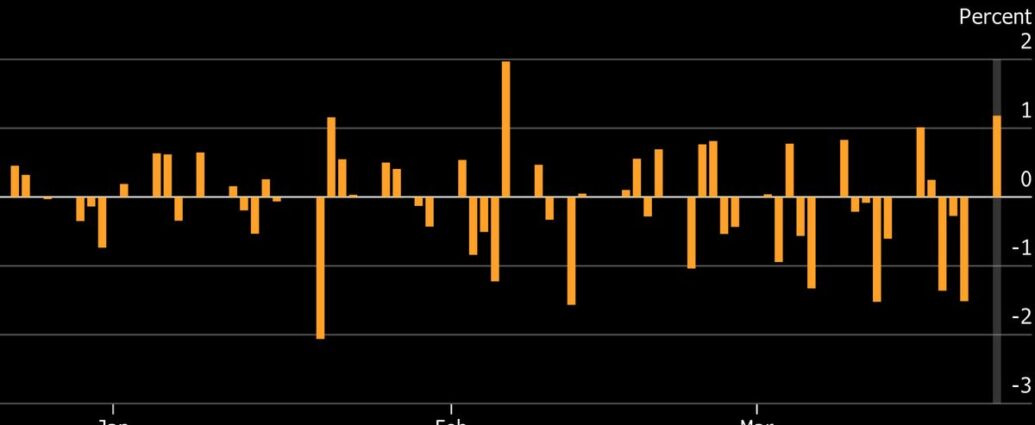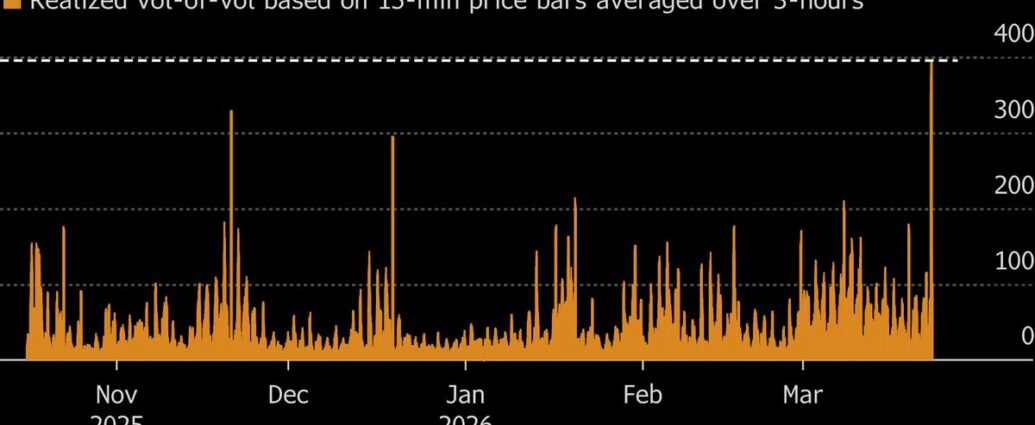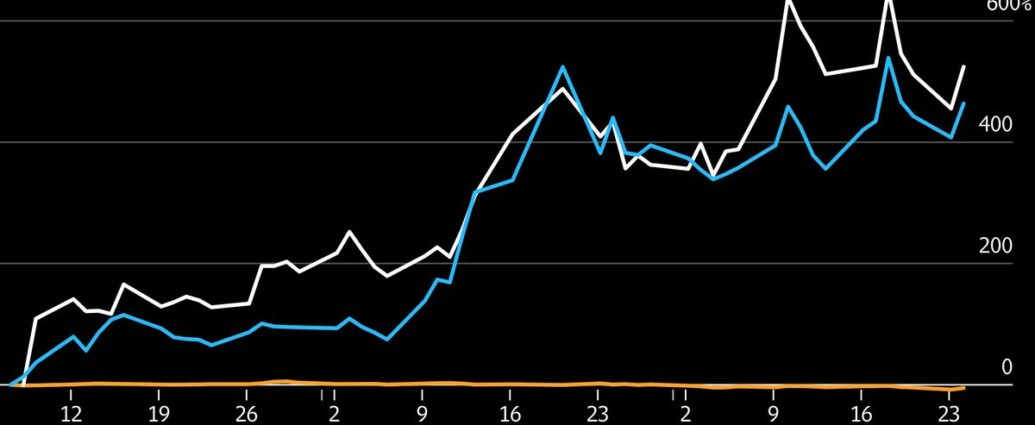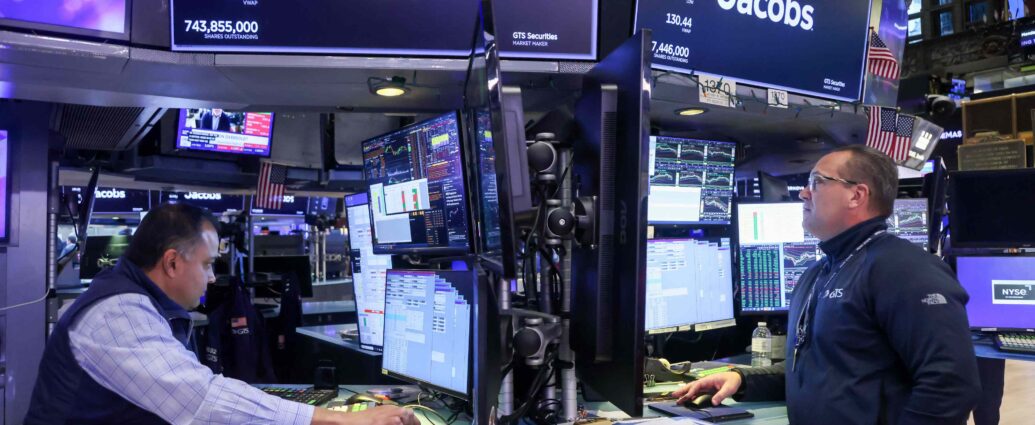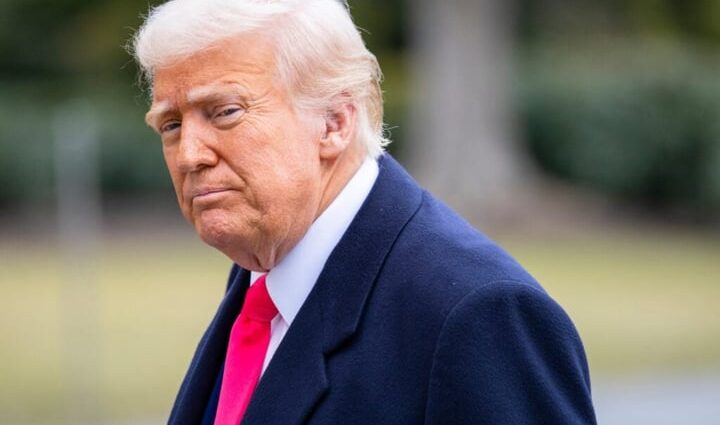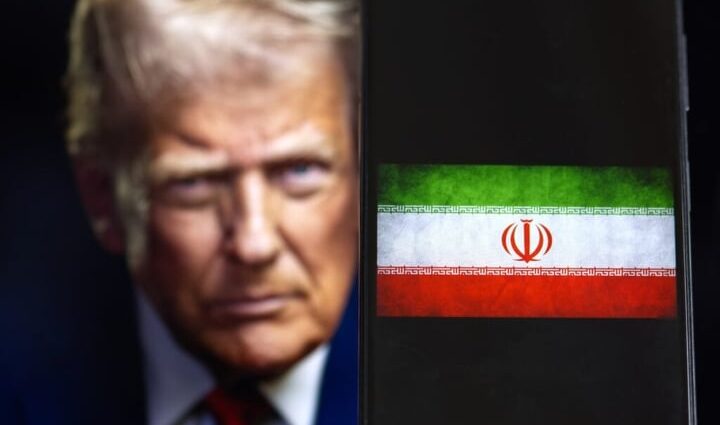
The Trump administration may be forced to temper the Iran conflict as borrowing costs surge, with the 10-year Treasury yield up 45 basis points since late February.

The Bond Market Pressure Point

Gold advocate Peter Schiff on Monday questioned why Trump dramatically escalated the war Saturday only to reverse course before markets opened, asking whether it was “market manipulation” or an indication the president has no idea what he’s doing.

The answer may lie in Treasury markets.

According to The Kobeissi Letter, the 4.5%-4.6% range represents a critical line in the sand—the same level where Trump pulled back from sweeping Liberation Day tariffs last April.

“As the 10-year note yield surged above 4.50%, President Trump began floating a potential tariff pause. And, once the yield broke above 4.60%, he officially implemented a 90-day pause on reciprocal tariffs on April 9th, 2025,” The Kobeissi Letter noted.

The Swap Spread Warning

ING’s Padhraic …

Full story available on Benzinga.com

This post was originally published here
Park police chief says officer was ‘ambushed’ by two gunmen who fired as officer drove in unmarked vehicle

A US park police officer was seriously wounded Monday evening in a shooting in Washington DC in what the park police chief called an ambush.

Park police chief Scott Brecht said in a press briefing that the unidentified officer was “ambushed” by two gunmen who fired at the officer as he drove by in an unmarked vehicle. The officer was working on a park police investigation when he was shot. The chief declined to give specifics of the investigation.

Continue reading…

This post was originally published here

With the recent buzz around Cintas Corporation (NASDAQ:CTAS) and its third-quarter earnings report on Wednesday, March 25, some investors may be eyeing potential gains from the company’s dividends.

As of now, the company has an annual dividend yield of 0.99%. That’s a quarterly dividend amount of 45 cents per share ($1.80 a year).  

So, how can investors exploit its dividend yield to pocket a regular $500 monthly?

To earn $500 per month or $6,000 annually from dividends alone, you would need an investment of approximately $603,973 or around 3,333 shares. For a more modest $100 per month or $1,200 per year, you would need $120,867 or around 667 shares.

To calculate: Divide the desired annual income ($6,000 or $1,200) by the dividend ($1.80 in this case). So, $6,000 / $1.80 = 3,333 ($500 per month), and $1,200 …

Full story available on Benzinga.com

This post was originally published here

Sen. Josh Hawley (R-MO) has launched an investigation into Fair Isaac Corp. (NYSE:FICO) over the company’s pricing of credit scoring in the mortgage market.

On Monday, Hawley sent a letter to FICO announcing his intent to scrutinize the company’s recent price increases for credit scores. The Missouri senator also called on the Federal Trade Commission (FTC) to launch a parallel investigation.

In his letter, Hawley argued that the escalating cost of credit scores is placing an undue burden on homebuyers in an already inflated market.

“These price increases are most damaging to the Americans who can least afford them. First-time homebuyers bear a disproportionate burden of the cost,” he stated.

Hawley has requested documents from FICO as part of an investigation that could expand into a broader probe of potentially anticompetitive practices in …

Full story available on Benzinga.com

This post was originally published here

Oracle Corporation (NYSE:ORCL) is undervalued, according to Cerity Partners’ Jim Lebenthal.

Lebenthal made the comments on the latest edition of CNBC’s “Halftime Report Final Trades.”

Oracle, on March 10, reported better-than-expected third-quarter financial results and issued FY2027 sales guidance above estimates.

The Austin, Texas-based company posted third-quarter revenue of $17.19 billion. Oracle beat analyst estimates of $16.91 billion, according to Benzinga Pro. Adjusted earnings grew 21% year-over-year to $1.79 per share, beating analyst estimates of $1.71 per share.

Don’t forget to check out our premarket coverage here

Bryn Talkington, managing partner of Requisite Capital Management, said she likes Zoom Communications, Inc

Full story available on Benzinga.com

This post was originally published here

As of 8:15 a.m. Eastern Time today, oil is trading at $102.47 per barrel, based on the Brent benchmark we’ll explain in a bit. That’s $1.03 above yesterday morning’s level and $29.44 higher than where it stood a year ago.

Oil price per barrel % Change
Price of oil yesterday $101.44 +1.01%
Price of oil 1 month ago $71.58 +43.15%
Price of oil 1 year ago $73.03 +40.31%

Will oil prices go up?

No one can say for sure where oil prices will go next. Many forces shape the market—but at the core, it’s still about supply and demand. When risks like a potential recession or war ramp up, oil prices can change direction quickly.

How oil prices translate to gas pump prices

When you buy gas at the pump, you’re covering more than the cost of crude oil. You’re also paying for every step in the process, including refineries, wholesalers, taxes, and the markup your local gas station adds.

Even so, crude oil has the biggest influence on what you pay, often making up more than half the cost per gallon. When oil prices jump, gas prices usually climb right along with them. But when oil falls, gas prices often slip much more slowly—a pattern sometimes called “rockets and feathers.”

The role of the U.S. Strategic Petroleum Reserve

If an emergency hits, the U.S. keeps a backup supply of crude oil called the Strategic Petroleum Reserve. It’s mainly there to protect energy security during crises, such as sanctions, catastrophic storm damage, even war. It can also help cushion the blow when supply shocks send prices soaring.

It’s not meant to solve long-term problems. Instead, it provides quick relief for consumers and helps keep vital parts of the economy moving, like essential industries, emergency services, and public transit.

How oil and natural gas prices are linked

Oil and natural gas are two of the world’s primary energy sources. A big change in oil prices can affect natural gas by extension. For example, if oil prices increase, some industries may swap natural gas for some segments of their operations where possible, which which increases demand for natural gas.

Historical performance of oil

When looking at how oil performs, two main benchmarks stand out:

  • Brent crude oil is the main global oil benchmark.
  • West Texas Intermediate (WTI) is the main benchmark of North America.

Of the two, Brent gives a better picture of global oil performance because it prices a large share of the world’s traded crude. It’s also the go-to for tracking oil’s historical trends. In fact, even the U.S. Energy Information Administration now relies on Brent as its primary reference in its Annual Energy Outlook.

If you look at the Brent benchmark over several decades, oil has been far from stable. It has experienced sharp rises tied to wars and supply cuts, along with steep drops linked to global recessions and oversupply (called a “glut”). For example:

  • The early 1970s delivered the first major oil shock when the Middle East slashed exports and placed an embargo on the U.S. and others during the Yom Kippur War.
  • Prices fell in the mid-1980s due to lower demand and an influx of non-OPEC oil producers joining the market.
  • Prices surged again in 2008 as global demand grew, but then crashed alongside the global financial crisis.
  • During the 2020 COVID lockdown, oil demand plummeted like never before—pushing prices below $20 per barrel.

To sum up, oil’s historical performance has been anything but smooth. Again, it’s heavily influenced by wars, recessions, OPEC whims, shifting energy policies, and much more.

Energy coverage from Fortune

Looking to stay up-to-date regarding the latest energy developments? Check out our recent coverage:

Frequently asked questions

How is the current price of oil per barrel actually determined?

The current price of oil per barrel depends largely on supply and demand, including news about potential future supply and demand (geopolitics, decisions made by OPEC+, etc.). In the U.S., prices also move based on how friendly an administration is to drilling, as it can affect future supply. For example, 2025 saw the Trump administration move to reopen more than 1.5 million acres in the Coastal Plain of the Arctic National Wildlife Refuge for oil and gas leasing, reversing the Biden administration’s policy of limiting oil drilling in the Arctic.

How often does the price of oil change during the day?

The price of oil updates constantly when the “futures” markets are open. A futures market is effectively an auction where people agree to buy or sell oil in the future. As long as people and companies are trading contracts, the oil price is changing.

How does U.S. shale oil production affect the current price of oil?

In short, shale is rock that contains oil and natural gas. Think of shale as energy yet to be tapped. The more shale the U.S. accesses, the more energy we’ll have—and the more easily oil prices can keep from spiking as much thanks to a greater supply.

How does the current price of oil impact inflation and the broader economy?

When oil is expensive, it tends to make everyday items cost more. This can be related to energy (your heating, gas utilities, etc.), but it’s also due to the logistics involved with making those items accessible to you. Shipping, for example, can affect the price of things at the grocery store, as it’s more expensive to get those products from warehouses and farms onto the shelf.

This story was originally featured on Fortune.com

This post was originally published here
A conversation with Harvard Kennedy School professor Julia Minson about focusing on concrete behavior rather than mindset.

This post was originally published here

Traders reportedly placed bets amounting to more than $500 million in the oil market minutes before a significant post by President Donald Trump concerning “productive” Iran talks.

Approximately 6,200 Brent and West Texas Intermediate (WTI) futures contracts were traded between 6.49 am and 6.50 am New York time on Monday, just 15 minutes before Trump’s post on Truth Social. These trades had a notional value of $580 million, as per calculations by the Financial Times.

Trading volumes for Brent and WTI surged at the same time, 27 seconds before 6.50 am. S&P 500 futures also saw a price jump shortly after the oil trade, with trading volumes significantly increasing during that period. The entities behind these well-timed trades remain unknown.

These trades mirror the recent pattern of large, profitable bets on prediction market Polymarket regarding the timing of U.S. attacks on Iran and Venezuela. Some traders have expressed frustration over these unusually timed large trades. One portfolio manager described the situation as “really abnormal,” adding, “Somebody just got a lot richer,” according to the publication.

The U.S. Securities and Exchange Commission and CME Group did not immediately respond to Benzinga’s request for comments.

Iran Calls It Market Manipulation

Trump initially threatened to “obliterate” Iran’s power plants …

Full story available on Benzinga.com

This post was originally published here


Billionaire Elon Musk said that Tesla and SpaceX will build an advanced chip facility in Austin, Texas, to help power the two companies’ emerging technologies amid a shortage of chips.

“Terafab will technically be two fabs, each making only one chip design,” Musk wrote Sunday in a post on X. 

One of Terafab’s facilities will be focused on AI chips for Tesla’s electric vehicles and Optimus humanoid robots, while the other will be focused on AI chips for space-based data centers made by SpaceX. 

Musk said that the Terafab chips will be necessary to meet his companies’ demand for computing power that exceeds what it can obtain from suppliers.

AMD CEO SAYS AI DEMAND IS ‘GOING THROUGH THE ROOF’ AS COSTS CLIMB

“We either build the Terafab or we don’t have the chips,” Musk said during a presentation in an Austin facility on Saturday, adding that current global chip production would meet only a small fraction of his companies’ future needs.

Musk thanked the companies’ existing chip suppliers, including Samsung, TSMC and Micron, but said that the demand from his companies would eventually exceed total global chip output, prompting the need for the new AI chip plant.

ALTMAN CALLS MUSK’S SPACE DATA CENTER PLANS ‘RIDICULOUS’ FOR CURRENT AI COMPUTING NEEDS

Musk also said that SpaceX’s AI chip for space-based data centers will need to have special characteristics to withstand the environment in space and function as intended.

“We need a high‑powered chip designed for space that takes into account the harsher environment in space, where you’ve got high power, high energy ions, photons, you’ve got electron build up,” Musk said, adding it would need to operate at higher temperatures.

“It’s a hostile environment in space,” Musk explained. “You want to optimize it for space, and you also want to generally run it a little hotter than you would normally run a chip on Earth to minimize the radiator mass.” 

NVIDIA LEADS AMERICA’S AI ‘INDUSTRIAL REVOLUTION’ WITH MAJOR MANUFACTURING MOVE

Musk did not give a timeline for the new project. Musk has a track record of announcing highly ambitious projects, though several have faced delays or fallen away.

Terafab will eventually produce one terawatt of computing capacity a year, compared with about half a terawatt currently generated across the U.S., Musk said.

GET FOX BUSINESS ON THE GO

Reuters contributed to this report.

This post was originally published here

U.S. stock futures were lower this morning, with the Dow futures falling around 0.2% on Tuesday.

Shares of Hesai Group – ADR (NASDAQ:HSAI) fell sharply in pre-market trading after reporting fourth-quarter results.

Hesai reported quarterly earnings of 16 cents per share, down from 17 cents per share in the year-ago period. The company reported $143.100 million in sales, up from $98.606 million in the same period last year.

Hesai Group shares dipped 6.6% to $22.00 in pre-market trading.

Here are some other stocks moving lower in pre-market trading.

  • LG Display …

Full story available on Benzinga.com

This post was originally published here

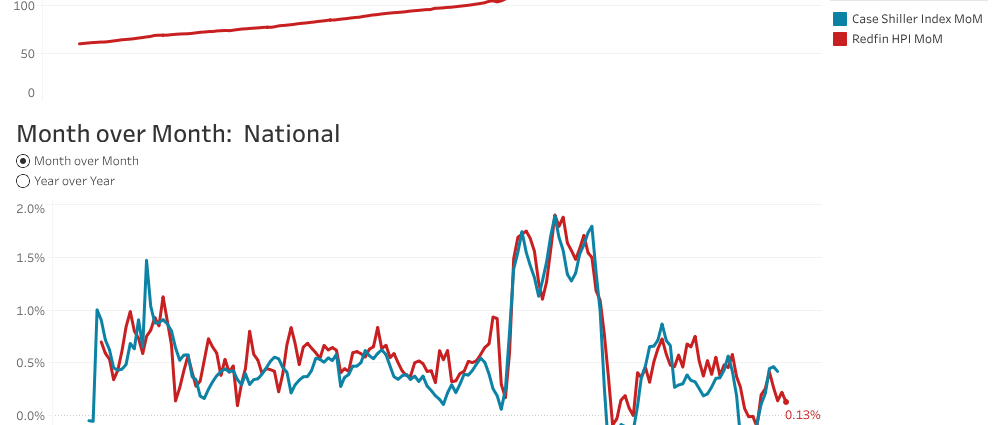
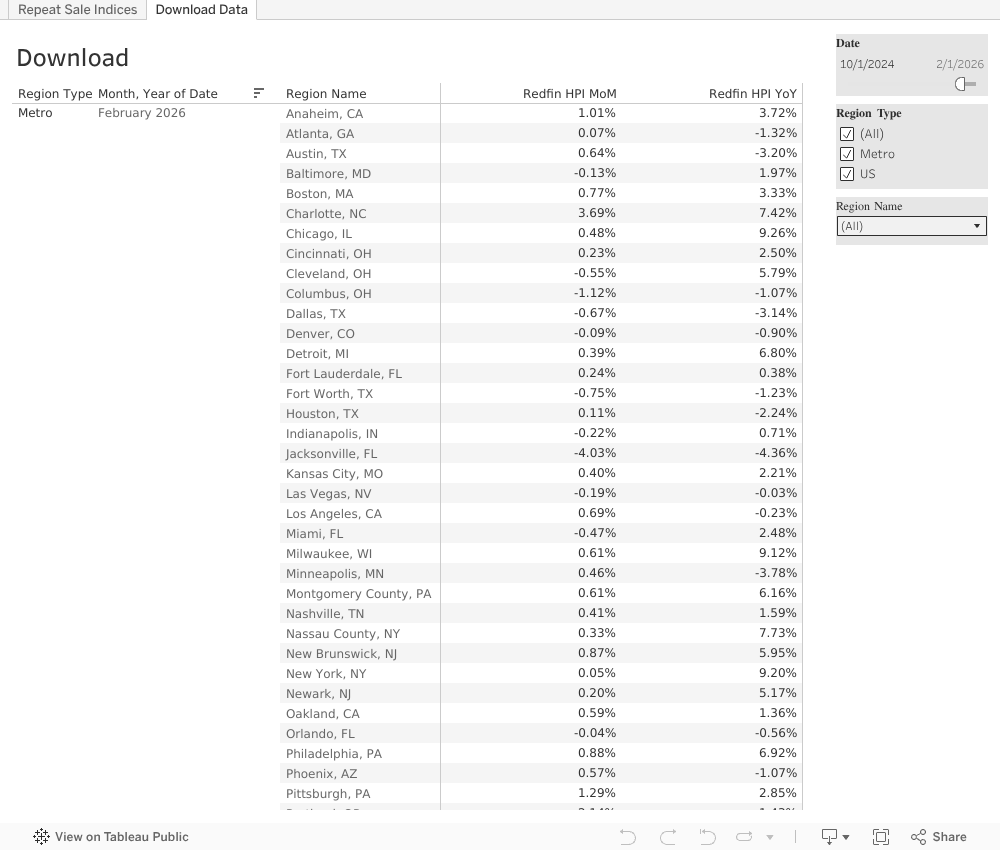
  • Home prices rose 0.1% month over month on a seasonally adjusted basis—the slowest growth in seven months.
  • Prices fell in 16 major metros, with the biggest declines in Jacksonville, FL, Providence, RI and Columbus, OH. Prices rose most in Charlotte, NC, Portland, OR and West Palm Beach, FL.

U.S. home prices were little changed from a month earlier in February, rising 0.1% on a seasonally adjusted basis—the slowest growth in seven months. They increased 1.9% year over year.


This is according to the Redfin Home Price Index (RHPI), which uses the repeat-sales pricing method to calculate seasonally adjusted changes in single-family home prices. The RHPI measures how sale prices of homes have changed since their previous sale—similar to the S&P Cotality Case-Shiller Home Price Indices—but is reported about a month earlier. February data covers the three months ending Feb. 28, 2026. Read the full RHPI methodology here.

Price growth is muted because it’s the strongest buyer’s market in recent history—for those who can afford to buy. Many Americans are holding off on purchasing homes because mortgage rates are still more than double the all-time low hit during the pandemic, and the nation is grappling with economic uncertainty and layoffs. As a result, there are a record 46% more home sellers than buyers, meaning the buyers who are in the market have negotiating power when it comes to price. Prices are still rising slightly, but this growth pales in comparison to recent years; during the pandemic, prices rose as much as 21% year over year and as much as 1.9% during a single month.

“Mortgage rates have ticked up in the past few weeks following months of declines, but we still expect housing affordability to improve this year as income growth outpaces home price growth,” said Redfin Principal Economist Sheharyar Bokhari. “Homebuyers in many markets are having success asking for discounts and other concessions, and they have the luxury of time because they aren’t facing much competition.”

The daily average mortgage rate rose to a six-month high of 6.53% last week amid escalations in the Iran war.

Home prices are falling in 16 major U.S. metro areas


Home prices fell month over month in 16 of the 50 most populous U.S. metropolitan areas on a seasonally adjusted basis in February.

The biggest declines were in Jacksonville, FL (-4%), Providence, RI (-1.4%) and Columbus, OH (-1.1%). The biggest gains were in Charlotte, NC (3.7%), Portland, OR (2.1%) and West Palm Beach, FL (2.1%).

Prices also fell in 16 metros on a year-over-year basis, with the biggest declines in San Antonio (-5.1%), Jacksonville (-4.4%) and Minneapolis (-3.8%). The largest increases were in San Francisco (15.2%), Chicago (9.3%) and New York (9.2%).

The post U.S. Home Prices Barely Budged in February appeared first on Redfin Real Estate News.

This post was originally published here
From CEO to intern, your employees need a trusted advisor.

This post was originally published here

China’s push into the overseas market is rapidly reshaping the global supply chain for critical minerals. The country’s grip on raw materials and the energy transition is tightening, raising concerns about Western competitiveness.

A report by Climate Energy Finance (CEF) shows that since 2023, Chinese firms have deployed more than $120 billion across lithium, copper, nickel, rare earths, and bauxite projects worldwide.

The control over these minerals is increasingly viewed through the lens of national security and military competition, as recent concerns over the tungsten price spike show.

“China grasped this reality earlier, and pursued it more systematically than many others,” Prof. Marina Zhang from the University of Technology Sydney said in the report.

According to CEF, China put more than $220 billion into downstream industries. These include battery manufacturing, electric vehicles, and renewable energy infrastructure – forming a vertically integrated system. China now controls about 90% of global rare earth refining, roughly 60% of lithium processing, and more than 70% of …

Full story available on Benzinga.com

This post was originally published here
Bitcoin trades above $71,000 on Tuesday morning as ETFs saw $167.2 million in net inflows on Monday, while Ethereum ETFs reported $16.2 million in net outflows.  


Cryptocurrency
Ticker Price
Bitcoin (CRYPTO: BTC) $71,118
Ethereum (CRYPTO: ETH) $2,164
Solana (CRYPTO: SOL) $91.86
XRP (CRYPTO: XRP) $1.41
Dogecoin (CRYPTO: DOGE) $0.09406
Shiba Inu (CRYPTO: SHIB) $0.056133

Meme coin market capitalization trades 1.2% higher over the past 24 hours to $33.5 billion.

Trader Commentary:

Analyst …

Full story available on Benzinga.com

This post was originally published here
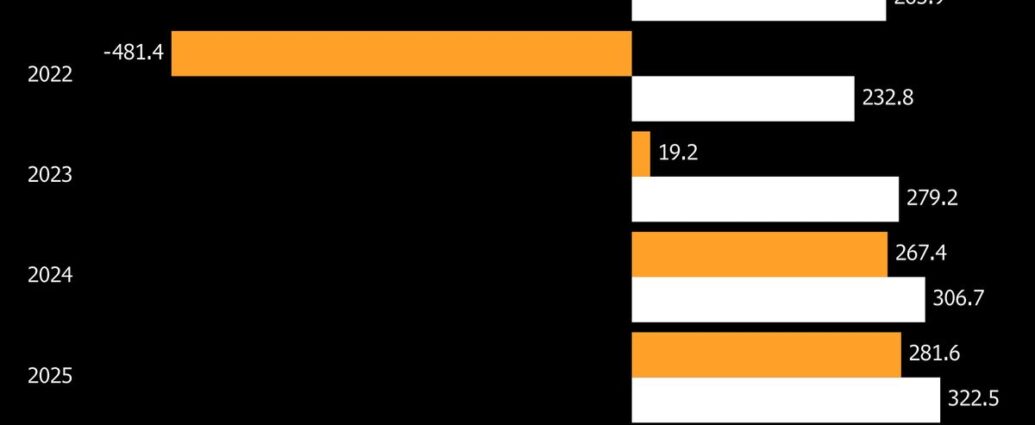
During times of turbulence and uncertainty in the markets, many investors turn to dividend-yielding stocks. These are often companies that have high free cash flows and reward shareholders with a high dividend payout.

Benzinga readers can review the latest analyst takes on their favorite stocks by visiting Analyst Stock Ratings page. Traders can sort through Benzinga’s extensive database of analyst ratings, including by analyst accuracy.

Below are the ratings of the most accurate analysts for three high-yielding stocks in the utilities sector.

CMS Energy Corp (NYSE:CMS)

  • Dividend Yield: 3.06%
  • Keybanc analyst Sophie Karp maintained an Overweight rating and raised the price target from $79 to $83 on March 2, 2026. This analyst has an accuracy rate of 62%
  • Barclays analyst Nicholas Campanella maintained an Overweight rating and raised the price target from $74 to $79 on Feb. 23, 2026. This analyst has an accuracy rate of 70%.
  • Recent News: On Feb. 20, CMS Energy announced that Diane Leopold and Richard Keyes …

Full story available on Benzinga.com

This post was originally published here

Good morning. The single-point forecast is no longer fit for purpose.

Scenario planning has become boardroom shorthand for preparation to deal with the unknowable, my colleague Geoff Colvin writes in a Fortune feature titled “For CEOs, it’s time for a wartime mindset.”

Colvin argues that it’s a practice that is never more vital than in wartime — when a cyberattack, or even a sanction, can reroute supply chains overnight and send energy prices soaring.

He writes: “Instead of betting on one forecast about how events will unfold, the most resilient CEOs are now rehearsing several plausible futures at once and deciding — before the missiles start dropping, the virus becomes a pandemic, or the markets seize up — what they will do in each.

“It’s an approach that was pioneered by Shell precursor Royal Dutch Shell. In the 1970s, the energy company began developing a set of vivid alternative futures involving potential oil-supply disruptions. Shell did not invent the idea of developing such scenarios, which had earlier roots in military and Cold War strategy, but it was the first major company to embed systematic scenario planning at the center of corporate decision-making, largely through the work of economist and planner Pierre Wack.” You can read more of Colvin’s article here.

CFOs are strategic partners to CEOs, and financial scenario planning isn’t just about reducing risk—it can also uncover new opportunities, according to Gartner research. For each scenario, CFOs should define actions that enable rapid response, while prioritizing moves that apply across multiple outcomes, such as locking in supplier contracts or accelerating product launches, Gartner advises. This kind of proactive planning helps to ensure companies can act quickly. The firm also points to AI scenario planning models to track key metrics in real time, and autogenerate scenarios based on real data, not just guesses.

Sheryl Estrada
sheryl.estrada@fortune.com

This story was originally featured on Fortune.com

This post was originally published here

KB Home (NYSE:KBH) will release earnings for its first quarter after the closing bell on Tuesday, March 24.

Analysts expect quarterly earnings of 54 cents per share. That’s down from $1.49 per share in the year-ago period. The consensus estimate for KB Home’s quarterly revenue is $1.09 billion; it reported $1.39 billion last year, according to Benzinga Pro.

On Jan. 28, KB Home named Robert McGibney as president and chief executive officer.

KB Home shares gained 4% to close at $53.19 on Monday.

Benzinga readers can access the latest analyst ratings on the Analyst Stock Ratings page. Readers can sort by stock ticker, company name, analyst firm, rating change or other variables.

Let’s have a look at how Benzinga’s most-accurate analysts have rated the company in the recent …

Full story available on Benzinga.com

This post was originally published here

If yesterday’s five-minute relief rally taught analysts one thing, it’s that traders are keen to jump on the optimistic bandwagon when it comes to Iran. After weeks of volatile trade, yesterday Wall Street celebrated after President Trump indicated he was working toward a “complete and total” resolution of hostilities with Iran.

There’s one small issue: While Trump said there was “productive” conversations with Iranian leaders, Tehran reportedly maintained that “no dialogue” has occurred between the two nations. There are talks between intermediaries in Riyadh, but it’s not clear how far along they are, or how willing either side is to compromise.

Wall Street, however, has adopted a new behavioural trait since Trump returned to office: Investors are reacting (justifiably or not) to social media posts from the Oval Office without much verifiable evidence to go on.

Wall Street’s early optimism that the war in Iran would resolve relatively quickly means they are more inclined to act on positive updates from the commander in chief, according to UBS’s chief economist Paul Donovan.

He noted to clients this morning: “Markets are not reacting to information, they are generally reacting to social media posts and headlines—even if those posts or headlines are fake news or contradictory. The absence of verifiable facts is already complicating economic assessments, for instance, it is difficult to assess how much Dubai might have to spend repairing war damage, when there is little verifiable information about the extent of war damage.”

Wall Street has come to expect (indeed, sometimes bank on) rapid updates and changes in foreign policy under President Trump, often shared on social media rather than through more traditional channels. Trump’s social media posts have covered everything from tariff threats on trading partners and calling out specific businesses, through to criticism of the Federal Reserve chairman Jerome Powell.

The rapidity of these updates, and often the ensuing reverse ferret, has earned a nickname: TACO (Trump Always Chickens Out). The updates from the president on Monday, some have speculated, may the latest example of a TACO.

While it could be argued that Trump’s social media posts, above all others, should be monitored by investors, Donovan highlights that this should not obscure factual information. He added: “There is now a risk that investors will start looking for leading indicators of social media posts, rather than leading indicators of actual indications.”

Confirmation bias

There’s a further issue: Traders want the war in Iran to be over. When the U.S. and Israel launched strikes on Iran, Trump said the action would only last for a matter of weeks, and this is the baseline many economists and analysts have stuck with.

Donovan argues that for this reason, markets are “bewitched” by good news, and so are more inclined (such as yesterday) to act: In a matter of moments yesterday, oil sunk below the $100 threshold and was down 15% while equities added $1.7 trillion in value (much of this promptly unwound when Iran denied the talks).

“Investors are also perhaps influenced by loss aversion and confirmation bias,” added Donovan. “Investors want the war to end, there’s an irrational bias in favor of rising markets. If there is a story that seems to confirm that desire, investors are more likely to react to it. This does not mean that negative stories will be ignored … for now, markets do seem to be content to trade strongly on stories but to provoke an equal negative reaction would probably need more hard evidence of adverse developments.”

Deutsche Bank’s Jim Reid echoed that markets will now be looking for follow-through from Trump 2.0, writing this morning: “Obviously, much now depends on the progress of any talks, and whether the more optimistic rhetoric is followed up by concrete action.”

This story was originally featured on Fortune.com

This post was originally published here

Scheme expanded to four schools with known or suspected cases, as UKHSA figures show number has fallen to 23

The meningitis B vaccination programme will be expanded to include year 11 pupils at schools affected by the outbreak in Kent, health officials have said.

Figures from the UK Health Security Agency (UKHSA) show the number of cases of the illness have fallen.

Continue reading…

This post was originally published here
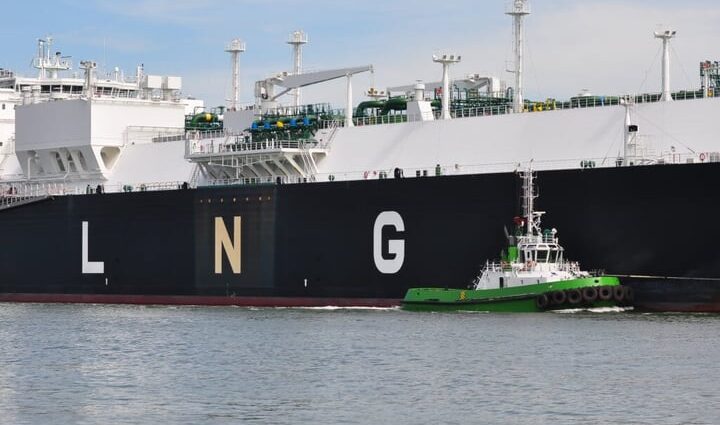
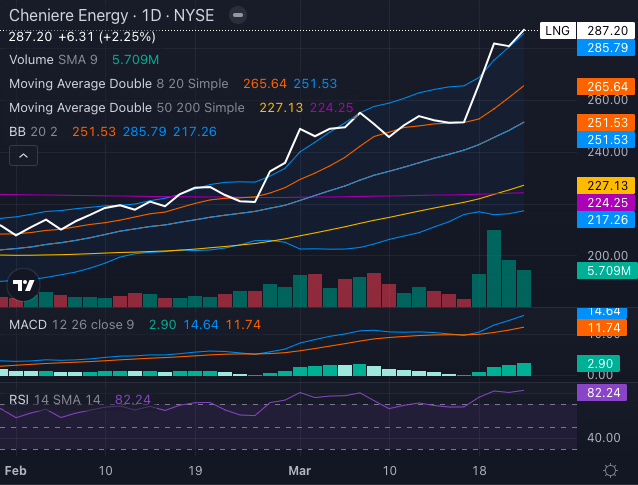
A 48% rally usually raises questions. In Cheniere Energy, Inc. (NYSE:LNG) , it’s raising conviction. The LNG exporter has surged 48% year-to-date and nearly 30% in the past month, and now the chart is stepping in to confirm what the price action already hinted at.

Chart created using Benzinga Pro

A Golden Cross—where the 50-day moving average breaks above the 200-day gauge—has just formed. It’s a classic bullish signal, but in this setup, it lands with more weight.

LNG Golden Cross Momentum Setup

This isn’t just a crossover—it’s happening with momentum …

Full story available on Benzinga.com

This post was originally published here
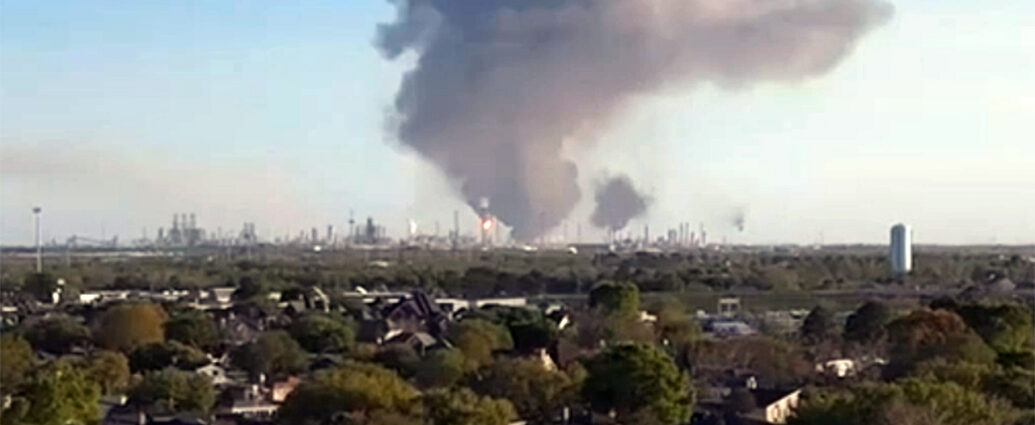
Residents of a Texas city were urged to shelter in place following an explosion and fire at a Valero oil refinery that sent massive plumes of smoke billowing into the air. 

The incident happened Monday at Valero’s Port Arthur Refinery, which is located about 90 miles east of Houston and processes around 435,000 barrels per day. The company says about 770 employees work at the site, but there were no injuries, according to Port Arthur Mayor Charlotte Moses. 

“There’s been an explosion, yes, but we’re OK, everybody’s OK,” Moses said in a video posted on Facebook late Monday. “They’re trying to put the fire out as quickly as possible. They are working fast, our firefighters are on the scene. They’re working really hard.” 

Port Arthur is advising residents who live in the areas of Stillwell Boulevard West to South of Highway 73, Sabine Pass and Pleasure Island to adhere to an “immediate shelter in place.” 

ENERGY PRICES COULD FALL ‘PRETTY SIGNIFICANTLY’ IF IRAN DEAL REACHED, ENERGY SECRETARY SAYS 

“For your safety, please remain in place until the ‘All Clear’ is given by emergency personnel,” the city said. 

Port Arthur has a population of around 56,000.

“Currently, there is a fire in a unit at Valero’s Port Arthur, Texas refinery,” Valero told FOX Business in a statement on Tuesday morning. “All personnel have been accounted for. Valero’s emergency response team is responding and coordinating with local authorities. As a precaution, Jefferson County officials have closed State Highways 82 and 87. As always, the safety of our workers is our top priority.”

ONE YEAR LATER, LOS ANGELES RESIDENTS CONTINUE TO FACE REBUILDING CHALLENGES: ‘FATIGUE FACTOR’ 

Jefferson County Sheriff Zena Stephens told FOX4 Beaumont that an industrial heater was likely behind the explosion. 

CLICK HERE TO READ MORE ON FOX BUSINESS       

“Emergency response coordinators and regional staff have been deployed with handheld and mobile air monitoring assets in response to the Valero fire in Port Arthur, TX and are coordinating activities through incident command,” the Texas Commission on Environmental Quality wrote on X. 

This post was originally published here
PMI figure reveals impact on economy of rise in oil prices driven by Iran war

The UK’s manufacturers have suffered the sharpest one-month acceleration in costs since the aftermath of Black Wednesday in 1992, as conflict in the Middle East has driven up oil prices, new survey evidence shows.

The closely watched purchasing managers’ index (PMI) lays bare the impact of the conflict on the UK economy, with growth slowing sharply across manufacturing and services and costs rising.

Continue reading…

This post was originally published here

C$ unless otherwise stated 

TORONTO, March 24, 2026 /CNW/ – Manulife Investments today announced the March 2026 cash distributions for Manulife Exchange Traded Funds (ETFs) and ETF series of Manulife Mutual Funds, including Manulife Alternative Mutual Funds (Manulife Funds), that distribute monthly and quarterly. Unitholders of record at the close of business on March 31, 2026, will receive cash distributions payable on April 15, 2026.

Details of the distribution per unit amounts are as follows:

Manulife ETF/Fund Name

Ticker

Distribution
Amount
(per unit)
($)

Distribution
Frequency

Manulife Smart Short-Term Bond ETF

TERM

0.025777

Monthly

Manulife Smart Core Bond ETF

BSKT

0.022721

Monthly

Manulife Smart Corporate Bond ETF

CBND

0.029858

Monthly

Manulife Smart Global Bond ETF

GBND

0.022564

Monthly

Manulife Smart Enhanced Yield ETF

CYLD

0.160000

Monthly

Manulife Smart U.S. Enhanced Yield ETF – Unhedged

UYLD.B

0.160000

Monthly

Manulife Smart U.S. Enhanced Yield ETF – US Dollar

UYLD.U

0.160000*

Monthly

Full story available on Benzinga.com

This post was originally published here
When everyone agrees, that might be the biggest warning sign of all. Unanimous decisions often reveal as much about group dynamics as genuine agreement.

There is an unlikely field that studies this problem with unusual clarity: avalanche safety.

In avalanche safety training, there is one rule that overrides all others: if a single person in the group says “no,” everyone turns around. Corporate boards could learn something from that.

Corporate boards make some of the most consequential decisions in business — acquisitions, strategic pivots, leadership transitions, major capital allocations. Yet when those decisions appear in board minutes, they are almost always recorded as unanimous. Research suggests dissent occurs in only about 1% of board decisions. That unanimity often reveals as much about group dynamics as it does about genuine agreement.

The rule exists because of a pattern instructors see again and again. Someone senses something is wrong — unstable snow, deteriorating conditions, a risky route — but speaking up means challenging the plan and slowing everyone down. In larger groups especially, that voice often stays quiet.

The most dangerous variable, instructors often say, is not the snowpack. It is the group.

Corporate boardrooms operate under strikingly similar conditions. Directors must make consequential decisions with incomplete information: often within the compressed time frame of a board meeting. The question isn’t whether boards face pressure to align. It’s whether that pressure is silencing the most important voices in the room.

Consensus has obvious virtues. Boards function best when directors ultimately align behind a course of action. A unified board gives management clarity and confidence in execution.

But consensus can be a signal. It can also be a warning.

Anyone who has spent time in boardrooms recognizes how quickly the momentum of a conversation can tilt toward agreement. Management presents a proposal. A director offers a supportive observation. Another suggests refinement. Gradually, the discussion shifts from whether the proposal is sound to how it should be implemented.

Eventually the chair looks around the table and asks a familiar question: “Is everyone comfortable moving forward?”

Directors sometimes recognize the dynamic only after the meeting ends. Following a unanimous decision on a major initiative, someone may quietly remark in the hallway, “I had some reservations about that.” Another director admits they did as well. In the room itself, however, those doubts never surfaced.

Seasoned investors understand the value of dissent. Warren Buffett has long argued that the best boards are those where directors are willing to challenge assumptions rather than simply ratify them. But even strong boards can find that once a discussion begins to converge, raising a late objection becomes psychologically difficult.

Psychologists call this dynamic groupthink: the tendency of cohesive groups to suppress disagreement in pursuit of harmony. Boardrooms are particularly susceptible: — directors meet periodically, relationships are collegial, and open disagreement can feel unnecessarily disruptive.

Avalanche educators warn about the same pattern. As groups become larger, responsibility diffuses and individuals become less likely to challenge the emerging consensus. The very structure of the discussion can begin to suppress caution.

If that dynamic shows up in boardrooms — and the evidence suggests it does — improving board decisions isn’t only about who sits at the table. It’s about how decisions are made once everyone is there. Boards have spent decades focused on composition: independence, diversity, expertise. The next frontier is deliberation.

Some boards already experiment with structured disagreement. In evaluating major transactions, directors may organize “red team/blue team” exercises, assigning one group to argue for a deal while another is tasked with challenging it. The objective is to stress-test assumptions before committing capital.

Yet most board deliberation still takes place in a single conversation around a table. That format encourages the emergence of a dominant narrative before competing analyses have had time to develop.

Boards might consider what could be called parallel deliberation: briefly breaking into smaller groups before reconvening to compare conclusions.

After management presents a proposal, the chair divides directors into small groups and asks each to answer the same three questions: What assumptions must be true for this plan to succeed? What could cause it to fail? Under what circumstances would we say no? Fifteen minutes later, the board reconvenes and compares conclusions before continuing the discussion.

Such a structure introduces several useful dynamics. Smaller groups lower the social cost of dissent. Independent discussions generate multiple lines of analysis rather than a single conversational path. And by interrupting the momentum of a room-wide consensus, the structure helps surface concerns that might otherwise remain unspoken.

The goal is not to manufacture disagreement. Boards ultimately need alignment. But alignment reached through rigorous debate is far stronger than consensus that emerges quietly around the table.

In avalanche training, the group turns around when one person says no.

In boardrooms, that same voice is the one most likely to stay quiet — and the one most worth hearing.

The opinions expressed in Fortune.com commentary pieces are solely the views of their authors and do not necessarily reflect the opinions and beliefs of Fortune.

This story was originally featured on Fortune.com

This post was originally published here
The giant asset manager Invesco revealed on Tuesday that it will run a crypto investment vehicle known as the Superstate Short Duration US Government Securities Fund (USTB), which holds over $900 million in assets under management. Like BlackRock with its flagship BUIDL fund, Invesco is betting on an emerging category of assets known as “real world assets” or RWAs, which consist of traditional investments packaged in blockchain wrappers.

While BlackRock’s BUIDL, the biggest of the RWA funds, is technically a money market fund that holds both Treasury Bills and repos, Invesco’s USTB, which is the fourth largest RWA fund, holds only T-bills. Another big player in the space is Paxos, which offers a fund backed primarily by physical gold.

While the RWA offerings are still niche products, they are growing fast. Their appeal derives from the blockchain packaging, which lets holders settle trades instantly, freeing up collateral. And unlike stablecoins, they provide easy access to yield. While tokenized funds have so far been marketed primarily to institutional investors, this could change in coming years as players like Invesco and BlackRock, which have large retail customer bases, expand their offerings.

“Invesco has been strategically building the capabilities required to support institutional-grade digital asset products since 2019, and this partnership reflects that long-term commitment,” said Kathleen Wrynn, Global Head of Digital Assets at Invesco, in a statement.

In an interview with Fortune, Superstate founder Robert Leshner explained that his company built USTB and another tokenized fund in part as a prototype to show Wall Street that the RWA concept worked in practice. Founded in 2022, Superstate also operates as a transfer agent and is positioning itself to offer its tokenization technology as a white label service across Wall Street. Superstate’s prime rival in this is Securitize, which provides the technology powering BlackRock’s BUIDL fund.

Leshner declined to provide the financial aspects of the new tie-up between between Invesco and Superstate, which in January raised an $82 million Series B funding round. He did, though, confirm that his firm would serve as an ongoing technology partner to Invesco, and that the financial giant would take over the branding and operations of the T-bill fund.

BlackRock CEO Larry Fink underscored the growing importance of RWAs in his annual shareholder letter that was published on Monday. The letter contains six references to “tokenization,” including in a passage where Fink notes, “Tokenization could help accelerate [the] future by updating the plumbing of the financial system—making investments easier to issue, easier to trade, and easier to access.”

This story was originally featured on Fortune.com

This post was originally published here

Iran has dismissed the US president’s claim of talks, saying there had been none since Washington began bombing the country. Plus, how sleeping 11 minutes more can cut your risk of heart attack

Good morning.

Donald Trump said there have been talks between the US and Iran over the past day in which the two sides had “major points of agreement” – but Tehran denied the claim, saying there had been no talks since the US began bombing Iran 24 days ago.

Continue reading…

This post was originally published here
One minute he threatens death and destruction, the next he says the US and Iran are engaged in negotiations

This post was originally published here
Son-in-law of former United player is among 1,100 fans forced to give up prime seats under cash-boosting plans

A Manchester United fan said he feels “helpless and hopeless” after being evicted from the seat his family have held since just after the second world war to make way for £300-a-head VIPs.

Tony Riley, whose father-in-law played for United under Sir Matt Busby, is among 1,100 supporters forced to move under cash-boosting plans overseen by Sir Jim Ratcliffe.

Continue reading…

This post was originally published here

Good morning. On Fortune’s radar today:

  • Stock traders rejoiced at the news that President Trump may be searching for a way out of Iran. Oil is still above $100 a barrel, and both Tehran and Wall Street expect American voters to punish Republicans at the midterm elections if this goes on much longer. There is an off-ramp, but it risks making Iran look like the winners, experts say. Suspiciously, a massive set of highly profitable trades in oil and stock futures were placed in New York minutes before Trump announced he wanted Iran to come to the table. 
  • Exclusive: Some people are so addicted to their phones that they end up in a $1,000-a-day rehab clinic outside Seattle.
  • In Asia there are shortages of jet fuel, toilet paper, and fertilizer.
  • Morgan Stanley warns of a “chaotic melt toward stagflation.”
  • Private credit funds have shut the gates on some investors.

This story was originally featured on Fortune.com

This post was originally published here
Experts say brutal temperatures in west threaten to melt sparse snowpack – and warn hot, dry conditions here to stay

A stunning heatwave that shattered records in the US west is threatening to rapidly melt the sparse snowpack and ramp up wildfire risks in the seasons ahead.

March has already been historically hot, but the early onset of summer weather across the region may be here to stay. There’s little reprieve in forecasts, which show more heat records may fall this spring.

Continue reading…

This post was originally published here

National peak body will work with community-controlled organisations to address rates of violence against Indigenous women and girls

A new national body to reduce rates of family and sexual violence toward Aboriginal women and children will launch in Canberra on Wednesday, after years of campaigning by Indigenous women’s safety advocates.

First Nations women are seven times more likely to be killed and 27 times more likely to be hospitalised due to family violence than non-Indigenous women, and reducing rates of violence is a Closing the Gap target.

Continue reading…

This post was originally published here

Leon Botstein’s communications and relationship with Epstein under review by WilmerHale law firm, while Bard president says he never witnessed anything inappropriate

A victim of Jeffrey Epstein who had previous interactions with Leon Botstein said she believed the Bard College president, whose relationship with the late sex offender is currently under review, was part of a group of influential and accomplished men whose proximity to Epstein helped to rehabilitate his reputation.

Svetlana Pozhidaeva, a former Russian model who worked as a “staffer” for Epstein, told the Guardian in an interview that she saw Botstein with Epstein together “quite frequently” – including having flown with him on a trip to Epstein’s island in December 2012 – and that she believed his reputation as a “sophisticated intellectual” helped “legitimize” Epstein.

Continue reading…

This post was originally published here

Bright Line Watch researchers see stabilization in democratic health but at lower levels after sharp decline

The health of American democracy, as measured by those who study it most closely, has settled into a diminished state – stabilizing after a sharp decline last year, but still well below the levels recorded at any point before the start of Donald Trump’s second term, according to a new survey released on Tuesday.

The findings, by the nonpartisan democracy-tracking project Bright Line Watch, which surveys hundreds of US scholars at American colleges and universities, suggest that the erosion of norms detected after Trump’s return to the White House last year has hardened into a new baseline. The public also holds a dim view of American democracy, the most recent survey found, but are sharply divided along partisan lines over how well the system is functioning.

Continue reading…

This post was originally published here
Cambridge Mobile Telematics has quietly become one of the most important companies you’ve never heard of in the race to make driving safer—and now some of the world’s biggest insurers are doubling down on it. The Cambridge, Mass.–based company has secured a $350 million strategic investment led by TPG’s Rise Funds and Allianz X, Fortune exclusively learned, with existing backer State Farm also participating in the all-secondary deal.

CMT builds AI-powered telematics software that turns everyday devices—smartphones, car sensors, dashcams, and other connected hardware—into real-time risk detectors on the road. Its DriveWell Fusion platform ingests sensor data from millions of devices and fuses it with contextual information, creating a unified view of how people actually drive, from hard braking and speeding to phone distraction. Insurers, automakers, and public agencies then use those insights to price risk, detect crashes, and nudge drivers toward safer habits. 

To date, CMT-powered programs have helped prevent more than 100,000 crashes and 54,000 serious injuries, and support over 140 safe driving initiatives touching more than 55 million drivers in 25 countries, according to Frost & Sullivan and the company. According to TPG, the company already serves nearly all of the 25 top U.S. auto insurers.

The business behind that impact is not small. Third-party estimates peg CMT’s private valuation above the billion‑dollar mark. The new deal follows a $500 million investment from SoftBank’s Vision Fund in 2018, one of the largest tech financings in Massachusetts at the time.

Powers, CMT’s cofounder and CEO, has a simple way of explaining what all that capital is funding. “If you think of the world of mobility, we are an artificial intelligence mobile sensing company,” he told Fortune. “Most vehicles have a signal coming from them. Now it might be the driver’s phone, it might be the vehicle itself, but we measure the signal. We do not track things. We measure signal.” Beyond insurance, CMT’s public sector division works with cities and transportation agencies to understand how people move, redesign dangerous roads, and prepare aging infrastructure for more automated driving.​​

The strategic investment into CMT is notable not just for its size, but for what it is not. Powers says, “none of this is primary capital. This is all secondary transactions, meaning there’s no dilution with this transaction—zero.” The new money instead is meant to push the business further in its innovation by buying out older investors and providing liquidity to long‑time employees and shareholders. “We’ve been at this for 16 years,” he told Fortune. “We continue to generate cash and continue to deliver liquidity to folks along the way.”​ 

Akash Pradhan, partner at TPG’s Rise Fund, told Fortune, the firm’s investment in CMT comes from his belief that the telematics company is slated to become the “mission critical” infrastructure of road safety turning more than 30 petabytes of data into foundational AI that can help both save lives and lower premiums.

For Allianz X, the deal is as much about strategy as returns. The unit is the strategic investment arm of Allianz, rather than a conventional GP/LP fund, and sits inside a group that wrote about $217.1 billion in total premiums and generated $20.2 billion in operating profit in 2025, serving roughly 97 million customers worldwide. “At Allianz X, we’re not a fund, so we don’t have a GP structure,” CEO Dr. Nazim Cetin told Fortune. “We are a strategic investment unit of Allianz.”

Allianz has been building a digital claims stack in recent years, acquiring firms like ControlExpert, Innovation Group, and GT Motive to automate everything from photo-based damage estimates to routing cars to the right repair shops. CMT’s telematics is meant to sit upstream of that system, helping prevent accidents in the first place and feeding richer data into claims workflows when they do happen. 

Cetin stresses that Allianz X still underwrites the deal like a classic venture investor. “We do not invest if the company on a standalone basis would not give us the risk-return profile that we expect,” he says. “In this case, what we would expect is what every VC investor would expect from such an investment on a standalone basis.” But unlike a traditional fund, Allianz’s capital “doesn’t have an expiration date,” giving it more patience to realize both financial returns and operational gains like lower claims frequency and more tailored pricing for policyholders.​​

The check also comes from serious financial firepower. TPG manages more than $120 billion across strategies and has built its Rise impact platform into what it calls the world’s largest dedicated impact-investing franchise, with roughly $19 billion in assets under management. Allianz X sits inside one of the largest auto insurers in Europe and globally, while State Farm—an early CMT backer—runs one of the most widely used telematics programs in the U.S., Drive Safe & Save, across more than 90 million policies and accounts.For Powers, that network is as much about distribution as dollars. “Because we’ve been profitable for so long, and because we really control our destiny, we really get to be selective of who we choose to work with,” he told Fortune. But ultimately, Powers says, his vision for CMT is simply to help leave the world better than he found it.

This story was originally featured on Fortune.com

This post was originally published here
Chevron Corp. (NYSE:CVX) CEO Mike Wirth said Monday that oil and gas futures prices remain disconnected from the physical supply shortages rippling through global markets following the effective closure of the Strait of Hormuz, even as prices have climbed roughly 60% since the Iran war began.

‘Fundamentals Are Very Tight’

Speaking at CERAWeek by S&P Global in Houston, Wirth said the supply disruptions from the strait’s closure, which typically channels close to 20% of the world’s daily crude oil and liquefied natural gas, have not been fully reflected in market prices.

“The fundamentals are very tight out there,” he said. “The markets are trading on scant information.”

Wirth noted that critical flows of fertilizer for agriculture and helium for semiconductor manufacturing also pass through the strait, compounding the supply crunch.

The comments come as United Airlines

Full story available on Benzinga.com

This post was originally published here
Qatar LNG offline for 3-5 years. India forcing coal plants to max output. Consensus is behind the curve.

Five straight losing weeks for the S&P. Since the Iran war started, the S&P is down 5.4%, the Dow 6.9%, and the Nasdaq 7.3%. Markets bounced today on renewed Iran diplomacy chatter, but the pattern has been the same for weeks: risk-on for a few hours, then reality sets back in.

Last week the Fed held rates at 3.50-3.75%. 11-1 vote. Governor Miran dissented, wanted a 25bp cut. Powell called inflation “somewhat elevated” and acknowledged Middle East implications for the outlook. He also confirmed he has no intention of leaving the board, even as his term as Chair nears its end.

The company: Peabody Energy

Peabody Energy ($BTU) is the largest private-sector coal company in the world. Based in St. Louis, $4.5 billion market cap, net cash balance sheet with roughly $575 million in cash against $321 million in long-term debt. Total liquidity exceeding …

Full story available on Benzinga.com

This post was originally published here
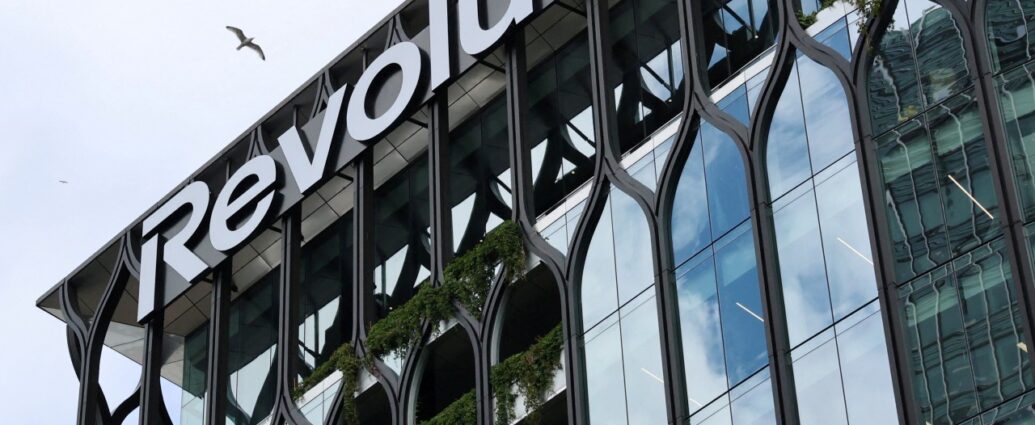
Fintech company’s profits leap to £1.7bn as it gears up for US push after getting UK banking licence this month

The UK banking app Revolut has said it could face a backlash over its support for energy-intensive sectors such as crypto and AI, as it posted a 57% increase in annual profits.

The fintech, which can now launch as a fully fledged UK bank after a five-year wait for regulatory approval, warned in its 2025 results that such activities posed a “reputational risk”.

Continue reading…

This post was originally published here
Senate Minority Leader Chuck Schumer criticized President Donald Trump, arguing the president’s positions on airport security funding, Iran policy and voting legislation are creating overlapping political risks.

Schumer Warns Of ‘Triple Knot’ Crisis

On Monday, Schumer posted on X that Trump is “tying himself in a triple knot,” pointing to three issues he says could create widespread disruption and controversy.

“Donald Trump is tying himself in a triple knot,” Schumer wrote.

He added, “1. Refusing to fund TSA and causing chaos at our airports 2. Starting a reckless war of choice in Iran 3. Pushing a voter suppression bill to disenfranchise over 20 million American citizens.”

He continued, “And each day he ties the knot tighter.”

Full story available on Benzinga.com

This post was originally published here

Ford Motor Company (NYSE:F) has issued a recall for over 254,000 SUVs as the company’s recall woes continue to raise questions about the company’s quality control practices.

Ford Issues Fresh Recall

Ford recalled the 2022-2025 Lincoln Navigator and the 2025 Aviator. Ford also recalled the 2024-2025 Nautilus. Other than the Lincolns, Ford also recalled the 2025 Explorer SUV.

The issue affects over 254,640 units and stems from a defect with the Image Processing Module A (IPMA), which may unexpectedly reset and result in a loss of the rearview camera image.

The issue also affects ADAS features like “pre-collision assist, lane-keeping assist, and blind-spot monitoring,” the NHTSA acknowledgment said. Ford dealers will update the IPMA free of charge, or the issue will be fixed via an Over-The-Air (OTA) software update.

Ford’s Lone …

Full story available on Benzinga.com

This post was originally published here

The most oversold stocks in the industrials sector presents an opportunity to buy into undervalued companies.

The RSI is a momentum indicator, which compares a stock’s strength on days when prices go up to its strength on days when prices go down. When compared to a stock’s price action, it can give traders a better sense of how a stock may perform in the short term. An asset is typically considered oversold when the RSI is below 30, according to Benzinga Pro.

Here’s the latest list of major oversold players in this sector, having an RSI near or below 30.

Hurco Companies Inc (NASDAQ:HURC)

  • On March 6, Hurco Cos posted a first-quarter loss of 54 cents per share, versus a year-ago loss of 67 cents per share. Greg Volovic, Chief Executive Officer, stated, “Our orders have picked up considerably in the U.S. despite the increase in tariffs, overall gross profit (as a percentage of sales) has improved reflecting cost reductions and containment, and continued working capital efficiency reflects our steadfast focus on a strong balance sheet. We have made meaningful progress to …

Full story available on Benzinga.com

This post was originally published here

The most oversold stocks in the industrials sector presents an opportunity to buy into undervalued companies.

The RSI is a momentum indicator, which compares a stock’s strength on days when prices go up to its strength on days when prices go down. When compared to a stock’s price action, it can give traders a better sense of how a stock may perform in the short term. An asset is typically considered oversold when the RSI is below 30, according to Benzinga Pro.

Here’s the latest list of major oversold players in this sector, having an RSI near or below 30.

Hurco Companies Inc (NASDAQ:HURC)

  • On March 6, Hurco Cos posted a first-quarter loss of 54 cents per share, versus a year-ago loss of 67 cents per share. Greg Volovic, Chief Executive Officer, stated, “Our orders have picked up considerably in the U.S. despite the increase in tariffs, overall gross profit (as a percentage of sales) has improved reflecting cost reductions and containment, and continued working capital efficiency reflects our steadfast focus on a strong balance sheet. We have made meaningful progress to …

Full story available on Benzinga.com

Combination of US and Spanish companies would create $40bn fashion and beauty group

The US cosmetics company Estée Lauder is in talks over a potential merger with the Spanish group Puig, the owner of brands including Jean Paul Gaultier and Rabanne, to create a $40bn fashion and beauty giant.

Estée Lauder is one of the world’s biggest manufacturers of skin care, makeup and fragrances with a portfolio that includes Clinique, Bobbi Brown and Tom Ford Beauty.

Continue reading…

This post was originally published here
  • In today’s CEO Daily: Diane Brady reports on energy CEOs’ reactions to the war in Iran.
  • The big story: The knock-on effect of Mark Zuckerberg’s AI sidekick.
  • The markets: Mixed globally as uncertainty hangs over the Iran war
  • Plus: All the news and watercooler chat from Fortune.

Good morning. Energy leaders from around the world are in Houston right now for the annual CERAWeek gathering, organized by S&P Global. A major theme, of course, is the effective closure of the Strait of Hormuz, which has cut off 20% of the world’s crude oil and liquefied natural gas, creating the greatest global energy supply shock ever.

As Fortune’s Energy Editor Jordan Blum reports from Houston, Chevron CEO Mike Wirth believes oil prices may be too low. As Wirth told attendees: “There are very real physical manifestations of the closure of the Strait of Hormuz that are working their way around the world through the system that I don’t think are fully priced in.”

Indeed, hard-hit Asian countries are trying to stockpile and conserve energy through work-from-home efforts, school closures, and more. The war is also crippling supplies of helium and fertilizer, hurting chipmakers and farmers alike. (Stocks and even Bitcoin rallied Monday on news of possible peace talks.)

A number of Middle Eastern leaders are not in Houston this week because of the conflict: Saudi Aramco CEO Amin Nasser withdrew while others are participating virtually. Sheikh Nawaf Al-Sabah, CEO of state-owned Kuwait Petroleum Corporation (KPC), is scheduled to participate virtually today. Ahmed Al Jaber, UAE’s minister of energy and advanced technology and head of Abu Dhabi National Oil Co (Adnoc), gave a virtual address yesterday in which he said  “weaponizing the Strait of Hormuz is not an act of aggression against one nation. It’s economic terrorism against every nation.”

While U.S. CEOs may not face as direct a hit in terms of energy supplies, they have other consequences to contend with. I spoke about that with CEOs at our New York dinner last week, as well as some executives en route to CERAWeek. Some quietly echoed the sentiment of political leaders who say stopping Iran is necessary for regional prosperity; others conveyed anger at the costs being inflicted on their companies by a war they didn’t start. All are managing the consequences, recognizing the fallout could continue long after any peace deal is reached. As one person put it: “This war has caused lasting damage to friends and foes alike.” 

Be sure to follow Jordan’s coverage of the news coming out of CERAWeek and the Middle East.

Contact CEO Daily via Diane Brady at diane.brady@fortune.com

This story was originally featured on Fortune.com

This post was originally published here