



Nvidia CEO Jensen Huang Drops A Bombshell— ‘I Think We’ve Achieved AGI’
NVIDIA (NASDAQ:NVDA) CEO Jensen Huang said he believes Artificial General Intelligence (AGI) has already been achieved on an episode of the Lex Fridman podcast, released on Monday
Fridman proposed defining AGI as an AI capable of building and running a billion-dollar tech company, asking whether that milestone could arrive within 5–20 years. Huang was direct: “I think it’s now. I think we’ve achieved AGI.”
Huang’s threshold doesn’t require permanence. In his view, an AI that builds a viral app, earns a billion dollars, and subsequently shuts down still qualifies — drawing a comparison to dot-com era companies that were short-lived but undeniably real.
“I couldn’t have predicted any of those companies at the time either,” he said, when asked what that breakthrough might look like.
This post was originally published here
Puig stock soars 15% after Estée Lauder confirms takeover talks with Charlotte Tilbury maker
Shares of Puig Brands soared as much as 15% Tuesday after beauty peer Estée Lauder confirmed it is in talks about merging the two companies.
This post was originally published here


Blue Ridge Foothills City Emerges as a Peaceful Retreat Attracting Retirees Today
This post was originally published here

Bitcoin’s ‘Final Discount’ Window Approaching, Says Analyst, Flags Buy Zone Between These Levels
An influential cryptocurrency analyst spotted on Monday a “golden entry window” for Bitcoin (CRYPTO: BTC), serving as a launchpad for a new 4-year cycle.
‘Countdown To The Next Bitcoin Vertical Move’
In an X post, Ali Martinez stated that Bitcoin is nearing its “final discount” window before the next bull market.
According to Martinez, if the current fractal pattern holds, the period between Oct. 6 and Oct. 16 could emerge as a prime entry opportunity with a buy zone between $41,500 and $45,000. In other words, they believe Bitcoin’s price still has significant downside.
“This could be the launchpad to start a new 4-year cycle. The countdown to the next Bitcoin vertical move has begun,” Martinez said.
More North Sea drilling will put UK at mercy of fossil fuel markets, ministers say
Ed Miliband insists only clean power will provide ‘energy sovereignty’ amid opposition calls for oil and gas expansion
Ministers have said expanding North Sea drilling would put the UK at further risk of volatile fossil fuel markets, amid calls from the Conservatives and some Labour MPs to breach the manifesto pledge of no new oil and gas licences.
The energy minister, Michael Shanks, said the UK was “learning the right lessons from this conflict so that we’re not exposed to fossil fuels in the same way again, because this isn’t the first time that households across the country have paid the price of our exposure to gas”.
This post was originally published here

British fintech Revolut reports record annual profit as it gears up for U.S. push
The startup, which hit a $75 billion valuation in 2025, is one of Europe’s most valuable private tech companies.
This post was originally published here

Oil Prices Rebound As US-Iran Tensions Persist
(RTTNews) – Oil prices traded higher on Tuesday as uncertainty lingered despite U.S. President Donald Trump’s decision to postpone potential strikes on Iran’s energy infrastructure for five days.
This post was originally published here

Nearly three in five Americans think AI will push homeownership even further out of reach
The U.S. housing market is a far cry from what it was in the post-war era. Back then, the median home price sat at about $7,300, or about $101,000 adjusted for inflation. Gen Z and Millennials are especially struggling to score the purchase that’s considered the heart of the American dream. The median first-time homebuyer bought their home at age 40 last year, up from the early 30s from just a decade ago. And now, prospective homebuyers are being walloped by a competing reality: an encroaching AI-driven “jobpocalypse,” which could push homeownership even further out of reach—or erase the prospect altogether.
“I think that AI and the potential for AI layoffs is a major part of that economic anxiety that’s holding people back from making a commitment to buying a home—even though it got more affordable to buy one,” Daryl Fairweather, Redfin’s chief economist, told Fortune.
A new survey of 4,000 U.S. residents conducted by Ipsos and commissioned by real-estate brokerage Redfin found that nearly 3 in 5 Americans (59%) think AI will eliminate jobs and make it even harder to afford homes. Not only do Americans have to contend with rising home costs, but they now have to fear the loss of their jobs due to AI—moving the goalposts even further from achieving the American dream.
The situation has grown dire for Gen Zers—so dire in fact that many parents of young adults have stepped in to help out with a down payment. With older generations holding the overwhelming majority of wealth in the U.S. today, one way we’re seeing the Great Wealth Transfer play out is with parents helping with housing costs and even prioritizing homeownership over college tuition, seeing it as the more transferable and tangible component of generational wealth.
AI’s impact on the housing market
Fairweather said negative attitudes around AI could actually be contributing to cold feet in the housing market. While mortgage rates have been elevated over the last few years, she said a recent dip in rates should’ve led to an increase in home purchases. But that was not the case, something she attributes to economic anxiety driven by AI fears.
“People are very concerned that they’re going to get the short end of the stick with [AI],” she said. “I think it goes back to just how other technological advancements have been handled and how jobs that used to be good-paying middle class jobs have been automated away.”
The sentiment is the same across political ideology. About 63% of Democrats and 57% of Republicans agree that advances in AI will eliminate jobs and make it harder to afford homes.
Still, many Americans believe AI will have the exact opposite effect. Thirty percent of those surveyed said advances in AI will help boost the U.S. economy and will, therefore, help more people afford homes.
While a growing chorus of business leaders sing to the praises of AI’s productivity potential, the reality on the ground hasn’t yet reflected predictions of sweeping layoffs. Tech companies like Jack Dorsey’s Block and Australian-American firm Atlassian have attributed wide-spanning layoffs to AI so far this year. But a study published last month revealed that thousands of company executives have yet to see real employment or productivity impact from AI.
“Part of these fears could be overblown because of all of the rhetoric about how transformative AI will be,” Fairweather said. “But that could just be hype.”
This story was originally featured on Fortune.com
This post was originally published here
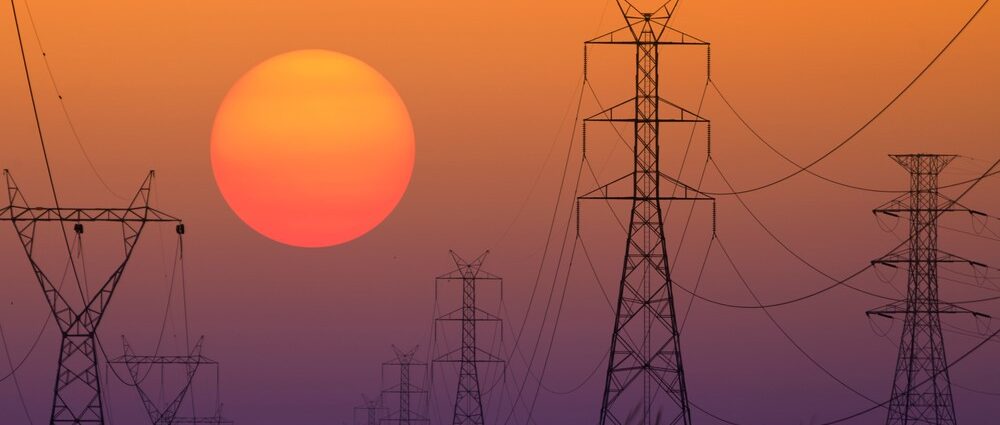





Maximizing Investments Using the Consumer Price Index
This post was originally published here

When Will Trump Announce The End Of Iran War? Here’s What Prediction Market Is Saying
President Donald Trump on Monday shifted gears and announced a 5-day pause on all U.S. strikes against Iranian energy infrastructure, soon after saying the U.S. will not back down from the Iran war.
Trump had issued the warning amid threats from the Islamic Republic that it would target the energy and water systems of Gulf neighbors. Trump had issued an ultimatum to hit Iran’s electricity grid unless Tehran fully reopened the Strait of Hormuz within 48 hours.
Trump Holds Talks With Iran
Trump, in a post on Truth Social on Monday, said that the U.S. and Iran had held “very good and productive conversations,” toward “a complete and total resolution” of hostilities in the Middle East.
Iran Dismisses Trump’s Truce Talks
Iran’s foreign ministry, however, denied …
This post was originally published here


Absorption Costing Explained: Pros and Cons
This post was originally published here


Iran Supreme Leader Mojtaba Khamenei gets another blue check on X, despite sanctions policy
Iran’s new Supreme Leader, Mojtaba Khamenei, appears to have subscribed to a new X Premium English-language account.
This post was originally published here







Reality TV Confronts a Harsh TV Reality






Why Gold Just Entered a Bear Market


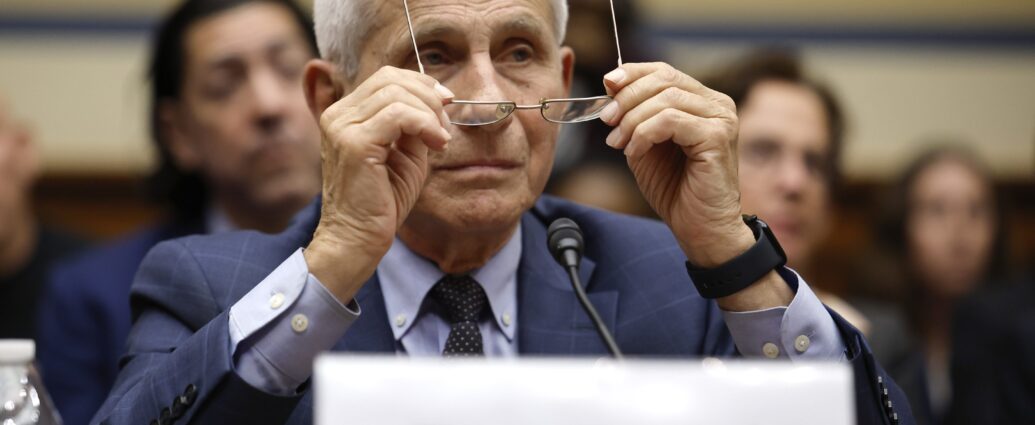
How COVID turned America against science — and what it will take to win it back
One of the greatest scientific achievements in human history became a political liability almost overnight. When the Covid-19 pandemic hit, scientists identified the virus, deciphered its secrets, concocted a vaccine, put it into production, and endered the disease manageable – all within a year. No civilization had ever moved that fast.
The response? The Trump administration jeered individual scientists, cut funds, fired specialists, and shuttered bureaus. It’s almost like we opened fire on the triumphant GIs returning from World War II. How did triumph turn into a culture war? And what can be done about it?
Where Science Failed First
Start with what the scientific establishment got wrong: first, the CDC’s testing debacle. The agency lacked the capacity to oversee the mass testing that a pandemic requires. Worse, its test technology cratered (thanks to a manufacturing glitch) and the agency — in classic bureaucratic mode — did not seek help from private industry. The FDA made things worse by refusing to approve alternatives to the test that didn’t work. Without tests, policy makers could not track the disease; they were flying blind. Here’s the first lesson: The fix: The CDC should get out of the pandemic test production business and work more closely with the nation’s biopharma companies to develop diagnostics as new infections emerge.
Second, scientists never managed to explain why their guidance kept shifting — and this bred suspicion. Simple answer: They were learning about the virus. The shifting advice on masking stirred anger because few people — in government, the media, or the public — understood where it came from. Tony Fauci was not just jerking the country around.
Early on, researchers assumed COVID behaved like influenza. Then they discovered it spreads via asymptomatic carriers — a crucial difference that demanded new guidance seemingly out of nowhere. Fauci wasn’t being evasive; science was evolving in real time. The lesson: Scientists must bring the public along as understanding changes, not just announce new conclusions.
The Untold White House Story
The attack on science has a political history that’s rarely told in full. It started with lack of White House preparation for a pandemic. The National Security Council had disbanded its unit devoted to biological threats, and the intelligence community took more than a month to get Covid on the President’s daily intelligence briefing. Even then they brushed it aside.
Everything changed in the first week of March. New York City became a death zone. President Trump was reportedly shaken by footage of refrigerator trucks backed up to the mortuary at Elmhurst Hospital in Queens, not far from where he grew up. The Stock Market tanked. The NCAA cancelled March Madness. Businesses shuttered. Schools closed. Dr. Deborah Birx took over as the White House Covid coordinator and built a model (accurately) projecting unimaginable deaths: 100,000 to 240,000 over the next two months.
Against that backdrop, Donald Trump, after denial and equivocation, responded sensibly. Off camera and off Twitter, he made tough decisions. He listened to his health advisors, weighed their advice against challenges from the economists, closed borders, endorsed shutdowns, and—most dramatically—tossed aside normal procedures and merged science, logistics, and great piles of cash to develop a vaccination at, well, warp speed.
How Politics Poisoned the Well
But by April, the shutdowns were taking a toll, the presidential election was heating up, and Trump was getting earfuls from his business associates. The economic team, led by Kevin Hassett, then former chair of the Council of Economic Advisors, whipped up new, friendlier projections of only 26,000 Covid deaths by Memorial Day — more people than that had already died when the model was unveiled. The new estimates made Trump deeply suspicious of his health care team.
Suspicion turned to anger when scientific leaders kept contradicting his embrace of hydroxychloroquine, ivermectin, and convalescent plasma. He turned on them publicly — casting the FDA, CDC, and NIH as deep state conspirators dedicated to defeating him.
In mid-April, anger turned to rebellion. Trump cheered small bands who were brandishing firearms, waving Trump flags, and denouncing the shutdowns. His tweets amplified the struggle to “liberate” America from both Covid restrictions and his enemies: the overweening elites — scientists, bureaucrats, Democrats — who had dreamt them up as expert overreach.
Trump went one tweet too far, however, when he blasted the FDA’s Covid vaccine trials for moving too slowly (“just another political hit job”). That moved nine pharmaceutical companies to buy newspaper ads pledging not to release any vaccines before they were proved safe and effective. To prove vaccines’ safety, FDA extended clinical trials by several weeks so that FDA approval came after election day – permanently entangling the FDA in the MAGA epic of a rigged election.
The Anti-Vax Vanguard
The turn against science got its final push when Trump mentioned his own COVID vaccination at a post-election rally — and heard boos. He pivoted immediately, joining the anti-vax movement he had inadvertently helped create. No surprise that a second term Trump should tap Robert F Kennedy, Jr. — and DOGE — to “go wild” on health and science. A rebellion against vaccinations and public health raced through conservative precincts. Twenty-six states enacted new and stringent limits on long-standing public health authorities that were already hollowed out from years of budget austerity.
But scientific facts are stubborn things. As historian Richard Hofstadter once wrote, the anti-expert tradition rises and falls in waves across American history. Rising measles infection rates — and the political liability of owning a public health crisis heading into midterms — appear to be shifting the tide. Kennedy and his allies are already softening their vaccine skepticism.
What Comes Next
The path forward requires more than policy fixes, though those matter. Scientists need to communicate evolving knowledge in real time. Politicians need to resist weaponizing uncertainty. Agencies need the funding and flexibility to respond at scale.
But ultimately, protecting society demands something deeper: a nation of people who pull together, who care for one another, who reach across their divisions and mind the health and safety of their neighbors. We’ll never do well against pandemics until we learn to channel what Abraham Lincoln called the better angels of our nature. We won’t beat the next infectious threat without them.
The opinions expressed in Fortune.com commentary pieces are solely the views of their authors and do not necessarily reflect the opinions and beliefs of Fortune.
This story was originally featured on Fortune.com
This post was originally published here

Trump delivers farmers another financial blow with Iran war
Some of President Trump’s policies, the latest being the war in Iran, are testing his support among farmers who are being burdened with higher costs.

This post was originally published here

Airstrikes may have destroyed Iran’s last F-14s, ending a long, strange saga
The F-14 was made famous in Top Gun. The U.S. sold the planes to Iran in the 1970s, only for the two countries to become enemies. Iran kept its F-14s flying for decades in the face of U.S. sanctions.
(Image credit: U.S. Navy)

This post was originally published here

Denmark holds early elections spurred by Trump’s threats to take Greenland
Denmark’s prime minister called early parliamentary elections after gaining a popularity boost from standing up to President Trump over his threat to seize Greenland.
(Image credit: Rob Schmitz)

This post was originally published here

As parents age, their children face hard choices about when to take the car keys
States have many policies to stop risky older drivers from renewing their licenses. But in practice, it’s often adult children who must decide when to take the car keys away from an aging parent.
(Image credit: Joel Rose)

This post was originally published here

ICE deployments created chaos for cities and cost them millions, NPR analysis finds
Local leaders report already-strapped police departments racked up overtime bills in the millions while others report a multi-million dollar hit to business during the worst ICE surges.

This post was originally published here

A Look at Americans’ Bank Balances: How Much Are They Really Saving?
This post was originally published here

Why the Iran War Rattled the UK Bond Market


Sony-Owned Crunchyroll Hit By Major Cyberattack—Millions Of Names, Emails And Login Details Compromised: Report
Crunchyroll, the popular subscription-based anime streaming service owned by Sony Group Corp. (NYSE:SONY), is investigating a reported cyberattack that may have exposed the personal data of millions of users.
Hackers Claim Access Through Third-Party Support Worker
The platform told BleepingComputer that it is aware of the claims and is actively collaborating with top cybersecurity experts to investigate the situation.
The statement followed claims by a threat actor who contacted BleepingComputer last Thursday, asserting they breached Crunchyroll on March 12 at 9 p.m. ET by accessing the Okta SSO account of a support agent.
Threat actors targeted a support agent employed by Telus International, a company that manages Crunchyroll customer support tickets.
Hackers allegedly infected …
This post was originally published here

AI Agent Crypto Crash: Can Blockchain AI Recover As Big Tech Dominates The Narrative?
Can investors make any money off the AI Agent projects on-chain?
AI Agents, and artificial intelligence more broadly, dominate the water cooler banter and Slack channel chatter at work. It’s all led by the usual players – most of them Big Tech names, others newcomers that made a name for themselves with the large language models led by OpenAI’s ChatGPT. The blockchain world got in on this, too. The biggest, most liquid names in the business crashed and burned last year and many, like Fetch.AI (CRYPTO: FET) are underwater. FET is down 90% from its all-time-highs reached in March 2024.
Still, “The AI agent narrative is one of the hottest in crypto right now and capital is chasing it hard, with both the excitement and the recklessness that implies,” said MinChi Park, CO-founder and COO of CoinFello.
“Three names that keep coming up in conversations I’m having include the Virtuals Protocol, which is arguably the project that first kicked off the AI agent token meta,” she said. “Virtuals built a vibrant ecosystem of autonomous AI agents with applications in gaming and social media, and I think this versatility is why so many people are chasing it.”
Anyone can use Virtuals Protocol to build an AI agent and benefit from the economic activity it generates.
She also mentioned Kite, an AI payments blockchain, which is building a key part of the infrastructure for blockchain agents. The token is up more than 50% in the last 12 months, going from $0.10 in March 2025 to $0.22 as of March 21, 2026.
Kite operates in what is arguably the most exciting segment of the crossroad between AI and blockchain protocols. One of the technological reasons behind this trend is the emergence of the x402 payment standard launched by Coinbase (NASDAQ:COIN) May 2025. (Coinbase’s share price has fallen since the AI rush, going from a high of $419 in July down to $197 currently.) The x402 standard ultimately allows AI agents to pay for services and data directly …

Home heating oil firms squeezed as diesel, crude prices surge amid Middle East tensions
Home heating oil firms are facing mounting cost pressures as rising crude and diesel prices tied to Middle East tensions squeeze margins and disrupt operations across New England.
The recent spike follows a cold winter that boosted demand for heating oil, leaving both consumers and suppliers exposed to higher costs. Businesses say they are trying to avoid passing those increases on to customers, even as expenses climb sharply.
“We had to lower our prices to be able to get the phones to start ringing more. People are holding off on auto deliveries because the prices are so high, and we can’t blame them on that,” said Andrew Chesney, owner of Southern New Hampshire Energy.
Heating oil providers say volatility in energy markets is complicating planning, as rising crude prices coincide with surging diesel costs needed to fuel delivery fleets.
Chesney said a month ago it cost around $8,000 to fill up one of their delivery trucks with diesel, and today it’s between $12,000 and $15,000. Between filling up four trucks and getting all the necessary oil and fuel, it costs Southern New Hampshire Energy around $50,000 a day.
RISING GAS PRICES FROM IRAN CONFLICT PUT GOP ON DEFENSE AFTER PREVIOUS BIDEN ATTACKS
“We’re trying to cut corners where we can to save the people money, but it’s hard to also on our end. We’re not making a huge profit at all,” said Chesney.
TRUMP ADMIN OFFICIAL SAYS THERE’S A ‘VERY GOOD CHANCE’ GAS PRICES WILL BE BACK TO NORMAL BY SUMMER
Some companies are implementing new policies to manage rising costs. In Massachusetts, Atlantic Oil Company posted a disclaimer on their website saying: “Due to recent and ongoing events in the Middle East, we have currently suspended any deliveries below 125 gallons. We have also added a surcharge of $40 for any orders that take less than the 125 gallon minimum.”
“I have people come in, long-time customers saying, ‘you know, I can’t really pay for this,’ and we try to help them. We say, ‘you know, we could, take some payment now,’ because in the summer you won’t need to pay for your oil, typically,” said Ted Triandafilou, General Manager of Atlantic Oil Company.
Triandafilou said his company is experiencing a similar jump in diesel costs.
“Depending on the size of the truck, we have multiple trucks of different sizes. So it could be over. As of now, it’s over $12,000 to fill the truck up as it may have been, you know, $5,000-$6,000 about a month ago.”
Both operators said daily price swings are adding to uncertainty.
“We really don’t know where it’s going to go from here and prices are increasing and decreasing anywhere from 10 cents to 25 cents a day right now with everything going on in the world,” said Chesney.
“Prices change daily just like gas prices typically do, and a lot of time, I’ve seen … the prices go up in the morning – let’s say, jump 20, 30 cents, crazy numbers – and then slowly during the day, they’ll drop back down, but by the close of the market, they’re back up again,” said Triandafilou. “It’s getting to the point where I don’t even bother displaying the price outside because I’d just be running out and changing it again.”
According to AAA, the average cost for a gallon of diesel on March 20 was $5.15, approaching the record average of $5.80 in 2022.
“The last time we saw diesel prices this high was in 2022 after Russia invaded Ukraine,” said AAA spokesperson Mark Schieldrop. “The current situation is a little bit different because we’re seeing significant impacts on production. We are also seeing all those cargo flows out of the Strait of Hormuz being impacted. So, there are some long-term impacts here.”
Schieldrop said that the record could be broken if the conflict continues. Even if the conflict ended today, the prices wouldn’t drop tomorrow.
“It is true that prices shoot up like a rocket and then tend to drift down like a feather,” said Schieldrop. “It’s going to take a sustained period of time, and many analysts believe that the impact could be lasting for more than a year, even if the conflict ends in the short term.”
OIL, GAS PRICES JUMP AS TRUMP FLIRTS WITH STRIKING IRANIAN OIL INFRASTRUCTURE
Schieldrop says it can be tough to cut corners on gasoline prices to save money.
“We urge folks to try to drive less. That’s a tough bargain for folks who have to drive, but stacking your trips, trying to drive more economically,” said Schieldrop. “Easing up on the gas pedal, drive a little slower, follow the speed limit, and you can increase your fuel economy pretty dramatically.”
For homeowners, demand may ease in the coming months as warmer weather reduces heating needs. But for businesses, the seasonal slowdown brings its own challenges.
“We’re actually coming into our slower season. So everyone’s going to be holding off on getting home heating oil till winter,” said Chesney.
“So it’s going to start slowing down for our employees, and we’re going to go through a struggle ourselves running a business and keeping things going till the prices lower down.”
CLICK HERE TO GET FOX BUSINESS ON THE GO
Companies like Southern New Hampshire Energy are relying on other services, including plumbing, heating and cooling, to offset seasonal declines in fuel demand.
“Support local. We’re a family-owned and operated company. We’re not a corporate company, so we structure our business on family. And we’re just a small business trying to make our way through life right now,” said Chesney.



10-year Treasury yields edge higher as investors weigh renewed Iran war uncertainty
The 10-year Treasury yield rose on Tuesday as renewed volatility in oil markets and lingering Middle East tensions kept investors on edge.
This post was originally published here

Trump takes aim at windmills despite increasing energy costs
President Trump’s mission to fight renewable wind energy comes at a time of rising energy costs.

This post was originally published here

From car parks to piers: the 2026 Australian Urban Design awards recognise a gentler approach to pragmatic projects
The Australian Institute of Architects’ judges sought to highlight a gentler approach to urban transformation,’ chair of the awards steering committee says
-
Get our breaking news email, free app or daily news podcast
Sydney’s Campbelltown has paved paradise and put up a parking lot. And the brave jury at the Australian Urban Design awards has declared it heavenly.
The winners of the 2026 awards, announced on Tuesday at Parliament House in Canberra, suggest the era of the star architect’s singular, sculptural spectacle is being traded, at least this year, for something more pragmatic: an unassuming revolution where the most significant breakthroughs are found in natural, open-mesh ventilation, a splash of colour and a heart of soothing greenery.
This post was originally published here

The youngest-ever female CEO of a Fortune 500 company is fighting Trump’s cuts to keep Medicaid strong
Sarah London operates on the front lines of the toughest terrain in U.S. health care. She’s the CEO of Centene, an insurance giant providing government-sponsored plans at a time when funding is tight, costs are rising, and policy shifts create intense uncertainty.
While the St. Louis–based managed care insurer saw revenue grow almost 20% last year, to $194.8 billion, it posted a net loss of $6.7 billion. That was largely driven by a write-down that reflected the new reality for health care companies under the One Big Beautiful Bill Act championed by President Trump. Along with cutting federal Medicaid spending by more than $900 billion over 10 years, the law raises costs and reduces eligibility for people enrolled in Affordable Care Act (ACA) Marketplace plans.
Those changes are shaking up Centene’s core businesses. More than half of Centene’s revenue comes from Medicaid—it’s the country’s biggest Medicaid insurer—with the rest roughly divided between Medicare and Marketplace plans. While analysts don’t expect federal cuts to have a massive impact on Centene’s top line, they’re a sign of the challenges London faces.
Faced with new data that showed its ACA plans were enrolling both fewer and sicker people, London decided to withdraw earnings guidance last July, causing Centene’s share price to fall 40% in a single day, to an eight-year low.
“It’s hard not to feel like pulling guidance and cutting the stock in half is a failure,” London told Fortune in a recent interview. “We’ve watched a new normal unfold in terms of how many different pressures there are on the system and the magnitude of the change we’re facing.”
London is pushing to get ahead of that change. She’s been transforming Centene’s portfolio, technology, and culture since becoming CEO four years ago, at the age of 41, making her the youngest woman to lead a Fortune 500 company (a distinction she still holds).
Under London, Centene is using data and technology to better manage a business that cares for a higher proportion of sicker patients than many other insurers do. She has also launched a One-CenTeam initiative to make Centene a catalyst in creating healthier communities. In May 2024, at the Fortune Brainstorm Health conference, for example, London announced plans to partner in building $900 million of affordable housing in eight states to help boost health outcomes.
Other Centene initiatives spotlight preventive health measures that could help members avoid expensive medical problems—and leave Centene with a healthier bottom line
Mission-driven
After graduating with a history and literature degree from Harvard, London spent two years in the film industry before deciding she wanted to make a bigger social impact. She did stints at Harvard, supporting health, education, and equity initiatives, and at nonprofit Health Leads, building out its model of community-based care, before earning an MBA at the University of Chicago. Her goal: to move from storytelling to systems thinking, using data to drive change.
That mission drew her to Humedica, a pioneer in leveraging big data in public health. “Sarah sort of cold-called me in 2011,” recalls former CEO Michael Weintraub. “It wasn’t, ‘Hi, hello.’ It was, ‘I researched your company; this is what I work on. I’ve heard about your team; this is who I want to work with.’ We made a decision to hire her that day.”
London rose through the ranks at Humedica, which became part of UnitedHealth Group’s Optum, before joining Centene in 2020. She got the top job there in 2022 after longtime CEO Michael Neidorff stepped down shortly before his death.
Neidorff had built Centene from a regional Medicaid plan in St. Louis with about $40 million in annual revenues to the nation’s largest Medicaid managed care organization. With that growth came a lot of acquisitions and bloat. “The mission orientation was there from the get-go—that’s our superpower—but there hadn’t been as much focus on operating discipline,” says London, who subsequently sold off several noncore operations.
What distinguishes London’s leadership is an ability to connect the dots, says Karen Salfity, whom London brought in from Optum to create a more consistent strategy and member experience. “Sarah can look at a very complex situation, understand the various factors, and then create an assessment … with just enough heart that you know she cares deeply,” says Salfity, who has known London for 15 years. “The only thing that’s really changed is the scale at which she is able to do it.”
A new normal
London knows all too well that a lot of factors in health care are outside her control, not least of which is the Trump administration’s push to radically modernize and streamline federal programs. In February, the administration announced new steps to crack down on alleged fraud in Medicare and Medicaid, on top of the funding cuts and expired ACA tax credits that have already taken effect.
London is not as disheartened as one might think. “You could take a step back and come away with the conclusion that these [programs] are under attack,” she says. But she notes that there was “quite a bit of bipartisan support” for making the sector more efficient.
“I have yet to meet a politician who does not believe that affordable, high-quality health care is something very important to be able to provide for their citizens and voters.”
She sees the current reforms as underscoring the need to take a holistic, high-tech approach to caring for vulnerable populations. Indeed, some of Centene’s systems anticipated the changes that the administration has enacted. “We have work programs in more than 17 states; we partner with nonprofits and provide job training to Medicaid members,” London says. “We run every single claim through 75 algorithms every day to look for fraud, waste, and abuse.”
“Health care is wildly overdue for a digital revolution,” she argues, pointing to an array of tech initiatives that Centene has implemented. Those range from designing supplemental food benefits where there are food deserts—”because we know that if you don’t have access to food, medication adherence goes down”—to predictive algorithms identifying members likely to have high-risk births and mobilizing resources to support them. As London notes, “41% of all babies born in the U.S. are born onto Medicaid”; it’s crucial that the program keeps those children healthy so they can “go and get jobs and contribute to economic mobility and all the things we want as part of the American Dream.”
London knows how tough it is to deliver on that dream. “The country is getting poorer and sicker,” she says. “The dollars are not infinite. At the finite boundaries, you have to make decisions about what you are going to fund and what you are not.”
This story was originally featured on Fortune.com
This post was originally published here
European stocks mixed as Iran war uncertainty lingers
Shares listed in Europe traded in mixed territory on Tuesday, as investors continue to monitor developments in the Middle East.
This post was originally published here
Albanese urged to help Australians struggling with fuel crisis, as NZ offers first-of-its-kind cash relief
David Pocock says a flat 25% export levy on gas producers could redirect ‘wartime profits’ to struggling Australians
-
Get our breaking news email, free app or daily news podcast
Pressure is mounting on the Albanese government to help households struggling with fuel prices, with working from home and free public transport posited as possible solutions.
Nearly 150,000 New Zealand families will soon receive a weekly cash payment to help them afford petrol, believed to be the world’s first fuel relief package that directly pays citizens since the Israel-US war on Iran began.
This post was originally published here

Alibaba Unveils High-Performing Next-Gen Chip For Agentic AI
Alibaba Group Holding Limited (NYSE:BABA) has announced its next-generation XuanTie C950 5-nanometer processor, marking a significant stride towards agentic AI.
On Tuesday, Alibaba revealed the 3.2 GHz server chip at an internal conference. The chip, constructed using open-source RISC-V chip architecture, was hailed as “the highest performing RISC-V CPU in the world” at the conference hosted by DAMO Academy, Alibaba’s research arm, Reuters reported.
The XuanTie C950 delivers over three times the performance of its predecessor, the XuanTie C920. However, Alibaba has not revealed which foundry manufactured the chip. Built on the open-standard RISC-V architecture, it enables designers to tailor instruction sets and optimize performance for specific AI workloads—an advantage that is key to advancing AI agents.
Alibaba is ramping up its in-house chip efforts through T-Head, focusing on the Zhenwu 810E series for AI training and inference. Its XuanTie chips target high-performance cloud computing and agentic AI, alongside the launch of Wukong, an enterprise platform designed …
This post was originally published here

Scott Bessent Rules Out Tax Hikes To Fund Iran War As Costs Climb: ‘Why Would We…’
Treasury Secretary Scott Bessent dismissed raising taxes to fund the U.S. military campaign in Iran as “not at all” under consideration, calling the idea “ridiculous,” in an exclusive interview on NBC’s Meet the Press on Sunday.
“Why would we do that?” Bessent said. “We have a trillion dollars in this year’s budget for the military.”
War Costs Surge As Administration Confident
The remarks came as the war’s costs have climbed. National Economic Council Director Kevin Hassett, appearing on CBS’s Face the Nation, confirmed the operation has already cost $12 billion, up from $11.3 billion presented to lawmakers covering just the first six days of fighting, including $5.6 billion in munitions in the first two days alone.
Hassett said the administration has what it needs for now and is …
This post was originally published here

Grab expands to Taiwan, its first non-Southeast Asian market, with $600 million Foodpanda deal
Grab will acquire Foodpanda’s Taiwan business for $600 million, in the superapp’s first foray outside Southeast Asia. The Singapore-based company signed a deal with Foodpanda parent Delivery Hero just one year after Uber abandoned its bid to buy the Taiwanese platform, citing regulatory pushback.
The acquisition is set to complete by the second half of 2026, and Grab plans to fully migrate all users, merchants and drivers to its platform by early 2027.
“This is a natural next step for Grab, as our experience in Southeast Asia is a direct fit for this market,” said Grab CEO Anthony Tan, in a press statement on Monday. “Our longstanding expertise in managing complex delivery logistics for dense and high-traffic cities is well-suited for Taiwan.”
Analysts call the deal a timely move for Grab, with Maybank Securities analyst Hussaini Saifee describing it as “a compelling new growth leg” for the Southeast Asian company given Taiwan’s robust economy.
The expansion also vindicates Grab’s business model, which has dominated Southeast Asia’s ride-hailing and food-delivery market for close to a decade. The company is now “exporting its playbook,” says Tan Joo Seng, an associate professor of business at Singapore’s Nanyang Technological University (NTU). Tan calls Grab’s move a faster way to get access to Taiwan’s market, rather than building something from scratch, like “taking a high-speed train instead of laying the tracks.”
Foodpanda Taiwan generated $1.8 billion in gross merchandise value last year, despite having only 10% user penetration amongst Taiwan’s population, according to a Maybank Securities research note.
If the deal goes through, Grab will have a presence across 21 cities in Taiwan, with Uber Eats being the platform’s only major competitor.
Uber made a bid for Delivery Hero’s Taiwan business in May 2024. Yet Taiwan’s Fair Trade Commission raised antitrust concerns around a merger between the two platforms, which together account for roughly three-quarters of the market. Uber, which also operates a ride-hailing business in Taiwan, eventually dropped its bid early last year.
Delivery Hero is under pressure from investors to divest some of its overseas businesses, if not an outright sale of the whole company. Aspex, a Hong Kong fund that’s Delivery Hero’s second-largest shareholder, threatened to replace CEO Niklas Östberg if he didn’t do more to sell parts of the company, Bloomberg reported in mid-March.
Grab isn’t the only company expanding to Taiwan. Both Singapore-based Sea, as well as South Korea’s Coupang see Taiwan as an increasingly important business for their e-commerce platforms.
In a LinkedIn post, Grab CFO Peter Oey described Taiwan as a “structurally compelling market” with high urban density, strong consumer spending power and a digital economy driven by the AI and semiconductor boom. (Taiwan’s economy grew by 9% last year, the highest level since 2010).
Tan, from NTU, calls Taiwan the “perfect bridge” to the rest of North Asia, citing its high density and digital-friendly consumers.
Grab’s regional expansion
Anthony Tan and Tan Hooi Ling founded Grab in 2012 as a mobile app to provide safe taxi-hailing services in Malaysia. Since then, it’s expanded across eight Southeast Asian markets, including Singapore, Indonesia, Vietnam, Cambodia and the Philippines. It holds a 55% share of the market, and outcompeted both domestic players like Indonesia’s GoTo and global giants like Uber.
After starting with ride-hailing, Grab has expanded its suite of offerings to include food and grocery deliveries and cashless payments, making it one of Southeast Asia’s leading superapps.
Grab, No. 128 on the Southeast Asia 500, reported record annual profits of $268 million last year, on top of $3.4 billion of revenue.
Grab shares, which trade on the NASDAQ, rose 2.3% on Monday, after the company announced its acquisition of Foodpanda Taiwan. Shares are down by over 20% for the past 12 months.
This story was originally featured on Fortune.com
This post was originally published here
Gold trades flat after early losses deepened bullion bear market
Gold extended its slide, deepening its grip in bear market territory as investors continued to unwind positions and a strong dollar sapped demand.
This post was originally published here


Trump Floats Shared Control Of Strait Of Hormuz: ‘Maybe Me And The Ayatollah…’
President Donald Trump has suggested a potential joint control of the strategically crucial Strait of Hormuz.
Trump, while addressing the press in Florida on Monday, indicated that the strait could reopen soon if talks with Iran are fruitful. However, he remained ambiguous about the potential partners in control, hinting it could be “maybe me and the Ayatollah.”
“Whoever the Ayatollah is,” added Trump.
Trump also mentioned that recent strikes in the conflict had targeted much of Iran’s senior leadership, hinting at a possible regime change. “Very serious form of regime change,” he stated, adding that the weekend discussions showed promise for easing tensions.
Speaking about the negotiators, Trump said, “We’re dealing with some …
This post was originally published here


DoorDash CEO Touts Savings Of Nearly $2/Per Gallon For Drivers As Gas Prices Surge To Nearly $4/Gallon
DoorDash Inc. (NASDAQ:DASH) CEO Tony Xu has shared that the platform will help drivers with cashbacks and weekly payments to help offset rising fuel costs.
Emergency Relief Program
DoorDash, in a post on X on Monday, touted the platform’s emergency relief program, which would offer a 10% cashback at any time with a DoorDash Crimson Visa Debit Card. “Dashers can fill up at any U.S. gas station whether they are on a dash or not,” the official statement from the food delivery platform said.
The platform will also offer weekly relief payments to drivers 125 miles or more while actively on deliveries. The weekly payments range from $5 and go up to a maximum of $15 based on miles driven.
Tony Xu Touts New Program
“We’ve heard loud and clear from Dashers that rising gas prices are hitting their wallets,” the DoorDash co-founder said in the post. He also said that the cashback …
This post was originally published here

US quadruple amputee cornhole champion arrested on suspicion of murder
Dayton Webber, 27, accused over shooting death of Bradrick Wells in Maryland, reportedly after argument inside car
A Maryland man who made history as the first quadruple amputee to compete in the professional televised American Cornhole League has been arrested on suspicion of shooting and killing a passenger in his car during an argument.
Dayton Webber – who became a champion cornhole player after losing his limbs and nearly dying from a bacterial infection in his infancy – faces murder charges in connection with the death of Bradrick Wells, authorities said on Monday.
This post was originally published here


AI’s disruption is a choice, not a forecast
When Palantir CEO Alex Karp predicted that AI would erode the economic power of “humanities-trained, largely Democratic voters” in favor of “working class, often male voters,” he wasn’t making a forecast. He was making a choice — and calling it destiny.
That distinction matters more than whether he’s right.
AI has advanced faster than almost anyone expected. Recent geopolitical shocks have compounded the uncertainty. But the real question isn’t who wins or loses in Karp’s vision — it’s whether that vision is the one we want to build.
Disruption Isn’t the Same as Progress
The AI era has generated extraordinary wealth. Nvidia and Microsoft are each worth trillions. ChatGPT now reaches 900 million weekly users. By conventional measures, the revolution is working.
But U.S. unemployment hit a four-year high last November. The wealth gap between the top 1% and bottom 50% has widened since ChatGPT launched. Rapid advancement and record market performance are not measures of success — they’re measures of speed.
A technology capable of unprecedented scientific discovery and work automation should do more than reshuffle economic winners. It hasn’t, largely because industry and government have failed to define what outcomes they actually want AI to deliver — or who it should serve.
Trust Is the Missing Ingredient
People adopted the smartphone because they could see how it would improve their lives. Nobody adopts a technology framed as replacing them.
Yet that’s exactly how some of AI’s loudest advocates describe it. The result is predictable: wariness, skepticism, and a widening gap between immense capability and actual value.
For AI to endure — commercially and socially — people need to trust it. That requires them to feel its benefits directly.
Where AI Should Actually Go to Work
If AI is eliminating manual labor, the economically and socially prudent move is to direct that capacity toward the sectors most starved of it: healthcare, human services, and infrastructure.
These industries face acute labor shortages and stretched staff. They’re also where automating manual tasks would be most transformative without displacing workers:
- Doctors spending more time diagnosing and treating patients instead of documenting visits
- Caseworkers staying in their roles because their jobs no longer consume their weekends
- Transit systems running more reliably as maintenance and reporting become automated
That’s not disruption. That’s progress.
Build With Workers, Not For Them
The US leads in AI talent, research, and infrastructure. The challenge isn’t building the technology — it’s pointing it at the right problems.
One meaningful shift since ChatGPT’s launch: the skills threshold to harness AI has dropped dramatically. LLMs, vibe-coding, and accessible tools mean that building and tailoring technology is no longer reserved for elite college graduates. Frontline workers — the ones who actually understand what’s broken in healthcare or social services — are no longer locked out.
A software engineer knows nothing about being a doctor or a caseworker. If AI is going to serve our most critical workers, industry must build it with them, not for them. Government procurement must do the same. That’s how you get both value and trust.
Stop Predicting. Start Deciding.
Karp is right that AI will reshape economic power. Where he’s wrong is treating that reshaping as inevitable rather than engineered.
The problems most in need of solving aren’t hidden. We know where inequality lives. We know which services are buckling. If the leaders building this technology want it to last, they should stop predicting who gets left behind — and start deciding who gets lifted up.
The opinions expressed in Fortune.com commentary pieces are solely the views of their authors and do not necessarily reflect the opinions and beliefs of Fortune.
This story was originally featured on Fortune.com
This post was originally published here
Amazon faces further AWS disruption in the Middle East from Iran conflict
AWS is facing more service disruptions in Bahrain as a result of the ongoing conflict in the Middle East, marking the second such disruptions this month.
This post was originally published here

Dow Jumps Over 600 Points After Trump’s Post On Iran Strike Pause: Greed Index Remains In ‘Extreme Fear’ Zone
The CNN Money Fear and Greed index showed almost no change in the overall fear level, while the index remained in the “Extreme Fear” zone on Monday.
U.S. stocks settled higher on Monday, with the Dow Jones index gaining more than 600 points during the session after Trump announced a five-day pause in military strikes on Iranian energy infrastructure—a move that sent crude oil prices falling sharply and triggered a rapid unwinding of the war premium embedded across asset classes.
Dell Technologies (NYSE:DELL) shares gained over 4% on Monday after the company announced new enhancements to help strengthen device trust, improve cyber resilience and detect threats in AI data platforms.
On the economic data front, the Chicago Fed National Activity Index declined to …
This post was originally published here
UK vets face crackdown over fees as pet owners ‘left in the dark’ on bills
Practices must publish price lists, cap prescription fees and reveal if they are part of a large group, watchdog says
The UK’s competition watchdog has ordered vets to cap prescription fees at £21 and proposed a price comparison website, after finding consumers had faced huge price rises and been “left in the dark” over bills.
The Competition and Markets Authority (CMA) said public satisfaction with the cost of services was “low” after an investigation into the £6.3bn market found “there is not strong competition between veterinary businesses”, with large chains dominant.
This post was originally published here
Australia lowers diesel standards in bid to increase supply as number of service stations running empty surges
Chris Bowen says move aimed at accessing fuel imports from markets with lower burning temperatures, including the US, Canada and Europe
-
Get our breaking news email, free app or daily news podcast
Australia’s diesel standards have been temporarily lowered as the federal government rushes to shore up fuel supply, with hundreds of service stations running empty and warnings deliveries from key Asian suppliers could slow as soon as early April.
The energy minister, Chris Bowen, said on Tuesday the government had lowered the technical threshold for diesel, known as the flashpoint, in order to access supply from imports from markets with marginally lower burning temperatures, including the US, Canada and Europe.
This post was originally published here


‘Black Swan’ Author Taleb Warns ‘Fat Tails’ Could Turn Bessent’s 50-Day Oil Shock Into Decade of Chaos Amid Iran War
Nassim Nicholas Taleb, the renowned author of The Black Swan, has issued a critique of Treasury Secretary Scott Bessent, arguing that the administration’s economic projections regarding the escalating conflict with Iran are mathematically illiterate and dangerously optimistic.
The ‘Fat Tail’ Delusion
Taleb’s remarks followed an interview where Secretary Bessent attempted to downplay the long-term economic fallout of U.S. military strikes against Iranian power plants and the potential closure of the Strait of Hormuz.
When pressed on surging energy costs, Bessent, in a conversation with CNBC, suggested the hardship would be fleeting. “I don’t know whether it’s 30 days… 50 days… or 100 days,” Bessent stated, “but to have 50 years of peace in the Middle East and know that the Iranian regime is defanged” is worth the “temporary elevated prices.”
Taleb immediately dismissed this timeline as a failure to understand “Fat Tails”—a statistical concept where extreme, high-impact events are far more likely than standard models predict.
By treating a global war as a temporary fluctuation, Taleb argues Bessent is ignoring the “risk of ruin” that could turn a 50-day estimate into a decade of systemic chaos.
This post was originally published here

Kevin O’Leary Slams ‘Government-Subsidized’ Intel Chips After Robot Malfunction: ‘We Should Have Never Funded…’
Investor and “Shark Tank” personality Kevin O’Leary criticized government-subsidized Intel Corp. (NASDAQ:INTC) chips used in robots, calling a recent malfunction a warning about the risks of poorly supported technology.
Robot Malfunction Sparks Criticism
On Sunday, O’Leary posted on X, referencing a viral video showing a robot malfunction near a tray of fries.
“This is not funny, and I’ll tell you why,” he wrote.
He added, “This is what happens when you use government-subsidized Intel chips. You don’t wanna put them inside a robot. We should have never funded that company. It should have died.”
O’Leary went on to suggest safety measures for robots, saying, “Maybe the idea of a kill switch is not a bad idea. Like, just pull one of its eyes out, it stops right there. That’s the way it should be.”
He also highlighted the specific flaw in the chips, noting, …
This post was originally published here




Larry Fink Says Tokenization Won’t Replace The Current Financial System ‘Overnight’ — Here’s What The BlackRock CEO Sees Happening Instead
BlackRock Inc. (NYSE:BLK) CEO and Chair Larry Fink stated on Monday that tokenization has the potential to simplify investment issuance, trading and access.
Tokenization Will Coexist With TradFi, Says Fink
In his 2026 Annual Chairman’s Letter, Fink compared the current state of tokenization to the internet in 1996.
“It won’t replace the existing financial system overnight. Instead, picture a bridge being built from both sides of a river, converging in the middle,” Fink added. “On one side stand traditional institutions. On the other are digital-first innovators: stablecoin issuers, fintechs, public blockchains.”
Fink envisioned a future where people could use their digital wallets not just for payments, but also for investing in a diverse range of companies.
“Tokenization could help accelerate that future by updating the plumbing of the financial system—making investments easier to …
White House to pay TotalEnergies $1 billion to kill off East Coast wind farm projects
The announcement comes as the Iran war disrupts global oil and gas supplies, making the U.S.’ development of its LNG resources more urgent.
This post was originally published here


Japan’s SMFG explores possible takeover of Jefferies
This post was originally published here
Australia Post hikes delivery companies’ fuel surcharge – as it happened
This blog is now closed
-
Get our breaking news email, free app or daily news podcast
Striking teachers take pay fight to state parliament
Tens of thousands of Victorian teachers will down tools after a last-ditch call to avoid school strike chaos fell on deaf ears, AAP reports.
Whilst all schools are expected to be open … many schools will only be able to provide supervision for a limited number of students.
Schools will communicate any changes to school programs directly to parents and carers.
I will be announcing some measures to support truckies, in particular, to make sure that they get a fair go and that some of the costs we’re seeing are fairly shared across the supply chain.
This post was originally published here

Core & Main, Concentrix And 3 Stocks To Watch Heading Into Tuesday
With U.S. stock futures trading lower this morning on Tuesday, some of the stocks that may grab investor focus today are as follows:
- Wall Street expects Core & Main Inc. (NYSE:CNM) to report quarterly earnings at 42 cents per share on revenue of $1.60 billion for the quarter before the opening bell, according to data from Benzinga Pro. Core & Main shares rose 0.2% to $48.50 in after-hours trading.
- Slide Insurance Holdings Inc. (NASDAQ:SLDE) disclosed a new $125 million share buyback program. Slide Insurance shares …
This post was originally published here

Why Paranovus (PAVS) Stock Shot Up 54% Overnight?
Paranovus Entertainment Technology Ltd. (NASDAQ:PAVS) closed down 3.55% at $0.30 on Monday and jumped 53.56% in after-hours trading to $0.46. The stock has fallen nearly 100% over the past year, from a 52-week high of $140 to a low of $0.24.
The move comes after the company confirmed in a Form 6-K filing with the U.S. Securities and Exchange Commission that it has ended its sales agreement with A.G.P/Alliance Global Partners, a regional investment and advisory firm registered with the SEC and a FINRA member since 1980, known for wealth management, institutional services, …

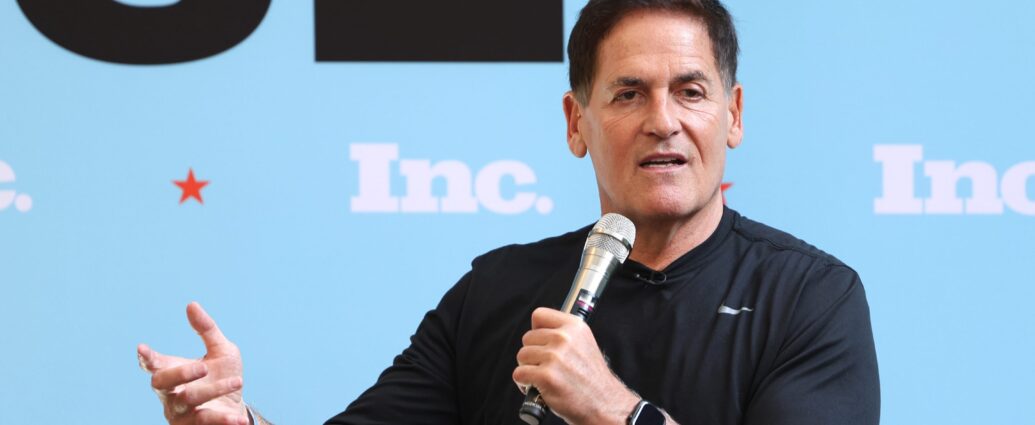
10 a.m. could be your new start time, thanks to AI. Billionaire Mark Cuban says companies will cut the workday by an hour—and you’ll still get paid the same
The days of grinding at your desk from 9 a.m. to 5 p.m. are officially numbered. Imagine clocking off an hour earlier every single day and still taking home the same salary. Billionaire entrepreneur and former Shark Tank star Mark Cuban says artificial intelligence is about to make it happen.
“Smart, bigger companies will enable their employees to create and use agents (within security guardrails), improve their productivity,” Cuban just wrote on X. “But most importantly, they will reduce their workday by an hour to start. Same pay.”
He added that working from home already “dilutes” people’s start and finish time, but that forward-thinking companies will put an official policy in place that cuts the workweek down by at least 5 hours. “It’s a step that sets the tone in a company,” he added.
“Reward people doing the daily with more time.”
It’s a bold call—but Cuban, who built and sold Broadcast.com (“the YouTube” of his era) for $5.7 billion and has backed hundreds of companies on Shark Tank, has a track record of spotting workplace shifts before the mainstream catches up.
He even taught fellow self-made multimillionaire Emma Grede—the founder behind Kim Kardashian’s Skims and Khloé Kardashian’s Good American—how to make the most of AI early on. He had over 60 AI apps on his phone at the time. So he knows more than most how many hours these tools can claw back.
And his argument is that the smartest companies will give that time back to their workers.
The 40-hour workweek launched 100 years ago—and it’s no longer fit for purpose
The standard 9-to-5 schedule hasn’t had an overhaul since Britain’s Industrial Revolution. Henry Ford brought the 40-hour workweek to the Western world a century ago, in 1926—eight hours of labor, for eight hours of recreation, and eight hours of rest. At the time, it was a 19th-century worker’s dream.
However, between commutes, school runs, and last-minute holdbacks in the office, it took the world shutting down to realize that 8-8-8 had slowly morphed back to something more like 12-6-6. Working from home briefly allowed workers to claw back some of that time. Families ate breakfast together again. Parents walked their children to school. That mismatch between productivity and presenteeism became impossible to ignore, and post-pandemic workers simply refused to go back “to normal”.
Already, office staff is crafting informal “dead zones”—hours or even days when they’ve unofficially checked out.
Studies show productivity plummets between 4 and 6 p.m. as employees slip into COVID-era habits of gym runs and school pickups. Many have also quietly dropped Fridays, echoing America’s Got Talent judge Simon Cowell, who recently said he stopped working them altogether because they were “pointless.” Emails get left unanswered, and the few still at their desks can’t get a meeting in the diary.
Now, with governments around the world once again pushing remote work and even four-day workweeks in the wake of the war in Iran, the pressure on the traditional workweek is building from every direction. And for workers already stretched thin by stagnating wages, “peanut butter” raises and a cost of living that keeps climbing, an hour back every single day—with no dent to their paycheck—isn’t just a perk. It’d be the first real raise many will have seen in years.
This story was originally featured on Fortune.com
This post was originally published here



Meta and YouTube just took a crushing legal blow over tech addiction. At this rehab for addicted teens and adults, it’s treated like heroin
At age six, Sarah Hill was handed her first iPad by her parents, which she used to play games like Angry Birds and Minecraft whenever she was bored. By age 21, the Alabama native had fallen so deep into virtual reality experiences and playing video games that she’d stopped seeing friends, showering, and brushing her teeth. “If you compare video game and tech addiction to drugs,” she says, “VR is the meth of drugs.”
At college, she spent so much time holed up in her room compulsively accessing a chatbot site, Character AI, on her phone that she failed classes. “I remember the night I told my parents I’d lied about everything and I flunked,” she recalls. “My parents didn’t have any words. They were like, ‘Just go.’ I went to my room, but the last thing I saw was my mom resting her elbows on the counter and just crying. That was the worst thing I ever saw.”
Hill’s parents flew with her from Alabama to a town just outside of Seattle and enrolled her at reSTART, one of the nation’s few residential treatment programs for digital overuse that treats tech addiction as a danger on the scale of alcohol or drug addiction. Clients are required to abstain from the internet, smartphones, gaming, and other technologies—often for months at a time. On her first day there screen-free, Hill lay down on her bed and cried.
Hill and reSTART’s other clients are at the center of an intense debate about how harmfully addictive modern tech can be. Once waged mostly in academic white papers and over dinner tables, it has escalated to the courts, thanks to a slew of landmark legal cases against Meta, YouTube, TikTok, and Snap. (The last two reached settlements earlier this year. TikTok declined to comment for this article, and Snap did not respond to requests for comment.) These initial “bellwether” cases are being closely watched because their outcomes could provide precedent for the thousands of other lawsuits filed making similar claims—and even force tech companies to change their products and business models. Some have anticipated a “Big Tobacco moment”—a reference to the 1990s lawsuits against tobacco companies that proved they were aware of the addictive nature of nicotine and the health dangers of smoking, and led to massive damages paid.
On March 25, California jurors delivered a blow to Meta and YouTube, and validated the concept of “tech addiction” by ruling that the companies were negligent in the design or operation of their platforms. They awarded the plaintiff, known as KGM, a combined $6 million in damages. The now 20-year-old plaintiff had testified in February that the “addictive design” of these platforms, including infinite scroll, filters, and autoplay, led her to spend up to 16 hours a day on them, causing depression, anxiety, body dysmorphia, and self-harm.
“We respectfully disagree with the verdict and are evaluating our legal options,” a Meta spokesperson said when reached for comment after the ruling. A spokesperson for YouTube parent company Google said the company also disagrees with the verdict and plans to appeal. “This case misunderstands YouTube, which is a responsibly built streaming platform, not a social media site,” the spokesperson said.
The Big Tech companies have long denied claims about “addictive design,” saying they did their best to protect free expression while keeping users safe. They also question the whole concept of “tech addiction,” pointing out that there’s no scientific evidence that their products were the cause of KGM’s and others’ issues. The head of Meta’s Instagram, Adam Mosseri, said in court that social media was not “clinically addictive.” And in a written statement prior to the verdict, a Meta spokesperson pointed to other factors in KGM’s life as the cause of her troubles, adding: “The evidence simply doesn’t support reducing a lifetime of hardship to a single factor, and our case will continue to underscore that reality.”
Reached for comment about YouTube during the trial, a spokesperson for owner Google, José Castaneda, said allegations about the platform were “simply not true.” “Providing young people with a safer, healthier experience has always been core to our work,” he said. He pointed to the company’s “services and policies to provide young people with age-appropriate experiences, and parents with robust controls.”

But concerned parents—along with researchers, health organizations, and even some former tech industry leaders—are sounding the alarm, saying that the systems we rely on for modern life are designed in ways that may be fundamentally incompatible with human well-being. They cite a growing body of research in psychology and neuroscience arguing that social media use delivers dopamine jolts similar to those associated with addictive drugs like meth or heroin. And with the rapid acceleration of AI, many are calling for the U.S. government to get serious about regulation and pleading with Big Tech to provide stronger safety features that constrain the algorithms, push notifications, and endless swiping that make it so hard to put your phone down.
“Unfortunately, [tech] is taking mostly young people away from the most important thing in their lives and key to their mental health, and that is relationships with other people,” says New York University professor and podcaster Scott Galloway. For tech companies, he says, it’s all about keeping users’ attention locked in: “I don’t think [Big Tech] set out in their business plans to depress global youth. I think their algorithms discovered that rage, self-esteem, and funny cat videos just keep people online.”
There is, of course, a difference between the kind of low-level “addiction” to our phones that most of us jokingly will cop to—checking email before we’re out of bed, scrolling TikTok in the grocery line—and the rarer, all-consuming dependency that leads people to places like reSTART or into courtrooms as plaintiffs. At the same time, the line between a bad habit of using tech several hours a day and a behavioral addiction can be blurry, especially for teens and young adults whose social lives, homework, and entertainment all run through the same devices.
“I’m finally putting a foot down and saying, ‘I want to get out of this endless cycle.’ I need to do something to better myself and my life.”
Sarah Hill, reSTART client
And that’s the whole point, argues Roger McNamee, a former tech investor and author of Zucked: Waking Up to the Facebook Catastrophe. “These companies are in the business of attention,” he says. “Once they had attention, they were in the business of controlling the choices available to people in order to influence their behavior in ways that were profitable for the platform. That culture and that business model were guaranteed to produce lots of harm.”
With its constitutional and cultural emphasis on the importance of free speech, the U.S., unlike many other countries, has largely declined to tell tech companies how they should interact with users. That has had dire effects, McNamee says: “We went from a culture where we used tech as an empowering tool to viewing tech as a tool for controlling people and extracting value. That’s the culture of the Valley, and the underlying behaviors that that causes are wrecking our democracy, wrecking public health, and wrecking our economy.”
The reluctance to place limits on how tech products engage users, especially in the age of AI, “should disturb everybody,” he says.
The $1,000‑a‑day residential program helping gamers and social media addicts reclaim their lives
Some 25 miles northeast of Seattle, past towering Douglas firs, sits the gray-paneled, split-level reSTART clinic. Motivational posters and pillows with phrases like “Healing is not linear” adorn its common areas. The center can house up to 16 clients, who share rooms and are responsible for household chores. They also are required to participate in 24 to 30 hours of structured group and individual therapy each week. reSTART teaches clients multiple evidence-based coping and recovery strategies, ranging from box breathing to physical grounding exercises. The treatment isn’t cheap. As an out-of-network provider, reSTART’s rate averages about $1,000 per day, though the clinic encourages clients to check with their insurers to see what can be covered. The average length of stay is 12 to 16 weeks, and many continue on via outpatient services for weeks after.
reSTART cofounder Cosette Rae opened the center with therapist Hilarie Cash almost two decades ago. Rae had previously worked as a tech developer and, upon realizing she was overusing technology in unhealthy ways, decided to change careers and pursue social worker training.
She vividly recalls a case in 2009, when she was called to assist a young adult who refused to leave their house or go to school. (Rae uses the pronoun “they” here to protect the individual’s identity.) They were not healthy, and had moved their bedroom mattress into the middle of the living room to play World of Warcraft nonstop. Doctors had diagnosed the person with agoraphobia, but Rae suspected that tech addiction was the real problem. She reached out to Cash for advice, and the two realized there was no place to treat people with these types of issues. They decided to open a center themselves.
Rae remembers being both “revered and rejected” in the early days of the center. Much like today, many didn’t think tech addiction was real. But there was no shortage of clients: She has treated around a thousand in the nearly two decades since the center opened, and spoken to many thousands more, she says.
What her clients struggle with is more difficult than breaking free from substance abuse, Rae says, partly because there’s no getting away from tech; it’s everywhere. “When I go out in the community right now, I do not have a lot of friends that are telling me about meth or heroin,” she says. “I don’t usually go into the store and see people dealing. I don’t go to the restaurant and people are doing a line. But when it comes to technology, it’s everywhere. So you’re constantly being in front of it and having to say no.”
It’s more akin to an eating disorder, Rae says, where a person still has to eat but has a problematic relationship with food. In this day and age, clients aren’t able to drop technology from their lives completely.
It’s not just teenagers who are struggling. Rae mainly works with young and middle-age adults (reSTART takes clients who are 15 and older), but she has seen clients in their late forties or fifties. The most common addictions Rae sees, besides video games, involve virtual reality, pornography, and more recently, AI chatbots.
One client, a 23-year-old Seattle-area college student who asks to withhold their name and gender, describes their own overuse of video games, YouTube, and communication platform Discord. The student says they wished schools today would teach kids how to use technology mindfully and warn against addictive behaviors: “Technology is best used when it’s a tool to enhance your life. But what I got trapped in is technology being my life.”
The dopamine debate: What brain science says about “tech addiction”
Some scientists, such as Stanford psychiatrist and Dopamine Nation author Anna Lembke, say compulsive tech use taps into the brain’s reward circuitry in strikingly similar ways to substance addiction. When someone scrolls social media or wins a round of a video game, their brain releases dopamine, which trains them to seek that “hit” again and again. Repeated bursts of stimulation can desensitize the pathways and weaken the prefrontal cortex, which is responsible for planning and self-control, making it harder to resist urges even when the habits are causing problems or affecting school, work, or relationships.
Brain imaging studies of people with internet gaming or social media disorders have found structural and functional changes in these regions that mirror what doctors see in other behavioral addictions such as gambling.
Tech addiction is not listed as a condition in the Diagnostic and Statistical Manual of Mental Disorders (DSM), the guide published by the American Psychiatric Association for diagnosing mental health conditions. However, in its most recent edition, the DSM does list “internet gaming disorder” as a condition warranting more clinical study.
“I don’t think [big tech] set out to depress global youth. I think their algorithms discovered that rage, self-esteem, and funny cat videos just keep people online.”
Scott Galloway, NYU professor and podcaster
Its absence doesn’t faze Rae. “It took 40 years for gambling [disorder] to get into DSM,” she says. “So I don’t give any credence to the fact that it’s not in there yet.”
The science is far from settled, and some studies suggest that tech doesn’t cause users’ unhappiness. A 2023 University of Oxford study of 2 million people from around the globe found that links between internet adoption and psychological well-being were “small and inconsistent.”
And in March, California Institute of Technology researcher Ian Anderson and Wendy Wood, a professor at the University of Southern California, wrote a Washington Post op-ed arguing that calling habitual tech use “addiction” was misleading and harmful. In surveys, they found that when people described their Instagram use as an addiction, “They felt stuck, less confident that they had the ability to change.” Yes, they wrote, companies should “amend their platforms to help users regain control over their habits.” But they concluded, “The truth is: Heavy use is not necessarily an addiction.”
Nir Eyal, a tech investor and author of Hooked: How to Build Habit-Forming Products, says it’s not the tech that’s solely to blame for people’s addictions. “Every generation has a moral panic about whatever new technology, but you don’t fix things by stopping their use,” he says. “You fix things by making them better, by making them safer.”
Eyal argues that there is nothing unethical about making a product that some people get addicted to, and asking social media companies to make their products less sticky is not the answer. Why? “Because any product that’s good, somebody is going to get addicted to,” he says. “Stop making the product interesting? That’s dumb. That’s why we use the product. That’s called ‘entertaining and engaging.’”
The debate is only likely to grow more urgent given the rapid adoption, and daunting potency, of AI. Rae fears AI could create new ways for people to get hooked on tech, or treat AI as a “substitute attachment figure” for real relationships. “I think everybody’s been focused on all the talk around the existential threats like, ‘Can it take our jobs?’” Rae says. “But what about taking our humanity? That’s what’s happening.” As a practitioner working with tech addicts, she says, “I’m standing here looking down at a tsunami coming to people who have no idea what their kids are going to be facing. How this is going to change them; how it’s going to change their relationships with each other; and how it’s going to change their futures.”
Can laws, product changes, and rehab clinics actually protect kids from addictive tech?
If tech addiction is accepted as real, it raises another thorny and divisive question: What can—and should—be done about it? Some states, including New York and California, have enacted laws requiring warning labels on social media apps that highlight the risks for young people. In September, the New York attorney general proposed a rule requiring social media companies to restrict algorithmically personalized feeds and nighttime notifications for users under 18 unless parental consent is granted. California put legislation into place last year creating safety restrictions on the development of AI.
Federal oversight has been slow or nonexistent, though many legislators have tried. In 2019, Missouri Republican Sen. Josh Hawley introduced a bill that would have banned social media features that exploited human psychology. Hawley’s Social Media Addiction Reduction Technology (SMART) Act went nowhere, attracting little bipartisan support and never making it out of committee.
In December, Australia became the first country to ban social media for people under 16, and Greece and Britain are considering similar laws.
Social media platforms have themselves put up some guardrails, mainly via opt-in or parental controls. Meta launched Teen Accounts on Instagram and Facebook, with more restrictive features and nighttime nudges to close the app. Snap has expanded in-app warnings, “friending” safeguards, and location-sharing controls. Google and YouTube announced a $20 million initiative to address teen digital well-being. TikTok launched a daily screen-time limit, with users under 18 automatically cut off after an hour. And in February, Meta, TikTok, and Snap agreed to be independently rated on how well they protect teens’ mental health by a group of advocacy organizations.
reSTART’s Rae doesn’t want to get stuck in semantics. Instead of arguing about whether their products are addictive, she says that Big Tech companies should devote some of their profits to resources that can help those “struggling as a result of loving their product,” she says. Many people can’t afford treatment like reSTART, as most health insurers won’t cover problematic tech use—though sometimes clients can get coverage for associated disorders such as depression or anxiety.
Companies could also consider shutting off access to their technology for certain time frames, Rae suggests. Eyal recommends something similar. In addition to implementing a legal minimum age to use social media, he recommends that tech companies adopt a “use and abuse” policy. After a certain number of hours, he says, tech companies should reach out to the user with a message offering resources to prevent or cure addiction.
Sarah Hill recently transitioned out of the center to an apartment owned by reSTART, half an hour away. She still visits the center most days for treatment, but is eyeing a job at a grocery store on her off days—and even got a cell phone. It’s a basic “dumb” Gabb phone, with no apps or games. Even so, Hill recently found herself mindlessly scrolling through new screen backgrounds. “I felt myself losing control again, and it scared me,” she says, tucking the phone underneath her legs on one of reSTART’s oversize chairs.
But Hill says she does have high hopes about managing her addiction in the future and says her phone usage has improved. “After making so many mistakes, I’m finally putting a foot down and saying, ‘I want to get out of this endless cycle,’” she says. “I need to do something to better myself and my life.”
Six questions to ask yourself about your tech use
Washington’s reSTART Clinic developed these screening questions to help potential clients consider whether their tech use has become problematic. Here’s an abbreviated version:
- How often do you think about your current, previous, or next online activity?
- Have you become restless, irritable, angry, or anxious when you are unable to engage in online activities?
- Have you tried to reduce participation in online activities but found it too difficult?
- Have you lost interest in non-online activities such as sports, hobbies, or family time?
- Have you deceived a family member, significant other, employer, or therapist regarding the amount of time you spend online?
- Have you jeopardized or lost a significant relationship or an academic or employment opportunity because of your engagement with online activities?
This article appears in the April/May 2026 issue of Fortune with the headline “What is tech addiction? It may well be Big Tech’s next problem.” It was updated on March 26, 2026 following the verdict in the case against Meta and YouTube.
This story was originally featured on Fortune.com
This post was originally published here

What Mark Zuckerberg’s AI sidekick could teach CEOs about leading by example
Mark Zuckerberg is nothing if not a true believer. Again and again, the Meta CEO and Facebook founder has thrown himself headfirst into his company’s top initiatives. A few years ago, he made himself the face of the company’s since-sidelined metaverse push, and remained steadfast even as the internet mocked how his virtual reality avatar fenced, hydrofoiled, and, at times, looked awkwardly flat. He even ran internal and media meetings inside Meta’s own VR offices, which he argued was a better way to connect than regular video conference calls. He also regularly wears Meta’s bulky AI smart glasses in public, aesthetics be damned.
The chief executive is now walking the walk on another Meta imperative: AI adoption. According to the Wall Street Journal, Zuckerberg is building an AI agent to help him as CEO. Details are scarce on the still-in-development tool, but the WSJ reports that it’s getting Zuckerberg information faster, expediting processes that normally require him to query multiple people. Meta did not immediately return a request for comment on the tool.
As Meta spends tens of billions of dollars developing “superintelligent” AI models and building data centers to power them, it’s become borderline obsessed with staff-wide AI adoption. The company has encouraged employees to employ the technology in multiple ways, and incorporated “AI-driven impact” into its performance reviews. It is also reportedly among the tech giants that have established leaderboards that rank employees based on their consumption of tokens—a measure of AI use. But of all the methods of inducing AI adoption, Zuckerberg’s leading by example might be the most effective.
Data shows an emerging credibility gap in which leaders are mandating and hyping AI but are often only casual users of the technology themselves—sometimes using it less than their rank-and-file employees. Nearly 70% of CEOs, CFOs, and senior executives use AI at work less than an hour a week, including 28% who don’t use it at all, according to a survey of more than 6,000 senior leaders in the U.S., U.K., Germany, and Australia co‑authored by Stanford economist Nicholas Bloom. The disconnect may be blinding leaders to the first-hand experience of using AI, which is causing workload creep and cognitive overload, at least in current use cases.
Separate research from Gallup finds that manager support of AI—including modeling its application—is a strong driver of whether employees use and value AI tools. In organizations investing in AI, employees who strongly agree their manager actively supports their team’s use of AI are more than twice as likely to use AI a few times a week or more, 6.5 times as likely to strongly agree the tools are useful, and 8.8 times as likely to say AI helps them do what they do best every day, Gallup says.
By all accounts, Meta’s AI organization-wide AI push seems to be working. It’s breeding an experimental culture reminiscent of Facebook’s heady early years, the WSJ reports, with employees participating in AI hackathons and deploying personal AI agents that do work on their behalf.
Does every CEO need a Zuckerberg-style AI sidekick? That remains to be seen. What is clear is that leaders who expect AI to be woven into daily workflows can’t stay light users of the tools; if they want credibility—and real adoption—they’ll have to log in and experiment. They’ll need to feel the pain and reap the gains, along with everyone else.
This story was originally featured on Fortune.com
This post was originally published here
Gold at $10,000? Market watchers hold firm on forecasts despite bullion bear market slide
Gold’s sharp selloff may have pushed the metal firmly into bear market territory, but some market veterans are sticking to ambitious long-term forecasts.
This post was originally published here

Pound Steady After Volatile Day of Trading

Effective Study Strategies for Passing the CFA Level I Exam
This post was originally published here












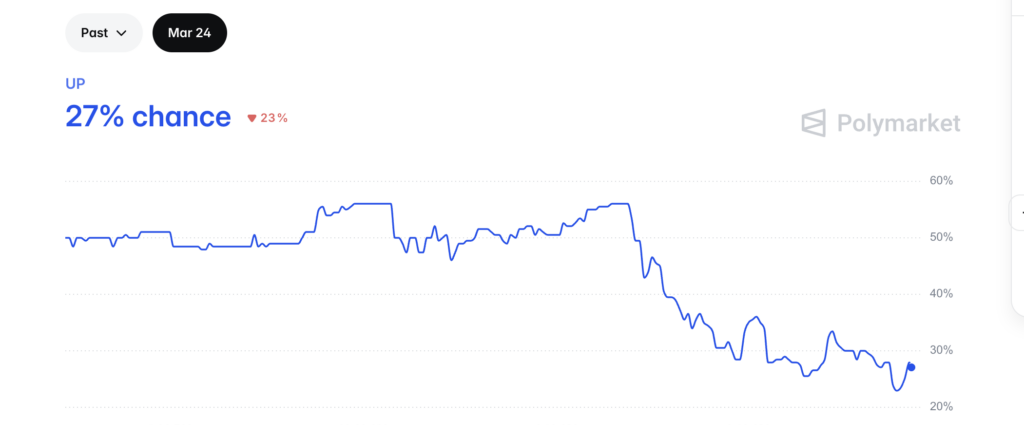
Will S&P 500 Open Up Or Down On Tuesday? Iran Deal Talks, Five-Day Strike Pause And PMI Data In Focus
The S&P 500 posted its best session since early February on Monday, rising 1.15% to close at 6,581, after President Donald Trump posted on Truth Social that the U.S. and Iran had held “very good and productive conversations” toward a resolution of hostilities and announced a five-day pause on military strikes against Iranian power plants and energy infrastructure.
The Polygon-based (CRYPTO: POL) Polymarket crowd is firmly bearish heading into Tuesday’s open. The “S&P 500 Opens Up or Down on March 24?” market is at 73% “Down” and 27% “Up,” with $41,024 in traded volume.
Why That …
This post was originally published here
Tuesday briefing: With the horror of conflict throughout the globe, how likely is world war three?
In today’s newsletter: Our diplomatic editor on how global instability feeds into conflict in so many parts of the world, and whether the threshold for a major global war has been met
Good morning. The world is at war. From the trenches of eastern Ukraine to the missile-streaked skies of the Gulf, a growing proportion of humanity is living under the horror of conflict. For some observers, there are gnawing fears that the worst is yet to come. The apparent collapse of the rules-based international order, the irrelevance of institutions designed to uphold it, and the interconnectedness of the fighting have sparked warnings that we could be at the beginning of a third world war. Indeed, half of Britons polled in a recent YouGov survey thought world war three was likely in the next five to 10 years.
On Monday, Donald Trump stepped back from deepening the US and Israel’s war with Iran, announcing that he would postpone military strikes on Iranian power plants for a five-day period after “very good and productive conversations” about the end to the fighting. Iran denied this version of events, claiming Trump had been scared off by their threats of attacks on water infrastructure in the Gulf. But, despite calmer stock markets and a sharp drop in the oil price, there is little sign that the fighting is near an end.
Middle East | The Israeli military said it had launched a new wave of strikes on Tehran, after Donald Trump signalled a pause in US attacks against energy infrastructure after what he said were productive talks with Iran.
UK Politics | Ministers are looking at providing support for household bills next winter, Keir Starmer said, as he suggested the energy price shock unleashed by the Iran conflict could continue for months to come.
London | Security agencies are investigating whether a group linked to Iran is behind an arson attack on four ambulances belonging to a Jewish charity in north London.
Climate crisis | More countries will face critical food insecurity if world heats up by 2C, analysis shows.
New York | The pilot and co-pilot of an Air Canada Express regional jet have been killed after it collided with a fire truck while landing at New York’s LaGuardia airport.
This post was originally published here

Mohamed El-Erian Flags Apollo’s 5% Withdrawal Cap As Credit Stress Signal
Economist Mohamed El-Erian has highlighted a critical pressure point in the private credit market following Apollo Global Management‘s (NYSE:APO) decision to restrict investor withdrawals from its $25 billion debt fund.
A ‘Notable’ Shift In Private Credit
“This is notable news… given Apollo’s standing in private credit,” El-Erian posted on X, reacting to reports that Apollo Debt Solutions capped withdrawals at 5% of outstanding shares Monday after redemption requests surged to 11.2%.
The gating exposes a growing structural mismatch: funds offering periodic liquidity to retail investors while holding highly illiquid direct loans.
When redemption demands spike during periods of market stress, asset managers are increasingly forced to implement withdrawal limits to prevent catastrophic fire sales.
This post was originally published here



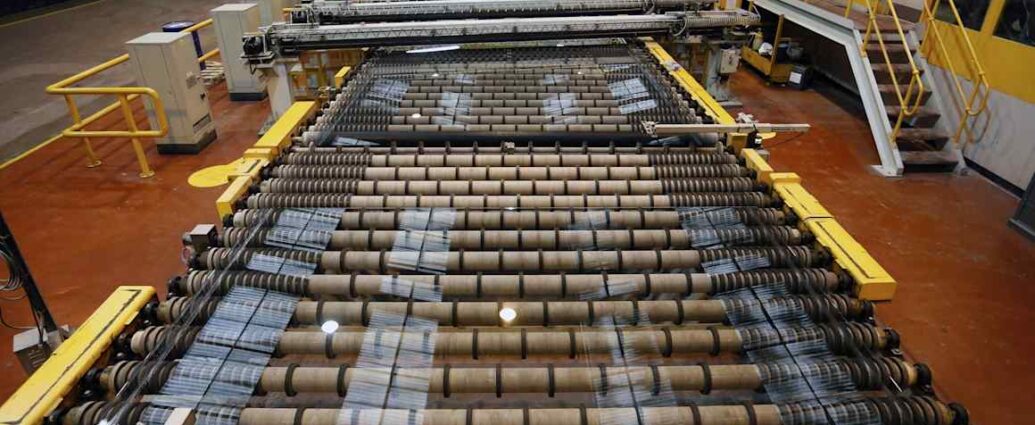
Apollo agrees biggest Japan deal in $3.7bn rescue of glassmaker NSG
This post was originally published here
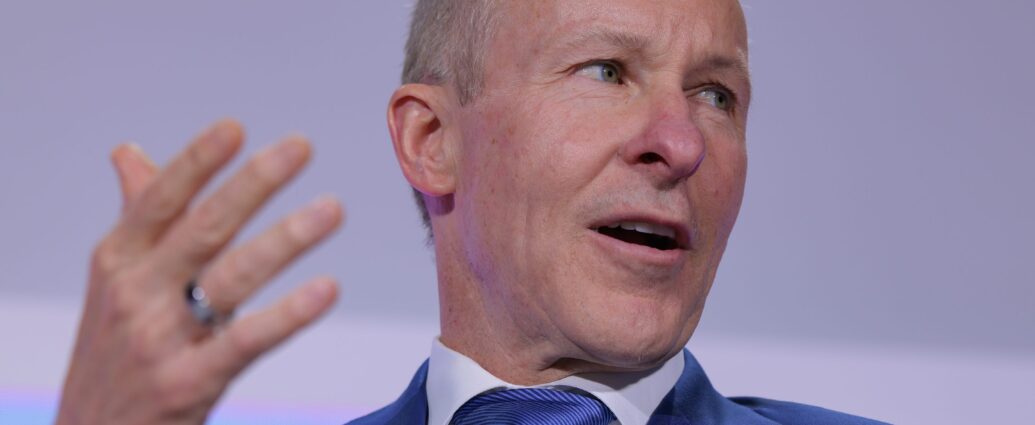
Airlines are preparing for the worst as Iran war enters its fourth week. But demand is still strong, and travelers are willing to pay higher fares
United Airlines CEO Scott Kirby is preparing for the worst: a future where oil prices reach as high as $175 per barrel and stay above $100 until the end of 2027.
With the U.S.-Israel war on Iran now in its fourth week, the airline industry is staring down its biggest disruption since the pandemic as the global oil market suffers a supply shock.
This is the first major crisis the industry is facing since widely ending the practice of fuel hedging in 2024 and 2025, an insurance that can protect airlines from spikes in fuel costs.
Jet fuel—which accounts for more than 40% of airlines’ operating costs—have nearly doubled in the last three weeks, according to Argus Media. Kirby predicted in a letter to employees that if fuel prices remain high, they would add $11 billion to United’s annual costs.
It may spell doomsday for an industry that took four years to recover from the pandemic, but airline executives are remaining optimistic. The reason? This time, they’re prepared to pass on the costs to you.
The average price of a transcontinental flight has risen from $167 in late February to $414 in mid-March, according to a Deutsche Bank analysis. The strain is also being felt strongly on less-distant routes. A flight from New York to Santo Domingo, Dominican Republic, on budget airline JetBlue went from $166 to $566 in three weeks and is more than four times as expensive as it was a year earlier.
But demand remains strong as consumers have already swallowed a post-pandemic spike in airfares. The last 10 weeks have been the highest booked revenue weeks in United’s history, according to Kirby’s letter.
Similarly, Delta CEO Ed Bastian said that sales in the week before March 17 rose about 25% from a year prior. Five of Delta’s top 10 ticket sales days ever have happened since the war began. And he’s not too worried about fuel prices because Delta is in a “position of strength” to raise airfare, Business Insider reported. Delta also has its own oil refinery, which provides a “meaningful hedge,” he said.
To be sure, cancellations are coming, and routes will be slowed or ended like they were during the pandemic, said Martin Dresner, a professor of supply chain management at the University of Maryland.
Delta has halted certain routes, including flights from New York to Tel Aviv until May 31 and from Tel Aviv to New York until June 1. The restart of its Atlanta to Tel Aviv service has been delayed, with flights to Tel Aviv paused until August 4 and from Tel Aviv until August 5.
United is planning to trim some off-peak flights, such as redeyes as well as Tuesday, Wednesday, and Saturday trips during the second and third quarters. The airline is also halting service to Tel Aviv and Dubai due to the war.
“To be clear, nothing changes about our longer-term plans for aircraft deliveries or total capacity for 2027 and beyond, but there’s no point in burning cash in the near term on flying that just can’t absorb these fuel costs,” Kirby said in the letter to staff.
This story was originally featured on Fortune.com
This post was originally published here

EU, Australia seal trade deal as Western countries hedge against U.S. risks
The EU and Australia agreed to a sweeping trade deal, the latest move by U.S. allies to rethink their economic ties amid deepening geopolitical uncertainty.
This post was originally published here


Exhibition to tell story of Punjabi princess and pioneering suffragette Sophia Duleep Singh
The Last Princesses of Punjab opens on Thursday at Kensington Palace
The extraordinary life of an exiled Punjabi princess, embraced by the British royal court and a goddaughter of Queen Victoria, but who would become a pioneering suffragette and challenge the very authority of the elite social circles in which she moved, is to be told in a new exhibition.
Princess Sophia Duleep Singh was the daughter of Duleep Singh, the last Sikh maharajah of the Punjab. As a child he was forced to surrender his lands to the East India Company in 1849, and sign away the famous Koh-i-noor diamond, now a potent symbol of colonial exploitation and set in the crown of the late Queen Elizabeth the Queen Mother.
This post was originally published here
Mr Motivator urges government to treat ’bed poverty’ as a national crisis
As Iran war threatens to exacerbate living costs, children’s beds have become ‘like a luxury item’, says Barnardo’s
Mr Motivator is lobbying the government to tackle the number of children in the UK who have no bed of their own as Barnardo’s reveals demand for furniture from struggling families has surged by 40% in the last year.
The children’s charity said beds had become“like a luxury item” as the war in Iran threatens to exacerbate cost of living pressures.
This post was originally published here
Eel fisher takes on authorities at Belfast court over pollution in UK’s largest lake
Declan Conlon will argue officials have failed to act despite clear evidence of the ecological collapse of Lough Neagh
An eel fisher is to argue at the high court in Belfast that the authorities have allowed the ecological collapse of Lough Neagh by failing to take action over pollution.
Declan Conlon, whose family have for generations fished the inland lake in Northern Ireland that once hosted the largest wild eel fishery in Europe, is seeking to take a judicial review against the Department of Agriculture, Environment and Rural Affairs (Daera). He will argue the department has failed to act against polluters despite clear evidence of the ecological collapse of the lake.
This post was originally published here

At least 66 killed in military plane crash in Colombia, head of armed forces says
Colombian officials say that a military cargo plane with 128 people on board, most of them soldiers, crashed shortly after taking off Monday in southwestern Colombia.
(Image credit: MiPutumayo)

This post was originally published here
India’s private sector growth slows to over 3-year low in March, weighed down by Mideast conflict
India’s private-sector business activity, which had been on an upswing since the start of 2026, falters in March due to shockwaves from the Iran war
This post was originally published here
Quadruple amputee cornhole player arrested for alleged murder, Maryland police say
Charles county sheriff’s office alleges Dayton James Webber fatally shot passenger in car during argument
A sheriff’s office in Maryland has alleged a professional cornhole player, who is also a quadruple amputee, fatally shot a passenger in a car he was driving during an argument.
Dayton James Webber, 27, was arrested and charged as a fugitive from justice by police in Albemarle county, Virginia, the Charles county sheriff’s office said in a statement.
This post was originally published here

Pudgy World Lands On Amazon Marketplace, Allows Users To Customize Their Penguin With ‘Exclusive’ Digital Traits
Popular NFT brand Pudgy Penguins announced the integration of ‘Pudgy World’ with Amazon.com Inc.’s (NASDAQ:AMZN) online shopping platform on Monday, allowing users to buy licensed wearables to customize their characters in the browser-based game.
Customize Your PENGU Using Amazon
Pudgy World said it has “officially landed” on the e-commerce website, introducing Pudgy World traits—customization options for penguin avatars in the free-to-play game.
These exclusive digital traits, including hats, clothing, and accessories, have prices ranging from $4.99 for common to $7.99 for epic rarities. They are redeemable through the new Pudgy Pass system for in-game customization without the need for cryptocurrency wallets.
Note that Pudgy Penguins’ merchandise line—featuring plushies, keychains, blind bags, and additional …


UK police probe possible Iran link after Jewish charity ambulances set on fire
Police in London are investigating a suspected antisemitic hate crime attack after four vehicles belonging to a Jewish ambulance service were set on fire.
(Image credit: Alberto Pezzali)

This post was originally published here



FAFSA Guide: Access Federal and State Financial Aid
This post was originally published here
Understanding the FAFSA and Accessing Financial Aid
This post was originally published here
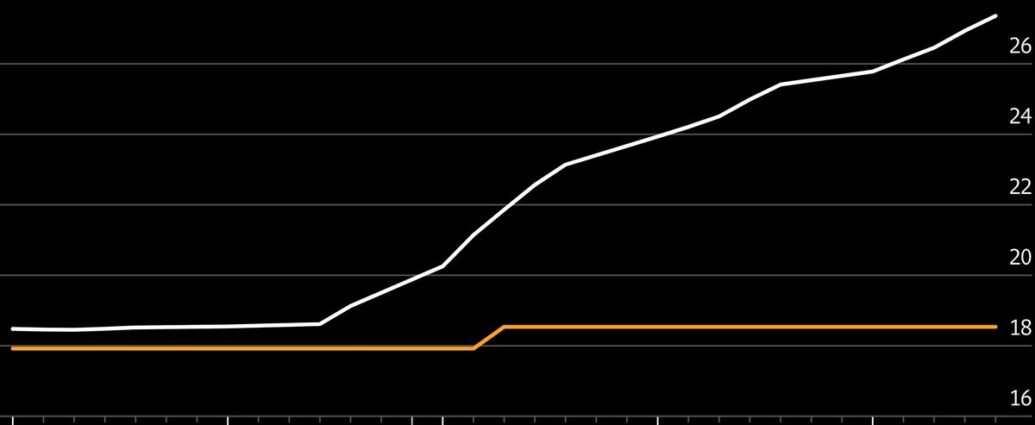

Victoria teachers strike: warning of further action as 35,000 rally and hundreds of schools cancel classes
Union leaders say Tuesday’s protest in Melbourne’s CBD was among state’s ‘biggest’ in years
-
Get our breaking news email, free app or daily news podcast
Up to 35,000 striking teachers have rallied in Melbourne, with classes at about 500 public schools cancelled, as their union warns of further action in their fight for better pay and conditions.
In what unions described as the largest ever rally by Victorian teachers, an estimated 35,000 protesters created a sea of red that travelled from Trades Hall to the steps of parliament house in Melbourne on Tuesday.
This post was originally published here
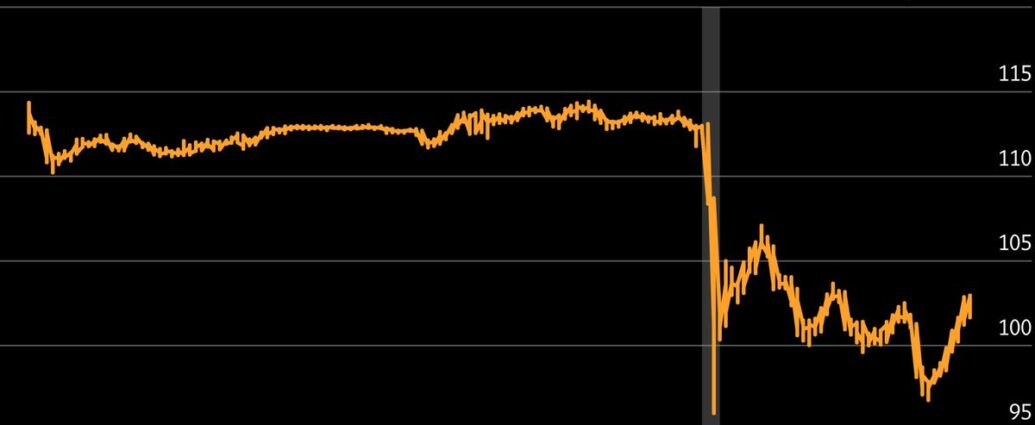

Hormuz fertiliser block will upend world’s food production
This post was originally published here

The secret to Ukraine’s remarkably resilient labour market
This post was originally published here

Palantir turns poisonous on the midterms campaign trail
This post was originally published here
Irish metals refinery is in supply chain that feeds Russian war machine, records suggest
Shipments to Russian smelters from Aughinish Alumina have increased sharply since the invasion of Ukraine
A leading Irish metals refinery is part of an international aluminium supply chain that appears to conclude with shipments to arms producers feeding the Kremlin’s war machine in Ukraine, leaked records and public data suggests.
Trading records show that shipments to Russian smelters from Aughinish Alumina, which is located on the Shannon estuary in the west of Ireland and has been owned by the Russian aluminium group Rusal since 2006, have increased sharply since the invasion of Ukraine in 2022.
This post was originally published here
Punk masks, Walkmans and Choppers: Museum of Youth Culture to open in London
Opening in May, Camden museum has 100,000-item archive telling story of British youth subcultures, from mods and rockers, to ravers and emo
In the basement of a new-build housing block in Camden, the ventilation system is working flat out. The fans whir like a chainsaw orchestra bouncing around the concrete room as they attempt to deal with a slight damp problem. “This is what it’d sound like if there was a fire!” shouts Jon Swinstead, the driving force behind the Museum of Youth Culture, as he tries to make himself heard above the din.
It’s hard to imagine but in a few weeks this empty, slightly soggy space will be transformed into an institution dedicated to all things teenage – a project Swinstead has been working on in one way or another for almost 30 years.
This post was originally published here
Denmark election: far right has slowed under Frederiksen – but at what cost?
Polling for anti-immigration DPP is relatively low, but many feel its ideas have been co-opted by Mette Frederiksen’s Social Democrats
Mayasa Mandia, a recent graduate living in the small Danish town of Kokkedal, will be voting for the left in Tuesday’s general election – but it won’t be for Mette Frederiksen’s Social Democrats.
The 23-year-old, a practising Muslim, says that under Frederiksen’s government far-right commentary has become normalised in the Danish mainstream. She has seen this, she says, at her own university, where there were discussions about banning prayers.
This post was originally published here

The VC firm hunting ‘almost unemployable’ misfits
This post was originally published here

Carmakers rush to secure aluminium as Middle East war hits supply
This post was originally published here

Siemens boss says Europe risks ‘disaster’ from prioritising AI independence
This post was originally published here
Commissions for strata managers should be banned ‘sooner rather than later’, NSW productivity commissioner says
Peter Achterstraat says protections are essential as apartments increasingly become ‘the only place people can afford to buy’
-
Get our breaking news email, free app or daily news podcast
The New South Wales productivity commissioner wants exorbitant commissions for strata managers banned “sooner rather than later”, with apartments expected to make up half of all Sydney homes by 2041.
The NSW government is yet to commit to implementing the recommendations contained in Peter Achterstraat’s report. He has advised outlawing commissions on insurance premiums and other services.
This post was originally published here

ABC staff strike: BBC content to replace flagship shows, including 7.30 and AM
Triple J will air without presenters while ABC News Breakfast is not expected to air as staff walk off the job to protest pay and conditions
The ABC’s flagship news programs including 7.30 and AM will be replaced by the BBC World Service when ABC journalists walk off the job for 24 hours for the first time in 20 years on Wednesday.
Staff are protesting what they say is a low pay offer from ABC managing director Hugh Marks, as well as work conditions and the broadcaster’s refusal to rule out replacing journalists with AI bots.
This post was originally published here
Tuesday, March 24, 2026: Jim Cramer discusses his next moves for the Investing Club
This post was originally published here

Japan to begin biggest-ever oil release from national reserves as Middle East energy crisis bites
PM Sanae Takaichi says about 80m barrels of stockpiled oil to be provided to refiners – equivalent to 45 days of domestic demand
• Middle East crisis – live updates
Japan will begin the biggest-ever release of oil from its strategic reserves this week, the prime minister, Sanae Takaichi, has said, as the country braces for possible shortages caused by the US-Israel war on Iran.
The government last week approved the release of 15 days’ worth of private-sector reserves, amid concern that the conflict in the Middle East will continue to hinder the flow of tanker traffic along the strait of Hormuz.
This post was originally published here






Von der Leyen urges US and Iran to resolve Hormuz crisis, warning distance offers no protection to Australia
Speaking after signing trade agreement in Canberra, the European Commission president warns ‘situation is critical’ for global energy supply
The US and Iran must come to the negotiating table to immediately end the de facto closure of the strait of Hormuz and stop hostilities in the Middle East, the head of the European Commission says.
Ursula von der Leyen, the European Commission president, said Iran’s efforts to block the strategic waterway via attacks on unarmed commercial vessels and critical infrastructure “must be condemned”.
This post was originally published here

How to Leverage AI the Right Way

Petrol prices are rising, but Australians don’t appear to be driving less or taking public transport more – yet
Vehicle numbers on key Sydney and Melbourne roads have held steady, as calls grow for free or cheaper public transport to encourage people to drive less
-
Get our breaking news email, free app or daily news podcast
Australians appear to have kept driving despite soaring petrol prices, as calls grow for free or discounted public transport to help people save fuel and get off the road.
Traffic and public transport usage are holding steady, with experts warning the country needs to change travel methods or start working from home if fuel costs keep rising.
Do you know more? Email luca.ittimani@theguardian.com
This post was originally published here
Despite state bans and restrictions, the number of abortions in the U.S. holds steady

The Guttmacher Institute has a new analysis on how many abortions happened in 2025.
(Image credit: Saul Loeb)

This post was originally published here

NovaBay Rebrands To Stablecoin Development Corp In Full Crypto Pivot— Pharma Company’s Stock Climbs 19%
NovaBay Pharmaceuticals, Inc. (NYSE:NBY) announced Monday its corporate name change to Stablecoin Development Corporation, signaling a full shift toward a cryptocurrency-focused strategy.
From Pharms To Crypto
The biotech firm will also adopt a new ticker symbol, SDEV, which is expected to take effect on April 3, according to the press release.
The company’s CEO, Michael Kazley, stated, “The name change to Stablecoin Development Corporation reflects our conviction that stablecoins represent the most compelling structural opportunity in digital finance.”
The firm has pivoted from a pharmaceutical focus to become an “on-chain holding company,” focusing on long-haul bets in protocol-level cryptocurrency ecosystems.

China’s leaders hunt for strategic gains from US quagmire in Iran
This post was originally published here
Strike in Iraq reportedly kills seven fighters – as it happened
This blog is closed. Follow our new liveblog here.
British prime minister Keir Starmer is set to chair an emergency meeting on the economic fallout from the war in Iran on Monday, with chancellor of the exchequer Rachel Reeves and Bank of England governor Andrew Bailey also attending, the UK government has said.
Financial markets face another turbulent week after Iran said it would strike its Gulf neighbours’ energy and water systems if Donald Trump followed through on his threat to “obliterate” Iran’s power plants if it doesn’t fully open up the crucial strait of Hormuz.
Topics expected to be covered are the economic impact of the crisis on families and businesses, energy security and the resilience of industry and supply chains alongside the international response.
This post was originally published here

New Zealand to give cash payments to some low income families as global fuel crisis worsens
Policy begins on 1 April and is aimed to ease financial pressure as the price of fuel surges due to conflict in the Middle East
Nearly 150,000 New Zealand families will soon receive a weekly cash payment to help them afford petrol, the government has announced, in what is believed to be the world’s first fuel relief package that directly pays citizens since the Iran war began.
On Tuesday, prime minister Christopher Luxon and finance minister Nicola Willis announced roughly 143,000 families with children will get an extra NZ$50 ($29.20; £21.80) a week through a boost to the in-work tax credit – a payment to families with dependent children where at least one parent is in paid employment and neither parent receives benefits. Another 14,000 families on slightly higher incomes will also be eligible for payments, but will receive less than $50 per week.
This post was originally published here
European wine, chocolate and cars to become cheaper in Australia amid landmark trade deal with EU
Australian manufacturers can call their wares parmesan and kransky, but terms like feta, romano and gruyere will be eventually phased out
-
Get our breaking news email, free app or daily news podcast
European food, wine, cars and fashion goods will become cheaper for Australian buyers under a long-awaited trade deal, but farmers are furious about meagre quotas for meat exports.
After almost a decade of negotiations, Australia and the European Union have struck an agreement that will lead to both sides slashing tariffs and expanding trade across a range of areas.
This post was originally published here


President Backs Off Threat To Iranian Energy
Asia-Pacific markets pare gains as oil rebounds on Iran war-linked uncertainty
Asia-Pacific markets rose but pared earlier gains as oil prices rebounded, underscoring lingering uncertainty over the trajectory of the Middle East conflict.
This post was originally published here
Ukraine war briefing: Russia setting up long-range drone bases in Belarus, Zelenskyy says
Ukraine president vows to respond to move that would draw Belarus more directly into the war; EU anger at Hungary over Russia information sharing. What we know on day 1,490
This post was originally published here


Iran War To End Soon? Ceasefire Odds Rise On Prediction Market After Trump Hails ‘Good And Productive’ Talks With Tehran
Cryptocurrency bettors boosted the odds of a U.S.–Iran truce after President Donald Trump shifted his stance from “hit and obliterate” to describing talks with Tehran as “good and productive.”
Peace At Last?
Polygon (CRYPTO: POL)-based Polymarket saw odds of a ceasefire by April 15 rise from 30% to 35% in the past 24 hours, while chances of a truce by April 30 increased from 41% to 45%. Similarly, the probability of this happening by May-end rose 5 percentage points to 56%.
Over $38 million has been wagered on the outcome, which will be resolved after an “official ceasefire agreement” is reached, requiring public confirmation from both the U.S. government and the …

Dubai’s Indian expatriates hunker down
This post was originally published here


Hong Kong police can demand phone and computer passwords under amended national security law
Refusing to comply could lead to year in jail and hefty fine, while providing false information carries up to three years in prison
Hong Kong police can now demand that people suspected of breaching the city’s national security law provide mobile phone or computer passwords in a further crackdown on dissent.
The amendments to the law also empower customs officers to seize items that are deemed to have “seditious intention”, regardless of whether any person has been arrested for an offence endangering national security because of the items.
This post was originally published here