
Jimmy Kimmel on Trump Pearl Harbor joke: ‘Everything he knows about it begins and ends with the Ben Affleck movie’
Late-night hosts panned Trump’s joke about the 1941 attack, addressed new unredacted Epstein emails and talked popular puppy names
With The Late Show with Stephen Colbert on hiatus until at least 27 March, late-night hosts on Thursday discussed Donald Trump’s snafu while meeting Japan’s prime minister, his caginess over Iran, and new findings in the Epstein investigations.
This post was originally published here
Trump admin tasks Treasury Dept. with student loan collection. What borrowers need to know
Trump officials plan to task the Treasury Department with collecting on defaulted student loans and eventually “operational support” on current loans.
This post was originally published here



Bitcoin Back To $70,000: Here’s The Key Level To Watch To Tell BTC’s Next Move
Bitcoin (CRYPTO: BTC) is back at $70,000 on weakening bullish momentum, setting up a key test for its next move.
Bitcoin’s Key Levels In Focus
Prominent analyst Trader Mayne on Friday said rising geopolitical tensions and the aftermath of recent Federal Reserve policy decisions are driving volatility across crypto markets.
He noted that macro conditions remain critical.
Higher energy prices can tighten financial conditions, while central bank policy continues to influence liquidity, both key drivers of capital flows into Bitcoin.
From a technical perspective, Bitcoin is at a pivotal point. After a failed breakout attempt, the return to its previous range suggests fading bullish strength.
Mayne identified $71,500 …

6 Tax Filing Mistakes Retirees Make—and How to Avoid Them
This post was originally published here


FedEx Raises Forecast, Downplays War Impact




Ukraine is quietly helping five Middle East nations shoot down Iranian drones, even as Trump says he doesn’t need Kyiv’s help
Ukrainian officials are helping five countries in the Middle East and Gulf region counter attacks on their territory by Iranian drones, while the United States and European countries are among others who have requested support, Ukrainian President Volodymyr Zelenskyy said Friday.
Ukraine is also looking into whether it can have a role in restoring security in the Strait of Hormuz amid the Iran war, he said.
Ukraine has become one of the world’s leading producers of cutting-edge, battle-tested drone interceptors that are cheap and effective. They play a key part in its defense against Russia’s more than 4-year-old full-scale invasion.
“Our teams are already working with five countries on countering (Iran’s) ‘Shahed’ drones — we have provided expert assessments and are helping build a defense system,” Zelenskyy said on X.
Zelenskyy has previously said he hoped to provide expertise to Arab Gulf countries targeted by Iranian Shahed drones, versions of which are heavily used by Moscow’s invading forces, in exchange for advanced air defense missiles that Ukraine needs to counter devastating Russian aerial attacks. Kyiv fears it will get fewer of the sophisticated missiles it needs to fend off the Russian strikes as the Iran war burns through stockpiles.
Ukrainian expertise helps protect civilian and critical infrastructure
Rustem Umerov, the head of Ukraine’s National Security and Defense Council who led a delegation to the Middle East and Gulf this week, said that Ukraine has deployed interceptor units there to help protect civilian and critical infrastructure and is working to expand that protection.
He said on the Telegram messaging app that Ukrainian military specialists are operating in the United Arab Emirates, Saudi Arabia, Qatar, Kuwait and Jordan.
Ukraine is assessing further steps for long-term security cooperation with each of those countries, Umerov said.
The U.S. has asked for expert support for their military personnel in two areas of the region, Zelenskyy said, adding that Kyiv is also reviewing requests from European partners whose forces are based in the region.
The relationship between Washington and Kyiv on drone cooperation has been unclear.
Zelenskyy said last week that Ukraine was awaiting White House approval for an agreement on drone production. But a day later Trump spurned Ukraine’s offer of assistance, telling the “Brian Kilmeade Show” on Fox News Radio: “No, we don’t need their help on drone defense.”
Ukraine looks to resume talks with US, Russia
Zelenskyy said late Thursday he has sent an official delegation to the United States in a bid to move forward suspended U.S.-brokered talks on ending Russia’s invasion.
The trilateral talks, which have yet to produce any breakthrough on key issues, have been on ice while the Iran war has dominated international attention.
The White House did not confirm any meeting with the Ukrainian delegation.
A senior Kremlin official indicated Friday that a new round of U.S.-mediated negotiations between Moscow and Kyiv will likely take place soon.
“The pause is temporary, we hope it’s temporary regarding the continuation of the trilateral format,” he said.
Western European officials have over the past year repeatedly accused Russian President Vladimir Putin of dragging his feet in negotiations while he tries to press his bigger army’s battlefield initiative and capture more Ukrainian land. Russian forces hold nearly 20% of Ukraine.
Middle East conflict impacts Russia-Ukraine war
The latest conflict in the Middle East that began Feb. 28 with Israeli and U.S. strikes on Iran has diverted international attention from Ukraine’s plight.
At the same time, Russia is getting a financial windfall from a temporary U.S. waiver on oil sanctions while Ukraine is desperately short of cash and still waiting for a 90-billion-euro ($103 billion) loan promised by the European Union.
Putin is widely expected to launch new offensives as the weather in Ukraine improves, piling further pressure on Kyiv.
___
Associated Press writer Michelle Price in Washington contributed to this report.
This story was originally featured on Fortune.com
This post was originally published here
Russia Poised To Profit As Middle East War Disrupts Energy Markets
Russia is poised to be a major beneficiary of the US‑Israeli military operations against Iran, despite ongoing efforts to curb Moscow’s revenue from its so‑called shadow fleet by the European Union (EU) and the US.
The three-week conflict has tightened global energy markets, disrupted LNG flows, and weakened sanctions enforcement. These developments will strengthen Russia’s position as a major oil and gas exporter as countries scramble to find energy supplies.
Disruptions in the Strait of Hormuz have threatened the flow of 60 million tons of oil and 7 million tons of LNG per month. This war has rattled international energy markets.
Oil prices surged to over $100 per barrel. Liquefied natural gas (LNG) prices in Northwest Europe are up 96% in the last month.
The price rally directly translates into stronger state revenues for Moscow.
Russia’s average fossil fuel export earnings have totaled an estimated €510 million per day, a week after Israeli-US airstrikes on Iran, Finland-based Centre for Research on Energy and Clean Air (CREA) said on March 12. That is 14% more than February’s daily average, it said.
“The benefit could be meaningful in the short term because Russia gains both from higher prices and from some easing in the practical enforcement of sanctions,” Carole Nakhle, founder of Crystol Energy, said. “But the upside is still constrained.”
Russian crude held on tankers fell to 118.3 million barrels this week, from 132.9 million barrels at the end of February, Kpler data showed. This suggests that cargoes have moved to buyers more quickly.
Europe May Increase Russian LNG Imports
The war, with no clear signs yet of ending, may force Europe to increase its imports of Russian LNG. This would slow plans by the European Union (EU) to phase out imports of LNG by January 1 next year.
Iranian attacks against Qatar have knocked out 17% of its LNG export capacity. This caused an estimated $20 billion in lost annual revenue. This will threaten supplies to Europe, QatarEnergy’s CEO and state minister for energy affairs told Reuters on Thursday.
“EU gas security now depends more on the global LNG market,” Brussels-based Bruegel analysts wrote on March 11. “If global gas demand rises or supplies are disrupted, the risk will show up in higher prices and stronger competition for cargoes, rather than in physical shortages.”
In February, the five largest EU importers of Russian fossil fuels paid Russia …
This post was originally published here
Reform UK suspends Scottish candidate less than a day after announcing him
Stuart Niven found to have diverted Covid grants to personal account and other candidates’ Islamophobic remarks revealed
Reform UK has suspended one of its Scottish candidates after it emerged he had been struck off as a company director, and the party faces growing attacks for fielding candidates making Islamophobic remarks.
Reform confirmed on Friday morning it had suspended Stuart Niven, its candidate for Dundee West, after the Herald revealed he had been struck off after diverting tens of thousands of pounds of Covid grants into his personal account.
This post was originally published here
An unlikely safe haven as gasoline prices surge: Costco
The wholesale club’s relative value — at both its gas stations and inside its stores — means it could be a great stock to own in an uncertain economy.
This post was originally published here

$3 Trillion Sell-Off In Gold And Silver Signals A Retracement Ahead Of Next Bull Run
On March 19, 2026, Gold and silver erased over $3 trillion in market value. Whenever this happens, the first instinct is to panic. While that is valid, it’s important to ask the most important question: “Why?”
Beyond the headlines, this moment signals something deeper that every investor must pay attention to.
How A Bullish Run Turned Into A Sudden Breakdown
To understand today’s sell-off, you have to understand the extraordinary run that preceded it.
Gold surged nearly 96% in the 12 months leading up to its January 28, 2026, peak of $5,595 per ounce, an all-time high. Silver did something even more dramatic, rising approximately 278% in the same period, briefly touching $121 per ounce.
The increase in price levels of gold and silver had strong reasons, such as:
- Persistent inflation
- A weakening U.S. dollar
- Central bank gold accumulation
- Growing global distrust of the fiat monetary system
With such a dramatic price surge, both metals were already aggressively overbought, and from market history, it’s widely known that prices don’t move in a straight line, no matter how solid the underlying reasons are.
The sharp decline in the price levels of gold and silver further proves that the market always sells off after a massive rally, and vice versa.
What’s Fueling The Sharp Sell-Off In Gold And Silver
The single most powerful force weighing on gold and silver prices right now is renewed fear of prolonged high interest rates. The anticipated nomination of Kevin Warsh, known for his firm anti-inflation stance, as Federal Reserve Chair has fundamentally reset rate-cut expectations.
Markets that were pricing in two …
This post was originally published here
Silver Lake Discloses Stake In Dell Technologies — Shares Climb
Dell Technologies Inc. (NYSE:DELL) shares saw upward momentum Friday morning. The move follows a regulatory filing by Silver Lake.
Silver Lake Reveals Aggregated Stake
According to an Amendment No. 13 to Schedule 13D filed with the U.S. Securities and Exchange Commission (SEC), Silver Lake Group and its affiliates reported a massive position.
The group may be deemed to beneficially own 50,240,830 shares of Class C Common Stock. This figure represents approximately 13.6% of the class.
Details of the SPV-2 Holding
Specifically, SL SPV-2, L.P. reported shared voting and dispositive power …
This post was originally published here
These Analysts Increase Their Forecasts On FedEx Following Upbeat Q3 Results
FedEx Corp. (NYSE:FDX) on Thursday reported better-than-expected third-quarter financial results and raised its FY26 adjusted EPS guidance above estimates.
The company reported third-quarter revenue of $24 billion, beating analyst estimates of $23.42 billion, according to Benzinga Pro. The company posted third-quarter adjusted earnings of $5.25 per share, beating estimates of $4.13 per share.
“Team FedEx delivered another quarter of strong financial results and excellent service for our customers, powered by disciplined operational execution, the resilience of our global network, and the accelerating impact of our advanced digital solutions,” said Raj Subramaniam, president and CEO of FedEx.
FedEx now expects revenue to be up 6% to 6.5% in fiscal 2026, versus prior guidance for growth of 5% to 6%. The company …
This post was originally published here
Chuck Norris, prolific action star and martial arts champion, dies aged 86
Actor who rose to fame after starring in Bruce Lee’s The Way of the Dragon also became a TV fixture with Walker, Texas Ranger
Chuck Norris, the former world karate champion who used his fight prowess to become the star of a string of low-budget but financially successful action movies, has died aged 86.
His family posted a message on social media saying Norris had died on Thursday, adding: “While we would like to keep the circumstances private, please know that he was surrounded by his family and was at peace.”
This post was originally published here
Tesla’s Robotaxi Ambition Faces A New Threat: A 50,000-Vehicle Alliance
Tesla, Inc. (NASDAQ:TSLA) has spent years selling the robotaxi ambition. Now, that ambition is facing something more tangible—a 50,000-vehicle deployment plan backed by Rivian Automotive, Inc. (NASDAQ:RIVN) and Uber Technologies, Inc. Common Stock (NYSE:UBER).
This isn’t another prototype or pilot. It’s scale.
Rivian and Uber say they plan to roll out up to 50,000 R2 robotaxis across 25 cities spanning the U.S., Canada, and Europe by 2031.
That immediately shifts the conversation from “who has the best tech” to “who gets there first at scale.”
From Vision to Deployment
Tesla’s approach has been clear: build a vertically integrated autonomy stack and deploy it across millions of vehicles over time. The bet is that once Full Self-Driving is solved, scale follows naturally.
But Rivian …
This post was originally published here

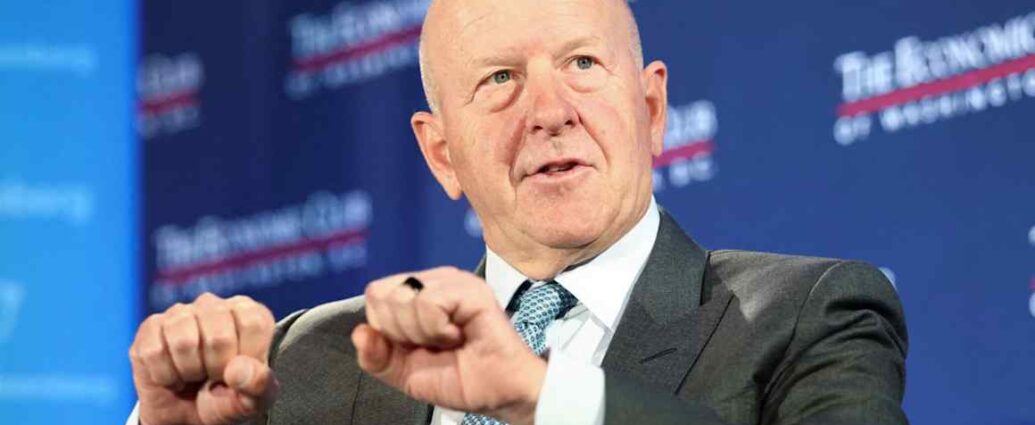
Goldman’s chief warns private credit risks show cycle ‘has not been repealed’
This post was originally published here

‘Yes to fields of wheat, no to fields of iron’: how the world’s greenest country soured on solar
In Denmark, the spread of solar panels in rural areas has become a divisive issue among voters, especially in rural areas
In one telling of the story, the golden fields of a proud farming nation are under attack. Besieged by an industrial sprawl of solar panels, they are being smothered at the behest of an urban elite.
That narrative has failed to thrive in conservative heartlands such as Texas and Hungary, which have embraced solar power while lambasting green rules. But it is taking root in Denmark, the most climate-ambitious nation on Earth. “We say yes to fields of wheat,” said Inger Støjberg, the leader of the rightwing populist Denmark Democrats in a speech in 2024. “And we say no to fields of iron!”
This post was originally published here
Police planned to disperse Isaac Herzog protest in Sydney if crowd hit 6,000, encrypted messages suggest
Senior public servant wrote ‘police will be dispersing them if numbers exceed capacity’ while premier says protesters confronted after attempting to march
-
Get our breaking news email, free app or daily news podcast
Police planned to disperse the crowd at a Sydney protest against the visiting Israeli president, Isaac Herzog, if it exceeded 6,000 people, according to correspondence between senior New South Wales public servants.
The messages released under freedom of information (FoI) laws contain information not referenced in public comments by the NSW premier, Chris Minns, and the police commissioner, Mal Lanyon.
This post was originally published here



The White House has a plan for AI regulation, and it starts with keeping states out of it
The White House on Friday released its framework for how it wishes Congress will address the issue of artificial intelligence.
The legislative blueprint, released on its website, outlines a half-dozen guiding principles for lawmakers to keep in mind when developing policies governing artificial intelligence. Those areas include: protecting children and empowering parents; safeguarding and strengthening American communities; respecting intellectual property rights, preventing censorship and protecting free speech, enabling innovation and ensuring American AI dominance, and educating Americans and developing an AI-ready workforce.
“The Trump Administration is committed to winning the AI race to usher in a new era of human flourishing, economic competitiveness, and national security for the American people,” the White House said in announcing its framework. “Achieving these goals requires a commonsense national policy framework that both enables American industry to innovate and thrive and ensures that all Americans benefit from this technological revolution.”
The White House said “strong federal leadership” is needed to make sure the public can trust how artificial intelligence is being used in their lives.
Members of Congress from both parties, as well as civil liberties and consumer rights groups, have pushed for more regulations on AI, saying there is not enough oversight for the powerful technology. President Donald Trump signed an executive order in December to block states from crafting their own regulations, arguing that a patchwork of rules would hurt growth in the sector.
This story was originally featured on Fortune.com
This post was originally published here

Ancient Bitcoin Whale Moves $148 Million After 13 Years: What Does It Mean?
A Bitcoin (CRYPTO: BTC) wallet that had remained untouched for over 13 years moved 2,100 BTC worth $147.7 million on Friday, with the original July 2012 purchase price of just $13,685 representing a 10,000x return.
The 13-Year Hold
The transfer was initiated at 10:27 a.m. UTC Friday, with blockchain explorer Mempool data showing the transaction consolidated multiple UTXOs into a new output at the same “1NB3Z” address.
Someone sent a small amount to a secondary address, potentially taking advantage of the current low-fee environment.
The address initially received the 2,100 BTC on Independence Day, July 4, 2012, when that amount was worth approximately $13,685.
The wallet continued to receive numerous minor transactions in the intervening period but never …
Dog digs up possible link to notorious 19th-century Devon murder case
Owner of labrador says bottle find may be connected to poisoning that led to one of England’s last public hangings
A man in Devon believes his beloved dog has dug up a key piece of evidence in his back garden connected to a notorious Victorian murder case.
Paul Phillips, 49, told reporters that his labrador, Stanley, recovered a blue glass bottle with the words “Not to be taken” written on the side from their home in Clyst Honiton.
This post was originally published here


US health department investigates 13 states that require insurance plans to cover abortion
HHS is looking into the states for ‘alleged disregard of, or confusion about’ the federal Weldon amendment
The US Department of Health and Human Services (HHS) said on Thursday that it is investigating 13 states that require state-regulated health insurance plans to cover abortion services.
HHS officials said in a news release that the department’s office for civil rights (OCR) is looking into the states for allegedly violating the federal Weldon amendment, which prohibits federal funding for programs or state or local governments that “subjects any institutional or individual healthcare entity to discrimination on the basis that the healthcare entity does not provide, pay for, provide coverage of, or refer for abortions”.
This post was originally published here
Claimants drop lawsuit against Gerry Adams over IRA bombings
Three people were suing ex-Sinn Féin leader for liability over IRA bombings in UK that left them injured
Three victims of IRA bombings who sued Gerry Adams alleging he was a member of the paramilitary group and culpable for the attacks have withdrawn their lawsuit on the last day of the civil trial.
John Clark, Jonathan Ganesh and Barry Laycock, who were injured respectively in the 1973 Old Bailey bombing, the London Docklands and Manchester bombings in 1996, were seeking symbolic “vindicatory” damages of £1 each.
This post was originally published here
Fed Governor Waller urges caution for now, says rate cuts possible later in the year
Waller said in a CNBC interview that recent developments require a more conservative approach.
This post was originally published here

Mortgage Rates Hit Three-Month High as Iran War Rattles Spring Housing Market
Mortgage rates in the U.S. jumped to a three-month high this week, adding strain to the housing market as the spring buying season begins. The 30-year fixed mortgage rate rose to 6.22% for the week ending March 19, up from 6.11% the previous week, according to Freddie Mac.
War Abroad Is Pushing Borrowing Costs Higher
The increase follows the outbreak of the Iran conflict, which has tightened global energy supplies and lifted oil prices, fueling inflation expectations. The 10-year Treasury yield, which influences mortgage rates, rose to 4.26% from 3.96% before the conflict.
Mortgage applications fell nearly 11% from the prior week. New single-family home sales dropped nearly 18% in January from the previous month and were down 11.3% from a year earlier, according to the Census Bureau.
The Federal Reserve kept interest rates at 3.5%–3.75%, …

Ripple Survey Shows 70% See Digital Assets As Necessary—But XRP Trades Sideways
A new Ripple (CRYPTO: XRP) survey of over 1,000 global finance leaders finds 70% say firms must offer digital asset solutions to stay competitive, with stablecoins emerging as the most compelling use case for treasury operations.
The Digital Asset Necessity
Ripple’s survey reveals digital assets are no longer a fringe experiment—they’re becoming a core part of how banks, asset managers, fintechs, and corporates plan to move money, store value, and manage risk.
Stablecoins emerged as the most compelling use case, with 74% of leaders saying stablecoins can improve cash-flow efficiency and unlock working capital.
This highlights their growing appeal as treasury tools beyond just payment rails.
Fintechs are leading adoption, with 31% using stablecoins to collect payments for customers and 29% accepting stablecoins directly.
Meanwhile, …
Unicorns are flush with cash and stuck. A new kind of startup crisis is taking hold in 2026
Some of the most valuable private companies in the world right now have a problem that has nothing to do with their product, their team, or their market. They have too many investors, too many competing agendas, and a cap table — the record of who owns what and under what terms — that has become so layered with complexity that it is actively preventing them from moving forward. Call it cap table gridlock: the condition where a company’s ownership structure becomes the constraint on its growth, rather than capital itself.
Cap table gridlock isn’t a new concept. Founders have always had to balance investor expectations, dilution, and governance. What is new is how pronounced the problem has become, driven by three structural shifts: the concentration of venture capital into fewer, larger companies; the dominance of mega-rounds; and the continued extension of private-company lifecycles as IPO and M&A timelines stretch.
Recent data from Crunchbase underscores this reality. In 2025, a small handful of AI companies raised an outsized share of total venture dollars, while a significant majority of capital flowed into $100 million-plus rounds. AI alone accounted for nearly half of global venture funding. The result is a late-stage ecosystem defined less by broad participation and more by scale, concentration, and complexity.
For founders, that complexity shows up most acutely on the cap table.
Large startups today often carry multiple classes of preferred equity, layered liquidation preferences, bespoke investor rights, and shareholders with very different time horizons. Some investors are underwriting long-term category dominance. Others are seeking liquidity. Still others are managing portfolio exposure after years of extended private markets. When companies stay private longer — as many are choosing or being forced to do — those competing incentives compound.
The practical consequence is gridlock. Companies still need capital to grow and invest — but raising traditional equity can reopen valuation debates that no longer reflect operating fundamentals, trigger dilution that disproportionately impacts certain stakeholders, and intensify misalignment among investors who agree on the company’s promise but disagree on timing, structure, or risk. What once might have been an uncomfortable board conversation becomes a strategic impasse.
In some cases, that impasse goes beyond financing. A single shareholder or class of shares may hold blocking rights that can delay or prevent a sale at what management, the board, and the majority of investors view as an optimal time. When incentives diverge, governance provisions designed to protect stakeholders can instead constrain strategic flexibility. Gridlock stops being a financing problem and becomes an exit problem.
This dynamic is particularly visible among large, capital-intensive companies. These businesses require enormous upfront investment, often well ahead of predictable revenue. They also command valuations that make repricing difficult without signaling weakness or inviting unnecessary scrutiny. As IPOs are delayed and private markets absorb more of the growth lifecycle, founders are being asked to solve a problem that neither traditional venture equity nor private debt were designed to address on their own.
Structured equity — financing that sits between traditional venture equity and straight debt, often with flexible terms designed to avoid repricing the entire equity stack — is gaining attention because it offers flexibility in a market where flexibility is increasingly scarce. When designed thoughtfully, it can provide growth or bridge financing without forcing a wholesale repricing of existing equity, helping companies extend runway, fund expansion, or manage liquidity needs while preserving alignment across stakeholders.
The capital markets founders operate in today are structurally different from those of 2018 or even 2021 — capital is concentrating into fewer companies, mega-rounds are layering complexity onto cap tables, and the path to public markets is no longer linear or time-bound. The tools designed for faster IPO cycles and less concentrated markets are not fit for purpose in a world where private companies routinely remain private for a decade or more.
Some might argue that companies should simply raise equity at lower valuations, tighten spending, or wait for public markets to reopen. In some cases, that may be the right answer. But for many large startups, those options carry real tradeoffs — sacrificing momentum in winner-take-most markets, destabilizing governance at critical moments, or deferring necessary investment in the hope that timing improves.
The more interesting question is not whether structured equity replaces traditional venture capital — it doesn’t — but whether founders have access to a broader set of capital strategies that reflect the realities of modern growth companies.
Cap table gridlock is emerging as one of the defining challenges for unicorns in 2026 precisely because it sits at the intersection of success and constraint. These are not struggling businesses — they are often category leaders with strong demand, ambitious roadmaps, and long runways ahead. But their scale and longevity in private markets have introduced frictions that founders must now actively manage.
As capital continues to concentrate and private timelines extend, those frictions will only become more common. The founders who navigate this era successfully will be the ones who treat capital structure as a strategic tool — one that requires as much deliberate thought as product, hiring, or go-to-market. The cap table isn’t just a financial document. In 2026, it’s a leadership challenge.
The opinions expressed in Fortune.com commentary pieces are solely the views of their authors and do not necessarily reflect the opinions and beliefs of Fortune.
This story was originally featured on Fortune.com
This post was originally published here
Buying a home amid economic uncertainty? These alternative mortgages can help
Mortgages with alternative loan terms and lenders with flexible loan-modification policies are possibilities to consider.
This post was originally published here
Will the Iran War Deliver a Long-Predicted U.S. Recession?
Watch the length of the conflict and how shocks compound.
This post was originally published here


Key Factors Influencing Supply Elasticity: Pricing & Technology
This post was originally published here


Father of killed US military member disputes Hegseth’s claim he said to ‘finish’ the job in Iran
Defense secretary had said relatives of service members killed in refueling tanker crash told him ‘do not stop until the job is done’
The father of a US military member killed in the Iran war has contradicted Pete Hegseth’s claim that bereaved families urged him to “finish” the job in the Middle East.
Hegseth, the defense secretary and a former weekend Fox News host, told reporters at a Pentagon briefing on Thursday that he had spoken with relatives of all six service members killed in last week’s refueling tanker crash during a “dignified transfer” of their remains at Delaware’s Dover air force station the night before.
This post was originally published here
Jim Cramer’s top 10 things to watch in the stock market Friday
Stocks continue losing streak as oil marches higher amid escalating Mideast conflict.
This post was originally published here


Iran war is the greatest threat to global energy ‘in history’, warns IEA
This post was originally published here

Understanding LIBOR Flat: Benchmark Rate, Function, and Swaps
This post was originally published here

Sports writer and photographer win Quill awards for work for Guardian Australia
Jonathan Horn scooped best sports feature prize for a series on AFL, while Chris Hopkins won for pictures of a cancer sufferer caring for her son
-
Get our breaking news email, free app or daily news podcast
Sports writer Jonathan Horn and photographer Chris Hopkins have won Melbourne Press Club awards for their work for Guardian Australia.
Guardian Australia was recognised with eight nominations in a range of categories in the 31st annual Quill awards, which were presented in Melbourne on Friday night.
This post was originally published here
Recalculating the Iran War’s Impact on the Global Economy
Editor at large Adi Ignatius revisits the ING Bank team, whose optimistic predictions for the war have given way to a far more dire outlook.
This post was originally published here
Overcoming Self-Doubt When Launching Your Own Business
How to make clearer decisions, lead more steadily, and ultimately build a more resilient company.
This post was originally published here

He’s one reason why aid cuts weren’t as dire for the HIV population as predicted
Harerimana Ismail of Uganda is a community health worker who checks on kids with HIV. He lost his salary after the Trump administration’s aid cuts but he keeps doing his job.
(Image credit: Ben de la Cruz/NPR)

This post was originally published here


Demand-Side Economics: Key Concepts and Policies Explained
This post was originally published here

Bitcoin Defends $70,000 As Ethereum, XRP, Dogecoin Test Support In Jittery Market
Bitcoin trades around $70,000 as Bitcoin ETFs saw $90.2 million in net outflows on Thursday, while Ethereum ETFs reported $136.4 million in net outflows.
Cryptocurrency |
Ticker | Price |
| Bitcoin | (CRYPTO: BTC) | $70,467 |
| Ethereum | (CRYPTO: ETH) | $2,141.49 |
| Solana | (CRYPTO: SOL) | $89.39 |
| XRP | (CRYPTO: XRP) | $1.45 |
| Dogecoin | (CRYPTO: DOGE) | $0.09447 |
| Shiba Inu | (CRYPTO: SHIB) | $0.056036 |
Meme coin market capitalization dropped around 3% over the past 24 hours to $33.4 billion.
Trader Commentary: …

Work from home, drive slower and don’t use gas cookers: IEA advice on weathering the global energy crisis
The IEA warns of “the largest supply disruption in the history of the global oil market” due to the conflict in the Middle East.
This post was originally published here
Not a credit card expert? This card earns serious rewards without the strategy
If you love cash back but don’t want to miss out on travel rewards, the Citi Double Cash is for you.
This post was originally published here



Is Your Wealth Really What You Think It Is Here Are 5 Ways to Find Out
This post was originally published here



As the U.S. gears up for a potential ground war in Iran, $100-plus oil threatens ‘demand destruction’ — starting in Asia
Good morning. In today’s Fortune:
- In Iran, the likely next phase is a ground war—troops, ships, jets, and helicopters are on their way, as the White House declined to rule out “boots on the ground.” The goal will be to reopen the Strait of Hormuz. We’ve got a map of the safe route through Hormuz (though those ships will pay a steep fee).
- Oil’s “demand destruction”: The price of oil eased but remains above $100. Stock traders did not celebrate, and U.S. futures were in negative territory this morning. Analysts are worried that sustained high oil prices threaten “demand destruction,” where certain industries simply cease to function—and there are signs of that in Asia already.
- Shock as the founder of Supermicro was arrested in a chip-smuggling probe.
- The French really are thinner than the rest of us.
- Fetch my clubs! Are you really a Fortune 500 CEO if you don’t have a country club membership?
This story was originally featured on Fortune.com
This post was originally published here

Coinbase Launches 24/7 Stock Trading For Tesla, Apple, Nvidia With 10X Leverage
Coinbase (NASDAQ:COIN) launched stock perpetual futures for eligible non-U.S. users offering 24/7 leveraged synthetic exposure to Tesla (NASDAQ:TSLA), Apple (NASDAQ:AAPL), Nvidia (NASDAQ:NVDA), and other Magnificent 7 stocks with up to 10x leverage.
The ‘Everything Exchange’ Expansion
Coinbase becomes one of the first major centralized venues to offer stock perpetual futures, a product that has gained traction on decentralized platforms with billions in daily trading volume.
The launch advances the company’s strategy of building an “Everything Exchange” where users can access crypto, traditional assets, and emerging markets in a single venue.
At launch, eligible customers can trade perpetual futures on Apple, Microsoft (NASDAQ:MSFT), Alphabet (NASDAQ:GOOGL), Amazon (NASDAQ:AMZN), Nvidia, Meta

Stocks making the biggest moves premarket: York Space Systems, Super Micro Computer, Planet Labs, FedEx & more
These are the stocks posting the largest moves in premarket trading.
This post was originally published here

Trump is dismantling democracy, reports find. And, Treasury to take over student loans
Recent studies show the U.S. is slipping further from democracy. And, the Trump administration plans to transfer federal student loans from the Education Department to the Treasury Department.
(Image credit: Jim Watson)

This post was originally published here

Gains vs. Revenue, Losses vs. Expenses: Key Differences Explained
This post was originally published here


Stock Market Today: Futures Point Lower as Major Indexes Head for 4th Straight Week of Losses; Oil Futures Rise
This post was originally published here
Iran says it will show ‘zero restraint’ if energy infrastructure is targeted again | First Thing
Foreign minister issues warning after Israeli attack on South Pars gasfield that prompted retaliatory strike on Qatar. Plus, what happened to the Oscars red carpet after the ceremony?
Good morning.
Iran has said it will show “zero restraint” if its energy infrastructure is targeted again as Qatar revealed that almost a fifth of its liquefied natural gas export capacity had been knocked out in an Iranian strike that is likely to have a years-long impact.
What did Araghchi say? In a post on X, he said: “Our response to Israel’s attack on our infrastructure employed FRACTION of our power. The ONLY reason for restraint was respect for requested de-escalation. ZERO restraint if our infrastructures are struck again.”
What’s the forecast for next week? More heat is in store for the coming days. By the end of the week, 100 cities could set all-time temperature records for the month of March, with temperatures climbing as high as 30F (17C) above average for the time of year, the new analysis says.
This post was originally published here



Banks eye three ECB rate hikes this year as former Governor says he sees no stagflation — yet
Brokers now expect the ECB to hike interest rates this year as the specter of higher inflation and lower growth piles pressure on central banks to act.
This post was originally published here
Fire experts ‘losing sleep’ over growing hazard of lithium-ion batteries
Fire service warns ubiquity of batteries in everyday products is outpacing public understanding and safety regulations
Lithium-ion batteries represent a new technological hazard that one fire science expert has said keeps him awake at night, as fire service chiefs warn the ubiquity of lithium-ion batteries in everyday products is outpacing public understanding and safety regulations.
The blaze that devastated a historic building in Glasgow and resulted in the continuing closure of Central Station, Scotland’s largest rail interchange, is believed to have started in a shop selling vapes, which are powered by lithium-ion batteries. The latest data reveals a sharp increase in battery-related fires across Scotland, while firefighters in London attend an e-bike or e-scooter fire every other day.
This post was originally published here


What’s Going On With Dorian LPG Stock Friday?
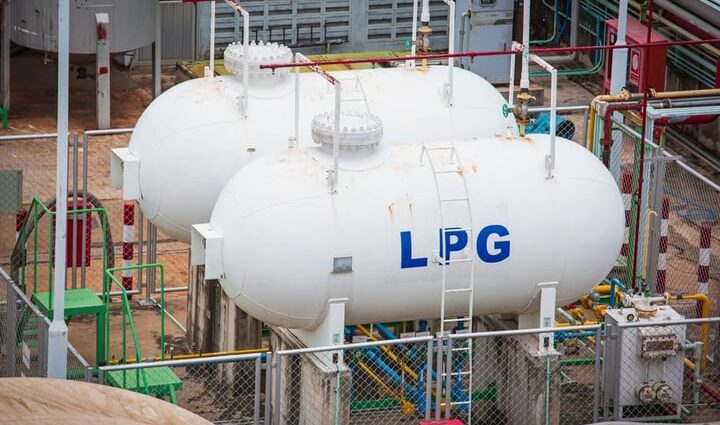
Dorian LPG Ltd. (NYSE:LPG) on Friday announced the delivery of its new dual-fuel LPG and ammonia gas carrier, “Areion.”
The “Areion,” a 93,000 cubic meter vessel, is set to join Dorian’s Helios LPG Pool, enhancing the company’s fleet of low-emission ships to over 20%.
The delivery was financed through a $62.9 million loan from Citibank and Nordea, which includes a commercial tranche with a margin of 1.80% over SOFR, showcasing Dorian’s commitment to advancing its environmental initiatives.
The addition of “Areion” is significant as it operates on LPG and fuel oil, equipped with a hybrid scrubber to minimize emissions. This strategic move aligns with Dorian’s goal to optimize fuel choices and enhance earnings while promoting emission-free port operations.
Technical Analysis
The stock is currently trading 1.46% below its 20-day simple moving average (SMA) and 6.67% above its …
This post was originally published here




The SEC may be about to blow up the quarterly earnings cycle. Here’s why CFOs are nervous.
Good morning. CFOs of public companies may soon need to rethink the cadence of financial reporting—and everything that comes with it.
The Securities and Exchange Commission is reportedly preparing a proposal that could allow U.S. public companies to report financial results semiannually instead of quarterly, with the agency expected to release the measure as soon as April, according to The Wall Street Journal. It would make quarterly filings optional rather than mandatory, though it has not yet been finalized or adopted.
I had a conversation with J. Eric Johnson, partner and co-chair of the Public Company Advisory Practice at Winston & Strawn, who told me that the topic is already generating debate among practitioners. “That’s actually one of the first things that comes up,” Johnson said, noting that his firm discussed the issue at a recent internal corporate luncheon.
Questions he’s fielding: What would an investor relations strategy look like? How do you maintain transparency? How do you stay in front of your investor base, telling your story, getting out in front of them, and continuing enthusiasm around your stock?
For over 50 years, quarterly earnings have given companies a structured moment to shape their narrative. Under semiannual reporting, that cadence disappears, Johnson said.
“Yes, some companies may save money,” he said. “They may save time. But you’re going to have to rethink a lot of things.” He continued, “The market participants, the investors, are going to demand information in some form or fashion.”
Johnson also raised concerns around Regulation FD, which prohibits selective disclosure. Under the current cycle, executives can speak more freely because financial results are fresh or imminent.
He added that semiannual reporting could strain board oversight. Audit committees are used to quarterly reviews with management and auditors. Removing that rhythm creates a governance gap, likely requiring informal quarterly check-ins—eroding cost savings. “Yeah, we didn’t print a 10-Q, but we’re still doing a lot of heavy lifting in the background.”
There could also be capital markets challenges, he said. Underwriters typically require very recent financial data, and a six-month cycle could leave information stale.
Shivaram Rajgopal, an accounting professor at Columbia Business School, doesn’t view the shift as beneficial. “It will save trivial compliance costs in the short run but lead to more demands on the IR groups for updates,” he said. “I suspect most well-followed companies will file quarterly statements voluntarily anyway.”
Smaller firms, however, may not. “In the case of smaller firms, insider trading might go up, and volatility in the stock will likely also go up,” Rajgopal said. “Surprises or sharp swings in stock prices will become more common.”
Johnson also warned of increased volatility. Less frequent reporting means negative trends could compound before disclosure.
“We had a 5% decline in revenue over three months, but now, when we talk about it at six months, it’s actually 10%,” Johnson said.
Rajgopal shared this anecdote: “I have heard a prominent board member say the following: ‘The market pays you 20-25 years of your earnings today (via the price-earnings ratio).’”
“And we hesitate to supply the market with quarterly data?” he continued, “That’s odd. Imagine hiring an employee and paying them 25 years of their annual compensation. How closely are you likely to monitor that employee? Just once in six months?”
Have a good weekend.
Sheryl Estrada
sheryl.estrada@fortune.com
This story was originally featured on Fortune.com
This post was originally published here
Weather tracker: Unseasonal storms hit parts of Pakistan and India
Karachi particularly badly affected with 18 people killed, more than 50mm of rain and winds gusting up to 60mph
Unseasonally wet weather struck southern Pakistan and north-west India on Wednesday, as heavy rain rolled in from the west, accompanied by thunderstorms, hail, and strong winds.
Karachi, Pakistan’s largest city, was particularly badly affected, locally recording more than 50mm of rain with winds gusting up to 60mph. Walls, buildings, and a pedestrian bridge collapsed, with flooding and power outages across the city. At least 18 people were killed and several more injured, many by structural collapses, with other deaths attributed to a fallen tree and a lightning strike.
This post was originally published here
Fuel spikes, flight delays and storms threaten US spring break travel
Record 171 million passengers are expected to fly this spring, even as TSA funding lapse risks longer airport lines
Spring breakers in the US could see their long-awaited trips to party destinations disrupted by a trifecta of issues: airport security delays, high gas prices, and chaotic weather.
The potential for flight delays comes as US airlines expect that they will see a record-shattering spring travel season. Airlines for America, an aviation industry group, said that 171 million passengers are expected to fly – a 4% increase from the 2025 spring travel period.
This post was originally published here
How a Minneapolis childcare center survived the ICE surge – and is moving forward
Dozens of volunteers, mostly over the age of 70, offer rides and serve as interpreters
On a February afternoon at a Spanish-immersion childcare center in Minneapolis, dozens of toddlers grabbed puffy coats out of cubbies as parents shuffled them out the door.
Down the hall, Michael, the husband of the center’s director, stared intently at a monitor streaming the building’s security footage, watching for any vehicles that might be carrying agents from US Immigration and Customs Enforcement (ICE). Since January, when federal agents descended on the Twin Cities as part of Operation Metro Surge, he’s been leaving his own job early to volunteer here every afternoon.
This post was originally published here
‘It’s not sustainable’: US farmers reeling as Iran war pushes fertilizer costs up
Closure of strait of Hormuz – a key fertilizer production and transportation route – has squeezed farmers as prices jump
Rodney Bushmeyer has been farming as long as he can remember. Bushmeyer’s father was a farmer, as was his grandfather.
The family-run Bushmeyer Farms in Illinois dates back more than 100 years, when his ancestors came to the US from Germany. They acquired the first 80 acres cost-free as homesteaders, cleared the land, and worked it.
This post was originally published here


Retirement Savings at 59: How Do You Measure Up Against Expert Advice
This post was originally published here

Intel and Toyota made perfectly logical decisions. That’s exactly how they killed their best brands
Pentium was once one of the most recognized technology brands in the world. Scion was Toyota’s most successful attempt to reach a new generation of buyers.
Neither failed because of a bad launch, a weak product, or a flawed strategy. Both were killed by something far more insidious: a long sequence of individually rational decisions that nobody stopped to question. In both cases, the organizations involved misunderstood the same fundamental principle — brands do not fail because they are poorly conceived. They fail because their meaning is not actively managed.
Pentium: When a Category Brand Becomes a Commodity
When Intel introduced Pentium in 1993, it solved a structural branding problem few technology companies had cracked: how to create consumer preference for an invisible component. Microprocessors had been defined by technical codes — 386, 486 — that carried engineering meaning but little emotional or commercial power. Pentium changed that.
The results were immediate and dramatic. Intel’s revenues grew from $8.8 billion in 1993 to more than $20 billion by 1996, with net income reaching $5.16 billion. Backed by the Intel Inside campaign — which would ultimately account for billions in cooperative advertising spend — Pentium transformed a component into a consumer signal of performance and reliability. By the late 1990s, it had become one of the most recognized technology brands in the world.
Pentium worked because it meant something specific: premium computing power from Intel. That clarity allowed Intel to command price premiums and shift competition away from raw specifications toward brand trust — an extraordinary achievement in a component category.
The erosion did not come from a single mistake. It came from a sequence of understandable decisions. As competitive pressure increased, particularly from AMD, Intel responded not by defending Pentium’s meaning, but by stretching its reach. The name expanded across multiple performance tiers and product generations: Pentium Pro, Pentium II, III, 4, M, D, Dual-Core. At least seven distinct “Pentiums” entered the market over thirteen years. What had once been a precise signal became a broad label. Over time, consumers could no longer tell what “Pentium” guaranteed, or why one Pentium mattered more than another.
This is what might be called vertical erosion — the systematic dilution of a brand through downward extension. Each new tier was individually rational. Collectively, they dismantled the brand’s meaning from the inside out.
The inflection point came in 2006, when Intel introduced the Core brand and repositioned performance leadership under a new name. Pentium, once synonymous with “best,” was implicitly redefined as “good enough.” It continued to sell, but primarily in price-sensitive segments. Its role shifted from value creation to volume maintenance.
By the time Pentium was formally retired in 2023 and replaced by the generic label “Intel Processor,” the brand’s meaning had already collapsed. Thirty years from one of the most recognized technology brands in the world to a category descriptor. Pentium didn’t lose to a competitor. It lost to itself — one incremental extension at a time.
Scion: When Strategic Intent Is Lost Through Accumulation
Scion was created to solve a different but equally clear strategic problem for Toyota: how to reach younger, first-time buyers without diluting Toyota’s core brand or undermining Lexus’s premium position. The answer was a distinct brand with its own voice, retail experience, and cultural posture.
At launch in 2003, Scion was sharply defined. It stood for individuality, design-forward thinking, and accessibility. Its early lineup was intentionally limited and visually distinctive, supported by fixed-price retail (no haggling, no trim levels) and lifestyle-driven marketing. The strategy worked. By 2006, Scion was selling more than 173,000 vehicles annually in the U.S. — 70% were new Toyota buyers, and the average Scion buyer was 35 years old, compared to 54 for the typical Toyota customer.
Scion’s strength was semantic clarity — it was not simply “Toyota for young people” but a cultural counterpoint to the broader Toyota brand. The erosion, when it came, was gradual.
As Toyota’s global portfolio expanded, Scion absorbed increasing internal pressures. Product decisions optimized for coverage and volume rather than coherence. The second-generation xB — redesigned in 2008 to be larger, smoother, and more conventional — abandoned the distinctive proportions that had made the original iconic. Sales collapsed. New vehicles were added, revised, or rebadged without a clear unifying idea. By the end, most of Scion’s lineup consisted of rebranded Toyotas and partner vehicles — a Mazda here, a Subaru there — wearing a Scion badge that no longer meant anything specific.
This is a different failure mode than Pentium’s — what might be called lateral drift. Where Pentium eroded vertically through downward extension, Scion eroded horizontally through the accumulation of unrelated products and fragmented messaging. The brand didn’t stretch below its original meaning; it scattered away from it.
Meanwhile, Scion’s own customers were aging. By 2011, the average buyer was 43 — eight years older than at launch and closing in on Toyota’s core demographic. The brand built to capture youth was growing old with its original customers and failing to attract the next generation. In 2016, Toyota discontinued Scion, folding remaining models back into the Toyota lineup. From a branding perspective, the decision was the predictable outcome of accumulated ambiguity. Scion did not fail because its founding idea was flawed. It failed because no one was protecting it.
The Shared Lesson: Stewardship, Not Inception
Pentium and Scion represent two distinct modes of brand failure. Pentium suffered vertical erosion — the progressive dilution of meaning through downward extension. Scion suffered lateral drift — the dispersal of meaning through accumulated, unfocused decisions. But the underlying failure was the same: both organizations stopped treating brand meaning as a constrained asset that must be actively protected.
Both brands began with high semantic precision that created real economic value. And both gradually surrendered that clarity through well-intentioned decisions made without sufficient regard for long-term meaning. In both cases, the decisive factor was the same tension: product logic and brand logic were in direct conflict, and product logic won every time. Intel’s product team had sound reasons to launch a lower-priced Pentium. Toyota’s portfolio managers had sound reasons to add models for coverage. Each individual decision was defensible. But no one was asking the brand question: does this decision make what we stand for clearer or more confused?
Brand failure is rarely dramatic. It is managerial. It occurs not in moments of crisis, but in the accumulation of decisions where short-term product logic overrides long-term meaning.
The Ferrari Exception
The opposite pattern exists — and it’s instructive. Ferrari caps annual production at roughly 10,000 vehicles, deliberately manufacturing fewer cars than the market demands. Scarcity is inseparable from what the brand means. There is no lower-priced Ferrari, no Ferrari for the mass market. The product team does not get to override the brand. That constraint isn’t a limitation on growth — it is the source of Ferrari’s pricing power, loyalty, and a market capitalization that dwarfs competitors producing ten times the volume. Ferrari understood what Pentium and Scion eventually forgot: meaning is finite, and every decision either reinforces it or erodes it.
Implications for Leaders
These failures suggest a set of principles that are easy to state and difficult to practice:
- Brand meaning is finite. Stretch without guardrails leads to dilution — whether downward (vertical erosion) or outward (lateral drift).
- Product logic and brand logic often conflict. The most dangerous brand decisions are the ones that make perfect sense to the product team.
- Early success increases risk. A strong brand invites overuse. The better the name works, the more people inside the organization will want to borrow it.
- Confusion is more damaging than rejection. A brand that people ignore can be repositioned. A brand that people can’t place is already failing.
- The most consequential branding decisions are made long after launch. Creation gets the attention. Stewardship determines the outcome.
Brands do not fail at birth. They fail when stewardship lags strategy. There is one question worth asking in any organization with a brand worth protecting: When was the last time someone said no to a revenue-generating decision because it would blur what your brand means? If the answer doesn’t come quickly, the erosion may already be underway.
The opinions expressed in Fortune.com commentary pieces are solely the views of their authors and do not necessarily reflect the opinions and beliefs of Fortune.
This story was originally featured on Fortune.com
This post was originally published here

Essex police pause facial recognition camera use after study finds racial bias
Academics discover black people ‘significantly more likely’ to be identified when compared with other ethnic groups
Essex police have paused the use of live facial recognition (LFR) technology after a study found cameras were significantly more likely to target black people than people of other ethnicities.
The move to suspend use of the AI-enabled systems was revealed by the Information Commissioner’s Office (ICO), which regulates the use of the technology deployed so far by at least 13 police forces in London, south and north Wales, Leicestershire, Northamptonshire, Hampshire, Bedfordshire, Suffolk, Greater Manchester, West Yorkshire, Surrey and Sussex.
This post was originally published here
Switzerland risks the ire of the White House as it flags potential currency intervention
The Swiss National Bank said Thursday that it is growing increasingly willing to intervene in foreign exchange markets.
This post was originally published here



Tesla In Talks To Purchase $2.9 Billion Worth Of Solar Equipment From Chinese Suppliers: Report
Tesla Inc. (NASDAQ:TSLA) is reportedly in discussions with several Chinese companies to acquire solar manufacturing equipment worth $2.9 billion.
Suzhou Maxwell Technologies, a leading maker of screen-printing equipment for solar cell manufacturing, is among the top contenders to supply machinery for the project and is currently seeking export approval from China’s commerce ministry, reported Reuters on Friday.
Other potential suppliers include Shenzhen S.C New Energy Technology and Laplace Renewable Energy Technology. The $2.9 billion worth of equipment, including screen-printing production lines, will require export approval from Chinese regulators. However, the specifics of the equipment requiring approval and the duration of the approval process remain uncertain.
Chinese suppliers have been asked to deliver equipment by autumn, some to Texas, for Elon Musk’s planned solar capacity, which will mainly support Tesla, with a portion powering SpaceX satellites, as per …
This post was originally published here
Household energy bills in Great Britain ‘could rise to almost £2,000 a year’ amid Iran war shock
Consultancy forecasts typical £1,972 annual dual fuel bill as conflict pushes UK’s gas market past three-year highs
Household energy bills in Great Britain could soar by more than £330 a year to almost £2,000 from this summer after the war in Iran pushed the UK’s gas market past three-year highs.
A typical combined household gas and electricity bill is now forecast to reach £1,972 a year from July under the UK government’s quarterly price cap, according to analysis by Cornwall Insight, an energy consultancy.
This post was originally published here

Unilever in talks to sell food division to spice and sauce maker McCormick
This post was originally published here
Understanding the Purchasing Managers’ Index (PMI): A Key Economic Indicator
This post was originally published here
BlackRock’s Rick Rieder Says Fed ‘Patience’ Is Right Call Despite $820 Billion Market Rout, Oil Spike
Despite a brutal $820 billion wipeout in the U.S. stock market and surging oil prices, BlackRock Inc.‘s (NYSE:BLK) CIO of Global Fixed Income, Rick Rieder, believes the Federal Reserve’s current holding pattern on interest rates is the right move.
The ‘Episodic’ Nature of Supply Shocks
The heavy pullback in U.S. equities is a reaction to a “convergence of pressures,” according to John Murillo, Chief Business Officer at B2BROKER. He said that the $820 billion market loss reflects a “rapid repricing episode” driven by thinning liquidity and shifting positions, rather than a sudden deterioration in core economic fundamentals.
Rieder also emphasized the critical distinction between short-term commodity pain and long-term economic trends.
In a recent post on X, Rieder noted that while near-term inflation expectations have jumped due to energy and geopolitical supply shocks, these events tend to be “episodic.”
Rather than signaling a return to sticky, uncontrollable inflation, Rieder explained that these sudden spikes “act more like a tax on consumers.”
This post was originally published here



Are You Prepared for Taxes? Here Is What Average Tax Burdens Look Like by Age
This post was originally published here

Elon Musk Rejected Your Job Application. Now He’s Calling Back. What Should You Do?
This post was originally published here
Madagascar’s military ruler decrees that ministers must pass lie detector tests
Michael Randrianirina, who sacked PM and cabinet without explanation, claims measure is to root out corruption
Madagascar’s military president has said new ministers will have to pass lie detector tests to root out corrupt candidates, after he dismissed the prime minister and cabinet without explanation earlier this month.
Michael Randrianirina came to power in a coup in October after weeks of youth-led protests under the banner “Gen Z Madagascar”. However, young people were quickly disenchanted by his choice of government officials, which they saw as being part of the old, corrupt elite.
This post was originally published here

Top 3 Health Care Stocks That Are Set To Fly In March
The most oversold stocks in the health care sector presents an opportunity to buy into undervalued companies.
The RSI is a momentum indicator, which compares a stock’s strength on days when prices go up to its strength on days when prices go down. When compared to a stock’s price action, it can give traders a better sense of how a stock may perform in the short term. An asset is typically considered oversold when the RSI is below 30, according to Benzinga Pro.
Here’s the latest list of major oversold players in this sector, having an RSI near or below 30.
Inspire Medical Systems Inc (NYSE:INSP)
- On March 5, Stifel analyst Jonathan Block maintained Inspire Medical Systems with a Buy and lowered the price target from $95 to $85. The company’s stock fell around 7% over the past five days and has a 52-week low of $53.11.
- RSI Value: 29.9
- INSP Price Action: Shares of Inspire Medical fell 3.1% to …
This post was originally published here

World Trade Organization Controversies and Criticisms Uncovered
This post was originally published here

Israel launches more strikes on Tehran as Iran continues attacks on Gulf oil facilities
The latest strikes come after Israeli Prime Minister Benjamin Netanyahu said Thursday that Israel would “hold off on future attacks” on Iran’s energy infrastructure, following Trump’s request.
(Image credit: Vahid Salemi)

This post was originally published here
Hungary officials ‘gave Ukrainian forced injection’ after raid on bank vehicles
Kyiv sources say they think injection contained relaxant meant to make people more talkative in interrogations
Hungarian security operatives administered a “forced injection” to one of the Ukrainians detained earlier this month during a dramatic raid on bank vehicles carrying gold bars and tens of millions of dollars and euros in cash, sources have told the Guardian.
Hungary’s TEK anti-terrorism police detained seven Ukrainians from the state savings bank, Oschadbank, on 5 March. They were accompanying a convoy of two armoured cars from Vienna to Ukraine, as it transited Hungary in what Kyiv claims was a regular transfer of state funds. Hungarian officials have claimed it was money for the “Ukrainian war mafia”, without giving details.
This post was originally published here


Who’s most optimistic about AI — and who isn’t, according to Anthropic
Economic gains are people’s main aspirations for AI, but analysts warned that not everyone stands to benefit equally.
This post was originally published here

JP Morgan Chase to use computer estimates to monitor hours worked by junior bankers
Company says tool to compare self-reported hours with computer estimates is for ‘awareness, not enforcement’
JP Morgan Chase has started to compare the hours junior investment bankers claim to have worked against logs on its IT system.
The US bank said it would begin issuing reports to junior bankers that compare computer-generated estimates of their work weeks against their self-reported time sheets as part of a pilot scheme.
This post was originally published here
How CNBC Cures is bringing rare disease stories to a national audience
Two months after its launch, CNBC’s rare disease initiative is starting to reach a broader audience.
This post was originally published here

IEA calls for working from home, driving slower and flying less to tackle energy crisis
This post was originally published here



Anthropic showdown fractures Trump’s pact with Silicon Valley
This post was originally published here




How Founders Are Optimizing Their Homes

Gold Set For Another Weekly Decline
(RTTNews) – Gold prices edged up on Friday after falling for a seventh session to their lowest level in two months in the previous session.
This post was originally published here

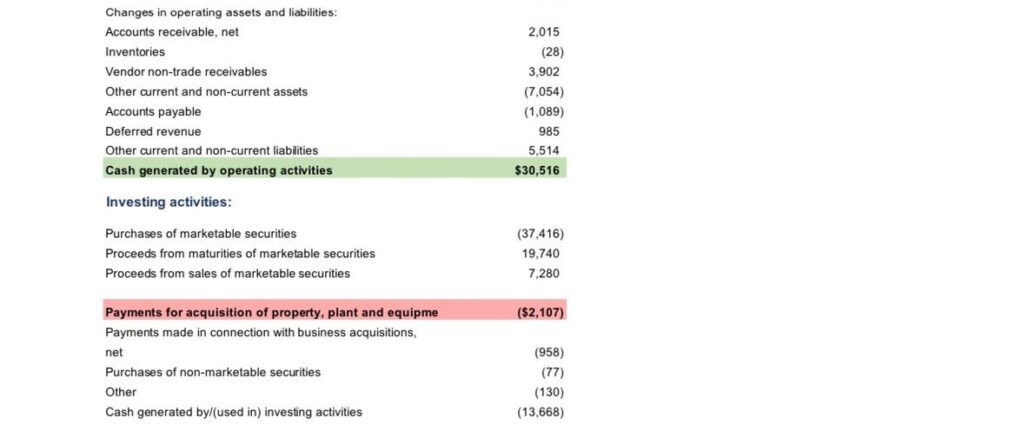
Free Cash Flow vs. Operating Cash Flow: Key Differences Explained
This post was originally published here

Nvidia’s CEO says AI adoption will be gradual, but when it does hit, we may all end up making robot clothing
Nvidia CEO Jensen Huang doesn’t foresee a sudden spike of AI-related layoffs, but that doesn’t mean the technology won’t drastically change the job market—or even create new roles like robot tailors.
The jobs that will be the most resistant to AI’s creeping effect will be those that consist of more than just routine tasks, Huang said during a December interview with podcast host Joe Rogan.
“If your job is just to chop vegetables, Cuisinart’s gonna replace you,” Huang said.
On the other hand, some jobs, such as radiologists, may be safe because their role isn’t just about taking scans, but rather interpreting those images to diagnose people.
“The image studying is simply a task in service of diagnosing the disease,” he said.
Huang allowed that some jobs will indeed go away, although he stopped short of using the drastic language from others like Geoffrey Hinton, a.k.a. “the Godfather of AI” and Anthropic CEO Dario Amodei, both of whom have previously predicted massive unemployment thanks to the improvement of AI tools.
Yet, the potential AI-dominated job market Huang imagines may also add some new jobs, he theorized. This includes the possibility that there will be a newfound demand for technicians to help build and maintain future AI assistants, Huang said, but also other industries that are harder to imagine.
“You’re gonna have robot apparel, so a whole industry of—isn’t that right? Because I want my robot to look different than your robot,” Huang said. “So you’re gonna have a whole apparel industry for robots.”
The idea of AI-powered robots dominating jobs once held by humans may sound like science fiction, and yet, some of the world’s most important tech companies are already trying to make it a reality.
At Nvidia’s GTC (GPU Technology Conference) this week, Huang said so-called “physical AI,” especially robotics, is the company’s next trillion-dollar-plus market.
Tesla CEO Elon Musk has also made the company’s Optimus robot a central tenet of its future business strategy. Musk last year predicted money will no longer exist in the future and work will be optional within the next 10 to 20 years thanks to a fully-fledged robotic workforce. In a January podcast interview with XPRIZE founder Peter Diamandis, Musk went further, predicting the cost of labor will eventually fall to zero, and claiming there was no need for people to “squirrel away” money for decades to be able to retire.
AI technology is advancing so rapidly that it already has the potential to replace millions of jobs. AI can adequately complete work equating to about 12% of U.S. jobs, according to a Massachusetts Institute of Technology (MIT) report. This represents about 151 million workers representing more than $1 trillion in pay, which is on the hook thanks to potential AI disruption, according to the study.
Even Huang’s potentially new job of AI robot clothesmaker may not last. When asked by Rogan whether robots could eventually make apparel for other robots, Huang replied: “Eventually. And then there’ll be something else.”
A version of this story originally published on Fortune.com on Dec. 6, 2025.
More on robots:
- More people will own a humanoid robot than a car by 2060, BofA predicts
- Robot dogs priced at $300,000 a piece are now guarding some of the country’s biggest data centers
- One man accidentally gained access to thousands of robot vacuums, exposing the AI cyber nightmare risk facing millions of Americans
This story was originally featured on Fortune.com
This post was originally published here


Ethereum Entered ‘Generational Buy Zone,’ Says Analyst: ‘Precursor To Massive Structural Bull Rallies’
Cryptocurrency analyst Ali Martinez said on Thursday that Ethereum (CRYPTO: ETH) has entered a generational “Buy Zone,” hinting at major bull runs on the horizon.
What History Says
In an X post, Martinez pointed out that Ethereum’s Market Value to Realized Value Ratio—a metric that measures the difference between the market price and the average price at which every coin last moved on-chain—has fallen into the 0.8 – 1.0 range.
Marmite maker Unilever in talks to merge food business with US-based McCormick
Anglo-Dutch company, which also owns Dove and Hellmann’s, will focus more on personal care products if deal agreed
Unilever, the owner of Marmite, Dove and Hellmann’s mayonnaise, is in talks to combine its food business with the US-based spice and seasoning maker McCormick.
The Anglo-Dutch food company – which last year spun off its ice-cream division, the home to Ben & Jerry’s, Magnum and Wall’s – has entered discussions over the future of the “highly attractive” business.
This post was originally published here

Inside the Fortune CEO Initiative dinner: Debt worries, diplomacy, and a chance to have a ‘good debate’
- In today’s CEO Daily: Diane Brady shares insights from the Fortune CEO Initiative dinner
- The big leadership story: The corporate “war room” becomes more than a metaphor
- The markets: A small rebound
- Plus: All the news and watercooler chat from Fortune.
Good morning. Three speakers took turns addressing the room at the Fortune CEO Initiative dinner in Manhattan’s Hudson Yards on Wednesday night. One was Trump’s UN Ambassador, sharing insights on the Administration’s strategy for Iran and the rest of the world. One was a Kennedy scion with a strong message for business about the next generation and leadership in the digital age. And one was a longtime diplomat and State Department official, sounding the alarm about a nation declining in ways we don’t often talk about. Together, their words were a clarion call to business leaders to look at how these trends create a need to step up and speak up.
Ambassador Mike Waltz spoke off the record to share frank insights about his prognosis for everything from Iran to the future of the UN. His perspective was in stark contrast with Richard Haass, a veteran diplomat, scholar and senior counselor with Centerview Partners who’s been a longtime critic of Trump’s policies. He pointed to two crises, in particular, that are “eroding confidence in American competence and leadership.” The first is a disdain for expertise, whether it’s scientific expertise or the policy expertise that’s guided previous presidents in making decisions such as whether to go to war. The second is the fiscal crisis as U.S. national debt this week surpassed $39 trillion. If unfunded entitlements are added, the fiscal gap is closer to $100 trillion. Said Haass: “I think we’re living on borrowed time.”
Few are more aware of that than younger Americans who are struggling to find jobs, afford homes, and see themselves in the political parties that claim to represent them. It was especially refreshing to speak with Jack Schlossberg, a Democratic congressional candidate and grandson of JFK, who told attendees that the Democrats’ “reactionary” and “anti-everything” stance has been a turnoff to many younger voters. “The Republican Party has embraced modernity in a way the Democratic Party used to own,” he told us, later speaking of priorities like service, innovation and opportunity.
There were disagreements, some vehement, and an energy that I value at these gatherings. One takeaway for me was the high number of CEOs who start their day at around 5 a.m. (A lot) And another was the sense that opportunities to come together from different sides of the table with a shared desire to learn are rare. One CEO told me it’s hard to even get opposing sides of his family to talk these days, saying “I miss a good debate.” I agree. If you want to find out more about the CEO Initiative, click here or reach out to my new colleague, John Pentin.
Contact CEO Daily via Diane Brady at diane.brady@fortune.com
This story was originally featured on Fortune.com
This post was originally published here
Oil Prices Edge Higher After Drone Attack Targeting Kuwait Oil Refinery
(RTTNews) – Oil prices edged higher on Friday, reversing early losses as the Iranian campaign against Gulf Arab states broadened.
This post was originally published here
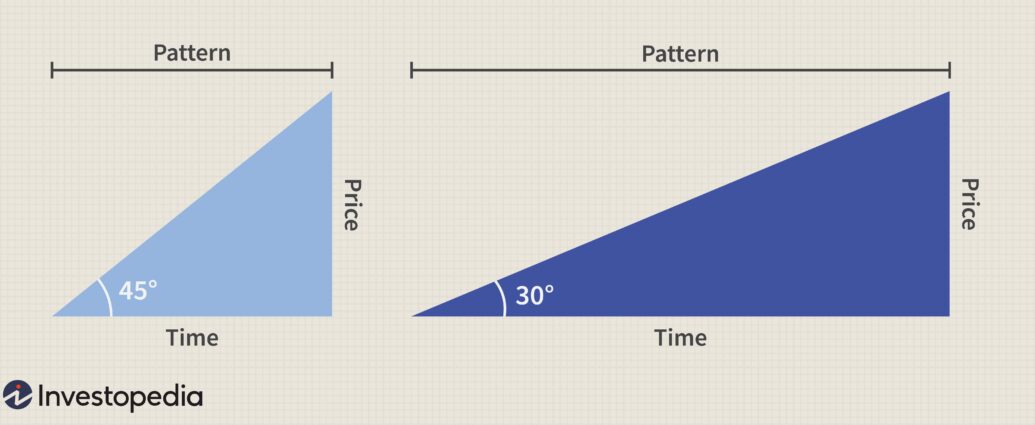
Decoding Gann Studies: A Pioneer in Technical Analysis
This post was originally published here



From mall to torture site: Venezuela debates El Helicoide prison’s future
Once a futuristic shopping mall, El Helicoide became one of Venezuela’s most feared prisons. Now, as the country changes, so does its fate — erase it, rebuild it, or remember what happened inside.
(Image credit: Ariana Cubillos)

This post was originally published here

File Your Taxes for Free in 2026 With These Essential Tips for Cost-Conscious Filers
This post was originally published here
From mall to torture site: The debate over El Helicoide’s future in Venezuela
Once a futuristic shopping mall, El Helicoide became one of Venezuela’s most feared prisons. Now, as the country changes, so does its fate — erase it, rebuild it, or remember what happened inside.
(Image credit: Ariana Cubillos)
This post was originally published here
AleAnna Stock Surges Over 11% In Pre-Market As Iran War Drives Natural Gas Price Spike
AleAnna Inc. (NASDAQ:ANNA) rose 11.35% in pre-market trading on Friday to $4.22.
ANNA closed the regular session up 3.55% at $3.79, according to Benzinga Pro.
Strike Sends Shockwaves Through Markets
The rally came after missile attacks targeted Qatar’s Ras Laffan Industrial City, responsible for roughly one-fifth of global LNG production.
The strike followed earlier Israeli action against Iran’s largest natural gas facility on the same day. In response, Tehran warned that multiple energy sites across the Gulf could be considered “legitimate targets.”
Israel has now temporarily halted further strikes on Iran’s major gas installation following a request from President Donald Trump.
Gas Prices Spike on Supply Shock
Natural Gas EU futures jumped 13.15% to 61.85 EUR/MWh on Thursday, according to Trading Economics data, …

Delcy Rodríguez replaces Venezuela’s top military commanders
Interim president announces changes after firing defence minister, who was close to Maduro, the leader ousted by US
Venezuela’s interim president has said she has replaced all her senior military commanders, the latest in a flurry of changes since the US ousted Nicolás Maduro.
Delcy Rodríguez announced the changes in a social media post a day after firing the long-serving defence minister, who had been close to Maduro, and replacing him with a former intelligence chief.
This post was originally published here

Success Stories of Bootstrapped Companies




Sorry, the quiz is SO GROSS this week. You’ll see
What could be more delightful than cannibal invertebrates and food-related weather events? A lot of things!

This post was originally published here







7 Mediterranean Locations Where Retiring Stylishly Won’t Drain Your Savings
This post was originally published here

10 tried-and-true methods to stay off your phone, according to our readers
We asked our audience to share the creative ways they limit their own phone use. They range from the practical (keep your phone in another room) to the creative (pair your phone with a fun paperback).

This post was originally published here

An immigration court few have heard of is quietly shaping policy behind the scenes
President Trump has slashed the number of people on the Board of Immigration Appeals and stacked it with his appointees, tightening the due process available for immigrants, an NPR analysis shows.
(Image credit: Yuki Iwamura)

This post was originally published here

Why it’s so hard for world leaders to bring down oil and gasoline prices
From waiving the Jones Act to rerouting oil through the Red Sea, governments are doing their best to make up for the crisis in the Strait of Hormuz, but prices are still rising.
(Image credit: Brandon Bell)

This post was originally published here

Why my $150 million startup thinks it can solve the $406 billion loneliness problem
Facebook, Twitter, and MySpace once promised to bring humanity closer together. They delivered something else entirely.
The screen economy that emerged around these apps at extraordinary speed optimized for attention. Time spent and daily active users were the twin metrics upon which this economy lived and died. Engagement loops got stickier and friction fell away from increasingly measurable interactions. The promises of internet-induced belonging, of social cohesion, of a new global intimacy all failed to materialize.
Instead, people retreated into their screens at such a scale that major social health organizations started sounding the alarm about a global loneliness epidemic. The World Health Organization found that 1 in 6 people worldwide experienced persistent loneliness, contributing to 870,000 deaths per year and costing governments billions in healthcare, employment, and education. Loneliness often manifests on balance sheets as absenteeism, which costs the U.S. economy alone $406 billion annually.
People are starving for the meaningful social connection they haven’t found online, and now they’re willing to pay. That hunger is quietly giving rise to a brand new market — and a generation of startups racing to serve it.
How social isolation created a new demand
Humans are social animals. We’re biologically wired for social cohesion, which has been a matter of life or death since the days of hunting woolly mammoths and sleeping in caves. As our species marched forward, we built this cohesion into institutions: schools, religious communities, trade associations, sports clubs, civic organizations, even entire nations. Multigeneration families living together were the norm and every city was dotted with bars and cafés for informal gatherings.
When such institutions enter a protracted decline, the desire for community remains. Enter the IRL economy, which I loosely define as an industry that deliberately facilitates in-person belonging. The end goal of all these businesses is to get people offline, together. How a given business goes about doing it is somewhat secondary.
The first phase of this economy arrived in the form of city-specific meet-up apps. Meetup, arguably the most popular of these apps, actually predates most social media platforms, having been initially founded to bring New Yorkers together in the wake of 9/11. Post-Facebook, so to speak, these platforms proliferated, and Meetup eventually proved so successful that WeWork bought it for $200 million in 2017. New startups meanwhile coordinated curated dinners, coworking spaces, running clubs, and shared activities. At WeRoad, we came to it through travel.
We organize trips for small groups of people who do not know each other before departure, specifically targeting young adults in their 20s and 30s. Wherever our travelers go, the base product is the same: guaranteed connection with like-minded people. We saw solo travel become a bona fide phenomenon and we figured many solo travelers still want to meet others along the way. We offered them a way to solo travel together.
It worked. When you give people the chance to rebuild social scaffolding, they will take it.
The economics of the new social scaffolding
Real-world participation has not disappeared. It has, however, slipped through the cracks of an atomized world. In dismantling social scaffolding through the decline of third spaces, real-world participation became difficult to access spontaneously. Going out was no longer a surefire way to meet someone, and the dating apps that emerged within the attention economy didn’t guarantee meaningful connections either.
IRL economy businesses sell that structure. We’re selling context more than a single, easily defined product. We commercialized travel at WeRoad, but we’re actually serving a different need. If we didn’t exist, the solo travelers who use us would still go all over the world. What they wouldn’t necessarily get is the connection we offer. That’s what they’re paying for, more than any specific trip to Mexico or Morocco or Indonesia.
The real product is always connection. We achieve it through structured immersion: 15 strangers together for ten days, away from their routines and homes. Introduce shared logistics, a little unpredictability, and the mild discomfort inherent to being in an unfamiliar place. Titles fade, social bubbles soften, interaction is a matter of course.
There’s basic economics in play, too. Real-world connection feels scarce and scarcity drives demand and increases value. The global travel and experience economy is already valued at over $1 trillion. IRL businesses are meeting that demand by contextualizing real-world connection in abundant, active economic sectors—not just through travel, but also dining out (a global industry valued at $3.9 trillion) and live music (valued at $38.5 billion). But since belonging doesn’t operate like behavioral metrics, its economic value will always be harder to measure than in the attention economy.
It’s too early for formal valuations of the IRL economy. What we do know is that VC investment in consumer startups, which includes IRL business, rose 25% between 2023 and the end of 2024. We can also point to funds like the Jägermeister-backed Best Nights VC, which specifically invests in startups dedicated to nightlife and going out together. And Tinder is now beta testing an in-person events tab offering pottery classes, raves, and bowling nights. Something big is happening here.
Friction-maxxing and mass atomization
In 2026, we’re seeing a new trend emerge: friction-maxxing.
Friction-maxxing is the deliberate rejection of seamless convenience — the transactional optimization that virtually every consumer-facing company has ruthlessly pursued for a decade. You order dinner without speaking to anyone. You rent a bike by scanning a QR code. You work from home, stream on demand, and feel constantly stimulated while remaining physically alone. Friction-maxxing refuses that bargain.
The friction-maxxers, however, need somewhere to go to find the connection they seek, and this is where the IRL economy comes in.
None of this is precisely new. Although social atomization exploded in the age of social media, it had already begun to take hold in the wake of the Industrial Revolution. Family members moved away from one another. Professional environments became increasingly tenuous as places to build community, despite colleagues being the only built-in social circle for many young professionals. Traditional community structures continued to decline. Digital communication emerged as the default, a development accelerated by the pandemic. In other words, we’ve been headed this way for a long time.
The IRL economy is still emerging, but the demand behind it extends far beyond the 1 in 6 people experiencing persistent loneliness. The friction-maxxers aren’t just rejecting their phones — they’re signaling that the next trillion-dollar consumer market won’t be built on a screen.
The opinions expressed in Fortune.com commentary pieces are solely the views of their authors and do not necessarily reflect the opinions and beliefs of Fortune.
This story was originally featured on Fortune.com
This post was originally published here

U.S. says Cuba is prohibited from taking Russian oil as two tankers head to island
The fuel-starved Caribbean island is facing its biggest test since the collapse of the Soviet Union under a U.S. oil blockade.
This post was originally published here





Historian talks about how Trump is forging a new world order
NPR’s Steve Inskeep speaks with historian Daniel Immerwahr about how President Trump is forging a new world order through his foreign policy.

This post was originally published here
Pittsburgh synagogue attack survivors talk about their friendship and healing journey
For StoryCorps, two survivors of the 2018 Synagogue attack in Pittsburgh talk about their friendship.

This post was originally published here