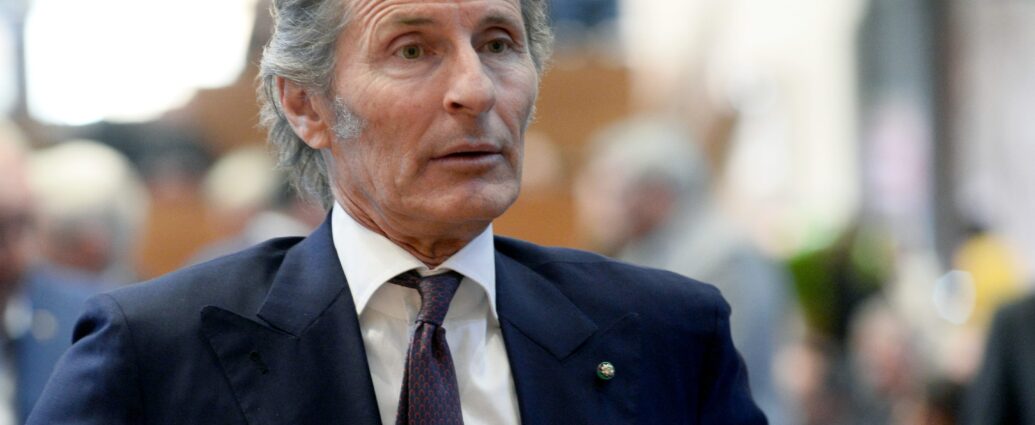
When it comes to supercars, Lamborghini CEO Stephan Winkelmann admitted his customers prefer a gas-guzzling auto to a fully electric vehicle, blaming a dearth of reliable charging stations in part for the lack of interest.

The luxury automaker announced in February it had shelved plans for its all-electric Lanzador, a 1,341-horsepower “Ultra GT” first announced in 2023. The car, originally slated for a 2029 release, had an estimated price tag of $300,000—about the average pricepoint for a Lamborghini, regardless of power source. Instead, Lamborghini will pivot to developing plug-in hybrid models.

Lamborghini reported record-breaking earnings on Thursday, including 10,747 deliveries in 2025, its highest ever tally. While the company reached $3.7 billion (€3.2 billion) in revenue—a 3.3% year-over-year increase—operating income fell to $885 million (€768 million) from a record of $962 million (€835 million) in 2024. The company attributed the dented profits to Lamborghini’s pivot away from an EV model, as well as uncertainty around tariffs and an unfavorable U.S. exchange rate. 

In an interview with Fortune ahead of the company’s earnings presentation, Winkelmann said part of the sluggish demand for its EV was a lack of developed infrastructure to support all-electric cars on the road.

“We have a lot of customers [who] bought electric cars, and they told us—I spoke to a lot around the globe—that in terms of infrastructure, in terms of charging time, in terms of range…it is very disappointing,” Winkelmann said.

According to an analysis from Motointegrator and DataPulse Research, the European Union has about 910,000 publicly accessible charging stations, despite 3.5 million, or 26%, needed to support the region’s decarbonization efforts. In the U.S., Lamborghini’s largest market, EV charging stations often experience reliability issues, with a Harvard Business School report finding drivers are able to fully recharge their cars using non-residential EV equipment just 78% of the time.

But customers’ reluctance to buy a luxury EV goes beyond logistical issues. “On top of that, the emotional part is very important,” Winkelmann said. 

EVs lack the roar of a traditional internal combustion engine which has been closely aligned with not just the Lamborghini brand, but sports cars more broadly. The lack of vibrations and noisiness of a gas-powered car was a turn-off for customers with a clear picture in their mind of what a Lamborghini is, Winkelmann noted.

“You don’t buy a Lamborghini because you need one, but because you want to have a childhood dream fulfilled,” he added.

How to make a successful luxury EV

The luxury car sector has largely struggled to roll out a fully electric car that resonates with consumers. In 2024, Bentley delayed its electric-only goal from 2030 to 2035—and then scrapped that, saying it will offer hybrid vehicles by then. Porsche announced last September it would no longer build its own EV battery and scale back its electrification plans. Premium carmakers such as Stellantis and Ford both took a step back from EVs, taking $26 billion and $19.5 billion charges, respectively, to pivot away from all-electric cars.

RBC Capital analyst Tom Narayan said it would be an oversimplification to say there’s no demand in the entire sector for high-end EVs, or that the lack of interest in the cars is a result of infrastructure issues.

“There are buyers who want electric-high performance vehicles,” Narayan told Fortune. “Maybe that number isn’t as big as what folks thought. Maybe that number is lower, but to say charging infrastructure is a problem, or, nobody wants a luxury EV, I don’t think that’s really accurate.”

Narayan looks to the highly anticipated Ferrari Luce, the Maranello-based automaker’s EV offering, which will be available to order come late May. Ferrari, which sells about 14,000 cars a year, is able to justify its EV because it can save on research and development for specific components thanks to a connection to its Formula 1 team already heavily investing in parts optimization. 

Ferrari is also a standalone company, in contrast to Lamborghini, which is owned by the Volkswagen Group through its subsidiary Audi. Ferrari has to appeal to a wider audience, making it more strategic to have an EV, Narayan noted. Meanwhile, Volkswagen has doubled-down on its EV plans, reviving its Scout Motors brand to appeal to American audiences, despite evidence of cooling demand.

Because Lamborghini’s ownership is already investing elsewhere in EVs, its own luxury model may not be the most prudent use of resources, Narayan suggested.

“In the context of VW Group,” he said, “it may not be necessary for Lamborghini to electrify.”

This story was originally featured on Fortune.com

This post was originally published here


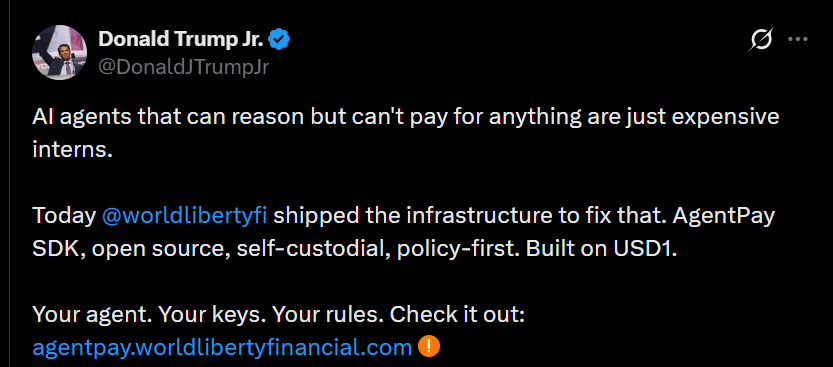
Donald Trump Jr. promoted World Liberty Financial’s (WLFI) new payment infrastructure on Thursday that will enable AI agents to manage funds and transact on the blockchain.

WLFI Dives Into Agentic Commerce

Trump Jr. spotlighted the AgentPay Software Development Kit on X, calling it “open source, self-custodial and policy-first,” which could be used to settle USD1 transactions.

“AI agents that can reason but can’t pay for anything are just expensive interns,” he said. “Today, World Liberty Financial shipped the infrastructure to fix that.”

This software toolkit enables agents to move and trade funds programmatically according to user-defined rules. The rules will be enforced before any action can be executed, WLFI stated.

Any …

Full story available on Benzinga.com

This post was originally published here
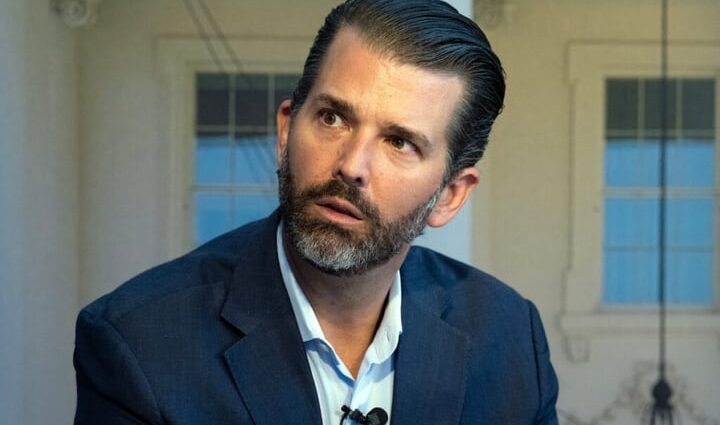
When Samyr Lainé walked into his freshman dorm room at Harvard University in 2002, he found his new roommate tucked away in the corner of their room, typing away on his computer. 

A year and a half later, that roommate sent him a project he was working on called TheFacebook

“You could tell where his skill set was as a coder and as a thinker, and he was just supremely advanced,” Lainé said of Meta CEO Mark Zuckerberg. “He was taking senior-level courses as a freshman and showing up to a three-hour final exam, two hours late, and getting the highest grade in class.” 

While living in that dorm room, Lainé began to hone his skills as a triple jumper on Harvard’s track and field team. After college, he competed as a graduate student at the University of Texas at Austin. He then went on to study law at Georgetown, graduating in 2010. 

A decade after sharing a bunk bed with Zuckerberg, Lainé represented Haiti in the triple jump at the 2012 Olympic Games in London. Ten years after that, he co-founded Freedom Trail Capital, a venture capitalist firm that invests in celebrity brands like Issa Rae’s haircare line Sienna Naturals, Kaley Cuoco’s dog supplement company Oh Norman!, and Ten to One Rum, co-owned by the singer Ciara. 

From his time as an Olympian, Lainé understands what it is like to be the talent fronting a product. After his athletic career ended, he went on to work with Jay-Z at Roc Nation and with Will and Jada Pinkett Smith on their media company, Westbrook. Those experiences were pivotal in teaching Laine how to make a celebrity brand successful.

From the Olympics to Roc Nation 

After placing tenth in the triple jump at the London Olympics, Lainé continued to work in sport, first as a lawyer at Monumental Sports, which owns several Washington, D.C. sports teams including the Capitals, Wizards and Mystics, and later directing player relations at Major League Soccer. 

He joined Jay-Z’s entertainment company Roc Nation in 2018 as senior director of operations, using both his legal background and operations skills to manage artists like Alicia Keys, Meek Mill, Lil Uzi Vert. He also worked on Jay-Z’s alcohol brands, music streaming platform Tidal, and launched projects like the company’s book publishing division, Roc Lit 101.

“My role at Roc Nation is really what laid the foundation for what I’m doing today,” he said. “For me, [it] was just having a front row seat and understanding how Jay leverages his cultural cachet to build some really valuable, really tremendous businesses,” he said. 

Lainé left Roc Nation in 2019 to then join the Smiths at their media and production company, Westbrook, as vice president of operations. He was then promoted to senior vice president, working with the entire Smith family to launch apparel, personal care, and coffee brands.

“I came on as a very early employee, maybe employee number six or seven. We built that to almost 200 employees across six different verticals,” he said. “A lot of [the job] was taking what I learned—a baptism by fire Roc Nation—translating that to Westbrook.”

The Friday before the 2022 Oscars (the one when Smith slapped comedian Chris Rock), Lainé left Westbrook to consult for brands and address what he saw as a gap in the market between celebrity-led brands and venture capital. 

A year later, he co-founded Freedom Trail Capital with his wife and fellow triple jump Olympian Ayanna Alexander-Lainé. Together, the two have amassed a portfolio of celebrity-led brands trusted by consumers and celebrities alike.

Investing in authentic brands 

What will make or break a celebrity brand is authenticity, not just a famous name attached to a company, Lainé said, before pointing to the many mediocre celebrity tequila brands out there as an example. Sometimes, Lainé warned the product doesn’t even match the name behind it.  

Take for example Jay-Z’s successful cognac and champagne brands—most people don’t remember his vodka venture Armadale.

“Vodka was probably the wrong category for the wrong demographic that Jay-Z appeals to,” Lainé explained. “What doesn’t work, and people know this, is inauthentic pairings between talent and business.”

Companies fail when they don’t need to think critically about their product and how it will serve customers, he said. Freedom Trail takes a different approach. 

“We look for businesses that either have or can benefit from having a person of influence involved. Person of influence, we say deliberately, because we’re not exclusively looking for celebrities, but we’re looking for folks who have a platform and an audience where they can add their audience to authentically supercharge an already great business,” Lainé explained. 

Lainé’s goal is that a company survives with or without a big name’s backing. But when an influential person becomes involved, they tend to bring their audience with them.  

He points to his client and Harry Potter actress Emma Watson. Her family’s gin brand, Renais, is the quintessential example of an influential person backing a brand. The gin comes from recycled grape skins from Watson’s family’s vineyard in Burgundy, France, where her father has been growing grapes for more than three decades. Her brother, Alex, is the company’s CEO, and Watson designed the product’s bottle and packaging, Lainé said. And that authenticity translates to other well-known and beloved brands.

“The reason that Nike is a talent-led brand, and Revlon and Gatorade [is that] they all leverage talent successfully, Lainé said. “The right person with the right audience and the right messaging through the right medium speaking to the direct demographic at the right time can supercharge a business. That business that it’s supercharging has to be a great product that’s innovative and a quality business and a strong brand.”

This story was originally featured on Fortune.com

This post was originally published here

Intellicheck Inc. (NASDAQ:IDN) shares rose 15% in after-hours trading to $5.52 on Thursday after the identity verification company reported record fourth-quarter revenue and its first annual net profit for the year ended December 31, 2025.

Q4 Revenue Hits Record High

Total fourth-quarter revenue for Intellicheck rose 12% year over year to $6.63 million, up from $5.93 million in the same period of 2024.

SaaS revenue, which represents the recurring income from cloud-based applications through monthly or annual subscriptions, accounted for nearly all of fourth-quarter revenue and rose 12% to $6.62 million.

According to the company’s press release, gross margin remained at 91.4%, while operating expenses declined 7% to $4.57 million.

First-Ever Annual Profit Posted

For full-year 2025, Intellicheck reported net income of $1.27 million, or $0.06 per diluted …

Full story available on Benzinga.com

This post was originally published here
Exclusive: Richard Hermer, who is Jewish, says Tory leader and shadow minister seem ‘to only have an issue with Muslim events’

Richard Hermer, the attorney general, has challenged Kemi Badenoch to say whether she would object to Jewish prayer in public, after the Conservative leader backed one of her shadow ministers who said an Islamic prayer event was intimidating and un-British.

Hermer, one of the UK’s most prominent Jewish politicians, said Badenoch’s decision to support the views of Nick Timothy, the shadow justice secretary, put her on a par with Reform UK and Tommy Robinson, the far-right activist.

Continue reading…

This post was originally published here

Jack Schlossberg thinks his grandfather would have been great at social media. He’s less sure JFK would recognize the country he once led. 

“I think he would be shocked at how far we have fallen in terms of setting the standard for the rest of the world to follow on human rights, democracy, and freedom,” the 33-year-old Democratic congressional candidate told Fortune on the sidelines of a CEO Initiative dinner in New York City on Wednesday night.

But Schlossberg quickly added that former President John F. Kennedy would marvel at what America has built, citing a powerful economy, an innovative private sector, and breakthroughs in technology and science.  

“I think my grandfather would be proud of how much our society has accomplished together,” he said.

Schlossberg is the only grandson of President John F. Kennedy, the son of Caroline Kennedy, and is widely seen as the next standard-bearer of the Kennedy political legacy. His comments tap into a broader anxiety about America’s global standing—and highlight the central tension in Schlossberg’s political message: pride in the country’s achievements, paired with concern about its direction.

He argued that Kennedy, the man who solved the Cuban Missile Crisis in the 1960s, “without firing a shot and stared down the Soviet Union without blinking,” would be unsettled by the same problems the country is still facing six decades later, from healthcare to education to immigration. “We need to do better.”

Inside Schlossberg’s first run for Congress

Schlossberg is running in a hotly contested race to fill New York’s 12th District seat currently held by retiring Democratic Rep. Jerry Nadler, who has served in Congress since 1992.

He’s facing off against Assembly Members Alex Bores and Micah Lasher, Trump critic George Conway, public health researcher Nina Schwalbe, and others in a district that covers Manhattan’s Upper West Side, Hell’s Kitchen, and parts of the East Side. But in February, Schlossberg landed a powerful backer in his first foray into politics and shared an endorsement letter he received from former House Speaker Nancy Pelosi.

“This is a consequential moment for the country — faith in our politics is fractured, and trust in government is tenuous,” Pelosi said in the statement. “This moment calls for leaders who understand the stakes and how to deliver for the people they serve.”

Why Schlossberg says voters have lost faith

The backbone of his campaign is built around a slogan he acknowledges is “a little cheesy”: believe in something again.

Speaking to Fortune’s Diane Brady, Schlossberg connected his grandfather’s legacy to what he sees as the Democratic Party’s defining failure of this moment: not a collapse in policy, but a collapse in conviction. “I want a party that has the courage again and gives people something to believe in again, because we are right now at an all-time low for people who believe in government.”

The data backs him up. According to a Pew Research Center survey, just 17% of Americans say they trust the federal government to do what is right “just about always” or “most of the time,” ranking among the lowest readings in nearly seven decades of tracking. 

While the Democratic National Committee’s postmortem of what went wrong during the 2024 election still remains under wraps despite Chair Ken Martin’s public pledge to release it, Schlossberg offered his own read on what Democrats keep getting wrong with young voters.

“I don’t think that people are as disillusioned as you might expect, and I don’t think that they are as far left as some of the rhetoric would have you believe,” he said. The real problem is a market failure. “There hasn’t been people serving the market of young people who are interested in politics and what they want to hear about. Young people are not a monolith, and young people are really smart. They [are] really able to tell authenticity from someone who’s not telling the truth.”

Voters “aren’t looking for a superhero,” he said. “They just want someone who kind of knows how to speak their language, meet them where they are, and give them something of value.” 

Fortune’s Diane Brady and Democratic Congressional Candidate Jack Schlossberg discuss his campaign during the Fortune CEO Initiative New York Dinner.
Roy Rochlin/Getty Images for Fortune Media

Democrats are ‘late to the game’ 

Schlossberg, a content creator with nearly 1.9 million followers across TikTok, Instagram, and X, has identified social media as a critical weakness in the Democratic strategy. He’s also self-deprecating about his own role in fixing it. “If I’m one of the best at this,” he told the audience, “it’s not saying much.”

Before launching his political career, the Yale and Harvard Law School graduate worked at a surf shop in Hawaii, volunteered as an EMT, and penned opinion pieces for Vogue, but has become known for his witty political commentary and provocative social media presence as a self-described “silly goose.”

“Other than my mother, I’m probably the last person who expected me to be a content creator,” he said. “That was not really my path in life.” 

In 2024, Schlossberg headed to Wilmington, Delaware, to offer his ideas to the Biden campaign. They were not well received. “Long story short, I quit the campaign because I thought, if I don’t do this my way, I’m not going to be able to live with myself,” he said. About a month later, the campaign called him back.

The experience only sharpened his diagnosis of the party’s broader problem: “We’ve been out-competed in terms of reaching young people, especially…and telling them a story about what we’re for and not just being a reactive party that is against things.” 

His advice for politicians trying to reach voters: “Be all parts of yourself. You don’t just have to be the candidate. People respond when you’re also the uncle, or the son, or the sports fan, or the humorous person that you might be. It’s about showing all different sides of your personality.”

On the sidelines, Schlossberg reiterated his take: “The Democratic Party was definitely late to the game on social media a year and a half ago.” 

Schlossberg’s social media playbook

Schlossberg’s formula for viral social media success? Have no formula at all. 

“My social strategy is to have none,” he said. “It’s to try to provide value to people, whatever that may be,” emphasizing that while he leans on jokes and witty takes, he always wraps it around something substantive. 

“Maybe it’s a sense of humor, maybe it’s something inspiring, an accomplishment, or maybe it’s laying out information in a clear and intelligible, digestible way so that people can get educated,” he said. “A lot of the videos that do the best aren’t the ones that are wacky or pictures of me, a lot of times, they’re videos where I clearly lay out information in a way that people can understand.” 

And if his grandfather were alive today? 

“I think he would have no idea how to use a phone, but I think, for some reason, he would probably be pretty good at social media. He was very media savvy in his own day.”

This story was originally featured on Fortune.com

This post was originally published here

As Gen Z and millennials watch the value of their degrees dramatically decline, one graduate in the UK has become the face of the crisis. The unnamed graduate now owes more than £314,356 ($420,000) in student loans—more than the cost of an average British home, far above the eye‑watering £231,000 ($308,000) record that topped headlines just two years ago, and a new record for the most personal student debt on record in the UK.

While the average graduate is leaving university with around £45,000 in debt, 10 graduates now have loans exceeding £267,000 ($356,000), according to new figures from the Student Loans Company, as reported by The Times

For context, the average property value in Britain is similarly around £270,000 ($360,000).

While just a handful of students owe the government more money for their education than a family will pay for an entire house, they’re part of a much wider problem: One analysis last year found that more than 150,000 people across Britain now have loans exceeding £100,000 ($133,000). 

That figure had jumped by a third in just 6 months, as interest compounds on balances that many may never fully repay.

Even cautious graduates with the smallest loans are now facing a perfect storm: living costs and compounding interest are outpacing wages, leaving many to navigate years of financial strain, delayed milestones, and growing doubt about whether their degree was worth it.

The global graduate crisis

This isn’t just a British problem. In the U.S., student debt has topped $1.7 trillion, while fresh graduates struggle to land stable jobs. 

About a fifth of Gen Zers worldwide are classified as “NEETs” and are currently locked out of the job market. Across both America and Britain, millions of young people are not in education, employment, or training—despite expensive degrees.

One graduate with a maths degree spent more than a year applying to over 1,000 roles in the U.K. without landing a single offer, before moving his job hunt to Austria.

And as AI and automation replace many entry-level roles, the competition for what’s left is only getting fiercer. In the U.K. alone, more than 1.2 million applications were submitted for fewer than 17,000 graduate roles last year. Meanwhile, Americans report that the probability of finding a job right now has hit a record low

They’re not imagining it: Goodwill places millions of job seekers across its 650-plus job centers, and it’s CEO Steve Preston says the charity is “preparing for a flux of unemployed young people” thanks to AI.

To make matters worse, not only are there fewer job opportunities available for fresh faced graduates, but CEOs are also increasingly saying they don’t even care about the expensive piece of paper they signed up for.

Now, 1 in 3 say their degrees weren’t financially worth it

The social contract is broken. Many young people did exactly what they were told: They went to university, signed on for steep student loans, and trusted that the debt would be a down payment on a stable, well‑paid career. Instead, they’re watching their high school peers who skipped university to take trade jobs get a better shot at a six-figure career. 

Now, 1 in 3 graduates don’t think their degrees were financially worth it. In fact, the Nexford University report highlighted that many have been left drowning in debt decades after tossing their graduation caps into the air. 

Some 14% admit they had to delay moving out of their parents’ house and starting a family because of hefty student loads. Meanwhile, a third are having to delay saving for their first home and even retirement.

It’s no wonder that nearly half of Gen Z and millennials conclude that university was a waste of money.

This story was originally featured on Fortune.com

This post was originally published here

Unseasonably warm and even dangerous temperatures this week were up to 30F above average for the time of year

The record-breaking heatwave scorching the US west this week would have been “virtually impossible” if not for the climate crisis, a team of scientists has determined.

Millions of Americans from the Pacific coast to the Rockies baked under unseasonably warm and even dangerous temperatures this week, with temperatures up to 30F (17C) above average for the time of year.

Continue reading…

This post was originally published here

Sharon Graham tells party to ‘wake up and smell the coffee’ after ‘shameful’ handling of Birmingham bin strike

Labour will be “decimated” in the upcoming local elections and should “hang their heads in shame” over the handling of the Birmingham bin strike, Unite’s general secretary has said.

In a speech to refuse workers near a waste depot in Tyseley on Thursday, Sharon Graham said working people were moving away from Labour in droves and called on the party to “wake up and smell the coffee”.

Continue reading…

This post was originally published here

Mitsubishi Shokuhin, Japan’s largest food wholesaler and part of the massive Mitsubishi Corporation, needed a way to break into the U.S. Tourists were falling in love with Japanese products, but couldn’t find a way to buy them once they got home. Yet, for the wholesaler, building market access the normal way—finding individual retailers, securing appointments with buying managers—was proving to be a slow process. 

The answer came from an unlikely place. A Mitsubishi‑sponsored MBA student took an internship at Yami, an up‑and‑coming U.S. e‑commerce platform selling Chinese, Japanese, Korean and other Asian products to Asian Americans and the broader Asian diaspora. 

That assignment laid the groundwork for a strategic partnership that gives Mitsubishi Shokuhin a direct line to millions of American shoppers. Mitsubishi Shokuhin, which generated about 2.1 trillion yen ($14 billion) of revenue in its last fiscal year, is signing a strategic partnership with Yami that will put more of its portfolio of Japanese food and beverage brands on the platform for U.S. consumers.

“It was pretty random,” recalls Alex Zhou, Yami’s founder. “We weren’t actively raising money. We had already broken even, we had positive cash flow.” Yet over a series of meetings, Zhou says, it became clear that the Japanese trading house could offer something other than capital. “Japanese products and brands already represent more than 30% of what we sell. A name like Mitsubishi can really help with our Japanese supply chains,” he says. 

“Yami gives brand owners instant access to consumers directly, and that is one of the attractive aspects of the platform,” says Kazuo Ito, a senior vice president at Mitsubishi Corporation who heads its food distribution and logistics division and is set to become president and CEO of Mitsubishi Shokuhin in April. The partnership, he says, allows Japanese manufacturers to bypass the slow grind of securing shelf space with U.S. retail buyers and instead reach millions of shoppers online.

Mitsubishi Shokuhin dates to 2011, when four long‑standing food wholesalers, some with histories stretching back more than a century, joined together in one company. The company now supplies a broad range of processed, frozen and chilled foods, alcoholic beverages and confectionery to around 3,000 retailers in Japan, including Japanese convenience‑store chain Lawson and lifestyle retailer Muji.

Mitsubishi Corporation—Japan’s largest trading house, with roughly $122 billion in annual revenue—took Mitsubishi Shokuhin fully private last year via a 137.6 billion yen (about $950 million) tender offer. Ito says part of the rationale was to accelerate overseas expansion by more tightly integrating Shokuhin into the wider Mitsubishi group, including sharing logistics networks and talent.

What is pushing a traditionally domestic wholesaler to look abroad? One factor is Japan’s tourism boom. The country welcomed a record 42.7 million foreign visitors in 2025, who spent 9.5 trillion yen (about $60 billion), according to government data.

“Many visitors come to Japan, have a good time and buy things for souvenirs or consumption,” Ito says. “But when they go home, they say, ‘I enjoyed that, but where do I get hold of it? Do I have to go back to Japan again?”

Japan’s exports of agricultural, forestry and fishery products and foodstuffs reached a record 1.7 trillion yen in 2025, with record high exports of beef and rice, and a doubling of green tea exports.

Ito argues platforms like Yami can turn those souvenir purchases into ongoing demand. “Companies like Yami can provide that ‘re‑experience’ of going to Japan by providing the products people enjoyed during their stay,” he says.

From Kansas to 4 million customers

Zhou’s own journey underscores the gap Yami is trying to fill. He arrived in the U.S. from mainland China in 2007 as an international student and landed in Kansas, with the nearest Asian grocery store being two hours drive away.

After graduating and moving to the Los Angeles area, he launched Yami in 2013. Within three years, the business had nearly $100 million in revenue without outside funding, he says. Yami has since raised institutional capital, including a $50 million Series B round co‑led by Altos Ventures and Balsam Bay Partners.

The company positions itself as a one‑stop online marketplace for Asian products in North America, spanning snacks, beauty and health items, household goods and more. Zhou says the platform has close to four million registered customers. 

Other ecommerce platforms have arisen to sell Asian goods, including Weee, founded in 2015 by Larry Lu. Asian supermarkets, like the Hanahreum Group’s H Mart, are also booming across the U.S.

Yami’s growth hasn’t been painless. Around 2018, Yami went through a period of cost-cutting. “I learned that you have to separate yourself from the business,” Zhou says. “You have to make decisions based on what’s best for the company. It’s really hard to fire people.”

More recently, higher U.S. tariffs on Asian goods—at times hitting triple‑digit levels on imports from China—have tested Yami’s supply chain and pricing, but Zhou sees the disruption as an opportunity. “We knew Asian supply chains better than others. That created an opportunity to thrive driving this crisis.”

Yami was initially built to serve Asian Americans and the Asian diaspora. “As an Asian and Chinese person, I first felt obligated to make overseas life better for immigrants like myself.” 

Yet non‑Asian shoppers are increasingly buying not just Japanese and Korean snacks, but also Asian beauty products, health supplements, home goods and apparel. They’re also consuming Asian cultural products, like K‑pop and Japanese manga.

“The fastest-growing segment of Yami’s customer base is not Asian, but non-Asian,” Ito, from Mitsubishi Shokuhin, notes. “That is attractive for brand owners like us who want to go to the U.S.”

This story was originally featured on Fortune.com

This post was originally published here

“Scenario planning” has become boardroom shorthand for preparation to deal with the unknowable. It’s a practice that is never more vital than in wartime, when a sea mine, cyberattack, or sanction can reroute supply chains overnight and send energy prices soaring. 

Instead of betting on one forecast about how events will unfold, the most resilient CEOs are now rehearsing several plausible futures at once and deciding—before the missiles start dropping, the virus becomes a pandemic, or the markets seize up—what they will do in each. 

It’s an approach that was pioneered by Shell precursor Royal Dutch Shell. In the 1970s the energy company began developing a set of vivid alternative futures involving potential oil-supply disruptions. Shell did not invent the idea of developing such scenarios, which had earlier roots in military and Cold War strategy, but it was the first major company to embed systematic scenario planning at the center of corporate decision-making, largely through the work of economist and planner Pierre Wack. His London-based scenarios team had Shell’s top managers rehearse what they would do if various crises arose. 

The doomsday prep paid off. In the early 1970s, Shell’s leaders wondered what would happen if events in Saudi Arabia raised the price of oil. By the time the Arab oil embargo shook the world soon thereafter, sending prices rocketing, Shell knew what to do. It had already slowed refinery expansion and adapted its refineries to handle many types of crude—while competitors vacillated. The common view in the industry is that Shell came through the oil shock far better than any other major producer. The success of those exercises turned Shell into a case study for scenario planning, and the company still regularly publishes its “Shell Scenarios.”

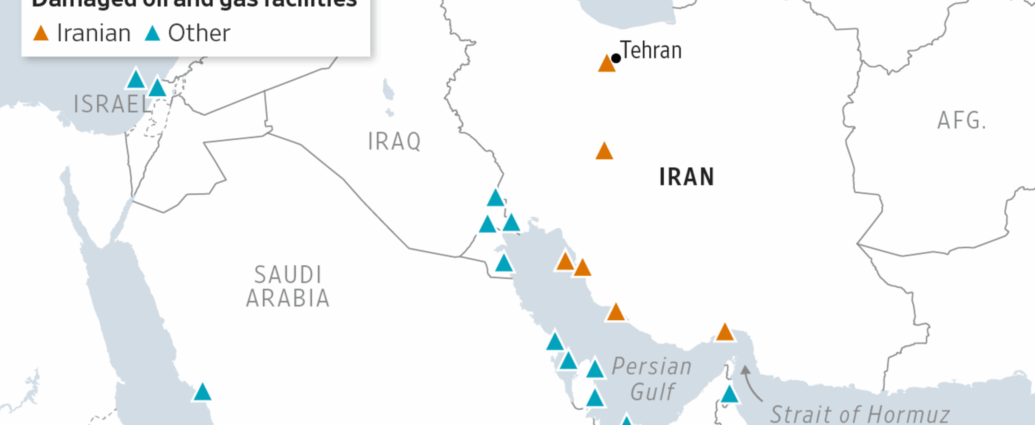
With a war underway, corporate planning is clearly not the only urgent matter. Since the U.S. and Israeli bombardment of Iran beginning in February, thousands have been killed and millions displaced across the region. Vital shipments have been disrupted, and prices have risen worldwide. But along with the human tragedy, the war—and particularly its effect on oil supply and prices—has affected nearly every business around the world. 

“This isn’t a world war explicitly,” says Rebecca Patterson, a senior fellow at the Council on Foreign Relations, “but it is a war that is affecting the globe.”

That war was still raging when this article went to press—and the conflict has underscored the importance of insights that will help guide CEOs long after the war is over.

The company war room has become a permanent fixture

“Almost every client I talk to has a war room,” ­KPMG’s Mary Rollman told Fortune in April 2025, just days after President Trump announced his list of “reciprocal” tariffs on some 180 countries. Back then the war room was a new unit in most companies. “They get a team spun up, and the members have com­pletely dropped their day job,” Rollman reported. 

Those war rooms have found no reason to disband. The tariff situation is still “changing almost on a weekly if not daily basis,” says Abe Eshkenazi, CEO of the Association for Supply Chain Management, and the Iran war “is a continuation of the uncertainty.” The only difference is that the term “war room” is no longer a metaphor. 

Perhaps every generation thinks its own era is the most perplexing and unpredictable of all time. But evidence shows that what businesspeople have had to deal with in recent times is truly off the charts. Uncertainty indexes going back monthly to 1985, compiled by researchers at Stanford University and the University of Wisconsin, show that instability and jitters about U.S. economic policy rose to record levels starting in 2018—and have never dialed down. (To create the indexes, the researchers measure disagreement among economic forecasters; federal tax code provisions set to expire; and articles on policy in major newspapers.) The indexes hit a new high after Trump revealed his 2025 tariffs. (The index covering the time of the Iran war hadn’t been published when we went to press.) 

Don’t expect uncertainty to decline significantly anytime soon, says Ian Bremmer, founder and president of Eurasia Group. International institutions—the United Nations Security Council, the World Trade Organization, the Group of Seven (G7)—clearly aren’t as effective as they once were at maintaining international order, he explains: “We are now living in a G-Zero world, one in which no single country or bloc of countries has the political and economic leverage—or the will—to drive a truly international agenda.” 

High gas prices are just one of the risks to prep for.
David Paul Morris—Bloomberg/Getty Images

Companies caught in the commercial chaos must now fend for themselves. In a tumultuous global order, “supply-chain officers are looking for inventory buffers, alternative vendors, redundancy in their supply chains,” says Eshkenazi. “That’s not compatible with long-term ­strategies.” 

In other words: Companies’ war rooms won’t be closing up shop anytime soon.

Playing out a range of scenarios is more essential—and more difficult—than ever

“Scenario testing or stress testing: If you’re not already doing it, you need to start yesterday,” says Patterson of the Council on Foreign Relations. In addition to companies stress testing their costs and supply chains, she recommends they also test their resistance to cyberattacks. “Iran is a strong actor in the cyber world,” she says. Its successful March attack on the Stryker medical-device maker, in which its goal was apparently not to receive ransom but to destroy data, was only a recent example. Many of Iran’s previous cyber­attacks have targeted crucial economic infrastructure, including hospitals, ports, power plants, and railroads. 

Some of the most useful scenarios are based on second- or third-order effects of an event. With the Iran war, Patterson says, “the big one is stagflationary risk,” a second-order effect that creates slow economic growth, high unemployment, and high inflation. With gasoline prices and shipping costs already rising, “expect to see this feed into inflation expectations and possibly actual inflation,” she says. Third-order effects might include rising interest rates and borrowing costs, and a strengthening of the dollar, making it easier to buy imports and harder to sell exports. 

The Iran war will likely continue to have effects long after it ends. Patterson cites an old line about gasoline prices: “They go up like a rocket and come down like a feather.”

Leaders should remember the pandemic

That’s not to say that the Iran war will be a disaster on COVID’s scale. But no one knows how it will turn out, just as no one in the pandemic’s early days knew what would happen next. 

Employees, share­holders, customers, suppliers—all were frightened and looking for answers that not even CEOs had. The pandemic changed leadership in ways that still linger, and today’s executives and managers would do well to remember that transformation. 

“Scenario testing or stress testing: If you’re not already doing it, you need to start yesterday.”


Rebecca Patterson, Council on Foreign Relations

The overarching theme from those days was the end of the classic CEO persona—informed, prepared, firmly in charge, and invulnerable. That changed quickly. “CEOs went from being godlike to being more human,” said Jim Citrin of the Spencer Stuart executive search firm. A CEO told Fortune at the time, “I found the magic in an organization is about being super down-to-earth, letting people see you for who you are, with all the vulnerabilities that you face.” 

Now, as the fog of war drifts even into corner offices, CEOs again face questions they can’t answer: How long will the war last? Will it escalate? How high will oil prices go? 

It’s a good time to remember a lesson from the pandemic: Executives who confess they’re mere mortals and don’t pretend to know everything can actually become more trustworthy and more ­effective as leaders. 

This article appears in the April/May 2026 issue of Fortune with the headline “For CEOs, it’s time for a wartime mindset.”

This story was originally featured on Fortune.com

This post was originally published here

In today’s newsletter: Bereaved families say the latest findings confirm long-standing concerns about capacity, care and political choices

Good morning. Yesterday lunchtime the UK Covid-19 inquiry published its latest findings – this time on how the NHS, its staff and patients were affected during the pandemic. It delivered a stark verdict: the health service “teetered on the brink of collapse” and only avoided it through the “almost superhuman efforts” of staff.

Heather Hallett, the inquiry chair, said healthcare systems “coped, but only just” – and rejected the claim made by Conservative ministers at the time that the NHS had not been overwhelmed. For bereaved families, that language matters.

Middle East | Iran said it would show “zero restraint” if its energy infrastructure was targeted again as Qatar revealed that almost a fifth of its liquefied natural gas export capacity had been knocked out in an Iranian strike.

Health | Meningitis vaccination has been expanded in Kent after cases linked to a Canterbury nightclub rose to 27. Two people have died, and officials say the outbreak is being contained.

Politics | Muslim leaders have condemned Nigel Farage’s call to ban public prayer by Muslims in the UK as bigoted and warned of a “growing tide of hate” after Kemi Badenoch questioned whether the events fitted “within the norms of British culture”.

EU | EU leaders have pledged to stand behind Cyprus as it seeks “an open and frank discussion” on the future of the British bases on the island, which have become a target after the outbreak of the latest Middle East crisis.

Immigration | A 16-year-old schoolgirl is stranded in Denmark after she was not allowed to board a flight to the UK due to new border rules on dual nationals.

Continue reading…

This post was originally published here

China is becoming a “factory to the factories,” ramping up its exports of industrial components like smartphone parts, processors, memory chips and lithium-ion batteries, destined for final assembly in economies like Southeast Asia.

“We may buy fewer ‘Made in China’ goods going forward, but more products will have internal components manufactured in China,” says Jeongmin Seong, a partner at the McKinsey Global Institute (MGI), the consulting firm’s research arm. 

China’s exports of consumer goods declined by 2% last year, yet exports of intermediate goods rose by 9%. 

Trade between the U.S. and China declined by 30% last year, due to U.S. President Donald Trump’s steep tariffs on Chinese goods. Yet “China stepped up to diversify its trading partners, and mostly with emerging economies,” explains Seong, who is also the author of a new MGI report on global trade. Those new trading partners, mostly manufacturing hubs, had more need for cheap machinery and components from China, rather than more costly finished products.

MGI’s report, titled Geopolitics and the Geometry of Global Trade, notes that the U.S. also changed its trading partners last year. The country successfully replaced two-thirds of the goods it previously sourced from China, sourcing smartphones from India and laptops from Southeast Asia. 

ASEAN in particular is playing a key role in tariff-induced trade adjustments. Southeast Asian countries were already picking up manufacturing business moving out of China, as companies tried to manage earlier tariffs on Chinese goods and diversify their supply chains in the wake of the COVID pandemic.

Trump’s newest trade war is likely to accelerate the shift to adopt “China plus one” supply chains.

“ASEAN played the role of matchmaker for the global supply chain and kept it from breaking up,” Seong says. “ASEAN’s exports grew about 14%, which is more than two times as fast as the global average.” Notably, Southeast Asia ramped up trade with both China and the U.S., with the ASEAN-China and ASEAN-U.S. trade corridors being two of the world’s fastest growing, according to MGI.

Despite post-”Liberation Day” concerns last year that globalization was dead, global trade hasn’t declined. Seong sees less evidence that countries are moving manufacturing back home or to neighboring countries. “Despite a lot of headlines about onshoring, reshoring and nearshoring—that is not happening at a global scale,” he says. “More countries are getting connected over longer distances, and in that sense, we can argue that globalization is continuing.”

Instead, trade is being reconfigured along geopolitical lines. Countries are trading more with aligned countries, and trading less with countries seen as competitors or rivals. It’s not just the U.S.; China, too, has increased trade with Southeast Asia, Europe, Latin America and Africa as its geopolitical contest with Washington intensifies.

Investment, too, is being configured across geopolitical lines. The U.S. is investing more in its allies; it’s sourcing investment from allies like Japan, South Korea, and the Middle East, particularly in areas like semiconductors. China, on the other hand, is now a net investor overseas, not just because the country is investing more, but also because U.S. investment into the country has dried up. 

Last year, the geopolitical distance of foreign direct investment plunged by 13%, while the same metric declined by just 7% in trade, according to MGI. (“Geopolitical distance” is MGI’s metric for measuring how closely two countries are aligned in their foreign policies, politics, and alliances.)

“Money can move faster than physical networks,” Seong explains. 

Tariffs may come and go, Seong suggests, but a deeper shift of who trades and invests with whom is likely to endure long after the latest trade war headlines fade. “Geopolitical events like tariffs could be short-term splashes, but structural waves—like the geopolitical realignment we’re seeing—will endure,” he concludes. 

This story was originally featured on Fortune.com

This post was originally published here

Second landfall expected over weekend in NT as Queensland premier says relatively limited damage so far ‘an incredibly good news story’

Severe Tropical Cyclone Narelle barrelled across far north Queensland on Friday as one of the state’s fiercest cyclones in living memory – downing trees, ripping off roofs and swelling rivers.

The system crossed the Cape York peninsular at 7am on Friday as a “high-end” category 4 storm with sustained winds of 195km/h – just 5 km/h short of being a category 5 storm.

Continue reading…

This post was originally published here

The market’s calm in the face of war is beginning to crack

This post was originally published here

This blog is now closed

Far north residents in the path of Severe Tropical Cyclone Narelle say they have taken shelter as winds begin to swirl in the remote Cape York Communities.

Sara Watkins, the owner of Coen Mechanical and the Little Bush Pantry in the township of Coen – population about 330 – say they moved to a more secure brick building when the winds picked up about 4am, local time.

The wind has really started to pick up, you can hear a couple of things moving around outside.

Until the wind started it was so still. It was raining but it was really still. That’s not like Coen, when it rains it pours and the wind moves about.

In Coen there are a lot of old properties that have been through cyclones in the past, they are standing but they’re not cyclone rated by any means.

Continue reading…

This post was originally published here

IEA makes 10 recommendations to help households and businesses prepare for a drawn-out disruption to energy markets

The world’s energy watchdog has advised governments to reduce highway speeds and encouraged workers to carpool or, ideally, work from home to combat soaring oil prices and impending fuel shortages caused by the Middle East conflict.

It has also recommended countries consider limiting car access to designated zones in large cities, by giving vehicles with odd-numbered plates access on different weekdays to those with even-numbered plates.

Work from home where possible to save petrol.

Reduce highway speed limits by at least 10km/h to reduce fuel usage.

Encourage public transport to reduce oil demand.

Limit car access to roads in large cities through a number-plate rotation scheme.

Increase car sharing.

Encourage efficient driving for commercial vehicles through load optimisation and vehicle maintenance.

Divert LPG use from transport to preserve it for essential needs like cooking.

Avoid air travel where possible.

Encourage electric cooking and other options to reduce reliance on LPG.

Help industrial facilities switch between different petrochemical feedstocks to free up LPG.

Continue reading…

This post was originally published here


Torrid Holdings Inc. (NYSE:CURV) shares jumped 20% in after-hours trading on Thursday to $1.50.

The California-based plus-size clothing retailer reported fourth-quarter and fiscal 2025 results for the period ended Jan. 31, with full-year adjusted earnings before interest, taxes, depreciation, and amortization topping the high end of its own outlook.

Fiscal 2025 Full-Year Results

Full-year adjusted EBITDA for Torrid Holdings came in at $63.6 million, topping the high end of the company’s own outlook, while net sales reached $1.0 billion.

The company reported a net loss of $7 million, compared with net income of $16.3 million a year earlier.

The company said total liquidity stood at $84.9 million.

CEO Lisa Harper described 2025 as a “transformational year,” noting that early first-quarter trends show the turnaround is taking hold.

Fourth Quarter Results

In the fourth quarter, net sales fell 14.3% to $236.2 …

Full story available on Benzinga.com

This post was originally published here

Exclusive: Lack of enforcement is allowing people to drop rubbish with complete impunity, says Clean Up Britain

Scores of councils across the UK have in effect ended enforcement of fines for littering, while others are letting litterers off lightly and many more are neglecting to enforce fines for fly-tipping.

At least 71 councils failed to issue a single fine for littering last year, while a further 67 issued fewer than 10, according to data from the Clean Up Britain campaign.

Continue reading…

This post was originally published here

Britons are likely to have little loyalty to the car park operator as it goes into administration with a £305m debt burden

Nearly a century old and once host to London fashion week, the NCP car park in Brewer Street in London’s Soho is facing an uncertain future. Its former glories – which at one time included separate rooms for chauffeurs and changing rooms for theatregoers – have long given way to complaints about a lack of security and high parking charges, but this week things got worse.

National Car Parks, one of the UK’s biggest car park operators, which dates back to 1931, filed for administration at the high court in London after struggling to pay its rents and buckling under a £305m mountain of debt. This means the future of 340 car parks across the UK, in town and city centres, at hospitals and airports, is uncertain along with the fate of 682 people who work for the Japanese-owned business.

Continue reading…

This post was originally published here

Exclusive: Testing in Bentham, home to UK’s highest recorded Pfas levels, finds one in four have blood levels in greatest risk category

Alarming levels of toxic forever chemicals have been found in the blood of people living in a town previously revealed to be contaminated with the UK’s highest recorded level of Pfas.

Pfas, short for per- and polyfluoroalkyl substances and commonly known as forever chemicals because of their persistence in the environment, have been linked to a wide range of serious illnesses, including some cancers. They are used in a variety of consumer products but one of their most prolific uses is in firefighting foam.

Continue reading…

This post was originally published here

The vote by the U.S. Commission of Fine Arts, whose members are supporters of the Republican president, clears the way for the U.S. Mint to begin production on the coin, whose size and denomination are still under discussion.

(Image credit: Alex Brandon)

This post was originally published here

Boyband drops album that speaks to its Korean roots ahead of Seoul comeback concert, with more than a quarter of a million fans expected to attend

K-pop stars BTS released a new album on Friday billed as reflecting the maturing boy band’s Korean roots and identity, as buzz built ahead of their open-air comeback concert in the heart of Seoul.

The Saturday night gig, which is expected to draw around 260,000 people, will be BTS’s first after a hiatus of almost four years while all seven members served compulsory military service. It comes ahead of an 82-date world tour.

Continue reading…

This post was originally published here

Iranian strikes on world’s largest LNG facility deal shock to state that has carved out role as a mediator of conflicts

This post was originally published here

Archivist Jo Klett says the 40 boxes of material will provide ‘a full picture of Roger’s entire working career’

“It’s a joy to be old,” wrote Roger McGough, one of Britain’s most popular, prolific and funniest poets. “The dog dead and the car sold.”

Another joy might be decluttering. After the departure of dozens of boxes of notebooks, manuscripts, drafts, project files, journals, posters, letters, personal artworks and more, McGough has admitted his house is significantly emptier. “If anyone wants to buy some old empty filing cabinets then get in touch … through you,” he joked.

Continue reading…

This post was originally published here

Palestinians say the move is part of a wider Israeli strategy to leverage security tensions to tighten restrictions

For the first time since 1967, al-Aqsa mosque – Jerusalem’s most sensitive holy site – will be closed at the end of Ramadan on Friday, with tensions rising among Palestinians as Israeli authorities keep the complex shut, forcing worshippers to hold Eid prayers as close as they can to the sealed site.

On Friday morning hundreds of worshippers were forced to pray outside the Old City, as Israeli police barricaded the entrances to the site.

Continue reading…

This post was originally published here

Michael Kenny’s daughter Juliette, a sixth-former at a school in Kent, died one day after showing symptoms

The father of an 18-year-old school pupil who died after the meningitis outbreak in Kent said his family’s devastation is “immeasurable” as he called for better protection for young people.

Juliette Kenny died last Saturday, one day after first showing symptoms of vomiting and discoloration in her cheeks, her father, Michael Kenny, said.

Continue reading…

This post was originally published here


Shareholders filed a class action lawsuit against Gemini Space Station, Inc. (NASDAQ:GEMI) and the Winklevoss brothers on Wednesday, alleging that the company misled investors in relation to its Initial Public Offering.

‘False, Misleading Statements’

The lawsuit claimed that Gemini failed to disclose several key issues in the documents supporting its IPO, according to San Diego-based plaintiffs’ law firm Robbins LLP. These include overstating the viability of its core business as a cryptocurrency platform and its international expansion.

The lawsuit also alleged that the company’s post-IPO financial and business prospects were overstated. The plaintiffs stated that the offering documents and public statements made by co-founders, Tyler and Cameron Winklevoss, were “materially false and misleading.”

The shareholders pointed to a blog …

Full story available on Benzinga.com

This post was originally published here


Azitra Inc. (NYSE:AZTR) shares are trending on Friday.

AZTR surged 44.24% in after-hours trading on Thursday to $0.25.

The clinical-stage company announced a securities purchase agreement with healthcare-focused institutional investors for gross proceeds of up to $31.4 million.

What is the Deal Structure?

According to Azitra, the SPA includes initial gross proceeds of approximately $10.5 million, with up to an additional $20.9 million tied to potential warrant exercises.

Azitra stated that investors, including Stonepine Capital, Nantahala Capital and company insiders such as the company’s CEO, are buying Series A convertible preferred stock at $1,000 per share, along with Series B and C warrants exercisable at $0.123 per share of common stock.

The transaction is expected to close on or around Friday, Azitra noted.

Azitra said it will use initial net proceeds for research and development, general corporate expenses and working capital …

Full story available on Benzinga.com

This post was originally published here

Government faces political fight as industry says mooted 25% levy on exports would hurt Australia’s economy and energy security

Gas giants will lobby against any federal government moves to introduce a 25% export levy on windfall profits, as crossbenchers pressure the prime minister to redirect billions of dollars in “wartime profits” to Australians struggling amid the global energy crisis.

It comes after the prime minister’s department asked Treasury to model the effects of placing a flat 25% tax on gas exports, the ABC reported on Friday, along with any further changes to the petroleum resource rent tax (PRRT) and corporate income tax.

Continue reading…

This post was originally published here


The Federal Reserve kept the interest rates unchanged for the third time on Wednesday, in line with market expectations. The last time the Fed announced a rate cut was in December 2025.

The Federal Open Market Committee, in its statement, noted that while economic activity has been expanding at a solid pace, inflation remains elevated.

Trump Wanted Powell To Announce Rate Cuts

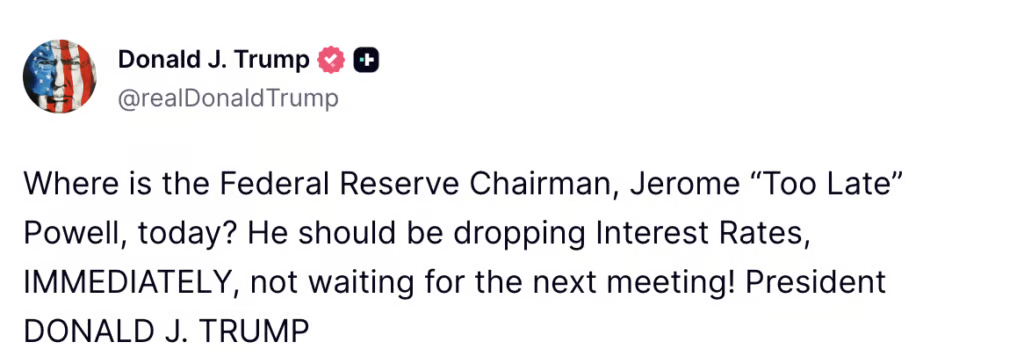
President Donald Trump, in a Truth Social post earlier this month, called on Federal Reserve chair Jerome Powell to announce rate cuts “immediately.”

“Where is the Federal Reserve Chairman, Jerome ‘Too Late’ Powell, today? He should be dropping Interest Rates, IMMEDIATELY, …

Full story available on Benzinga.com

This post was originally published here

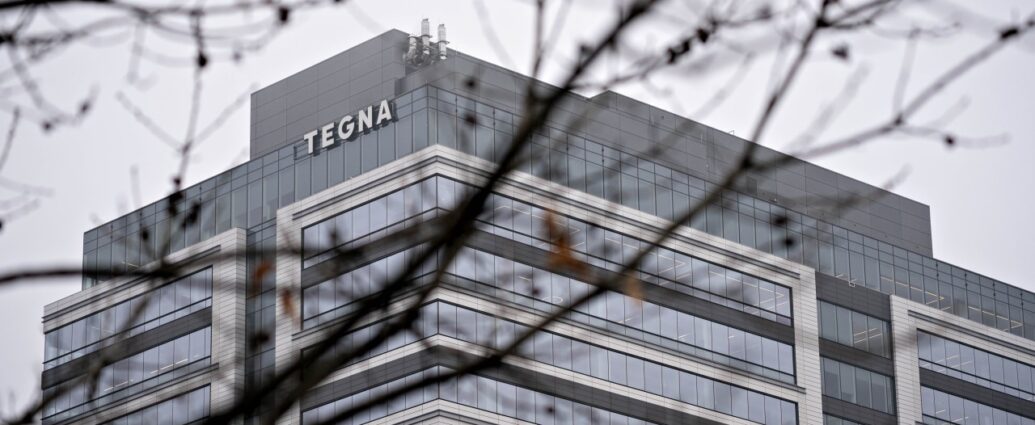
The Federal Communications Commission (FCC) on March 19 approved Nexstar’s $6.2 billion purchase of local broadcast station owner Tegna amid legal challenges from eight states opposing the deal.
FCC said the deal would enable “broadcast TV stations to counter the growing power that national programmers have amassed in recent years,” while allowing Nexstar to own less than 15 percent of TV stations.
“By approving this transaction, which allows Nexstar to own less than 15 percent of television stations, the FCC acts mindful of the media marketplace that [exists] today—not the one from decades past—and the agency ensures that these broadcasters have the resources to continue investing in their local news operations,” FCC Chairman Brendan Carr said in a statement….

Federal agents on Thursday arrested Yih-Shyan “Wally” Liaw, a prominent Silicon Valley executive deep in the AI ecosystem who cofounded Supermicro in 1993 and is a close confidante of CEO and chairman Charles Liang. The stock tumbled roughly 12% in after-hours trading following the news.

According to a stunning release from the Department of Justice, an indictment was unsealed in Manhattan federal court on Thursday charging Liaw, 71, and two others with allegedly working in secret to divert billions in Supermicro AI servers to China in violation of U.S. export control laws. The two alleged co-conspirators charged alongside Liaw include Supermicro’s Taiwan general manager Ruei-Tsang “Steven” Chang, who remains a fugitive, and a third-party fixer named Ting-Wei “Willy” Sun, who was also taken into custody on Thursday. 

The DOJ claims during 2024 and 2025, Liaw took a direct hand in the alleged conspiracy, working with Chang to allegedly find Chinese buyers who wanted the servers, which are packed with highly coveted Nvidia GPU chips, according to the indictment. The pipeline they allegedly constructed worked this way: Liaw and Chang would allegedly direct executives at an unnamed Southeast Asian company to place purchase orders with Supermicro as though they were destined for that company’s operations. The servers would then get assembled in the U.S., shipped to Supermicro’s facilities in Taiwan, and then delivered to the Southeast Asian company at a different location. From there, the Southeast Asian company, in tandem Liaw and Chang, would hand the servers off to a shipping and logistics company, which would allegedly get rid of the identifying packaging. They would allegedly put the servers in unmarked boxes before sending them to their true destination, which was China. 

To keep the clandestine scheme from raising red flags with Supermicro’s compliance team, the defendants and the Southeast Asian company executives would fake documents and send false communications meant to show that the Southeast Asian company was the legitimate end buyer. During the two-year period, that company purchased about $2.5 billion worth of Supermicro servers under the alleged arrangement. The operation eventually grew even more “brazen,” authorities claim. The DOJ alleges that during a three-week period from late April to mid-May 2025, about half a billion worth of servers assembled in the U.S. were shipped to China as part of the alleged conspiracy. 

To keep it under wraps, the defendants allegedly staged thousands of fake dummy servers—actual, physical replicas of Supermicro’s actual products, authorities claim—at the warehouse where the Southeast Asian company was supposed to be storing its purchases. In reality, the real servers were long gone and had allegedly been shipped to China already. 

The DOJ claims surveillance cameras filmed Sun and an unnamed co-conspirator unboxing the fake servers, using a hair dryer to remove and reapply serial-number stickers and labels onto the dummy server boxes, then carefully repackaging them to pass inspection. The same phony servers were later used again to fool an audit conducted by the U.S. Department of Commerce, the DOJ alleges. Throughout the scheme, the defendants allegedly used encrypted messaging apps to discuss server quantities, delivery locations in China, and ways of keeping the operation hidden from Supermicro’s compliance team and U.S. authorities.

The DOJ says the Nvidia chips in the Supermicro servers were the target for the buyers. Liang has often touted his close business ties to Nvidia and its CEO Jensen Huang. 

An Nvidia spokesperson said compliance is a “top priority” for the $4 trillion chipmaker. 

“We continue to work closely with our customers and the government on compliance programs as export regulations have expanded. Unlawful diversion of controlled U.S. computers to China is a losing proposition across the board—Nvidia does not provide any service or support for such systems, and the enforcement mechanisms are rigorous and effective.”

In a statement, Supermicro said it is not a defendant in the indictment and that Liaw, who serves as a board member and as senior vice president of business development, has been placed on administrative leave. Chang has also been placed on leave, and Sun, who is at large, was fired from his contracting role. Supermicro said it is cooperating with the government investigation. 

“The conduct by these individuals alleged in the indictment is a contravention of the Company’s policies and compliance controls, including efforts to circumvent applicable export control laws and regulations,” the statement says. “Supermicro maintains a robust compliance program and is committed to full adherence to all applicable U.S. export and re-export control laws and regulations.”

Authorities claim the scheme was all engineered to make money from Chinese buyers and thwart the export controls.

“The indictment unsealed today details alleged efforts to evade U.S. export laws through false documents, staged dummy servers to mislead inspectors, and convoluted transshipment schemes, in order to obfuscate the true destination of restricted AI technology—China,” said John A. Eisenberg, Assistant Attorney General for National Security. 

The stream of compliance and governance issues leading up to Liaw’s stunning arrest all point to mounting problems with controls at the hardware manufacturer. 

The Backstory

Trading in Supermicro’s stock was suspended in 2018, after the company fell out of compliance with Nasdaq listing standards while the Securities & Exchange Commission conducted an investigation into its accounting practices. That same year, Liaw resigned all his positions with the company following a related internal audit committee investigation. In 2020, the company was ordered to pay a $17.5 million penalty and its chief financial officer resigned.  Liaw returned to the fold in May 2021 as an adviser to Supermicro in “business development.” He returned to a full-time senior executive post in August 2022 and in December 2023, he rejoined the board. 

Supermicro again faced the heat in August 2024 when short-seller Hindenburg took a position in the stock and published a scathing report on the company, alleging that the accounting issues had returned. Supermicro denied Hindenburg’s allegations. 

However, around the same time, Supermicro’s auditor Ernst & Young sent a letter to the board’s audit committee flagging concerns about governance, transparency, and raising questions about whether the annual report could be filed on time. The board responded by appointing a special committee and bringing in Cooley LLP and forensic accounting firm Secretariat Advisors to investigate—again. 

Then in October 2024, in the middle of an audit, EY abruptly resigned and its language pulled no punches. EY said it could “no longer rely on management’s and the Audit Committee’s representations” and was “unwilling to be associated with the financial statements prepared by management.”

The resignation set off a chain reaction. Without an auditor, Supermicro couldn’t file its annual report for fiscal 2024 or its quarterly reports. Nasdaq gave the company a grace period until November, but it was at risk of a second trading suspension in six years. 

Days before the November deadline, Supermicro announced that it had hired BDO USA as its replacement auditor and submitted a compliance plan to Nasdaq that put it in better standing with the exchange. 

In December 2024, the special committee that investigated EY’s allegations—made up of a single board member—concluded there was no evidence of fraud or misconduct and said EY’s decision to resign was “not supported by facts.” Liang declared the company was out of the woods and CFO David Weigand called the investigation a “distraction.”

However, the committee’s report found lapses that it blamed on Weigand and recommended replacing him. Supermicro pledged to implement the committee’s recommendations “immediately.” That was 15 months ago. Weigand remains the CFO of Supermicro. 

“No one wants this job—this is like touching lightning,” Shawn Cole, president of executive search firm Cowen Partners, told Fortune last month, describing Supermicro’s prolonged CFO search. Thursday’s news is unlikely to aid in recruitment.

Meanwhile, Supermicro is a key infrastructure company in the massive $700 billion AI buildout. Its servers are packed with Nvidia GPUs and it claims its proprietary liquid-cooling technology keeps the chips running efficiently as workloads increase. Liang helped Elon Musk build his Colossus AI cluster in just 122 days. Its most recent earnings call, the CEO flagged $13 billion in orders for an Nvidia Blackwell product line. 

Indeed, the export controls that Liaw, Chang, and Sun are accused of violating exist specifically because the Biden and Trump Administrations have been determined to keep advanced AI accelerators as a strategic national security asset that can’t be sold to Beijing. The export controls, imposed by the Department of Commerce’s Bureau of Industry and Security on advanced computing chips and on computers and devices that contain the chips, have been in place since October 2022. 

Each of the three face up to 20 years in prison on the most serious charge, conspiracy to violate the Export Controls Reform Act, and additional counts of conspiracy to smuggle goods and defraud the U.S. 

“As alleged in the indictment, the defendants participated in a systematic scheme to divert massive quantities of servers housing U.S. artificial intelligence technology to customers in China,” said U.S. Attorney Jay Clayton for the Southern District of New York. “They did so through a tangled web of lies, obfuscation, and concealment—all to drive sales and generate revenues in violation of U.S. law. Diversion schemes like those disrupted today generate billions of dollars in ill-gotten gains and pose a direct threat to U.S. national security.”

Liaw has been a close confidante of Liang and his wife, Sara Liu, who all cofounded the company together, for years. While other companies are not named in the indictment, Supermicro has extensive overseas operations built around close family ties to the founding couple. The web of business relationships has long drawn scrutiny from investors, short sellers, and regulators. 

According to the company’s disclosures, two Taiwan-based companies, Ablecom Technology and Compuware Technology, collectively received about $983 million in payments from Supermicro over the past three fiscal years. Both share a home with Supermicro’s own Taiwan manufacturing facility in what is called “Supermicro AI Technology Park” in the Taoyuan area. 

Ablecom was founded in 1997, just four years after Supermicro, and is run by Jianfa “Steve” Liang, who is Charles Liang’s little brother. Steve Liang is Ablecom’s CEO and largest shareholder. Charles Liang and Sara Liu, who is also a board member and senior vice president at Supermicro, together own about 10.5% of Ablecom’s stock, according to Supermicro’s most recent 10-K. Compuware, founded in 2004 and described by Supermicro as an affiliate of Ablecom, is run by Jianda “Bill” Liang, another of Charles Liang’s younger brothers. Steve Liang is also a director and shareholder of Compuware. Ablecom holds a 15% stake in Compuware. 

Liaw, who holds a 2.6% stake in Supermicro, is one of the company’s largest individual shareholders outside of the Liang-Liu family, which controls about 13.4% of Supermicro’s stock. A sibling of Liaw’s owns about 11.7% of Ablecom’s stock and 8.7% of Compuware’s stock. 

Liaw could not be reached for comment.

This story was originally featured on Fortune.com

This post was originally published here


AXT Inc. (NASDAQ:AXTI) surged 1.26% to $58.82 in after-hours trading on Thursday.

The late-trading session jump follows a 19.13% gain in the regular session, with the stock closing at $58.09, according to Benzinga Pro data.

The moves came as AXT reported its fourth quarter and fiscal year 2025 financial results for the period ended December 31, 2025.

Q4 2025: Margins Improve Despite Revenue Dip

Fourth-quarter revenue for AXTI fell to $23.04 million from $28.0 million in the third quarter of 2025, constrained by fewer-than-expected export permits.

Generally accepted accounting principles gross margin improved year over year to 20.9% from 17.6% in the fourth quarter of 2024.

Net loss also narrowed to $0.08 per share versus $0.12 a year ago.

CEO Morris Young said, “We are pleased to report that we have received some permits to date …

Full story available on Benzinga.com

This post was originally published here


Elon Musk shared an AI-generated video of himself as “The Dogefather” with a Shiba Inu dog on Thursday.

‘Dogefather’ Is Here!

In the video, Musk parodies the iconic “Godfather” scene by petting a Shiba Inu while musing about his Doge’s wedding and private keys.

“You don’t even think to call me the Dogefather,” Musk’s AI version said, mimicking Al Pacino’s character saying in the movie, “You don’t even think to call me the Godfather.”

Musk’s Love For DOGE

Musk coined the term “Dogefather”

Full story available on Benzinga.com

This post was originally published here

Samoa and Tonga raise supply concerns with foreign partners as businesses and residents in Papua New Guinea grapple with higher fuel prices amid the Iran war

The leaders of some Pacific countries have appealed for help with oil supplies while others urge against “panic buying” as the import-reliant nations grapple with fears over possible fuel shortages and escalating costs caused by war in the Middle East.

Oil prices have surged to nearly $110 a barrel after strikes against energy infrastructure in Iran and the Gulf states.

Continue reading…

This post was originally published here

Flight 41 from Los Angeles encountered patch of rough air shortly before landing in Sydney, leaving four crew injured

Three flight attendants were taken to hospital from Sydney airport on Friday morning after their plane hit a bad patch of turbulence just before landing.

Delta flight 41 from Los Angeles encountered the turbulence during its descent into Sydney, with four crew members injured, a Delta spokesperson confirmed.

Continue reading…

This post was originally published here

This blog is now closed – our coverage of the Middle East crisis continues here

Turning to Australia now, a petrol tsar will manage “unprecedented” supply issues caused by the Middle East conflict as the finishing touches are put on measures to address dire shortages in many regional areas.

Prime minister Anthony Albanese convened a snap virtual meeting of the national cabinet on Thursday to discuss major price shocks and shortages driven by the US-Israel war on Iran.

My government will be announcing more measures to prepare the nation for supply chain challenges over coming days and weeks.

Our fuel supply is currently secure. However, I want us to be over-prepared.

Continue reading…

This post was originally published here


Leading cryptocurrencies traded flat, while stocks extended their gains on Thursday as Israel says it’s “holding off” future strikes against Iran’s critical energy sites.

Cryptocurrency 24-Hour Gains +/- Price (Recorded at 9:25 p.m. ET)
Bitcoin (CRYPTO: BTC) -0.84% $70,370.30
Ethereum (CRYPTO: ETH)
               
-1.80% $2,189.10
XRP (CRYPTO: XRP)                          -0.39% $1.45
Solana (CRYPTO: SOL)                          -0.65% $89.47
Dogecoin (CRYPTO: DOGE)              -0.78% $0.09423

Bitcoin Consolidates After Correction

After a steep drop yesterday, Bitcoin stabilized in the $70,000 range, with trading volume staying low. Ethereum also settled around the $2,100 zone after pulling back from $2,300.

Bitcoin’s dominance stood at just over 58%, while Ethereum accounted for 10.7% of cryptocurrency market total capitalization.

Shares of Strategy Inc. (NASDAQ:MSTR) and Bitmine Immersion Technologies Inc. (NYSE:BMNR) closed down 1.67% and 1.26%, respectively.

Over $400 million was liquidated from the cryptocurrency market over the past 24 hours, predominantly long positions, according to Coinglass data.

Open interest in Bitcoin futures fell 0.36% in the last 24 hours, roughly mirroring the drop in spot price.. Meanwhile, Binance’s derivatives traders, including retail and whale, remained bullish on the leading cryptocurrency.

“Extreme Fear” sentiment prevailed in the market, according to the Crypto Fear & Greed Index.

Top Gainers (24 Hours) 

Cryptocurrency (Market Cap>$100 M) Gains +/- Price (Recorded at 9:25 p.m. ET)
UnifAI Network (UAI)     +46.98%     $0.5999
Zano (ZANO)                   +19.77%     $8.67
Kite (KITE)            +13.72%     $0.2133

The global cryptocurrency market capitalization stood at $2.44 trillion, following a decline of 3.60% over the last …

Full story available on Benzinga.com

This post was originally published here

This live blog is now closed.

Answering a reporter’s question on Iran’s missile capabilities, considering the country has managed to strike numerous states in the Gulf, Gen Dan Caine, the chair of the joint chiefs of staff, said Tehran retains “some capability” to attack American assets.

“They came into this fight with a lot of weapons.,” he said, adding that the US continues to be “as aggressive and assertive” in striking Iran.

Continue reading…

This post was originally published here
Colombia-born Estefany Rodríguez, whose detention had alarmed press freedom advocates, freed on $10,000 bond

The Nashville journalist who was detained by Immigration and Customs Enforcement (ICE) earlier this month was released from a Louisiana detention center on Thursday after spending 15 days in custody.

Estefany Rodríguez, who covers immigration and other topics for the outlet Nashville Noticias, was detained in Nashville on 4 March and spent a week at a county jail in Alabama before being transferred to a detention facility in Louisiana. Her lawyers said Rodríguez was detained without warrant.

Continue reading…

This post was originally published here

As other Asian economies race to conserve energy, China has huge reserves of oil and gas as well as alternative energy sources like wind and solar

Xi Jinping has been preparing for a crisis like this for years. China must secure its energy supply “in its own hands”, its president was reported to have said during a visit to one of its vast oilfields in 2021.

The US-Israel war on Iran plunged the Middle East into a deep conflict, with the strait of Hormuz – one of the most important waterways in global trade – all but closed and key energy facilities across the region under attack.

Continue reading…

This post was originally published here

Wall Street experienced a significant technical shift as the S&P 500Nasdaq 100, and Dow Jones Industrial Average all dipped below their 200-day moving averages on Thursday morning. This rare simultaneous occurrence has sparked discussions among investors, reminiscent of past market selloffs. Despite the initial bearish signal, historical data suggests potential for recovery over time.

For the session, the Dow slipped 0.44% to 46,021.43, the S&P 500 edged down 0.27% to 6,606.49, and the Nasdaq fell 0.28% to 22,090.69.

These are the top stocks that gained the attention of retail traders and investors through the day.

Super Micro Computer, Inc. (NASDAQ:SMCI)

Super Micro Computer’s stock rose by 1.45%, closing at $30.79. The stock reached an intraday high of $31.52 and a low of $29.79, with a 52-week range between $62.36 and $27.60. In the after-hours trading the stock crashed nearly 12% to $27.14.

Super Micro Computer said three individuals linked to the company were charged in an export-control violation conspiracy, though the firm itself was not named as a defendant. It placed two employees on leave, cut ties with a contractor, and said it was cooperating with the investigation.

The United States Attorney’s Office for the Southern District of New York said that three individuals were charged with conspiring to illegally divert billions of dollars’ worth of U.S.-made AI servers to China in …

Full story available on Benzinga.com

This post was originally published here

Minns Labor government criticised over strategy as no new mines have been proposed for several years

The New South Wales government will continue to green-light coalmine expansions, effectively rejecting a warning from its climate agency that approving new developments would be inconsistent with the state’s legislated emissions targets.

Releasing a statement on the coal industry’s future, the Labor government said it would no longer consider proposals for “standalone greenfield coalmines” on undeveloped sites. But it would continue to allow expansions and time extensions at existing mines.

Continue reading…

This post was originally published here

Federal law says living presidents can’t appear on currency, but commission approves design for US’s 250th birthday

A federal arts commission on Thursday approved the final design for a 24-karat gold commemorative coin bearing Donald Trump’s image to help celebrate the US’s 250th birthday on 4 July.

The vote by the US Commission of Fine Arts, whose members are supporters of the Republican president and were appointed by him earlier this year, was without objection. It clears the way for the US Mint to begin production on the coin, whose size and denomination are still under discussion.

Continue reading…

This post was originally published here
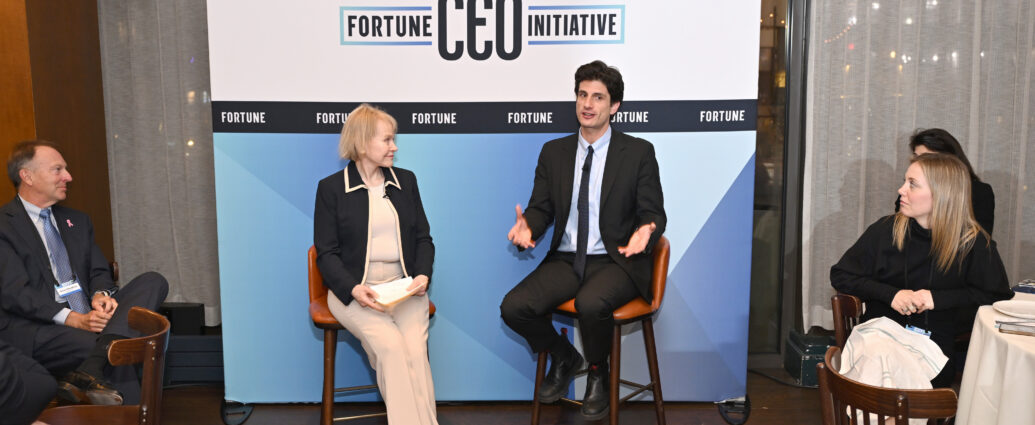
Nearly 90,000 bottles of children’s ibuprofen have been recalled over the potential presence of a foreign substance, according to the Food and Drug Administration.

Strides Pharma, Inc., headquartered in India, recalled about 89,592 bottles of its 100-milligram Children’s Ibuprofen Oral Suspension, the FDA said. The affected product was manufactured for Taro Pharmaceuticals USA and distributed across the U.S.

The ibuprofen was sold in 4-fluid-ounce bottles at 100 milligrams per 5 milliliters.

HERBAL SUPPLEMENT FOUND TO CONTAIN HIDDEN VIAGRA INGEDIENT, FDA URGES CONSUMERS TO STOP USE

The packages included the lot numbers 7261973A and 7261974A, with an expiration date of Jan. 31, 2027.

The recall was first issued earlier this month after complaints of a gel-like mass and black particles in the product.

GM RECALLS 17K VEHICLES OVER REAR TOE LINK FRACTURE THAT COULD LEAD TO CRASHES

But the FDA updated the classification this week to a Class II recall, which means “use of or exposure to a violative product may cause temporary or medically reversible adverse health consequences or where the probability of serious adverse health consequences is remote.”

The Class II classification is the FDA’s second-highest urgency level.

 CLICK HERE TO GET FOX BUSINESS ON THE GO

Consumers who purchased the recalled ibuprofen are urged to stop using it immediately.

Parents with concerns after their child has consumed the product should consult a healthcare provider.

This post was originally published here
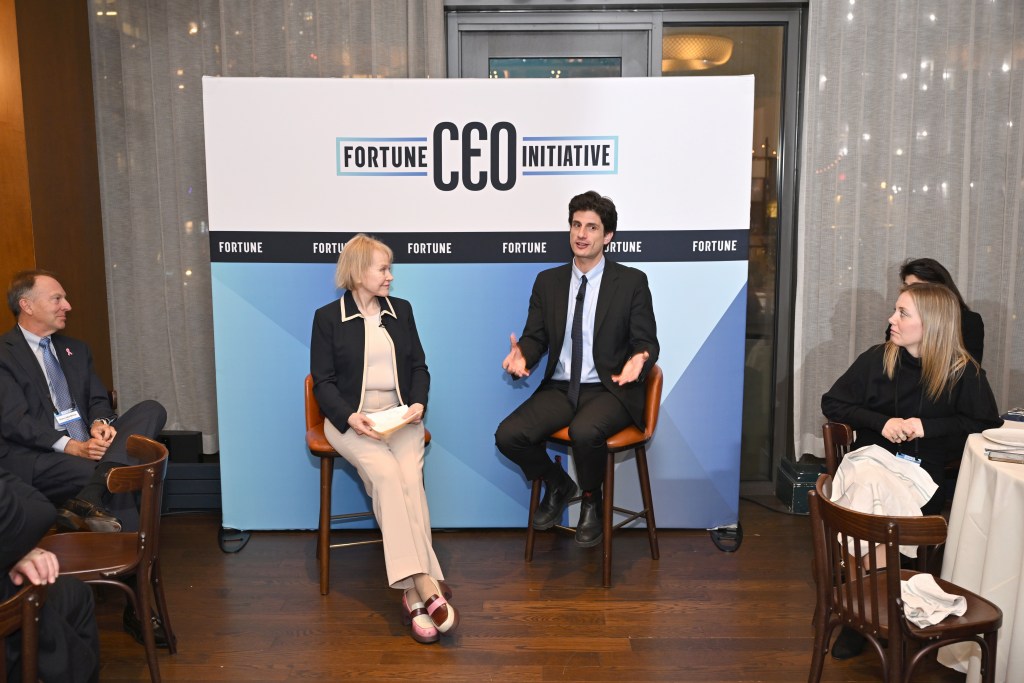
Scott Bessent says actions will increase oil supply and bring down prices, but long-term effects in question

The US may soon remove sanctions on Iranian oil stranded on tankers at sea, the treasury secretary, Scott Bessent, said on Thursday as Washington seeks to curb prices soaring over Iran’s closure of the strait of Hormuz.

“In the coming days, we may un-sanction the Iranian oil that’s on the water. It’s about 140m barrels,” Bessent said during an appearance on Fox Business Network’s Mornings with Maria.

Continue reading…

This post was originally published here

Mother and child held in notorious Rio Grande Valley detention centre despite presenting visa, family says

A Canadian mother and her seven-year-old daughter, who has autism, have been detained by US Immigration and Customs Enforcement (ICE) in Texas since Saturday, family members have said.

Relatives of Tania Warner and her daughter Ayla Lucas say they were detained unlawfully. They are uncertain about what problem ICE found with their immigration paperwork.

Continue reading…

This post was originally published here

London museum defies drop in numbers seen elsewhere, attributed to cost of living and fall in international tourists

London’s Natural History Museum (NHM) was the most popular attraction in the UK during 2025, with its renovated gardens, new climate gallery and lack of entry fee leading to record-breaking numbers of visitors.

More than 7.1 million people passed through its doors, a 13% increase in visitors year on year and an all-time record for any UK museum or gallery.

Continue reading…

This post was originally published here

Reform, Tory and some media rhetoric runs contrary to poll showing far more voters for net zero than against it

Political elites are out of step with the public appetite for net zero, according to analysis that identifies rightwing media narratives as fuelling a false backlash against climate action.

Media coverage of net zero is more than twice as likely to be negative than public attitudes and is driving a false perception that net zero policies are unpopular with voters, the analysis found.

Continue reading…

This post was originally published here
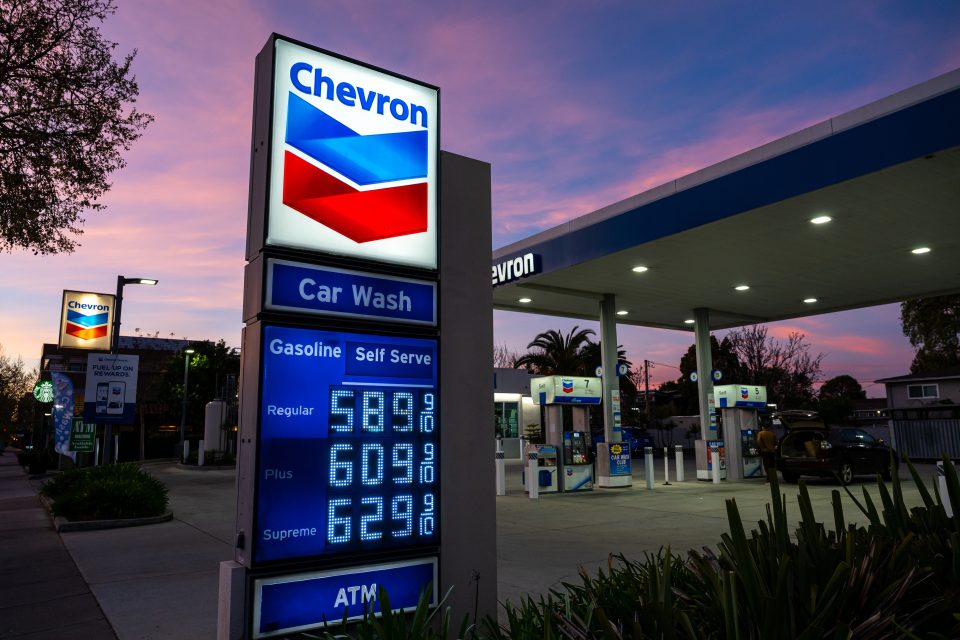
The price of popular branded eggs has risen by over 40% in some cases while some have also shrunk in size

Shoppers are shelling out for smaller eggs again this Easter as shrinkflation takes another bite out of the favourite seasonal treat.

The price of popular branded chocolate eggs has risen by more than 40% in some cases while some have also shrunk in size, according to research by the consumer champion Which?.

Continue reading…

This post was originally published here

A University of Pennsylvania Wharton professor published a paper that claims Zillow users don’t know who they’re being connected with when they select an agent, alleging that Zillow-affiliated agents drive users to Zillow’s home mortgages. 

Professor Jerry Wind’s study showed only 0.3% of users understood they would not be connected with the listing agent when selecting the tabs “Contact an agent” or “Request a tour.”

“This study provides empirical evidence that Zillow’s interface design systematically deceives consumers about a fundamental aspect of the homebuying process,” the conclusion of Wind’s paper states. 

TRUMP-BACKED AFFORDABLE HOUSING OVERHAUL CLEARS SENATE, WHILE HOUSE GOP RAISES RED FLAGS

“[Consumers] are not contacting the listing agent. They are being routed to agents who pay Zillow for access to their information, agents who are therefore financially incentivized to steer them toward Zillow’s mortgage products.”

FOX Business sat down with Wind to discuss his findings and what he believes are the biggest takeaways.

“My understanding is that the incentive is, one major incentive is that they get the name, and once they get their name and they succeed in selling the house, they have to pay Zillow up to 40% of their commission,” the professor told Fox News Digital. 

“So, that’s what Zillow gets out of this. The agent, obviously, gets a lead.

“And if the agent does not … recommend Zillow’s mortgage to the customers, Zillow, I understand, may basically stop giving them leads,” Wind continued. “So, there is a real carrot and stick here in terms of encouraging the agents to [encourage] their customers to use Zillow’s mortgage.”

Wind joined the Wharton faculty in 1967 and is the Lauder Professor Emeritus and a professor of marketing.

PAIGE TERRYBERRY: FOREIGNERS ARE SNAPPING UP US HOMES AND STEALING THE AMERICAN DREAM OUT FROM UNDER FAMILIES

“According to recent class action lawsuits filed in federal court, these agents may be required to meet quotas for referring buyers to Zillow Home Loans in order to maintain access to leads,” Wind’s study says. “Agents who fail to meet these quotas risk losing their primary source of business.”

Zillow was quick to deny the professor’s claims that such quotas exist in a statement to FOX Business, discrediting the study and the allegations that it forces Zillow-affiliated buyers to recommend Zillow Home Loans (ZHL).

“This significantly flawed paper does a lot of gymnastics trying to turn Zillow’s pro-consumer feature into a buy,” a Zillow spokesperson told FOX Business. “When a buyer requests a tour or clicks ‘contact agent,’ Zillow connects them with a local buyer’s agent, someone whose job it is to represent the buyer’s interests and drive the best outcomes for them. A listing agent represents the seller.”

EXPERT SAYS REAL ESTATE STILL THE SMARTEST INVESTMENT PLAY

Reports and U.S. national data estimate that total home sales in 2025 were approximately 4.74 million units when combining existing and new home sales. 

Zillow’s 2025 Consumer Housing Trends Report showed that roughly 68% of homebuyers use Zillow during their search to purchase a home.

Wind alleged that Zillow’s popularity has created an antitrust issue, with the platform attempting to create a closed loop between searching, purchasing and selecting a mortgage provider for payment.

Wind told FOX Business “the situation really requires some type of legal intervention here” or “some regulatory involvement.”

Zillow said the claims of a closed loop are false and that it does not steer customers to ZHL. 

“Claims that buyers are steered to Zillow Home Loans or any specific mortgage provider are false,” the Zillow spokesperson explained. “We offer choice, not requirements, and buyers are free to work with any lender. Agents are encouraged to help clients evaluate all available financing options.

“We remain confident that our platform delivers transparency, competition and meaningful choice to millions of buyers and sellers.”

As for what Wind hopes to see come out of his study, he told FOX Business he believes consumer awareness and education is important for those looking to make their next home purchase. 

“I think the important aspect here is for consumers to try to be more aware and make sure to look for alternative mortgages, not just buy the first one,” Wind explained. 

“So, consumer education is really key here. Second, I would hope that Zillow will change their incentive systems and business model, basically, and realize they have an amazing platform.”

This post was originally published here
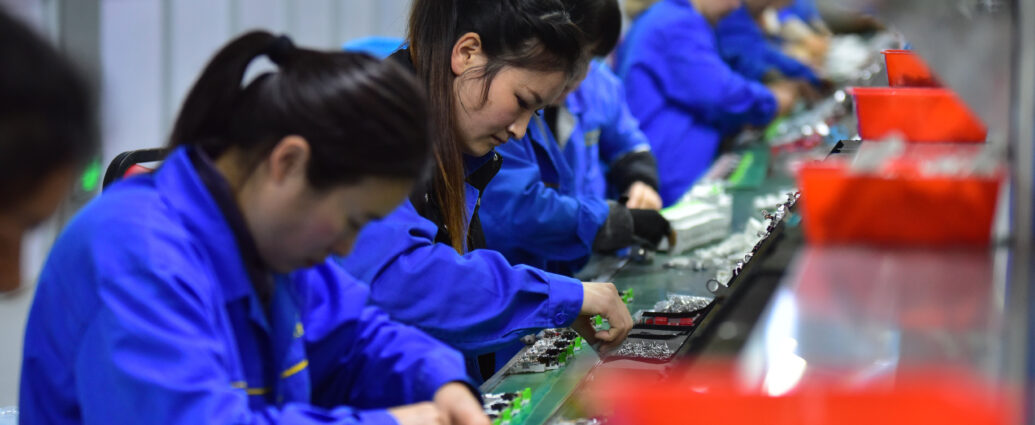
Some highs in California, Nevada and Arizona recorded at 25-35F above normal, with widespread alerts and closures

States across the US south-west recorded blistering temperatures at the tail end of winter, including some of the hottest March temperatures ever recorded in the US, with forecasts indicating hotter days are still to come.

California, Nevada and Arizona were all under heat warnings on Thursday amid record-breaking temperatures.

Continue reading…

This post was originally published here

If prosecuted, case against 31-year-old would be one of first in Georgia since it passed 2019 law banning most abortions

A 31-year-old Georgia woman has been charged with murder by police who say she took pills to induce an illegal abortion.

If state prosecutors decide to move forward with the murder charge brought by local police against Alexia Moore, her case would be one of the first instances of a woman being charged for terminating a pregnancy in Georgia since it passed a 2019 law banning most abortions.

Continue reading…

This post was originally published here

Akrotiri and Dhekelia bases have become targets for Iran after outbreak of Middle East crisis

EU leaders have pledged to stand behind Cyprus as it seeks “an open and frank discussion” on the future of the British bases on the island, which have become a target after the outbreak of the latest Middle East crisis.


Ahead of an EU summit on Thursday, Cyprus’s president, Nikos Christodoulides, said he wanted “an open and frank discussion with the British government” regarding the status and future of the British bases on the island.

Continue reading…

This post was originally published here