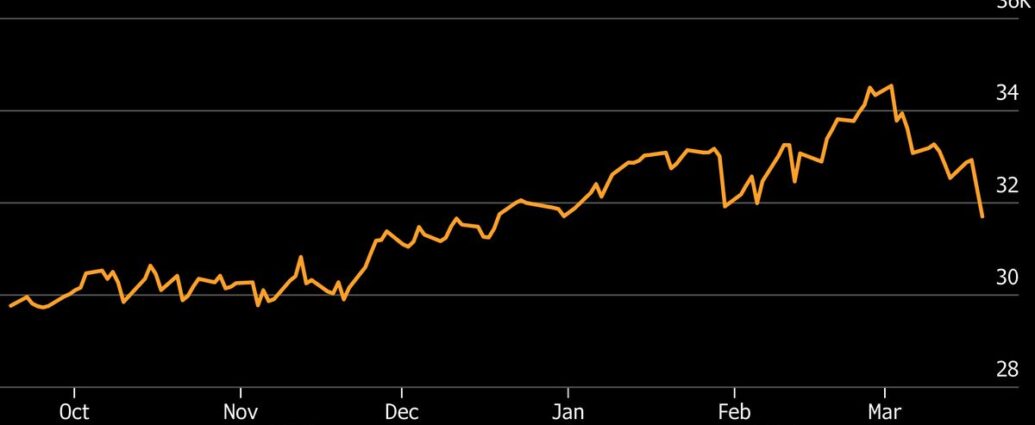












Bitcoin Got Its Biggest Regulatory Win In A Decade—And Dropped To $70,000 Anyway
“We’re not the securities and everything commission anymore,” SEC Chair Paul Atkins told a crypto conference on Tuesday, minutes after his agency and the CFTC jointly classified Bitcoin (CRYPTO: BTC) and 15 other tokens as digital commodities, not securities.
The crowd cheered. Bitcoin was trading near $75,400.
The classification resolved one of the biggest legal question hanging over crypto.
Bitcoin, Ethereum (CRYPTO: ETH), Solana (CRYPTO: SOL), XRP (CRYPTO: XRP), and 12 others now fall under lighter CFTC commodity oversight instead of the SEC’s enforcement-heavy securities regime.
That distinction unblocks ETF approvals, clears exchanges to list without legal risk, and opens the door for institutional allocators who were sitting on the sidelines.
By Thursday morning it was at $69,370. Strategy (NASDAQ:MSTR), …
This post was originally published here

Uber, Rivian ink $1.25B deal to put thousands of robotaxis on US streets
Rivian and Uber on Thursday announced a partnership worth up to $1.25 billion to accelerate the two companies’ plans for autonomous vehicles and deploy up to 50,000 fully autonomous robotaxis in the years ahead.
Under the agreement, Uber will invest up to $1.25 billion in Rivian through 2031, subject to achieving autonomous performance milestones by specific dates.
The two companies have agreed to an initial $300 million investment following the signing of the deal, subject to regulatory approval.
Uber plans to purchase, either directly or through its fleet partners, 10,000 fully autonomous Rivian R2 robotaxis and the ride-hailing service firm will have the option to purchase up to 40,000 more in 2030. Rivian’s autonomous fleet of R2 robotaxis will be available exclusively through the Uber platform.
The companies are planning to begin the initial deployment of the robotaxis in San Francisco and Miami in 2028, before expanding to more than two dozen cities by 2031.
If all autonomous performance milestones are met, Rivian and Uber will have deployed thousands of unsupervised robotaxis across 25 cities in the U.S., Canada and Europe by the end of 2031.
AUTOMAKER GEARS UP FOR SELF-DRIVING FUTURE WITH NEW CHIP
“We couldn’t be more excited about this partnership with Uber – it will help accelerate our path to level 4 autonomy to create one of the safest and most convenient autonomous platforms in the world,” said Rivian founder and CEO RJ Scaringe.
Scaringe added that Rivian’s “growing data flywheel coupled with RAP1, our state of the art in-house inference platform, and our multi-modal perception platform make us incredibly excited for the rapid advancement of Rivian autonomy over the next couple of years.”
RIVIAN CEO DISCUSSES TARIFFS, SAYS EV MAKER HAS ‘VERY US-CENTRIC SUPPLY CHAIN’
Uber CEO Dara Khosrowshahi said that the company is “big believers in Rivian’s approach – designing the vehicle, compute platform, and software stacks together while maintaining end-to-end control of scaled manufacturing and supply in the U.S.”
“That vertical integration, combined with data from their growing consumer vehicle base and experience managing the complexities of commercial fleets, gives us conviction to set these ambitious but achievable targets,” Khosrowshahi added.
GET FOX BUSINESS ON THE GO BY CLICKING HERE
Rivian shares rose 3.8% on Thursday, while Uber stock declined by 1.72% during the day’s trading session.








Dakota Gold (DC) Shares Cross Below 200 DMA
In trading on Thursday, shares of Dakota Gold Corp (Symbol: DC) crossed below their 200 day moving average of $4.86, changing hands as low as $4.52 per share. Dakota Gold Corp shares are currently trading down about 4.5% on the day. The chart below shows the one year performan
This post was originally published here
Stocks making the biggest moves after the bell: FedEx, Firefly Aerospace, Planet Labs & more
These are the stocks posting the largest moves after the bell.
This post was originally published here

Unusual Machines Stock Slips After The Bell: Here’s Why
Unusual Machines Inc (AMEX:UMAC) shares are moving lower in extended trading Thursday after the company announced a proposed public offering.
- Unusual Machines stock is trading in a tight range. What’s next for UMAC stock?
Unusual Machines Announces Offering Of Common Stock
Drone parts manufacturer Unusual Machines said it commenced a public offering of common stock. The size and terms of the offering were not disclosed.
The company said it plans to use the net proceeds from the offering to expand its U.S. drone parts inventory, as well as …

Opinion | Will Trump Finish the Job in Iran?
Iran war-induced fertilizer shortage threatens Republicans in farm states ahead of midterms
Democrats are vying for competitive seats across farm country in 2026, and fertilizer shortages spurred by the Iran war give them a new affordability angle.
This post was originally published here

Federal student loans will move to Treasury, further shrinking Education Department
The Trump administration announced a three-phase transition that will eventually include management of most federal student loans as well as the Free Application for Federal Student Aid (FAFSA).
(Image credit: Alex Brandon)

This post was originally published here




Gen Z’s straight‑A boom is quietly shrinking their paychecks
Straight‑A report cards have never been more common for America’s teens—but the payoff is not what parents think. A new National Bureau of Economic Research study finds that when teachers hand out “easy A” grades, their students are more likely to skip class, score worse on future tests, and earn less money years later. For a typical high school class, the researchers estimate grade inflation can shave about $213,000 off the group’s future earnings, or roughly $150 a year for each letter grade quietly nudged up.
The findings arrive as President Donald Trump pushes a crackdown on grade inflation on college campuses, tying federal funding to whether universities hold the line on grading. Gen Z is already the first generation to score lower than their parents on some measures of cognitive performance, as reading habits erode and schools lean harder on grades instead of learning.
The study, entitled “Easy A’s, Less Pay: The Long-Term Effects of Grade Inflation,” found that for each individual student, this dynamic chalks up to a decrease in yearly earnings of about $150 for every grade bumped up to a B+ from a B, for example.
“Average grade inflation hurts,” Nolan Pope, one of the study’s researchers and a labor economist at University of Maryland, told Fortune. “They are less likely to learn if it’s very easy to get an A. They spend less time and effort.”
The debate around grade inflation has stretched from the classroom to the Oval Office. President Donald Trump weighed in on the issue last November, establishing a higher-ed compact linking federal funding for universities to strict parameters his administration set, barring grade inflation (or deflation). The practice could be harming young people. Gen Z is the first generation less cognitively capable than their parents. Many young people are ditching books at record levels and some are even failing to complete reading assignments on par with previous expectations. From high school to college, grade inflation has offered educational institutions increasingly dubious value propositions.
The researchers analyzed administrative high school records from Los Angeles and Maryland and linked them to long-term postsecondary and earnings data. They measured grade inflation by comparing student grades to their actual performance on standardized tests.
The hidden costs: absences, suspensions, and dropping out
Whether it be with grades or money, inflation degrades value. Wealth managers are grappling with a strange problem in 21st century America: the rise of many “everyday millionaires” who are illiquid, with much of their wealth tied up in housing, often struggling to afford the things they feel entitled to by their paper worth. The straight-A students, in other words, likely have parents with straight-A portfolios, but both end up with B- or even C-level experiences in this inflated economy.
“The economy wasn’t built to handle this many people with this much money,” Nick Maggiulli, New York Times bestselling author of The Wealth Ladder, told Fortune in an interview last year. “On a relative basis in the United States, the competition for these higher-end goods is very high, so now it feels like we’re all canceling each other out with all this extra wealth,” he added. So too, in the classroom, when high scores are liberally handed out, the A loses its sought-after value.
The NBER study found that it’s not just future earnings being degraded. Grade inflation could actually have the inverse effect of their implied outcome. Students that are assigned a teacher that inflates grades are more likely to score poorly on future tests. They’re less likely to graduate high school, and even less likely to enroll in college. Most of these impacts, of course, usually happen well after the student has handed in their final exam, and that makes it harder to catch.
Teachers generously tossing out easy As also made it easier for students to skate by. The research found that higher grade inflation is linked to increased absences and suspensions, suggesting that when the academic bar is lowered, student engagement and school discipline may fall with it.
“It ends up actually being somewhat harmful for the student,” Pope said. “Nobody really is on the side of that harm because nobody sees it until much later.”
However, the study found grade inflation benefitted some students, specifically those at threat of flunking out. When teachers raised scores for students at threat of failing—from an F to a D, for example—that actually paid off, preventing those students from repeating a grade and improving their high school graduation rate.
Whatever the outcome, grade inflation has gained steam over the past decade. And despite the president’s efforts, the trend doesn’t seem to be stopping anytime soon. Pope said grade inflation remains so pervasive because all parties benefit from it, offering a perverse incentive that perpetuates the seemingly benign practice semester after semester.
“As a teacher it’s usually easier,” he said. “You get less complaints. Parents are happy. Students are happier if you give slightly higher grades. A school typically looks better if their grades are higher. It benefits everyone.”
This story was originally featured on Fortune.com
This post was originally published here

Cursor Launches Composer 2 To Rival OpenAI, Anthropic
Cursor is launching a new AI model for software development that will reportedly rival OpenAI and Anthropic PBC.
Composer 2, a third-gen coding model, is anticipated to exceed Anthropic’s Opus 4.6 on several major coding benchmarks, Bloomberg reports. The coding model is designed as an AI agent that can autonomously handle complex, time-consuming coding tasks for users.
Sualeh Asif, Aman Sanger, Arvid Lunnemark, and Michael Truell founded Anysphere in 2022. Cursor introduced its AI assistant in 2023, designed to streamline coding and debugging for developers, making their workflow faster and more precise.
Anysphere saw extremely fast growth, reaching $100 million in …
This post was originally published here








India’s central bank battles to protect rupee from Iran war fallout
This post was originally published here





Roundhill Announces Strategy, Name, & Ticker Changes for WPAY
Roundhill WeeklyPay™ Universe ETF (WPAY) to be renamed Roundhill Top WeeklyPay™ ETF (TOPW)
NEW YORK, March 19, 2026 /PRNewswire/ — Roundhill Investments, an ETF sponsor focused on innovative financial products, has announced several significant changes to the Roundhill WeeklyPay™ Universe ETF (WPAY).
The Fund will be renamed to the Roundhill Top WeeklyPay™ ETF (TOPW) to reflect upcoming strategy changes. Specifically, revised inclusion criteria will target WeeklyPay™ ETFs for which the underlying sits among the 25 largest single stocks by market capitalization in the U.S. WeeklyPay™ ETFs that fall outside of that criteria will no longer be included in the Fund.
In addition, the Fund will now rebalance using a modified market-cap weighting approach and its rebalance schedule will shift from monthly to quarterly.
The changes are set forth below and are anticipated to go into effect following the market close on March 20, 2025.
|
Current Fund Name |
Current Fund Ticker |
New Fund Name |
New Fund Ticker |
|
Roundhill WeeklyPay Universe |
WPAY |
Roundhill Top WeeklyPay ETF |
TOPW |
Holdings and weights will be made available …
This post was originally published here


Origin Materials Stock Slides On 1-For-30 Reverse Stock Split
Origin Materials Inc (NASDAQ:ORGN) shares are trading lower in Thursday’s after-hours session after the company announced a reverse stock split.
- Origin Materials stock is testing lower boundaries. Why did ORGN hit a new low?
Origin Materials Announces 1-For-30 Reverse Split
After the market close on Thursday, Origin Materials announced it filed to effect a one-for-30 reverse stock split. The plan was approved by shareholders at the company’s special meeting on Feb. 17, and subsequently …

Bitcoin Struggles At $70,000 As Ethereum, XRP, Dogecoin Reverse Gains
Bitcoin tapped $70,000 on Thursday as cryptocurrencies reversed most of their gains from earlier in the week.
| Cryptocurrency | Ticker | Price |
| Bitcoin | (CRYPTO: BTC) | $70,475.44 |
| Ethereum | (CRYPTO: ETH) | $2,146.93 |
| Solana | (CRYPTO: SOL) | $88.86 |
| XRP | (CRYPTO: XRP) | $1.44 |
| Dogecoin | (CRYPTO: DOGE) | $0.09350 |
| Shiba Inu | (CRYPTO: SHIB) | $0.055729 |
Notable Statistics:
- Coinglass data shows 124,449 traders were liquidated in the past 24 hours for $437.34 million.
- SoSoValue data shows net outflows of $163.5 million from spot Bitcoin ETFs on Wednesday. Spot Ethereum ETFs saw net outflows of $55.7 million.
- In the past 24 hours, top losers include …
OR Royalties Breaks Below 200-Day Moving Average – Notable for OR
In trading on Thursday, shares of OR Royalties Inc (Symbol: OR) crossed below their 200 day moving average of $34.76, changing hands as low as $33.53 per share. OR Royalties Inc shares are currently trading off about 6.3% on the day. The chart below shows the one year performa
This post was originally published here

PIMCO Says No Thanks: Private Credit’s Loan Books Are Getting Uglier
Pacific Investment Management Co. (PIMCO) is taking a cautious stance on private credit, with President Christian Stracke indicating the investment firm is avoiding much of the loan supply currently coming to market.
The process of working through weaker assets in the sector is likely to extend over several years, particularly as investors continue to withdraw capital, Stracke told Bloomberg in an interview. The $1.8 trillion private credit market is facing a critical liquidity test as redemption limits and bankruptcies are cracking investors’ confidence.
A considerable about of loans available in the private-credit market currently are “pretty bad” and are not priced at levels that are attractive for the firm, he added.
JPMorgan, BlackRock
As a result, JPMorgan Chase & Co. (NYSE:
This post was originally published here









US Antimony Stock Climbs After Q4 Revenue Smashes Estimates
United States Antimony Corp. (NYSE:UAMY) shares drove higher in Thursday’s extended trading after the company released its fourth-quarter earnings report, beating analyst revenue estimates.
- UAMY stock is moving. Watch the price action here.
The Details: U.S. Antimony reported quarterly losses of four cents per share, which missed the consensus estimate for earnings of two cents.
Quarterly revenue clocked in at $39.26 million, smashing the analyst consensus estimate of $11.9 million by 229.9%, according to Benzinga Pro data.
U.S.Antimony revenue increased 219% to $35.4 million in 2025 compared to $11.1 million in the prior year. The increase was primarily …

The $10,000 car loan tax deduction: Here’s who qualifies and how to claim it
A new tax break is available this filing season for taxpayers who have car loans on vehicles that meet certain specifications.
The One Big Beautiful Bill Act (OBBBA), which was passed through Congress by Republicans using the reconciliation process and signed into law last year by President Donald Trump, included a provision allowing interest on car loans to be deducted under certain circumstances.
The IRS released guidance on the implementation of the “No Tax on Car Loan Interest” provision of the OBBBA, which applies to loans taken out to purchase new personal vehicles — not business or commercial vehicles — that were made in America after Dec. 31, 2024. Lease payments do not qualify.
Taxpayers whose auto loans qualify for the interest deduction may deduct up to $10,000 per year, and the deduction is available for both taxpayers who itemize their deductions and those who claim the standard deduction on their return.
TREASURY IMPLEMENTING TRUMP’S CAR LOAN INTEREST TAX BREAK: ‘PUTTING MONEY BACK IN THE POCKETS’
The deduction is subject to income requirements and phases out for higher-income taxpayers who have a modified adjusted gross income of over $100,000 for single filers or $200,000 for joint filers.
Like other tax deductions, the auto loan interest deduction reduces the taxpayer’s taxable income by the amount of interest payments they claimed up to the $10,000 annual limit, which means the actual tax savings will be smaller than the nominal size of the tax deduction.
TRUMP TOUTS POTENTIAL 20% TAX REFUNDS FROM ‘BIG BEAUTIFUL BILL’
Under the OBBBA, the auto loan interest deduction is only applicable to vehicles that underwent final assembly in the U.S.
To confirm that a vehicle’s final assembly was in the U.S., taxpayers are instructed to check one of the following: the vehicle label at the dealership, the vehicle identification number (VIN) or the National Highway Traffic Safety Administration’s VIN Decoder, which can verify the vehicle’s final assembly location.
Taxpayers must include the vehicle’s VIN on their tax returns for each year they claim the deduction.
CAR DEALERS WARNED BY FTC ABOUT DECEPTIVE PRICING PRACTICES, HIDDEN FEES
If a qualifying auto loan is later refinanced, the interest paid on the refinanced loan would generally be eligible for the deduction.
The deduction applies retroactively to the 2025 tax year, meaning it may be used for eligible auto loan interest payments incurred after Dec. 31, 2024.
The OBBBA included a number of temporary tax provisions that will sunset after several years to help the bill comply with Congress’ reconciliation rules.
GET FOX BUSINESS ON THE GO BY CLICKING HERE
The auto loan interest deduction was one of those temporary provisions, and it’s scheduled to remain in effect through the end of 2028, when it will sunset unless Congress acts to extend the policy.
This post was originally published here



Baked by Melissa’s founder was fired at 24. Two decades later, she’s ‘so freaking thrilled’ to step down as CEO
In a world of protein-maxxing and fiber-counting, it’s hard to remember a time when a baked good itself could be a fad.
But a decade ago, people underwent a frenzy for cupcakes. Adults would line up around the block for cupcakes that came out of vending machines; a company selling jumbo cupcakes with custard filling IPO’d at $13 a share, and people raced to buy a sheet of miniature tie-dye cupcakes for $45. The frenzy was so massive, the cupcake boom moved 669 million units in a single year, but like an overdone cupcake in the oven, it deflated just as quickly as it went up. Crumbs went from a Nasdaq darling to bankrupt in three years. Sprinkles, the brand that invented the cupcake ATM, shut its doors for good just weeks ago. Nearly every gourmet cupcake company from that era has dramatically flared out and died—except one.
Melissa Ben-Ishay founded Baked by Melissa in 2008 after getting fired from her job as an assistant media planner at 24. Eighteen years and more than 500 million bite-sized cupcakes later, she’s stepping down as CEO—and for the first time, she says the company is open to a sale.
Ben-Ishay will transition to president—a title she held before the board installed her as CEO in late 2019—while Sanjay Khetan, the company’s current CFO, takes over as chief executive. In an exclusive Fortune interview with both Khetan and Ben-Ishay, Ben-Ishay said she’d planned to bring Khetan on with the intention of finding someone who could replace her. On her first day of being the President and not the CEO of her company, Ben-Ishay described the move candidly: “I am so freaking thrilled that I am no longer needed in that seat,” she said, “so I can focus on the areas of the business that I can uniquely drive.”
The openness to a sale marks a reversal for Ben-Ishay. In a 2025 interview with the Food Institute, Ben-Ishay said that maintaining quality standards was one of the reasons she’d “avoided acquisitions.” When Fortune read the quote back to her, she said she didn’t remember making it, then acknowledged the shift in her perspective. “It’s something we’re definitely interested in exploring and working towards,” she said. She noted that the company fields acquisition offers regularly. “Every day we get offers in my inbox,” she said.
Asked what Baked by Melissa figured out while other brands from that era burned out, Ben-Ishay credited its bite-sized format—mess-free, with no knife or fork required—and a “best in class” shipping experience. That, and a refusal to scale recklessly. “We didn’t try and grow too quickly,” she said. The company now has 14 retail locations, nationwide shipping, and claims continued year-over-year top-line growth. Where Crumbs chased a Nasdaq listing and Sprinkles sold to private equity, Baked by Melissa stayed private, taking in just $6 million in outside funding in its 18-year tenure and kept a light footprint.
Going viral for the opposite of cupcakes
Ben-Ishay had been CEO for barely three months when COVID shuttered stores across New York. “I was scared out of my mind,” she said, unsure of how to scale the business. Ben-Ishay has been open about the imposter syndrome that defined her early years—she has previously told Fortune she didn’t think she deserved the CEO title. Asked whether she ever felt the company had outgrown her, she was unequivocal. “Never,” she said.
In her first year of being a CEO and during a pandemic, she said the company grew e-commerce revenue roughly 99% year over year. It was also during the pandemic that Ben-Ishay accidentally built what she now calls “a business within my business”—going viral on TikTok not for cupcakes but for her Green Goddess salad recipe, which racked up over 27 million views. Her social following has spawned a brand partnerships division, two cookbooks (including a New York Times bestseller), and collaborations with Oatly, Squishmallows, and Ferrero.
Ben-Ishay’s TikToks are chaotic—food bits flying, kids yelling, smoke detector beeping—with the overachieving-burnt-out-mom energy that millennials have made aspirational. It clearly speaks to a strong contingent: Baked by Melissa has nearly 3 million followers on TikTok alone. On the call with Fortune, the vibe wasn’t all that different; Ben-Ishay took part of the interview from the passenger seat of a car, at one point pausing to hug and chat with someone while Khetan answered questions.
“I am a mom with young kids. I am a creator. I am a cookbook author—New York Times bestselling cookbook author—and an executive co-founder of Baked by Melissa,” she said. “Today, president and co-founder. Yesterday, CEO and co-founder,” which, she said, make up “many, many hats, and I have my priorities straight. I think this transition is not only best for Baked by Melissa, but best for me so I can breathe, like, a tiny bit.”
The question of what happens to the brand’s social media presence—arguably its most valuable marketing asset, built almost entirely on Ben-Ishay’s personal content—seems central to the transition. But she said she expects the shift to give her more time to create, not less. She has resisted the label “influencer” even as her following has grown. “I’m not an influencer by trade,” she said. “I have this greater responsibility, not only to Baked by Melissa, but also to my customer.”
The company’s founding story has always been a family affair. Ben-Ishay’s brother Brian Bushell co-founded the business and served as its first CEO until 2016. He remains a shareholder and is involved in high-level strategic conversations, according to Ben-Ishay. She declined to comment on a books-and-records inspection lawsuit that Bushell appears to have filed against the company. (Bushell has not responded to a request for comment). Her husband, Adi Ben-Ishay, also works at Baked by Melissa and will continue to report to Khetan.
Khetan said the partnership works because the division of labor is clean: Ben-Ishay leads brand and creative, he handles operations and finance. “The potential to create more value over the next couple of years is extraordinary,” he said.
Ben-Ishay offered a final thought. “Baked by Melissa—we make bite-sized stuffed cupcakes in a variety of flavors that make you feel like a kid again, and we ship nationwide,” she said. “And hop to it, because Easter is on its way.” Eighteen years in, and she’s still closing.
This story was originally featured on Fortune.com
This post was originally published here



Firefly Stock Jumps On Better-Than-Expected Q4 Results
Firefly Aerospace Inc (NASDAQ:FLY) reported financial results for the fourth quarter after the market close on Thursday. Here’s a look at the key details from the print.
- Firefly Aerospace stock is trading near recent lows. What’s next for FLY stock?
Firefly Q4 Earnings Highlights
Firefly reported revenue of $57.67 million for the fourth quarter, beating estimates of $52.36 million, according to Benzinga Pro. The company noted that full-year 2025 revenue totaled $159.9 million, up 163% on a year-over-year basis.
Firefly reported a fourth-quarter adjusted loss of 38 cents per …


FedEx beats on top and bottom lines, raises guidance on strong performance
FedEx posted strong fiscal third quarter results on Thursday and raised its guidance following a strong performance.
This post was originally published here
Apple bears are proven wrong yet again as iPhone defies the China slump narrative
Memory shortages. Way behind on AI. Tariff troubles. None of that seems to matter to Apple.
This post was originally published here
Planet Labs Stock Drives Higher After Q4 Beats Estimates
Planet Labs PBC (NYSE:PL) shares drove higher in Thursday’s extended trading after the company released its fourth-quarter earnings report, beating revenue estimates and issuing a strong outlook.
- PL stock is moving. Watch the price action here.
The Details: Planet Labs reported quarterly revenue of $86.82 million, which beat the consensus estimate of $78.53 million and was up from $61.55 million in the same period last year, according to Benzinga Pro.
Planet Labs reported the following fiscal highlights:
- Delivered record annual revenue of $308 million.
- Increased RPOs …

Oil Falls on Hormuz Hopes | Closing Bell
$166 a barrel? Middle East oil gives clue to where all prices could be headed if Iran war drags on
A breakout of oil prices in Asia has left analysts debating whether U.S. crude could see further upside.
This post was originally published here



Deutsche Bank promotes two potential successors to Sewing
This post was originally published here

Planned Parenthood chapter settles with EEOC over treatment of white employees
The Equal Employment Opportunity Commission says Planned Parenthood of Illinois will pay $500,000 to end an investigation that found the organization’s DEI practices violated federal civil rights laws
(Image credit: Scott Olson)

This post was originally published here
SBSW Makes Notable Cross Below Critical Moving Average
In trading on Thursday, shares of Sibanye Stillwater Ltd (Symbol: SBSW) crossed below their 200 day moving average of $11.58, changing hands as low as $10.81 per share. Sibanye Stillwater Ltd shares are currently trading down about 7.7% on the day. The chart below shows the on
This post was originally published here
Goldman sees risks of market correction rising — and bonds won’t help weather it
Investors should consider making some changes to their portfolios, Goldman Sachs said.
This post was originally published here
Netanyahu says Iran is being ‘decimated’ but revolution requires ‘ground component’
Netanyahu’s comments came after President Donald Trump, speaking in the Oval Office, said earlier that he would not send U.S. troops to the Middle East.
This post was originally published here
Santacruz Silver Mining (SCZM) Shares Enter Oversold Territory
In trading on Thursday, shares of Santacruz Silver Mining Ltd (Symbol: SCZM) entered into oversold territory, changing hands as low as $6.90 per share. We define oversold territory using the Relative Strength Index, or RSI, which is a technical analysis indicator used to measur
This post was originally published here
Hudbay Minerals Stock Getting Very Oversold
In trading on Thursday, shares of Hudbay Minerals Inc (Symbol: HBM) entered into oversold territory, changing hands as low as $17.503 per share. We define oversold territory using the Relative Strength Index, or RSI, which is a technical analysis indicator used to measure momen
This post was originally published here
Royal Gold (RGLD) Shares Enter Oversold Territory
In trading on Thursday, shares of Royal Gold Inc (Symbol: RGLD) entered into oversold territory, changing hands as low as $220.44 per share. We define oversold territory using the Relative Strength Index, or RSI, which is a technical analysis indicator used to measure momentum
This post was originally published here

FDA backs off stricter tanning bed rules with RFK Jr.’s support
Health officials with the Trump administration have backed away from an effort to more heavily regulate indoor tanning — despite protests from medical groups that warn of the dangers of skin cancer.
(Image credit: Adventure_Photo/E+)

This post was originally published here

US states sue Trump EPA over decision to repeal bedrock climate finding
Lawsuit says rescission of endangerment finding – which ruled greenhouse gases threaten public health – was illegal
A coalition of 24 states, alongside a dozen cities and counties, has sued the Trump administration over its decision to revoke the bedrock scientific determination underpinning virtually all US climate regulations.
The new lawsuit, filed in the US Court of Appeals for the District of Columbia on Thursday, is being led by the states of Massachusetts, California, New York and Connecticut. It argues that the Environmental Protection Agency’s February rescission of the 2009 endangerment finding – which the White House described as the “single largest deregulatory action in US history” – was illegal.
This post was originally published here
Trump signals DOJ should continue Powell probe, complicating Warsh Fed nomination
Powell has accused the DOJ of investigating him in retaliation for his refusal to lower interest rates as much or as quickly as Trump has demanded.
This post was originally published here
CNBC Sport: This year’s March Madness will test the health of Cinderella
NIL and the transfer portal have put smaller school men’s basketball runs at risk, potentially harming many positive externalities for non-Power Four universities.
This post was originally published here
Netanyahu says Iran no longer has uranium enrichment capacity
Iran no longer has the capacity to enrich uranium or make ballistic missiles after 20 days of U.S.-Israeli air attacks, Israeli Prime Minister Benjamin Netanyahu said Thursday.
This post was originally published here
Generate portfolio income when markets get rocky with these options strategies
Investors who are looking to bolster their portfolio’s income may want to consider certain options strategies.
This post was originally published here
Generate portfolio income when markets get rocky with these options strategies
Investors who are looking to bolster their portfolio’s income may want to consider certain options strategies.

France is experiencing wave of crypto assault. One involved an influencer’s father doused with gasoline
Five people were arrested for allegedly dousing an influencer’s father in gasoline and forcing him into the trunk of a car in exchange for ransom payments in crypto. The attack, whose details first surfaced this week, occurred at the every end of 2024 near the French border with Switzerland.
The arrests put a spotlight on the uptick of physical attacks on crypto holders, often known as “wrench attacks”, in France. Out of the 24 physical Bitcoin attacks this year, about two-thirds of them have occurred in France, according to a list compiled by Bitcoin owner Jameson Lopp.
The target of the 2024 attack was the father of an unnamed Dubai-based influencer and crypto entrepreneur, according to DL News and French media publication France 3. Police did not say whether the influencer made the Bitcoin payments that the attackers demanded.
Investigators made arrests across France, far from the original site of the crime. Among those detained was a 16 year-old at the time of the attack, and the oldest of the five suspects was 42. Prosecutors are planning on charging the alleged attackers with kidnapping, unlawful confinement, extortion, organized crime, and aggravated violence.
Another notable example of a wrench attack in France occurred on January 25, when three men tortured a 74 year-old for 16 hours in order to get $3.5 million in crypto from his son. The alleged criminals abandoned their scheme after discovering that the victim’s son was in fact not a crypto trader.
Every year, the number of physical coercion attacks on crypto holders goes up. There were 72 documented wrench attacks last year, a 75% increase from 2024, according to blockchain security auditor CertiK. Bitcoin owners can access their crypto holdings through a physical or digital key, and once money is transferred out of their accounts, the transaction is often irreversible. This feature of Bitcoin ownership makes people susceptible to physical attacks.
This story was originally featured on Fortune.com
This post was originally published here
Nigel Farage condemned over call to ban public prayer for Muslims in the UK
Reform party leader criticised for making comments after event held in London’s Trafalgar Square this week
Muslim leaders have condemned Nigel Farage’s call to ban public prayer by Muslims in the UK as bigoted and warned of a “growing tide of hate” after the Conservative leader, Kemi Badenoch, questioned whether the events fitted “within the norms of British culture”.
Farage was speaking at the launch of Reform UK’s manifesto for the forthcoming Scottish parliament elections when he made the remarks.
This post was originally published here
Nigel Farage condemned over call to ban public prayer for Muslims in the UK
Reform party leader criticised for making comments after event held in London’s Trafalgar Square this week
Muslim leaders have condemned Nigel Farage’s call to ban public prayer by Muslims in the UK as bigoted and warned of a “growing tide of hate” after the Conservative leader, Kemi Badenoch, questioned whether the events fitted “within the norms of British culture”.
Farage was speaking at the launch of Reform UK’s manifesto for the forthcoming Scottish parliament elections when he made the remarks.

The Yawning Gap Threatening the US Economy
9% of ACA health-care plan enrollees go uninsured after enhanced subsidies expire, poll finds
Many Americans face financial pressures after Affordable Care Act enhanced premium subsidies expired at the end of 2025.
This post was originally published here
Strike on Iran gasfield exposes US-Israel rift as Trump claims he did not know
US president says he told Netanyahu ‘don’t do that’ as he distances himself from attack that has angered Gulf allies
The US-Israeli war against Iran has exposed further divisions between the two countries after an Israeli strike on Iran’s largest gasfield angered US allies in the Gulf and prompted Donald Trump to say he knew nothing in advance about the attack – a claim that Israeli officials disputed.
Speaking in the Oval Office on Thursday, Trump said he had spoken to Israel’s Benjamin Netanyahu following the strikes on Iran’s South Pars gasfield – part of a reserve shared with Qatar – and had told the Israeli prime minister to refrain from further attacks that could escalate a regional war on energy infrastructure.
This post was originally published here


War, oil, and an unpaid TSA: The perfect storm of travel chaos feels like the pandemic all over again
A regional war filled with missiles and drones flying overhead has dismantled the Middle Eastern airspace. The blockage of the Strait of Hormuz has sent oil costs skyrocketing. A partial government shutdown has left 50,000 TSA agents working without pay for more than a month. It’s everything, everywhere, all at once, forcing travelers to rethink their plans as the landscape begins to mirror something we’ve experienced a few years earlier during the pandemic.
“It’s a crazy situation,” said Eric Napoli, Chief Legal Officer at AirHelp, the world’s largest flight compensation platform. “Different situations in different places in the world are all convening at once.”
Napoli said that more travelers have been turning to AirHelp in recent months to recover money lost due to flight disruptions. Again, the combination of a war grounding flights and driving up fuel costs, coupled with ongoing conflicts in Mexico, government workers calling out sick after a month and counting of working without pay, and poor weather conditions, has led to a perfect storm that hasn’t been seen since COVID-19 saw the world come to a standstill. Above all, Napoli said, we’re all asking the same question we asked back then: when is it going to end?
“The sensation of the pandemic is similar in the sense that we’re like, okay, we don’t know what just happened,” Napoli told Fortune. “What’s the future going to be? Is this something that’s going to last two weeks, three weeks, a year? Is everything going to change? This is what we don’t know.”
The Iran war is closing airspace and increasing fuel prices
The conflict between the U.S., Israel, and Iran has effectively shattered the Gulf’s role as a global aviation crossroads. Airlines have grounded or rerouted flights, leaving passengers who booked connections via Dubai, Abu Dhabi, or Doha in limbo.
“Economies like Qatar or the Emirates that have really based themselves on being the connecting hub between Europe, the US, and Asia. All that stuff has been frozen,” Napoli said. “Anybody traveling to Asia from the U.S. or Europe suddenly sees major flight disruption. That’s been incredibly frustrating for passengers.”
For those stranded in the Gulf, options are grim. Napoli described scenes of travelers scrambling for alternatives, such as driving for hours to reach operational airports in neighboring countries. “People are all on wait lists for flights, and it’s very touch-and-go,” he said. “From one day to the next, airspace might close.”
Making matters worse is a dramatic spike in fuel costs. Brent crude has surged more than 50% over the past month and is now at $115 a barrel. Jet fuel now averages $157.41 per barrel globally, nearly double industry forecasts for 2026, according to the International Air Transport Association (IATA). For travelers, that translates directly into sticker shock at checkout. “We see the concern of fuel increases,” said Napoli, who himself has noticed prices jump as he reconsiders a family vacation to Texas from his home in Spain this summer. “Ticket prices will increase astronomically.” Passengers who booked through Gulf carriers months ago at competitive fares now face rebooking on European or American carriers at two or three times the cost, if they can find a seat at all.
The TSA meltdown
While the war plays out abroad, a slow-motion crisis is unfolding at America’s own checkpoints. The partial government shutdown, now entering its 31st day, has forced 50,000 TSA officers to work without pay since Feb. 14. Absenteeism at major hubs like Atlanta, Houston, and New York has surged to approximately 20%. Small airports, officials have warned, could face outright closure if the standoff in Washington continues.
“We’ve had TSA issues: really long lines just to go through security, really long lines at border control,” Napoli said. “All of that has just made travel super frustrating for Americans.”
Data from AirHelp highlights the scope of the disruption. In February 2026, the worst-performing major airports recorded staggering flight disruption rates: Fort Lauderdale-Hollywood International led the country at 61.8% of flights disrupted, followed by Newark Liberty at 61.0% and O’Hare at 59.1%. New York’s LaGuardia and Ronald Reagan National rounded out the bottom five at 58.7% and 58.2%, respectively. Even the best-performing airports were far from smooth: Salt Lake City International topped that list at a 39.6% disruption rate.
Tourism at risk
The timing couldn’t be worse. The 2026 FIFA World Cup is set to kick off across 16 North American host cities, including Dallas, Houston, Los Angeles, Miami, and New York. The LA28 Olympics follow two years later. Both events were expected to deliver billions in tourism revenue to a U.S. travel industry still rebuilding consumer confidence, and as worldwide general sentiment towards the U.S. has hit all-time lows thanks to tariffs and policing efforts.
“Uncertainty is always bad for consumer confidence, and it’s bad for passenger confidence,” Napoli said. “We want people to come to the U.S. for the World Cup. If there’s a fear of really long passport control difficulties, if there are fears of lots of delays and nothing people can do about it, if ticket prices become incredibly expensive, then we won’t see those numbers.”
The consequences extend well beyond the airport. “It won’t just be bad for the event,” Napoli added. “It will be bad for all the businesses that have planned their budgets around it. Hotel occupancy, restaurants: a lot of businesses are really depending on a successful World Cup.”
For now, Napoli says it’s still too early to measure the full fallout of what he calls an “incredibly uncomfortable” moment for the airline industry. Claims, he notes, come in months after disruptions occur, not days. In the meantime, he has his own verdict on how bad things really are. “These things always happen when I’m about to travel,” he said with a laugh. He’s still booking his family vacation anyway.
This story was originally featured on Fortune.com
This post was originally published here

Column: Jensen Huang doesn’t need a new chip. He needs a new moat.
Jensen Huang is building a new moat with open-source AI — not out of generosity, but necessity, our tech columnist writes.
This post was originally published here

Trump’s mediators offer Hamas formal proposal to give up its weapons in Gaza
NPR has learned that mediators have quietly given Hamas a proposal to hand over all its weapons to ensure Gaza’s reconstruction.
(Image credit: Ahmad Salem)

This post was originally published here
Amazon’s Big Spring Sale begins March 25. Here’s how to save more with a discounted Prime membership and Prime Visa
Amazon’s Big Spring Sale returns for the third year on March 25. You don’t have to be a Prime member (or cardholder) to access deals, but it could mean extra savings.
This post was originally published here

Uber will operate its own robotaxis again—this time with Rivian’s not‑yet‑built EVs
After six years on the sidelines, Uber is making a clear push to deploy its own robotaxis again, with deal structures that seem designed to limit its risk.
It’s a significant reversal from a few years ago, when Uber sold its self‑driving unit, ATG, after a fatal crash in 2018 and years of heavy losses. Since then, Uber has gone a different path—inking deals with nearly every major robotaxi player in the market, from Waymo to WeRide. It’s only Tesla that doesn’t work with the ride-hail company, though that wasn’t for lack of trying on Uber’s part.
In all of those deals, Uber has integrated other companies’ AV fleets into its app; the AV companies own and operate the cars. That’s changing.
First, there was the deal with Lucid Motors in 2025 to purchase and deploy up to 20,000 vehicles equipped with Nuro’s autonomy stack. On Thursday, Uber announced a similar deal with Rivian for its yet‑to‑be‑built R2 platform. The company is planning to purchase 10,000 fully autonomous R2‑based robotaxis if Rivian meets development and validation milestones, with an option to scale to 50,000, according to SEC filings and company statements. Uber is also making a $300 million investment in the company as part of the deal, and potentially another $950 million more should Rivian meet certain, undisclosed development requirements. Rivian has also agreed not to sell fully autonomous vehicles to Uber’s direct ride‑hailing rivals for a specified exclusivity period, according to the SEC filing.
Uber is planning to deploy the new fleet in San Francisco and Miami in 2028, and hopes to be in 25 cities by 2031, the companies said. Uber said in January it was still planning to deploy Lucid vehicles later this year.
To be clear, there’s still a lot that will need to happen first for the Rivian deal. Rivian laid out what its R2 autonomy platform will look like in December—a multi-modal sensor suite with 11 cameras, five radars, and one LiDAR that is built on two of Rivian’s in-house RAP1 chips—but it still has yet to finish developing it or to start production of the new vehicle. Language in the SEC filings suggest that Rivian still has a long way to go, noting that Rivian “intends to develop” an autonomous driving system featuring its own Level 4 system as well as “certain technology” that will let Rivian vehicles integrate into ridehailing and logistics networks. Rivian and its suppliers still apparently need to purchase the tooling necessary to manufacture and assemble these vehicles, too, the agreement shows.
All of this will be expensive. As TechCrunch first reported, Rivian said in an SEC filing that it no longer anticipates reaching EBITDA profitability by 2027 due to expected increase in autonomy R&D. It looks like Rivian may effectively be using Uber’s order book and cash to help finance this autonomy push.
Uber and Rivian had not responded to requests for comment before press time.
Uber moves away from asset-light
Uber’s been making strategic, expensive bets on autonomy for a long time, and has been a frontrunner in partnering with various robotaxi companies.
It is working in cities like Austin with Waymo vehicles, with Motional in Las Vegas, and has plans to expand into Los Angeles with Zoox. It’s even planning to work directly with Nvidia in 2027. These partnerships have allowed Uber to have skin in the game with the race to autonomy, but still deflect some of the brand and reputational risk.
There are reasons why Uber would want to do that. In 2018, one of Uber’s self-driving testing vehicles struck a pedestrian, who passed away. It was the first self-driving car fatality, and it made waves. Arizona’s governor suspended Uber’s testing in 2018; Uber then shut down the Arizona AV program and later sold it in 2020 for stock in Aurora Innovation, a self-driving trucking company in Texas.
For years, as it has signed on to new partnerships, CEO Dara Khosrowshahi has insisted that Uber is an asset‑light marketplace that doesn’t own cars itself.
These recent deals represent a change in direction.
Uber still isn’t building vehicles or core autonomy software—Rivian and Lucid are—but Uber would now own thousands of highly specialized vehicles in specific cities, meaning it is taking on asset risk (like depreciation and utilization) as well as operational risk should those system underperform or be responsible for an incident.
It’s unclear whether these new arrangements are having any kind of impact on Uber’s pre-existing partnerships—and if companies like Waymo will start viewing Uber as more of a rival. Waymo and WeRide did not respond to requests for comment before press time.
For a company that has spent years insisting it’s just the marketplace and not the fleet, this is more than a tweak to the business model. It’s a bet that this time, owning the robots will hurt less than it did the first time around.
This story was originally featured on Fortune.com
This post was originally published here

EXCLUSIVE: eVOTL’s Biggest Risk Isn’t The Aircraft — It’s The Vertiport Bottleneck (CORRECTED)
Editor’s Note: This article has been updated to clarify the status of Dubai’s commercial air taxi infrastructure.
eVTOLs are becoming a centerpiece of the air-taxi narrative, with investors focused on certification timelines and aircraft performance. But that focus may be misplaced. The bigger risk isn’t whether these aircraft can fly—it’s whether they’ll have enough places to land.
The Air Taxi Trade May Be Missing The Real Risk
“Without vertiports, there is no Advanced Air Mobility,” Skyports Infrastructure CEO Duncan Walker told Benzinga in an exclusive email interview. eVTOLs are designed for short, urban trips, but without a dense network of landing and charging sites in convenient locations, the model quickly breaks down.
If passengers need to spend 30 minutes reaching a vertiport, the time advantage disappears, Walker noted.
Certification Isn’t The Finish Line
For Vertical Aerospace Ltd (NYSE:EVTL) , certification remains …
This post was originally published here
Tens of thousands of prisoners in England and Wales at risk of cell fires
About a quarter of prison places are unsafe, Ministry of Justice admits
The government has reneged on a pledge to make all prison cells fire-safe or take them out of use by the end of next year, meaning tens of thousands of prisoners in England and Wales will remain at risk.
The Ministry of Justice has admitted it has known for almost two decades that about a quarter of prison places are unsafe, putting the people housed in affected cells at risk.
This post was originally published here

SEC urged to restrict Chinese companies’ access to US capital markets
This post was originally published here

Is Crypto Evolving Beyond Speculation Into A Real Alternative To Traditional Banking?
Crypto is gradually evolving beyond speculation into a viable alternative to traditional banking, according to Jupiter Exchange President Xia Ju.
Stablecoins Lead The Shift
Ju said on the When Shift Happens podcast on Thursday the transition begins with stablecoins, which already function as tokenized dollars for payments and remittances.
The next step is the tokenization of real-world assets, including equities and credit, bringing more financial activity on chain.
Ju outlined three key pillars for the next three to five years:
- Onchain super apps: Platforms that integrate trading, lending and payments into a …
Is Crypto Evolving Beyond Speculation Into A Real Alternative To Traditional Banking?
Crypto is gradually evolving beyond speculation into a viable alternative to traditional banking, according to Jupiter Exchange President Xia Ju.
Stablecoins Lead The Shift
Ju said on the When Shift Happens podcast on Thursday the transition begins with stablecoins, which already function as tokenized dollars for payments and remittances.
The next step is the tokenization of real-world assets, including equities and credit, bringing more financial activity on chain.
Ju outlined three key pillars for the next three to five years:
- Onchain super apps: Platforms that integrate trading, lending and payments into a …


JPMorgan: Non-Crypto Traders Using Hyperliquid For 24/7 Oil Trading During Iran War
Hyperliquid’s (NASDAQ:PURR) oil perpetual futures contract hit $1.7 billion in daily trading volume as non-crypto traders sought 24/7 oil exposure during the Iran war, JPMorgan (NYSE:JPM) analysts said on Thursday.
The Weekend Oil Trading Surge
Trading in Hyperliquid’s West Texas Intermediate crude oil (CL-USDC) contract spiked earlier this month as the Iran war escalated over a weekend when traditional venues like CME were closed. Open interest rose to roughly $300 million.
The contract is margined in USDC and offers leverage of up to 20x, making it accessible to traders seeking exposure.
Daily trading volume reached around $1.7 billion at its peak, surpassing all products except Bitcoin (CRYPTO: BTC) and Ethereum (CRYPTO: ETH).
“This traction is likely to grow over time and extend to other assets beyond commodities as decentralized exchanges exploit …
This post was originally published here
Crude Oil Edges Lower As Investors Parse U.S. Inventory Data Amid Deepening Gulf War
(RTTNews) – Reversing gains from the earlier in the session when it briefly hit above $100 a barrel, crude oil moved lower on Thursday as traders dissected yesterday’s U.S. inventory data showing ample supply against production and supply disruption concerns arising due to the Mi
This post was originally published here

Trump mocks Japan about Pearl Harbor in response to question about Iran war
US president was meeting with Japanese PM when he said: ‘Who knows better about surprise than Japan?’
It would be funny if it wasn’t so Trumpy.
Hosting the Japanese prime minister, Sanae Takaichi, in the Oval Office on Thursday, Donald Trump could not resist mocking Japan about its 1941 attack on Pearl Harbor during the second world war.
This post was originally published here
Cryptocurrency firms suffer heavy losses in Illinois primaries after spending big
Cryptocurrency’s biggest Pac spent more than $10m for their candidates, only to be defeated by those who are anti-crypto
The cryptocurrency industry spent big and lost often in this week’s Illinois primaries.
As the industry prepares to make massive donations in the 2026 midterm elections to replicate its success in 2024, the Illinois losses mark an early setback for firms that are trying to establish themselves as power players in American politics.
This post was originally published here
Iran says it will show ‘zero restraint’ if energy infrastructure is targeted again
Foreign minister issues warning after Israeli attack on South Pars gasfield, as Qatar reels from retaliatory strike
Iran said on Thursday it would show “zero restraint” if its energy infrastructure was targeted again, as Qatar revealed that almost one-fifth of its liquefied natural gas export capacity had been knocked out in an Iranian strike, in an attack likely to have a years-long impact.
The warning, delivered by the Iranian foreign minister, Abbas Araghchi, followed Israel’s attack on the Iran’s massive South Pars gasfield – which it shares with Qatar – which triggered Iranian retaliatory strikes on Qatar’s Ras Laffan gas complex and other Gulf neighbours, sending stock markets tumbling globally and triggering sharp increases in gas prices.
This post was originally published here


Trump praises Japan’s ‘tremendous support’ over Iran war in Oval Office meeting
This post was originally published here
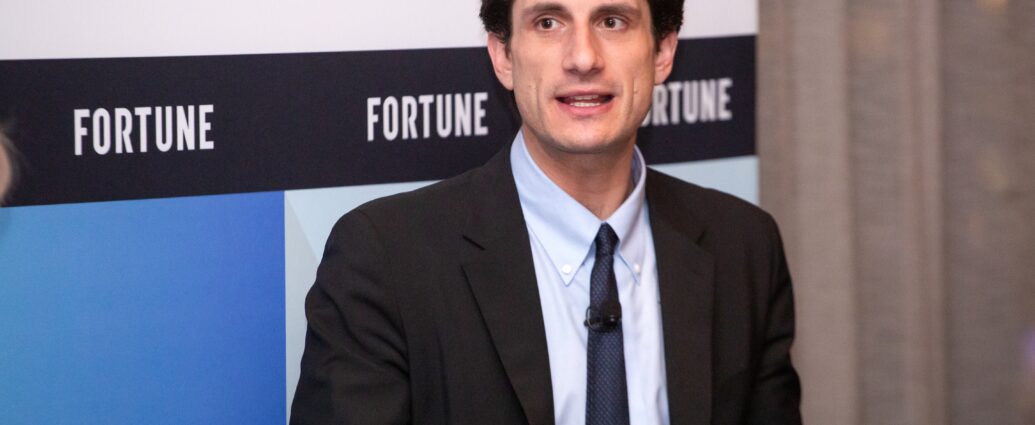
Jack Schlossberg on why Democrats lost young men to Trump—and it starts with the reason he quit the Biden campaign
Jack Schlossberg has a confession: He thinks Donald Trump did something right.
At Fortune‘s CEO Initiative dinner in New York, the grandson of President John F. Kennedy — and now a Democratic congressional candidate running in Manhattan’s 12th District — sat down with Fortune editor Diane Brady for a candid, wide-ranging conversation that was as much diagnosis as campaign pitch. The verdict from the 32-year-old: Democrats have a serious problem with young men, and they brought it on themselves.
Schlossberg’s first question was to find an issue on which he and President Trump agreed. “I disagree with President Trump a lot,” he immediately offered, before saying he gives Trump credit for “getting people fired up about politics.” Trump “poached” many of the young men away from the Democratic Party, Schlossberg continued, urging his own party to look closely at how and why this happened.
“I think that they’re not stupid, those young men, and I give President Trump a lot of credit for being able to influence new meeting environments and make politics accessible.”
It’s a striking admission from a man who spent 2024 making viral social media videos for the Biden campaign — until he quit, that is. “I went down to Wilmington,” he explained, only to hear “no” over and over again. “Anyway, long story short, I quit the campaign because I thought if I don’t do this my way, I’m not going to be able to live with myself. A month later, I got a call from the campaign being like, ‘Hey, can you come back and make videos for us?’”
Schlossberg, who holds degrees from Yale Law and Harvard Business School, has built an unlikely second identity as a progressive content creator, deploying deadpan humor to reach an audience the Democratic Party has consistently fumbled. He told Brady that he thinks his use of humor and sense of the unexpected has been an effective vehicle for conveying information, and he argued that viral social media posts actually contain a lot of information. It’s misguided to think viral content is shallow or light.
With the Democratic Party at an all-time low in popularity, Schlossberg said it can’t be down to losing their way on policy, but rather no longer reaching young voters. “People aren’t looking for a superhero … They just want someone who knows how to speak their language, meet them where they are, and give them something of value.”
And he has a clear theory: “The Republican Party has embraced modernity in a way that the Democratic Party used to own,” he told the room of CEOs. “Whether it’s space, whether it’s the AI race, crypto, investing in new technologies — the Democratic Party has been way anti-everything, and anti-business in particular. Anti-modernity. Trump has flipped the script.”
That framing — Democrats as the party of “no” — is the sharpest arrow in Schlossberg’s quiver. He doesn’t believe the party lost its way on policy so much as it lost the plot on storytelling and cultural relevance. “I don’t think that’s because we all of a sudden lost our way on policy,” he said. “I think we’ve mainly been out in terms of reaching young people and telling them a story about what we’re for, not just being a reactionary party.”
The Democratic Party’s shift since JFK
What would his grandfather make of all this? Schlossberg described a sense of disappointment in the current landscape and a desire to, well, make the Democratic Party great again.
“I feel really proud of being a Democrat,” he said, “and that’s because I associate Democrat not with what it is today, but what it was in the past.” He explained that Democrats used to embrace maternity, science, and new media channels, a party that was pro-affordable healthcare, pro-immigration, pro-education. He also talked about “responsibility” and “courage” from political leaders to tell voters what they need to hear, not something false and harmful. This is the danger of Trumpism, he argued.
“Whether you support the president or not, I think he succeeds when people can’t really believe in anything the government is saying. We can’t even necessarily believe what he says on a given basis.” Schlossberg added that he doesn’t think Trump is wrong about everything, “that’s too simplistic a view.” But he said Trump is failing to give Americans confidence in the government. “He’s not giving us confidence in our ability to solve the problems of the future, and I think we really have too many problems that we’re not paying attention to right now that we need to solve.”
His campaign slogan — “Believe in Something Again” — is a deliberate callback to that lost Kennedy-era confidence. He acknowledged it’s “a little cheesy,” but insisted it captures exactly what this political moment demands: not a superhero, but a leader who meets people where they are and gives them something of genuine value. “Young people are not a monolith,” he said. “And young people are really smart. They can probably really tell authenticity from someone who’s not telling the truth.”
Schlossberg is running in one of the bluest, most compressed districts in the country — Manhattan’s 12th, stretching from 96th Street down to 14th — so his path to Congress runs through a Democratic primary, not a general election battle against Trump voters. But his argument, delivered over dinner to a room full of corporate executives, is clearly aimed at a broader audience: the Democratic Party, which, unless it rediscovers its appetite for modernity and courage, risks losing an entire generation of young men for good.
This story was originally featured on Fortune.com
This post was originally published here

Trump Says He’s ‘Not Putting Troops Anywhere’ As Brent Crude Hits $110, But What Do Prediction Markets Say?
President Donald Trump told reporters Thursday he won’t send troops to the Middle East and said he ordered Israeli Prime Minister Benjamin Netanyahu to stop striking Iranian energy infrastructure.
The comments came after a rapid overnight escalation: Israel hit Iran’s South Pars gas field on Wednesday, and Iran retaliated with missiles targeting LNG facilities in Qatar, refineries in Saudi Arabia and Kuwait, and gas infrastructure in the UAE.
Defense Secretary Pete Hegseth confirmed the U.S. has struck over 7,000 targets across Iran and sunk more than 120 Iranian ships, even as Trump maintained he won’t deploy ground forces.
Iran’s strategy appears to be attrition: keep the Strait shut, spread the pain across Gulf allies, and wait for the economic pressure to force Washington to the table.
What Prediction Markets Say
Polymarket’s U.S.-Iran ceasefire market, with $22.2 million in volume, gives just 6% odds of a deal by March 31. …
This post was originally published here

EXCLUSIVE: Bitcoin ETFs Under Pressure — Cyber Hornet CEO Explains The Volatility Gap Between IBIT And BBB
As volatility grips Bitcoin, a clear divide is emerging between pure-play crypto ETFs like the iShares Bitcoin Trust (NASDAQ:IBIT) and hybrid strategies such as the Cyber Hornet S&P 500 and Bitcoin 75/25 Strategy ETF (NASDAQ:BBB). According to Mike Willis, CEO of Cyber Hornet, the difference is not just about returns — it’s about whether investors can realistically stay invested through Bitcoin’s swings.
While spot Bitcoin ETFs have broadened access to crypto, this year’s drawdowns are testing investor conviction. Hybrid strategies, which combine Bitcoin with traditional equities, are emerging as a more measured way to hold exposure across market cycles.
“Since launch, BBB’s maximum drawdown has been approximately 25% compared to drawdowns of roughly 50% for both Bitcoin and spot Bitcoin ETFs like IBIT over the same period,” Willis said.
Performance Gap Highlights Structural Difference
The divergence is already visible. In 2026 thus far:
- IBIT is down nearly 21% year-to-date, tracking Bitcoin’s sharp decline.
- In contrast, BBB — which allocates 75% to the S&P 500 and 25% to Bitcoin — has fallen about 7% over the same period, …

The CEO of Patreon blasts AI companies for the ‘bogus excuse’ they’re using to not pay artists
Patreon’s CEO Jack Conte is tired of watching AI companies strike deals with huge corporations like Disney while ignoring the myriad of smaller creators who contribute to their models.
Speaking at the South by Southwest conference this week, Conte, whose company allows people to pay their favorite creators directly, argued AI companies should view creators’ work in the same way it views that of Disney, Conde Nast, or Warner Music, aiming to reach agreements with them rather than use their content without permission.
He attacked the legal doctrine of “fair use,” which allows someone to use copyrighted material without permission or payment depending on the purpose and character of the use, the nature of the original work, how much of the work was used, and whether the use harms the market. AI companies have cited fair use to justify using content to train or contribute to their models without paying. These companies often argue they are using copyrighted content in a “transformative” way and not just regurgitating it verbatim.
For Conte, this legal “fair use” loophole is utter quackery.
“The AI companies are claiming fair use, but this argument is bogus,” Conte said during the conference. “It’s bogus because while they claim it’s fair to use the work of creators as training data, they do multimillion-dollar deals with rights holders and publishers like Disney, and Condé Nast, and Vox, and Warner Music.”
Conte pointed out the large licensing deals these AI companies have reached with intellectual property owners in recent years demonstrate the double standard of these companies. While AI companies recognize some copyrighted content requires permission and agreements, the same doesn’t seem to be true for creator-made content.
In the past several years, AI companies like OpenAI have made waves for the deals they have struck with some content owners while staving off lawsuits from others like the New York Times, which in 2023 accused OpenAI of training ChatGPT on millions of its articles without permission.
In December, OpenAI, the AI giant led by CEO Sam Altman, struck a deal that saw Disney invest $1 billion in the company and licensed more than 200 characters to OpenAI so they could be featured in the company’s video app, Sora. OpenAI has also signed licensing deals with Condé Nast, which owns The New Yorker and also with Vox Media, which owns New York Magazine. In November, Warner Music Group struck two separate licensing deals with music-focused AI companies Suno and Udio, after settling copyright suits with the companies.
Conte mentioned these deals specifically to highlight the hypocrisy demonstrated by AI companies when deciding who gets a licensing agreement and who doesn’t. Smaller creators, he claims, are being left out.
“If it’s legal to just use it, why pay?” Conte asked the crowd. “Why pay them and not creators—not the millions of illustrators and musicians and writers—whose work has been consumed by these models to build hundreds of billions of dollars of value for these companies?”
A spokesperson for Patreon told Fortune Conte’s comments reflect the mix of excitement and concern the company has heard from creators on how their work is being used and valued in the age of AI.
“At Patreon, our focus is on ensuring creators can build sustainable businesses, and that includes advocating for a future where creators are recognized and compensated for the value they bring, even as technology evolves,” the spokesperson said in a statement.
The AI companies’ fair use claims have been called into question several times as AI models have become increasingly more popular. The New York Times filed a lawsuit in 2023 claiming OpenAI used millions of its articles without permission and that its large language model ChatGPT was in some cases regurgitating entire Times articles, potentially striking a blow to OpenAI’s fair use argument. A date for the trial has not yet been set, but if the Times wins it could be owed billions in damages. More recently, dictionary makers Encyclopaedia Britannica and Merriam-Webster sued OpenAI after it rebuffed the companies’ offer of a licensing agreement in 2024. The publishers claimed in the lawsuit that OpenAI’s ChatGPT is cutting into their search traffic and ad revenue by absorbing the content created by their hundreds of human writers and editors.
OpenAI rival Anthropic also settled a class action lawsuit by a group of authors to the tune of $1.5 billion in September. As a result of the case, the judge ruled that training an AI model on pirated books—as the authors accused Anthropic of doing—did not qualify as “fair use,” but that training an AI model on purchased books qualified as legal transformative use.
While Conte said he was not against AI, generally, and noted that change is inevitable, humans will continue to enjoy human-created content long into the future, he said.
“Still, the AI companies should pay creators for our work, not because the tech is bad—but because a lot of it is good, or it will be soon — and it’s going to be the future. And when we plan for humanity’s future, we should plan for society’s artists, too, not just for their sake, but for the sake of all of us. Societies that value and incentivize creativity are better for it,” he said.
March 19: This article has been updated to include comments from a Patreon spokesperson
This story was originally featured on Fortune.com
This post was originally published here
Iranian strikes cut 17% of Qatar LNG output, threatening global supply
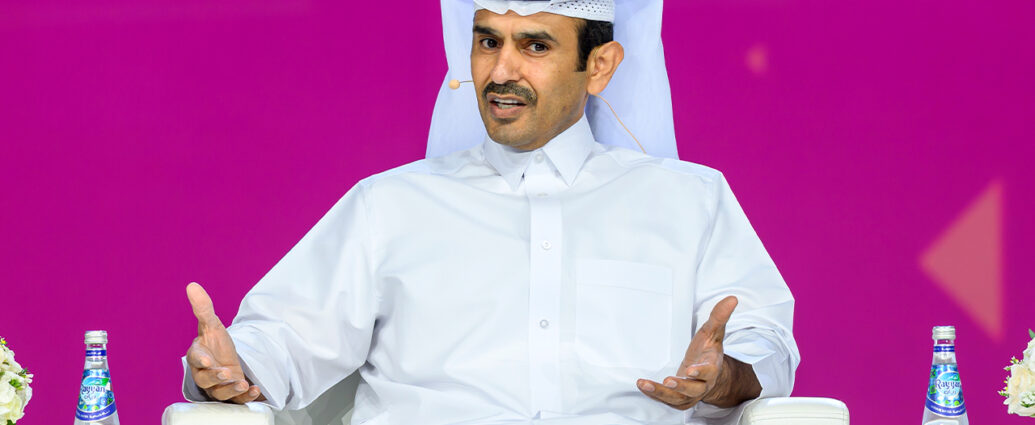
Iranian strikes have cut about 17% of Doha’s liquefied natural gas (LNG) export capacity, QatarEnergy’s CEO told Reuters in an interview on Thursday.
Saad al-Kaabi said the disruption could result in an estimated $20 billion in lost annual revenue and threaten supplies to Europe and Asia.
The CEO of the state-owned energy company, who is also Qatar’s minister of state for energy affairs, told Reuters that damage to two LNG trains and one of its two gas-to-liquids facilities will sideline roughly 12.8 million tons per year of output for three to five years.
“I never in my wildest dreams would have thought that Qatar would be — Qatar and the region — in such an attack, especially from a brotherly Muslim country in the month of Ramadan, attacking us in this way,” said al-Kaabi.
The attacks came after Iran targeted Gulf energy infrastructure in retaliation for an Israeli strike on its South Pars gas field on Wednesday.
QatarEnergy said in several posts on X that missile and rocket attacks on its facilities at Ras Laffan Industrial City caused fires and extensive damage but no casualties.
Qatar is one of the world’s largest LNG exporters, accounting for nearly 20% of global supply, according to the U.S. Energy Information Administration.
IRAN WARNS EUROPEAN COUNTRIES WILL BE ‘LEGITIMATE TARGETS’ IF THEY JOIN CONFLICT
President Donald Trump said on his Truth Social platform that Israel would halt further strikes on Iran’s South Pars gas field unless Tehran escalates, warning that the United States could respond with overwhelming force if Qatar’s LNG facilities are targeted again.
“The United States of America, with or without the help or consent of Israel, will massively blow up the entirety of the South Pars Gas Field at an amount of strength and power that Iran has never seen or witnessed before,” Trump wrote. “I do not want to authorize this level of violence and destruction because of the long term implications that it will have on the future of Iran, but if Qatar’s LNG is again attacked, I will not hesitate to do so.”
Al-Kaabi told Reuters QatarEnergy declared force majeure on its entire LNG output following the attacks on Ras Laffan, allowing it to suspend deliveries due to the damage.
“For production to restart, first we need hostilities to cease,” he said.
He also explained that the state-owned company will have to declare force majeure on long-term contracts for up to five years covering supplies to Italy, Belgium, South Korea and China due to damage to the two LNG trains.
“If Israel attacked Iran, it’s between Iran and Israel. It has nothing to do with us and the region,” al-Kaabi told Reuters. “And so now, in addition to that, I’m saying that everybody in the world, whether it’s Israel, whether it’s the U.S., whether it’s any other country, everybody should stay away from oil and gas facilities.”
This post was originally published here
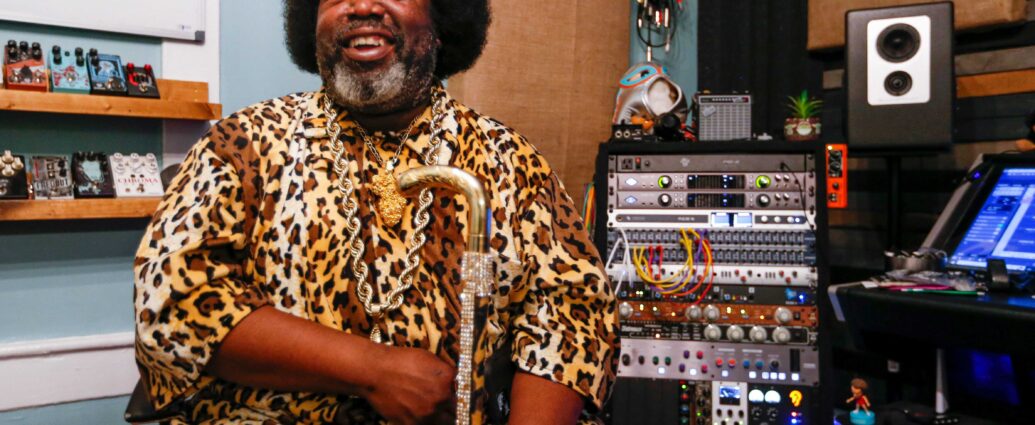
Afroman prevails in cops’ music video defamation suit after a brief but viral trial
The “Because I Got High” rapper made waves in 2023 with the album and song “Lemon Pound Cake,” using home video to mock a police raid on his Ohio home. The deputies lost their civil suit against him.

This post was originally published here



The Oil Shock Is Here. And We’re Just Beginning to Feel It.
Energy analyst Rory Johnston tells HBR “I fear it will break the system.”
This post was originally published here
Meta backtracks on decision to end Horizon Worlds VR after fans speak up
A day after announcing the Horizon Worlds would only be available on a mobile app starting in June, Meta said it changed its mind.
This post was originally published here
What’s Going On With Accenture Stock Thursday?
Accenture PLC (NYSE:ACN) on Thursday launched new AI-driven capabilities for its Adaptive Managed Extended Detection and Response (MxDR), developed with Microsoft Corp. (NASDAQ:MSFT) and Avanade, to improve threat detection and business resilience.
The update integrates with Microsoft Security tools to centralize data, enhance visibility and speed up response times using agentic AI and advanced analytics.
Accenture said the move addresses rising cyber risks, noting 74% of CEOs worry about their ability to minimize attacks.
“Cybersecurity teams have long faced significant challenges in managing massive datasets, and scaling security management tools and overcoming staffing resource limitations,” said Harpreet Sidhu. “With Accenture MxDR for Microsoft, we’re helping organizations harness agentic AI-powered solutions to supercharge cyberattack detection and proactive remediation…”
Microsoft said the partnership will help customers reduce complexity and strengthen defenses.
“We’re proud to deepen our collaboration with Accenture… to help organizations reduce complexity, strengthen defenses and scale resilience,” said Steve Dispensa of Microsoft.
Q2 Results
In the premarket session on Thursday, Accenture reported quarterly earnings of $2.93 per share, topping the analyst consensus estimate of $2.84.
The company reported sales of $18.04 billion, slightly exceeding the analyst consensus estimate of $17.84 billion. Sales increased 8% in U.S. dollars and 4% in local currency.
Accenture raised its fiscal 2026 revenue outlook to a range of $71.763 billion to $73.157 billion, …
This post was originally published here

Social Security has 6 years left. The fix that sounds cruelest may be the smartest
Social Security is six years from insolvency. That’s not a projection buried in an actuarial footnote—it’s the opening finding of a new report from the Penn Wharton Budget Model (PWBM), released Thursday, which puts the program’s Old-Age and Survivors Insurance Trust Fund on track to run dry by 2032.
And the fix lawmakers will likely reach for first—raising taxes—may be precisely the wrong move.
That’s the stark, counterintuitive conclusion suggested by PWBM researchers Seul Ki “Sophie” Shin and Kent Smetters, who modeled five distinct reform packages ranging from all-tax to all-cuts and found the approach most conventional analysts dismiss as politically radioactive—deep benefit reductions—generates the strongest long-term economic growth.
The counterintuitive math
Run the numbers through a standard accounting lens and the tax-heavy plan, called Option A, looks like the winner. It delays insolvency from 2032 all the way to 2058 by raising the payroll tax rate one percentage point (to 13.4%), lifting the taxable earnings ceiling to $250,000 (up from $184,500 in 2026), and switching to a slower inflation index for cost-of-living adjustments.
Switch to dynamic economic modeling—the kind that tracks how people actually change their saving and working behavior in response to policy—and the picture flips. Option E, the most aggressive benefit-cut plan (no new taxes, deeper formula reductions, and a retirement age raised to 69), projects a 6.1% GDP boost and a 13.5% surge in private capital by 2060. Option A, the tax-heavy plan, delivers only a 2.4% GDP increase and a 4.4% rise in private capital over the same period.
The mechanism is straightforward: Tell Americans their Social Security checks will be smaller, and they’ll save more on their own. Smetters and Shin call this the “incentive to save.” More private savings means more capital available for productive investment, which drives up wages. By 2060, wages are projected to be 5.7% higher under Option E versus just 1.6% higher under Option A.
Smetters told Fortune his goal in this exercise isn’t to make recommendations, but to show a “range of options,” instead. If he had to guess, he added, most people would prefer Option C, somewhere in the middle, but he is leaving that to the political process. His job is to “show the tradeoffs across a wide range of options on a holistic basis without bias.”
For critics who argue the math in this analysis is cruel, though, he offered the perspective that the cruelest approach is likely the one on the books under current law, in which benefits would be cut immediately in just six years. This means a $2,500-$2,700 cut in benefits per year for a person retiring in seven years, versus PWBM’s Option E, the harshest scenario, which would cut benefits by $2,300 per year (for women) and $2,500 per year (for men).
Even that comparison hides a lot of pain headed for retirees under current law, Smetters said. Once the trust fund is depleted, current law would cut benefits for all retirees, even the proverbial 90-year-old grandmother. His Option E, on the other hand, would concentrate pain for newer retirees, in their sixties.
Why Washington gets this wrong
The disconnect, the researchers argue, comes down to a concept that rarely makes it into political debate: implicit debt. Under Social Security’s pay-as-you-go structure, today’s payroll taxes flow directly to today’s retirees—a transfer that carries the same economic drag as explicit Treasury borrowing but doesn’t show up on the federal balance sheet. PWBM estimates those implicit pay-as-you-go obligations are currently twice the size of the U.S.’s explicit national debt. If they were booked under standard accounting rules, America’s debt-to-GDP ratio would exceed 300%.
That’s why plans that look good on paper—Options A and B significantly reduce the official debt-to-GDP ratio—can underperform in the real economy. They cut the visible debt while leaving the hidden debt intact.
The generational tradeoff nobody wants to talk about
None of this comes free. The gains from aggressive reform flow primarily to younger and future workers, while current retirees and near-retirees absorb the losses. Under Option A, a 60-year-old middle-income earner today loses $30,745 in lifetime value. Under Option E, that same person loses $60,970.
For someone born in 2051, those options produce lifetime gains of $42,025 and $81,932, respectively—in the same middle-income bracket.
But the PWBM report does offer one unexpected piece of good news on the fairness front: Achieving the best long-run outcomes for future generations doesn’t always require the worst short-term pain for current ones. Under Option C—a middle-ground package combining some tax adjustments with retirement age increases—most 60-year-olds today actually come out ahead on a lifetime basis, even while future generations gain more than they would under Option A.
Importantly, none of the five options would fully close Social Security’s long-term funding gap. They would reduce the bleeding, not stop it. And with the 2032 deadline now just one presidential term away, PWBM’s core message is methodological as much as political: Decisions made using conventional budget scoring will lead lawmakers to the wrong place. The math that drives political consensus isn’t the same math that determines economic outcomes.
This story was originally featured on Fortune.com
This post was originally published here
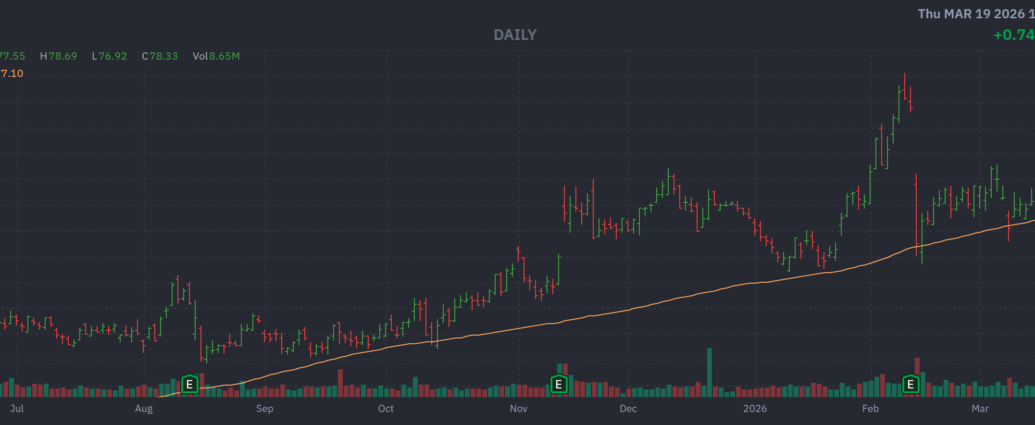



Darden Serves Up A Win — LongHorn Steakhouse Is The Star Dish
Darden Restaurants, Inc. (NYSE:DRI) shares traded higher on Thursday after the company posted an earnings beat and continued to show steady demand across its brands.
The results offered investors some reassurance, even as analysts said questions still linger over margins, costs, and consumer spending trends.
Quarterly Metrics
The company reported third-quarter adjusted earnings per share of 2.95, beating the analyst consensus estimate of $2.94. Quarterly sales of $3.345 billion (+5.9% year over year) outpaced the Street view of $3.333 billion.
Growth in revenues was driven by a blended same-restaurant sales increase of 4.2% and sales from 31 net new restaurants.
Darden’s consolidated same-restaurant sales growth was led by a 7.2% increase at LongHorn Steakhouse. Olive Garden posted 3.2% growth, while Fine Dining and Other Business delivered gains of 2.1% and 3.9%, respectively.
“Across all our brands, we’re seeing historically high team member and manager retention, which is enabling consistent execution and strong guest satisfaction,” said Darden President …
This post was originally published here

JPMorgan Debuts Equity Premium Yield ETFs
The Iran war is threatening supply of a little-thought-of resource — helium. What it means for markets
Supply allocations are being set by who needs the gas the most. Semiconductors are at the “top of the pecking order,” said helium consultant Phil Kornbluth.
This post was originally published here

Peers vote to back clause pardoning women convicted over illegal abortions
House of Lords decision welcomed as ‘landmark moment’ after attempt to strike out amendment is defeated
Women who have been convicted, and in some cases jailed, over illegal abortions are set to be pardoned after a historic vote in the House of Lords.
Last June, the House of Commons voted to end the criminalisation of women who terminate their pregnancies outside of the legal framework, while keeping the existing framework in place. Doctors and others who act outside of the law could still face the threat of prosecution.
This post was originally published here
Archaeological site in Chile upends theory of how humans populated the Americas … again
Discovery at Monte Verde puts north-to-south expansion theory back at centre of heated debate on continent’s human history
A groundbreaking new study may have once again upended our understanding of human prehistory in the Americas.
For years, the predominant theory of how humans arrived in the western hemisphere centred around the Clovis culture, which crossed the Beringia land bridge from Asia between 13,400 and 12,800 years ago, and spread south.
This post was originally published here

What’s Going On With Eva Live Stock On Thursday?
EVA Live (NASDAQ:GOAI) shares are up on Thursday following a strong earnings report that highlighted significant revenue growth and a swing to profitability.
• EVA Live stock is showing exceptional strength. What’s behind GOAI gains?
The stock’s rally occurs as broader markets are experiencing declines, with major indices such as the S&P 500 and Nasdaq both down over 0.7%.
The ad-tech company reported 82.6% year-over-year increase in revenue, reaching $17.037 million for 2025, compared to $9.330 million in 2024. Additionally, EVA Live achieved a net income of $8.127 million for the year, reversing a loss of $3.753 million in the previous year.
Operating expenses totaled $8.82 million in 2025, down from $13.06 million in 2024. As a share of revenue, operating expenses fell to 51.75% from 139.92%, reflecting improved scale and cost efficiency.
The number of active clients also rose by 25% during the year, showcasing the growing adoption of EVA Live’s technology and marketing platform. Management attributed this growth to higher advertiser spending and improved operational efficiencies, positioning the company well …
This post was originally published here

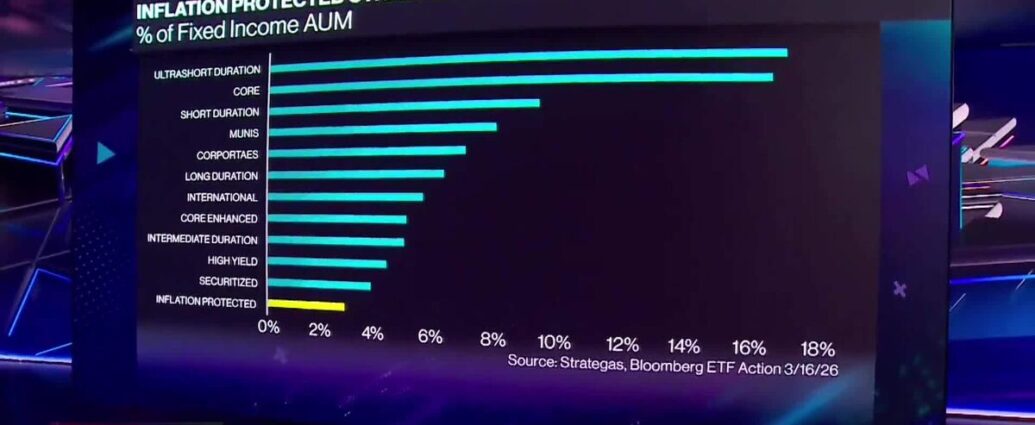

Why Is Silver Falling?
Precious metals faced a sell-off on Thursday. iShares Silver Trust (AMEX:SLV) and other silver assets plummeted as investors reacted to a hawkish shift from global central banks.
Silver dropped as low as 10% toward $65 per ounce, marking its lowest level since mid-December, according to data from Trading Economics.
Central Banks Turn Hawkish
The Federal Reserve, European Central Bank and Bank of England held rates steady this week. However, they adopted aggressive tones regarding inflation risks.
U.S. Fed Chair Jerome Powell noted a hike remains possible, though unlikely for now. This …
This post was originally published here
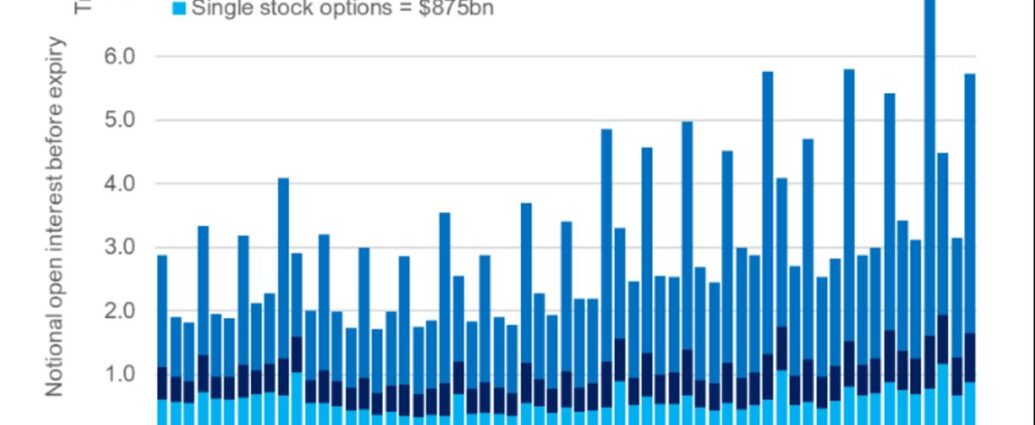
‘Damage will be widespread’: Narelle brings 250km/h wind gusts, with tourists evacuated and schools closed
Massive storm tracking a path to Queensland coast, which intensified offshore Thursday morning to category 5, fuelled by warm waters in Coral Sea
Severe Tropical Cyclone Narelle is expected to make landfall in far north Queensland on Friday morning as a monster category 5 storm, bringing destructive wind gusts of 250km/h, according to the Bureau of Meteorology.
The severe cyclone rapidly intensified over the past 48 hours and in the early hours of Friday morning had built to a category 5 storm that was barrelling west, sitting about 150km east of the small town of Coen. Coen has a population of approximately 330.
This post was originally published here

FDA approves higher dose version of weight loss drug Wegovy as Novo Nordisk tries to win back market share
The high-dose Wegovy helped patients with obesity lose an average 20.7% of their weight after 72 weeks in a phase three trial.
This post was originally published here


Iran allows handful of favoured ships through Strait of Hormuz
This post was originally published here

Gold Plunges On Inflationary Pressure Due To Energy Shocks From Gulf War
(RTTNews) – Gold prices have plummeted on Thursday, extending yesterday’s losses amid fresh escalation in the gulf war, with Israel and Iran trading attacks on energy facilities. Accelerated concerns of inflation due to the subsequent surge in oil prices are driving investors awa
This post was originally published here

Farage backs Tory attack on Muslim iftar event, saying public prayer ‘was a shock’ – UK politics live
Nigel Farage echoed Nick Timothy’s comments after he said public prayer for Ramadan was an ‘act of domination’
Cleverly is trying to show a video, but it is not working. So he just invites Kemi Badenoch to start her speech.
The Conservatives are launching their local elections campaign. There is a live feed here.
This post was originally published here


Gordon Johnson Warns Tesla’s Potential Recall Could Derail ‘Robotaxi Story’
Tesla Inc. (NASDAQ:TSLA) is facing a critical regulatory hurdle. The National Highway Traffic Safety Administration (NHTSA) escalated its investigation into Full Self-Driving (FSD) on Wednesday.
The probe now moves from a Preliminary Evaluation (PE) to an Engineering Analysis (EA). This move impacts approximately 2.4 million vehicles.
Analyst Warns of Robotaxi Narrative Collapse
Gordon Johnson, an analyst at GLJ Research, said on X (formerly Twitter) on Thursday, that an EA represents a confirmed pattern and active vehicle testing. “We are now at engineering interrogation. One step from a mandatory recall,” Johnson stated.
The analyst believes the stakes are existential for Tesla’s valuation. “You cannot build a $1.2T [trillion] robotaxi company on software the …
This post was originally published here





Indian film board blocks release of Oscar-nominated Gaza drama The Voice of Hind Rajab
Distributor says authorities warned screening Tunisian film-maker Kaouther Ben Hania’s docudrama could harm India–Israel relations
The Indian release of The Voice of Hind Rajab, the Oscar-nominated Tunisian film about the death of a five-year-old girl during the Israel-Gaza war, has been blocked by the country’s ratings body, according to the film’s Indian distributor.
In a report by Variety, Manoj Nandwana of Mumbai-based Jai Viratra Entertainment said that he was told that if the film was released, it would “break up” India-Israel relations.
This post was originally published here
Copper joins gold in broad commodities sell-off. There’s a worrying reason behind it
After major rallies, metals were under pressure on Thursday as rising oil prices increased both inflation and growth worries.
This post was originally published here

Uber Founder Travis Kalanick Says Waymo Is ‘Obviously Ahead’ Of Tesla In Self-Driving Race
The man who built Uber Technologies Inc. (NASDAQ:UBER) into the world’s largest ride-hailing company says Alphabet Inc.’s (NASDAQ:GOOGL) Waymo is winning the self-driving race, but they may not have the stomach to finish it.
Travis Kalanick told the All-In Summit in Austin this week that Waymo is “obviously ahead” and called it “the existence proof” that autonomous driving works, but he flagged a weakness that should matter to GOOGL investors: “Their issue is manufacturing and scale and urgency and fierceness.”
On Tesla Inc. (NASDAQ:TSLA), Kalanick called the company’s camera-only approach to self-driving “hard mode times 100.” Unlike Waymo, which uses lidar and radar alongside cameras, Tesla is betting it can achieve full autonomy with vision alone.
Kalanick said the whole thing comes down to timing. He’s waiting for what he called “the ChatGPT moment for …
This post was originally published here

Forward Borrows Against Solana Stack At 3.4% To Repurchase 6 Million Shares
Forward Industries (NASDAQ:FWDI) will repurchase 6.16 million shares for $27.4 million using a $40 million loan from Galaxy Digital at 3.4% APR, increasing SOL-per-share by 29% annualized.
The Share Repurchase Math
The transaction reduces Forward’s common shares outstanding from 83.14 million to 76.98 million, the company announced Thursday.
As of March 18, Forward holds 7.01 million SOL with 105.89 million fully diluted shares outstanding, resulting in SOL-per-share of 0.0662 versus 0.0624 on December 31.
The company borrowed $40 million at a weighted average annual interest rate of approximately 3.4% with an average weighted maturity of 4.9 months.
The facility is secured by fwdSOL held in the company’s treasury.
“By repurchasing shares at a discount to both our net asset value and current market price, and by securing attractively priced financing that allows us to maintain staking rewards on our collateral, we are able to return a meaningful block of shares to our treasury while continuing to …
This post was originally published here



US regulators slash Wall Street capital rules to boost bank lending
This post was originally published here



Kohl’s CEO signals what’s next for stores after several closures
The CEO of Kohl’s signaled that the company isn’t planning on closing additional stores this year after it shuttered more than two dozen locations last year.
Kohl’s closed 27 stores in 15 states in 2025 as the department store chain looked to get on better financial footing amid declining sales, and the Wisconsin-headquartered company brought in Michael Bender to serve as CEO in November.
Bender said on a call after Kohl’s released its quarterly earnings last week that the company isn’t planning to proceed with “any sort of grand plan of saying we’re taking stores out or adding stores at this point.”
“The focus for us is actually on optimizing what we already have, and we’ll be focused on making sure that we continue to push the store’s productivity as far as we can going forward,” Bender said.
KOHL’S FIRES CEO ASHLEY BUCHANAN AFTER INVESTIGATION
Kohl’s has about 1,150 locations and Bender said that over 90% of those stores are profitable, so the company’s annual reviews of how its locations are performing will come from a “hygiene perspective to make sure that those stores are positioned in the right spot and delivering what we need.”
“We will look at stores like we do on an annual basis, like I said. And to the extent that there are opportunities for us to either relocate, those are opportunities for us, we can do that. But no major change in the store base expectation at this point,” Bender said.
KOHL’S CUTS 10% OF CORPORATE WORKFORCE TO IMPROVE PROFITABILITY
Kohl’s has struggled in recent years amid stiff competition in the retail space from companies like e-commerce giant Amazon and discount competitors like Ross Stores.
Jill Timm, Kohl’s CFO, said that the company is focusing on driving traffic both in stores and digitally. She said the company saw solid digital traffic in the fourth quarter and is making changes to how it manages inventory in stores to give customers more reasons to shop in stores.
KOHL’S IS CLOSING 27 STORES IN 15 STATES. HERE’S WHERE THEY’RE LOCATED
The company expects that its full-year sales will be flat to 2% lower, compared with analysts’ estimates of a 0.7% decline to $14.85 billion, according to data compiled by LSEG.
In the most recent quarter, Kohl’s posted sales of $4.97 billion – just below analysts’ estimates of $5.03 billion.
GET FOX BUSINESS ON THE GO BY CLICKING HERE
Kohl’s stock rose over 3% in Thursday morning trading, though it’s down 6.89% in the past five days. Shares are down over 41% year to date, but have risen more than 42% in the past year.
Reuters contributed to this report.

Viktor Orbán refuses to agree to €90bn loan for Ukraine as EU leaders accuse him of betrayal
Hungarian PM is continuing to block the funding, which the EU says is urgently needed for military aid and support for Ukraine
EU leaders have failed to convince Viktor Orbán, Hungary’s prime minister, to drop his opposition to a vital €90bn (£78bn) loan for Ukraine. They have accused him of betrayal and acting in bad faith but have not persuaded him to budge.
In an unusual sign of public anger on Thursday, several leaders made plain their irritation with Orbán, who refused to sign off on the loan agreed last year because of a dispute with Kyiv over a damaged oil pipeline.
This post was originally published here

Private Credit’s $1.8 Trillion Illusion Breaks: The Liquidity Crunch No One Was Ready For
It wasn’t the exodus of capital, but the speed at which sentiment reversed that startled the market. Billions of dollars are now leaving a $1.8 trillion industry that, until recently, looked like a dependable engine of steady returns.
At the center of the turmoil sits the contradiction embedded in its very design. Private credit relied on long-term, locked-up capital structures. Investors accepted illiquidity in exchange for premium yields.
The Most Predictable Surprise
Yet, the industry eventually aggressively expanded into retail channels and retirement accounts. This customer base came with expectations of accessibility that it was never built to meet. When investors began demanding their money back, the mismatch between structure and promise became impossible to ignore.
“This was the most predictable, least predicted crisis ever,” Stephanie Pomboy, founder of Macro Mavens, told Kitco.
“When they started doing things like secondaries and continuation funds, and then the private credit guys said, ‘We really should let retail investors get a piece of this action,’ it was clear they were trying to offload risk onto the next patsy,” she added, touting an anticipation of the policy response.
The AI Connection
High-profile bankruptcies, including Tricolor and First Brands, put the sector on notice. The situation challenged assumptions that defaults would remain low. Meanwhile, shifting macroeconomic conditions and fading confidence in the ability to sustain high returns weakened the core appeal.
“Concerns really started in the private credit market earlier this year, where we saw some …
This post was originally published here
Concerns raised over ex-Putin interpreter’s key role in monitoring Hungary vote
Daria Boyarskaya coordinating OSCE mission overseeing vote in which pro-Moscow Viktor Orbán could lose power
Hungarian rights groups have raised concerns over the appointment of Vladimir Putin’s former interpreter to a key role in an international election monitoring mission, amid fears of Russian interference ahead of Hungary’s crucial vote next month.
Daria Boyarskaya, who worked for many years for Russia’s foreign ministry and interpreted in numerous high-level meetings including one between Putin and Donald Trump, is now a senior adviser at the parliamentary assembly of the Organization for Security and Co-operation in Europe (OSCE-PA), based in Vienna. She is coordinating the body’s mission to monitor next month’s parliamentary election in Hungary.
This post was originally published here


Highly Short Stock Signet Jewelers Soars After Resilient Quarter
Signet Jewelers Limited (NYSE:SIG) shares traded higher on Thursday after posting strong fourth-quarter results and raising its dividend.
The stock surged more than 13% during the session. Heavy trading supported the move. High short interest, above 26% of the float, likely added buying pressure.
Trading volume reached about 1.54 million shares. This was well above the 100-day average of 870,236 shares. As a result, activity remained elevated.
The company has a short float of 5.51 million shares. This represents 26.72% of its tradable float. Therefore, bearish positioning remains very high.
Quarterly Results
Signet reported solid demand across key categories. However, margins showed some pressure.
Adjusted earnings per share came in at $6.25. This beat the analyst estimate of $6.11. Revenue reached $2.345 billion, slightly above expectations of $2.342 billion.
Average unit retail …
This post was originally published here