


Why Is Atlassian Stock Seesawing Thursday?
Atlassian Corp (NASDAQ:TEAM) shares are trending upward on Thursday.
The move follows strategic cost-cutting measures and a recent workforce reduction. Investors are weighing a 10% cut in the global workforce against long-term AI goals.
• Atlassian stock is trading near recent lows. What’s ahead for TEAM stock?
Wells Fargo Maintains Bullish Stance
Wells Fargo analyst Ryan MacWilliams maintained an Overweight rating on Atlassian on Tuesday. Macwilliams lowered the price forecast from $155 to $120.
AI Shift Triggers Massive Layoffs
The company recently announced it will eliminate roughly 1,600 jobs worldwide. This represents about …
This post was originally published here





Nvidia Could Be A ‘Double Bagger’ By 2027 As Analyst Adds NVDA To Best Ideas List
New Street Research analyst Pierre Ferragu added Nvidia Corp (NASDAQ:NVDA) to the firm’s best ideas list for 2026 on Thursday, arguing the stock could double from current levels by 2027.
The thesis rests on a combination of earnings revisions, a compressed multiple, and Nvidia’s plan to return 50% of its free cash flow through buybacks and dividends. Ferragu said Nvidia’s $1 trillion cumulative revenue guidance for Blackwell and Rubin products is “in the bag” by the end of 2027 and that the market isn’t pricing in enough enthusiasm.
He projects more than $20 in earnings per share and rates the stock a Buy with a $275 price target, implying roughly 53% upside from Thursday’s price around $180.
Twelve Notes In Two Days
The call arrives amid a flood of analyst activity tied to Nvidia’s annual GTC developer conference in San Jose this week.
Rosenblatt’s Kevin Cassidy raised his target from $300 to $325, now the highest on the Street. …
This post was originally published here
Government bonds face ‘perfect storm’ as Iran war rattles Europe’s central banks
Bond yields have surged as Europe’s central banks grapple with new inflation fears.
This post was originally published here





Trump administration says it is not considering oil export ban as prices surge
This post was originally published here



Mortgage rates jump to highest level in over 3 months
Mortgage rates jumped this week to the highest level in nearly four months, mortgage buyer Freddie Mac said Thursday.
Freddie Mac’s latest Primary Mortgage Market Survey, released Thursday, showed the average rate on the benchmark 30-year fixed mortgage rose to 6.22% from last week’s reading of 6.11%.
The average rate on a 30-year loan was 6.67% a year ago.
“The 30-year fixed-rate mortgage edged up this week to 6.22% but remains nearly half a percentage point lower than the same time last year,” said Sam Khater, Freddie Mac’s chief economist. “Potential homebuyers are poised for a more affordable spring homebuying season than last with the market experiencing improvements in purchase applications and pending home sales.”
MIAMI OVERTAKES LOS ANGELES AND NEW YORK AS WORLD’S RISKIEST HOUSING MARKET FOR BUBBLE RISK
The average rate on a 15-year fixed mortgage rose to 5.54% from last week’s reading of 5.5%.
Mortgage rates are affected by several factors, including the Federal Reserve and geopolitics.
“Rising energy prices and renewed trade uncertainty have lifted inflation expectations, putting upward pressure on longer-term interest rates and, in turn, mortgage rates,” said Realtor.com senior economist Anthony Smith. “This comes despite softer recent economic data, including moderating inflation at 2.4% and weaker February job growth, which would typically support lower borrowing costs.”
Fed policymakers voted to leave the benchmark federal funds rate unchanged at its current range of 3.5% to 3.75% on Wednesday. The move follows the central bank’s decision to hold rates steady in January after three successive 25-basis-point rate cuts in September, October and December to close out last year.
HOMEBUYERS REFUSE TO BACK DOWN AS MORTGAGE RATES CONTINUE HOVERING STUBBORNLY NEAR 6% MARK
Economic data showing a slowdown in the labor market, inflation continuing to run hotter than the Fed’s 2% target and the unrest in Iran prompted policymakers to continue to pause rate cuts.
Fed Chairman Jerome Powell said the current 3.5% to 3.75% range for the benchmark federal funds rate is within a range of neutral. He added that it’s too soon to tell what the effect of the conflict in the Middle East will be on the economy, adding that policymakers will continue to monitor economic data as they consider adjusting monetary policy.
GET FOX BUSINESS ON THE GO BY CLICKING HERE
Though mortgage rates are not directly affected by the Fed’s interest rate decisions, they closely track the 10-year Treasury yield. The 10-year yield hovered around 4.27% as of Thursday afternoon.
This post was originally published here
Why MP Materials Stock Is Falling Thursday?
MP Materials Corp (NYSE:MP) shares are trading lower during Thursday’s session. The rare earth miner is facing a dual threat of macroeconomic instability and internal selling pressure.
Geopolitical Tensions Rock Markets
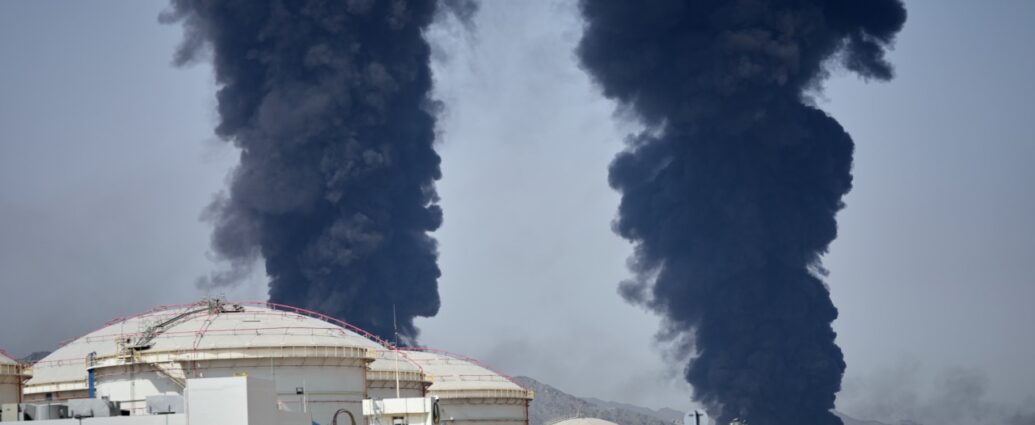
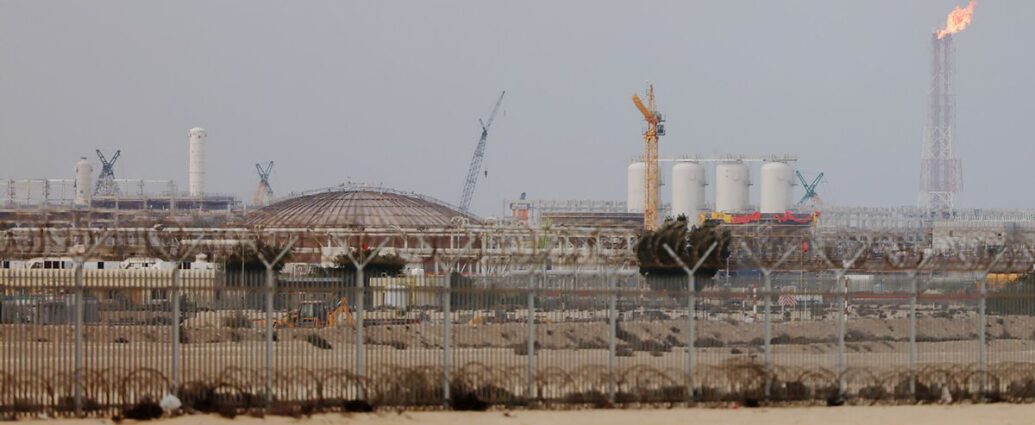
Global markets are reeling from escalating Middle East conflicts. Reports indicate an attack on Iran’s South Pars gas field. Additionally, Qatar’s Ras Laffan LNG facility sustained damage.
The Nasdaq has dropped 0.72% while the S&P 500 shed 0.58%. The S&P 500 Materials sector is sliding 2.4% in response.
C-Suite Offloads Shares
Company-specific pressure is mounting following small insider selling. According to Benzinga, CFO Ryan Corbett sold $2.76 million in stock …
This post was originally published here
See How IAMGold Ranks Among Analysts’ Top Metals Picks
A study of analyst recommendations at the major brokerages shows that IAMGold Corp (Symbol: IAG) is the #38 broker analyst pick, on average, out of the 50 stocks making up the Metals Channel Global Mining Titans Index, according to Metals Channel. The Metals Channel Global Mini
This post was originally published here

Mortgage Rates Highest in Three Months as War Weighs on Housing Market
No breakthrough on Hungary’s veto of EU’s €90bn loan to Ukraine – as it happened
This live blog is now closed, you can read more on this story here
Germany’s chancellor Friedrich Merz also called for de-escalation in the Middle East, welcoming what he said were signals by US president Donald Trump that combat action in Iran could come to an end, which could allow Europe to contribute to securing peace in the region.
“I am expressly grateful that the US president sent a signal in this regard last night that he is prepared to bring the fighting to an end,” he told reporters ahead of an EU summit in Brussels in comments reported by Reuters.
This post was originally published here












Meta to cut back on third-party vendors in favor of AI for content enforcement
Meta is beginning a multiyear rollout of more advanced AI systems that will handle content enforcement-related tasks like catching scams and illegal media.
This post was originally published here


Denmark reportedly flew blood bags to Greenland in preparation for a US attack
Amid Trump threats, Copenhagen also sent over explosives intended to blow up runways, according to Danish media
Denmark reportedly readied itself for potential attack from the US in January – flying bags of blood to Greenland and explosives to blow up runways in case of a battle with its former closest ally.
During the tense days when Donald Trump threatened to take over Greenland – a largely autonomous territory that is part of the Danish commonwealth – “the hard way”, Copenhagen was so shaken that it started preparing for US invasion, according to Danish public broadcaster DR.
This post was originally published here

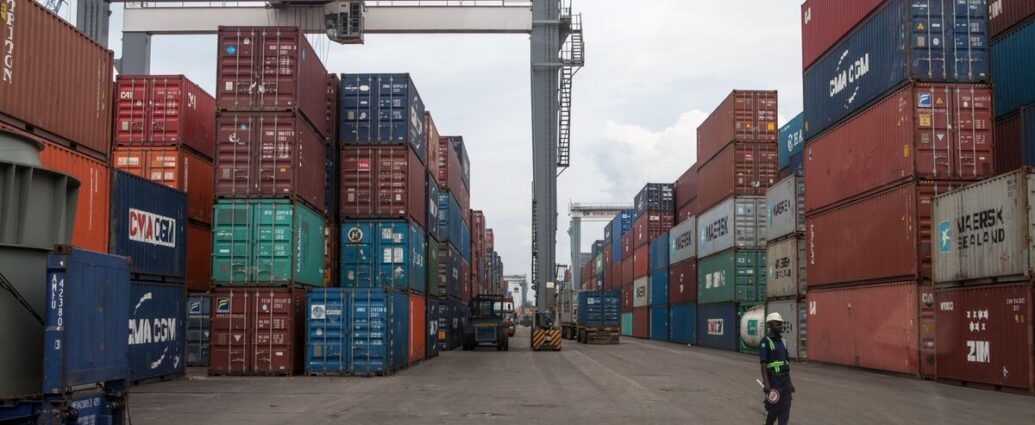
Tesla faces intensifying NHTSA probe of ‘Full Self-Driving’ in reduced visibility
The investigation involves Model S, X, 3, Y and Cybertruck EVs that can use the company’s FSD-branded driver assistance systems.
This post was originally published here
Oman claims Israel pushed US into Iran war when deal was possible
Foreign minister claims Israel convinced Donald Trump to make ‘grave miscalculation’ of waging war on Iran
Oman’s foreign minister has claimed the US has “lost control of its own foreign policy” and accused Israel of persuading Donald Trump’s administration to go to war with Iran – a conflict he described as a “catastrophe” and a “grave miscalculation”.
Writing in the Economist, Badr Albusaidi, the Omani minister who mediated the latest nuclear talks between Iran and the US, offered an unusually damning assessment of events leading up to the US and Israel’s bombing of Iran and the war it has triggered across the Middle East.
This post was originally published here






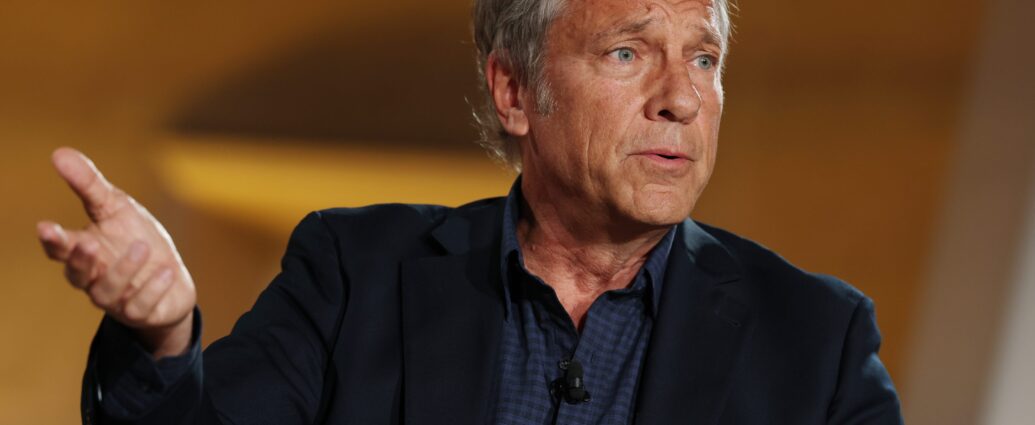
TV host Mike Rowe slams schools for portraying skilled trades as a ‘consolation prize’—when he’s met data center electricians making $280K a year
For many decades, students have been steered toward a singular path: go to college, or risk falling behind. It’s a message that took hold in the 1970s and 80s, when school districts removed shop classes—once designed to introduce students to trades like carpentry, welding, and electrical work.
To the detriment of young people today, learning a trade was downgraded as the fallback option, a “vocational consolation prize,” according to Mike Rowe, best known for his stint hosting Dirty Jobs, a show that highlighted the dirtiest—and most essential—jobs in America.
That shift ultimately “scared parents to death,” Rowe said last week alongside BlackRock CEO Larry Fink at the company’s 2026 Infrastructure Summit. Even with the financial burden of following the college path exploding. And now Gen Z are paying the price.
“Nothing in the history of western civilization has gotten more expensive more quickly than a four-year degree,” Rowe said. “It’s not to say it’s not valuable, but I mean nothing—not real estate, not healthcare, not energy.”
At least in recent decades, the data backs him up. Between 1983 and 2025, the cost of college tuition has significantly outpaced every other household expense, according to analysis by J.P. Morgan Asset Management.
It’s collectively left young people facing a perfect storm: soaring student loan debt, degrees that don’t translate into stable careers, and an AI-obsessed job market that’s only growing more uncertain. Millions of Gen Z are ending up as NEET—not in employment, education, or training—and stuck in a limbo that college was supposed to prevent.
Simply put, “the kids are not alright,” Rowe said. “If I had an alarm bell, I would ring it.”
Data center electricians are making upwards of $280,000 a year, according to Mike Rowe
That mismatch has created a stark labor imbalance: too many young people chasing degrees, and not enough trained workers to fill critical, in-demand jobs.
Nowhere is that clearer than in parts of the economy tied to the AI boom, where skilled labor is commanding salaries that rival—or exceed—traditional white-collar roles.
During a recent visit to a data center in Plano, Texas, Rowe said he met three electricians—all under 30 years old—earning between $240,000 and $280,000 a year—with no college debt. Even more striking: all three had been poached three times in the previous 18 months.
Electricians, in particular, have emerged as some of the most in-demand—and AI-resistant—professions as companies race to build the infrastructure powering AI. An estimated 300,000 new electricians will be needed over the next decade, on top of replacing roughly 200,000 upcoming retirees.
But the shortage extends far beyond a single trade. Across industries, demand for skilled labor is surging. At Rowe’s foundation, which supports trade training, applications have jumped tenfold over the past year—a sign, he said, that interest may finally be catching up with opportunity.
“Not a week goes by that I don’t hear from the leader of some consequential industry who is freaking out in real time,” he said, pointing to the fact that professions like shipbuilders, welders, and plumbers are all in need hundreds of thousands of workers to meet growing labor demands.
But moving forward, Rowe said what’s emerging is a new reality where post-secondary education is no longer treated as one-size-fits-all—with skills becoming the clearer signal of opportunity.
“This is the trap and it’s so easy to fall into it,” he said. Blue collar versus white collar, shop class versus Brown or Dartmouth. Solar versus nuclear, wind versus fossil—bull crap. None of that, the color of collars is over.”
Mike Rowe isn’t alone—the CEOs of BlackRock, Nvidia, and Ford are worried about skilled trade shortages
Rowe may be best known as a reality TV host—but his feeling about the need for skilled trade workers is being increasingly reinforced by the nation’s top CEOs.
BlackRock’s Larry Fink said in the panel with Rowe that AI will only expand the demand for skilled trade, but the education system hasn’t properly set young people up for success.
“AI is going to create a lot of skilled jobs needs, and the biggest issue confronting our country today and other countries is the speed at which this change is occurring,” Fink said. Just last week, BlackRock announced an investment of $100 million in the training of skilled trade workers.
Nvidia CEO Jensen Huang has also warned that the skilled workers needed to build the physical backbone of AI—from chip factories to data centers—are already in short supply.
“The labor required to support this buildout is enormous. AI factories need electricians, plumbers, pipefitters, steelworkers, network technicians, installers and operators,” Huang wrote in a blog post released earlier this month.
“These are skilled, well-paid jobs, and they are in short supply. You do not need a PhD in computer science to participate in this transformation.”
Ford CEO Jim Farley has echoed concerns about a shortage of manually skilled workers.
“We are in trouble in our country. We are not talking about this enough,” Farley told the Office Hours: Business Edition podcast earlier this year. “We have over a million openings in critical jobs, emergency services, trucking, factory workers, plumbers, electricians, and tradesmen. It’s a very serious thing.”
This story was originally featured on Fortune.com
This post was originally published here

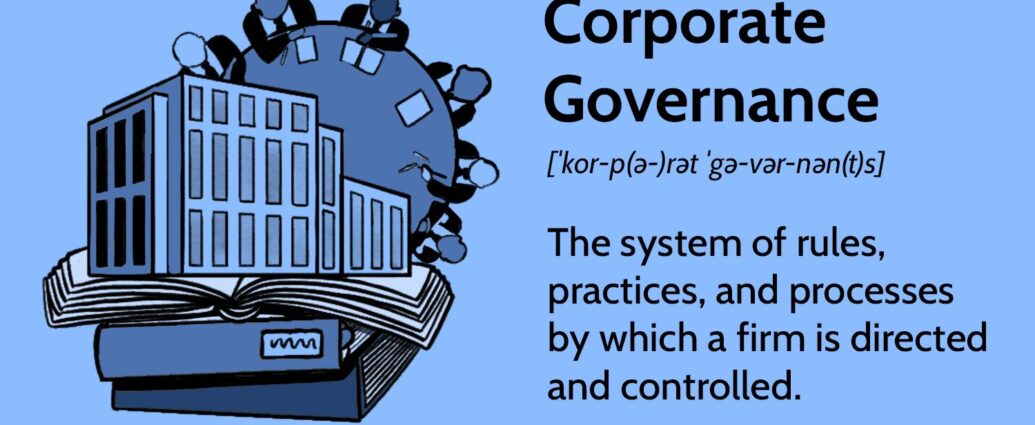
Corporate Governance: Definition, Principles, Models, and Examples
This post was originally published here
‘Movement never lies’: 100 years of the Martha Graham Dance Company
Graham was a creative force in the performing arts. She wanted dance to express authentic, human emotions — a revolutionary idea in the late 1920s.
(Image credit: Marty Lederhandler)

This post was originally published here



What’s Going On With Tilray Brands Stock?
Tilray Brands (NASDAQ:TLRY) announced an expansion of its medical cannabis portfolio in Australia, despite a challenging market environment.
The expansion includes new products under its Redecan and Good Supply brands, aimed at enhancing treatment options for healthcare professionals and patients.
This initiative underscores Tilray’s commitment to the Australian market, a key growth area, according to Rajnish Ohri, President of International at Tilray Brands. The expanded portfolio will offer medical cannabis flower, extracts, vapes, and pastilles, enhancing access to high-potency, patient-focused solutions.
While the broader market is down, with the Materials sector down 2.18%, Tilray’s stock movement appears more influenced by general market trends than by company-specific issues.
Technical Analysis
The stock is trading 11.3% below its 20-day simple moving average (SMA) and 30% below its 100-day SMA, indicating a bearish trend in the short- to medium-term. Over the past 12 months, shares have increased …
This post was originally published here
The Iran war is threatening supply of a little-thought-of resource — helium. What it means for markets
Supply allocations are being set by who needs the gas the most. Semiconductors are at the “top of the pecking order,” said helium consultant Phil Kornbluth.



Strategy Could Own 1 Million Bitcoin By September—Here’s The Math
Strategy (NASDAQ:MSTR) could hit 1 million Bitcoin (CRYPTO: BTC) by September 2026 if the company maintains its historical 16% quarterly acquisition rate, with the preferred stock STRC enabling purchases during bear markets unlike previous cycles.
The Historical 16% Rate
Michael Saylor’s Strategy has increased Bitcoin holdings by an average of 16% quarter-over-quarter since 2020.
In Q1, the company acquired 88,568 Bitcoin, the second-best quarter ever despite Bitcoin trading 45% below all-time highs.
The company holds 761,068 Bitcoin as of March 18. Acquiring another 100,000 Bitcoin this quarter would bring holdings to 860,000, putting the company one quarter away from 1 million by September.
Strategy raised $1.5 billion last week, with $1.18 billion coming from STRC preferred stock versus $396 million from common stock.
This marks the first time the company used preferred stock as the primary …



Top 5 Economically-Free Countries: Insights From the Heritage Index
This post was originally published here


Trump struggles to distance himself from Israel over strike on Iran gasfield
This post was originally published here



NHS was ‘on brink of collapse’ during pandemic, Covid inquiry finds
Heather Hallett says ‘superhuman’ efforts of workers were at times the only reason health service survived
The NHS “teetered on the brink of collapse” during the Covid pandemic and only just coped thanks to the “superhuman” efforts of healthcare workers, an official inquiry has concluded.
In a damning assessment of how the UK’s healthcare systems dealt with the unprecedented pressure of the pandemic, the Covid-19 inquiry chair, Heather Hallett, said the impact of the virus was “devastating” due to the NHS being in a “parlous state” before the outbreak.
The NHS entered the pandemic with low bed numbers, high numbers of staff vacancies and high bed occupancy, meaning it was already in a “precarious position” and ill-prepared to deal with a pandemic.
There was not enough PPE at the start of the pandemic, meaning healthcare workers had to put themselves and their families at risk to care for patients.
Infection control in the early stages of the pandemic was flawed as it assumed Covid-19 was spread by physical contact, rather than being airborne.
The “stay home, protect the NHS, save lives” public message may have inadvertently led to a decline in hospital attendance of life-threatening emergencies such as heart attacks.
80% of healthcare professionals said they acted in a way that conflicted with their values during the pandemic, with some saying they felt they were “playing God” as they were unable to give everyone the treatment they needed.
This post was originally published here




Stock Market Today: Major Indexes Fall as Oil Prices Soar Further; Gold, Silver Drop
This post was originally published here






Iran attack wipes out 17% of Qatar’s LNG capacity for up to five years, QatarEnergy CEO says: Reuters
QatarEnergy CEO Saad al-Kaabi said two of Qatar’s 14 LNG trains and one of its two gas-to-liquids facilities were damaged in the unprecedented strikes by Iran.
This post was originally published here
No timeframe for ending US war against Iran, says Pete Hegseth
US defense secretary suggests Thursday will be ‘largest strike package yet … death and destruction from above’
The US defense secretary, Pete Hegseth, said on Thursday there is no “timeframe” for ending the US war against Iran and did not deny reports that the Pentagon could seek an extra $200bn in taxpayer funding.
The military US-Israeli offensive began three weeks ago and continues to widen. Donald Trump threatened on Wednesday to “massively blow up” the world’s biggest gasfield after Israeli strikes on the Iranian site prompted Tehran to escalate strikes on oil and gas facilities around the Persian Gulf.
This post was originally published here

Denmark was ready to blow up Greenland runways if US invaded
This post was originally published here


Sex garden to ‘break taboos’ at Chelsea flower show as gnome ban ends
Lovehoney sponsors Aphrodite-themed ‘pleasure garden’ full of flowers associated with love and sex
It is one of the most prestigious events of the UK social calendar, but the great and good attending Chelsea flower show may be in for a shock this year as the Royal Horticultural Society unveils a sex-themed garden sponsored by a company that sells vibrators.
Lovehoney, a sex toy company, is sponsoring an Aphrodite-themed “pleasure garden” full of flowers and plants associated with love and sex.
Chelsea flower show will be held at the Royal Hospital Gardens from 19 to 23 May.
This post was originally published here
‘She didn’t want that pain’: Paola Marra’s brother despairs of Lords block on assisted dying bill
On second anniversary of his sister ending her life at Dignitas, Tony Marra will protest outside parliament with other campaigners
Two years after Paola Marra, on the eve of her death, appealed to politicians to change the law on assisted dying, the terminally ill adults (end of life) bill is stuck in the House of Lords. For her brother, the second anniversary of her death will be spent protesting outside parliament.
Marra died aged 53 on 20 March 2024. She documented her solo journey from north London to Dignitas in Switzerland in photographs and a short film by the photographer Rankin, released posthumously, as well as in a powerful interview with the Guardian.
This post was originally published here

CIRO launches Disgorgement Distribution Program to return funds to harmed investors
Program strengthens deterrence and supports confidence in Canada’s investment industry
TORONTO, March 19, 2026 /CNW/ – The Canadian Investment Regulatory Organization (CIRO) announced the upcoming launch of its Disgorgement Distribution Program. The Program builds on CIRO’s existing ability to seek disgorgement orders, following a finding of registrant misconduct. In certain cases, the Program will now enable CIRO to distribute funds collected pursuant to a disgorgement order to investors who have been financially harmed by registrant misconduct.
This post was originally published here

Uber cofounder has ‘white pill’ outlook on AI’s job disruption: he says humans will be ‘super fine’ until AGI steps into the picture
Business leaders are split on if AI will trigger a jobs armageddon or usher in “super interesting” gigs of the future. And Uber cofounder Travis Kalanick believes the veil is finally lifting on the reality of tech-driven workplace disruption: there’s “another side” to the story, where human employees are more powerful than ever before.
“Until we get super [artificial general intelligence], humans are valuable,” Kalanick said recently on the TBPN podcast. “And they are going to become more and more valuable, because they will be the long pole in the tent to progress.”
The serial entrepreneur and CloudKitchens CEO uses one blue-collar profession as an example: plumbers.
If every job in the world was automated except for plumbers, those human workers would be “extremely valuable” because they’re critically essential to the success of expanding infrastructure. New buildings couldn’t be made unless plumbers were readily available—and there would be “so much efficiency everywhere” that they would need millions of people for the task.
Kalanick also confronted the possibility that all human workers could one day be replaced by super AGI. Still, he offered an optimistic, “white-pilled” take on the situation: new “solutions” will emerge, and there’s no need to fret about a work wipeout—for now.
“Until we get there, I believe we’re going to be super fine,” he continued. “That’s my white pill.”
The CEOs who believe AI will create ‘better’ jobs and ‘superhuman’ working skills
While many workers are hand-wringing over the fate of their careers, there are several CEOs who believe humans will be turbocharged rather than crushed by AI.
The CEO of DeepMind, Demis Hassabis, believes that AI will actually create new jobs that leverage the tools and “are actually better.” He told Wired in a 2025 interview that so long as everything goes well, the tech will bring about a “golden era” of radical abundance within the next decade.
Instead of being a job-killer, he predicted AGI will actually be a win for society, curing disease, increasing lifespans, and finding new energy sources starting 2030.
“If that all happens, then it should be an era of maximum human flourishing, where we travel to the stars and colonize the galaxy,” Hassabis continued, adding that AI will serve as “these incredible tools that supercharge our productivity and actually almost make us a little bit superhuman.”
OpenAI CEO Sam Altman also insisted that the coming decade could be the most exciting time in history to start a career, despite the percolating anxiety around AI automation. Echoing Hassabis’ projection, Altman sees massive potential for new human work in space. These universe-explorers will get paid cushy salaries, and will feel “so bad for you and I that we had to do this really boring, old work and everything is just better.”
“In 2035, that graduating college student, if they still go to college at all, could very well be leaving on a mission to explore the solar system on a spaceship in some completely new, exciting, super well-paid, super interesting job,” Altman told journalist Cleo Abram last year.
Leaders are also lauding the idea that AI will give workers “superhuman” skills—and as the technology advances, it’ll only get better. Instead of being a career threat, Nvidia leader Jensen Huang said that AI gives his peers wings in an industry innovating at breakneck speed.
“I’m surrounded by superhuman people and super intelligence, from my perspective, because they’re the best in the world at what they do,” Huang told Abram in a 2025 episode. “And they do what they do way better than I can do it. And I’m surrounded by thousands of them. Yet it never one day caused me to think, all of a sudden, I’m no longer necessary.”
This story was originally featured on Fortune.com
This post was originally published here






Major League Baseball Inks First-Of-Its-Kind Polymarket Deal, Signs CFTC Integrity Pact
Major League Baseball on Thursday signed an exclusive multi-year deal making Polymarket its official prediction market partner.
The deal gives Polymarket sole rights to use MLB trademarks and logos, with promotional space on the league’s website and at games.
Front Office Sports reported the agreement may be worth between $150 million and $300 million over three years, though financial terms were not officially disclosed.
MLB And CFTC Make History
MLB also signed a memorandum of understanding (MOU) with the Commodity Futures Trading Commission, the first between the federal regulator and any professional sports league.
The MOU covers information sharing, fraud prevention and game integrity monitoring.
CFTC Chairman Michael Selig, who said last week that the CFTC does not “discriminate between sports and politics and corn,” said the agreement adds “additional tools” to protect prediction markets from …
This post was originally published here

Michael Saylor Changed Tactics To Buy More Bitcoin: What It Means For MSTR
Strategy (NASDAQ:MSTR) executive chairman Michael Saylor is increasingly turning to alternative funding channels to finance its Bitcoin (CRYPTO: BTC) purchases, signaling a shift away from heavy reliance on equity dilution.
Funding Shift Emerges
In a Mar.19 post on X, CryptoQuant data showed the company bought nearly 18,000 BTC in the week of Mar. 8 and more than 22,000 BTC the following week, its largest weekly accumulation since November 2024.
While the scale of buying stands out, the funding mix marks the bigger shift.
Historically, Strategy financed Bitcoin purchases largely through issuing MSTR shares, diluting existing shareholders. Recent data, …

Pinpoint Profitable Breakouts with Point-and-Figure Patterns
This post was originally published here

Bitcoin struggles to hold $70,000 as oil surge jolts risk assets
Bitcoin dipped below the $70,000 level for the first time in over a week, as stocks sank and energy prices surged following renewed attacks on energy infrastructure in the Middle East.
The world’s largest cryptocurrency fell as much as 2.7% to $69,308 on Thursday, extending a decline from the previous day, when Bitcoin saw its largest drop in three weeks. Other cryptocurrencies such as Ether, BNB and XRP also declined.
“Bitcoin has likely run out of steam in the short term after dropping nearly 5% over the past 24 hours, with a pullback toward $65,000, a possible outcome in the coming days,” said Robin Singh, chief executive officer of crypto tax platform Koinly. Price action is likely to remain between $65,000 and $75,000 in the coming weeks, he added.
Escalating tensions around the conflict in Iran have triggered a broad risk-off attitude across global markets, with Japanese equities suffering their longest slump since April and European equities falling across the board. Futures for the S&P 500 slipped after the US benchmark wiped out gains for the week in the previous session.
The moves followed Iranian attacks on a major liquefied natural gas site in Qatar, deepening concerns that the war in the Middle East will stoke inflation and hit growth. Brent prices surged to $115 a barrel on Thursday, while European natural gas rose as much as 35%.
“The spectre of stagflation is hovering, with the combination of rising prices and stagnating growth posing a real threat,” Susannah Streeter, chief investment strategist at Wealth Club, said in a note Thursday.
Bitcoin had touched a six-week high of almost $76,000 earlier in the week, as momentum appeared to recover temporarily. The token remains in positive territory over the last month, providing a rare bright spot while other macro assets have been subdued by the conflict, according to Joel Kruger, markets strategist at LMAX Group.
“It is possible that cryptocurrencies were simply unable to ignore the significant deterioration in external sentiment,” added Alex Kuptsikevich, chief market analyst at FxPro. “Overall, however, we maintain a more pessimistic view, anticipating the bear market will continue, with bulls likely to be beaten soon, not least due to macro factors.”
This story was originally featured on Fortune.com
This post was originally published here




China doesn’t need a trade deal to win. Here’s what CEOs are missing
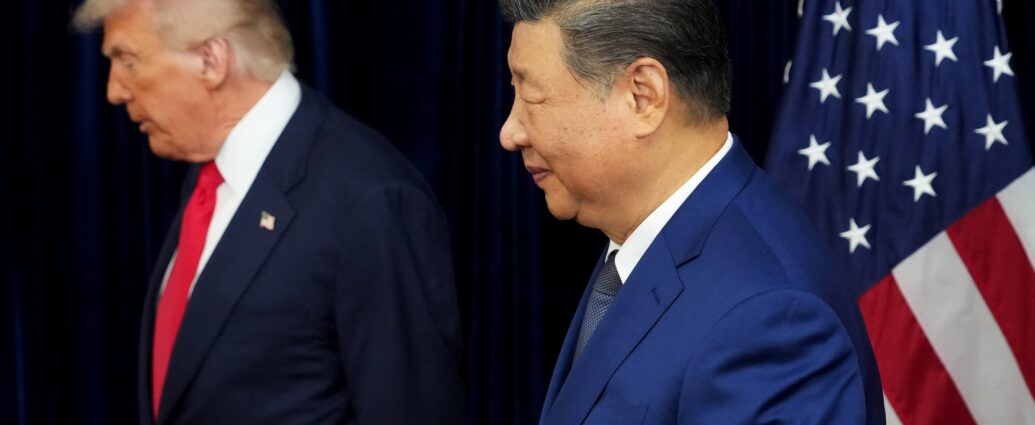
The wrong question about the Paris trade talks isn’t whether they succeeded. It’s why anyone expected them to. China’s negotiating position was set long before anyone sat down at OECD headquarters — and it does not depend on what happens in any meeting room.
After 60 years advising CEOs and boards across the United States, Europe, and Asia — including decades working with Chinese companies and serving on Chinese boards — what came out of Paris only confirmed what I have told business leaders for months: China is not negotiating from uncertainty. It is negotiating from structural advantage.
Both sides called the talks “constructive.” Both described the atmosphere as “remarkably stable.” Both agreed to continue consultations. That is diplomatic language for something more fundamental: no resolution is possible because each side wants what the other cannot give.
China’s position does not depend on what happens in any meeting room. Its exports are still expected to grow 10% to 15% in 2026. Across most industrial categories, there is still no alternative supply chain that can match China on both quality and price. Business leaders I speak with daily are increasing imports from China—not because they want to, but because they have no viable substitute.
That reality is the foundation of Xi Jinping’s confidence. China ran a $1.2 trillion trade surplus in 2025 and is on track to generate at least $1.25 trillion in export earnings this year. No negotiation will quickly change that. Xi is not bargaining from weakness; he is bargaining from a position built over three decades.
That is why the concessions China offered in Paris were predictable. Increased openness to U.S. agricultural imports. A reaffirmation of soybean purchases. Limited discussions around energy and critical minerals. These are real concessions, but they are tactical. They create the appearance of reciprocity while preserving what matters most.
What China ultimately wants is not agricultural trade. It is technology—first semiconductors, then, over time, aerospace.
In recent conversations with senior executives at one of the world’s major aircraft engine manufacturers, a consistent assessment emerged: Chinese firms may already have many of the necessary jet engine designs. The constraint is not design. It is industrialization. Turning those designs into engines that can be produced reliably at scale remains a capability concentrated in the United States, the United Kingdom, and France. As one executive put it to me, “They may have the drawings, but they cannot yet build them at scale.”
This is the gap Beijing is quietly probing in every round of negotiations. It rarely makes headlines, but it is central to China’s long-term strategy.
Much attention is likely to focus on potential reductions in Chinese subsidies. These will be framed as significant concessions. But they are unlikely to change pricing dynamics in any meaningful way. China’s industries operate with massive excess capacity. When survival depends on volume, companies price aggressively with or without government support. The system is already self-sustaining.
This is why tariffs have limited effect. Tariffs operate on margins. China’s advantage is structural: scale, infrastructure, workforce capability, and coordinated state support built over decades. Those advantages cannot be offset in a few years through tariff policy.
Against this backdrop, the delay of the Beijing summit should not be misunderstood. It is not a cost to Xi. It is a benefit.
China has built substantial energy insulation, including large crude stockpiles and a decade-long investment in solar, batteries, and electric vehicles. As global energy markets tighten, China is better positioned than most major economies. At the same time, prolonged geopolitical tension—whether in the Middle East or elsewhere—diverts U.S. focus and increases strategic complexity for Washington.
Time favors the more patient player. And China has made patience a core element of its strategy.
Any eventual agreements will also be reversible. Both sides will retain the ability to pause commitments. Xi is not giving away structural advantages permanently. He never does.
For CEOs, the implications are immediate. The Paris talks did not change the trajectory, and the Beijing summit is unlikely to do so no matter when it happens.
The question is no longer what governments will decide. It is what business leaders will do.
Companies need a clear, unvarnished view of their dependencies: which inputs are irreplaceable, where alternative sourcing is possible, and how operations would respond to disruptions in rare earths, semiconductors, or key industrial components. The most critical risk is not gradual change but sudden interruption—the possibility that China could restrict supply of essential inputs with little warning.
Some CEOs have already mapped these scenarios and built contingency plans. Others are still waiting for policy clarity that may never come.
The reality is this: The United States is buying time to rebuild. China is using time to consolidate. Neither side is stepping back.
The leaders who recognize that dynamic—and act on it now—will shape the next decade. Those waiting for a breakthrough from a summit will find that, quietly, their options have narrowed.
The wake-up call has already sounded. The only question is who is ready to respond.
This story was originally featured on Fortune.com
This post was originally published here

Trump’s DHS pick Markwayne Mullin advances out of Senate committee after tough confirmation hearing
President Donald Trump tapped Sen. Markwayne Mullin, R-Okla., earlier this month to replace Kristi Noem.
This post was originally published here

Some of the world’s poorest countries to lose UK aid due to 56% budget cut
UK’s bilateral aid to Africa, which funds areas such as schools and clinics, to be cut by almost £900m by 2028-29
Some of the world’s poorest countries will lose out on UK aid that funds programmes such as schools and clinics, due to budget cuts set out by the foreign secretary.
The UK’s bilateral aid to Africa will be reduced by almost £900m by 2028-29 – a 56% cut – part of more than £6bn in cuts which are funding an increase in defence spending.
This post was originally published here


Why Is Firefly Aerospace Stock Trading Lower On Thursday?
Firefly Aerospace Inc (NASDAQ:FLY) shares are under pressure during Thursday’s trading session. The decline comes as the company prepares to release its fourth quarter (Q4) 2025 earnings after the market closes today.
The downward move is primarily due to a combination of anticipated quarterly financial results and a severe sell-off in the broader market. The aerospace player is facing stiff resistance from the macroeconomic environment. The Nasdaq has dropped 0.87%, while the S&P 500 has shed 0.62%.
Despite today’s dip, Firefly recently confirmed its Alpha Flight 7 mission successfully reached orbit. The rocket deployed a technology demonstrator for Lockheed Martin Corp …
This post was originally published here



Trump’s lunch for his biggest memecoin holders is going ahead. One attendee plans to come back despite ‘Walmart steak’ at previous meal
President Donald Trump’s memecoin team is inviting top holders out to a meal—again. Last week, the outfit behind the $TRUMP cryptocurrency announced that there will be a “once-in-a-lifetime” experience at the Trump family’s private club Mar-a-Lago in Palm Beach, Florida, in late April, according to the conference’s website.
Attendees to the “THE MOST EXCLUSIVE CRYPTO & BUSINESS CONFERENCE IN THE WORLD” will have access to a gala luncheon where the President is advertised as a keynote speaker. Moreover, “18 global superstars” will be in attendance, though the website advertising the conference didn’t say who these “global giants” are. In the hours after the announcement, the price of Trump’s memecoin soared almost 60%, according to data from Binance, though it’s declined in price since.
Here’s what we do and don’t know about the second outing for the biggest holders of the President’s memecoin:
What happened last year?
In May 2025, the top 220 holders of Trump’s memecoin—launched just days before his inauguration in January 2025—attended a dinner held at the Trump family’s Virginia golf club. The President himself appeared and spoke briefly to the audience. Critics, including Democratic lawmakers, called the dinner a blatant pay-for–access scheme. “The President is working to secure GOOD deals for the American people, not for himself,” a White House spokesperson said at the time to Fortune.
But even for some attendees who ponied up to see Trump in person, the experience was underwhelming. The meal itself proved to be especially disappointing. “Trash,” Nicholas Pinto, a 25-year-old social media influencer, texted Fortune while he was at the banquet. “Walmart steak, man.”
What’s happening this year?
In spite of the media circus and crowd of protesters that the last dinner attracted, Bill Zanker, a longtime Trump business partner who’s behind the memecoin, is organizing another event. This time, the attendee list has expanded to include the top 297 holders of $TRUMP. And the top 29 holders will be able to attend a VIP reception with their “FAVORITE PRESIDENT and other superstar guests.” Last year, attendees included infamous crypto billionaire Justin Sun, the former basketball star Lamar Odom, and Jack Lu, the CEO of the NFT marketplace Magic Eden.
Pinto plans to attend again, despite his previous complaints about the food, and other attendees from the last dinner are also considering going this year, he told Fortune. While he sold a portion of his holdings, he still owns about $40,000 in the cryptocurrency. “My parents are actually kind of concerned that I’m spending money to go to another lunch,” Pinto said, saying it’s a second chance to talk to other high-rollers. “Anyone that I didn’t speak to will probably be at this event. I can talk to them again.”
Will President Donald Trump be there?
While the website advertising the conference in all capital letters says the President will be in attendance, a White House official told Fortune that Trump’s attendance isn’t yet confirmed. In fact, the President is confirmed to attend the White House correspondents’ dinner, which is on the same day as the conference, said the official.
Zanker did not immediately respond to a request for comment on whether Trump has confirmed his attendance to the conference or who the “global superstars” are.
Why is Robinhood mentioned?
The page announcing the upcoming conference claims that “Robinhood is the Preferred Platform for the TRUMP Leaderboard.” This leaderboard breaks down who’s accumulated enough of the memecoin to attend the gala luncheon and other festivities. A spokesperson for Robinhood said that the online brokerage is helping its users connect their accounts to the leaderboard to track their Trump memecoin holdings. The company did not pay or get paid for the integration, said the spokesperson.
This story was originally featured on Fortune.com
This post was originally published here


Senate committee advances Markwayne Mullin’s nomination to lead homeland security
Republican senator’s nomination will now be considered by full Senate, where the GOP appears poised to confirm him
A key Senate committee on Thursday advanced Markwayne Mullin’s nomination to lead the Department of Homeland Security (DHS) on a near party line vote, a day after the Republican senator faced questions at his confirmation hearing about his approach to Donald Trump’s immigration enforcement agenda and accusations of encouraging violence.
Nearly all eight Republicans on the Senate committee on homeland security and governmental affairs voted to advance Mullin’s nomination, with the sole exception of the panel’s chair, Rand Paul of Kentucky, who the day prior had harshly criticized his colleague for comments he made about a neighbor who assaulted Paul in 2017, and an incident six years later in which Mullin readied himself to fight a witness at a committee hearing.
This post was originally published here
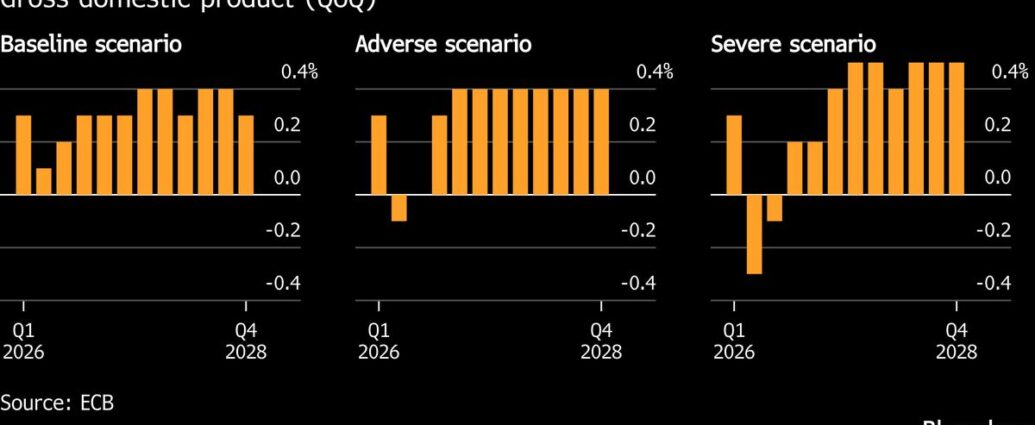
European Central Bank holds rates steady, warns outlook is ‘significantly more uncertain’
The war in Iran has upset the economic equilibrium Europe threatening energy supplies, growth and the outlook for consumer prices, upsetting economic forecasts.
This post was originally published here

What’s Going On With Cheniere Energy Stock Today?
Cheniere Energy, Inc. (NYSE:LNG) shares are trading higher on Thursday, benefiting from ongoing global LNG supply disruptions while also gaining investor support following announcements of higher long-term orders from Thailand.
Apart from Cheniere, energy company Venture Global, Inc. (NYSE:VG) is also gaining on Thursday.
In fact, shares of natural gas-related companies are trading higher amid Iranian strikes on Qatari energy infrastructure and a 30% increase in European natural gas prices to over 70 euros ($80.65) per MWh.
According to Benzinga Pro, LNG stock has gained over 25% in 2023. Investors can gain exposure to the stock via AdvisorShares Focused Equity ETF …
This post was originally published here

General Mills Analysts Cut Their Forecasts After Q3 Results
General Mills, Inc. (NYSE:GIS) on Wednesday posted weaker-than-expected quarterly earnings despite slightly topping revenue estimates.
The company reported third-quarter adjusted earnings per share of 64 cents, missing the analyst consensus estimate of 73 cents. Quarterly sales of $4.437 billion (down 8% year over year) outpaced the Street view of $4.417 billion.
“We started the year expecting that our investments, divestitures, and unfavorable timing comparisons would drive declines in our sales and earnings results through our first three quarters, even as we improved our volume and market share. And that’s what we’ve seen play out,” said General Mills Chairman and Chief Executive Officer Jeff Harmening.
The firm …
This post was originally published here
JPMorgan Chase taps A’ja Wilson, Tom Brady for new athlete wealth management push
JPMorgan’s move reflects growing competition among banks and wealth managers to serve athletes, who are increasingly becoming entrepreneurs and investors.
This post was originally published here

Apple Made $900M From AI Last Year While Rivals Burned Through Cash
Apple Inc. (NASDAQ:AAPL) let the hyperscalers and frontier AI labs fight over who builds the best chatbot. Then it charged them rent.
Analysis firm AppMagic estimates generative AI apps paid Apple nearly $900 million in App Store fees in 2025, with three-fourths coming from OpenAI’s ChatGPT alone.
xAI’s Grok was a distant second at roughly 5%.
The Wall Street Journal reported on Thursday that Apple is on pace to cross $1 billion in AI revenue this year from commissions alone.
The Toll Road Vs. The Money Pit
The contrast with the AI builders is hard to ignore.
Amazon (NASDAQ:AMZN), Alphabet (NASDAQ:GOOGL), Meta Platforms (NASDAQ:META) and Microsoft (NASDAQ:MSFT) are on track to spend close to $700 billion combined on AI …
This post was originally published here


Major League Baseball names Polymarket exclusive prediction market partner
Major League Baseball is partnering with Polymarket to offer exclusive rights and data.
This post was originally published here
Citigroup initiates coverage on this electric vehicle manufacturer with a rare buy rating
The bank thinks the EV play, while high risk, could jump more than 70% thanks to several tailwinds.
This post was originally published here
Crypto.com lays off 12% of workforce in latest company to cite AI in job cuts
CEO Kris Marszalek said the layoffs were in “roles that do not adapt in our new world” as the company integrates enterprise-wide AI.
This post was originally published here




Compare Current Jumbo Mortgage Rates Today – March 19, 2026
This post was originally published here



Compare Current Mortgage Rates Today – March 19, 2026
This post was originally published here



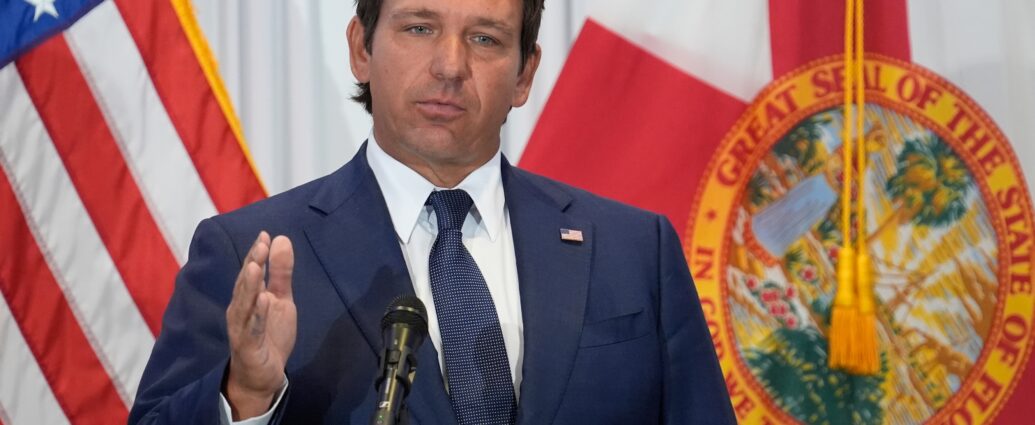
The SAVE Act faces long odds in the Senate. GOP-led states are picking up the cause
Several Republican-led states are passing their own versions of the SAVE America Act, Trump-backed legislation that would introduce new proof-of-citizenship requirements to register to vote.
(Image credit: Chris O’Meara)

This post was originally published here

When Paying for Student Loan Help Is Worth It—And When Free Resources Are Enough
This post was originally published here
Fear, defiance, and anger: Iranians describe life under bombardment
In messages to NPR, Tehran residents describe largely deserted streets roamed by paramilitary officials and vigilantes. They say security forces are banning gatherings for Nowruz, the Persian new year, this week.
(Image credit: Atta Kenare)

This post was originally published here
WA police investigate flyers targeting LGBTIQ+ community distributed to homes
The anonymous leaflets display pictures of LGBTIQ+ people along with accusations of crimes such as drug trafficking and paedophilia
-
Get our breaking news email, free app or daily news podcast
Police in Western Australia are investigating flyers distributed to homes across Perth targeting members of the state’s LGBTIQ+ community.
The flyers, which are anonymous, display photographs of LGBTIQ+ people and falsely accuse them of crimes such as paedophilia.
This post was originally published here
‘One in, one out’ asylum seekers sent to France return to UK in lorries
Exclusive: At least four people have travelled back to the UK by lorry in the last two weeks
Asylum seekers who arrived in the UK in small boats and were forcibly returned to France under the controversial “one in, one out” deal have returned to the UK in lorries, the Guardian has learned.
When asked about the recent returnees, the Home Office said that people who came back to the UK after removal to France were detained and returned to France at the earliest opportunity. Amnesty International UK has called for “one in, one out” to be scrapped.
This post was originally published here
Bernardi vows to pay for flights taken with Hanson on Rinehart’s plane amid confusion about SA’s donations ban
World-leading laws to be tested ahead of South Australian state election, complicated by Hanson and Bernardi’s political status
-
Get our breaking news email, free app or daily news podcast
Cory Bernardi says he will pay for multiple flights with Pauline Hanson in a plane registered to Gina Rinehart’s company amid confusion about whether the trips may contravene South Australia’s new laws banning political donations.
Saturday’s SA election is the first since the new laws came into effect. There are a range of exemptions to the ban, but it is not clear if any of them apply to One Nation as parties, candidates and the electoral commission work through the “world-leading” laws for the first time.
This post was originally published here
More than 500 reports of possible petrol price-gouging made to ACCC since start of Iran war
Fuel retailers put on notice as watchdog promises to come down hard on those doing the wrong thing
-
Get our breaking news email, free app or daily news podcast
The competition watchdog has received more than 500 reports of possible price-gouging at petrol stations since the breakout of war in Iran, with retailers on notice over cost increases for motorists within hours of the first US and Israeli-led strikes.
Gina Cass-Gottlieb, the chair of the Australian Competition and Consumer Commission (ACCC), told Guardian Australia she was receiving further information about fuel price increases moving faster than petrol price cycles in the first days of the war, promising to come down hard against retailers found to be doing the wrong thing.
This post was originally published here





Wall Street banks set for 5% capital decline under new rules
The overhaul follows a years-long Wall Street bank campaign to ease rules introduced after the 2008 financial crisis which they say are stifling the economy.
This post was originally published here
Palmer Luckey: Anduril’s $60B Arsenal-1 Factory Set To Open Within Weeks
Anduril Industries is set to launch its massive Arsenal-1 weapons manufacturing plant in Columbus, Ohio.
Assembly lines expected to become operational within weeks, founder Palmer Luckey revealed to Axios. The facility, designed for rapid mass production of advanced aerial and maritime drone systems, is progressing ahead of its original July 2026 target.
The final site survey is underway, while the first main building—spanning about 1 million square feet—has been completed. Exterior construction on a second building is also finished.
Located adjacent to Rickenbacker Airport, Arsenal-1 provides direct access to two 12,000-foot runways and features a 75-acre private apron that can accommodate military-scale aircraft. This location ensures swift delivery of components and systems to customers, a press release stated.
Once fully scaled, the facility will cover …
This post was originally published here



The Effects of High Oil Prices

Mick Mulvaney: Stop calling it a ‘prediction market.’ It’s sports betting
A simple question: if you wager (or “invest” or “purchase a contract for”) $100 on who will win the NCAA championship next month, is that a sports bet?
If you said yes, you are probably a normal, rational human being. If you said no, you are probably heavily invested in Kalshi or Polymarket.
So-called “prediction markets” bill themselves as the future of truth in America – tools of price discovery, engines of transparency, an “economic function” that will help us understand the world. All of that brought to you by the same apps where users can “purchase” a contract that says there’s a 37% chance the Wizards cover the spread against the Pacers.
The truth is unregulated sports betting is the main attraction on platforms like Kalshi and Polymarket. The overwhelming majority of activity on predictive markets in the U.S. today is sports gambling. Kalshi has put the figure as high as 90%. Illegal sports gambling isn’t a sideshow on these platforms. It’s what’s propelling their eye-popping valuations.
The Commodity Futures Trading Commission’s embrace of these platforms has allowed them to bypass state and tribal regulatory frameworks, offer unregulated online sports gambling all across the country, and skirt hundreds of millions in state sports betting taxes. It is telling that in his defense of prediction markets, CFTC Chair Mike Selig did not mention “sports” once, despite it being the primary use case for prediction markets today.
Congress never gave the CFTC authority to regulate online sports betting, a responsibility that the Supreme Court has affirmed lies with the states. The CFTC was created more than 50 years ago to regulate crop futures and has neither the resources, expertise, nor authority to give operators a blank check to offer online sports betting to anyone and everyone anywhere in the country.
Nearly a dozen states have decided so far not to legalize online sports betting, as is their right. States that have legalized online wagering did so with frameworks in place to protect consumers, set age restrictions, and generate new tax income for community projects. Prediction markets that offer online sports betting don’t comply with any of those voter-approved requirements, and those platforms are even seizing on those age restrictions, which they don’t comply with, to target teenagers and get them hooked on sports betting early.
In South Carolina, the state I previously represented, lawmakers have decided to not yet legalize online sports betting. Prediction markets don’t care, and are actively marketing online sports betting in South Carolina today. I applaud Utah Gov. Spencer Cox for vowing to fight these platforms and the CFTC in court.
The proliferation of predictive market platforms is misleading Americans, particularly our youth, to conflate investing and online sports betting. We are breeding a generation of gamblers in the process.
That is why I am leading a new coalition to pushback on the disinformation that the prediction markets are aggressively pushing in Washington and across the country. Gambling is Not Investing is a new coalition of consumer advocates united in the fight to ensure all forms of online gambling – regardless of what you call it – are appropriately regulated at the state level.
We should stop pretending these platforms are high-minded financial innovations and treat them as what they are: sports betting platforms operating through a regulatory back door. And if they are doing that in states where sports betting is illegal, then those platforms are illegal.
If states and tribes must earn the right to offer legal sports betting through legislation, licensing, and strict consumer protections, then so should everyone else. Underage users and at-risk gamblers shouldn’t be “trading the future” without guardrails. And companies shouldn’t be allowed to evade state and tribal law simply by swapping the word “bet” for “predict.”
The solution isn’t complicated: regulate this activity as sports betting. Enforce age standards. Require responsible gaming tools. Pay appropriate taxes. Respect state and tribal frameworks. Protect consumers. And stop letting a clever label rewrite the rules.
Because when someone is wagering on a point spread, it isn’t a “prediction.” It’s a bet.
The opinions expressed in Fortune.com commentary pieces are solely the views of their authors and do not necessarily reflect the opinions and beliefs of Fortune.
This story was originally featured on Fortune.com
This post was originally published here

Bessent rules out government intervention in oil futures market during Iran war
Treasury Secretary Scott Bessent said the U.S. government will not intervene in oil futures markets even as the administration moves to offset supply disruptions tied to the Iran conflict, arguing that Washington’s response will focus on boosting physical crude availability instead.
“We’re absolutely not doing that,” Bessent told FOX Business’ “Mornings With Maria” on Thursday, when asked about possible Treasury intervention in the futures market. “We’re not intervening in the financial markets. We are supplying the physical markets.”
In an interview with Maria Bartiromo, Bessent said the administration has prepared a coordinated supply response designed to cushion the impact of any temporary disruption around the Strait of Hormuz. He said the U.S. had already moved to “unsanction” Russian oil cargoes already on the water, estimated at about 130 million barrels, and could do the same with roughly 140 million barrels of Iranian oil in floating storage.
“In essence, by the time we unsanctioned the floating Iranian oil, we would have intervened and we would have created about 260 million excess barrels of energy,” Bessent said, calling that a “physical intervention” rather than a financial one.
Bessent said that volume could help cover what he described as a temporary deficit of 10 million to 14 million barrels per day if shipping through the strait is interrupted, providing roughly three weeks of market stabilization. He also pointed to a 400 million-barrel coordinated Strategic Petroleum Reserve release approved last week and said the U.S. could act again unilaterally if needed.
TRUMP WAIVES JONES ACT FOR 60 DAYS IN BID TO FREE UP THE FLOW OF OIL TO US PORTS
“The largest coordinated SPR release in history, 400 million barrels, was approved last week,” he said. “The U.S. could unilaterally do another SPR release to keep the price down.”
Bessent framed the strategy as part of a broader effort to balance pressure on Iran with energy market stability. He said the U.S. has avoided striking Iranian energy infrastructure even while escalating military operations, arguing the goal is to preserve supply while keeping pressure on Tehran.
GET FOX BUSINESS ON THE GO BY CLICKING HERE
“We have lots of levers,” Bessent said. “We’ve got plenty more that we can do.”
CLICK HERE TO READ MORE ON FOX BUSINESS
Supplying the world more oil from Iran is going to ultimately bring down prices in America, according to Bessent, who noted the U.S. does not rely on Middle East oil but the chokepoint on oil through the Strait of Hormuz has indirectly strained supply and spooked crude futures markets.
This post was originally published here

Dow Falls Over 300 Points; US Initial Jobless Claims Fall
U.S. stocks traded lower this morning, with the Dow Jones index falling more than 300 points on Thursday.
Following the market opening Thursday, the Dow traded down 0.76% to 45,872.27 while the NASDAQ fell 1.25% to 21,876.31. The S&P 500 also fell, dropping, 0.93% to 6,563.00.
Check This Out: How To Earn $500 A Month From Goldman Sachs Stock Ahead Of Q4 Earnings
Leading and Lagging Sectors
Energy shares climbed by 0.7% on Thursday.
In trading on Thursday, materials stocks fell by 2.5%.
Top Headline
U.S. initial jobless claims declined by 8,000 from the previous week to 205,000 in the second week of March, compared to market estimates of a 2,000 gain.
Equities Trading UP
This post was originally published here
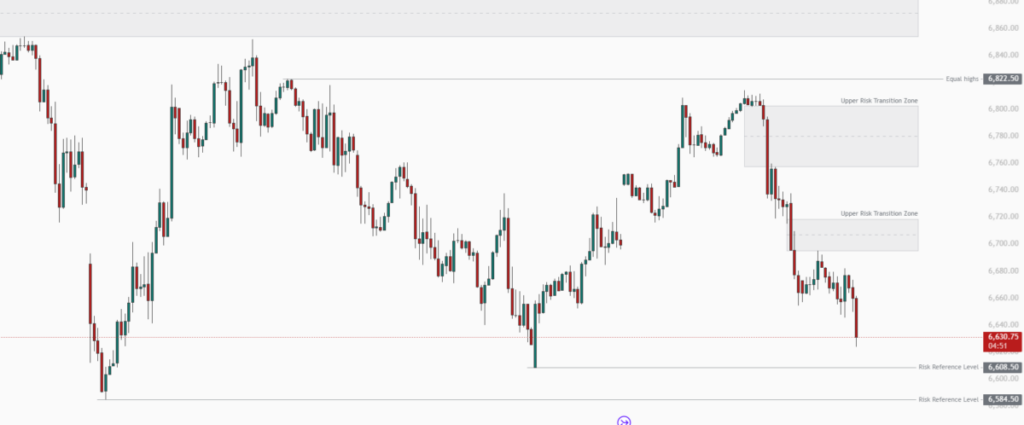
Nasdaq, S&P 500 Approach Support As Volatility Contracts
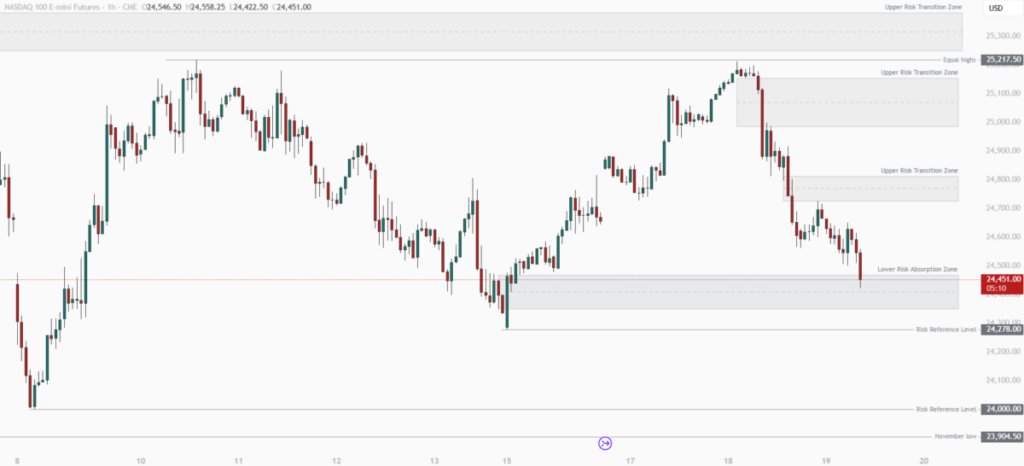
The Nasdaq (NQ) and S&P 500 (ES) futures have pulled back notably, reflecting a shift in short-term market structure. Following a steady advance from Sunday’s open, price action has reversed, increasing focus on nearby support zones and liquidity areas. Current conditions are defined by compressed ranges and elevated sensitivity to key levels.
Price is now approaching critical downside liquidity, with the potential to test not only Sunday’s lows but also the prior week’s lows from March 8. This places emphasis on how the market behaves within established support zones, rather than directional assumptions.
In …
This post was originally published here

Stocks and bonds tumble as investors price in ‘protracted energy shock’
This post was originally published here
Micron falls 5% after blowout earnings. CEO says it can supply only a fraction of key customer needs
Micron stock is up more than 350% in the past year, however, thanks to a memory supply shortage driven by surging demand for Nvidia’s AI chips.
This post was originally published here


Bitcoin Crashes 4%, Loses $70,000: Why Is BTC Going Down?
Bitcoin (CRYPTO: BTC) has tumbled below $70,000 as equities continue to slide lower while oil prices surge.
Bearish Structure Remains
Crypto analyst Benjamin Cowen maintains a cautious outlook, arguing that recent upside is likely a countertrend rally rather than the start of a new bull market.
He pointed to historical patterns where Bitcoin grinds higher during bear phases before breaking down to new lows.
Cowen also highlighted the recurring four-year cycle, noting that in past midterm years, including 2014, 2018 and 2022, early-year lows were not the final bottom.
Bitcoin may still be forming a …
S&P 500 falls to a key technical spot. Traders watch whether it will hold
The latest losses put the benchmark stock index down more than 3% since the U.S.-Iran war began.
This post was originally published here
Jabil Analysts Increase Their Forecasts After Better-Than-Expected Q2 Results
Jabil Inc. (NYSE:JBL) on Wednesday delivered stronger-than-expected fiscal second-quarter 2026 results and raised its full-year outlook.
Quarterly adjusted earnings per share of $2.69, beating the analyst consensus estimate of $2.51. Quarterly net revenue of $8.28 billion, down by 23.1% year-over-year (Y/Y), outpaced the analyst consensus estimate of $7.74 billion.
Jabil expects fiscal third-quarter 2026 net revenue of $8.100 billion-$8.900 billion compared to the analyst estimate of $8.037 billion and adjusted EPS of $2.83-$3.23 against the consensus estimate of $2.89.
The company, known for leveraging advanced technologies such as AI and automation to improve manufacturing and supply chain operations, projects fiscal 2026 net revenue of $34 billion (up …
This post was originally published here

Indonesia’s richest man, tobacco tycoon Michael Bambang Hartono, dies at 86
Indonesia’s richest man, Michael Bambang Hartono, who helped turn the Djarum cigarette company into one of the country’s largest business empires and later became a controlling shareholder of Bank Central Asia, Indonesia’s biggest private lender, died Thursday. He was 86.
Hartono died at a hospital in Singapore on Thursday afternoon, the Djarum Group said in a statement.
“With deep sorrow, the extended family of PT Djarum announces the passing of one of our company’s leaders, Michael Bambang Hartono,” the statement said. “We extend our gratitude for his dedication and service.”
The family has not revealed the cause of his death. He had previously acknowledged suffering from chronic obstructive pulmonary disease and a heart attack.
Hartono and his brother Robert Budi Hartono grew their inherited family business into a conglomerate based in Central Java’s Kudus regency, operating in banking, palm oil plantations, properties, electronics, telecommunications, and an e-commerce platform.
Their flagship company PT Djarum produced dozens of domestic and international brands, primarily kretek, or clove cigarettes, including Djarum Black, Djarum Super and L.A. Lights. The brothers also are the biggest shareholders in Bank Central Asia, Indonesia’s largest bank, which had revenue of 57.5 trillion rupiah ($3.43 billion) last year.
Their net worth was more than $43.8 billion, making the Hartono brothers the wealthiest in Indonesia. Michael Hartono had about $25.1 billion in December 2024, making him the 76th richest person in the world, according to Forbes.
In 2004, they won the right to redevelop Hotel Indonesia, a historic site in the heart of Jakarta. They transformed the property into a shopping mall, office, luxury hotel and apartment complex called Grand Indonesia.
Through its parent company, PT Dwimuria Investama Andalan, better known as the Djarum Group, the company has diversified into non‑tobacco businesses, including banking, technology and food.
Djarum also owns PB Djarum, one of Indonesia’s most prominent badminton clubs, whose players have won numerous world championships for Indonesia, and the Italian football club Como. The company was a major sponsor of Indonesia’s top soccer league from 2005 to 2011.
Hartono was also a champion bridge player and the president of the South East Asia Bridge Federation. He received an award from the World Bridge Federation in 2017 for his efforts in making bridge a category in the Asian Games.
He represented Indonesia at the 2018 Asian Games in bridge, winning a bronze medal with his team, making him the oldest Indonesian Asian Games medal winner.
When he and other athletes were honored at the presidential palace for Indonesia’s performance at the Games that year, Hartono received a reward of about $16,700, which he donated to the development of his beloved card game.
Born Oct. 2, 1939, Hartono watched his father roll tobacco with a native clove spice to make the cigarettes Indonesians call “kretek” for the crackling sound made by the burning scented spice. The brothers took over the business upon their father’s death in 1963, worked on developing new blends and began exporting in 1972 to many countries, including the U.S.
They created their first machine-made kretek, the Djarum Filter, in 1976, and introduced the machine-rolled Djarum Super, in 1981.
It is one of the most popular brands in Indonesia, the world’s fourth most populous nation, where more than 64 million adults smoke daily.
Djarum’s clove products are now marketed as “filtered cigars” and are wrapped in tobacco leaf instead of black paper since the Family Smoking Prevention and Tobacco Act banned most flavored cigarettes in the U.S.
Today, about 60,000 workers at their factories manually roll Djarum’s cigarettes, which are sold mostly to lower-income earners.
Hartono is survived by his wife and a son.
This story was originally featured on Fortune.com
This post was originally published here

Why Decent Holding (DXST) Stock Is Trending Lower Thursday
Decent Holding Inc. (NASDAQ:DXST) shares are under pressure during Thursday’s pre-market session.
Strategic Shift to Senior Care
While historically known for wastewater treatment, the company is pivoting. On March 5, it launched an AI-powered senior care platform through its subsidiary, Suncare (Shanghai) Health Technology Co., Ltd.
Chairman Dingxin Sun noted the aging population is a “significant structural opportunity.” The company is targeting China’s silver economy, estimated at $4 trillion. To date, the …
This post was originally published here


British schoolgirl stranded in Denmark after return flight blocked over UK border rules
Exclusive: Hanne, 16, from Sussex, was denied board on flight to London after weekend in Copenhagen
A 16-year-old British schoolgirl has been left stranded in Denmark after she was refused board on a flight to London because of new UK border rules introduced on British dual nationals.
Hanne*, from Sussex, was stopped from boarding a flight home on 8 March after a weekend seeing her British father, who is an academic on a short work stint at a university in Copenhagen.
Has your child been refused board on a flight because of the new rules? If you want to share your story, email: lisa.ocarroll@theguardian.com
* Names have been changed.
This post was originally published here
Europe tells Trump to get lost on Iran, again
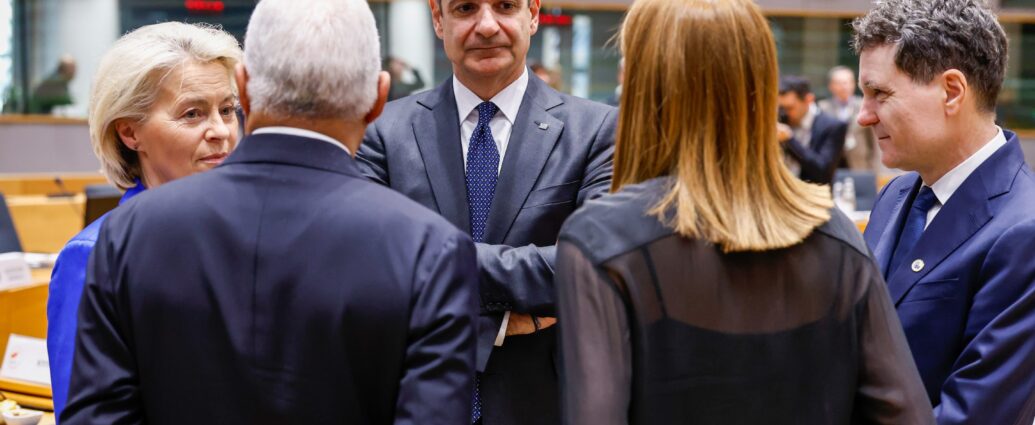
European leaders doubled down Thursday on refusing to join the United States and Israel military campaigns in the Middle East as they met in Brussels to grapple with rising oil and gas prices caused by the war.
European leaders have deflected entreaties from U.S. President Donald Trump to send military assets to secure the Strait of Hormuz, a key waterway for the global flow of oil, gas and fertilizer. However, rising energy prices because of the war and fears in Europe of a new refugee crisis have pushed leaders to make the Middle East a priority at the summit.
“We are very worried about the energy crisis,” said Belgian Prime Minister Bart De Wever ahead of the summit. He said that energy prices were too high before the war, but that the conflict “created another spike.”
“If that becomes structural, we’re in deep trouble,” he said.
The summit was initially expected to center on overcoming Hungary’s opposition to a massive loan for Ukraine, but the conflicts in Iran and Lebanon reset the agenda.
European leaders have no ‘appetite’ for joining the war
European leaders have been deeply critical of the Iranian government, but none have offered immediate help to the U.S. Britain is flat-out refusing to be drawn into the war. France says the fighting would have to die down first.
Austrian Chancellor Christian Stocker said that Europe “will not allow itself to be blackmailed” into joining the United States and Israel military campaign in the Middle East.
“Europe — and Austria as well — will not allow itself to be blackmailed,” he said ahead of the European Council summit of the leaders of the 27 EU nations. “Intervention in the Strait of Hormuz is not an option for Austria anyway.”
EU foreign policy chief Kaja Kallas said there was “no appetite” among leaders to expand a European naval force in the Red Sea to help secure the Strait of Hormuz or otherwise join the fray.
Looking ahead to the war’s end
Chancellor Friedrich Merz said the war must end before his country can help with matters such as keeping shipping lanes clear.
“We can and will commit ourselves only when the weapons fall silent,” he said of potential German military support to secure shipping lanes in the Strait of Hormuz. “We can then do a great deal, up to opening sea lanes and keeping them clear, but we’re not doing it during ongoing combat operations.”
He said that would require an international mandate, among other complicated steps, “before we can even consider such an issue.”
While the EU isn’t a party to the conflict, Dutch Prime Minister Rob Jetten said he understood the U.S. and Israeli reasons for launching the campaign against the “brutal” Iranian government. He called for the EU to increase both sanctions on Iran and support for Iranian opposition groups
But others blasted the war as “illegal” and destabilizing.
“We are against this war because it is illegal,” Spanish Prime Minister Pedro Sánchez said: “It’s causing a lot of damage to civilians, of course, refugees and the economic consequences that the whole world, especially the global south, is already suffering.”
Trump had mentioned NATO support for clearing the Strait of Hormuz but has not officially requested it, said Evika Silina, prime minister of Latvia, one of the 23 out of the 27 EU nations that are NATO members.
“When there will be some official requests, I think we always have to evaluate those requests.”
No single fix for the EU’s diverse energy markets
The European Commission has told leaders it has a mix of financial instruments that member nations could deploy to lower energy prices, which will be up for discussion. No single policy will likely work to blunt the economic shocks from the war across the bloc’s myriad markets from Romania to Ireland.
EU leaders are hoping their experience weaning off of Russian energy in the wake of the 2022 invasion of Ukraine and of building up the bloc’s military spending towards self-sufficiency will enable to them to do the same for energy independence.
While some European capitals have called for the suspension or scrapping of climate policies to stave off the worst of the recent spike in energy prices because of the war, others have argued that the EU’s long-term energy strategy should be home-grown sustainable energy decoupled from vulnerable fossil fuel markets.
European Council President Antonio Costa said that “energy means security” and that the EU should “build our own capacity to produce our own energy, because it’s the only way to be secure.”
___
Associated Press writers Pietro De Cristofaro, Geir Moulson in Berlin and Sylvie Corbet in Paris contributed to this report.
This story was originally featured on Fortune.com
This post was originally published here
AI’s memory chip shortage is quietly taxing the entire economy
Your next laptop, smartphone, or even refrigerator is going to cost more — and you can thank AI for that. The AI boom has triggered what insiders are calling “RAMageddon”: a gold rush on high-bandwidth memory chips that is squeezing out nearly every other buyer in the global market, driving up prices across consumer electronics and straining industries from automotive to healthcare. Even Apple CEO Tim Cook has warned about the pressure AI infrastructure costs are placing on hardware margins.
The biggest AI players have effectively imposed a tax on the entire economy — and most people have no idea it’s happening.
How the once-affordable memory chip became a luxury good
Modern computing relies on several types of memory. SRAM is the fastest and most expensive; it’s used in small amounts inside processors. DRAM is the workhorse of the group: cheap, abundant, found in everything from laptops to cars to refrigerators. Then there’s High Bandwidth Memory or HBM. This is a specialized, premium form of DRAM that stacks chips die-to-die to achieve dramatically faster data transfer speeds. The cost for this premium memory is quite steep: a single silicon wafer provides 3x as much commodity DRAM as HBM. Fab processing time for HBM is significantly longer too, making the supply problem worse. As a result, producing more HBM equates to fewer total memory chips produced.
For AI training and inference, HBM has become the essential ingredient. It’s the jet fuel that powers the GPUs running today’s largest and most advanced models.
Memory manufacturers have a limited number of wafers they can produce from each fab, or silicon factory. The same production lines that churn out commodity DRAM for the devices consumers use every day are being allocated to building HBM. It’s a rational business decision: HBM commands premium prices in a volatile industry and comes with massive guaranteed purchase orders. In fact, AI firms and their peers have already locked up HBM supply well into 2027. The result is a tightening of commodity memory supply, rising prices, and longer lead times with ripple effects that touch almost every industry. And right now, the industry’s biggest players have cornered the supply, creating the core tension driving the memory shortage. The AI industry is effectively taxing the entire economy in order to build its own.
The memory wall explained
The scale of AI’s memory appetite is staggering. As model sizes have grown from millions to billions to trillions of parameters and context windows have grown from thousands of tokens to tens of millions of tokens, memory requirements have increased in step, and the architecture of data centers has struggled to keep pace. This is the industry’s “memory wall”: a fundamental bottleneck where memory bandwidth and capacity can’t keep up with the processors demanding it.
HBM was an elegant solution to an earlier version of this problem. When models were smaller (such as GPT-2 and GPT-3), placing memory adjacent to the processors and delivering data at extreme speeds worked well. But we’ve since blown past that era. Today’s frontier models exceed two trillion parameters and the next generation will be over five trillion. A single HBM stack holds about 24 gigabytes. That’s roughly one percent of what today’s workloads actually need and far less than that for the next generation of workloads.
The result is that data centers must now scale out exponentially. They chain together hundreds of processors across servers and racks. At that point, HBM’s killer feature of extreme local bandwidth gets strangled by the comparatively slow links connecting all of these machines. The industry has built a gold-plated solution to the problem: AI companies pay the HBM premium while realizing only diminishing returns on performance.
The AI gold rush leaves most behind
The prevailing narrative frames AI infrastructure investment as broadly good: better for memory makers, better for chip companies, better for innovation everywhere. The reality is more lopsided.
Memory manufacturers may profit in the short term. But the true winner is concentration itself. When the HBM supply is locked up by a handful of hyperscalers, it functions as a moat. Startups, enterprises, and established industries all face higher hardware costs and more limited access to the advanced AI capabilities they need to compete. The companies that can afford to stockpile chips don’t just win today; they entrench advantages that could become impossible to dislodge.
Everyone else is caught in the crossfire. Consumers will pay more for devices with less capability. Businesses face a hardware cost environment that has become more taxing and volatile. And the broader technology ecosystem is competing for memory resources against an industry that has essentially unlimited capital to outbid them.
Charting a more sustainable path for AI and memory
The AI industry loves to talk about democratization: open models, accessible tools, intelligence for everyone. That story is increasingly disconnected from the hardware reality being constructed underneath it.
The current trajectory isn’t sustainable. Pouring more investment into HBM capacity addresses a symptom while ignoring the underlying disease. The industry needs to move beyond its fixation on a single memory architecture designed for an earlier era of AI and invest seriously in new approaches—ones that can meet AI’s demands today, and as they grow a hundredfold in the next few years.
Solving this requires more than ramping up additional HBM fabs. It requires a fundamental rethinking of how memory is architected for AI. What’s needed are memory systems that are smart, fast, and compact — architectures that can scale alongside model growth without requiring brute-force resource consumption. Most importantly, the emerging architecture must make AI accessible to more than just a handful of companies.
The memory wall isn’t just an engineering footnote in AI’s rise. It’s the defining infrastructure challenge of this era. The industry’s current answer of “more HBM, faster, at any cost” is a perilous road that risks eroding competition, innovation, and consumer trust. As an industry, we must find a way to do better, and quickly, before it’s too late. The most immediate relief available is a pivot away from HBM dependency toward commodity DRAM architectures engineered specifically for AI’s requirements. The window to act — before the gap between AI haves and have-nots becomes unbridgeable — is closing fast.
The opinions expressed in Fortune.com commentary pieces are solely the views of their authors and do not necessarily reflect the opinions and beliefs of Fortune.
This story was originally featured on Fortune.com
This post was originally published here


Trump seems to have put himself in a position where the only Iran solution is troops on the ground
President Donald Trump is facing perhaps the most daunting question of the war with Iran, one that could define his time in office: Will he put U.S. troops on the ground in Iran to secure some 970 pounds of enriched uranium that Tehran could potentially use to build nuclear weapons?
Trump has offered shifting reasons for launching the war, but he has been consistent in articulating that a primary objective in joining Israel in the military action is ensuring that Iran will “never have a nuclear weapon.”
The president has been more circumspect about how far he’s willing to go to follow through on his pledge to destroy Iran’s weapons program once and for all, including seizing or destroying the near-bomb-grade nuclear material that Iran possesses.
Much of it is believed to be buried under the rubble of a mountain facility pummeled in U.S. bombings Trump ordered last June that he had claimed “obliterated” Tehran’s nuclear program.
It’s a risky, complicated project that many nuclear experts say cannot be done without a sizable deployment of U.S. troops into Iran, a dangerous and politically fraught operation for the Republican president, who has vowed not to entangle the U.S. in the sort of extended and bloody Middle East conflicts that still loom large on America’s psyche.
At the same time, lawmakers and experts remain concerned that if Iran hard-liners emerge from the fighting, they’ll be more motivated than ever to build nuclear weapons as they look to deter the U.S. and Israel from future military action, a dynamic that makes taking control of Iran’s enriched uranium even more critical. That stockpile could allow Iran to build as many as 10 nuclear bombs, should it decide to weaponize its program.
Some lawmakers, like Sen. Richard Blumenthal, D-Conn., say they remain deeply fearful that the president has put the nation on a path that will require putting troops inside Iran for what he called Trump’s confused and chaotic objectives.
“Some of the objectives that he continues to espouse simply cannot be achieved without a physical presence there — securing the uranium cannot be done without a physical presence,” said Blumenthal, a member of the Senate Armed Services Committee.
Meanwhile, Republican allies of Trump stress that there are plans in place to deal with the enriched uranium. Senate Foreign Relations Committee chairman James Risch, R-Idaho, on Wednesday cited “a number of plans that have been put on the table.” He declined to elaborate.
Others acknowledged the complications of deploying troops into Iran.
“No one has given me a briefing on how you would do it without boots on the ground,” said Sen. Rick Scott, R-Fla., a member of the Senate Armed Services Committee. “It doesn’t mean you can’t. But no one’s ever briefed me about it.”
Scott added it’s not tenable to allow the stockpile to remain: “I think it would be helpful to get rid of it.”
Trump and his advisers are rigidly obtuse
Nearly three weeks into a conflict that’s left hundreds of people dead, tested longtime alliances and brought pain to the global economy, Trump and his top advisers have been rigidly obtuse about their deliberations over Iran’s uranium stockpile.
“I’m not going to talk about that,” Trump said last week when asked about the enriched uranium. “But we have hit them harder than virtually any country in history has been hit, and we’re not finished yet.”
Later that day, during an appearance in Kentucky, Trump appeared to claim the strikes had already neutralized the threat. “They don’t have nuclear potential,” he said.
Meanwhile, Defense Secretary Pete Hegseth told reporters earlier this week that the administration sees no point in telegraphing “what we’re willing to do or how far we’re willing to go” while asserting “we have options, for sure.”
Experts say it’s doable but won’t be easy
Richard Goldberg, who served as director for countering Iranian weapons of mass destruction for the National Security Council during Trump’s first term, said that seizing or destroying the enriched uranium is certainly doable, if the president decides to go that route.
The U.S. and Israeli forces have been making strides toward creating the conditions — namely, establishing total air superiority — that would allow for special operations forces operators, who are trained in blowing up centrifuges and dealing with nuclear material, to conduct such an operation if the president decides to go that route.
To be certain, a troops-on-the-ground effort is expected to be far more complicated than other recent high-profile, lightning-strike insertion operations, such as the January capture of Venezuela’s Nicolás Maduro or the May 2011 killing of Osama bin Laden, Goldberg said. And the likely need to remove rubble to get to the canisters of enriched uranium adds another layer of complexity, because it would require heavy construction equipment.
“But if you actually own the airspace and you can have close air support and drones and everything else up in the sky for pretty wide perimeter, presumably you could do a lot,” said Goldberg, who is now a senior adviser at the Foundation for Defense of Democracies, a hawkish Washington think tank.
International Atomic Energy Agency chief Rafael Grossi told reporters in Washington this week that the assumption is much of the enriched uranium remains in the trio of Iranian nuclear sites bombarded last year by the U.S.
“The impression we have … is that it hasn’t been moved,” said Grossi, adding that a bulk of the material is beneath the rubble at Iran’s Isfahan facility while lesser amounts are at the Natanz and Fordow facilities that were destroyed in last year’s American strikes.
Testifying before a Senate committee on Wednesday, Director of National Intelligence Tulsi Gabbard in her prepared remarks said that the U.S. attacks on Iran had “obliterated” Iran’s nuclear enrichment program and buried underground facilities.
Gabbard said the U.S. has been monitoring whether Iran’s leaders will try to restart its nuclear program but said that they have not tried to rebuild their nuclear enrichment capability. She added that the clerical authority overseeing Iranian government has been degraded in Israel’s strikes on its leadership but remains intact.
Brandan Buck, a senior foreign policy fellow at the Cato Institute, said that an effort to extract or dilute the enriched material would likely take more than 1,000 troops at each Iranian site and would take time to complete.
On the other hand, not acting to secure the enriched uranium also comes with risk. Should Iran’s hard-liners remain in power, and with enriched material, they will now have greater motivation to build a nuclear weapon.
“Trump has put himself between a rock and a hard place,” Buck said. “Throughout this, he has had maximalist aims, but he’s wanted to maintain minimal effort in order to keep the costs low.”
___
Associated Press writers Stephen Groves, Matthew Lee and Lisa Mascaro contributed to this report.
This story was originally featured on Fortune.com
This post was originally published here
Uber Fires Up Rivian’s Robotaxi Drive With $1.25 Billion Deal
Rivian (NASDAQ:RIVN) shares are trading higher during Thursday’s premarket session following a billion-dollar partnership announcement with Uber Technologies, Inc. (NYSE:UBER).
The news comes as the broader market is experiencing a mixed performance, with major indices showing losses.
Uber will invest up to $1.25 billion in Rivian through 2031, contingent on achieving specific autonomous milestones.
The investment represents a significant capital boost relative to Rivian’s $5.387 billion in full-year 2025 revenue, up 8% from $4.970 billion in 2024, underscoring the deal as strategic funding support.
Rivian had long-term debt worth $4.44 billion as of December 2025.
The initial commitment includes a $300 million investment, aimed at deploying thousands of Rivian R2 robotaxis across 25 cities by the end of 2031.
The partnership is expected to accelerate Rivian’s path to level 4 autonomy, with initial deployments planned for San Francisco and Miami starting in 2028.
The collaboration could lead to the purchase of up to 40,000 additional autonomous vehicles by 2030, enhancing Rivian’s position in the autonomous vehicle market.
The broader …
This post was originally published here
This Xponential Fitness Analyst Is No Longer Bullish; Here Are Top 3 Downgrades For Thursday
Top Wall Street analysts changed their outlook on these top names. For a complete view of all analyst rating changes, including upgrades, downgrades and initiations, please see our analyst ratings page.
- Evercore ISI Group analyst Jonathan Chappell downgraded CSX Corp (NASDAQ:CSX) from Outperform to In-Line and raised the price target from $40 to $41. CSX shares closed at $39.64 on Wednesday. See how other analysts view this stock.
- Raymond …
This post was originally published here
Traders now see little chance of an interest rate cut this year following Fed decision
All of the positive economic talk out of this week’s Federal Reserve meeting had a negative impact on investors
This post was originally published here

The AI era is turning Corporate America into a CEO churn machine
Adobe’s longtime CEO Shantanu Narayen announced he was stepping down last week, a move caused, at least in part, by investors’ impatience with the software company’s AI transition. Abode’s stock has been crushed in the “SaaSpocalypse” market selloff that has hit companies whose per-seat software tools are especially vulnerable to automation. Shares are down 25% year-to-date, and investors weren’t impressed with Adobe’s AI-driven quarterly revenue.
Narayen’s exit is a stark reminder that, after years of hyping the technology, CEOs now must turn their AI rhetoric into results—or risk being shown the door. The make-or-break moment for CEOs is contributing to an era of rapid turnover among chief executives. Last year, companies in the S&P 1500 named 168 new CEOs, the highest total in more than 15 years, according to Spencer Stuart, a global executive search and leadership advisory firm. Already this year, the CEOs of several companies including Lululemon, Disney, Target, and Walmart, have left their roles.
CEO tenures are getting shorter and fewer incoming chief executives have prior CEO experience, the data shows, making the two-time CEO exceedingly rare. All told, corporate America has turned into a CEO meat-grinder; it’s chewing up and spitting out leaders at a pace not seen in a decade and a half.
“What we’re seeing right now is clearly a sign of stress,” says Dirk Jenter, professor of finance at the London School of Economics and Political Science. AI is only one part of the reason why.
AI hype is becoming a career hazard for corporate leaders
CEOs have been quick to blame recent layoffs of rank-and-file employees on AI, but their own departures are rarely explained so simply. Still, there’s little doubt that expectations around AI are factoring into chief executives’ more frequent departures in one way or another.
There are circumstances like Narayen’s in which shareholders are displeased with a CEO’s ability to deliver on an AI vision. “Investors are not necessarily super patient,” Jenter says. “They see billions being spent on AI investments, and they see sort of very little in short-term return on investment, and that puts a lot of pressure on company leadership.”
But investors are also expecting CEOs to achieve overall growth on par with the extraordinary gains recorded at companies at the center of the AI revolution, the so-called “Magnificent 7.”
“There’s increasing pressure on all CEOs to be growing at similar kinds of rates,” says Anthony Nyberg, a management professor at the University of South Carolina’s Darla Moore School of Business. “[It’s] not actually sustainable or manageable for those companies.”
A surge in shareholder activism is another sign of investors’ growing impatience. Activist campaigns hit an all-time high of 255 last year, surpassing the 2018 record, according to Barclays. U.S. campaigns rose 23%.
Activists are increasingly targeting CEOs. “Five or ten years ago, activism was largely about corporate policies,” Jenter says. “Now they’re going directly after the top leadership of companies.” Thirty-two U.S. CEOs resigned within a year of an activist campaign, a 38% increase over the four-year average, Barclays’ data shows.
And then there are instances in which boards tap fresh (often younger) blood to guide companies through the AI transition. Doug McMillon, Walmart’s highly-respected former CEO who, by all accounts, left on his own terms, cited AI in explaining his decision to step down in January. He said his successor, John Furner, was “uniquely capable of leading the company through this next AI‑driven transformation.”
Another force behind the churn: Today’s board directors are less likely to be current or former CEOs than in the past, studies show. Nyberg argues that these less CEO‑centric boards tend to be less sympathetic to sitting chiefs—and perhaps less attuned to the full scope of the job—making them more inclined to support a leadership change.
Experts also argue that CEO turnover is catching up after a backlog from the COVID era, during which boards favored continuity.
All told, CEOs are getting less time to deliver on their visions. The average tenure for S&P 1500 CEOs hit 8.5 years last year, down from 9.2 years in 2024—and the shortest since 2019.
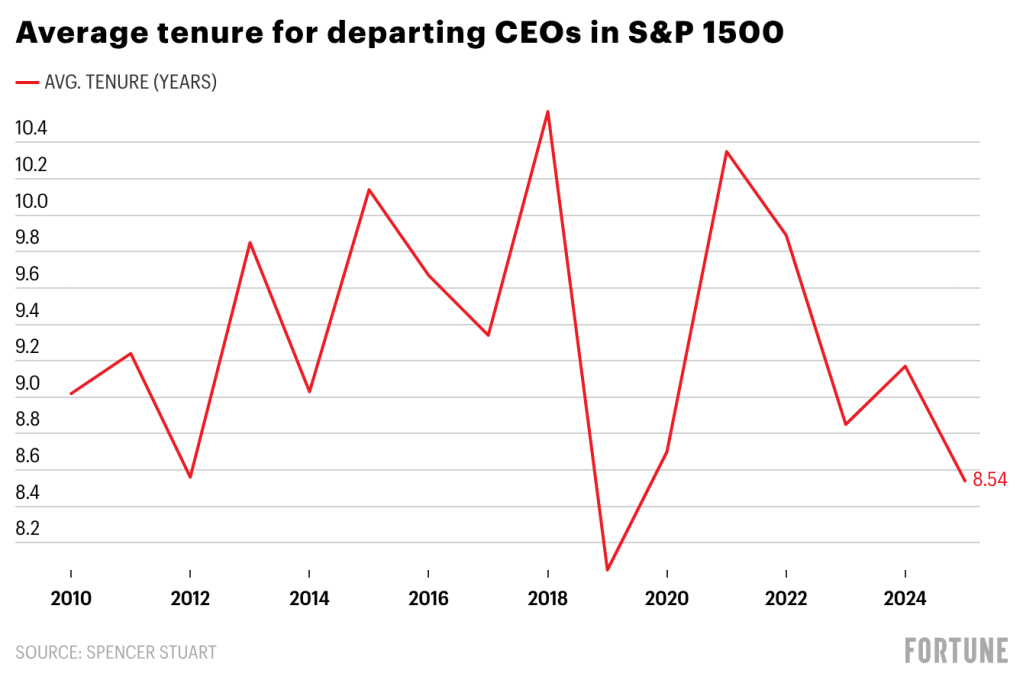
The broader CEO churn trend
The rapid turnover is requiring boards to fulfill their succession planning responsibilities, and they’re increasingly dipping into their companies’ own ranks to replace chief executives.
The share of externally hired CEOs hit 60% in 2025, up from 57%, a historic low, in 2024. But there are signs that boards have been caught off-guard by the pace of CEO turnover. Nineteen new CEOs were appointed from their company’s board last year, the most since 2020, according to Spencer Stuart, “suggesting that some companies are not ready for succession.”
Almost always, internal CEO hires lack prior chief executive experience, a trait that shows up in the data. In 2025, 84% of newly appointed S&P 1500 CEOs in 2025 were serving in their first enterprise CEO role, reversing a multiyear trend toward CEOs with prior public-company experience.
Boards often view experienced CEOs as a safer bet, but Spencer Stuart research shows that, compared to veteran chief executives, rookies led their companies to higher market-adjusted total shareholder returns, with less volatility in the stock price.
As the number of first-time CEOs has increased, the age of new CEOs has dropped, hitting 54.4 in 2025, down from 55.8 in 2024. The share of incoming CEOs 60 and above fell to 18%, after hovering near 30% for the past two years.
Even with higher stakes and higher turnover, today’s CEOs are unlikely to garner much sympathy from the wider public. Median chief executive compensation hit $16.5 million in the S&P 500, according to 2025 proxy filings. (Exorbitant pay may actually be one reason two-time CEOs are so rare; few need the money.)
Still, rapid CEO churn should raise alarm bells outside the boardroom. CEOs who hold onto the job past year ten beat the S&P 500 over the course of their time in the job, more than those in any other length of tenure, Spencer Stuart research shows. “That’s where the greatest shareholder value creation comes in,” says Jim Citrin, chair of the firm’s global CEO practice. “Longer is better.”
This story was originally featured on Fortune.com
This post was originally published here

Oil approaches $115 per barrel as market realizes higher for longer is very possible
Global energy prices soared Thursday after Iran attacked two oil refineries in Kuwait and a key natural gas facility in Qatar that can supply one-fifth of the world’s liquified natural gas.
The attacks added to fears the energy crisis triggered by the closure of the Strait of Hormuz to tanker traffic may be longer and more extensive than feared, with lasting damage to oil and gas production.
Brent crude, the international benchmark, rose nearly 6% to $113.77 per barrel, up from less than $73 per barrel on the eve of the war. U.S. benchmark crude was less affected by the latest attacks in the Middle East, rising less than 1% to $96.26 per barrel.
The European TTF benchmark for natural gas prices traded 17% higher on Thursday and has doubled in the past month.
The Iranian attack hit the Ras Laffan terminal for shipping out liquefied natural gas in Qatar. Qatar normally supplies some 20% of the world’s consumption of LNG, which can be carried by ship. The facility shut down after a drone attack. The closure of the Strait of Hormuz to most tanker traffic also left the gas with nowhere to go.
If the disruptions from Iran’s attacks on its Gulf Arab neighbors’ energy infrastructure keep oil and gas prices high for long, they could create a debilitating wave of inflation for the global economy.
Markets on Wall Street slipped before the opening bell. Futures for the S&P 500 and Dow Jones Industrial Average each fell a 0.1%, while Nasdaq futures dipped 0.3%.
On Wednesday, the Federal Reserve opted to leave its benchmark interest rate alone and projected just one more quarter-point cut this year due to ongoing elevated inflation and uncertainty about the ramifications the Iran war will have on the global economy.
Prices for gold and silver also tumbled, dragging down major mining stocks with them. Gold fell 4% to $4,697 an ounce, while silver slipped 8.7% to $70.80. Most industrial metals also saw their prices fall.
Shares in miners Hecla and Newmont slid 7.8%, while Freeport-McMoRan fell 4.6%.
Markets in Europe and Asia were getting hit much harder than U.S. markets. Germany’s DAX lost 2.4% by midday, the CAC 40 in Paris fell 1.7% and Britain’s FTSE 100 shed 2.1%.
In Asian trading, Tokyo’s Nikkei 225 fell 3.4% to 53,372.53 as the Bank of Japan also opted to keep its benchmark interest rate on hold at 0.75%, citing the war with Iran as one factor.
In its monetary policy statement the BOJ said that “in the wake of increased tension in the Middle East, global financial and capital markets have been volatile and crude oil prices have risen significantly; future developments warrant attention.”
Higher oil prices are a heavy burden for Japan, which like South Korea and Taiwan depends on imports of most raw materials for industries that rely heavily on oil and its derivatives.
The Kospi in Seoul lost 2.7% to 5,763.22.
In Hong Kong, the Hang Seng slipped 2% to 25,500.58, while the Shanghai Composite index shed 1.4% to 4,006.55.
Australia’s S&P/ASX 200 lost 1.7% to 8,497.80 and Taiwan’s Taiex fell 1.9%. In India, which has also suffered from shocks to supplies of oil and gas, the Sensex lost 2.7%.
“The combination of higher oil, rising U.S. yields, and a stronger dollar is acting as a macro wrecking ball across Asian assets and currencies,” Stephen Innes of SPI Asset Management said in a commentary.
___
Business Writer Matt Ott reported from Washington; McHugh contributed from Frankfurt, Germany.
This story was originally featured on Fortune.com
This post was originally published here

‘It takes money to kill bad guys’: Hegseth asks for $200 billion in extra funds for Iran war
The Pentagon is seeking $200 billion in additional funds for the Iran war, a senior administration official says.
The department sent the request to the White House, according to the official, who spoke on condition of anonymity to discuss the private information.
It’s an extraordinarily high number and comes on top of extra funding the Defense Department already received last year in President Donald Trump’s big tax cuts bill.
Congress is bracing for a new spending request but it is not clear the White House has transmitted the request for consideration. It is unclear the spending request would have support.
The new funding request was first reported by The Washington Post. Asked about the figure at a press conference Thursday, Defense Secretary Pete Hegseth did not directly confirm the figure, saying it could change. But he said “we’re going back to Congress and our folks there to to ensure that we’re properly funded.”
“It takes money to kill bad guys,” Hegseth said.
This story was originally featured on Fortune.com
This post was originally published here

Top 5 Tactics Companies Use to Improve Earnings Reports
This post was originally published here