All 6 crew members on KC-135 refueling plane that crashed in Iraq are dead, bringing U.S. death toll to at least 13 service members
All six crew members of a KC-135 refueling aircraft that crashed while supporting operations against Iran are dead, the U.S. military said Friday.
U.S. Central Command, which oversees the Middle East, said the crash in western Iraq on Thursday followed an unspecified incident involving two aircraft in “friendly airspace” and that the other plane landed safely.
The crash brings the U.S. death toll in Operation Epic Fury to at least 13 service members, with the seven others killed in combat. About 140 U.S. service members have been injured, including eight severely, the Pentagon said earlier this week.
The KC-135 has been in service for more than 60 years and has been involved in several fatal accidents, most recently in 2013. Adding to concerns about their reliability, the aircraft don’t always carry parachutes.
Here’s what is known so far about the tanker, which is the fourth U.S. military aircraft publicly acknowledged to have crashed since the war against Iran began on Feb. 28:
Cause of crash not immediately known
U.S. Central Command said the circumstances of the crash are under investigation but that the loss of the aircraft was “not due to hostile or friendly fire.”
A U.S. official, who spoke on condition of anonymity to discuss the developing situation, said the other plane involved was also a KC-135. Yechiel Leiter, the Israeli ambassador to the U.S., wrote on X that the other plane landed safely in Israel.
Gen. Dan Caine, the chairman of the Joint Chiefs of Staff, told reporters at the Pentagon on Friday morning that the crash occurred “over friendly territory in western Iraq, while the crew was on a combat mission” and reiterated that hostile or friendly fire was not the cause.
Speaking at the same news conference, Defense Secretary Pete Hegseth called the crew heroes.
“War is hell. War is chaos,” Hegseth said. “And as we saw yesterday with the tragic crash of our KC-135 tanker, bad things can happen. American heroes, all of them.”
Hegseth and Caine spoke to reporters before the deaths of the six crew member had been made public.
Yang Uk, a security expert at South Korea’s Asan Institute for Policy Studies, said it would be rare for a refueling tanker to be downed by enemy fire because such operations are usually conducted in the rear of combat zones.
Last week, three U.S. F-15E fighter jets were mistakenly downed by friendly Kuwaiti fire. All six crew members ejected safely.
The KC-135 is a long-serving tanker plane
The KC-135 Stratotanker is a U.S. Air Force aircraft used to refuel other planes in midair, allowing them to travel longer distances and maintain operations longer without landing. The plane is also used to transport wounded personnel during medical evacuations or conduct surveillance missions, according to military experts.
“The last of these planes were produced in the 1960s,” Yang said.
Based on the same design as the Boeing 707 passenger plane, the KC-135 is set to be gradually phased out as more of the next-generation KC-46A Pegasus tankers enter service.
According to the Congressional Research Service, the Air Force last year had 376 KC-135s, including 151 on active duty, 163 in the Air National Guard and 62 in the Air Force Reserve.
A basic KC-135 crew consists of three people: a pilot, co-pilot and boom operator. Nurses and medical technicians are added in aeromedical evacuation missions.
Refueling typically happens at the back of the plane, where the boom operator is located. A fuel boom is lowered to connect with fighters, bombers or other aircraft. On many of the planes, the boom operator works lying face down while looking out of a window on the underside of the plane.
Some KC-135s can also refuel planes from pods on their wings. The tankers have room to carry cargo or passengers if needed.
Refueling tankers could play an increasingly important role if the Iran war drags on, as U.S. aircraft may need to fly longer missions to pursue Iranian forces retreating deeper into the country, said Yang.
A question about parachutes
KC-135s have been involved in several fatal accidents. The most recent occurred on May 3, 2013, when one crashed after takeoff south of Chaldovar, Kyrgyzstan, while supporting the war in Afghanistan.
In that crash, the crew experienced problems with the plane’s rudder, according to a U.S. Air Force investigation. While the crew struggled to stabilize the plane, the tail section broke away and the plane exploded midair, killing all three onboard.
The most serious mid-air collision involving the plane happened in 1966, when a B-52 bomber carrying nuclear bombs struck a tanker near Palomares, Spain.
The accident caused the tanker to crash, killing four onboard. The disaster led to an extensive decontamination effort to clean up nuclear material dispersed when conventional explosives in the hydrogen bombs detonated after hitting the ground.
The plane has a good safety record overall, is well-maintained and has been updated often with new equipment, said Alan Diehl, a former investigator for the Air Force Safety Center who examined mishaps that involved KC-135s.
But Diehl said an important question is whether this KC-135 was carrying any parachutes. The one that crashed in Kyrgyzstan was not, according to the investigation.
Diehl said the reasoning for not always requiring parachutes, at least in the 1980s and 1990s, included the expense of maintaining them and training to use them. He said K-135s are designed with an escape hatch on the flight deck and a spoiler to help airmen jump clear of the fuselage.
A 2008 news release from an air refueling unit said the Air Force was pulling parachutes from KC-135s, noting that it was statistically safer to stay with the aircraft, “especially when flying over enemy territory.”
“Removing parachutes from military aircraft may sound peculiar, but KC-135s are not like other aircraft,” the news release stated. “They seldom have mishaps, and the likelihood a KC-135 crew member would ever need to use a parachute is extremely low.”
Diehl stressed that it’s unclear whether parachutes would have helped the crew over Iraq. But he said the second plane landing safety suggests the collision may not have been catastrophic.
When asked if the plane that crashed had parachutes, the military would say only that the cause of the incident was still under investigation.
As for why the KC-135 that crashed had six people on board, Diehl said some could have been back-up crew, given that the aircraft can stay in the air for many hours.
This story was originally featured on Fortune.com
This post was originally published here
Vladimir Putin enjoys a huge windfall from the Iran war
But the sugar high may not last
This post was originally published here



Egg prices plunge as avian flu impact eases, but risks remain
Egg prices have declined rapidly over the last year as the market normalizes following a significant avian flu outbreak that began in 2022, though the threat of a resurgence in the virus could lead to volatility later this year.
The Bureau of Labor Statistics (BLS) on Wednesday reported the consumer price index (CPI) for February, which showed egg prices declined by 3.8% in the month and are down 42.1% from a year ago. By contrast, headline CPI inflation was 2.4% higher than it was a year ago.
Bernt Nelson, an economist with the American Farm Bureau Federation, told FOX Business that the U.S. egg industry has been on a “rollercoaster of avian influenza detection” since 2022, with detections ranging from about 20 million birds affected to nearly zero birds, depending on the time of year.
“Because of this, we’ve had times when the laying flock was damaged enough to really drive prices higher,” Nelson said. He added that a dozen eggs cost around $4.14 in December 2024 and climbed to a high of $6.22 a dozen in March 2025 – but those have since declined to about $2.50 a dozen, according to data from the BLS and the U.S. Department of Agriculture’s (USDA) Economic Research Service.
FEBRUARY INFLATION BREAKDOWN: WHERE ARE PRICES RISING AND FALLING THE FASTEST?
Nelson added that as of December 2025, egg prices were about 12% below the five-year average as the market recovered from the avian flu-related price shocks. The stabilization of the market comes as the USDA has stepped up detection activities to help mitigate outbreaks.
“USDA has made some dramatic improvements in the last year,” he explained, noting that the agency offers a wildlife assessment that looks for ways wild birds may infiltrate an egg farm as well as a domestic assessment that considers ways to promote agricultural hygiene such as undertaking a foot bath before entering an egg layer house.
“USDA offers these free of charge and then it becomes up to the egg farmer to implement the changes that they need to help secure their farm,” Nelson said, adding that it has “dramatically improved the ability to keep supplies in the pipeline.”
INFLATION HELD STEADY IN FEBRUARY AND REMAINED ABOVE THE FED’S TARGET
In the last six months, the slowdown in avian flu cases has allowed production to recover and increase, bringing prices below the level they were at before the larger outbreak began.
However, the USDA’s wildlife monitoring has found a very high viral load in wild migratory birds passing through all four of the flyways that cross the U.S. from south to north in recent months, which can impact the egg, turkey and broiler industries.
Nelson noted that in the last 30 days there have been about 14 million birds affected, which was higher than some of the lower caseload months during the supply chain normalization.
HOW THE IRAN WAR COULD HIT AMERICANS’ GROCERY BILLS
He said there have been about four million detections in March overall, mostly attributed to two relatively large avian flu detections announced this week that covered four million birds at egg production facilities.
“What that demonstrates is that you can have almost no detections going on, it can be just a really low, smooth sailing situation, and all of a sudden you can have a detection at one of these bigger farms and when that detection it can take a lot of layers out of the pipeline very quickly,” Nelson said.
“We’re not seeing the impacts of that supply change yet, but if we see avian influenza continue to affect houses like that where you’re seeing a high number of birds affected month to month, it can very well push prices back up,” he added.
GET FOX BUSINESS ON THE GO BY CLICKING HERE
Nelson said that when egg farmers’ flocks are impacted by avian flu it can take an emotional toll on the farmers as well as cause financial harm, as USDA indemnity programs cover things like cleanup costs but doesn’t cover the production stoppage that can last up to six months.



Opinion | Viktor Orbán Carries Putin’s Water



Bitcoin, Ethereum, XRP, Dogecoin Give Up Intraday Gains As Middle East Tensions Rattle Markets
Bitcoin trimmed earlier gains late Friday after fresh reports of escalating military tensions in the Middle East weighed on risk sentiment.
| Cryptocurrency | Ticker | Price |
| Bitcoin | (CRYPTO: BTC) | $71,191 |
| Ethereum | (CRYPTO: ETH) | $2,106 |
| Solana | (CRYPTO: SOL) | $88.83 |
| XRP | (CRYPTO: XRP) | $1.39 |
| Dogecoin | (CRYPTO: DOGE) | $0.09586 |
| Shiba Inu | (CRYPTO: SHIB) | $0.055951 |
Notable Statistics:
- Coinglass data shows 107,056 traders were liquidated in the past 24 hours for $450.16 million.
- SoSoValue data shows net inflows of $53.9 million from spot Bitcoin ETFs on Thursday. Spot Ethereum ETFs saw net inflows of $115.9 million.
- In the past 24 hours, top gainers include OFFICIAL TRUMP, Render and DeXe.
Notable Developments:


Travel expert warns Americans to ‘book now’ as oil prices threaten higher airfares
Travelers planning summer getaways may want to lock in flights sooner rather than later as surging oil prices threaten to drive airfares higher.
Under normal conditions, travel website The Points Guy (TPG) recommends booking domestic flights one to three months in advance and international trips three to six months ahead.
But with fuel prices climbing, travelers may want to secure tickets even earlier, TPG travel expert Clint Henderson told FOX Business.
“Book now for the rest of the year,” Henderson said. “We expect prices to rise quickly as oil prices continue to rise. Remember, you can always get a trip credit if the price drops before your trip. Just don’t book basic economy!”
Henderson noted many airlines allow travelers to receive trip credits if fares fall after purchase.
Despite a long-standing myth, Henderson said there is no “magic time” that consistently guarantees the cheapest airfare.
However, flying on Saturdays, Tuesdays and Wednesdays is often cheaper because there are typically fewer business travelers, he said.
Travelers can also monitor price changes by setting alerts on Google Flights, which notifies users when fares drop.
Flying during off-peak seasons can also help reduce costs, according to Henderson.
As airfare prices rise, Henderson said travelers may also find value in redeeming credit card rewards or airline miles.
“You’ll get the best value from your points and miles by using them instead of paying cash when prices are high,” he said. “Unfortunately, some airline miles are now priced dynamically, so they rise when cash prices rise, but you can still sometimes get a great deal using points or miles instead of paying cash.”
IRAN THREATENS $200 OIL BARRELS AS US PREPARES MASSIVE RELEASE OF EMERGENCY PETROLEUM RESERVES
One of the most common — and costly — mistakes travelers make is waiting until the last minute to book flights, according to Henderson.
“Airfares are generally highest in the two-week period before the flight,” he said. ” . . . That’s when last-minute business trips happen, and airlines know that businesses have deep pockets and sometimes can’t plan ahead.”
The escalating conflict involving Iran is already rippling through global energy markets, threatening to hit American travelers’ wallets.
Oil markets have been rattled by halted shipments through the Strait of Hormuz and attacks on Middle Eastern oil facilities and tankers as U.S. military forces continue Operation Epic Fury.
Global benchmark Brent crude topped $100 per barrel on Friday, marking a more than 60% increase since the start of the year.
Jet fuel is one of airlines’ largest expenses, meaning rising oil prices could soon translate into more expensive tickets. Domestic airfares would need to rise at least 11% to offset current fuel prices, according to Skift Research.
CLICK HERE TO GET FOX BUSINESS ON THE GO
International carriers Qantas and Scandinavian Airlines have already announced they are raising fares, though U.S. airlines have not yet broadly done so.
FOX Business’ Kristen Altus contributed to this report.

Stan Druckenmiller Says ‘We Don’t Know How This Movie Is Going to Play Out’ on AI, Jobs and Inflation — Here’s How Workers Can Prepare for What’s Next
Quick Summary
- Stan Druckenmiller says nobody really knows whether AI will destroy jobs, reshape them or trigger a very different inflation outcome than markets expect.
- To prepare for a more uncertain future, free matching tools can connect you with financial advisors who can help test your savings, investing and retirement plan.
A lot of people are treating artificial intelligence (AI) like it will slash jobs, crush wages and push prices down.
Stan Druckenmiller wants you to slow down before you buy that script.
“I don’t think any of us know how this movie is going to play out,” the billionaire investor said in a recent conversation with Morgan Stanley’s Iliana Bouzali, pushing back on the idea that AI will definitely be deflationary and trigger “massive job losses.”
His main objection is that people are drawing hard conclusions from something that’s still unfolding. “Anybody who believes that with conviction suffers from arrogance and not an open mind,” he said.
Why he thinks the jobs story is more complicated
Druckenmiller, who is famously known for achieving roughly 30% annual returns every year for 30 years, said that every big wave of technology has been greeted with predictions of mass unemployment, “all the way back to the horse and buggy.”
It hasn’t worked out that way, though. Jobs have changed, but they haven’t disappeared. That’s why it is always good to stay prepared by speaking …
This post was originally published here
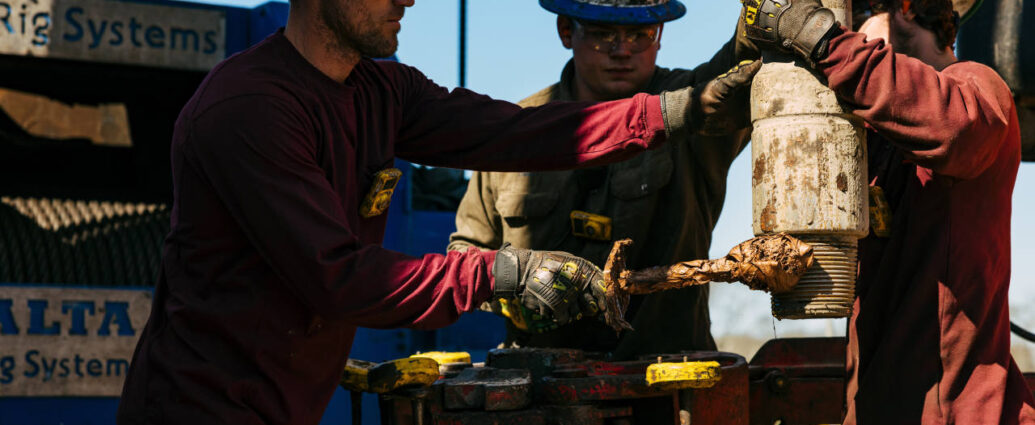
Energy & Utilities Roundup: Market Talk
Top 5 Canadian Mining Stocks This Week: First Atlas Gains 105 Percent
Welcome to the Investing News Network’s weekly look at the best-performing Canadian mining stocks on the TSX, TSXV and CSE, starting with a round-up of Canadian news impacting the resource sector.Statistics Canada released February’s Labor Force Survey on Friday (March 13). The data showed that employment declined by 84,000 jobs over the month, the worst job losses since January 2022.The news surprised analysts, who had expected the Canadian economy to add 10,000 jobs. The majority of losses were recorded in private-sector and full-time roles, with the largest declines being a 56,000 decrease in services-producing industries and 28,000 fewer jobs in goods-producing industries.The unemployment rate rose to 6.7 percent, a 0.2 percent increase. The rise in unemployment was partially offset by a 0.1 percentage point decline in the participation rate, which fell to 64.9 percent.Statistics Canada’s report comes just days ahead of the release of Canada’s consumer price index on March 16. Both reports may have significant bearing on the Bank of Canada’s rate decision when it meets next week.Oil prices were volatile this week amid continuing US operations in the Middle East. Prices climbed above US$100 per barrel by the end of last week, but fell rapidly after a tweet from US Secretary of Energy Chris Wright suggested US forces had escorted a ship through the Strait of Hormuz. However, Wright later deleted the post, claiming it was erroneous and that the US was not prepared to provide escorts.Additionally, US President Donald Trump said on Wednesday (March 11) that the Strait was in “great shape,” but reports emerged that ships transiting the area were struck by unknown projectiles.The attacks once again sent prices back toward the US$100 mark, prompting the White House to announce on Friday a month-long pause on sanctions applying to Russian oil already at sea.As of at 4:00 p.m. EDT Friday, prices for West Texas Intermediate crude oil had climbed 3.06 percent on the day to US$98.66, and prices for Brent crude oil had risen 2.85 percent to US$103.30.The war is also disrupting helium supply from Qatar, leading helium prices to increase significantly.For more on what’s moving markets this week, check out our top market news round-up.
Markets and commodities react
Canadian equity markets retreated over the past week.The S&P/TSX Composite Index (INDEXTSI:OSPTX) lost 2.48 percent over the week to close Friday at 32,541.93, while the S&P/TSX Venture Composite Index (INDEXTSI:JX) fell 3.49 percent to 1,018.11.The CSE Composite Index (CSE:CSECOMP) dropped 0.4 percent to 175.58.In precious metals, the gold price shed 1.49 percent over the past week to close at US$5,019.52 per ounce on Friday at 4:00 p.m. EDT. The silver price fared worse, closing the week down 2.72 percent at US$79.97. In base metals, copper price recorded a 1.96 percent decline this week to US$5.70 per pound for the Comex continuous contract.The S&P Goldman Sachs Commodities Index (INDEXSP:SPGSCI) was up 7.99 percent to end Friday at 722.85.
Top Canadian mining stocks this week
How did mining stocks perform against this backdrop? Take a look at this week’s five best-performing Canadian mining stocks below.Stocks data for this article was retrieved at 4:00 p.m. EDT on Friday using TradingView’s stock screener. Only companies trading on the TSX, TSXV and CSE with market caps greater than C$10 million are included. Mineral companies within the non-energy minerals, energy minerals, process industry and producer manufacturing sectors were considered.
1. First Atlas Resources (CSE:HHE)
Weekly gain: 105 percentMarket cap: C$28.16 millionShare price: C$0.205First Atlas Resources is a hydrogen exploration company advancing projects in Nova Scotia and Québec, Canada. Previously Q Precious and Battery Metals, the company officially changed its name and symbol on February 27.The Mantane project in Québec consists of two blocks of 76 claims on public forest lands that extend over 26 kilometers and is being explored in collaboration with Québec Innovative Materials.In September 2025, the company signed a deal to acquire the Dansof hydrogen project in Nova Scotia, comprising 1,356 claims, bringing its total package in the province to 1,915 claims.First Atlas announced in December 2025 that it would expand its drill program in Nova Scotia to 2,500 meters but did not provide a timeline for when activities would begin.First Atlas has not released news in the past week. However, Québec Innovative Materials has made several announcements since the end of February over the discovery of multiple hydrogen zones in its first diamond drill hole at its West-Advocate hydrogen project in Nova Scotia.On February 25, First Atlas issued a release congratulating Québec Innovative Materials on its discovery. The West-Advocate system lies directly west of First Atlas’ exploration property, and First Atlas said it plans to test analogous structural targets to the discoveries in its upcoming five-hole drill program. The most recent update from Québec Innovative Materials came on Tuesday (March 10), when it reported hydrogen concentrations at depth high enough to push instrumentation beyond the maximum detectable range.
2. Class 1 Nickel and Technologies (CSE:NICO)
Weekly gain: 87.5 percentMarket cap: C$26.67 millionShare price: C$0.15Class 1 Nickel and Technologies is an exploration and development company working to advance its Alexo-Dundonald nickel sulfide project, located near Timmins, Ontario, Canada. The project is composed of 106 mining claims, 29 patents and 14 leases covering 3,730 hectares. The site hosts four deposits: the Dundonald North and South deposits, and the past-producing Alexo and Alexo south mines.In March 2025, the company released an updated mineral resource estimate for the Dundonald North deposit at Alexo-Dundonald. The deposit hosts an inferred resource of 42 million pounds of nickel, 2.6 million pounds of copper and 1.2 million pounds of cobalt from 2.5 million metric tons of ore with average grades of 0.75 percent nickel, 0.05 percent copper and 0.02 percent cobalt. The company also owns the River Valley project in Ontario and covers an area of 2,916 hectares and hosts mineralization of platinum group metals, copper and nickel. A prospecting program completed in 2025 returned grab samples with highlighted grades of 0.96 percent copper, 0.17 percent nickel, 0.47 grams per metric ton (g/t) palladium, platinum and gold, along with 3.28 g/t silver.Shares of Class 1 Nickel rose this week, but the company did not issue a news release.
3. Avanti Helium (TSXV:AVN)
Weekly gain: 84.31 percentMarket cap: C$40.87 millionShare price: C$0.47Avanti Helium is an exploration and development company focused on advancing helium assets in Canada and the US toward production. Its Greater Knappen projects are composed of several project areas in Southern Alberta, Canada, and Northern Montana, US. The combined land packages cover approximately 74,000 acres with multiple targets.According to the project page, Avanti has drilled three exploration wells in Montana, with two testing for a combined 18.5 million cubic feet per day gas rate with 1.1 percent helium concentration.The company’s Leader project consists of a combined land package of 91,000 acres in Southern Saskatchewan. The surrounding region has seen 84 wells drilled by other companies since 2016, and as of September 2023, it hosted approximately 25 wells producing 450,000 cubic feet of helium per day.The most recent news from the company came on February 24, when it executed a definitive agreement with a US-based helium provider to relocate and commission an existing helium plant to its Sweetgrass project in Montana. Avanti said it is a major milestone as it transitions from development-stage planning to near-term production.Its share price was buoyed by rocketing helium prices this week due to disruptions from the war in the Middle East.
4. Desert Mountain Energy (TSXV:DME)
Weekly gain: 69.64 percentMarket cap: C$40.87 millionShare price: C$0.475Desert Mountain Energy is an exploration, development and production company focused on advancing helium, hydrogen and natural gas assets in New Mexico and Arizona, US.Its operations in West Pecos consist of the West Pecos gas field, which hosts 188 wells across 77,000 acres of oil and gas leases with expansion potential of up to 100 additional wells. West Pecos is also home to a helium processing facility that is capable of producing various grades of helium and a 60,000 gallon accumulation tank at the site allowing the company to process natural gas, condensate and helium.Desert Mountain also owns the Holbrook helium project in Arizona’s Holbrook basin. It comprises over 100,000 acres of helium prospects and is situated in a region that has historic production of 9.23 billion cubic feet of helium with grades between 8 and 10 percent.Shares of Desert Mountain Energy gained this week alongside rising helium prices. The company has not released news since February 24, when it announced the creation of Helios Data Company. The new subsidiary will be used to manage and monetize data generated by its noble gas plants.
5. Karnalyte Resources (TSX:KRN)
Weekly gain: 46.15 percentMarket cap: C$26.38 millionShare price: C$0.38Karnalyte Resources is advancing its Wynyard potash project in Central Saskatchewan, Canada. The property consists of three primary mineral leases covering 367 square kilometers east of Saskatoon.Karnalyte released an updated feasibility study for the project on November 26. The study demonstrated economic viability, according to Karnalyte, with an after-tax net present value of C$2.04 billion, an internal rate of return of 12.5 percent, a payback period of 8.8 years and a mine life of 70 years.The company also stated that development will benefit from an offtake agreement under which India-based GFSC, a major shareholder in Karnalyte, will purchase 350,000 metric tons per year during Phase 1, with additional commitments for 250,000 metric tons per year after Phase 2 is complete.The company has not released news since February 4, when it issued a press release welcoming the agreement between the governments of Canada and India to establish a long-term potash supply to the Indian agriculture industry.
FAQs for Canadian mining stocks
What is the difference between the TSX and TSXV?
The TSX, or Toronto Stock Exchange, is used by senior companies with larger market caps, and the TSXV, or TSX Venture Exchange, is used by smaller-cap companies. Companies listed on the TSXV can graduate to the senior exchange.
How many mining companies are listed on the TSX and TSXV?
As of December 2025, 898 mining companies and 71 oil and gas companies are listed on the TSXV, combining for more than 60 percent of the 1,531 total companies listed on the exchange.As for the TSX, it is home to 175 mining companies and 51 oil and gas companies. The exchange has 2,089 companies listed on it in total.Together, the TSX and TSXV host around 40 percent of the world’s public mining companies.
How much does it cost to list on the TSXV?
There are a variety of different fees that companies must pay to list on the TSXV, and according to the exchange, they can vary based on the transaction’s nature and complexity. The listing fee alone will most likely cost between C$10,000 to C$70,000. Accounting and auditing fees could rack up between C$25,000 and C$100,000, while legal fees are expected to be over C$75,000 and an underwriters’ commission may hit up to 12 percent.The exchange lists a handful of other fees and expenses companies can expect, including but not limited to security commission and transfer agency fees, investor relations costs and director and officer liability insurance.These are all just for the initial listing, of course. There are ongoing expenses once companies are trading, such as sustaining fees and additional listing fees, plus the costs associated with filing regular reports.
How do you trade on the TSXV?
Investors can trade on the TSXV the way they would trade stocks on any exchange. This means they can use a stock broker or an individual investment account to buy and sell shares of TSXV-listed companies during the exchange’s trading hours.
Article by Dean Belder; FAQs by Lauren Kelly.Don’t forget to follow us @INN_Resource for real-time updates!Securities Disclosure: I, Dean Belder, hold no direct investment interest in any company mentioned in this article.Securities Disclosure: I, Lauren Kelly, hold no direct investment interest in any company mentioned in this article.
This post was originally published here
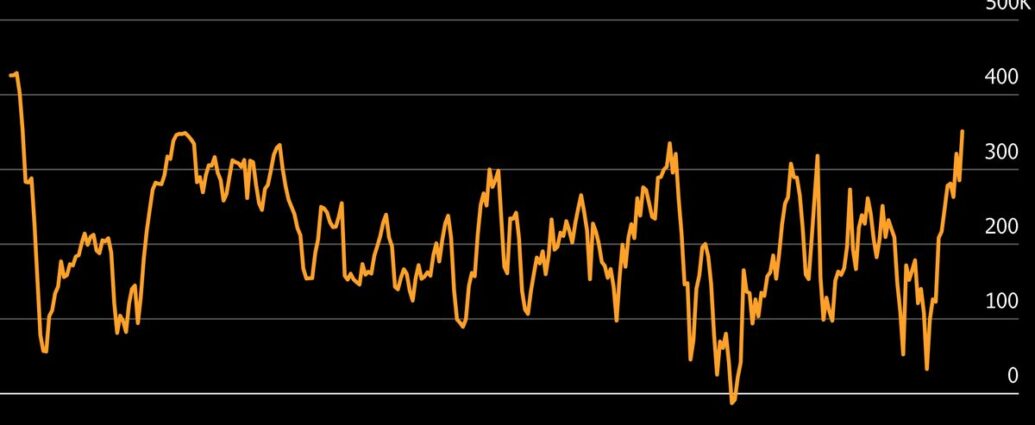

Auto & Transport Roundup: Market Talk

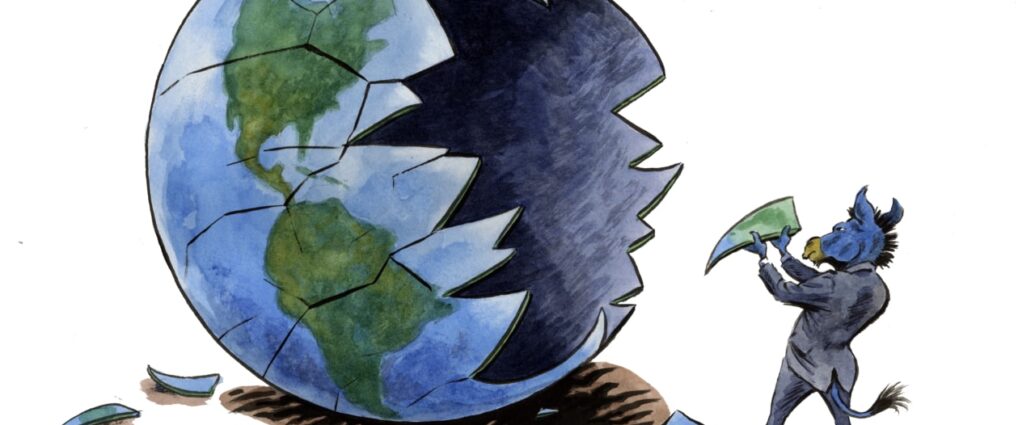

Opinion | Trump’s Nixon Moment May Be Coming
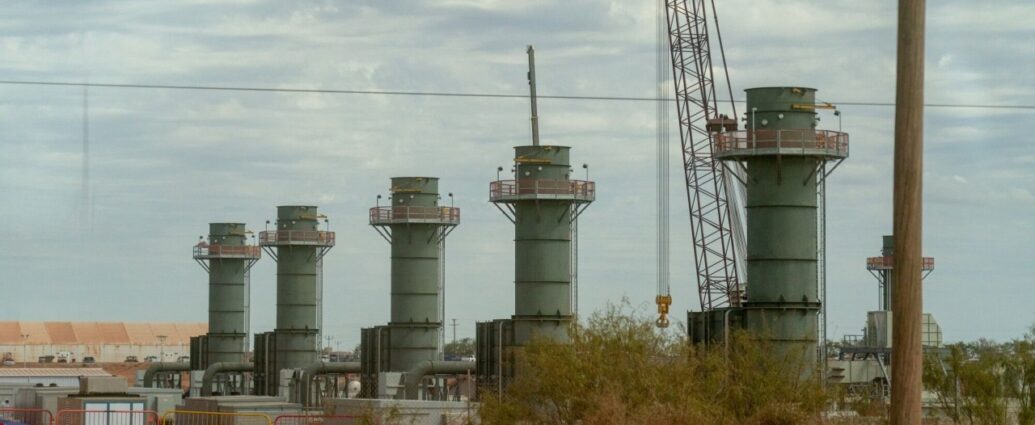

Private Credit Vs Geopolitical Risk: The 2026 Showdown
In 2026, markets are navigating two powerful, seemingly different sources of uncertainty. Escalating conflict in the Middle East and growing stress in the private credit industry.
At first glance, the risks appear separate—one tied to commodities and global politics, the other to financial market plumbing. Yet beneath the surface, the two may interact in ways that amplify volatility worldwide.
Economist Mohamed El-Erian believes the key issue is how multiple shocks can compound rather than offset one another.
“In the real economy and finance, the negative factors do not net out; they compound,” he wrote in The Financial Times, warning that investors should not assume geopolitical or financial stresses will remain isolated events.
Private Credit Volatility
The private credit sector has expanded rapidly over the past decade, filling lending gaps left by banks after 2008. But its structure, illiquid loans funded by investor capital that expects periodic redemptions, has raised questions about resilience during periods of market stress.
Recent redemption pressure across the sector brought this vulnerability into focus. When withdrawals accelerate, managers may restrict redemptions to avoid forced asset sales, a mechanism that protects portfolios but can unsettle investors.
El-Erian has described the resulting contagion dynamic as familiar from past financial cycles.
“If you can’t sell what you want, you sell what you can,” he wrote, noting that investors facing liquidity constraints may offload unrelated assets simply to raise cash.
Such a dynamic can spread volatility beyond the private credit market itself, tightening financial conditions more broadly.
Oil Shock Returns
At the same time, geopolitical tensions involving Iran have reignited volatility in oil markets. Energy prices have surged as traders price in risks to Middle …
This post was originally published here



Stocks Slip as Oil Prices Rise Above $100



Bitcoin Buyers Should Be ‘Ecstatic’ About $70,000, Ric Edelman Says
Bitcoin (CRYPTO: BTC) held near $70,000 as Digital Assets Council financial professionals adviser Rick Edelman said investors should be “ecstatic” at current prices, arguing if you loved Bitcoin at $126,000, you have to love it more at $70,000.
The 10-40% Allocation Thesis
Edelman recommends investors allocate 10-40% of portfolios to crypto despite Bitcoin trading more than 30% below its $126,000 record high from mid-October.
He argues adoption is growing and Bitcoin’s returns are likely to dramatically outperform any other asset class over the next 5-10 years.
“We talk about 5 or 10% returns for other assets. Bitcoin is going to be 5x or 10x over the next 5 to 10 years,” Edelman said. “So …
This post was originally published here
Integra Resources Stock Getting Very Oversold
In trading on Friday, shares of Integra Resources Corp (Symbol: ITRG) entered into oversold territory, changing hands as low as $3.13 per share. We define oversold territory using the Relative Strength Index, or RSI, which is a technical analysis indicator used to measure momen
This post was originally published here
Anfield Energy Stock Getting Very Oversold
In trading on Friday, shares of Anfield Energy Inc (Symbol: AEC) entered into oversold territory, changing hands as low as $5.72 per share. We define oversold territory using the Relative Strength Index, or RSI, which is a technical analysis indicator used to measure momentum o
This post was originally published here
Commercial Metals (CMC) Shares Cross Below 200 DMA
In trading on Friday, shares of Commercial Metals Co. (Symbol: CMC) crossed below their 200 day moving average of $61.64, changing hands as low as $60.72 per share. Commercial Metals Co. shares are currently trading down about 1.1% on the day. The chart below shows the one yea
This post was originally published here
VZLA Stock Crowded With Sellers
In trading on Friday, shares of Vizsla Silver Corp (Symbol: VZLA) entered into oversold territory, changing hands as low as $3.55 per share. We define oversold territory using the Relative Strength Index, or RSI, which is a technical analysis indicator used to measure momentum
This post was originally published here
SBSW Crosses Critical Technical Indicator
In trading on Friday, shares of Sibanye Stillwater Ltd (Symbol: SBSW) entered into oversold territory, changing hands as low as $12.505 per share. We define oversold territory using the Relative Strength Index, or RSI, which is a technical analysis indicator used to measure mom
This post was originally published here


PI Rallies 30% On Kraken Listing Before Pi Day: What Is Going On?
Pi Network (CRYPTO: PI) surged 30% during Asia trading hours Friday after Kraken announced it will list the cryptocurrency ahead of Pi Day on March 14.
The Kraken Listing Catalyst
Kraken’s listing announcement triggered the rally as PI became available on a major U.S.-regulated exchange.
The token is already listed on OKX, Gate, and Bitget, but Kraken’s entry expands access to mainstream retail and institutional traders.
The timing coincides with Pi Day on March 14, a holiday celebrating the mathematical constant where the first three digits are 3.14. The date has become a marketing opportunity for Pi Network, similar to how pizzerias and bakeries offer discounts.
Pi Network is a mobile-first cryptocurrency project that replaces traditional proof-of-work mining with a phone-based trust graph.
Users tap a mobile app daily to “mine” tokens and form identity-verified security circles that feed into a consensus system derived from the Stellar protocol.
The …
This post was originally published here

Austin airport gridlock: Security lines stretch outdoors as DHS shutdown hits one-month mark
Airport security lines in Austin stretched outside the door early Friday with passengers waiting hours to board their flights amid pressure on Congressional lawmakers to reach a deal to reopen the Department of Homeland Security (DHS).
Video footage posted online showed Transportation Security Administration (TSA) lines at Austin-Bergstrom International Airport well outside at least one terminal building.
“Thanks to the Democrats’ reckless shutdown, security lines at Austin-Bergstrom International Airport are stretching OUT THE DOOR,” a DHS post on X states. “The Democrats’ political games are making spring break travel a NIGHTMARE as they continue to withhold funding from DHS and refuse to pay our @TSA officers.”
AIRLINES CANCEL FLIGHTS, ISSUE TRAVEL WAIVERS OVER MIDDLE EAST UNREST
DHS saw its funding lapse a month ago, having a direct impact on TSA workers, who have not been paid, and the traveling public.
Extended lines at the airport began around 5 a.m. local time, but cleared up around two hours later, the airport said.
Throughout the morning, the airport posted videos of seemingly empty checkpoints and some with a few passengers.
The airport warned passengers departing on Saturday to arrive at least 2.5 hours before their flight amid an expected busy day. The busiest time will be between 4 a.m. and 8 a.m., it said.
Growing lines at airports across the country have ratcheted up pressure on lawmakers to reach a deal to fund DHS as members of both parties continue to hear complaints from their constituents.
More than 300 TSA have quit since the DHS shutdown began and callouts are approximately double the normal rate, a TSA spokesperson told FOX Business.
“Today, 100,000 DHS workers will not get paid, missing their first full paycheck as a result of the Democrat DHS shutdown. This amounts to $1 BILLION in unpaid wages each month,” the spokesperson said in a statement. “TSA employees have been forced to work without pay three times in six months due to Democrats’ reckless shutdowns.”
The wait times for security lines will worsen as the shutdown continues, the spokesperson said, while accusing Democrats of playing politics.
The lack of funding stems from the political impasse over demands by Democrats to reform U.S. Immigration and Customs Enforcement (ICE) amid the Trump administration’s deportation campaign.
“We are in a negotiation. However, we are not close,” Sen. Brian Schatz, D-Hawaii, said at one point. “You may think this is some issue that we think we’re going to turn to our political advantage, but I promise you, when we saw Renee Good and Alex Pretti killed, this became an issue that was beyond politics.”
CLICK HERE TO GET FOX BUSINESS ON THE GO
Meanwhile, some Republicans have said they will oppose changes to ICE sought by the Democrats.
“Let me be clear, we are going to do nothing — nothing — that kneecaps ICE’s ability to enforce our immigration laws,” said Sen. Eric Schmitt, R-Mo.
The TSA website and app paused operations on Feb. 17. The site “will not be updated until after funding is enacted,” the TSA says on its site — leaving travelers high and dry when it comes to finding wait time information.
“Today, tens of thousands of TSA employees are receiving empty paychecks. Zero dollars,” Airlines for America President and CEO Chris Sununu said in a statement Friday. “Two weeks ago, these same TSA employees received partial paychecks. Last fall, they had to survive 43 days without pay.
“This failure of government to simply pay federal aviation employees is wrong. It is unfair,” added Sununu, the former governor of New Hampshire. “And it is a disgrace that Congress cannot reach an agreement or act on viable bipartisan solutions that have already been introduced.”
The Associated Press contributed to this report.


Trump Said ‘Drill, Baby, Drill’ — The Answer Came From Companies You’ve Never Heard Of (CORRECTED)
Editor’s note: This story was updated to correct a reference to private oil producers.
“Drill, baby, drill” has long been the Trump administration‘s political shorthand for unleashing U.S. oil production. But the latest shale data suggests the companies actually answering that call aren’t the oil giants dominating energy ETFs.
Instead, it’s a wave of privately held drillers — firms most investors have never heard of — quietly adding rigs across America’s shale basins.
• Helmerich & Payne stock is surging to new heights today. What’s driving HP stock higher?
Private Shale Operators Take The Lead
According to JPMorgan analyst Arun Jayaram, U.S. horizontal land rig activity rose modestly by three rigs week-over-week to 474 active rigs. The bigger story, however, is who is doing the drilling.
Private exploration and production companies added nine rigs during the week, while publicly traded shale firms cut five rigs. Activity from the oil majors remained largely unchanged.
Private operators now run 202 rigs — about 42% of total U.S. horizontal …
This post was originally published here

‘There Is No Private Credit Bubble’ Says Hamilton Lane
Private markets investment management firm Hamilton Lane (NASDAQ:HLNE) said it does not believe there is a private credit bubble in its most recent 2026 market overview.
“With the increased capital available, with the increase in market share, with the ongoing press about the pressures on private credit, the casual observer would think that yields and spreads of private credit over broadly syndicated loans were collapsing. That would be a completely incorrect assumption,” Hamilton Lane wrote.
• Hamilton Lane stock is showing upward movement. Why is HLNE stock trading higher?
“Sponsors want private credit and seem willing to pay for what it has to offer. There is no sign of stress with these spreads or returns, relative to broadly syndicated loans,” the report continued.
Hamilton Lane believes banks carry “far riskier” loan pools than private credit, and the latest defaults are a problem with the banks, not with private credit itself.
Private credit has continued to reshape the global …
This post was originally published here


Builders’ blueprint to tackle the US housing crisis
Home prices are still climbing, even as mortgage rates have eased slightly and inventory shows early signs of improvement, underscoring just how tight the U.S. housing market remains.
The median sales price for all existing homes last month hovered just below $400,000, marking the 32nd consecutive month of year-over-year price increases, according to the National Association of Realtors.
That persistent affordability squeeze is putting renewed pressure on homebuilders to help get the American dream back on track.
TRUMP PLEDGES TO MAKE HOUSING AFFORDABLE WHILE KEEPING VALUES UP
Despite softer consumer sentiment and elevated borrowing costs, the homebuilding industry is signaling cautious optimism heading into the year.
“A lot of builders, many of these small businesses, men and women building homes across this country, had some of the best January they’ve had in a while,” National Association of Home Builders CEO Jim Tobin told FOX Business.
Industry leaders say part of that momentum stems from growing acceptance that interest rates are likely to stabilize rather than surge higher. A resilient stock market and steady job growth have also helped support buyer confidence on the margins.
Meanwhile, a structural shift in the market is giving new construction a competitive edge.
For the first time in modern housing cycles, newly built homes in some markets are now cheaper than existing homes. Builders say “rate lock” dynamics are a major factor: millions of homeowners are reluctant to give up ultra-low 3% or 4% mortgages for rates closer to 6% or higher, limiting resale inventory and pushing more buyers toward new builds.
“A lot of people have more confidence in what their house should cost, and what we’re seeing right now is that new homes are the only game in town,” Tobin added.
HOMEBUYERS REFUSE TO BACK DOWN AS MORTGAGE RATES CONTINUE HOVERING STUBBORNLY NEAR 6% MARK
The supply imbalance remains severe. The U.S. is estimated to be roughly 4 million homes short, according to industry estimates, keeping upward pressure on prices even as construction activity fluctuates.
Still, builders face significant headwinds of their own, including high land costs, elevated labor expenses, material prices and regulatory hurdles at the local, state and federal levels.
At this year’s NAHB International Builders’ Show, the world’s largest annual light construction event, the industry is spotlighting new strategies aimed at improving affordability. Those include the use of alternative building materials, artificial intelligence in design and planning, and the expansion of smaller, more efficient housing models such as smart and tiny homes.
One of the most notable shifts is the steady downsizing of new homes.
AMERICAN HOMEBUYERS GAIN MOST PURCHASING POWER SINCE 2022
Following the Great Recession, the average new home size reached roughly 2,700 square feet, according to Census data and an NAHB analysis. That fell to about 2,565 square feet during the pandemic housing boom and is projected to decline further to around 2,400 square feet by the end of 2025, according to the latest data available.
Builders are also cutting costs by simplifying designs, reducing or streamlining design teams, and increasingly leveraging AI-driven planning tools to improve efficiency.
GET FOX BUSINESS ON THE GO BY CLICKING HERE
As a result, the average price of a newly built home is now estimated to be roughly $30,000 lower than the average existing home in certain markets, a reversal that would have been nearly unthinkable in previous housing cycles.
With resale inventory constrained and affordability still strained, builders are increasingly positioning innovation, efficiency, and smaller footprints as the blueprint for easing America’s housing shortage.
U.S. debt is like a Hallmark movie boyfriend who eventually gets dumped for a small town firefighter, budget watchdog warns
This rom-com formula is now a staple of holiday TV programming: a busy professional from the big city goes back home for Christmas and falls for a local guy after admitting her current boyfriend wasn’t her true soul mate.
According to Martha Gimbel, executive director of the Yale Budget Lab, this trope could also describe the bond market’s feelings about U.S. debt.
During a Senate hearing this week, she was asked what might trigger a debt crisis and why it hasn’t happened yet despite the explosion of borrowing in recent years. Gimbel replied it’s basic supply and demand, and investors are settling for the easier option, even if it doesn’t meet all their needs—they simply don’t have a better option right now, but that may not always be the case.
“The way that I sort of put it is we are currently the boyfriend at the beginning of the Hallmark movie in the big city where the girlfriend is still going out with him even though she knows that it’s wrong,” she explained. “But at some point she’s gonna go home to the small town and find the nice firefighter and realize that there’s another option.”
For now, as Gimbel explained, investors are settling for the status quo, but it’s only a matter of time before we hit a Sleepless in Stagflation moment and investors find better options. Much like a would-be suitor exaggerating how big their heart is, publicly held debt is pretty substantially—it already is as large as the U.S. GDP, and it will exceed the all-time record set after World War II in the comings years. Publicly held debt then will continue marching higher with no sign of abating as retiring baby boomers drive up entitlement spending.
Like the big-shot professional visiting the small town, treasury bonds are still in high demand, especially for now as a safe-haven asset, despite all the turmoil from President Donald Trump lately. The U.S. debt market remains by far the largest and most liquid, underpinned by the dollar’s status as the world’s reserve currency.
While Gimbel said she doesn’t know when U.S. debt will fall out of favor, the eurozone has been trying to make its debt more appealing to investors.
Europe is a top holder of U.S. debt, so any shift away from Treasuries could worsen the outlook by sending yields higher and adding to borrowing costs.
In 2021, Europe launched the Next Generation EU borrowing program financed through joint debt issuance. While intended as a pandemic-era stimulus program, the breakthrough measure was seen as boosting the euro’s status as reserve asset.
To be sure, other countries also have safe haven assets, including Germany and Scandinavia. But individually, their debt and currency markets aren’t big enough to fill the needs of global finance.
Gimbel pointed out that investors have piled into Switzerland lately, adding that the U.S. is fortunate that Swiss financial markets can’t absorb that much capital.
Helped by low debt levels and a reputation as a secure financial hub, Switzerland has long been seen as a safe haven. That sent the Swiss franc soaring 12.7% against the dollar last year as Trump’s trade war jolted markets. It shot up further this year after Trump threatened to seize Greenland from Denmark.
The war on Iran could worsen the U.S. debt outlook as additional military spending adds to the deficit, while higher bond yields due to oil-fueled inflation translate to bigger interest costs.
“The more we make ourselves less attractive to markets, the more likely it is that you will have a fiscal crisis,” Gimbel warned. “We are literally relying on the fact that markets have no place to go.”
This story was originally featured on Fortune.com
This post was originally published here

Rivian Down 16% In March As CEO Scaringe Bets The Company On A Tesla Model Y Killer
Rivian Automotive Inc. (NASDAQ:RIVN) is down 16% in March as the company unveiled its R2 SUV at SXSW this week.
CEO RJ Scaringe called it a “make-or-break product.”
The launch model starts at $57,990, nearly $13,000 above the $45,000 entry price the company has been advertising. That cheaper version? Pushed to late 2027.
Rivian’s CSO Wassym Bensaid told the Wall Street Journal on Friday that only Tesla Inc. (NASDAQ:TSLA) and Rivian have caught on in the U.S. because they had the range, performance and value that customers want.
“We know that there are just two companies in the U.S. who know how to do it: Tesla and us,”
Chinese competitors like BYD, the world’s largest EV maker, kept out of the U.S. by large tariffs.
The …
This post was originally published here




Wall Street Icon Warns: Waiting for Perfect Info Will Keep You on the Sidelines — How Top Traders Get In Early
Quick Summary
- Stan Druckenmiller says overanalyzing is “the biggest mistake in our business” because traders who wait for perfect information often miss the move.
- For traders trying to act earlier without risking another blown-up small account, Apex Trader Funding offers a way to trade in a rules-based enviornment before putting personal money on the line.
Stan Druckenmiller has a warning for traders who spend too long searching for certainty.
“At some point, the analysis becomes counterproductive,” the billionaire investor said in a recent interview with Morgan Stanley’s Iliana Bouzali, calling overanalysis “the biggest mistake in our business.”
“Speed matters now,” said the legendary investor, who averaged roughly 30% annual returns over 30 years without a single down year.
“If you sit around and analyze a company for four months and you’re not willing to operate with 15% or 20% of information, you’ll often miss the big move,” he said. “And then you’re afraid to buy it because it has moved.”
For active traders, that idea underlines the reason why so many struggle to gain traction. The problem is not always being wrong. Often, it is hesitating too long, missing the setup, then chasing after the move is already underway.
Druckenmiller’s comments are relevant in a market today shaped by AI enthusiasm, rapid sentiment shifts and sharp rotations across sectors. …
This post was originally published here


Dormant Wallet Nets $2.5 Million Profit On TRUMP Meme Coin Following Mar-a-Lago Gala News
A previously inactive crypto wallet generated roughly $2.5 million in unrealized profit after buying millions of TRUMP (CRYPTO: TRUMP) tokens shortly after the project announced a gala event for top holders.
Dormant Wallet Makes $7 Million Bet
A dormant wallet accumulated about 2.2 million tokens of Official Trump shortly after the project announced a gala luncheon at Mar-a-Lago.
According to on-chain data from Arkham Intelligence, the wallet, inactive for five months, began purchasing tokens from Binance on Mar. 13.
The whale executed four transactions, starting with a smaller test buy before making two purchases of roughly 1 million tokens each, followed by another 200,000-token acquisition, totalling …
Crude Oil Soars As An End To The Gulf War Is Nowhere In Sight
(RTTNews) – After pulling back sharply early in the session, crude oil prices have shown a substantial move back to the upside over the course of the trading day on Friday.
This post was originally published here
Bolivia arrests alleged drug kingpin accused of putting hit on Paraguayan prosecutor
Bolivian interior ministry says Sebastián Marset is being extradited to US, where he’s wanted for money laundering
Sebastián Marset, an alleged Uruguayan drug trafficker and one of South America’s most wanted criminals, has been arrested in Bolivia.
Marset, 34, is accused of trafficking tonnes of cocaine from South America to Europe, and also of having ordered the murder of a Paraguayan prosecutor who was shot dead as he honeymooned on a Colombian beach in 2022.
This post was originally published here

EXCLUSIVE: Gold Fell With Tech Stocks — But Texas Precious Metals CEO Says Safe Haven Trade Isn’t Broken
When a sharp selloff in AI stocks wiped roughly $1 trillion from tech valuations earlier this year, gold unexpectedly moved lower as well. For some investors, the drop raised a troubling question: if gold is the ultimate safe haven, why did it fall alongside risk assets?
According to Tarek Saab, CEO of Texas Precious Metals, the answer lies in how markets behave during periods of sudden volatility.
“Gold remains uncorrelated to tech assets and to the broader equities markets at large, which is why many continue to increase gold exposure in strategic portfolios,” Saab told Benzinga.
Gold: Short-Term Moves Vs Long-Term Role
During sharp market shocks, investors often sell multiple asset classes simultaneously as they raise cash or …
This post was originally published here


5-Minute Bitcoin Bets Hit $70M Daily Volume As Traders Lean Into AI
Five and 15-minute Bitcoin (CRYPTO: BTC) prediction market contracts are attracting roughly $70 million in daily trading volume across Polymarket and Kalshi as retail traders use AI chatbots to scrape price data and generate odds for ultra-short-term bets.
The AI Trading Strategy
The Financial Times reported on Friday that Max Wojcik, a 29-year-old engineer, feeds weeks of Bitcoin price data into three AI chatbots—Claude, Gemini and ChatGPT.
He has the chatbots analyze the data together and calculate his probability of winning before he places any five-minute trades.
“Claude is my major brain right now, but I’m still manually placing the trades,” Wojcik said.
The engineer claims to have doubled his money over the past two months using this AI-assisted approach.
Traders flocking to short-term crypto forwards on Kalshi and Polymarket are presented with dashboards showing real-time prices fluctuating around a “price to beat” as a clock counts down toward the end of the contract.
The $70M Daily Volume Surge
Both platforms began offering 15-minute “up-down” bets on Bitcoin, Ethereum
This post was originally published here

Trump Considers Jones Act Waiver By July: What Do Prediction Markets Say?
Prediction market traders are pricing a 62% probability that the Trump administration removes at least one Jones Act domestic shipping requirement by June 30, a move that could hand Gulf Coast refiners like Valero Energy Corporation (NYSE:VLO) a major logistics advantage.
The Polymarket contract, which opened March 9, resolves to “Yes” if any of the century-old law’s four core restrictions are removed via legislation or executive action before the deadline.
What Happened
The White House confirmed Wednesday it is considering a temporary Jones Act waiver for energy and agricultural shipments.
Bloomberg reported the administration is developing a 30-day exemption covering oil, gasoline, diesel, LNG and fertilizer moving between U.S. ports.
The administration’s scramble to ease domestic fuel pressures comes as Brent crude briefly topped …
This post was originally published here

Why MARA Holdings Shares Are Surging Friday
MARA Holdings Inc (NASDAQ:MARA) shares traded higher on Friday. The move tracks a steady recovery in Bitcoin (CRYPTO: BTC) prices.
Bitcoin Recovery Boosts Mining Sector
The apex cryptocurrency climbed to $71,194.33, gaining 1.14% over the last 24 hours, according to CoinMarketCap data.
This recovery follows a broader uptick in digital asset sentiment. Markets reacted positively as Bitcoin maintained a 4.92% gain over the past seven days.
Broader cryptocurrency market momentum remains strong. Strategy Inc (NASDAQ:MSTR) also saw gains following massive Bitcoin acquisitions. Executive Chairman Michael Saylor recently noted on X, “You know there’s a delay between the time we buy the Bitcoin and the time Bitcoin goes to the …
This post was originally published here




Opinion | A Good Ally Can Deploy Its Forces

Why Is Venture Global Stock Gaining Friday?
Venture Global, Inc. (NYSE:VG) shares are up on Friday as the company announced a final investment decision and financial close for its CP2 LNG Phase 2 project.
Details
The company secured an $8.6 billion project financing for the second phase of its CP2 LNG project, marking a significant milestone in its growth strategy.
This financing attracted over $19 billion in commitments from leading banks, showcasing strong demand for U.S. LNG investments.
The CP2 project is expected to reach peak production capacity of 29 million metric tons per annum, with nearly all output already contracted under long-term agreements with customers mainly in Europe and Asia.
Technical Analysis
Venture Global’s stock is currently trading 28.2% above its 20-day simple moving average (SMA) and 59.5% above its 100-day SMA, indicating strong short-term and longer-term momentum. Over the past 12 months, shares have increased by 39.48%, and they are currently positioned closer to their 52-week highs than lows, suggesting a bullish trend.
The RSI …
This post was originally published here



Fed Doesn’t Want to Preemptively Cut: Patel
Northern Star Shares Plunge After Gold Output Guidance Cut
Shares of Australia’s largest primary-listed gold producer fell sharply after the company warned it may miss its already reduced production target due to operational problems at a key processing facility. Northern Star Resources (ASX:NST,OTCPL:NESRF) said it now expects fiscal 2026 gold output to exceed 1.5 million ounces, below its earlier guidance range of 1.6 million to 1.7 million ounces for the year ending in June.The company’s shares dropped as much as 17 percent in Sydney trading, its steepest decline since March 2020. The company’s market value fell by billions of dollars as investors reassessed the miner’s near-term outlook.The downgrade marks the second production cut in two months. Northern Star had previously lowered its forecast in January from an earlier estimate of up to 1.85 million ounces after unplanned maintenance and operational challenges.The latest setback stems largely from difficulties maintaining processing throughput at the Kalgoorlie Consolidated Gold Mines (KCGM) mill in Western Australia.“It remains the case that the company faces significant ongoing operational challenges, particularly given the difficulty of maintaining throughput at required levels through the existing mill at Kalgoorlie Consolidated Gold Mines,” the company said in a filing as reported by Bloomberg.The mill processes ore from the Fimiston open-pit mine, widely known as the Super Pit. as well as the nearby Fimiston and Mt Charlotte underground mines. The complex sits within Kalgoorlie’s historic “Golden Mile,” one of Australia’s most prolific gold districts.Northern Star said weaker milling performance at KCGM reduced gold sales in the early part of the year. The company reported total gold sales of about 220,000 ounces for January and February.Operational pressures are also emerging elsewhere in its portfolio. Northern Star said mining productivity has declined at its Jundee operation north of Kalgoorlie, prompting an internal review aimed at reducing costs and focusing production on higher-margin ounces.The review could include redeploying personnel and equipment to other assets within the company’s portfolio.The production setback has raised questions among investors about Northern Star’s valuation after a strong run in its share price over the past year. The stock reached a record high of A$31.96 in early March, driven by record gold prices that boosted profits across the global mining sector.Don’t forget to follow us @INN_Resource for real-time updates!Securities Disclosure: I, Giann Liguid, hold no direct investment interest in any company mentioned in this article.
This post was originally published here

Tim Cook Quit A Safe IBM Job For A Struggling Apple After Asking Himself One Question— ‘I Was Warned…’
In a letter to young creators, Apple Inc.’s (NASDAQ:AAPL) CEO, Tim Cook, disclosed the crucial question that steered his choice to join the then-ailing tech giant.
The letter published by the Steve Jobs Archives revealed that Cook, who joined Apple in 1998, was initially hesitant about leaving secure firms like IBM (NASDAQ:IBM) and Compaq, acquired in 2022 by Hewlett Packard (NYSE:HPE), for a company that was struggling.
He remembers, “Many people doubted the company could survive, and I was warned that accepting a job there would come with risks.”
Despite the risks, Cook was influenced by founder Steve Jobs‘ fervor and vision. However, his admiration for Jobs wasn’t the only factor in his decision. Cook needed to be sure the move was right for him.
Cook said the future is unpredictable despite our best efforts to shape it, and advises that instead of focusing on “What will happen?”, people should ask themselves something deeper.
Thus, he posed himself a potent question: “Who will I be when it does (happen)?”
This question guided Cook to choose purpose and passion …
This post was originally published here

XRP Holds Key Support Against Bitcoin, Gold: Is A Reversal Next?
XRP (CRYPTO: XRP) may be nearing a potential rebound as key support levels hold against Bitcoin (CRYPTO: BTC) and gold.
XRP Holds Key Range Against Bitcoin
Bitcoin has been trading within a defined range since early February, repeatedly testing both the upper and lower boundaries, trader Cryptoinsightuk said in a recent podcast.
While range highs often act as areas for potential reversals, they can also become breakout zones if buying pressure strengthens.
Meanwhile, XRP is currently trading near the lower boundary of its range against …
Is War Good For the Economy?


Ex-presidential candidate Andrew Yang says it’s time to ‘stop taxing labor’ and make AI foot the bill instead
Individual income taxes accounted for more than half of the total revenue collected by the U.S. government in 2025. At a total of $2.6 trillion, they make up the largest share of government revenue. But income tax hasn’t always played a key role in tax revenue. In fact, it wasn’t even introduced as a concept until about 100 years into the country’s history after President Abraham Lincoln signed the very first federal income tax—a 3% flat tax on incomes exceeding $800—to fund the Civil War. Just as income tax didn’t always exist, it also may not last forever.
That’s if ex-presidential candidate and CEO of Noble Mobile Andrew Yang gets his way. In an interview on CNBC’s Squawk Box, Yang said it’s time for the U.S. to drop taxes on labor, in favor of taxes on AI. He argued that taxation is a tool used to discourage certain behaviors, and with human employment under threat, the government should stop penalizing the hiring of people.
“We’re going to be in a position where we want to shore up labor in every quarter, in every organization and environment,” he said. “We should actually try to stop taxing labor,” and instead, start taxing AI.
Yang isn’t the first to float the idea of dropping taxes on labor. It’s a cause that’s caught the attention of billionaires and politicians alike. Sen. Cory Booker (D-NJ) recently introduced a bill that would eliminate income tax on the first $75,000 of earnings. Khosla Ventures founder and billionaire Vinod Khosla said in a recent interview with Fortune Editor-in-Chief Alyson Shontell that presidential candidates should run on a platform to remove income tax for those making less than $100,000.
However, those making $100,000 or less only contributed to about 15% of the total income tax revenue last year, according to the think tank Bipartisan Policy Center. Business leaders and AI entrepreneurs predict AI will soon take over many jobs in the white-collar workforce, potentially raising unemployment to 20% (according to Anthropic CEO Dario Amodei). Microsoft AI chief Mustafa Suleyman thinks most white-collar work could be replaced within 18 months. And Yang has recently made a similar prediction. His warnings come from his own observations of the AI industry.
“I just came from an AI conference out west, and holy cow!” he said, just after agreeing to the host’s question reconfirming his stance to shift the tax to AI. “They said to me that what we’re going to see in the next six months outstrips what we’ve seen in the last ten years, because the rate of change is on a hockey stick and heading up.”
While the labor market has been persistent in recent months, it’s shown signs of wavering, with unemployment ticking up to 4.4% last month, and employers posting 91,000 job losses. And several major tech companies have attributed mass layoffs to AI. Jack Dorsey’s Block last month cut nearly half of its workforce citing productivity gains from AI. And earlier this week, Australian-American tech firm Atlassian cut 10% of its global workforce. (Although Sam Altman of OpenAI has warned some companies are “AI washing” or blaming layoffs on AI when, in reality, they’re thanks to another cause).
Beyond the AI era: a tax system for humanoid robots
Despite Yang’s thoughts to shift the tax scheme from laborers to AI companies, some tech leaders think taxing AI is unfeasible. But some think the labor threat isn’t coming from the chatbots, but rather the robots, and that the U.S. should actually plan to tax the labor humanoid robots could perform.
AI-powered tech firm AskHumans founder Zak Kidd is proposing a tax on tasks, where businesses are levied a fee for every specific activity performed by a humanoid robot that replaces a human worker. AskHumans has been used by The World Bank, Fidelity, and The Ned, according to Kidd, who said he is actively pitching governors around the country on his task tax idea. This “tax the task” model is designed to replace the government tax revenue lost when an employer decides to swap a human employee for a mechanical system.
“What we want to do is actually levy a tax on each of those activities that’s paid back to the state to replace that fiscal gap,” Kidd told Fortune, referring to tasks robots may one day be able to perform that will replace human labor.
Kidd uses a hotel like Marriott to illustrate his proposal, noting that replacing a $28-per-hour human housekeeper with a $2-per-hour robot results in a significant loss of tax revenue. But even with a slight tax on the business, the costs incurred would still total less than the human worker.
Unlike Yang, Kidd thinks taxing AI raises too many logistical questions because, as more companies integrate AI into workflows, it’s harder to denote where the AI stops and the human interpretation starts. He thinks that while AI threatens white-collar work, robots could come for physical labor.
“I see AI as an augmentation of knowledge work,” he said. “But I see robotics, humanoid robotics as a replacement for manual work.”
This story was originally featured on Fortune.com
This post was originally published here

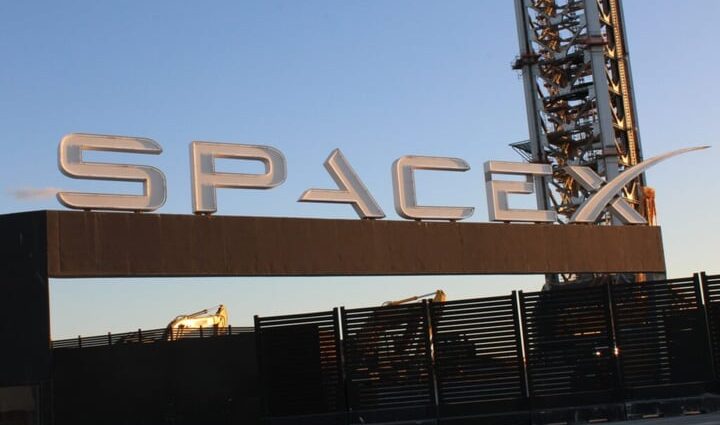
Tesla Approved To Convert xAI Stakes Into SpaceX
The Federal Trade Commission (FTC) has granted Tesla (NASDAQ:TSLA) approval to convert its investment in xAI into a stake in SpaceX, according to a recent filing.
• Tesla shares are consolidating. What’s the outlook for TSLA shares?
The filings also indicated that Musk, who is the CEO of both companies, sold portions of the holdings to several investors, including Valor Equity Partners and DJF Growth. Details including the size of the deals were not disclosed. The size of the deal must be reported if its value is over $133.9 million.
These filings …
This post was originally published here

Americans are demanding refunds from the $180 billion in tariffs they paid for, and they’re suing companies like Costco to make it happen
Americans have footed the bill for President Donald Trump’s tariffs, and now they’re demanding a refund.
The Supreme Court ruling striking down tariffs imposed under the International Emergency Economic Powers Act (IEEPA) opened the door for U.S. companies to snap up refunds from the approximately $180 billion in import tax revenue. Now customers who experienced higher prices from the tariffs are demanding their fair share.
Overwhelming data, including a report from the Federal Reserve Bank of New York, indicated that U.S. importers paid for the majority of the tariffs—up to 90%—with many passing down the increased costs to American consumers. Goldman Sachs estimated the tariffs added a 0.7% increase to inflation over 10 months, with prices to increase another 0.1% in 2026 because of levies.
Some U.S. consumers have taken matters into their own hands to recoup the extra costs they paid on tariffed goods over the last year, including pursuing litigation against U.S. companies, suing for tariff refunds. On Wednesday, plaintiff Matthew Stockov, an Illinois resident, filed a lawsuit against Costco, alleging the big-box retailer raised prices as a result of the tariffs and would receive “double recovery” if it collected the import tax refunds without distributing it back to consumers.
The complaint, filed in the U.S. District Court of the Northern District of Illinois, said Stockov purchased electronics, food, appliances, household items, and hygiene products at inflated prices due to tariffs.
“Costco was able to expand margins during the peak of the IEEPA tariff regime by selectively raising prices on tariffed goods,” the complaint said. “The higher prices consumers paid were a consequence of Costco’s increased cost of importation. Absent the imposition of the unlawful IEEPA tariffs, Costco would not have needed to raise prices on consumers in this way.”
According to the lawsuit, the proposed class could contain more than 100 Costco customers allegedly owed more than $5 million in tariff refunds.
Consumers’ fight for tariff refunds
In May 2025, Costco CFO Gary Millerchip told investors the retailer raised prices on some discretionary products like flowers as a result of the levies, but held prices steady on some tariffed produce items like bananas that were staples for shoppers.
The complaint pointed to previous reporting from Fortune, which cited a Goldman Sachs projection from August 2025 indicating consumers had absorbed 22% of total tariffs costs, but were projected to bear 67% of those costs by October 2025 as more costs were passed down.
Costco did not respond to Fortune’s request for comment, but has indicated plans to pass along tariff refunds to customers. The retailer was among the first companies to sue the Trump administration prior to the Supreme Court ruling in February with the goal to ensure the distribution of tariffs and avoid future uncertainty around the eligibility of refunds. In an earnings presentation earlier this month, CEO Ron Vachris said the company would return recovered tariff payments to shoppers through lowered prices, despite the fact that the “future impact of tariffs remains extremely fluid.”
It’s not just Costco that shoppers want on the hook for distributing refunds. Last month, a consumer similarly sued EssilorLuxottica, the maker of Ray-Ban sunglasses, claiming he was entitled to a tariff refund because the price of one sunglasses model increased from $287 in March 2025 to $304 in May. The plaintiff bought his glasses in August.
FedEx customer Matthew Resier in Miami also filed a proposed class action against the shipping company, alleging FedEx acted as a “customs broker,” collecting $36 in import taxes and fees on a pair of German shoes he had shipped to him. FedEx was one of the first of thousands of companies to sue the Trump administration following the Supreme Court ruling. FedEx sought a court order that would force Customs and Border Protects to repay the full amount it paid in tariffs, which executives previously estimated to be near $1 billion.
The company said it is planning to return tariff charges to customers if the government issues refunds.
“Our intent is straightforward: if refunds are issued to FedEx, we will issue refunds to the shippers and consumers who originally bore those charges,” a spokesperson told Fortune in a statement. “When that will happen and the exact process for requesting and issuing refunds will depend in part on future guidance from the government and the court.”
EssilorLuxittica did not respond to Fortune’s request for comment.
Will American consumers see tariff refunds at all?
Other companies have been explicit about intentions to give refunds to customers. Cards Against Humanity—a game maker which manufactures its products primarily in China—said following the ruling it would transfer recovered tariff charges back to its customers, asking them to fill out an online form with proof of payment during the tariff window.
“When the Trump Administration gives us our tariff refund, we won’t keep it,” the company said in an online post. “We’ll give 100% of the money back to you, our loyal customers, who actually make our business possible.”
Dame Products, a sexual health and wellness company which collected $70,000 in tariff surcharges from customers last year, plans to return the sum to consumers, according to CEO Alexandra Fine.
Details on how and when the government will disperse the refunds, however, remain unclear. The Supreme Court was mum in its decision on any details about the refunds, leaving it to lower trade courts to determine the process to recover charges. Judge Richard Eaton of the U.S. Court of International Trade ruled last week that importers were indeed entitled to tariff refunds.
Trump previously indicated he would fight the refunds, with courts potentially taking years to litigate them. Supply chain experts said it may take 12 to 18 months.
Meanwhile, the tariff revenue, sitting in the U.S. Treasury, is accruing interest as a result of federal regulations. According to a Cato Institute report this month, the refunds are racking up $700 million in interest each month, which will also be passed down to 130 million American taxpaying households.
Cards Against Humanity acknowledged the uncertainty around the refund timeline: “Unfortunately, not even God Himself knows how long that will take.”
This story was originally featured on Fortune.com
This post was originally published here

Gold Slumps As Signals Of An End To Gulf War Fail To Show Up
(RTTNews) – Declining for the third consecutive session, gold prices have tumbled on Friday as traders parse the claims made by U.S. President Donald Trump that Iran would surrender soon compared to the assertive hard stance taken by Iran’s new leadership yesterday in the ongoing
This post was originally published here

Opinion | Arm the Iranian Resistance

BlackRock’s Larry Fink predicts AI bankruptcies: ‘That’s capitalism’
BlackRock CEO Larry Fink isn’t losing sleep over the possibility that some of the biggest players in AI could go bankrupt. In fact, he’s counting on it.
During a panel discussion at BlackRock’s 2026 Infrastructure Summit this week, the CEO of the world’s largest asset manager made it clear that as AI transforms the economy, at least “one or two” bankruptcies are inevitable.
“That’s capitalism. We’re going to have some huge successes, and we’re going to have a couple failures. OK. I’m good with that,” Fink said.
But that doesn’t mean he wants Big Tech to put a stop to its sky-high AI infrastructure investment. Instead, he wants more investment, which he said is especially important for the U.S. to beat China in the AI race.
“They may in the short run overinvest, but the long-term demand will catch up,” Fink said.
One CEO of an unnamed hyperscaler told Fink they were happy to keep spending, even if it turns out they are overinvesting. “The one thing I can tell you with certainty, I can’t be third,” Fink said the CEO told him.
The BlackRock CEO’s comments come as capital expenditures from hyperscalers like Microsoft, Alphabet, Amazon, and Meta are predicted to reach $650 billion over the next 12 months, according to investment banking advisory firm Evercore ISI. That’s nearly a 70% increase from the $380 billion they invested in 2025. Some analyses say this spending could reach the trillions in the next three to five years.
For Fink, this type of competition and investment is fundamental to the way the U.S. economy is supposed to work.
“This is the beauty of capitalism, my gosh, having our five hyperscalers, six hyperscalers, and a new entrant beating up each other to try to have the best model. That is capitalism at its best,” he said.
BlackRock did not immediately respond to Fortune’s request for comment.
Yet, the heavy spending on AI is putting some Big Tech companies at risk of going cash flow negative by spending more than they bring in, Evercore noted in a report last month. While this doesn’t mean a company is unprofitable, Evercore said it is a “red flag” for their stock valuations.
For now, these tech companies have corporate debt levels below the median of S&P 500 companies, but these levels are also rising because of the increased capital expenditures, Evercore noted.
Amazon, Alphabet, Meta, Microsoft, and Oracle issued $121 billion in corporate bonds in 2025, significantly higher than the $28 billion the companies averaged over the previous five years, according to Bank of America analyst Yuri Seliger.
Oracle, in particular, stands out among the group, having issued $26 billion in debt last year with plans to issue between $45 billion-$50 billion this year, Fortune reported. To be sure, Oracle in its most recent quarterly earnings reported a 22% year-over-year increase in its overall revenue fueled by surging cloud infrastructure revenue, which is closely tied to AI.
That helped ease concerns about debt-fueled spending eventually paying off. For his part, Fink isn’t worried.
“Their return on equity is still better than mine and I have a pretty good return on equity,” he said with a laugh.
This story was originally featured on Fortune.com
This post was originally published here

What’s Going On With PPL Corporation Stock Friday?
PPL Corporation (NYSE:PPL) shares are up on Friday as the company is reportedly reaching a settlement regarding its first distribution rate increase since 2016.
PPL Electric Utilities has submitted a joint petition for a non-unanimous settlement to the Pennsylvania Public Utility Commission (PUC), seeking approval for a $275 million increase in annual base distribution revenues. If approved, the new distribution base rates would take effect on July 1, 2026, and would not increase for two years thereafter.
The settlement aims to enhance system reliability and improve customer service while supporting investments for future growth. This marks the company’s first base distribution rate increase since 2016, indicating a significant shift in its revenue strategy.
Technical Analysis
PPL is currently trading 2.6% above its 20-day simple moving average (SMA) and 7.5% above its 100-day SMA, indicating a strong short-term trend.
Over the past 12 months, shares have increased 13.97%, and they are currently positioned closer to their 52-week highs than lows.
The RSI is at 55.19, which is considered neutral territory, suggesting that the …
This post was originally published here


The Regulator Behind Singapore’s Fintech Miracle On His $200M Bet On AI, Tokenization And Quantum
Interview with Sopnendu Mohanty, Group CEO GFTN…
Image Credit: Author
After a decade as Singapore’s Monetary Authority (MAS) Chief Fintech Officer Sopnendu Mohanty is now deploying capital. In an exclusive interview, he reveals the three-tech stack that will define finance and why his new fund partnership is a “model of responsible collaboration.”
Sopnendu Mohanty spent ten years as the chief architect of Singapore’s famously pragmatic, use-case-driven fintech ecosystem. Now, he’s trading regulatory guidance for strategic capital. In an exclusive interview, the former Monetary Authority of Singapore (MAS) Chief Fintech Officer, now Group CEO of the Global Finance & Technology Network (GFTN) detailed his mission to drive “a more equitable financial services” future. And he’s backing that mission with a recently announced $200 million fund.
“The kind of technology we saw over the last 10 years, the kind of technology that is coming in the next 10 years, does require a coordinated global response to get it right at a scale,” Mohanty said, explaining his shift from regulator to global network builder. “We have to ensure that the shift and the growth, whether using AI or tokenization or better encryption using quantum, all this should drive to a more equitable financial services.”
From Policymaker to Capital Deployer
Sopnendu Mohanty’s journey – 17.5 years at Citibank followed by a decade at the MAS gives him a unique lens. He believes GFTN, a not-for-profit spawned from the MAS, is “best equipped to provide top-notch advisory services to private sector and government” because it understands how to operate at scale in a regulated industry. The commercial arm of that vision, GFTN Capital, just took a major leap.
In November 2025, GFTN Capital announced a partnership with Japanese financial giant SBI Holdings and SBI Ven Capital to launch a US$200 million global innovation fund. The fund will target growth-stage fintech companies worldwide, specifically those leveraging AI, digital assets, cybersecurity and tokenization.
This …
This post was originally published here
Franco-Nevada May Be the Best Way to Play a Commodity Supercycle
After an initial pop after earnings, Franco-Nevada Corp. (NYSE: FNV) stock is basically flat since it reported fourth-quarter earnings on March 10. The royalty/streaming company had a strong quarter, but its bullish story appears to be getting caught up in the fog of war surroun
This post was originally published here

Michael Burry Flags ‘Structural Manipulation’ Risk In Nasdaq Rules Ahead Of Potential SpaceX Listing
Michael Burry, the investor made famous by the 2008 financial crisis trade, used X on Friday to blast Nasdaq’s proposed rule changes ahead of SpaceX‘s anticipated initial public offering (IPO).
“This is the most SHAMELESS structural manipulation of a major index I’ve ever seen,” Burry wrote.
His target: two specific rule proposals Nasdaq quietly floated in February that critics say were designed around a single company.
SpaceX, the Tesla Inc (NASDAQ:TSLA) CEO Elon Musk-led commercial spaceflight company, is reportedly targeting a $1.75 trillion valuation for what could be the largest IPO in history.
Reuters reported the company is leaning toward a Nasdaq listing, potentially as early as June. Musk appeared to confirm the $1.75 trillion figure on X on March 2.
The ‘Fast Entry’ Rule: 15 Days, No Waiting
Currently, new public companies typically wait up to 12 months before qualifying for major index inclusion. That seasoning period allows real price discovery and protects passive investors from …
This post was originally published here

Intuitive Surgical Reveals Cyber Breach
Intuitive Surgical, Inc. (NASDAQ:ISRG) drew market attention Friday after revealing a cybersecurity incident involving unauthorized access to internal administrative systems.
The disclosure comes as medtech peer Stryker Corporation (NYSE:SYK) battles a major cyber disruption of its own.
What Happened?
The company said the breach resulted from a targeted phishing attack that compromised an employee account connected to certain internal applications.
The surgical robotics manufacturer disclosed that the incident involved limited data from internal business software systems.
The company said it quickly activated response procedures and secured affected systems after detecting the intrusion.
Incident Details
According to the company, the breach involved information accessed through compromised employee credentials.
The exposed data included certain customer contact information, employee records and corporate administrative data.
Intuitive emphasized that the intrusion did not affect its flagship robotic platforms. The company confirmed that its da Vinci surgical system, Ion endoluminal system and digital platforms remain secure and …
This post was originally published here

This Karman Analyst Begins Coverage On A Bullish Note; Here Are Top 5 Initiations For Friday
Top Wall Street analysts changed their outlook on these top names. For a complete view of all analyst rating changes, including upgrades, downgrades and initiations, please see our analyst ratings page.
- Baird analyst Davis Sunderland initiated coverage on H2O America (NASDAQ:HTO) with an Outperform rating and announced a price target of $67. H2O America shares closed at $57.36 on Thursday. See how other analysts view this stock.
- Needham analyst Austin Bohlig initiated coverage on Karman Holdings Inc (NYSE:KRMN) with a Buy rating and announced a price …
This post was originally published here

Credit Acceptance Is ‘The Only Non-Prime Lender Worth Owning,’ Citron Says
Citron Research reiterated its bullish stance on Credit Acceptance Corp. (NASDAQ:CACC) Friday, maintaining a $714 fair value target.
Writing on X, Citron said critics have the comparison to goeasy completely backwards.
“goeasy just handed us the best proof yet of why CACC is the only non-prime lender worth owning,” Citron posted Friday.
goeasy’s Numbers Tell the Story
Andrew Left’s Citron pointed directly to goeasy’s recent results as the contrast it needed.
The firm cited $330 million in quarterly charge-offs, an emergency restructuring, and a merchant channel collapse at the Canadian lender.
Citron is waiting on an 8-K that it says will disclose the settlement details.
“That’s what non-prime lending looks like without CACC’s dealer-first structure, 30-year collections infrastructure, and pool-level loss pricing built in from day one,” Citron wrote.
What …
This post was originally published here

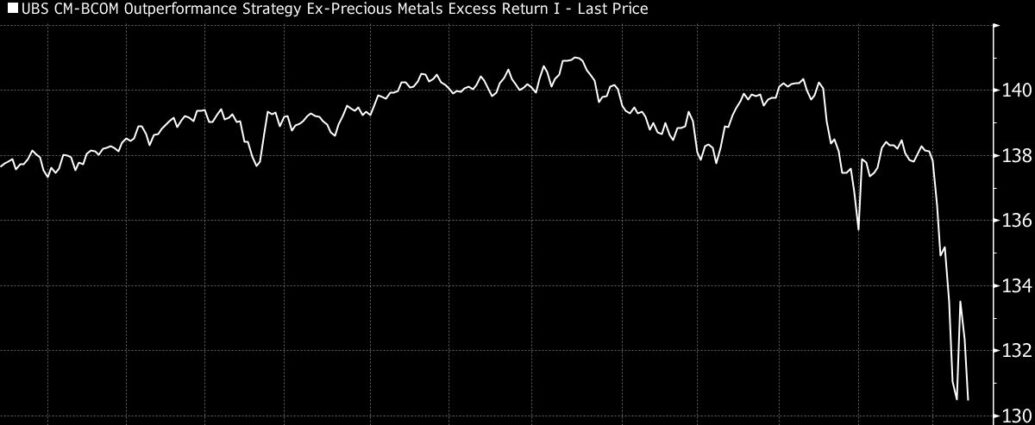
California Lithium Developer CTR to Go Public in US$4.7 Billion SPAC Deal
Lithium developer Controlled Thermal Resources (CTR) plans to go public through a US$4.7 billion merger with special purpose acquisition company Plum Acquisition in a deal aimed at accelerating development of a major geothermal and lithium project in California.The companies said the transaction will allow CTR to advance construction of its flagship Hell’s Kitchen project in California’s Imperial Valley, one of the most prominent geothermal and lithium developments in the United States.Once completed, the combined company is expected to trade on the Nasdaq under the ticker symbol “CTRH.” SPAC transactions, in which a publicly listed shell company merges with a private firm to take it public, had slowed in recent years but are beginning to regain traction as companies look for alternatives to traditional initial public offerings.CTR said proceeds from the deal will support the first phase of construction at Hell’s Kitchen. The initial stage is expected to include lithium carbonate production capacity of up to 25,000 metric tons per year alongside a 50-megawatt geothermal power facility.At full scale, the broader project is designed to produce up to 650 megawatts of renewable baseload electricity and as much as 100,000 metric tons of lithium carbonate annually, along with other critical minerals including potash, zinc, manganese, rubidium, and cesium.The project aims to combine geothermal energy generation with lithium extraction from geothermal brine, positioning it as a dual source of clean power and battery materials.CTR chief executive Rod Colwell said the project reflects growing demand for reliable energy and domestically produced critical minerals.“Few projects simultaneously address energy security and mineral security at scale. Hell’s Kitchen is structured to deliver clean baseload geothermal power alongside domestically produced strategic critical minerals from a single integrated brine resource,” Colwell said in the official press release.CTR has raised more than US$285 million in private investment for the project to date and has completed a field development plan with Baker Hughes to support its geothermal energy strategy. The company has also demonstrated its direct lithium extraction process at a pilot facility using geothermal brine.Don’t forget to follow us @INN_Resource for real-time updates!Securities Disclosure: I, Giann Liguid, hold no direct investment interest in any company mentioned in this article.
This post was originally published here


Flagship Dubai crypto conference Token2049, in sudden reversal, cancels due to Iran war
On Friday morning, the flashy crypto conference Token2049 Dubai, scheduled for late April, announced that it would not take place until 2027 amid war in the Middle East, according to a statement. On March 6, organizers had told Fortune that the event was taking place as planned, despite a week of escalating conflict in the region.
The conference said that it made the decision due to “ongoing uncertainty in the region and its impact on safety, international travel and logistics”, according to the statement.
Token2049 is not the first event to be canceled amid the violence in the region. Several others, including an entrepreneurship and innovation conference in Dubai and Abu Dhabi called the Megacampus Summit, were also shut down. Sporting events were also canned, most notably after tennis star Daniil Medvedev was stuck in Dubai after a tournament.
After the U.S. and Israel struck Iran on February 28, violence spilled into other parts of the Middle East. A suspected airstrike partially damaged Dubai’s main airport, and four people were injured after missile debris came down on Palm Jumeirah, a Dubai island filled with luxury hotels.
When Token2049 organizers told a Telegram group of its ticket holders on Sunday that the event was going on as planned, someone responded in the chat, “What are you talking about. Iran is still hitting the Dubai airport,” according to reporting by the Wall Street Journal.
In 2025, over 15,000 people attended the conference, and the organizers called it a “festival-like environment.” Some of the headline speakers slated for this year’s conference were Eric Trump, Polymarket CEO Shayne Coplan, and Tether CEO Paolo Ardoino.
This story was originally featured on Fortune.com
This post was originally published here



XRP Up 2% Without ETF Inflows: What Is Going On?
XRP (CRYPTO: XRP) is up 2% on Friday despite ETF outflows on Thursday as derivatives volume exploded 35% over the last 24 hours.
The ETF Outflow Problem
XRP spot ETFs recorded $6.08 million in net outflows on March 12, extending a streak of redemptions even as technical momentum improved.
Total net assets sit at $967.77 million, but flow patterns have been unstable with big inflows on March 6 and 9 totaling $34.73 million, then outflows on March 5, 10, and 12.
U.S.-listed XRP ETFs recorded roughly $3.9 million in outflows during the session. The negative flows suggest institutional investors are trimming positions despite the price rally.
The Short Squeeze Catalyst
Derivatives data shows where the real action is. Trading volume surged 35% to $4.45 billion while open interest rose 9.37% to $2.66 …
Apple cuts China App Store commission fees after government pressure
The move, which lowers fees to 25%, is a breakthrough for Chinese developers Tencent and ByteDance
Apple announced late on Thursday it would lower the commission fees collected in its App Store in mainland China. The move follows pressure from regulators in the tech company’s second-largest market, as well as global scrutiny of its payment requirements.
Fees for in-app purchases and paid transactions will be lowered to 25% from 30% starting on Sunday, Apple said in a statement on its blog for developers.
This post was originally published here


Oil Trade Complexity—Explained With ETFs


See How Pan American Silver Ranks Among Analysts’ Top Metals Picks
A study of analyst recommendations at the major brokerages shows that Pan American Silver Corp (Symbol: PAAS) is the #43 broker analyst pick, on average, out of the 50 stocks making up the Metals Channel Global Mining Titans Index, according to Metals Channel. The Metals Channe
This post was originally published here



The Strait of Hormuz is an Iranian ‘kill box,’ preventing the U.S. Navy from securing it right now and letting tankers pass through freely
The Strait of Hormuz is too dangerous right now, even for the mighty U.S. Navy, which has been called upon to secure the narrow waterway and bring relief to the worst oil disruption ever.
Since the U.S.-Israel war on Iran started two weeks ago, traffic around the Persian Gulf choke point has come to a virtual standstill as the Islamic Revolutionary Guard Corps attacks commercial ships and tankers, keeping 20% of global oil supplies bottled up.
President Donald Trump and administration officials insist the Navy can escort ships, perhaps later this month as airstrikes continue to degrade Iran’s ability to launch missiles and drones.
But the U.S. military has reportedly turned down requests for protection so far. Defense officials told The Wall Street Journal Navy escorts aren’t currently feasible because Iran can still attack ships, adding they won’t happen until the threat of Iranian fire has eased.
Navy officials also told the Journal earlier this week U.S. warships and commercial vessels would face enormous risks, describing the Strait of Hormuz as an Iranian “kill box.”
The Pentagon responded to a request for comment by referring to remarks from a press briefing on Friday. Joint Chiefs of Staff Chairman Gen. Dan Caine acknowledged the threat in the strait while pointing out the military has effectively wiped out Iran’s naval fleet and destroyed its mine-laying ships.
“We’ve made progress, but Iran still has the capability to harm friendly forces and commercial shipping and our work on this effort continues,” he told reporters.
Caine later said: “It’s a tactically complex environment. Before we want to take anything through there at scale, we want to make sure we do the work pursuant to our current military objectives to do that safely and smartly.”
Despite reports saying Iran has started laying mines, the Pentagon has said there’s no evidence of that yet. But MIT professor Caitlin Talmadge said Iran has thousands of small vessels that could potentially be used to lay mines, adding that they could have been dispersed before the war started.
“Iran has extensive tunnel networks to protect and launch such vessels surreptitiously, including midget submarines and other submersibles useful for mine laying,” she posted on X on Wednesday.
There are also other threats that are potentially even more serious. For example, Iran’s coastal areas offer spots for launching anti-ship missiles, which can be fired from close distances and provide little time for a defensive response.

Iran’s Shahed aerial drones, which have a longer range, can also be launched deeper inland and have been used to damage U.S. military and diplomatic targets around the region as swarms of the low-cost aircraft have overwhelmed defenses in some cases.
And despite losing much of its naval capabilities, the regime still has underwater and surface drones, which were used to attack oil tankers off the coast of Iraq, as well as small fast-attack boats that can threaten much bigger ships.
In fact, an Iranian vessel sailed close to the USS Abraham Lincoln aircraft carrier in the Arabian Sea, prompting an accompanying Navy destroyer to fire its 5-inch cannon, according to CBS News. But it missed multiple times, and a helicopter had to be sent to fire missiles at the Iranian boat.
To be sure, the Navy has long planned for an Iranian blockade of the strait and previously escorted ships through the Persian Gulf in the past during the so-called tanker wars in the late 1980s.
But Iran’s military capabilities weren’t as sophisticated as today’s, and the Navy’s fleet was twice as large. Meanwhile, numerous ships are still carrying out operations in the Caribbean.
In addition, there are more than 300 ships stranded in the Gulf due to Iran’s de facto blockade, and the slower pace required to escort them though the strait means getting all of them out could take months—or even years.
Top commodity analyst Jeff Currie, chief strategy officer at Carlyle Energy Pathways, told The Economist the cost of a single escort would exceed the value of the cargo it trying to protect.
This story was originally featured on Fortune.com
This post was originally published here





4 Reasons Why Bitcoin Is Up 4% To $72,000 Today
Bitcoin (CRYPTO: BTC) is up 4% on Friday as PCE inflation fell to 2.8%, oil prices dropped, $3 billion in options gamma triggered dealer hedging and ETF inflows hit four consecutive days.
PCE Inflation Falls Below Estimates
The Personal Consumption Expenditures index increased 2.8% year-over-year in January 2026, according to data released today by the Bureau of Economic Analysis.
Month-over-month, PCE rose 0.3%.
Core PCE, excluding food and energy, rose 3.1% year-over-year and 0.4% month-over-month, remaining well above the Fed’s 2% target.
The data suggests inflation is moderating but remains a concern ahead of next week’s FOMC meeting, where the Fed is widely expected to hold rates steady despite President Trump’s calls for an emergency rate cut.
Oil Prices Drop On Russian Waiver
WTI crude oil futures fell more than 1.5% while Brent oil slipped 1% on Friday.
The decline followed the …


Iran’s leaders hold nationwide rallies in show of strength

AI promised supreme productivity, but it’s actually straining workloads for employees—time spent emailing has doubled, and focused work sessions fell by 9%
Tech CEOs have lauded that AI will turn workers into “superhumans” where work is optional, and more time dedicated to innovating the world—but so far, the opposite has been true for most.
AI is actually increasing strain for most employees, as the tools add more time to menial tasks, and actually takes away from deep-focus work. Since adopting AI into their workflows, time spent across every job responsibility shot up anywhere from 27% to 346%, according to a recent ActivTrak report that analyzed 10,584 users 180 days before and after their AI adoption.
The time spent toiling on grunt work like emails increased by 104%, while chatting and messaging climbed by 145%, and using business management tools rose 94%.
There wasn’t a single activity category where using AI actually saved users time, with the report reaffirming that: “The data is unambiguous: AI does not reduce workloads.” Instead, professionals are now multitasking at a greater rate, and spending less of their days concentrating on complex problems.
“The prevailing assumption about AI and modern work is that both make the workday lighter. Shorter. More manageable. AI handles repetitive tasks, collaboration tools reduce friction and employees do more with less effort,” the ActivTrak report notes.
“It’s a compelling story. It’s also not what the behavioral data shows.”
To fit these longer routine tasks in their workdays, employees have had to actually sacrifice deep-thinking time—despite CEOs promising AI would increase it. The length of the average focused, uninterrupted work session fell by 9%, and focused work hours dropped by an additional 2%, according to the report. This is a continuation of a three-year downward trend, as the share of time spent “in the zone” fell to 60% in 2025.
CEOs say AI tools will bring an efficiency wave—and even shorter workweeks
Tech leaders working fast to win the AI race have been spreading day-dreamy predictions about the future of the world.
The CEO of Google DeepMind, Demis Hassabis, predicted that we’re only four years away from a “golden era” of prosperity, where the tech will help us “colonize the galaxy” and make people “superhuman” in their roles. And xAI founder Elon Musk believes that traditional work will be completely voluntary in the next 10 to 15 years thanks to the new tools, likening jobs to a hobby. And if AI only continues to get better, even “money will stop being relevant.”
“My prediction is that work will be optional. It’ll be like playing sports or a video game or something like that,” Musk said at the U.S.-Saudi Investment Forum in Washington this year.
“If you want to work, [it’s] the same way you can go to the store and just buy some vegetables, or you can grow vegetables in your backyard,” he continued. “It’s much harder to grow vegetables in your backyard, and some people still do it because they like growing vegetables.”
Leaders are even speculating that AI efficiency gains will be so great that workweeks will shorten across the board. Zoom CEO Eric Yuan predicts that AI will lighten the load, enabling staffers to only come into the office a handful of days a week.
“I feel like if AI can make all of our lives better, why do we need to work for five days a week?” Yuan told The New York Times last year. “Every company will support three days, four days a week. I think this ultimately frees up everyone’s time.”
Workers are dealing with ‘AI brain fry’ and burnout
While some workers are having luck being more productive with the AI tools, they could be burning themselves out.
As employees tap into efficiency gains, they also take on more work in their daily routines, which could lead to burnout, according to a study from the University of California at Berkeley published this year. Burdened by a larger variety of tasks, they’re using the time typically spent for taking natural breaks to complete more AI prompting. Employees need time to recharge—otherwise they run the risk of actually becoming less productive.
“AI brain fry” has also crept up as an issue in tech-forward workplaces. Employees are overwhelmed by intense oversight of AI tools, and it’s worsening their mental fatigue, according to a 2026 study from Boston Consulting Group. And the data showed that the number of AI tools doesn’t always necessarily link to increased productivity; those who used three or fewer AI tools self-reported improved efficiency, while it plummeted for those who used four or more.
“People were using the tool and getting a lot more done, but also feeling like they were reaching the limits of their brain power, like there were too many decisions to make,” Julie Bedard, study author and managing director and partner at Boston Consulting Group, told Fortune this year. “Things were moving too fast, and they didn’t have the cognitive ability to process all the information and make all the decisions.”
This story was originally featured on Fortune.com
This post was originally published here







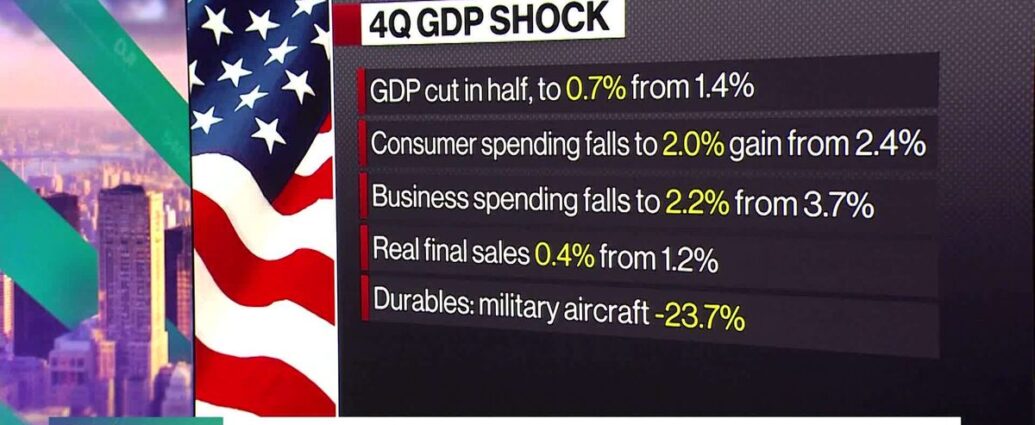
US Consumer Spending Stalls, GDP Takes a Hit

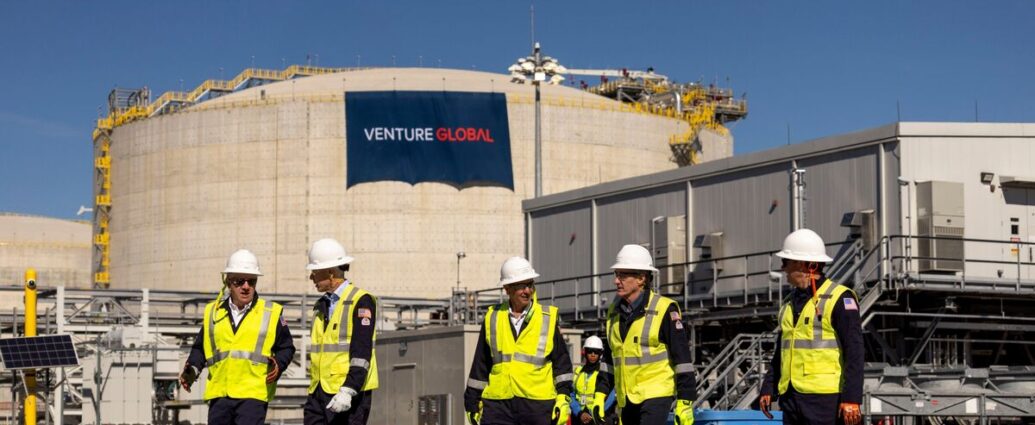

What’s Going On With SOLAI Stock Today?
SOLAI Limited (NYSE:SLAI) shares are down on Friday morning following a preliminary non-binding proposal from Chaince Digital Holdings Inc. to acquire all outstanding shares at a price of $3.069 per ADS.
• SOLAI stock is feeling bearish pressure. What’s behind SLAI decline?
The proposal represents a purchase price that is 110% of the company’s net asset value per ordinary share as of Sept. 30, 2025.
The final purchase price will be adjusted based on the most recent quarter-end net asset value, with a cap not to exceed $3.20 per ADS.
In addition, the board of directors has yet to make any decisions regarding the proposal, indicating that there is no guarantee of a definitive offer or agreement being executed. This uncertainty may contribute to the stock’s decline as investors weigh the implications of the potential acquisition.
Cash and Cryptocurrency Assets
As of Sept. 30, 2025, the company had cash and cash equivalents of $3.8 million, compared with cash and equivalents of $1.8 million as of Dec. 31, 2024.
As of Sept. 30, 2025, the company had cryptocurrency assets of …





Bitcoin’s Cycle Is Intact, But The Bottom May Come In 2027, Analyst Says
Bitcoin’s (CRYPTO: BTC) four-year market cycle still appears intact, but 2026 may be too early to declare the end of the bear market, according to a prominent analyst.
Bitcoin Cycle Still Aligns With History
Benjamin Cowen said on Thursday that Bitcoin’s long-standing cycle pattern remains largely consistent with previous market cycles, despite claims on social media that the structure has broken.
According to Cowen, many investors believe the cycle failed because Bitcoin did not reach the extreme price targets they expected or because altcoins underperformed.
However, historical data suggests the cycle has followed a similar timeline to past market peaks.
Cowen noted that Bitcoin’s major cycle tops have historically occurred in Q4 of the post-halving year, including …



Coinbase Short Interest Doubles In 2026: S3 Data Shows Elevated Potential For Short Squeeze
Cryptocurrency trading platform Coinbase Global (NASDAQ:COIN) is seeing elevated bets against the public company with short interest doubling in 2026. Here’s what that could mean for a share rally and potential short squeeze.
Coinbase Short Interest Rises
Investors continue to look for stocks with high short interest that could see short squeezes as prices rise. While Coinbase is not among the most shorted stocks overall yet, the stock is seeing elevated short interest.
A new report from S3 Partners shows that Coinbase’s short interest was around 5% in December and is now around 10%, doubling to start the 2026 year.
The rising short interest comes amid Coinbase stock down 18.3% year-to-date, compared to a 16.7% decline for Bitcoin (CRYPTO: BTC) and a 2.5% decline for the SPDR S&P 500 ETF Trust

Dubai Postpones Token2049 Crypto Conference Over ‘Safety Concerns’ As Iran Strikes Continue
Token2049 postponed its Dubai crypto conference from April 2026 to April 2027 citing ongoing uncertainty in the region as the United Arab Emirates faces missile strikes from Iran, with around 15,000 attendees expected at the event.
The Safety Decision
Organizers announced the postponement Friday “in light of the ongoing uncertainty in the region and its impact on safety, international travel and logistics.” The two-day event will now take place April 21-22, 2027.
Dubai authorities reported at least two strikes Thursday morning after residents received missile alerts overnight, underlining the threat to the financial and tourist hub long seen as a safe haven.
Dubai also reported further missile threats on Friday, as well as a “minor incident” in its central area.
“The safety and experience of our community always comes first,” Token2049 said …


Dow Gains Over 300 Points; US GDP Growth Revised Lower In Q4
U.S. stocks traded higher this morning, with the Dow Jones gaining more than 300 points on Friday.
Following the market opening Friday, the Dow traded up 0.68% to 46,995.67 while the NASDAQ rose 0.40% to 22,401.88. The S&P 500 also rose, gaining, 0.50% to 6,706.16.
Check This Out: How To Earn $500 A Month From Goldman Sachs Stock Ahead Of Q4 Earnings
Leading and Lagging Sectors
Utilities shares rose by 1.3% on Friday.
In trading on Friday, energy stocks fell by 0.4%.
Top Headline
U.S. economic growth slowed sharply toward the end of 2025. Gross domestic product expanded at an annualized rate of 0.7% in the fourth quarter of 2025, according to the second estimate released Friday by the Bureau of Economic Analysis.
The reading was significantly revised down from the initial 1.4% estimate and marked a sharp deceleration from the 4.4% growth pace recorded in the third quarter.
Equities Trading UP
This post was originally published here







Resource Nationalism Surges Across Africa as Governments Tighten Control
A wave of resource nationalism is reshaping Africa’s mining landscape, as governments from across the region are moving to increase their share of mineral revenues through radical policy reforms.Rising global commodity prices and historical highs have prompted African nations to capture a greater share of profits from their own respective natural resources.Now, policymakers are revisiting mining codes that were often drafted decades ago, arguing that previous frameworks allowed foreign companies to extract significant wealth while contributing relatively little to national development.
West Africa tightens mining rules
The latest reforms are most visible across West Africa, where several countries have recently revised mining legislation.Ghana implemented a new royalty regime this week, introducing a sliding scale ranging from 5 percent to 12 percent depending on gold prices. The government is also planning to phase out long-term mining stability agreements by 2027.Those agreements historically helped companies limit fiscal uncertainty over large investments such as mine expansions and processing upgrades.Mali took even more aggressive steps with its 2023 mining code, which increased the government’s potential equity stake in new mining projects to as much as 35 percent and raised royalty rates from a maximum of 6.5 percent to 10 percent.The country also established a state-owned enterprise, SOPAMIM, to manage government equity stakes in mining operations.The stricter framework initially allowed Mali to recover about US$1.2 billion in arrears from mining companies following audits and negotiations.But the new rules have also coincided with operational disruptions. The country’s gold mine supply fell by 19 percent in 2025 to 81.2 metric tons after a prolonged dispute with Barrick Mining (TSX:ABX,NYSE:B) over the Loulo-Gounkoto complex temporarily halted operations.Although a settlement was eventually reached, the standoff cost the government millions of dollars in lost taxes and royalties while Barrick reported roughly US$430 million in fees and an estimated US$1.9 billion in lost revenue.Neighboring Burkina Faso has also revised its mining laws, introducing a sliding royalty scale and raising the government’s stake in mining projects to 15 percent while allowing an additional 30 percent to be held by domestic investors.The country has also mandated that at least half of production be processed domestically, part of a broader push to develop local mining industries.Despite the tighter regulations, some projects have continued moving forward. West African Resources (ASX:WAF,OTCPL:WFRSF) brought its Kiaka gold project into production in 2025 after restructuring its ownership to comply with the new rules.
Niger asserts control over strategic minerals
In Niger, resource nationalism has taken a more confrontational form.The government announced on March 3 that it was revoking mining and refining agreements with three companies—Comini, Afrior, and Ecomine—citing failures to meet commitments related to local employment, environmental protection, and reportorial obligations.The move follows a series of disputes between Niger’s military government and foreign mining companies since a 2023 coup brought the current leadership to power.The country has already seized control of about 1,000 metric tons of uranium, known as yellowcake, from the SOMAÏR mine historically operated by French nuclear company Orano.The material, valued at roughly US$240 million, is currently stored at a military airbase in Niamey and has been offered for sale despite an international arbitration ruling ordering Niger not to transfer the uranium.
Reforms also aim to attract new investment
Not all policy changes are aimed purely at tightening state control. Across the continent, governments are continuing efforts to attract new investment and build domestic processing industries.Liberia is preparing a new mining code expected to be introduced within the next three months, alongside plans to establish a National Mining Company that would hold equity stakes in major projects.The government says the reforms are intended to strengthen its negotiating position with investors while unlocking exploration opportunities in a country where nearly 80 percent of the territory remains geologically unexplored.“Liberia’s geology is exceptionally rich,” Mines and Energy Minister Matenokay Tingban said earlier this year. “We are seeking geomapping and exploration partners. Access to geoscientific data will allow us to negotiate stronger investment deals and develop downstream infrastructure.”Iron ore remains Liberia’s dominant export, with output targeted to reach 30 million metric tons per year by 2026. But the government hopes updated regulations will encourage exploration for additional minerals and support downstream processing industries.Namibia is also preparing a new Minerals Bill to replace legislation dating back to 2002. The proposed reforms aim to encourage investment while expanding local beneficiation and participation in mining projects.Elsewhere, the Republic of Congo approved a draft mining code in late 2025 introducing competitive bidding for licenses and stronger oversight of small-scale mining. Ivory Coast and Somalia are also revising mining regulations to support exploration for minerals including lithium, cobalt, copper, and uranium.
Investment risks remain a concern
While many governments argue the reforms are necessary to ensure citizens benefit more directly from resource wealth, mining companies and investors remain wary.According to the Fraser Institute’s 2025 Annual Survey of Mining Companies, several African jurisdictions rank near the bottom globally for mining policy attractiveness.Six African countries were among the bottom ten jurisdictions worldwide based on policy factors such as taxation, regulatory consistency, and infrastructure: Mali, Burkina Faso, Guinea, South Africa, the Democratic Republic of Congo, and Angola.Meanwhile, four African jurisdictions, which include Burkina Faso, Egypt, Mali and Guinea, are also ranked in the global bottom ten for overall investment attractiveness.In contrast, Botswana emerged as a bright spot in the region, improving its ranking dramatically to seventh place globally after stronger investor perceptions of both mineral potential and policy stability.Despite the policy concerns, analysts say many mining companies are adapting rather than withdrawing. Record gold prices have pushed profit margins to historic levels, allowing producers to absorb higher royalties and taxes while continuing to operate.For now, however, most investors appear willing to remain, but increasingly selective about where and how they deploy capital in Africa’s vast mineral sector.
Don’t forget to follow us @INN_Resource for real-time updates!Securities Disclosure: I, Giann Liguid, hold no direct investment interest in any company mentioned in this article.
This post was originally published here


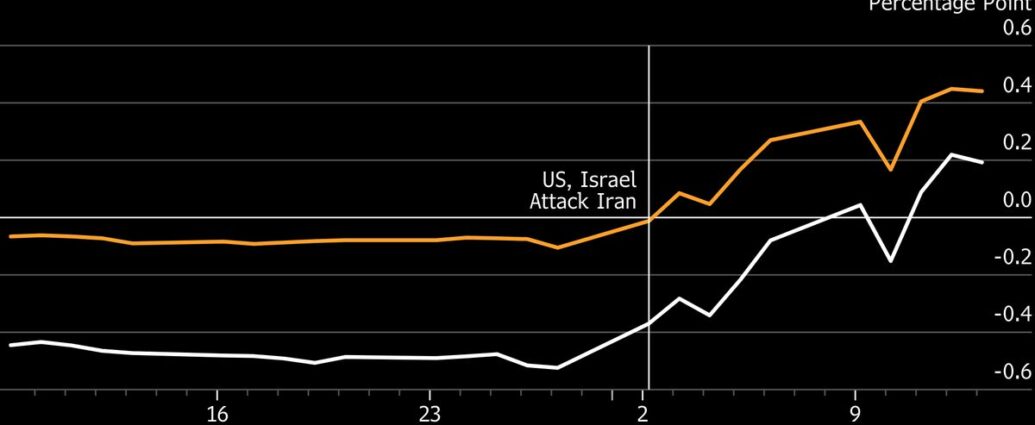


US Consumer Spending Barely Rises in January


Why right now is the best time ever to work in software
When Anthropic announced that its Claude® Code tool could help “break the cost barrier” to COBOL modernization, markets reacted as if a long-standing enterprise problem had finally met its silver bullet. The prospect is compelling: AI that can rapidly map, analyze, and refactor decades-old code running mission-critical systems in banking, government, and airlines.
But moments like this often compress complexity into a single narrative. The story quickly became less about what AI is uniquely good at and more about what people hoped it might magically replace.
The truth is both simpler and more exciting: AI isn’t the end of software; it’s the beginning of a new era for it.
We’ve Never Been Here Before
We’re living through one of the most exciting moments in the history of software. There has never been a better time to work in this industry. AI is reshaping what’s possible, and the level of investment pouring into technology rivals some of the most transformative public infrastructure efforts in modern history.
The national highway system, for instance, didn’t just move cars—it connected economies, created industries, and multiplied human potential. The same is true of AI now.
AI is creating similar conditions for an unprecedented acceleration of innovation. And we should welcome this moment. Every new advance from Anthropic’s breakthroughs in reasoning algorithms to cloud-scale automation makes the entire software ecosystem stronger.
These investments lift everyone working in the software industry, making technology more accessible and extending its benefits across society. But progress, especially rapid progress, often invites misunderstanding.
AI Isn’t a Silver Bullet — It’s a Multiplier
AI is often portrayed as an ultimate solution; a tool that can singlehandedly modernize legacy systems or replace the need for deep architectural work. It’s an appealing idea, but a misleading one.
In practice, AI helps organizations navigate complexity. It can map, refactor, and analyze codebases faster than humanly possible, reducing friction and accelerating discovery. But understanding logic is not the same as redesigning systems.
Consider a global bank modernizing its risk management platform. AI can read millions of lines of code, identify dependencies, and propose refactoring strategies in hours instead of months. But deciding how that system should evolve, how data should flow, how governance must adapt, and how compliance risk is mitigated requires human reasoning.
Real modernization demands context—reasoning about how applications interact, how governance and data integrity are maintained, and how change unfolds safely across an enterprise. Just as the highway system required sound engineering beneath the asphalt, AI depends on durable infrastructure beneath its models. Intelligence on its own doesn’t guarantee reliability; it amplifies the value of what’s already stable, secure, and well-designed.
This Is a Renaissance, Not a Replacement
This is more than an AI revolution; it’s a renaissance in software itself. For the first time in decades, the industry is rediscovering the power of systems thinking, recognizing that lasting innovation requires harmony between new intelligence and existing architecture. Modernization isn’t about replacement; it’s about evolution at scale.
At Rocket Software, we’ve long viewed modernization as an estate-level discipline—looking across the entirety of an organization’s applications, not just individual programs or platforms. That means understanding how systems depend on one another, how data moves and is governed, and how changes in one layer ripple across the environment. Our focus on explainable AI, governed insights, and architectural visibility helps organizations move forward without abandoning the stability and reliability their businesses depend on. In that sense, modernization is as much about preservation as progress.
The Real Advantage Goes to Builders, Not Chasers
Every major shift in enterprise technology follows a familiar pattern: new capabilities emerge, expectations skyrocket, and then the industry rediscovers the enduring value of the foundations beneath them. AI is the latest and most powerful expression of that cycle.
The opportunity ahead is not to chase disruption, but to build the next generation of systems with intention and reasoning, combining the speed of AI with decades of enterprise software experience. The organizations that will win are the ones that blend speed with structure, innovation with governance, and intelligence with architectural discipline.
It’s a remarkable time to work in software. But the real advantage will go to those who understand that AI is not the finish line, it is the catalyst. The next decade belongs to those who know how to harness its power while strengthening the systems that support it.
The opinions expressed in Fortune.com commentary pieces are solely the views of their authors and do not necessarily reflect the opinions and beliefs of Fortune.
This story was originally featured on Fortune.com
This post was originally published here


Over 50% of Americans Made ‘Risky Financial Stopgaps’ Last Year — 20% Even Skipped Medical Care
Quick Summary
- More than half of Americans used at least one risky financial stopgap late last year, with many cutting essentials, missing debt payments or even skipping medical care to stay afloat.
- For borrowers buried under high-interest balances, you can compare lenders and personalized loan options in minutes without affecting credit scores.
For a growing share of Americans, the numbers don’t line up anymore.
A survey issued by Achieve found that in the last three months of 2025, 51% resorted to at least one “risky financial stopgap” after falling short on what they already owed. Half of those who took action cut spending on basic needs, 34% leaned harder on credit cards and 26% pulled money from emergency or short‑term savings.
In more severe cases, the trade‑offs were stronger. One in five respondents missed at least one debt payment, and another one in five delayed or skipped medical treatment. About 9% said they reduced or skipped prescribed medication doses. For households in that position, even small moves to lower the cost of existing debt or consolidate balances can be the difference between a short‑term setback and a long‑term spiral.
“This is what the K-shaped economy looks like in the real world,” said Achieve Co-CEO Andrew Housser. “There’s an affluent half of the population whose financial lives aren’t disrupted by momentary inconveniences. But for everyone else, financial triage and tradeoffs are a way of life.”
Belt‑tightening down to the last notch
The survey suggests many households have already exhausted easy ways to cut back. More than 9 in 10 said they could only reduce housing costs, bills …
This post was originally published here



Nio Stock Surges On Friday – Here’s Why
Shares of Nio Inc (NYSE:NIO) are trading higher in Friday’s premarket session. This follows a fourth-quarter earnings report and a wave of positive Wall Street sentiment.
Analysts Pivot to Bullish Outlook
Nomura upgraded the stock to Buy from Neutral following the results. The firm cited improving operational momentum as a primary driver.
Analysts at Macquarie also raised their price forecast to $6.50. They pointed to improved vehicle margins and lower operating cash flow.
Morgan Stanley remains Overweight with a $7.00 price target. This reflects confidence in Nio’s 40% to 50% delivery growth forecast.
HSBC has upgraded NIO’s stock rating to Buy …
This post was originally published here

Stock Market Today: Dow, S&P 500 Futures Up As Trump Tells Iran To ‘Watch What Happens’ And Q4 GDP Print Lands— Adobe, Mosaic In Focus (UPDATED)
(Editor’s note: The future prices of benchmark tracking ETFs, the lede, the economic data, and the headline were updated in the story.)
U.S. stock futures pared earlier losses to rise on Friday following Thursday’s lower close. Futures of the major benchmark indices were up.
According to the Bureau of Economic Analysis, the second estimate for fourth-quarter 2025 GDP was revised down to an annual growth rate of 0.7%, reflecting a sharp deceleration from the 4.4% seen in the third quarter.
Concurrently, January 2026 data shows a resilient consumer despite the slowdown, with personal income rising 0.4% and personal spending (PCE) increasing 0.4%. While the headline PCE price index rose 2.8% year-over-year in January, the core PCE—which excludes volatile food and energy costs—remains more persistent at 3.1%, up from 3.0% in December.
Meanwhile, President Donald Trump, in a Truth Social post, warned Iran, saying, “Watch what happens to these deranged sc*mbags today,” after Iran’s Supreme Leader warned on Thursday that the Strait of Hormuz would remain closed, while the IRGC signaled potential retaliation against Israel’s Leviathan and Karish gas fields.
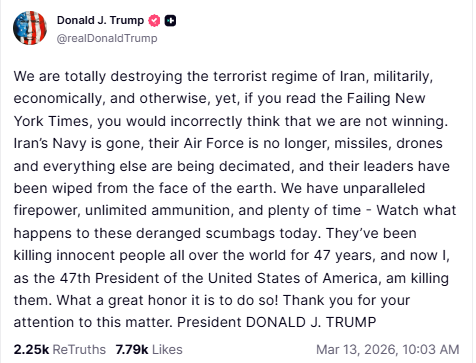
These threats to regional energy infrastructure coincide with the confirmed crash of a U.S. KC-135 refueling plane in Iraq and reports of explosions in Dubai following a drone interception.
The 10-year Treasury bond yielded 4.28%, and the two-year bond was at 3.76%. The CME Group’s FedWatch tool‘s projections show markets pricing a 99.1% likelihood of the Federal Reserve leaving the current interest rates unchanged in March.
| Index | Performance (+/-) |
| Dow Jones | 0.37% |
| S&P 500 | 0.39% |
| Nasdaq 100 | 0.36% |
| Russell 2000 | 0.51% |
The SPDR S&P 500 ETF Trust (NYSE:SPY) and Invesco QQQ Trust ETF (NASDAQ:QQQ), which track the S&P 500 and Nasdaq 100, respectively, were higher in premarket on Friday. The SPY was up 0.46% at $669.15, while the QQQ advanced 0.45% to $599.97.
Stocks In Focus
Adobe
This post was originally published here

Top 2 Defensive Stocks That May Fall Off A Cliff This Month
As of March 13, 2026, two stocks in the consumer staples sector could be flashing a real warning to investors who value momentum as a key criteria in their trading decisions.
The RSI is a momentum indicator, which compares a stock’s strength on days when prices go up to its strength on days when prices go down. When compared to a stock’s price action, it can give traders a better sense of how a stock may perform in the short term. An asset is typically considered overbought when the RSI is above 70, according to Benzinga Pro.
Here’s the latest list of major overbought players in this sector.
Darling Ingredients Inc (NYSE:DAR)
- On Feb. 11, Darling Ingredients posted better-than-expected quarterly sales. “Our commitment to operational excellence drove a strong fourth quarter, delivering solid EBITDA growth and sequential gross margin improvement, despite …
This post was originally published here



Why Are Micron Technology Shares Surging On Friday?
Micron Technology Inc. (NASDAQ:MU) shares are gaining ground in Friday’s premarket session.
The move follows a bullish update from Wells Fargo. Analyst Aaron Rakers maintained an Overweight rating on the stock. He raised the price forecast from $410 to $470, according to Benzinga Pro.
The price forecast hike comes just five days before Micron reports its second-quarter 2026 results. The company will release earnings on Wednesday, after the closing bell. Analysts estimate earnings per share of $8.56 and quarterly revenue of $19.12 billion.
Traders are showing renewed optimism …
This post was originally published here

US GDP Growth Revised Downward To 0.7% In Q4, Fed’s Favorite Inflation Gauge Ticks Higher
U.S. economic growth slowed sharply toward the end of 2025. Gross domestic product expanded at an annualized rate of 0.7% in the fourth quarter of 2025, according to the second estimate released Friday by the Bureau of Economic Analysis.
The reading was significantly revised down from the initial 1.4% estimate and marked a sharp deceleration from the 4.4% growth pace recorded in the third quarter.
The downward revision from the advance estimate was driven by weaker exports, softer consumer spending, lower government outlays and reduced investment, while imports declined less than previously estimated.
Compared with the third quarter, the slowdown in real GDP growth primarily reflected declines in government spending and exports, alongside a cooling in consumer spending. These factors were partially offset by stronger investment, which accelerated during the quarter.
Core PCE Inflation Rises …
This post was originally published here

Wall Street’s Most Accurate Analysts Weigh In On 3 Energy Stocks Delivering High-Dividend Yields
During times of turbulence and uncertainty in the markets, many investors turn to dividend-yielding stocks. These are often companies that have high free cash flows and reward shareholders with a high dividend payout.
Benzinga readers can review the latest analyst takes on their favorite stocks by visiting Analyst Stock Ratings page. Traders can sort through Benzinga’s extensive database of analyst ratings, including by analyst accuracy.
Below are the ratings of the most accurate analysts for three high-yielding stocks in the energy sector.
Nordic American Tankers Ltd (NYSE:NAT)
- Dividend Yield: 9.46%
- Jefferies analyst Omar Nokta maintained a Hold rating with a price target of $3.5 on Nov. 28, 2025. This analyst has an accuracy rate of 79%.
- Evercore ISI Group analyst Jonathan Chappell maintained an In-Line rating and increased the price target from $2.5 to $3 on Oct. 28, 2025. This analyst has an accuracy rate of 74%
- Recent News: On Feb. 26, …
This post was originally published here

Meet the executive behind AT&T’s $250 billion bid to become essential AI infrastructure
For generations, AT&T has occupied a familiar place in American business: the phone company, the network operator, the connective tissue behind much of daily communication. But in COO Jeff McElfresh’s telling, that description is no longer big enough. The company’s latest move, a sweeping $250 billion commitment through 2030 tied to fiber, 5G, resilience, public safety, workforce development, and AI era infrastructure, is meant to do more than reinforce its position in telecom. It is designed to position AT&T as the infrastructure layer beneath commerce and AI workloads.
That ambition is framed internally not so much as a pivot but as an escalation. McElfresh describes the decision as a reaffirmation of a role the company has played for decades: investing in the systems that made the modern internet possible in the first place.
He argues that many people still misunderstand what the internet actually is, seeing only the services on top of it rather than the networks that connect servers, devices, and the end users and locations. It is also the pathway through which people and businesses reach cloud computing resources, data centers, AI workloads, and large language models.
That framing matters because it speaks to a deeper strategic question facing AT&T, and really every incumbent in an era defined by AI exuberance. Is the company still best understood as a traditional telecom operator, or is it becoming something more like a connectivity platform or essential digital infrastructure? McElfresh’s answer is expansive. “All the above,” he says.
AT&T remains a telecom company, but one whose future depends on blending wireless and fiber into a single connectivity platform. More than that, McElfresh is making the case that AT&T wants to be the essential network layer of the AI economy. “Our vision is that AT&T becomes the highway upon which commerce and AI workloads traverse,” he tells Fortune.
It is a remark that captures both the scale of the opportunity and the risk. In the AI economy, attention tends to flow toward model makers, chip designers, hyperscale cloud companies, and app developers. But none of those businesses operate in a vacuum. They depend on resilient, high-capacity networks that can quickly and reliably move vast amounts of data. If McElfresh is right, the winners in the next phase of AI will include both those building the intelligence and those building the roads.
From AT&T’s perspective, the company has already been laying the groundwork for that thesis. McElfresh, who has spent some 30 years at AT&T, points to a strategic refocusing over the past several years on its core business of connectivity and convergence, with the company investing heavily in high-performing fiber. Today, he says, AT&T has connected 36 million locations with fiber and aims to reach more than 60 million endpoints, spanning homes, apartment buildings, schools, and government facilities.
The scale of the physical project is striking. Every month, McElfresh says, AT&T is physically installing more than 3,300 miles of fiber optic cable, roughly the distance from New York to Los Angeles. That analogy cuts through the abstraction that often surrounds conversations about AI. Somebody still has to build the underlying network. Permits have to be filed, trenches have to be dug, fiber has to be laid, workers have to be hired, and capital has to be allocated.
That is where the AI narrative shifts from theoretical to operational. McElfresh argues that AT&T is not only building the infrastructure required for an AI-driven economy, but also using AI internally to improve its ability to do so. The company uses AI to support technicians during home visits, assist engineers in determining where to place cell sites, and optimize fiber deployment. He says those tools are already improving productivity and enabling more accurate capital allocation decisions than the company was making just a few years ago.
For all the anxiety surrounding AI’s impact on jobs, McElfresh frames the technology first as a productivity engine that augments work already being done. AI is also becoming part of the machinery that helps AT&T execute its enormous spending plan more efficiently.
The company is already seeing AI begin to alter how data moves across its systems. During the pandemic, AT&T watched remote work redirect network use from downtown business districts to suburban neighborhoods in real time. Now, in the AI era, AT&T is seeing more data fed into the network rather than simply pulled from it, as connected cars and AI-driven software systems upload video, images, and other information to train models or receive their next instructions.
That emerging reality requires AT&T to transform itself alongside the network it is expanding. And that is where one of the interview’s central tensions comes into focus. Spending $250 billion over a decade suggests ambition. Still, it also raises a classic corporate problem: How can a company with the scale and infrastructure footprint of a utility maintain the speed and adaptability of a tech firm?
McElfresh says the challenge is not new, noting that AT&T’s longevity over roughly 150 years has depended on its repeated ability to reinvent itself. He traces that evolution from copper-based voice service to data over copper, then to mobility, and now to fiber-optics and gigabit-speed connectivity.
Perhaps the clearest sign of AT&T’s seriousness about its AI plans is the accounting. McElfresh says that beginning in 2026, AT&T will separate its financial reporting into an advanced connectivity profit-and-loss statement and a legacy one, giving investors a clearer view of where future services are growing and where older parts of the business are shrinking. That move suggests a company trying to force discipline around transformation. Separate reporting creates visibility for investors and gives management a scoreboard, making it harder to hide behind the inertia of a mixed legacy-and-growth portfolio.
There is a cultural dimension to all of this that McElfresh returns to repeatedly. He is a second-generation AT&T employee and has spent roughly three decades at the company, a fact that seems to inform both his reverence for the institution and his impatience with complacency. Asked what a company with this much history needs to guard against if it wants to define the next era rather than merely preserve the last one, he answers without hesitation.
“It’s being too comfortable with maintaining the status quo and managing the company that you have today, as opposed to stepping forward with a clear lens on the market, what kind of competition or technology is orbiting around your industry, and charging ahead on that to go build the company you want.”
That, he suggests, is the central challenge behind AT&T’s infrastructure push. The risk is not any single threat. Cyber threats, infrastructure failures, and geopolitical disruptions are real, but familiar. What keeps McElfresh up at night is the organization’s pace. “What AI is doing to us as a publicly-traded company, as an industry, or just in general, is the expectation that we can all move at a quicker clock speed, which requires a little level of discomfort.”
That brings him back to the $250 billion commitment, which he describes as a bet that AT&T, as both a telecom company and a connectivity platform, will remain central to the future it is helping build.
This story was originally featured on Fortune.com
This post was originally published here

Current price of oil as of March 13, 2026
At 8:30 a.m. Eastern Time on March 13, 2026, oil was priced at $99.84 per barrel with Brent serving as the benchmark (we’ll explain different benchmarks later in this article). That’s a rise of $1.08 compared with yesterday morning and around $29.47 higher than the price one year ago.
Will oil prices go up?
It’s impossible to forecast oil prices with detailed precision. Many different elements affect the market, but ultimately it boils down to supply and demand. When worries about economic recession, war, and other large-scale disruptions increase, oil’s path can shift fast.
How oil prices translate to gas pump prices
Gas prices at the pump don’t only track crude oil. They also include what it takes to refine and move that fuel, the taxes layered on top, and the extra markup your local station adds to stay in business.
Since crude oil generally makes up a majority of the per-gallon cost, changes in its price have an outsized impact. When oil surges, gas prices typically rise in tandem. But when oil retreats, gas prices often lag on the way down, a trend sometimes described as “rockets and feathers.”
The role of the U.S. Strategic Petroleum Reserve
In case of emergency, the U.S. has a store of crude oil known as the Strategic Petroleum Reserve. Its primary purpose is energy security in case of disaster (think sanctions, severe storm damage, even war). But it can also go a long way toward softening crippling price hikes during supply shocks.
It’s not a long-term answer and is more meant to provide temporary relief, assisting consumers and keeping critical parts of the economy running, like key industries, emergency services, public transportation, etc.
How oil and natural gas prices are linked
Both oil and natural gas are key sources of the energy we use every day. Because of this, a big change in oil prices can affect natural gas. For example, if oil prices increase, some industries may swap natural gas for some segments of their operations where possible, which increases demand for natural gas.
Check Out Our Daily Rates Reports
- Discover the highest high-yield savings rates, up to 5% for March 16, 2026.
- Discover the highest CD rates, up to 4.30% for March 16, 2026.
- Discover the top CD rates from major banks on March 16, 2026.
- Discover the current mortgage rates for March 16, 2026.
- Discover current refi mortgage rates report for March 16, 2026.
- Discover current ARM mortgage rates report for March 16, 2026.
- Discover the current price of gold for March 16, 2026.
- Discover the current price of silver for March 16, 2026.
Historical performance of oil
To gauge oil’s performance, we often turn to two benchmarks:
- Brent crude oil, the main global oil benchmark.
- West Texas Intermediate (WTI), the main benchmark of North America
Between these two, Brent better represents global oil performance because it prices much of the world’s traded crude. And, it’s often the best way to track historical oil performance. In fact, even the U.S. Energy Information Administration now uses Brent as its primary reference in its Annual Energy Outlook.
Looking at the Brent benchmark across several decades, oil has been anything but steady. It’s seen spikes due to factors such as wars and supply cuts, and it’s also seen crashes from global recessions and an oversupply (called a “glut”). For example:
- The early 1970s brought the first big oil shock when the Middle East cut exports and imposed an embargo on the U.S. and others during the Yom Kippur War.
- Prices dropped in the mid-1980s for reasons such as lower demand and more non-OPEC oil producers entering the industry.
- Prices spiked again in 2008 with increased global demand, but it soon plummeted alongside the global financial crisis.
- During the 2020 COVID lockdown, oil demand collapsed like never before—bringing prices below $20 per barrel.
All to say, oil’s historical performance has been anything but smooth. Again, it’s hugely affected by wars, recessions, OPEC whims, evolving energy initiatives and policies, and much more.
Energy coverage from Fortune
Looking to stay up-to-date regarding the latest energy developments? Check out our recent coverage:
- Oil and fertilizer prices are climbing. Your grocery bill may follow
- Google and Tesla know electricity is expensive. They’re teaming up to bring you an alternative
- Exxon, Chevron, and other US oil and gas producers and refiners hit all-time-high stock values
Frequently asked questions
How is the current price of oil per barrel actually determined?
The current price of oil per barrel depends largely on supply and demand, including news about potential future supply and demand (geopolitics, decisions made by OPEC+, etc.). In the U.S., prices also move based on how friendly an administration is to drilling, as it can affect future supply. For example, 2025 saw the Trump administration move to reopen more than 1.5 million acres in the Coastal Plain of the Arctic National Wildlife Refuge for oil and gas leasing, reversing the Biden administration’s policy of limiting oil drilling in the Arctic.
How often does the price of oil change during the day?
The price of oil updates constantly when the “futures” markets are open. A futures market is effectively an auction where people agree to buy or sell oil in the future. As long as people and companies are trading contracts, the oil price is changing.
How does U.S. shale oil production affect the current price of oil?
In short, shale is rock that contains oil and natural gas. Think of shale as energy yet to be tapped. The more shale the U.S. accesses, the more energy we’ll have—and the more easily oil prices can keep from spiking as much thanks to a greater supply.
How does the current price of oil impact inflation and the broader economy?
When oil is expensive, it tends to make everyday items cost more. This can be related to energy (your heating, gas utilities, etc.), but it’s also due to the logistics involved with making those items accessible to you. Shipping, for example, can affect the price of things at the grocery store, as it’s more expensive to get those products from warehouses and farms onto the shelf.
This story was originally featured on Fortune.com
This post was originally published here

Microsoft’s Quality Rank Hits New High As Texas AI Data Center Expansion In Focus
Microsoft Corp. (NASDAQ:MSFT) has reached a new milestone in operational excellence, with its quality ranking surging to the 90.05th percentile.
MSFT Quality Rises Week-On Week
This significant week-on-week climb from 89.96 comes as the tech giant reportedly moves to secure massive AI infrastructure in Abilene, Texas, according to a report by The Information.
Benzinga Edge Stock Rankings‘ quality score places Microsoft in the top tier of companies for financial health and operational efficiency.
Despite the stellar quality score, Microsoft faces negative price trends. The stock is currently trending downward across short, medium, and long-term timeframes.
Furthermore, the momentum score sits at a low 20.40, suggesting that the market has yet to reward MSFT‘s fundamental improvements with price appreciation.
This post was originally published here
AI and the Entry-Level Job
Editor at large Adi Ignatius connects with IBM’s chief human resources officer Nickle LaMoreaux to understand the company’s talent strategy in the age of AI.
This post was originally published here

Bitcoin Reclaims $72,000 As Ethereum, XRP, Dogecoin Jump Over 3% On Improving Sentiment
Bitcoin climbed to $72,000 on Friday, with Bitcoin ETFs seeing $53.9 million in net inflows on Thursday, while Ethereum ETFs reported $72.4 million in net inflows.
Cryptocurrency |
Ticke | Price |
| Bitcoin | (CRYPTO: BTC) | $72,320.38 |
| Ethereum | (CRYPTO: ETH) | $2,123.98 |
| Solana | (CRYPTO: SOL) | $90.15 |
| XRP | (CRYPTO: XRP) | $1.42 |
| Dogecoin | (CRYPTO: DOGE) | $0.09978 |
| Shiba Inu | (CRYPTO: SHIB) | $0.056156 |
Meme coin market capitalization spiked 10.1% to $34.8 billion over the past 24 hours.
Trader Commentary:
Analysts at Bitfinex noted that since Operation Epic Fury, Bitcoin has gained roughly 6%, while the S&P 500 …



Thrivent bucks the AI layoff trend and plans to add 600 financial advisors this year: This is ‘how we grow our business’
Good morning. Just as more than 100,000 U.S. financial advisors are expected to retire over the next decade, Thrivent is racing to hire the next generation.
The Minneapolis-based financial services company announced this week plans to hire 600 financial advisors in 2026 as part of an effort to expand its workforce. The company exceeded the same hiring target in 2025 and said continued recruitment will help meet rising demand for purpose-driven financial advice.
“This is part of our growth plan,” Nick Cecere, Thrivent’s chief distribution officer, told me. “Adding new advisors is how we continue to grow our business.”
Thrivent recruits advisors through both its traditional field network and a newer Virtual Advice Team, an employee channel where advisors serve clients remotely rather than through a traditional in-person practice. Participants typically spend 12 to 24 months in the program before joining an established advisor team or launching their own practice.
The program attracts both early-career professionals and second-career candidates, Cecere said, like teachers, coaches and business professionals, for example, seeking a career focused on helping clients.
The hiring push also reflects a broader talent shortage in the financial advice industry, as many veteran advisors approach retirement. According to McKinsey, addressing this gap requires changing the advisor operating model to increase productivity (lead generation, teaming, and an AI- and technology-enabled shift toward value-adding activities) and also attracting new talent to the industry faster than before.
Thrivent, No. 388 on the Fortune 500, is led by CEO Terry Rasmussen. It has more than $212 billion in assets under management and advisement, more than 4,500 employees, and serves 2.4 million clients. Thrivent was founded in 1902 as an aid association for Lutherans, and its banking and investment services are open to nonmembers, regardless of religious affiliation, according to the company.
It operates regional hubs in Atlanta, Dallas, Denver, Minneapolis and Milwaukee that support the virtual advice program, and the company is considering further expansion.
Thrivent is investing in AI to support, not replace, its advisors. “We’ve made the strategic decision to hire more financial advisors because it will enable us to serve even more people,” according to David Royal, Thrivent’s EVP and chief financial and investment officer.
The personal relationships and trust between Thrivent’s advisors and clients are “deeply important” for planning the future, building legacies, and improving their communities, Royal said. Technology, including AI, helps modernize the business and “gives our teams better tools so they can focus on high‑value, purpose‑driven work,” he said.
Strong advisor retention and client satisfaction remain central to Thrivent’s long-term growth strategy, Cecere said, as the industry adapts to changing demographics and new digital tools.
Have a good weekend.
Sheryl Estrada
sheryl.estrada@fortune.com
This story was originally featured on Fortune.com
This post was originally published here

How the Iran war cuts off Southeast Asia’s tourism industry
The Iran war is reshaping global flight paths, posing a threat to Southeast Asia’s key tourism sector. Iranian missile and drone attacks have shut down key Middle Eastern aviation hubs like Dubai, Abu Dhabi and Doha, cutting off popular travel routes for European and U.S. travelers to get to Southeast Asia’s beaches and temples. Travel experts now fear that countries like Thailand, Cambodia and Indonesia may soon see a dip in tourists.
“There aren’t non-stop flights between Europe and destinations like Bali and Cambodia,” Brendan Sobie, a Singapore-based independent aviation analyst, tells Fortune. “These countries, which are heavily dependent on tourism, are also more impacted due to the trickle down effect on their economies.”
Tourism is a mainstay of Southeast Asia’s economy. In 2024, tourism accounted for 9.4% of Cambodia’s GDP, and 12% of Thailand’s.
Major Gulf carriers including Emirates, Qatar Airways and Etihad have scrapped thousands of flights to and from the Middle East. This has ripple effects on some Southeast Asian carriers; Malaysia Airlines, for instance, relies on Qatar Airways to move tourists from the U.S., Europe, and the Middle East into Southeast Asia.
“Malaysia Airlines doesn’t fly into Europe much, except for London and Paris,” said Mayur Patel, the Asia head at aviation consultancy OAG. “A lot of their codeshares were through Doha with Qatar Airways, and if airplanes can’t fly into Doha, it would certainly put a constraint on traffic flow.”
How have global airlines been hit?
Airline networks worldwide have been rattled by airspace closures and skyrocketing jet fuel prices, which have doubled since the Iran conflict began. Airlines are suspending some routes to the Middle East for weeks, if not months. Carriers are also slapping fuel surcharges on flights, and Air New Zealand pulled its guidance on Tuesday due to increased fuel costs.
“In the first week of the war, we saw a 50% drop in total bookings,” said Lucy Jackson Walsh, the co-founder and managing director of Lightfoot Travel, a luxury travel firm with offices in Dubai, London, Singapore and Hong Kong. Bookings for Middle Eastern destinations—about 15% of Lightfoot’s business—vanished almost immediately.
“We’re shifting our focus towards Asia‑to‑Asia regional travel and also trips to further‑flung destinations like Australia which don’t have to route through the Middle East,” she said.
Supply chain disruptions from closed airspace and waterways are also delaying aircraft maintenance, repair and operations (MRO), and exacerbating existing aircraft delivery delays from manufacturers like Airbus and Boeing.
“There’s a shortage of aerospace spare parts and components, which may be delivered from Europe or the U.S.,” Kent Yar, an independent aerospace consultant, told Fortune. “To manufacture airplane parts, you also need raw materials… everything boils down to supply chain issues.” He estimates that airplane spare parts have seen a 15% jump in price since the Iran war began.
Do any airlines stand to benefit?
Still, some Asian carriers like Singapore Airlines and Hong Kong’s Cathay Pacific, which fly several non-stop routes between Asia and Europe, might have an edge over other disrupted carriers. “Existing non-stop flights between Asia and Europe have already re-routed in light of the Russia-Ukraine war, and don’t necessarily use Iran or Middle Eastern airspace,” Sobie explained.
But this will be a slim silver lining compared to the overall hit to the sector.
“I don’t think anybody’s happy,” Sobie said. “Some airlines will have routes that see an extra surge in load factor and revenue—and that’s natural—but it does not offset the negative of how this crisis has impacted the overall industry.”
Even so, some in the industry hope things will recover when, or if, the conflict dies down.
“What I’m hoping is that we’ll see revenge travel after the conflict dies down,” says Walsh of Lightfoot. “Like after the COVID‑19 pandemic, when markets came back, travel took off again.”
This story was originally featured on Fortune.com
This post was originally published here
Lessons from China’s Short-Drama Boom
The platforms treat storytelling, experimentation, and monetization as one integrated system—and the operating logic travels well beyond entertainment.
This post was originally published here

The Map of U.S. Prosperity Is Changing. Here’s Where Companies Should Invest.
A new research-backed index of American cities can help companies navigate issues such as demographic decline, climate shock, and AI disruption.
This post was originally published here
How To Earn $500 A Month From SAIC Stock Ahead Of Q4 Earnings
Until then, some SAIC investors may be eyeing potential gains from the company’s annual dividend yield of 1.62% ($1.48 a year). That’s a quarterly dividend amount of 37 cents per share. So, how can investors exploit its dividend yield to pocket a regular $500 monthly?
To earn $500 per month or $6,000 annually from dividends alone, you would need an investment of approximately $371,103 or around 4,054 shares. For a more modest $100 per month or $1,200 per year, you would need $74,239 or around 811 shares.
To calculate: Divide the desired annual income ($6,000 or $1,200) by the dividend ($1.48 in this case). So, $6,000 / $1.48 = 4,054 ($500 per month), and $1,200 / $1.48 …
This post was originally published here
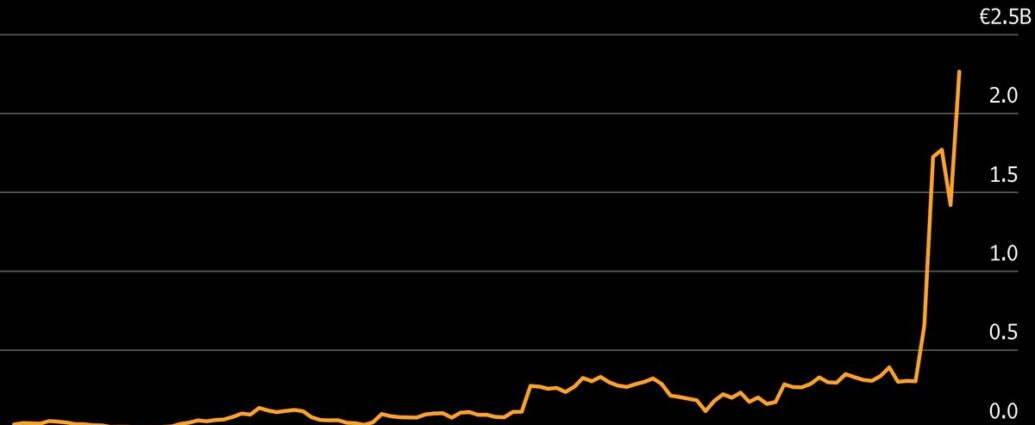

Institutional Investor Launches Alpha Edge Buy List™ — A Global Allocator-Curated Standard for Private Equity Excellence
NEW YORK, March 13, 2026 /PRNewswire/ — Institutional Investor today announced the official launch of the Alpha Edge Buy List™, an exclusive, allocator-curated recognition platform designed solely for private equity firms that exemplify alignment, governance discipline, transparency, and long-term value creation.
Developed in collaboration with senior institutional investors serving on the Alpha Edge Advisory Board, the Buy List establishes a new global benchmark for excellence in private equity — reinforcing the standards that matter most to long-term capital allocators.
Unlike traditional rankings or sponsorship-based awards, inclusion on the Alpha Edge Buy List is not open for application and is not pay-to-play. Firms are nominated by members of the Advisory Board and vetted through a structured research and verification process …
This post was originally published here