


‘What a waste of money’: Shark Tank star Kevin O’Leary urges couples to ditch the extravagant wedding and do this instead
Shark Tank’s Kevin O’Leary urges couples to think about their future together before they shell out for a big wedding.
The investor and founder of O’Leary Ventures, who is known for his blunt takes on everything from remote work to Gen Z, has some characteristically frank advice for young couples: Save your wedding money.
“What’s the number one mistake that people make before they get married?” asked O’Leary in a video published Wednesday. “I’m talking about just before they get married, they plan a huge wedding. What a waste of money.”
Instead, O’Leary said couples should think small for the sake of their future selves, opting for a civil ceremony and a party afterwards with just a small group of friends.
“Be very selective on who you invite. They got to be meaningful to you, and forget the big extravaganza,” he said.
O’Leary’s comments come as the price of a wedding in the U.S. has jumped to above $30,000. The average cost of an American wedding stood at $36,000 as of 2026, according to wedding planning platform Zola. This price tag includes renting a venue, the wedding dress, as well as flowers and photography. A separate Zola study of 11,500 couples from January found 84% also believe their wedding will cost more this year compared to two years ago because of the economy or tariffs.
Still, Zola’s head of brand Sammi Kobrin said when it comes to bringing family and friends together at their wedding, “the vast majority say it will be well worth the cost.”
But when couples are dropping so much money on their weddings, and often going over budget, according to Zola, the strain has jumped not just for couples and their families—but also wedding guests, who are increasingly being asked to comply with demanding expectations related to the dress code and the gifts they receive.
In this context, O’Leary said couples should skip the stress and use the money they would have spent on their wedding for something big down the line.
“Instead of spending a lot of dough, you spend a small amount, take the difference and invest it in your mutual future, maybe a deposit on a house,” he said.
For couples looking to buy a home, skipping a wedding instead of resorting to a downpayment fund on their wedding registry, may make financial sense, even if it may not feel good emotionally.
The average age of a first-time home buyer has risen to an all-time-high of 40 years old, which may be no surprise as the median sales price of an American home reached $405,000 in the last quarter of 2025, according to the Federal Reserve Bank of St. Louis. A person looking to put up the optimal 20% down payment on a median priced home would have to save $81,000 to avoid paying private mortgage insurance (PMI).
While the conventional 30-year mortgage rate has fallen to about 6% from a high of 8% in 2023, home prices have risen so much that more than half of six-figure earners say buying a house is out of reach.
Even after the wedding, O’Leary said a dream honeymoon should also be out of the question. Why take a luxury vacation, he asked, if the couple is still not established financially?
“Once you actually stabilize and you get yourselves in order, then take a vacation,” he said. “But putting yourselves in massive amounts of debt just to get married is really stupid.”
This story was originally featured on Fortune.com
This post was originally published here

Iran’s simplest weapon is now holding the global economy hostage
Sea mines are “simple, uncool weapons,” Scott Savitz, a naval marine warfare expert at RAND who was stationed in Bahrain in 2001, told Fortune. They predate World War I and haven’t advanced much since; they look like the spiky metal balls you’d imagine from the movies, small enough to slip neatly into a fishing boat and packed with TNT and ammonium nitrate.
But when they go off, they can snap ships straight in half, Savitz said. They have a “much greater effect, typically, than a missile,” and can inflict millions of dollars worth of damage for just a few thousand bucks a pop. And they’re pretty effective too: naval mines have caused 77% of all U.S. Navy ship casualties since 1950, per the Strauss Center at the University of Texas.
As the 13th day of the Iran conflict draws to a close and with no end in sight, Iran is looking towards old tech to elevate its position in a war that has so far been dominated by hypersonic missiles. The sea mine isn’t flashy, but right now it could be Iran’s most dangerous weapon in the military conflict against the United States.
Some U.S. intelligence officials told CNN that Iran has begun laying mines in the Strait of Hormuz, the chokepoint that carries a fifth of the world’s oil and is currently the subject of the standoff between Iran and the U.S. Iran has attacked several oil tanker ships in and around the Strait in recent days, including two Iraqi oil tankers in the Persian Gulf that left one crew member dead. Nearly a quarter billion barrels per day of crude has been stranded in the Gulf since the war began nearly two weeks ago, commodity expert Rory Johnston has estimated. Crude oil prices have spiked, at the time of writing hovering just under $100 a barrel, and gas is up 20% due to the blockage. Across the Pacific, the situation is more dire: Pakistan has closed schools and mandated 4-day-work weeks; India is closing restaurants and hotels across the country to preserve oil for cooking; and Thailand has asked government bureaucrats to forego the elevator.
The Strait of Hormuz isn’t actually “closed” by Iran, Savitz said. “It’s the decision of individual users whether or not they are willing to bear the risk. If they can raise the risk, or the perceived risk, to a level such that commercial traffic decides that they will not go through that strait, then that’s sufficient.”
The current risk level in the Strait has already scared off most major marine war insurers, who have pulled their coverage of ships in the Strait. Freight rates have soared to record highs, and a very large crude carrier heading from the strait to China can earn half a million in revenue a day. Yet, if true that Iran has laid mines in the Strait, that would turn a temporary blockade into something even harder to undo.
The psychological warfare of the sea mine
Sea mines are so powerful, in part, because they have “disproportionate psychological effects,” designed to prey on the fear of the unknown. The mines are nearly invisible at every stage and are incredibly difficult to detect—unlike missiles, where sailors can use heat signatures or trails picked up by radars. But for a mine, all that needs to happen is a vessel pulls up, shoves one overboard, and moves on. “There’s a splash in the water,” Savitz said. “Ships are dropping things in the water all the time.”
There’s even more psychological warfare at play. Some mines are programmed to ignore the first ship that passes, detonating only on the fifth, just so that the mine-clearing team goes through safely and the tanker behind it takes the hit.
Ship operators often fall into one of two traps: they either say, “’Well, I can’t see it, so I’m just going to ignore it’ and blindly find themselves in trouble,” Savitz explained, “Or they say, ‘Well, the waters might be mined,’ and they overreact and are unwilling to assume any risk from mines, even as they’re assuming other types of risk.”
Some of the worst incidents have been due to the latter mistake. During the tanker war of the ’80s, Iran and Iraq attacked 450 ships in the Persian gulf, and their most devastating weapon was the mine. In 1988, ten Navy sailors were severely injured on the USS Samuel Roberts after hitting an Iranian M-08 mine designed exactly 80 years earlier. “All three of the US warships that were damaged by mines in 1988 and 1991 did not know they were in a minefield when it happened,” Savitz said. The U.S. responded with Operation Praying Mantis, the largest American naval surface battle since World War II, sinking half of Iran’s operational navy in a single afternoon. The repairs cost $90 million, all for a weapon approximated to be worth $1,500.
The U.S. has had decades to prepare since the disaster. Yet, “The U.S. has been underinvesting in mine warfare for many decades,” Savitz said. The Navy decommissioned its last dedicated minesweepers in the Persian Gulf last September. Their replacements were supposed to be the littoral combat ship—a program Savitz called “a disaster,” because they built tiny metal ships that could set off the mines as opposed to the traditional wood and fiberglass minesweepers.
More so, mines are too boring to compete for budget. “A hypersonic missile is exciting and gets attention. Mines don’t.” The last time a U.S. warship was damaged by a mine was in 1991.
Hormuz escalation
The question is if the conflict in the strait will escalate that far. Savitz is cautiously optimistic. “Yes, we will be able to get it open,” he said. The U.S. has divers, unmanned systems, allied minesweepers from Europe—even Navy dolphins trained to detect mines, he said. But the timeline depends entirely on what else is happening around them. Mine countermeasures forces move slowly, in predictable patterns, through waters that may also be covered by Iranian missiles, explosive boats, and drones. “Can we suppress those threats well enough that mine countermeasures forces can operate without undue hindrance?” Savitz said. “That’s the challenge.”
And even under ideal conditions, clearing mines is agonizingly slow. Savitz estimated the cost ratio between laying and clearing at “between one and three orders of magnitude”—essentially, up to a thousand times more expensive to remove a mine than to deploy one.
“A hasty clearance”—opening just one single narrow lane for tankers to push through—could happen in days, Savitz said. Getting the strait to a safety level where tanker operators are willing to accept the risk could take weeks. But to fully remove and sweep the entire waterway, where tankers feel fully confident nothing is left, could take far longer; or could never come. There are still World War II mines in the Baltic Sea and the Pacific because they aren’t fully cleaned up.
Eventually, the calculus will shift. During the Tanker War, ships ran through minefields anyway. About 1% took a hit, Savitz said, “but the risk was deemed to be justified by the reward.”
This story was originally featured on Fortune.com
This post was originally published here


Oil and fertilizer prices are climbing. Your grocery bill may follow
Soaring oil prices won’t just cause you trouble at the tank.
Energy is one of the most critical inputs for the food supply chain, which means the impacts of the war could show up on your grocery receipt. “There’s a very strong correlation between the movement of energy prices and the movement of food prices,” Dr. Ricky Volpe, an agricultural economist and professor of agribusiness at Cal Poly, told Fortune. “We’ve seen oil top $100 a gallon before and that happened to coincide with significant food price inflation.”
The war in Iran is adding another layer of volatility to an already shaky U.S. economy. Goldman Sachs has increased the chance of a recession occurring within 12 months to 25%, up five percentage points. And food affordability has been a top concern for many Americans, with food prices still on the rise despite efforts to cool inflation. Food prices have risen nearly 24% above pre-COVID levels and consumer sentiment remains near historic lows.
An energy-rich supply chain
The longer the war extends, the more drastic the impact on food prices. But if the war does end by the end of the month, as Trump has stated he’s hoping to be the outcome, it’s unlikely you’ll see a spike in grocery prices, according to experts. “If we’re talking just a few weeks, very likely you’re not going to see this show up in your grocery receipts,” Dr. David Ortega, an agricultural economist and professor at Michigan State University, told Fortune. “But if we’re talking a month or more, a few months, then it’s a different story.”
It’s not exactly clear when the war will relent. Trump has offered conflicting messages as to when it could end, telling Axios Wednesday there is “practically nothing left” to target. But Iran has said it’s ready to fight a “long-term war of attrition,” signaling the war could extend beyond the framework Trump has suggested.
However, prices aren’t expected to increase just yet. Ortega said it could take time to see any impact in the short-term. “There’s a lag between when the shock happens and when you see the full effect on your food prices,” he said. “It could be the better part of a full year before we’re seeing the full impact show up at the grocery store.”
Still, the food supply chain is incredibly energy-intensive, with high sums of energy required at each stage of the process. “Energy is required to grow and harvest food, and then to manufacture it, to transport it, and to store it, and then to sell it,” Volpe said. “It compounds down the supply chain, and it’s problematic.”
Shipping—just one stage of the food supply chain requiring a massive amount of energy—includes rates that are largely determined by diesel prices. FedEx Ground and home deliveries, for example, add a fuel surcharge of 24.25% when diesel prices reach $4.54 a gallon. Diesel was above $4.80 as of Sunday.
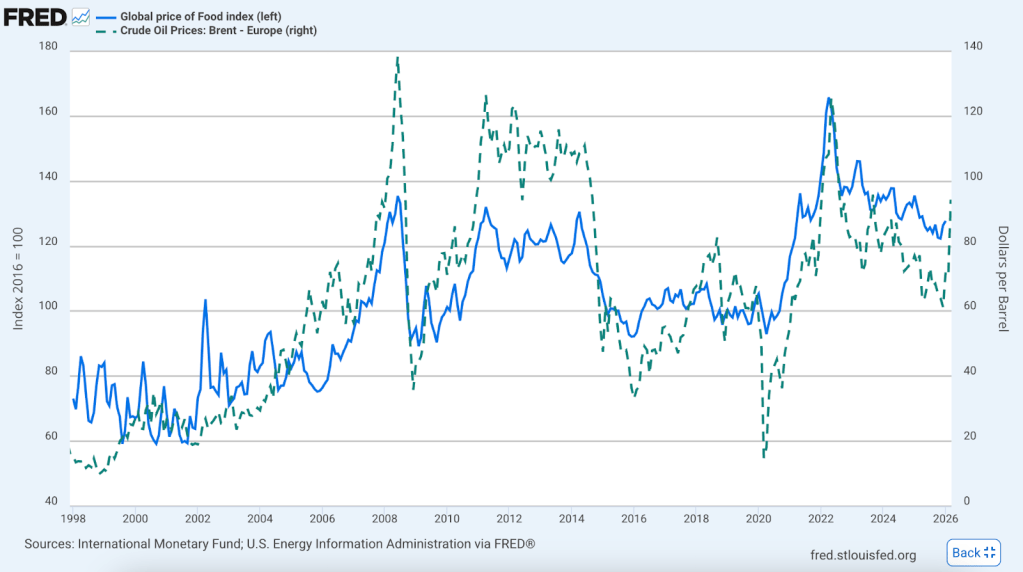
A blog post Thursday from the Federal Reserve Bank of St. Louis finds high correlation between crude oil prices and the global price of food index. While the post cautions against implying a direct causal relationship, it notes changes in oil prices could signal broader price changes. “Taken together, these two graphs suggest that large and sustained oil price movements have historically coincided with changes in both food prices and broader consumer inflation,” the report reads.
“We’ve seen oil top $100 a gallon before and that happened to coincide with significant food price inflation,” Volpe said. “Most [food companies] operate on very thin margins, so that means that when important sources of costs increase, they have no choice but to pass those along downstream, to consumers.”
The war is also impacting another critical supply chain that feeds into your grocery bill: fertilizers. More than one-third of the global seaborne fertilizer travels through the Strait of Hormuz. Since the start of the war, the price of urea, the nitrogen-rich compound present in most fertilizers, has spiked 35%. That’s made inputs pricier for American farmers. And the price spike is untimely. Farmers are just starting to plant crops for the season, meaning fertilizer is in high demand, including for America’s favorite crop: corn.
“Corn is king in the US,” Volpe said. “If fertilizer disruptions or inflation drives higher corn prices, that is going to be felt everywhere throughout the food supply.”
This story was originally featured on Fortune.com
This post was originally published here

Sky Quarry (SKYQ) Stock Jumps Nearly 19% After Hours — Here’s Why
Sky Quarry Inc. (NASDAQ:SKYQ) jumped 18.84% in after-hours trading on Thursday, climbing to $0.42
According to Benzinga Pro data, the Utah-based renewable energy and environmental remediation company closed regular trading at $0.35, down 0.23%.
1-for-8 Reverse Stock Split
Last week, Sky Quarry announced that its board approved a 1-for-8 reverse stock split, effective Sunday, with shares trading on a split-adjusted basis on Nasdaq starting Monday under the same ticker.
Outstanding shares are expected to reduce from approximately 29.96 million to roughly 3.75 million.
The company said the primary goal of the stock split is to regain compliance with Nasdaq’s minimum $1 average closing price requirement for continued listing.
No fractional shares will be issued; fractional amounts will be rounded up to the nearest whole share.
Hormuz Disruption Risk …

Morgan Stanley warns an AI breakthrough Is coming in 2026 — and most of the world isn’t ready
A massive AI breakthrough is coming in the first half of 2026—and Morgan Stanley says most of the world isn’t ready for it.
In a sweeping new report, the investment bank warns that a transformative leap in artificial intelligence is imminent, driven by an unprecedented accumulation of compute at America’s top AI labs. Researchers specifically highlighted a recent interview with Elon Musk, citing his belief that applying 10x the compute to LLM training will effectively double a model’s “intelligence”—and say the scaling laws backing that claim are holding firm.
Executives at major U.S. AI labs are telling investors to brace for progress that will “shock” them. The gains are already outpacing expectations: OpenAI’s recently released GPT-5.4 “Thinking” model scored 83.0% on the GDPVal benchmark, placing it at or above the level of human experts on economically valuable tasks. And Morgan Stanley says the curve only gets steeper from here.
A Power Crisis Is Choking the Buildout
The intelligence explosion comes with a brutal infrastructure constraint. Morgan Stanley’s “Intelligence Factory” model projects a net U.S. power shortfall of 9 to 18 gigawatts through 2028—a 12% to 25% deficit in the power needed to run it all.
Developers aren’t waiting for the grid to catch up. They’re converting Bitcoin mining operations into high-performance computing centers, firing up natural gas turbines, and deploying fuel cells to stay ahead. The economics are staggering: an emerging “15-15-15” dynamic is taking hold—15-year data center leases at 15% yields, generating $15 per watt in net value creation.
Jobs Are Already Disappearing
The economic shockwaves won’t stop at infrastructure. Morgan Stanley predicts “Transformative AI” will become a powerful deflationary force, as AI tools replicate human work at a fraction of the cost. The bank says executives are already executing large-scale workforce reductions because of AI efficiencies.
OpenAI CEO Sam Altman has gone further, envisioning entirely new companies built by just one to five people that can outcompete large incumbents. The report also cites xAI co-founder Jimmy Ba, who suggests recursive self-improvement loops—where AI autonomously upgrades its own capabilities—could emerge as early as the first half of 2027.
Morgan Stanley’s conclusion is stark: the “coin of the realm” is becoming pure intelligence, forged by compute and power. The explosion is arriving faster than almost anyone is prepared for.
For this story, Fortune journalists used generative AI as a research tool. An editor verified the accuracy of the information before publishing.
This story was originally featured on Fortune.com
This post was originally published here

Microsoft’s IPO turns 40 today. If you invested $1,000 in Microsoft in 1986, you’d have $5.5 million today
It began with a simple magazine cover, and then involved into one of the most valuable companies on the planet with technology that is used in virtually every part of daily life.
In January 1975, Bill Gates and Paul Allen spotted the Altair 8800 personal computer on the front of Popular Electronics and saw something most people didn’t: a machine desperately in need of software. That realization became Microsoft, a portmanteau of “microprocessors” and “software,” sometimes hyphenated in its earliest days as “Micro-Soft.” What started as a two-person operation in Albuquerque, New Mexico would, over the next five decades, reshape how the entire world not only works, but communicates, plays, and builds.
Now, 40 years to the day since the company went public in 1986, many investors are riding on a high never-before-envisioned for a simple concept that came from that magazine cover decades earlier.
How Microsoft took the world by storm
Microsoft’s foundational years were built on a single insight: Personal computers were coming for everyone, and they would all need software. In 1981, IBM introduced its landmark personal computer bundled with a suite of Microsoft products. That deal didn’t just put Microsoft on the map—it made the company the invisible infrastructure of the entire PC industry. While IBM made the hardware that sat on your desk, Microsoft quietly owned the language that made it run.
In November 1985, the company launched Windows, a graphical operating environment layered on top of its operating system MS-DOS, which is primitive by modern standards, but radical for its time. The same year, Microsoft debuted its first retail version of the Excel that would eventually become the backbone of financial work across the globe.
The (5.5) million dollar investment
Exactly 40 years ago today, Microsoft made its debut on March 13, 1989, on the Nasdaq stock exchange at $21 per share. By the end of that first trading day, shares had surged to $35.50. The offering raised growth capital, rewarded early employees, and gave everyday investors the chance to buy into the future of computing. But most of them had no idea what they were actually holding.
A $1,000 investment at the IPO price of $21 per share would have purchased approximately 47 shares. That number seems modest, but what happened next was anything but.
If you held for all four decades, that simple $1,000 investment would have turned into $5.5 million today, all thanks to a few splits that kept the share price accessible to investors and increased the number of shares people owned.
Over the following four decades, Microsoft executed nine stock splits, which would have turned those 47 shares into approximately 13,700 shares. And with Microsoft trading around $400 per share by today, a $1,000 investment made on IPO day would be worth approximately $5.5 million.
In addition to the splits, the return is almost double the market average. That represents an annualized total return of roughly 21.8% compounded over the life of the stock—compared to the S&P 500’s historical annualized return of approximately 10.8% over the same period. It is one of the greatest long-term wealth creation stories in stock market history.
And the appreciation alone doesn’t capture the full picture. Microsoft initiated a quarterly dividend in 2003, meaning a buy-and-hold investor would have collected an additional $341,513 in dividends on top of their principal gains by 2022. Today, that same investor would be collecting roughly $36,000 per year in dividend income—36 times their original investment, simply in annual cash payments.
The ride did require some nerve. After the dot-com bubble burst and Microsoft’s final stock split in 2003, shares entered a long holding pattern that lasted nearly a decade. An investor who sold during those flat years would have walked away with around $288,000—less than 7% of what never-sell investors would come to hold. The lesson was brutal and simple: The people who won biggest were the ones who never touched the sell button.
A $3 trillion company
Microsoft’s modern-day scale is almost incomprehensible when measured against the $197 million annual revenue the company generated around the time of its IPO. In its second quarter of the fiscal year 2026, which ended on Dec. 31, 2025, Microsoft reported revenue of $81.3 billion—a 17% year-over-year increase. Operating income reached $38.3 billion, up 21%, and net income hit $38.5 billion .
Microsoft returned $12.7 billion to shareholders in Q2 FY2026 through dividends and share buybacks, up 32% from the same period a year earlier. Microsoft CEO Satya Nadella, reflecting on the company’s AI momentum, said: “We are only at the beginning phases of AI diffusion and already Microsoft has built an AI business that is larger than some of our biggest franchises.”
Forty years ago, a $1,000 check written for a scrappy software company would be worth roughly $5.5 million today.
This story was originally featured on Fortune.com
This post was originally published here

Billionaire Vinod Khosla says ‘follow your passion’ is bad career advice for kids today—but could be the best in 15 years
Legendary venture capitalist Vinod Khosla believes if you follow your passion, you’ll never work a day in your life.
On a recent episode of Fortune’s Titans and Disruptors of Industry podcast, he opened up about his work-life philosophy: even at age 71—and with $12 billion to his name—he has no intention of slowing down.
“At age 71—health permitting—next 25 years, I’ll be doing exactly the same thing because I like working 80 hours a week learning,” he told Fortune Editor-in-Chief Alyson Shontell. “And nobody can take that away from me.”
But while Khosla has spent his career following his interests, he admits that the classic advice to “follow your passion” isn’t always practical today—especially for younger generations navigating a rapidly changing job market.
For many people, the expected path is still traditional: study hard, get into college, and land a stable job that can support a family.
Khosla believes artificial intelligence could soon upend that formula.
Khosla predicted that artificial intelligence will eventually be able to handle about 80% of today’s jobs, ranging from physicians and radiologists to accountants and sales professionals. As AI takes over much of this work, he said labor costs could effectively fall to near zero, dramatically lowering the prices of goods and services. In that scenario, Khosla suggested that the youngest generation may not need a college degree to build a livelihood—or even need traditional employment at all.
“Fifteen years from now, you will say—what is bad advice today or used to be … ‘Follow your passion,’” Khosla said. “‘Follow your passion’ comes second to surviving. I think that surviving part will go away, and you’ll tell every 5-year-old kid, ‘Follow your passion.’”
Khosla’s career, from software to AI
For Khosla, the freedom to pursue what interests him is something he admits he’s been unusually fortunate to have throughout his career—especially since he’s never written a resume, applied for a job, or even worked for a boss.
After earning his undergraduate degree from the Indian Institute of Technology, a master’s in biomedical engineering from Carnegie Mellon, and an MBA from Stanford, he jumped straight into following his fascination with tech. Khosla made his first fortune cofounding computer hardware firm Sun Microsystems, which helped shape the early internet era and gave him enough financial security to “never need money again.”
Today, Khosla’s long work weeks are dedicated to his passion—Khosla Ventures, the venture capital firm he founded in 2004. It has backed hundreds of companies in their early stages, including Square and DoorDash.
His interest in AI has also shaped his investment priorities. Khosla Ventures placed early bets on Radical Health, a company using AI to help patients navigate the cancer treatment process, and Replit, an AI-powered software development firm. It was also notably one of OpenAI’s first institutional investors in 2019.
For Khosla, prolonging his career is now less about finances—it’s about curiosity and the freedom his success has afforded him.
“I care about my freedom,” he told Fortune. “…I decided I would do what I want and say what I want, and I want to feel good about where I stand. I would say most people don’t have that luxury. It’s almost an indulgence to be able to do what I do.”
How AI is upending career advice
The existential question hovering over every college campus right now isn’t which major to choose — it’s whether the old rules of higher education still apply at all. Some of the most influential names in business have been sounding off on exactly that, and their answers might make younger generations reconsider a traditional path.
LinkedIn CEO Ryan Roslansky has told students point-blank that having a five-year career plan is “outdated” and “a little bit foolish” given how quickly AI is reshaping the workplace.
Not everyone is sounding the alarm. Sam Altman, the billionaire CEO of OpenAI, has said that if he were 22 and graduating today, he would “feel like the luckiest kid in all of history.”
Altman told video journalist Cleo Abram that by 2035, today’s college graduates “could very well be leaving on a mission to explore the solar system — in some completely new, exciting, super well-paid, super interesting job.” The caveat, of course, is that Altman added: “if they still go to college at all.”
Alexandr Wang—the 29-year-old Scale AI founder-turned-Meta chief AI officer—has perhaps the most specific and urgent advice for young people.
Speaking on the TBPN podcast and covered by Fortune, Wang told teens that “vibe coding” is today’s equivalent of 1980s teens spending their nights in a computer lab: “If you are 13 years old, you should spend all of your time vibe coding. That’s how you should live your life.”
Wang argued that 10,000 hours of deep, hands-on experimentation with AI tools now can become a “huge advantage.”
Khosla’s advice to Gen Z isn’t to panic, but to embrace the single skill that cannot be automated: the ability to learn rapidly and continuously.
This story was originally featured on Fortune.com
This post was originally published here

The Oscars make it clear: Hollywood is in a death spiral
This Sunday will be the biggest night of the year for Los Angeles: Tinseltown’s stars will turn out en masse for the Academy Awards at the Dolby Theatre on Hollywood Boulevard, to celebrate the magic that only this storied city can create.
But a look into the field for the Best Picture Oscar reveals an uncomfortable surprise: Not a single one of the 10 nominated movies was produced on the famous soundstages or studio lots of Hollywood. While some post-production was done in L.A.-based facilities, all were entirely or largely filmed elsewhere, from Marty Supreme (New York) to Sinners (Louisiana) to Hamnet (U.K.).
Hollywood, the name for the entertainment industry headquartered and operating in Los Angeles County, is disintegrating. Production measured in Los Angeles shoot days is plunging, down from 36,792 in 2022 to just 19,694 in 2025, according to FilmLA research. Some 41,000 of the workers who make the industry function left from 2022 to 2024, the most recent data available—some by choice, some by necessity. The industry’s most powerful person is not a traditional studio boss but Ted Sarandos, co-CEO of streaming giant Netflix, which is headquartered in Silicon Valley.
And yes, that remains true even after Paramount Skydance’s David Ellison outbid Netflix to purchase the legendary studio Warner Bros. Discovery. Indeed, the outcome of that intensely watched deal negotiation looks likely to be another nail in the coffin for the film industry as a dominant economic force in Los Angeles—with Ellison, Hollywood’s newest mogul, promising to find $6 billion–plus in “synergies” following the acquisition. He has promised that the majority of these cost cuts will affect “nonlabor sources”—but the Town (as the film industry based in Los Angeles is often called) is bracing for large-scale layoffs.
Meanwhile, the threat of AI reshaping the business of making films looms, and the specter of industry collapse, of American cities hollowed out by manufacturing jobs going overseas and workers made obsolete by new technologies, hangs heavy over the boulevards and palm trees of Los Angeles. “The sunny version of Detroit,” was the assessment of Michael Lynton, former CEO of Sony Pictures Entertainment, on a recent visit to his previous stomping ground. “It was crickets,” he told The Hollywood Reporter. “There’s nothing going on.”
The collapse of an entire industry is a sad story no matter how you slice it. The collapse of Hollywood is also something more. For years, movies were a major American export, sending not just celluloid film but also an American worldview around the globe. Now, measured strictly in dollars, the $20 billion–plus the U.S. earns from exporting films and television shows each year is dwarfed by other exports—oil, cars, and industrial machinery among them. But still, these quintessentially American products—action movies, bingeable streaming shows, and a bevy of dashing superheroes and impossibly glam movie stars—punch far above their weight in establishing the nation’s “soft power” internationally, seeding American language, culture, fashion, and societal mores into living rooms from Seoul to São Paulo in a way no container ship full of LNG can match. When we say, “an offer he can’t refuse” or “I don’t think we’re in Kansas anymore,” everyone knows what it means, and where it came from.
The cluster effect
For 100 years Hollywood was among the world’s most successful and famous examples of what is called an “industry cluster.” The Harvard Business School’s Michael Porter, who coined the term in 1998, described such clusters as “critical masses—in one place—of unusual competitive success in particular fields.” Other examples are high-performance car companies in southern Germany; pharmaceutical companies near Philadelphia; and high-fashion shoe companies in northern Italy. But in his writings, Porter singled out the two starriest examples: “Silicon Valley and Hollywood may be the world’s best-known clusters.”
Such clusters foster success because they create virtuous circles: When an industry’s best people and companies become concentrated in an area, the industry’s other people and companies want to be there. Those who join the cluster gain knowledge, relationships, and motivation “that distant rivals cannot match,” Porter said. The result is an upward cycle that draws in more industry players and further strengthens the industry.
Hollywood emerged as an industry cluster when early 20th‑century filmmakers fled New York and New Jersey to escape Thomas Edison’s aggressive enforcement of his patents on motion‑picture cameras, projectors, and other technologies, and to take advantage of Southern California’s cheap land and year‑round sunshine. Between roughly 1910 and the early 1920s, dozens of independent producers consolidated into vertically integrated studios—Paramount, MGM, Warner Bros., Fox, Universal—concentrating production in and around Los Angeles and locking in a dense ecosystem of stages, back lots, labs, equipment houses, and skilled labor. Worldwide distribution and exhibition were likewise managed from L.A. By the late 1920s and 1930s, this agglomeration had become a self‑reinforcing cluster: The “Golden Age” studio system produced hundreds of films a year; recruited and developed “bankable” stars beloved around the world; and drew in talent and suppliers from everywhere, elevating Hollywood from geographic neighborhood to dream factory.

Today, Hollywood’s upward cycle seems to be reversing. It didn’t happen all at once or from one single cause. It’s partly a story of technology barriers coming down, enabling more consumers to choose from and stream more sources of entertainment than ever—much of it not from Hollywood.
From the consumer’s perspective, an economist might applaud the abundance of choice and competition in the streaming era. More options at lower cost? What’s not to like? But in the real world rather than the theoretical one, today’s transition is miserable for thousands of talented middle-class people who are living in the downward cycle—and for anyone who loves films and TV. The loss of the industry’s talent pipeline may well result in a decline in the quality of the product the industry produces and unleash an abundance of AI slop. And in an era where politicians on both sides of the aisle pay lip service to the goal of Americans getting back into the business of making things, it’s worth noting that the nation’s most culturally significant export industry is in a state of spiraling crisis.
What’s left of the Hollywood dream job?
Consider Jason Lazarcheck, a writer who came to Hollywood from New York City in 2008, right after college. He got a job on a Lifetime show called Army Wives—“the last show on earth I would have picked,” he says, but it offered a sustainable writing life. In those pre-streaming years, most shows produced 22 or 23 episodes per season, “so that meant a lot of jobs for writers,” he says. Even more important, his writing job continued through the production of all the episodes, including the filming, in case changes had to be made on the fly. Through it all, the showrunner mentored him on all aspects of getting those episodes done. The result, he recalls, was “I learned more about writing and producing TV than a lot of writers ever do.”
An eager young writer arriving in Los Angeles today would be unlikely to find such a career springboard. “One of the darkest things that changed about TV for writers is that now most shows have fewer episodes,” Lazarcheck says. In the streaming world there is no requirement of a given number of episodes, so virtually no shows produce 22 episodes anymore; some make as few as four or five episodes at a time. “The last show I was staffed on was a limited series at Apple,” he says. The producers told the writers to write all the scripts, and then Apple would decide whether to make the show, called Lure. Apple passed, though the project could still be produced elsewhere. Even if the show gets a green light, the writers won’t be hired through production.
The streaming era just doesn’t offer the steady flow of work many directors, cinematographers, writers, gaffers, sound mixers, and other workers have relied upon. “There’s no need to fill eight o’clock on Wednesday night,” says Mark Goffman, a producer and writer, so today, “[producers]will order one script, then six months later they’ll approve a second script. A very precious few are on the timeline where they get green-lit and move at light speed. Everything else kind of lumbers along with no real urgency.”

The upshot is that landing a writers’ room job today is no longer such a golden opportunity. With “fewer episodes, fewer writers in the room,” and no role in production, Lazarcheck says, it’s a meager version of the screenwriter’s previous job. For those trying to eke out a living in Hollywood, he says, “I feel like it’s never been harder.” That reality became even more starkly obvious after 2023, when the writers’ and actors’ labor unions went on strike—going without salaries for almost five months to ensure better pay, minimum staffing requirements, better health insurance, and protections against AI.
Like many others in Hollywood’s once mighty workforce, Lazarcheck has had to find work outside the industry. He recently took a job as an expert writing consultant for AI companies—the industry that threatens to take over his previous job function. “If you had asked me on the picket line at the Disney lot if I’d be comfortable doing that with an AI company, I would have said, ‘Hell no!’” he says. “But a few years go by, and I just need to earn money.”
Lazarcheck still lives in the Los Angeles area, but many other industry workers are leaving, some giving up on the industry, others working remotely from places less expensive than L.A. Lazarcheck offers this advice to his peers: “Don’t define yourself by Hollywood.”
Hollywood’s broken business model
Veteran Hollywood denizens, when asked about the decline of the Hollywood industry cluster, often say the same thing: “Netflix changed everything.”
But the shift away from traditional filmmaking started before the streaming giant began to eat the grand old studios’ lunch by producing its own films and shows in the 2010s. Hollywood’s primary business ceased to be movies long ago, says Jeff Bewkes, former CEO of Time Warner, where he oversaw HBO, Warner Bros., Turner Broadcasting, and New Line Cinema. “For the last 30 years, the biggest business for most legacy media companies, in terms of the number of people employed and profit and return on money invested, has been television series production, not movie production,” he explains. “The exception may be Disney, with its huge franchise films and revenues not just from exhibition, but also from consumer products and onsite parks and cruise line experiences.”
Hollywood’s large studios had been making TV shows for years before, but for most of that time there were only three TV networks—not a huge market. Then, starting in the 1970s and accelerating in the 1980s, cables and set-top boxes were installed in millions of homes, enabling dozens of new channels to reach large audiences. All those channels needed programming, and Hollywood stood ready to help.
In the mid-1990s, the government rescinded an old rule that prohibited distributors (the TV networks) from owning the programs they showed. The goal had been to get more producers with more perspectives and ideas on TV’s “big three” channels, but cable had solved that problem. Since cable channel owners could now own the programs they showed, they started producing more—ramping up in‑house and affiliated production; increasing vertically integrated ownership of primetime and cable programming; and opening the door to more business for Hollywood, and more consolidation.
As consumer technology advanced, still more revenue for Hollywood, in the form of royalties, rolled in from Blockbuster and similar companies renting VHS tapes and DVDs to consumers in those same years.
Little noticed in 1997 was the founding of Netflix, which at the time seemed just an evolution of Blockbuster’s sector, renting DVDs by mail. The revolution—what changed everything—was Netflix’s introduction of streaming media over the internet in 2010. At the time, the preeminent cable channel for high-quality proprietary entertainment was HBO, with The Sopranos, Sex and the City, The Wire, Band of Brothers, and more.
But when Netflix started reaching consumers over the internet, HBO faced a major competitive disadvantage. It reached its subscribers through local cable companies, which charged HBO a fee. If subscribers paid the cable company $15 a month for HBO, the cable company kept $5. Netflix, reaching subscribers directly online, received all the money its subscribers paid. It wasn’t much help that HBO’s parent company, Time Warner, was a major supplier of home internet—one of the “pipes” streamers relied upon to deliver content to consumers. The Obama administration’s “net neutrality” rule prevented the internet providers favoring their own products or “throttling” their competitors’.
Even more important, as it turned out: Netflix could collect vast amounts of data on every subscriber—what genres, actors, and directors they like, what scenes they replay or skip, and countless other data points. It used all that data to design a powerful algorithm, presenting popular shows such as Orange Is the New Black and Arrested Development to users based on the tastes their viewing habits revealed. That data also guided the streamer’s original content spend, including the famous $100 million bet it made to green-light two seasons of David Fincher’s House of Cards in 2013, sight unseen. And many have speculated that Netflix’s vast trove of data informs certain narrative habits on its shows (cliff-hangers to encourage bingeing, for example, and frequent restating of plot points to engage viewers distracted by their phones). Until they had their own streaming platforms, HBO and other channels reaching subscribers through a cable company had none of that data.

Competition intensified—with Hulu, Amazon Prime, and Apple TV+, among others, entering the fray—and the 2010s’ Streaming Wars led to a golden age of TV as premium cable channels and streaming upstarts feverishly outspent one another for top talent.
That fire hose of money has slowed considerably since, and so far the original streamer has come out on top: Netflix is by far the world’s largest streaming company, with 325 million subscribers. In the U.S. last year it attracted 59% of all streaming viewing time; 10 other streamers shared the rest, says Luminate’s 2025 Year-End Film & TV Report. And it is now competing on a larger scale: Its recent market value of $358 billion makes it more valuable than the next two most valuable companies in Hollywood, Disney and Sony, combined. In a December 2025 ranking of Hollywood’s most powerful people, assembled by industry journal Variety, No. 1 is Netflix co-CEO Ted Sarandos. No one seems to dispute it—even with the inroads David Ellison has lately made.
Another disorienting element in Netflix world is the company’s approach to paying actors, writers, and others. Studios traditionally have offered upfront fees and residuals based upon a film’s or TV show’s earnings—sustaining payments that sometimes continue for years, based on its success. But Netflix, which hoards its user data like gold in Fort Knox, offers a larger lump sum upfront, with no residuals and no performance data released. This is perhaps understandable given how precious that data is, Jason Blum, founder and CEO of Blumhouse Productions, wrote in the New York Times in 2022. “But the system leaves creators with precious little visibility into whether their works succeed in drawing viewers,” Blum explained. “By typically paying an upfront flat fee, Netflix buys out the usual success-based incentive compensation (known as the back end in Hollywood).”
A well-known agent, who prefers to stay anonymous because he still negotiates with Netflix and other companies, seems almost traumatized by the new order: “The big hits of the past that paid off, don’t pay off anymore,” the agent explains. “Therefore, all these people in the business are not working at the rate that they used to and for the money they used to get.”
“I didn’t want to go live in Bulgaria”
The Los Angeles area is an expensive place in which to live and to produce movies and TV shows, so it makes sense that productions and workers are looking elsewhere. The Atlanta area has been a major production locale for many years, offering producers lower costs and even subsidies in some cases. Disney has produced many of its Marvel films there, including Black Panther and Captain America: Civil War. Movies in the Hunger Games and Fast & Furious franchises have been made there, along with hundreds more projects. Vancouver is another attractive and growing alternative to Hollywood, especially when the Canadian dollar is low.
Many projects go to other countries offering subsidies and low costs while absorbing Hollywood know-how. “In the last couple of years I’ve been to Taiwan several times,” says Goffman. “I’ve been to parts of Asia and the Middle East where they’re ramping up production. A lot of Eastern European countries have built up productions.”
The globalization of filmmaking may be healthy for the industry in the long run—expanding markets, lowering costs, and spreading know‑how to new filmmaking hubs—but for Los Angeles–based crews, uprooting to live on far‑flung sets for months at a time can be profoundly disruptive and deeply undesirable. “Often you’ll be asked if you want to do a series,” Goffman says, “but you’ll need to move to another country that’s on another continent for six to nine months, away from your family.” Marjorie David, a producer and writer with 40 years in the business, says: “There’s a whole show I didn’t do, because I didn’t want to go live in Bulgaria.”
Silicon Valley devours Hollywood
Why does it matter if movies are made in Hollywood or in Atlanta or Dublin? Perhaps, in the age of online collaboration and Zoom meetings, it doesn’t. But with the disintegration of Hollywood, one of the world’s greatest industry clusters, something more than jobs and income is lost.
For a century, Hollywood’s geographic specificity meant writers, directors, cinematographers, editors, actors, and executives were all working in close proximity, moving from project to project and swapping ideas, techniques, and contacts on sets, over martinis at Musso & Frank’s or at coffee shops in Silver Lake. That self-propelling upward spiral built a small patch of Southern California into the center of an industry and, culturally, the world.
If that cluster scatters to cheaper locations, the city will lose those everyday collisions—shared stages, repeat partnerships, in‑person mentorship—that helped knit individual talents into an ecosystem of innovation. The knowledge built over decades won’t be handed down as it once was, nor improved in the process of close cooperation and competition.
What replaces it is likely to be more fragmented: Great work can still happen, but it becomes harder to sustain the same level of collective craft and experimentation. And unfortunately, a downward spiral is also self-propelling.
For now, Netflix and the other streamers are clearly ascendant—and continuing to pay professionals to make films and TV shows around the world—but the picture could change dramatically, and soon. Teenagers spend more time watching user-generated videos on TikTok, YouTube, Facebook, Instagram, X, and other social media than they do any other type of video, according to research by eMarketer, the Pew Research Center, and the Centers for Disease Control and Prevention. YouTube reports that users are uploading 500 hours of video every minute; that’s more product in a day than all the movies and TV shows that Hollywood produces in a year. As AI roars ahead, billions of people worldwide will have the tools to make increasingly high-quality videos all by themselves.
This Sunday’s telecast on Disney’s ABC TV network will be a celebration of everything that is Tinseltown—fabulous gowns on the red carpet, heartfelt speeches by celebrated creatives, and wall-to-wall coverage of the after-parties. But come 2029, the 100th anniversary of the Oscars, the gala will leave the television network that has carried the Oscars every year since 1976. It will then be shown exclusively by YouTube, owned by Alphabet, parent of Google. And it might well be consumed largely via next-day clips of viral moments.
As Michael Porter said, the world’s two most famous industry clusters are Hollywood and Silicon Valley. With one of them fading, it seems the other may be devouring it.
Bewkes—once a Hollywood mogul himself—describes it as the end of an era. “The most powerful people controlling the media now, and determining its future, are the tech oligarchs,” he says. “That’s not a prediction, it’s a description of what’s happening now.”
This article appears in the April/May 2026 issue of Fortune.
This story was originally featured on Fortune.com
This post was originally published here

The national debt isn’t $39 trillion. One economist says it’s actually $100 trillion
The U.S. national debt is nearly $39 trillion. One of the country’s top fiscal economists says the real number is closer to $100 trillion — and that Washington’s own accounting rules are designed to hide it. (As this went to press, the national debt clock stood at $38.92 trillion, per Treasury data.)
According to Kent Smetters, faculty director of the Penn Wharton Budget Model and one of the country’s most respected fiscal economists, that $39 trillion number is a polite fiction. The real tab, he argues, is closer to $100 trillion.
It has to do with the accounting distinction between explicit obligations — legally binding debts the government must repay — and implicit “pay-as-you-go” obligations — expected future spending commitments that carry moral or political, but not legal, force. “What we call implicit obligations are twice the size of explicit obligations,” Smetters told Fortune in a recent interview, referring to the unfunded liabilities buried inside programs like Social Security and Medicare.
If the U.S. government were required to report its finances under the same accounting rules as a publicly traded corporation, Smetters pointed out, the debt-to-GDP ratio wouldn’t be the current level of 100%, which is bad enough. “We’d be reporting a debt-to-GDP ratio closer to 300%.” The gap between those two numbers, he warned, is not a rounding error — it is the deliberate product of federal accounting standards designed to keep the full picture hidden from the public.
‘A shell game, not a Ponzi scheme’
Smetters is careful about the language he uses. Critics of Social Security have long compared the pay-as-you-go structure to a Ponzi scheme, in which early investors are paid with money from later ones. Smetters rejects that framing.
“It’s not a Ponzi scheme,” Smetters said, “it’s a shell game,” insisting that this distinction matters. A Ponzi scheme implies fraud, but Social Security never promised a higher return than market returns. It’s more of a shell game because Social Security and entitlement reforms can be moved obligations “off book”, from explicit Treasury obligations to implicit pay-as-you-go liabilities, because federal budget rules do not account for implicit liabilities. In 2001, Treasury Secretary Paul O’Neill attempted to explicitly book the value of pay-as-you-go liabilities but several events later that year – including the 9/11 attacks and the Enron meltdown – shifted the focus toward more immediate challenges. The newer accounting framework was outlined in a 2003 book published by the American Enterprise Institute.
In Washington’s case, Smetters said, that misdirection is written directly into federal law. His Beltway credentials include a stint as an economist at the Congressional Budget Office and as Deputy Assistant Secretary for Economic Policy at the U.S. Treasury, and PWBM is widely used in Washington DC to analyze the fiscal and macroeconomic effects of federal policy proposals. So he knows what he’s talking about when he rattles off, from memory, accounting legislation from 1985 as the origin of this shell game.
By statute, Smetters pointed out, the Congressional Budget Office is required to analyze Social Security on what’s known as a “scheduled benefits basis” — meaning its models assume the program will pay out full promised benefits indefinitely, even after the trust fund is completely exhausted. The problem, of course, is that current law also requires benefits to be automatically slashed the moment the fund runs dry, while the CBO is legally barred from modeling that reality.
This accounting quirk has enormous political consequences. It allows lawmakers to craft Social Security “reform” bills that appear, on paper, to close the program’s long-term funding gap — while actually doing nothing of the sort. Smetters points to the Social Security 2100 Act as a prime example. The bill was widely celebrated for eliminating the program’s 75-year actuarial shortfall. In reality, he argued, it actually worsened the long-term picture by increasing implicit debt by more than $1 for every $1 of reduction in explicit debt. Smetters said he believes this was an unintentional effect; it can just happen when working with an incomplete accounting framework that focuses on explicit federal debt.
This bill simply shifted costs from the explicit ledger — where they show up in official debt projections — to the implicit ledger, where they vanish from public view entirely. “They reduced these explicit liabilities, but it actually increased implicit liabilities by even more. And so instead of helping future generations, instead of incentivizing saving and labor, it ultimately, in the end, did the opposite.”
Handcuffed accounting
As a longtime budget watcher, Smetters attributed the issue to something almost mystical in the gears of government, “remnants” of legislation that remain even as Congress keeps writing new bills to supposedly correct the errors from previous regimes. In particular, he pointed to powerful “remnants” rooted in the 1985 Gramm-Rudman-Hollings Balanced Budget Act, which effectively prevent the agency from projecting discretionary spending to grow faster than inflation over the budget window. During his own three-year tenure at CBO, Smetters claimed, staff recognized this constraint as unrealistic and effectively required CBO to consistently produce debt projections that were too optimistic
“One of the things that’s left over from Gramm-Rudman-Hollings,” Smetters explained, “is that CBO by law is not allowed to grow discretionary spending faster than inflation over the next decade, over the budget window. And if you were to ask them, does this modeling make sense? They’ll be the first to say, ‘No, this absolutely makes no sense.’” In practice, this means the CBO’s long-range models have a structural problem built into them. “They constantly underestimate the growth in the debt,” Smetters said.
Congress passed the 1985 law in a moment of genuine fiscal panic: deficits had exploded during the early Reagan years, and lawmakers desperate for a mechanism to enforce discipline created a statutory framework that required automatic spending cuts — “sequestration” — whenever the deficit exceeded preset targets. To make that system work, the law needed a standardized, apples-to-apples definition of what counted as a “deficit,” so Section 257 codified the rules governing CBO’s official budget baseline. The political logic was straightforward: by locking in assumptions about what programs were “supposed” to spend, Congress could measure any new legislation against a fixed ruler.
The agency also faces restrictions on dynamic scoring — the practice of modeling how a policy change ripples through the broader economy — for any measure that affects fewer than 1 million people. “This is a pretty nutty one, too,” Smetters said. This blinds budget analysts to hundreds of billions of dollars in potential tax revenue generated by high-skilled immigrants over their lifetimes, he explained. Even high-skilled STEM workers who pay much more in taxes than they receive in benefits are scored as losing the government money on average, he explained, pointing to a 2024 analysis of this published by PWBM from former CBO director Douglas Elmendorf and MacArthur “genius grant” awardee Heidi Williams.
Setting aside the politics, Smetters argued, the economics suffer. “Suppose that we were to shift immigration away from low-skilled to high-skilled workers … even though we know those high-skilled STEM workers, for example, they’re going to pay a lot more taxes, CBO is not allowed to account for that.” The result is a federal budgeting apparatus that, through an accumulation of outdated rules and political compromises, consistently produces rosier projections than reality warrants.
Six years to a Social Security reckoning
For Social Security specifically, the law directed CBO to assume that scheduled benefits would be paid in full, indefinitely. It was a conservative modeling choice at the time because the trust fund was healthy following the 1983 reforms. What nobody fully reckoned with was that this assumption would become permanently embedded in law, transforming what was meant as a neutral accounting convention into a tool that could make structurally insolvent legislation appear fiscally responsible on paper.
At one time, according to Smetters, there simply wasn’t a “budget problem” in the United States, because there wasn’t an “automatic stabilizer” like in the Gramm-Rudman-Hollings legislation to keep benefits from growing at the same rate. If you just look at the data, he added, “discretionary spending clearly grows with the size of the economy. I mean, it grows clearly faster than inflation,” but it can’t do that by law. Gramm-Rudman-Hollings was never explicitly overturned, just parts of it bit by bit, “and so CBO just is not allowed to grow discretionary spending faster than inflation.”
The stakes of these accounting games are about to become very real. The Social Security trust fund — which covers Old-Age and Survivors Insurance — is now projected to be depleted by 2032, one year earlier than the CBO estimated just months ago, a revision driven in part by recent tax legislation. When that happens, the program is legally required to cut benefits to whatever level incoming payroll taxes can support — a figure currently estimated at roughly 84% of scheduled payments. Tens of millions of retirees would face automatic cuts with no congressional action required to trigger them.
That looming deadline should be forcing urgent reform debates in Washington. Instead, Smetters said, turning inwardly critical, although he said he doesn’t believe PWBM is a bad offender in this regard, years of alarmist rhetoric about crisis from think tanks and budget hawks have left lawmakers cynical and disengaged. “They’re kind of tired of the boy who cries wolf,” he says. They’ve been “saying the sky is falling for the longest time,” but the sky hasn’t exactly fallen yet, he said, likening it to predictions that the world was supposed to be underwater by now. “That’s a dangerous approach,” he said, adding that “what really needs to be done is really serious, thoughtful discussions of modeling and explaining to people.”
That fatigue is dangerous, because time is the one resource that fiscal reformers are rapidly running out of. The longer Congress waits, Smetters warned, the narrower the range of available solutions becomes. A structural fix implemented today could be spread gradually across generations — modest adjustments to the retirement age, phased benefit recalibrations, incremental revenue increases. A fix implemented in 2031, under pressure of imminent insolvency, will look very different: steep, sudden, and politically brutal. Think a steep tax hike, rather than a gradual, structural adjustment.
The deeper problem
Underlying all of it, Smetters argued, is an epistemic failure in how Washington evaluates fiscal policy. The simplified models and politically convenient scoring rules that dominate budget debates don’t just misrepresent the debt — they actively mislead the policymakers who are supposed to fix it.
The Treasury’s own Financial Report of the United States Government puts the 75-year unfunded shortfall at $73.2 trillion, driven entirely by Social Security and Medicare. The reason the distinction matters is compounding urgency: the longer these implicit liabilities remain off the official ledger, the less pressure lawmakers feel to address them, while the actual cost of closing the gap grows larger each year.
The CBO already projects that deficits will hit $1.9 trillion in fiscal year 2026 and balloon to $3.1 trillion by 2036 under current law — and that projection still assumes Social Security pays full benefits even after the trust fund is projected to run dry around 2032, obscuring just how much worse the trajectory actually is.
Without transparent, micro-founded economic models that capture the true generational transfer of costs, he warns, lawmakers will keep falling for proposals that shuffle liabilities from one column to another without changing anything fundamental. “They’re just going to get duped into simplistic solutions that really don’t do much,” he said.
The United States is not, Smetters insisted, on the verge of imminent collapse. The debt is manageable — in theory. But the window for a managed solution is closing. And the accounting rules that were supposed to help Washington navigate a path forward are, by design, pointing in the wrong direction.
This story was originally featured on Fortune.com
This post was originally published here

Michael Saylor Says Bitcoin Doesn’t ‘Go To The Moon’ Overnight — Strategy Chair Says There’s Always A ‘Delay’
Strategy Inc. (NASDAQ:MSTR) Chair Michael Saylor said on Thursday that Bitcoin (CRYPTO: BTC) purchases don’t lead to immediate price increases and there’s always a “delay.”
Another Call To HODL?
In what looked like a cheeky reminder on X, Saylor pointed out the lag between big companies buying Bitcoin and the moment it finally “goes to the moon.”
It appeared to be yet another call from Saylor encouraging HODLers to stay firm despite the market situation.
Responses poured in, with some sharing memes about Saylor’s odd past advocacies, while others praised his conviction.

Morgan Stanley sees AI jobs surge in 3 areas related to AI—even though there’s not enough revenue yet
“Typically,” Morgan Stanley observed in a big research note earlier this week, “headcount growth has been required for revenue growth but AI is changing that relationship.” It’s the latest puzzle piece in the paradox of productivity under AI: it seems to be making work more intense, not less, and despite all the doomsday predictions of massive job loss and an impending white-collar recession, many CEOs insist they are still planning to hire more people.
The investment bank, drawing on takeaways from its annual Technology, Media & Telecom Conference in San Francisco, identified three distinct areas where AI is actually creating demand for workers—even as it threatens to hollow out others.
The findings arrive at a pivotal moment. Corporate America is increasingly signaling a “decoupling” between revenue growth and headcount growth, Morgan Stanley noted, with executives from companies like Snowflake and Shopify describing how AI tools are allowing them to do more with smaller teams. But Morgan Stanley’s analysts argue the picture is more nuanced than a straightforward displacement story—and that three areas of the labor market in particular are experiencing a surge in demand driven directly by AI.
“While some companies have reduced headcount, the majority of discussions [at the TMT conference] around AI’s impact on white collar work centered on productivity transformation and growing results without growing headcount,” they said.
In a related thought exercise last month, the Deutsche Bank Research Institute decided to ask AI how many human jobs it was going to displace, and the robot answered back that it saw 92 million jobs on the chopping block. On the other hand, it said AI would create 170 million new roles, more than offsetting the losses. “However, this transition will be disruptive,” Deutsche Bank’s Jim Reid and Adrian Cox predicted. But for Morgan Stanley, analysts said the disruption is happening right now.
Skilled Trades: The Hidden Bottleneck
The most urgent and underappreciated jobs sector, according to Morgan Stanley, is in skilled trades. The unprecedented scale of the AI infrastructure buildout—spanning data centers, power delivery systems, and networking equipment—is driving demand for electricians, electrical engineers, and construction workers that “far exceeds supply,” the bank said.
Executives from CoreWeave described a shortage of “thousands of skilled-trade workers” needed for data center construction, warning that because relevant skills take years to acquire, the supply-demand gap will persist. Nvidia CEO Jensen Huang echoed the concern, noting electrician shortages in key markets like Texas as a constraint on expansion. The bottleneck, CoreWeave noted, isn’t just about available power—it’s about having the human capital to physically deliver that power into racks and servers.
AI Training and Reskilling: A Market Exploding in Real Time
The second area of surging demand is workforce education and reskilling. As companies restructure roles around AI tools, enterprises are racing to upskill employees—and the numbers are striking. Coursera reported that AI-content enrollments reached 15 enrollments per minute in 2025, up from 8 per minute in 2024, a near-doubling in just one year.
The buyers are increasingly corporate rather than individual, with CTOs and Chief Data Officers turning to platforms like Coursera to equip their workforces with skills in generative AI, data science, and software development. Docebo, a learning management software provider, described AI as “fundamentally causing every organization to re-skill their workforce,” calling learning management systems a critical tool for delivering that training at scale.
AI Supervisors and Orchestrators: The New White-Collar Role
The third category isn’t a traditional trade or training job—it’s a newly emerging class of knowledge worker. As AI agents take over routine tasks, companies are redefining white-collar roles around supervising, orchestrating, and providing context for those systems.
C.H. Robinson told conference attendees it is being transparent with employees that “future jobs will involve managing standard operating procedures and context for AI agents rather than running operations directly.” Salesforce introduced a new productivity metric—”Agentic Work Units”—to capture the value that AI agents and the humans who manage them are delivering, as the company moves beyond measuring simple token consumption. Across industries, the message from Morgan Stanley’s conference was consistent: the workers who thrive will be those who can direct AI, not just use it.
A Tale of Two Labor Markets
The three growth areas exist alongside a more sobering dynamic for traditional white-collar employment. Snowflake cut roughly 200 positions in Q4 tied to AI-driven efficiencies, adding only a net 37 workers despite revenue reaccelerating to 30% growth. Shopify has seen headcount decline for eight to ten consecutive quarters.
Morgan Stanley frames this as a “diverging trends” story—one in which AI is simultaneously eliminating certain jobs, elevating others, and creating entirely new categories of demand that didn’t exist a few years ago. The companies and workers best positioned for what comes next, the bank suggests, are those already adapting to all three.
“Companies are increasingly allowing natural attrition to reduce staffing needs, reallocating resources toward technical talent, or shifting spending from labor to technology while maintaining headcount,” Morgan Stanley concluded. At the same time, it noted that this transition is reshaping job definitions, moving workers toward roles that supervise, orchestrate, and contextualize AI systems.
The new economy is arriving—and soon.
This story was originally featured on Fortune.com
This post was originally published here
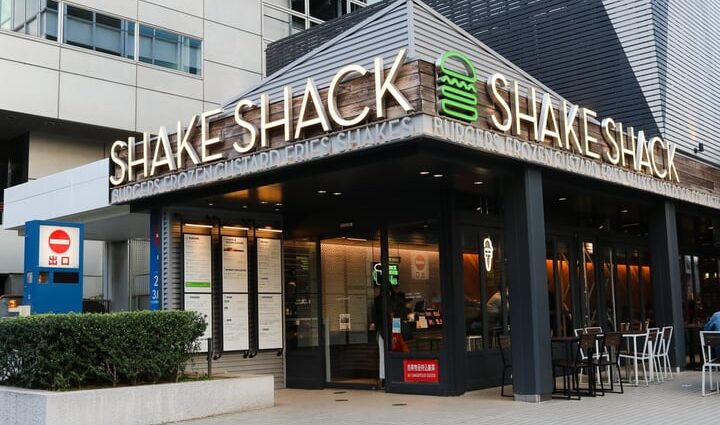
Shake Shack (SHAK) Shares Slipped Amid Rising Oil Prices: Why Is The Stock Trending Tonight?
Shake Shack Inc. (NYSE:SHAK) shares are trending on Thursday night.
Shares of the New York-based fast casual restaurant chain edged up just 0.063% to $86.86 in after-hours trading on Thursday. The late-session surge followed a 6.23% decline during regular trading.
SHAK closed regular session at $86.81, according to Benzinga Pro data.
Energy Fear
Shake Shack shares fell in the afternoon session after crude oil prices surged due to geopolitical conflict, sparking concerns over rising operational costs and a potential decline in consumer spending.
Rising crude oil prices have sparked concern in the food service industry, which depends on commercial LPG for day-to-day operations.
Peers reflected the broad sector pressure on Thursday — Brinker International Inc. (NYSE:EAT) fell 3.93%, Bloomin’ Brands Inc. …







If you want a promotion at Accenture, CEO says you’ve got to use AI
Moving up the career ladder at Accenture comes with a requirement: You must be using the company’s AI tools.
In a recent episode of the “Rapid Response” podcast, Accenture CEO Julie Sweet said AI proficiency is a mandatory part of working at the consultancy and moving up its ranks. The company announced in September it has invested more than $865 million in a “six-month business optimization program,” including reskilling thousands of employees—and showing the door to those who refused to adapt to using evolving workplace technology.
“If you want to get promoted, you’ve got to do the things that we do in order to operate Accenture,” Sweet said.
“These are the new tools to operate a company,” she added. “We didn’t go from zero to ‘you won’t get promoted’ in a month. It’s over a three-year period of getting used to the technology, making sure it’s user-friendly, making sure we have the right workbench for people to use, and then saying, ‘Hey, this is Accenture and how we operate.’”
The mass reskilling effort is part of Accenture’s three-year, $3 billion push to integrate AI first announced in 2023. One goal of the effort was to double the company’s AI talent to 80,000 professionals through hiring, acquisitions, and training. Accenture has more than 770,000 employees.
But Accenture’s embrace of AI has been an exception rather than the rule. As of the fourth quarter of 2025, 38% of companies reported integrating AI to improve workplace productivity, efficiency, and quality, according to a Gallup poll, a 1% increase from the quarter before. To be sure, AI adoption is still on the rise, with 69% of workplace leaders using AI as of 2025’s fourth quarter, up from less than 40% as of 2023’s second quarter.
CEOs and other executives have approached AI adoption and impact with skepticism. A study published in February by the National Bureau of Economic Research found that among 6,000 C-suite executives, two-thirds used AI, but that usage amounted to only about 1.5 hours per week. About 90% of those respondents reported over the past three years, AI had no impact on employment or productivity.
That could all soon change. Those same executives also forecasted a 1.4% increase in productivity and 0.8% increase in output over the next three years. The education company Pearson estimated that augmenting jobs with AI and reskilling employees could add between $4.8 trillion and $6.6 trillion to the U.S. economy within the next decade, per a report published in January.
Why Accenture went all in on AI
According to Sweet, integrating AI into the workplace is a natural extension of when computers become ubiquitous. The typewriter classes of yesterday are analogous to the AI reskilling of today, she suggested.
“No one would have said that requiring someone to use a computer is coercion,” Sweet said. “It’s how the companies were going to get work done. Today, AI at Accenture is how we do work.”
Still, Sweet has empathy toward companies resistant to making the sweeping changes Accenture has made to accommodate an AI future. She previously told Fortune Editor in Chief Alyson Shontell that companies’ failed attempts to integrate the technology in the office were a result of using AI as a tool in a previously established workflow, when it was really most effective when workplace systems were built with the technology in mind.
“First of all, I think we’re a good lesson in something that I’m advising CEOs all about: In order to capture the opportunity with AI, you really have to be willing to rewire your company,” Sweet said.
Accenture’s own employees hit snags in embracing AI, she noted. Welcoming change associated with the new slate of tools was challenging, for both employees and old business.
“For our people and our clients, it was hard,” Sweet said. “How do you have the courage to do that? That’s where you have the humility, but also this idea of embracing change and innovation.”
This story was originally featured on Fortune.com
This post was originally published here

Trump To Host Investors Of His Memecoin Again? Mar-A-Lago Gala Luncheon Teased, But Whether The President Will Attend Is A Different Story
The team behind Official Trump (CRYPTO: TRUMP) memecoin announced on Thursday a “crypto and business conference” in Mar-a-Lago next month, which will include a gala luncheon with President Donald Trump
Another Gala Event For TRUMP Holders
TrumpMeme took to X, promoting the “exclusive” event scheduled for April 25 at Trump’s Florida resort.
Only the top 297 TRUMP holders will receive an invitation. To participate, users must register by connecting their cryptocurrency wallet or their TRUMP holdings on Robinhood. A leaderboard, tracking participants’ time-weighted average holdings between March 12 and April 10, will update every hour.
The top 29 holders will be invited to a VIP reception with Trump, although private meetings with the president will not be permitted.

Trump To Host Investors Of His Memecoin Again? Mar-A-Lago Gala Luncheon Teased, But Whether The President Will Attend Is A Different Story
The team behind Official Trump (CRYPTO: TRUMP) memecoin announced on Thursday a “crypto and business conference” in Mar-a-Lago next month, which will include a gala luncheon with President Donald Trump
Another Gala Event For TRUMP Holders
TrumpMeme took to X, promoting the “exclusive” event scheduled for April 25 at Trump’s Florida resort.
Only the top 297 TRUMP holders will receive an invitation. To participate, users must register by connecting their cryptocurrency wallet or their TRUMP holdings on Robinhood. A leaderboard, tracking participants’ time-weighted average holdings between March 12 and April 10, will update every hour.
The top 29 holders will be invited to a VIP reception with Trump, although private meetings with the president will not be permitted.

iSpecimen (ISPC) Stock Rockets 43% After Hours — Here’s Why It’s Trending
iSpecimen Inc. (NASDAQ:ISPC) shares are trending on Thursday night.
Shares of the online marketplace for human biospecimens jumped 42.99% in after-hours trading Thursday to $0.32. The late-session surge followed a 6.67% decline during regular trading.
According to Benzinga Pro data, ISPC closed on Thursday at $0.22.
LLM-Powered AI Agent Sends Stock Up
On Thursday, iSpecimen announced its AI-powered Inventory Agent, an in-house tool designed to automate the matching of biospecimen requests across its global network of suppliers.
According to iSpecimen, the LLM-powered agent lets users submit requests in plain language through a conversational interface. The system identifies key criteria, including disease conditions, sample types and diagnostic requirements, searches its configured inventory sources and returns results ranked by relevance.
Full story available on Benzinga.com

Mojtaba Khamenei To Be Removed Before 2026 Ends? Here’s What Crypto Prediction Market Says About Iran’s New Supreme Leader
Mojtaba Khamenei may have been appointed Iran’s Supreme Leader only days ago, but cryptocurrency bettors are already wagering on how soon he might exit.
Bets On New Supreme Leader
Prediction market Polymarket, based on Polygon (CRYPTO: POL), shows a 64% probability that Mojtaba Khamenei is removed, detained, or blocked from acting as Iran’s Supreme Leader before year‑end, with 38% odds of this happening by April 30.
Over $2 million has been wagered on the outcome and an official announcement of his resignation or removal would suffice for a “Yes” resolution.
Notably, a similar bet regarding his …

eLong Power Holding (ELPW) Stock Is Trending As Stock Surges 45% Overnight: Here’s What You Should Know
eLong Power Holding Ltd. (NASDAQ:ELPW) shares are trending on Thursday night.
Shares of the Chinese company rose 45.13% in after-hours trading on Thursday to $5.21 after the company’s 80-for-1 reverse stock split took effect.
The stock closed the regular session at $3.59, down 14.20%, according to Benzinga Pro data.
Why Was the Stock Split Approved?
According to a Securities and Exchange Commission filing, the board of directors approved the share consolidation on March 5 under shareholder authority granted at an extraordinary general meeting held in early January.
eLong Power Holding’s Class A ordinary shares began trading on the Nasdaq Global Market on a post-consolidation basis at market open on Thursday under the existing symbol ‘ELPW.’
The SEC filing, signed on Tuesday by CEO and Chairwoman Xiaodan Liu, states that the company’s total issued and outstanding common shares …

eLong Power Holding (ELPW) Stock Is Trending As Stock Surges 45% Overnight: Here’s What You Should Know
eLong Power Holding Ltd. (NASDAQ:ELPW) shares are trending on Thursday night.
Shares of the Chinese company rose 45.13% in after-hours trading on Thursday to $5.21 after the company’s 80-for-1 reverse stock split took effect.
The stock closed the regular session at $3.59, down 14.20%, according to Benzinga Pro data.
Why Was the Stock Split Approved?
According to a Securities and Exchange Commission filing, the board of directors approved the share consolidation on March 5 under shareholder authority granted at an extraordinary general meeting held in early January.
eLong Power Holding’s Class A ordinary shares began trading on the Nasdaq Global Market on a post-consolidation basis at market open on Thursday under the existing symbol ‘ELPW.’
The SEC filing, signed on Tuesday by CEO and Chairwoman Xiaodan Liu, states that the company’s total issued and outstanding common shares …
The kill line v Chinamaxxing: a window into how China and the US see each other
In China, one social media trend hangs on the idea that a life in the US is always one step from disaster, while another in the US has gen Z revelling in Chinese lifestyle hacks
Across two online worlds that are normally splintered, over the last few months there has been a mirroring of sorts. On TikTok and Instagram, young people are diving into the joys of Chinese culture – from drinking hot water to playing mahjong – all under the banner of “Chinamaxxing”. On the Chinese internet, however, the US is losing its decades-long grip on soft power, and is instead being replaced by a darker trend: the kill line.
The kill line is a dangerous place to be. In gaming, the term refers to the point at which a player’s strength is so depleted that one more blow could lead to total wipeout. In China, the term refers to the risks that come with daily life in the US.
This post was originally published here

Bitcoin, Ethereum, XRP, Dogecoin Spike As Iran’s New Leader Signals Continued Hormuz Strait Closure: Analyst Rules Out BTC’s Bullish Reversal Scenario
Leading cryptocurrencies rallied on Thursday, but stocks plunged as the Iran war continued to pressure global energy prices.
| Cryptocurrency | 24-Hour Gains +/- | Price (Recorded at 9:35 p.m. ET) |
|---|---|---|
| Bitcoin (CRYPTO: BTC) | +2.32% | $71,465.11 |
| Ethereum (CRYPTO: ETH) |
+3.57% | $2,119.63 |
| XRP (CRYPTO: XRP) | +2.20% | $1.40 |
| Solana (CRYPTO: SOL) | +4.65% | $90.30 |
| Dogecoin (CRYPTO: DOGE) | +4.65% | $0.09671 |
Evening Spike For Crypto
Bitcoin hovered sideways most of the day before nearly hitting $72,000 late evening. Trading activity remained tepid.
Likewise, Ethereum spiked to $2,147, while XRP and Dogecoin also recorded notable jumps late in the day.
The global cryptocurrency market capitalization stood at $2.38 trillion, following a modest gain of 0.06% from the previous day.
Despite this, shares of Strategy Inc. (NASDAQ:MSTR) and Coinbase Global Inc. (NASDAQ:COIN) closed down 0.72% and 2.71%, respectively.
Over $250 million was liquidated from the cryptocurrency market over the past 24 hours, with short liquidations accounting for the majority, according to Coinglass data.
Open interest in Bitcoin futures spiked 3.84% in the last 24 hours, and over 10% this week. Meanwhile, sentiment among retail and whale traders holding open BTC positions on Binance remained “Neutral.”
“Extreme Fear” sentiment …
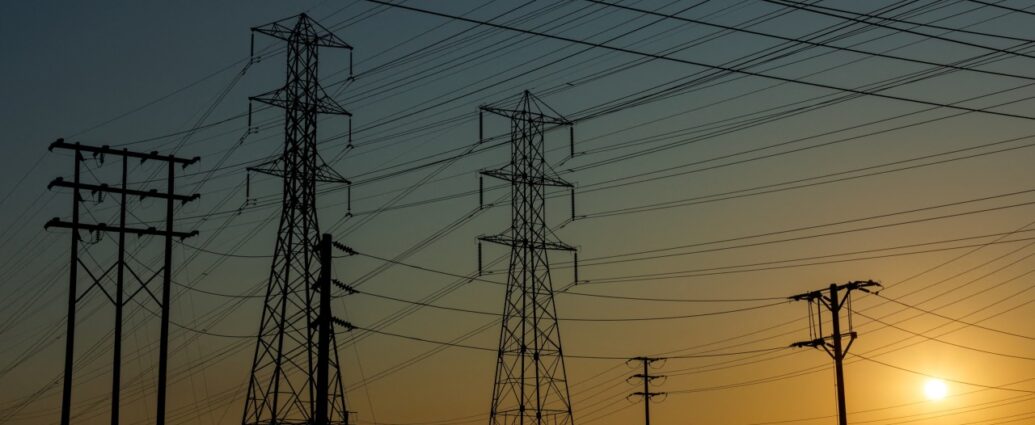







The U.S. Mint dropped the olive branch from the dime. What does that mean for the country?
The U.S. Mint unveiled new designs for the country’s 250th anniversary and it left out one key detail: the olive branch from the newly designed dime. The new reverse shows a bald eagle mid-flight, arrows clutched in its left talon and nothing—where an olive branch once lived—in its right, with beneath, the inscription “Liberty over Tyranny.”
For a nation whose founding symbols were carefully engineered around the balance of peace and war, that omission is hard to read as accidental.
Unchanged since 1946, the Roosevelt dime is now replaced by a modern Liberty figure on the front, solely for one year as the country celebrates its 250th anniversary this year. The U.S. Mint is marking the Semiquincentennial with a sweeping redesign of the coinage, something not undertaken since the 1976 Bicentennial. Authorized by Congress, the change touches the dime, quarter, half dollar, penny, and dollar coin, all bearing 1776–2026 dates.
The olive branch has anchored American iconography for 250 years—its absence from the very coin marking that anniversary is a curious choice, if not a telling one.
What does the olive branch mean?
When the Great Seal of the United States was finalized in 1782, it contained what the Founding Father’s held as the country’s most esteemed values. The eagle holds 13 arrows in its left talon and an olive branch in its right, its head turned toward the branch—the side which the eagle preferred to err on.
The arrows—not for lack of symbolism, take a wild guess why there are 13 of them—are in the eagle’s left talon, the traditionally thought-of weaker and subordinate side. Meant to represent the power of war and military preparedness, the arrows clutched in the left talon signal that although the U.S. is always armed and ready, force is not its first instinct.
Charles Thomson, who shepherded the final design, was explicit: the arrows represented the power of war, the olive branch the power of peace, and together they carried a single message: the United States had a strong desire for peace, but would always be ready for war.
The eagle’s head facing the olive branch was not incidental. It was a statement of national preference, drawn directly from the Olive Branch Petition of 1775, Congress’s last diplomatic appeal to King George III before the war escalated beyond return.
Dropping the olive branch from the dime isn’t just a design choice: it’s a cultural signal. The Founders spent six years perfecting the balance between peace and war on the Great Seal. Erasing half of that equation, on a coin meant to celebrate their legacy, and especially 250 years after they fought for “Liberty over Tyranny,” says something about which half the country currently feels like.
What was the coin design process?
The U.S. Mint is also redesigning other currency. Five new one-year-only quarter designs trace American history from the Mayflower Compact to the Gettysburg Address. Acting Mint Director Kristie McNally said the goal was for every American to hold 250 years of history in their hands.
“The designs on these historic coins depict the story of America’s journey toward a ‘more perfect union,’ and celebrate America’s defining ideals of liberty. We hope to offer each American the opportunity to hold our nation’s storied 250 years of history in the palms of their hands as we Connect America through Coins.”
In 2025, the U.S. Mint brought the coin designs to the public, with the top rated coins reviewed and recommended by the Citizens Coinage Advisory Committee (CCAC) and U.S. Commission of Fine Arts (CFA). The CCAC, established in 2003, advises the Secretary of the Treasury on themes and designs of all U.S. coins and medals, the latter of which are used in commemoration and neither hold face value nor are legal tender. The CCAC, an informed and impartial resource for the Secretary, essentially, is meant to represent the interests of all Americans. The Secretary then approves all final suggestions.
In Sept. 2024, the coin designs were put into review. Each coin design will depict a special Semiquincentennial Liberty Bell with the numeral “250” marked on the coin.
Coins and their symbolism
In Dec. 2025, Secretary of the Treasury Scott Bessent nixxed some of the quarter designs that were approved by then-Treasury Secretary Janet Yellen during the Biden Administration for focusing “on DEI and Critical Race Theory policies.” One of the coins featured a line of people with arms linked, in between the words “We shall overcome.”
At the time, U.S. Treasurer Brandon Beach said the coinage design is supposed to “celebrate American history and the founding of our great nation,” but that imagery was scrapped because “the Biden Administration and Secretary Yellen remained focused on DEI and Critical Race Theory policies.”
“The Trump Administration is dedicated to fostering prosperity and patriotism. We have no doubt these new designs will be wildly popular with the American people.”

It’s interesting to note, however, the 1916 Standing Liberty Quarter, a medal that also will be released this year in commemoration of the 250th anniversary (dubbed by the Mint as the SemiQ), features a standing Liberty holding an olive branch on the front, and on the back, the talons of an eagle gripping an olive branch.
Perhaps the most famous dime is the Mercury dime which was minted between 1916 and 1946. Designer Adolph Weinman chose to use a Roman fasces—an axe bound tightly in a bundle of rods—wrapped in an olive branch, together symbolizing military readiness tempered by a desire for peace, in a nod to the Roman Republic. Three years after the Mercury dime debuted, Benito Mussolini adopted the fasces as the emblem of his Italian fascist movement, even where the name derived from. It was then replaced in 1946 by the Roosevelt dime, in honor of President Franklin D. Roosevelt following his death. The dime remains the one in use today.
The eagle didn’t always err on the side of peace, and instead, faced the arrows between 1877 and 1945, until President Harry S. Truman signed Executive Order 9646 on Oct. 25, 1945, which changed the direction of the eagle from the arrows to the olive branch. Reportedly, according to the Winston Churchill archives, the president was very happy about the change, and told the British prime minister “The eagle used to face the arrows but I have redesigned it so that it now faces the olive branches.”
Churchill’s response? “With the greatest respect, I would prefer the American eagle’s neck to be on a swivel so that it could face the olive branches or the arrows, as the occasion might demand.”
This story was originally featured on Fortune.com
This post was originally published here

LARRY KUDLOW: Is John F. Kennedy having a comeback?
So let me get this right. After every Democrat in the House and Senate who voted against One, Big, Beautiful Bill — and therefore promoted a roughly $5 trillion tax hike — now a couple of presidential wannabees, like Senators Cory Booker and Chris Van Hollen, are surfacing plans that would end most income taxes for middle-class Americans, this according to a Wall Street Journal news story. The two men have somewhat differing plans, but basically, as I understand it, they would be raising the standard deduction and some other credits, so the first $75,000 of income would not be taxable.
So, are the Democrats possibly rediscovering tax cuts? Is the ghost of John F. Kennedy, who was the last Democratic president to lower tax rates and usher in supply-side economics, is the Kennedy ghost suddenly hovering over their shoulder? Are they admitting that President Trump was right as he walloped them in 2024 with across-the-board tax cuts, no tax on tips, or overtime, big breaks for seniors, et cetera.
Now I don’t agree with the specifics of the Democratic plan, we’ll talk about it in a minute. But even the merest hint that Democrats believe lower taxes, at least for some people, are better than higher taxes for everybody, might be a good thing. Just maybe.
Now, what Booker and Van Hollen are doing is basically raising the standard deduction on middle-class earners somewhere around $75,000 to $100,000 a year. I’m oversimplifying, but that’s the gist of it. Now here’s the problem, they want to significantly raise taxes on successful earners, upper end earners.
According to the Journal article, Mr. Van Hollen calls for a surtax that climbs as high as 12 percent above existing taxes, which would drive the top rate to nearly 50 percent, or if you live in New York or California, you’d be taxed in the mid 60s percentile. Mr. Booker would raise the top rates from 35 percent and 37 percent into a new 41 percent and 43 percent brackets.
Confiscatory tax rates like these would squelch work and investment, leading to a depressed economy, higher unemployment, and by the way even larger budget deficits. I don’t care how many people the senators want to shield from income taxes, turning around with punitive tax rates on successful entrepreneurs and wealthy individuals is a nonstarter.
Supply-side economics as Kennedy or Art Laffer would tell you, suggests that when you tax something more you get less of it. Punish success and prosperity, you’ll get less success and prosperity. But if you tax something less, you will encourage work effort and risk taking. And that’s the ticket to prosperity.
As Kennedy said many times, a rising tide will lift all boats. There’s no need to punish some while rewarding others in some kind of bizarre socialist redistribution scheme that has been tried many times before and always failed. But you know what folks? At least there are a couple of Democratic senators who don’t think tax cuts are dirty words. So, is JFK having a comeback?

‘Zombie mall’ to be razed for apartments as retail apocalypse drags on
A long-stalled plan to redevelop a deteriorating New Jersey shopping center is once again before local officials.
The Raritan Borough Planning Board recently reviewed a new site plan application for Raritan Lofts, which calls for a five-story, mixed-use building that would replace much of the largely vacant Raritan Mall in Somerset County, roughly 45 miles southwest of New York City.
Submitted by Raritan Mall Urban Renewal LLC, the proposal outlines the demolition of the aging strip mall and the construction of a 70-foot-tall building featuring 276 rental apartments and 20,000 square feet of ground-floor retail space, according to planning documents.
The project would include 42 affordable rental units.
MAJOR RETAILERS ARE FLEEING ANOTHER POPULAR MALL
A separate one-story building on the property would remain and be converted into retail space.
The redevelopment marks the latest effort to revive the 10.88-acre site, which has struggled since its anchor tenant, Stop & Shop, closed in 2016, according to NJ.com.
The shopping center is now largely vacant. A 2022 preliminary study described the site as “mostly abandoned” and “dilapidated,” citing vandalism and flood damage, the local outlet reported.
SHOPPING MALLS BETTER ADAPT TO MODERN TIMES TO AVOID TOTAL DEATH, SERIAL ENTREPRENEUR SAYS
The hearing represents the newest push to revive a redevelopment plan that has stalled for years.
After the Raritan Borough Council rejected an earlier redevelopment plan, the mall’s owner filed a lawsuit in August 2024. The $100 million suit alleged the vote involved a conflict of interest but was withdrawn in February 2025, NJ.com reported.
The Raritan Mall’s decline also mirrors broader challenges facing traditional shopping centers nationwide.
TRUMP SAYS AMAZON ‘DESTROYING’ SHOPPING MALLS, HOLLOWING OUT TOWNS
GET FOX BUSINESS ON THE GO BY CLICKING HERE
Even before the COVID-19 pandemic, malls were losing ground as online retailers such as Amazon drew customers away from brick-and-mortar stores.
Lockdowns then accelerated the decline by keeping shoppers home. Economic pressures stemming from inflation made matters worse with households tightening their budgets and spending less on discretionary items.
FOX Business reached out to The Raritan Borough Planning Board and Raritan Mall Urban Renewal LLC for comment.
FOX Business’ Daniella Genovese contributed to this report.

Reno surpasses Las Vegas as top destination for California homebuyers seeking affordability
A new hotspot has emerged for homebuyers looking to leave California, and it’s outdrawing a larger and more well-known metro area within its state in the process.
Reno is the second-largest metropolitan area in the state of Nevada and has surpassed Las Vegas, the Silver State’s largest city, as a more attractive destination for Californians looking to move, a report by Realtor.com found.
The analysis of housing data by Realtor.com found that in 2025, almost 43% of views of online listings in the Reno area came from users in California metropolitan areas, which the outlet said was the highest share in the history of the data series dating back to 2019.
By contrast, about 25% of views of Las Vegas area listings came from California metros, a decrease from a 2023 peak of 27%.
AMERICA’S 10 MOST EXPENSIVE ZIP CODES REVEALED
“The data suggests that Reno has long been popular with California home shoppers, and its popularity is continuing to grow perhaps due to its relative affordability and lower cost of living,” said Realtor.com senior economic research analyst Hannah Jones.
Jones noted that in 2025, Reno brought in more prospective homebuyers from locations throughout the state of California than shoppers from within the local market, who accounted for just over 30% of listing views.
By contrast, homes listed in Las Vegas had 38% of their views came from within the metro area and surpassed those from shoppers in California by more than 12%.
AMERICAN HOMEBUYERS GAIN MOST PURCHASING POWER SINCE 2022
Reno is known as “the Biggest Little City in the World” and is located near Nevada’s border with California, close to Lake Tahoe and the Sierra Nevada mountains as well as metro areas in Northern California. Its climate is relatively mild in comparison to that of Las Vegas, which endures sizzling temperatures in the summer months.
Much like Sin City further south in Nevada, Reno is home to casinos and has a significant gambling industry. However, the region’s economy is diversified and major employers in the Reno metro area include Tesla and Panasonic as well as Caesars Entertainment.
US HOME PRICES ARE RISING – BUT THESE FAST-GROWING MARKETS REMAIN AFFORDABLE
The median home listing price in Reno was $636,800 in February, an increase of over 11% from a year ago, according to the Realtor.com report. Median prices in Las Vegas were lower at $464,950 and were down 1.1% from the prior year amid a 23% increase in inventory.
Experts told Realtor.com that the pricing disparity was largely due to market size, with Reno being much smaller and having a more limited supply of houses. That can translate to larger increases in prices when demand rises.
GET FOX BUSINESS ON THE GO BY CLICKING HERE
Despite the disparity, Bay Area residents looking at Reno will find much cheaper houses than what they’re used to in places like San Francisco, which had a median price of $907,000, as well as San Jose with its $1.35 million median price.
Nevada also lacks a state income tax, which makes it an appealing destination for homebuyers looking to preserve more of their income. It also has become popular among high-earning Californians who could be affected by a proposed wealth tax.

Trump demands Powell cut rates as Iran conflict drives up energy prices
In what has become a now-familiar refrain, President Donald Trump on Thursday pressed Federal Reserve Chair Jerome Powell to cut interest rates immediately, rather than wait for the next policy meeting.
“Where is the Federal Reserve Chairman, Jerome “Too Late” Powell, today? He should be dropping Interest Rates, IMMEDIATELY, not waiting for the next meeting,” Trump wrote in a Truth Social post using a mocking nickname for Powell.
The comments come ahead of the Federal Open Market Committee’s March 17 meeting, when the Fed’s 12-member rate-setting panel will decide whether to change its key interest rate. That benchmark rate helps determine what consumers and businesses pay to borrow money — including for mortgages, car loans and credit cards.
The meeting also comes as the conflict involving Iran has fueled a run-up in energy prices, adding to inflation pressures the Fed is watching closely — and complicating Trump’s pledge to lower costs for Americans.
GAS PRICES SURGE, PINCHING AMERICANS AND HANDING THE GOP A NEW MIDTERM HEADACHE
This week, oil prices surged past $100 a barrel for the first time since 2022 as fallout from the U.S.-Israeli conflict with Iran continued to roil global markets and investors priced in the risk of tighter supply.
With oil higher, gasoline and diesel prices are rising fast.
Trump’s demand, however, runs up against how the Fed typically operates.
Rate changes are typically made at scheduled meetings. Still, the Fed has cut rates between meetings during crises, most recently in 2020 during the COVID-19 pandemic.
Trump, who nominated Powell to lead the Fed in 2017, has intensified his public campaign in recent months, calling for rates to fall as low as 1% as part of his push to stimulate growth.
For his part, Powell held off initially on rate cuts as the Fed assessed the economic impact of Trump’s evolving trade agenda. That wait-and-see posture kept the Fed’s benchmark rate at 4.25% to 4.5% for a period. The Fed has since lowered rates, and the target range now stands at 3.50% to 3.75%. But even after rate cuts, Trump has escalated his attacks on Powell and the central bank.
TRUMP VS THE FEDERAL RESERVE: HOW THE CLASH REACHED UNCHARTED TERRITORY
Trump’s renewed demands also sharpen the long-running tension between the White House and an institution designed to operate independently, with Fed officials insisting rate decisions will be driven by economic data, not political pressure.
That tension has now expanded beyond monetary policy. Federal prosecutors have opened a criminal investigation tied to Powell’s prior testimony to Congress about cost overruns on the Fed’s headquarters renovation project.
Powell, in a rare video statement, called the probe “unprecedented” and described it as another salvo in what he described as Trump’s pressure campaign on the central bank to cut rates.
POWELL’S BEHIND-THE-SCENES MOVE AFTER TRUMP’S DOJ OPENED ITS CRIMINAL PROBE
The unusually public response followed days of private consultations with advisors and stood out for a Fed chair known for a measured approach.
GET FOX BUSINESS ON THE GO BY CLICKING HERE
The political stakes are heightened by the timing: Powell’s term as chair ends May 15.
Trump has nominated former Fed governor Kevin Warsh to succeed him, putting the Fed’s next moves and Powell’s final months under even brighter scrutiny.


Opinion | Will Trump ‘Fight to Win’ in Iran?

Costco sued by customer seeking refunds for tariff payments
Costco is facing a proposed nationwide class action lawsuit seeking refunds for customers over higher prices charged by the company due to the Trump administration’s tariffs that were subsequently ruled unconstitutional by the Supreme Court.
The lawsuit was filed by a Costco shopper in federal court in Illinois on Wednesday and seeks a declaration that the company must return to customers any refunds it receives for tariffs Costco paid under the International Emergency Economic Powers Act (IEEPA).
The suit follows the Supreme Court’s ruling on Feb. 20 which held that President Donald Trump overstepped his authority in imposing tariffs under IEEPA, as the law doesn’t grant tariff authority to the president.
Costco is among the more than 2,000 companies that have filed suits in the U.S. Court of International Trade seeking to recover tariffs they paid for imported goods. If the company receives those funds back through a refund, the lawsuit seeks to ensure those refunds are provided to customers who faced higher prices because of tariffs.
FOX Business reached out to Costco for comment.
FEDEX SAYS IT WILL RETURN ANY TARIFF REFUNDS TO CUSTOMERS, SHIPPERS WHO PAID THEM
“This lawsuit seeks to prevent Costco, the third-largest retailer in the world, from double recovery,” the lawsuit said. “Costco has made no commitment to return any portion of anticipated tariff refunds to the consumers who bore those costs.”
The suit added that the company has only promised “a possible future benefit to an indeterminate group of future shoppers.”
Costco CEO Ron Vachris told analysts last week that it was still unclear if or when businesses will get refunds for the IEEPA tariffs they previously paid.
Vachris indicated that if Costco does receive the funds, the company plans to channel them into lower prices and improved value for shoppers.
FEDEX SUES TRUMP ADMINISTRATION FOR FULL TARIFF REFUNDS AFTER SUPREME COURT RULING ON IEEPA
FedEx, which has also filed suit in the Court of International Trade to recover tariff refunds, is facing a similar class action lawsuit that was filed in late February by shippers who paid higher prices due to the tariffs.
Before the class-action lawsuit was filed, the company said in a statement that, “If refunds are issued to FedEx, we will issue refunds to the shippers and consumers who originally bore those charges. When that will happen and the exact process for requesting and issuing refunds will depend in part on future guidance from the government and the court.”
The class action lawsuit claims that FedEx’s promise wasn’t legally enforceable and seeks to ensure shippers and consumers receive the additional funds they paid due to the tariffs.
HOW SHOULD BUSINESSES APPROACH TARIFF REFUNDS?
The Supreme Court’s ruling sent the case back to lower courts, where it’s possible that the government could reach an agreement with the courts over a format for providing refunds to tariff payers.
Existing avenues to pursue tariff refunds exist through the U.S. Court of International Trade, where thousands of companies have filed suit to recover those funds.
A recent study by the Federal Reserve Bank of New York found that U.S. businesses and consumers bore 86% of the tariff burden, while foreign exporters bore 14% as of November 2025.
The New York Fed’s researchers found that the share borne by U.S. businesses and consumers declined over the year from 94% in the January through August period to 92% in September and October.
GET FOX BUSINESS ON THE GO BY CLICKING HERE
Those findings are similar to those contained in another analysis by the nonpartisan Congressional Budget Office (CBO), which noted in its 10-year budget and economic outlook that foreign exporters were absorbing about 5% of the tariff costs with the remaining 95% falling on U.S. firms and consumers.
Reuters contributed to this report.

Shares of AMBP Now Oversold
In trading on Thursday, shares of Ardagh Metal Packaging SA (Symbol: AMBP) entered into oversold territory, changing hands as low as $4.09 per share. We define oversold territory using the Relative Strength Index, or RSI, which is a technical analysis indicator used to measure
This post was originally published here
Masco Stock Getting Very Oversold
In trading on Thursday, shares of Masco Corp. (Symbol: MAS) entered into oversold territory, changing hands as low as $60.69 per share. We define oversold territory using the Relative Strength Index, or RSI, which is a technical analysis indicator used to measure momentum on a
This post was originally published here
GGB Crosses Critical Technical Indicator
In trading on Thursday, shares of Gerdau S.A. (Symbol: GGB) entered into oversold territory, changing hands as low as $3.405 per share. We define oversold territory using the Relative Strength Index, or RSI, which is a technical analysis indicator used to measure momentum on a
This post was originally published here

Opinion | Keeping Up With the Jones Act
Shares of SID Now Oversold
In trading on Thursday, shares of Companhia Siderurgica Nacional (Symbol: SID) entered into oversold territory, changing hands as low as $1.19 per share. We define oversold territory using the Relative Strength Index, or RSI, which is a technical analysis indicator used to meas
This post was originally published here


Ripple valued at $50 billion after $750 million share buyback
Ripple, the fintech known for its association with the XRP cryptocurrency, will buy back about $750 million of shares from investors and employees, which would put the company’s valuation at about $50 billion. The plans were first reported by Bloomberg, which cited sources familiar with the matter.
Ripple’s valuation has gone up about 25% since November, when it raised $500 million in a funding round backed by affiliates of Citadel Securities and affiliates of Fortress Investment Group, among others. Its growing valuation makes the company a rare recent success story in a crypto industry that has tanked since the tail end of last year. Bitcoin is down about 44% since its all-time high price of $126,000 in October, according to Binance.
Founded in 2012, the company was an early adopter of crypto. Ripple now aims to help financial institutions send money across the world cheaper and faster than traditional foreign exchange. It does so via the XRP Ledger, a cryptocurrency that it created, which serves as a bridge between currencies.
In 2025, the company expanded through acquisitions for services like trading and stablecoin infrastructure. It bought the prime brokerage Hidden Road for $1.25 billion, and acquired the treasury management company GTreasury for $1 billion. Ripple said earlier this month that it had processed more than $100 billion in transactions.
Like other major cryptocurrencies, XRP has taken a hit in the last few months. Since its all-time high in July, the cryptocurrency is down about 62% to its current price of roughly $1.38, according to Binance. Ripple has been able to survive this dip in part because it owns large reserves of XRP it periodically sells, and because the firm has been building out other financial services products.
Correction: This article was corrected on March 12. A previous version of the article said that Ripple’s November funding round was backed by Citadel Securities and Fortress Investment Group, but the round was backed by affiliates of Citadel Securities and affiliates of Fortress Investment Group.
This story was originally featured on Fortune.com
This post was originally published here
Kodak Stock Soars After Q4 Earnings
Eastman Kodak Co (NYSE:KODK) shares are soaring in Thursday’s after-hours session on the heels of the company’s fourth-quarter results. Here’s what you need to know.
- Eastman Kodak stock is among today’s top performers. What’s driving KODK stock higher?
Kodak Reports Highlights From Q4
Kodak said fourth-quarter revenue increased 9% year-over-year to $290 million. Advanced Materials and Chemicals revenue grew 25% year-over-year to $85 million, and Print revenues came in at $195 million, up 4% year-over-year.
The company posted a fourth-quarter loss of $1.23 per share, down from positive …

How One Trader Flipped $50K Into $520K — and What You Can Learn About Managing Trades
A trader on Reddit’s r/wallstreetbets said they grew a brokerage account from $50,000 to more than $520,000 in less than a year, using margin to buy shares rather than relying on the short-dated options trades more commonly associated with the forum.
The post offered a detailed breakdown of the trades that drove the gains and the strategy behind them.
“My first big trade was buying $SBET at $9 in early 2025, which turned my account into around $200k,” the trader wrote.
That position in Sharplink Inc (NASDAQ:SBET) appears to have provided the capital for a series of later trades across multiple names and sectors.
From that $200,000 base, the trader described taking both long and short positions. Among them was a short on Rigetti Computing (NASDAQ:RGTI) near the stock’s highs, as well as a long position in Coinbase Global (NASDAQ:COIN). You can make the same types of trades by going long or short futures with Apex Trader Funding. The trader said they bought 5,500 shares of Coinbase at an average price of $145 and sold them at $172, producing a profit of about $148,500 on that trade.
The post also described buying weakness in cybersecurity stocks, including CrowdStrike Holdings (NASDAQ:CRWD) and Cloudflare Inc (NYSE:NET), during a broader market pullback.
By March 10, the trader said the account balance had reached $523,125.66, with a year-to-date gain of more …
This post was originally published here

Homebuilder Lennar Stock Slips After Q1: ‘Same Persistent Headwinds’
Lennar Corp. (NYSE:LEN) shares slipped in Thursday’s extended trading after the company released its first-quarter earnings report, missing estimates on the top and bottom lines.
- LEN stock is moving. Watch the price action here.
The Details: Lennar reported quarterly earnings of 88 cents per share, which missed the consensus of 96 cents, according to Benzinga Pro data.
Quarterly revenue of $6.62 billion missed the consensus estimate of $6.88 billion by 3.83% and was down from $7.63 billion in the same period last year.
Deliveries and orders also came in below estimates, according to …

Gold Is Down 3% Since The Iran War Started—Time To Buy The Dip?
Gold has fallen roughly 3% since the U.S. and Israel struck Iran on Feb. 28, even as Brent crude has surged nearly 40% toward $100 a barrel.
The SPDR Gold Shares (NYSE:GLD) is sitting around $468 while the S&P 500 slides to its lowest since November.
Why Gold Falls First In A War
Giovanni Staunovo, a strategist at UBS Global Wealth Management who was bullish on gold throughout its 64% surge in 2025, told CNBC the drop is textbook.
“Historically, it is not uncommon to see gold falling as first reaction when financial markets show stress signs as gold is a highly liquid asset,” Staunovo said.
When panic hits, investors sell what they can liquidate fast. …
This post was originally published here

Ulta Stock Drops Despite Q4 Earnings Beat: What To Know
Ulta Beauty, Inc. (NASDAQ:ULTA) shares fell in Thursday’s extended trading after the company released its fourth-quarter earnings report, despite beating estimates across the board.
Here’s a look at the key figures from the quarter.
- ULTA stock is moving. Watch the price action here.
The Details: Ulta Beauty reported quarterly earnings of $8.01 per share, which beat the Street estimate of $7.97, according to Benzinga Pro.
Quarterly sales of $3.898 billion, which beat the analyst consensus estimate of $3.802 billion by 2.54 percent. This is an 11.75% increase over sales of $3.488 billion in the same period last year.
Ulta shared the following fourth-quarter highlights …
SentinelOne Stock Slides On Q4 Earnings, Soft Q1 Outlook
SentinelOne Inc (NYSE:S) reported fourth-quarter financial results Thursday after the market close. Here’s a rundown of the report.
- SentinelOne shares are trending today. What’s driving S stock?
SentinelOne Reports Mixed Results In Q4
SentinelOne reported fourth-quarter revenue of $271.15 million, narrowly missing the consensus estimate of approximately $271.16 million, according to Benzinga Pro. The cybersecurity company posted fourth-quarter adjusted earnings of seven cents per share, beating analyst estimates of six cents per share.
Total revenue increased 20% year-over-year. Annualized recurring revenue (ARR) increased 22% year-over-year to $1.12 billion as of Jan. 31, and customers with ARR of …

Adobe Stock Drops On Q1 Earnings, CEO Transition
Adobe Inc (NASDAQ:ADBE) reported financial results for the first quarter of fiscal 2026 after the market close on Thursday. Here’s a look at the key details from the print.
- Adobe shares are trending after earnings. Where is ADBE stock headed?
Adobe Beats Estimates On Top and Bottom Lines
Adobe reported first-quarter revenue of $6.40 billion, beating analyst estimates of $6.28 billion, according to Benzinga Pro. The company reported adjusted earnings of $6.06 per share for the quarter, beating estimates of $5.87 per share.
Total revenue was up 12% year-over-year as total customer group subscription revenue increased 13% year-over-year to $6.17 billion.
Adobe reported $26.06 billion in total annualized recurring revenue (ARR) and said AI-first ARR more …

Rubrik Stock Pops After Strong Q4 Report: Details
Rubrik, Inc. (NYSE:RBRK) shares climbed in Thursday’s extended trading after the company released its fourth-quarter earnings report, beating estimates on the top and bottom lines.
Here’s a look at the key figures from the quarter.
- RBRK stock is moving. Watch the price action here.
The Details: Rubrik reported quarterly earnings of four cents per share, which beat the consensus estimate for a loss of 11 cents, according to Benzinga Pro data.
Quarterly revenue came in at $377.68 million, which beat the Street estimate of $342.34 million and was up from $258.1 million in the same period last year.
Rubrik reported the following fourth quarter highlights:
- Subscription Annual Recurring Revenue (ARR): Subscription ARR was up 34% year-over-year, growing to $1.46 billion as of …

abrdn Global Income Fund, Inc. (FCO) Announces Adjournment of Special Shareholder Meeting Relating to Proposed Reorganization
PHILADELPHIA, March 12, 2026 /PRNewswire/ — abrdn Global Income Fund, Inc. (NYSE:FCO) announces that the Special Meeting of Shareholders was held and adjourned today, to allow for the solicitation of additional proxies to achieve the requisite quorum. The Fund has set a new adjournment date for its Special Meeting of Shareholders of Wednesday, April 1, 2026, at 11:30 am Eastern Time.
This post was originally published here

Ark Invest Warns 35% Of Bitcoin Supply Could Face Future Quantum Risks, But There Is Time To Adapt
A new report from Ark Invest and Unchained says advances in quantum computing could eventually challenge Bitcoin’s (CRYPTO: BTC), cryptography, though the threat remains distant for now.
Quantum Computing Could Challenge Bitcoin’s Security
A report titled “Bitcoin and Quantum Computing” by ARK Invest and Unchained said current quantum machines remain far from powerful enough to break Bitcoin’s security.
Today’s systems operate in the Noisy Intermediate-Scale Quantum (NISQ) era, meaning they have limited computational power and high error rates, preventing them from compromising Bitcoin’s cryptographic protections.
Bitcoin’s security mainly relies on cryptographic hash functions and elliptic curve cryptography (ECC). …

Classic brand becoming a status symbol in Trump’s White House
President Donald Trump has reportedly been gifting Florsheim dress shoes to top administration officials, turning the 134-year-old brand into an unexpected status symbol inside the White House.
Trump has surprised some Cabinet members, White House advisors and members of Congress with the shoes – sometimes even guessing their sizes and instructing staff to place the orders. The president personally pays for the footwear, The Wall Street Journal reported.
At Cabinet meetings, Trump has reportedly even asked recipients, “Did you get the shoes?”
Vice President JD Vance, Secretary of State Marco Rubio, Transportation Secretary Sean Duffy, War Secretary Pete Hegseth and Commerce Secretary Howard Lutnick are among those who have received pairs, according to the Journal.
‘HAPPY TRUMP’ PINS AVAILABLE, AMONG OTHER COLLECTIBLES, AFTER PRESIDENT DONS NEW ACCESSORY
“All the boys have them,” one White House official said.
Trump recently began looking for footwear for long workdays and chose Florsheim, whose shoes typically sell for about $145.
Some officials now wear the shoes when they are around the president, and in some cases reluctantly, the Journal reported.
TRUMP STORE SPARKS BUZZ AND DEBATE WITH NEW TRUMP 2028 MERCHANDISE
During a December Oval Office meeting, Trump reportedly noticed Vance and Rubio’s footwear, suggested they needed an upgrade and asked for their sizes, the Journal reported.
“You know, you can tell a lot about a man by his shoe size,” Vance later recalled Trump saying.
A photo of Rubio’s shoes has since gone viral, with some online critics speculating that his pair appeared too large.
Founded in Chicago in 1892, Florsheim supplied U.S. troops during both World Wars and was once worn by President Harry Truman. The company is now part of Wisconsin-based Weyco Group.
Thomas Florsheim Jr., CEO of Weyco Group and a fifth-generation family member, told the Journal he was unaware of the president’s purchases.
GET FOX BUSINESS ON THE GO BY CLICKING HERE
The White House and Florsheim did not respond to FOX Business’ request for comment.

Fuel crisis forces airlines to announce major fare increases, flight cancellations as Iran conflict escalates
The escalating conflict in Iran may no longer be contained to the Middle East, as it threatens to deliver a direct hit to the American pocketbook.
As oil prices surge and global flight paths are redrawn, international carriers are already raising fares. While U.S. airlines have not yet raised prices, a new analysis warns a double-digit fare increase could be imminent for domestic flyers.
With jet fuel one of the largest expenses for airlines, domestic flight prices would need to increase by at least 11% to offset current fuel costs, according to Skift Research. Higher fuel costs could translate into higher fares for U.S. travelers.
Global benchmark Brent crude topped $100 per barrel late Thursday morning, marking a more than 60% increase since the start of the year. The market continues to react to halted oil shipments in the Strait of Hormuz and multiple strikes on Middle Eastern oil facilities and tankers as U.S. military forces continue Operation Epic Fury.
AMERICAN AIRLINES BECOMES FIRST U.S. CARRIER TO RESTORE VENEZUELA FLIGHTS SINCE 2019 SHUTDOWN
Qantas and Scandinavian Airlines announced earlier this week that they would raise fares in direct response to rising fuel prices, Reuters reported.
Air New Zealand said it plans to cancel 1,100 flights, impacting more than 44,000 passengers, between now and early May.
“It’s an unprecedented issue as far as fuel price is concerned, but managing fuel spikes is a well-trodden path if you’re running an airline,” CEO Nikhil Ravishankar said on Radio New Zealand.
Multiple outlets reported Wednesday that Thai Airways plans to raise ticket prices by 10% to 15% due to demand and rising fuel costs, with CFO Cherdchom Therdthirasak saying during an investor meeting this week that “passengers planning to travel should secure their tickets as soon as possible before fares rise further.”
The CEO of Hong Kong’s primary carrier, Cathay Pacific, said at a press conference that with fuel prices as high as they are, price surges are being considered.
“In March, like ever since the Middle East episode began, the costs of our fuel already doubled,” CEO Ronald Lam said, the AFP reported. “So we are going to announce [a surcharge] very soon.”
United Airlines CEO Scott Kirby spoke at a Harvard University event Thursday and said high oil prices will have a “meaningful” effect and could extend into the second quarter if the war continues, adding that the impact on fares will “probably start quick,” according to Forbes.
Most U.S. carriers, including United, Delta, Southwest and American, stopped hedging fuel decades ago, Forbes said, and there is no protection contract with the U.S. government that fixes fuel prices for commercial companies.
Delta, however, is partially insulated due to its ownership of the Trainer refinery in Pennsylvania, allowing them to avoid refining margins, though they still pay market rates for raw crude oil.
GET FOX BUSINESS ON THE GO BY CLICKING HERE
Popular travel guide The Points Guy recommends not waiting to book flights amid the conflict — or risk paying more.
“If you’re planning to fly this summer, go ahead and lock in your airfare now. As experts noted, prices could surge any day now,” The Points Guy wrote. “That’s especially true if you’re hoping to fly in June or July, which in recent years have been the busiest and most expensive months of the summer to travel.”


How Does Bitcoin Perform During Wars? The Answer May Surprise You
Looking at its returns during past global conflicts, Bitcoin (CRYPTO: BTC) crashes when wars start but recovers within 50-60 days.
Data across 20 geopolitical events showing average gains of 31.2% as governments increase money supply to fund conflicts.
The Crash-Then-Rally Pattern
Bitwise research head Andre Dragosch earlier found Bitcoin often experiences short-term price drops when geopolitical risks arise, but within 50 days, price typically recovers and surpasses pre-event levels.
Across the top 20 major geopolitical risk events since July 2010, Bitcoin performed on average +31.2% after 50 days.
Binance Research and BlackRock arrived at similar conclusions: Bitcoin has historically rebounded by an average of 37% within 60 days following major geopolitical incidents.
This pattern has repeated with striking regularity as Bitcoin matured.
The Recent Conflicts
During Russia’s February 2022 invasion of Ukraine, BTC plummeted from approximately $39,000 to $34,322 within hours.
By March 1, BTC had surged back to $44,000 as crypto …
This post was originally published here

Bitcoin At $70,000, Ethereum, XRP, Dogecoin Trade Sideways In Slow Market
Bitcoin trades around $70,000, with geopolitical uncertainty weighing on risk assets.
| Cryptocurrency | Ticker | Price |
| Bitcoin | (CRYPTO: BTC) | $69,910.13 |
| Ethereum | (CRYPTO: ETH) | $2,051.13 |
| Solana | (CRYPTO: SOL) | $85.98 |
| XRP | (CRYPTO: XRP) | $1.37 |
| Dogecoin | (CRYPTO: DOGE) | $0.09394 |
| Shiba Inu | (CRYPTO: SHIB) | $0.055868 |
Notable Statistics:
- Coinglass data shows 67,667 traders were liquidated in the past 24 hours for $154.45 million.
- SoSoValue data shows net inflows of $115.2 million from spot Bitcoin ETFs on Wednesday. Spot Ethereum ETFs saw net inflows of $57.01 million.
- In the past 24 hours, top gainers include River, Pi and Bittensor.
Notable Developments:

Netflix Cuts Dozens Of Product Team Jobs Amid Internal Restructuring
Netflix, Inc. (NASDAQ:NFLX) stock traded relatively flat on Thursday amid reports of workforce changes within its global product team.
• Netflix shares are consolidating. What should traders watch with NFLX?
The reported move reflects internal restructuring as the streaming company adjusts leadership responsibilities and team structures.
Benzinga has requested Netflix for their comments on the story and will update once we get a response.
Workforce Changes
Netflix recently eliminated several dozen positions within its global product team as part of an internal reorganization, Variety reports. The affected group primarily supported marketing design, promotional assets, and creative materials tied to content and product launches.
People familiar with the situation told Variety that the cuts targeted the company’s “creative studio unit”.
That team produces promotional materials such as posters, trailers inside the platform, and visuals used in live experiences.
However, …
This post was originally published here
Trader Flips $10K Into $53K With Netflix Calls — Lessons You Can Learn From the Trade
A trader on Reddit’s r/wallstreetbets says they turned roughly $10,000 into more than $53,000 on a Netflix Inc (NASDAQ:NFLX) options trade in just a few weeks, posting a screenshot that showed a gain of more than 424%.
The trade caught attention because it was tied to the market’s shifting view of Netflix’s pursuit of Warner Bros. Discovery and the possibility that Netflix could still come out ahead financially even if it lost the deal.
The trader shared a position showing 100 Netflix call contracts with a $90 strike and a March 20, 2026 expiration. According to the screenshot, the contracts were purchased on Feb. 3 for an average cost of $1.01, or about $10,100 total.
By Feb. 27, those same contracts were marked at $5.30, putting the position’s value at roughly $53,000 and implying a profit of about $42,900 in a little over three weeks—the kind of swing that attracts traders who want a place to both trade and earn 8.1% APY on idle cash while they wait for the next setup.
The setup drew praise from other users, with one commenter saying, “I love this trade. Bought on 2/3 with month plus to work out…either it would bounce [because] deal is off or bounce [because] deal going through. They got $2 [billion] in breakup fee so that’s free money.”
That comment needs context. The deal was Netflix’s proposed acquisition of key Warner Bros. Discovery assets, and the breakup-fee thesis was real.
Reuters reported last month that Paramount Skydance had offered to fund the …
This post was originally published here

FOX Business launches ‘Made in America’ small business contest with $25K cash prizes for winners
FOX Business is celebrating small businesses that have been the backbone of American excellence with a campaign in honor of America’s 250th anniversary that will award three winners $25,000 each, the network announced Thursday.
FOX Business’ “Made in America” contest participants can apply online with a video or written entry at SmallBusinessAwards2026.com. Submissions and nominations will be taken on the website until March 30.
The three winners will also be featured in a Fox Nation special.
Fans will participate in their first round of voting for their favorite small businesses beginning on April 13, after the initial submissions are narrowed down to 10 finalists.
MILLIONS OF JOBS VULNERABLE AS ‘SILVER TSUNAMI’ LOOMS OVER US SMALL BUSINESSES, EXPERTS WARN
A panel of judges, which will include FOX Business hosts and executives, will determine the three winners of the “Made in America” contest.
The winners of the campaign will be announced on air and receive an award for their businesses, as well as an oversized check.
The contest victors will be announced during Small Business Week starting on Monday, May 4.
RARE AND ORIGINAL AMERICAN FOUNDING DOCUMENTS TO FLY ON FREEDOM PLANE ACROSS NATION
A plethora of FOX Business hosts and anchors appeared in a promo announcing the campaign.
“For 250 years, small businesses have been the backbone of America,” “Mornings with Maria” and “Sunday Morning Futures” host Maria Bartiromo said.
“Built by people who took a chance on themselves and their communities,” “Kudlow” namesake Larry Kudlow added.
“These are the places where the American story is written,” “Making Money” host Charles Payne said.
“The Bottom Line” and “The Big Money Show” co-host Brian Brenberg said, “FOX Business is shining a light on the independent hops that keep our country moving,” and his co-host and founding FOX Business anchor Dagen McDowell provided details on the campaign.
The FOX Business “Made in America” campaign is sponsored by Comcast Business and JP Morgan Chase.
America is celebrating its 250th anniversary on July 4, 2026.
President Donald Trump previewed his “Freedom 250” campaign in December, announcing a series of celebrations to mark the milestone anniversary of the country’s independence.
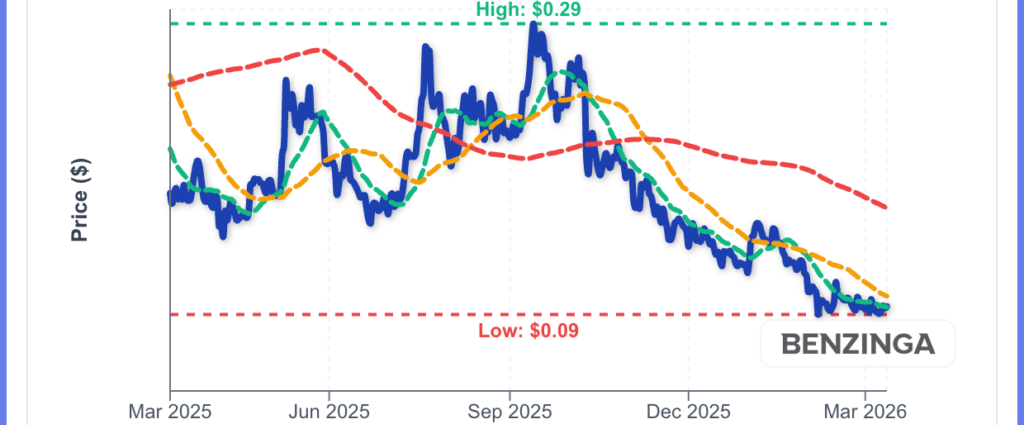
Dogecoin, Shiba Inu At Critical Support—Break These Levels And It Gets Ugly
Dogecoin (CRYPTO: DOGE) and Shiba Inu (CRYPTO: SHIB) both are hovering near critical support levels after 58-60% declines from highs as descending channels trap price and money flow turns deeply negative.
DOGE Tests $0.09 Floor
Dogecoin dropped roughly 60% over five months from $0.23 in October 2025 to current levels.
A descending channel has guided price lower since October, with every bounce sold and every rally failing at the upper boundary.
The Supertrend indicator at $0.109 flashes red. When all moving averages sit above price and slope down, sellers control every timeframe.
Volume dried up 25.5% to $2.86 billion. Lower volume during a downtrend signals fewer buyers …
This post was originally published here

Online Casino Crypto Slots Report: Legitimacy Verified, Payout Mechanisms Analyzed & Why SlotsParadise Is A Good Option
New York City, NY, March 12, 2026 (GLOBE NEWSWIRE) —
I. Introduction
The online gambling landscape has undergone a significant transformation over the past several years, with cryptocurrency-powered slot games emerging as one of the fastest-growing segments in digital gaming. Players are increasingly drawn to the promise of faster transactions, enhanced privacy, and provably fair mechanics that blockchain-based casinos offer over their traditional counterparts.
But with rapid growth comes legitimate concern. The crypto casino space remains largely unregulated in many jurisdictions, and the gap between marketing claims and actual player experience can be wide. For every reputable platform operating transparently, there are dozens of fly-by-night operations designed to exploit uninformed depositors.
This report is designed to cut through the noise. We examine how crypto slots actually work, what determines their legitimacy, how payout mechanisms function under the hood, and what every player should verify before committing funds to any platform. Our goal is to give readers a practical framework for evaluating any crypto slots casino they encounter, whether they are seasoned gamblers or newcomers exploring digital currency gaming for the first time.
II. What Are Crypto Slots?
Crypto slots are online slot machines that accept cryptocurrency deposits and process withdrawals in digital currencies such as Bitcoin (BTC), Ethereum (ETH), Litecoin (LTC), Tether (USDT), and others. From a gameplay perspective, they function identically to traditional online slots: players place a wager, spin the reels, and outcomes are determined by a random number generator (RNG).
The key difference lies in the transaction layer. Traditional online casinos rely on banks, credit card processors, and third-party payment providers to move money in and out. Crypto slots eliminate these intermediaries. Deposits land in your casino account within minutes rather than days, and withdrawals bypass the slow verification queues that plague fiat-based platforms.

Provably Fair Technology
One of the most compelling innovations in the crypto gambling space is provably fair technology. This system uses cryptographic hashing to allow players to independently verify that each spin outcome was genuinely random and was not tampered with by the casino after the bet was placed. In a provably fair system, the casino generates a server seed before the spin, the player provides or is assigned a client seed, and the combination of both seeds determines the outcome. After the spin, the server seed is revealed so the player can verify the result mathematically.
Not all crypto slot platforms implement provably fair systems. Some still rely on traditional third-party RNG audits, which are credible but less transparent than on-chain verification. When evaluating a platform, understanding which verification method they use is an important first step.
Supported Cryptocurrencies
Most crypto slot casinos support Bitcoin and Ethereum as a baseline. More established platforms expand their options to include Litecoin, Dogecoin, Bitcoin Cash, Tether (USDT), USD Coin (USDC), and in some cases, Solana, Tron, and Ripple. The breadth of supported currencies matters because it affects deposit speeds, network fees, and the flexibility players have in managing their bankroll.
III. Do Crypto Slots Actually Work?
This is the question that drives most players to search for independent information before depositing. The short answer is yes, crypto slots function on the same mathematical principles as any regulated online slot machine. But there are important nuances that separate a legitimate crypto slots experience from one designed to take your money.
RNG and Fair Play Verification
Every legitimate slot game, whether crypto or fiat, is powered by a random number generator. The RNG produces thousands of number sequences per second, and the sequence active at the exact moment you press spin determines your outcome. In regulated environments, these RNGs are tested and certified by independent auditing firms such as eCOGRA, iTech Labs, or GLI (Gaming Laboratories International).
Crypto casinos that operate under recognized licenses typically undergo the same auditing process. Those that implement provably fair technology add an additional layer of transparency by allowing players to verify outcomes directly. Platforms that offer neither third-party audits nor provably fair verification should be approached with extreme caution.
RTP Rates: What to Expect
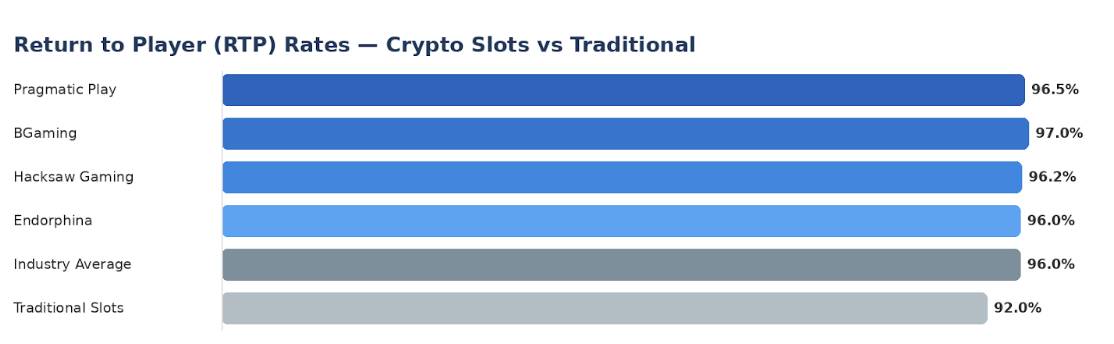
Return to Player (RTP) is the percentage of total wagered money that a slot game pays back to players over time. A slot with a 96% RTP will, on average, return $96 for every $100 wagered over millions of spins. This is a long-term statistical average, not a guarantee for any individual session.
Crypto slots from reputable game providers like Pragmatic Play, BGaming, Hacksaw Gaming, and Endorphina typically offer RTPs between 94% and 97%, which is consistent with the broader online slots industry. Players should be wary of platforms that do not disclose RTP figures or that run proprietary games with no independent audit data.
What Realistic Outcomes Look Like
Slots are inherently a negative-expectation game. The house edge ensures that over time, …
This post was originally published here

Why Is MercadoLibre Stock Falling Thursday?
MercadoLibre, Inc. (NASDAQ:MELI) shares fell Thursday after JPMorgan downgraded the Latin American e-commerce giant, warning that intensifying competition in Brazil and heavier investment spending could keep profit margins under pressure.
The bank cut its rating on MercadoLibre to Neutral from Overweight and lowered its price forecast to $2,100 from $2,650, citing persistent competitive pressure in Brazil—particularly from Sea Limited’s (NYSE:SE) Shopee platform—and management’s willingness to accept lower near-term margins while prioritizing growth investments.
MercadoLibre Plans $3.4B Argentina Investment
Separately, MercadoLibre expects to invest $3.4 billion in Argentina in 2026, a roughly 30% increase from the $2.6 billion planned for 2025, CEO Ariel Szarfsztejn said, Reuters reported.
The investment will support logistics expansion, new distribution centers, technology upgrades, and growth of fintech unit Mercado Pago.
The company also plans to create nearly 2,000 jobs in Argentina, where it currently employs about 16,700 people, Reuters reported.
Technical Analysis
Mercado Libre is trading 11.3% below its 20-day simple moving average (SMA) and 19.6% below its 100-day SMA, keeping both the short- and intermediate-term trend pointed down. Shares are down 17.79% over the past 12 months and are now positioned closer to …
This post was originally published here
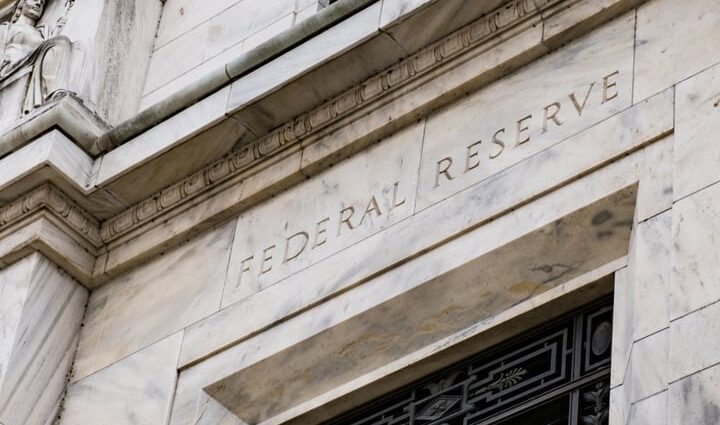
Trump’s Fed Pick Kevin Warsh Faces Brutal Trifecta: Oil Surges, Private Credit Cracks, Inflation Sticks—Can He Cut Rates?
Kevin Warsh is about to inherit the most hostile environment for rate cuts since the Fed started easing last September.
Donald Trump‘s Fed Chair nominee takes over from Jerome Powell in May with oil near $95, private credit in open distress and inflation still above target.
Polymarket traders now price a 22% chance of zero rate cuts in 2026, roughly double where that contract sat in January when consensus still expected two or three cuts.
The most likely single outcome is one cut at 30%. The April 28 FOMC decision is priced at 91% hold.
J.P. Morgan Global Research no longer expects the Fed to cut at all this year.
Oil Is The Problem Nobody Can Hedge Away
Iran is laying mines and attacking vessels in the Strait of Hormuz, and even a historic 400-million-barrel emergency reserve release from the IEA hasn’t been enough to bring prices down.
Analysts warn oil could breach …
This post was originally published here
Crude Oil Skyrockets As Iran Toughens Its Position Against U.S., Israel
(RTTNews) – Crude oil catapulted on Thursday as new leadership in Iran declines to bow down to U.S. pressure in the raging Middle East war and instead vowed revenge, threatened U.S. allies, and resolved to ramp up attacks.
This post was originally published here

Washington passes “millionaires tax” despite concerns of wealth flight
Washington state lawmakers on Wednesday passed a so-called “millionaires tax,” a move criticism said could lead to an exodus of high-income earners.
The State Senate passed the measure with a day left in the 2026 legislative session, following a hotly contested 24-hour marathon in the State House.
The bill would impose a 9.9% tax on income over $1 million for individuals or couples in a household.
The funds generated from the tax would address the state budget, which is currently dealing with a multi-billion dollar deficit, Fox Seattle reported.
KEN GRIFFIN’S FLORIDA TAKEOVER: CITADEL FOUNDER SHELLS OUT $180M FOR LATEST PIECE OF MIAMI EMPIRE
Funds would also go toward programs to improve affordability for working families and small business owners. The legislation would go into effect on Jan. 1, 2028, with tax payments starting in 2029.
It is expected to impact 21,000 residents across the state. The bill now heads to the desk of Gov. Bob Ferguson, who has backed the measure.
On Tuesday, he said the bill “represents historic progress in rebalancing our unfair system. It sends significant dollars back to Washington families and small businesses.”
“It saves working parents money and ensures our kids are prepared to learn by funding free breakfast and lunch for all Washington K-12 students, which has been a priority of mine since I ran for governor,” he wrote on X. “The Millionaires’ Tax will apply to less than one half of one percent of Washingtonians, but make life more affordable for millions. I look forward to signing it.”
A Tax Foundation analysis found that the proposed tax would yield a top rate of more than 18% on wage income and restricted stock units (RSU) vesting in Seattle, making it the highest rate in the U.S.
Washington state has 695,695 small businesses and nearly 360,000 employees in technology-related jobs, according to the Small Business Administration and Washington State Department of Commerce, respectively.
“A tax this aggressive would do real damage to Washington’s economy, sending jobs and economic opportunity elsewhere,” wrote Jared Walczak, a senior fellow at the Tax Foundation. “In particular, for significant swaths of the state’s tech sector, already the target of anomalously high business taxes, a 9.9 percent income tax could prove the last straw, driving any subsequent expansion to other states, and quite possibly taking existing jobs with them.”
The bill has raised concerns from critics who said it could force Washington’s highest earners to leave for more tax-friendly states.
“If a Starbucks or a Boeing or other people start to diminish their presence in Washington State, guess what happens?” said Republican lawmaker Andrew Barkisduring the State House’s debate this week, according to the New York Times. “Those high-paying jobs? They are going to leave. It is happening.”
GET FOX BUSINESS ON THE GO BY CLICKING HERE
Former Starbucks CEO Howard Schultz said in a LinkedIn post this week that he and his wife are moving from Seattle to Florida after more than four decades in the city. He didn’t mention the tax in his post but said he hopes Washington “will remain a place for business and entrepreneurship to thrive.”
Fox Business’ Daniella Genovese contributed to this report.

Amazon puts humans back in the loop as its retail website crashes from ‘inaccurate advice’ that an AI agent took from an old wiki
Amazon repurposed its regular weekly retail technology meeting Tuesday to figure out why its retail website keeps breaking. The answer, buried in internal documents and then quickly deleted, according to the Financial Times: its own AI initiatives.
Four high-severity incidents hit its retail website in a single week, including a six-hour meltdown last Thursday that locked shoppers out of checkout, account information and product pricing. The meeting, run by the senior vice president who oversees Amazon’s ecommerce infrastructure, was framed as a “deep dive” into what went wrong. What went wrong, it turns out, involves the very AI tools Amazon has been pushing its own engineers to adopt, according to the FT.
An internal document prepared for the meeting initially identified “GenAI-assisted changes” as a factor in a pattern of incidents stretching back to Q3. That reference was deleted before the meeting took place, according to the Financial Times, which viewed both versions of the document.
Amazon has pushed back on the reporting. In a blog post, the company said only one incident involved AI tools, that “none of the incidents involved AI-written code,” and that the cause was “an engineer following inaccurate advice that an agent inferred from an outdated internal wiki.” Amazon also told Fortune the meeting was a routine weekly operations review, not an emergency gathering. The company also said it is not accurate that it introduced new approval requirements for engineers working with AI tools, and that AWS was not involved in any of the incidents.
“As part of normal business, the meeting will include a review of the availability of our website and app as we focus on continual improvement,” an Amazon spokesperson told Fortune.
The internal documents, obtained and reported by CNBC, tell another story. Dave Treadwell, SVP of eCommerce Foundation, laid it out for staff:. Site availability had not been good recently, he wrote, and the string of Sev 1s—the most severe classification for incidents that take down important systems—demanded immediate attention.
But the internal documents, as initially written, according to CNBC, tell a more complicated story. Treadwell acknowledged in his note that “best practices and safeguards” around generative AI usage haven’t been fully established, and wrote that the company would introduce “controlled friction” into deployments involving the most critical parts of the retail experience, according to CNBC. Either way Amazon calls it, the message to engineers was that AI-assisted changes now get more scrutiny.
The timing for that kind of admission is brutal for Amazon. The company, which just surpassed Walmart to top the Fortune 500, is spending more on AI infrastructure than any company on Earth—$200 billion in projected capital expenditures this year.
Amazon is also aggressively thinning out its workforce. The company laid off roughly 14,000 corporate workers in October — mostly middle managers — followed by another 16,000 in January. That’s on top of more than 27,000 employees cut between 2022 and 2023. In June, Jassy wrote in an internal memo that Amazon would need fewer employees thanks to AI-driven “efficiency gains,” repeating his drumbeat emphasizing the AI future of less workers needed at the giant retail platform. When the October cuts came, Jassy reframed the rationale on an earnings call to be about “culture,” saying that the company had grown too fast during the pandemic, and Amazon needed to be “lean” and “move fast.”
But a separate Amazon memo announcing the same layoffs cited the need to adapt to “transformative technology,” the kind of language that maps a lot more cleanly onto an AI-driven workforce reduction than a spring cleaning. But it seems that either way, Amazon has found itself in need of more humans in the process.
It’s an interesting narrative violation in a world of AI-related layoffs. Jack Dorsey’s Block cut nearly half its workforce last month — 4,000 employees — and tied the decision explicitly to AI-driven productivity gains. Dorsey said most companies would reach the same conclusion within a year. Salesforce’s Marc Benioff said he needed fewer heads after cutting 4,000 support roles. The C-suite consensus is that increasing AI investment will pay for itself with smaller workforces.
But the promise that AI would lighten the load isn’t playing out— at least, not for the workers who remain, and not for the systems they manage. A new analysis reported by the Wall Street Journal of 164,000 workers by ActivTrak found that AI is increasing the speed, density, and complexity of work rather than reducing it. Time spent on email, messaging, and chat apps more than doubled after workers adopted AI tools. Time devoted to focused, uninterrupted work—the kind required for solving complex problems—fell 9%. Meanwhile, new research from Anthropic suggests the gap between what AI can theoretically automate and what it’s actually automating is enormous. Even in software and math — where 94% of tasks could theoretically be handled by AI, only about 33% are being automated today. Legal constraints and institutional troubles are all slowing deployment, Anthropic said. Amazon’s outages could be a live demonstration of why.
This story was originally featured on Fortune.com
This post was originally published here

Google’s AI overviews are 44% more likely to trash your brand than ChatGPT
AI chatbots and search engines are sometimes negative about brands, and the end result—while arguably good for the end consumer—is a wake-up call for companies.
A study of hundreds of millions of prompts across three industries (apparel, electronics, and education) conducted by search engine optimization company BrightEdge found Google’s AI Overviews was 44% more likely to display negative information about a brand than OpenAI’s ChatGPT. Still, when consumers prompted ChatGPT to decide between the two products, the roles flipped, with ChatGPT being more negative.
While the overwhelming majority of responses analyzed in the study were either positive or neutral, a small percentage of responses were negative for both Google AI Overviews and ChatGPT, 2.3% and 1.6%, respectively.
BrightEdge CEO Jim Yu told Fortune while these percentages may seem small, multiplied across hundreds of millions of results, they can still equate to loads of negative queries, which can affect a company’s image in the eyes of potential consumers. For every million queries, an estimated 23,000 would yield a negative response by AI Overviews, based on the data from the study.
Google, in particular, Yu said, is pulling out negative information associated with products that can sometimes be years old because of the way it pulls information from the internet. These searches, though, depend heavily on what people search for and what is publicly available about a company.
“Instead of it being on the back pages that’s way further down, now it’s pulling it into the front page, as people are looking for things about your brand,” he said. “That’s a huge change for businesses.”
A spokesperson for Google told Fortune the report used a flawed methodology to make sensational claims and found a negligible difference of 1% between AI Overviews and ChatGPT in terms of negative responses.
“It also misunderstands how AI Overviews work: They’re based on what sources on the web say about a topic and change depending on what someone is searching for,” said the spokesperson in a statement.
OpenAI did not immediately respond to a request for comment.

To mitigate the negative information being brought to the forefront of AI, companies need to make it a priority to respond to nearly every negative review published by people online, Matt Blumberg, the CEO of Markup.AI, a tech company that uses AI to review marketing content, told Fortune.
“I do think it’s more important than ever, because those things are getting picked up more, and they’re getting picked up in different ways by different AI applications,” Blumberg said.
The study shows a clear shift in how AI presents information to people. Consumers are using AI to become better researchers and to get a clearer and arguably more objective picture of the positives and negatives of any product, Yu said.
For companies, this new reality of search means companies need to be pushing out fresh content to cater to AI’s preference for newer content, while also being strategic about where they place it.
“It’s a new dynamic that they do have to really think about,” Yu added.
This story was originally featured on Fortune.com
This post was originally published here

What’s Going On With America’s Car-Mart Stock Today?
America’s Car-Mart, Inc. (NASDAQ:CRMT) reported a difficult quarter as weather disruptions, weaker sales volume and transition-related pressures hurt results.
Even so, the company highlighted improving unit economics and greater flexibility after recent changes to its capital structure.
• America’s Car-Mart stock is at significant support. Why did CRMT hit a new low?
Earnings Snapshot
The company reported third-quarter adjusted earnings per share of $1.53 loss, which missed the Street view of 28 cents loss. Quarterly sales of $286.792 million (down 12% year-over-year) missed the analyst consensus estimate of $331.927 million.
Sales volumes declined 22.1% to 10,275 units, reflecting constraints on origination capacity resulting from the company’s ongoing capital …
This post was originally published here

Why Are Block Shares Sliding On Thursday?
Block Inc. (NYSE:XYZ) shares are retreating during Thursday’s session. The decline follows a broader market sell-off affecting the technology sector.
Macroeconomic Pressures Weigh On Growth
The Nasdaq fell 1.30% while the S&P 500 shed 1.14% on Thursday. Technology stocks are also lower today. Investors are reacting to Wednesday’s Consumer Price Index report. Inflation held steady at 2.4% in February. This matched the economist’s estimates.
However, the data was collected before the war in Iran. That conflict has since pushed fuel prices sharply higher.
The stock is reacting negatively as concerns over inflation and higher rates stemming from the Middle East conflict darken the outlook for consumer lending.
Dorsey’s AI Strategy In Focus
This post was originally published here

Trump says US ‘largest oil producer in the world,’ but priority remains stopping Iran nuclear capabilities
President Donald Trump said that America benefits when oil prices increase because the nation is the world’s biggest oil producer, but added that he considers blocking Iran from obtaining nuclear weapons to be more important.
“The United States is the largest Oil Producer in the World, by far, so when oil prices go up, we make a lot of money,” the president said in a Thursday Truth Social post.
“BUT, of far greater interest and importance to me, as President, is stoping an evil Empire, Iran, from having Nuclear Weapons, and destroying the Middle East and, indeed, the World. I won’t ever let that happen! Thank you for your attention to this matter,” he added.
TRUMP TOUTS ‘HISTORIC’ $300B TEXAS REFINERY AS FIRST NEW US PLANT IN NEARLY 50 YEARS
Gas prices have been surging amid the war, with AAA’s national average price for regular gas currently at $3.598.
The U.S. plans to release millions of barrels of oil from its Strategic Petroleum Reserve next week.
“Earlier today, 32 member nations of the International Energy Agency unanimously agreed to President Trump’s request to lower energy prices with a coordinated release of 400 million barrels of oil and refined products from their respective reserves,” Energy Secretary Chris Wright said in a Wednesday statement.
“As part of this effort, President Trump authorized the Department of Energy to release 172 million barrels from the Strategic Petroleum Reserve, beginning next week. This will take approximately 120 days to deliver based on planned discharge rates,” Wright noted.
“Unlike the previous administration, which left America’s oil reserves drained and damaged, the United States has arranged to more than replace these strategic reserves with approximately 200 million barrels within the next year — 20% more barrels than will be drawn down — and at no cost to the taxpayer,” he said in the statement.
IRAN THREATENS $200 OIL BARRELS AS US PREPARES MASSIVE RELEASE OF EMERGENCY PETROLEUM RESERVES
White House press secretary Karoline Leavitt told Fox News on Thursday that the administration “is considering waiving the Jones Act for a limited period of time to ensure vital energy products and agricultural necessities are flowing freely to U.S. ports.”
The Iranian regime has threatened increased oil prices as the regime targets commercial shipping in the Strait of Hormuz.
CLICK HERE TO GET FOX BUSINESS ON THE GO
“Get ready for oil to be $200 a barrel, because the oil price depends on regional security, which you have destabilised,” Iranian military command spokesperson Ebrahim Zolfaqari warned in comments directed toward Washington, Reuters reported.
Fox News’ Patrick Ward contributed to this report.

Mortgage rates rise to highest level in over a month
Mortgage rates climbed this week, mortgage buyer Freddie Mac said Thursday.
Freddie Mac’s latest Primary Mortgage Market Survey, released Thursday, showed the average rate on the benchmark 30-year fixed mortgage rose to 6.11% from last week’s reading of 6%.
The average rate on a 30-year loan was 6.65% a year ago.
TEXAS CAPITAL’S HOUSEHOLD GROWTH SURGES, FAR OUTPACING NATIONAL RATE
“Despite the modest uptick, buyers are responding to rates in this range, with existing-home sales increasing 1.7% in February,” said Sam Khater, Freddie Mac’s chief economist. “Purchase applications also increased this week, a welcome sign as buyers enter spring homebuying season with rates down more than half a percentage point compared to the same time last year.”
RENT BECOMING MORE AFFORDABLE FOR MANY AMERICANS AS MARKET STABILIZES
The average rate on a 15-year fixed mortgage increased to 5.5% from last week’s reading of 5.43%.
Mortgage rates are affected by several factors, including the Federal Reserve and geopolitics. Though mortgage rates are not directly affected by the Fed’s interest rate decisions, they closely track the 10-year Treasury yield. The 10-year yield hovered around 4.23% as of Thursday afternoon as oil prices moved higher due to the war in Iran.
“The ongoing conflict in Iran has stoked fears of wartime inflation, sending yields on the 10-year Treasury climbing and driving mortgage rates higher,” said Hannah Jones, Realtor.com senior economic research analyst. “This shift comes despite last week’s jobs data being weaker than expected, with unemployment ticking up to 4.4% and nonfarm payroll employment falling by 92,000 jobs. Inflation also drifted lower in February, with headline inflation holding steady at 2.4% and core inflation at 2.5%. Under normal circumstances, these soft economic readings would put downward pressure on mortgage rates. However, the news out of the Middle East is overriding those signals.”
Gold Falls Sharply As Iran Vows To Fight Back Harder, Pushing Oil Prices Up Further
(RTTNews) – Extending yesterday’s losses, gold prices slumped on Thursday as Iran hardens its stance against U.S.-Israeli forces. With diplomacy off the table, crude oil skyrocketed to expand inflationary pressures, weighing down on the yellow metal.
This post was originally published here

EXCLUSIVE: Silver’s Wild Swings Haven’t Broken The Bull Market, Says Texas Precious Metals CEO
Few commodities are as volatile as silver. After surging to record highs earlier this year, the metal experienced a sharp pullback that rattled investors and reignited debate about whether the rally had gone too far, too fast.
But according to Tarek Saab, CEO of Texas Precious Metals, the broader bull market in silver may still be intact.
“While we do not publish internal forecast, we remain structurally bullish as long as silver holds above prior resistance at $50,” Saab told Benzinga.
A Historic Breakout Level
For decades, silver struggled to sustainably break above the $50 level — a price that acted as …
This post was originally published here

Ozempic mania has even Olive Garden and The Cheesecake Factory cutting back on portion sizes
The biggest new restaurant trend is small.
Special menus with petite, less expensive portions are popping up all over, from large chains like Olive Garden and The Cheesecake Factory to trendy urban eateries and farm-to-fork dining rooms.
Restaurants hope that offering smaller servings beyond the children’s menu will meet many different diners’ needs. Some people want to spend less when they go out. Others are looking for healthier options or trying to lose weight. Younger consumers tend to snack more throughout the day and eat smaller meals, said Maeve Webster, the president of culinary consulting firm Menu Matters.
“These are really driven by, I think, changes in the way people are thinking about their relationship with food, the way they spend money on food, what is a good value and what’s not,” Webster said.
Looking for value
Beth Tipton, the co-owner of Daniel Girls Farmhouse Restaurant in Connersville, Indiana, introduced an eight-item Mini Meals menu last fall after several customers requested smaller portions. The menu, which includes daily specials like a half piece of meatloaf with green beans, mashed potatoes and gravy for $8, now accounts for about 20% of the restaurant’s orders, she said.
Older adults make up about half of the restaurant’s clientele, Tipston said, and some customers told her the regular menu was a stretch for their budgets. As someone who underwent weight-loss surgery, she also knew from experience that many restaurants won’t allow adults to order from their children’s menus.
“We wanted it to be available to all without the word ‘kids meals’ attached,” Tipton said. “With the rising costs all around us we wanted to help in any way we can, and this is a great option.”
Eating out and GLP-1s
Some restaurants are adding menus to court users of GLP-1 weight-loss and diabetes drugs like Zepbound, Wegovy, Ozempic and Mounjaro.
Last fall, restaurateur Barry Gutin ran into two different friends who told him they were taking GLP-1s and struggling to find restaurant meals that met their dietary needs and smaller appetites. GLP-1 users tend to eat less, so they need nutritionally dense foods that are low in fat and high in protein and fiber.
Gutin, the co-owner of Cuba Libre Restaurant and Rum Bar in Philadelphia, Washington, Atlantic City, New Jersey, and Orlando, Florida, reached out to a doctor who specializes in weight loss and to Cuba Libre’s culinary director, Angel Roque. Over the next month, they developed the chain’s GLP-Wonderful menu, which is available during dinner.
The menu has five classic Cuban options. Roque said the pollo asado on Cuba Libre’s regular menu has nearly 1,000 calories; on the GLP-1 menu, that’s slimmed down to 400 calories, but heavy on protein and fiber. He said it was also important to keep the GLP-1 meals flavorful and colorful, to stimulate appetites.
“Many times when people are on those kind of regimes, they feel that they can’t do the same as everybody else. So we wanted to show them, yes, at Cuba Libre, you can,” Roque said.
Gutin said the menu has increased business. He estimated that 10 to 20 groups at each location every week have at least one person who requests the GLP-Wonderful menu.
“People say, ‘Thank you for serving us’,” Gutin said.
Big chains go small
Olive Garden, whose seven-item “Lighter Portions” menu rolled out nationwide in January, said GLP-1 users were one consideration. The Italian-style restaurant chain also wanted to appeal to patrons pursuing healthier diets or more affordable meals, said Rick Cardenas, the president and CEO of Olive Garden’s parent company, Darden Restaurants.
“There is a consumer group out there that believes in abundance, but abundance is different for everybody,” Cardenas said in September during a conference call with investors. “So consumers can choose. We’re not changing our entire menu to make it a smaller portion.”
The Asian fusion chain P.F. Chang’s began offering medium-sized portions last fall. The Cheesecake Factory added smaller, lower-priced Bites and Bowls to its menu last summer, while TGI Fridays recently began testing an “Eat Like A Kid” menu with smaller portions.
A long-term change
Smaller portions aren’t a new concept. Twenty years ago, small-plate tapas restaurants were all the rage, for instance.
But to Webster, the menu consultant, the scaled-down dishes appearing now feel like a longer-term shift. For one thing, the trend is not tied to any particular cuisine. Webster also thinks consumers are thinking more about food waste than they used to, and smaller portions can alleviate some of their concerns.
“I think it is a core need that consumers have, and a demand that has been lingering under the surface for a long time because restaurant meals, particularly at chains, have become so large,” she said. “Sure, it sounds great to take leftovers home, but they never taste as good.”
During a recent visit to Shelburne, Vermont, from his home in North Carolina, Jack Pless was delighted to see the Teeny Tuesday menu at Barkeaters Restaurant, which specializes in locally sourced food. Pless, who’s in his 60s and used to own a restaurant, said he can’t eat as much as he used to at meals.
“So many times you go out to restaurants, especially me or my wife, and we’ll take home a box and it’ll sit in the refrigerator for two, three days and start to grow a beard,” he said.
Julie Finestone, the co-owner of Barkeaters, said she introduced the Teeny Tuesday menu last month to bring in more weekday business during the winter. She was concerned about the cost of offering lower-priced food options, like $12 reuben sliders, but said the decision has brought in more business than she expected.
Finestone said she’s pretty confident Teeny Tuesday will become a year-round fixture.
“Some people, it’s dietary. Some have smaller appetites. Some people don’t like to overindulge in the middle of the week,” Finestone said. “I think that it just spoke to people.”
___
AP Video Journalists Mingson Lau in Philadelphia and Amanda Swinhart in Shelburne, Vermont, contributed.
This story was originally featured on Fortune.com
This post was originally published here

Iran’s new Supreme Leader warns of ‘opening other fronts’ in first statement from hiding
Iran’s secretive new supreme leader on Thursday vowed to keep up attacks on Gulf Arab countries and use the effective closure of the strategic Strait of Hormuz as leverage against the United States and Israel. It was his first public statement since being chosen to succeed his father, who was killed in an Israeli strike.
Supreme Leader Ayatollah Mojtaba Khamenei, 56, who Israel suspects was wounded in the opening salvo of the war, has not appeared in public since then. In the statement read by a state TV news anchor, he vowed to avenge those killed in the war, including in a strike on a school that killed over 165 people.
The statement signaled a willingness to continue the war that has disrupted global energy supplies, international travel and the relative safety enjoyed by the Gulf Arab states. Iran’s unrelenting attacks on shipping traffic and energy infrastructure in the Persian Gulf had earlier pushed oil back above $100 a barrel.
Both sides dig in as fighting escalates
U.S. and Israeli strikes have exacted a heavy toll on Iran’s leadership, military and ballistic missile program but have failed to topple the government, which U.S. President Donald Trump has at times suggested is his goal.
Iran is trying to inflict enough global economic pain to pressure the United States and Israel to halt their bombardment, which began on Feb. 28. Those strikes killed Supreme Leader Ayatollah Ali Khamenei — Mojtaba’s father — and the younger Khamenei’s wife.
Trump has meanwhile promised to “finish the job,” even though he claimed Iran is “virtually destroyed.” He said in a social media post Thursday that ensuring Iran does not develop a nuclear weapon was a higher priority than soaring oil prices.
Iran-backed Hezbollah militants meanwhile launched some 200 rockets from Lebanon at northern Israel while sirens rang out and loud booms from the interception of Iranian missiles could be heard in other areas. Israel launched another wave of attacks on Tehran and in Lebanon, where 11 people were killed.
The U.N. refugee agency said up to 3.2 million people in Iran have been displaced by the ongoing war. It said most have fled from Tehran and other major cities toward the north of the country or rural areas. Around 800,000 people have been internally displaced in Lebanon, prompting fears of a humanitarian crisis.
Khamenei warns of ‘opening other fronts’ if war continues
Khamenei’s first statement signaled a continuation of his late father’s strategy in confronting the United States and Israel. He called on Gulf Arabs to “shut down” U.S. bases in the region, saying protection promised by Washington was “nothing more than a lie.”
He also said Iran has studied “opening other fronts in which the enemy has little experience and would be highly vulnerable” if the war continues. He did not elaborate, but Iran has been linked to previous attacks on U.S., Israeli and Jewish targets around the world.
Khamenei is close to Iran’s paramilitary Revolutionary Guard and is widely seen as even less compromising than his father. His location is unknown, and he is likely a prime target for the U.S. and Israel.
In addition to attacking energy infrastructure across the region, Iran has also effectively closed the Strait of Hormuz, the waterway leading from the Persian Gulf toward the Indian Ocean through which a fifth of the world’s traded oil flows.
The price of Brent crude oil, the international standard, rose another 9% to more than $100 a barrel, up some 38% over what it cost when the war started. Prices have swung back and forth in recent days, at one point surging to around $120 a barrel.
Israel and Hezbollah trade heavy fire
It was a sleepless night for many in Israel and Lebanon as Hezbollah launched some 200 rockets into Israel, according to the Israeli military. Israeli warplanes carried out simultaneous airstrikes on areas in Beirut’s southern suburbs and struck a car near the capital.
“The noise was extraordinary, it was really scary,” said Naama Porat, a resident of the rural Israeli community of Klil, some 15 kilometers (9 miles) from the Lebanese border. As the sound of explosions and interceptions rang out, she dashed with her son to a shelter and spent the night there.
Israeli Defense Minister Israel Katz warned Lebanon that if its government does not prevent Hezbollah from attacking, Israel “will take the territory and do it ourselves.”
Lebanon’s government has ramped up calls for Hezbollah to disarm since the group’s last war with Israel was halted by a 2024 ceasefire, and earlier this month declared Hezbollah’s military activities illegal. But it has been reluctant to confront the militants directly.
More than 20 killed in strikes on Lebanon and Iran
The Israeli military struck a building in a busy residential and commercial district in central Beirut after issuing a warning for residents to evacuate. The strike hit in a neighborhood that is close to Lebanon’s parliament, United Nations offices and international embassies.
Israeli military spokesperson Avichay Adraee said they were targeting a “facility affiliated with Hezbollah.”
Israel earlier hit a car in a seaside area of Lebanon’s capital, killing eight and wounding 31, the Lebanese Health Ministry said. The Israeli military said it was “not aware” of a strike at that location.
Israel’s military on Thursday warned residents of an even larger area of southern Lebanon to leave their homes. It said they should move north of the Zahrani River, which at its midpoint is about 35 miles (56 kilometers) away from the border with Israel.
Separately, Israel said it struck a nuclear facility in Iran in recent days that it had destroyed with an airstrike in October 2024. Earlier this year, satellite photos raised concerns that Iran was working to restore the facility.
The U.S. and Israel say that destroying whatever remains of Iran’s nuclear program is one of the central aims of the war. They have long suspected Iran seeks nuclear weapons, while the Islamic Republic says its nuclear program is peaceful.
Iran fires at Gulf Arab countries and hits ship in Persian Gulf
British officials said several U.S. personnel were injured in drone strikes in northern Iraq on Wednesday night.
Brig. Guy Foden said a number of drones hit a base in Erbil that houses both British and American troops. Another officer, Lt. Gen. Nick Perry, said there were no British casualties, while the U.S. sustained some casualties but “nothing too serious.”
Early Thursday, a container ship was hit with a projectile off the coast of Dubai, sparking a small fire, according to British military’s United Kingdom Maritime Trade Operations Center. It said the crew were safe.
An Iranian attack sparked a major fire on Muharraq Island, home to Bahrain’s international airport. Kuwait authorities said an Iranian drone smashed into a residential building, wounding two people, and that a drone damaged Kuwait International Airport but caused no casualties.
The UAE said it had activated air defenses twice to protect the futuristic city of Dubai from attacks, and firefighters extinguished a blaze at a tower after a drone hit.
Saudi Arabia, meanwhile, said it shot down a drone targeting the diplomatic quarter in its capital, Riyadh, and other drones in the east, including at least one trying to target its Shaybah oil field.
Iran’s latest attacks on its Gulf neighbors flouted a U.N. Security Council resolution approved Wednesday.
___
Melzer reported from Mitzpe Hila, Israel, Rising from Bangkok and Corder from The Hague, Netherlands. Associated Press writers Sally Abou AlJoud and Kareem Chehayeb in Beirut, and Jill Lawless in London, contributed to this report.
This story was originally featured on Fortune.com
This post was originally published here

Energy Secretary Wright says US could soon escort tankers in Strait of Hormuz, but ‘not ready’ yet
Energy Secretary Chris Wright on Thursday said that while the U.S. Navy may soon be in a position to escort oil tankers through the Strait of Hormuz to protect them from attacks by Iran, the Navy isn’t yet ready to do so.
Wright said in an interview on CNBC’s “Squawk Box” that tanker escorts through the Strait of Hormuz – a vital chokepoint in the shipping lanes through the Persian Gulf – will be on the table in the near future as the air campaign against Iran’s military capabilities continues. Shipping traffic in the strait has largely ground to a halt due to the risk of Iranian attacks.
“It’ll happen relatively soon, but it can’t happen now,” Wright said in the interview. “We’re simply not ready. All of our military assets right now are focused on destroying Iran’s offensive capabilities and the manufacturing industry that supplies their offensive capabilities.”
The energy secretary was asked in the interview whether the Navy would be in a position to begin escorting tankers through the strait by the end of this month and Wright responded, “Yes, I think that is quite likely the case.”
CARGO SHIP STRUCK IN STRAIT OF HORMUZ AMID IRAN WAR
“Again, I’ll be over at the Pentagon later today. But that is what the military is working on and, yes, a lot of critical materials come out of the Strait of Hormuz,” Wright told CNBC.
“We have a large global economy. Fortunately, with President Trump’s policies, we’re a net exporter of oil, we’re a net exporter of natural gas, and in fact we’re growing our net exports of natural gas this spring, this summer. You’ll see massively more capacity online by the end of this year,” he added.
OIL SPIKE FADES AS MARKETS REASSESS IRAN WAR SUPPLY RISKS
Wright said in the interview that the Trump administration doesn’t want the Iran campaign to be a “brush off for a year or two” and wants to “permanently destroy their ability to build missiles, to build drones, to have a nuclear program.”
“It is short-term pain for the long-term gain, but it’s simply a must-achieve thing. Otherwise, you’ve got decades into the future of an Iran that can hold the world hostage whenever it wants,” he added.
HOW THE IRAN WAR COULD HIT AMERICANS’ GROCERY BILLS
The energy secretary’s comments come after a subsequently deleted social media post on his X account indicated that the “U.S. Navy successfully escorted an oil tanker through the Strait of Hormuz to ensure oil remains flowing to global markets.”
However, the post was taken down and White House press secretary Karoline Leavitt confirmed during a briefing that the “U.S. Navy has not escorted a tanker or vessel at this time. Though, of course, that is an option the president has said he will absolutely utilize if and when necessary at the appropriate time.”
GET FOX BUSINESS ON THE GO BY CLICKING HERE
Oil prices have surged amid the conflict with Iran, with prices briefly rising near $115 a barrel before declining and trading between about $80 and $95 a barrel this week.
Gasoline prices have also spiked, with AAA reporting the national average price for a gallon of gas rose to $3.598 a gallon as of Thursday – up from $2.944 a gallon a month ago.

This 55-year-old supply chain management professor took a gamble last year: he bought an electric vehicle
When Kevin Ketels bought an electric 2026 Chevrolet Blazer last year, he wasn’t thinking about the cost of gas. He just thought EVs were better and “wanted to be part of the future.” Now that the Iran war is spiking prices at the pump, the Detroit man is happy he is no longer filling up his 11-year-old gas-powered SUV.
“Electricity can go up, but it won’t go up nearly as much as gas will and it won’t go up nearly as fast, either,” said Ketels, 55, an assistant professor of global supply chain management at Wayne State University.
Experts say prolonged high gas prices may drive some EV interest and sales, especially if drivers assume their electricity prices won’t be affected by the crises.
But many factors influence consumer EV purchases — and electricity rates.
Are EV owners truly insulated from price hikes?
Drivers of gas-powered vehicles are much more vulnerable to fluctuating prices that result from global conflict than those who charge their cars. The national average for a gallon of regular gas this week was $3.57, up from $2.94 a month ago, according to AAA.
Meanwhile, “residential electricity prices are regulated and are much less volatile than gasoline prices,” said University of California, Davis economics professor Erich Muehlegger. “As a result, EV owners are largely unaffected by oil price shocks.”
But experts say electricity prices have been increasing nationally for a variety of reasons, including surging power demand from new data centers.
“This is an inflationary event,” Holt Edwards, principal in Bracewell’s Policy Resolution Group, said of the war. “Is this the driver in electricity prices? I think probably not. But it’s certainly a contributing factor.”
To what extent oil and gas conflicts could translate to the electricity sector is yet to be seen.
What about how different grids are powered?
When it comes to the electricity an EV owner is tapping, much of the cost depends on which sources of electricity are in a local grid’s power mix, experts say.
Because regulators set residential electricity prices annually, most households are sheltered from month-to-month changes in natural gas costs. Though experts say higher natural gas prices can increase the cost of generating electricity, natural gas prices haven’t risen as quickly or as much as oil prices have recently.
Those are just two of many energy sources — including coal, nuclear and renewables — that power the electric grid.
“The energy component varies depending on the energy you’re using and the price of the energy that you’re using to generate electricity,” said Pierpaolo Cazzola, an energy expert at Columbia University’s Center on Global Energy Policy. “What happens is that in the U.S., the variation of the price of the energy component is smaller than it is elsewhere.”
The experts said persistent war could affect electricity bills in the future. And that is all the more reason for countries to transition to clean power, they said.
“Clean power and electrification combined is what provides the most security,” said Euan Graham, an analyst at energy think tank Ember.
Michael B. Klein, a 56-year-old software developer in Evanston, Illinois, has driven EVs for the past eight years to save on fuel costs and because of environmental concerns.
Every time electrical grid efficiency improves — especially as renewables are added — “I get that benefit no matter what,” said Klein, who drives a Chevy Bolt. “They can improve the efficiency of gas engines, but you have to get a new car in order to reap the benefit of that.”
So will EV demand rise?
Several experts say high gasoline prices are a strong driver of EV sales, particularly if high prices persist. Drivers also consider more gasoline-efficient hybrid vehicles during these times.
Car-shopping resource Edmunds analyzed consumer shopping data for the week starting March 2, after the Iran war had begun. They found that interest in hybrids, plug-in hybrids and battery EVs accounted for 22.4% of all vehicle research activity on their site that week, up from 20.7% the previous week. Analysts also looked back at the last major nationwide fuel price surges in 2022, and they saw that consideration of electrified vehicles consideration rose sharply then, too.
But whether this means more EV purchases depends on whether buyers expect to save not just now but in the future, experts say.
Adding to the complexity: A sudden increase in EV demand could drive up prices, Graham said.
“I think the real step change would be in whether this causes governments to shift tax, tariff policies around EVs,” Graham said. Doing so would help reduce fossil fuel dependence, he said.
Does driving electric really save money?
Pretty much.
People who buy EVs have a “really substantial” gas savings over the life of their vehicles even without government tax credits, said Peter Zalzal, an attorney with Environmental Defense Fund.
“We’re talking about thousands and thousands of dollars” in savings, Zalzal said. “And as gas prices increase, those savings are only greater. Fuel costs are a big piece of overall vehicle costs, and increases in fuel prices have significant impacts on people.”
However, the upfront cost of a new EV is still more than that of a gasoline-powered vehicle; new EVs sold for an average of $55,300 last month, while new vehicles overall sold for an average $49,353, according to auto-buying resource Kelley Blue Book. Some experts also expressed national security concerns with EVs because China dominates significant parts of the EV supply chain.
Ketels, the EV owner and professor, said he believes EVs and renewable energy should be a strategic priority for individuals and the U.S. because they could be produced domestically “and we don’t have those fluctuations and those worries.”
But because the federal government has withdrawn many incentives for both, “it puts us at a disadvantage globally,” Ketels said. “I think it’s been a terrible mistake to withdraw these incentives and to attack the sustainable energy industry,” and the war “is just making it that much more obvious.”
___
Read more of AP’s climate coverage.
___
The Associated Press’ climate and environmental coverage receives financial support from multiple private foundations. AP is solely responsible for all content. Find AP’s standards for working with philanthropies, a list of supporters and funded coverage areas at AP.org.
This story was originally featured on Fortune.com
This post was originally published here


Oil hits $100 a barrel and stocks sink as Iran War drags on with no end in sight
With no clear end in sight, the war with Iran is sending oil prices back to $100 per barrel, and stocks are sinking worldwide on Thursday.
The S&P 500 fell 1.1% and is returning to sharp swings following a couple days of relative calm. The Dow Jones Industrial Average was down 575 points, or 1.2%, as of 12:15 p.m. Eastern time, and the Nasdaq composite was 1.4% lower.
The center of action was again the oil market, where the price of a barrel of Brent crude, the international standard, climbed 7.9% to $99.25 after briefly touching $101.59. Worries are worsening that the war could block the production of oil in the Persian Gulf for a long time and cause a debilitating surge of inflation for the global economy.
Iran’s new supreme leader released his first statement Thursday since succeeding his late father, saying his country would keep up attacks on Gulf Arab neighbors and use the effective closure of the Strait of Hormuz as leverage against the United States and Israel. A fifth of the world’s oil typically sails through the strait, and oil producers in the region are cutting production because their crude has nowhere to go.
Countries around the world are trying to make up for that, and the International Energy Agency said Wednesday that its members would release a record amount of oil, 400 million barrels, from stockpiles built for such emergencies.
But such moves are short-term fixes, and they do not clear the long-term risks. Analysts have said that if the Strait of Hormuz remains closed, oil prices could jump to $150.
To be sure, the U.S. stock market has a history of bouncing back relatively quickly from military conflicts in the Middle East and elsewhere, as long as oil prices don’t stay too high for too long. Even with all the up- and- down swings of the last couple weeks, many rocking markets hour to hour, the S&P 500 is still just roughly 4% below its all-time high set in January.
What’s made this jump for oil prices frightening is not only the degree — prices jumped near $120 earlier this week to their highest level since 2022 — but that they’re also occurring during an uncertain time for the economy.
Last month’s report on hiring by U.S. employers was surprisingly weak, which raised worries about a possible worst-case scenario for the economy called “stagflation.” That’s where economic growth stagnates while inflation remains high, and it’s a miserable mix that the Federal Reserve has no good tools to fix.
A more encouraging signal arrived Thursday. A report said that the number of U.S. workers applying for unemployment benefits inched lower last week. That’s a sign that layoffs are potentially remaining low around the country.
Dollar General, meanwhile, reported better profit and revenue for the latest quarter than analysts expected. But the retailer with relatively low prices, whose customers often have the least cushion to absorb higher gasoline prices, gave forecasts for revenue this upcoming year that indicated a potential slowdown in growth. Its stock fell 4.4%.
Some of Wall Street’s worst losses again hit companies with big fuel bills. Cruise-ship operator Carnival fell 6.2%, and United Airlines sank 3.8%.
Worries about the private-credit industry continued to hurt the market. Investors have been rushing to pull money out of some funds and companies that have lent to businesses whose profits are potentially under threat. Many of the worries are focused on business that could be made obsolete by new AI-powered rivals and may not pay back their loans.
Morgan Stanley fell 3.9% after its North Haven Private Income Fund said it allowed investors to redeem only 5% of its total shares instead of the nearly 11% they had requested. That 5% cap is the advertised limit.
In stock markets abroad, indexes fell across Europe and Asia.
Japan’s Nikkei 225 dropped 1%, and France’s CAC 40 sank 0.9% for two of the world’s bigger moves.
In the bond market, Treasury yields continued to climb because of upward pressure from rising oil prices. The yield on the 10-year Treasury rose to 4.24% from 4.21% late Wednesday and from just 3.97% before the war started.
Higher yields make all kinds of borrowing more expensive, such as mortgages for potential U.S. homebuyers and bond offerings for companies looking to expand. They also push down on prices for all kinds of investments, from stocks to crypto.
Because of the spike for oil prices, traders have pushed back forecasts for when the Fed could resume its cuts to interest rates. President Donald Trump has been angrily calling for such cuts, which would give the economy and job market a boost but also potentially worsen inflation.
A barrel of benchmark U.S. crude rose 9.3% to $95.34.
___
AP Business Writers Matt Ott and Elaine Kurtenbach contributed.
This story was originally featured on Fortune.com
This post was originally published here
Jensen Huang runs the world’s most valuable chip company. His bonus is $4 Million—if he’s lucky
Despite Nvidia’s staggering $4.5 trillion valuation and CEO and founder Jensen Huang’s $154 billion net worth, his cash bonus this year will only be $4 million if the company meets performance targets, according to a March 6 SEC filing.
For some, a $4 million bonus would be life-changing. But for Huang, it’s a drop in the bucket at just 0.26% of his net worth.
And he won’t even get the full $4 million. After taxes, his bonus for the fiscal year, ending on Jan. 31, 2027, will be just under $2 million—a drop in the bucket for the eighth richest person in the world.
Each year, Huang earns tens of millions from Nvidia, but his base salary this year is only $2 million. It’s a bump from the $1.5 million base salary he received last year, but even that, his cash bonus is limited to a percentage of his base salary. Still, the award is just one part of Huang’s total compensation for this fiscal year, which is yet to be released. In 2025, his total compensation skyrocketed to nearly $50 million from $34.2 million the year before, thanks to the company’s revenue and stock value growth.
Despite this, Huang still receives one of the highest base salaries of his fellow billionaire Big Tech CEOs. Apple’s Tim Cook earns a base salary of $3 million each year, while OpenA’s Sam Altman only earns $76,001 each year from a company worth $500 billion and counting. Alphabet CEO Sundar Pichai has earned a $2 million base salary since 2020, but stands to earn $692 million in the next three years under his new total compensation package. Since 2013, Mark Zuckerberg has taken a symbolic $1 salary from Facebook and later Meta, even as he holds the title of being the fifth richest person in the world.
The most powerful chip C-suite and their modest bonus
Huang is not the only Nvidia C-suite officer looking at a potential bonus in the millions. Other executives named in the filing, including chief financial officer Colette Kress, worldwide field operations executive Ajay Puri, executive vice president Debora Shoquist, and general counsel Timothy Teter, will also receive $1.5 million cash bonuses depending on performance.
The CEO personally involves himself in employees’ compensation and has boasted that he is responsible for the number of billionaires club members at Nvidia.
“I’ve created more billionaires on my management team than any CEO in the world,” Huang said in July 2025 during a panel hosted by venture capitalists running the All-In podcast. At least six Nvidia staffers are billionaires, according to Bloomberg.
Huang said he personally reviews each employee’s compensation and gives out yearly pay bumps to keep workers happy.
“I review everybody’s compensation up to this day,” Huang said. “I sort through all 42,000 employees, and 100% of the time I increase the company’s spend on [operating expenses]. And the reason for that is because you take care of people, everything else takes care of itself.”
This story was originally featured on Fortune.com
This post was originally published here
BlackRock’s $55B Bitcoin ETF Success Continues With Staked Ethereum Launch
BlackRock (NYSE:BLK) on Thursday launched the iShares Staked Ethereum Trust ETF (NASDAQ:ETHB) on Nasdaq, combining spot Ethereum (CRYPTO: ETH) exposure with staking rewards as institutional demand for crypto yield accelerates.
The Staking Feature Gap
ETHB marks BlackRock’s third crypto ETF and the first to incorporate staking, Coindesk reported on Thursday.
The fund holds spot Ethereum and stakes a portion of holdings on the Ethereum network, allowing investors to earn rewards while benefiting from price movements.
The launch addresses a gap that discouraged crypto-native investors from moving into ETFs.
Jay Jacobs, BlackRock’s U.S. head of equity ETFs, explained that investors who already held ether directly and were staking it weren’t ready to move into exchange-traded products because they …

Expert says Iran drone attack on California coast would be ‘very easy’ to stop
American officials are on heightened alert after federal authorities warned that Iran could attempt to launch drones toward the California coast, raising concerns about how easily low-cost unmanned aircraft could threaten U.S. cities.
Red Cat CEO Jeff Thompson joined FOX Business’ Maria Bartiromo on “Mornings with Maria” to discuss how emerging drone threats could be detected and destroyed if adversaries attempted to launch them toward the U.S. coastline.
CARGO SHIP STRUCK IN STRAIT OF HORMUZ AMID IRAN WAR
The warning comes as Iran has increasingly relied on drone technology in modern warfare, deploying both large strike drones and smaller, inexpensive models that can be launched quickly and in large numbers. Defense officials have seen similar tactics used in conflicts overseas, particularly in the Middle East and Eastern Europe, where swarms of relatively inexpensive drones have been used to overwhelm traditional defense systems.
Thompson said a potential offshore launch targeting California would likely be identifiable and could be intercepted quickly by U.S. defenses.
“We don’t have any details currently, but if they’re trying to launch vertical-launch mechanisms off of small boats off the coast of California, it’s going to be very easy to find and very easy to kill,” Thompson said.
IRAN THREATENS $200 OIL BARRELS AS US PREPARES MASSIVE RELEASE OF EMERGENCY PETROLEUM RESERVES
Still, he cautioned that the smallest drones present a different challenge. Because many are built using widely available commercial technology, they can move quickly and operate at low altitudes, making them harder to detect with traditional systems.
“The really small ones like FPV drones… are going to be very hard to battle because they’re just so quick,” Thompson said.
As drone warfare evolves, Thompson said future defense strategies will likely rely on large numbers of inexpensive counter-systems designed to intercept incoming aircraft before they reach their targets.
“It’s not humans anymore. It’s drone against drone,” Thompson said.
California Gov. Gavin Newsom said Wednesday that he is “not aware of any imminent threats at this time” while the state remains “prepared for any emergency.”

Brace Yourselves, Bitcoin And Ethereum Holders—Here’s How Low Crypto May Still Go
Prominent crypto analyst Trader Mayne predicts Bitcoin (CRYPTO: BTC) and Ethereum (CRYPTO: ETH) may face another leg lower before long-term buying opportunities emerge.
Bitcoin Could See Another 20% Drop
Speaking on his podcast, Maybe said Bitcoin remains in a broken higher-timeframe structure, suggesting further downside may occur before a meaningful bottom form.
He pointed to a similar breakdown during the previous cycle, when Bitcoin lost its monthly structure and continued falling for months, eventually dropping more than 20%.
Based on historical drawdowns and a key yearly order block, Mayne believes Bitcoin could decline toward the $48,000 zone, which would represent roughly a 60% correction from its all-time high.
While many …

Forget basketball. Next week’s Nvidia GTC is the real March Madness for AI
Welcome to Eye on AI, with AI reporter Sharon Goldman. In this edition: a preview of Nvidia GTC…the end of computer programming as we know it…Atlassian cuts 10% of its workforce in AI drive…AI money floods into the U.S. midterms...McKinsey rushes to fix AI system after hacker exposes flaws.
As basketball fans gear up for March Madness next week, AI industry watchers turn to their own late-winter frenzy: Nvidia GTC, the annual developer conference of what is now the world’s most valuable company.
For the past two years, I’ve headed to San Jose for what has become far more than a gathering of the Nvidia faithful. It has evolved into a highly-anticipated moment for CEO Jensen Huang to step on stage before nearly 20,000 attendees at the packed SAP Center and hit the equivalent of dozens of three-pointers in his keynote—with loud cheers at every “swish” of Nvidia news. There’s even a three-hour “pre-game” show, which this year features the CEOs of several Nvidia partners.
And that’s just the first day. The event has grown so popular that last year I struggled to find space to meet people, or even to sit down for a minute.
While I won’t be able to attend in person this year, I’ll be watching the announcements—as well as playing what has become a game of “Which black leather jacket will Jensen wear?”
There has already been a stream of previews, strong hints and rumors about what will be shared at GTC. Here’s a sampling:
- AI as a “5 layer cake.” On Tuesday, Nvidia released a blog post by Huang called “AI is a 5 Layer Cake.” In the blog, Huang argues that AI depends on five layers—energy, chips, infrastructure, models, and applications—and that all five need to scale together to enable the massive buildout of AI across the economy. Nvidia, not coincidentally, sits squarely in the middle of that stack, and connects most of the layers together.
- More investments and partnerships. Nvidia has invested in dozens of AI companies since last year, deploying billions of dollars across the ecosystem. This week, in advance of GTC, the company announced it has invested $2 billion in AI cloud firm Nebius and is also backing former OpenAI CTO Mira Murati’s new startup, Thinking Machines with over 1 GW in Nvidia chips.
- Open-source models—with a strategic goal. In the wake of an announcement this week of a new open source model, Nvidia is reportedly investing up to $26 billion in open-source models and it is rumored that the company will unveil something called NemoClaw, an open-source AI agent platform for enterprises, at GTC. The strategy is less about competing with frontier AI labs and more about keeping developers building inside Nvidia’s software ecosystem—and ultimately driving demand for more chips.
- Autonomous driving ambitions. Nvidia is also continuing to expand its push into autonomous vehicles, where its chips and software platforms are increasingly being used by carmakers building self-driving systems. Yesterday, the company released a video showing Huang taking a 2.5-hour ride across San Francisco in a Mercedes using its Alpamayo autonomous driving system.
With that, here’s more AI news.
Sharon Goldman
sharon.goldman@fortune.com
@sharongoldman
This story was originally featured on Fortune.com
This post was originally published here


See How Gerdau Ranks Among Analysts’ Top Metals Picks
A study of analyst recommendations at the major brokerages shows that Gerdau S.A. (Symbol: GGB) is the #41 broker analyst pick, on average, out of the 50 stocks making up the Metals Channel Global Mining Titans Index, according to Metals Channel. The Metals Channel Global Minin
This post was originally published here
Trump’s Iran war could hike national debt by $65 billion in 60 days, while tariffs add another crushing blow
The bill for President Trump’s war in Iran is huge—and mounting. According to reports, Pentagon officials told members of Congress in a closed door meeting on Tuesday that they estimated the cost of the war exceeded $11.3 billion in the first 6 days of the conflict. And those figures do not include costs such as the hardware and personnel that were put in place in advance of the first strikes.
Kent Smetters, faculty director of the Penn Wharton Budget Model, forecasts that the meter is now running at roughly $800 million a day. Other estimates, including that advanced by John Phillips, a British safety, security, and risk advisor, put the daily tab at $1 billion. Smetters told Fortune that if the conflict rages for a total of two months, or seven more weeks, that it will inflict net new expenses on U.S. taxpayers of $65 billion.
The numbers come amidst a backdrop of a worsening U.S. financial picture thanks to the spiraling national debt, and the mounting interest payments that are due. In its Feb. 11 report, the CBO projected a gap between expenditures and revenue for FY 2026 of $1.853 billion. The U.S. gets there by spending 33% more than the Treasury collects in taxes. An Iran war that lasts 60 days would hike the deficit by that $65 billion plus $1.4 billion in interest, or around $66.4 billion. That’s an increase of 3.6% that would raise the shortfall’s share of GDP from the forecasted 5.8% to 6.0%. The $66.4 billion would get tacked onto the deficit, and raises the amount we need to borrow, plus interest, year after year.
But it’s best not to look at the war impact in isolation. Just days before the first attack, the SCOTUS also dealt a blow to the budget by nixing the Trump tariffs. The Committee for a Responsible Federal Budget estimates that if Trump replaces the former border duties with a 10% blanket rate, the U.S would collect $74 billion less this year than under the previous regime. Add that $74 billion to the $65 billion in spending, and the budget hammering almost doubles to $139 billion, raising the CBO-projected deficit by 7.5%. Keep in mind that tariff losses aren’t mainly a one-time hit like the war spending. If permanent, the loss of a large part of the Trump import duties would represent a year-after-year, recurring, structural increase in deficits.
In the absence of a plan to reopen the Strait of Hormuz, KPMG chief economist Diane Swonk worries that the conflict will drag on for up to six more months, sending oil prices north of $130 per barrel. Some analysts think it could hit $200. But should the campaign drag on for even several more weeks, the damage to America’s fragile finances will prove substantial.
This story was originally featured on Fortune.com
This post was originally published here

Tax Day is coming: Avoid these 5 common mistakes that can cost you money
Tax season is stressful enough, but avoidable mistakes can turn a routine filing into an expensive headache.
With Tax Day approaching, here are five common filing missteps that could mean a smaller refund, a bigger bill or delays getting your return processed.
Your filing status is one of the most important choices on your tax return because it helps determine your tax rate, your standard deduction and which credits you may be eligible to claim. Pick the wrong one, and you could end up paying more than you owe, getting a smaller refund or triggering delays if the IRS flags the return for review.
For many taxpayers, the confusion comes from life changes that happened during the year, like getting married or divorced, having a child, moving in with a partner, supporting an aging parent or sharing custody. Even if your situation feels straightforward, the IRS rules can be less intuitive, especially for taxpayers who aren’t sure whether they qualify as “head of household” or whether they can still file as “qualifying surviving spouse” after a spouse has died.
Head of household, in particular, can be costly to get wrong. It typically comes with a larger standard deduction and more favorable tax brackets than filing as single – but it has strict requirements tied to paying more than half the cost of keeping up a home and having a qualifying dependent. If you don’t meet the rules and claim it anyway, you may have to pay back tax benefits later, plus penalties and interest.
When in doubt, the IRS has an online filing-status tool, and many tax software programs will walk you through the questions to help you choose the right category.
One of the biggest and most expensive tax-season mistakes is failing to claim every credit or deduction you qualify for. That can mean a smaller refund or a higher bill.
“I think the top mistake people make is not fully understanding or taking the time to really research what are all the different deductions and the ways that you can put a little bit of extra money in your pocket that are available to you,” said Bill Sweeney, senior vice president of government affairs at AARP.
AVERAGE TAX REFUND TOPS $3,700 MIDWAY THROUGH FILING SEASON, TREASURY SAYS
Sweeney also warned taxpayers not to rely on last year’s return as a blueprint for filing because of recent changes to the tax code from the One Big Beautiful Bill Act.
“This would be a good year given that there are these changes to the tax code, to make sure not to assume that what you did last year will convey over to this year. Really take a fresh look at your tax situation and see if there’s money that you’re leaving on the table,” he said.
An extension can buy you time to file your paperwork, but it doesn’t give you extra time to pay. For most taxpayers, the IRS deadline to pay what you owe is April 15, 2026 – even if you request an extension to file later.
“Remember that even if you claim an extension, the money is owed on April 15,” said Mike Faulkender, co-chair of American Prosperity at the America First Policy Institute.
WHAT TRUMP’S NEXT PICK TO LEAD THE FEDERAL RESERVE MEANS FOR YOUR WALLET
Faulkender, a former Treasury official and IRS commissioner, said taxpayers who need more time should still estimate their bill and pay by the filing deadline to help avoid added costs.
“You have to actually send in a check or have the payment deducted from your account by the filing deadline,” he said.
If you can’t pay in full by April 15, pay what you can to help limit penalties and interest on top of your tax bill.
If you choose direct deposit for your refund, the IRS relies on the routing and account numbers you provide. One wrong digit can lead to delays.
If you pay what you owe by direct debit, incorrect banking details can also lead to a rejected payment and potentially result in penalties and interest.
Timing matters when it comes to filing your taxes. Submitting your return before you’ve received all your key paperwork, like W-2s or 1099s, can lead to errors, missing income or a return you have to amend later.
Faulkender said there’s a simple way to double-check what’s been reported under your name before you file.
“One of the things that I learned last year when I was IRS commissioner, was that if you create an account on irs.gov, you can see everything that’s been filed under your tax ID,” he said.
CLICK HERE TO GET FOX BUSINESS ON THE GO
“We’re supposed to receive all of our W-2s and our 1099 forms in the mail in January and February. But if you’re missing one, or you misplaced it rather than requesting it again, you can actually go and see what was filed under your taxpayer identification number if you create an account on IRS.gov.”
Filing late can also cost you extra money, especially if you owe. The goal is to wait until you have what you need, then file as soon as you’re ready.
Starbucks’ Howard Schultz moved to Seattle 44 years ago with his wife, dog, and not much else. Here’s how he built his $6.6 billion fortune
Forty-four years ago, Howard Schultz packed up his life, loaded his golden retriever, Jonas, into his 1979 Audi, and drove cross-country from New York City to Seattle with his wife, Sheri. He was headed toward a city he barely knew, but would eventually become where he built his massive coffee empire and a brand we all know today: Starbucks.
At the time, Sheri was the “breadwinner,” with a design career, Shultz said in a LinkedIn post on Wednesday. But Sept. 7, 1982, changed the course of the couple’s lives: It was the day Schultz started a new job “at a place called Starbucks.”
“Back then, the Pike Place Starbucks only sold whole bean coffee,” Schultz said. “Today, it’s the most visited Starbucks in the world. The history of the company is bound up in the very foundation, walls, and floorboards of our first store in the city’s historic market.”
And that company would make Schultz a billionaire (he’s worth about $6.6 billion today).
Building the Starbucks empire
Schultz joined Starbucks in 1982 as director of retail operations and marketing, when the company was still a small Seattle roaster selling whole-bean coffee.
The turning point in Schultz’s career came a year later when he took a trip to Milan. He was struck by the culture of Italian espresso bars—the ritual, the community, the craft. He came back to Seattle convinced that the model could also work in America. This was also the inception of the idea of “third places,” which Starbucks continues to pursue today.
But Starbucks wasn’t originally convinced the idea would work, so Schultz left the company.
“’You’re out of your mind. This is insane. You should just go get a job,’” Schultz was told, according to his own book, Pour Your Heart Into It. “In the course of the year I spent trying to raise money, I spoke to 242 people, and 217 of them said ‘no.’”
But after Schultz raised the money, he opened his own coffeehouse, Il Giornale, in 1986, and acquired Starbucks itself for $3.8 million in 1987. The company went public in 1992.
What followed was one of the great American business expansions of the 20th century: Starbucks went from just a handful of Seattle stores to more than 35,000 locations in 80 countries.
Schultz served as CEO three times: from 1987 to 2000; from 2008 to 2017; and again briefly in 2022-2023, returning each time to steady the company.
“I came back this past year because the company really did lose its way, and it lost its way culturally,” Schultz said in an interview with CNN in February 2023. Schultz’s third stint as CEO from 2022 to 2023 was largely defined by an aggressive, legally contentious battle against worker unionization.
He left Starbucks for the last time in 2023, handing the reins to Laxman Narasimhan, who only served as CEO from April 2023 to August 2024. Brian Niccol (Chipotle’s former CEO) became chief executive in September 2024.
Still, Schultz’s legacy is hard to beat. He took a regional bean roaster and turned it into a global cultural institution. Today, Starbucks has more than 32,000 stores in 80 countries, dwarfing other chains like Dunkin’ Donuts, which has about 14,000 stores globally.
He also popularized the “third place” concept, an idea Niccol is attempting to revive by bringing back handwritten notes on coffee cups, more seating in coffee shops, and more options to enjoy a coffee at an actual Starbucks location rather than only taking it to go.
Schultz took a regional bean roaster and turned it into a global cultural institution, popularizing the “third place” concept — the idea that people needed somewhere between home and work to gather, linger, and connect. He also championed employee benefits that were unusual for the service industry at the time, including health insurance for part-time workers and a free college tuition program.
And while union drama was an undercurrent of Schultz’s third tenure, in particular, Starbucks was still one of the first companies to provide comprehensive health care to part-time employees, starting in 1988.
“I knew I wanted to build the kind of company my father never got to work for,” Schultz wrote in a 2022 Instagram post. “That year, I decided we would offer full health benefits to eligible full- and part-time Starbucks employees.”
Closing the Seattle chapter
More than a year after his retirement from Starbucks, Schultz decided it was time to leave Seattle. He announced in his LinkedIn post this week that he and Sheri were leaving Seattle.
“Last year we traveled to dozens of places around the world—places we were too busy to see when building Starbucks and raising kids,” Schultz wrote. “And we have moved to Miami for our next adventure together. We are enjoying the sunshine of South Florida and its allure to our kids on the East Coast as they raise families of their own.”
The timing of Schultz’s announcement drew attention because it coincided with Washington state lawmakers advancing legislation targeting high-income earners, including a proposed wealth tax that would apply to residents with significant investment assets. Schultz’s move is reminiscent of California billionaires who have also fled the West Coast for Florida due to a proposed one-time 5% tax on billionaires.
The former Starbucks CEO hinted at the proposed tax in his LinkedIn post, although never directly denied it.
“It is our hope that Washington will remain a place for business and entrepreneurship to thrive, creating essential opportunity for those in Seattle and the surrounding areas,” he wrote.
Like others, Schultz’s destination is Miami, where he reportedly paid $44 million for a penthouse. It’s a state that has no income tax and a booming luxury real-estate market that’s also attracted Amazon founder Jeff Bezos, Meta CEO Mark Zuckerberg, Google cofounders Larry Page and Sergey Brin, and Oracle cofounder Larry Ellison.
Schultz leaves behind a massive legacy for a penthouse on the water.
“We will be forever grateful for the memories made in Seattle and the relationships built along the way,” he wrote. “To the family, friends, and partners who made Seattle our home for so many years, thank you.”
This story was originally featured on Fortune.com
This post was originally published here

Trump just put Republicans’ hold on the Senate at risk while sending the national debt higher, Morgan Stanley says
President Donald Trump’s decision to bomb Iran is rattling global oil markets, threatening to reignite inflation—and according to Morgan Stanley’s Global Investment Office, it could cost Republicans their Senate majority and send the national debt into overdrive.
The firm’s investment strategist and head of U.S. policy, Monica Guerra, published a detailed analysis Thursday warning about the obvious: The incumbent’s party tends to lose seats in midterm elections, and this particular conflict has triggered one of the most consequential energy-supply shocks in recent memory. The implications stretch from the Federal Reserve’s interest rate path all the way to November’s midterm ballot box.
The Strait of Hormuz is closed—and oil just hit $100
On Feb. 28, U.S. and Israeli forces launched coordinated missile strikes on Iran’s nuclear facilities, military infrastructure, and senior leadership. Iran retaliated against Israel, U.S. bases, and regional allies—and the Strait of Hormuz, through which roughly 20% of global oil supply flows, or approximately 21 million barrels per day, effectively shut down.
Crude prices surged above $100 a barrel almost immediately. Oil is now up over 51% for the year to date. The 10-year U.S. Treasury yield has jumped 27 basis points since the conflict began, reflecting renewed inflation fears and growing concern about deficit spending.
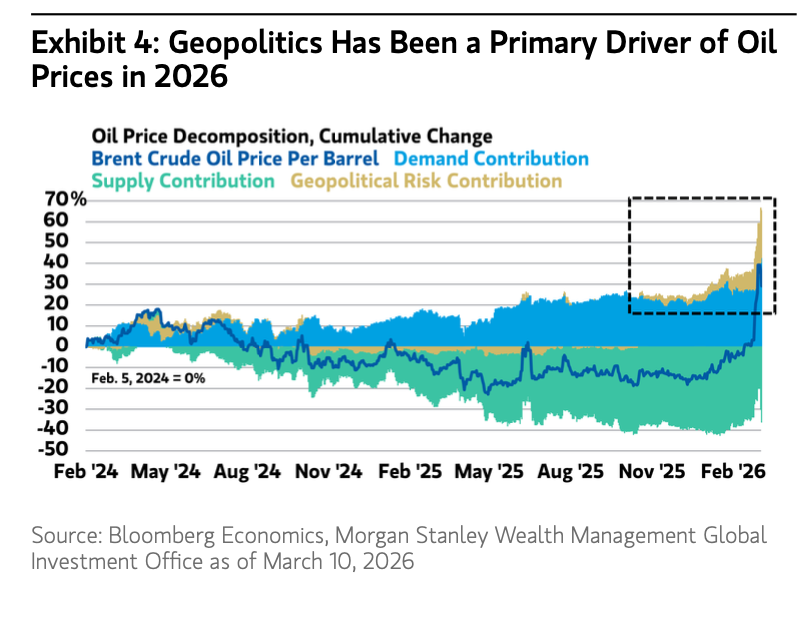
This is now an inflation problem—and a Fed problem
Guerra’s team warned oil shocks of this magnitude have historically delivered a 70-basis-point boost to headline CPI within three months. Core inflation, by contrast, would see only a modest impact—but that calculus changes fast if elevated prices persist.
“If higher oil prices persist,” the report warned, “the Fed’s reaction function could be complicated, supporting a higher fed funds rate for longer.” That’s bad news for an economy already navigating tariff pressures and a ballooning deficit.
Why Republicans should be worried about the Senate
Here’s the political math Morgan Stanley lays out: Since 1922, the sitting president’s party has lost an average of 30 House seats and four Senate seats in midterm elections. Republicans currently hold a 53–47 Senate majority—a margin Morgan Stanley says could narrow significantly with a prolonged energy shock.
The firm’s base case is that the GOP loses the House and keeps the Senate. But a sustained oil shock could tighten the Senate race in ways that scramble that forecast.
The reason is simple and visceral: gas prices. The bottom 20% of consumers spend four times more of their budget on energy than the top 20%. Rising prices at the pump, Morgan Stanley notes, are “one of the most visible signs of daily affordability for most voters”—and affordability is the top voter concern heading into the midterms.
On a related note, UBS chief economist Paul Donovan warned on Thursday not to underestimate one key indicator of inflation: the price of a Snickers candy bar.
“The lived reality is somewhat different from the headlines,” he wrote on Thursday. It’s true that owners’ equivalent rent helped lower inflation, but he called that “a fantasy price no one pays.” Used car prices fell, too, but people don’t buy a used car every month.
“Grocery price inflation has accelerated recently, with big increases for beef, coffee, and chocolate,” he wrote. “A Snickers bar’s price is important in shaping inflation perceptions.”
The war could turbocharge the debt
Guerra also noted the fiscal dimension in voters’ concerns. The conflict has injected fresh momentum into Trump’s $1.5 trillion defense spending request for fiscal year 2027—a proposal that would push military outlays to 4.6% of GDP, the largest annual increase in at least 60 years. The U.S. reportedly spent $5.6 billion on munitions in just the opening 48 hours of the war, accelerating bipartisan pressure for $50 billion in supplemental defense spending.
Morgan Stanley warns that elevated war-driven government spending will “modestly weigh on debt and deficits” and push up U.S. Treasury term premiums—the additional yield investors demand to hold longer-term government bonds. In plain terms: Borrowing gets more expensive just as Washington needs to borrow more.
Markets are holding—for now
Despite the turbulence, U.S. equities have remained largely flat since the conflict began, buoyed by strong energy sector performance and a global rotation into dollar-denominated assets. International stocks, as measured by the MSCI World ex-U.S. Index, are down 6%—reflecting Europe and Asia’s greater exposure to the energy shock.
History offers some comfort: The S&P 500 has gained an average of 8.4% in the 12 months following major geopolitical risk events over the past 75 years. But Morgan Stanley was explicit that duration is the key variable. The longer the Strait stays closed and the bombs keep falling, the harder those historical averages are to count on.
For this story, Fortune journalists used generative AI as a research tool. An editor verified the accuracy of the information before publishing.
This story was originally featured on Fortune.com
This post was originally published here

Shark Tank’s Daymond John went from waiting tables at Red Lobster to a $350 million net worth—and his No. 1 success rule is an Ice‑T mantra
Daymond John didn’t become a $350 million Shark Tank mogul by playing it safe—or by cutting corners. The FUBU founder went from flipping used cars and waiting tables at Red Lobster to backing hits like Bombas, one of the show’s most successful bets ever—and he says one Ice‑T mantra about shortcuts has quietly guided every step.
“Here’s the truth: If you keep cutting corners…all you end up doing is going in circles,” John wrote on X last week. “Every corner you cut creates a problem you’ll eventually have to come back and fix. The time you think you saved today becomes the wall you face tomorrow. Real progress comes from doing the full lap.”
“Since Ice-T shared it with me, I’m sharing it with you: ‘Cutting corners doesn’t move you forward. It just keeps you going in circles.’”
Leaning in on his own team is one way John said he’s put that lesson into practice.
You can only operate a business in one of two ways: reduce costs or increase sales,” he said in 2024. “Cutting corners on team training isn’t the place to do it and investing in your team is one of the greatest ROIs you can make.”
The stakes for people who try to rush the process can be high: Only one-third of small businesses survive for more than a decade, according to data from the U.S. Department of Labor.
Work-life balance does not exist, according to Daymond John—and Mark Cuban and Barack Obama agree
John has also been blunt about the level of commitment required to beat those odds, arguing that the traditional notions of work-life balance don’t always align with the demands of building a successful company—or career.
“There’s no such thing as work-life balance,” John said.
Instead, he advises a focus on carefully structured time and finding what he calls “work-life harmony.”
“My biggest piece of advice to all of you on achieving work-life harmony is to schedule out your entire day,” he added. “Ask yourself what you are going to dedicate your time to and how you are going to steal away moments.”
For John, that can mean blending personal time with productivity. For example, when he walks for exercise, he’s taking calls on the phone, and instead of eating out at restaurants, he often eats at home so he can get back to work quicker.
He’s not the only business leader who has warned that getting ahead often requires a level of focus that stretches beyond the traditional 9-to-5.
His former Shark Tank co-star Mark Cuban has said that ambitious people can’t afford to lose sight of their goals.
“If you want to work nine-to-five, you can have work-life balance,” Cuban told Sports Illustrated last year. “If you want to crush the game, whatever game you’re in, there’s somebody working 24 hours a day to kick your ass.”
Even former President Barack Obama has acknowledged that intense focus is often part of exceptional achievement.
“If you want to be excellent at anything—sports, music, business, politics—there’s going to be times of your life when you’re out of balance, where you’re just working and you’re single-minded,” he said on The Pivot Podcast.
Shark Tank’s Daymond John 3-step path to wealth
Ultimately, building wealth doesn’t have to start with a big windfall—those who come from little means just need to make small, disciplined financial decisions, according to John.
His rule of thumb starts with breaking every dollar into three buckets.
“If you have $3, $3 million, or $3 trillion, the first dollar goes for what you have to pay for,” John previously told Fortune in an interview. This includes necessary living expenses like rent, medical bills, heat and electricity, and any debts or loan repayments.
The second dollar—or the second million or trillion—should be invested, but that doesn’t mean it has to be made in the stock market alone.
“Investment can be into a book, into a business, or into the public market,” John added.
The third dollar, or whatever is left over, can go toward enjoyment.
“Buy what you would like to have, but don’t have to have,” John said. “And if you don’t want it, put it back in number two. And over the years, number two will start flowing into bucket number three and number one. And that’s how you really simply look at things.”
This story was originally featured on Fortune.com
This post was originally published here
Two people die after donating plasma at Canadian clinics under federal investigation
Company that runs the sites says it has ‘no reason to believe there is a correlation between the donors’ passing and plasma donation’
Two people have died in Canada after donating plasma at a chain of clinics that has been under scrutiny by federal inspectors for failing to keep accurate records, screen donors or maintain its machines.
While experts say the deaths are exceedingly rare, critics say Canada’s embrace of private companies to handle blood products reflects a “slow collapse of a system that has been the envy of the world”.
Two people die after donating plasma at Canadian clinics under federal investigation
Company that runs the sites says it has ‘no reason to believe there is a correlation between the donors’ passing and plasma donation’
Two people have died in Canada after donating plasma at a chain of clinics that has been under scrutiny by federal inspectors for failing to keep accurate records, screen donors or maintain its machines.
While experts say the deaths are exceedingly rare, critics say Canada’s embrace of private companies to handle blood products reflects a “slow collapse of a system that has been the envy of the world”.
Why investors won’t know what to make of AI for a while
Markets always struggle to price technological revolutions
This post was originally published here


McDonald’s rolls out ‘McValue 2.0’ menu with $3 and $4 meals after years of post-pandemic price hikes
McDonald’s is doubling down on its “McValue” menu as the fast-food giant acknowledges that years of post-pandemic price hikes have left many Americans feeling priced out of a basic burger and fries.
In an internal message to franchisees, the world’s largest burger chain announced a sweeping “McValue 2.0” initiative set to launch in April, featuring $3 and $4 meal deals designed to lure back lower-income consumers who have pulled back on spending because of persistently high living costs.
“We have achieved incredible progress together and remain committed to meeting ever-changing customer needs,” McDonald’s wrote in a message to chain franchisees obtained by The Wall Street Journal.
McDONALD’S C.E.O. ROASTED AFTER HIS TINY FIRST BITE OF NEW BIG ARCH BURGER GOES VIRAL
The new menu items will replace the previous buy-one-add-one promotions. Customers can soon pay $3 or less for items including 4-piece Chicken McNuggets or a Sausage Biscuit, and $4 for breakfast meal deals with a McMuffin sandwich, hash brown and coffee.
Internal memos reportedly showed a “unanimous alignment” between the corporation and franchisees, who set their own prices, to address the affordability gap at McDonald’s. Stores are expected to begin training employees on the new deals in the coming weeks.
“We absolutely are going to make sure that we are protecting our leadership position in value,” CEO Chris Kempczinski during a February investor call.
Fox News previously reported that McDonald’s prices have risen sharply post-pandemic, with millennials especially vocal on social media about how much menu costs have increased since their childhoods.
A social media user shared a viral graphic claiming a McDonald’s feast once cost about $12 total — with medium fries at 99 cents, a cheeseburger at 79 cents and a Big Mac at $1.85. The post also said a Filet-O-Fish sold for $1.29 in 1991 and a medium drink for 89 cents.
Last year, the company capitalized on its $5 meal deal, various holiday promotions and the revival of its Monopoly sweepstakes. The strategy appeared to work as U.S. sales rose 6.8% in the fourth quarter, the biggest jump in about two years, as lower-priced offers and aggressive promotions drove traffic back into restaurants. Analysts had expected a 4.9% gain.
GET FOX BUSINESS ON THE GO BY CLICKING HERE
Kempczinski also said there is growing evidence the company’s value push is working, particularly among lower-income consumers who have been most affected by inflation.
McDonald’s recently ranked No. 10 on Entrepreneur’s Franchise 500 annual list, which evaluates costs, fees, size, growth, support, brand strength and financial stability. The 2026 report marks McDonald’s first Top 10 appearance since 2020, when it placed No. 3. The chain ranked No. 22 in 2025 rankings.
Fox News’ Andrea Margolis and FOX Business’ Bradford Betz contributed to this report.
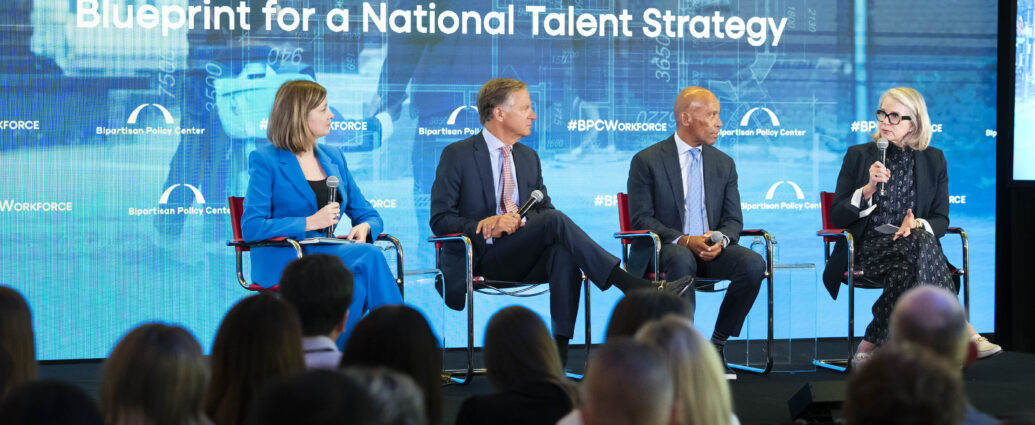
‘I don’t know if we’re ready’: Governors from each party appalled at 100-year-old federal workforce strategy
On Wednesday, some of the most prominent names in American education and workforce policy gathered in Washington to deliver a blunt message: the United States is failing its workers, its students, and its economy — and the window to fix it is closing fast.
The Bipartisan Policy Center, a group of bipartisan national and state policymakers, business leaders, and education experts, released a sweeping report produced by a 24-member commission that spent more than a year examining the country’s broken education and workforce pipeline. The report, entitled “A Nation at Risk to a Nation at Work: The Case for a National Talent Strategy,” told a sombering story of a nation headed towards severe economic instability as an unready workforce becomes all the more unprepared in the midst of rising AI technologies in the workplace.
The Numbers Are Alarming
By late 2025, estimates showed that 57% of current U.S. work hours could be automated with technology that already exists—nearly double McKinsey’s projection from just two years prior. Half of college graduates from the last decade were underemployed a year after graduation, and nearly three-quarters stayed that way for a decade. Some 37.6 million American adults under 65 have some college credits and no credential to show for it.
“The World’s Changed”
Former Tennessee Gov. Bill Haslam and former Massachusetts Gov. Deval Patrick, who co-chaired the effort and were joined on Wednesday by former U.S. Secretary of Education and BPC President Margaret Spellings and former Commerce Secretary Gina Raimondo. The two governors spoke to Fortune about the need to update our laws for the current dire situation.
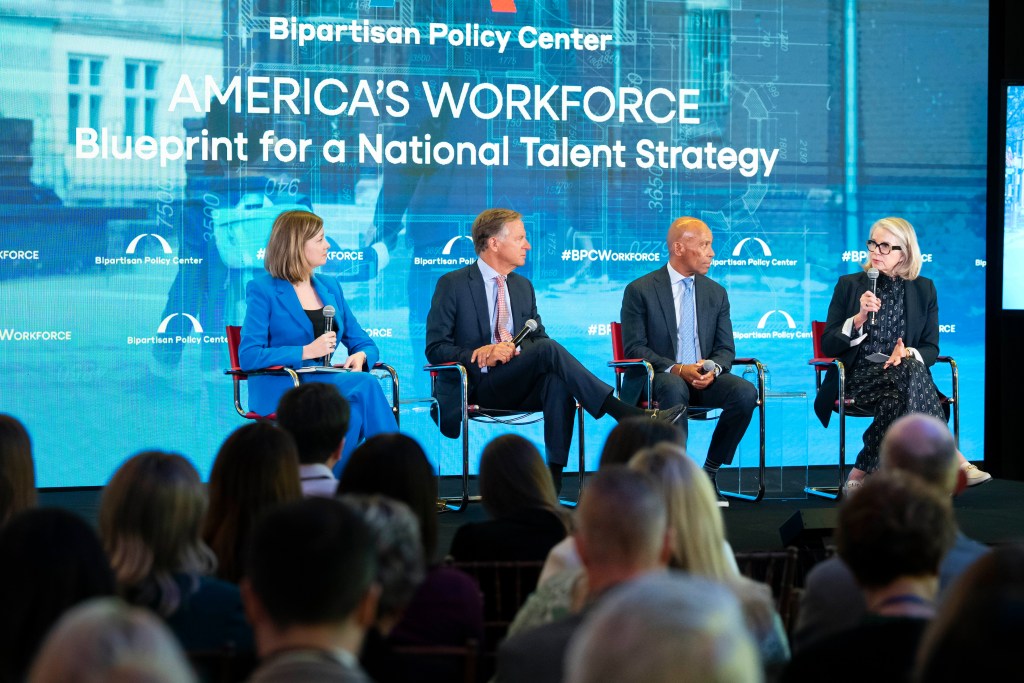
The key laws governing how Americans pay for college and access job training—the Higher Education Act and the Workforce Innovation and Opportunity Act—were last updated in 2008 and 2014, respectively, predating the rise of generative AI, the gig economy, and widespread remote work.
“This is not just about AI,” Haslam told Fortune. “This is about making certain that we have a workforce training system that was designed 100 years ago for a very different economy than we have now. It’s about having a system that lets people know, hey, the world’s changed — here’s the skill sets that you are probably going to need going forward, and here’s how to get them.”
According to the Bipartisan Policy Center, the trend reveals that “the U.S. workforce system is not fully aligned with the demands of an AI-driven economy,” with a growing skills mismatch leaving many employers unable to find qualified workers even as unemployment fluctuates. Education systems, the report notes, “remain largely built around traditional college-only pathways, while the modern labor market increasingly requires a wider range of options such as apprenticeships, technical credentials, short-term training programs, and opportunities for lifelong learning.” What makes the current moment different from past technological disruptions, the BPC argues, is its pace: “Previous tech waves automated routine tasks, while this disruption is different—changing in real time.”
Who Gets Left Behind
Patrick, who served two terms as Massachusetts’ governor before leading Bain Capital Double Impact and later joining the Harvard Kennedy School faculty, was clear that the report’s ambitions stretch well beyond the AI debate. “We’re at a period of rapid change in the workforce, in our economy that comes from a lot of different places, but it affects all of us—workers, learners, employers.”
Central to the commission’s diagnosis is the question of who gets left behind. Patrick invoked the research of Stanford economist Raj Chetty to illustrate the stakes. “Raj Chetty’s work on ‘lost Einsteins’ shows us that genius, creativity, and innovation exist equally across zip codes and income levels,” Patrick said. “Yet too many talented young people from low-income and working-class communities never get the chance to develop their gifts because they lack access to great schools, mentorship, and career pathways,” he said.
“We’re leaving untapped talent on the sidelines. If we’re serious about strengthening America’s competitiveness and expanding opportunity for everyone, we have to be equally serious about ensuring that every child can discover and develop their talents. That’s not charity — that’s smart policy and moral imperative.”
A Model From Tennessee
Haslam brought his own track record to the table. As governor of Tennessee, he launched Tennessee Promise, making community college and technical school free for all high school graduates—a program the report holds up as a model for what aligned state-level policy can achieve. “When Tennessee made community college and technical school free for all high school graduates, we weren’t just opening doors—we were transforming the entire state’s economic trajectory,” Haslam said.
“Employers had a deeper talent pipeline. Communities saw young people stay and build careers at home instead of leaving for opportunity elsewhere,” he continued. “Combined with our investments in K-12 and our commitment to employer partnerships, free community college became a linchpin of a statewide talent ecosystem. That’s what happens when you align education policy with workforce and economic development.”
The Fix: A National Talent Strategy
The report’s central structural fix is the creation of a Talent Advisory Council within the Executive Office of the President—modeled on the National Security Council — that would coordinate education and workforce policy across more than a dozen federal agencies that currently spend over $230 billion annually across 150+ programs with no cohesive strategy. “What we have experienced is a system that is very fragmented, that is hard to access—that you kind of have to know about in your little corner of the economy to take advantage of,” Patrick said. “We need a strategy, and that strategy needs to be national in scope. Because the challenge is national in scope.”
“This feels like—different parts of the country, different political parties—but this feels like an issue that has some increasing national urgency, and it needs some leadership to address it,” said Haslam.
The report arrives at a fraught political moment, with the current administration cutting federal education spending and Congress showing little appetite for sweeping reform. But Patrick rejected the idea that funding battles would doom the effort. “Washington will act on this if the people are mobilized,” he said. “Funding always matters. I don’t want to downplay that. But this is not solely an issue about funding. This is about how you allocate the resources and assets to properly train the next generation workforce. If we get stuck in a funding conversation, that does evolve into the old battle. This is about how do we think differently.”
That cross-partisan determination is the summit’s animating spirit. “There are a lot of things that are just immediately polarized in today’s world,” Patrick said. “This is one of those that everybody, I think, understands: the future is going to look a lot different. And I don’t know if we’re ready for it.”
This story was originally featured on Fortune.com
This post was originally published here
Sam Altman admits AI is killing the labor-capital balance—and says nobody knows what to do about it
Speaking at the BlackRock Infrastructure Summit, OpenAI CEO Sam Altman tackled the growing public skepticism surrounding artificial intelligence, acknowledging the warning from President Donald Trump that AI is facing a major public relations problem. Moreover, the tech executive validated widespread anxieties about the future of employment, admitting that the traditional balance between labor and capital is shifting drastically.
Addressing the current backlash, Altman noted that AI has become a widespread scapegoat for corporate downsizing and rising utility costs. “Data centers are getting blamed for electricity prices hikes. Almost every company that does layoffs is blaming AI, whether or not it really is about AI,” Altman explained, recalling his recent warning that some companies were engaging in what’s called “AI washing,” in blaming layoffs on new tech regardless if that was the reason for those layoffs in the first place. However, while some of the immediate blame might be misplaced, Altman confirmed that the underlying threat to traditional employment is grounded in reality.
He said he saw a quote online that’s been sticking in his head, around how for centuries, maybe millennia, humans have learned how to structure society to manage scarcity, and now we have to quickly learn the opposite, managing “abundance.” “So that’s, like, a real change to how capitalism has worked,” he said, noting that capitalism has also depended on at least something of a power balance between labor and capital. “But if it’s hard in many of our current jobs to outwork a GPU, then that changes.” He said it, frankly, stumps him. “If there was an easy consensus answer, we’d have done it by now, so I don’t think anyone knows what to do.”
The AI landscape has crossed a threshold into “major economic utility” over the last few months, Altman claimed, rapidly evolving from simple coding assistance to executing complex tasks across various fields of knowledge work. Altman warned that the pace of this evolution is disorienting, and very soon, AI agents will be trusted to handle multi-day and multi-week tasks, operating proactively much like a senior human employee.
This shift is already altering corporate behavior. A new generation of startups is deliberately avoiding large head counts, preferring instead to invest their capital heavily into computing power. In places like India, Altman observed entrepreneurs attempting to build “zero person” startups, relying entirely on AI prompts to write software, handle legal work, and manage customer support.
Even the C-suite won’t be immune to this transformation, Altman warned. He predicted a future where the cognitive capacity inside data centers will eclipse human capacity outside of them, potentially by late 2028, implicitly recalling his rival Anthropic’s warning that each AI cluster would have the brainpower of 50 million Nobel prize winners. Ultimately, Altman said he foresees a threshold where the leaders of major organizations—including CEOs, presidents, and top scientists—will be entirely unable to perform their duties without heavy reliance on AI supervision and assistance.
To fuel this intelligence revolution, Altman said OpenAI is pursuing massive infrastructure buildouts, including gigawatt data center campuses, with the ultimate goal of making artificial intelligence “too cheap to meter.” He said, “We want to flood the world with intelligence, we want people to just use it for everything.”
To address the physical bottlenecks of this expansion, OpenAI has partnered with North American building trades unions to expand pathways for skilled construction workers, highlighting that massive physical infrastructure is necessary to support AI’s digital growth. Altman envisions a future where intelligence is sold as a basic utility, like water or electricity, flooding the global market and fundamentally rewriting the rules of the economy.
However, achieving this era of abundance will not be easy. Altman predicted that traditional economic metrics like GDP might plummet in a “forever deflationary world,” forcing society to rethink how it measures quality of life. Spookily, Altman was echoing the viral doomsday AI essay from Citrini Research that warned of spiralling deflation and “ghost GDP,” leading to economic chaos within 18 months.
While Altman insisted, back in December, he is “not a long-term jobs doomer” and believes humanity will eventually invent new roles, he did not sugarcoat the immediate future. He warned that “the next few years are going to be a painful adjustment,” heavily marked by “very intense and uncomfortable debates” over how to reshape society. Several weeks ago, one of Altman’s AI counterparts, Sir Demis Hassabis of Google DeepMind, a Nobel prize winner himself, told Fortune Editor-in-Chief Alyson Shontell that AI abundance will lead to a “kind of new renaissance,” but there will be a shakeout over the next 10 years en route to it.
For this story, Fortune journalists used generative AI as a research tool. An editor verified the accuracy of the information before publishing.
This story was originally featured on Fortune.com
This post was originally published here



Is Bitcoin Heading To $40,000? Analyst Warns Potential Weakness Into April
Bitcoin (CRYPTO: BTC) has been trading in a range for months, with observers searching for short-term price patterns that could signal where the market may head in the longer run.
Bitcoin Often Rises Before Sharp Bear Market Drops
Prominent analyst Benjamin Cowen said in a March 11 podcast that bear markets in Bitcoin often behave counterintuitively, with prices spending more time drifting upward than falling.
These rallies can last weeks or months, creating optimism that a new bull market has begun before a rapid capitulation pushes prices to a lower low.
According to Cowen, this structure makes bear markets difficult to identify in real time because temporary rebounds often convince investors that …


JPMorgan Faces $328M Lawsuit Over Alleged Transfers To Coinbase Wallets
JPMorgan Chase (NYSE:JPM) faces a proposed class action lawsuit accusing the bank of enabling a $328 million crypto Ponzi scheme run by Goliath Ventures by ignoring suspicious transactions and allowing fraudulent wire transfers to Coinbase (NASDAQ:COIN) wallets.
The $328 Million Scheme
Investors filed the lawsuit Tuesday in U.S. District Court for the Northern District of California, alleging JPMorgan was the sole banking institution for Goliath from January 2023 to May or June 2025.
“Goliath obtained at least $328 million from what are believed to be over 2,000 investors,” the complaint states.
Investors deposited about $253 million into JPMorgan’s 0305 account from January 2023 through June 2025, representing nearly two-thirds of the $328 million total.
Investors transferred roughly $123 million of that amount to Goliath’s wallets maintained by Coinbase.
CEO Christopher Delgado ran the scheme through Goliath Ventures from January 2023 to January 2026 before authorities arrested him on February …
Dick’s Sporting Goods issues weak profit guidance as Foot Locker merger weighs on bottom line
Dick’s Sporting Goods’ merger with Foot Locker led to a 60% increase in sales but a substantial decline in companywide profits.

Current price of oil as of March 12, 2026
At 9 a.m. Eastern Time on March 12, 2026, oil reached $98.76 per barrel, measured using the Brent benchmark. That’s $7.80 more than it cost yesterday morning around the same time—and more than $27 above its price a year earlier.
Check Out Our Daily Rates Reports
- Discover the highest high-yield savings rates, up to 5% for March 13, 2026.
- Discover the highest CD rates, up to 4.15% for March 13, 2026.
- Discover the top CD rates from major banks on March 13, 2026.
- Discover the current mortgage rates for March 13, 2026.
- Discover current refi mortgage rates report for March 13, 2026.
- Discover current ARM mortgage rates report for March 13, 2026.
- Discover the current price of gold for March 13, 2026.
- Discover the current price of silver for March 13, 2026.
Will oil prices go up?
Oil prices are inherently unpredictable. While many variables come into play, the basic push and pull of supply and demand is what ultimately matters. In times of heightened concern about recession, war, or other major disruptions, oil can swing suddenly.
How oil prices translate to gas pump prices
Each gallon you pay for at the pump bundles together several costs. Crude oil is one piece, but you also pay for refineries, wholesalers, government taxes, and the price markup set by gas stations.
Because crude oil usually accounts for more than half of the price per gallon, it tends to move the needle the most. Sharp increases in oil almost always show up quickly at the pump. Declines in the price of oil, on the other hand, often translate into slower, more delayed drops in gas prices—the “rockets and feathers” effect.
The role of the U.S. Strategic Petroleum Reserve
When an emergency arises, the U.S. has a reserve of crude oil called the Strategic Petroleum Reserve. Its chief function is to secure energy during disasters like sanctions, severe storm damage, or war. It can also help take the edge off brutal price spikes when supply gets hit.
It’s not a solution for the long haul. It’s more of an immediate safety net to support consumers and keep crucial sectors of the economy running (think key industries, emergency services, public transportation, and the like).
How oil and natural gas prices are linked
Oil and natural gas are two of the main fuels that keep the world running. A big change in oil prices can end up affecting natural gas. As an example, if oil prices increase, some industries may sub natural gas for certain areas of their operations wherever possible. This can increase demand for natural gas.
Historical performance of oil
The oil market typically tracks two benchmarks:
- Brent crude oil (the main global oil benchmark)
- West Texas Intermediate (WTI) (the main benchmark of North America)
Between the two, Brent offers a clearer view of global oil performance because it prices much of the world’s traded crude. It’s also often the preferred gauge for tracking historical oil trends. In fact, the U.S. Energy Information Administration now uses Brent as its primary reference in its Annual Energy Outlook.
Looking at the Brent benchmark over multiple decades, you’ll find oil has been anything but stable. It’s seen sharp rises due to factors like wars and supply cuts, along with steep declines tied to global recessions and oversupply (called a “glut”). For example:
- The early 1970s saw the first major oil shock when the Middle East slashed exports and placed an embargo on the U.S. and others during the Yom Kippur War.
- Prices fell in the mid-1980s for reasons including lower demand and the entry of more non-OPEC oil producers.
- Prices jumped again in 2008 with increased global demand, but then plunged alongside the global financial crisis.
- During the 2020 COVID lockdown, oil demand collapsed like never before—bringing prices below $20 per barrel.
Bottom line, oil’s historical performance has been anything but smooth. It’s hugely affected by wars, recessions, OPEC whims, evolving energy initiatives and policies, and much more.
Energy coverage from Fortune
Looking to stay abreast of the latest energy developments? Check out our recent coverage:
- Oil went over $100 again after the U.S. admitted it cannot control the Strait of Hormuz
- Trump says the U.S. will open its first new oil refinery in nearly 50 years
- $100-a-barrel oil has huge downstream consequences
Frequently asked questions
How is the current price of oil per barrel actually determined?
The current price of oil per barrel depends largely on supply and demand, including news about potential future supply and demand (geopolitics, decisions made by OPEC+, etc.). In the U.S., prices also move based on how friendly an administration is to drilling, as it can affect future supply. For example, 2025 saw the Trump administration move to reopen more than 1.5 million acres in the Coastal Plain of the Arctic National Wildlife Refuge for oil and gas leasing, reversing the Biden administration’s policy of limiting oil drilling in the Arctic.
How often does the price of oil change during the day?
The price of oil updates constantly when the “futures” markets are open. A futures market is effectively an auction where people agree to buy or sell oil in the future. As long as people and companies are trading contracts, the oil price is changing.
How does U.S. shale oil production affect the current price of oil?
In short, shale is rock that contains oil and natural gas. Think of shale as energy yet to be tapped. The more shale the U.S. accesses, the more energy we’ll have—and the more easily oil prices can keep from spiking as much thanks to a greater supply.
How does the current price of oil impact inflation and the broader economy?
When oil is expensive, it tends to make everyday items cost more. This can be related to energy (your heating, gas utilities, etc.), but it’s also due to the logistics involved with making those items accessible to you. Shipping, for example, can affect the price of things at the grocery store, as it’s more expensive to get those products from warehouses and farms onto the shelf.
This story was originally featured on Fortune.com
This post was originally published here

The Biggest Supply Shock Ever – And Goldman Just Raised Oil Price Forecasts
The U.S.-Iran war has delivered what Goldman Sachs now sees as the largest oil supply shock on record.
Persian Gulf exports, as tracked by vessel count data, have fallen to roughly 3% of normal levels at the Strait of Hormuz — a disruption that dwarfs even the 1973 OPEC embargo and the 1990 Gulf War in terms of the immediate hit to flows.
Goldman’s commodity research team, led by analyst Daan Struyven, upgraded its Brent crude price forecast on Wednesday, citing a longer assumed disruption and a more complex global policy response than their initial models projected.
“Our commodity strategists now expect Brent to average $98 in March and April—up 40% from the 2025 average— before falling back to $71 by 2026 Q4,” Goldman Sachs said.
On Thursday morning, front-month futures on the West Texas Intermediate light crude – as tracked by the United States Oil Fund (NYSE:USO) – traded 6% higher near $95 a barrel. That’s after the International Energy Agency (IEA) announced an emergency release of 400 million barrels from crude reserves – the largest in history.
The Largest Oil Supply Shock on Record
Goldman’s analysis shows the current hit to Persian Gulf exports at 16.2 mb/d on a four-day moving average basis, a figure the bank describes as the largest supply shock on record, exceeding the production losses seen during the 1973 …
Most AI investments fail—here’s what the winners get right
Generative AI stands apart from previous technological shifts: it’s fundamentally reinventing how businesses operate at breathtaking speed. What took farming mechanization decades—reducing agricultural workers from one-third of the U.S. workforce to 1%—AI is accomplishing in months.
Yet despite billions in investment, most organizations still struggle to move from pilot to production to adoption. In fact, according to Gartner® research, “in 2024, 60% of GenAI POCs were abandoned upon completion¹.”
The difference between AI experimentation and success isn’t about choosing the right large language model; it’s about much more.
Through our work with partners and customers at various stages of their AI journey, we’ve observed consistent patterns that separate successful implementations from those that stall. Organizations that successfully move from pilot to production focus on four interconnected pillars—and critically, they recognize that technology is only one of them.
Here’s what we at AWS see winners doing right.
1. Build Your Data Foundation Strategically
Simply having data isn’t enough—how you organize, govern, and activate it makes all the difference. Leading organizations implement three specific practices: connect all your data together, label and organize it so it’s easy to find, and set controls to ensure only the right people (or agents) have access to sensitive data sets.
Heavily regulated industries like financial services and healthcare often have an advantage here—their existing governance frameworks can accelerate AI initiatives. However, for organizations starting from scratch, rather than attempting to unify your entire data warehouse, start by working backwards from a specific use case. For instance, a telco operator might begin by connecting network performance data with customer service tickets and billing records for a single purpose: predicting service degradation before customers experience issues. Once that use case delivers value, you can determine which additional data connections matter most and scale from there.
2. Build Trust Through Security and Verification
In enterprise AI, trust isn’t just a nice-to-have—it’s the foundation that determines whether your investment moves from pilot to production. Organizations face a dual challenge: they need AI systems secure enough to protect sensitive data, yet accurate enough to make consequential decisions.
Consider one healthcare provider with 700,000 members. Their customers call at their most vulnerable moments, needing either medical advice or information about their coverage. The opportunity AI could provide was enormous—supporting customers faster, 24/7, in any language. But a single hallucination in this context could cause real harm, eroding trust that takes years to build.
Leading organizations are moving beyond “trust but verify” to “verify, then trust.” They’re implementing multiple layers of validation: checking inputs for malicious content, verifying outputs against known facts and policies, and continuously monitoring for drift or unexpected behavior. Emerging techniques like automated reasoning—a mathematical approach used for decades in chip design and security verification—can now check AI outputs against defined rules, in some cases reducing hallucinations by 99%. This verification-first approach accelerates innovation rather than slowing it down, empowering teams to experiment more boldly when they know guardrails will catch errors before they reach customers.
3. Transform Culture, Not Just Technology
The biggest inhibitor to AI adoption isn’t the technology—it’s change management. Organizations are structured around complex processes, with employees who manage those processes. Getting individuals to step back and reimagine those processes to be end-to-end automated or handled by agents requires intentional cultural transformation.
Success requires both top-down commitment and bottom-up enablement. Leaders must demonstrate visible commitment beyond words, while employees need the space and support to reimagine their own workflows. BT Group exemplifies this approach: when they embarked on their AI journey in 2024 to accelerate productivity and elevate customer experiences, they didn’t just deploy technology. They built an enablement strategy that matched the technology’s capabilities. Today, nearly 4,000 employees use an AI coding assistant to write and maintain 4 million lines of code per year—but that achievement required investing in training, creating champions within teams, and giving people permission to experiment.
The reality is nuanced: AI will automate many tasks while simultaneously creating new opportunities and elevating human potential in others. The most successful organizations are transparent about this transformation and invest in reskilling their workforce to thrive in an AI-augmented environment.
4. Work with the Right Experts
While some organizations have the resources and expertise to build generative AI capabilities entirely in-house, most find that strategic partnerships accelerate their journey from pilot to production. The question isn’t whether you can go it alone—it’s whether that’s the fastest path to realizing value.
The right partners bring three critical advantages: technical expertise to navigate the rapidly evolving AI landscape, domain knowledge to apply AI to specific industry and regulatory environments, and change management experience to drive adoption at scale.
The data bears this out: organizations working with partners possessing deep AI expertise and proven customer success moved their AI projects into production on average 25% faster than those working without specialized partners. In a landscape where speed to value often determines competitive advantage, that acceleration can be decisive.
The Path Forward
Successful organizations approach generative AI as a business transformation, not just a technology deployment. The organizations that will thrive aren’t those with the most advanced models, but those that recognize AI success requires equal investment in technology, people, and processes.
¹ Gartner Report, Forecast Analysis: Artificial Intelligence Services, Worldwide, By Colleen Graham, Ben Fieselmann, etc., September 2025. GARTNER is a registered trademark and service mark of Gartner, Inc. and/or its affiliates in the U.S. and internationally and is used herein with permission. All rights reserved.
The opinions expressed in Fortune.com commentary pieces are solely the views of their authors and do not necessarily reflect the opinions and beliefs of Fortune.
This story was originally featured on Fortune.com
This post was originally published here

XRP, Solana ETF Holders Are ‘Diamond Hands,’ Bloomberg Analyst Lauds
XRP (CRYPTO: XRP) and Solana (CRYPTO: SOL) ETF holders are “even better diamond hands than the Bitcoin and Ethereum ETF holders,” Bloomberg senior ETF analyst James Seyffart said Wednesday, as both products held $1.4 billion in inflows despite assets falling over 60%.
The Diamond Hands Data
Seyffart said on the Milk Road podcast there hasn’t been a ton of outflows despite massive pullbacks, demonstrating stronger holder conviction than Bitcoin (CRYPTO: BTC) and Ethereum (CRYPTO: ETH) ETFs.
Bitcoin ETFs saw roughly $9 billion in outflows from October 10, 2025 through February 23, representing about 12-15% of flows reversing after Bitcoin fell more than 50%.
Meanwhile, Ethereum ETFs experienced worse performance with 25% of flows reversing after the asset dropped over 60%.
In contrast, XRP and Solana ETF holders barely sold despite similar or …
Developing Employees Who Thrive Through Continuous Change
Leaders must build systems that turn continuous transformation into something employees help shape, not simply endure.
This post was originally published here
How to Turn Individual Talent into Organizational Excellence
Leaders need to treat performance as a design problem.
This post was originally published here
Strategy Summit 2026: Why AI Transformation Needs a Human Touch
A conversation with Publicis Sapient CEO Nigel Vaz on AI and digital transformation.
This post was originally published here
SOFi Stock Sees Massive Rise In Momentum As Mastercard Stablecoin Deal Goes Live
SoFi Technologies Inc. (NASDAQ:SOFI) is capturing significant market attention this week as its momentum score surged from 39.06 to 63.72.
Momentum Spikes, Growth Remains Elite For SOFI
This rapid week-on-week improvement in its percentile ranking follows a flurry of high-impact news, including a landmark stablecoin settlement partnership with Mastercard Inc. (NYSE:MA) and a massive show of confidence from the company’s top leadership.
While SOFI‘s price trend is currently flagged as downward in the short and medium term, according to Benzinga Edge’s Stock Ranking, its growth ranking remains elite at 95.27, reflecting a robust expansion in earnings and revenue.

Who in the C-Suite Should Own AI?
The jostling for control has just begun. Here’s how leaders can resolve it.
This post was originally published here

Bitcoin At $70,000, Ethereum, XRP, Dogecoin Go Sideways On ETF Inflows
Bitcoin is hovering around $70,000, following $115.2 million in net inflows into Bitcoin ETFs on Wednesday, while Ethereum ETFs reported $57 million in net inflows.
Cryptocurrency |
Ticke | Price |
| Bitcoin | (CRYPTO: BTC) | $70,555.61 |
| Ethereum | (CRYPTO: ETH) | $2,071.21 |
| Solana | (CRYPTO: SOL) | $86.87 |
| XRP | (CRYPTO: XRP) | $1.39 |
| Dogecoin | (CRYPTO: DOGE) | $0.09442 |
| Shiba Inu | (CRYPTO: SHIB) | $0.055945 |
Meme coin market capitalization is up 4.1% to $33 billion over the past 24 hours.
Trader Commentary:
Crypto trader Jelle said Bitcoin continues to mirror its mid-2022 bear market …
a16z exec Steven Sinofsky had murky dealings with Jeffrey Epstein in his previous life working for Microsoft
Steven Sinofsky isn’t a household name outside tech circles, but he once ran the operating system on more than 90% of the world’s PCs, and now quietly sits as a board partner at one of Silicon Valley’s most powerful venture firms, Andreessen Horowitz. He’s also, as Fortune’s new investigation digs into, a former Microsoft insider who turned to Jeffrey Epstein as a seven‑figure fixer on his way out of the company.
Sinofsky joined Microsoft straight out of grad school in 1989 and climbed from software engineer to president of the Windows division, overseeing Windows 7 and Windows 8. He was once even seen as a possible successor to Steve Ballmer. When he abruptly left in 2012, his departure temporarily knocked billions off Microsoft’s market cap.
Today, he’s a board partner at Andreessen Horowitz, representing the firm on select portfolio company boards and advising founders on product, strategy, and scaling.
What that résumé doesn’t show, however, is Sinofsky’s entanglement in the murkier corners of the business world. Department of Justice documents detail how, after leaving Microsoft, Sinofsky brought on Jeffrey Epstein—an already convicted sex offender—as a paid negotiator on his exit deal. Emails, reviewed by Fortune, show Epstein critiquing drafts of Sinofsky’s resignation agreement, especially non‑disparagement language in the draft, and ultimately collecting a $1 million fee when Sinofsky secured a $14 million package.
Those same records place Sinofsky in the tight orbit through which Epstein sought influence over Bill Gates, aided by Sinofsky’s longtime partner Melanie Walker, a Gates Foundation alum who fed Epstein internal Microsoft gossip years before Sinofsky’s exit, files published by the DOJ reveal. Through a series of other interactions (Epstein document search tool JMail cites over 1,400 emails and mentions of Sinofsky in the communications), Sinofsky remained in contact with Epstein in a personal capacity until at least late 2017, and appeared to help Epstein keep tabs on various other tech figures and startups, including details on WeWork as its business model came into question, and feedback on various startup investment opportunities. Sinofsky also appeared to use Epstein as a professional sounding board, keeping him informed on the Andreessen Horowitz opportunity and an exploratory conversation he apparently had with another tech bigwig.
Sinofsky hasn’t been charged with any crime, nor accused of any wrongdoing. Sinofsky did not provide a comment to Fortune, and a16z did not immediately respond to Fortune’s request for comment. Microsoft declined to comment. Venture capitalists are known for doing their due diligence. But the question this episode raises is how much do founders know about the investors, their LPs, and the sometimes murky dealings swirling in the corridors of money and power? You can read the full story in Fortune here.
See you tomorrow,
Lily Mae Lazarus
X: @LilyMaeLazarus
Email: lily.lazarus@fortune.com
Submit a deal for the Term Sheet newsletter here.
Joey Abrams curated the deals section of today’s newsletter. Subscribe here.
This story was originally featured on Fortune.com
This post was originally published here

Exclusive: Accounting startup Cryptio raises $45 million to help big firms keep track of digital assets
As large enterprises invest in blockchain technology, they quickly discover the need for accounting software that can help them track a growing hoard of digital assets. Cryptio, a crypto accounting startup, has benefited from that wave of institutional interest and announced Thursday that it’s raised $45 million in a Series B funding round.
The company provides software to help customers track what digital assets they own and where they’re stored. Cryptio also helps clients manage their crypto loans and monitor other blockchain-related assets. The venture firms BlackFin Capital Partners and Sentinel Global led the startup’s fundraise, which closed three weeks ago. Other participants included 1kx, BlueYard Capital and Ledger Cathay Capital. Antoine Scalia, founder and CEO of Cryptio, declined to specify at what valuation his startup raised its most recent round of capital.
“We wanted to make a bet on corporate adoption of crypto,” said Scalia, who founded Cryptio eight years ago. His gamble now seems to have paid off. “We’ve been seeing more and more activity and more and more clients on the traditional side,” he said.
Corporate adoption
Especially after President Donald Trump took office in 2025, large financial institutions have grown more comfortable experimenting with digital assets in a more permissive regulatory environment for crypto than the one under former President Joe Biden.
In July, the investment bank Goldman Sachs, a relative crypto latecomer, announced that it and the financial institution BNY Mellon planned to tokenize, or put into blockchain wrappers, money-market funds. And in September, the banking giant Morgan Stanley, long a blockchain skeptic, decided to partner with a crypto infrastructure provider to let its brokerage customers trade cryptocurrencies like Bitcoin and Ethereum in the first half of 2026.
When Scalia first founded Cryptio, his customers weren’t large enterprises. Fresh out of business school in Paris, the entrepreneur was courting startups and other smaller companies. Now, Cryptio has 110 employees and more than 450 clients, including digital asset titans like the stablecoin issuer Circle as well as the blockchain subsidiary of the French bank Société Générale.
Cryptio isn’t the only crypto accounting platform on the market. There are other competitors, including TRES Finance, which the crypto infrastructure company Fireblocks acquired for $130 million in January.
Still, Cryptio’s backers believe the startup has an edge. “They’ve invested the time to explain things, show how it works, and instill trust with very high-end institutions,” said Jeremy Kranz, the founder and managing partner of Sentinel Global.
This story was originally featured on Fortune.com
This post was originally published here

The Hottest Job in Tech Isn’t Very Glamorous

To unlock employee effort, don’t overlook the person holding the wrench
In an uneven economic climate where myriad factors have made change the only constant, one message to employees seems universal across business leaders: Do better.
Leaders expect employees to produce more, increase efficiency and maximize impact — particularly on the front lines. Many leaders, though, forget or fail to build the necessary cultural engagement to motivate employees and unlock that discretionary effort.
But performance missives without culture, collective purpose and the tools to get the job done fall flat with the workers that former United Airlines CEO Oscar Munoz says are critical to operational excellence: the front line.
“Essential workers are the first to detect bullshit a mile away. Excellence is the outcome of the belief they have in you as a leader, and you earn their belief with action,” Munoz said in a recent interview.
The Frontline Is Where Performance Lives or Dies
I had the opportunity to work alongside Munoz as he transformed United Airlines from the inside out, aligning a largely disgruntled 85,000-person workforce whose discontent was hemorrhaging into the customer experience.
In doing so, Munoz had a composite audience in mind – the guy with the wrench.
“When mechanical issues delay a flight, it’s not the middle managers with the desk jobs who fix it. It’s the guy with the wrench,” Munoz told me as we traveled from O’Hare to Newark in October 2015, part of a multi-hub charm offensive tour.
How fast he moves, how motivated he is to apply his very best work at that exact moment with purposeful precision can be the difference as to whether the flight gets out on time, Munoz said.
The domino effect of the mechanic’s discretionary effort can determine whether the plane connects to the next one to take off, whether the crew reaches its next assignment, whether the airline reaches its on-time departure goals, whether the customers choose United for their next flight and whether the company’s revenue trajectory meets investor expectations.
With a great deal of reverence for blue collar and frontline workers, Munoz said he knew that unlocking operational excellence began with listening to essential workers and understanding what they needed to feel connected to corporate mission with the tools to perform their jobs.
This was the first of many trips I would take with him over the next several years, which always included an impromptu stop to the inner canal of airport operations, the place where Munoz said the real work was done, where he would pull up a folding chair for an unscripted listening session
Culture Is Infrastructure, Not a Perk
In those days of traveling with Munoz, making our way from the gate to curbside pickup often took nearly an hour. Aviation’s new Elvis had entered the building. Gate agents cheered. Wheelchair assistants stopped for selfies.
This kinetic energy was about more than high-fives and fist bumps; it was part of long, intentional campaign to build operational excellence through a unified, purpose-driven culture campaign.
“Culture,” Munoz said, “can either be quicksand or the scaffolding of an operating system.”
Most Frontline Workers Don’t Feel Like They Belong to the Company
Nowhere is that truer than for frontline workers, who often feel far removed from corporate headquarters. A 2025 survey by Workvivo by Zoom said 87% of frontline workers are unsure whether company culture applies to them. Forty-two percent said company leadership wasn’t good at communicating with them, while 69% said they wanted to better understand company strategy and what it means for their roles.
Culture is a critical piece of the operations framework that ultimately delivers the financial and efficiency metrics investors prioritize. Leaders who ignore culture, particularly in its power to cultivate discretionary effort from the frontline, are leaving a critical tool untouched in the management toolbox.
Why This Moment Is Different
Frontline workers are disproportionately affected by myriad societal dynamics – economic uncertainty, inflation, decreased social services and an education system that is only just beginning to build pipelines for vocational skills, particularly those being fueled from rather than threatened by AI.
A recent study from The How Institute said 94% of employees believe the need for moral leadership is more important than ever, but that only 6% of CEOs and 9% of managers deliver the kind of purpose-driven leadership that helps scale human contribution to create value.
Companies that bring people together around shared purpose, Munoz echoed, particularly succeed together. Critical to that environment is transparent, authentic and consistent leadership to neutralize the agita felt from external forces at play and cultivate internal unity.
“People are worried about their money, worried about their future, worried about technology,” Munoz said. “In today’s polarized times, the concept of consistency is the real courage.”
Beyond the culture scaffolding’s impact on singular company’s success, the U.S. economy would broadly benefit from greater engagement with and celebration of essential workers.
The GDP Cost of Ignoring Essential Workers
A June 2025 Aspen Institute study found that that U.S. GDP would be 10% higher if the essential economy had kept pace.
The essential economy – which includes sectors like agriculture, construction, energy, manufacturing, transportation, logistics and repair – contributes $7.5 trillion dollars in output per year, 27% of the U.S. GDP, according to the institute. However, from 2015 to 2023, productivity in the white-collar economy rose 28% while productivity in the essential economy decreased.
Among the many solutions the Aspen Institute recommends for boosting essential economy productivity is bolstering human capital by investing in employees through ongoing learning and development, salary increases and rewards.
The fear of unemployment due to obsolescence is just one factor that could be driving potential hires away from essential roles. A January 2026 University of Michigan study found 62% of consumers expect unemployment levels to worsen this year.
Meantime, Republican political strategist Bruce Mehlman noted in his Age of Disruption Substack that consumer sentiment among blue collar workers, which the Michigan study placed at 51 percent, is at a record low – below the Regan Recession of 1982, the Global Financial Crisis in 2008, peak COVID-19 pandemic in 2020 and 2022’s inflation spike.
The anxious essential worker is also a student unlikely to upskill, and a consumer unlikely to spend.
Engaging your frontline as part of an operational system doesn’t just unlock discretionary effort; it spurs a domino effect to bolster talent pipeline and consumer confidence that will build a more sustainable business.
Today’s CEOs must connect all employees to the business mission and strategy through authentic, consistent, value-driven communications to earn the performance that will deliver the results investors want to see.
The opinions expressed in Fortune.com commentary pieces are solely the views of their authors and do not necessarily reflect the opinions and beliefs of Fortune.
This story was originally featured on Fortune.com
This post was originally published here



I exited one of the NYC area’s biggest real estate deals at 31. Here’s what I learned
Is it luck when an entrepreneur hits big? It is not the lottery, but the returns can feel like it.
I learned this early. At 31, I exited one of the most successful real estate deals in Metropolitan New York history: the redevelopment of the Harborside Financial Center in Jersey City. At the time, it was the country’s largest commercial renovation. For me, it was my first substantial wealth moment and I had no idea what to do next: What to do with the new capital I acquired and how would I make it matter?
The more wealth one accumulates, the more fragile one can feel. What begins as a quest for freedom can morph into a fortress mentality. I have seen peers—brilliant, driven individuals—become distracted by the fear of losing what they have built. Instead of leaning into the adaptability that made them successful, they retreat behind walls, both literal and figurative.
Today we are in a similar societal position: We are on the precipice of the largest societal wealth transfer in history, where an estimated $84 trillion is set to pass down to younger generations over the next two decades. What will we do next? What happens now will define the future of American innovation and entrepreneurship, and that’s why we all should be paying attention.
For the last 26 years, I have been studying some of the world’s most successful entrepreneurs through my founding of TIGER 21, and I’ve learned a lot about how entrepreneurs find success and how investors create impressive returns.
Two points are poignant today as we think about our future: One, being a successful founder and entrepreneur rarely ever translates into being an equally successful investor, and two, once wealth is accumulated, the fear of losing wealth can cause loss and inaction. Combined, these two learnings have the potential to shift our entire wealth and societal landscape: It turns out that managing capital is just as important as figuring out how to create it.
During my teens I tried a dozen different ways to hit the entrepreneurial lottery, from shoveling snow to slinging milk at the local Dairy Barn. Some of my endeavors paid off; others did not. In many ways, that experience reflects something uniquely American: a country structured, culturally and economically, to encourage people to take risks, start businesses, accept failure and accumulate learning as the byproduct of each venture to maximize success the next time around.
So why do so few entrepreneurs hit it big? The answer lies in how success is spread out. Entrepreneurs often start with very little and build something valuable from scratch. Investors, on the other hand, spread their money across many existing opportunities. Most entrepreneurs don’t make much money, but a tiny number hit it big—so big that they re-shape the entire wealth landscape.
Investor returns, on the other hand, typically preserve wealth with safer investments yielding 8-10% returns, and generally a point or two less for family offices that, unlike most institutional investors, have to maintain cash and liquidity. But even at 10% return over the same 30 years, $1 only grows to $18. Eighteen times very little is very little, but if you inherit $10 million, that can turn into $180 million at 10% for 30 years, and that’s a horse of another color.
The key difference is to set expectations based on the shape of likely outcomes, not hopeful pipedreams. Investor returns tend to follow a bell curve—most people earn around the average. Entrepreneurial outcomes, however, follow a power law distribution. That means a lucky few (Zuckerberg, Gates, Musk etc) earn massive amounts—so much so that they skew the average. It’s like city populations: most cities are small, but a handful are enormous because people flock to them–drawn by opportunity, talent, capital and more—making them even bigger.
Our country was built on the resilience and creativity of entrepreneurs, people who are willing to take risks, adapt and innovate. Success, in its truest form, is something to celebrate. But there is a troubling shift that occurs when success hardens into excess and gives way to fear, a paradox that emerges all too often.
Defensive wealth behaviors, however, create ripple effects that weaken social fabric. Communities fracture as inequality deepens. Public trust erodes when resources concentrate at the top. Ironically, the very effort to secure one’s position can destabilize the society that enabled success in the first place.
Why does this happen? Partly because wealth magnifies risk perception. The stakes feel higher, and the margin for error smaller. But the mindset that built success—adaptability, openness and a willingness to embrace uncertainty—remains the antidote. When we lose that, we trade creativity for control and generosity for guardedness. And in doing so, we diminish not only our own sense of purpose but the collective resilience of our communities.
There is another way. Ultimate security does not come from building taller walls or deeper moats. A society can become stronger, more successful and more resilient by strengthening the networks of trust and opportunity that bind us together. That means investing in shared systems—education, healthcare, energy, infrastructure, entrepreneurship—that allow all of us to thrive. We must resist the temptation to see privilege as a prize to defend and instead view success as a platform for meaningful contribution and mentorship. True leadership in this era is not simply about accumulation; it is about stewardship.
As someone who understands the allure of control, I know that the entrepreneurial spirit prizes independence, and wealth amplifies that instinct. But independence without interdependence is an illusion. If we allow fear to dictate our choices, we risk creating a society defined by walls that separate, harden and ultimately collapse under their own weight.
As we look back at the first 250 years of American entrepreneurship and look ahead to our shared future, fear cannot win. We must better understand how we can make an impact, as both investors and entrepreneurs. America’s extraordinary wealth must become focused on creating an entrepreneurial prism refracts into a broader spectrum of responsibility, opportunity and stewardship. This is not a left wing fantasy but centrist reality. When the United States has invested in finding societal solutions, we have all benefitted(social security, education, and even fixing the ozone layer in the 1990s).
The challenge before us is cultural as much as economic. We must redefine what it means to be secure—not as just owning more, but as belonging to a society that works for all. That requires the same courage that sparked our first ventures to let go of the illusion that more is always better. In the end, resilience is not measured by what we keep, but by what we are willing to invest in others. And the future of our country depends on that choice.
The opinions expressed in Fortune.com commentary pieces are solely the views of their authors and do not necessarily reflect the opinions and beliefs of Fortune.
This story was originally featured on Fortune.com
This post was originally published here
A U.K.-based sustainability initiative is drawing U.S. CEOs like BoA’s Brian Moynihan: ‘We’ve got to make this happen the right way’
- In today’s CEO Daily: Fortune‘s executive editorial director for Europe Kamal Ahmed reports on why U.S. CEOs are backing King Charles III’s Sustainable Markets Initiative.
- The big leadership story: BlackRock pours $100 million into solving the tradespeople shortage.
- The markets: In the red globally as oil prices jump again
- Plus: All the news and watercooler chat from Fortune.
Good morning. Earlier this week, I journeyed to the 16th century Great Hall of Henry VIII’s home—Hampton Court Palace near London. But the talk filling these halls wasn’t of the past, it was about the future. Brian Moynihan, the chief executive of Bank of America, Ron O’Hanley, the chief executive of State Street, and Janet Truncale, the chief executive of EY, were here to promote private sector efforts to drive the energy transition and climate sustainability. Donald Trump might want to look away.
Moynihan, O’Hanley and Truncale came together following an initiative by King Charles III when he was still the Prince of Wales. He set up the Sustainable Markets Initiative to explore how businesses and investors could accelerate the energy transition, away from a reliance on fossil fuels and towards renewables and nuclear.
“His majesty set this up in 2020 with a goal of driving the private sector to do more, faster for sustainability, a future that’s sustainable for all,” Moynihan said. “We’re a CEO-led organization, a volunteer army coalition of willing people who believe that we’ve got to make this happen the right way in the current context and in the future context.”
The U.S. president has changed the political weather on the energy transition, pulling America out of the Paris climate agreement and calling much of the sustainability agenda a “green scam”. He directly accused Bank of America of “de-banking” U.S. conservative groups, a claim denied by the bank.
BofA is sticking to the path, despite the noises from the White House. It did pull out of the United Nation’s Net Zero Banking Alliance in 2025 along with JP Morgan and Citi but said it still remained committed to its customers on the energy transition.
“The private sector is critical to this,” Moynihan said. “As we said from the beginning: ‘If you need to get this done, private sectors have to drive it—they have the money, innovation, the techniques, the know-how.’ The private sector is important and we’re now moving to drive forward.”
Moynihan is moderating across the two-day conference at Hampton Court. The King will arrive today, providing the royal stamp of approval to continuing progress on sustainability.
“I get asked all the time, is this falling off the agenda?” said Truncale. “And my answer is always that the best companies are focusing on sustainability as core to resilience, value protection, value creation and growth. “There are two real reasons for that. One is about risk and one is about opportunity,” Truncale adds. On the risk side, climate and weather are impacting supply chains, operations, people, assets. But, says Truncale, when it comes to the green economy there’s opportunity—one worth $7 trillion by 2030.
Economic momentum is even greater than a post on Truth Social. The thirst for energy supply chains not linked to the spikes and falls of fossil fuel pricing is driving change. And the recent war in the Gulf has only increased demand for more resilient, in-country renewable and nuclear systems that support the growing demand for electricity.
The U.S. administration’s shift on climate sustainability does not have zero effect, but it is not the only signal. “I think that’s probably where there’s most of the recent confusion in the market, because we haven’t had policy certainty,” said O’Hanley. “Part of it is that some of the early policies were really much more around making commitments, as opposed to really getting at what the fundamental problem is. And I think there’s no place where policy has been more uncertain than in the U.S.
“[But given] the cost of solar and the cost of wind being the lowest margin of any kind of energy—and innovation is driving down these costs—means the fact that we haven’t had policy certainty really doesn’t matter. The place in the United States where there’s the highest amount of renewables is Texas. You think of Texas as being fossil fuel central, and it is in the United States, but it’s also renewable central, and that has everything to do with economics.”
Contact CEO Daily via Diane Brady at diane.brady@fortune.com
This story was originally featured on Fortune.com
This post was originally published here
‘A few beatings won’t kill you’: judge rejects divorce request of woman abused by husband in Afghanistan
Under new Taliban laws, a husband is allowed to beat his wife as long as it is not done with ‘obscene force’, which the woman must prove in court
The shocking level of physical violence against women permitted under the Taliban’s new laws has been revealed this week by the case of a woman in northern Afghanistan, who said she was beaten with a cable wire by her husband and told by a judge: “You want a divorce just because of that? … A little anger and a few beatings won’t kill you.”
Farzana* said her husband was quick-tempered and often resorted to beating her. He regularly humiliated her and called her “disabled”, she said, because her right leg was slightly shorter than the left. She had tolerated the abuse for the sake of their children, but one evening, she said, his violence went too far.
This post was originally published here



Gold Holds Steady Amid Geopolitical, Tariff Concerns
(RTTNews) – Gold prices held steady on Thursday as the prospect of a quick end to the war in West Asia thinned and trade tensions resurfaced.
This post was originally published here

Oil Prices Extend Surge On Iraq Tanker Attacks
(RTTNews) – Oil prices soared on Thursday, extending gains from the previous session amid tanker attacks in Iraqi waters, strikes across Lebanon, and growing fears of prolonged economic disruption.
This post was originally published here

China’s Auto Sales Drop as Demand Cools

Costco Faces Class Action Over Tariff Refunds After Supreme Court Ruling
Costco Wholesale Corp. (NASDAQ:COST) has become the subject of a proposed nationwide class-action lawsuit demanding refunds for customers who were charged higher prices before the Supreme Court nullified tariffs imposed by the Trump administration.
The lawsuit was filed Tuesday in a federal court in Illinois by Costco shopper Matthew Stockov, individually and on behalf of other similarly situated shoppers. The plaintiff is seeking a declaration that the company must return to customers any refunds it receives for tariffs it paid under the International Emergency Economic Powers Act (IEEPA).
The complaint alleges the lawsuit aims to stop Costco from receiving a double recovery and notes the retailer has not committed to returning any tariff refunds to consumers who ultimately paid those costs.
Costco CEO Ron Vachris said in an analyst call last week that it is still unclear whether or when businesses will be refunded the …
This post was originally published here

Actelis Networks Declines Nearly 10% Following 48% Rally — What Made ASNS Trend?
Actelis Networks Inc. (NASDAQ:ASNS) shares are trending on Thursday.
Pre-Market Announcement Fueled Wednesday’s Rally
Shares of the California-based technology company declined 9.91% to $0.50 in pre-market trading on Thursday, after surging 47.57% during the regular session following a pre-market announcement of a new order from a Japanese governmental entity for its MetaLight networking solutions.
ASNS claims its MetaLight technology can deliver fiber-grade Ethernet connectivity through existing copper infrastructure.
According to Actelis, the order was placed through its established Japanese channel partner and distributor and will deploy dozens of MetaLight units across critical infrastructure environments, including transportation, utilities and public safety systems, with potential expansion into defense-related installations.
Full story available on Benzinga.com
This post was originally published here

RR Investors Have Opportunity to Lead Richtech Robotics Inc. Securities Fraud Lawsuit with the Schall Law Firm
LOS ANGELES, March 12, 2026 /PRNewswire/ — The Schall Law Firm, a national shareholder rights litigation firm, reminds investors of a class action lawsuit against Richtech Robotics Inc. (“Richtech” or “the Company”) (NASDAQ: RR) for violations of §§10(b) and 20(a) of the Securities Exchange Act of 1934 and Rule 10b-5 promulgated thereunder by the U.S. Securities and Exchange Commission.
This post was originally published here

Dow Tumbles Almost 300 Points: Investor Sentiment Declines, But Greed Index Remains In ‘Fear’ Zone
The CNN Money Fear and Greed index showed a slight easing in the overall fear level, while the index remained in the “Fear” zone on Wednesday.
U.S. stocks settled mixed on Wednesday, with the Dow Jones index falling by almost 300 points during the session as investors continued to monitor developments in the ongoing war against Iran.
Iran struck three more cargo vessels in the Strait of Hormuz overnight, extending a campaign that has now targeted more than a dozen ships since the conflict began.
The IEA authorized an unprecedented 400-million-barrel release of emergency reserves from its 32 member nations — the body’s largest emergency action on record — but crude markets shrugged off the announcement.
In earnings, Commercial Vehicle Group Inc. (NASDAQ:CVGI) shares jumped over 25% on Wednesday after the company reported better-than-expected fourth-quarter sales results. Shares of Campbell’s …
This post was originally published here

Bill Ackman Defends His Tax Bill Against Ross Gerber’s ‘Scam’ Accusations: ‘This is Totally False’
Billionaire investor Bill Ackman strongly rejected claims that he exploits a controversial tax loophole, engaging in a fiery exchange on X after wealth manager Ross Gerber accused him of paying a lower tax rate than a public school teacher.
The ‘Scam’ Accusation
The public dispute began on March 11 when Gerber targeted Ackman’s compensation, specifically a reported $140 million in earnings.
Gerber, the Co-Founder, President, and CEO of Gerber Kawasaki Wealth & Investment Management, alleged that Ackman benefits from the “carried interest” provision, which allows investment managers to treat performance-based pay as long-term capital gains rather than ordinary income.
“One thing that is absurd is Bill Ackman made $140 mil in income last year and paid a lower tax rate than a school teacher in LA due to the hedge fund tax scam called carried interest,” Gerber wrote on X. He demanded that the loophole be stopped and argued Ackman should receive standard W-2 income.
Ackman Fires Back
Ackman quickly dismantled …
This post was originally published here

$683 billion in unpaid labor: How companies like Amazon, AARP, and Levi’s are easing the caregiving burden on women
Every morning starts the same way: A 6 a.m. alarm and an hour to prepare for the day before her kids get up. By 7 a.m., it’s time to get the kids ready for school and her turn to carpool to school. Then, a full day at the office.
By 5 p.m., it’s time to pick up the kids from after-school childcare and to soccer practice and make time to run to the grocery store before it’s time to pick them up again. When they all finally get back home, it’s time for dinner, homework, and answering emails, before bath time. If she’s lucky, the kids will be down by 9 p.m.—just enough time for a little more work before knocking out at 10 p.m. And that’s only Monday.
Women with children under 6 spend an average of 8.15 hours on weekdays and 10.5 hours on weekends caring for their child, according to the Bureau of Labor Statistics. The work women do to support their families is almost always unpaid, despite being worth billions of dollars.
If American women were paid for all their caregiving labor, it would be worth $683 billion, according to an analysis from the National Partnership for Women & Families (NPWF). Nearly two-thirds of caregiving is done by women, and they average nearly 300 hours of unpaid care work worth $4,900 each year. If both men and women were paid for caregiving, they would earn $1.1 trillion.
This is a conservative estimate, says Katherine Gallagher Robbins, a senior fellow at the NPWF. The analysis used the average between childcare workers and home health aides wages, which is $16.38, but this work is typically underpaid, she said.
One in four Americans is a caregiver, and they are spending more time than ever before caring for their children and older family members as the 65-plus population grows at record rates.
Caregivers often have to choose between taking unpaid time off or going to work while missing leaving loved ones who are sick or need them, Robbins told Fortune.
“Often, it means you can’t be in the labor force at all, and we especially see this happen for moms,” she said.
Women are less likely to get hired after having children, and mothers lose an average of $237,000 in lifetime earnings, 15% of what they would earn if they did not provide any family care, according to a 2025 Urban Institute analysis. Loss of earnings directly impacts benefits from Social Security and employment-based retirement plans.
“That’s a big deal. That’s a lot of cash,” Robbins said.
How companies are responding and offering working caregiver support
Some companies are trying to ease the burden of caregiving for employees by expanding childcare and paid leave.
Levi Strauss & Company offers immediate access to parental leave to both corporate and retail hires, regardless of whether they are hourly or salaried workers, according to the NPWF. Many companies require employees to work for several months to be eligible for parental leave. Their policy earned them a spot on NPWF’s list of companies leading paid-leave policy.
“As a result, [Levi Strauss & Company] has experienced higher retention rates and greater employee satisfaction as employees feel supported and encouraged to return after taking leave,” according to NPWF.
Aside from leave for newborns, management consulting firm PwC offers employees “Just-in-Case” benefits and reimburses up to $50 for emergency care for up to 20 weekdays and unlimited weekend days each year. In fiscal year 2025, PwC employees used more than 8,000 back-up care days and received $5 million in reimbursements, according to HRM America.
AARP also offers employees up to two weeks of paid time off to care for family members who are older than 50 or have serious health conditions. AARP didn’t respond to Fortune’s request for more information about the program.
Employees lead the way
These policies often come from employee advocacy.
While working at Airbnb in Mexico and Brazil, Chio Paniagua and her colleagues in Latin America realized their American counterparts were getting egg-freezing benefits, she told Fortune. Paniagua is now a Big Tech and crypto strategic advisor, having also previously worked in communications for Instagram, Coinbase, and Uber.
“We were able to internally advocate for ourselves so that every woman in the company across the country could get access to the same type of care,” she said.
A representative from Airbnb told Fortune the company offers egg preservation globally for eligible employees.
In 2019, more than 1,800 moms at Amazon directly lobbied founder Jeff Bezos for emergency day care assistance, after seeing employees quit because they couldn’t find childcare.
During the COVID-19 pandemic, Amazon began temporarily offering employees up to 10 days of subsidized emergency child or adult care. Employees could pay $25 a day for in-center childcare or $5 per hour for in-home child or adult care.
“We’ve heard from our employees that access to affordable family care, for both children and adults, is particularly challenging during the COVID crisis, and we are committed to support them in this unprecedented time,” Beth Galetti, then-senior vice president of human resources, said in a statement at the time.
Amazon now gives employees free memberships to Sittercity and Years Ahead, platforms where people can seek both child and elder care and access background checks and references for caregivers.
Remote work isn’t enough
Common policies, such as remote or hybrid work, may help caregiving by offering more flexibility, but also can exacerbate inequalities for certain workers, Robbins of NPWF said.
“Flexible work, in general, is a really important complement when possible to other family-supportive policies,” she said, adding it’s no substitute for childcare, support services for disabled people, or paid family leave.
Remote and hybrid work is also not available to many people, from service to health care workers, many of whom tend to have lower-wage jobs and less access to paid leave and childcare, she said.
“I think it’s an important compliment that we should leverage when we can, but we also should be attentive to the inequities that it can exacerbate,” she added.
This story was originally featured on Fortune.com
This post was originally published here

Trio Petroleum (TPET), Battalion Oil (BATL) Jump After Hours As Middle East Disruption Rattles Global Energy Markets
Trio Petroleum Corp. (NYSE:TPET) and Battalion Oil Corp. (NYSE:BATL) surged in after-hours trading on Wednesday, gaining 13.51% and 10.44%, respectively.
The stocks moved in the extended trading session comes amid an escalating U.S., Israel and Iran conflict, which remains the main catalyst.
The conflict, which is now in its 12th day, has rattled global energy markets.
Geopolitical Fear Trade Fuels Energy Names
The stocks of the two independent energy companies have rallied since the conflict began on Feb. 28, fueled by rising geopolitical tensions in the Middle East.
Traders are pricing in a prolonged disruption …

Kevin O’Leary says Gen Z’s résumé goes ‘right in the garbage’ if mom or dad shows up to the interview—but 1 in 5 are still doing it anyway
Gen Z is entering the toughest job market in years, and millions are struggling with unemployment, with a record number classified as NEETs (not in education, employment, or training). So now they’re bringing a parental plus-one to interviews to vouch for their skills and talents.
New research from the career platform Zety shows that 1 in 5 Gen Z candidates have brought a parent to a job interview, and some are even letting mom or dad negotiate their salary.
But the trend is raising eyebrows among employers—and Shark Tank investor Kevin O’Leary says candidates who do it risk seeing their résumé go “right into the garbage.”
Some parents are even negotiating their child’s salary
You might assume these parents are quietly dialling into first-stage Zoom calls to hold their child’s hand through the nerves. But the reality is far more brazen—most are showing up in person, taking time out of their own working day to sit across the table from their child’s potential employer.
And the coddling doesn’t stop there.
1 in 5 say a parent has contacted a potential employer or recruiter on their behalf. Think cold-calling a hiring manager to put in a good word, or emailing a recruiter to chase up an application their child never followed up on.
A third of respondents said their parents helped them negotiate their salary, with 10% letting mom or dad negotiate directly with the boss themselves.
Even once their adult children have gotten the jobs, the involvement continues: More than half (56%) have had parents visit their workplace outside of formal events.
Employers say it’s a red flag
It comes as Gen Z workers are getting fired just months after being hired—with managers citing a lack of basic workplace readiness, poor communication skills, and an inability to take feedback.
And this new research suggests employers may have a point: if a young person can’t handle a job interview alone, how will they handle a difficult client, a high-stakes presentation, or a performance review?
It’s a concern that’s already playing out in real hiring rooms. Shark Tank‘s O’Leary recently slammed a young applicant after their parent gatecrashed a Zoom interview uninvited.
In an interview with Fox Business, the multimillionaire businessman called the trend a “horrific signal”—questioning whether someone who needs a parent by their side can be trusted to make a decision on their own.
He’s got a point: Nearly 70% of Gen Zers admit they get regular career advice from their parents, and a third say their parents have the greatest influence over their career choices.
For this generation, mom and dad aren’t just cheerleaders from the sidelines—they’re the first call, the safety net, and increasingly, the plus one.
But ultimately, the very involvement they’re hoping will help get them hired can backfire. When advice trickles into action, it stops looking like support—and starts looking like a red flag. A parent editing a résumé is one thing. A parent sitting across from a hiring manager is another thing entirely.
Just ask O’Leary, who has a blunt warning for anyone thinking of bringing a parent to sit in on their interview: Your résumé is going “right into the garbage.”
This story was originally featured on Fortune.com
This post was originally published here
Exclusive: Oro Labs, which uses AI to streamline corporate procurement, raises $100 million
Oro Labs, a Silicon Valley startup that uses artificial intelligence to automate companies’ procurement processes, has raised $100 million in new venture capital funding.
The fundraise, which is the company’s Series C round, is being led by Goldman Sachs Growth Equity and Brighton Park Capital. Existing investors Norwest Venture Partners, B Capital, XYZ Capital, and Felicis are also participating. As part of the deal, Clare Greenan, a vice president at Goldman Sachs Growth Equity, and Mike Gregoire, partner at Brighton Park Capital, will join Oro’s board of directors.
Oro declined to disclose its valuation following the new fundraise. The new capital raise brings the total amount of money the startup has raised to date to $160 million.
The five-year old startup has built what it calls a “procurement orchestration platform”—a layer of AI-powered software that sits on top of a company’s existing enterprise resource planning and procurement systems. Rather than replacing those legacy investments, Oro acts as an intelligent front door, using AI agents to route requests, check compliance, and automate manual processes.
Oro’s customers include a number of Fortune 500 companies, including Coca-Cola, Pfizer, Novartis, Thermo Fisher Scientific, and Booking.com, among others. The company says it now works with 15 of the top 25 life sciences companies, two of the top four diversified U.S. banks, and five of the top 15 food and drink manufacturers.
Oro’s fundraise comes after a year in which the five-year-old company said it achieved 300% revenue growth. The company says it expects to triple revenue again this year and that it is currently seeing a 150% “revenue retention rate,” meaning that existing customers are rapidly expanding their use of the platform.
“Demand for procurement orchestration has skyrocketed because of one fundamental truth: procurement teams simply cannot continue to operate like they always have. The market volatility, disruption and price pressures are too severe,” Sudhir Bhojwani, co-founder and CEO of Oro Labs, said. Companies, he said, “need a layer that brings order and intelligence to the chaos—and that layer is orchestration.”
Bhojwani, a software engineer who spent nine years at Ariba, a procurement software company that was acquired by SAP, told Fortune that the fundamental problem with existing procurement software is that it is “designed as systems of record, rather than systems of action.” What he means is that the software produces data in the form of purchase orders, contracts, and invoices, but is not designed, for example, to produce risk-based assessments of whether a particular invoice should be paid or presents a compliance issue.
He said procurement departments consistently receive the lowest net promoter scores in internal company surveys because they are seen as overly-bureaucratic blockers that slow down the business. And most of that bureaucracy still involves manual processes, according to Bhojwani. He said one Fortune 500 energy company, which he could not name but said had roughly $40 billion in annual revenue, had a procurement process that involved 20 million human touchpoints per year before it began using Oro’s software.
“We built Oro to ensure enterprises can move faster without losing control,” Lalitha Rajagopalan, a cofounder of Oro Labs who currently leads strategy and operations for the company, told Fortune.
Bhojwani said that Oro’s software helped one global pharmaceutical company with roughly $20 billion in procurement spending bring the time it takes to onboard a new supplier from more than 30 days to under 10 days, and that the company thinks it can reduce this further to less than five days. At the same company, manual compliance checks on purchase orders that previously took 36 hours now take six minutes, with 50% of transactions running completely without human intervention, he said. He said the company has compared the accuracy of Oro’s automated decisions to those made by its purchasing department employees and that the AI system’s accuracy has reached 90%. He said this inevitably meant that “the number of people who are doing this work can be reduced dramatically.”
Gregoire, the Brighton Park partner who is joining Oro’s board, said the company represents a generational shift in how procurement technology works. “Previous generations of procurement software relied on rigid, manual decision trees that easily broke down under enterprise scale and complexity,” he said. But Oro is built on AI systems that understand the language in purchase orders, invoices, and contracts and also builds on a knowledge graph, or complex map, of how a particular company’s processes work and what its purchasing and compliance rules are.
Gregoire added that Brighton Park liked the fact that Oro’s founding team has deep roots in the procurement industry, giving them an intimate understanding of where legacy systems fall short. “Their extraordinary traction with the world’s most complex, highly regulated enterprises like Novartis, Coca-Cola, and Roche proves the platform can handle the most demanding compliance environments,” he said.
Oro plans to use the new capital to accelerate its growth, building out its product capabilities but also adding to its sales and go-to-market teams. Bhojwani said that the company spends about half of its budget on research and development. The company is also expanding what it calls the Oro Partner Enterprise Network, or OPEN, which brings together technology providers, consulting firms, and service partners. Unlike many legacy software-as-a-service companies, Oro does not use a per-seat licensing model. Instead, it charges based on transaction volume—a pricing structure that Bhojwani said better reflects the value the platform delivers. “I never believed in [the per-seat] model fundamentally,” he said of seat-based pricing. “It didn’t make sense before and it definitely does not make sense now.”
He also said that he is not concerned that businesses will use AI coding tools to create their own procurement software with similar capabilities to what Oro has built. He says bringing together all the capabilities that Oro has would not be easy, and, even if a company did do that on their own, the cost of maintaining such a system would not be something most companies would want to take on.
This story was originally featured on Fortune.com
This post was originally published here
Jensen Huang Takes Nvidia’s Alpamayo Self-Driving Tech For A Spin, Says It ‘Drives Like A Human’
Nvidia Corp. (NASDAQ:NVDA) CEO Jensen Huang was seen driving around the city of San Francisco in a car equipped with the company’s Alpamayo self-driving suite.
Nvidia’s Alpamayo In Real Time
In a new video released by the chipmaker, the CEO can be seen in a Mercedes-Benz vehicle equipped with Nvidia’s self-driving stack, driving around in the city, with a mix of highway driving and lane changing on multiple occasions.
Huang said that the “miracle” about the Alpamayo technology was that “it drives like a human,” while also hailing its end-to-end stack. He also talked about the company’s upcoming Robotaxi network set for a 2027 launch.
Huang also suggested that “every Robotaxi network should have an air traffic control center,” adding that Alpamayo could help a Robotaxi navigate its way out of a complex situation by a few “human-inject waypoints,” adding that its safety stack also provides an advantage for operators.
The Alpamayo stack showcased in the video had over ten cameras, five radar sensors and twelve ultrasonic sensors on the car that enabled self-driving, touting its human-like driving …
This post was originally published here

Solana Teases Something ‘Super’ As Top Analyst Says SOL Could Be Gearing Up For A ‘Major Price Move’ Soon
A top cryptocurrency analyst on Wednesday flagged imminent volatility for Solana (CRYPTO: SOL), as the seventh-largest cryptocurrency battles a month-long sideways movement.
Upward Breakout Or Downside Breakdown?
Ali Martinez took to X, highlighting a Bollinger Bands squeeze roughly between $81 and $92. They interpreted it as a sign of an incoming “major price move.”
The Bollinger Band Squeeze occurs when the volatility drops, causing the space between the bands to tighten. When the price closes outside of bands, traders consider it a potential new breakout. This strategy is used to identify the start of new trends after periods of consolidation.
Bulls Vs. Bears: Who’s …


Tilman Fertitta in Talks to Buy Caesars for $7 Billion After Topping Bid From Icahn

Dollar General, Bumble And 3 Stocks To Watch Heading Into Thursday
With U.S. stock futures trading lower this morning on Thursday, some of the stocks that may grab investor focus today are as follows:
- Wall Street expects Dollar General Corp. (NYSE:DG) to report quarterly earnings at $1.64 per share on revenue of $10.81 billion before the opening bell, according to data from Benzinga Pro. Dollar General shares slipped 0.1% to $144.81 in after-hours trading.
- Northern Oil And Gas Inc. (NYSE:NOG) announced a proposed public offering of common stock. After the market closed on Wednesday, Northern Oil and Gas announced it commenced an underwritten public offering of $200 million of …
This post was originally published here
‘Invasive’ AI-led mass surveillance in Africa violating freedoms, warn experts
Countries across the continent have spent more than $2bn on Chinese tracking technology that is not ‘necessary or proportionate’, new report finds
The rapid expansion of AI-powered mass-surveillance systems across Africa is violating citizens’ right to privacy and having a chilling effect on society, according to experts on human rights and emerging technologies.
At least $2bn (£1.5bn) has been spent by 11 African governments on Chinese-built surveillance technology that recognises faces and monitors movements, according to a new report by the Institute of Development Studies, which warns that national security is being used to justify implementing these systems with little regulation.

Will S&P 500 Open Up Or Down On March 12? Here Is How Polymarket Traders Lean As Oil Rebounds, Private Credit Concerns Mount
The S&P 500 closed Wednesday’s session down 0.084% at 6,775.80, extending its losses as a historic release of strategic oil reserves failed to cool surging crude prices.
The Polygon-based (CRYPTO: POL) Polymarket crowd is leaning significantly bearish heading into Thursday. The March 12 market currently shows only a 12% chance of traders betting on an “Up” opening. Early trading volume for the March 12 bet has reached $26,319.
Why That Number Matters?
Energy markets continue to dictate the narrative. Despite the IEA authorizing a record 400-million-barrel release of emergency reserves, WTI crude jumped 8.45% to $94.62, at the last check, after Iran reportedly struck three more cargo vessels in the Strait of Hormuz.
Beyond energy, a new turmoil in private credit markets emerged in the financial sector. Reports that JPMorgan Chase & Co.
This post was originally published here

Barry Silbert Sees ‘Financial Privacy’ Becoming More Important As Leading Bitcoin Mining Pool Operator Dives Into Zcash
Barry Silbert, CEO of cryptocurrency conglomerate Digital Currency Group, hailed the growth of financial privacy on Wednesday after mining giant Foundry announced plans to launch a Zcash (CRYPTO: ZEC) mining pool.
A Mining Pool For ZEC?
Foundry, which operates one of the world’s leading Bitcoin (CRYPTO: BTC) mining pools, Foundry USA pool, said the launch intends to address a critical gap in Zcash’s mining infrastructure.
“With the launch of our Zcash pool, we are bringing to Zcash the same compliance, transparency, and operational excellence that made Foundry USA Pool the trusted standard for Bitcoin miners,” said Mike Colyer, CEO of Foundry.
Silbert, whose conglomerate is the parent company of Foundry, cheered the development, adding, “Financial privacy will become more important as digital assets integrate with …

Democrats Or Republicans, Which Party Will Control The House After Midterms: Here’s What The Prediction Market Is Saying Amid Iran War
President Donald Trump has been quite vocal about what the November midterm will be like and has been pushing the House Republicans to pass the SAVE America Act, arguing that its passage will “guarantee the midterms.”
Trump To Stall Other Legislation
Trump has threatened to stall other legislation until the SAVE America Act is passed. The Safeguard American Voter Eligibility, or SAVE America Act, would require proof of U.S. citizenship to register to vote and identification proof to cast a ballot.
Who Controls The House
The U.S. House of Representatives is currently controlled by the Republicans, who hold the majority of the …
This post was originally published here

Why Did Codexis (CDXS) Stock Soar Nearly 38% After Hours?
Codexis Inc. (NASDAQ:CDXS) shares surged 37.8% in after-hours trading on Wednesday to $1.75, following the company’s fourth-quarter and full-year 2025 earnings release.
Q4 Profit Swing and Revenue Beat
Codexis reported fourth-quarter net income of $9.6 million, or 11 cents per share, reversing a $10.4 million loss, or 13 cents per share, in the same period a year earlier.
Total fourth-quarter revenue increased 81% to $38.9 million, up from $21.5 million in the same quarter of 2024. The figure topped the analyst estimate of $36.82 million by 5.69%.
The biotechnology company also reported a product gross margin of 65% for the quarter, up from 63% a year earlier.
Full-Year Results and 2026 Outlook
Codexis’ full-year fiscal 2025 revenues rose 19% …

Elon Musk Talks About What His Trillion Dollar Net Worth Will Look Like: ‘It’s Not Like It’s Sitting In…’
Tesla Inc. (NASDAQ:TSLA) and SpaceX CEO Elon Musk has given an insight into what his proposed trillion-dollar fortune could look like as the commercial space flight giant gears itself up for an IPO this year.
It’s Not Like It’s Sitting In A Bank
In an interview with entrepreneur Peter Diamandis, Musk shared what a trillion-dollar fortune would mean. “It really just represents percentage ownership in companies that I built,” Musk said. He added that net worths are more complex than just money in the bank. “It’s not like it’s sitting in a bank account,” Musk said.
Breaking down what it represented, Musk shared that companies were doing “useful things,” which increases the value of the companies. “I own a percentage of those companies, and it sums up to that number, which seems high,” the billionaire said.
This post was originally published here
A young girl is knocked over at Tokyo crossing – what’s behind Japan’s ‘bumping’ trend?
Viral video of girl being shoved by fellow pedestrian has reignited debate over butsukari – with experts blaming stress and gender dynamics
It starts out as a heartwarming clip. A young girl, clearly delighted to be in Tokyo, beams as she makes a peace sign to the camera. Seconds later, she is shoved to the ground from behind by a woman wearing a surgical mask. The assailant doesn’t skip a beat, striding out of shot of the clip filmed by the girl’s mother.
This was no accidental clash of shoulders in a crowded place, but one of the most visible examples of a spate of butsukari otoko – “bumping man” – shoving incidents in Japan that experts attribute to a combination of gender dynamics and the stresses of modern life.
This post was originally published here

GM recalls 17K vehicles over rear toe link fracture that could lead to crashes
General Motors has issued a recall affecting more than 17,000 vehicles over a rear toe link fracture that increases the risk of a crash.
The recall from General Motors applies to about 17,050 Buicks due to a rear toe link fracture that can cause loss of vehicle control, increasing the collision risk, the National Highway Traffic Safety Administration (NHTSA) said in a recall report.
Certain 2012–2013 Buick Regal Turbo and GS trim-level vehicles that were sold or registered in more than 20 “high corrosion” states are included in the recall. More specifically, about 4,751 2012 Buick Regals and about 12,299 2013 Buick Regals.
GM TAKES $7B HIT AFTER SHIFTING EV STRATEGY DUE TO SLOWING DEMAND
The “high corrosion” states include Connecticut, Delaware, Illinois, Indiana, Iowa, Kentucky, Maine, Maryland, Massachusetts, Michigan, Minnesota, Missouri, New Hampshire, New Jersey, New York, Ohio, Pennsylvania, Rhode Island, Vermont, Virginia, West Virginia and Wisconsin.
Vehicles in Washington, D.C., were also included.
Only about 1% of the vehicles included in the recall may have a defect, which was caused by a supplier’s failure to properly apply corrosion protection.
General Motors said no injuries have been reported in connection with the issue that triggered the recall, which was submitted on Tuesday.
TOYOTA RECALLS 550,000 VEHICLES OVER SEAT DEFECT
CLICK HERE TO GET FOX BUSINESS ON THE GO
General Motors dealerships will replace the rear suspension toe links and adjuster fasteners at no cost. Owner notification letters are expected to be mailed on April 13.
The recall expands on multiple others the automaker has filed since late last month about the same issue.

Elon Musk’s X Money ‘Smarter’ Than Bitcoin, Says ‘Black Swan’ Author Nassim Taleb: ‘Private Currencies Must Compete With One Another’
Renowned author and statistician Nassim Nicholas Taleb found Elon Musk’s widely touted X Money payments service better than Bitcoin (CRYPTO: BTC) on Wednesday.
X Money A ‘Private’ Currency?
Talib responded to Musk‘s announcement that X Money will begin early public access next month, saying, “This is much, much smarter than Bitcoin. Private currencies must compete with one another.”
X users differed on what Taleb meant by “private currencies,” with some concluding that “private” referred to X as a private company rather than privacy features.

Tilly’s Stock Shoots Up 81% Overnight — Here’s Why TLYS Is Trending
Tilly’s Inc. (NYSE:TLYS) shares are trending on Wednesday night.
TLYS rocketed 80.9% in after-hours trading on Tuesday to $2.95 after the California-based retailer reported its first profitable fourth quarter since fiscal 2021.
What Does Q4 Results Say
Tilly’s reported fourth-quarter net income of $2.9 million, or 10 cents per diluted share, rebounding from a $13.7 million loss a year earlier. It marks a 55-cent-per-share turnaround.
Total comparable net sales, which measure revenue from established long-term retail locations or channels compared with the same period last year, surged 10.1%, with physical store comps up 10.3% and e-commerce comps rising 9.8%.
The company’s selling, general, and administrative expenses also dropped $3.5 million from last year to …

Florida drought deepens strain on citrus industry as growers battle costs, disease
Florida is facing its worst drought in 25 years, intensifying pressure on a citrus industry already battered by disease, hurricanes and rising costs.
According to the U.S. Drought Monitor, 100% of the state is experiencing some level of drought, with more than 75% in extreme drought conditions. The dry spell is adding new financial strain for growers who rely heavily on irrigation to sustain crops.
Florida accounts for 17% of the nation’s citrus production, according to the Florida Department of Agriculture and Consumer Services. For many communities, the industry remains a key economic driver.
“There are multiple companies across our county and across our state, and it’s definitely a lifeline to a lot of Floridians here,” said Jennifer Schaal, VP of finance at Dundee Citrus Growers Association. “It’s what they depend on.”
USDA CREDITS TRUMP TRADE DEALS AS AGRICULTURAL DEFICIT SHRINKS, FARM SECTOR GAINS GROUND
However, nature has been anything but dependable for Florida farmers.
Back in 2000, the state’s citrus industry covered over 800,000 acres. Today, that figure has fallen to just over 200,000 acres, according to the U.S. Department of Agriculture, reflecting years of disease pressure and storm damage.
“The number one challenge the industry has had over the years is citrus greening disease,” said Steven Callaham, executive vice president and CEO of Dundee Citrus Growers Association. “And then on top of that challenge, we’ve experienced numerous hurricanes.”
RECENT HURRICANES CAUSE FLORIDA CITRUS PRODUCTION TO FALL AS FARMS WORK THROUGH DAMAGE
Recent freezes and now drought conditions have compounded those pressures.
“When you irrigate, it requires a pump that is either powered by diesel or it’s powered by electricity, and it gets very, very expensive,” explained Callaham.
Dundee Citrus Growers Association is one of the largest fresh fruit cooperatives in the state of Florida, harvesting citrus from over 10,000 acres.
“It’s been challenging over the last year,” added Bill Bohde, director of agronomy at Dundee Citrus. “During the bloom period, water is critical. It determines how well the fruit sizes and ultimately, you know, how large your crop will be.”
As citrus acreage dwindles throughout the state, the company has found a solution to nature’s many obstacles with something called “CUPS,” or Citrus Under Protective Screens.
Orange groves are planted under 10-acre white tent structures, also known as pods. Originally installed to prevent disease in citrus plants, the structures are also helping growers better manage soil moisture during the historic drought.
CITRUS INDUSTRY HAS BEEN PUT ‘BACK ON ITS HEELS’: MATT JOYNER
“Everything is pumped through a series of pipes into this black tubing, and every tree has a very small emitter that puts, you know, puts out an amount of water,” explained Bhode.
The system allows for precise irrigation, creating a controlled environment that can support fruit production even during prolonged dry spells.
“This ten-acre pod will produce between 8,000 and 10,000 boxes per pod,” said Callaham. “The trees in this environment, they’re happy. They grow faster than trees do in traditional outdoor groves, and they come into production quicker. So it’s one way that we can really get the industry back on track.”
USDA production data show mixed results across citrus categories. Florida lemon production increased 4% from last season, while tangerine and tangelo output was unchanged. Grapefruit production declined 8%, and non-Valencia orange production fell 2%, according to the agency.
GET FOX BUSINESS ON THE GO BY CLICKING HERE
“If I wasn’t optimistic, I would not be in the citrus business,” said Callaham. “So I think we have a lot of positives going for us right now, you know? The challenges we have are temporary. We’re going to make it through.”

Lightwave Logic (LWLG) Stock Is Trending As Stock Pops Over 29% Overnight: Here’s What Is Going On
Lightwave Logic Inc. (NASDAQ:LWLG) shares are trending on Wednesday night.
Shares of the technology platform company jumped 29.89% in after-hours trading on Wednesday to $6.52.
LWLG closed the regular session at $5.02, up 15.14%, according to Benzinga Pro data.
What’s Behind the Rally
The surge in extended trading followed Lightwave’s announcement of a development agreement with Israeli integrated circuit manufacturer Tower Semiconductor to integrate its electro-optic polymer-based modulator reference designs into Tower’s PH18 silicon photonics process design kit (PDK).
Tower’s PH18 is a 200mm SiPho foundry platform developed in Newport Beach, California. It is designed to support the growing demand for data center interconnects operating in both the O-band and C-band optical ranges.
According to Lightwave, under …

Bill Gates Behind Changpeng Zhao In Terms Of Wealth? Here’s Why The Crypto Billionaire Calls The Estimate A ‘Bit Illogical’
Binance (CRYPTO: BNB) co-founder Changpeng “CZ” Zhao disputed on Wednesday Forbes’ estimate that his net worth has exceeded $111 billion, ranking him ahead of Microsoft co-founder Bill Gates.
CZ Says Wealth Can’t Increase In Bear Market
Forbes reported that CZ’s wealth jumped nearly $47 billion from last year. But CZ asked how that was possible, given that cryptocurrency prices have dropped over the same period.
“Binance is the largest crypto exchange. It grows and shrinks with the industry,” CZ said. “Binance’s valuation can’t increase when crypto prices are down.”
He added that Binance’s revenue is tied to trading volumes, which shrink during a “crypto winter.”

Papa John’s reportedly weighs $1.5B buyout offer from Qatari royal family-backed firm
Papa John’s International is reportedly reviewing a new proposal to take the company private in a potential $1.5 billion acquisition, according to Reuters.
Irth Capital Management, a Qatari-backed investment fund supported by Brookfield Asset Management, reportedly submitted the proposal on Wednesday, offering $47 per share, a 44% premium over the stock’s most recent closing price.
Following the announcement, the stock surged by a significant 15%, closing around $38.86.
The bid comes after Papa John’s has been pursuing a turnaround strategy following years of weak demand under multiple CEOs.
BAHAMA BREEZE TO CLOSE ALL ITS RESTAURANTS
Irth Capital, a relatively new firm founded in 2024 and backed by a member of the Qatari royal family, reportedly already holds about a 10% stake in Papa John’s.
Led by co-founders Sheikh Mohamed bin Abdulla Al-Thani and Matthew Bradshaw, the firm is working alongside Brookfield Asset Management on a high-stakes offer that, if successful, would mark one of Irth’s first major transactions, Reuters said.
The potential acquisition would become one of the firm’s first major deals, following a period of financial recovery and previous failed buyout attempts by other investors, including Apollo Global, which had partnered with Irth last year on a joint offer exceeding $60 per share.
RESTAURANT GIANT FILES FOR BANKRUPTCY UNDER MASSIVE DEBT SHORTLY AFTER TOUTING MAJOR EXPANSION
Mounting speculation about the company’s future has also prompted activist investor Irenic Capital Management to build a stake in the pizza chain, according to the outlet.
While the bid is significant, there is no guarantee of an agreement as the pizza giant remains open to other potential buyers.
CLICK HERE TO GET FOX BUSINESS ON THE GO
Papa John’s has previously struggled with weak consumer spending and tough competition in the pizza industry, specifically among North American restaurants.
In the last quarter, the company reported a 5.4% drop in North American same-store sales. To improve profitability, it announced plans to close roughly 300 underperforming restaurants in the region by the end of 2027.
Reuters contributed to this report.



Bitcoin, Ethereum, XRP Flat, Dogecoin Slides Amid Trump Moves To Combat Iran War Oil Spike: Analyst Says BTC Downside Won’t Be ‘Heavier’
Leading cryptocurrencies traded flat, while stocks fell further on Wednesday as President Donald Trump authorized tapping the strategic reserve to lower oil prices.
| Cryptocurrency | 24-Hour Gains +/- | Price (Recorded at 9:15 p.m. ET) |
|---|---|---|
| Bitcoin (CRYPTO: BTC) | -0.22% | $69,912.33 |
| Ethereum (CRYPTO: ETH) |
+0.48% | $2,046.98 |
| XRP (CRYPTO: XRP) | -0.73% | $1.37 |
| Solana (CRYPTO: SOL) | +0.18% | $86.28 |
| Dogecoin (CRYPTO: DOGE) | -1.85% | $0.09276 |
Crypto Market Shifts Sideways
Bitcoin surged past $71,000 but met strong resistance shortly after, dropping back under $70,000 overnight. Trading volume fell 16% in the last 24 hours. Ethereum wobbled in the $2,000 region amid subdued trading volumes
Nearly $180 million was liquidated from the cryptocurrency market over the past 24 hours, representing a notable decline from the previous day. Bearish short positions worth $102 million were wiped out.
Moreover, about $490 million in Bitcoin shorts risked liquidation if the apex cryptocurrency rises to $73,000.
Open interest in Bitcoin futures spiked 1.51% in the last 24 hours. Rising open interest alongside flat price action signals a consolidation phase where market participants are actively building positions, but there is no clear consensus on direction.
Meanwhile, Binance derivatives traders, including both …
Iran threatens $200 oil barrels as US prepares massive release of emergency petroleum reserves
Iran warned the United States on Wednesday that oil prices could soar to $200 a barrel as escalating U.S. and Israeli strikes against the country continue to rattle global energy markets.
To prevent what could be one of the worst oil shocks since the 1970s, the U.S. announced that Washington, along with the International Energy Agency (IEA), will soon release a historic volume of oil from its emergency reserves.
If oil prices reach such levels, average gas prices in the United States could surpass $5 a gallon, analysts predict. As of Wednesday, the national average price for regular gasoline stands at $3.57 per gallon, according to the American Automobile Association.
A spokesperson for Iran’s primary military command issued the warning in comments addressed to Washington, Reuters reported. Tehran reportedly emphasized that the instability in global oil markets was the result of what Tehran describes as conditions imposed by the United States and Israel.
“Get ready for oil to be $200 a barrel, because the oil price depends on regional security, which you have destabilized,” Ebrahim Zolfaqari, spokesperson for Khatam al-Anbiya Central Headquarters, said.
GAS PRICES SURGE, PINCHING AMERICANS AND HANDING THE GOP A NEW MIDTERM HEADACHE
The threat of $200-a-barrel oil comes after crude prices recently surged past $100 for the first time since 2022, peaking at nearly $120 a barrel before settling around $90 on Wednesday due to a brief relief rally. West Texas Intermediate, the crude oil produced in the United States, was trading at just under $86 a barrel.
In response, the IEA, made up of major oil-consuming nations, agreed to release 400 million barrels from its global strategic reserves, though experts warn this would replace only a fraction of the supply normally flowing through the Strait of Hormuz.
The United States will add another 172 million barrels from its own Strategic Petroleum Reserve starting next week, according to U.S. Secretary of Energy Chris Wright.
“Earlier today, 32 member nations of the International Energy Agency unanimously agreed to President Trump’s request to lower energy prices with a coordinated release of 400 million barrels of oil and refined products from their respective reserves,” Wright said in a statement.
TRAVEL IS ABOUT TO GET MORE EXPENSIVE AS IRAN CONFLICT SPARKS JET FUEL CRUNCH
“As part of this effort, President Trump authorized the Department of Energy to release 172 million barrels from the Strategic Petroleum Reserve, beginning next week. This will take approximately 120 days to deliver based on planned discharge rates.”
The energy secretary added that the Trump administration has arranged to replenish the U.S. Strategic Petroleum Reserves with roughly 200 million barrels over the next year, roughly 20% more than the amount being drawn down, at no cost to taxpayers.
“For 47 years, Iran and its terrorist proxies have been intent on killing Americans,” he said. “They have manipulated and threatened the energy security of America and its allies. Under President Trump, those days are coming to an end. Rest assured, America’s energy security is as strong as ever.”
THE UNLIKELY TOOL TRUMP IS EYEING TO TACKLE RISING OIL PRICES AMID THE IRAN CONFLICT
IEA nations have released emergency oil stocks on only five previous occasions, including the 1990–1991 Gulf War, Hurricane Katrina in 2005, the Libyan civil war in 2011, and twice following Russia’s invasion of Ukraine.
GET FOX BUSINESS ON THE GO BY CLICKING HERE
Iran further warned on Wednesday that any ships belonging to the United States, Israel or their allies would be targeted if they pass through the Strait of Hormuz, the strategic channel that typically transports about a fifth of the world’s oil supply.
“Any vessel whose oil cargo or the vessel itself belongs to the United States, the Zionist regime or their hostile allies will be considered legitimate targets,” Al-Anbiya said in a statement carried by state TV, according to Arab News.
The comments highlight Iran’s maritime attacks in the past week and reported deployment of naval mines in the region. At least 14 merchant ships have been hit since the conflict began.
Reuters contributed to this report.

LAX approves rideshare fee hike that could push Uber and Lyft fares sharply higher
If you take an Uber or Lyft from Los Angeles International Airport (LAX), your ride could soon cost more.
The Los Angeles Board of Airport Commissioners on Tuesday approved an increase in rideshare fees, raising the charge from $4 to as much as $12 per trip — a move Uber is warning will impact both riders and drivers, FOX 11 reported.
Under the new plan, rideshare vehicles will pay a $6 base fee to enter LAX. An additional $6 fee will apply for pickups or drop-offs at the airport’s Central Terminal Area, according to FOX 11.
WAYMO LANDS FIRST PERMIT TO TEST SELF-DRIVING CARS IN NEW YORK CITY
Right now, rideshare companies pay about $4 per pickup or drop-off. Taxi companies pay $4 for pickups, while limousines pay $5. Taxis and limos are not charged for drop-offs, according to FOX 11.
Airport officials say the higher fees are meant to reduce traffic congestion and encourage travelers to use the airport’s new SkyLink automated people mover once it opens, according to ABC7 Los Angeles.
“To be able to be dropped off there will be a $2 increase to the ride-share companies,” Vanessa Rodriguez, deputy executive director of external affairs at Los Angeles World Airports, told ABC7 Los Angeles. “As the new front door to the airport, essentially a traveler will be able to get on the SkyLink train and do the full loop of the horseshoe in 10 minutes.”
UBER PARTNERS WITH CHINESE TECH GIANT TO ROLL OUT DRIVERLESS VEHICLES ACROSS MULTIPLE GLOBAL MARKETS
However, Uber says the fee will be passed directly on to all travelers and would be nearly triple the $4.24 average across major U.S. airports.
“The board’s decision significantly increases the cost of getting to and from LAX,” Danielle Lam, head of local California policy at Uber, told FOX Business in an email. “A 140% fee hike will directly impact riders and reduce demand for drivers who rely on airport trips.”
Higher passenger fees usually reduce demand for airport trips, limiting drivers’ earning opportunities. The proposed LAX fee increase could result in approximately $1,000 in lost earnings per driver each quarter, according to Uber.
UBER ANNOUNCES FEATURE ALLOWING WOMEN TO SELECT FEMALE PREFERENCE FOR RIDERS, DRIVERS
“We support investments that improve the airport experience, but they must be transparent and balanced,” Lam added.
GET FOX BUSINESS ON THE GO BY CLICKING HERE
Los Angeles World Airports and Lyft did not immediately respond to FOX Business’ request for comment.


Costco Sued by Customer Over Tariff Refund

Medical device giant hit by global network disruption after cyberattack possibly linked to pro-Iranian group
Michigan-based medical device company Stryker announced on Thursday it is experiencing a “global network disruption” to its Microsoft suite following a cyberattack that may have ties to a pro-Iranian group.
Fox News spoke to a Stryker employee based in Boise, Idaho, who confirmed the attack and said they were unable to access their network.
The employee said they were advised to avoid connecting to any Stryker VPN networks or software on any device, and coworkers’ work phones were wiped Wednesday morning.
SILICON VALLEY ENGINEERS CHARGED WITH STEALING GOOGLE TRADE SECRETS AND TRANSFERRING THEM TO IRAN
In a message to customers, Stryker confirmed it is experiencing a global network disruption to its Microsoft environment as a result of a cyberattack.
“We have no indication of ransomware or malware and believe the incident is contained,” Stryker wrote. “Our teams are working rapidly to understand the impact of the attack on our systems.”
A pro-Iranian hacktivist group later took to social media to claim responsibility for the cyberattack.
The hackers, who alleged Stryker was a “Zionist-rooted corporation,” claimed 200,000 systems were affected and 50 terabytes of data were extracted.
META CEO TO TESTIFY IN HIGH-STAKES TRIAL THAT COULD COST BIG TECH BILLIONS
Stryker has not yet confirmed the group’s involvement.
The same hacking group claimed to have breached New York City-based company Verifone, which provides technology for electronic payment transactions to 75% of the top retailers, according to the company’s website.
A spokesperson for Verifone told FOX Business the claims are false.
“Verifone closely monitors the security and integrity of its systems worldwide,” the spokesperson said. “We have observed recent allegations on March 11 from threat actors claiming an intrusion into our systems in Israel. Verifone has found no evidence of any incident related to this claim and has no service disruption to our clients.”
CLICK HERE TO GET FOX BUSINESS ON THE GO
Stryker did not immediately respond to FOX Business’ request for comment.


LARRY KUDLOW: My advice to investors, look through this war and see the prosperity that lies on the other side
We all know that crude oil and gasoline prices have jumped up as a result of the Iran war. And to me, it’s a small price to pay for a small bump up in energy costs in order to defeat the barbaric terrorist regime in Iran, and literally change the course of history. Yet economists are still trying to figure out what, if any, impact there will be on inflation and output.
I’ve seen recession scenarios, inflation scenarios, stagflation, you name it, it’s all out there. And I’ve seen lots of comparisons with the oil shock of the 1970s and the early 1990s. Maybe even the Russia shock of 2022. Let me counsel caution, though, in relying on these past episodes to forecast the future. For one thing, this oil shock looks to be very brief. To quote President Trump “the war will be over very soon, because there’s practically nothing left to target.”
When it’s all said and done, this war might last only four to five weeks, not enough duration to really have any significant impact on the economy. You might see a whiff of energy inflation in the March CPI number, but people are going to look through it. It won’t last. Actually, the exchange value of the dollar has gone up, not down. And unlike the 1970s, there’s no supply shock, because most of our oil is now produced in America and Canada. In fact, the most important thing to remember is how much more oil we produce today than we did way back then. “Drill, baby, drill.” Pure genius from Mr. Trump.
Oil production in the 1970s remained under 10 million barrels a day. Today it’s nearly 14 million. And we don’t have wage and price controls today, or long lines at the pump, because of Trumpian deregulation. So we don’t actually have supply shortages today, we don’t really need Middle Eastern oil, although we are subjected to world oil prices. Gasoline is up about 50 cents a gallon. Big deal. Yes, temporarily that will slightly cut into middle-class wallets and pocketbooks, but it’s also important to remember that as oil producers, the higher price actually benefits parts of the population. It’s not all one-sided lost consumer disposable income anymore.
Now here’s another point, interest rates have not changed significantly. In prior oil shocks, it seemed like rising inflation drove up interest rates, which in turn drove down the economy. The 10-year treasury has hovered just around 4 percent, slightly above. And the 30-year mortgage has stayed around 6 percent. So, we haven’t had a real oil supply shock. We haven’t had a real interest rate shock. And it is likely that energy prices will fall below prewar levels.
Therefore, Mr. Trump’s One, Big, Beautiful Bill with tax cuts, deregulation, and “drill, baby, drill,” will continue to provide tailwinds for the economy once this war is over. And for investors, I say look through the temporary disruption.
Mr. Trump’s Operation Epic Fury is changing the course of the Middle East and the rest of the world toward freedom. And freedom in the Middle East and everywhere else will bring greater prosperity. So for investors, look through the war and see the enormous prosperity that lies on the other side.

How Social Security recipients can boost their benefit checks
Americans who are planning for their retirement can get bigger Social Security benefit checks by delaying their application for benefits until after they reach full retirement age.
The monthly benefit payments to Social Security beneficiaries are determined based on their full retirement age (FRA), which varies based on the year a worker was born in.
For workers born in 1960 and after, the FRA is 67, while the FRA is reduced by two months for each year before 1960 until it reaches 66, which is the FRA for those born from 1943 to 1954.
Those who want to continue working beyond their FRA and choose to delay claiming their Social Security benefits can incrementally increase their monthly benefits by continuing to work, with benefits increasing by 8% per year until they reach age 70, when the benefit is maximized.
SOCIAL SECURITY’S MAIN TRUST FUND FACES DEPLETION IN 2032, TRIGGERING BENEFIT CUTS
Workers can claim Social Security benefits as early as age 62, though they have their benefit amount reduced.
For example, a person whose FRA is 67 and claims early when they turn 62 would see their monthly benefit reduced 30%, lowering every $1,000 in benefits to $700. It would also impact their spouse’s benefit by 35%, reducing $500 in benefits to $325.
Those who are receiving their Social Security benefits and have reached their FRA can choose to suspend their payments temporarily or until they reach age 70, when they will automatically resume.
RESTORED SOCIAL SECURITY BENEFITS COULD GET TAX BREAK UNDER NEW BILL
Benefit amounts resume their annual growth during the period that the beneficiary has suspended their benefits – which can allow them to receive larger benefit checks than they received before the pause once benefits are resumed.
While a beneficiary has suspended their benefits, their future monthly benefits grow at a rate of about 8% per year, or 0.666% on a monthly basis.
Married couples should be aware that voluntarily suspending Social Security benefits also suspends spousal benefits, which are up to 50% of the spouse’s benefits unless they’re divorced.
SOCIAL SECURITY COLA FOR 2026 REVEALED FOLLOWING SHUTDOWN-RELATED DELAY
Beneficiaries who suspended their benefits may request the resumption of their benefits before they turn 70, when they automatically begin again.
Suspending benefits also means that Medicare premiums cannot be deducted from Social Security benefits, which means the beneficiary would be billed by the Centers for Medicare & Medicaid Services.
FCC chair slams Amazon for slow satellite launches after it opposed SpaceX data center plan
Amazon asked the FCC for a waiver or 24-month extension to meet a July 2026 deadline to deploy 1,600 internet satellites.

Toyota recalls 550,000 vehicles over seat defect
Toyota is recalling 550,007 vehicles because of a seat-back locking issue, federal regulators said.
The recall affects 420,771 Highlander and 129,236 Highlander Hybrid vehicles, all from model years 2021 through 2024, according to a notice filed with the National Highway Traffic Safety Administration.
The notice said “second-row seat backs may fail to lock into position during seat back adjustment.”
TOYOTA RECALLS 141K VEHICLES OVER DOORS THAT COULD OPEN WHILE DRIVING
FORD RECALLS MORE THAN 83,000 VEHICLES OVER HEADLIGHT, ENGINE VALVE ISSUES
A seat back that has not been secured in a locked position may fail to properly restrain occupants, increasing the risk of injury in the event of a crash at higher speeds, the notice said.
NHTSA said that all owners of the affected vehicles will be notified to return their vehicle to a Toyota dealer. The dealer will replace the return springs in the recliner assemblies with improved ones, free of charge.
Owner notification letters are expected to be mailed in April.
Toyota also recalled around 141,000 Prius and Prius Prime vehicles last month after discovering that rear doors can unexpectedly open while the car is moving.
CLICK HERE TO GET FOX BUSINESS ON THE GO
FOX Business reached out to Toyota for comment.

Michelle Wie West teams with Ford to launch ‘Power Her Drive’ mentorship platform for LPGA Tour rookies
In team sports, athletes get a built-in support system thanks to teammates going through the same journey as them most of the time.
In golf, it’s you, the ball and the course – no matter what kind of team you have behind the scenes. And for those elite players, like Michelle Wie West, who has been playing LPGA Tour tournaments since she was 12 years old, it can be tough navigating a professional world at the onset.
To that end, West teamed up with Ford to launch “Power Her Drive,” a new mentorship platform designed to support LPGA rookies on and off the course. It’s a program built on Wie West’s own experience as a teenager trying her hardest to make an impact on the course, while dealing with everything else that comes with being a professional athlete.
CLICK HERE FOR MORE SPORTS COVERAGE ON FOXNEWS.COM
“This is probably the easiest yes I’ve had when it comes in terms of sponsorship,” Wie West said in a recent call with FOX Business ahead of “Power Her Drive” debuting at the Ford Championship, which begins in Phoenix, Arizona, on March 26. “This really, deeply aligns with my passion. Now that I’m retired and in my post-retirement career, hosting my tournament, having juniors involved and mentorship was a big part of it as well. I think what Ford is doing is amazing. Since our early conversations, it was very clear it wasn’t just about logos – it was about empowerment.
“Golf is an individual sport, and this is what I tell the juniors all the time: you have to lean into community. You have to lean into your support group.”
PGA TOUR UNLEASHES AI REVOLUTION WITH AWS TO TRANSFORM GOLF VIEWING EXPERIENCE FOR FANS WORLDWIDE
Wie West said she was lucky to have her parents as a strong support system, but since they didn’t expect their daughter to be as successful as she was at an early age, the 2014 U.S. Women’s Open winner admitted, “It was the blind leading the blind a lot of the times.”
So, with women’s sports in general seeing unprecedented growth, Wie West’s passion was one Ford immediately wanted to help out with in their partnership.
“I think this all started with the idea that we were very committed to becoming the official vehicle partner for the LPGA Tour. But then we started exploring it more deeply. How can we do this in a very unique way?” Lisa Materazzo, Ford’s global chief marketing officer, said to FOX Business.
“We don’t want to just sponsor the tournament. It’s very important, so I don’t want to downplay that at all, but we saw an unmet need when we began speaking with the LPGA and an opportunity for deeper connection with the athletes. Really authentically supporting their development, and this to us felt very right for Ford, to demonstrate that we have this unique commitment to the players and the LPGA, and more broadly, this sport and women’s sports in general.”
“Power Her Drive” will begin with a Class of 2026, featuring a bright group of LPGA Tour rookies: Camille Boyd, Briana Chacon, Hailee Cooper, Laney Frye, Melanie Green and Yana Wilson.
As these rookies look to cement themselves as winners, or even stars, on the LPGA Tour, “Power Her Drive” plans to help them deal with what comes off the course, including brand sponsorships, financial advice and more.
“The score on the leaderboard is what you see, but there’s so many layers behind that,” Wie West added. “I hope with our partnership, people will kind of see the peeling of the onion and see the support these players are getting. We’re going to go through and talk about personal brand building, talk about leadership skills. Even though it’s an elite individual sport, you’re still a leader of your own team – your caddy, your trainer, etc. I think all of this is going to be so much fun to go through with the rookies.”
Materazzo added: “We are a big business – we’re a 122-year-old big, global brand. We know how to do these things, we know how to operate in a business environment. So, we can help those young golfers build their brands… If we can make other pieces of it an easier lift, that makes us, in theory, proud and very humble to be a part of that journey for them.”
Follow Fox News Digital’s sports coverage on X and subscribe to the Fox News Sports Huddle newsletter.


Tax refund delays hit multiple states
Taxpayers in several states may face delays in receiving their tax refunds this filing season amid changes in tax policies as well as the processes for filing returns.
Tax refunds are issued to taxpayers when the amount of taxes they paid over the course of the year is greater than the amount of liability based on their return after deductions or credits are applied. Refunds are issued by the IRS at the federal level, while state revenue agencies distribute refunds based on their policies.
This tax season’s refunds have been larger following the enactment of the One Big Beautiful Bill Act (OBBBA) at the federal level, which extended lower tax rates that were set to expire and also created new deductions that required the IRS and Treasury Department to implement new rules for handling them.
Several states have informed taxpayers that their state-level tax refunds may be delayed this tax season for a variety of reasons, including the need to update tax forms and systems to account for OBBBA’s changes at the federal level. Many taxpayers rely on the financial boost of a tax refund check to help shore up household budgets or for special expenses.
HOW TO AVOID TAX SCAMS THIS FILING SEASON
Taxpayers in New York who filed early this tax season may face processing delays due to the timing of software updates that were installed in early February, which could leave some taxpayers in a “processing loop” according to a report by Kiplinger.
Federal tax policy shifts and the state of New York’s inflation refund checks that were disbursed late last year may not have been accounted for prior to the software update.
Idaho’s budget office announced last month that tax refunds may be delayed up to six weeks this filing season due to several factors.
The agency noted that Idaho cut the budgets of most state agencies in the last two years, which has left the state government with fewer temporary workers who can assist with processing tax returns. Idaho also enacted a law last month that retroactively added similar tax breaks from OBBBA to the state tax code, including the deductions for tipped income and interest on new car loans.
AMERICANS SEE BIGGER TAX REFUNDS SO FAR THIS YEAR AS FILING SEASON BEGINS AT A SLOWER PACE
Oregon announced that taxpayers who filed paper returns won’t see their refunds until early April because the state Department of Revenue won’t begin processing paper returns until that latter part of this month.
The agency said there was a delay in receiving tax forms from the IRS that pertained to tax law changes under OBBBA, while it also adopted some of the law’s policies at the state level, such as a larger standard deduction and a deduction for overtime pay.
Those changes have prompted changes to tax forms and the agency’s tax return processing systems for paper returns. Oregon’s Department of Revenue is encouraging taxpayers to file electronically this season to avoid delays.
HERE’S WHEN TAXPAYERS WILL GET THEIR REFUNDS
South Carolina taxpayers are facing complications after the legislature didn’t update some of its state-level tax provisions to account for the OBBBA, meaning some federal provisions are accounted for at the state level.
The discrepancy created issues with tax software programs trying to correctly calculate manual “add backs” of federal tax breaks on returns, which led to delays and may require some filers to submit an amended return.
GET FOX BUSINESS ON THE GO BY CLICKING HERE
Taxpayers in the District of Columbia may face refund delays due to Congress overturning a D.C. tax law that had created a divergence from OBBBA provisions in federal law. Those changes prompted a software update in February, which could require some filers to re-file their returns after forms have been revised.

Best Car Insurance Companies of 2026

Northern Oil And Gas Stock Slips After The Close: Here’s Why
Northern Oil And Gas Inc (NYSE:NOG) shares are trading lower in Wednesday’s after-hours session after the company announced a proposed public offering of common stock.
- Northern Oil & Gas stock is showing notable weakness. What’s weighing on NOG shares?
Northern Oil and Gas Proposes Offering
After the market close on Wednesday, Northern Oil and Gas announced it commenced an underwritten public offering of $200 million of its common …

$540 Million Flowed Into Solana ETFs In Q4 — So Why Is SOL Still Below $100?
Institutional investors invested more than $540 million in U.S. Solana (CRYPTO: SOL) ETFs in Q4 after their launch last October, per Bloomberg data, yet the token’s price has barely moved. This has sparked debate about the true impact of demand on the token’s price, translating into real momentum for the blockchain’s native asset.
Data highlighted by Bloomberg ETF analyst, James Seyffart, indicates that approximately 30 large institutional investors collectively created more than $540 million in exposure to Solana ETFs during the fourth quarter of 2025. Venture firm Electric Capital led the allocations with nearly $138 million, followed by Goldman Sachs with more than $107 million.
However, despite that surge in institutional positioning, the token’s price has been stuck in consolidation, trading around $86 as of March 11 and only slightly higher at $86.80 on March 10, still far from the coveted $100 mark. To be more specific, the price of Solana fell from …
Harmony Gold Mining (HMY) Shares Cross Below 200 DMA
In trading on Wednesday, shares of Harmony Gold Mining Co. Ltd. (Symbol: HMY) crossed below their 200 day moving average of $17.63, changing hands as low as $16.30 per share. Harmony Gold Mining Co. Ltd. shares are currently trading down about 11.7% on the day. The chart below
This post was originally published here