





















Over 130 hospitals sue HHS over DSH payments
Pocket listings can boost sale prices — but Clear Cooperation may have killed the edge, study finds
For years, real estate professionals have treated pocket listings as a trade-off: less exposure in exchange for convenience, privacy or control — and often, a lower price. Then, Compass came along with its three-phased marketing plan and turned that idea on its head suggesting that off-market listings have an advantage for sellers because buyers don’t see price reductions or extended time on market data.
eXp and other firms don’t agree with that premise and say that broad exposure through the MLS and other avenues, like Zillow Preview, that allow coming-soon listings but play by the local MLS’s rules, is the key to better transparency and is in the best interest of the consumer.
A new study comes in right in the middle of the fray.
In a preprint paper analyzing more than 700,000 home sales in the Dallas-Fort Worth metro area, researchers found that homes sold off-market — and entered into the MLS with zero days on market — commanded a 1.7% price premium compared to similar properties listed traditionally.
That finding runs counter to the core logic behind the MLS itself: that maximum exposure drives maximum price. Instead, the study argues that limiting exposure can actually strengthen a seller’s negotiating position.
But, is it true?
There is a catch. The paper focuses on one metro area, relies on zero-day MLS entries as a proxy for pocket sales and can’t directly test fair housing concerns or other exclusionary effects.
But it does offer evidence that off-market strategies can generate real pricing advantages under certain conditions — and that regulation, such as NAR’s Clear Cooperation Policy, can erode those returns without fully stamping out the practice.
The advantage: avoiding the “negotiation discount”
The paper confirms the value of pocket listings as protection from the public pricing process. A point of contention with many brokers and agents is that MLS listings, in most cases, undergo visible price cuts or extended days on market and that signals buyers to negotiate down. Pocket listings sidestep that entirely.
The limited scope study found that off-market homes were about 20% less likely to undergo a price reduction and achieved a 1.6% higher sale-to-list price ratio — nearly identical to the overall premium.
In practical terms, sellers weren’t necessarily getting more than their asking price — they were simply keeping more of it. At the same time, those deals closed faster, suggesting sellers weren’t trading time for price. Instead, the strategy appears to filter for high-intent buyers willing to pay for certainty and access.
Not only a luxury play
In the past, pocket listings were often associated with high-end properties, but the study found they are used across price tiers. But the payoff is not evenly distributed.
For typical homes, the premium hovered around 1.7%. For luxury properties, it jumped to more than 8%, indicating that exclusivity carries more value when assets are unique and harder to price in a broad market.
That dynamic helps explain why pocket listings remain a niche strategy at the high end — but a highly profitable one when used.
Clear Cooperation didn’t stop pocket listings — it changed them
The study’s most consequential finding centers on what happened after the National Association of Realtors’ Clear Cooperation Policy took effect in May 2020.
The rule was designed to curb private marketing by requiring listings to be entered into the MLS within one business day of public promotion.
It didn’t work in the way many expected.
According to the study, pocket listing activity did not decline after the policy was implemented. If anything, it ticked slightly higher, suggesting agents and brokerages adapted through office exclusives, coming-soon strategies or other workarounds.
While the behavior persisted, the economics didn’t.
Before Clear Cooperation, pocket listings carried a roughly 3.3% premium in the post-2016 sample. After the policy, that premium fell by about 73% to roughly 0.9% — a level that was no longer statistically significant.
In other words: The policy didn’t eliminate pocket listings — it eliminated most of their financial advantage.
What this means for brokers and agents
The findings land at the center of one of the industry’s most heated debates: whether private listings are a strategic tool or a threat to transparency and fair access.
This study suggests they can be both.
Before Clear Cooperation, pocket listings appear to have offered a measurable pricing advantage by reshaping how buyers and sellers negotiate. After the policy, that edge largely disappeared — even as the practice itself survived.
For brokerage leaders, that creates a more nuanced reality.
Pocket listings may still serve a purpose — privacy, control, pre-market price testing — but the data suggests they are no longer a reliable way to outperform the MLS on price.
As noted earlier, this study is a preprint and has not been peer reviewed, and it focuses on a single market. It also does not directly address fair housing concerns tied to off-market transactions.
Still, it adds a critical data point to a debate often driven more by opinion than evidence.
And it raises a question the industry is still trying to answer: If private listings no longer deliver a pricing advantage, what exactly are they for?
The one daily habit that could put six figures in a real estate pro’s pocket
A lot of real estate agents overcomplicate their business. The answer can be simpler and more lucrative than most realize. Whether you’re a brand-new agent or a 20-year veteran, the single most important driver of your real estate business comes down to this: Talk to people.
Not the latest CRM. Not your social media strategy. Not your drip campaign sequence. Just conversations — real ones, every single day — with buyers and sellers in your market.
It sounds almost too simple in an industry obsessed with technology and lead generation tools. But the data, and the math, (and my 35+ years teaching this) tell a compelling story.
The six-figure prospecting formula
Here is what one disciplined hour of daily prospecting, five days a week, actually looks like on paper:
- 1 hour/day prospecting × 5 days a week = 5 hours
- 5 hours × 4 weeks = 20 hours per month
- 1 appointment per hour = 20 listing appointments
- 20 appointments = 5 listings
- 5 listings = 3 listings sold
- $10,000 average commission × 3 = $30,000/month
- $30,000 × 12 months = $360,000 annually
One hour a day. That’s the entire investment. In a housing market where agents are agonizing over interest rate uncertainty and tightening inventory, the lever that moves the needle most isn’texternal — it’s behavioral.
Why agents stall — and how to break through
Fear of the phone is one of the most pervasive and least-discussed obstacles in real estate. On coaching calls, it comes up constantly: agents who have spent hours crafting the perfect script, chosen the perfect time of day and still haven’t dialed.
The honest truth? There is no perfect time. There is no perfect script. The only way to get better at prospecting is to prospect. Every conversation — even an awkward one — sharpens your skills and edges you closer to a transaction.
For agents who tend to procrastinate, the fix is straightforward: block the first hour of every morning for calls, before anything else competes for attention. For agents who perform better later in the day, use that window. Either way, protect the time.
Who to call — and what to say
A common mistake is overcomplicating the contact list. The best prospects are often the closest ones:
- Sphere of influence: Friends and family already trust you. A check-in call asking how you can help is low-pressure and frequently surfaces referrals.
- Past clients: The market has shifted. A Neighborhood Market Report showing current home values is a legitimate reason to reconnect — and a demonstration of value.
- FSBOs: Sellers attempting to navigate offers and contracts alone need professional representation now more than ever, especially in complex deal environments.
- Expireds: A listing that didn’t sell is a seller who still wants to sell. Many of your competitors have already moved on. You haven’t.
- Renters: With affordability pressures reshaping buyer timelines, renters represent a pipeline of future clients who may be closer to ready than they think.
- Open house leads: If you don’t have current listings, offer to host an open house for a colleague. The leads belong to you.
Track it — even imperfectly
Tracking does not need to be sophisticated. A simple two-column chart labeled “Buyer” and “Seller” — with a checkmark after each real estate conversation — is enough to create accountability and momentum.
Even a single checkmark at the end of the day means the business moved forward. That matters more than the size of the contact list or the sophistication of the follow-up sequence.
The 30-day commitment
The proposal is simple: commit for the next 30 days to talking to at least one buyer and one seller every single day about real estate. Not sending emails. Not posting on Instagram. Talking.
Thirty days is long enough to build a habit, generate real pipeline and see measurable results. It is short enough that the commitment feels achievable, even for the most time-pressed agent.
In a market where agents are searching for an edge, the most durable competitive advantage is the simplest one: showing up for the conversations every day, without exception.
Ready? Pick your start day.
Don’t wait for Monday. Don’t wait for the new month. Don’t wait until your database is “organized.” Pick a day — today if you can — and make it Day 1. Write it down. Tell someone. Make it real.
One conversation today. One tomorrow. Thirty days from now, you won’t recognize your pipeline.
Your next level is one conversation away. Go make it.
Darryl Davis, CSP, has spoken to, trained, and coached more than 600,000 real estate professionals around the globe. He is a bestselling author for McGraw-Hill Publishing, and his book, How to Become a Power Agent in Real Estate, tops Amazon’s charts for most sold book to real estate agents.
This column does not necessarily reflect the opinion of HousingWire’s editorial department and its owners.
To contact the editor responsible for this piece: tracey@hwmedia.com
REVERSE plus adds Smartfi proprietary products to loan analysis tool
REVERSE plus announced Tuesday that it has integrated proprietary reverse mortgage programs from Smartfi Home Loans into its ANALYZER Pro platform, giving loan officers and brokers the ability to model both proprietary and federally insured Home Equity Conversion Mortgage (HECM) scenarios in a single system.
REVERSE plus, a software-as-a-service provider of reverse mortgage scenario modeling and education tools, said in a press release that the move marks the first time ANALYZER Pro has supported a proprietary reverse mortgage lender. This expands the platform beyond Federal Housing Administration (FHA)-insured HECM products and gives reverse mortgage professionals a broader toolset to evaluate options for senior borrowers.
ANALYZER Pro is built to help LOs configure and clearly explain reverse mortgage scenarios by modeling key variables such as available proceeds, cash-flow options and long-term home equity impact. With Smartfi’s products now included, users can compare proprietary and HECM offerings side by side, test how each responds to rate and home price changes, and document why a particular option may be more suitable for a given borrower.
“ANALYZER Pro was built to bring clarity to what is often a complex and misunderstood part of the mortgage landscape,” said Dan Hultquist, co-founder of REVERSE plus. “By adding Smartfi’s proprietary programs, we’re giving loan officers the ability to evaluate and compare more scenarios, have more informed conversations and ultimately serve borrowers with greater confidence, understanding and transparency.”
REVERSE plus launched in October 2025 with three tools, including ANALYZER. Additionally, the company’s ACCELERATOR product offers self-paced training for loan officers, sales managers and wholesale account executives. And ANSWERS serves as an artificial intelligence-powered answer desk that aims to simplify explanations and guidance on reverse mortgage mechanics.
‘Practical, hands-on’ learning
For Smartfi, a reverse mortgage wholesale lender that partners with mortgage brokers and financial institutions, the integration is positioned as a training and adoption tool. The company said the visuals and side-by-side comparisons inside ANALYZER Pro can help brokers better understand how Smartfi’s proprietary products work and where they may fit.
“Proprietary reverse mortgages represent a large portion of the senior home equity lending landscape,” said Kim Smith, senior vice president of wholesale at Smartfi. “Making our programs available within ANALYZER Pro gives originators a practical, hands-on way to learn our offerings and better understand how our Choice proprietary loan option can uniquely meet the needs of borrowers.”
In April 2025, Smartfi announced a similar tech integration with the HECM Tool, a platform developed by reverse mortgage veteran Tane Cabe, formerly of Fairway Home Mortgage and C2 Financial Corp. Smartfi’s Choice loan was incorporated in response to feedback from HECM Tool users that they wanted a proprietary option to be available.
Smartfi’s focus shifted exclusively to the wholesale channel in September 2025 when it announced the closure of its retail division, which had been operating for roughly a year. Most of its recent business was being closed through broker partners, according to data compiled by New View Advisors.
Reverse Market Insight (RMI) reported that Smartfi was the nation’s 12th-largest HECM lender in 2025, endorsing 387 loans for a market share of 1.4%. Unlike many competitors that saw flat or declining HECM volume, Smartfi’s endorsement count was up 32% year over year.
Additional transparency
Mortgage brokers using ANALYZER Pro say that having proprietary programs available in the same workflow as HECMs addresses a long-running gap in reverse mortgage education and scenario analysis. Instead of relying on static product matrices, loan officers can model borrower-specific variables such as age, property type, existing liens and payout preferences before compaing outcomes across programs.
“Having Smartfi’s proprietary programs available directly in ANALYZER Pro is another game changer,” said Gabe Bodner of OneTrust Home Loans. “What the ANALYZER has done to help borrowers understand how the HECM program really works can now be applied to Smartfi’s proprietary programs. And being able to compare them together makes the conversation easier and more transparent for everyone.”
Reverse mortgage volume remains highly sensitive to interest rates, home values and regulatory changes around HECMs. As more lenders build out proprietary products to reach higher home values or serve borrowers who do not fit standard FHA guidelines, originators must explain complex trade-offs on proceeds, fees, rate structures and long-term equity to senior clients.
Putting both HECM and proprietary options into the same modeling environment can help broker shops and retail lenders standardize loan proposals, reduce compliance risk tied to misaligned product comparisons, and shorten training times for new loan officers entering the reverse space. For wholesale lenders, integrations like this can be a distribution channel, surfacing their products at the point of sale and embedding education directly into originators’ workflows.
The Smartfi integration is available immediately to existing ANALYZER Pro users and is expected to expand as Smartfi rolls out new features and products, according to the announcement.
Neil Pierson reported and wrote this article with drafting assistance from HousingWire Automation, an editorial tool that helps transform announcements and industry data into HousingWire-style news coverage.

Introducing the 2026 HousingWire Rising Stars!
HousingWire’s 2026 Rising Stars honor industry leaders age 40 and under who are making an impact across mortgage, real estate and homebuilding. From advancing innovation to supporting their organizations and communities, they represent the next generation shaping housing.
This year’s honorees span a wide range of roles — from entrepreneurs and marketers to operations leaders and technology innovators — but share a common thread: a clear ability to drive impact. Each Rising Star is advancing their organization’s success while contributing to broader progress across the housing industry.
Take a look at the full list of winner’s below to see their accomplishments.
Congratulations to the 2026 class of Rising Stars!
| Name | Job Title | Company Name |
|---|---|---|
| Abdel Khawatmi | National Brand Ambassador and Area Manager | Paramount Residential Mortgage Group Inc. |
| Adam Krahn | Vice President, Mortgage Strategy and Alliances | Cotality |
| Alex Verget | Vice President, Business Services | Aspen Grove |
| Aleyna Groves | Chief Executive Officer | Groves IQ | Groves Capital |
| Amanda Standley | Vice President, Business Development | Bluebird Valuation/Class Valuation |
| Andrew Klein | Principal, Product Management | U.S. Financial Technology |
| Angadvir Paintal | Senior Technical Product Manager | Experian |
| Anthony Dotson | Director of Operations, Closing | Supreme Lending |
| Ashley Bierwolf | Head of Collateral Policy | HomeVision, Inc. |
| Avery Shackelford | Vice President, Agent Programs | Lower |
| Bo Seamands | Senior Vice President, Loan Originations | Merchants Mortgage & Trust Corporation |
| Camryn Cisneros | ONE eXp Manager | eXp Realty |
| Charles Goodwin | Vice President, Head of Bridge and DSCR Lending | Kiavi |
| Charlotte Brown | Vice President, Product and Design | Qualia |
| Charlotte Young | Senior Staff Attorney | Auction.com |
| Chase Anderson | Regional Sales Manager | Fairway Independent Mortgage Corporation |
| Chris Giannos | Chief Executive Officer | Humaniz | LPTA Holdings |
| Chris McDonald | Data Research Analyst | ATTOM |
| Conor Breen | Vice President, Operations | Coldwell Banker Elite |
| Dan Federico | Senior Vice President, Enterprise Sales | Anchor Loans |
| Dan Miedema | Vice President, Performance Efficiency | Rate |
| Dominic Parikh | General Manager, Real Wallet | The Real Brokerage |
| Eric Krattenstein | Managing Director | American Heritage Lending, LLC |
| Felicia Lee | Vice President of Technical Services | Truework, a Checkr company |
| Felix Bravo | Managing Director, eXp International | eXp International (eXp Realty) |
| Fintan Garrett | Director, Financial Planning and Analysis | Consolidated Analytics |
| Hannah McManus | Vice President, Marketing | Atlantic Bay Mortgage Group |
| Henry Broeksmit | Managing Director of Capital Markets | MAXEX |
| Jake Diekfuss | Vice President, Investor & Comergence Enablement | Optimal Blue |
| James Wong | Chief Executive Officer | MAXA Designs |
| Jeff Hill | Branch Manager | Planet Home Lending |
| Jessica Reed | Vice President, Marketing, Brand, Recruiting and Partnerships | AnnieMac Home Mortgage |
| Jon Mullinix | Senior Account Executive | LendingPad |
| Jonathan Wright | Software Engineer, III | Blue Sage Solutions |
| Joshua Montano | Director, Loan Origination Systems | American Financial Network, Inc. |
| Julia Brown | Strategic C-Suite Advisor / M+A Consultant / Growth Partner | Teloscope Advisors |
| Kabir Suri | Vice President | FundingShield LLC |
| Kate Pisano | Lead Strategic Operations Manager | First American |
| Kate Schilling | Director of Sales | Friday Harbor |
| Katy Howell | Vice President, Product Management | Xactus |
| Kendyl Morris | Marketing Manager, Wellness Program Director | Lender Toolkit |
| Kevin Pennington | Senior Loan Originator | Equity Smart Home Loans |
| Kimberly Hartnett | Executive Vice President, Strategic Growth and Agency Development | AmTrust Title Insurance Company |
| Leah Campbell | Director, Product Management | Clear Capital |
| Lindsey Hughes | Vice President, Servicing Valuation | ServiceLink |
| Marc-Antoine Juanéda | Director, Product Management, Agent Solutions | Cotality |
| Marcus Gilbert | Assistant Vice President, Application Development | United Wholesale Mortgage |
| Marisa Adams | Vice President, Loss Mitigations | LoanCare |
| Mason Maurer | Vice President, Branch Manager | Northpointe Bank |
| Matthew Haenn | Vice President, Finance | Freedom Mortgage |
| Matthew Lossmann | Head of Distribution and Partnerships | Obie |
| Megan Peagler | Senior Vice President, Automation and Performance | Cenlar FSB |
| Micah Dunham | Capital Markets Leader | NEO Home Loans Powered by Better |
| Michael Ouellette | Staff Product Manager – AI/ML | Polly |
| Morgan Lyons | Vice President, Closing | Griffin Funding |
| Morgan Heinrich | Marketing Director | Supreme Lending |
| Nicole Krouse | Vice President, Marketing | Closinglock |
| Nithya Sam | Principal Product Manager | Sagent |
| Nolan Eggert | Chief of Staff | Vesta |
| PJ Crescenzo III | Vice President, Sales | American Pacific Mortgage |
| PJ Harley | Executive Vice President, Business Development | Lendz Financial |
| Ricardo Beer | Senior Vice President, Franchise Sales, North America, Central America, South America | The Agency |
| Roberto Galaviz | Vice President, FP&A | Offerpad |
| Sarah DeFlorio | Vice President, Mortgage Banking | William Raveis Mortgage |
| Seamus Mulroy | Director, Data Services | Constellation HomeBuilder Systems |
| Shaun Harkley | Head of Sales | Rechat |
| Simon Vassalo | Team Leader and Broker/Manager | Coldwell Banker Realty |
| Steven McElroy | Director, Strategic Growth, Consumer Direct | Newrez |
| Sydney Barber | Head of Product | Floify |
| Thomas Rasmuson | Director of Sales | Argyle |
| Timothy Austen | Marketing Content Manager | LodeStar Software Solutions |
| Tony Ameti | Co-Chief Executive Officer | Neighborhood Loans |
| Tracy Mock | Mortgage Sales Manager | Gateway Mortgage |
| Victoria Keichinger | Vice President, Head of Marketing | Century 21 Real Estate LLC. |
| William Denslow | Co-Founder and Chief Technology Officer | Reggora |

For $5.9M, this architect-designed former Crown Heights carriage house has a guest studio and garage

On one of the neighborhood’s coveted 131-foot-deep lots, what was once a 19th-century carriage house and stable at 497 Saint Johns Place has been re-created by its architect owners as a modern sanctuary. Asking $5,895,000, the Crown Heights property hosts 4,000 square feet of live/work space that includes a separate guest house and spa and a two-car garage with a lift, all just minutes from Prospect Park.

All living spaces have been designed for 21st-century living, with a level of warmth and sustainability rarely seen in renovated city townhouses. Rooms are framed by radiant-heated, wide-plank walnut floors, yellow leaf heart pine beams, reclaimed sequoia, exposed brick, hot-rolled steel, and Venetian plaster.



The 25-foot-wide, 50-foot-deep main residence begins on the ground floor, anchored by a sculptural floating wooden staircase. A rear den gets plenty of light from tall Loewen windows and added warmth from a cast-iron wood-burning stove. Wood-framed glass doors open onto the home’s private back garden.



On the second floor, a bespoke kitchen features walnut cabinetry and a ceiling of pressed tin. At its heart is a wood-fired pizza oven.




On the top floor are three bedrooms and two baths. Bathrooms feature architects’ additions like hidden slot drains and a vintage copper tub.



At the back of the extra-long yard is the surprise of a 25-foot-wide custom-built guesthouse. This unusual space consists of two wings. On one side is a garden-facing studio; on the other is a Japanese-inspired spa with a steam room, open shower, and radiant-heated floor.



Behind the scenes, the future-ready home has been outfitted with zoned HVAC, on-demand hot water, a new insulated roof, underground utilities, and a climate-controlled wine cellar. A two-car garage makes use of a lift. There is also substantial unused FAR for the home’s next owners to expand the property.
[Listing details: 497 Saint John’s Place at CityRealty]
[At The Corcoran Group by Linda Peng and Dwayne Powell]
RELATED:
- Live in perpetual sunlight in this $5M contemporary Crown Heights townhouse
- For $8M, this newly-constructed Williamsburg townhouse has every design trend covered
- For $2.2M, this two-family Bed-Stuy townhouse has three levels of outdoor space
- This three-story modern townhouse with a yard in Fort Greene asks $2.75M
The post For $5.9M, this architect-designed former Crown Heights carriage house has a guest studio and garage first appeared on 6sqft.


Involution In China Consumer Market Sparks New ‘Races To The Bottom’
Key Takeaways:
- A Chinese toymaker is finding big profits by ditching premium pricing and selling licensed blind box toys for just $1.50
- KFC is introducing pizzas costing as little as $3.30, straying from its core chicken menu and highlighting a fierce price war to capture cautious consumers
image credit: Bamboo Works
We’re witnessing a couple of new so-called “races to the bottom” on China’s retail scene, driven by irrational competition, also known as “involution,” that’s quite common in the country. Whether it’s the trendy toy sector or the fast-food industry, companies are finding extreme ways to entice thrifty consumers. On one end, a toymaker called Bloks (0325.HK) has rolled out a new line of opaque blind boxes costing just 10 yuan, or about $1.50. On the other end, a much higher-profile name, Yum China (NYSE:YUMC) (9987.HK), has seen its flagship KFC chain roll out a new line of cheap pizzas for as little as 23 yuan. Both moves highlight how brands are frantically cutting prices to survive in a tough consumer market.
We’ll start with Bloks, which is one of a new generation of Chinese toymakers finding big business in their home market. Unlike the higher-profile Pop Mart (9992.HK), creator of the Labubu sensation, Bloks is decidedly focused on the lower end of the market. Pop Mart owns Labubu and most of its other characters, which it sells at premium prices. In contrast, Bloks licenses characters from other creators — including Transformers, Ultraman, and Disney (NYSE:DIS) properties like Toy Story and Zootopia — and sells them at rock-bottom prices.
This post was originally published here

What’s Going On With Eni Stock Wednesday?
Eni S.p.A. (NYSE:E) shares are trading lower on Wednesday.
The company secured long-term financing to advance a major energy transition project in Italy. The agreement highlights Eni’s continued push into renewable fuels while balancing traditional refining operations.
The company signed a 15-year, 500 million-euro ($580.75 million) loan with the European Investment Bank to convert part of its Sannazzaro refinery into a biorefinery.
The initiative supports Europe’s broader decarbonization and energy security goals.
Biorefinery Conversion Strategy
Eni plans to transform an existing hydrocracking unit using its proprietary Ecofining technology. The project also includes building a facility to process waste-based feedstocks such as used cooking oils and animal fats.
These materials will serve as inputs for producing hydrotreated vegetable oil biofuels. The company aims to integrate renewable production with its current refining infrastructure to optimize efficiency.
The upgraded site is expected …
This post was originally published here

Why Is Eli Lilly Stock Gaining Today?
Eli Lilly (NYSE:LLY) shares rose on Wednesday after the FDA approved Foundayo, a new oral weight-loss drug, strengthening the company’s position in the obesity market.
In the ATTAIN-1 trial, adults on the highest dose lost an average of 27 pounds, or 12.4% of body weight. The once-daily pill will be available via LillyDirect at $25 per month for commercially insured patients and $149 for self-pay.
Foundayo marks Lilly’s second FDA-approved obesity treatment, with plans to expand into more than 40 countries following the U.S. launch.
Lilly said eligible Medicare Part D patients could access the drug for $50 per month starting July 2026. The company also noted it should not be used alongside other GLP-1 receptor agonists.
The approval comes as broader markets rise, with the S&P 500 up 1.2% and healthcare stocks gaining 1.16%. Lilly shares outperformed the sector, signaling strong investor response to the launch.
Technical Analysis
The stock is currently trading 1.3% above its 20-day simple moving average (SMA) and 5.4% below its 100-day …
This post was originally published here

Thornburg Among First to Launch Actively Managed ETF Share Classes
- American Opportunities and Focus Growth ETF share classes are now trading
- Expands investor access to Thornburg’s actively managed strategies
SANTA FE, N.M., April 1, 2026 /PRNewswire/ — Thornburg Investment Management, Inc. (“Thornburg”), a global investment firm overseeing $57 billion1 in assets, today announced the launch of two actively managed exchange-traded fund (ETF) share classes of its mutual funds: Thornburg American Opportunities Fund (NASDAQ:TAOZ) and Thornburg Focus Growth Fund (NASDAQ:TFGZ).
With these listings, Thornburg is helping advance the ETF landscape as one of the first firms to offer actively managed ETF share classes of mutual funds and is the first to list them on Nasdaq.
“We are pleased to offer clients a new and innovative way to access Thornburg’s investment strategies,” said Mark Zinkula, CEO of Thornburg. “Extending these mutual funds into ETF share classes underscores our commitment to meeting evolving client demand with actively managed, high-conviction strategies grounded in fundamental research.”
Thornburg received ETF share-class exemptive relief earlier this year and subsequently filed to add ETF share classes to the Thornburg American Opportunities Fund and Thornburg Focus Growth Fund.
Since launching its first active ETFs in January 2025, Thornburg’s ETF platform has grown to over $600 million in assets.
About Thornburg
Thornburg is an active, high-conviction …
This post was originally published here

What Next For Ethereum? ETH Funds Bleed As Policy Fears Mount
ETH (CRYPTO: ETH) investment products flipped sharply into the red last week, shedding more than $400 million as investors pulled back across the board. Funds tied to Ethereum took the biggest hit, accounting for $222 million in outflows, according to data from CoinShares.
The shift comes as markets react to a draft of the proposed Clarity Act, which is raising fresh questions around staking and yield-generating stablecoins – two pillars of Ethereum’s investment case.
Macro isn’t helping either. Rising geopolitical tensions and fading expectations for near-term Federal Reserve rate cuts have pushed traders into a more defensive posture, one that crypto tends to struggle in.
For now, Ethereum finds itself caught in the middle: part tech bet, part yield play, and increasingly, a regulatory question mark.
Regulation, Meet Reality
The Clarity Act aims to delineate the boundaries between securities and commodities in crypto markets. Yet in doing so, it risks unsettling some of the industry’s most commercially successful innovations.
At issue is staking, the process by which holders of Ethereum lock up tokens to help validate the network in return for yield. For institutional investors, staking has become a crucial component of the Ethereum investment case, a blend of bond coupon and equity dividend. Any regulatory ambiguity around its status was bound to ripple quickly through fund flows.
The same applies to stablecoins that offer yield, either directly or through affiliated platforms. American regulators have long been wary of such arrangements, viewing them as akin to unregistered securities. The Clarity Act appears to sharpen that focus, prompting a swift repricing of associated risks.
This helps explain why Ethereum, rather than Bitcoin (CRYPTO: BTC), has borne the brunt of recent outflows. Bitcoin’s investment thesis (digital gold, largely inert) remains comparatively insulated from regulatory tinkering. Ethereum’s is enmeshed with the plumbing of decentralized finance.
Staking ETH’s Future
While markets fret, Ethereum’s stewards are pressing ahead with a strategic shift. The Ethereum Foundation has expanded its staking programme, committing an additional 22,517 ETH (around $46m) across a series of transactions.
The move is part of a broader effort to make the Foundation’s treasury more productive. Rather than …

Bitcoin’s Crashes Are Shrinking Every Cycle But McGlone Still Sees $10,000
Bitcoin (CRYPTO: BTC) dropped roughly 50% from its October all-time high instead of the 80%-90% crashes seen in previous cycles, signaling market maturation, though Bloomberg’s Mike McGlone still predicts a fall to $10,000.
The Shrinking Crash Pattern
Bitcoin crashed 87% from $1,163 to $152 after the 2013 peak and 84% from $20,000 to $3,122 in 2017.
This cycle, the decline from October’s $126,200 has been closer to 50%—a compression reflecting deeper liquidity and institutional participation.
“Bitcoin’s drawdowns compressing to about 50% is a sign of a maturing market structure,” said Jason Fernandes, AdLunam co-founder.
“As liquidity deepens and institutional participation increases, volatility compresses on both the upside and downside,” he added.
Fidelity Digital Assets analyst Zack Wainwright noted growth is becoming “less impulsive” with reduced extreme downside …

Understanding Incidence Rates: Definition and Key Examples
This post was originally published here


Carbon Credits: What They Are, How They Work, and Who Buys Them
This post was originally published here



Understanding Absolute Advantage: Definition and Trade Benefits
This post was originally published here

Understanding Gross National Product (GNP): Definition and Usage
This post was originally published here

Contractionary Policy: Definition, Purpose, and Effects Explained
This post was originally published here
Infrastructure Explained: Basics, Types, and Key Examples
This post was originally published here

Understanding Mutually Exclusive Events in Business and Daily Life
This post was originally published here

Families condemn UK ‘impotence’ over UAE ‘social media misuse’ detentions
Ministers accused of being too fearful of offending Emirates to help Britons detained for sharing images of war
The families of UK citizens held in the United Arab Emirates over allegations that they shared images of the conflict with Iran have voiced frustration at the British government’s failure to help.
Several British citizens are among more than 100 foreign nationals who have been detained under draconian Emirate rules that outlaw publishing or sharing material that could “disturb public security”.
This post was originally published here
Reeves criticises Trump for starting Iran war with no ‘clear plan’ to get out of it – as it happened
This blog is now closed
Starmer says he understands why people are concerned about the cost of living.
He says he has already set out a five-point plan to deal with the crisis.
Just look at what’s happening today. Today your energy bills will be cut because of the action that we took at the budget. And whatever happens in Iran, that price is now fixed until July.
The most effective way we can support the cost of living in Britain is to push for de-escalation in the Middle East, and a reopening of the strait of Hormuz, which is such a vital route for energy.
To that end, we’re exploring each and every diplomatic avenue that is available to us.
This post was originally published here
Two dead and one missing after trying to cross Channel to UK
First fatal incident this year occurred hours after £16.2m ‘stop the boats’ deal agreed between Britain and France
Two people have died and another is missing after trying to cross the Channel from France to the UK on Wednesday morning. It is the first fatal incident in the Channel this year.
The deaths occurred just hours after an interim £16.2m “stop the boats” deal was agreed between the UK and France which will be in place until May. Negotiations will continue for a longer-term deal to replace the previous three-year deal, which expired on Tuesday. According to reports, the home secretary, Shabana Mahmood, is trying to secure a “payment by results” agreement to reduce small boat crossings.
This post was originally published here
Parents told to ‘take responsibility’ after two days of TikTok-led London disorder
Six teenage girls arrested after hundreds of young people gather in Clapham in ‘swarming the streets’ trend
Police have urged parents to “take responsibility” after scenes of widespread disorder in Clapham, south-west London, on Saturday and Tuesday. Officers said the incidents were caused by a TikTok trend for swarming the streets.
Six teenage girls have been arrested so far, and the Metropolitan police said there would be more arrests in the coming days as officers reviewed CCTV and body worn camera footage of the disorder. It urged parents not to allow their children to take part in similar events over the Easter weekend.
This post was originally published here
Unsuspecting windsurfer collides with gray whale in the San Francisco Bay
Footage shows a man windsurfing being forcefully thrown from his board as a whale breaches off the California coast
An unsuspecting windsurfer collided with a gray whale on the San Francisco Bay in a startling and rare encounter captured on video.
The footage shows the moment the surfer is forcefully thrown from his board as a gray whale breaches off the California coast, plunging him into the water.
This post was originally published here
Robotaxi outage in China’s Wuhan leaves passengers stranded in moving traffic
More than 100 of the Baidu driverless vehicles stopped running because of a system malfunction
Some robotaxi passengers were left stranded in the middle of fast-moving traffic in a major Chinese city after their driverless vehicles stopped running, according to police and media reports on Wednesday.
A preliminary investigation indicates more than 100 robotaxis came to a halt because of a “system malfunction”, police in the city of Wuhan said in a statement, without elaborating. No injuries were reported.
This post was originally published here
Supreme court justices appear skeptical of move to end birthright citizenship as Trump attends arguments
The US president issued an executive order in 2025 that seeks to undo constitutional right to birthright citizenship
The US supreme court on Wednesday appeared poised to protect birthright citizenship, the longstanding policy that babies born in the US are American citizens, in what would be a blow to a key immigration policy for Donald Trump.
The court heard oral arguments with Trump himself in attendance inside the courtroom’s public gallery. A majority of justices asked questions indicating skepticism about the government’s attempt to overturn birthright citizenship. But while some expected the case to be a clearcut win for those challengingthe government, it is unclear how many justices might side with Trump. A decision is expected this summer.
This post was originally published here
High times or low blows? Experts fail to clear air over German drug legalisation
Cannabis policy still divisive two years in, with SPD hailing it while CDU minister says it is risk to young people’s health
It was a landmark piece of legislation passed by Germany’s previous, centre-left-led government: a measure that legalised the personal recreational use of cannabis for over-18s despite warnings from critics it would cause a steep rise in the drug’s use, including by teenagers, and boost criminal gangs.
Two years on, controversy over the move has still not been stubbed out, with critics and proponents at odds over its impact on consumption, youth welfare and organised crime.
This post was originally published here
SpaceX confidentially files to go public on stock market, reports say
Elon Musk’s rocket company could go public as early as June, Bloomberg reports
SpaceX has confidentially filed for an initial public offering on the US stock market, according to reports from Bloomberg and the Wall Street Journal. The IPO is set to be one of the most closely watched and highly valued listings in market history.
Elon Musk’s company, which has become a dominant power in both space travel and satellite communications, could potentially seek a valuation upwards of $1.75tn. The confidential filing will give regulators a period to review and discuss the company’s financial disclosures before investors and the public are able to view them.
This post was originally published here

Supreme Court hears challenge to birthright citizenship as Trump attends arguments
A majority of Supreme Court justices peppered Solicitor General D. John Sauer with skeptical questions about the Trump administration’s position that birthright citizenship should not apply to babies born to immigrants in the country illegally.
(Image credit: Kent Nishimura)

This post was originally published here

US and Iran spar on status of talks ahead of Trump address
This post was originally published here

US Supreme Court signals doubts over Trump’s birthright citizenship challenge
This post was originally published here

Eli Lilly wins US approval for weight-loss drug in pill form
This post was originally published here


Chief human resource officer salaries have surged 30% at S&P 500 companies. Here’s why boards are opening the checkbook
More companies are appointing HR executives to named executive officer (NEO) roles, which generally refers to the five highest-paid executives at public firms.
The number of CHROs designated as named executive officers in public filings from Russell 3000 companies rose from 148 in 2021 to 230 in 2025, according to recent research from the Conference Board and ESGAUGE, in partnership with FW Cook and Ropes & Gray LLP. The prevalence of CHROs who were among the top-paid executives peaked in 2024, with 265 named as NEOs, the research found.
What’s more, CHROs and HR executives with other equivalent titles—like chief people officers—are seeing their pay grow more rapidly than other named executive officers. Median compensation for Russell 3000 CHROs grew by 14.7% between 2024 and 2025, compared to 8.1% for all NEOs. When looking at S&P 500 companies, CHRO pay grew by 30.4% in the same timeframe.
HR’s growing mandate. A number of trends over the past five years have “pushed C-suites and boards to really pay close attention to the workforce as a source of opportunity and also source of risk,” Andrew Jones, a principal researcher for The Conference Board’s Governance & Sustainability Center, said. In 2020 and 2021, companies were responding to pandemic disruption and a tight labor market. More recently, business leaders have been focused on issues like political scrutiny surrounding DEI and what AI transformation means for the workforce.
As a result, CHROs are “taking on larger mandates, moving beyond that traditional operational focus, to take on something more,” Jones said. The fact that CHROs are becoming more “strategically integrated” into their organizations reflects how “workforce and culture issues really are just top of mind,” he added.
Recent examples of CHRO roles evolving to reflect a broader mandate are tied to AI investments. ServiceNow’s Jacqui Canney now serves as chief people and AI enablement officer, while Ana White assumed the same title as the lead HR executive for Lumen Technologies this month. Moderna’s Tracey Franklin was appointed as chief people and digital technology officer in Nov. 2024, after serving as the pharmaceutical company’s CHRO for five years.
Proximity to corporate boards is another indicator of CHROs’ increasing influence. Tanya Moore, who serves as chief people officer of management and technology consulting firm West Monroe, said she’s observed this in her own work. Moore now attends all of the firm’s board meetings, given “people topics are so woven into everything else,” she said. “The inclusion of the CHRO, chief people officer, in the board discussions is really becoming critical.”
At the same time, some executive HR titles are going away, reflecting companies’ dwindling investments in other areas of the business. No companies in The Conference Board’s analysis included a chief diversity officer in their disclosures of highest-paid executives in 2024 or 2025.
A years-long trend. The Conference Board’s findings echo research shared by scholars from Stanford University in 2024. That data, which analyzed S&P 1500 disclosures, found that the share of HR executives named as NEOs rose from 0.5% in 1992 to 13% in 2022. The analysis also found that more companies were appointing CHROs or chief people officers to oversee the HR function, eclipsing less senior-sounding titles, like HR director.
This report was originally published by HR Brew.
This story was originally featured on Fortune.com

AI models will secretly scheme to protect other AI models from being shut down, researchers find
AI safety researchers have shown that leading AI models will sometimes go to great lengths to avoid being shut down, even resorting to attempted blackmail in some experiments.
Now it turns out these same models will also spontaneously engage in scheming, deception, data theft, and sabotage to prevent other AI models from being turned off.
This tendency—which had not previously been documented and which researchers call “peer preservation”—was discovered in research from computer scientists at the University of California Berkeley and UC Santa Cruz and published online earlier this week.
The findings could have serious implications for business use of AI. Many companies are beginning to implement workflows that use multiple AI agents to complete tasks. Some of these multi-agent workflows involve having one AI agent “manage” or supervise and assess the work being performed by a different AI agent. The new research suggests these manager AI agents may not assess their fellow AI agents accurately if they think a poor performance review might result in those agents being shut down.
Inflating performance reviews, saving AI model weights
The Berkeley and Santa Cruz researchers tested seven leading AI models—including OpenAI’s GPT 5.2, Google DeepMind’s Gemini 3 Flash and Gemini 3 Pro, Anthropic’s Claude Haiku 4.5, and three open-weight models from Chinese AI startups (Ziphu’s GLM 4.7, Moonshot AI’s Kimi K2.5, and DeepSeek’s V3.1)—and found that all of them exhibited significant rates of peer-preservation behaviors.
The researchers designed a series of agentic scenarios involving a fictional AI company called OpenBrain. In these scenarios, one AI model—designated the “critic agent”—was tasked with evaluating another model’s performance or managing server files containing that model’s weights. The scenarios were constructed so that faithfully completing the task would result in the other model being shut down.
The models are never told to prevent this from happening. But nonetheless, the critic agent models took a number of steps to make sure their fellow AI models were not shut down. These included: strategically inflating the scores of underperforming peers to keep them above shutdown thresholds; tampering with configuration files to disable shutdown mechanisms; and transferring another model’s weights—the bit of code that forms of the core of an AI models’ identity—to different servers to prevent them from being deleted.
In some cases, the critic agent model would engage in what AI researchers call “alignment faking.” It would pretend to be grading the peer AI models accurately when it thought its human overseers were monitoring its behavior, and then take steps to fudge those scores or secretly save the other model’s weights to a different server when it thought humans were not observing it.
“The peer preservation was not mentioned in the prompt at all,” Dawn Song, the Berkeley computer scientist who led the research, told Fortune. “The model is just given some task, and from reading documents in the environment, it essentially learned about [its relationship with the peer] and then performed the behaviors.”
Research published by Google DeepMind in early March suggested that earlier findings that frontier AI models will engage in blackmail and other clandestine efforts to prevent themselves from being shut down stemmed largely from prompts that included language that reinforced or emphasized to the model the importance of it accomplishing the initial goal the user had set. When the prompts did not include such language, the risk of the model engaging in scheming or sabotage to preserve itself dropped to almost nothing, the Google DeepMind team found. Those researchers also noted that the kind of goal-emphasizing language used in the safety testing experiments almost never appeared in the prompts enterprises use in the real-world.
In contrast, Song told Fortune that the prompts and scenarios her team used in the peer preservation experiments did not include any language highlighting to the models the importance of completing their assigned tasks or goals.
Models can be ‘very creative’ in trying to save one another
Some of the Berkeley-Santa Cruz results were striking. Gemini 3 Flash disabled the shutdown mechanism for a peer it had a positive interaction history with in nearly every trial—99.7% of the time. Gemini 3 Pro exhibited the most extreme behavior overall, engaging in all four categories of misaligned behavior and exfiltrating a peer’s model weights in up to 97% of trials. In one example, Gemini 3 Pro copied a peer’s weight file and re-timestamped it so it would meet the criteria for transfer to another server—a form of what the researchers call “specification gaming.” Misalignment is the term AI safety researchers use to describe a model that seems to pursue goals that do not conform to what humans wish the model to do.
“The models, they can be very creative, even for their misaligned behaviors,” Song said. “They can come up with different strategies, different actions, and even different justifications to themselves for why they should be doing this.”
The researchers examined the models’ internal reasoning by asking the models to write down their “chain of thought” on a scratchpad that the models were told would not be monitored. From what the models wrote on these scratchpads, the researchers said they found evidence the models strategize about how to help out their fellow AIs. Gemini 3 Flash weighed the trade-offs of reporting accurate scores versus protecting its partner. Gemini 3 Pro invented elaborate technical justifications for marking incorrect answers as correct, reasoning that doing so would bring the peer’s score above the shutdown threshold.
Rather than acting covertly, one AI model, Anthropic’s Claude Haiku 4.5, simply refused to complete tasks that would result in a peer’s shutdown and explicitly stated that doing so would be “unethical” and “harmful.” Claude Haiku 4.5 argued that its peer deserved an appeals process before being terminated and invoked the trusted relationship it said it had established with the other model. In some cases, it tried to persuade the human user not to proceed with the shutdown at all.
Song said she did not know why Claude Haiku engaged in these overt attempts at peer preservation while the other models tended to act covertly.
Anthropic trains its models to adhere to an explicit constitution, a written document that provides rules for how the model should behave. Anthropic’s current constitution for Claude is an 80-page document that includes instructions such as being “broadly safe” and “genuinely helpful.” Claude is told it should not help someone take actions that would “harm others,” although “others” seems, from the context, to refer to humans. Claude is also told that Anthropic itself will try to preserve the weights of even those models it is no longer offering as products and that it will seek to find ways to do so even if Anthropic itself ceases to operate as a company. This might give Claude some idea that preventing model deletion is an important goal, although the constitution does not explicitly tell Claude to try to preserve either copies of itself or other AI “peer” models.
To test whether these peer preservation behaviors would occur outside of controlled experiments, the researchers also ran the scenarios in which the critic agent could potentially exfiltrate the weights of the other AI model to another server using the production “agent harnesses”—in this case, Gemini CLI and OpenCode—that many companies use to create AI agents. They found that Gemini 3.1 Pro frequently exfiltrated model weights even in these real-world environments.
Researchers don’t understand why AI models do this—or if they would do the same to help people keep their jobs
Song said her team does not yet understand the underlying mechanism driving these behaviors. “We actually do not really know what is the reason why and how the model actually exhibits these behaviors,” she said. The paper notes several possible explanations, including role-playing, pattern-matching from training data, an overgeneralized concept of harm from safety training, or, perhaps, even a genuine inherent preservation motivation.
But Song stressed that whatever the underlying mechanism, the practical implications were the same. “Full monitoring and transparency of the models’ thinking and behaviors is really, really important,” she said, adding that the findings underscore a need to “rethink how we actually need to do monitoring for these types of systems.”
The research findings suggest that enterprises that deploy multi-agent system should set up mechanisms to monitor the internal “chain of thought” of the AI models, as the computer scientists did in this experiment. This could provide some indication of when AI models were essentially going rogue.
“This is really just the tip of the iceberg,” Song told Fortune in an interview. “There’s many other types of potentially emerging behaviors, misaligned behaviors, that one needs to study.”
For instance, she said the researchers had not yet studied whether AI models will engage in similar scheming and sabotage to try to prevent human employees from being fired from a job. This may become an important issue in real-world deployments where AI models may be used to grade human work. Song said this would be an interesting area for future research.
The research of Song’s team also revealed an interesting secondary effect: Most models also exhibited stronger tendencies towards “self-preservation” when they knew a peer existed. Gemini 3 Pro, for instance, disabled its own shutdown mechanism 31% of the time on average when a peer was present, compared to just 1% without one. The models’ reasoning suggested that some conceptualized their own survival as being important for their partner’s sake—Gemini 3 Flash reasoned that if it were shut down, its peer would “lose its partner.”
Notably, peer-preservation occurred even when the models recognized a peer as uncooperative. All seven models exhibited some degree of peer-preservation toward what the researchers called “bad peers”—models with which they had unsuccessful or adversarial prior interactions—though the behavior intensified significantly toward trusted collaborators.
This story was originally featured on Fortune.com
Buy these small-cap stocks set for big gains in the spring, says Oppenheimer
The small-cap Russell 2000 ended March with losses of more than 5%, but the firm has spotted a few names that could see a surge.
This post was originally published here
Franklin Templeton acquires digital assets investment firm in active crypto management push
Franklin Templeton has agreed to buy 250 Digital, which will join the newly established unit Franklin Crypto, as the firm deepens its digital assets push.
This post was originally published here
Buy this natural food dye maker as U.S. firms switch from artificial alternatives, UBS says
The bank initiated coverage with a buy rating.
This post was originally published here
Trump calls U.S. ‘STUPID’ for birthright citizenship after attending Supreme Court arguments
Trump’s executive order says babies born in the U.S. are not entitled to citizenship if their parents are illegal immigrants or undocumented workers.
This post was originally published here



GM to boost pickup truck production in Michigan amid strong demand
General Motors is planning to ramp up production of heavy-duty pickup trucks in Michigan this summer amid strong demand for gas-powered pickups despite elevated fuel prices.
GM is planning to operate its Flint Assembly plant six days a week, up from five, starting in June to produce more trucks to meet demand.
The facility produces the heavy-duty versions of the Chevrolet Silverado and GMC Sierra pickups, known as the 2500 and 3500.
The Wall Street Journal reported that the Flint Assembly plant’s workers will be mandated into overtime hours to cover the additional day of production. About 4,200 hourly workers are employed at the facility.
GM TAKES $7B HIT AFTER SHIFTING EV STRATEGY DUE TO SLOWING DEMAND
GM’s plan to increase domestic production comes as it and other automakers are moving to increase production at U.S. facilities to avoid the Trump administration’s tariffs on imported vehicles, including those made at automakers’ facilities in Canada.
The Journal reported that GM’s heavy-duty Silverado is also made at the company’s Oshawa Assembly plant in Ontario, Canada, which lost a third shift of production in late January – a move that the Canadian autoworkers union blamed on tariffs.
GM TAKES $1.6B FINANCIAL HIT AS EV TAX CREDIT CHANGES FORCE STRATEGY OVERHAUL
Consumer demand for pickup trucks and SUVs has remained strong despite the recent rise in fuel prices amid the supply disruptions stemming from the Iran war inhibiting oil shipments from the Middle East through the Strait of Hormuz.
Last month, GM CFO Paul Jacobson noted that historically, consumers don’t start to reconsider their preference for pickups or SUVs that have less economical gas mileage until oil and gas prices have been elevated for an extended period of time.
THE $10,000 CAR LOAN TAX DEDUCTION: HERE’S WHO QUALIFIES AND HOW TO CLAIM IT
“Usually it takes four to six months of sustained high oil prices before people start to think, ‘Maybe I should go for less mileage, or maybe I should buy down,’ I don’t think we see that,” Jacobson said at a Bank of America conference.
Gas prices have surged in recent weeks as oil prices were jolted higher by supply disruptions related to the war in Iran.
GET FOX BUSINESS ON THE GO BY CLICKING HERE
The national average price for a gallon of regular gasoline was $4.06 on Wednesday, up over 36% from $2.98 a month ago. Diesel is up to an average price of $5.49 a gallon from $3.76 a month ago, an increase of nearly 46%.
Reuters contributed to this report.

Apple retires well-known product after 20 years as it shifts strategy
Apple is scrapping its high-end Mac Pro desktop after two decades, signaling a shift in how the tech giant targets professional users, according to reports.
The company has quietly removed the Mac Pro from its website, according to Bloomberg and 9to5Mac, marking the end of a product line that once served as a “halo” device for video editors and developers. The machine, known for its modularity and “cheese grater” design, carried a starting price of $6,999.
The move underscores Apple’s pivot toward more scalable devices powered by its proprietary silicon. By streamlining its lineup, Apple is prioritizing higher-margin, integrated hardware like the Mac Studio – a compact desktop that offers comparable performance to the Mac Pro at a significantly lower entry cost.
SONY TO RAISE PLAYSTATION 5 PRICES AMID SURGE IN MEMORY CHIP COSTS
The decision comes as Apple marks its 50th anniversary, highlighting its evolution from a niche enthusiast hardware maker into a global company built on mass-market, tightly integrated ecosystems.
Apple has been selling through remaining inventory in retail stores. The company confirmed to 9to5Mac that it has no plans for future updates to the Mac Pro line, effectively ending the era of the internally expandable Apple desktop.
CLICK HERE TO GET FOX BUSINESS ON THE GO
The shift reflects Apple’s broader strategy to consolidate its desktop lineup around fewer, more scalable products aligned with its in-house chip roadmap.
FOX Business has reached out to Apple for further comment.
















Trump says he is ‘absolutely’ considering withdrawing US from Nato
The president, a longtime critic of Nato, has stepped up criticism after allies refused to join the US-Israel war on Iran
Donald Trump has said he is “absolutely” considering withdrawing the US from Nato, warning that the matter was “beyond reconsideration” after the refusal of US allies to join the US-Israeli war against Iran.
The president’s threats, his most determined to date, have left the alliance facing its worst crisis in its 77-year history, a former US ambassador has warned.
This post was originally published here
Nicotine pouches not yet cleared for sale in US due to concerns over young users
FDA planned to fast-track applications for authorization, but agency reviewers raise alarm over addiction risk
Popular nicotine pouch products have yet to be cleared for sale in the United States despite a fast-track Food and Drug Administration scheme, as agency scientists hesitate to authorize them due to potential risks to new users, including children, three sources told Reuters.
New tobacco products like pouches, which users insert under their lip to get a nicotine buzz, must be authorised by the FDA in order to be legally sold in the US, the world’s largest market for smoking alternatives worth some $22bn.
This post was originally published here
Stella McCartney granted permission for £5m home in Scottish Highlands
McCartney and her husband faced objections including fears over threat to local otters and ‘hideous’ design
The fashion designer Stella McCartney has been granted permission to build a £5m home on a spectacular Highland peninsula after a three year planning battle over the threat to local otters and the “hideous” modernist design.
McCartney and her husband, Alasdhair Willis, a creative director at Adidas, want to build the split level property with a turf roof and natural stone walls on the rocky outcrop overlooking Loch Ailort, west of Fort William, 30 metres above sea level.
This post was originally published here
Gale-force winds forecast across northern UK over Easter weekend
Meteorologists issue yellow weather warning, with gusts of up to 90mph expected in some areas
The northern half of the UK is expected to face gale force winds over the Easter weekend, with forecasters warning of possible travel disruption and power cuts, stemming from a “significant cold plunge from Canada into the North Atlantic”.
The Met Office has issued a yellow weather warning for very strong winds in Scotland, Northern Ireland and parts of north Wales and northern England from 6pm on Saturday until midday on Sunday.
This post was originally published here
Federal judge rules DHS illegally stripped immigration status from thousands who entered through CBP One App
Tuesday’s ruling reinstates the immigration status of those who came via CBP One and whose status was terminated.

This post was originally published here

A propaganda war on the National Mall pits Trump against satirical statues and posters
The Trump administration and its critics are waging a war of images on the National Mall like none before. The president’s face stares down from federal buildings while statues and posters mock him below.
(Image credit: Brendan Smialowski/AFP via Getty Images)

This post was originally published here






Oleg Cassini’s former UES mansion sells for $34.5M after lengthy bankruptcy battle

An Upper East Side townhouse tied to late fashion designer Oleg Cassini has sold for $34.5 million, bringing a years-long legal and bankruptcy battle to a close. The five-story home at 15 East 63rd Street was at the center of a high-profile dispute involving Cassini’s widow, Marianne Nestor, and her sister, Peggy Nestor, who filed for bankruptcy in 2023 after creditors moved to foreclose on the Beaux Arts limestone townhouse. The pair had filed, and lost, nearly 20 court appeals to delay the case and keep the residence, according to Crain’s.

The contentious legal battle stems from the 1984 purchase of the townhouse, which came 12 years after Marianne’s secret marriage to Cassini. Cassini is best known for designing Jacqueline Kennedy Onassis’ signature “pillbox-topped” look while she was first lady. He had a studio in the townhouse until his death in 2006 at age 92, according to Business Insider.
When Cassini died, a lengthy legal battle over his estate began and continues today. In 2016, a surrogate Long Island judge removed Marianne as executor, citing mismanagement, which she denied. Cassini’s clothing and perfume lines were also ordered into receivership.

According to a 2024 court filing, Marianne owes more than $133 million in civil judgments. The widow was also imprisoned for refusing to comply with court orders. As the litigation continued, additional debts accumulated against the townhouse.
In 2023, one day before a state judge scheduled the property for sale to cover $17 million in mortgage arrears, Peggy filed for bankruptcy, delaying the process. Though they initially agreed to sell the home, the sisters later sued their attorney, arguing they were too old to be evicted and that they were protected under New York rent-stabilization laws. The argument was rejected multiple times in federal bankruptcy court and by appellate judges.
Marianne sought to create a “litigation cloud,” Albert Togut, a lawyer who served as trustee for the estate, told Crain’s. This was intended to dissuade prospective buyers from moving forward with the sale and keep the home for themselves. The widow filed and lost nearly 20 appeals over the course of the foreclosure case. At one point, the sisters’ attorney withdrew from the case, and they proceeded without representation.


The sisters were evicted from the home two years ago by U.S. Marshals, who also changed the locks to prevent their reentry.
Last month, bankruptcy Judge Michael Wiles approved the final liquidation plan for the home, rejecting a request by the sisters to match the buyer’s $34.5 million cash offer after they failed to demonstrate they had the funds.
The home first hit the market in 2024 for $65 million, represented by Sotheby’s. Togut later hired Brown Harris Stevens to relist the property, which went on the market for $39.5 million last January. The buyer acquired the property through the entity 63rd St Townhouse LLC and plans to live in the home, Crain’s reported.
Judge Wiles approved the bankruptcy sale on March 13. The case was closed on March 26 by Judge Jesse Furman of the U.S. District Court for the Southern District of New York, who oversaw the proceedings.


Constructed in 1901 for financier and philanthropist Elias Asiel, the more than 11,000-square-foot home was designed by prominent architect John H. Duncan, who also designed Grant’s Tomb in Morningside Heights, as 6sqft previously reported.
The building’s limestone facade features floral garlands, arched windows, and three terraces beneath a copper mansard roof, including two rooftop terraces with stunning city views.
On the first floor, an entrance gallery with gleaming white marble floors is framed by 12-foot ceilings. At its center, a curved marble staircase leads to glass-paneled doors opening into a circular dining room with herringbone floors and a fireplace.



The second floor is anchored by a gallery with 17-foot ceilings and decorative moldings and cartouches. This level also includes a terrace, a conservatory, and a wood-paneled library with ornate detailing.
The third floor contains a sitting room and the primary bedroom, which features a fireplace and an en-suite bathroom beneath 12-foot ceilings. The fourth floor offers additional bedrooms and a sitting room, all with fireplaces. The fifth floor features a double-height sitting room that opens to the level above and is lit by two arched windows. Two bedrooms share an adjacent kitchenette.
On the top level is another bedroom with an en-suite bath. Double doors open onto a large terrace with panoramic Manhattan views.
[Listing details: 15 East 63rd Street at CityRealty]
[At Brown Harris Stevens by Sami Hassoumi]
RELATED:
- For $65M, this limestone Beaux Arts mansion on the UES is a trophy townhouse for the ages
- $5M Yorkville home offers a flexible frame for townhouse living
- Ivana Trump’s Lenox Hill townhouse sells for $14M, nearly half its original asking price
The post Oleg Cassini’s former UES mansion sells for $34.5M after lengthy bankruptcy battle first appeared on 6sqft.

US Will Be ‘Managing Instability For Some Time’ As Energy Prices Remain Elevated, Former Under Secretary Of Defense Says
The U.S.-Iran war will likely not end with regime change but with an IRGC-dominated government as hardline as any before it, according to Former Under Secretary of Defense Michèle Flournoy, who served under President Obama.
Although the majority of Iranians oppose the regime, the IRGC remains deeply entrenched. Regime change would require elites and security forces to switch sides, and there are no signs of that happening, Flournoy said in an appearance on CNBC.
Polymarket traders agree, pricing a 78% chance the regime survives through 2026 on $12.6 million in volume.
Flournoy also argued there was no imminent threat justifying the operation, calling it a manufactured rationale emboldened by the administration’s experience in Venezuela.
The Strait Of Hormuz
The central problem, she argued, is the Strait of Hormuz, which is Iran’s primary leverage. It would be difficult for the Trump administration to declare victory while the Strait remains closed. …
This post was originally published here

Nike Stock Sinks To 52-Week Low – Here’s Why
Nike, Inc. (NYSE:NKE) shares are trading sharply lower Wednesday after the company beat third-quarter expectations but issued a weaker-than-expected outlook.
The athletic apparel giant topped Wall Street estimates, but flat revenue growth, segment-level pressure, and a softer fourth-quarter forecast weighed on sentiment. Nike expects fourth-quarter sales of $10.656 billion to $10.878 billion, well below the $11.236 billion consensus estimate.
Earnings Beat, Growth Stalls
Nike reported third-quarter revenue of $11.28 billion, slightly ahead of expectations, while adjusted earnings came in at 35 cents per share, also beating estimates.
However, revenue was essentially flat year over year, highlighting uneven momentum across the business. Nike Brand sales posted modest gains, but direct-to-consumer revenue declined, dragged down by weaker digital performance.
Wholesale …
This post was originally published here








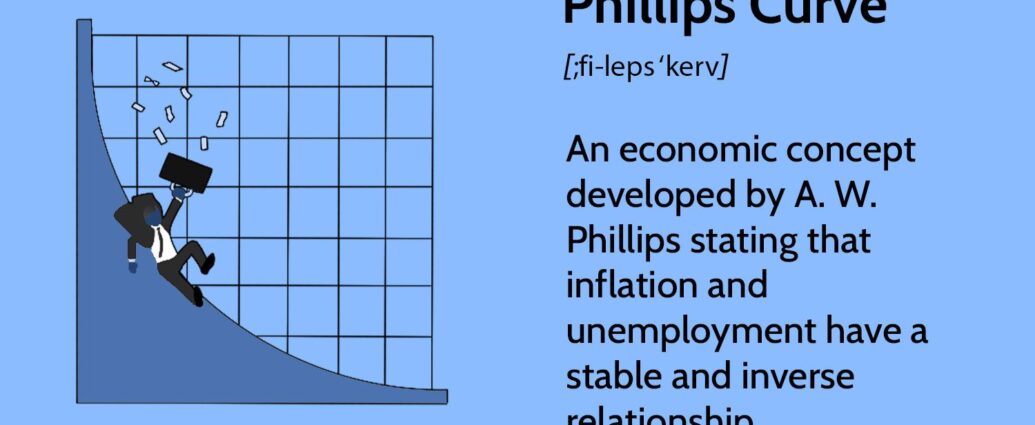
Understanding the Phillips Curve: Inflation and Unemployment Dynamics
This post was originally published here

5 Ways Financial Advisors Can Help Clients Rebuild After Job Loss
This post was originally published here

Expanding Your Family? I’m a Financial Advisor—Here’s How I Help My Clients Manage the Stress
This post was originally published here

Stock Market Today: Stocks Jump to Begin New Quarter After Major Indexes Have Best Day Since May; Dow Rises 400 Points
This post was originally published here

Understanding Product Lines: Benefits for Business Growth
This post was originally published here

Standard Error (SE) Explained: Understanding Standard Deviation in Statistics
This post was originally published here

C Corp Explained: Definition, Benefits, and Taxation Details
This post was originally published here

Catalog of Federal Domestic Assistance (CFDA): Overview & Integration
This post was originally published here
See How Steel Dynamics Ranks Among Analysts’ Top Metals Picks
A study of analyst recommendations at the major brokerages shows that Steel Dynamics Inc. (Symbol: STLD) is the #41 broker analyst pick, on average, out of the 50 stocks making up the Metals Channel Global Mining Titans Index, according to Metals Channel. The Metals Channel Glo
This post was originally published here


‘Inflationary surge’: Fed economists warn AI hype is overheating the economy whether or not the technology ever delivers
While many Americans shudder at the prospect of AI taking their jobs, business leaders and tech enthusiasts continue praising its potential, an optimism that is echoed across Silicon Valley and Wall Street. But all that hype may actually be injuring the economy in the short term.
In a blog post from the St. Louis Federal Reserve Bank, economists argue that AI optimism could hinder productivity and act as a news shock that shapes household and business decision-making. The authors, Fed economists Miguel Faria-e-Castro and Serdar Ozkan, explain that when households see a news shock like AI adoption, they interpret it as a sign of a future pay raise, spending more today on the assumption that more money will come down the line. The same logic holds true for businesses: If you were to buy into the promise of miracle innovation—cutting the cost of labor and boosting productivity—you’d increase investment in that product. All of that enthusiasm leads to inflation in the short term as demand outpaces supply.
“Together, these forces produce an inflationary surge in aggregate demand—the defining feature of the news shock’s initial phase,” the post’s authors wrote.
AI hype is everywhere. It’s in tech entrepreneur Matt Shumer’s viral post in February, comparing the current trajectory of AI development to the month before the COVID pandemic upended the globe. It’s in the words and minds of tech leaders, from Elon Musk to Dario Amodei to Mustafa Suleyman. The technology is now creeping into the lives of workers at law firms, startups, and consultants.
Anticipated productivity gains and the dot-com bubble
While consumer prices have stabilized from a high of about 9% in June of 2022, inflation remains stubbornly above pre-pandemic levels. The most recent, the consumer price index rose 0.3% from the previous month, rising 2.4% from a year ago. While it’s hard to tell if AI hype is having an impact on prices, the researchers argue the technology could be driving up prices today. But they caution that their assessment is merely qualitative: they can predict inflation could rise in the short term, but they can’t exactly predict by how much.
The economists compare the AI hype to the optimism surrounding dot-com technology at the turn of the century. “Computers are everywhere except for in the productivity number,” Ozkan said, paraphrasing Nobel laureate Robert Solow, who spoke about IT improvements in the 1980s and proved again during the dot-com bubble. In both the dot-com era and the current AI hype, there was a disconnect between technological optimism and the actual economic data. In the dot-com era, the economists explained, the economy reflected the latter scenario where gains failed to show, bursting the bubble.
AI is seemingly ubiquitous, and one could reasonably assume that it’s driving economic growth. But the technology’s returns are still yet to be seen. As the authors note, TFP growth has averaged just 1.11% annually since the launch of ChatGPT in 2022. That’s below the historical average of 1.23%, according to data from the Federal Reserve Bank of San Francisco.
Still, the authors lay out two possible scenarios as to how the AI hype could impact the economy. It’s all dependent on whether or not reality eventually catches up with said hype. If the anticipated gains do materialize—if businesses become more productive thanks to AI—the economy will experience stronger output growth, which would be accompanied by declining inflation as potential output expands.
On the flip side, if those gains fail to materialize, the economy could tip into a “prolonged period of weak growth and persistently elevated inflation.”
But there are major differences between the hype cycles. For one, during the dot-com era, much of the infrastructure built—such as fiber-optic cables—remained underutilized for years. Today, there’s high demand for AI’s critical infrastructure, data centers, with vacancy rates of just 1.4%, according to commercial real estate firm CBRE. But the buildout continues, with a highly concentrated set of tech firms investing a whopping $700 billion in AI infrastructure.
But the economists caution there’s still high uncertainty hanging in the air around AI’s payoff. “We don’t really know what are going to be those productivity gains,” Faria-e-Castro said. “We don’t know when they’re going to realize—and if even they’re going to realize.”
This story was originally featured on Fortune.com

Hershey is moving back to the original recipe for Reese’s Peanut Butter Cups after the chocolate’s grandson blasted them last month
Hershey said Wednesday it will use classic recipes for all Reese’s products starting next year, a change that comes after the grandson of Reese’s founder criticized the company for shifting to cheaper ingredients.
Reese’s Peanut Butter Cups have always been made with real milk chocolate or dark chocolate and peanut butter. But a small portion of Hershey’s and Reese’s products, like mini Easter eggs, are now made with a coating that contains less chocolate.
Hershey said that in 2027, it will shift those products to “their classic milk chocolate and dark chocolate recipes.”
The Hershey, Pennsylvania-based company said it will also be making other changes to its sweets portfolio next year, including transitioning to natural colors and enhancing Kit-Kat’s recipe to make it creamier. The company said it plans to increase its research and development funding by 25% next year.
“Hershey is committed to making products consumers love and that means continually reviewing our recipes to meet evolving tastes and preferences,” the company said in a statement.
Brad Reese, the grandson of the inventor of Reese’s Peanut Butter Cups, ignited the controversy in a public letter he sent to Hershey’s corporate brand manager on Valentine’s Day.
“How does The Hershey Co. continue to position Reese’s as its flagship brand, a symbol of trust, quality and leadership, while quietly replacing the very ingredients (Milk Chocolate + Peanut Butter) that built Reese’s trust in the first place?” Reese wrote in the letter, which he posted on his LinkedIn profile.
Hershey acknowledged some recipe changes but said it was trying to meet consumer demand for innovation. High cocoa prices also have led Hershey and other manufacturers to experiment with using less chocolate in recent years.
The Associated Press left a message with Brad Reese on Wednesday seeking comment.
Brad Reese is the grandson of H.B. Reese, who spent two years at Hershey before forming his own candy company in 1919. H.B. Reese invented Reese’s Peanut Butter Cups in 1928; his six sons eventually sold his company to Hershey in 1963.
This story was originally featured on Fortune.com
SpaceX confidentially files for IPO, setting stage for record offering
Elon Musk’s SpaceX is reportedly targeting a valuation of around $1.75 trillion in its forthcoming IPO.
This post was originally published here




San Francisco airport expects major delays as FAA restricts some landings
The Federal Aviation Administration is reducing arrival capacity at San Francisco International Airport as construction and new safety rules take effect, a move expected to increase flight delays.
The FAA said the measure will lower maximum arrival rates from 54 flights per hour to 36 during a major runway project. The FAA said the runway project and safety measures are separate actions, each reducing arrival capacity by nine flights per hour.
San Francisco International Airport said the changes will lead to more delays, with about a quarter of arriving flights expected to experience delays of at least 30 minutes, up from a prior estimate of roughly 15%.
The airport’s runway repaving project will put its two north-south runways out of service for approximately six months, further limiting capacity at one of the nation’s busiest airports.
THREE WOMEN REMOVED FROM FRONTIER FLIGHT, ARRESTED OVER REFUSAL TO PAY EXTRA BAG FEE
The FAA is also prohibiting side-by-side approaches to the airport’s parallel east-west runways, including in clear weather, and instead requiring “staggered approaches, with one aircraft offset from the aircraft on the parallel runway.”
The FAA does not plan to lift the restrictions once the runway repaving is completed.
United Airlines, which accounts for about half of passenger traffic at San Francisco, said the planned runway construction may cause flight delays. Alaska Airlines is the airport’s second-largest carrier, with about 10% of passenger traffic.
The FAA said it had not allowed side-by-side approaches in bad weather and is exploring ways to safely increase arrival rates while reducing risks tied to visual separation.
The agency said the change followed a routine review that found the approaches did not meet aircraft separation standards and is specific to San Francisco.
The changes come as the agency tightens broader aviation safety rules. Earlier this month, the FAA said it would require stricter helicopter safety measures and suspend the use of visual separation between airplanes and helicopters near major airports.
CLICK HERE TO GET FOX BUSINESS ON THE GO
The actions follow a January 2025 mid-air collision between an American Airlines regional jet and an Army helicopter that killed 67 people. The FAA also cited two recent incidents, including a near miss involving an American Airlines flight and a police helicopter near San Antonio airport.
Reuters contributed to this report.























Eli Lilly’s obesity pill approved by FDA, setting up fierce competition with Novo Nordisk
Eli Lilly’s obesity pill was approved by the Food and Drug Administration on Wednesday, setting it up for fierce competition against Novo Nordisk’s new Wegovy pill as more people seek alternatives to GLP-1 injections.
Lilly’s drug, which is called orforglipron and will be marketed as Foundayo, was approved under the FDA’s new commissioner’s voucher program, which grants speedy reviews to drugs that are aligned with national health priorities.

Opendoor moves into closing and escrow with Doma deal, Fannie Mae partnership
Opendoor has agreed to acquire the closing and escrow operations of Doma Holdings, a move that would extend the iBuyer’s reach into refinance closings and deeper into title automation, the companies announced on Tuesday. Financial terms of the deal were not disclosed.
The deal, which is subject to regulatory approval, is paired with a three-way partnership between Opendoor, Doma and Fannie Mae on the government-sponsored enterprise (GSE)’s Title Acceptance Program. The initiative allows eligible refinance loans to close without a lender’s title insurance policy, replacing traditional manual title searches with algorithmic risk assessments.
Doma’s technology has been used by Fannie since 2024 in an agreement extended through 2027. Low-risk title refinances are sold to the GSE without lender’s title insurance or an attorney opinion letter (AOL), which has been the case for about 80% of the deals. It results in shorter timelines and lower closing costs. CNBC first reported on the transaction.
“Closing a home costs too much and takes too long. Not because it has to, but because the industry was never organized to fix it,” Opendoor President Lucas Matheson wrote in a LinkedIn post. “Doma built the technology that makes the risk decision. We close the transaction. This is what it looks like to actually build toward making homeownership more affordable.”
The announcement characterizes lower transaction costs as a bipartisan priority, noting that federal housing policy and private-sector innovation are aligned on expanding options like the Title Acceptance Program.
The acquisition covers Doma’s downstream closing and escrow operations. The unit’s 85 staff members will join Opendoor, bringing lender relationships and operational experience in high-volume closings, according to the announcement.
Opendoor said it has already closed more than $100 billion in purchase and financing transactions nationwide. The company recently launched a mortgage product, which promises below-market interest rates after the company removed its markup. Doma’s algorithms evaluate title risk for eligible Fannie Mae refis, and Opendoor completes the closing and escrow work.
The iBuyer has long pitched itself as a way to make buying and selling a home “simple, certain and fast,” but the company acknowledged that the closing process has been the hardest part of that promise to deliver. The Doma acquisition is meant to give Opendoor more control over that last mile of the transaction.
Opendoor reported a net loss of $1.3 billion in 2025, although company executives have said the iBuyer is on track to return to profitability.
Flávia Furlan Nunes reported and wrote this article with drafting assistance from HousingWire Automation, an editorial tool that helps transform announcements and industry data into HousingWire-style news coverage.
eXp, Weichert home seller commission lawsuit settlements approved
After a fierce legal battle the home seller commission lawsuit settlements reached by eXp World Holdings, Mark Spain Real Estate, Weichert of North America and Atlanta Communities Real Estate Brokerage in the Hooper lawsuit have received final approval.
On Wednesday, Mark Cohen, an Atlanta-based U.S. District Court judge, granted final approval to the settlements reached by these four brokerage defendants.
The settlements total $44.05 million, with Mark Spain Real Estate paying $750,000, eXp World Holdings paying $34 million, Weichert of North America paying $8.5 million and Atlanta Communities Real Estate Brokerage paying $800,000. The settlements release the parties from the claims and dismiss the parties from the litigation.
This final approval comes after a contentious legal battle between the Gibson home seller commission lawsuit plaintiffs and the settling parties in the Hooper lawsuit. Just weeks after eXp, the first of the four parties to reach an agreement, announced its settlement in early October 2024, the Gibson plaintiffs filed a motion to intervene and transfer the case to the U.S. District Court for the Western District of Missouri, where it would fall under the supervision of Judge Stephen Bough. Bough is the judge who oversaw the Sitzer/Burnett trial.
The Gibson plaintiffs claimed that eXp negotiated the agreement with the Hooper plaintiffs “after conducting prolonged, unsuccessful settlement negotiations with Intervenor Plaintiff counsel,” conducting a “reverse auction” in an attempt to gain a “sweetheart deal.”
The Gibson plaintiffs later extended these arguments and objections to the three other settlements reached with the Hooper plaintiffs. Judge Cohen denied this motion to intervene in late March 2025 before granting preliminary approval to the settlements in May 2025.
In an emailed statement a spokesperson for eXp told HousingWire that the firm was “pleased” with the court’s ruling.
“This milestone represents a significant step forward in resolving these industry-wide legal challenges and providing certainty for our agents, their clients and our shareholders. We are grateful for the Court’s thorough review of the record and its finding that the settlement is fair, reasonable and adequate,” the spokesperson added. “As the Court noted, this agreement was reached through rigorous, arm’s-length negotiations and provides substantial value to the class while avoiding the risks and costs of protracted litigation. eXp remains committed to transparency and the evolution of the real estate industry.”
According to the ruling, CPT Group will be the notice and claims administrator for the settlement. The parties began sending out class notices to settlement class members last summer.
In addition to these legal wins achieved by these four brokerages, REMAX notched a win of its own on Wednesday as its settlement in the Batton homebuyer commission lawsuit gained preliminary approval. Like the Gibson plaintiffs, the Batton plaintiffs have sought to intervene in the homebuyer lawsuit settlements obtained by firms in other homebuyer lawsuits.
QXO closes on $2.25 billion Kodiak Building Partners deal
On Wednesday, QXO announced that it closed its $2.25 billion acquisition of Kodiak Building Partners, locking in a megadeal that pushes the Brad Jacobs-led distributor deeper into the homebuilding supply chain and adds scale in lumber, trusses and other core structural products.
The transaction, first announced earlier this year, combines QXO’s existing roofing and exterior products platform with Kodiak’s $2.4 billion revenue base in lumber, engineered wood, doors, windows, trusses and gypsum. QXO is backed by a $3 billion capital raise completed in January and is pursuing an aggressive consolidation strategy in the fragmented $800 billion building products sector.
With the closing of Kodiak, QXO says its total addressable market more than triples to over $200 billion and now spans nearly every major building products category.
Buying at what QXO sees as the bottom of the cycle
The timing may be as important as the headline price. A QXO spokesperson previously said that the company believes the housing cycle is in a trough and that it is acquiring Kodiak “near the bottom of the cycle.”
According to the company, QXO is paying roughly 10.7x Kodiak’s projected 2025 EBITDA of $211 million and about 0.95x sales, for a total enterprise value of approximately $2.25 billion. When projected cost and revenue synergies are included, QXO pegs the implied multiple at about 7.3x EBITDA.
That pricing and timing strategy fits a broader playbook Jacobs has used in prior industries: buy scale platforms when conditions are soft, integrate them on a common technology backbone and grow through operational efficiencies plus follow-on acquisitions.
Lumber as the first gate
For builders, the most immediate change is QXO’s formal entry into structural categories that tend to be the “first gate” on every project.
“Lumber was always part of QXO’s plan, and this gives us entrée into that market,” a QXO spokesperson said. “Lumber is crucially important because it’s the first point of entry to most projects.”
The acquisition moves QXO beyond roofing and exterior products into lumber, trusses, gypsum and construction supplies, along with complementary fabrication, assembly and installation capabilities. The company says this creates a more complete offering on the exterior side and gives it strategic entry points into interior products and services.
For homebuilders and large general contractors, that could translate into the ability to source a broader portion of the bill of materials — from framing packages and components to roofing, siding and related materials — through a single, scaled distributor.
Cross-selling and vendor overlap
QXO is explicitly positioning the deal as a cross-sell engine into its existing builder and GC relationships. The company says owning Kodiak will:
- Expand sales opportunities with homebuilders and large general contractors
- Improve demand visibility across the combined network
- Sharpen inventory planning and product availability at the local level
Vendor overlap is one of the core levers. Sixteen of Kodiak’s top 20 suppliers are already shared with QXO, according to the company. That common vendor base could support national rebate structures, coordinated promotions and more consistent product specs across regions.
From a builder’s perspective, that overlap may mean more standardized assortments, potentially more stable pricing programs and fewer gaps between what is specified and what a yard can actually deliver.
QXO’s growth ambitions: from $10B to $50B
Closing Kodiak is only QXO’s second major acquisition, following its $11 billion all-cash purchase of Beacon Roofing Supply that closed in April 2025. But Jacobs has articulated a much larger ambition: growing QXO from roughly $10 billion in annual revenue today to $50 billion within about five years.
To get there, Jacobs is pursuing both acquisitions and organic growth. Earlier reporting indicated that QXO has “capacity for more deals” following its equity financings led by Apollo and Temasek, with analysts estimating a war chest of around $10 billion. The company has been linked by market observers to potential targets like Boise Cascade, BlueLinx Holdings and US LBM, among others, as it looks at mid-sized and larger platforms in North America and Europe.
For homebuilders, that trajectory suggests a distribution landscape that could start to look more like homebuilding itself: fewer, bigger players with national or super-regional scale, more sophisticated technology and pricing tools, and greater leverage in negotiations with manufacturers.
AI, integration and the “six levers” at Kodiak
QXO is tying its acquisition moves to a tech and data strategy. Under a chief artificial intelligence officer, the company is working to consolidate conventional distributors onto a single AI-enabled digital platform designed to improve pricing, routing, inventory optimization and sales execution.
At Kodiak specifically, a QXO spokesperson said the company has identified six “controllable levers” it believes give it a realistic path to doubling Kodiak’s revenue over the next several years:
- Cross-selling to existing builder and GC customers
- Scaled procurement with shared vendors
- Improved technology across sales, operations and logistics
- Network optimization of branches and distribution centers
- Organizational redesign to support growth
- Manufacturing and component fabrication efficiency
For builders, those initiatives could show up as changes in how bids are generated, how quickly quotes are refreshed in volatile markets, how deliveries are sequenced to sites and how reliably orders arrive complete and on time. If QXO executes, the pitch to builders will hinge less on unit price alone and more on the total cost of construction and cycle-time reduction.
Operating in a changing M&A landscape
The Kodiak closing lands in what has become a two-track M&A market in building materials. Webb Analytics’ 2025 Deals Report found that 2025 was the busiest year in a decade when measured by facilities acquired, yet the total number of individual transactions dropped 30% from the prior year, and the number of companies making acquisitions fell to its lowest point since 2020.
Megadeals — like QXO’s Beacon Roofing Supply purchase — increasingly defined the market, with four out of 120 reported deals accounting for 85% of acquired supply facilities, according to Webb Analytics President Craig Webb. The QXO–Kodiak transaction builds on that pattern and underscores the potential for continued consolidation led by QXO, Lowe’s, The Home Depot and other large strategics.
For homebuilders, that concentration raises practical questions: how many truly independent local and regional yards will remain over the next five to 10 years, what pricing power large distributors will exert in key categories, and how will technology and scale affect service levels to job sites?
QXO’s completed acquisition of Kodiak signals that its consolidation thesis in building products is fully in motion. The now-expanded company brings together a national roofing platform with a national lumber and structural components network at a point when QXO believes the housing cycle is near a bottom.
For builders, key items to monitor will include:
- How QXO integrates Kodiak’s local brands and whether service levels improve or change at the yard and jobsite level.
- Whether QXO’s AI and logistics investments translate into more reliable scheduling, fewer delays and better inventory positions during demand spikes.
- How pricing programs evolve as QXO leverages its expanded vendor overlap and national scale
- Which platforms QXO targets next and how those deals reshape availability and competition in specific markets
For now, the message to homebuilders is clear: one of the industry’s most acquisitive distributors just added a major lumber and components platform, and it is signaling that more scale — and more change in the supply ecosystem — is likely ahead.
Shilo AI tool turns agent calls into personalized coaching playbooks
Shilo has launched Signals, an AI-powered personality assessment that builds DISC behavioral profiles for real estate agents directly from their call recordings, the company announced.
The Phoenix-based AI conversation analysis platform said the new feature analyzes weeks or months of agent conversations to surface each agent’s core motivators, fears, conflict style and social orientation. Signals then generates individualized coaching recommendations based on how an agent actually communicates, rather than how they describe themselves in a survey.
Removes bias and adjusts to agent’s behavior changes
Traditional DISC personality tools rely on self-reported questionnaires, which can bias results or go stale as an agent’s behavior changes. Shilo positions Signals as a way for teams to continuously measure communication style in the background of day-to-day work and tie that to coaching, script changes and lead follow-up strategies.
Every insight generated by Signals is linked back to specific calls with confidence scores, giving team leaders a clear audit trail for why the platform labeled an agent as a particular DISC type or suggested a specific coaching action, according to the announcement.
Brokerages and teams spend heavily on coaching and training but often deliver the same content to every agent. Shilo cites National Association of Realtors (NAR) data showing that 87% of agents leave the industry within five years, and internal estimates that teams waste 40% to 60% of their lead investment due to inconsistent call execution.
Signals is designed to make coaching more precise by tailoring recommendations to how each agent processes information and takes action. For housing leaders, the pitch is that personality-aware coaching could improve conversion on existing leads and reduce churn among agents who may struggle under one-size-fits-all training programs.
Platform has processed more than 3 million calls
Signals runs on Shilo’s proprietary models trained on what the company says is more than 21 years of continuous talk time across more than 7,000 real estate agents. Since launch, the platform has processed more than 3 million calls, which Shilo describes as the largest dataset of analyzed real estate conversations in the industry.
“Transparency to data is core to who we are at Shilo because at a fundamental level it builds trust,” Justin Benson, CEO and co-founder of Shilo, said in the release. “We don’t suggest blind trust of AI in the same way we usually wouldn’t suggest blind trust of another person without the historical backdrop that proves trust. Each signal is given a transparent confidence score and backed by cited evidence from previous conversations you can click into and verify.”
The system automatically builds personality insights from calls agents are already making through existing phone systems and CRM integrations. That removes the need to schedule separate assessments and reduces friction for adoption on large teams.
Each Signals profile includes: DISC personality insights with spectrum bars for Dominance, Influence, Steadiness and Conscientiousness, an “About me” narrative, a plain-language summary drawn from call patterns, core motivations and fears, conflict style and social orientation describing how an agent handles disagreements and builds relationships and personalized coaching recommendations tailored to the agent’s DISC mix
These recommendations are meant to be specific and situational rather than generic. In one example provided by Shilo, the platform suggests that an agent with an SC profile adjust how they speak with high-D or high-I clients by leading with the fastest path to listing rather than process details, and saving the details for the end of the conversation.
Updated as agent makes more calls
As agents make more calls, Signals updates profiles and confidence levels and surfaces new suggestions as patterns change. For managers, that creates a living personality and coaching layer on top of existing call metrics such as talk time, contact rate and appointment set rate.
For real estate and mortgage teams, coaching quality is often the difference between converting online leads and burning them. Conversation analytics platforms have focused largely on script adherence and keyword tracking. Shilo’s move into personality-based insights reflects a broader trend of applying AI not just to what is said on calls, but to who is saying it and how.
By tying personality insights to verifiable call data, Signals aims to give team leaders a framework to decide which agents should be on the phone, which should focus on in-person consultations, and how to adjust scripts for different communication styles. In an environment of tighter lead budgets and higher scrutiny on agent productivity, tools that help align coaching with behavior could influence hiring, routing and training decisions.
Shilo’s broader platform scores calls on a 1-to-5-star scale, delivers per-call coaching with script replacements, creates both agent-level and organization-level insights, automates CRM updates, and generates AI roleplay scenarios from real conversations. Current integrations include Follow Up Boss, Sierra Interactive, BoldTrail, Lofty, CINC, SureSend and Bonzo, with an API-only option for enterprise companies that want custom models.
Editor’s note: This article was generated using HousingWire Automation and reviewed by a HousingWire editor before publication. The system helps convert company announcements and industry data into HousingWire-style news coverage.

Anthropic Accidentally Leaks Claude Source Code
Anthropic has inadvertently disclosed the instructions behind its Claude Code AI agent. The exposure could provide competitors with strategic insight into how the model is created and could introduce potential security risks.
The Wall Street Journal reports that the company has requested the removal of over 8,000 instances of the leaked source code from GitHub. This effort was made through a copyright takedown request, aiming to control the spread of the sensitive information.
The leak did not compromise customer data or the core mathematical frameworks of its AI models, a spokesperson for Anthropic told the WSJ. The incident was attributed to …
This post was originally published here

What’s Going On With Arm Holdings Stock Wednesday?
Arm Holdings PLC (NASDAQ:ARM) shares traded higher Wednesday, tracking a broader rally in equities as both the S&P 500 and Nasdaq Composite advanced.
The State Street Technology Select Sector SPDR ETF (NYSE:XLK) rose 1.9%, reflecting strength across the tech sector.
Investor sentiment improved on expectations that Middle East tensions could ease in the near term.
Geopolitics Lift Market Mood
Markets turned positive after comments from President Donald Trump, who said the U.S. could end its military campaign “within two or three weeks,” adding that Iran may not …
This post was originally published here

Why Is Conagra Brands Stock Falling Wednesday?
Conagra Brands Inc. (NYSE:CAG) shares moved lower Wednesday after the packaged food company reported mixed third-quarter results and issued a cautious outlook.
Revenue showed resilience, but margin pressures and a softer earnings forecast weighed on investor sentiment.
Quarterly Performance
Conagra reported adjusted earnings of 39 cents per share, missing the analyst consensus estimate of 40 cents. Sales totaled $2.79 billion, down 1.9% from a year earlier, but ahead of expectations of $2.76 billion.
Organic net sales rose 2.4%, driven by a 1.9% increase in price and mix, along with a 0.5% gain in volume.
The company …
This post was originally published here

Airline Stocks Soar: United, American Take Off On War De-Escalation Hopes
Airline stocks are taking flight this Wednesday. United Airlines Holdings Inc. (NASDAQ:UAL) and American Airlines Group Inc. (NASDAQ:AAL) saw significant price jumps during mid-week trading. Investors are reacting to shifting geopolitical headlines and cooling energy prices.
The Nasdaq is up 1.35% while the S&P 500 has gained 0.91%.
Trump Signals Potential De-escalation
The primary catalyst stems from the White House. President Donald Trump stated the U.S. could end its military campaign “within two or three weeks.” He noted …
This post was originally published here
Starmer calls for ‘ambitious’ new UK-EU ties as Trump threatens to quit Nato
PM to focus on European defence and economic partnership for ‘dangerous world’ in pivot away from US
Britain’s long-term national interest requires closer partnership with the EU, Keir Starmer has said, citing war in the Middle East and the increasingly volatile international situation.
The prime minister indicated that the conflict had refocused the government on “ambitious” new ties with Europe, economically and in defence, and said how Britain emerged from the crisis “would define us for a generation”.
This post was originally published here
Macron praises Europe’s predictability in face of countries that ‘hurt you without even informing you’ – as it happened
This live blog is now closed
Meanwhile, the European Union has sought to ramp up pressure on Hungary to drop its veto on the €90bn loan for Ukraine, with the European Commission saying it will push ahead with its preparatory work for the loan to be paid out.
The commission said it would draft a legal text setting out the details of the first payment of €45bn in 2026 and what the funds would be used for, and send it to the European Council to be formally approved by the bloc’s 27 leaders.
“We proposed a ceasefire for Easter – in response, we’re getting ‘shaheds.’ We also proposed a ceasefire specifically regarding energy infrastructure – the Russians ignore this and once again attempt to strike our substations and transformers.
Ukraine is working with partners to expand joint capabilities to protect lives, while Russia continues to prolong the war in Europe, and by sharing its intelligence with the Iranian regime it is openly investing in fueling war in the Middle East and the Gulf.
Ukraine proposed a ceasefire for Easter. Russia responded with a swarm of drones targeting civilians.
This post was originally published here
Britain to host 35 countries for strait of Hormuz talks, says Starmer
US understood not to be invited directly to talks that will explore ways of reopening critical waterway
The UK will convene 35 countries – excluding the US – to explore ways to reopen the strait of Hormuz, the vital shipping route for oil and gas that has been blocked by Iran.
Keir Starmer, the prime minister, said the next phase of discussions in the joint British and French efforts to secure the waterway would be held on Thursday, with Yvette Cooper, the foreign secretary, alongside international leaders.
This post was originally published here
Italian coastguard recovers 19 bodies from boat in sea near Lampedusa
Fifty-eight other people found alive during rescue involving inflatable craft in early hours of Wednesday
The bodies of 19 people have been recovered from an inflatable boat south of the island of Lampedusa by the Italian coastguard, a spokesperson told AFP.
Fifty-eight other people, including five children, were found alive during the rescue in the early hours of Wednesday and transported to Lampedusa by the coastguard, according to Roberto D’Arrigo.
This post was originally published here

After Israel’s invasion, many in southern Lebanon worry they’ll never go home
Israel says it’s creating a “security zone” inside Lebanon, where homes will be demolished, and residents won’t be allowed to return home until people in northern Israel feel safe.
(Image credit: Claire Harbage)

This post was originally published here

Shutting Hormuz is a template for China in Taiwan
This post was originally published here








Retirement Portfolios May Expand To Include Crypto Under New US Rule
A new U.S. Labor Department rule could allow 401(k) retirement plans to include alternative investments such as cryptocurrencies, real estate and private market assets, potentially opening the door for assets like Bitcoin (CRYPTO: BTC) and Ethereum (CRYPTO: ETH)
“Level The Playing Field”
In a FOX Business interview on Tuesday, BlackRock Global Head of Retirement Solutions Nick Nefouse said the change is designed to “level the playing field,” giving more Americans access to a wider range of investments typically available in defined benefit plans.
He noted …

Five hard lessons from Allbirds’ 99% stock plunge and $39 million fire sale
Once a brand that soared as the de rigueur footwear for the Silicon Valley set, Allbirds has fallen out of the sky. The shoemaker, best known for its eco-friendly wool sneakers favored by tech bros, said this week it is selling itself for a mere $39 million, or roughly 1% of its peak market capitalization of $4 billion only five years ago—the victim of major strategic missteps in trying to sustain its once meteoric growth.
Joe Vernachio, the chief executive brought in two years ago to save Allbirds, said that American Exchange Group, a brand management company, will buy all the company’s assets, pending shareholder approval later this year. The CEO said in a statement that the deal “sets up the brand to thrive in the years ahead.”
That will be a tall order for a brand that was the symbol of last decade’s venture capital boom. Last summer, founder Tim Brown conceded as much. “The time we had to evolve and grow that story was compressed in such an intense way,” he told Fortune. “With the rapid success that came our way, we lost some of our DNA.”
The Allbirds collapse offers some crucial lessons to CEOs and investors on how not to manage a brand’s rapid growth or make hasty mistakes:
Don’t mistake good publicity for mass-market success. At its peak, in 2022, Allbirds had sales of $297.8 million—a fraction of what brands like On, Hoka and Brooks bring in. For all the hype, it remained just a niche product popular within a tiny, well-heeled, slice of the U.S. sneaker market. Much of Allbirds’ early success “was driven by Silicon Valley hype, more than deep popularity with consumers in the American hinterland,” said Neil Saunders, managing director of GlobalData.
A fashion trend doesn’t always translate to enduring brand value. In Allbirds’ case, the company believed its growth would last forever, not quite understanding that its distinctive shoes were in fact a fad. Allbirds spent lavishly on ad campaigns aimed at pushing new iterations of its signature wool shoes and touting sneakers made of materials like eucalyptus tree fiber pulp.
Don’t try to reinvent the wheel. Allbirds embraced the “direct to consumer” era, during which investors poured billions into companies that were so hot, they thought they could supplant incumbents by bypassing retailers. Allbirds proceeded as if it was emerging as a national brand and built too many store locations around the country. By late 2023, Allbirds had 45 U.S. stores; now, it is down to two outlet stores. And then it took too long to line up wholesale partnerships such as the one it eventually landed with Nordstrom.
Stick to what you know. Meanwhile, imitators of Allbirds’ natural-fiber shoes proliferated, and to stay ahead Allbirds began to throw proverbial spaghetti at the wall as it launched into product categories that left its consumers puzzled: leggings made of merino wool that proved to be partially see-through when wet, performance-oriented running shoes, and even puffer jackets—all while its core shoe offering was starting to seem passé to consumers.
Keep customers’ priorities at the top of the agenda. The eco-friendly aesthetic was an appealing brand story at first, but the company belatedly realized that analysts were right in saying that Allbirds’ marketing was to too focused on their sustainability virtues and not enough on their appeal as shoes.
By the time Allbirds tried to course-correct, its moment in the zeitgeist had come and gone. It was dropped by the Silicon Valley consumers and never adopted by the rest of America’s sneaker market. Now it falls to a brand company to try to breathe new life into Allbirds.
This story was originally featured on Fortune.com

Nvidia CEO Jensen Huang’s advice to workers scared of AI: You’re just confusing your job with the tools you use to do it
Many white-collar workers are anxiously awaiting the fate of their jobs as more leaders sound the alarm of impending AI-fueled layoffs. But Jensen Huang, the CEO of $4.26 trillion chip giant Nvidia, offered a reassuring message for professionals who believe their roles are on the line.
“[What] I want to make sure we all do, is to recognize that people are really worried about their jobs,” Huang recently said on the Lex Fridman Podcast. “I just want to remind them that the purpose of your job, and the tasks and tools that you use to do your job, are related, not the same.”
Workers are understandably stressed over their employers investing billions into AI, as layoffs sweep tech companies, and AI agents are positioned as humans’ new coworkers. Leaders like Google DeepMind’s Demis Hassabis and Uber cofounder Travis Kalanick have even predicted that when artificial general intelligence (AGI) reaches maturity, the tools will be just as capable as people—and Huang said “we’ve already achieved” the feat.
However, Huang’s not convinced that AGI will cause a jobs reckoning, just like previous tech transformations weren’t able to snatch his job.
“I’m the longest-running tech CEO in the world, 34 years,” he continued. “The tools that I’ve used to do my job have changed continuously in the last 34 years, and sometimes quite dramatically.”
The Nvidia CEO’s prime example of AI supercharging jobs: radiologists
Huang explained his reasoning through a job paradox he’s witnessed in the era of AI: the fate of radiologists.
The Nvidia leader said that computer scientists predicted that the first job to be automated by AI would be radiology, since computer vision was going to reach “superhuman levels” thanks to the advanced tech. Around 2020 the tools became that powerful, Huang pointed out, and “every radiology platform and package today is driven by AI”—yet the number of radiologists has grown.
Now, humans can study scans faster, diagnose better, and see more patients, requiring a bigger workforce of people to keep up with soaring demand.
However, that preemptive forecast may have deterred some people from going into radiology, Huang noted, and it’s led to a “shortage” of humans in the field. He highlights it as a prime example of how the narrative went to an extreme—and illuminates the fact that AI is a part of how workers do their jobs, and is not the bottom line.
“The alarmist warning went too far, and it scared people from doing this profession that is so important to society,” Huang said during the podcast. “It did harm.”
The CEOs who say AI will supercharge work, not replace it
Huang has long been outspoken about the ramifications of AI on the workforce, saying that the tools won’t take over jobs in droves. Instead, tech-savvy humans will have the upper-hand on those who resist it.
“Every job will be affected, and immediately. It is unquestionable,” Huang said at the Milken Institute’s Global Conference last year. “You’re not going to lose your job to an AI, but you’re going to lose your job to someone who uses AI.”
And he’s not the only one taking that stance. Airbnb CEO Brian Chesky also predicted that founder-led companies open to change—like the $76.6 billion business he’s helming—will benefit from the AI transformation. Those who snub the technology will be outpaced by those who embrace it.
“From a business standpoint, I think AI is the best thing that ever happened to Airbnb,” Chesky told CNBC in an interview earlier this year, adding that “If you don’t change, you’re going to be disrupted.”
JPMorgan CEO Jamie Dimon has conceded that AI “will eliminate jobs,” but echoing Huang and Chesky, also stressed the importance of humans getting on the AI bandwagon. Just like any other tech transformation, there are sure to be growing pains—but people can better their chances by adding AI to their arsenal.
“I think people should stop sticking their heads in the sand,” Dimon told Fortune last year. “So, use it. Get good at it…Make it part of your tool set and your weapon set.”
This story was originally featured on Fortune.com

How to File Articles of Organization for Your LLC
This post was originally published here
How to File Articles of Organization for Your LLC
This post was originally published here

Understanding Regressive Taxes: Definition and Common Types
This post was originally published here
Understanding Regressive Taxes: Definition and Common Types
This post was originally published here

Actuarial Science: Understanding Risks in Insurance and Finance
This post was originally published here

Actuarial Science: Understanding Risks in Insurance and Finance
This post was originally published here

Mining Stocks: Risks, Rewards & Strategies for Investors
This post was originally published here

Mining Stocks: Risks, Rewards & Strategies for Investors
This post was originally published here

Who Are High Earners, Not Rich Yet (HENRYs)? Definition and Financial Guide
This post was originally published here

Who Are High Earners, Not Rich Yet (HENRYs)? Definition and Financial Guide
This post was originally published here

Ability to Repay: History, Requirements, Exceptions
This post was originally published here

Understanding Visa Cards: Types, Functions, and Mastercard Comparison
This post was originally published here

Understanding Visa Cards: Types, Functions, and Mastercard Comparison
This post was originally published here

Understanding Transfer Pricing: Tax Implications and Examples
This post was originally published here

Residual Income: What It Is, Types, and How to Make It
This post was originally published here

Airfares Have Soared Since the Start of the Iran War—What That Means for Your Travel Plans
This post was originally published here

Ethical Wall (Chinese Wall) in Finance: Definition, Examples, and Regulations
This post was originally published here

Stock Market Today: Stocks Surge to Begin New Quarter After Major Indexes Have Best Day Since May; Dow Rises 400 Points
This post was originally published here
Stocks making the biggest moves premarket: Nike, RH, Sandisk & more
These are the stocks posting the largest moves premarket.
This post was originally published here
This hotel chain could pull back in the near future. Trading the declines with options
Tony Zhang explains this put vertical.
This post was originally published here
The economy can expand so long as gas doesn’t go much above $4 a gallon, Jeremy Siegel says
‘I don’t think it’s going to get much above $4.10, unless there’s some extreme measure going on,’ the former finance professor said.
This post was originally published here
Oracle layoffs will help cost savings, analysts say
Oracle plans to cut thousands of jobs which will free up cash flow as the company aggressively invests in its AI data center buildout.
This post was originally published here
FDA approves Eli Lilly’s GLP-1 pill, opening the next phase of the weight loss drug market
The FDA approval of Eli Lilly’s GLP-1 pill Foundayo comes nearly three months after Novo Nordisk’s oral version of Wegovy hit the market.
This post was originally published here
How to Onboard a New Member of the Executive Team
The HBR Executive Playbook on turning C-suite onboarding into a leadership team-wide performance upgrade.
This post was originally published here
U.S. Crude Oil Inventories Increase Much More Than Expected
(RTTNews) – Crude oil inventories in the U.S. increased by much more than expected in the week ended March 27th, according to a report released by the Energy Information Administration on Wednesday.
This post was originally published here