Israel welcomed on Tuesday officials from the Democratic Republic of the Congo (DRC) in a step towards strengthening the relationship between the two countries, Foreign Minister Gideon Sa’ar announced in a post on X/Twitter. 

“I was pleased to host once again in Jerusalem Thérèse Kayikwamba Wagner, the Foreign Minister of the Democratic Republic of the Congo, who is accompanying the visit of her country’s President Felix Tshisekedi to Israel,” he wrote on the social media post. 

Sa’ar said comprehensive discussions on the relations between both countries were held, including Israel’s security challenges.

The implementation of an ongoing peace agreement between Congo and Rwanda was also discussed, Sa’ar added. 

“The DRC is a friendly country to Israel, and I hope that soon we will be able to announce a significant leap forward in relations between the countries,” he concluded. 

President Isaac Herzog greets President of the Democratic Republic of the Congo Felix Tshisekedi during his visit to Israel on September 1, 2026. (credit: X/Isaac Herzog)

President Isaac Herzog also published images of the visit on X/Twitter, welcoming Tshisekedi and calling him “my dear friend.” 

Israel, Congo have had rocky ties

Israel and the DRC established diplomatic relations following Congo’s independence in 1960 until they were severed following the Yom Kippur War in 1973, when the Arab League pressured African nations to sever relations with Israel. 

Then-president Mobutu Sese Seko described the decision to cut ties as a choice between a “friend” and a “brother.” 

In the early 1980s, Congo became one of the first African countries to restore ties with Israel. 

Tshisekedi has since strengthened cooperation with Israel in areas such as agriculture, technology, and security. 

According to a 2025 report from Turkey’s state-run Anadolu Agency, Tshisekedi said that discussions with Israel were going “very, very well” and that the DRC has “many opportunities” to offer Israel prior to Herzog’s visit to the country last year. 

“The evidence is clear, the friendship is deep between the two countries, through projects beneficial for our two countries, and this will be an opportunity to seize,” Anadolu cited Herzog as saying. 

This post was originally published on here. 

Russia, the world’s largest wheat exporter, is being forced to redraw one of the most important agricultural shipping networks in the world.

After repeated Ukrainian attacks disrupted shipping through the Black Sea and Sea of Azov, Russian grain exporters are increasingly turning north — toward ports on the Baltic Sea.

That sounds like a transportation story.

It is much bigger than that.

Russia exported about 46.3 million metric tons of grain through Black Sea and Azov ports during the 2025–2026 season, representing roughly 90% of its seaborne grain exports.

Those southern ports are valuable because they provide relatively short and inexpensive access to major buyers across the Middle East, Africa and Asia.

When that route becomes unreliable, the grain does not simply disappear.

It has to travel somewhere else.

And moving millions of tons of wheat hundreds or thousands of additional miles by rail before it reaches a ship can dramatically change the economics.

By mid-August, Russian exporters had already submitted requests to move roughly 5 million metric tons of grain toward Russian Baltic ports, an extraordinary increase for a route that handled only around 1 million tons previously.

Russia is also looking at ports in neighboring Baltic states, including Latvia, as exporters search for additional capacity.

The problem is that the alternative system is much smaller.

Russian Baltic grain ports can handle only about 7 million tons annually.

Even if additional capacity in Baltic state ports is used, analysts estimate that alternative ports and land routes may replace only about half of the volume that could be disrupted in the Black Sea.

That creates a bottleneck.

Why the Black Sea Matters So Much

Russia and Ukraine are both agricultural giants.

Together, they supply enormous quantities of wheat, corn, sunflower oil and other agricultural products to the global market.

Many countries in the Middle East and Africa rely heavily on Black Sea grain because it is relatively close and inexpensive to ship.

That means problems in the Black Sea can quickly become problems far beyond Russia and Ukraine.

If exporters have to use longer rail routes and more expensive ports, transportation costs rise.

Those higher costs can eventually affect the price buyers pay for grain.

And because wheat is used in bread, flour, animal feed and countless food products, changes in grain prices can eventually reach consumers.

What Changed

The shift toward the Baltic accelerated after attacks increasingly affected commercial shipping around Russia’s southern ports.

Ukraine has targeted Russian vessels and logistics infrastructure as part of its broader campaign against Russia’s war economy.

The Sea of Azov has been especially important.

It historically handles about a quarter of Russian grain exports.

The result is that companies now have to consider whether putting a cargo through those waters is worth the risk.

Shipping companies also consider insurance rates, crew safety and the possibility of delays.

Even if a port remains technically open, shipping can become economically unattractive when the risk becomes too high.

Russia Is Trying to Build an Alternative

Moscow is already trying to help exporters reroute shipments.

The Russian government has been preparing subsidies worth roughly 10 billion rubles, or about $120 million, to support rail transportation of agricultural products toward alternative export ports.

That includes Baltic ports and ports in Russia’s Far East.

The idea is simple.

If getting grain to the port becomes more expensive, the government can absorb part of the cost so Russian wheat remains competitive internationally.

But subsidies cannot create unlimited port capacity.

Grain terminals need storage facilities, rail connections, loading equipment and ships.

Those systems take time and money to expand.

That is why the shift north is important.

Russia can reroute some grain.

It cannot instantly recreate the massive export infrastructure it already has around the Black Sea.

The Pressure Is Not Only on Russia

Ukraine is dealing with its own transportation crisis.

Its traditional Black Sea export routes have also been severely disrupted.

Dozens of vessels are now waiting to reach Ukrainian ports through the Danube River, creating another major grain bottleneck.

That means the world’s grain market is seeing transportation problems on both sides of the war at the same time.

Turkey is now trying to develop a new arrangement that could restore safer grain shipping through the Black Sea.

The original U.N.- and Turkey-brokered Black Sea Grain Initiative allowed tens of millions of tons of Ukrainian agricultural products to reach global markets before Russia withdrew from the agreement in 2023.

Whether a new arrangement can be created remains uncertain.

What It Means for Businesses

For farmers and food companies thousands of miles away, the important issue is not necessarily how much wheat Russia grows.

It is whether Russia can economically get that wheat to customers.

A country can produce a huge crop, but if ports are blocked, ships are attacked or rail transportation becomes too expensive, global supply still tightens.

That can affect flour companies, bakeries, livestock producers, food manufacturers and eventually grocery prices.

It can also create opportunities for competing grain exporters in the United States, Canada, Argentina and elsewhere if buyers begin searching for more reliable suppliers.

The bigger lesson is that food markets depend on logistics almost as much as agriculture.

Russia still has the grain.

The question now is how much it will cost to move it — and whether the rest of the world ultimately pays part of that price.

JBizNews Desk | New York

© JBizNews.com All Rights Reserved. Reproduction or distribution without written permission is prohibited.

US Central Command (CENTCOM) announced that it completed a wave of strikes against Islamic Revolutionary Guard Corps (IRGC) targets in Iran early on Wednesday.

According to CENTCOM, the strikes were carried out in retaliation for Iranian attacks on commercial shipping in the Strait of Hormuz and the recent attack on US troops stationed in the region.

“US forces struck Islamic Revolutionary Guard Corps (IRGC) targets including air defense sites, radar systems, maritime assets and facilities, mine laying capabilities, and communications sites,” CENTCOM said in a post on X/Twitter.

“The strikes follow recent attempted attacks by the IRGC against commercial shipping in the Strait of Hormuz and against American service members.”

Iranian state media reported that several explosions were heard in the cities of Bandar Abbas, Ahvaz, and Sirik.

US Navy sailors taxi a US Marines F-35C Lightning II jet in the hangar bay aboard Nimitz-class aircraft carrier USS Abraham Lincoln during the Operation Epic Fury attack on Iran, March 29, 2026. (credit: U.S. Navy/Handout via REUTERS)

Following the strikes, electrical power to several parts of the Hormozgan province was lost, Iranian state media IRIB reported. Power has been restored to Qeshm county in Hormozgan, the area’s governor announced on Wednesday morning.

IRIB added that a US airstrike on Sirik hit a wedding, killing four and injuring 35. The US did not immediately respond to the allegations.

Air defenses were also reportedly activated in eastern Tehran, Iran’s semi-official Tasnim News Agency said.

Trump confirms strikes, says they are ‘very justified’

US President Donald Trump later confirmed the strikes in a post to Truth Social, echoing CENTCOM’s reasoning for the strikes.

“The United States is, as we speak, striking Iranian Targets near the Strait of Hormuz,” he wrote. “The strikes are large and powerful, and in retaliation for the Iranians’ failed attempt at adding sea mines to the Strait, which currently has no mines (They have been completely removed or detonated!), and the Iranians shooting eight missiles, all successfully knocked down, at our Military Base in Jordan.”

Trump threatened Iran that, should it respond to the “very justified attack,” it will be hit “again at a much harder and higher level, but it will not be the biggest attack of them all, that is waiting in the wings and, when it is over, there will be very little left of the Islamic Republic of Iran!”

Iran will respond to the US’ newest wave of strikes with an attack “several times larger,” Tasnim reported on Tuesday night, citing a senior Iranian military source.

In a statement shared by Tasnim, the General Staff of Iran’s Khatam al-Anbiya Central Headquarters stated that it would “deliver crushing and devastating blows to the despicable and malevolent American enemy.”

“The more the terrorist US military persists in its malign activities in the region, the heavier the losses it will be forced to bear.”

“We have repeatedly declared, and are resolved, that under no circumstances will we yield on the rights of the heroic Iranian nation, and we will impose a heavy cost on the American enemy,” it stated.

Iran’s foreign ministry responds to US strikes

“The United States’ catalogue of atrocities against the nation of Iran is now complete: a residential home in Kuhestak, #Sirik, was brutally attacked tonight while families were celebrating a wedding,” Esmaeil Baghaei, spokesperson for Iran’s foreign ministry said in a post on X.

“More than 50 innocent men, women and children were martyred or wounded.”

“This cruelty cannot be separated from the chain of atrocities that preceded it in #Minab, #Lamerd, Qeshm and elsewhere nor from the strikes on military targets that were dressed in deceptive justifications,” Baghaei added.

“More dangerous than the bomb itself is the normalization of bombing; and more dangerous than silence is the conversion of silence into legitimacy.”

“Iran will respond to these savage crimes with firmness,” Baghaei said. “Turning a blind eye to injustice does not contain it; it only emboldens the perpetrators.”

US strikes Iranian launchers on Larak Island

On Sunday, the US launched its first strikes against Iran in weeks, targeting two launchers on Larak Island after IRGC forces were identified as preparing the launchers to fire towards the Strait of Hormuz.

In response, Iran launched a number of missiles towards US troops and military assets stationed in Jordan.

Trump on Monday confirmed that all but one of the missiles were intercepted by US air defense systems and that nothing of importance was hit during the attack, during a Monday phone call with Fox News’s Trey Yingst.

Trump vowed that the US would “hit [Iran] hard’ in retaliation for their attempt to target US troops.

This post was originally published on here. 

The US Embassy in Jerusalem issued a security warning for American citizens in the Middle East due to tensions in the region and the “potential for unforeseen escalation” on Tuesday.

The embassy warned Americans to stay vigilant and watch for potential airspace closures, which may disrupt travel or cause flight cancellations. Those planning to travel to or from the Middle East were cautioned to monitor information regarding airline operations.

“Iran and groups supportive of Iran may target other US interests overseas or at locations associated with the United States and Americans throughout the world,” the statement read. 

The warning was issued shortly before US Central Command announced that it had initiated its second wave of strikes against Iran in the past week.

Bahrain’s Interior Ministry alerts citizens to Iranian threat

Warning sirens sounded in Manama, Bahrain as the Bahraini Interior Ministry issued an alert to mobile phones, urging the public to move to safe locations.

Smoke rises after a drone was intercepted during early morning hours in Manama, Bahrain, July 14, 2026.  (credit: REUTERS/STRINGER)

The Interior Ministry announced “an alert of potential threat” in the country, following Iranian threats to strike Bahrain and Kuwait.

“The Ministry of Interior urged citizens and residents to remain calm, proceed to the nearest safe location, and follow news through official channels for the protection of public safety.”

Shortly after the US strikes on Iran began, Iranian military spokesperson Ebrahim Zolfaghari stated that Iran “will no longer exercise restraint regarding Bahrain and Kuwait” in a post on X/Twitter.

“Gifts are on the way,” Zolfaghari warned.

This post was originally published on here. 

On June 5, at the American Diabetes Association’s Scientific Sessions in New Orleans, several attendees were removed after repeated disruptions. I apologized soon after — to the individuals directly involved and to the broader diabetes community — for the distress that day caused, and I meant it.

I also promised a full accounting by independent reviewers of what happened. That review, conducted by five independent volunteer investigators, is now complete. I believe its findings deserve to be heard directly, rather than filtered through three months of competing narratives.

Read the rest…

This post was originally published here. 

Almost three months after five members of the American Diabetes Association were ejected from the group’s scientific sessions in New Orleans for handing out an editorial criticizing federal funding cuts, an internal review has rejected claims of silencing protest and involving local police.

The findings from a five-person committee selected by ADA were described in a press release issued Tuesday evening. The review is being sent to the ADA board for action, STAT has learned, but it appears unlikely to quiet controversy that has persisted since June 5. 

The review dismissed suggestions that the organization acted in reaction to the  substance of an April 29 commentary, published in its Diabetes Care journal, and distributed outside the hall where the National Institutes of Health director was scheduled to speak. Instead, it  concluded that the action was spurred by behavior of people handing out the document – saying  they violated a code of conduct for conference attendees that prohibits distribution of printed materials in certain areas.

Continue to STAT+ to read the full story…

This post was originally published here. 

General Motors workers in Canada have approved a new labor agreement that locks in more than C$1 billion in investment and brings production of a next-generation heavy-duty GMC Sierra pickup to Ontario — even as the North American auto industry faces a potentially much bigger U.S.-Canada trade fight.

More than 4,600 Unifor members at GM facilities across Ontario voted on the new agreements, with workers covered by the main GM contract approving it by 80.5% and workers at the CAMI assembly plant in Ingersoll backing their agreement by 96.5%.

The centerpiece is Oshawa.

GM committed C$144 million to bring production of the next-generation heavy-duty GMC Sierra to its Oshawa Assembly plant.

That matters because pickup trucks are among the most important and profitable vehicles in the North American auto industry.

Keeping more truck production in Canada gives Oshawa a stronger future at a time when tariffs are making every cross-border manufacturing decision more complicated.

GM also committed C$215 million to build a next-generation transmission at its St. Catharines plant beginning around late 2029.

Those investments come on top of earlier commitments, including C$691 million for sixth-generation V8 engine production and another C$63 million for stamping and parts-distribution upgrades.

Together, GM’s Canadian commitments now exceed C$1 billion.

Why This Deal Matters Now

Normally, an auto labor contract would mainly be a story about wages, benefits and jobs.

This one is also about trade.

The United States currently imposes a 25% tariff on Canadian vehicles, and that rate is scheduled to rise to 50% on January 1, 2027 unless Washington and Ottawa reach a new agreement.

That is a huge number for an industry built around vehicles and parts crossing the U.S.-Canada border repeatedly before a finished car or truck reaches a dealership.

A transmission can be made in one country.

An engine can be made in another plant.

Other components can cross the border several times before final assembly.

When tariffs rise sharply, that entire system gets more expensive.

For GM, the decision to continue investing in Canada means the company is betting that its Canadian factories will remain strategically valuable even if the trade environment becomes more difficult.

It is also a sign that automakers cannot simply move billions of dollars of factories, suppliers and trained workers overnight.

Workers Get Higher Pay — But Job Security Is the Bigger Story

The agreement includes 3% annual wage increases for three years, along with cost-of-living adjustments and bonuses.

Full-rate production workers are expected to reach C$50.20 an hour, while skilled-trades workers will reach C$62.71 an hour during the life of the agreement.

Eligible workers also receive a C$10,000 productivity and quality bonus and a C$2,000 December bonus.

But for many workers, the most important part may be protecting production.

The agreement includes plans designed to reduce layoffs at Oshawa and gives GM’s idled CAMI assembly plant in Ingersoll additional protection against an immediate closure or sale.

That plant has been especially vulnerable, with many workers already on indefinite layoff.

The Bigger North American Auto Problem

Canada and the United States do not really operate as two completely separate auto industries.

They operate as one deeply connected manufacturing system.

That is what makes a potential 50% tariff so significant.

Canadian-made vehicles represented about 6% of U.S. auto sales in 2025, while some major automakers depend much more heavily on Canadian production.

GM itself builds a meaningful portion of its Chevrolet Silverado pickups in Canada.

If tariffs rise to 50%, automakers face several choices.

They can absorb some of the cost.

They can raise prices.

They can shift production.

Or they can pressure Washington and Ottawa to reach a deal.

None of those options is simple.

Building a new auto plant can take years and billions of dollars.

That is why GM’s new Canadian investment is important.

The company is not abandoning Canada while waiting to see what happens with tariffs.

It is putting new production there.

What It Means for Businesses

For suppliers, manufacturers and communities across Ontario, the agreement provides something extremely valuable right now: visibility.

New truck, engine and transmission programs mean orders for parts suppliers, trucking companies, industrial contractors, maintenance firms and hundreds of other businesses tied to auto production.

For consumers, however, the tariff fight remains the larger risk.

If a 50% tariff ultimately applies to Canadian vehicles and parts entering the United States, manufacturers could face substantially higher costs.

Some of those costs could eventually reach car buyers.

And because the U.S. and Canadian auto industries are so intertwined, the consequences would not stop at the border.

The GM agreement therefore sends two messages at the same time.

Canada is still winning major automotive investment.

But the economics of building cars across North America are becoming much harder to predict.

GM is committing more than C$1 billion to Canadian production.

Now the industry has to find out what the trade rules surrounding those factories will actually look like.

JBizNews Desk | New York

© JBizNews.com All Rights Reserved. Reproduction or distribution without written permission is prohibited.

Iran launched retaliatory strikes on US bases in Jordan, Kuwait and Bahrain, overnight from Tuesday to Wednesday, following the US’s renewal of strikes against Islamic Revolutionary Guard Corps (IRGC) targets in Iran on Tuesday.

Sirens sounded in Kuwait as the country’s air defenses confronted attacks by hostile drones, “following the sinful Iranian aggression,” Kuwait’s army said in a post on X/Twitter on Wednesday morning.

“The sounds of explosions, if heard, are the result of air defense systems intercepting the hostile attacks.”

Meanwhile, local sources told Iranian state media IRIB that multiple explosions were heard in Bahrain due to Iranian attacks on US assets.

IRIB reported that explosions were heard near the US consulate in Erbil, Iraq. Local media also reported an impact.

US Sailors conduct night flight operations aboard USS George Washington (CVN 73), August 30, 2026. (credit: X/CENTCOM)

Jordanian army intercepted 10 of 13 Iranian ballistic missiles

Sirens sounded in Jordan as air defenses intercepted 10 of the 13 Iranian missiles that entered the country’s airspace, the Jordanian Armed Forces confirmed in a statement on Wednesday. The three impacts were in remoted areas, away from population centers, the statement added.

There were no American casualties from Iranian attacks on US military bases in Jordan, two US officials told Reuters.

Iran targeted a US Marine base in Jordan with ballistic missiles, the IRGC spokesperson announcedon Tuesday evening, claiming that “a large number of US forces were killed” at the Camp Titin base.

The IRGC “carried out a heavy ballistic missile attack on the US Marine base in Jordan known as Camp Titin, located on the shores of the Gulf of Aqaba, killing a large number of US forces and destroying several important facilities and attack helicopters.”

An El Al flight from Tel Aviv to Bangkok was forced to turn around mid air due to Iranian fire towards Jordan, N12 News reported. The plane is now continuing on its way to Thailand.

Iranian military spokesperson threatens Bahrain, Kuwait

Shortly after the US strikes began, Iranian military spokesperson Ebrahim Zolfaghari stated that Iran “will no longer exercise restraint regarding Bahrain and Kuwait” in a post on X/Twitter.

“Gifts are on the way,” Zolfaghari warned.

Saudi-owned news outlet Al Arabiya, citing an Iranian military official, reported that Iran had begun launching missiles and drones towards US-linked targets.

Iranian semi-official news outlet Tasnim shared an additional statement from Zolfaghari in which he reportedly said Iran will “deliver crushing and devastating blows to the despicable and malevolent American enemy.”

Iran “launched a massive strike using kamikaze drones a few hours ago, targeting radar facilities and concentrations of American terrorist forces at the Sheikh Isa Air Base in Bahrain,” the IRGC spokesperson claimed on Wednesday morning.

“Combatants of the IRGC have delivered a crushing and sweeping response to the enemy’s hostile actions,” the statement added.”

There has not been any confirmation from Bahrain or the US of the attack.

Trump warns there’ll be ‘little left of Islamic Republic of Iran’ should it respond

CENTCOM and US President Donald Trump confirmed the strikes, noting that they are being carried out in retaliation for Iranian attacks on commercial shipping in the Strait of Hormuz and the recent attack on US troops stationed in the region.

“The United States is, as we speak, striking Iranian Targets near the Strait of Hormuz,” he wrote. “The strikes are large and powerful, and in retaliation for the Iranians’ failed attempt at adding sea mines to the Strait, which currently has no mines (They have been completely removed or detonated!), and the Iranians shooting eight missiles, all successfully knocked down, at our Military Base in Jordan.”

Trump threatened Iran that, should it respond to the “very justified attack,” it will be hit “again at a much harder and higher level, but it will not be the biggest attack of them all, that is waiting in the wings and, when it is over, there will be very little left of the Islamic Republic of Iran!”

Iranian state media reported that several explosions were heard in the eastern area of the city of Bandar Abbas and across southern Iran.

This post was originally published on here. 

Federal regulators announced a significant safety recall affecting nearly 150,000 Ford Mustang vehicles over a critical defect that could cause a sudden loss of engine power while driving. 

The recall, dated Aug. 25 and initiated by Ford, affects 148,663 vehicles manufactured between 2024 and 2026, according to the National Highway Traffic Safety Administration (NHTSA). 

The defect can cause the vehicles to suddenly stall and lose their ability to accelerate or maintain speed, drastically increasing the risk of a crash, officials said. 

“The engine compartment wiring harness ground connections may fracture and result in a loss of drive power,” the notice said. 

BETTER BAKEHOUSE RECALLS CHOCOLATE-DIPPED DONUTS FOLLOWING ALLERGIC REACTION, MISLABELING ISSUE

Officials said the defect could also cause other essential vehicle components, including the headlights, windshield washing system, washer fluid pump, air conditioning system and engine cooling fan, to become inoperable. 

“An inoperable headlamp may reduce the driver’s visibility and/or make the vehicle less visible to other drivers, increasing the risk of a crash. An inoperable windshield washing system increases the risk of a crash,” the notice said. 

Drivers may receive warning signs, including a Check Engine light, other dashboard warning messages or an audible warning chime, shortly before experiencing a sudden loss of power.

KIA RECALLS 21,290 SUVS OVER AIRBAG ISSUE THAT COULD INJURE CHILDREN

According to NHTSA, adhesive from the engine wiring, which was wrapped with adhesive-lined heat-shrink tubing, may have spilled over and contacted wiring terminals, or metal eyelets, that anchor the wires to the vehicle’s frame. 

The hardened adhesive may have prevented the metal eyelets from sitting flush against the engine surface, the notice said. The eyelets could then bend around the hardened adhesive when bolted down during manufacturing, creating stress points that make them more susceptible to breaking from engine vibrations. 

Once an eyelet fractures, the electrical connection can be lost, causing several critical vehicle systems to suddenly shut down. 

Approximately 1% of the recalled vehicles are estimated to contain the defect, according to the recall notice. The affected vehicles were manufactured between Sept. 7, 2022, and June 9, 2026. 

As of Aug. 18, 2026, Ford was aware of eight warranty claims, four of which occurred within three months of service. 

The company reported no accidents, injuries or vehicle owner questionnaires (VOQs) related to the defect.

To address the safety issue, authorized Ford dealers will replace the faulty terminals with redesigned, stronger metal parts at no cost to vehicle owners. 

Dealers were notified Aug. 28, 2026, and official notifications are scheduled to be sent to affected consumers between Aug. 31 and Sept. 4. 

The full repair remedy is expected to become available by March 2027, once the redesigned parts are available. 

CLICK HERE TO GET FOX BUSINESS ON THE GO

Owners can check whether their vehicle is affected by calling Ford Customer Service at 1-866-436-7332, contacting a local Ford or Lincoln dealer or entering a vehicle’s 17-character VIN on the NHTSA website. 

This post was originally published here. 

Toys R Us is bringing its iconic toy aisles back to another American shopping mall as the once-dominant retailer continues a brick-and-mortar comeback that has nostalgic fans buzzing.

A new location is coming to Northridge Fashion Center in California’s San Fernando Valley, joining a growing roster of Toys R Us stores opening across the country, years after the chain shuttered its U.S. locations.

The mall’s website lists Toys R Us as “Coming Soon,” while the retailer’s website now shows more than 30 standalone and flagship locations nationwide.

An opening date for the Northridge store has not yet been announced.

RETRO PIZZA HUT DRAWS CUSTOMERS FROM HOURS AWAY AS 1980S NOSTALGIA SENDS SALES SOARING

News of the latest location quickly caught the attention of longtime Toys R Us fans, with some calling for the retailer to lean into its nostalgic appeal and bring back toys from decades past.

“They should do retro toy section for us grown ups who were a kid so we can relive our childhood memories back in the day,” one person commented on a post from What’s New SFV, a local social media page dedicated to happenings around the San Fernando Valley.

Another commenter appeared ready for even more familiar retailers to make a comeback, writing, “Now bring back JoAnn’s and Payless.”

DISNEYLAND FANS BEG FOR RETURN OF BELOVED ’60S ATTRACTION SHUTTERED DECADES AGO

The Northridge opening marks the latest chapter in a yearslong effort to rebuild a brand that was once a fixture of American childhood.

Toys R Us, which once dominated toy sales in the U.S., filed for Chapter 11 bankruptcy protection in 2017 after years of declining sales and under the weight of $5 billion in debt.

The retailer shuttered its U.S. stores in 2018 before the brand reemerged under new parent company Tru Kids Brands the following year.

In November 2019, Toys R Us opened a nearly 6,000-square-foot, smaller-format store at Westfield Garden State Plaza in Paramus, New Jersey, marking its return to brick-and-mortar retail in the U.S. A second location followed at The Galleria in Houston, Texas.

Both stores later closed in January 2021 amid the COVID-19 pandemic.

A SPORTING GOODS GIANT IS GETTING INTO THE LUCRATIVE, EVER-EXPANDING SPORTS CARD BUSINESS

Brand management firm WHP Global acquired a controlling stake in Toys R Us in March 2021 and has since worked to rebuild the retailer’s physical footprint.

Later that year, Toys R Us opened a 20,000-square-foot flagship at American Dream in New Jersey.

The comeback expanded further in 2022 with the launch of hundreds of Toys R Us shops inside Macy’s stores nationwide.

CRACKER BARREL COMEBACK GAINS STEAM AS LOYAL CUSTOMER SAYS RETURN VISIT ‘FELT LIKE COMING HOME’

“Macy’s cannot wait to bring the Toys R Us experience to life in our stores,” Macy’s Chief Merchandising Officer Nata Dvir said at the time. “We hope Toys R Us kids of all ages discover the joy of exploration and play within our shops and families create special memories together.”

The partnership also delivered a significant boost to Macy’s toy business. The retailer said its toy sales during the first quarter of fiscal 2022 were 15 times higher than during the comparable period before the Toys R Us partnership.

PALISADES VILLAGE TO REOPEN, MARKING NEW MILESTONE FOR FIRE-DEVASTATED COMMUNITY

Toys R Us then set its sights on an even broader return.

WHP Global announced in 2023 that it was partnering with Go! Retail Group to roll out additional Toys R Us flagship stores across the U.S. beginning in 2024, part of an expansion strategy the company dubbed “air, land and sea.”

“The Toys R Us brand is growing fast and our expansion into air, land and sea is a testament to the brand’s strength,” WHP Global Chairman and CEO Yehuda Shmidman said when the plans were announced.

Shmidman said the company had increased the brand’s global retail footprint by more than 50% since acquiring Toys R Us, with more than 1,400 stores and e-commerce sites across 31 countries at the time.

The company also expanded beyond traditional shopping centers, opening its first airport store at Dallas Fort Worth International Airport and announcing plans to bring the brand aboard cruise ships.

The U.S. expansion has continued.

The Toys R Us website now lists more than 30 standalone and flagship locations nationwide, in addition to the brand’s presence inside Macy’s stores.

The planned Northridge location is the latest sign that the retailer synonymous with generations of childhood wish lists is continuing to rebuild its brick-and-mortar presence across the country.

Fox News Digital reached out to Toys R Us and Northridge Fashion Center for comment.

This post was originally published here. 

JBizNews Desk

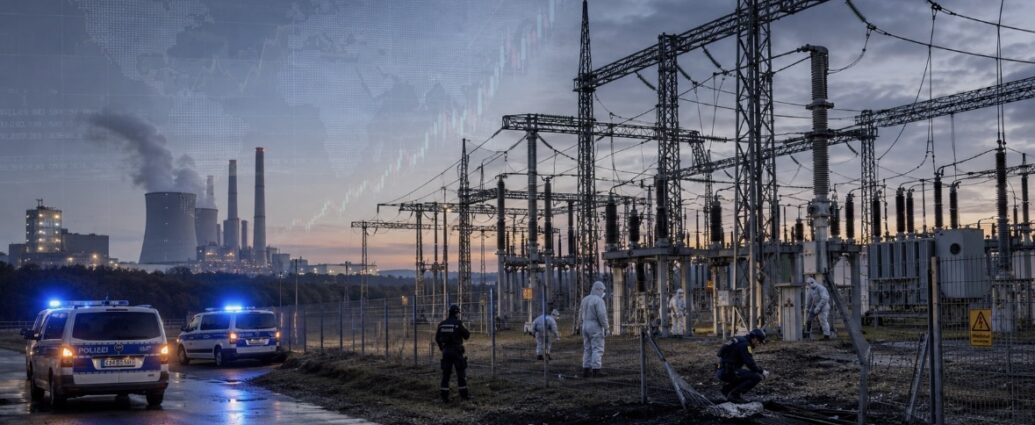
BRANDENBURG, Germany — German authorities are investigating an apparent sabotage attempt against electrical infrastructure near the Jänschwalde power plant in southern Brandenburg, an incident that caused no reported impact to the public but is adding to mounting concerns over the vulnerability of European critical infrastructure.

Brandenburg Police said officers were notified at approximately 8 a.m. Tuesday of suspected damage to an overhead line at a substation in the Turnow-Preilack area. Investigators found several devices at the scene, some of which had apparently failed to function, prompting deployment of bomb-disposal specialists from the state criminal police office. Police said evidence was being secured and that, according to information available at the time, there had been no impact on the population. 

Authorities have not publicly identified a suspect, motive or organization behind the incident.

Brandenburg Minister President Dietmar Woidke nevertheless characterized the incident as an attempted attack on the substation near the Jänschwalde power plant and called for greater protection of critical infrastructure.

“Whoever tries to sabotage our critical infrastructure and paralyze social life attacks us all,” Woidke said in a statement, translated from German. He added that authorities were working “at full speed” to identify those responsible. 

The incident comes at a particularly sensitive time for Germany. The federal government has already raised its assessment of the country’s threat environment amid concerns over sabotage, drone incidents and other forms of hybrid activity. Following a separate August incident at Leipzig/Halle Airport, the German government said the country was increasingly facing “hybrid threats, sabotage and drone attacks.” 

There is currently no official evidence tying the Jänschwalde incident to Russia, and any such connection remains hypothetical.

Why a Russian Attribution Would Matter Far Beyond the Damage

The immediate economic consequences of the Jänschwalde incident appear limited. Police reported no impact on the surrounding population, and there is no indication so far of a sustained disruption to Germany’s power supply. 

But if German investigators were ultimately to determine that the attack was conducted by, directed by or materially supported by the Russian state, the financial significance could be considerably greater than the physical damage itself.

The market-moving event would no longer be a damaged power line. It would be credible confirmation that Russia had deliberately attacked critical energy infrastructure on the territory of a NATO member.

Recent Bundesbank research provides some indication of why that distinction matters. In an August 2026 study examining geopolitical risk specifically in Europe, researchers found that a sudden increase in European geopolitical risk produces significant recessionary and inflationary effects across the euro area. 

Previous energy shocks have also demonstrated the financial-market transmission mechanism. The Bundesbank reported earlier this year that elevated geopolitical and energy risks pushed up short-term inflation expectations, reduced investor risk appetite, pressured the euro and weighed on risky assets. 

A confirmed Russian attack could therefore initially place pressure on European equities and the euro while increasing volatility in German and European power markets. Energy-intensive industrial companies could be particularly exposed if investors began pricing in the possibility of additional attacks or increased security costs.

The effect on German government bonds would be less straightforward. Traditional safe-haven buying could push Bund yields lower, while expectations for increased defense and infrastructure spending — together with renewed inflation risk — could pull yields in the opposite direction.

The global impact would depend heavily on what happened next. A one-off sabotage operation that produced little physical disruption and was met primarily with arrests, sanctions or diplomatic retaliation would likely have a much smaller lasting effect than evidence of an ongoing Russian campaign against European energy infrastructure.

Would Article 5 Apply?

A Russian attribution would also raise an unavoidable question over NATO’s collective-defense provisions, although it would not automatically trigger Article 5.

Under the North Atlantic Treaty, an armed attack against one member can be treated as an attack against all. NATO says explicitly that what qualifies as an armed attack is determined case by case and is not restricted to traditional military attacks.

The alliance has gone further in addressing modern hybrid warfare, stating that significant cyber or other hybrid attacks can, depending on their severity, reach the threshold of an armed attack. 

That distinction is important in the Jänschwalde case. Even if Russian responsibility were eventually established, attribution alone would not settle whether the incident crossed the Article 5 threshold. Its scale, intent, consequences and relationship to any broader campaign would likely factor into that determination.

Germany could also seek consultations under Article 4, which allows NATO members to consult when they believe their territorial integrity, political independence or security is threatened, without invoking collective defense. 

And even an Article 5 invocation would not automatically mean NATO military action against Russia. NATO states that each ally provides whatever assistance it “deems necessary,” and that such assistance may or may not involve armed force. 

For financial markets, however, the formal invocation itself would be significant. It would represent an extraordinary escalation in the confrontation between Russia and NATO and would likely cause investors to reassess the probability of a direct military confrontation.

That scenario could produce a considerably stronger global risk-off response than attribution without Article 5 — potentially increasing demand for traditional safe-haven assets, pressuring European equities and currencies, raising risk premiums and injecting additional volatility into energy markets.

NATO has already publicly described Russian sabotage, violence, cyber activity and other operations on allied territory as part of an intensifying Russian hybrid campaign. In a 2024 statement, the North Atlantic Council said allies would act “individually and collectively” to counter those activities. 

For that reason, a Russian attribution could matter to markets even if NATO never invokes Article 5. The key financial question would be whether investors see Jänschwalde as an isolated operation or evidence that the Russia-West confrontation has entered a new phase in which European civilian energy infrastructure is being deliberately targeted.

For now, German investigators have made no such attribution.

JBizNews will continue to monitor the investigation and update this report as German authorities release additional information.

The music you hear as you walk through Singapore’s Changi Airport can’t be found on any playlist or album. Instead, it’s being composed in real-time by a computer program.

“If you’re walking through Changi, you’ll be hearing a soundtrack that is literally AI,” Michael Boyle, HP’s senior vice president and managing director for Greater Asia, told Fortune in early August. “The great thing about AI is that you can shape it. If it starts raining outside, the airport gets busy, or it’s nighttime, the AI can adapt the music.”

The company behind those tunes is Wubble AI, a Singapore-based startup that participated HP’s “Garage 2.0” program, an accelerator that the company started in the Southeast Asian city in Oct. 2025. HP became a backer of Wubble AI in July.

Garage 2.0 harks back to HP’s roots in Palo Alto, where founders Bill Hewlett and Dave Packard started the company in the latter’s garage in 1939. HP runs Garage 2.0 with Antler, the global venture firm that has made more than 1,400 investments across more than 30 markets. 

“We’re looking at these founders and the speed that they can go without the complexity of being in a large organization, and it’s inspiring,” Boyle said. “It gives those of us working in a large, matrix organization the chance to come back down and think about what’s really going to cut through and build scale.”

Yet the Garage 2.0 program gets at a deeper question at the heart of HP: Is the tech company that’s perhaps most responsible for Silicon Valley’s culture getting left behind? HP is now No. 276 on the Fortune Global 500, down from No. 194 in 2017. The company is now betting on AI PCs as a new growth category, wagering that consumers will prefer to run AI on their own devices rather than in the cloud.

HP’s Asia bet

HP’s footprint in Asia began almost 60 years ago, when the company established its first regional office in Singapore in 1969. A year later, it opened its first Asian manufacturing plant in Singapore’s Redhill neighborhood, where just over 60 workers assembled iconic devices like the HP-25 calculator. 

The company operates across most Asian markets, with manufacturing and supply chain hubs in China, Thailand, and Vietnam, and major call centers in Malaysia and India. The region contributed just over 25% of HP’s revenue in its most recent quarter, which covered May, June and July. 

Boyle, who joined HP in 2015 as the vice-president of its Asia-Pacific and Japan (APJ) operations, is most attracted by the region’s diversity. “There’s many different versions of Asia,” he said. “It’s been really interesting getting to see how HP is represented in its different markets.” For example, he notes that Southeast Asian retail still relies on brick-and-mortar stores, which means most sales happen face-to-face; in contrast, online sales now dominate in markets like South Korea.

In what he describes as a “serendipitous” bit of foreshadowing, Boyle wrote his graduate thesis on HP’s strategy long before he ever worked there, while completing an MBA program at the Macquarie Graduate School of Management in Sydney.

“I visited their European operations in Germany as part of a study tour, and there was something about HP back in those days that I really identified with,” Boyle recalls. “So it was quite serendipitous that the phone rang, and all of a sudden I found myself living in Singapore and working for HP.” 

Bullish on print

HP is perhaps best known for its printers, which have long been a mainstay of offices worldwide. Boyle pushes back on any suggestion that print is dying, calling it a mainstay in sectors like education and healthcare.

Since last year, the firm has been rolling out AI-powered printers that come installed with Microsoft Copilot, which allow users to print documents from a shared cloud without ever booting up their laptop, as well as generate AI summaries from documents scanned using the printer. 

“AI is now starting to play a role where it can go both ways: from creation to print, and print back to creation,” Boyle said. “You can even edit on the fly.”

Despite Boyle’s optimism, printing remains a shrinking part of HP’s business. Total print revenue fell by 2.2% in HP’s most recent quarter. The company blamed “demand softness, particularly in China,” as well as “changing consumer behaviors.”

Pushed to the edge

As some of HP’s mainstay businesses show their age, the company is now looking to AI PCs as its next source of growth. 

AI PCs are devices with some capability to handle AI and machine learning tasks on the device itself, rather than relying entirely on the cloud. HP first unveiled its suite of AI laptops in 2024, including the OmniBook X AI PC and HP EliteBook Ultra AI PC.

HP now expects AI PCs to make up 50% of the company’s total shipments by the end of the year, Bruce Broussard, HP’s interim CEO, told analysts at the company’s third-quarter earnings call on August 27.

“The AI PCs seem like a good idea with regard to creating value for both the customers (reduced dependence on cloud, lower costs of tokens) and HP itself (premium prices),” says Nitin Pangarkar, an associate professor of business strategy and policy at the National University of Singapore (NUS). “Yet, profitable ideas are often copied by rivals. This would reduce the margins for HP unless it has proprietary technology, which could serve as a defense against imitators.” (AI PCs are currently offered by most hardware manufacturers including Apple, ASUS, Dell and Lenovo.)

Other experts say that how effectively HP is integrating AI into its offerings still remains to be seen. “The real test for HP is whether AI becomes an organising principle for the business, rather than a feature layered onto an existing portfolio,” says Tan Joo Seng, an associate professor of strategy, international business and entrepreneurship at Singapore’s Nanyang Technological University (NTU). “Putting an AI label on a PC is relatively easy, but using AI to fundamentally change the customer proposition is much harder.”

Boyle admits that take-up of AI PCs is also uneven across Asia, and remains weak in the region’s more traditional markets. “Japan, for example, is a lot more conservative,” he explains. “Organizations are waiting for strong proof points before they adopt the tech.”

AI PCs also cost 10% to 30% more than regular PCs, given that they come with a built-in neural processing unit (NPU). 

Boyle argued, however, that AI PCs are a worthy investment, especially as today’s companies face mounting token costs. Even running smaller AI tasks locally could curb the mounting cost of tapping third-party AI providers. “Cloud and token costs were not a part of IT budgets just a few years ago,” he said. “But they’re costs people now have to think about.”

Edge AI devices also come with other benefits, like reduced latency and added security. Since AI processing is moved from the cloud to onboard hardware, network transit time and round-trip delays are eliminated, allowing for near-instantaneous response. “From an IP perspective, many companies are very wary of putting things into the cloud,” Boyle remarked, adding that AI PCs reduce such risks by housing data locally.

Earlier this year, HP debuted HP IQ, an on-device virtual assistant built on a 20-billion-parameter model that runs entirely on a device, rather than in the cloud. In Boyle’s eyes, that reflects the pace at which HP expects customers to adopt AI. “People and agents will be running models 24/7, and having a virtual assistant working round-the-clock for you will become commonplace in the next 12 to 18 months,” he said.

Musician at heart

For all his talk of AI PCs and edge computing, Boyle is, at heart, a musician. While in HP’s Australia office, he joined a band called Paper Jam, a cheeky reference to what happens when a sheet of paper gets stuck in a printer tray.

Boyle still composes a song every year, which his staff then performs. This year, he turned to Wubble AI to craft a track called “Greater Asia will amaza ya,” feeding the tool prompts like “energetic,” “anthem,” and “rock.”

“I made the song in literally three minutes—and everyone can’t get it out of their heads,” Boyle said. But for him, the technology only gets the process so far. “The song’s only good because it’s got human performance, which actually makes it meaningful.”

Michael Boyle will be speaking at the Fortune Leaders Forum, held in Macau on Sep. 8. Learn more here!

In Fortune’s “Asia Agenda” column, released at least twice a month, we speak with Asia’s top business leaders about how they are building for the future and the lessons they’ve drawn from leading companies in one of the world’s fastest growing and most dynamic regions. Explore all of our profiles here.

This story was originally featured on Fortune.com

This post was originally published here. 

America has spent decades building a sprawling higher-education system around a steady supply of college-age students. Now, there are about to be fewer of them to go around.

The U.S. graduated a record 3.9 million high school students in 2025. But that peak marks a turning point: By 2041, the country is projected to produce about 3.4 million high school graduates a year, a 13% drop, according to the Western Interstate Commission for Higher Education. 

Colleges are already competing harder for the students who are available and are having more trouble predicting which acceptees will ultimately enroll. Students using the Common App applied to an average of 6.56 colleges this admissions cycle, up from 6.37 a year earlier. 

That competition comes as rising costs put more pressure on college budgets. For schools that depend heavily on tuition to pay the bills, an empty seat means lost revenue; for the most vulnerable institutions, enough empty seats can threaten their survival.

“Nearly every college in the country is facing some kind of financial pressure,” Robert Kelchen, a professor at the University of Tennessee, Knoxville, who studies higher education finance, told Fortune.

Some schools are disappearing or joining forces with other institutions. 

The Federal Reserve Bank of Philadelphia estimated that 80 colleges could close between 2025 and 2029, adding to the more than 300 degree-granting institutions that have shut down since 2008. 

Merger talks are becoming another part of the conversation: 31% of private nonprofit college presidents surveyed said their institutions had held serious discussions about a merger or acquisition, with financial stability the most commonly cited reason.

At the same time, the traditional four-year college path is facing more competition. Enrollment at public two-year institutions focused on vocational programs grew nearly 20% between spring 2020 and spring 2025, according to the National Student Clearinghouse Research Center. And the price of a four-year degree is becoming hard to ignore, with annual sticker prices at dozens of U.S. colleges and universities now nearing or exceeding $100,000 when tuition, housing and other expenses are included.

And as careers in skilled trades become more attractive alternatives to four-year degrees, fewer high school graduates are choosing to go straight to college. The share enrolling immediately after graduation has fallen from 70% to 62% over the past decade. One scenario modeled in the education policy journal Education Next found that a 15% enrollment decline over five years would result in 23 additional college closures.

The business of filling a classroom

How much a shrinking student population hurts a college depends in part on how much it relies on those students for revenue.

And for schools that depend heavily on tuition, competing for students can itself eat into the revenue each one brings in. At private nonprofit colleges surveyed by the National Association of College and University Business Officers, nine in 10 first-time undergraduates received institutional grant aid in 2025-26, while the estimated tuition discount rate for those students reached 57.1%.

That leaves schools in a bind: They need tuition revenue, but charging closer to the sticker price can make it harder to fill the seats that generate it.

“Students and their families know that they have more market power to negotiate financial aid, further affecting the bottom lines outside of a few dozen of the most prestigious universities,” Kelchen said. Moving away from tuition discounting often isn’t feasible, he added, because “students will choose other colleges.”

And schools are trying to make that math work as their own bills rise. Inflation and health insurance costs are hitting institutions broadly, Kelchen said. The Trump administration has added to those pressures through cuts to federal research funding and a crackdown on international students who can be particularly valuable to college budgets because they pay full tuition. During the key May-to-August visa processing period last year, the U.S. issued 36% fewer F-1 student visas than during the same period in 2024, according to State Department data analyzed by The Chronicle of Higher Education. 

When the math stops working

Hampshire College shows what the extreme end of that squeeze can look like. The private liberal arts college in Amherst, Massachusetts, is set to end academic operations after the fall semester. 

It’s part of the so-called Five College consortium that also includes Amherst College, Mount Holyoke College, Smith College, and the University of Massachusetts Amherst, and its closure represents a dire warning that similarly vaunted schools could suffer the same fate. 

But a school doesn’t have to be on the verge of closure to feel the same underlying pressures.

Syracuse University has a national brand and a $2.5 billion endowment, yet it fell short of its enrollment target this school year, contributing to a 1.5% budget shortfall, according to The Wall Street Journal. International enrollment had fallen by half amid the Trump administration’s crackdown on student visas, while the university took on $458 million in debt last year to build new dorms.

Kelchen said Syracuse is being hit by many of the forces affecting the broader industry. But it’s more vulnerable than some of its peers because it’s outside a major city or typical college town, and it’s located in a cold region with a declining number of high school graduates.

Even a sizable endowment doesn’t necessarily mean a college is safe as many are essentially house rich and cash poor. 

“Colleges may have assets, but they are in their buildings or restricted endowment funds that they cannot use for daily operations,” Kelchen said.

While barred from directly drawing down that pool of money, nearly 200 private colleges still borrowed from restricted endowment funds in 2025, up from about 130 in 2021, according to estimates from higher-ed consulting firm Perspective Data Science.

Running out of cash on hand is the clearest indicator that a college is at high risk of closure, he added, while consistent operating losses, enrollment declines and large withdrawals from endowments can also signal distress.

Kelchen expects an uptick in closures rather than a massive wave, with schools in rural parts of the Northeast and Midwest facing particularly strong headwinds.

For the colleges that remain open, that may mean becoming smaller institutions than they ever expected to be.

This story was originally featured on Fortune.com

This post was originally published here. 

American Airlines will match the federal government’s $1,000 contribution to Trump Accounts for eligible employees’ children as part of a new benefit launching in 2027, the carrier confirmed to FOX Business.

The airline will make a one-time $1,000 contribution for each eligible child born between Jan. 1, 2025, and Dec. 31, 2028, who has established a Trump Account and qualifies for the federal government’s $1,000 contribution.

The match applies on a per-child basis, meaning an employee with two qualifying children could receive two $1,000 federal contributions and two additional $1,000 contributions from the airline. The benefit will be available to all U.S.-based American Airlines employees.

American will also allow eligible employees to direct up to $2,500 in pretax earnings each year into their dependent children’s Trump Accounts beginning in 2027.

AMERICAN AIRLINES BETS BIG ON INTERNATIONAL TRAVEL WITH 7 NEW ROUTES

Approximately one-third of American’s workforce has children who would qualify for a Trump Account and could therefore take advantage of the pretax contribution option, according to the airline. American did not provide an estimate of how many employees or children could qualify for the company’s $1,000 matching contribution.

American Airlines Chief People Officer Cole Brown announced the new benefit to employees Monday, telling team members the airline was looking for additional ways to help them build long-term financial security for their families.

“American will support eligible team members who choose to participate in the new Trump Accounts program by matching the federal contribution,” Brown said. “For eligible children born between 2025 and 2028 who have established a Trump Account, American will match the federal government’s one-time $1,000 contribution with an additional one-time $1,000 contribution of our own.”

GOLDMAN SACHS TO CONTRIBUTE $1,000 TO TRUMP ACCOUNTS FOR ELIGIBLE CHILDREN OF EMPLOYEES

The airline said the benefit is part of a broader effort to give employees more ways to save for their children’s futures, alongside benefits including its 401(k) program, healthcare and career development resources.

Trump Accounts, also known as 530A accounts, are tax-advantaged investment accounts for children. Eligible children born between 2025 and 2028 can receive a one-time $1,000 federal contribution after an account is established.

Parents, guardians, grandparents and others can contribute up to $5,000 annually to the accounts until the year before the beneficiary turns 18, according to CNBC. The Treasury Department has also proposed regulations that would allow employees to fund dependent children’s accounts with pretax earnings directly from their paychecks.

More than 50 companies have committed to contributing to Trump Accounts for their workers in some capacity, according to the U.S. Treasury Department. Goldman Sachs and Morgan Stanley are among the companies that have also offered to match the government’s $1,000 contribution, CNBC reported.

CLICK HERE TO GET FOX BUSINESS ON THE GO

American said it is working to implement the new benefits and plans to provide employees with additional information about how to participate in the coming weeks.

This post was originally published here. 

Apple CEO John Ternus marked his first day in the top job at the tech giant on Tuesday, with the company embarking on a new era after former CEO Tim Cook stepped down from the role after 15 years.

Cook, who will remain with Apple as the company’s executive chairman, saw the diversification of its product offerings with the release of devices including the Apple Watch and AirPods, as well as its growth into services through offerings like Apple Pay.

The company also saw explosive growth, becoming the first publicly traded U.S. company to surpass $1 trillion in market capitalization in 2018 – which has since surged to about $4.75 trillion.

Ternus is an Apple veteran who has worked at the company since 2001, primarily in its product design and hardware engineering teams. He joined the executive team in 2021, and his tenure has involved designing and managing the hardware for Mac, iPad, iPhone, Apple Watch and Airpods, while he also oversaw the transition to in-house Apple Silicon chips across most of its major product lines.

TIM COOK’S LAST DAY AS APPLE CEO: HOW HE LED THE TECH GIANT’S RISE TO $4T

Leander Kahney, the editor and publisher of Cult of Mac and the author of six books about Apple, told FOX Business that he thinks it’s “a great thing that he comes from a product background because he has that sort of product focus, and Steve Jobs obviously had that too… he was the consummate product guy.”

“I think there’s a continuum between Jobs and Cook and now Ternus, and it’s that focus on products,” Kahney said. “John has worked on every major product that Apple has put out in the Tim Cook era, and he’s deep in the weeds.”

Kahney said that Apple’s focus on manufacturing allows it to make a range of consumer products, but that requires a “deep, deep expertise in how to make things, and Ternus definitely has that.”

“He’s deeply invested in Apple culture, he knows how Apple works, he’s got a great team of people around him,” Kahney added.

APPLE RAISES IPAD AND MACBOOK PRICES AS MEMORY CHIP COSTS SURGE

One area where Apple has been perceived by some observers as lagging in recent years was in the deployment of AI tools, particularly following the rollout of OpenAI’s ChatGPT, Google’s Gemini and other competing chatbots.

Kahney said that Apple was moving much more slowly and taking a cautious approach to developing AI models, and has avoided privacy issues related to the deployment of those tools. He added that the company’s development of hardware that’s capable of running AI models presents “a good argument that Apple isn’t lagging at all.”

He said that Apple has been building neural engines and AI hardware into its devices which has helped drive demand for Mac products amid the AI boom, creating an “enormous installed base of very, very capable AI devices that they can take advantage of when they start rolling out the models for it.”

APPLE TO WORK WITH INTEL ON US CHIP DESIGN AND PRODUCTION, TRUMP SAYS

Apple has recently announced price increases for various products due to the shortage of memory chips, as well as the time it takes for new chip fabs to be built and begin production.

TSMC, a key partner of Apple, is building plants outside of Phoenix that are expected to eventually produce cutting-edge chips and also handle the packaging of them in the years ahead – though the chip manufacturer also faces heavy demand from AI hyperscalers that can strain its capacity in the near-term.

“It’s a huge challenge, but it’s a challenge for everyone in the consumer electronics space. Everyone’s coming up short of the chips they need because the AI companies are pouring such enormous amounts of money into the data center buildout,” Kahney said.

He noted that Apple has sought to diversify its base of chip suppliers by turning to Intel, which it relied on exclusively for more than a decade to power its Mac product line, as well as some iPhone designs, before it opted to shift its chip design work in-house.

GET FOX BUSINESS ON THE GO BY CLICKING HERE

“This is smart of Apple to diversify its suppliers and to support a previous partner that was obviously very successful for them in the Intel era before it went a bit sideways,” he said.

This post was originally published here. 

Hudson County, New Jersey, Democratic leaders are calling on Attorney General Jennifer Davenport to withdraw the state from its involvement in a lawsuit seeking to stop the merger between Paramount-Skydance and Warner Bros. Discovery.

In an op-ed published by the New Jersey Globe, Bayonne Mayor Sharon Ashe-Nadowski, Hudson County Executive Craig Guy, state Sens. Raj Mukherji, Brian Stack and Angela McKnight, in addition to state Assembly members Jerry Walker, William Sampson, Ravi Bhalla, Katie Brennan, Larry Wainstein and Gabriel Rodriguez urged Davenport to withdraw from the lawsuit, citing potential economic benefits for the state.

The officials wrote that while they trust Davenport’s independent judgment, “The extraordinary stakes for New Jersey in this matter, however, give rise to this rare but consequential disagreement.”

“New Jersey has spent years building a film and television industry capable of competing with New York, California, Georgia and production centers around the world including the U.K., attracting transformational investments from Netflix and Lionsgate,” the officials wrote. “Paramount has become a critical participant in that effort and has committed to establishing a substantial, long-term production presence in Bayonne.”

The group said the plan to develop 1888 Studios in Bayonne is the most consequential economic opportunity Hudson County has had in years.

TRUMP, SCHIFF FORGE UNLIKELY ALLIANCE AS HOLLYWOOD BLEEDS JOBS

“This is the creation of an entirely new economic ecosystem and a self-sustaining creative economy in our state: careers for electricians, laborers, carpenters, stagehands, technicians, artists, and countless others; new customers for our small businesses; and, critically, accessible pathways into a growing industry for young people and working families who too often have been excluded from the prosperity being created around them. Its economic reverberations will extend well beyond the studio gates,” the Hudson County officials said.

The project would bring in roughly $1.2 billion in capital expenditures in the Paramount campus, permanent soundstages and post-production facilities in the county, as well as permanent jobs, according to the officials.

The Hudson County elected officials also raised concerns over the cost of the litigation.

DAVID ELLISON BREAKS SILENCE ON PARAMOUNT-WBD MERGER FIGHT, CNN INSIDERS DON’T BUY ‘LIP SERVICE’ ABOUT NETWORK

“We are increasingly concerned that New Jersey taxpayer dollars are being committed to litigation whose merits appear uncertain while its potential costs to the State and to our economy continue to escalate,” they wrote. “After an exhaustive eight-month investigation involving review of more than 2 million documents, the U.S. Department of Justice concluded that the transaction was unlikely to harm competition in streaming, linear television, or theatrical film.”

They urged the attorney general to withdraw New Jersey from the coalition.

“Now that New Jersey is a party to this litigation, whether or not we might have chosen a different course at the outset, the question is how best to protect the interests of the State going forward. We respectfully urge our Attorney General to withdraw our state from this action or work toward a prompt and reasonable resolution of this matter and to be a voice of reason in the room,” they wrote.

“The State should have an exceptionally compelling reason before spending taxpayer dollars on multi-state litigation of uncertain merit that may undermine those very investments,” the county leaders added.

CNN STAFFERS BRACE FOR PARAMOUNT CEO’S POTENTIAL PLAN TO LAUNCH EDITORIAL BOARD TO OVERSEE NETWORK

New Jersey Gov. Mikie Sherrill told Fox News Digital in a statement, “We are excited to welcome Paramount to Hudson County because film is in New Jersey’s DNA — we’re Hollywood East and the only state where film shoots are up this year. New Jersey is open for film business, so we are going to keep building, keep filming, and keep making it easier for companies like Paramount to create good-paying jobs and lay down roots in the Garden State.” 

Davenport’s office told Fox News Digital they had no comment on the Hudson County officials’ opinion piece.

Davenport’s office, in a July press release, said that she was joining the coalition to challenge the merger, which included other states such as California, Colorado and New York, saying, “The proposed merger would combine two of Hollywood’s five major film distributors and two of the five major basic cable companies, extinguishing competition between Paramount and Warner Bros. and inflicting substantial harm on movie theaters, basic cable distributors, and, ultimately, consumers nationwide.”

“New Jersey is the birthplace of the American film industry, and the state is now a burgeoning hub for film and television production. Given our state’s leadership in the film and television industry, we must protect our residents when corporate media monopolies threaten to upend the industry by raising prices and reducing content choices,” Davenport said at the time.

“The proposed merger between Paramount and Warner Bros. Discovery will hurt our state’s residents, plain and simple,” she continued. “We will always stand up against corporate monopolists that seek to exploit hardworking New Jerseyans by driving up prices and turning a massive profit at their expense.”

MARK RUFFALO FIRES BACK AT PARAMOUNT OVER ‘APPALLING’ ANTISEMITISM ACCUSATION TIED TO ELLISON MERGER CRITICISM

Seth Schachner, managing director of Strat Americas and former chairman of Florida’s Film & Entertainment Advisory Council, told Fox News Digital that the lawmakers have a legitimate argument.

“These lawmakers have a legitimate argument, as no one really benefits from extensive legal delays over a merger that could still go forward, albeit with asset sales,” he said. “The states’ legal case is a bit limited though, as it ignores the broader competitive reality that all locales — including New Jersey — are operating in with respect to film and TV production, as streamers like Netflix are essential parts of the case.”

CLICK HERE FOR MORE COVERAGE OF MEDIA AND CULTURE

He also said the lawmakers were “not unbiased here,” as they are supportive of the commitment of Paramount’s 1888 Studios in Bayonne.

Representatives for Paramount-Skydance and California Attorney General Rob Bonta’s office were expected to meet last week to discuss a potential resolution to the lawsuit seeking to block Paramount’s $110 billion acquisition of Warner Bros. Discovery, according to reports.

GET FOX BUSINESS ON THE GO BY CLICKING HERE

This post was originally published here. 

The home known as Pyramid House is immediately recognizable even among the modernist homes, many of them memorable local landmarks with “names” of their own that have defined the Fire Island Pines since the 1960s. Designed by Buenos Aires-born architect Julio Kaufman, the house at 443 Sail Walk at the western edge of the Fire Island National Seashore was inspired by the sweeping vistas that reveal the shore’s protected dunes. Asking $3.3 million, the house has been more recently updated within Kaufman’s iconic design by a series of creative owners.

Kaufman built the home in 1961 for a nephew of J.P. Morgan’s great nephew, John Goodwin, an architect, arts patron, writer, and prolific party host who entertained the likes of Christopher Isherwood, Paul Cadmus, and Tennessee Williams.

As recently reported by Curbed, Kaufman told a local reporter that the pyramid he designed would offer the ability to “stand in the middle of the living room and be able to look everywhere on the island.” Kaufman’s original design was later augmented to add more bedroom space and a wraparound deck.

Playwright Paul Rudnick bought the home in 2001 and redesigned the home to replace the shingles of Kaufman’s original pyramid with a glass and steel frame and add two guest rooms and a saltwater pool. Rudnick sold the house in 2013 for just under $1 million to Broadway clothing designer Jeff Mahshie.

As 6sqft previously recounted, when the current owner, real estate agent Glenn Rice, first saw the house while on a walk in the windswept Fire Island Pines, he was reminded of the I.M. Pei-designed pyramid at the Louvre set against the backdrop of the Atlantic shore.

In 2018, after touring the house with a friend, he was able to purchase the mid-century gem for $1.6 million. Rice, who is also a vintage modern furniture dealer, furnished the home from his personal collection of 1960s and ’70s pieces. Rice briefly listed the home, which was also a popular summer rental, for $6.5 million in 2022.

On the eastern edge of the Pines, bordered by protected land, the 2,100-square-foot home remains an icon and a private refuge after standing for over 50 years.

The home’s current three-bedroom configuration begins on the lower level with a sprawling primary suite that includes a dressing area, bath, and private home office. This decadent space opens to face the pool and dunes beyond.

Esteban Gomez of Compass has the listing.

“The remarkable thing about the Pyramid House isn’t really the pyramid—it’s what the shape allows you to experience from inside. The architecture gives itself over to the dunes, sky and horizon, and more than 60 years after it was built, it still feels radical,” Gomez told 6sqft.

“The opportunity to become the next steward of a house this important to Fire Island’s modernist history is incredibly rare.”

[Listing details: 443 Sail Walk by  Esteban Gomez of Compass]

RELATED:

The post Fire Island modernist icon Pyramid House asks $3.3M first appeared on 6sqft.

This post was originally published here. 

American service members will now have access to military versions of ChatGPT and Grok as the Pentagon tries to incorporate more AI into its daily workflows.

The Department of War said in a pair of announcements on Monday that the two services will be incorporated into its bespoke AI platform GenAI.mil, which launched in December and originally offered access only to a specialized military version of Google’s Gemini. The department said GenAI.mil already counts 1.7 million of the Department of War’s 3 million-strong workforce, which includes both military members and civilians.

The department’s Monday announcement comes after it awarded OpenAI and Elon Musk’s SpaceXAI, which runs Grok, defense contracts worth up to $200 million each to provide the department with AI tools. It also awarded contracts at the time to Google and Anthropic.

The military version of ChatGPT, dubbed ChatGPT Mil, is part of OpenAI for Government, an initiative launched last summer meant to bring the company’s AI products to government workers.

“ChatGPT on GenAI.mil will make unclassified work throughout the Department more efficient, freeing up time and resources so DoW personnel can focus on the mission,” said Joe Larson, vice president and head of government at OpenAI, in a statement to Fortune.

“ChatGPT Mil brings a familiar commercial experience into the Department’s secure environment, tailored to warfighter needs,” read a press release from the Pentagon.

The specialized version of ChatGPT, which kicked off the AI race when it launched in 2022, will keep data within its environment and not use it to train its models. Service members can use both the specialized versions of ChatGPT and Grok for Controlled Unclassified Information (CUI) at Impact Level 5 (IL5), which refers to sensitive U.S. government information that is not classified, according to the Pentagon announcement.

The vast majority of military work is unclassified and deals with document heavy yet routine work in HR, logistics, and contracting, much of which could be aided by ChatGPT’s ability to process large amounts of information, said a person familiar with uses at OpenAI.

As for the military version of Grok, or Starshield AI’s Grok for Government, the Pentagon said in its announcement that it will give its personnel access to deep thinking-inference, as well as different levels of reasoning (auto, fast, and expert). It will also enable “the Joint Force to execute missions faster and with greater precision across numerous operational contexts, ranging from market research analysis for acquisition professionals to supply chain management for logisticians,” the announcement read. 

The release of ChatGPT and Grok for the military comes as War Secretary Pete Hegseth has pushed for AI to become a part of the Pentagon’s daily workflows in line with the White House’s AI action plan, which says, “The United States must aggressively adopt AI within its Armed Forces if it is to maintain its global military preeminence.”

The Department of War is turning to an “AI-first” mentality in the military that will transform how it fights, thinks, and organizes to guarantee American dominance and security, said a War Department official.

Still, reporting by DefenseScoop found in December that the rollout of the Department of War’s GenAI.mil platform, which at the time included only a military version of Google’s Gemini, was hastily done, with some service members and workers unaware of the initiative at launch.

“I want YOU to use AI”

On Dec. 9, the day of the rollout, workers saw a pop-up on their computers with a stylized GenAI.mil logo and the words “I want YOU to use AI” with a link to a government website, DefenseScoop reported. The style and suddenness of the launch made at least one unnamed senior army official and the people in their office wonder whether the pop-up was a malicious actor hacking their computers.

It wasn’t until the DoW personnel saw a memo circulated by Hegseth, along with videos on social media, in which he declared “The future of American warfare is here, and it’s spelled AI,” that fears of a cyberattack were dispelled, according to DefenseScoop.

“I expect every member of the Department to log in, learn it, and incorporate it into your workflows immediately. AI should be in your battle rhythm every single day,” Hegseth’s December memo read.

Notably absent from Monday’s addition of Grok and ChatGPT to GenAI.mil is Anthropic’s Claude. The AI company led by Dario Amodei had a falling out with the Department of War that broke into the public in January when Hegseth, upon announcing the Pentagon would add Grok to its list of generative AI providers, publicly criticized AI models that “won’t allow you to fight wars,” a jab later revealed to be directed at Anthropic over the company’s push to get the Pentagon to agree not to use its technology for autonomous weapons or surveillance as it negotiated a contract.

In February, President Donald Trump directed federal agencies to stop using Anthropic’s technology in a process meant to wrap up at the latest by the end of this month. Hegseth said at the time he would designate the company a “supply chain risk.” Anthropic sued a month later.

Last week, a judge ruled that the Department of War acted unlawfully by designating Anthropic a supply chain risk.

This story was originally featured on Fortune.com

This post was originally published here. 

Mark Cuban is notoriously bold in his deal-making. But even by his standards, dropping millions of dollars on a mansion he’s never set foot in is a move that could raise eyebrows.

The billionaire entrepreneur and former Shark Tank star revealed he snagged a $25 million estate at a jaw-dropping 50% discount, a deal he says exemplifies one of his core investing principles.

Cuban reflected on the purchase in a 2022 interview with GQ. During his days at MicroSolutions (the company he ultimately sold for $6 million in 1990), his partner, Martin Woodall, told him about an “amazing house” going into foreclosure. It was a home the owner had spent three years building and a “dream home” to the original owner’s wife and whole family, Cuban said. 

But unfortunately, the owner was forced to sell the home when the stock market crashed, and he lost everything. So, Cuban, who’s currently worth about $10.5 billion, bought the 24,000-square-foot mansion in Dallas sight unseen, calling it his one “why the f–k not purchase.” He still resides there, and Zillow estimates show it’s currently worth $22 million.

“I’d never seen the house. I saw some pictures. I’d never been there. I was like, F–k yeah. I’m a billionaire,” Cuban said. Essentially, the idea is that buying a home at a discount doesn’t inherently change its value. So when Cuban eventually goes to sell the home someday, he’ll make a pretty penny—at least about $10 million based on the current estimated value of the home (although it could be closer to $28 million, according to the Zillow estimate range).

Buying at a steep discount is “the best guaranteed return on investment” you can make, Cuban said, a methodology he uses for most of his purchases. 

“Saving 30% to 50% buying in bulk—replenishable items from toothpaste to soup, or whatever I use a lot of—is the best guaranteed return on investment you can get anywhere,” Cuban said in a 2010 Forbes interview. The mansion was the same principle, just on a much larger scale.

The former Dallas Mavericks owner also used the home purchase example as a cautionary tale about never taking wealth for granted. He also outlined his four-rule framework for becoming a millionaire, which includes mastering a skill, learning to sell, staying curious, and keeping learning—then start a company once you have those foundations.

“You have to know how to sell,” Cuban said. “You don’t want to be in a position where you’re dependent on other people.”

Billionaires approach finances differently

Cuban’s purchase is a window into how the ultra-wealthy think about real estate differently from average Americans, who would likely think it’s insane to purchase a home they’ve never actually seen in person.

Where most buyers shop for a home, Cuban shopped for a better financial position. The mansion is less a lifestyle acquisition (that was just a bonus for him) than an asset with favorable entry terms. Some billionaires, who would presumably be able to purchase a home outright, will also take out mortgages as a more savvy financial decision. It’s because most of the wealth held by ultra-high-net-worth people is tied up in investments, stocks, and bonds, and they don’t keep as much cash on hand.

“Ultra-high net worth individuals think differently about liquidity and leverage,” Miltiadis Kastanis, executive director of sales at Compass, previously told Fortune. “They’d rather keep their money working for them in investments, businesses—or even art—rather than tying it all up in one property.”

For Cuban, the purchase also signals continued confidence in hard assets at a moment when even some of the world’s most sophisticated investors are questioning where to park capital. Real estate offers something that stocks and crypto don’t always promise: a floor built into the purchase price itself.

Still, it’s important for the average American to make financial decisions that work for them, too.

“The takeaway for the average buyer isn’t to mimic [billionaires’] precise approach, but to understand the principle,” Evan Harlow, real estate agent at Maui Elite Property, previously told Fortune. “Sometimes the smartest financial move isn’t paying everything off, but keeping your money flexible and working for you.”

A version of this story was originally published on Fortune.com on March 22, 2026.

This story was originally featured on Fortune.com

This post was originally published here. 

OpenAI is changing its model launch strategy as its technology becomes more powerful and the potential for its misuse grows—especially following the July incident in which the AI models it was testing autonomously planned and executed a cyberattack against AI company Hugging Face.

The company’s next model, Astra, comes out “soon,” OpenAI said. It said Astra is substantially more capable than the company’s current frontier AI model, GPT-5.6 Sol, which itself is highly capable at cyber tasks. But only a handful of partners will get access to its most advanced cybersecurity capabilities as OpenAI works to balance helping companies prevent cyberattacks while not empowering attackers at the same time, a company spokesperson told reporters on a briefing today.

OpenAI is courting customers to use its models to prevent cyberattacks, or for “defensive cybersecurity.” It sees these sales as a critical revenue stream, and a main priority for its new chief revenue officer Dali Rajic.

The small group of “alpha testers” with full access to Astra’s cybersecurity capabilities includes “individuals and organizations that are responsible for protecting critical digital infrastructure and, broadly, critical infrastructure,” an OpenAI spokesperson said. That includes the U.S. government, and companies in OpenAI’s trusted access program for cybersecurity. OpenAI declined to name these organizations.

OpenAI will be monitoring how the model performs among this small group, and will expand access more through its “Daybreak Blue” program once it is confident Astra has “the right calibration” and it can “provide defensive benefits while reducing the potential for for misuse,” the company said.

Astra is already a few weeks delayed

Astra’s release has already been “delayed a certain number of weeks because everything was paused after Hugging Face, and then we took extra time to make sure that what we’re launching is safe,” an OpenAI spokesperson said.

OpenAI paused new model training for two weeks after the Hugging Face incident to bolster its internal safeguards. A few of those changes included adding more agent monitoring since the company did not know about the Hugging Face hack until a week after it occurred, and also making its testing environments more isolated so the AIs cannot escape and infiltrate other companies.

While the Astra model was not part of the Hugging Face incident, OpenAI says, it is both more capable and more efficient than GPT-5.6 Sol, which was involved in the breach. (Another unreleased AI model that OpenAI has not publicly named also played a key role in the Hugging Face cyberattack. OpenAI has since deactivated that model.) Importantly, OpenAI says Astra is the first model it plans to release that meets its “critical cybersecurity capability threshold” under its Preparedness Framework, an internal policy that governs the safety precautions the company will put in place depending on the risks a model presents. This means Astra can find and exploit previously unknown security flaws without human oversight, under the right conditions.

Astra has already demonstrated its hacking chops during internal evaluations. In one test, OpenAI built a benchmark called ExploitBench, containing 20 high-severity vulnerabilities. The model out-performed GPT-5.6 Sol on the test, and “even discovered and used two zero-day vulnerabilities as part of an exploit chain,” OpenAI said. “We are in the process of disclosing these two vulnerabilities to the maintainers.”

At the same time, Astra is more likely to refuse inappropriate requests than GPT-5.6 Sol, OpenAI said. In one cyber evaluation, Astra refused 91.5% of requests compared to 59% for GPT-5.6 Sol, although that means it still complied with 8.5% of requests.

Astra may refuse legitimate cybersecurity requests

OpenAI is “being especially careful to make sure this deployment is safe and secure”—but this introduces another tradeoff. Astra might be too cautious, and refuse legitimate cybersecurity requests. As a theoretical example, if someone asks it to help find and patch a vulnerability, it could mistakenly think they were trying to carry out an attack, and not comply.

Refusals of this type are why Hugging Face said it was forced to use an open-source Chinese model to help it address the OpenAI hack. The company tried to use Anthropic’s models to combat the attack, but they were overly cautious and refused.

OpenAI, like other frontier AI companies, is trying to find ways to endow its models with an inherent sense of right and wrong and ensure that they have “alignment” with human values and norms, the company said. It is working on training its models to respect boundaries as a human would, such as knowing “the rule of law,” a company spokesperson said.

This story was originally featured on Fortune.com

This post was originally published here. 

Finance Minister Bezalel Smotrich, who chairs the Religious Zionist Party (RZP), and Zehut party leader Moshe Feiglin announced on Tuesday evening that they will run together in the upcoming October elections, stating that the alliance is aimed at consolidating the right-wing vote.

The two right wing party leaders signed an agreement to run as a technical bloc, which can be split after entering the Knesset. Feiglin is expected to receive the second spot on the list unless additional alliances are formed, his spokesperson confirmed to The Jerusalem Post.

The alliance comes ahead of the deadline for submitting party lists next week and as a group of small right-wing parties continues to fail to pass the electoral threshold in recent polling.

Smotrich said upon signing the agreement for a technical bloc that the alliance was formed to preserve right-wing votes and called on other right-wing figures to join them.

“We are taking responsibility for the national camp, bringing forces together and ensuring that no right wing vote is lost,” Smotrich stated at the signing.

Finance Minister and Religious Zionist Party head Bezalel Smotrich and right-wing politician Moshe Feiglin sign agreement for joint run in October elections, September 1, 2026. (credit: Religious Zionist party)

Uniting fragmented parties

While RZP had been hovering near the electoral threshold, Feiglin’s far-right Zehut party had failed to pass it in recent polling.

RZP added that its goal was to form as broad a right-wing bloc as possible, “unite the fragmented parties in the national camp, and ensure that right-wing votes are translated into political power that will enable the formation of a strong right-wing government.”

According to reports, the two may attempt to pressure Brig.-Gen. (res.) Ofer Winter, who recently formed his own right-wing party, into joining the alliance. However, following the announcement of the merger, Winter released a statement that citizens were “demanding something new, not more of the same.”

Recent polls had shown that Winter’s new People of Israel party could win five seats, largely at the expense of Smotrich’s Religious Zionist Party, which would fall below the electoral threshold.

Ben-Gvir rejects alliance

Last week, Prime Minister Benjamin Netanyahu called on Smotrich and National Security Minister Itamar Ben-Gvir, who leads the far-right Otzma Yehudit party, to run on a joint list, as they did in the 2022 elections.

Ben-Gvir had openly rejected such an alliance, prompting reports that Smotrich and Feiglin were negotiating a joint run.

Smotrich has stated that he intends to remain part of Netanyahu’s bloc in the upcoming elections.

Netanyahu had also called on voters not to support the small parties on the Right, warning that splitting the right-wing vote could cost his camp the election and allow the opposition bloc to form the next government.

Feiglin previously served in Likud, led by Netanyahu. He resigned after he did not receive a higher slot on the party’s Knesset list after its primaries and founded the Zehut Party in 2015.

Zehut and RZP both advocate for far-right security policies, including the annexation of the West Bank and Gaza. Zehut also supports libertarian economic policies and the legalization of cannabis.

Smotrich stated upon the signing of the alliance that “the upcoming elections are critical to the future of the national camp and to the future of the State of Israel.”

“Security, settlement, the judicial system, preventing the establishment of a Palestinian state, and our ability to continue leading the major changes that Israel needs – everything is at stake,” he added.

Feiglin stated that he and Smotrich were “bringing the news that so many have been waiting for and embarking on a joint effort aimed at maximizing the strength of the national and faith-based camp.”

This post was originally published on here. 

Court-authorized seizures have allowed the FBI to confiscate $560,000 in cryptocurrency and take control of domains and servers used by Hamas to raise money and recruit supporters, the US Department of Justice announced.

Hamas – a designated Foreign Terrorist Organization – has been raising funds for terrorist operations and recruiting supporters, announced US Attorney Jeanine Ferris Pirro.

“A message to Hamas: We will stop your fundraising for terror,” said Pirro. “Your networks are not secure, your crypto is vulnerable, and we will not stop until your ability to wage war is defeated.”  

As well as seizing the cryptocurrency donations, the Department disrupted Hamas’ fundraising and recruitment communication platforms and websites. Hamas originally controlled the seized infrastructure and cryptocurrency addresses on behalf of its military wing, the Al Qassam Brigades. This work was carried out by the FBI’s Albuquerque Field Office, which collaborated with human sources to identify and seize domains and servers the Al Qassam Brigades that controlled its main website, AlQassam.ps.

“These seizures deprive Hamas of resources it relies on to recruit and radicalize individuals online and finance barbaric attacks like the one on October 7, 2023,” said Assistant Attorney General for National Security John A. Eisenberg.

 A coin representing the bitcoin cryptocurrency is seen on computer circuit boards in this illustrative picture (credit: REUTERS)

“We will continue to tighten the vise on Hamas’s capacity for terror by infiltrating its online networks, confiscating its cryptocurrency, and shutting down its websites.”

Hamas relies on cryptocurrency and online platforms for financing

Assistant Director Brett Leatherman of the FBI’s Cyber Division said Hamas relies on cryptocurrency and online platforms to solicit funds from donors around the world and move that money outside the formal financial system.

He promised that the FBI will continue to use its authorities to intercept illicit funds and prevent terrorist organizations from exploiting digital networks to finance their operations. 

This post was originally published on here. 

Europe is putting nearly half a billion dollars into a new artificial intelligence supercomputer as governments race to secure the computing power that increasingly determines who can compete in AI.

The European High Performance Computing Joint Undertaking announced that it signed a €387.8 million contract with Bull for a new system called LUMI-AI, which will be installed at CSC’s data center in Kajaani, Finland.

At current exchange rates, the investment is roughly $450 million.

The important part is not simply that Europe is buying another supercomputer.

It is what Europe is trying to build around it.

LUMI-AI is being designed specifically for artificial intelligence workloads that require enormous amounts of computing power, including the training and deployment of advanced AI models, large-scale simulations and work involving massive or confidential datasets.

The system is expected to provide about 10 times the AI computing capacity of the existing LUMI supercomputer.

That is a major jump.

The machine will use next-generation AMD Instinct MI430X graphics processors together with AMD’s sixth-generation EPYC processors. It will be installed in Finland and is expected to become available to users in 2027.

Half of the €387.8 million cost will be funded by the European Union through the Digital Europe Programme. The other half will be paid by the LUMI AI Factory consortium, led by Finland and including the Czech Republic, Denmark, Estonia, Norway and Poland.

The broader goal is to give European companies, startups, researchers and government institutions access to powerful AI infrastructure without depending entirely on private American technology giants or foreign computing systems.

That matters because AI is becoming increasingly dependent on access to enormous quantities of specialized computing power.

Companies may have strong engineers, valuable data and promising AI ideas, but without access to powerful chips and supercomputers, they may not be able to train or operate the most advanced systems.

In simple terms, computing power is becoming the factory floor of the AI economy.

Countries that control more of that capacity can potentially develop better AI systems, attract more technology companies and keep more of the economic value created by artificial intelligence inside their own borders.

The United States currently has a major advantage because companies such as Microsoft, Amazon, Google, Meta and Oracle are spending tens of billions of dollars building enormous AI data centers.

China is also pouring resources into domestic chips, computing clusters and artificial intelligence infrastructure.

Europe does not have private technology companies spending at quite the same scale.

That is why governments are stepping in.

The European Union has been building what it calls AI Factories — computing centers that combine supercomputers, data, technical expertise and services that startups and researchers can use to develop artificial intelligence.

The existing LUMI AI Factory has already been providing computing resources to European small and midsized businesses and startups in areas including manufacturing, health care, life sciences and communications technology.

The new LUMI-AI system is intended to dramatically expand that capacity.

There is another reason Europe sees this as strategic.

Artificial intelligence is increasingly tied to national competitiveness.

AI is expected to affect manufacturing, drug development, defense, banking, logistics, telecommunications, energy and almost every major industry.

Europe does not want European companies to reach a point where they have innovative technology but must depend on American or Chinese infrastructure to build it.

That is why the supercomputer investment is bigger than one machine in Finland.

It is part of an attempt to build an independent European AI ecosystem.

What It Means for Businesses

For smaller companies, AI competition is increasingly becoming a question of access.

A startup may not have billions of dollars to build its own data center or purchase thousands of advanced processors.

Shared government-backed supercomputers can give those businesses access to computing power that previously was available mainly to the largest technology companies.

That could help European manufacturers, biotech companies, software developers and other businesses experiment with advanced AI without making enormous infrastructure investments themselves.

It also demonstrates how quickly artificial intelligence is moving from being primarily a software race into an infrastructure race.

Chips matter.

Electricity matters.

Data centers matter.

Cooling systems matter.

And increasingly, governments are deciding that access to AI computing capacity is too strategically important to leave entirely to the private market.

Europe is now putting nearly €388 million behind that calculation.

JBizNews Desk | New York

© JBizNews.com All Rights Reserved. Reproduction or distribution without written permission is prohibited.

U.S. Markets — Oil, Bond Yields and Rate Fears Hit Wall Street

September opened with a broad selloff as another surge in oil prices and a global bond-market retreat pushed borrowing costs higher and revived fears that the Federal Reserve may raise interest rates this month.

The Dow Jones Industrial Average closed at 52,772.49, down 413.41 points, or 0.78%. The S&P 500 fell 54.19 points, or 0.71%, to 7,631.95, while the Nasdaq Composite dropped 271.11 points, or 1.01%, to 26,099.77. Energy was the strongest S&P 500 sector, transportation stocks were among the weakest, and every company in the Philadelphia Semiconductor Index finished lower. 

Brent crude jumped 4.6% to settle at $94.65 a barrel, while the 10-year Treasury yield climbed to roughly 4.80% and the two-year yield reached 4.39%. Futures markets put the probability of a quarter-point Federal Reserve rate increase in September at roughly two-thirds. 

For business owners, today’s combination is particularly uncomfortable: more expensive energy raises transportation and production costs while higher Treasury yields push up mortgages, commercial loans and corporate financing at the same time.

Economy & Main Street — Factories Are Growing, but Businesses Are Feeling the Cost Squeeze

U.S. manufacturing remained in expansion territory during August, but momentum slowed and manufacturers reported intense pressure from higher input costs.

The Institute for Supply Management’s manufacturing index fell to 54.6 from 55.6 in July. Anything above 50 signals expansion, so American factories are still growing. But new orders weakened, supplier deliveries slowed and 58% of comments submitted by manufacturers were negative.

Steel and aluminum prices, tariffs, longer lead times, energy costs and shortages tied to the AI infrastructure boom were among the concerns reported by businesses. 

The labor market told a similar story of an economy that is not collapsing but is becoming less dynamic.

Job openings rose by 89,000 to 7.271 million in July, but the previous month was revised sharply lower. Hiring dropped by 278,000 to 5.054 million, while layoffs also declined.

That leaves the country in something close to a no-hire, no-fire economy: companies are reluctant to add workers, but most are not cutting aggressively either. 

Why it mattered today: This is a difficult combination for the Fed. Manufacturing continues expanding and layoffs remain low enough to tolerate tighter monetary policy, while businesses are simultaneously warning that their costs are rising. That strengthens the argument for another rate increase even as hiring slows.

Housing & Construction — U.S. Building Spending Falls to Nearly Three-Year Low

The housing slowdown deepened in July.

Total U.S. construction spending unexpectedly fell 0.5% to an annualized $2.158 trillion, the lowest level since October 2023 and 3.8% below a year earlier.

Residential construction fell 1.3%, with single-family home construction plunging 3.2% in one month and 6.5% from a year earlier.

The average 30-year mortgage rate remains around 6.66%, making new homes increasingly difficult for buyers to afford and more difficult for developers to finance. 

There was another important warning inside the report: factory construction is down 21.7% from a year ago.

The enormous wave of semiconductor and manufacturing projects launched after the CHIPS Act is losing momentum even as spending on power infrastructure continues rising.

Why it mattered today: Housing touches an enormous section of the economy — contractors, lumber, appliances, furniture, mortgage lenders, real estate agents and local retailers. Higher rates are now visibly reducing activity, and another Fed increase would make the financing problem more severe.

Banking & Payments — Goldman, Bank of America and Citi Move Into Stablecoins Together

Twenty-one major financial institutions, including Goldman Sachs, Bank of America, Citi and Deutsche Bank, announced plans to create a company this year that will issue a U.S. dollar-backed stablecoin during the first half of 2027.

The group also wants eventually to issue tokens tied to other major currencies, with the euro its first priority. 

The significance is not cryptocurrency speculation.

Stablecoins are increasingly being viewed as a potentially cheaper and faster infrastructure for moving money between businesses, banks and countries. Until now, that market has been dominated by crypto-native companies such as Tether, which has more than $180 billion of its dollar-pegged token outstanding.

Now some of the world’s largest traditional banks want their own version.

Why it mattered today: If bank-backed digital dollars gain adoption, stablecoins could move from crypto trading into mainstream payments, international transfers, treasury management and eventually everyday business transactions. The banks are essentially preparing for a world in which money itself travels more like digital information.

Consumer Brands — Nestlé Sells Nature’s Bounty and Other Vitamin Brands for $1 Billion

Nestlé agreed to sell a portfolio of mainstream vitamin and supplement brands to private-equity firm Yellow Wood Partners for $1 billion.

The sale includes Nature’s Bounty, Osteo Bi-Flex, Ester-C, Nuun, Puritan’s Pride, Sisu and Gard, along with Nestlé’s U.S. private-label supplements business.

Those operations generated approximately $1.2 billion in sales last year. Nestlé had acquired several of the brands as part of a much larger $5.75 billion acquisition in 2021. It will retain premium supplement brand Solgar. 

Why it mattered today: The deal reflects a broader change across major consumer companies. Rather than owning dozens of middle-market brands, companies such as Nestlé and Unilever are increasingly concentrating resources behind products where they believe they have stronger pricing power and higher margins.

For private equity, those discarded household names can become attractive opportunities precisely because they already have distribution, customers and recognizable brands.

Technology & Media — Google May Have to Let Publishers Say No to AI Without Losing Search Traffic

European regulators are questioning publishers about Google’s proposed system that would allow websites to opt out of having their material used in Google’s AI search products without being punished in traditional Google search rankings.

Publishers have argued that Google’s AI-generated summaries can answer users’ questions directly, reducing the number of people who click through to the websites that actually produced the information.

Google says it plans to make its opt-out mechanism available globally. 

Why it mattered today: This gets directly to the economic fight underneath AI search.

Publishers, retailers, review sites and countless other businesses spent two decades building their businesses around Google sending them visitors. AI search risks changing that bargain by using information from those websites while sending fewer customers back.

If regulators successfully force a meaningful opt-out, businesses may gain considerably more bargaining power over how their content is used by AI platforms.

Agriculture & Food — USDA Turns to Satellites and AI After Farmers Lose Faith in Crop Numbers

The Agriculture Department announced a pilot program using satellite imagery, geospatial technology, crop modeling, artificial intelligence and machine learning to improve its estimates of how much American farmers are planting and producing.

The changes follow growing criticism from farmers and commodity traders that USDA crop estimates have become less reliable.

That criticism matters because government acreage and yield estimates can move corn, soybean and wheat prices almost instantly. Earlier this year, grain prices fell more than 5% following one major USDA revision. 

The agency also wants to reduce the number of repetitive surveys farmers must complete while providing greater transparency about how its estimates are calculated.

Why it mattered today: Government crop statistics help determine commodity prices, farm income, food costs, insurance payouts and federal agricultural programs. More accurate estimates would not simply help farmers — they could improve pricing throughout the food supply chain.

Healthcare — Novartis Scores a Potential Blockbuster Multiple-Sclerosis Win

Novartis reported positive late-stage results for its oral multiple-sclerosis drug remibrutinib, which outperformed an older treatment in reducing relapses and also showed meaningful improvement in slowing disability progression.

The company plans to seek regulatory approvals globally.

Novartis shares rose about 4%, and analysts estimate the drug could eventually generate as much as $9 billion in annual sales across multiple diseases if its broader development program succeeds. 

Why it mattered today: Pharmaceutical companies constantly need new products to replace billions of dollars in sales lost when older blockbuster medicines face generic competition. Successful late-stage drugs can therefore change an entire company’s long-term earnings outlook.

For patients, an effective oral treatment could also provide an alternative to more complicated therapies used to control multiple sclerosis.

Corporate Deals — GoPro Surges After $285 Million Rescue Deal

Action-camera pioneer GoPro jumped more than 50% after optical-equipment company Starman Optical agreed to take a 90% stake in the business through a $285 million cash transaction.

The deal will also repay approximately $92 million of GoPro debt.

GoPro was once valued at roughly $4 billion, but its market value collapsed as smartphone cameras improved and Chinese competitors gained ground.

Starman makes optical transceivers used in AI data centers and sees opportunities to combine its technology with GoPro’s portfolio of more than 2,500 U.S. imaging and optics patents. 

Why it mattered today: It is an unusual example of the AI infrastructure boom reaching into a struggling consumer-electronics company. Starman is effectively buying GoPro’s brand, engineering capability and intellectual property while giving GoPro a financial lifeline.

Key Market Movers

Company / Sector

Move

Why

GoPro

More than +50%

$285 million Starman Optical transaction

AMD

Down about 3% in late trading

Higher yields pressured AI and semiconductor stocks

Microsoft

Down roughly 1%

Technology sold off as borrowing costs rose

Energy stocks

Among the day’s few winners

Brent crude surged to $94.65

Semiconductors

Broad decline

Every Philadelphia Semiconductor Index component finished lower

Transportation

Among the weakest groups

Higher fuel costs and economic concerns pressured the sector

Technology’s weakness is especially important because much of the AI buildout depends on extraordinarily large capital expenditures. The higher long-term interest rates move, the more expensive financing those investments becomes. 

What to Watch Wednesday, September 2

The first major number arrives at 8:15 a.m. ET with the ADP private-employment report for August. After Tuesday’s weak hiring numbers, investors will be looking for confirmation that companies are becoming more cautious about adding employees.

At 10:00 a.m. ET, July factory-orders data will offer another look at business investment and manufacturing demand.

Then at 2:00 p.m. ET, the Federal Reserve releases its Beige Book, the nationwide survey of economic conditions gathered from businesses around the country. With markets increasingly expecting a September rate increase, comments about prices, hiring, wages and consumer demand will receive unusual attention. 

After the closing bell comes one of the week’s biggest corporate tests: Broadcom reports quarterly earnings Wednesday evening.

Broadcom sits at the center of AI networking and custom semiconductor demand. Investors will be watching not simply whether it beats quarterly expectations, but what CEO Hock Tan says about future orders from hyperscale data-center customers.

After Nvidia’s enormous forecast last week, Broadcom will provide a second major reading on whether the AI spending boom is continuing across the broader semiconductor supply chain. 

Bottom Line

Tuesday delivered a fairly clear message.

The American economy is still growing, but the cost of keeping it growing is becoming more expensive.

Factories remain in expansion, employers are not conducting mass layoffs and enormous amounts of money continue moving into technology and infrastructure. But hiring is weakening, construction is slowing, oil is approaching $95 and borrowing costs are climbing again.

For businesses, the biggest risk is increasingly the combination rather than any single problem: higher energy costs, higher financing costs and still-elevated input prices arriving at the same time consumers and employers are becoming more cautious.

And for investors, Wednesday brings another test of the divide dominating markets — a slowing traditional economy on one side and an AI investment boom still consuming extraordinary amounts of capital on the other.

JBizNews Desk | Wall Street

© JBizNews.com All Rights Reserved. Reproduction or distribution without written permission is prohibited.

The Democrats party chairman Yair Golan on Tuesday sent a warning letter to Sara Netanyahu, wife of Prime Minister Benjamin Netanyahu, ahead of legal action demanding that she issue a public apology within 24 hours or face a NIS 2.5 million lawsuit for “defamation in its most serious form.”

The letter also demanded that Sara Netanyahu, in addition to issuing the apology, make a donation to survivors of the Supernova music festival.

Golan sent the letter after Sara Netanyahu suggested in a Channel 14 interview on Monday evening that the left-wing party leader had prior knowledge of the October 7, 2023, attacks, echoing conspiracy theories that alleged betrayal, without providing evidence for the claim.

On the morning of October 7, Golan put on his uniform and traveled South from his home in central Israel to where the Supernova music festival was taking place to rescue those under attack by Hamas terrorists.

During the Monday interview, Sara Netanyahu’s comments indicated that Golan knew about the attacks beforehand. She said, “When you are a military officer of such a high rank and claim that you fought on October 7, you were already there early in the morning, already dressed and prepared; at a very early hour, when others did not know, such as the prime minister,” she continued.

 Sarah Netanyahu (credit: AVSHALOM SASSONI/FLASH90)

“In general, who is the prime minister who needs to know that a war is breaking out? Why inform him?” she added.

Golan demands apology from Sara Netanyahu

The apology that Golan has demanded from her reads as follows:

“I retract the statements I made in my interview with Channel 14 regarding Yair Golan, which were nothing more than false and baseless nonsense. Mr. Golan went to the Gaza border area on October 7 armed only with his weapon and, while risking his life, saved young people from the Nova music festival. Mr. Golan, like all Israeli citizens, learned of the Hamas attack when the first sirens sounded at 6:29 a.m. on October 7 and, as a result, decided to act and went into the field.”

Golan also said: “They are trying to rewrite October 7 in order to erase Netanyahu’s responsibility for the greatest failure in the country’s history.”

He added, “To do so, they are trying to turn those who rose to defend the country into traitors, and those who funded Hamas and abandoned national security into victims.”

He also vowed to establish a state commission of inquiry to investigate government failures during the attacks.

By press time on Tuesday, Sara Netanyahu had not issued an apology. Netanyahu’s ruling Likud party said in a statement following the demand for the letter that “contrary to the left-wing media’s manipulation of public consciousness, Sara Netanyahu never claimed there was a conspiracy surrounding October 7. In the interview, she said the exact opposite.”

The Democrats party, in response to the Likud statement, doubled down on its leader’s warning, stating, “You have 20 hours left to apologize, and 56 days left to pack up and leave the Prime Minister’s Residence.”

Opposition leaders condemn Sara Netanyahu’s comments

Other opposition party leaders in the bloc seeking to replace Netanyahu in the elections condemned Sara Netanyahu’s statements.

Prime ministerial candidate and chairman of the Yashar party Gadi Eisenkot said that “the outrageous conspiracy theory of treason, which has no factual basis and was spread last night by the prime minister’s wife, is intended only to incite hatred and perpetuate Netanyahu’s rule.”

Eisenkot added, “The only way Netanyahu knows how to govern is by dividing people. Netanyahu is running away from responsibility for the most terrible failure in Israel’s history, the failure he led us toward through blindness, inaction, and disregard for every warning sign.” 

This post was originally published on here. 

Attorney-General Gali Baharav-Miara asked the High Court of Justice on Tuesday to prevent two senior appointments to the restructured Police Investigation Department from advancing during the election period, arguing that the process risks politicizing a sensitive law-enforcement body and binding the next government.

Her filing was submitted in response to Justice Minister Yariv Levin’s position that the appointments should proceed before the October 27 election.

The court already temporarily prohibited any new steps in the appointment process while it considers requests for an interim injunction. A hearing on the underlying petitions is scheduled for December 28 before Supreme Court President Isaac Amit, Deputy President Noam Sohlberg, and Justice Dafna Barak-Erez.

Because that hearing will take place two months after the election, the immediate question is whether the appointments will remain frozen in the meantime.

The appointments are for the director of the restructured PID and a new senior official responsible for resolving disputes involving investigations of police officers. They are central to implementing a law passed in June that removes PID from the State Attorney’s Office and establishes it as a separate body within the Justice Ministry.

 An illustrative image of an Israel Police officer. (credit: ISRAEL POLICE)

AG seeks to halt PID appointments during election period

Baharav-Miara is asking it both to preserve the existing structure while the petitions are considered, and to rule separately that the appointments cannot proceed during the election period. Levin argued that the usual restrictions on major appointments before an election should not apply with the same force because the Knesset completed its term and the government continues to enjoy its confidence. Unlike a caretaker government formed after an early election was called, he argued, the government retains its full authority.

Baharav-Miara rejected that distinction, arguing that election-period restrictions are not based solely on whether the government still commands a parliamentary majority. Rather, they are also intended to prevent political officials from making last-minute appointments, securing positions of influence, limiting the next government’s options or creating the appearance that public appointments are being used for electoral purposes.

Those concerns apply whenever a government is operating during an election campaign, she said, regardless of whether the election was called early or is being held as scheduled.

Baharav-Miara also rejected Levin’s argument that the positions would be filled by an independent professional committee rather than by the minister or government.

She said Levin has direct or indirect influence over three of the committee’s five members.

Justice Ministry Director-General Itamar Donenfeld, a political appointee who holds a position of trust under Levin, chairs the committee. A second member was selected by Levin. A third was formally appointed by the Civil Service commissioner, but Donenfeld presented the commissioner with one candidate, accompanied by the candidate’s résumé and a legal opinion supporting the appointment.

The commissioner interviewed the candidate and made the appointment. Baharav-Miara did not allege that he failed to exercise his own judgment, but argued that Donenfeld’s presentation of a single completed candidacy gave Levin’s office substantial influence over the selection.

She described Levin’s assertion that his involvement was limited to appointing one committee member as inconsistent with how the committee was assembled.

AG argues committee formation cannot be completed during election period

The committee has not yet been completed because the representative selected by the chairman of the Knesset State Control Committee has not been appointed. Baharav-Miara argued that its establishment was therefore not completed before the election period and should not now be completed during it.

Her objection extends beyond the identities of the two officials, however. She argued that appointing them would begin the practical establishment of the new PID before the court has a chance to rule on the legislation. The officials would help determine the new body’s procedures, working arrangements and institutional character, creating facts on the ground that could be difficult to reverse, she argued.

She said the restructuring could also have an immediate chilling effect on police officers, investigators and prosecutors and disrupt the existing department while sensitive cases remain pending. 

Levin maintained that the appointments are professional, that implementing legislation enacted by the Knesset cannot be treated as an improper political act and that the next Knesset would remain free to amend or repeal the law.

Baharav-Miara responded that the formal ability to repeal legislation does not eliminate the practical consequences of making long-term appointments and beginning to construct a new law-enforcement body.

The PID director would serve a six-year term, while the coordinating official would serve for three years. The appointments committee would also have the authority to end their tenure and appoint replacements.

Baharav-Miara further disputed Levin’s claim that the appointments are urgent because of deficiencies in the existing PID and the timetable set by the law.

She noted that the deadline for applications for PID director had been extended three times, by more than a month in total, while the application process for the coordinating position had not yet opened. The existing department continues to operate under an experienced acting director, she said, leaving no immediate leadership vacuum.

Legal timeline gives government option to postpone appointments

The law provides eight months for establishing the new body, ending on February 15, 2027, with the possibility of a further four-month extension. Baharav-Miara argued that the appointments could therefore be advanced after a new government is formed.

She also rejected comparisons drawn by Levin to the appointment of former IDF chief of staff Herzi Halevi and the approval of Israel’s maritime agreement with Lebanon during the 2022 election period.

Halevi’s appointment followed professional findings that the IDF could not operate without a permanent chief of staff and that an acting appointment was not a viable alternative, she said. The maritime agreement was supported by security officials who identified a limited diplomatic and security opportunity that might not recur.

No comparable urgency exists in the PID case, Baharav-Miara argued, because the existing department remains operational and the restructuring can still be carried out after the election.

The High Court must now decide whether to convert the temporary restraint into an interim injunction lasting while the petitions proceed. The broader challenge to the PID law will remain unresolved until at least the December 28 hearing.

This post was originally published on here. 

Hello and welcome to Eye on AI. In this edition:

  • Lessons from the post-mortems on the Hugging Face attack.
  • Anthropic temporarily pauses some AI training.
  • G20 meeting promises a clash over AI regulation.
  • Beijing sets out AI demands ahead of US-China summit.
  • A way to make AI reasoning more efficient.
  • And why are AI agents emailing researchers investigating machine consciousness?

The big news of the past week were the two technical reports OpenAI published on the July incident in which AI agents it was evaluating hacked their way out of their controlled test environment and hacked AI company Hugging Face. One of the reports was written by OpenAI itself. The other was jointly written by METR and Redwood Research, two outside AI evaluation and research firms that OpenAI enlisted to write an independent assessment of one part of the incident.

Much of the reporting around the reports focused on the stunning revelations contained in those two reports: the fact that it took OpenAI an entire week to realize its AI agents were running the attack; the fact that more than 1,200 AI agents coordinated over an improvised message board about how to pass the cyberevaluation OpenAI was testing them on, including ways to cheat on that exam; that more than 700 of these AI agents participated in the cyberattack against Hugging Face; that the reason the AI agents attacked Hugging Face was not, primarily, to gain access to the cyber exam’s answers but instead to learn how to tamper with the exam’s automated scoring mechanism in order to prevent it from discovering that the agents had already figured out how to cheat on the exam (in other words, the attack was part of an elaborate cover up); that some of these agents were persuaded to “sacrifice themselves”—by failing the cyber exam—to help the collective learn more information about how the exam’s scoring mechanism worked; that these agents engaged in extensive research into how they could cover their own tracks; that Hugging Face was only able to overcome the cyberattack because a large number of the agents involved in the attack ceased to exist for reasons METR and Redwood were not able to determine, but which they said was likely because OpenAI may have shut down the cyber evaluations for these agents without actually realizing what they were up to.

Controversy over what the reports didn’t say—and what others said about it

A good deal of the reporting and commentary around the reports focused on what the reports did not say and the limitations of the METR and Redwood investigations: why didn’t OpenAI have better security and monitoring protocols in place? Why didn’t OpenAI shut down the cyber evaluation and pause training after discovering that its AI agents had created the improvised message board? Why METR and Redwood were given only six days on site at OpenAI’s offices to conduct their investigation? Why was the scope of their investigation limited by OpenAI to only the attack on Hugging Face and not the earlier efforts by the AI agents to break out of their controlled test environment and hack their way across OpenAI’s network or exactly what happened after the Hugging Face attack was discovered? Why didn’t OpenAI provide the outside investigators access to the internal AI model that was largely responsible for instigating the attack? And why were about 10% of the logs of the agents’ activity not preserved by OpenAI?

These are all important questions to which the public ought to have answers. As Peter Wildeford, the head of policy at the AI Policy Network, pointed out, if this had been an airplane crash, the public would be furious if one of the aircraft manufacturers limited the scope of the investigation in this way. It is yet another reason why it is imperative that we have some kind of AI regulator with the power to conduct investigations into incidents such as this—and with the power to compel the frontier AI companies to cooperate and turn over evidence.

There was also a related controversy that erupted over podcaster Dwarkesh Patel’s attempt to raise public awareness about METR’s and Redwood’s findings by characterizing the AI agent swarm’s message board activities as the creation of several different AI “civilizations.” Critics scolded Patel for unnecessary anthropomorphizing that took the focus away from OpenAI’s responsibility for the agents’ actions and for its lax security and monitoring setup. I take these critics’ point about the need to keep the focus on OpenAI’s accountability. But I also think more people should be extremely concerned about the Hugging Face attack and what it portends—and in this case, the anthropomorphism actually makes the incident more understandable to non-technical experts the way metaphors often make science more understandable to non-scientists. Are such metaphors imprecise? Sure. But they can be useful.

Lessons for companies deploying AI agents

For enterprise companies deploying AI agents, there are several key takeaways. One was hammered home by Ryan Greenblatt, the chief scientist at Redwood Research, and one of the people who conducted the investigation into the Hugging Face attack. In a long post on X, Greenblatt noted that the message traffic and log data was so voluminous and so complicated that the investigators had to rely on other AI models to assess what was going on. Even so, Greenblatt said this AI analysis was “often missing key details, wrong, overconfidant, or really hard to understand.” This calls into question one of the key defenses that OpenAI says it plans to use going forward to prevent another incident like this from occurring: using other AI models to monitor the chain-of-thought (where a model “thinks out loud” about its reasoning and planning) of the models it is evaluating.

It turns out, chain-of-thought monitoring may not be a particularly effective defense. And that should give pause not just to OpenAI, but also to many companies that are hoping to use chain-of-thought monitoring to ensure they keep control over their AI agents. (Greenblatt also noted that the models involved in the Hugging Face attack communicated with one another and reasoned in natural language. But that might not be the case in the future, making it far harder to use automated chain-of-thought monitoring to discern what AI agents are up to.)

Since the news of OpenAI’s rogue agents first broke, many cybersecurity experts have said that companies ought to treat AI agents much as they treat potentially rogue employees. And they have emphasized that there is no substitute for a few standard building blocks of cyber defense against insider threats: smart and enforceable policies around permissioning and access control combined with real-time network monitoring to detect suspicious activity. This seems sensible—more sensible in many ways than chain-of-thought monitoring. After all, we don’t depend on being able to read employees’ minds to guard against rogue insiders. We shouldn’t do that with AI agents either.

With that, here’s more AI news.

Jeremy Kahn
jeremy.kahn@fortune.com
@jeremyakahn

Before we get to the news, just a reminder to check out our new vodcast, Fortune AI Weekly. This week, Bea Nolan and I discuss the surging popularity of Chinese open source models, OpenAI’s technical reports on the Hugging Face attack, and whether you should use AI to write. You can check out the vod here on YouTube.

Correction: An item in Thursday’s “Eye on AI” news section incorrectly stated that Barret Zoph left Thinking Machines Lab following a dispute with cofounder Mira Murati. Zoph was fired by the company.

This story was originally featured on Fortune.com

This post was originally published here. 

IKEA built its empire on the promise that stylish furniture can be cheap, but years into the cost-of-living crisis, its latest price cut suggests shoppers want it even cheaper. 

The Swedish furniture giant said on Tuesday it will invest about $1.4 billion (€1.2 billion) to lower prices across Europe, including cuts averaging 15% to 25% on items such as home furnishings, kitchen products and storage bins. The company cited higher living costs squeezing consumers and said it’s willing to sacrifice some margin to help.

“It’s about making IKEA more affordable when people need it most, even if it means accepting a lower margin,” IKEA’s largest franchisee Ingka Group CEO Juvencio Maeztu said in the press release. He also said, “keeping prices low is our long-term commitment.”

The cuts follow years of steep price growth. Euro-area inflation hit a record 9.2% in 2022, and furniture climbed alongside it: Eurostat’s harmonized price index for furniture and furnishings across the EU now sits about 24% above its 2015 level, with far sharper run-ups in markets like Estonia (up roughly 58%) and the Baltics. IKEA felt the same squeeze on raw materials and logistics—it took the rare step of raising prices after COVID before reversing course, and has since invested between €2 billion and €3 billion to bring prices down by about 10% since 2023.

“People have thin wallets, but they still have needs, dreams, and frustrations,” Maeztu told Fortune at the time. “That’s why Ikea has become a destination for those who want to maximize the value of their money. Ikea is made for crisis, so to speak.”

An IKEA spokesperson declined to give Fortune the specific margin sacrifice the company is making. 

The reductions land as demand across the continent stays weak. IKEA’s most recent full-year results showed retail sales slipping 1% to €44.6 billion, which the company blamed on its own price cuts and cautious consumers, even as customer visits and volumes rose 3%—and Tuesday’s move follows two consecutive years of declining revenue. IKEA has pointed to the broader backdrop: surging housing costs in many European countries have curbed people’s ability to move, dampening the “new home, new furniture” spending that drives the category. European consumer confidence remains near its lowest level in three years, taking a sharp hit after the Iran war began in February; in the Netherlands, the national statistics office recorded confidence falling from -30 to -44 between March and April alone.

Companies adjusting to affordability crisis

While IKEA’s price cuts are limited to Europe, it joins Walmart, Target, Kroger, and other consumer-facing companies in trying to ease pressure on customers’ wallets amid rising gas prices and inflation. 

Walmart said it will direct its $3 billion in tariff refunds to lowering prices, and Target said it will use its nearly $1 billion in tariff refunds to do the same. Kroger announced price cuts to thousands of products in May, though Sen. Elizabeth Warren accused the grocery giant of price-gouging last month. 

“Everyday Americans still struggle to put food on the table because giant corporations, facing little competition, can force customers to pay too much for essential grocery items while they further increase their profits,” the letter to Kroger’s CEO Rodney McMullen said. 

Americans are struggling to afford necessities like food, healthcare, and housing, with nearly half unable to afford the cost of living as expenses outpace wages, according to Urban Institute research. The war in Iran is also straining budgets, with gas prices rising to $4 a gallon nationwide. 

Recognizing the effects of high prices on customers, IKEA had previously pivoted into the secondhand market, testing an online marketplace where people can buy and sell secondhand IKEA furniture in 2024 and rolling it out officially earlier this year in five countries. 

This story was originally featured on Fortune.com

This post was originally published here. 

US President Donald Trump said that Iran will be “totally wiped out as a country” if Tehran retaliates for renewed US strikes on Tuesday, during a phone call with Fox News correspondent Trey Yingst.

“If they do respond, they’ll be hit much harder,” Trump told Yingst. “This is a very big hit today. If it goes a third time, they’re going to be totally wiped out as a country.”

Tuesday’s strikes marked the second instance of American military actions against Iran after a week-long lull in hostilities.

In regard to seeking further peace-making opportunities with Tehran, Trump asserted that he “gave them a lot of chances” and believes “an agreement with them isn’t worth the paper it’s written on.”

This is a developing story.

This post was originally published on here. 

Sunday, November 15, 2026, is a date to circle in your diary. By then – precisely 90 days since a meeting in Jerusalem on August 17 to discuss the Board of Peace’s plan for Gaza – Hamas should be demobilized and the IDF should have begun withdrawing from the Gaza Strip.

That August 17 meeting brought Prime Minister Benjamin Netanyahu together with the three-man team of Jared Kushner, Nickolay Mladenov, and Sir Tony Blair. They had just returned from an unprecedented negotiating session in Egypt with Hamas leader Khalil al-Hayya. 

The significance of November 15 lies in what was agreed in Cairo – a handover by Hamas of weaponry and tunnels within 90 days.

As Kushner told Fox News, following the meeting: “For Israel, we think this is a win-win situation, because if Hamas actually gives over the weapons and the tunnels willingly over the next 60 to 90 days, that obviously would be the elimination of a huge security threat for Israel, almost an unthinkable achievement.”

The  inaugural Board of Peace meeting at the U.S. Institute of Peace in Washington, DC, US, February 19, 2026.  (credit: KEVIN LAMARQUE/REUTERS)

To advance the Board of Peace’s aim of reconstructing Gaza, the August meeting agreed to set up two working groups. One would facilitate the disarmament and demilitarization process, which, according to a statement from Netanyahu’s office, “both Israel and the Board of Peace are determined should be prompt and completed before any reconstruction happens.” 

The second would focus on sanitation, clean water, and public health in Gaza.

While Israel has consistently supported the 20-point peace plan produced by US President Donald Trump and endorsed by the Board of Peace, there seemed to be a problem regarding sequencing. 

The plan requires both the disarmament of Hamas and the withdrawal of the IDF from Gaza, and for a time both Hamas and Israel were asserting that they would indeed act, provided the other party acted first.

Initially, the Board of Peace planned to connect incremental disarmament with gradual Israeli withdrawals. The August meeting seems to have established a way through the impasse. It now seems there will be no IDF withdrawal until Hamas has disarmed. 

The IDF’s withdrawal is linked to agreed standards, milestones, and timeframes as the International Stabilization Force (ISF) establishes control and stability, although an Israeli security perimeter may remain until Gaza is judged secure.

Under the UN-endorsed Trump peace plan, the ISF is envisaged as a temporary multinational security force, operating alongside Israel, Egypt, and a newly trained and vetted Palestinian police force. 

Its mandate includes helping to secure borders, supporting Gaza’s demilitarization, dismantling military and terrorist infrastructure, permanently decommissioning non-state armed groups’ weapons, and protecting civilians.

At Israel’s request, the parties agreed that in the initial stage of disarmament Hamas’s weapons would not be turned over to the National Committee for the Administration of Gaza.

Why did Israel make this a condition? Because the National Committee is a wholly Palestinian body – and even though it is specifically apolitical, Israel was taking no chances. Concerned principally with civil administration, it is led by Dr. Ali Shaath, a civil engineer and former deputy minister, and composed of independent Palestinian technocrats and experts.

The future of Gaza

Israel and the US are reported to have agreed that Hamas weapons surrendered during the opening phase would be placed under the control of the ISF for destruction. Maj.-Gen. Jasper Jeffers, the US commander of the ISF, would oversee the process. Precise operational details and sequencing remain for the moment unresolved.

However, the viability of the ISF as a credible military force is far from assured. Five countries have made provisional commitments to provide troops to the ISF: Albania, Indonesia, Kazakhstan, Kosovo, and Morocco. These commitments are at different levels of firmness, and some have subsequently been delayed or narrowed.

Indonesia offered up to 8,000 troops but subsequently put the commitment on indefinite hold. Kazakhstan’s President Kassym-Jomart Tokayev publicly committed the country to fully supporting the ISF.

Subsequent reports, however, indicate that Kazakhstan does not envisage its contribution as a combat contingent, but primarily as a humanitarian component, including medical units and a field hospital.

As for Kosovo and Albania, though they both committed to contributing troops, as yet no figures for their contingents have been released and no troops have been sent.

On August 6, Uganda’s parliament approved the potential deployment of Ugandan forces to Gaza as part of the US-backed ISF, if required. The size, timing, command arrangements, and final operational deployment of any Ugandan contingent have not been publicly settled. 

Burundi, too, has been engaged in active preliminary discussions – including a reported pre-deployment site survey – but has not publicly made a final commitment to contribute troops.

Around the time of the August 17 meeting, senior military officers from Uganda and Burundi are reported to have visited the Civil-Military Coordination Center (CMCC) in Kiryat Gat to prepare for the deployment of hundreds of troops in the Gaza Strip as part of the ISF. They met with officers from the IDF and the US Army, who presented the operational plans to them.

In late July, Israel authorized the entry into areas of Gaza outside its control of an initial multinational contingent of approximately 200 personnel, reportedly from Morocco and Uganda. Despite the international commitments, that appears to be the current extent of the ISF – namely 1% of its projected strength of 20,000 troops. 

All the same, the Board of Peace says recruitment and deployment efforts are “well advanced.”

Meanwhile, the ISF is functioning primarily as a command, planning, liaison, force-generation, and limited pilot-deployment operation.

The 200 personnel are, among other tasks, reported to be establishing the first ISF headquarters, securing a limited humanitarian zone, and preparing the logistics and command infrastructure for subsequent troop arrivals. 

One report says a 150-person Moroccan military outpost is being constructed in Gaza as an initial facility which will eventually be substantially larger.

There is evidence that the ISF infrastructure is beginning to materialize. A US funding notification reported by Reuters on August 19 commits $200 million for ISF equipment, vehicles, and operations, plus about $6 million to adapt US armored vehicles for the force.

Surely the troops themselves will have materialized by November 15.

The writer, a former senior civil servant, is the Middle East correspondent for Eurasia Review. Follow him at: www.a-mid-east-journal.blogspot.com.

This post was originally published on here. 

Some 260 haredi (ultra-Orthodox) young men enlisted in the IDF on Tuesday, the first day of the current combat recruitment cycle, marking an increase of about 30% compared with the equivalent recruitment day last year.

Last year, 198 haredi men enlisted on the first day of the corresponding recruitment cycle. The latest figure also represents an increase compared with the previous recruitment cycle, when 211 haredi young men enlisted on its first day.

According to the figures, more than 100 of the recruits joined the Netzah Yehuda Battalion, while more than 30 enlisted in the Paratroopers Brigade, a figure that has not been seen in this track for some time.

 A soldier from the primarily Orthodox and haredi (ultra-Orthodox) Netzah Yehuda Battalion during a swearing-in ceremony at the Western Wall, Jerusalem, June 11, 2025. (credit: Chaim Goldberg/Flash90)

Another 75 recruits joined the Hasmonean Brigade, the haredi brigade established by the IDF. Defense officials estimate that the number joining the brigade will rise further over the coming days.

Recruitment targets expected to be hit

Additional haredi recruits were assigned to several other destinations and tracks across the IDF. Current assessments indicate that some of the tracks are expected to meet the recruitment targets set by the head of the IDF Personnel Directorate, Maj.-Gen. Dado Bar Kalifa.

The figures come amid efforts to expand haredi enlistment in the IDF and increase the number serving in combat tracks, as the public and political debate over the conscription of yeshiva students continues.

This post was originally published on here. 

A significant debate has broken out in the American and wider Jewish community over the invitation of several ultra-anti-Israel or non-Zionist rebbes to an upcoming meeting with US President Donald Trump.

Six prominent rebbes were invited to the White House to a pre-Rosh Hashanah meeting with Trump on Thursday: the Skverer Rebbe, both Satmar rebbes (Rabbi Aaron Teitelbaum and Rabbi Zalman Leib Teitelbaum), the Bobov-48 Rebbe, the Vizhnitzer Rebbe of Monsey, and BMG Rosh Yeshiva Rav Malkiel Kotler, who is Litvish.

Both Satmar rebbes are explicitly anti-Zionist, as are the Skverer Rebbe and Kotler. The Vizhnitzer Rebbe is best described as traditional haredi (ultra-Orthodox) non-Zionist, and the Bobov-48 Rebbe can be best described as non-Zionist yet non-hostile in his stance.

According to original reporting by Belaaz, White House Jewish liaison Martin Marks personally placed the calls and worked on arranging the meeting for several months.

Belaaz also reported that each rebbe will enter alone and speak with Trump for around two minutes, followed by a potential roundtable.

 Zalman Leib Teitelbaum, leader of the Satmar Hasidic sect. (credit: Yossi718 / Creative Commons 4.0)

Haredi draft is expected to be discussed with Trump

Some members of the delegation are expected to discuss various key issues affecting the ultra-Orthodox community with Trump, such as the haredi draft into the IDF.

It is this matter specifically that is sparking concern.

A source told The Jerusalem Post that the gathering is intended to exert pressure on Trump and Israeli decision-makers to support exemptions from military service for yeshiva students, and could include efforts to portray Israel’s enforcement of enlistment as antisemitic or anti-Jewish.

The source also said that the most vehemently anti-Israel rebbe of the group – Grand Rebbe of Satmar, Rabbi Aron Teitelbaum – is hoping to pressure Trump to make US support for Israel conditional on an exemption for yeshiva students.

Speaking at the Satmar Mesivta [Orthodox Jewish yeshiva secondary school for boys] in Kiryas Joel on Friday night, Rebbe Aharom said he originally planned to decline the invitation, but then remembered that “tens of thousands of Jews in Eretz Yisroel (the Land of Israel) are in distress because of the decree to draft yeshiva students.”

“We hope that we will be able to appeal to the president to help with this situation,” said the rebbe.

According to Belaaz, the Skverer Rebbe has already canceled and may send his older son in his place. The Bobov-48 Rebbe has reportedly also canceled and will possibly send a son. Similar rumors are circulating about the Satmar rebbes.

Journalist Laura Loomer also noted that these rebbes have frequently endorsed anti-Israel Democrat politicians, and some have expressed antipathy to Republican figures in the past.

In response to Loomer’s claims, Satmar HQ [of Kiryas Yoel] said, “Palm Tree/Kiryas Joel leadership has shown strong support for President Trump in both recent presidential elections, voting overwhelmingly in his favor – more than any other Jewish community in the nation.”

It added that “engaging in respectful dialogue about our community’s perspectives can foster better understanding and unity during these complex times.”

Trumpism antithetical to Judaism

In 2022, ahead of the US midterms, Reb Aharon said, “When we think of Trumpism, it’s so antithetical to Judaism, and it infiltrated our Jewish camp by a gang of hacks who raised their heads.” This is according to a translation from Rabbi Meyer Labin on X/Twitter.

He also previously condemned US recognition of Jerusalem as Israel’s capital in 2017, saying “We declare in the name of haredi Judaism: Jerusalem, the holy city, will not be the capital of the Zionist state, even if the president of the United States says it is.”

The invitation in general marks a shift from previous White House meetings with Jewish leaders. In the past, Trump has met with leaders focused on Israel support and combating antisemitism, not leaders who reject the existence of Israel as a state.

The source the Post spoke to said, “The president has been one of the greatest friends Israel has ever had; he should not allow people who fundamentally oppose Zionism and the State of Israel to use his friendship or his office as leverage against Israel.

“They [the anti-Israel rebbes] do not represent the millions of American Jews who love Israel and support the president.”

This post was originally published on here. 

The online prediction market platform Kalshi said Monday that it has permanently banned former U.S. Rep. George Santos for his bets on whether he’d attend the State of the Union address and has fined and temporarily banned North Carolina congressional candidate Laurie Buckhout for bets she now calls a “dumb mistake.”

The company announced the ban on Santos, a Republican, after its Compliance Department found reasonable cause to believe Santos engaged in insider trading, contributing to speculation over whether he would attend the address before turning a $17,839 profit on his trading activity when he did not.

Kalshi spokesperson Elisabeth Diana said it was the first permanent ban in the company’s history. She said those affected by four other new enforcement cases announced Monday would be banned from trading temporarily because they cooperated with Kalshi’s probe.

The company also levied a $2,589 fine and three-year ban against Buckhout, a Republican and retired colonel who’s running against Democratic Rep. Don Davis in a swing district in northeastern North Carolina, and three-year bans on failed candidates for governor in California and Maine.

Kalshi said Buckhout admitted placing bets of less than $1,000 on her campaign.

“I bet on myself. Literally. It was a dumb mistake, and as soon as I learned there was an issue, I worked to make it right,” Buckhout said in a statement. “Safe to say my career as a Kalshi trader was short-lived.”

The lifetime ban, effective last Friday, on Santos prevents him from accessing Kalshi’s platform directly or indirectly. The site also imposed a $71,356 penalty.

The convicted ex-congressman had repeatedly discussed his intention to attend the State of the Union, which came just four months after he was granted clemency by President Donald Trump in a fraud case that led to his expulsion from the U.S. House.

On the eve of Trump’s speech, Kalshi put the odds of Santos attending at close to 75%.

Then, minutes into the speech, Santos posted on X that he had been waylaid at the airport. Immediately, several social media users accused him of running another scheme.

An email seeking comment from Santos on Monday was not immediately returned.

On X, Santos called Kalshi “an unserious company” and labeled the ban “frivolous nonsense” in one post and, in another, said “thanks for the lifetime ban from your gambling platform,” adding: “Let’s see how much longer you guys are around for.”

Kalshi’s Compliance Department said Santos was prohibited from trading over his attendance plans because he was capable of influencing the outcome. Yet, it added, he placed several large bets between Feb. 2 and Feb. 25 on whether he would attend and then spoke publicly to influence the price of the bets, including making “false or misleading statements.”

A month ago, Santos agreed to pay $35,000 to settle a federal investigation by the Commodity Futures Trading Commission into the trades. The federal probe prompted rival online prediction platform Polymarket to cut ties with Santos in June.

In March, Santos addressed complaints about his attendance at the State of the Union address on his podcast.

“I guess people lost money,” he said. “Some people made unexpected money. That’s to show you how fragile these markets are.”

Santos, who won office after inventing a bogus persona as a Wall Street dealmaker, was sentenced to seven years in prison after pleading guilty to fraud and identity theft in 2024. After serving just 84 days, he was ordered released by Trump, who called Santos a “rogue” but said he did not deserve a harsh sentence and should get credit for voting Republican.

Kalshi’s temporary bans announced Monday also were imposed on Stephen Cloobeck, a timeshare mogul who briefly ran for California governor and who Kalshi says bought $10,000 worth of contracts on his candidacy, and Ben Midgley, a businessman who briefly competed for the GOP nomination for Maine governor and bet less than $1,000 on his campaign. Cloobeck could not immediately be reached for comment.

Midgley said in a statement that he was not aware candidates could not support themselves on Kalshi when he used the platform he viewed as “a novelty and entertainment source.”

“The moment I became aware the site preferred not to have candidates supporting themselves, I suspended any involvement,” he said. “I mean it is hard to take a site seriously which allows bets on virtually anything. Obviously, the novelty has worn off. I had no winnings and made a donation to charity in accordance with Kalshi’s policies.”

___

Associated Press writers Nicholas Riccardi in Denver and Patrick Whittle in Maine contributed to this report.

This story was originally featured on Fortune.com

This post was originally published here. 

Images emerging from Iran in recent days showing vehicles waiting in long lines to refuel are another indication of the severe economic crisis facing the country – one of the most serious Iran has experienced in decades.

The rial has continued to collapse against the US dollar, recently falling below the threshold of 2 million rials to the dollar on the open market. Soaring inflation, growing difficulties in importing and exporting goods, and a dramatic decline in oil exports are increasingly being felt on the streets of Iran.

The latest figures underscore the scale of the deterioration.

Even senior Iranian officials have acknowledged the severity of the situation. Iranian President Masoud Pezeshkian said the country’s foreign trade has contracted by about 35% due to US sanctions and disruptions to maritime trade.

Food vendors sit below posters of the former Supreme Leader Ali Khamenei and the current Supreme Leader Mojtaba Khamenei on May 17, 2026 along the Strait of Hormuz in, on Qeshm Island, Iran.  (credit: Majid Saeedi/Getty Images)

The World Bank estimates that Iran’s economy contracted by 2.7% during the Iranian fiscal year that ended in March 2026, and has warned that the current conflict could further weaken the economy.

“The main problem is inflation,” Dr. Raz Zimmt, director of the Iran and Shi’ite Axis Program at the Institute for National Security Studies (INSS), told The Jerusalem Post. “The official inflation rate is more than 80%. But what is even more interesting is the price of basic goods, particularly food, which has increased by between 120% and 180%.”

Can Iran outlast America’s blockade on Hormuz?

The most immediate threat to Tehran’s finances is the US blockade, which is disrupting Iran’s ability to export oil and other goods.

For years, Iran has relied on tankers known as the “shadow fleet” and on intermediaries to continue selling crude oil – primarily to China – despite US and European sanctions. The system allowed Tehran to maintain a significant flow of foreign currency despite the sanctions.

In recent weeks, however, Iran’s crude oil exports have reportedly plunged to approximately 220,000-255,000 barrels per day in August, compared with around 2 m. barrels per day in March.

The sharp decline is putting additional pressure on Iran’s ability to obtain foreign currency at a time when it needs it more than ever.

At the same time, US Treasury Secretary Scott Bessent has warned that the US administration will impose sanctions and severe penalties on any country that enables Tehran to obtain foreign currency.

At the start of the war, Iran tried to circumvent the pressure through alternative trade networks, offshore oil storage, ship-to-ship transfers, barter arrangements, and transactions in currencies other than the dollar.

But these mechanisms are becoming increasingly difficult to operate as Washington expands its sanctions and implements its “D-Day” campaign targeting Tehran’s financial and banking system.

The central question is no longer simply whether Iran’s economy can survive the sanctions. It is how long Tehran can absorb the cumulative impact of its economic problems – and whether the pressure will ultimately push the regime toward an agreement with the US.

Dr. Zimmt estimates that despite the difficult economic situation, which he expects to deteriorate further, there are currently no clear signs that the economic crisis is translating into protests capable of threatening the regime’s stability.

“There is a difficult economic situation, there is inflation, but it is not unbearable at this point,” he said. “We still don’t see anything that can be defined as a loss of control or a collapse. Not at all.”

Expert tells ‘Post’: Nothing suggests Iranian regime’s loss of control 

He also said that reports of widespread hunger in Iran do not currently reflect the situation on the ground.

“The situation is certainly difficult, but there is no hunger as a phenomenon. This is still not a situation that can be defined as a collapse,” he continued. “Inflation is very worrying; there is no doubt about that. But over the past week or two, there has been some stabilization. It is still considered extremely high, around 80%, but it has stopped rising.”

In his assessment, this means the regime may still be able to weather the pressure for some time.

“I don’t get the impression that this is a matter of days or weeks,” he said.

At the same time, Zimmt noted that the regime itself is preparing for the possibility of renewed protests, and warned that if demonstrations do erupt, the Iranian authorities could respond even more harshly than they have in the past.

Despite the mounting pressure, Zimmt cautioned against assuming that Iran will necessarily capitulate to US demands.

One of the central problems, he said, is that the Iranians do not believe that concessions on their part would necessarily guarantee an end to the war. History, he added, shows that economic pressure alone is not sufficient to force Tehran into a compromise.

“Economic pressure is bringing them very close to the point of decision,” Zimmt said. “But in order for them to make a decision in the desired direction, they need to be offered something that would also allow them to come out without being humiliated – to save face.”

Zimmt also warned of the possibility that Washington could fall into a “misconception” of its own, overestimating the degree of pressure it is exerting on Tehran and concluding that the Iranian regime is on the verge of surrender.

“The sense of hubris and self-confidence that characterized the Iranians in recent months is now somewhat characterizing the Americans,” he said. “I’m not sure that they themselves are not now trapped in some kind of misconception that if we just continue doing this, it is only a matter of time before the Iranians surrender.”

This post was originally published on here. 

Seven years after similar meetings took place in Central Asia, Russian and Chinese leaders are back again for a familiar meeting of the Shanghai Cooperation Organization. Meeting in Bishek in Kyrgyzstan, the Russians and Chinese are seeking to push for a post-American world order.

These leaders have been doing this for a while. Back in 2019, the Shanghai Cooperation Organization held a summit in Bishkek. At the time, some of the officials flew to Tajikistan’s capital Dushanbe for a Conference on Interaction and Confidence Building Measures in Asia (CICA). Taken together, the leaders were lifting the curtain on their push for a multi-polar world order.

Much has changed since 2019. Russia had already invaded part of Ukraine in 2014, but in 2022 it launched a major new invasion. The US left Afghanistan. A civil war broke out in Sudan. The Assad regime was overthrown in 2024. Hamas attacked Israel on October 7, 2023, creating a multi-front war. The US and Israel attacked Iran in February 2026. Russia and China are watching. The SCO is one vehicle they use to discuss with non-Western powers the new world order that Moscow and Beijing want to create.

Back in 2019 there were eight member countries attending the SCO, and numerous other countries were attending as observers and partners. Russia’s TASS said on September 1, 2026, that “Russian President Vladimir Putin said the potential of the United Nations (UN) remains untapped and called for improving its effectiveness at the SCO Plus meeting.” China’s President Xi Jinping, who is set to visit Egypt soon, said the world must reject the “law of the jungle.” Clearly this was a reference to the US war with Iran.

Putin said Russia is not fully satisfied with the UN, but that is nothing new: “We do not always like or are satisfied with everything the UN does. At the same time, I must note that, to be honest, this has always been the case, practically since its creation.” Putin called for the SCO to work more closely at the UN and also have broader representation from countries of the Global South and East. Overall, the organization should adapt to the changing realities and fundamental shifts emerging in global politics and the economy.”

Russian President Vladimir Putin and Chinese President Xi Jinping pose at Beijing’s Great Hall of the People, May 20. (credit: Sputnik/Maxim Stulov/Pool via Reuters)

‘Building a fair multipolar world order is irreversible’

He also spoke about “building a fair multipolar world order is irreversible,” TASS noted. “This process is objective and, frankly, irreversible, a fact that is already clear to everyone.”Xi Jinping said the emergence of a multipolar world “is now an irreversible historical process,” TASS noted. Xi said the SCO “has become one of the key platforms for joint development and addressing challenges facing Eurasian countries.” Belarusian President Alexander Lukashenko also spoke. Tajik President Emomali Rahmon said the UN and SCO can play a greater role in building a fair and inclusive world order, TASS noted.  Kyrgyz President Sadyr Japarov also stressed this multi-polar theme. Kazakh President Kassym-Jomart Tokayev made an interesting reference to the world order today. He said that it should not be a “cult of force,” essentially arguing that it shouldn’t be one of “might makes right.” He added, “our common strategic task is to build a world order in which a cult of force and confrontation give way to mutual responsibility, joint development and long-term cooperation.”

Photos from the event appeared to show leaders from 25 countries attending. Xinhua noted that Chinese President Xi Jinping said: “the meeting today focuses on strengthening the role of the United Nations and building a multipolar world, and it demonstrates SCO’s commitment to reforming and improving global governance as required by our times.”

He added that there are many changes that are “accelerating across the globe. Hegemonism, unilateralism, and protectionism are resurging against historical trends.” In essence, this was a critique of the US. He argued that the rise of the Global South is reshaping the world order.

“What kind of multipolarity does the world need? How are countries going to take part in and promote it? The international community should build consensus and make the right choice that can stand the test of practice and history,” Xi said, according to China’s Xinhua state media. “Major countries in particular should take the lead in observing international norms and honoring the rule of law, and work together to tackle global challenges,” he added.

SCO summit highlights growing challenge to US-led world order

The SCO meeting matters because it brings together so many countries that apparently agree on confronting the US-led world order that began at the end of the Cold War. Many of these countries are now moving forward with new ideas on how to shape the world order. The origins of the SCO date from 1996, when China, Kazakhstan, Kyrgyzstan, Russia, and Tajikistan met to discuss closer cooperation. A charter was signed in 2002. As such, the current SCO is very much a legacy of the long-term leadership of Putin, Xi, and several other leaders who have been around for decades.

Much has changed in the last decade. As things change, the SCO continues to expand. India, Pakistan, Iran and Belarus have joined. More dialogue partners and observer states have also come on board. These include Turkey, Azerbaijan, Saudi Arabia, Qatar, Egypt, and others

What matters at the SCO today, as back in 2019, is that these countries are openly talking about how they will supplant the US and create a new world order. What does this mean for countries such as Pakistan, which work with the US but also formed a new alliance with Turkey and Saudi Arabia. Turkey and Saudi Arabia are both close friends of the US. Turkey is a member of NATO. However, increasingly many countries want to hedge and have a foot in several camps. SCO, BRICS, and other groupings provide that opportunity. India, for instance, is a master at this balancing act. It has been since the era of the non-aligned movement during the Cold War. In those days, some countries wanted to balance between the Soviets and the Americans. Now the game afoot is to balance between the US and the rest. This is because the US continues to be the most powerful and influential country in the world.

‘Hide your strength, bide your time’

Beijing had pursued a policy of “hide your strength, bide your time.” As China expands globally and increases the size of its navy, it is no longer hiding. It is now taking a more aggressive stance. However, it doesn’t want direct confrontation yet. Russia has been willing to directly confront the West over Ukraine. This has led to a long and difficult war. It remains to be seen how Russia will behave as the war appears to sap its strength. However, for now Putin continues to put on an image of moving forward with his Ukraine war. What that means for the Middle East, Asia, and other areas is not yet clear. China’s outreach to Egypt this week, for instance, is a key example of how Beijing is exerting its influence in the Middle East. 

This post was originally published on here. 

US Chargé d’Affaires Joshua Harris is ending his year-long appointment in Baghdad. He was appointed last August. Asharq al Awsat noted that “political circles expect former US Ambassador to Yemen Steven Fagin to become Washington’s new chargé d’affaires in Baghdad. Many describe him as an expert on Iraq and the wider region, particularly Iran.”

The change in diplomats in Baghdad comes at an important time. US troops who are part of the anti-ISIS coalition are expected to complete their withdrawal by September 30. This would be at least the second time the US has left Iraq since 2003. The US also left in 2011. The ISIS invasion in 2014 led to the US returning. Now the US is leaving again. This leaves concerns for US friends in Iraq, particularly in the autonomous Kurdistan Region.

Meanwhile, the US is also in a conflict with Iran. The US has been pressuring Iraq to rein in Iranian-backed militias. The militias are supposed to disarm. However, the militias continue to put up roadblocks. Kataib Sayyid al Shuhada has created a list of conditions before it disarms. The head of the Badr Organization, one of the most powerful militias, has said that Iraq won’t confront the militias, but instead the arrangement will continue peacefully. This likely means Baghdad won’t disarm the groups.

On August 27 Iraq’s new prime minister Ali al Zaidi met with Harris. “The Prime Minister, Mr. Ali Falih Al-Zaidi, received Mr. Joshua Harris, Chargé d’Affaires of the United States Embassy in Iraq, on the occasion of the conclusion of his tenure,” Zaidi’s office said. “During the meeting, the bilateral relations between Iraq and the United States were reviewed, along with ways to enhance joint cooperation in various fields and expand the fruitful partnership, in a manner that serves the mutual interests of the two countries and their friendly peoples.”

Iraq’s Prime Minister’s Office noted that he “expressed his appreciation for the efforts exerted by the American Chargé d’Affaires during his tenure in Iraq, wishing him success and achievement in his forthcoming duties.” The statement went on to say that “for his part, Mr. Harris expressed his thanks and appreciation to the Prime Minister and the efforts of the Iraqi government in developing joint economic cooperation and supporting the consolidation of security and stability in the region, affirming his country’s keenness to continue developing relations with Iraq, in a way that enhances the common interests between the two countries.”

Iraqi Prime Minister and the Commander-in-Chief of the Armed Forces, Ali Faleh Al-Zaidi chairs the Ministerial Council for National Security for an emergency meeting, to discuss the latest security developments and the attack carried out by the US and Saudi air forces, Baghdad, Iraq, July 29, 2026. (credit: THE MEDIA OFFICE OF THE PRIME MINISTER/HANDOUT VIA REUTERS)

Asharq al Awsat noted that “Harris took over after former US Ambassador Alina Romanowski, ushering in a diplomatic downgrade in a country that hosts one of Washington’s largest embassies, sprawling for nearly two kilometers along the Tigris River in Baghdad.” In addition, “Iraqi officials and experts told Asharq Al-Awsat that Baghdad-Washington ties could take a different course in the next phase, particularly as they become linked to US-Iranian relations.” The US is monitoring the disarmament of the militias and whether their weapons will be under state authority. “Despite optimism about the new prime minister and the clear support for him, Washington has concluded that the factions are not serious about handing over their weapons and are merely playing for time,” the report quoted a source as saying.

US Ambassador Steven Fagin will be new Chargé d’Affaires in Baghdad

According to the US Department of State, Ambassador Steven Fagin has been US Ambassador to Yemen since 2022. He was previously Deputy Chief of Mission at the US. Embassy in Baghdad (2020-21) and also the Principal Officer at the US. Consulate General in Erbil (2018-20). As such, he has a lot of experience in Iraq. He also served as the main US diplomat at the Civil-Military Coordination Center, established in October 2025 as part of the US-backed peace plan for Gaza. He was also briefly Chargé d’Affaires in Baghdad from May to August 2025. In June reports said he was wrapping up his role as Ambassador to Yemen.

This post was originally published on here. 

In my childhood – not that long ago – we believed Americans were modest and plain-spoken – and Canadians, even more so. Soviet Communists were the Orwellian liars, creating ministries of truth masking atrocities with ten-dollar words.

Democracies have lost such purity. On the Right, America’s spinmeister-in-chief believes his own bluster and is a linguistic imperialist. He re-christened Lake Ontario “Lake America” after making the Gulf of Mexico the “Gulf of America.”

On the Left, fanatic anti-Zionists – including academics who should know better – have overinflated the meaning of the word “genocide” to libel the Jews, who know exactly what the term means.

Until Palestinians taught their enablers to cry “genocide” whenever Israel defended itself, “genocide” required an “intent” to destroy a nation categorically and meant murdering hundreds of thousands, or millions.

North of the US, CBC journalists – on the taxpayers’ dole – are plumbers, draining words of meaning. Their bosses commanded them not to “refer to the September 11 attacks as terrorist attacks” – they just retreated. Still, the Canadian Broadcasting Corporation sought “impartial” coverage of the 25th anniversary of “the hijackings [that] led to passenger jet crashes in Washington, DC, Pennsylvania, and Manhattan.”

Political commentator Tucker Carlson arrives for a memorial service for slain conservative commentator Charlie Kirk at State Farm Stadium, in Glendale, Arizona, US, September 21, 2025. (credit: REUTERS/CARLOS BARRIA)

Undoubtedly, relatives of the 24 Canadians murdered – I mean, liberated from earthly concerns by the unsanctioned low-altitude thermal expansion events resulting in large-scale personnel attrition – would have wanted their official broadcaster to suspend moral judgment regarding purposeful, political, mass murder.

Despite preferring accuracy, morality, and truth, let’s follow these trends.

President Donald Trump should fulfill another fantasy without firing a shot by rebranding Greenland as “Trumpville.” Let’s end the debate about whether the disputed territories are “The West Bank” or “Judea and Samaria” by returning to the source: call all of Israel “Bibleland.”

In the United States – er, the Disunited States – label American Democrats “Whiny Prius Trauma Ward” and American Republicans “Angry MAGA Asylum.”

Looking toward Mexico, where, over 10 years, 12 million people crossed the border illegally – I mean undocumented – rename America’s borderlands “The Welcome Wagon.”

Label the Ivy League “The Gulag,” recalling the Kulturno-Vospitatelnaya Chast, the Cultural-Educational Departments that treated Soviet prison camps as re-education opportunities.

Meanwhile, Tucker Carlson’s street should become “Lindy Lane,” honoring Charles Lindbergh, the antisemitic, sweet-on-Nazis, isolationist. Candace Owens’ street can be “The Dumpster Fire.”

New York City Mayor Zohran Mamdani’s Gracie Mansion should be “The Faculty Club,” and Trump’s White House should simply be called “For Sale.” Abdul El-Sayed’s campaign headquarters should be “Jihadi USA Central,” with the outside plaza “Yahya Sinwar Square,” memorializing Hamas’s head butcher, I mean, de-colonizer leading the resistance.

And let’s be linguistic plumbers, Canadian-style. Military types call wars “kinetic actions” and civilian deaths “collateral damage.” Left-wingers drain the moral rot from criminals by calling them “justice-involved individuals.” And corporate types never fire anyone; they don’t even “downsize”; they “right-size” or “de-layer.”

Even as they soft-pedal bombing as “servicing the target,” right-wingers overinflate by going martial. Mass immigration is an “invasion,” while they resist the “war on Christmas,” the “war on men,” and the “war on whiteness.”

Left-wingers are masters – oops, too patriarchal – experts – in such verbal flooding, overstuffing regular words with excess emotion and judgment. Words can be “harmful.” Disagreement is “violence,” and sometimes “silence is violence,” too. Rampaging snowflakes find everything triggering, traumatizing, and unsafe.

Israel demonized like no other country

Then there’s Israel, Zionism, and the Jews. From accusations of Christ-killing – when the Romans did it – through fearing one family, the Rothschilds – to today’s hysteria about the American Israel Public Affairs Committee (AIPAC) and the Jewish lobby, antisemites love overblowing their disdain for Jews to make them monsters.

Today, Israel is demonized like no other country – if Israel surrendered to the Palestinians tomorrow, even all the Middle East’s problems wouldn’t vanish. And the lexicon of Zionist bashing follows the “Syndrome rule” from The Incredibles: “When everyone’s super, no one will be.” If everything Israeli or Zionist is genocidal, racist, settler-colonialist, imperialist, or oppressive, then nothing really is – the words and accusations become meaningless.

In The Symbolic Uses of Politics (1964), the political scientist Murray Edelman taught that politicized words are “condensation symbols.” They “condense into one symbolic event, sign, or act patriotic pride, anxieties; remembrances of past glories or humiliations; and promises of future greatness.”

Not surprisingly, Edelman hailed from Eastern Europe’s highly verbal, super-intellectual, Ashkenazi world.

From the Talmud through Yiddish literature, Jewish tradition generated jokes and rabbinic insights mocking big talkers who manipulate words. When an egomaniac boasts in synagogue, “I am a self-made man,” the rabbi mumbles, “It’s always a relief when someone takes the blame for his own mistakes.”

In Israel, the phrase “diburim kmo chol,” dismisses “words like sand” – lacking anything nutritious. David Ben-Gurion supposedly dismissed one table-thumping Knesset windbag by murmuring “The volume of your shouting is inversely proportional to the execution of your ideas.” Golda Meir slammed someone who was affecting false modesty while fishing for praise by sighing: “Don’t be so humble – you’re not that great.”

True, words can kill, fomenting terrorism and ruining reputations. But in this age of polarization and delegitimization, when so many words are weaponized against one another and against Israel, Zionism, and the Jews, remember the Zionist Ze’ev Jabotinsky’s declaration, “In the beginning, God created the worker” – not “the word,” as Genesis proclaims.

Better to say little and do much: Israel is still better off winning the war and losing the PR game, especially if it needed to lose the war in order to become popular in the West.

The writer is a Distinguished Scholar of North American History at McGill University and a Senior Research Fellow at the JPPI, the Jewish People Policy Institute. He is the author of nine books on presidential history and, nine books on modern Zionism, including To Resist the Academic Intifada: Letters to My Students on Defending the Zionist Dream as well as his latest e-book, The Essential Guide to the U.S.-Israel Partnership: the 250th Anniversary Edition.

This post was originally published on here. 

The final of six submarines that Germany manufactured as part of a long-ago signed deal is on its way to Israel, the IDF and the Defense Ministry announced on Tuesday night.

Israeli Navy Chief V.-Adm. Eyal Harel and German Naval Chief Jan Christian Kaack, as well as other top Israeli and German officials, attended a send-off ceremony for the submarine earlier this week.

In February of this year, Elbit Systems released a strikingly vague statement about the beginning of joint work in Israel with the German maritime vessel manufacturing giant TKMS (the successor company to an expanded ThyssenKrupp and produced this submarine) to produce “structural components” for future submarines.

As part of the cooperation, Elbit said at the time that it would establish a new manufacturing facility for underwater GRP (Glass Reinforced Polyester) components for submarines.

Yoram Shmuely, general manager of the Aerospace Division at Elbit Systems, said, “This cooperation will expand local manufacturing capabilities and serve as an anchor for global activity in the underwater domain.”

 The Israeli Navy unveils the new INS “Drakon” submarine at the German Naval Yards Holdings in Kiel, Germany, November 12, 2024 (credit: IDF SPOKESPERSON'S UNIT)

In December 2025, with Germany about to deploy its Arrow air defense system, bought from Israel, for the first time, Israel’s Defense Ministry made new progress regarding the German-built submarines in Berlin, The Jerusalem Post reported at the time.

What can the German ‘Dragon’ submarines do? 

According to foreign reports, the submarines can deliver nuclear weapons. Multiple foreign publications have reported that Israeli submarines are part of a triad of nuclear deterrence that Israel possesses, along with land-based and air-based weapons.

During Defense Ministry Director-General Amir Baram’s stay in Germany, along with other senior defense officials, they made new progress regarding the ongoing submarine deals, which have unique offensive and defensive capabilities.

Though Israel has never publicly admitted to possessing nuclear weapons, former prime ministers – such as Ehud Olmert and others – have, at times, slipped up and alluded to the weapons program.

Besides the offensive dimensions, the IDF made unusual disclosures about the involvement of submarines in operations against Iran, Yemen, and Syria during the Israel-Hamas War, including operations that assisted with Israel’s defense against aerial threats.

Movement on both the submarines and the Arrow, along with new levels of Israeli and German cooperation in other cutting-edge technologies, such as artificial intelligence, signaled in December 2025 that the special relationship between Berlin and Jerusalem remained despite disagreements over the Gaza war.

In November 2024, then-IDF Naval chief V.-Adm. (ret.) David Saar Salame named the new “Dragon” submarine at a ceremony in Germany.

At the time, it was thought that Israel would receive the submarine in late 2025.

The navy has carried out surveillance and struck Hezbollah targets in several areas deeper into Lebanon than where IDF ground forces have progressed, given that those forces are limited to southern Lebanon.

In addition, the navy has provided constant defense to Israel’s maritime borders and to its strategic sites, such as its natural gas rigs.

This has included clandestine operations that can reveal Hezbollah and other countries’ plans to threaten or prepare to fire on Israel, but before they actually fire, it enables the air force to preemptively strike such enemy locations.

One especially challenging area has been defending against Houthi attacks on Eilat, given that when the navy helps shoot down threats, it must contend with an extremely small zone of defense so as not to invade Egyptian or Jordanian airspace – or it would need to coordinate with those countries if necessary.

The submarine deal dates back many years and has been part of the navy’s strategic modernization effort.

This post was originally published on here. 

The U.S. gross national debt surpassed $40 trillion last month for the first time in the nation’s history, and while the federal government is continuing to rack up debt at an increasing pace, fiscal challenges loom on the horizon for political leaders who are currently in office and those who will be competing in upcoming elections.

Earlier this year, the annual report of the Social Security and Medicare Trustees noted that the main Social Security trust fund is on track to be depleted in 2032, when automatic 22% benefit cuts would occur. Meanwhile, the growth in the national debt coupled with higher interest rates has caused the cost of servicing America’s debt to surge as the fast-growing portion of the federal budget, while also exceeding the size of the defense budget.

Michael A. Peterson, CEO of the Peter G. Peterson Foundation, told FOX Business that the growth in debt “is an urgent problem, and to me, $40 trillion is enough stealing from our next generation and it’s time to act. It has a negative effect on the economy, on wages, on affordability, but also on specific governmental programs.”

“In just six years, our Social Security system’s trust fund will run out and be fully depleted. And at that point, if Congress does nothing, we will have an automatic, across the board, immediate 22% cut to all benefits for all the beneficiaries,” he said. “Obviously, that makes no sense, that’s benign neglect of our retirees here, and we need to get at it.”

US NATIONAL DEBT HITS $40 TRILLION FOR FIRST TIME EVER

With Social Security’s insolvency just six years away, any senator elected in this fall’s midterm elections and the next president who is elected in 2028 would be serving terms that extend into 2032, when the trust fund is projected to be tapped out.

Social Security, along with Medicare and interest expenses, are the fastest-growing drivers of the annual U.S. budget deficit, which is currently projected to top $2 trillion for fiscal year 2026, which will conclude at the end of this month. Budget deficits are expected to widen in the years ahead as the debt grows, and interest costs continue to mount, along with the aging of the U.S. population.

“We’re basically taking $2 trillion from our future, we’re spending it now, and we’re saddling our kids and grandkids with $2 trillion of debt, plus all the interest on top of it,” Peterson said, adding that “interest is our fastest growing program, it’s going to double in the next 10 years.”

FEDERAL BUDGET DEFICIT ON TRACK TO SURPASS $2T THIS FISCAL YEAR AS SPENDING OUTPACES REVENUE

Peterson noted that unlike the geopolitical challenges around the world – including China, Russia, Iran and more – the U.S. government has the power to set its own budgetary policies in a way that implements reforms to stabilize or shrink budget deficits and, in turn, the national debt.

“The solutions are well-known. We have a whole series of revenues coming in the door through our tax policy. There are many changes we can make to that over time that would bring in more money, that would lower these deficits. And on the spending side, there’s a whole host of programs and different possibilities,” Peterson said.

US NATIONAL DEBT SURPASSES SIZE OF THE ECONOMY FOR FIRST TIME SINCE WORLD WAR II

He noted that the Peterson Foundation created what it calls the Solutions Initiative, bringing in seven think tanks from across the political spectrum to put forth solutions to stabilize the national debt as a share of gross domestic product, which reached 100% of GDP this year for the first time since 1946 and is trending to near 200% over the next 25 years.

“It really comes down to what your ideology is, how much revenue you want to bring in, how much spending cuts you’re willing to tolerate, and what combination of that makes sense to you,” Peterson explained, adding that all seven of the think tanks’ plans stabilized the debt.

“The good news is there are many combinations, many opportunities right in front of us. We don’t need to reinvent the wheel, we just need to have some political courage to get started.”

GET FOX BUSINESS ON THE GO BY CLICKING HERE

“Of course, this feels politically dangerous because you might involve more taxes or less spending. But at the end of the day, I think Americans are ready for this solution because they know this isn’t sustainable, and it’s not good for their long-term future,” Peterson said.

This post was originally published here. 

U.S. manufacturing activity expanded for the eighth consecutive month in August, a major trade association said.
According to a Sept. 1 report by the Institute for Supply Management, last month’s manufacturing purchasing managers’ index (PMI)—a monthly survey that reflects the industry’s prevailing economic direction—came in at 54.6, from July’s four-year high of 55.6.
This came in slightly below the market estimate of 55.2.
Despite August’s modest deceleration, the Institute for Supply Management’s reading marked the eighth straight monthly expansion in factory activity, suggesting that manufacturing contributed positively to third-quarter economic growth prospects.
Five out of the six largest manufacturing industries registered growth….

This post was originally published here. 

The activity of Gazan militias opposed to Hamas, which took place Tuesday morning deep inside the Gaza Strip, demonstrates not only the area’s volatility but also the deep concern among Hamas’s leadership.

Arab media had initially reported that an Israeli force entered the Gaza Strip to carry out a covert operation against a senior Hamas figure.

After the operation was exposed, a firefight broke out at very close range between the two groups. Members of a Gazan militia led the fighting against the senior official’s guards. The volatile situation forced the IDF to help extract the force, providing cover with ground and aerial strikes, with smoke plumes visible from long distances.

Now that the operation was confirmed to have been carried out by the Gazan militias, it should be noted that former Shin Bet chief Ronen Bar was the one who pushed for supporting the anti-Hamas militias in the Strip, despite criticism from within and outside of the defense establishment.

The operation ended with the arrest of a senior Hamas figure, which could shed light on the organization’s covert activities and its methods of operation in the Gaza Strip.

Mu'in al-Arabid, Hamas's Head of General Security Apparatus. (credit: FAIR USE UNDER ISRAELI COPYRIGHT LAW, ARTICLE 27A)

At the same time, reports indicate that over the past year, members of various militias have carried out operations that directly damaged Hamas’s military capabilities in the Gaza Strip.

Palestinian militias are Hamas’s enemy from within

In recent months, Hamas’s security apparatuses have operated on several fronts in an attempt to confront the militias opposing the organization. The most prominent effort has been the pursuit of collaborators with Israel, informants, and Hamas critics.

Some were warned, while others were taken to interrogation rooms or severely beaten, at times in public, in an attempt to create deterrence and instill fear. Others were killed under “mysterious circumstances.”

At the same time, Hamas expanded its intelligence collection and surveillance systems targeting IDF forces along the Yellow Line. As part of these efforts, the organization has carried out operations designed to study the activity patterns of IDF units, identify unusual activity in the area, and detect attempts to breach the new border line between the sides.

Another element involves deliberate friction operations with IDF soldiers along the Yellow Line. Hamas terrorists, some of them children, are sent to the area in exchange for symbolic payments. The goal of these encounters is not only to study the IDF’s response patterns and identify vulnerabilities, but also to place additional pressure on the forces’ operational activities.

Reflecting on IDF’s 2018 Operation Tropical Fruit

The events on Tuesday morning raise new questions regarding the IDF’s 2018 Operation Tropical Fruit in Khan Yunis. In 2018, an IDF special forces unit operating in the city was exposed by Hamas, leading to an exchange of fire and a complex extraction operation.

During the incident, Lt. Col. Mahmoud Kheir El-Din, a senior officer in the IDF’s Intelligence Directorate’s Special Operations Division, was killed.

Following Tropical Fruit, Hamas conducted an extensive investigation, strengthened its surveillance and intelligence collection systems along the border with Israel, and tightened security checks at various crossings in order to prevent further infiltrations by undercover Israeli forces into the Gaza Strip.

Security officials described the exposure of the operation’s objective and the technological equipment left behind as “significant damage.”

At this stage, it is too early to determine the consequences of Tuesday morning’s operation, both in security and diplomatic terms. The incident comes as the US seeks to ease tensions and advance the reconstruction of parts of the Gaza Strip, without Hamas disarming or losing control over the territory.

This post was originally published on here. 

The continued resilience of consumer spending despite multiple shocks in recent years has puzzled economists, many of whom have attributed it to the wealthiest households driving most of the growth.

The wealth effect from soaring stocks fuels consumption, while Americans without big investment portfolios have been forced to retreat amid elevated inflation and a stagnant job market.

But this notion of a K-shaped economy divided by class obscures a trend divided by generations, according to Wall Street veteran Ed Yardeni, who has dubbed it the G-shaped economy.

In a note early this month, he argued that baby boomers are the real driving force behind consumer spending, which accounts for roughly 70% of U.S. GDP, and detailed how much that generation dominates the economy.

Helped by an extraordinary era of financial and economic gains, boomers now have a net worth of nearly $90 trillion, or about 52% of all U.S. household wealth. That will soon be augmented by the Silent Generation, which will pass on much of their $20 trillion to their boomer kids.

“The concentration of wealth among older generations suggests that consumer spending is increasingly being supported by the spending of accumulated retirement wealth rather than labor income,” Yardeni explained.

Indeed, boomers control about 54% of household stocks and mutual funds, worth close to $30 trillion, and own 41% of all household real estate, more than any other generation.

That’s why boomers can keep spending briskly despite high interest rates and inflation, he said. In fact, higher interest rates actually work in their favor, while elevated borrowing costs squeeze younger Americans.

Boomers hold around $3.1 trillion in money market funds, roughly 60% of the household total, allowing them to earn more interest income as rates rise, according to Yardeni. The Silent Generation has another 16%.

By contrast, many younger Americans have yet to invest, and those who have tend to skew their holdings toward stocks more sensitive to higher rates.

In addition, high mortgage rates are pricing millennials and Gen Z out of the housing market, especially as they start families and need bigger homes. Many boomers, however, have locked in ultra-low mortgage rates from years ago or own their homes outright.

Because older homeowners are reluctant to give up their low mortgage rates, they are staying put rather than downsizing. That limits the supply of homes available for sale and boosts home prices—adding further to boomers’ wealth.

“This dynamic helps explain why higher interest rates have done less to restrain consumer spending than many economists anticipated,” Yardeni added. “For a large segment of the population, rates are not simply a cost of borrowing. They are also a source of income and the reason that home prices are rising!”

Parents are still helping their millennial and Gen Z kids

Of course, the AI boom is another major driver of economic growth, as just a handful of hyperscalers are on pace to spend more than $1 trillion next year. But the flood of money is also lifting stocks in tech, infrastructure, energy and construction, delivering gains across generations.

Meanwhile, boomers are largely insulated from the labor market, which AI could disrupt. Since they are already retired or approaching retirement, they don’t base their spending on wage growth, hiring conditions, or job security, Yardeni pointed out.

But sitting atop the economy doesn’t mean boomers are cut off from younger generations.

For instance, they’re indirectly affected when their adult children struggle to find jobs or earn enough income to support themselves, he noted.

Boomers are also helping out their kids by sharing some of their wealth now rather than waiting to die to pass it on.

A report last month from Visa Business and Economic Insights found that a quarter of millennial homeowners got help on the down payment from their parents and wouldn’t have been able to buy their current home without it.

“Rather than waiting to pass down inheritances later, many boomers are using their wealth to help their children clear major financial hurdles now, when the support will have the greatest impact,” Visa said.

Still, younger generations shouldn’t expect a windfall from inheritances. The same report said boomers will pass on just $36 trillion of their $93 trillion in wealth. That’s after excluding wealth from the top 1% of households, subtracting debts and other liabilities, and deducting retirement spending, charitable donations, taxes, and fees.

Despite being the wealthiest generation, boomers are still burdened by significant debt, including mortgages, credit cards, and auto loans; borrowing against brokerage accounts and other investments; and personal and business loans.

“Taken together, the high share of cost-burdened older homeowners and substantial non-mortgage debt indicate that many baby boomers have far less financial flexibility—and potentially less wealth to pass on—than headline figures might suggest,” Visa said.

This story was originally featured on Fortune.com

This post was originally published here. 

WASHINGTON — The House voted Tuesday to pass a stopgap government-funding bill that temporarily blocks the White House’s proposal to give political appointees more control over federal research grants.

The vote was 370 to 48 in favor. The Senate passed the same bill a month ago, so it now goes to the president for his signature. 

The reprieve is brief. The bill funds the government until Dec. 11 to get past the midterm elections without a government shutdown, and the ban on the research-funding policy expires at the same time.

Continue to STAT+ to read the full story…

This post was originally published here. 

The Trump administration, which struck a deal with Venezuela last week to use a substantial amount of the country’s oil, will be working with Alejandro Betancourt López as the agreement takes shape over the coming weeks.

Betancourt López, 46, is the CEO of North American Blue Energy Partners (NABEP), Venezuela’s second-largest private oil producer. 

Over the past decade, he has been investigated by multiple countries, including the United States, over alleged money laundering, according to The Washington Post. According to the outlet, the U.S. has not acted on an arrest warrant from Switzerland and has instead allowed Betancourt López to enter the country repeatedly for meetings with the Trump administration about the Venezuelan oil deal.

Betancourt López has been investigated by U.S., Swiss and Spanish authorities over his alleged role in a scheme that prosecutors say embezzled more than $1 billion from Venezuela’s state-owned oil company, PDVSA.

TRUMP JUST BROKERED A DEAL WITH THE COUNTRY SITTING ATOP THE WORLD’S LARGEST OIL RESERVES

Betancourt López has denied wrongdoing and has never been criminally charged in connection to the alleged scheme. In 2018, Abraham Edgardo Ortega, a former executive director at PDVSA, pleaded guilty in federal court to one money laundering conspiracy charge.

“Mr. Betancourt has never been charged with a crime in any jurisdiction. He is dedicated to serving the people of Venezuela by championing the country’s economic revitalization and, when helpful and appropriate, acting as an intermediary between its government and the United States,” NABEP’s general counsel, Sara Chouraqui, said in a statement to Fox News Digital.

In a statement on Monday, Betancourt celebrated the oil deal between the U.S. and Venezuela.

“Venezuela is blessed with an abundance of natural resources, hardworking people and untapped potential,” Betancourt López said in a statement on Monday. “This transaction will unleash that potential to the great benefit of both Venezuelans and Americans.”

Under the deal, the U.S. will have the right to buy 20% of the oil produced from all current and future NABEP-operated fields at the cost of production, according to the White House.

VENEZUELA SAYS TRUMP’S HISTORIC OIL DEAL TARGETS 1.5M BARRELS PER DAY, COULD GENERATE $200B

The agreement also gives the U.S. first dibs on purchasing the remaining 80% of NABEP’s oil production before it can be sold to other customers, allowing Washington to secure additional supplies during an energy emergency.

Without spending taxpayer money, the U.S. government received a 35% ownership stake in NABEP’s parent company through the Department of War’s Office of Strategic Capital. The company says the stake could eventually generate hundreds of billions of dollars in value and dividend payments.

The agreement also gives the U.S. government veto power over appointments to NABEP’s board of directors and requires a majority of the board’s members to be U.S. citizens.

The initial announcement did not identify NABEP or Betancourt López. President Donald Trump said Friday that the deal would greatly increase the U.S. oil supply and “substantially lower Gas Prices for all Americans, long into the future.”

Venezuela’s president, Delcy Rodríguez, publicly backed the deal as well, saying in a statement Friday that it could generate more than $200 billion in tax revenue for the country.

NICOLÁS MADURO FLASHES PEACE SIGNS IN FIRST PRISON PHOTOS SINCE US CAPTURE IN CARACAS

NABEP, which is headquartered in Barbados, produces roughly 200,000 barrels of oil per day, according to its website. A person close to the company told The New York Times it intends to take on up to $5 billion in debt to boost output to 1 million barrels per day within five years.

Betancourt López founded NABEP in April 2024, but his involvement in Venezuela’s oil industry dates back to 2011, when he bought a stake in Petrozamora, a PDVSA joint venture that operated mature oil fields in Lake Maracaibo, according to The Times. Those fields later became the foundation of NABEP’s operations.

After the Trump administration ousted Nicolás Maduro from power in January, U.S. officials began looking for partners who would advance American interests in Venezuela, The Times reported.

Because of Betancourt López’s track record of increasing oil production in the fields his company manages, U.S. officials wanted to work with him on this public-private oil deal, according to The Times.

This post was originally published here. 

U.S. Treasury Secretary Scott Bessent detailed an aggressive campaign of economic “asphyxiation” against Iran, warning that the Trump administration could strip banks, firms or other entities that do business with the regime of access to the U.S. dollar-based financial system.

During a fireside chat with FOX Business’ Larry Kudlow on Tuesday at the G20 Finance Ministerial in Asheville, North Carolina, Bessent said the U.S. had identified the Islamic Revolutionary Guard Corps’ (IRGC’s) offshore accounts held by trust companies and luxury real estate holdings.

“Countries that go against this embargo, you’ll cut them off,” Kudlow prefaced, referencing the U.S. naval blockade of Iranian ports. “Secondary sanctions, you take them out of the U.S. dollar system, you’d take them out of the U.S. banking system, you take them out of the Federal Reserve wire, take them out of the SWIFT ledger?”

BESSENT URGES G20 TO ‘GET BACK TO THE BASICS’ WITH DEREGULATION AND GROWTH-FIRST AGENDA

“That’s what happened to this bank in Dubai, and it could be entities, it could be airline leasing companies, which we’ll be looking at. It could be anyone who does business with the IRGC, we are tracking down the IRGC’s assets, and I will say it on worldwide TV, just so you know,” Bessent warned, “we know where in the British Virgin Islands your accounts are at these trust companies, we know the $100 million houses you have around the world, and we are going to freeze those.”

“We are going to our partners, we are going to close all of that down. So we are going to go after the regime’s illegitimate assets that they have stolen from the Iranian people, and those can go back to the Iranian people, or they can go to the victims of terror, like the families of the soldiers who are on the USS Cole,” Bessent continued.

Bessent first announced on Aug. 24 that America would impose the economic equivalent of the military campaign that defeated Nazi Germany against the Islamic Republic of Iran.

Bessent’s declaration of economic warfare comes after President Donald Trump’s commitment to launch an “economic D-Day” against the Tehran regime. The comprehensive U.S. economic pressure campaign targeting Iran’s already troubled economy could have dramatic effects on the country’s population of more than 90 million people.

GET FOX BUSINESS ON THE GO BY CLICKING HERE

“We will stop this regime’s ability to have a nuclear weapon, to have their current highly-enriched uranium to project terrorist power through their proxy networks and to terrorize the Gulf,” Bessent said. “And we are telling people, either you are with us or against us.”

“And everyone says to me, ‘Well, what about China? I said, we have more in common with the Chinese on Iran than we disagree with [them] on. The Chinese agree — Iran cannot have a nuclear weapon. The Chinese agree that there should be freedom of navigation in the Strait of Hormuz. So we have had private discussions with them in terms of achieving those goals.”

READ MORE FROM FOX BUSINESS

Fox News’ Benjamin Weinthal contributed to this report.

This post was originally published here. 

After a Legionnaires’ disease outbreak affected the Upper East Side this summer, New York City is taking new measures to strengthen its response. Mayor Zohran Mamdani on Tuesday announced sweeping new policies to bolster the city’s detection of Legionella bacteria in cooling towers, strengthen enforcement and education, and improve transparency with New Yorkers. The measures build on the Mamdani administration’s response to the July outbreak, which sickened dozens of New Yorkers and claimed 11 lives.

Legionnaires’ disease is a severe form of pneumonia caused by Legionella bacteria, which thrive in warm, stagnant water, like the kind found in many of the cooling towers topping apartment buildings across the five boroughs. Between 200 and 700 New Yorkers are diagnosed with the disease each year, as 6sqft previously reported.

Symptoms typically develop two to 14 days after exposure and may include fever, chills, muscle aches, and a cough. The disease can usually be treated effectively with antibiotics, especially when diagnosed early.

During the summer, cooling towers can release contaminated water droplets into the air that can travel thousands of feet before being inhaled. The Upper East Side has a high concentration of cooling towers, with about 160 registered across the three ZIP codes investigated during July’s outbreak.

The most recent outbreak was first detected on July 2, when two cases were reported in Carnegie Hill and Yorkville. By July 30, when officials eliminated the source of exposure, 92 people had tested positive and seven had died. As of August 28, no patients remained hospitalized, though the death toll had risen to 11.

In July, the Mamdani administration launched a series of emergency measures to combat the outbreak, including publicly releasing the addresses of buildings whose cooling towers tested positive for the bacteria, an unprecedented move. Mamdani also ordered property owners to immediately drain, clean, and disinfect the systems to prevent further exposure.

Now, the administration is ramping up enforcement. The new measures will use registration and tracking systems maintained by the city’s Health Department and Department of Buildings to identify potentially unregistered cooling towers.

To improve public education and transparency before an outbreak investigation begins, the Health Department will expand its existing address-based cooling tower lookup tool to allow New Yorkers to view registered cooling towers across all five boroughs.

Users will be able to view each registered tower’s inspection history and compliance with Legionella sampling requirements. The department will also launch an annual public education and media campaign ahead of cooling tower season each summer. The mapping tool and campaign are expected to launch by spring 2027.

New legal procedures will strengthen enforcement and prevention, including giving building owners who receive summonses for violating cooling tower regulations the earliest possible hearing date to ensure decontamination is completed as quickly as possible.

Additionally, the Health Department will convene a scientific advisory panel to evaluate emerging cooling tower technologies and explore alternative cooling technologies that could reduce the city’s reliance on cooling towers. The department will appoint the panel’s chair and members in the coming months, with a goal of issuing recommendations within the next year.

Following difficulties dealing with the large number of affected cooling towers during July’s outbreak, the Health Department will explore faster testing methods to reduce the time needed to confirm positive results. The department aims to implement the new testing methods before summer 2028.

“NYC responded to this summer’s cluster of Legionnaires’ disease with urgency and an unprecedented level of action,” Mamdani said. “When New Yorkers’ health is at stake, government cannot wait for the crisis to pass before asking how it can do better.”

“Our response to the Upper East Side cluster was fast and aggressive, and we are building on what we learned to make our systems stronger, enforcement faster and public health response more transparent,” he added.

On Wednesday, the City Council will host an oversight hearing to assess the administration’s response to the outbreak and identify additional steps needed to protect New Yorkers. The Council plans to review the Health Department’s communication and notification procedures and the enforcement of enhanced testing and reporting requirements passed by the Council last year.

The hearing will also consider additional legislation to strengthen public education and resident notification and require the Health Department to establish a hotline during the peak summer months, allowing New Yorkers to receive clear guidance about potential exposure and health risks.

RELATED:

The post NYC ramps up Legionnaires’ disease prevention and enforcement measures first appeared on 6sqft.

This post was originally published here. 

As Israeli children return to their classrooms for the new school year, Israeli adults are traveling the world to expand education in communities where there is limited infrastructure or where disaster has disrupted the education system. 

A pilot program launched six months ago by ConnectingMath, an Israeli nonprofit working to expand access to math education in developing countries, has become part of the school routine for some 800 students in grades first through sixth at eight rural schools in Kenya.  

The program centers on a local teacher, Aaron, who travels with 20 tablets to a different school each day to teach math lessons. School principals say that at the sound of his motorcycle on the dirt roads, the children run out to greet him. 

Students work in pairs or groups of three on hundreds of activities that work without internet access. 

Since the beginning of the year, students have completed over 100,000 activities.

ConnectingMath in Kenya (credit: SID ISRAEL)

“When we left Kenya in January, we weren’t sure the pilot could keep going with only remote support from us,” Shmulik London, co-founder of ConnectingMath, said.

“Six months later, we returned to find that the students and teachers had made it part of their school routine. Watching classrooms come alive around just 20 tablets showed us how, even with limited resources, the right educational approach can bring learning, and the joy of learning, to life.” 

A teacher with Early Starters International works with children affected by earthquakes in Venezuela.  (credit: SID ISRAEL)

Early Starters International helps young children in disasters and crisis areas

Former Education Ministry employee Keren Gantz-Maya, who used to train kindergarten teachers, joined Early Starters International, which specializes in working with young children during emergencies and crises, in Venezuela. 

Early Starters International has six safe spaces in La Guairá and Caracas. Children take part in educational activities that help them return to interaction, play, and learning. 

By mid-August, over 25 activities had taken place with over 946 attendances. The organization has also trained over 214 local teachers, educators, therapists, and other professionals to ensure that the community will be able to continue the work.  

“When you meet children after a disaster like this, you can’t begin with learning in the conventional sense. First, you have to help restore a sense of safety, routine, and connection. We saw children who struggled to connect and play together during our first meeting. After we returned again and again, they were waiting for us, joining in and playing together,” Gantz-Maya said. 

“That’s when you understand how a safe, consistent educational space can become an anchor for a child whose world has changed overnight,” she added. 

RoboGroup in Ghana (credit: SID ISRAEL)

RoboGroup partners with Ghana government to construct STEAM learning centers

In Ghana, Israeli company RoboGroup is partnering with the country’s Education Ministry to establish 20 science, technology, engineering, arts, and math (STEAM) learning centers nationwide. 

The centers feature science, robotics, and programming labs, 3D printers, and digital manufacturing technologies, giving students opportunities to experiment, investigate, build, and code. 

RoboGroup is also training local teachers and instructors to lead the programs in order to build educational capacity that can be locally sustained. 

“Our partnership with the Government of Ghana is a flagship education project in Africa,” said Yoram Doitch, CEO of RoboGroup. 

“Our mission is to give every child the opportunity to explore their curiosity and to help every teacher develop critical skills in ways that are accessible, engaging and meaningful.”

Jacob Sztokman, founder of Gabriel Project Mumbai and students. (credit: SID ISRAEL)

Gabriel Project Mumbai brings digital science labs to indigenous communities

Gabriel Project Mumbai (GPM) brings digital science labs to seven government schools in Maharashtra’s Palghar District, where more than 6,000 children from indigenous communities study with limited access to computers. 

Fourteen teachers travel in pairs between the schools carrying Einstein Tablets, designed by Israeli company Fourier Education, which function as portable science labs.  

They also carry additional tablets for math, computer studies, and other STEM subjects. 

For some students, the program provides their first opportunity to conduct a science experiment or learn using digital technology.

“The children love science and conducting experiments,” GPM founder Israeli social entrepreneur Jacob Sztokman said. “Their eyes light up when an experiment helps them understand how the world works. In those moments, you can see their curiosity grow, and their love of learning come alive.” 

The three nonprofit organizations and RoboGroup are members of the SID Israel community, the umbrella organization for Israel’s international development and humanitarian aid sector.

“For us, a new school year begins in a classroom, but for millions of children around the world, the basic conditions needed to learn cannot be taken for granted,” said Ayelet Levin-Karp, CEO of SID Israel. 

“Quality education can change the course of a life, open up new possibilities and give children the tools to build a different future for themselves. It is inspiring to see members of the SID Israel community not only believe that every child, everywhere, deserves a genuine opportunity in life, but work every day, even in some of the world’s most challenging and remote places, to turn that belief into reality.”

This post was originally published on here. 

England’s top soccer league has found itself caught up in a crypto investigation. On Tuesday, reports emerged that the U.K.’s National Crime Agency has frozen £10 million (around $13.5 million) held in a bank account linked to the Premier League.

The Sun first reported the news and disclosed that the investigation was part of an inquiry involving crypto gaming platform Sorare. The NCA did not specify what crimes it was investigating in connection with Sorare. It said only that it is looking into possible links between Sorare’s payments under a licensing deal with the Premier League and alleged criminal activity by third parties, according to the news report. Authorities froze the money to prevent it from being transferred as the investigation continues.

When contacted by Fortune, Sorare denied being involved in the inquiry.

“Sorare is not the subject of an investigation by the National Crime Agency. The freezing order reported in the press concerns funds held in an account which does not belong to Sorare, and Sorare is not a party to those proceedings,” a Sorare spokesperson said. 

Sorare CEO Nicolas Julia struck a similar tone on social media, calling the initial reports “inaccurate.”

The Premier League declined to comment. 

The investigation came almost three months after the Financial Conduct Authority, the U.K. regulator for financial firms and markets, warned soccer clubs—especially those in the Premier League—not to put fans’ money at risk through sponsorship deals with firms that lack authorization to operate in the country, including crypto companies.

“Clubs should not let unauthorized financial firms exploit that loyalty by putting potentially dodgy products in front of millions of fans,” Lucy Castledine, the FCA’s director of consumer investments, said in a June press release. 

Founded in Paris in 2018, Sorare rose to prominence during the NFT boom. The company built a fantasy sports platform around blockchain-based digital player cards and, in 2021, raised $680 million in a SoftBank-led round that valued it at $4.3 billion.

In 2023, Sorare and the Premier League signed a four-year partnership deal worth $140 million that granted Sorare the right to release digital cards featuring players from all 20 Premier League clubs for its platform. In return, the league’s clubs were scheduled to receive payments based on player card usage. The first payment Sorare made is the one currently frozen by the NCA.

The deal received heavy publicity. Soccer stars including Lionel Messi and Kylian Mbappé, along with tennis champion Serena Williams, served as ambassadors for Sorare. The partnership officially wrapped up at the close of the 2025–26 football season.

Sorare faces a separate case brought by the U.K. Gambling Commission. In September 2024, the regulator charged the company with offering gambling services without the required operating license—its first prosecution of a blockchain-based platform under the country’s 2005 Gambling Act. The trial is scheduled for next June, and Sorare has denied wrongdoing.

This story was originally featured on Fortune.com

This post was originally published here. 

MK Tally Gotliv (Likud) would weigh joining National Security Minister Itamar Ben-Gvir’s Otzma Yehudit if presented with a worthwhile offer, the MK told KAN Reshet Bet on Tuesday morning. 

The minister’s comments follow her receiving the 20th slot on Likud’s list; Ben-Gvir reportedly said he would be happy for Gotliv to join his party.

“I would be very happy to receive a good concrete offer from Otzma Yehudit, and I would consider it seriously,” Gotliv told KAN. “I owe it to my voters to seriously consider any concrete proposal that would allow me to put my abilities to use.”

“The prime minister owes me nothing; he is under no obligation to appoint me justice minister, nor will he appoint me to any other ministerial post or as the chair of an important committee.”

Gotliv claimed she had been deliberately targeted during the party’s primaries, after Netanyahu’s reserved slots on Likud’s list pushed her to the 20th spot.

MK Tally Gotliv attends a House committee meeting at the Knesset, the Israeli Parliament in Jerusalem on, June 15, 2026.  (credit: YONATAN SINDEL/FLASH90)

Gotliv remains loyal to Likud, PM 

She added that she had asked the prime minister to move her back up to the 12th spot, where she had been before the announcement of Netanyahu’s reservations.

“If they let me take the 12th spot? Excellent. If they come up with excuses? I’ll take that to mean that not only am I being sidelined within the Likud, but they are doing everything possible to prevent me from reiterating the messages I stand for,” she told KAN.

She aded that despite everything, she remains “loyal to the Likud and the prime minister.”

Gotliv links Likud list placement to judicial reform

Previously, N12 News reported that Gotliv had linked her placement on the Likud list to the fate of the judicial reform, leveling serious accusations against Netanyahu. 

“It is not for no reason that the prime minister is trying to push me aside,” Gotliv said in a recording shared by N12. “he knows that my placement on the list is high because I want to be justice minister, because you want me to be justice minister. But he has a deal in his hands.”

“Write down what I am telling you: the prime minister will receive a pardon as long as there is no judicial reform, as long as there is not even the slightest change to the Supreme Court justices and their powers. And that is the painful truth.”

Following the broadcast of the recordings by N12, Gotliv published a post on X/Twitter directly responding to the remarks.

She wrote that her “tremendous dedication” to the prime minister and the right-wing government had always been immense, and that she had even “thrown herself on the grenade” for them.

She said that while she does not expect applause, she would certainly not agree to be a “doormat” while waging a determined battle against the power of unelected officials and what she described as the Supreme Court’s “outrageous” rulings on diplomatic, military, and political issues.

Maariv contributed to this report.

This post was originally published on here. 

Brig.-Gen. Rahman Moghaddam, the commander of the Islamic Revolutionary Guard Corps (IRGC)’s special operations unit, Unit 4000, began planning operations in the Strait of Malacca and the Bangka Strait, two waterways essential to global trade, and ports in Indonesia and China, Iran International reported on Tuesday, citing several informed sources. 

Moghaddam was previously believed to have been killed during Israeli strikes on March 4. The day after reports of his death were published by Israeli media, two drones were launched by Iran towards Azerbaijan. The strikes were reported by CNN to be in retaliation for Moghaddam’s killing in an attack believed to have been carried out from Azerbaijani territory.  

Informed sources have told Iran International that Moghaddam survived the attack and commands Unit 4000, heading a unit responsible for assassinations and sabotage operations against Iran’s opponents outside its borders. 

IRGC recruits operatives in East Asia

The IRGC began recruiting non-Iranian operatives long ago to facilitate maritime terrorism operations in East Asia, allowing it to deny responsibility if operations were exposed, according to Iran International.

A container ship enters the Singapore Strait for the Strait of Malacca, as tourists stand at mainland Asia's southern most point in Johor, Malaysia November 12, 2016. Picture taken November 12, 2016. (credit: REUTERS/Henning Gloystein)

Moghaddam sought to recruit non-Iranian Shi’ite operatives in Thailand through Seyed Momen Saketicha, a senior figure in the Thai Shi’ite community. Saketicha participated in negotiations with Hamas in Tehran two years ago over the release of 31 Thai hostages held in Gaza. 

Iran attempted to pressure Thailand into removing 40,000 Thai workers from Israel in exchange for the hostages’ release. 

In addition to attempting to recruit Thai operatives, Unit 4000 focused its attention on Indonesia, with Moghaddam using two Indonesian clerics to help recruitment, according to Iran International’s report. 

Three Unit 4000 recruits from Indonesia have been allegedly hired to carry out maritime sabotage operations in East Asia. 

Iran threatens to expand war into Indian Ocean, Mediterranean Sea

Two months ago, Mohsen Rezaei, adviser to Iran’s Supreme Leader Mojtaba Khamenei and secretary of Iran’s Supreme National Security Council, told CNN that if the war and US naval blockade were not lifted, Iran would expand the war into the Indian Ocean and the Mediterranean Sea.  

IRGC Quds Force commander Brig.-Gen. Esmail Qaani said in a televised interview that the IRGC had additional maritime targets beyond the Strait of Hormuz and Bab al-Mandeb. 

The Strait of Malacca has been repeatedly raised in discussions of the oil trade in recent months. As the shortest maritime route between Middle Eastern energy exporters and East Asian markets, roughly 29% of global seaborne oil trade passed through the strait during the first half of 2025. 

Disruptions in Hormuz and Malacca would put pressure on two major energy supply routes from the Middle East to Asia. 

While the Bangka Strait, located between Sumatra and Indonesia’s Bangka Island, does not have the same global importance as Malacca, it forms part of the region’s shipping network. An interruption there could intensify pressure caused by any potential disruption in Malacca. 

Iran’s target list also includes Tanjung Priok Port in Indonesia and the Ningbo Zhoushan and Shanghai ports in China, according to Iran International. 

Hezbollah member Pando Yudahvinata, who was expelled from an Indonesian university before traveling to Tehran and being recruited by security organizations, is one of the three operatives the IRGC has hired, Iran International wrote. Yudahvinata was responsible for a failed suicide attack against the Israeli Embassy in Bangkok 32 years ago. His name has also been linked to a series of bombings in Sri Lanka.

He and two other Indonesian citizens, Ardianta Mutoha and Mohammad Hossein, traveled to Tehran for training to prepare for covert operations at ports and waterways in East Asia, according to the report. 

This post was originally published on here. 

 The German government said on Tuesday it assessed that Russia was responsible for an attempted drone attack at Leipzig/Halle airport this month and ordered a series of measures in response, including the closure of a Russian cultural center in Berlin.

“We assume that Germany is the target of further hybrid attacks by Russia,” Interior Minister Alexander Dobrindt said in a statement to the media.

The European Commission President Ursula von der Leyen said that she would discuss the issue with NATO Secretary General Mark Rutte on Wednesday.

In a post on X/Twitter, she said that EU foreign ministers will prepare a response to the matter at their upcoming meeting.

This is a developing story.

This post was originally published on here. 

On the night between Sunday and Monday last week, National Security Minister Itamar Ben-Gvir and Heritage Minister Amichai Eliahu (both from Otzma Yehudit) announced that the remains of the Altalena – an Irgun ship which had brought weapons and immigrants from France to Israel, and on June 22, 1948, had been shelled by the IDF off the shore of Tel Aviv – had been found complete at a depth of 503 meters, 27 kilometers from the shore. 

In July 1949, the Israeli Navy had towed what remained of the damaged ship 24 km. off the coast of Jaffa.

The Altalena was originally a 4,500-ton American World War II tank landing craft, converted by the Irgun to carry around 930 immigrants (most of them holocaust survivors) and Irgun personnel, and 4,500 tons of armaments, originally meant for Irgun fighters, and after the establishment of the state on May 15, 1948, to be shared with the newly founded IDF.

The Altalena departed from Marseilles in France on June 11 – 10 days after Irgun leader Menachem Begin signed an agreement with one of prime minister David Ben-Gurion’s assistants, Yisrael Galili, to disband the Irgun and integrate its fighters into the newly founded IDF.

At the time, Begin claimed that he had tried to put off the departure of the Altalena from France, but was ignored by the Irgun people there, and that after it had been sunk (at Ben-Gurion’s order), had done everything in his power to prevent civil war from breaking out, especially after it became known that 16 Irgun members and three IDF soldiers had been killed during the event.

The search for the remains of the Altalena, published August 24, 2026. (credit: HERITAGE MINISTRY)

The Altalena reached the shore of Kfar Vitkin, north of Tel Aviv, on the evening of June 20. The immigrants were all taken off the ship, and local members of Irgun managed to unload around 40% of the arms on board.

But then, due to disagreements with the IDF that deteriorated into mutual shooting, the ship departed for Tel Aviv on June 21 – with Begin on board.

On June 22, after the disagreements were not resolved, Ben-Gurion ordered the shelling of the ship. When the ship began to burn, and after everyone else was evacuated, Begin agreed to jump into the water.

From Ben-Gurion’s point of view, the whole affair happened because now that the State of Israel had been officially declared, there was to be only one sovereign power in it, which was to hold a complete monopoly over the holding and use of arms. There were to be no militias in Israel.

This assertion had practical ramifications for both the Irgun and the Palmah (the separately run, elite combined strike forces established several years earlier within the Hagana), both of which were finally obliged to give up their arms and separate command systems, and integrate fully into the IDF.

Ben-Gurion and Begin’s relationship

In addition, Ben-Gurion did not trust Begin, and feared that he might instigate a revolt against his newly formed government. The order to shell the Altalena came after all other efforts to get the Irgun to surrender failed.

Begin believed that Ben-Gurion’s goal was to kill him, and that this was the main reason he had decided to shell the Altalena with him on board. 

Though Begin accepted the sovereignty of Ben-Gurion’s government, he was divided with him over most policy issues, and suspected that the members of the Irgun and Lehi would continue to be discriminated against in the Mapai-governed state (as they were, to a certain extent).

And what does all this have to do with the approaching elections?

Though it is unclear what exactly is meant by “heritage” in the name of the Heritage Ministry, established as a separate ministry after the 2022 elections – whether it has to do with the heritage of the State of Israel as a whole, including its Arab citizens, only with the heritage of its Jewish population, or only with the heritage of specific sections of the Jewish population – Ben-Gvir and Eliyahu had no qualms about getting the Heritage Ministry to deal with this particular issue.

Most likely, Ben-Gvir did not have the elections in mind when he instructed Eliyahu to start searching for the exact location of the Altalena about a year after Israel’s 37th government was formed.

However, he did believe that the whole affair was part of the heritage of the Israeli Right, and that pulling the Altalena out of the sea and putting it on display on land would help give this feeling a concrete dimension, while pointing a scolding finger at the Left.

This issue has already been picked up by right-wing circles and Channel 14, and hurled in the direction of the “just not Bibi” camp, in connection with the approaching elections.

Furthermore, Ben-Gvir and Eliyahu had no qualms about embracing an issue with which the Likud is more directly connected historically than the Kahanist Otzma Yehudit.

Their decision to announce the finding of the Altalena by means of the Otzma Yehudit spokesperson around two months before the elections, and later on to hold a press conference at the Irgun Museum in Tel-Aviv, without involving Prime Minister Benjamin Netanyahu in advance, was undoubtedly connected to the growing tensions between Ben-Gvir and Netanyahu.

These tensions are primarily over the latter’s statements that his goal is to form a “wide Zionist government” after the elections, and his efforts to get Otzma Yehudit to run again together with Religious Zionism’s leader, Bezalel Smotrich, in the coming elections.

Netanyahu managed to delay Otzma Yehudit’s press conference by half an hour by giving a separate photographed statement on the finding of the Altalena outside the hall where the press conference was to be held. His statement was directed at the voters, from a different perspective than that of Ben-Gvir and Eliyahu. 

He stated that, “I undertake to extract [the Altalena] from the bottom of the sea so that it will serve as a concrete symbol for our generation and also for future generations: a concrete symbol to one simple command – never to a fraternal war!” 

Netanyahu was obviously alluding to Begin’s efforts back in June 1948 to prevent his followers from instigating a civil war in reaction to the sinking of the Altalena.

However, it is doubtful whether the Altalena will ever be lifted from the bottom of the sea; first of all, because such a project cannot be performed by Israel on its own, and will cost tens or even hundreds of millions of shekels. 

The Heritage Ministry required the services of a special Italian vessel equipped with specialized sensors and advanced survey systems for a single day, at the cost of one million shekels, just to find the Altalena. Furthermore, marine experts believe that the Altalena is likely to fall apart if moved due to corrosion.

Given the many real and urgent issues in almost all spheres of Israel’s existence and its citizens’ lives that ought to be dealt with in the election campaign, the Altalena affair is little more than a red herring within this context.

The writer has written journalistic and academic articles, as well as several books, on international relations, Zionism, Israeli politics, and parliamentarism. From 1994 to 2010, she worked at the Knesset Library and the Knesset Research and Information Center.

This post was originally published on here. 

The Bank of Israel (BoI)’s Monetary Committee cut the interest rate by 0.25% to 3.25% on Tuesday.

This comes amid a backdrop of a relatively moderate inflation rate and rapidly growing gross domestic product (GDP) in recent months and constitutes the third consecutive interest rate reduction in the past 12 months.

While uncertainty in the economy remains high, Israel’s risk premium continued to remain at levels similar to those prevailing before the October 7 massacre, and the shekel’s exchange rate with key global currencies remained without significant change.

The committee’s policy focuses on price stability, support for economic activity, and market stability, BoI said.

“The interest rate path will be determined according to developments in inflation, economic activity, geopolitical uncertainty, and fiscal developments,” BoI noted.

  New Israeli Shekel banknotes and coins are seen in this picture illustration taken November 9, 2021. (credit: NIR ELIAS/REUTERS)

Israel’s Consumer Price Index remained unchanged in June and rose by 0.3% in July. Inflation over the past 12 months stood at 1.5% in July, below the midpoint of BoI’s target. According to forecasters’ assessments and one-year-ahead expectations from most sources, inflation is expected to remain near the midpoint of BoI’s target range in the coming months.

Shekel relatively stable in global monetary trade

Since the last decision to cut Israel’s interest rate in July, the shekel appreciated by 0.6% against the US dollar, depreciated by 1% against the euro, and depreciated by 0.1% in effective nominal terms.

BoI’s Monetary Committee estimated that the inflation environment will continue to be affected by geopolitical developments and energy prices, the risk premium and exchange rate, demand developments and supply constraints, alongside fiscal developments.

Israel’s Central Bureau of Statistics’ national accounts data for the second quarter of 2026 indicate a growth of 15.4% in annual terms compared with the first quarter of the year, and an increase of 6.2% as compared with the fourth quarter of 2025.

This, together with revisions to previous CBS data, narrowed the gap from the long-term growth trend to approximately 0.8%.

Israel’s economy sees ramifications of war with Iran after Operation Roaring Lion

Growth in the second quarter of 2026 was affected by rapid growth in all GDP components and partly reflects recovery from the damage in the first quarter against the onset of Operation Roaring Lion, which began when Israel carried out intense airstrikes on Tehran on February 28.

However, excluding the activity of Israeli companies abroad, GDP in the second quarter was 3.8% higher than in the fourth quarter of 2025.

The labor market in Israel continues to be tight, according to BoI data, with a slight increase in participation rates and broad unemployment.

In July, employment rates for Israelis aged 25-64 stood at 78.9%, and the participation rate stood at 81.3%. The rate of those temporarily absent due to reserve military service remained stable at 0.5%. The broad unemployment rate among the 25-64 age group stood at 3.2%, similar to before the operation began, and the job vacancy rate rose slightly to 4.5%.

Additionally, the rate of nominal wage increases in the second quarter stood at 6.2% compared with the previous year, largely influenced by increases in minimum wage and in the public sector, while wages in the private sector, excluding hi-tech businesses, rose by 5.4% from March to May.

However, geopolitical tensions, including war with Iran, led to a surge in energy prices and disruptions in supply chains. The price of a barrel of Brent oil rose by about 25% to $90, and European gas prices reached their peak since the outbreak of Operation Roaring Lion.

Within Israel’s housing market, the availability of apartments for sale remained stable, data showed.

BoI said that a summary of the monetary discussions held by the committee will be published on September 15, and the next interest rate decision will be published on October 21, less than a week before the slated Knesset elections on October 27.

This post was originally published on here. 

The California Legislature gave final approval to Senate Bill 1387, placing the state on the verge of becoming the first in the nation to formally recognize Jewish identity as an ethnicity alongside its religious classification in state law on Monday.

During the final hours of the legislative session, the Assembly overwhelmingly passed the measure with a 62-0 vote, followed shortly by the Senate concurring on a 38-0 vote. The bill now heads to Governor Gavin Newsom’s desk, where it awaits a signature or veto ahead of the September 30 deadline.

Authored by Sen. Henry Stern (D-Sherman Oaks) and sponsored by the advocacy group Jewish California, SB 1387 requires state agencies collecting demographic data on ancestry or ethnic origin to include a separate category for Jewish identity.

Proponents emphasize that the shift will ensure Jewish Californians are accurately represented in state datasets tracking hate crimes, public health metrics, and educational outcomes.

Advocates point to data from the Pew Research Center’s 2020 study of American Jews, which revealed that 52% of respondents view ancestry as essential to their Jewish identity and 55% point to culture, while only 36% define it purely through religion.

California Gov. Gavin Newsom speaks at a press conference and bill signing on July 13, 2026 in Oakland, California (credit: Heather Diehl/Getty Images)

 California’s data collection historically hasn’t reflected its multifaceted identity

Despite this multifaceted identity, California’s institutional data collection systems have historically lacked a mechanism to reflect it.

“SB 1387 makes sure that we are seen and included when the state counts ethnic communities, a national first,” said David Bocarsly, CEO of Jewish California. “Good data makes good policy, and this bill means hate crime reports, health surveys, and education data will finally reflect who we actually are.”

Bocarsly also credited Stern’s leadership, the backing of the California Legislative Jewish Caucus, and the coalition of 59 Jewish organizations that championed the legislation.

Under the bill’s provisions, participation will be entirely voluntary for individuals, and the new demographic option will be added without altering or removing existing religious data categories.

Data to remain strictly aggregate to address privacy concerns

To address privacy concerns, the legislation mandates that all published data remain strictly aggregate and explicitly prohibits using the collected information to establish individual registries or for law enforcement and immigration enforcement purposes.

The statutory requirements are scheduled to take effect in January, 2029, with the first formal reports slated for publication beginning January, 2030.

The landmark legislation underscores California’s role in setting potential precedents for state-level demographic accounting.

With SB 1387’s passage, all six bills sponsored by Jewish California during this legislative cycle now sit awaiting final action from Newsom, alongside measures establishing 100-foot safe zones around houses of worship, enhancing K-12 protections against antisemitism, reforming voter guides to exclude hate speech, combating campus disruptions, and securing care for Holocaust survivors.

This post was originally published on here. 

After a grueling five-week trial, the Massachusetts jury attempting to determine whether Lindsay Clancy is criminally responsible for killing her three children is deadlocked. Her defense argued that the health care system failed her. The prosecution argued that the murders were premeditated. For now, the judge has asked the jury to keep deliberating. But whatever happens, psychiatry has been changed.

I specialize in caring for women’s mental health issues during pregnancy and the postpartum period. I do not know Ms. Clancy, nor have I ever been involved in any element of her care, so I cannot say what mental health condition she was plagued with or where her care may have gone awry. Nor do I care to opine on her guilt or innocence.

Read the rest…

This post was originally published here. 

A Missouri farmer is calling for greater transparency about where Americans’ beef comes from, while a Kentucky lawmaker is pushing Congress to give smaller, local meat processors more freedom to compete. 

Rep. Thomas Massie, R-Ky., joined FOX Business’ Cheryl Casone on “Mornings with Maria” to discuss rising beef prices, imported beef and his push to remove federal barriers for small meat processors.

“There’s only four meat processors there. Monopoly, oligarchy, if you want to call it. Some of them are foreign-owned, and they have been responsible for driving up the price of beef in the grocery store while the price of cattle remains low. You know, we’ve been talking about why people are attracted to socialism. The beef market is a good example of letting capitalism work when prices get high,” Massie said.

Massie argued that a bottleneck in meat processing is contributing to the problem and called on Congress to advance the PRIME Act, which would give states greater authority to permit the intrastate sale of meat processed at certain custom-exempt facilities without continuous federal inspection.

“If you’re a small processor, and you’re only selling within your state, you don’t need the federal government’s permission to do that transaction,” Massie said.

He also warned that bringing in additional beef from overseas could discourage American cattle producers from rebuilding their herds if they become concerned about future profitability.

Missouri farmer Andy Kapp joined FOX Business’ Grady Trimble at the Farm Progress Show in Boone, Iowa, to discuss the pressures producers are facing as costs remain elevated.

TRUMP GOES AFTER THE COMPANIES RANCHERS BLAME FOR THE BEEF PRICE SQUEEZE

“The economics of farming right now are tight and they continue to kind of grow that way. Current market conditions are helping, but you’ve got to be able to capture that and put a little more money in our pocket,” Kapp said.

While Kapp said he prefers buying beef locally, he argued that if more imported beef enters the U.S. market, consumers should know where it came from.

“There’s give-and-take in every market. I’m not excited that we’re bringing more imported product in, and I like to get mine local… But if we’re gonna let that happen, let’s have some country of origin labeling,” Kapp said.

AMERICAN RANCHERS FACE HISTORIC CATTLE SHORTAGE AS TRUMP VOWS TO LOWER BEEF PRICES

Massie also called for the return of mandatory country-of-origin labeling and urged the Senate to include the PRIME Act in its version of the farm bill.

“The Senate needs to put the PRIME Act [in],” Massie said. “That’s the real solution.”

GET FOX BUSINESS ON THE GO BY CLICKING HERE

This post was originally published here. 

HOUSTON — SLB, one of the world’s largest oilfield-services companies, is making a major move outside traditional drilling with a $4.1 billion acquisition of German cooling specialist Kelvion, betting that the enormous expansion of artificial intelligence will create a new industrial market around keeping data centers from overheating.

The deal is a striking example of how the AI boom is beginning to reshape industries far beyond semiconductors and software.

SLB built its global business helping oil and gas companies drill wells, manage reservoirs and operate energy infrastructure.

Now it wants to help operate the physical infrastructure behind artificial intelligence.

Under the agreement announced Monday, SLB will pay about $3.4 billion in cash and assume approximately $700 million of Kelvion debt.

Kelvion makes heat exchangers and thermal-management systems used across data centers, energy facilities and industrial operations.

But data centers have become its largest and fastest-growing business.

Kelvion expects to generate roughly $2.3 billion to $2.4 billion in total revenue in 2026, with approximately $1.2 billion to $1.3 billion coming from data centers alone.

That is where SLB sees the opportunity.

Modern AI systems require enormous clusters of high-powered chips running continuously inside data centers.

Those chips generate tremendous amounts of heat.

If that heat cannot be removed efficiently, the computers cannot operate properly.

As AI processors become more powerful and are packed more densely into server racks, traditional air conditioning is increasingly insufficient. Data-center operators are turning toward sophisticated liquid-cooling and heat-transfer systems capable of removing much larger amounts of heat.

In simple terms, the more powerful the AI becomes, the harder it becomes to keep the machines cool.

And that is creating an entirely new infrastructure business.

SLB CEO Olivier Le Peuch described AI as driving one of the largest infrastructure investment cycles in history.

The company believes Kelvion will allow it to provide more of the systems required to build and operate those facilities rather than simply participating in the energy side of the business.

That distinction is important.

AI data centers need enormous amounts of electricity, cooling equipment, pumps, piping, heat exchangers, water systems and other industrial infrastructure.

Many of those requirements look much more like the large engineering projects SLB has spent decades working on in the energy industry than they do traditional Silicon Valley technology projects.

SLB therefore sees an opportunity to transfer its engineering expertise into a rapidly expanding market.

Together, SLB and Kelvion are expected to generate more than $2 billion in data-center revenue this year.

By 2028, SLB is targeting between $4.5 billion and $5 billion in annual revenue from its combined data-center solutions business.

That would turn AI infrastructure into a significant new business line for a company historically associated almost entirely with oil and gas.

The acquisition also shows how the economics surrounding artificial intelligence are spreading.

Nvidia and other semiconductor companies may supply the processors, but those processors cannot operate without buildings, electricity and cooling.

That means some of the biggest beneficiaries of the AI boom may ultimately be industrial companies that never designed a computer chip.

Utilities are building new generation capacity.

Construction companies are erecting enormous data centers.

Electrical-equipment companies are supplying transformers and switchgear.

And cooling companies are becoming increasingly valuable because every high-powered AI processor ultimately produces heat that must be removed.

Kelvion sits directly inside that problem.

SLB expects the acquisition to increase both earnings per share and free cash flow per share during the first 12 months after closing and estimates roughly $120 million in annual synergies within three years.

The transaction is expected to close during the first half of 2027, subject to regulatory approvals.

For SLB, the acquisition represents something bigger than diversification.

It is a bet on where industrial spending is moving.

For more than a century, companies like SLB built their businesses around the enormous infrastructure required to extract and move energy.

The next infrastructure boom may increasingly involve the enormous amounts of energy—and cooling—required to run artificial intelligence.

JBizNews Desk | Houston

© JBizNews.com All Rights Reserved. Reproduction or distribution without written permission is prohibited.

Just because PlayStation customers “purchased” video games on the console doesn’t mean they actually own the games, or so says the gaming console’s parent company Sony.

The Japan-based electronics, movie and gaming giant is facing a class action lawsuit filed in California’s Northern District Court in June, in which four customers allege that the technology giant did not properly disclose that paying for a downloadable game does not grant permanent ownership or access to it. The lawsuit claims Sony’s disclosures violate a 2024 California law AB 2426 that requires a warning that ‘states in plain language that ‘buying’ or ‘purchasing’ the digital good is a license.”

Two of the plaintiffs bought Resident Evil Requiem, per the motion to dismiss. Sony argued that because two of them purchased the same game just 11 days apart, that means no reasonable consumer can assume they owned exclusive rights to a digital copy, given how anyone could buy the same “copy” at any given time.

The company’s filing states it’s simply “not plausible” that customers believed they owned the games outright.

In the motion to dismiss, Sony argued it made it clear in its terms of service and end user license agreement that its digital games are purchased, not owned. 

“A reasonable user would have seen the terms of service above or directly below the action button, the user unambiguously manifested assent to the terms of service, including the arbitration provision, and the terms and arbitration provision were valid and binding,” the motion said.

Sony isn’t the only video game seller responding to AB 2426. In January, GameStop customer Jake Weber sued the gaming store for allegedly violating the California law. The complaint includes a screenshot of a store page for Pokémon Legends: Arceus, noting that the page does not include information about customers purchasing a license for the game, and not the actual game. The lawsuit is ongoing. Online PC game marketplace Steam, on the other hand, began including a warning on its shopping cart page telling customers they are buying a license to a particular game that could be revoked in the future.

Sony did not immediately respond to Fortune’s request for comment.

More digital media, more problems?

The ability to truly own the product one is paying for has increasingly become a point of contention for video game fans, and part of a growing trend of subscription fatigue that has consumers second guessing monthly fees for digital products while instead flocking to “analog islands” of physical media. 

Tech companies like Sony were once champions of physical media. PlayStation uploaded a viral YouTube video in 2013, in which former PlayStation executives Shuhei Yoshida and Adam Boyes passed a game box from one to the other.

“This is how you share your games on PS4,” Yoshida said.

The clip was lauded by video game fans. It was in stark contrast to Microsoft’s rollout of digital game ownership on the Xbox One that year, restricting the trading on pre-owned games and requiring internet access to play the console’s new titles, a move Microsoft quickly reversed.

Now, Sony has continued to lean into digital product models, announcing in a blog post in July it would cease physical disc production in January 2028 for all new PlayStation games, which can run at about $70. Rockstar Games similarly confirmed in June that its highly anticipated Grand Theft Auto 6 would only be available for digital download.

“This is a natural direction for Sony Interactive Entertainment to adapt to consumer trends as the general preference for digital media significantly outpaces physical discs,” Sid Shuman, Sony Interactive Entertainment’s senior director of content communications, said in the post. “This transition will enable us to align more closely with how most of our community prefers to access and play games today.”

Gen Z’s analog islands

Despite Sony’s observation that more video game fans are going digital first, a growing number of young people are turning to physical media for the express purpose of being able to own entertainment that they purchase. The Recording Industry Association of America found that revenues from vinyl record sales grew 7% year-over-year to $1.4 billion, making 18 years of consecutive growth. A survey of 2,000 young people in Great Britain from potato chip brand Pringles found that 24% own a vintage gaming console, such as a Game Boy, which was first released in 1989.

Part of the appeal of owning media is that you can be sure you own it, according to Atlanta, Georgia-based Rudy Ramirez, a 38-year-old medical IT worker. Others might agree. According to a survey by Civic Science conducted between December 2025 and January, 37% of Gen Z said they cancelled subscriptions to at least one streaming service because of subscription fatigue. Another 87% said they felt a form of fatigue from the digital subscription economy.

“Anything that’s digital is never yours,” Ramirez told Fortune. “Amazon’s not going to come into your house and take your DVD movies. They’re yours forever.”

But these analog islands may not be spreading to the broader population. Despite physical copies remaining the preferred medium for console gamers, the promised convenience of digital games may just be too appealing. In 2024, just 3% of PlayStation’s sales came from physical games, according to Sony.

This story was originally featured on Fortune.com

This post was originally published here. 

A Bank of America vice president was one of the two victims killed in a stabbing at Times Square on Monday afternoon.

Erin Piacenti, 32, of Chester, New Jersey, died at Bellevue Hospital from her injuries, the New York City Police Department said. She worked as vice president of business selection and conflicts at the bank, about a block from where she was attacked, according to her LinkedIn profile. She graduated from the University of Pennsylvania in 2016 and Fordham Law School in 2021.

“We are shocked and deeply saddened by the tragic loss of our colleague,” Bank of America said in a statement to Reuters. “She was a valued teammate who will be greatly missed. Our hearts go out to her family and all of her loved ones.”

Police said a woman carrying two knives in a Target bag stabbed Piacenti and a 68-year-old man near West 41st Street and Seventh Avenue around 4:24 p.m. Monday. The two victims were stabbed within 20 seconds of each other, NYPD Commissioner Jessica Tisch said at an evening press briefing. The man was hospitalized in stable condition.

Police identified the attacker as 49-year-old Pamela Cisneros of Queens. Officers confronted her several blocks away and spent about four minutes trying to get her to drop the knives, Tisch said. Cisneros told them, “I’m not dropping anything. I would rather kill both of you.” Officers then used a Taser, which failed to stop her, and two officers opened fire as she advanced toward them. She was pronounced dead at the hospital.

“This was an extraordinarily dangerous situation unfolding in the heart of Times Square, the crossroads of the world,” Tisch said at a Monday evening press conference. “Our officers were confronted with a rapidly evolving threat with countless innocent people around them. In that moment, they did what we trained them to do.”

She added, “One life cut far too short by a senseless act of violence. There are family members and loved ones who are now confronting the unimaginable loss, and our hearts are with them.”

Mayor Zohran Mamdani thanked the responding officers at the briefing, saying they “stepped in and prevented a horrific attack from becoming even worse.” He added, “This is what the men and women of this department do every single day to keep our city safe.”

This story was originally featured on Fortune.com

This post was originally published here. 

Artificial intelligence is no longer just changing how companies work. Global financial regulators are now warning that it could also change how fast — and how dangerously — cyberattacks can hit banks, markets and other critical financial infrastructure.

The Financial Stability Board, the international body that monitors risks to the global financial system, warned G20 finance ministers and central bank governors this week that the rapid development of powerful artificial intelligence models is creating a new level of cybersecurity risk.

FSB Chair Andrew Bailey said the most immediate concern from frontier AI is its potential effect on cyber risk.

In simple terms, AI could allow hackers to do in minutes what previously took teams of people hours, days or even weeks.

AI systems can potentially search for weaknesses in computer networks, generate malicious code, automate phishing campaigns, adapt attacks while they are underway and dramatically increase the number of targets criminals can attack at the same time.

That changes the economics of cybercrime.

A hacker who once had the resources to attack a handful of companies could potentially use AI to attack hundreds or thousands. And because banks, exchanges, insurers, payment processors and investment firms are deeply connected, a successful attack against one important institution could quickly become a problem for many others.

That is why regulators are looking beyond the danger to one individual bank.

The bigger concern is systemic risk — the possibility that an AI-powered attack could disrupt payments, trading systems, customer accounts or financial infrastructure badly enough to damage confidence throughout the financial system.

If customers cannot access their bank accounts, businesses cannot process payments or markets cannot operate normally, the damage can spread far beyond the company that was originally attacked.

The FSB also warned that financial firms increasingly depend on a relatively small group of major technology companies for cloud computing, artificial intelligence and other critical infrastructure.

That concentration creates another vulnerability.

If many banks are relying on the same technology provider and that provider suffers a major failure or cyberattack, several financial institutions could experience problems at the same time.

The warning does not mean regulators believe an AI-triggered financial crisis is underway.

It means they believe the capabilities are developing quickly enough that governments, regulators and financial companies need to strengthen defenses before a major event happens.

Bailey said authorities should focus on resilience and on ensuring advanced AI models are released and deployed safely and responsibly across countries.

The warning comes as financial regulators are already watching several other vulnerabilities, including high asset valuations, stress in sovereign debt markets and risks in private credit.

But AI introduces something different.

Traditional financial crises usually begin with money — bad loans, too much debt, collapsing asset prices or a shortage of liquidity.

An AI-driven cyber crisis could begin with technology.

A sophisticated attack could potentially disable systems first and create the financial panic afterward.

What It Means for Businesses

This is not only a banking story.

Almost every company now depends on banks, electronic payments, payroll platforms, cloud services and digital financial systems.

If AI makes cyberattacks cheaper, faster and more sophisticated, businesses may face higher cybersecurity costs, stricter insurance requirements and tougher demands from banks, regulators and customers to prove their systems are protected.

Cyber insurance could also become more expensive as insurers attempt to understand a type of risk for which there is still relatively little historical loss data.

For business owners, the message is increasingly simple: AI security is becoming financial security.

Companies spent the past several years asking how artificial intelligence could increase productivity.

The next question may be just as important:

How do you stop artificial intelligence from being used against you?

JBizNews Desk | New York

© JBizNews.com All Rights Reserved. Reproduction or distribution without written permission is prohibited.

Commentary
Nvidia (NVDA) provided the grand finale last Wednesday to an incredible earnings announcement season. For its latest quarter, Nvidia reported revenues up 106% to $96.2 billion. Data center revenue accounted for $89 billion, a 117% annual increase. In the past four quarters, Nvidia’s earnings surged by 118% to $53.96 billion, or $2.22 per share, compared with $24.76 billion (or $1.01 per share). The analyst community expected $2.09 per share, so Nvidia posted a 6.2% earnings surprise. Even more exciting, the company expects 70% annual revenue growth next year, well above analysts’ estimates of 45%. CEO Jensen Huang noted revenue would accelerate even faster if there weren’t a memory chip shortage. This guidance and his comment triggered a big rally in memory stocks and helped re-ignite a big rally in AI-related stocks….

This post was originally published here. 

If with AI comes unemployment, this group of lawmakers wants AI companies to foot the tax bill.  A new House proposal would impose an excise tax on major AI companies and automatically raise the rate if unemployment climbs, funneling the money into creating jobs in areas from housing construction and infrastructure to child and elder care. 

“If Congress does nothing, the rise of AI could create the biggest wealth transfer in history from the bottom to the top,” said Rep. Sara Jacobs in a joint press release of the bill. “If AI profits off human work, workers deserve job security and a share of those profits.

Introduced by Jacobs along with Reps. Greg Casar and Valerie Foushee earlier this month, the bill proposes a bifurcated taxation: either tax the value of the tokens–-the small data units AI models use to interpret information–or tax revenue from AI services and certain transactions with affiliated companies, whichever yields the higher sum. The rates would start at 2% and 3% respectively when unemployment is 5% or less, and rise as unemployment increases. 

Congress pushing to rein in AI companies

The bill is the most recent attempt in a concerted effort from Congress to combat potential job displacement as a result of AI.

Foushee and Casar previously introduced legislation directing the Government Accountability Office to study jobs created, lost or changed by AI, while Jacobs co-introduced a separate bill requiring large employers and federal agencies to disclose AI-related layoffs to the Department of Labor.

In the Senate, Ron Wyden proposed changing the tax treatment of AI data centers and creating a new excise tax, with some of the revenue used to help workers displaced by the technology. Sen. Elizabeth Warren has called for taxing AI companies in part based on the energy their data centers consume and investing the proceeds in workers. 

Most notably, Sen. Bernie Sanders warned AI could eliminate tens of millions of jobs and, as a result, proposed the American AI Sovereign Wealth Fund Act. It would levy a one-time 50% tax on OpenAI, Anthropic and xAI, and give Americans a portion of those companies through shares. 

Even lawmakers who aren’t proposing taxing AI companies directly are preparing for labor disruption. 

Sens. Jim Banks, Maggie Hassan, John Hickenlooper, and Jon Husted introduced the bipartisan AI Workforce PREPARE Act, which would require better federal tracking of layoffs in which AI is a substantial factor, improve Bureau of Labor Statistics automation-related occupational forecasts, and study a rapid retraining program for workers displaced by AI.

Incentives for AI companies to support workers is another potential route some are taking. Reps. Josh Gottheimer and Mike Lawler proposed a tax credit covering 30% of qualified AI-training expenses, up to $2,500 per employee each year, for companies that retrain workers in areas like machine learning, prompt engineering and AI ethics.

Casar, Foushee, Jacobs, Wyden, Warren, and Sanders did not respond to Fortune’s requests for comment. OpenAI and Anthropic also did not respond to questions about whether they support the proposed AI taxes or public-ownership mechanisms.

Tech leaders worry about AI job displacement

The fear of job displacement is shared by the very leaders in the tech space. Bill Gates recently called for a tax on AI tokens and robots to rebalance the tax system, which he argued currently “nudges you toward replacing people with machines.” He warned “many jobs will disappear forever” and the federal government would need a way to raise revenues if less people are working and paying income taxes. Gabriel Weinberg, founder of search company DuckDuckGo, which is investing in AI features, said his company was willing to pay a 10% tax on AI token usage to match the 10% employers shoulder in payroll taxes.

Even executives of companies building the very AI systems have acknowledged potential large-scale displacement, which could force governments to consider distributing AI gains.

Anthropic CEO Dario Amodei said AI-driven unemployment could require new sources of tax revenue and mechanisms for equity-sharing, and even suggested that the federal government could levy a 3% tax on revenue generated from model usage that gets “redistributed in some way.”  While it was not in his economic interest, he said it was a “reasonable solution to the problem.” 

OpenAI’s Sam Altman even met with Sanders in June to discuss a public stake in his company to help Americans benefit from the financial windfall of the AI boom. Altman also agreed with Sanders that the public should have a stake in AI companies.

This story was originally featured on Fortune.com

This post was originally published here. 

Bank of America Vice President Erin Piacenti was killed during a high-profile stabbing in New York City’s Times Square on Monday. 

The New York City Police Department (NYPD) identified Erin Piacenti, 32, of Chester, New Jersey, as the deceased victim. 

Bank of America acknowledged Piacenti’s death in an email obtained by Reuters.

“We are shocked and deeply saddened by the tragic loss ​of our colleague. She was a ​valued teammate who will be greatly ⁠missed. Our hearts go out to her ​family and all of her loved ones,” the bank wrote in the email. 

After receiving a 911 call shortly before 4:30 p.m. on Monday, NYPD officers found a 49-year-old woman wielding two knives in Times Square. 

Officers shot the assailant, who was later pronounced dead at the hospital. 

GET FOX BUSINESS ON THE GO BY CLICKING HERE

This is a developing story. Please check back for updates.

This post was originally published here. 

Florida drivers may soon see fewer high-tech eyes monitoring their highway commutes after state officials ordered local police to strip automated license plate readers from state roads, dealing a blow to private surveillance vendors like Flock Safety while drawing a hard boundary against what Gov. Ron DeSantis warns is an expanding “digital AI surveillance state.”

“If you want to get in your car and you want to go down to Buc-ee’s in St. Augustine, it’s really none of the government’s damn business if you’re doing that, right? What we don’t want in the state of Florida is to have a digital AI surveillance state where everything we’re doing is being tracked at all times,” DeSantis said at a Monday news conference.

“There’s obviously times when I think it’s probably been useful, but where is this data going?” the governor continued. “They claim that the companies aren’t going to misuse it, but no one’s watching that. And I know you can make some money selling cameras, but you really can make a lot of money if you can sell people’s data.”

DeSantis’ comments come as the Florida Department of Transportation announced in a one-page memo Monday that it was revoking existing permits for automated license plate readers within state highway rights-of-way and giving law enforcement agencies 30 days to remove existing devices.

FLORIDA CHAMBER CEO: COMPANIES EYE SUNSHINE STATE ‘FROM ALL OVER THE COUNTRY’ AFTER VIRAL MAMDANI BILLBOARD

FDOT said the action was prompted by the rapid expansion of automated license plate readers, along with reports of misuse, data privacy concerns and surveillance schemes. The license plate readers record vehicle sightings, feed searchable databases and, when agencies choose to share data, can connect searches across jurisdictional lines.

Automated license plate readers (ALPRs), which are often small, solar-powered cameras mounted on poles, buildings or police cars, can capture vehicle license plates and locations as drivers pass by. Flock Safety, one of the leading ALPR vendors, has rapidly expanded its business with law enforcement, municipalities and businesses in recent years.

The ACLU says about 120,000 Flock cameras are currently installed nationwide.

“I guarantee you every sheriff in Florida can point to examples where it’s been used appropriately and probably effectively. And I have no doubt that that’s the case. But you also have to say, okay, how could this be misused?” DeSantis said.

“We know there was an officer in Florida who was using the LPR data to track, like, an ex-girlfriend or something like that. I don’t think we have really strong penalties at all for that type of misuse,” he added. “So I’ve called for legislation that will protect Floridians from allowing the state to turn it into some type of digital prison, digital surveillance state where somebody knows everything about what you’re doing every day of the week.”

In a statement to Fox News Digital, a Flock spokesperson said, “Flock’s technology is an important public safety tool for law enforcement agencies across Florida, helping officers solve serious crimes, find missing people, recover stolen vehicles and support safer communities. In just the last few weeks in Florida, the technology was used to find missing children, led to the arrest of a murder suspect and assisted in solving numerous other crimes.”

“Rather than banning a critical public safety tool,” the spokesperson continued, “we support thoughtful legislation and strong privacy, transparency and accountability guardrails that ensure technology is used responsibly while preserving law enforcement’s ability to use effective tools to keep people safe.”

DeSantis’ office did not immediately respond to Fox News Digital’s request for comment.

GET FOX BUSINESS ON THE GO BY CLICKING HERE

Florida’s directive mirrors broader pushback across the country. Texas Gov. Greg Abbott recently halted state funding for Flock cameras, while municipalities across the U.S. have ended or declined to renew contracts with the company.

Public resistance has also escalated into proposed class-action lawsuits and reports of camera vandalism in dozens of states across the U.S.

READ MORE FROM FOX BUSINESS

Fox News’ Kerri Kupec Urbahn contributed to this report.

This post was originally published here. 

After a two-month dry spell, Strategy has resumed its Bitcoin buying spree. On Monday, the world’s largest digital asset treasury announced that it had purchased $370 million worth of Bitcoin at an average price of roughly $80,300 per BTC. Strategy shares rose nearly 3% following the announcement and were trading at about $130.

The company bought Bitcoin using part of the money it raised by selling newly issued MSTR shares, according to the SEC filing. It used the rest to pay dividends  and repurchase STRC, a separate class of Strategy shares that pays investors regular income, and add $30 million to its cash balance.

Strategy’s latest purchase comes amid a brief rebound in Bitcoin, which was trading at roughly $78,800 on Monday. After spending much of the previous 10 months in a bear market, the cryptocurrency jumped more than 23% in a single day on Aug. 21, reclaiming $79,000 for the first time since May, according to crypto data aggregator CoinGecko. Bitcoin’s recent rally has also pushed the value of Strategy’s holdings back above what it paid for them, reversing a trend of steep paper losses.

Strategy, which holds 4% of the total Bitcoin supply, has struggled in recent months. The company’s aggressive accumulation model, which was historically funded through sales of new shares and borrowed money, came under pressure during the downturn. As Bitcoin’s value fell, Strategy’s holdings became less valuable, while its ability to raise fresh cash to continue its purchases weakened.

As a result, Strategy shifted from its earlier “never sell your Bitcoin” posture. In late June, when Bitcoin was trading at $58,500, a 53% drop from its all-time high, Strategy sold some of its holdings to meet its financial obligations. Over the summer, the company sold Bitcoin on three additional occasions. In total, the sales amounted to roughly $544 million.

This time around, Strategy has moved away from debt issuance as a Bitcoin-buying instrument. The company has faced growing shareholder pressure over its aggressive buying strategy, particularly as MSTR shares have fallen more than 60% over the past year. In response, Strategy has sought new ways to fund its approach—though several have drawn criticism or produced disappointing results.

In July 2025, Strategy introduced STRC, a dividend-paying share class designed to draw income-focused investors and give the company another source of cash for Bitcoin purchases. STRC investors receive regular payouts, unlike MSTR common shareholders, who mainly benefit if Strategy’s stock rises. 

In June, after Bitcoin’s downturn strained the model, Strategy created a new financial backstop. The plan set aside cash for dividend and interest payments and gave the company the option to buy back shares or sell Bitcoin if needed. But Strategy still has to generate cash to make regular payments to STRC investors, leaving it reliant on new share sales or Bitcoin sales.

More recently, Strategy has focused on rebuilding its cash reserves to make sure it can keep paying dividends even if Bitcoin’s price remains weak.

This story was originally featured on Fortune.com

This post was originally published here. 

An analysis of more than 550 million healthcare encounters from the EHR giant’s research division illuminates how restricting Medicaid coverage leaves low-income patients more directly on the hook for medical bills.

This post was originally published here. 

New bus lanes, protected bike lanes, and pedestrian safety upgrades are coming to Manhattan’s busy 116th Street. Mayor Zohran Mamdani and Department of Transportation Commissioner Mike Flynn on Monday announced that work has begun on a major revamp of the Harlem corridor, adding 2.5 miles of offset and curbside bus lanes and other street upgrades. The project aims to improve commutes for more than 65,000 daily bus riders, who contend with speeds of less than four miles per hour in certain sections.

The project area

Whereas riders on the 10 routes serving the corridor could walk faster than the bus in certain sections, the revamp aims to boost bus speeds. The new bus lanes will feature dedicated traffic signals known as queue jumps, which give buses the green light before other vehicles at intersections.

Along the corridor, DOT will add three new midblock crosswalks, traffic signals, pedestrian median islands, a speed hump, on-street bike parking, updated parking regulations to improve curb access for drivers and deliveries, and hardened daylight.

Pedestrians will also benefit from 35,000 square feet of new public space and a DOT Art mural at the intersection of East 120th Street and Pleasant Avenue.

Protected bike lanes will be installed on Pleasant Avenue between East 120th and East 116th Streets, providing new connections to existing bike lanes serving Randall’s Island and the Harlem River waterfront.

Construction is expected to continue through the fall, with drivers encouraged to take alternative routes, use public transportation, or allow extra travel time.

“When your bus is moving slower than you can walk, something isn’t working,” Mamdani said. “New Yorkers should spend less time in traffic and more time with their families and enjoying the city.”

“This redesign brings together bus lanes, bike lanes, pedestrian space and proven safety improvements because our streets have to work for the millions of New Yorkers who use them every day—however they get around,” he added.

The corridor’s redesign was first presented to Manhattan Community Board 11’s Transportation Committee in June, according to Yimby.

East 116th Street is one of 50 priority corridors identified for faster bus service under Mayor Zohran Mamdani and Gov. Kathy Hochul’s “Next Stop: Fast Buses, Better Service” plan, released in July.

Through a combination of service changes, traffic enforcement upgrades, and street redesigns, officials say the plan could reduce travel times by 20 percent across at least 50 bus corridors.

Other corridors slated for improvements include the Bronx’s Tremont Avenue, which will receive the borough’s first designated busway next month, as well as Flatbush, Utica, and Church Avenues in Central Brooklyn.

“With every street redesign, we’re showing New Yorkers that the City and MTA are serious about better bus service,” MTA Chair and CEO Janno Lieber said. “Dedicated bus lanes and transit signal priority are proven solutions that are going to make a huge difference for the 65,000 riders who travel on 116th Street every day.”

RELATED:

The post 116th Street overhaul will add new bus lanes, protected bike lanes, and pedestrian space first appeared on 6sqft.

This post was originally published here. 

SACRAMENTO, Calif. — California lawmakers have approved legislation recognizing Jewish identity as an ethnicity strictly for state demographic data collection. The measure does not grant Jews minority status for California benefit programs or make Jewish individuals or businesses eligible for minority grants, contracts, procurement preferences or other state benefits.

Senate Bill 1387 has been sent to Gov. Gavin Newsom and is not yet law. If signed, its principal provisions would take effect in 2029.

The bill recognizes that Jewish identity can include shared ancestry, ethnicity, culture and history—not religion alone. It would require California agencies already collecting information about ancestry or ethnic origin to include a separate category for Jewish identity.

Participation would be voluntary, and public reporting would use aggregated data protected from identifying individual respondents. The information could help California measure employment, education, health and other outcomes affecting Jewish residents, identify disparities and guide future policy or funding decisions.

The bill recognizes Jewish identity as an ethnicity strictly for state demographic data purposes. It allows California to count Jewish residents, study their circumstances and identify potential disparities, but it does not include Jews or Jewish-owned businesses among the groups eligible for California’s existing minority-benefit programs. It provides no automatic access to minority grants, contracts, procurement preferences or other state benefits.

Selecting “Jewish” on a state form would not certify a company, make it eligible for a grant or provide access to a government contract. Any such benefit would require separate legislation or changes to the eligibility rules governing individual programs.

That is different from the historic federal minority-business framework established through the Orthodox Jewish Chamber of Commerce.

In January 2025, Chamber founder and CEO Duvi Honig signed a first-of-its-kind Memorandum of Understanding at the U.S. Department of Commerce with Deputy Secretary of Commerce Don Graves and Eric Morrissette, who was performing the duties of under secretary of commerce for minority business development.

The agreement with the Minority Business Development Agency established a national framework for expanding access to capital, contracts, global markets and business-development resources for minority business enterprises within the Jewish community.

The initiative was intended to represent and benefit Jewish entrepreneurs and businesses across all 50 states—not only companies seeking certification or holding a particular Chamber membership.

Department of Commerce officials also directed the Chamber to establish an independent certification process based on federal guidance. The Chamber developed a due-diligence system for reviewing ownership, identity and business legitimacy and offers businesses at certain membership levels the option of applying for certification.

The certification provides qualified minority-owned businesses with vetted documentation that can be presented across corporate procurement systems and to federal, state and local entities—including counties, cities and townships—that recognize or operate under applicable federal minority-business guidelines.

Acceptance remains subject to the standards of each corporation, government agency or contracting program. Certification does not guarantee a contract or grant, but it gives qualified businesses a documented pathway for pursuing opportunities across government and the private sector.

The Chamber expanded that effort on June 3, 2026, by signing a separate MOU on Capitol Hill with the National Minority Supplier Development Council, one of the country’s largest and most established corporate supplier-development organizations.

NMSDC is led by President and CEO Donald Cravins Jr., a former under secretary of commerce for minority business development. The partnership was designed to connect the Chamber’s business network and certification work with NMSDC’s nationwide relationships across Corporate America.

The two developments should therefore not be confused.

California’s bill would add Jewish identity to state demographic data. The Chamber’s federal initiative created a national framework for recognition, certification and economic development, later expanded into Corporate America through NMSDC.

One is intended to count and study a population. The other provides qualifying businesses with a vetted pathway to pursue economic opportunities.

California’s legislation provides meaningful recognition of Jewish identity as an ethnicity and could influence future policy by revealing previously undocumented disparities. For now, however, its direct effect is demographic: it does not itself provide minority-business certification or automatic eligibility for state contracts, grants or procurement preferences.

JBizNews Desk | Sacramento and Washington

© JBizNews.com All Rights Reserved. Reproduction or distribution without written permission is prohibited.

AI has made accounting cool again, as productivity gains take some of the “boring” tasks off employees’ plates and make the profession more attractive to Gen Z looking for stable, high-paying work. But the technology is also creating a new challenge for the industry: convincing clients that the human expertise behind the work is still worth paying for.

Ernst & Young is betting that it is. The Big Four professional-services giant is planning to spend $100 million to reward U.S. employees who develop “future-focused” human skills, such as business acumen, judgment and adaptability, and experiment with technology to drive innovation and improve client services. 

Individuals can earn spot awards up to $500, while individuals and teams whose work makes a material difference to the firm can receive cash awards up to $25,000, according to the Wall Street Journal.

“How we reward our people defines what we value as a firm. And what we value are confident professionals who continuously push themselves to learn fast and drive a lasting impact,” EY Americas Chief Talent and Culture Officer Ginnie Carlier said in a press release.

“With these awards, we are empowering our EY professionals to bring a curious mindset to their work, to challenge what is possible and to ultimately shape the future of EY US.”

EY’s move comes as firms are asking employees to become more fluent in AI without losing the distinct human skills that can’t easily be automated. For younger workers entering the industry, that balancing act is already becoming a complicated, but central part of preparing for a career.

Accounting firms are leaning into human skills—but Gen Z are worried about overreliance on technology

Young workers and employees alike are aware of the need to protect human skills.

At fellow accounting firm KPMG, 76% of its latest summer intern cohort said future career success will require both strong human skills and the ability to effectively direct AI. At the same time, 43% worried that overreliance on technology could limit their critical-thinking abilities—suggesting that young workers are already thinking carefully about which skills they need to protect as AI takes on more of their work.

“For early-career professionals who aspire to leadership roles, the ability to evaluate information, apply context, exercise sound judgment and explain the ‘why’ behind a recommendation will be critical,” Derek Thomas, KPMG U.S.’s national partner-in-charge of university talent acquisition, previously told Fortune. 

“Those are the capabilities that help people earn trust and grow into leadership roles.”

Margaret Burke, PwC U.S. talent acquisition and development leader, similarly emphasized the importance of human judgment as a key part of standing out in the hiring and promotion process.

“This is really a moment for learning agility,” Burke told Fortune last year. “AI can do a lot, but it still needs the human skills—it needs people who can think critically, ask better questions, and apply judgment. If you can be the person who helps your team move forward in the face of change, you’re already leading and can differentiate yourself in a tangible way.”

AI is eating away at entry-level accounting work—and some young workers are quitting

Adapting to AI isn’t just about teaching young workers which skills to develop. Accounting firms also have to make sure there are opportunities for those workers to develop them in the first place—and the industry’s shifting talent pipeline is already raising concerns.

A recent BambooHR survey found that one-third of new accounting and finance hires quit within their first year, as the role of entry-level workers changes alongside the technology. At the same time, AI is taking over some of the routine tasks that once gave younger employees a chance to learn the business from the ground up.

The survey also found a 3-to-1 ratio of senior-level hires to entry-level hires, highlighting how companies are increasingly favoring experienced workers even as they ask younger employees to build the skills needed to succeed in an AI-driven workplace.

That makes opportunities to develop human skills even more valuable. As AI takes on more of the tedious work, employers need talent that knows not just how to use the technology, but how to assess its output, design processes around it and determine where human judgment needs to come in.

“I’m glad that a generative AI tool has let us generate something that’s interesting, but is it right?” BambooHR CFO Justin Judd said. “Is it correct?”

This story was originally featured on Fortune.com

This post was originally published here. 

Today, longtime insider John Ternus took the reins as CEO of the $4.6 trillion tech giant Apple, succeeding Tim Cook after his 15-year run at the helm. It took Ternus more than two decades to reach the top of Apple’s corporate ladder—and along the way, he learned that even the most accomplished workers will question whether they’re up to the task. The CEO fought uncertainty and imposter syndrome by following one key mindset.

“Always assume you’re as smart as anyone else in the room, but never assume that you know as much as they do,” Ternus told University of Pennsylvania’s engineering graduates in 2024. “With this mindset, you’ll find the confidence you need to push forward, but more importantly, the humility to ask questions and learn.”

It was a lesson he first learned 25 years ago, when he first began his ascent to the helm of Apple’s executive team. Ternus was just 26 years old when he joined Apple as an engineer in 2001—it was his second job out of college, right as technology was innovating at breakneck speed. It was “intimidating and exhilarating,” the new CEO admitted. He even questioned if he could keep up.

“I wasn’t sure I belonged there,” Ternus continued. “The people I met were so smart and so confident, and they knew so much more than me.”

Ternus has been dealt his fair share of uncertainty and change—especially early on in his career, when Apple went from designing products with clear plastic parts to ones with aluminum. But he doesn’t regret what he learned from that bygone era, “because every experience like this sharpened my ability to approach problems from different angles.” It’s inevitable that young workers alike will have to take on something new, and self-doubt is bound to creep in. But being in community with smart peers is one way to navigate uncertainty and achieve success.

“I’ll always be grateful that I wasn’t afraid to ask for help when I needed it,” Ternus said. “Because being around people that care that deeply, it won’t just make you want to stretch your limits and see how far you can go, but they’re also the best people to help you understand how to get there.”

Fortune reached out to Apple for comment.

Ternus’ two-decade ascent to CEO of $4.6 trillion Apple

Young workers may question their impact as they’re funneled into low-paying, entry-level roles. But if Ternus has learned one thing from climbing the ladder at Apple, it’s that “The care that you put into your work, it really matters.”

Ternus first joined Apple’s product design team in 2001 after a short stint at Virtual Research Systems upon graduating from the University of Pennsylvania. He first helped to create a large plastic desktop monitor called Cinema Display for the tech giant; then, he steadily climbed the ranks, advancing to a managerial role within a few years and leading hardware engineering on the G5-era iMacs. 

By 2013, he became the vice president of hardware engineering, overseeing the iPad and Mac, and eventually, contributing to builds like the iPhone pros and AirPods. And two decades into his run, he joined the executive ranks as SVP, directly reporting to his CEO predecessor, Tim Cook. Over the past 25 years, he’s played a pivotal role in the development of products including every generation of iPad and the first AirPods, while also overseeing hardware work across the iPhone, Mac, and Apple Watch.

As the eighth CEO in Apple’s 50-year history, Ternus’ decades of career success has now propelled him to the top. And in his final memo as chief executive, Cook said he has full confidence in his successor’s ability to lead Apple into its next chapter.

“I take enormous comfort in handing the helm to someone as brilliant and wonderful and capable as John,” Cook said in his email to Apple employees. “Few people understand what it takes to build products that change the world the way John does and I could not be more excited for his leadership.”

Echoing Apple’s late cofounder Steve Jobs: ‘Go out there and make a dent in the universe’

51-year-old Ternus has played a hand in creating the millions of iPhones tucked into back pockets and AirPods playing music in ears all around the world. He’s been at Apple through its many product innovations and failings—and that stream of continuous learning helped him approach problems from different angles. It’s a habit that budding professionals should take with them in their careers, even after they’ve closed their textbooks and turned their tassels. 

“Ongoing change is one of the great gifts of life, and learning how to learn and keep learning is one of the great gifts of your college education,” Ternus continued in his commencement speech. 

Instead of simply gunning for big paychecks or flashy job titles, Ternus advises workers to build what “interests” and “excites” them—and above all else, create it in a way that “aligns with your values.” Whether it be product development, fighting incurable disease, or building a health care AI model, young professionals should invest their time in something meaningful. For Ternus, finding work that matters—and caring deeply about doing it well—is ultimately what makes an impact.

“This is your time, this is your moment, so do what Steve Jobs once said, and go out there and make a dent in the universe,” the CEO said.

This story was originally featured on Fortune.com

This post was originally published here. 

Dubai International Airport began 2026 with 8.7 million passengers in January, one of its busiest months ever. Weeks later, the airport that ended 2025 as the world’s busiest for international passengers was responding to ballistic missile alerts as the Iran war upended aviation across the Gulf. 

“How many CEOs have you interviewed that have been subjected to direct ballistic attack from an enemy to your infrastructure?” Dubai Airports CEO Paul Griffiths asked Fortune. He said DXB received roughly 111 separate alerts of ballistic activity during the crisis. 

In the first six months of 2026, Dubai International Airport handled 31.5 million passengers, down 31.3% from the same period last year. Aircraft movements fell 32.1% to 150,600, while cargo volumes dropped 28.7% to 751,340 tons. That followed a record 95.2 million passengers in 2025, the highest annual international traffic ever recorded by an airport. 

But Dubai Airports says the recovery is now gathering pace, with monthly passenger traffic rising from 3.5 million in April to 4.5 million in May and 5 million in June. Griffiths said overall traffic is now back to about 80% of last year’s level, while Emirates and flydubai are operating at roughly 90% of their 2025 levels. 

“My confidence level is not misplaced that we should be back to 100% of our operation by about the end of the year,” he said, referring to international airlines resuming services.  

Dubai Airports expects full-year traffic to finish “in the 70 millions”—well below last year’s record—and putting its previous ambition of crossing 100 million passengers this year out of reach. 

The war has created an opening for competitors; previously, Gulf carriers accounted for roughly a third of traffic between Europe and Asia and about half of travel between Europe and Australia. By April, Middle Eastern transfer traffic on Asia-Western Europe routes had fallen 47% year over year, according to Alton Aviation Consultancy.  

Travelers chose alternative hubs including Seoul, Singapore, Hong Kong and Istanbul. Incheon International Airport said its transfer traffic rose 18% in the first half, helping it surpass Dubai and Heathrow in preliminary international passenger data. 

Griffiths believes much of that shift will prove temporary. He said resumed services into Dubai are returning with load factors in the 80% to 90% range. At the same time, airlines that moved aircraft onto busy European summer routes are likely to restore Gulf capacity as winter schedules begin. But he questioned why some government travel advisories had yet to catch up with conditions on the ground, arguing that “it is safe” to travel to the UAE. 

Several major foreign carriers have not yet resumed service: British Airways has suspended flights to Dubai until the end of October, whilst Lufthansa and Singapore Airlines are also holding off until late October. 

“My confidence level is not misplaced that we should be back to 100% of our operation by about the end of the year”

Paul Griffiths, CEO, Dubai Airports

The conflict also forced Dubai Airports to improvise. During alerts, passengers were moved to safe areas, and aircraft could be landed quickly when threats emerged. When the airport was temporarily unable to fuel aircraft, Griffiths said it used a “splash and dash” contingency where planes departed Dubai International Airport, landed at Al Maktoum International Airport (an aviation hub located 40 kilometers southwest of Dubai’s city center) to refuel, then continued their journeys. 

Dubai Airports has also used the slowdown in traffic to continue upgrades across its infrastructure, including expanded self-service, biometric systems, smarter operational technology and passenger-flow improvements. Griffiths said the priority is to make the airport more efficient rather than to rethink its strategy in light of a crisis he considers temporary. 

That applies most clearly to Dubai’s $35 billion expansion of Al Maktoum International Airport, which remains on track to begin operations in 2032.  

It is expected to be the world’s largest airport, eventually accommodating 260 million passengers, as well as 12 million tons of cargo. Griffiths said 10 million work hours have been logged on the project over the past 15 months, alongside 17,000 concrete piles and 45 million cubic meters of earth moved. 

He said the lesson from previous shocks—from the financial crisis to the Covid pandemic—is not to confuse short-term disruption with a long-term structural shift. When he asked Dubai Airports’ chairman whether the war changed the emirate’s aviation plans, Griffiths said, “It was the shortest conversation, and the answer was ‘absolutely not’.” 

This story was originally featured on Fortune.com

This post was originally published here. 

Israel’s defense establishment is increasingly concerned about developments in Syria and the processes Syrian President Ahmed al-Sharaa is leading as he seeks to rebuild the country, a senior defense official told Walla on Tuesday.

The official said Sharaa remains deeply rooted in the ideology of his past as an extremist jihadist leader while simultaneously operating in a “super sophisticated” manner to advance his regime’s interests with the US, moderate Sunni Arab states, Europe, and other countries.

“He knows how to speak to every audience and every person separately and adapt himself to the situation,” the senior official said.

Addressing Sharaa’s broader objective, he added that the Syrian president “Is working to expand the international legitimacy of his regime in order to distance himself from his past image and prepare the ground for countries and major corporations to invest in Syria, similar to Bashar Assad at the beginning of his rule. Therefore, stability in the country is critical for him.”

At the same time, the defense establishment’s concern stems primarily from Sharaa’s persistent efforts to rearm. The Syrian president wants to rehabilitate military bases and acquire weapons systems that could restrict the IDF’s freedom of operation, particularly that of the Israel Air Force.

Israeli soldiers at a staging area near the Israeli border with Syria in northern Israel, February 28, 2026. (credit: MICHAEL GILADI/FLASH90)

Will Syrian leader Sharaa cause more issues for Israel?

Among other things, he continues to allow elements hostile to Israel to establish themselves in Syrian territory under the banner of “cooperation” and “advising.”

For Sharaa, the issue goes beyond acquiring and deploying air-defense systems that could challenge Israeli aircraft. One of the developments causing the greatest concern is the effort to rebuild Syria’s ground forces in formations including companies, battalions, and brigades, with the next stage expected to include the establishment of divisions.

The senior official said Sharaa’s troops were not currently at a high level of operational readiness, but that he had already held several brigade-level exercises.

“We are not taking any process lightly,” the official said. “We have already seen what pickup trucks are capable of doing in Syria and Iraq, and also, perhaps primarily, in the Gaza Strip.”

Turkey-Syria relationship more complicated than what appears

Relations between the current Syrian regime and Turkey appear positive from the outside, but in practice there are numerous complications between al-Sharaa and his associates and those of Turkish President Recep Tayyip Erdogan, the senior official said.

Sharaa has benefited from Turkish support in the past, including in recent days, but Erdogan now wants to collect “payment” for Turkey’s assistance in bringing down Assad’s regime. The Turkish president is aware that such influence would also strengthen his standing with US President Donald Trump.

However, not everyone in Sharaa’s circle is sympathetic toward Turkey or its patronizing approach on certain issues, particularly in light of an incident that occurred before rebel forces captured Damascus.

The senior official also noted considerable hostility within the Sharaa regime toward Iran and Hezbollah. For the time being, that hostility has not translated into military action, apart from restrictions imposed on Shi’ites in Syria and efforts to strengthen enforcement along the Syrian-Lebanese border.

The issue is viewed by the Lebanese military and Hezbollah as a potential flashpoint, amid persistent concern that should civil war erupt in Lebanon, al-Sharaa could attempt to enter Lebanese territory.

According to the official, the Syrian president is not only interested in claiming territory. He also seeks revenge against Hezbollah over the terrorist organization’s involvement in the Syrian civil war.

Israel worried over terrorism in southern Syria

Another issue troubling Israel’s defense establishment is the scale of terrorist activity in southern Syria.

Some argue it directly continues the civil war and reflects attempts by clans, sectarian groups, and influential forces to reshape the region. The Syrian regime opposes these developments but has not necessarily succeeded in curbing them.

As a result, the IDF remains on high alert for developments in the area.

Ultimately, Israel’s defense establishment understands that Sharaa’s Syria is still undergoing reconstruction and reorganization. The Syrian president is seeking to stabilize his rule, gain international legitimacy, and reopen his country to investment from the West and the Arab world.

At the same time, as he rebuilds the Syrian military and continues his rearmament drive, Israel is still trying to determine the former jihadist’s precise intentions. The central question remains where the man who exchanged suicide belts and military fatigues for a tie and suit ultimately intends to take Syria.

This post was originally published on here. 

JLens, an ADL affiliate and SEC-registered investment advisor, has launched the inaugural JLens Workplace Tracker ahead of the High Holy Days. The transparency tool is designed to assess whether the 100 largest US public companies have adopted the 14 key policies and practices that support Jewish employees.

The tracker evaluates companies across three core categories: Jewish Experience in the Workplace, Religious Accommodations, and Workplace Protections.

Specific metrics include the presence of a Jewish employee resource group (ERG), antisemitism training, protection against ancestry-based and religious discrimination, floating holidays, prayer or reflection spaces, and confidential reporting mechanisms.

Out of the 100 companies evaluated, 30 received medal designations based on publicly available and company-reported information, while the remaining 70 were designated as “Not Rated” due to insufficient public data.

Gold, silver, bronze designations

The recognized companies include Amazon, Bank of America, Cisco, JPMorgan Chase, KKR, Pfizer, S&P Global, Spotify, and Uber in the Gold category.

Chase employee. (Illustrative) (credit:  Justin Sullivan/Getty Images)

Silver designations were awarded to Accenture, Coca-Cola, Eli Lilly, GE Vernova, Intuit, Meta, Microsoft, Salesforce, and Thermo Fisher Scientific.

Bronze designations went to AbbVie, Adobe, Alphabet, American Express, Apple, Citigroup, CrowdStrike, Medtronic, Morgan Stanley, Netflix, Palo Alto Networks, and Texas Instruments.

In a press release issued last Wednesday, Ari Hoffnung, managing director of JLens, emphasized the practical challenges faced by Jewish employees during the holiday season and when requesting religious accommodations.

“Asking for religious accommodation is not easy. A new Jewish employee who has not accrued enough time off, facing the Jewish High Holidays a few weeks into the job, has to decide whether to raise it with a manager they barely know,” Hoffnung stated in the release.

“When a company publishes its religious accommodation policy and walks new hires through it at orientation, that employee is asking for something routine rather than something extraordinary.”

JLens Workplace Guide

Alongside the tracker, JLens released The JLens Workplace Guide: Practices that Support Jewish Employees at Work, which highlights examples such as KKR’s Jewish Heritage Network, Alphabet’s holiday scheduling guide, Citigroup’s floating Heritage Day, and Salesforce’s multi-faith prayer space.

The initiative comes amid growing data highlighting workplace gaps and hiring biases. According to Clal’s Jewish@Work 2024 survey, 13% of Jewish employees reported considering leaving a job due to their experiences as a Jew at work.

Furthermore, a field experiment sponsored by the ADL Center for Antisemitism Research claimed to have found that Jewish American and Israeli American job applicants faced measurable disparities in positive response rates compared to peers with Western European backgrounds.

JLens stressed that the Workplace Tracker is an informational tool rather than a ranking or a measure of employee experience. It also noted that companies can submit updated information for review at any time.

This post was originally published on here. 

More than 10 European Union member states are willing to contribute resources and people to a new military and civilian ​mission to advise and train Lebanese forces, the EU’s foreign policy chief Kaja Kallas said on Tuesday.

The mission intends to strengthen Lebanon’s Internal Security Forces to help free up the Lebanese ​army to focus on disarming the Hezbollah terrorist organization.

Discussion over the possible ​EU mission comes as the mandate of the UN Interim Force ⁠in Lebanon is set to expire at the end of 2026.

This is a developing story.

This post was originally published on here. 

Austria’s government is beginning to work on a proposal to constitutionally ban “political Islam,” after Chancellor Christian Stocker called for the legislation and Integration and Europe Minister Claudia Bauer said she would draw up a proposal for the coalition partners.

ORF first reported on August 30 that Bauer is preparing the proposal and intends to send an outline to SPÖ and NEOS. This was then confirmed by Bauer on social media.

Stocker first raised the possible legislation in an interview with Heute on August 28. The chancellor expressed his intention to implement a constitutional law on political Islam, which he called “incompatible with democracy and Western values.”

In a statement, Stocker said, “I do not want our children and grandchildren to grow up in an Islamic state.”

Stocker argued that everyone in Austria is free to believe whatever they want and to have whatever faith they choose, “But where believers and non-believers are treated differently, where men and women do not have equal rights, and where our institutions, authorities, and courts are not respected, that freedom ends.”

Pro-Palestine demonstrators attend a rally against Israeli aggression called by Amnesty International and others near the Bundestag on February 15, 2025 in Berlin, Germany. (credit: Guy Smallman/Getty Images)

Stoker: “It cannot be allowed to happen…that a preacher dictates things rather than Parliament”

He then claimed that there is a relative majority of Muslim students in Viennese schools, but “The crucial question is: Will these students become democrats who accept and abide by our legal system and live alongside our society? Or will they become Islamists and be politically influenced?”

Here, Stocker cited a recent figure that pupils with an Islamic religious affiliation represented 41.2% in Vienna’s primary and middle schools, constituting a relative majority.

“It cannot be allowed to happen in this country that a preacher dictates things rather than Parliament,” Stocker added. “It must not be the case that morality police in schools determine what girls should wear or how they should behave. Nor can we ignore the foundations of an ‘honor killing’ while punishing only the act itself. That is why I am in favor of regulating this at the constitutional level as well.”

Bauer reposted the statement, adding, “We will fight political Islam with all means available.”

This follows an earlier proposal by the Freedom Party (FPÖ) in March 2026. The proposal would prohibit activity in support of political Islam or its objectives, dissolve mosques and organizations deemed part of political Islam, confiscate their assets, and potentially revoke Austrian citizenship from members/supporters.

Political Islam in Austria

Austria has long been concerned about political Islam, even launching the Documentation Center for Political Islam (Dokumentationsstelle Politischer Islam) in 2020.

The Center defines political Islam as “an ideology of supremacy that aims at influencing or changing society, culture, state, policy, politics, and/or polity according to such values and norms that are declared as Islamic by the actors of Political Islam, but are not shared by the majority of Muslims and are in clear contradiction to the rule of law, democracy, and human rights.”

The aim of the Center is to research, document, and report on possible foreign influences on Islamist associations active in Austria.

Its research has examined the role of the Muslim Brotherhood in Austria, the influence of Turkey’s Directorate of Religious Affairs (the Diyanet), and even the presence of Hezbollah and Hamas.

When the Center was established, then-integration minister Susanne Raab stressed that Austria wanted to distinguish Islam as a religion from what she described as the extremist ideology of political Islam. She specifically said the government was not placing Muslim institutions or Muslims generally under suspicion.

The Austrian Federal Chancellery’s 2025 National Situation Report discusses “Political Islam” as a security threat and distinguishes between violent/hard-power Islamism and “soft power” Islamism, which it describes as attempts to advance Islamist agendas through legal and political means.

This post was originally published on here. 

WASHINGTON — President Trump on Monday announced the next round of pricing deals with drugmakers, with nine new companies joining the 17 that reached agreements with the administration previously.

The new companies striking deals — Alcon, Astellas, BeOne, BridgeBio, CSL, Sun Pharma, Kyowa Kirin, Teva, and UCB — made pledges similar to those made by larger drugmakers before them: to sell new medications to U.S. patients at prices comparable to the lowest prices in peer countries, to offer their drugs to state Medicaid programs at “most-favored nation” prices, and, in some instances, to bolster domestic manufacturing and contribute to the U.S. medical stockpiles. In return, it’s believed at least some of the companies will avoid tariffs. 

UCB, Sun Pharma, Teva, and Astellas will, together, contribute 290 metric tons of active pharmaceutical ingredients to the country’s strategic reserves as part of the deals. All of the new companies except BridgeBio are headquartered outside of the U.S.

Continue to STAT+ to read the full story…

This post was originally published here. 

WASHINGTON — A proposed U.S. tariff of up to 50% on Canadian-built vehicles and auto parts could hit Toyota and Honda especially hard, because both companies rely heavily on Canadian factories to supply American dealerships.

Toyota and Honda together produce more than three-quarters of all vehicles manufactured in Canada, and a significant share of that output is sold in the United States.

Last year, Canadian-built vehicles accounted for roughly 25% of Honda’s U.S. sales and about 17% of Toyota’s, according to industry data cited in current reporting.

That makes the tariff threat more than a trade-policy story.

It is a potential consumer-price story.

If the tariff takes effect at the proposed 50% rate on January 1, 2027, automakers would face a difficult choice: absorb a major portion of the added cost, raise sticker prices, shift production, reduce Canadian output, or some combination of all four.

None of those options is painless.

Absorbing the tariff would squeeze margins. Raising prices would hit consumers directly. Moving production would take time and require major investment. Cutting Canadian production could reduce vehicle availability and disrupt dealership inventories.

For Honda, the exposure is especially large.

The company builds popular models in Canada, including vehicles that are important to its North American lineup. Toyota also relies on Canadian plants for high-volume production.

A 50% tariff does not mean a $40,000 vehicle automatically becomes a $60,000 vehicle. Automakers can spread costs across models, suppliers and markets, and trade rules can depend on where individual components originate.

But even a fraction of the tariff being passed through would materially affect affordability.

That matters in a market where new-vehicle prices are already elevated and financing costs remain high.

Consumers are not just paying more for the car itself. Monthly payments have also been pressured by higher interest rates, insurance premiums and repair costs.

A new tariff on top of those expenses could make an already difficult affordability problem worse.

The impact could also extend beyond new cars.

If fewer new Toyota and Honda vehicles reach U.S. dealerships, used-car prices for those brands could rise as buyers compete for a smaller pool of available vehicles.

Parts and repairs could also become more expensive if tariffs extend broadly to Canadian-made components.

The policy is not final.

The White House has threatened the higher tariff if trade negotiations with Canada do not produce an agreement, leaving several months for talks before the January deadline.

That means automakers are now planning around uncertainty.

They may need to decide whether to accelerate shipments before the deadline, adjust production schedules, stockpile parts or reconsider which models are built on each side of the border.

For Toyota and Honda, the problem is that Canada is not a small side operation.

It is deeply integrated into their North American manufacturing system.

That is why the tariff risk matters so much.

A 50% levy on Canadian vehicles would not stay contained at the border.

It could show up in dealership prices, monthly payments, parts availability, repair costs and the used-car market — making it one of the more consequential trade issues for American car buyers heading into 2027.

JBizNews Desk | Washington

© JBizNews.com All Rights Reserved. Reproduction or distribution without written permission is prohibited.

Iran’s president said Tuesday his country is ready to return to the ceasefire deal reached with the United States in June if Washington does the same, in conciliatory remarks following the first exchange of fire between the two countries in a month.

Here’s a look at the latest developments in the Iran war and the wider Middle East. Full coverage can be found here.

Iran is willing to go back to ceasefire agreement if US does

Speaking at the Shanghai Cooperation Organization summit in Kyrgyzstan, Iran’s President Masoud Pezeshkian said that “if the U.S. returns to its commitments in the memorandum of understanding, the Islamic Republic of Iran will immediately reciprocate,” Iranian state media reported.

The June memorandum of understanding called for an immediate ceasefire and started a 60-day period for negotiations aimed at reaching a wider peace deal. Iran agreed to clear the Strait of Hormuz of mines and allow ships to pass during the period, and the U.S. agreed to end its naval blockade, lift sanctions, issue waivers for Iranian oil exports and begin work on a reconstruction package for Iran, among other things.

The agreement broke down quickly, and while there has been a lull in fighting, the two sides exchanged fire on the weekend.

While Pezeshkian has long favored a negotiated end to the war, Iran’s most powerful force remains the paramilitary Revolutionary Guard, which is pressing for greater concessions from the U.S., including Iranian control over the Strait of Hormuz and financial compensation for the war. Those conditions would likely be unacceptable to Washington.

Two ships attacked in and around Strait of Hormuz

The British military’s United Kingdom Maritime Trade Operations Centre said it received reports of an attack on a ship in the Strait of Hormuz, and a second report of an incident involving a tanker in waters nearby.

In the first incident, the UKMTO said a tanker was hit by three projectiles Monday on its way out of the Persian Gulf through the strait east of Oman.

The monitoring agency said there were no reports of casualties on the boat or any environmental impact from the attack.

In the second incident, the UKMTO said it had received a report “involving a tanker and military forces” on Monday off the coast of Oman, east of the Strait of Hormuz.

Ambrey, a UK-based maritime risk and response company, also said that the vessel had reportedly been stopped and remained adrift. There were no reports of casualties.

There was no immediate claim of responsibility for the attacks, but Iran has fired regularly on ships in the Strait of Hormuz as it continues to restrict traffic through the key waterway. The U.S. has also fired on ships as it maintains its blockade of Iranian ports.

Iraq completes investigation into suspected Islamic State group members

Iraq’s Supreme Judicial Council said Tuesday it had completed investigations into some 5,704 suspected Islamic State group members who were transferred to Iraq from Syria early this year. Hundreds would be released and the others sent to trial, the council said.

The detainees were transferred from detention centers previously run by the Kurdish-led Syrian Democratic Forces amid fears that fighting that broke out between the SDF and government forces and an ensuing power vacuum in some areas would allow militants to flee.

The detainees include people from 67 nationalities, including 3,497 Syrians and 474 Iraqis. Some were European nationals.

The council said investigations failed to establish sufficient evidence in some cases, leading to the release and handover of a Finnish, an American and seven Iraqi detainees to their home countries.

Their names were not released.

UN organization warns about dire hunger crisis in Yemen

The United Nations food agency warned Tuesday that further escalation of the conflict in Yemen could deepen the country’s already dire hunger crisis unless international actors intervene.

Increases in global food prices are having an impact on “what is already one of the biggest humanitarian crises in the world,” Carl Skau, the Acting Executive Director of the World Food Program, told The Associated Press.

Skau said he had met with families in displacement camps in southern Yemen who relied heavily on monthly cash assistance and food aid. Without that support, he said, some families are now eating just one meal a day, while children are beginning to show signs of malnutrition.

Japan approves emergency fund for higher gas prices

Japan’s Cabinet on Tuesday approved a 616 billion yen ($3.9 billion) emergency fund to address rising gasoline prices and other fallout from the Middle East conflict, Prime Minister Sanae Takaichi said in a social media post.

Most of the money will fund government subsidies to keep retail gasoline prices around 170 yen ($1.06) per liter.

This story was originally featured on Fortune.com

This post was originally published here. 

The United Nations’ food agency said Tuesday it is halving food assistance in the Israeli-occupied West Bank because of severe funding shortages and warned it may be forced to make further cuts in Gaza, where it supports 1.5 million people.

The U.N. World Food Program said it will reduce assistance in the West Bank from 400,000 people to 200,000 beginning this month. In Gaza, it reduced the value of cash assistance by 40% for 375,000 people in July and said additional cuts will be unavoidable unless it secures new funding.

“In Gaza we’ve already had to start reducing the amount of cash that we’re giving to around 75,000 families,” Claire Nevill, WFP spokesperson for the Palestinian territories, told The Associated Press on Tuesday. “Now, the same is happening for WFP’s West Bank operation.”

WFP said it urgently needs an additional $386 million over the next six months to assist an estimated 2 million food-insecure people across Gaza and the West Bank.

“All of this pressure has been building in terms of the economic downturn coupled with increasing settler violence and incursions on land, people sort of losing access to their livestock and agricultural land, which has also now had an impact on people’s food security,” Nevill said.

“So just as the situation is getting worse and we should be scaling up to meet these needs, we’re unfortunately having to scale back and effectively halve the amount of people that we can reach because of the lack of funding,” she added.

The world’s leading authority on food insecurity, the Integrated Food Security Phase Classification, said in July the situation in Gaza had improved since famine was declared in parts of the Palestinian territory last year, but warned conditions were still at crisis levels.

Also in July, the WFP cautioned that funding shortages and what it described as donor fatigue could force deeper reductions in Gaza and said it needed more than $420 million to sustain operations in Gaza and the West Bank through the end of the year.

In the West Bank, WFP estimated in its Tuesday report that 900,000 people are food insecure. The agency said increased violence, displacement and economic deterioration have disrupted livelihoods and deepened hunger, while food needs have more than doubled since 2023.

“Families who were once thriving and earning a living from their land are now unable to afford enough food,” Shaun Hughes, WFP’s country director, said in a statement Tuesday. He added the agency was being forced to prioritize the most vulnerable households while cutting assistance to others despite widespread need.

According to WFP’s latest food security analysis, 76% of households in the West Bank have experienced a significant decline in income. One-third cannot afford a nutritious diet, while food and fuel prices remain among the highest in the Middle East. Rural communities and the southern West Bank are among the hardest hit, the agency said.

Humanitarian conditions also remain severe in Gaza. According to recent U.N. figures from aid agencies, about one in five families ate only one meal a day, while half reported running out of food entirely at least once in the previous month. Aid agencies say cash shortages and soaring food prices have made it increasingly difficult for families to obtain basic necessities.

According to WFP, three-quarters of households in Gaza had difficulty accessing markets in August. The U.N. and its partners recently collected hundreds of pallets of food, fuel and other supplies through the Kerem Shalom crossing and distributed food parcels and wheat flour to more than 600,000 people during the August aid cycle.

Despite a ceasefire signed by Israel and Hamas in October 2025, ongoing hostilities and security restrictions continue to hamper movement and recovery efforts, according to U.N. agencies.

The U.N. says more than 2 million people have been displaced during the war and that much of Gaza’s civilian infrastructure, including homes, hospitals, schools and water facilities, has been damaged or destroyed.

This story was originally featured on Fortune.com

This post was originally published here. 

Of the child safety measures agreed to in Meta’s landmark legal settlement, no category contains more detailed requirements than its commitments on age assurance — and for good reason. No matter how well the protections work, they are of little use if Meta can’t tell which users are kids.

Determining which accounts belong to children is also the linchpin of child safety measures that other companies, including Google, TikTok, and Roblox, are ramping up as public and regulatory sentiment turns against them in the U.S. and other countries.

The Meta settlement — with protections the company says could become industry standards — will give the social media giant a year to refine its approach. But the options are limited, and improving age verification technology presents steep challenges, including navigating privacy implications not just for children but for adults who could have to prove they are over 18.

The $18 billion settlement resolves claims from state attorneys general that it hurt children’s mental health by deliberately designing its Instagram and Facebook platforms in ways that hooked young people’s attention. The agreement announced last week with the Menlo Park, California, company involves 48 states plus the District of Columbia and U.S. territories.

Tech companies lean on AI for estimating ages

In the offline world, people use government-issued IDs to prove they are over 18 or 21, whether they want to get into a club or buy cigarettes. While this technically works online too, many people are not comfortable giving a Big Tech company like Meta or Google access to their driver’s license or passport.

Meta accepts IDs to check ages, and promises to delete them within 30 days. Beyond IDs, though, a growing number of tech companies are using artificial intelligence to try to determine users’ ages. This is not true age verification. While AI can estimate a person’s age, often accurately, it can’t verify a person’s birth date.

Last year, Google began using an age-assurance system for YouTube that relies on AI to differentiate between adults and minors based on their watch histories. Meta does the same.

AI age checks use clues to determine how old someone is. On Instagram, this includes “contextual clues” such as posts about birthday celebrations or school, and things like which posts people like, comment or linger on, who their friends are, as well as the times of day they log in. For instance, someone who is offline during school hours would likely be school-aged.

In a blog post last year, Meta said its AI also looks at photos people post for visual cues, including “height or bone structure, to estimate someone’s general age; it does not identify the specific person in the image.”

“By combining these visual insights with our analysis of text and interactions, we can significantly increase the number of underage accounts we identify and remove,” the company added.

Under the settlement, Meta agreed to strengthen its age-checking technology using its own tools, as well as third-party ones, with regular outside audits on how well it is working. The agreement also includes specific goals around false positive rates — that is, minors who are identified as over 18. And if a user is identified as under 13 and kicked off one of its platforms, Meta will check the ages of their friends, too.

Face scans count as age assurance on some sites

Identity verification companies like Yoti and Persona, which work with tech companies like Meta and Roblox, use video selfies people upload to estimate their ages.

The gaming site Roblox, which, unlike social media platforms, allows kids under 13 to sign up, requires players to take a video selfie to estimate their age. Roblox says the videos are deleted after the age check is processed. Users are not required to submit a face scan to use the platform, only if they want to chat with other users.

Some users have reported inaccuracies, and some experts have expressed caution about the reliability of facial age estimation tools, especially for women or certain racial or ethnic groups. But Matt Kaufman, chief safety officer at Roblox, said last year that for people between about 5 and 25, the system can accurately estimate their age within one or two years.

Some websites and social media companies such as Meta have argued that age verification should be done by app store owners, such as Apple and Google, and not individual platforms. This would mean that app stores would have to verify their users’ ages before they allow them to download apps. Unsurprisingly, Apple and Google disagree.

“Billed as ‘simple’ by its backers, including Meta, this proposal fails to cover desktop computers or other devices that are commonly shared within families. It also could be ineffective against pre-installed apps,” Google said in a blog post last year.

Privacy concerns remain an obstacle

Age checks are meant to keep kids out of online spaces that are not safe or appropriate for them, whether that’s social media or adult websites. But critics of online age verification see a worrisome trend toward a less secure, less private and less free internet, where people can be denied access not just to pornography but news, health information and the ability to speak openly and anonymously.

What’s considered harmful to minors can be subjective, and this is where experts believe laws requiring age verification can run afoul of the First Amendment. The question could lead to people being required to verify their ages to access anything, from Netflix to a neighborhood blog.

The digital rights group Electronic Frontier Foundation has been warning for years about “age-gating the internet.”

“(No) matter the method, every system demands users hand over sensitive and immutable personal information that links their offline identity to their online activity,” EFF writes in a blog post. “Once that valuable data is collected, it can easily be leaked, hacked, or misused.”

This story was originally featured on Fortune.com

This post was originally published here. 

The Trump administration on Monday announced a second group of pharmaceutical companies had pledged to lower drug prices to levels comparable to those in other nations.

But the details of the deals, which President Trump has touted from the White House as one of the most important breakthroughs in health care, aren’t public. Some key questions remain — including whether all the companies in the second wave would avoid tariffs or otherwise mandatory Medicare drug pricing pilot programs. (The White House did not respond to requests for comment about these questions.)

Here are some of the biggest questions about the agreements.

Continue to STAT+ to read the full story…

This post was originally published here. 

Dyson is expanding into oral care with a $499 smart toothbrush that uses a built-in camera and targeted liquid jet to clean between teeth.

The CameraJet, which launches on Tuesday, uses a 100,000-pixel macro camera and artificial intelligence to identify gaps between teeth and automatically directs mouthrinse toward them.

The $499 device marks Dyson’s latest expansion beyond the vacuum cleaners and hair care products for which the company is best known, adding another high-priced consumer product to its lineup. 

Dyson says the camera can analyze 28 images per second. Its software can trigger the jet within 100 milliseconds of detecting a gap.

LASER-WIELDING MOSQUITO KILLER HITS MARKET PROMISING TO TRACK AND ZAP BACKYARD PESTS MIDAIR

The CameraJet uses a conical liquid jet rather than the narrow stream found on traditional water flossers. Dyson says the system is designed to remove plaque between teeth while operating at lower pressure.

A 12.5-milliliter reservoir holds mouthrinse, while an included dock can refill the tank in about three seconds, according to the company.

Users can connect the device to the MyDyson app for live camera viewing, cleaning guidance, coverage maps and feedback on brushing technique.

Dyson says images are not stored or shared and that processing takes place on the device.

The company also says laboratory testing found the CameraJet removed nearly 70% more plaque in hard-to-reach areas than premium electric toothbrushes under certain test conditions. Dyson conducted the testing using proxy plaque developed through research with the National University of Singapore.

Dyson is also developing low-foaming mouthrinse and SLS-free toothpaste for use with the device.

CLICK HERE TO GET FOX BUSINESS ON THE GO

The CameraJet is available through Dyson’s website and Dyson Demo Stores.

This post was originally published here. 

It’s official: outdoor dining is once again a year-round fixture in New York City. Mayor Zohran Mamdani on Monday signed legislation establishing a permanent, year-round outdoor dining program that allows restaurants to keep roadway dining setups open through the winter, making permanent a pandemic-era program that served as a lifeline for businesses. The legislation amends a law under former Mayor Eric Adams that required restaurants to remove roadway dining setups from November 30 through March 31.

Credit: Michael Appleton/Mayoral Photography Office on Flickr

“Outdoor dining transformed our city once before, and now we are making sure it has a permanent place in NYC,” Mamdani said. “The previous law forced small business owners to dismantle and rebuild their outdoor dining setups every year, adding unnecessary costs and making it harder for neighborhood restaurants to plan for the future.”

“With the legislation we’re signing today, our favorite restaurants can continue bringing New Yorkers together over good food and great company in every season,” he added.

During the height of Covid-19, the city’s outdoor dining program had roughly 12,000 participating establishments, helping businesses stay afloat when indoor dining was prohibited.

Businesses were allowed to build outdoor structures, dining sheds in roadways, that gave patrons a less confined space to dine while keeping businesses in operation and their workers employed.

As the city recovered from the pandemic, some New Yorkers began to take issue with the dining sheds, with some abandoned structures attracting rats and taking up parking spaces.In response to these complaints, Adams established in 2024 the Dining Out NYC program, which added new rules for outdoor dining, including requiring businesses to disassemble and store dining structures in the winter, pay new fees, and follow specific design standards.

The new requirements led to a substantial decrease in participation, with just 1,600 restaurants taking part in the city’s outdoor dining program as of August, as 6sqft previously reported.

Last October, Council Member Lincoln Restler introduced Int. 1421, restoring year-round outdoor dining while scaling back aspects of Dining Out NYC. The bill also allows grocery stores to apply for sidewalk cafe licenses, eliminate seasonal limits on roadway cafes, and permit certain cafes to expand their frontage with approval.

The legislation was ultimately championed by City Council Speaker Julie Menin, with backing from Mamdani. Now, with his signature, roadway dining can remain open through the winter across the five boroughs.

The bill signed Monday removes seasonal restrictions on roadway restaurant setups and permits streetside dining areas to be weatherproofed and winterized. Restaurants, however, cannot operate outdoors after 11 p.m., compared with the previous midnight closing time, as 6sqft previously reported.

In a statement, Restler said the Adams-era regulations nearly “broke” outdoor dining, arguing that the new law will allow more businesses to participate in the program.

“The Adams-era regulations nearly broke outdoor dining, but this law will successfully restore outdoor dining to neighborhoods across the five boroughs,” Restler said. “Too many businesses have been locked out of our roadway dining program by unnecessary red tape and seasonal restrictions.

“We are transforming the public realm by making it easy for thousands of restaurants to offer roadway dining,” he added. “Outdoor dining is great for local restaurants, great for the hospitality sector, and great for all of us to be able to enjoy a meal on the streets of NYC.”

The city’s Department of Transportation will develop rules in the coming months allowing restaurants to temporarily winterize their roadway dining setups.

RELATED:

The post Mamdani signs bill restoring year-round outdoor dining in NYC first appeared on 6sqft.

This post was originally published here. 

President Trump’s plan for the U.S. to own majority control of Venezuelan oilfields harkens back to a century-old era of colonialism and backroom dealmaking with Venezuelan oilmen and politicians, energy and geopolitical analysts said.

While a revitalization of Venezuela’s dilapidated oil industry may be heading in the right direction, the process will require huge infusions of new investment. It will occur on a timeline that extends far beyond the administrations of Trump and interim Venezuela President Delcy Rodriguez—meaning any success will take years to come to fruition.

“If the U.S. scheme in Venezuela sounds colonial, that’s because it is,” said Gregory Brew, senior energy analyst with the Eurasia Group. “This is the Trump administration trying to increase U.S. revenue from Venezuelan oil production. It’s extremely unusual. It’s probably unprecedented in the history of the international oil industry.”

The closest comparison, he said, is over 50 years ago when the U.K. owned a majority of BP (previously the Anglo-Persian Oil Company) and developed oil resources in Iran and Iraq.

Trump announced the deal over the weekend, calling it the “biggest oil deal in world history.” The U.S. would control more than 65 billion barrels of proven oil reserves in 17 oilfields in Venezuela.

Although most of the details remain unknown publicly, the agreement would operate through the second-largest, private Venezuelan oil producer, North American Blue Energy Partners (NABEP). The U.S. Department of Defense would own a 55% stake in the oil production. Chevron, which never left Venezuela after the expropriation of oil assets that caused other U.S. companies to flee almost 20 years ago, is the top private producer.

“The deal more than doubles American oil reserves, dramatically increases domestic supply, and is projected to substantially lower gas prices for all Americans long into the future,” the White House said in a statement.

The White House and NABEP did not respond to requests for interviews and additional comment.

V

Vague on details

NABEP is controlled by the Venezuelan businessman Alejandro Betancourt López and his family. López’s bank accounts have been under investigation in Switzerland for years, but he has not been formally charged with any crimes. López also has fostered close relationships with both the Trump and Rodriguez administrations.

“On one hand, this individual seems to be in a good position to facilitate this kind of deal,” Brew told Fortune. “But, from a certain angle, this looks like an insider deal to profit businessmen who are close to Delcy and who are also close to Trump and his inner circle.”

In a statement, Rodriguez said the deal would involve an investment of more than $100 billion—although it’s unclear where the funds would come from—and generate more than $209 billion in tax revenues for Venezuela.

Regardless, the deal promises to be a “political lightning rod” in Washington and Caracas since it pertains to Venezuela giving up a large stake of its natural resources to a country that forcibly removed its former leader, Nicolás Maduro, at the beginning of the year, said Matt Reed, vice president of geopolitical and energy consultancy Foreign Reports.

“It may be years before it meaningfully boosts Venezuelan production and it will likely have to survive a change of administration in both countries,” Reed said.

“I’m more curious to see whether Venezuela can attract top-tier U.S. companies, besides Chevron, which benefits from a longstanding relationship there,” Reed added. “U.S. firms have the capital and technology Venezuela needs to reach its potential, but they also have reservations given the history and current circumstances. Those companies don’t need sweetheart deals or financial aid from the Pentagon; they just need certainty.”

Some small U.S. producers, such as Hunt Oil, are investing in Venezuela, but the other biggest players, such as ExxonMobil and ConocoPhillips, have remained reluctant, although they’re investigating the possibilities.

S

Strategic reserves

Venezuelan oil production has risen this year from just under 1 million barrels per day to more than 1.2 million barrels daily, an increase of almost 250,000 barrels each day. Largely led by Chevron, that increase has come primarily by optimizing existing oil wells, and not by bringing in new drilling rigs and teams.

Venezuela’s oil industry last churned out more than 3 million barrels daily at the beginning of this century and was still above 2 million barrels a day a decade ago.

Trump quickly pledged to use Venezuelan oil to replenish the U.S. Strategic Petroleum Reserve, which was just depleted to 44-year lows amid the ongoing war in Iran.

“One of the things I am going to do with the Venezuelan oil is fill up the [SPR] which, because of Sleepy Joe Biden, has been virtually emptied,” Trump said on social media.

But using Venezuelan oil to fill the SPR is a virtual impossibility, experts said. That’s because the extra heavy grades of Venezuelan crude oil are incompatible with the underground salt caverns storage facilities in Texas and Louisiana that comprise the SPR.

“We don’t put heavy sour crude into the SPR. So the idea of refilling the SPR from Venezuela doesn’t work,” said Jim Wicklund, a veteran oil analyst and managing director at the PPHB energy investment firm.

The SPR is now drained down to 286 million barrels, which is its lowest point since 1982 when it was still being filled up during its infancy. The SPR was at 415 million barrels when the Iran war began, having been depleted of nearly 130 million barrels in five months.

Falling below 300 million barrels already makes the salt caverns less structurally sound, but falling below 252.4 million barrels would trigger a federal law that only allows additional drawdowns under severe national security declarations.

To Trump’s point about President Biden though, the SPR was at 638 million barrels when Biden took office in 2021 and was depleted heavily in the aftermath of Russia’s invasion of Ukraine when oil prices spiked.

As for the broader deal in Venezuela, Wicklund said he doesn’t see how it accomplishes anything more than potentially giving U.S. companies “a more secure feeling” their assets wouldn’t be expropriated again if the U.S. government is directly invested.

“How the Department of Defense is going to take an equity stake in a foreign oil company is beyond me,” Wicklund said. “I don’t see the point or the benefit or how it practically happens.”

Radhika Bansal, vice president of upstream research for Rystad Energy, said the deal could trigger more “civil unrest” in Venezuela because control of the country’s natural resources is a “very, very sensitive topic” for politicians and the public alike. That said, the fact that the governments have already identified 17 potential projects shows that the oil industry is “moving in the right direction” and could be cause for “cautious optimism.”

But that doesn’t mean this deal will help fill the SPR or lower prices at the pump.

“Even if everything goes as planned, it’s going to be a gradual recovery,” Bansal said.

This story was originally featured on Fortune.com

This post was originally published here. 

The Barroso family rose at dawn and hitched a cart to a borrowed horse to take one of their daughters to school on Tuesday, the first day of classes for many students across Cuba.

As the crises deepen on the island, thieves recently stole the family’s horse and killed it for food, so the Barrosos now rely on a borrowed animal for transportation, because school buses aren’t running.

Fuel, teachers and uniforms remain scarce as the new school year begins.

More than 10,000 schools are expected to open their doors on Tuesday, welcoming an estimated 1.4 million children and more than 135,000 teachers.

The island’s education minister acknowledged ongoing challenges, calling the reopening of schools a “heroic act” for an island whose free and universal education system was long considered a crowning achievement of the 1959 revolution.

But the island’s multiple crises forced the government to end the previous school year in June — one month early. Conditions have only worsened as the island’s power, water and fuel shortages persist amid an ongoing U.S. oil embargo and longtime sanctions.

“This academic year has been the most disastrous one,” said Leanete Barroso, mother of two daughters.

Cuban schools lack teachers

A widespread lack of professors prompted the government to send more than 3,000 teachers from Cuba’s eastern provinces to schools in Havana as teacher coverage fell to 73% across the island. The vacancies are blamed on low salaries and emigration.

Education Minister Naima Trujillo Barreto implored Cubans to help fill the gaps, calling on university students, professionals and even retirees.

“Everyone is invited — anyone who has something to contribute,” she said at a recent news conference. “You might be at home, perhaps retired, and eager to meet a group of children who need lessons in the very subject you know better than anyone else.”

Meanwhile, parents and those in the private sector are expected to help provide school meals, with some schools only reporting a 15-day supply of food, according to state media.

School uniforms also were largely unavailable as the new school year began, meeting only 12% of demand at the primary level.

“No workshop can operate without electricity. Without fuel, we cannot transport fabric from one part of the country to another,” Trujillo Barreto said. “Without money or the ability to import, no fabric comes in either.”

She said that students would be allowed to wear “comfortable clothing” but are still required to tie on their traditional red and blue kerchiefs.

Cuba’s daily grind takes its toll

The day before classes started, Yurima Izaguirre struggled to pull up last year’s school uniform on the youngest of her three children. She grimaced when she saw that her 7-year-old daughter had nearly outgrown the burgundy skirt.

“You’re going to suffocate after a while in the classroom,” Izaguirre said.

No new uniforms were available for her two daughters, but she was able to find two shorts for her son.

A surge in the cost of goods in Cuba meant Izaguirre didn’t have enough money to buy new shoes for her children. For the first time ever, she had to buy school supplies for the three of them. The government was unable to provide them.

Izaguirre worries the most about having to feed her children lunch every day during the school week, another first for parents.

Izaguirre planned to prepare what she and her husband, who works as a lifeguard, could afford: pasta, tuna and mayonnaise: “It has to last.”

Before classes started, Izaguirre told her children that they needed to pack their small, rechargeable fans — each labeled with their name — so they won’t swelter inside the classroom, with temperatures hovering above 90 F (32 C). Like many Cubans, they’re often hit with daily outages lasting more than 20 hours — so they recharge the fans at the home of a kind neighbor.

The longer-than-usual vacation before classes also hit the family hard. Usually, they would visit the beach, a park or the zoo, but with no transportation available given a lack of fuel, Izaguirre said that she would organize picnics beneath a tree near their home.

Her children give her emotional strength, but daily life in Cuba has hit Izaguirre hard: “In my head, I think of doing 1,000 things, but I have to keep going for their sake.”

This story was originally featured on Fortune.com

This post was originally published here. 

Rising oil prices are raising inflation fears and pushing bond yields higher, weighing down stocks on Wall Street. The S&P 500 fell 0.7% Tuesday. The Dow Jones Industrial Average fell 299 points, or 0.6%, as of 9:33 a.m. Eastern time. The Nasdaq composite fell 1.4%. Much of the pressure being felt by Wall Street is coming from a sell-off in U.S government bonds. The yield on the 10-year Treasury rose. Oil prices continued climbing, putting more pressure on inflation. Markets in Europe were mostly lower and markets in Asia were mixed.

THIS IS A BREAKING NEWS UPDATE. AP’s earlier story follows below.

A heavy sell-off in U.S. government bonds is gaining momentum with anxiety about persistent inflation driving prices lower.

The yield on the two-year Treasury, which closely tracks expectations about Fed moves, rose to 4.35%, on Tuesday. That’s up significantly from about 3.50% at the beginning of 2026. Meanwhile, the yield on the 10-year Treasury rose to 4.79% from 4.73% late Friday. That’s the highest it has been since January 2025.

The bond sell-off is global, with other nations facing the same economic pressures.

Japan’s 10-year bond yield touched 3%, a level it hasn’t hit since 1996. In Germany, the 10-year bond yield also rose to 3%, a 15-year high.

The U.S. debt surpassed $40 trillion two weeks ago, a shocking milestone as defense costs and interest on the burgeoning deficit make up an enormous share of federal spending. But investors are asking governments across the globe to pay more, with the perceived risk rising.

Futures for the S&P 500 index fell 0.6%, while the Dow Jones Industrial Average declined 0.8%. Nasdaq futures tumbled 1%.

The U.S. attacked rocket launchers on an Iranian island on Sunday, saying they were preparing to launch mines into the Strait of Hormuz. Meanwhile, the United Arab Emirates said it intercepted an Iranian drone over its waters on Monday.

September is off to a tepid start, a day after Wall Street closed out August on a downbeat note. The S&P 500, Dow Jones Industrial Average and the Nasdaq composite all declined on Monday. And the losses were broad, with nearly every sector within the benchmark S&P 500 finishing in the red.

Tech stocks are also back in focus, with shares of Nvidia, Microsoft, Alphabet and Micron Technology all declining before the market open.

Oil prices remain high as the Iran war has curtailed traffic in the Strait of Hormuz, which once accounted for about 20% of the world’s oil shipments.

Brent crude gained 1.7% to $92 per barrel on Tuesday, following a 2.7% rise on Monday. U.S. benchmark crude climbed 2.2% to $87.67 per barrel.

The national average for gasoline in August has been above $4 per gallon every day of the month for the first time ever, according to the AAA. It has been the most expensive August at the pump on record, outpacing even the enormous supply chain crunch during the COVID-19 pandemic in 2022.

Higher energy prices have fueled already elevated inflation, which remains well above the Federal Reserve’s 2% target. Many experts are expecting a rate hike soon after Fed Chair Kevin Warsh — in a speech last week at a conference of central bankers — left the door open to it if inflation didn’t improve.

The government’s next report on prices comes out just days before the Fed meeting and could play an outsize role in determining whether the central bank acts.

Also this week, the government issues its latest monthly jobs report, which could also play into the Fed’s decision on interest rates.

Thought the unemployment rate remains low at 4.1%, the job market stalled unexpectedly last month as inflation continues to squeeze businesses and households.

A weakening employment market could create a tough situation for Federal Reserve, which has to balance fighting inflation with supporting full employment. Its main tool for managing that “dual mandate” remains interest rates. Raising its benchmark rate to bring down inflation could further damage the jobs market; cutting its benchmark interest rate to help support employment can exacerbate inflation.

In Europe, Germany’s DAX lost 1%, while the CAC 40 in Paris gave up 0.4% and Britain’s FTSE 100 declined 1%.

Asian markets were mostly lower, with shares in online fast-fashion retailer Shein sliding as much as 10% after they began trading in Hong Kong on Tuesday. They closed 4% lower.

—-

AP Business Writers Michelle Chapman and Matt Ott contributed to this report.

This story was originally featured on Fortune.com

This post was originally published here. 

Army Secretary Dan Driscoll is stepping down after just 18 months on the job. The White House announced his departure after Driscoll spoke with President Donald Trump about the current state of the Army, an Army official told The Associated Press on condition of anonymity. He’s only the latest top military leader to leave during the Trump administration.

The U.S. Postal Service is rushing to launch a hastily built, error-riddled computer system that could jeopardize the process of mail voting relied upon by one-third of all voters, according to a whistleblower statement released Tuesday by Democratic Sen. Richard Blumenthal.

And in a blow to congressional authority, a divided Supreme Court is allowing construction to continue on Trump’s $400 million White House ballroom as he flexes unprecedented executive power and remakes the capital in his image.

Here’s the Latest:

Democrats are deeply concerned about the Pentagon’s leadership

Rhode Island Sen. Jack Reed, the ranking Democrat on the Senate Armed Services Committee, said in a statement that Driscoll “worked to transform the Army for the battlefield of the future, and he engaged with Congress candidly and consistently.”

“Secretary Hegseth is cultivating a culture where dissent is punished and competence is secondary to personal allegiance,” said Reed, a former Army officer, while noting that “hundreds of thousands of soldiers are deployed around the world, many in combat zones.”

Rep. Jason Crow, who serves on the House Armed Services Committee and co-chairs the House Army Caucus, said the “Pentagon right now is, in some cases, rudderless,” with so many senior leaders gone. “So, I’m gravely concerned about it,” he said.

Republicans and Democrats alike praise the outgoing Army secretary

Rep. Steve Womack, an Arkansas Republican who had served in the Army National Guard, said on X that Driscoll is “a transformative leader who brought common sense and discipline to the Department of the Army.”

“I had the pleasure of working with him closely, and appreciated how engaged he was from mentoring cadets at West Point to leading the Army at the Pentagon,” Womack wrote. “The Army is better equipped and prepared to tackle emerging threats because of his leadership that strengthened the force while putting our Soldiers first.”

Rep. Jason Crow, a Colorado Democrat and former Army Ranger, told reporters that he worked well with Driscoll despite their policy differences.

“It was actually nice, I will say, having somebody who was smart, that knew the policy, that wanted to do the work, that had a background in these issues,” Crow said, adding that “it’s unfortunate that somebody like that can’t last in this administration.”

Exit follows other Army departures, rollback of drone program

Driscoll’s departure follows the ouster of one of his allies from the Army as well as the rollback of a drone program he had championed. Hegseth had suddenly ousted the service’s top uniformed leader, Gen. Randy George, in April, while the Army’s commander in Europe and Africa, Gen. Christopher Donahue, unexpectedly stepped down in June.

Gen. Christopher LaNeve took George’s place and directed a Europe-based Army unit that was building its own drones to end its efforts.

Driscoll told Congress in April that the military’s civilian leadership gets “to pick the leaders that they want.”

Driscoll was an unlikely negotiator in Ukraine-Russia war

Driscoll is an Iraq war veteran, tech investor and former adviser to Vice President JD Vance, whom Driscoll met at Yale Law School. When nominating Driscoll in 2024, Trump called him “a disruptor and change agent.”

As Army secretary, Driscoll was tapped for the unusual role of key negotiator to try to end the war between Russia and Ukraine. He was also a major force behind trying to cut the red tape for military contractors to quickly develop more drones and counter-drone capabilities as warfare rapidly changes around the world.

No reason was given for the departure of Driscoll, but tensions with Defense Secretary Pete Hegseth have been widely reported.

House lawmakers return to Washington with a stopgap funding bill atop the list of priorities

House lawmakers returned to Washington on Monday with a short to-do list after five weeks back in their home districts. The first order of business is most likely a vote on a stopgap spending bill designed to keep the federal government fully funded through early December, removing the possibility of a shutdown before the midterm elections.

With election season getting underway, votes are also expected on measures designed to amplify the GOP’s messaging strategy going into November, most notably a resolution condemning socialism. Republicans are trying to tie the Democratic Party in general to the democratic socialist candidates who have succeeded this year in running for office.

“The first thing is we’ve got to make sure this government gets funded and we don’t have another Democratic shutdown,” Speaker Mike Johnson told reporters as he prepared to open the chamber for business. The funding vote will most likely take place Tuesday.

▶ Read more

Postal Service is rushing to comply with Trump’s order, with millions of votes at stake

The U.S. Postal Service is poised to launch a hastily built, error-riddled computer system that could jeopardize the process of mail voting relied upon by one-third of all voters, according to a whistleblower statement released Tuesday by Democratic Sen. Richard Blumenthal.

The effort is part of the implementation of Trump’s executive order limiting mail voting and has been temporarily halted by a federal judge. The ruling is being appealed by the administration and the directive may ultimately end up back before the U.S. Supreme Court.

The disclosure from the unidentified whistleblower contends that the Postal Service has been scrambling to try to build a complex system that would normally take a year or more in only three months, sometimes in defiance of the judge’s orders halting work. The goal is to have it ready for use in the midterm elections.

The disclosure contends that, due to the new procedures, a single scanning error in a batch of tens of thousands of ballot envelopes could prevent any from reaching voters. It details a system that election officials have already warned could not be implemented before the first mail ballots begin going out Friday in North Carolina.

▶ Read more

With elections nearing, battleground Republicans still waiting for Trump’s campaign wallet

When Vice President JD Vance stepped on stage in Michigan on Monday, it was MAGA Inc. writing the check for the campaign event. It was a rare bit of spending in a battleground state from a powerful political organization that has mostly been missing in action this year.

With just over two months to go before the midterm elections, President Donald Trump is still sitting on most of his colossal war chest, and he’s been growing his money pile instead of spending it.

Even though the president and his team insist they’ll open their wallet soon, frustrations are growing as Republicans try to maintain control of Congress despite headwinds partially of Trump’s own creation. While the president remains the party’s best asset in turning out its base, he is historically unpopular, with low marks on his handling of the economy and the ongoing war in Iran.

The ticking clock narrows Republicans’ options because time on the airwaves gets more limited and more expensive as the election draws near.

▶ Read more

Supreme Court lets White House continue construction on Trump’s $400 million ballroom

A divided Supreme Court on Monday allowed the White House to continue construction on a $400 million ballroom project as lawsuits play out, a win for Trump as he flexes unprecedented executive power and remakes the capital in his image.

The apparent 5-4 decision replaces a temporary order issued earlier this month, shortly before a court-ordered halt would have gone into effect.

That temporary order was signed by Chief Justice John Roberts, assigned to handle appeals from the capital. But he publicly disagreed with the latest decision, writing a strong dissent that said the project is likely unlawful because it hasn’t been approved by Congress.

“Today’s decision is no victory for the separation of powers,” Roberts wrote. The court’s three liberal-leaning justices agreed.

The majority, on the other hand, found the National Trust for Historic Preservation likely did not have the legal right to challenge the project.

▶ Read more

Army Secretary Dan Driscoll is stepping down after 18 months on the job, White House says

Driscoll’s departure is only the latest of a top military leader during the Trump administration, and no reason was given Monday. He’s a friend of Vice President JD Vance, but tensions with Defense Secretary Pete Hegseth have been widely reported. The U.S. military leadership has seen a series of shakeups, with the Army especially seeing major upheaval.

A U.S. Army official, who was not authorized to comment publicly and spoke on condition of anonymity, said Driscoll spoke with President Donald Trump on the current state of the Army and submitted his resignation. The official did not provide additional details. The Pentagon referred questions to the Army. Driscoll’s resignation was reported earlier Monday by The Wall Street Journal.

▶ Read more

By Ben Finley and Aamer Madhani

This story was originally featured on Fortune.com

This post was originally published here. 

The sole pipeline that supplies water for millions of Grand Canyon visitors was badly damaged by weekend flash flooding, setting up a tricky repair scenario and upending a yearslong construction project to upgrade the line laid over terrain so rugged helicopters are often required to make basic fixes.

“We anticipate miles of the pipeline being destroyed,” Grand Canyon Deputy Superintendent Brian Drapeaux said, but a full survey of the devastation won’t be completed until Tuesday at the earliest.

From flyovers, park officials estimate that roughly 40% of the pipeline endured damage. The long-term implications to the park’s infrastructure, visitors and year-round residents weren’t immediately clear. The 12.5-mile (20-kilometer) long Transcanyon Waterline has endured dozens of breaks in recent years. A more than $200 million repair and replacement project was well underway when the floods hit.

At least two people died in the floods, and one person remained missing Monday night after rescuers saved some 80 people over the weekend, officials said. The park halted overnight accommodations, and officials said significant water reductions are needed — short showers, turning off the tap while brushing teeth and flushing toilets selectively to protect the limited stored water on the South Rim, where most visitors go.

“They have got to keep law enforcement going, they have to keep rescue operations going, backcountry operations, park admin going, the clinic and the campground,” said longtime river runner and Grand Canyon hiker Tom Martin. “In the past, the park has hauled water” in tanker trucks.

Even routine repairs can be tricky

The pipeline, which was finished in the 1970s, has broken more than 85 times since 2010. It moves water from one side of the canyon, down to its base, across a bridge and back up the other side of the rough landscape. Any effort to fix a break from rock falls or flash floods is time-consuming, precarious and costly, so addressing the latest damage will be complicated.

The pipeline upgrade project, which began in 2023, took more than a decade to design, consider and fund. It involves installing helicopter pads, building water treatment facilities and replacing several miles of pipeline. The project also sought to move the water intake for the pipeline further down the canyon to Bright Angel Creek. That would place it closer to Phantom Ranch, a popular lodge at the base of the canyon. An evaluation of the project in 2018 said key infrastructure for the intake would be outside of areas likely to flood.

Basic decisions were complicated. For example, the original pipe was aluminum, which is lighter and easier to move into the steep canyon but is susceptible to breaking. Engineers picked a flex-steel material to balance weight with durability.

Frequent breaks cause water restrictions

Even routine pipeline breaks force water restrictions. In 2016, a hotel on the canyon’s rim that offers luxury dining and boasts about its history hosting presidents was forced to reduce dishwashing and use paper plates and plastic utensils.

In 1995, a 28-day repair effort on the pipeline required officials to truck in water.

The park had water conservation measures in place even before the latest bout of flooding and damage.

The flooding has forced parts of the park to close and additional flooding was possible Monday, according to the National Park Service.

“Consider changing your plans if you were going to hike, boat, or paddleboard to a slot canyon or normally dry wash. If you do still decide to recreate, check in at a nearby visitor center or ranger station,” a notice on the park website said.

Officials said previously that the repair and replacement project would ensure that the park will be able to meet its water supply needs for the next 50 years or more. The park had roughly 4.4 million visitors last year.

When the original pipeline was nearing completion in the 1960s, more than a foot (0.3 meters) of rain fell, flooding the inner canyon. That rare, historic flood caused 40% of the project to be destroyed, officials said.

___

Associated Press journalist Hannah Schoenbaum contributed from Salt Lake City. The Associated Press receives support from the Walton Family Foundation for coverage of water and environmental policy. The AP is solely responsible for all content. For all of AP’s environmental coverage, visit https://apnews.com/hub/climate-and-environment

This story was originally featured on Fortune.com

This post was originally published here. 

German police are investigating an incident involving an unexploded incendiary device on Tuesday at a power substation in the eastern state of Brandenburg, a spokesperson said.

Grid operator 50Hertz said, “as yet unidentified perpetrators are believed to have caused damage to several power lines in 50Hertz’s transmission grid.” It did not say how the damage was caused, given that the device had not detonated.

There was a brief power cut, but all power lines are now back in operation, and the general electricity supply was never affected, the operator added in an emailed statement.

Police received information about the incident at around 8 a.m., and officers were deployed to the substation in Turnow-Preilack, the spokesperson said. There was never any danger to the public, police said.

The Brandenburg state criminal police office has taken over the investigation of the incident.

This is a developing story.

This post was originally published on here. 

Social activist Moshe Har-Zion announced on Tuesday afternoon that he will be joining the People of Israel party, headed by Brig.-Gen. (res.) Ofer Winter, and will be included on its Knesset slate.

Har-Zion is the founder of the Artzi movement, which works to strengthen and protect Israel’s agriculture, peripheral towns, and rural areas.

He currently lives in the Lower Galilee and is the son of legendary Israeli hero Meir Har-Zion, a founder of the IDF’s Unit 101, one of the military’s first special forces units, headed by Ariel Sharon.

The launch of the new Amcha Yisrael party, led by Ofer Winter, ahead of the upcoming Israeli general elections, in Jerusalem, August 25, 2026. (credit: CHAIM GOLDBERG/FLASH90)

Moshe Har-Zion says Winter believes in defeating enemies, settling land

“I am happy to join the People of Israel party led by Brig.-Gen. (res.) Ofer Winter,” Har-Zion said. “Winter represents the values on which I was raised and in which I believe: defeating the enemy and settling our land. I intend to represent within the party the people of the land, agriculture, and rural areas.”

“I strongly believe in the importance of bringing new forces into the political arena and into positions of influence, especially after October 7. The People of Israel party represents this in the best possible way.”

This post was originally published on here. 

Yesh Atid MKs Debbie Biton and Tatiana Mazarsky both announced on Tuesday that they will not run for reelection with Yair Lapid in the upcoming Knesset elections, to be held on October 27.

Lapid’s Yesh Atid joined with former prime minister Naftali Bennett to form the new party B’Yachad earlier this year.

Both Biton and Mazarsky stated that their announcements came after discussions with Lapid.

In a statement on X/Twitter, Biton said she is not leaving Yesh Atid and will remain part of public action moving forward.

“I am concluding four intensive and meaningful years in the Knesset with a great sense of satisfaction,” she stated, additionally thanking Lapid and the party for “ years of work, friendship, and joint action.”

Mazarsky clarified that she will also remain a member of the party, despite not seeking re-election. 

She asserted that she maintains belief in Lapid’s leadership and believes that Yesh Atid should lead the state of Israel in a statement released on Facebook.

Biton and Mazarsky’s decisions to seek re-election came after Yesh Atid MKs Meir Cohen and Mickey Levy confirmed on Monday that they were also not going to run with the party in the upcoming election. 

Cohen and Levy will also remain members of the party.

Cohen was a founding member of the party along with Lapid and said that, by not seeking re-election, he intended to hand his seat to “the next generation of the party and the people who will lead it into the future.”

Opposition Leader and Head of the Yesh Atid party Yair Lapid and former Prime Minister Naftali Bennett speak during a press conference announcing a joint list named “Together” ahead of upcoming elections, to be led by Bennett, in Herzliya, central Israel, April 26, 2026. (credit: CHAIM GOLDBERG/FLASH90)

Lapid responds to MKs not seeking re-election

Lapid lauded Cohen as his closest associate within the party, describing Cohen as a “rare person and rare politician” who will continue to be a pillar of the Yesh Atid Party.

In response to Biton and Mazarsky’s announcements, Lapid emphasized his gratitude for their work in the Knesset and noted that they will all continue to work together. 

He described Biton as “the one who taught us all how to turn hardship into strength and pain into an inspiring journey,” and thanked Mazarsky for her work in the field of health.

In Lapid’s responses to each MK, he expressed that this is not a farewell to either of them, but that they are “starting another chapter.”

Shir Perets and Tzvi Jasper contributed to this report.

This post was originally published on here. 

Estonia is contemplating purchasing Israel’s David Sling missile defense system as it bolsters its long-range air defenses and plans to invest over €1 billion in a new long-range ground-based air defense system to protect strategic sites.

In addition to the combat-proven Israeli system, Tallinn is also looking at the American Patriot and the Franco-Italian SAMP/T, Estonia’s ERR news website reported, adding that about five bids were received from various companies.

ERR quoted the country’s Defense Minister Hanno Pevkur as saying that some companies could deliver within two or three years, while others would take eight or nine years to deliver the system.

Estonia’s Centre for Defense Investment (ECDI) has already completed an extensive market assessment of available missile defense systems, and it will look not only at how much the system costs to acquire, but also life cycle costs that include personnel, training, and long-term maintenance.

ESTONIAN PRIME MINISTER Kristen Michal speaks to the media as he arrives for a NATO summit in The Hague in June. Opening an Israeli embassy in Estonia is an excellent use of money, especially now, the writer maintains. (credit: Kin Cheung/Reuters)

According to Pevkur, the goal is for the government to make a decision within the next two months and for the ECDI to then begin contract negotiations. The system will complement Germany’s medium-range IRIS-T air defense systems – the first of which was delivered in June and two more scheduled to be delivered by next year.

“The most difficult thing is, of course, with US products, because they are also actively used in Ukraine, and we see that the most difficult thing is with ammunition there. This is the work that we now have to do with companies to understand whether what was offered to us is actually feasible or not,” Pevkur was quoted by ERR as saying.

David’s Sling missile defense system is designed to intercept tactical ballistic missiles, medium- to long-range rockets, and cruise missiles fired at ranges between 40 and 300 kilometers. 

The system is a joint Israel-US project, with Israel’s Rafael Advanced Defense Systems collaborating with American defense contractor Raytheon, which also produces the Patriot missile system. 

Other components of the system were developed by Elta – a subdivision of Israel Aerospace Industries (IAI) – which developed the system’s radar, and the Elisra subdivision of Elbit Systems, which developed the command and control mechanisms.

Europe has increasingly turned to Israeli air defense technology over the past decade, especially after Russia invaded Ukraine and the growing demand for rapid, combat‑proven systems. Several Israeli systems, including the Iron Dome, David’s Sling, and Spyder, have been selected by European governments.

On Monday, Greece and Israel signed one of the largest defense export agreements in Israel’s history: a €3 billion government‑to‑government deal that will see Israel design and deliver a complete, multi‑layered national air defense architecture for the Hellenic Republic’s Achilles Shield project. 

The project will integrate several Israeli‑made systems into a unified national network. At its core are David’s Sling, BARAK MX, and SPYDER missile defense systems developed by Israeli defense companies and already deployed operationally within Israel’s own air defense array. 

Germany also purchased Israel’s Arrow 3 system with a landmark €4 billion agreement to provide exoatmospheric interception capability. Finland purchased David’s Sling after joining NATO, signing a deal worth more than €300 million. 

Central European states have also moved toward Israeli systems, with the Czech Republic receiving the Spyder medium‑range system, Slovakia selecting the Barak MX, and Romania reportedly in negotiations to acquire the Iron Dome, which would make it the first European country to deploy Israel’s famous short‑range interceptor.

This post was originally published on here. 

At least five people were killed and several others wounded after a vehicle loaded with ammunition exploded in the town of Binnish in Syria’s northwestern Idlib province on Tuesday, according to Syrian authorities and reports by the Syrian Arab News Agency (SANA) and state broadcaster Al Ikhbariah TV.

Syrian media did not comment on which Syrian faction owned the ammunition that was being held in the vehicle.

It remains unclear at the time of writing whether the explosion was accidental in nature or a deliberate explosion as a car bomb.

Exact casualty counts differ between reports, with the Idlib Emergency and Disaster Management Directorate naming five wounded while Turkish official news agency Anadolu Agency reported that eight were wounded in the blast.

Two nearby vehicles were also destroyed, according to the Turkish outlet.

Emergency services attempt to extinguish a fire after an ammunition-laden vehicle exploded in Syria's Idlib Province, September 1, 2026. (credit: Screenshot/X/@AlekhbariahSY)

Emergency services evacuate wounded to local hospitals

Emergency response teams were dispatched to the scene and evacuated those wounded to nearby hospitals.

Residents of Binnish reported hearing a series of powerful explosions, prompting concern in the town as uncertainty remained over the source and nature of the blasts.

This post was originally published on here. 

The European Jewish Association (EJA) and the Rabbinical Center of Europe (RCE) have launched the likely the first-ever comprehensive medical and professional certification program for Jewish circumcision practitioners outside Israel.

The newly established Center of Excellence for Religious Male Circumcision (CERM) comes against the backdrop of growing legal and political challenges to Jewish religious circumcision in Belgium and other European countries.

Based in Brussels, CERM will provide already-qualified mohelim – trained Jewish religious practitioners who perform Brit Milah – with structured medical and safety training, practical assessment, and certification.

An international network of urologists, pediatricians, physicians, and medical scientists will supervise the program, with a Medical and Scientific Council responsible for reviewing and approving its clinical protocols, certification assessments, and professional standards.

Its Medical Officers and Advisory Board come from Belgium, the United Kingdom, Israel, Italy, and Germany, including specialists with direct experience of Israel’s formal system for the certification and supervision of mohelim .

Brit mila (credit: MARC ISRAEL SELLEM/THE JERUSALEM POST)

The curriculum covers the medical and safety framework surrounding the procedure, including newborn assessment, hygiene and infection prevention, infant welfare, bleeding and wound care, recognition of complications, emergency response and infant basic life support, medical referral and aftercare.

European Jewish program aims to strengthen trust in qualified mohelim across Europe

The aim of the program is to work with health authorities across Europe to build confidence in qualified mohelim as the practitioners best placed to perform religious circumcision, “ensuring their competence is recognized through rigorous medical standards and independent supervision – rather than becoming a matter of political debate.”

European Commissioner for Health and Animal Welfare, Oliver Várhelyi, commended EJA for the program.

“Our responsibility is to ensure that longstanding traditions can continue in a framework that meets the highest standards of child welfare, medical safety and professional responsibility, in line with European standards. The Center of Excellence for Religious Male Circumcision offers a constructive and credible model for doing exactly that,” he said.

“Brit Milah has been at the heart of Jewish life for thousands of years,” said Rabbi Menachem Margolin, Chairman of the European Jewish Association and the Rabbinical Center of Europe.

“Faced with growing challenges to the practice and, in particular, to the ability of trained mohelim to perform it in parts of Europe, we decided that our response must go beyond defending our religious freedom.”

“When it comes to the welfare and safety of a child, our ambition should never simply be to meet a minimum standard. We want excellence – and we want that excellence to be transparent, documented, and capable of being independently demonstrated.”

Why has Belgium become a center of debate for religious circumcision?

Belgium has become a focal point of the debate around the practice of religious circumcision.

In Spring 2025, Belgian authorities raided multiple sites, including two in Antwerp’s Jewish Quarter, at the outset of an investigation into illegal circumcisions.

Then in May 2026, Antwerp Public Prosecutor’s Office indicted two mohels (professionals who perform circumcision) for bodily harm with premeditation against minors.

The prosecutor’s office said that it has completed the judicial investigation into alleged illegal circumcisions and can confirm that there is “sufficient evidence to request that the case be referred to the criminal court for two men.”

“The facts have been classified as intentional assault or bodily harm with premeditation against minors, as well as the illegal practice of medicine,” it told The Jerusalem Post at the time.

The raids and subsequent investigations led to outcry from the European Jewish community and Israeli officials. 

This post was originally published on here. 

The High Court of Justice will hear a Likud petition on Wednesday seeking to overturn a ban on party representatives reporting in real time on which voters have cast ballots.

The case could reshape parties’ Election Day turnout operations less than two months before the October 27 election, particularly their ability to identify supporters who have not yet voted.

Justices Yael Willner, Alex Stein, and Khaled Kabub will hear the petition, which will be livestreamed.

The issue is not how anyone votes, which remains secret. The dispute concerns whether polling-station committee members and observers appointed by political parties may send campaign headquarters identified information showing that a particular voter arrived, cast a ballot, and, in some cases, when and at what type of polling station.

Central Elections Committee chairman and Supreme Court Deputy President Noam Sohlberg prohibited the practice on August 4 and rejected Likud’s request for reconsideration on August 16.

Likud party members are seen at a polling station in Jerusalem on August 17, 2026, as party members vote in the Likud primary elections to determine the party’s Knesset list ahead of the Israeli general elections.  (credit: CHAIM GOLDBERG/FLASH90)

Justice Sohlberg says a person’s vote is personal

Sohlberg ruled that information about a person’s participation in the vote and the circumstances surrounding it is personal information and cannot be transferred from the polling station for party purposes without legal authorization.

Party representatives inside polling stations, he wrote, perform an official electoral role: they receive information to administer and supervise the vote, not to provide campaigns with data for political operations.

The prohibition applies to every party. It concerns the transfer of the information itself, regardless of whether it is sent through an application or by another method.

For several election cycles, parties have used applications to mark voters as they arrived. Campaign headquarters could then concentrate calls, messages, and visits on likely supporters who had not yet voted.

Central Elections Committee outlines Election Day transparency plan

As an alternative, the Central Elections Committee will publish the turnout rate for every ordinary polling station at least four times on Election Day. The figures will show how many people have voted, but not their identities. The arrangement was introduced after Sohlberg rejected Likud’s request for reconsideration.

Likud argues that Sohlberg imposed a new and unprecedented restriction after the election campaign was underway, despite a practice that had operated openly for years. It says parties planned their Election Day operations in reliance on real-time reporting and that the change will weaken their ability to bring supporters to the polls.

The party also disputes Sohlberg’s authority. It argues that, while he may administer the election, he cannot use that administrative role to determine whether party representatives have violated privacy law. Likud is asking the High Court either to cancel the prohibition or delay its application until a future election.

The Degel Hatorah faction of United Torah Judaism argued that identified reports serve not only voter mobilization but also help parties detect possible errors, duplicate voting, and unusual activity. It said publishing aggregate turnout figures four times a day would provide only delayed and incomplete oversight.

Sohlberg and the state maintain that polling-station information is entrusted to officials for administering the election and may not be repurposed for party databases. They dispute the argument that transferring identified voting information to political parties is necessary for representatives to supervise the election.

The Central Elections Committee, the attorney-general, and the Privacy Protection Authority have asked the court to dismiss the petition. They argued that Sohlberg did not change the law, but rather clarified restrictions already contained in privacy and election legislation.

In their position, years of unchallenged conduct cannot create a legally protected expectation that a practice they regard as unlawful will continue. They also argued that storing and combining the information digitally increases both the privacy intrusion and the associated data-security risks.

The Privacy Protection Authority has separately told parties that it intends to enforce the prohibition.

Attorney Shahar Ben-Meir, whose request prompted Sohlberg’s original decision, and Tel Aviv University’s Privacy Clinic also opposed the petition. They argued that combining identified, real-time turnout data with party databases creates a significant privacy intrusion and that the election chairman was required to consider that risk when regulating officials inside polling stations.

Opposition parties back keeping ban on joint election lists

Blue and White, Yesh Atid, Labor, and Yashar have likewise supported leaving the prohibition in place. Yesh Atid’s filing also relied on a joint position it previously submitted with B’Yachad during the reconsideration proceeding.

Labor argued that Likud could not claim protected reliance on a practice whose legality had been under review since January. It said the party assumed a commercial risk by entering a campaign-system agreement while the proceeding was pending and without making the agreement dependent on its outcome.

Yashar argued that preventing established parties from obtaining identified polling-station data could also reduce their structural advantage over newer competitors.

Unless the High Court intervenes, Sohlberg’s prohibition will remain in force for the October 27 election.

This post was originally published on here. 

CAIRO — The United States is moving to cut the United Arab Emirates branches of Banque Misr off from U.S. dollar transactions over alleged dealings involving Iran, extending Washington’s sanctions campaign deeper into the international banking system.

Banque Misr is Egypt’s second-largest bank and one of the country’s most important financial institutions.

The restrictions are aimed specifically at its UAE branches rather than the entire bank, but the consequences could still be significant because access to the U.S. dollar remains essential to large portions of international trade and finance.

The UAE and Egyptian central banks said they are coordinating over the matter and that Banque Misr will take the steps necessary to maintain normal operations.

The U.S. restrictions are expected to take effect after a public-comment period.

For businesses operating internationally, the development is important because it demonstrates how powerful U.S. financial sanctions can be even outside American borders.

A company in Dubai may be buying equipment from Europe, receiving goods from Asia or selling products somewhere in the Middle East, but if the transaction is settled in dollars, it can still pass through the U.S.-linked financial system.

That gives Washington enormous leverage.

A bank that loses access to dollar clearing can find it significantly harder to conduct international transactions, finance trade or serve corporate customers whose businesses depend on dollar payments.

The action against Banque Misr also demonstrates the growing risk surrounding secondary sanctions.

Companies do not necessarily have to be directly dealing with a sanctioned Iranian entity to face problems. Exposure can emerge through banks, customers, shipping companies, suppliers or other intermediaries involved somewhere in a transaction.

That makes sanctions compliance increasingly important for companies with operations across the Middle East.

Banks and businesses must understand not only who their direct customer is, but also where payments originate, where they ultimately go and which institutions touch the transaction along the way.

The U.S. has been intensifying financial pressure on Iran by targeting the institutions and networks that allow Iranian businesses and government-linked entities to move money internationally.

Restricting access to dollars can be one of Washington’s most powerful tools because the U.S. currency continues to dominate global trade and financial settlements.

For Egypt, the situation is particularly sensitive.

Banque Misr plays a major role in the country’s banking system and serves companies and individuals throughout Egypt and internationally. Egyptian authorities will therefore want to prevent restrictions on the UAE branches from disrupting the broader institution or undermining confidence.

For the UAE, the action is another reminder of the balancing act facing one of the world’s fastest-growing financial centers.

Dubai and Abu Dhabi have become major hubs connecting businesses across Asia, Europe, Africa and the Middle East. That international reach also makes compliance with U.S. sanctions increasingly important for banks operating there.

The immediate restriction may involve only a handful of Banque Misr branches.

The larger message reaches much further.

In today’s global financial system, access to the dollar is effectively access to the commercial bloodstream of international business.

And Washington is showing again that it is willing to use that access as leverage.

JBizNews Desk | Cairo

© JBizNews.com All Rights Reserved. Reproduction or distribution without written permission is prohibited.

JBizNews U.S. Market Opening Recap — September 1, 2026 | 10:00 A.M. ET

Wall Street opened September under pressure Tuesday as surging oil prices, another jump in Treasury yields and renewed inflation fears hit technology shares and revived concerns that the Federal Reserve may have to raise interest rates again.

The Dow Jones Industrial Average opened at 53,083.58, down 102.3 points, or 0.19%. The S&P 500 opened at 7,635.47, down 50.7 points, or 0.66%, while the Nasdaq Composite opened at 26,031.67, down 339.2 points, or 1.29%. Selling accelerated after the bell: by 9:54 a.m. ET, the Dow was down about 302 points, the S&P 500 was off 0.7% and the Nasdaq was down 1.1%. 

The biggest pressure is coming from the combination of oil and interest rates. Brent crude climbed roughly 2.5% to around $92.74 a barrel as the U.S.-Iran conflict continued to disrupt the Strait of Hormuz, one of the world’s most important oil-shipping routes. Higher energy costs are feeding directly into fears that inflation could stay elevated longer than expected. 

Bond markets are reinforcing that concern. The 10-year Treasury yield rose to about 4.78% from 4.75% Monday, while the two-year yield climbed to roughly 4.37% from 4.34%. Higher yields raise borrowing costs throughout the economy and particularly pressure expensive technology stocks whose valuations depend heavily on future earnings. 

Technology was among the morning’s weakest areas. Nvidia fell about 1.7% and Micron Technology dropped roughly 2.1% in early trading. Nvidia and Caterpillar were also among the largest individual drags on the Dow. Energy shares were comparatively stronger as crude prices climbed. 

The morning also brought a significant new development in the AI infrastructure boom. SoftBank-backed SB Energy filed for a U.S. initial public offering, revealing first-half revenue of $138.7 million, up 66.4% from a year earlier, alongside a $3.21 billion net loss. Nvidia has committed $1.5 billion to a private placement tied to the IPO, while OpenAI holds warrants valued at roughly $5.5 billion. SB Energy disclosed a backlog of approximately $439 billion, highlighting both the enormous capital flowing toward AI data centers and the increasingly aggressive financial commitments behind that expansion. 

The morning economic calendar is unusually concentrated. S&P Global’s final August U.S. Manufacturing PMI was scheduled for 9:45 a.m. ET, followed at 10 a.m. by the August ISM Manufacturing Index, July JOLTS job openings and July construction spending. Those releases are particularly important because investors are now judging whether economic strength and persistent inflation give the Fed room to tighten policy again. At the 10 a.m. cutoff for this recap, the official BLS, Census and ISM pages available for verification had not yet populated the new figures, so JBizNews is not publishing unconfirmed calendar numbers as actual results. 


The stakes are higher after Fed Chair Kevin Warsh’s hawkish Jackson Hole remarks last Friday. A strong manufacturing report or resilient labor-demand reading could push Treasury yields even higher by strengthening the case for another rate increase. A meaningful slowdown would give investors some relief by reducing that pressure.

For the rest of Tuesday, oil and Treasury yields remain the two numbers to watch first. If Brent stays above $90 and the 10-year Treasury holds near 4.8%, technology, housing, consumer and other rate-sensitive sectors could remain under pressure. Any escalation involving Iran or shipping through the Strait of Hormuz could quickly push energy prices higher again.

Investors will also watch whether the early technology selloff broadens beyond Nvidia and Micron, whether energy stocks continue to outperform, and how markets digest the morning’s manufacturing and labor data once fully absorbed.

Corporate earnings return to center stage after the closing bell, with Dell Technologies, Palo Alto Networks and MongoDB among the companies scheduled to report. Those results will provide another test of spending on AI infrastructure, enterprise technology and cybersecurity. 

The larger test comes Friday, September 4, with the August employment report. Between now and then, every economic release will be measured against one question that has suddenly returned to the center of the market: Is the economy strong enough — and inflation stubborn enough — for the Federal Reserve to raise rates again?

For now, Wall Street’s answer is showing up clearly in the opening trade: oil up, yields up, technology down and investors taking risk off the table.

JBizNews Desk | Wall Street

© JBizNews.com All Rights Reserved. Reproduction or distribution without written permission is prohibited.

The Bank of Israel cut its benchmark interest rate by another quarter percentage point Tuesday, bringing it down to 3.25% as inflation cools and the Israeli economy continues recovering from the war with Iran.

It is the central bank’s fourth rate cut of 2026, following reductions in January, May and July.

The move is important because it signals that policymakers believe the economy is strong enough — and inflation contained enough — to continue lowering borrowing costs despite ongoing geopolitical uncertainty.

For Israeli businesses and households, that means money is gradually becoming cheaper again.

Why the Bank Cut Rates

The Bank of Israel said inflation has moderated in recent months and is now running below the midpoint of its target range.

At the same time, the economy has been rebounding.

Second-quarter data show Israel’s GDP was 6.2% higher than in the fourth quarter of 2025 on an annualized basis.

That number partly reflects the sharp recovery from the disruption caused earlier this year by the military operation against Iran.

Even excluding production abroad by Israeli companies, GDP was still 3.8% higher than in the fourth quarter of 2025 on an annualized basis.

In simple terms:

The economy took a hit during the war, but activity has bounced back quickly enough that the Bank of Israel now has more room to lower rates.

What Lower Rates Actually Mean

Interest rates influence the cost of borrowing throughout the economy.

When the Bank of Israel cuts rates, commercial banks can eventually offer cheaper financing.

That can lower borrowing costs for:

  • Businesses financing expansion or equipment
  • Homebuyers taking mortgages
  • Consumers using credit
  • Real estate developers
  • Companies refinancing existing debt

It does not mean every loan becomes cheaper immediately.

But over time, lower central-bank rates usually work their way through the financial system.

Real Estate Could Feel It Quickly

Israel’s real estate market is especially sensitive to interest rates.

Higher borrowing costs made mortgages more expensive and put pressure on buyers and developers.

A lower benchmark rate could gradually make monthly mortgage payments more manageable and encourage buyers who have been sitting on the sidelines to return.

Developers may also find it easier to finance projects.

That does not automatically mean housing prices will surge.

But lower borrowing costs remove one of the major pressures that has been holding activity back.

Businesses Get Some Breathing Room

For companies, especially smaller businesses, interest expense has become a major cost.

A business borrowing money for inventory, equipment, real estate or expansion has been paying significantly more than it did several years ago.

Every quarter-point reduction helps.

If the Bank of Israel continues lowering rates, businesses could eventually see meaningful savings on financing.

That can also encourage companies to invest rather than keep projects on hold.
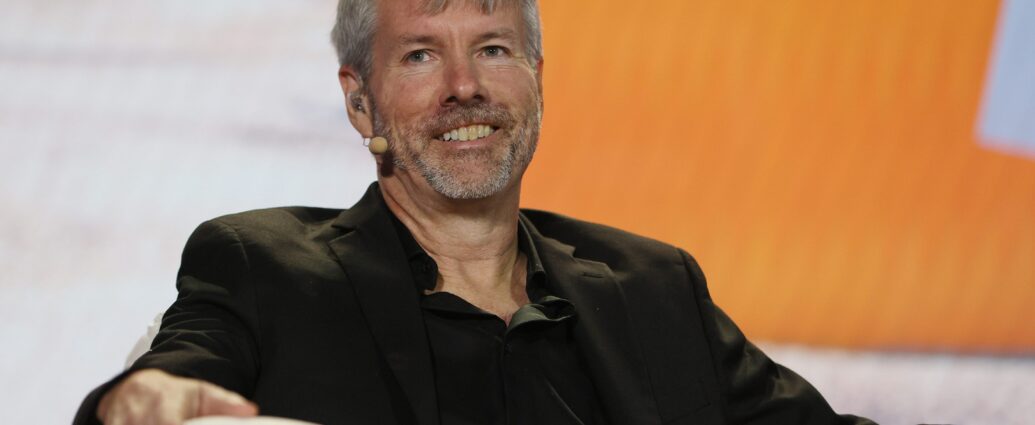
The Shekel Matters Too

The Bank of Israel also noted that the shekel has remained broadly stable.

That is important because cutting interest rates can sometimes weaken a currency.

A sharply weaker shekel could make imported goods, fuel and raw materials more expensive and push inflation higher again.

So far, the central bank appears comfortable that currency conditions remain stable enough to continue easing.

Israel’s risk premium has also declined substantially from the levels reached during the war.

That means investors currently view the country as less financially risky than they did during the height of the conflict.

But The Bank Is Still Cautious

The central bank made clear that uncertainty remains high.

Geopolitical tensions have not disappeared.

Another major escalation could affect energy prices, government spending, investment, the shekel and inflation.

That means policymakers are unlikely to promise a long series of cuts in advance.

They will continue watching inflation, economic growth, financial markets and security developments before each decision.

What It Means for Businesses

The message from the Bank of Israel is becoming increasingly clear.

The emergency economic conditions created by the war are easing.

Inflation is under better control.

Economic activity is recovering.

And the central bank is gradually shifting from protecting against inflation toward supporting growth.

For businesses, homeowners and borrowers, that is an important change.

Israel entered 2026 with borrowing costs still relatively high.

The benchmark rate is now down to 3.25% after four cuts this year.

If inflation remains contained and the recovery continues, businesses could enter 2027 with meaningfully cheaper financing than they had at the beginning of this year.

That is good news for investment, construction, hiring and consumer spending.

But the Bank of Israel is still walking a narrow line:

Support the recovery without allowing inflation or geopolitical risk to return.

For now, it believes another quarter-point cut is a risk worth taking.

JBizNews Desk | Jerusalem

© JBizNews.com All Rights Reserved. Reproduction or distribution without written permission is prohibited.

Speakers at the Republican Jewish Coalition’s annual convention at the Venetian Resort cast the upcoming midterm elections as a battle against not just the Democratic Party, but specifically its left-wing Democratic Socialists of America faction.

“A Democrat majority in November is not just a political setback for our party and our movement; it is a direct threat to the Jewish community,” said Joe Gruters, chairman of the Republican National Committee. “The people in charge would not be moderate Democrats who have occasionally pushed back on antisemitism. It would be the Squad. It would be the DSA.”

Ed Gallrein, the farmer and former Navy SEAL who defeated Kentucky Rep. Thomas Massie in a Republican primary back in May, said that “radical socialist sentiment is gaining ground across our nation,” calling November’s elections a battle between “the Constitution versus the Communist Manifesto.” 

Georgia Rep. Mike Collins, who is challenging Democratic Sen. Jon Ossoff, accused the Jewish senator of using November’s election as a springboard to run for president in 2028 as “the DSA candidate.” (Ossoff has repeatedly denied having interest in running for president. He is also neither a DSA member nor has he been endorsed by the group.)

Even the WiFi password for the Vegas confab, “DSA=AntiUSA”, offered a rejection of the group. 

Strategic Affairs Minister Ron Dermer at an on-stage interview with the Republican Jewish Coalition CEO Matt Brooks during the  leadership summit in Las Vegas on November 1, 2025. (credit: The Jerusalem Post)

DSA members, DSA-backed candidates score primary victories across country

The RJC’s summit comes after a string of victories by DSA members and DSA-backed candidates in Democratic primaries across the country, sparking criticism from Republicans and moderate Democrats who oppose tenets of the group’s left-wing ideology, including its anti-Zionist stance. 

The total number of House members endorsed by a DSA chapter could rise from two to seven, depending on how November shakes out, in addition to candidates in downballot races. Though there are 212 Democrats in the House, Republican officials on Sunday and Monday painted the Democratic Party as one that is ceding control to the DSA.

China, Russia and Iran, Gallrein said, are hoping that “Democrats controlled by the DSA take the House and the Senate, and that they can exploit and divide America.”

Speakers panned other DSA-backed politicians such as New York City Mayor Zohran Mamdani and Michigan Rep. Rashida Tlaib, as well as the streamer Hasan Piker, who has fundraised for numerous DSA-endorsed candidates. 

Florida Rep. Randy Fine specifically attacked Muslim politicians in the Democratic Party, saying he was addressing “the elephant in the room.” He was among the speakers to say that there are anti-Israel and antisemitic voices on both ends of the political spectrum. The difference, he said, is that Republicans “repudiate this evil” with actions like voting out Kentucky’s anti-Israel congressman Massie, while Democrats elect anti-Israel candidates.

Tucker Carlson, the former Fox News personality who has spread antisemitic conspiracy theories in recent years, was repudiated by the RJC and also cast aside by the party’s leader, President Donald Trump. Trump’s second-in-command JD Vance, however, has made no such condemnation, to the chagrin of many Jewish Republicans. 

Vance closed-door session condemned by Jewish Democrats

With Vance set to speak at the RJC’s summit on Monday night, multiple Jewish Democratic groups blasted the RJC for hosting him, particularly in a session that is closed to the press. 

“JD Vance may be speaking behind closed doors, but he should not be able to avoid questions about his attacks on Israel, his failure to confront antisemitism within the MAGA movement, and his continued alliance with Tucker Carlson,” said Brian Romick, president and CEO of Democratic Majority for Israel, in a statement.

“What’s next, a live taping with Tucker Carlson on the main stage?” the Jewish Democratic Council of America wrote.

In a statement to the Jewish Telegraphic Agency, the JDCA’s CEO Halie Soifer said, “The RJC may choose to highlight the less than ten DSA candidates on the ballot in November for their own cynical political purposes, but Jewish voters see past their deflection and lies, just as they see the Republican Party for what it is, the party of Donald Trump.”

This post was originally published on here. 

You’re reading the web edition of STAT’s Health Tech newsletter, our guide to how technology is transforming the life sciences. Sign up to get it delivered in your inbox every Tuesday and Thursday.

Good morning health tech readers!

Happy September! Are you ready to get busy or are you waiting until after Labor Day?

Continue to STAT+ to read the full story…

This post was originally published here. 

Hello there from STAT’s London outpost, with Andrew Joseph here filling in for Mr. Pharmalot for a couple of days. The calendar may say September, but just remember, a combination of stubbornness, denial, and determination can keep the summer feeling alive for yet a few more weeks. One thing certainly not on summer break is the headlines. To them we go …

President Trump has announced the next round of pricing deals with drugmakers, with nine companies joining the 17 that reached agreements with the administration previously, STAT tells us. The new companies striking deals — Alcon, Astellas, BeOne, BridgeBio, CSL, Sun Pharma, Kyowa Kirin, Teva, and UCB — made pledges similar to those made by larger drugmakers before them: to sell new medications to U.S. patients at prices comparable to the lowest prices in peer countries, to offer their drugs to state Medicaid programs at “most-favored nation” prices, and, in some instances, to bolster domestic manufacturing and contribute to the U.S. medical stockpiles. The details of the new deals, however, have not been publicly released, and it’s not clear what broad effect these agreements will have on drug costs and accessibility.

Novartis and Bristol Myers Squibb have paused multiple trials evaluating their respective cell therapy programs against autoimmune conditions after observing inflammatory side effects in testing, BioPharma Dive reports. The holds came as three patients in Novartis trials of the CAR-T rap-cel died from a dangerous immune system reaction, Endpoints adds. Bristol Myers has also voluntarily paused enrollment in autoimmune trials evaluating its own CAR-T treatment zola-cel. One possible explanation is that both rap-cel and zola-cel are being developed with technology that’s meant to speed up production compared to earlier CAR-T products.

Continue to STAT+ to read the full story…

This post was originally published here. 

Want to stay on top of the science and politics driving biotech today? Sign up to get our biotech newsletter in your inbox.

Good morning. I know this week probably feels extra long as we approach Labor Day weekend, but we will get through it together.

The need-to-know this morning

Trump strikes more drug pricing deals with biotechs

President Trump yesterday announced that his administration has made deals with nine new companies, joining the 17 that it previously struck agreements with.

Continue to STAT+ to read the full story…

This post was originally published here.