





AI can’t remember what your company learned the hard way
Boards across major public companies are replacing CEOs at the fastest pace in more than a decade — often elevating first-time leaders and insiders who must quickly prove they can adapt their organizations to an AI-centric future. AI adoption is accelerating across every business function. And quietly, almost invisibly, companies are losing the one thing that makes both of those forces navigable: institutional memory.
It’s been estimated that the cost of “corporate amnesia” — or inefficient knowledge sharing — can top tens of millions annually. Yet almost no one in the boardroom is talking about it.
AI may transform how organizations operate, but without a record of how they have made decisions, navigated crises, and earned trust over time, even the most sophisticated systems risk becoming disconnected from the experience that makes intelligence meaningful.
When CEOs Leave, the Lessons Leave With Them
Leadership transitions are a natural part of organizational life. Boards often seek new leadership when markets shift or strategies change, and today’s environment — defined by technological disruption, geopolitical instability, and rapidly evolving consumer expectations — has only accelerated that cycle. Consider Boeing, Nike, and Stellantis: each navigated a recent CEO transition while simultaneously managing deep operational or reputational crises that demanded intimate knowledge of how the organization had failed and recovered before.
When CEOs depart, they rarely leave alone. Senior teams move on, long-tenured executives retire, and the institutional knowledge those leaders carry quietly disappears.
A company’s most valuable knowledge is often embedded in years or decades of decisions, pivots, failures, and breakthroughs. It lives in boardroom debates, cultural inflection points, product launches, regulatory battles, and moments when leaders had to choose between competing priorities under pressure. Without deliberate efforts to capture and preserve that experience, succession planning becomes little more than a leadership handoff — not a transfer of organizational knowledge.
Your AI Is Only as Smart as Your History
This matters even more in the age of AI. As companies adopt generative AI and agentic systems, many assume that access to powerful models will create an advantage. In reality, the opposite may be true. If every company has access to similar AI systems, competitive differentiation may increasingly depend on the quality of the context from which those systems draw.
That context comes from experience — which, over time, becomes institutional memory: the accumulated record of how an organization has navigated complexity, balanced risk and opportunity, responded to crises, and built relationships with its stakeholders. Without that, intelligence — human or artificial — becomes generic.
Large language models can generate remarkably fluent answers, but without being grounded in a company’s specific history, decisions, and operating norms, those outputs often feel shallow or disconnected from reality. They can produce information. They cannot produce insight.
Just as the digital era required investment in data infrastructure, the age of AI will require infrastructure that preserves and activates institutional memory — including historical records, internal documentation, oral histories, and digital knowledge systems that allow organizations to learn from their own experiences. Increasingly, these systems will also inform AI tools themselves, grounding machine-generated insights in an enterprise’s real history rather than generic training data.
How Booz Allen Turned 110 Years Into a Strategic Edge
When Booz Allen turned 110, CEO Horacio Rozanski didn’t just commission a retrospective. Through executive interviews, storytelling initiatives, and a digital archives platform, the company captured pivotal moments across its history — advising the U.S. Navy before World War II, supporting NASA during the space race — and connected those stories to its current identity as a technology and analytics leader. The effort wasn’t nostalgic. It was operational.
The Archive Isn’t Missing — It’s Just Scattered
The deeper problem isn’t preserving the memories of departing executives. It’s preserving the accumulated experience of the institution itself. It is preserving the accumulated experience of the institution itself. That experience, often built over decades, lives in strategy documents, research reports, correspondence, internal publications, photographs, and other records that explain how the organization became what it is.
In many companies, this material is scattered across fragmented digital systems or buried in analog archives that have never been systematically organized. In the age of AI, that presents a strategic vulnerability. AI learns from data. If the knowledge that defines an organization’s experience is inaccessible or lost entirely, those systems will produce incomplete, generic intelligence. The question for leaders is no longer simply whether they will adopt AI — it’s whether they will deploy it in a way that reflects their organization’s hard-won experience.
Target illustrates what’s at stake. The company faces a leadership transition amid declining sales, brand confusion, and growing political pressure. Analysts argue that it has drifted from the distinctive identity that once set it apart — its design-driven merchandising, curated product mix, and cultural positioning that inspired shoppers to jokingly pronounce the brand’s name like a French boutique. What’s less discussed is whether any of that accumulated brand intelligence — the decisions, trade-offs, and creative instincts that built “Tar-zhay” — was ever formally captured. Or whether it simply walked out the door with the leaders who built it.
The challenge for an incoming CEO is not just operational — it is interpretive. Which aspects of the organization’s identity should be preserved? Which strategies have worked historically? Which lessons from past crises still matter?
Before your company deploys its next AI system, ask this: What does that system actually know about how your organization makes decisions? If the answer is “not much,” you haven’t built an intelligent enterprise. You’ve built a very fast amnesiac.
The opinions expressed in Fortune.com commentary pieces are solely the views of their authors and do not necessarily reflect the opinions and beliefs of Fortune.
This story was originally featured on Fortune.com

Elon Musk’s coterie of companies are getting more and more pushback from Democrats
Jessica Mathews here, filling in for Allie to give you a quick update on some recent reporting that looks at the pushback that Elon Musk’s companies are getting around the country.
Last week, I wrote about the lawsuit that Baltimore’s mayor and city council had filed against xAI, Elon Musk’s artificial intelligence company. The lawsuit accuses Grok of exposing residents to the risk that any photograph they uploaded—of themselves or of their children—could be ingested by Grok and transformed into sexually degrading deepfakes without their knowledge or consent.
Not long after that lawsuit was filed, the Baltimore Ravens’ football team announced it was walking away from a tunnel proposal it had pitched to Boring Company, for a free tunnel project around its Ravens stadium. And the Baltimore Mayor, a Democrat, said publicly that he wouldn’t have approved it anyway.
The sentiment shift in Baltimore, in particular, was notable, as the city had a decade ago welcomed Elon Musk’s business with open arms.
Here’s more, from the story:
Maryland and Baltimore have historically welcomed Musk’s companies through incentives and partnerships. Former Maryland Governor Larry Hogan, a Republican, was one of the first politicians to publicly get behind a major Boring Company project in 2017, when Boring Company announced it planned to build a high-speed tunnel for autonomous vehicles between Baltimore and Washington, D.C. The Maryland Department of Transportation sponsored the project, and Baltimore’s then-Mayor, a Democrat, had said the project would have “tremendous potential.”
That posture has shifted since Musk donated $300 million to President Trump’s campaign and took a hands-on role in government through DOGE. Governor Wes Moore, a Democrat, was an early critic of Musk’s work at DOGE, characterizing the firing of thousands of federal workers in 2025 as “arbitrary” and “draconian” during a working session in March 2025 and saying it was cruel. Boring Company president Steve Davis, one of Musk’s longtime trusted fixers, helped Musk run the government department.
Meanwhile, in Las Vegas—where Boring has had repeated safety and environmental problems—two legislators recently sent a demand letter to Nevada Governor Joe Lombardo, requesting he address “structural failures” in the state’s oversight of Elon Musk’s tunneling startup, which has been digging tunnels below Las Vegas. The two state legislators, Assemblymember Howard Watts and Senator Rochelle Nguyen, sent a letter to the Governor, describing “significant concerns about record integrity, administrative accountability, and structural failures” in Nevada’s workplace safety system and saying that they “require clear action from the Executive Branch.”
The pushback is largely coming from Democrats and illustrates the challenges Musk’s collection of companies are receiving as the famously impulsive and truculent multi-billionaire has turned himself into a political lightning rod.
See you tomorrow,
Jessica Mathews
X: @jessicakmathews
Email: jessica.mathews@fortune.com
Submit a deal for the Term Sheet newsletter here.
Joey Abrams curated the deals section of today’s newsletter. Subscribe here.
This story was originally featured on Fortune.com
Nike gets downgrades from a few Wall Street shops due to dim sales outlook
Nike shares have fallen 17% since the beginning of this year.
This post was originally published here
Visa launches new AI tools to manage the charge dispute process
Visa’s new tools are part of a larger push by major banks and financial institutions to incorporate AI into their businesses.
This post was originally published here
Five key questions Apple faces entering its second half-century
As Apple turns 50, the iPhone maker faces questions about succession, its role in AI and whether it can maintain a premium brand.
This post was originally published here
Prices may rise more this year than the Fed predicts, global forecasting group says—what that means for your money
Long-term investors should keep an eye on inflation, which erodes the value of your savings over time, experts say.
This post was originally published here
Private sector hiring totaled 62,000 in March, better than expected, ADP says
Private sector employment growth kept pace, but health care and construction continued to provide nearly all the momentum.
This post was originally published here
Iran threatens Nvidia, Apple and other tech giants with attacks
Iran’s Islamic Revolutionary Guard Corps (IRGC) has warned a number of tech companies with Middle East operations they’ll be considered “legitimate targets.”
This post was originally published here































Housebuilder Berkeley to halt buying new land and hiring staff
Group cuts costs as shares plunge while it grapples with impact of Iran war on property market
One of Britain’s biggest housebuilders has said it will stop buying new land and hiring new staff, as it grapples with the impact of the Iran war on the property market.
Berkeley, a London-focused housebuilder, said it would cut costs as it warned that “geopolitical volatility” and “reduced potential” for interest rate cuts could weigh on the business.
This post was originally published here
Trump to address nation on Iran war. And, SCOTUS considers birthright citizenship
Trump is set to address the nation after saying the U.S. will withdraw from Iran in 2-3 weeks. And, the president will be at the Supreme Court today as arguments on birthright citizenship begin.
(Image credit: Brendan Smialowski)

This post was originally published here

Europe must pay more for medicines, says Bayer
This post was originally published here

US investors prefer Europemaxxing to Europebashing
This post was originally published here









How To Earn $500 A Month From Lindsay Stock Ahead Of Q2 Earnings
Lindsay Corporation (NYSE:LNN) will release earnings for its second quarter before the opening bell on Thursday, April 2.
Analysts expect the company to report earnings of $1.68 per share. That’s down from $2.44 per share in the year-ago period. The consensus estimate for Lindsay’s quarterly revenue is $171.39 million (it reported $187.06 million last year), according to Benzinga Pro.
Lindsay, on Jan. 8, posted mixed results for the first quarter.
With the recent buzz around Lindsay, some investors may be eyeing potential gains from the company’s dividends too. As of now, Lindsay has an annual dividend yield of 1.24%, which is a quarterly dividend amount of 37 cents per share ($1.48 a year).
To figure out how to earn $500 monthly from Lindsay, we start with the yearly target of $6,000 ($500 x 12 months).
Next, we divide this amount …
This post was originally published here

ServiceNow, Apple, Netflix And A Financial Stock: CNBC’s ‘Final Trades’
On CNBC’s “Halftime Report Final Trades,” Stephanie Link, chief investment strategist, head of investment solutions and portfolio manager at Hightower Advisors, picked ServiceNow, Inc. (NYSE:NOW).
According to recent news, ServiceNow announced on March 5 the launch of AI workforce tools for the government.
Joshua Brown, co-founder and CEO of Ritholtz Wealth Management, said he likes Netflix, Inc. (NASDAQ:NFLX).
Supporting his view, Oppenheimer analyst Jason Helfstein, on March 27, maintained Netflix with an Outperform rating and raised the
This post was originally published here

Nike Takes ‘Intentional’ Hit To Clear ‘Unhealthy Inventory’ In Q3 As CEO Eyes Turnaround By Year-End
Nike Inc. (NYSE:NKE) surpassed third-quarter 2026 earnings expectations despite an aggressive inventory reset that pressured its top line, as executives chart a definitive path to complete the sportswear giant’s turnaround by the end of the calendar year.
The ‘Intentional’ Inventory Reset
Nike reported the third-quarter revenue of $11.3 billion and earnings per share of $0.35, outperforming Wall Street estimates of $11.23 billion and $0.30, respectively.
However, the company faced significant short-term pressures as it actively cleared out excess classic footwear franchises to make room for fresh innovation.
“One of the most important actions we took this quarter was further removing unhealthy inventory… from the marketplace,” said President and CEO Elliott Hill.
He noted this aggressive clearing created a roughly five-point headwind to reported results, but emphasized it was an “intentional” and “necessary” maneuver to improve marketplace health and secure sustainable long-term growth.
Executing The ‘Win Now’ Strategy
While Hill acknowledged the broader turnaround is …
This post was originally published here
Tesla Needs Panasonic, BYD Doesn’t — That Gap May Matter More Than You Think
Tesla, Inc’s (NASDAQ:TSLA) latest push into Japan isn’t just about service centers and Superchargers — it’s a reminder of something the market may be underestimating: not all EV growth is created equal for suppliers.
Because while Tesla scales, companies like Panasonic Holdings Corp (OTC:PCRFF) scale with it. And while BYD Co., Ltd. (OTC:BYDDF) (OTC:BYDDY) grows even faster, Panasonic doesn’t.
That asymmetry is easy to miss — but hard to ignore once you see it.
Tesla Growth Flows Through Panasonic
Tesla still runs on a hybrid battery model.
Even as it builds in-house capacity, it continues to rely heavily on partners — Panasonic remains its “biggest strategic …
This post was originally published here

Target Hospitality Stock Hits 52-Week High – Here’s Why
Target Hospitality Corp. (NASDAQ:TH) shares are up during Wednesday’s premarket session following the announcement of a significant multi-year contract.
The company is expected to generate over $550 million in revenue from this deal, which is aimed at constructing a data center hub for a top-five hyperscaler.
Also, Target Hospitality raised its preliminary 2026 sales outlook to $360 million–$370 million from $320 million–$330 million, signaling stronger expected revenue growth.
“As recent WHS contract awards come online and scale through 2026, along with the build‑out and completion of the Data Center Hub by mid‑2027, the company expects revenue and adjusted EBITDA to build through 2026 and into 2027,” the company said in a press release.
What’s The Deal?
Target Hospitality is set to leverage a substantial portion of its existing assets to construct the Data Center Hub, with an anticipated net capital investment of approximately $115 to $125 million. The contract is expected to generate committed minimum revenue over its …
This post was originally published here

Wall Street’s Most Accurate Analysts Spotlight On 3 Industrials Stocks Delivering High-Dividend Yields
During times of turbulence and uncertainty in the markets, many investors turn to dividend-yielding stocks. These are often companies that have high free cash flows and reward shareholders with a high dividend payout.
Benzinga readers can review the latest analyst takes on their favorite stocks by visiting Analyst Stock Ratings page. Traders can sort through Benzinga’s extensive database of analyst ratings, including by analyst accuracy.
Below are the ratings of the most accurate analysts for three high-yielding stocks in the industrials sector.
ABM Industries Inc (NYSE:ABM)
- Dividend Yield: 3.01%
- UBS analyst Joshua Chan maintained a Neutral rating and cut the price target from $51 to $45 on March 11, 2026. This analyst has an accuracy rate of 64%
- Truist Securities analyst Jasper Bibb maintained a Hold rating and slashed the price target from $47 to $45 on March 11, 2026. This analyst has an accuracy rate of 62%.
- Recent News: On March 10, ABM posted mixed quarterly results.
- Benzinga Pro’s real-time newsfeed alerted to latest ABM news.
This post was originally published here

S&P 500 vs. Total Market Index: Best for Long-Term Growth?
This post was originally published here


Warren Buffett Says Avoiding Risk Could Be Your Biggest Mistake—Here’s Why
This post was originally published here

Your Guide to the Equal Credit Opportunity Act (ECOA)
This post was originally published here

Your Guide to the Equal Credit Opportunity Act (ECOA)
This post was originally published here
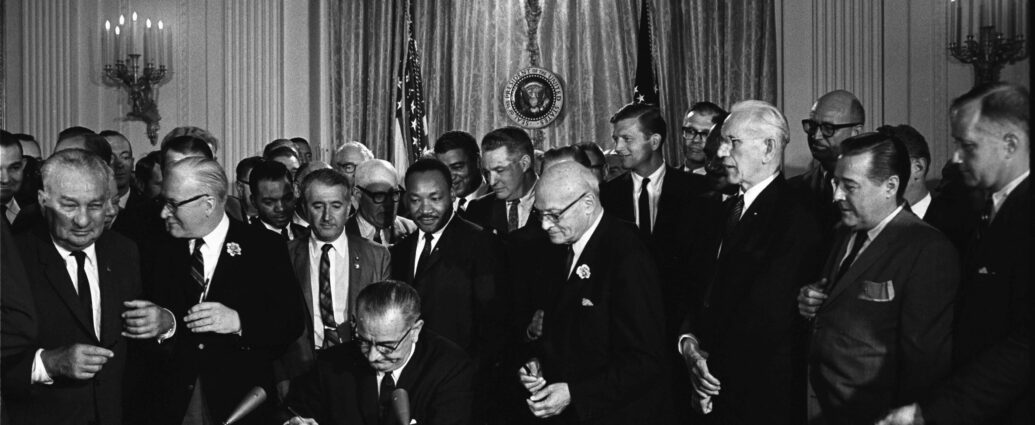
Understanding the Civil Rights Act of 1964: Key Facts and History
This post was originally published here
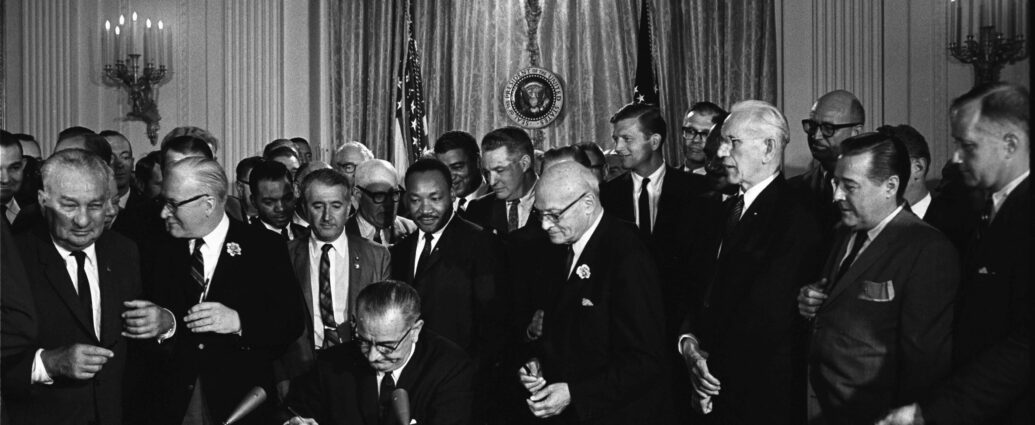
Understanding the Civil Rights Act of 1964: Key Facts and History
This post was originally published here

Stock Market Today: Futures Surge to Begin New Quarter After Major Indexes Have Best Day Since May
This post was originally published here

Stock Market Today: Futures Surge to Begin New Quarter After Major Indexes Have Best Day Since May
This post was originally published here

More people are using AI to manage their money— but they won’t let it make decisions alone
Good morning. A new report from TD Bank U.S. finds that employees are embracing AI as a productivity tool, but they’re not ready to hand over decision-making authority.
According to TD’s second annual AI Insights Report, released on Tuesday, 83% of employed respondents said they now use AI-powered tools at work, up 20 percentage points from last year. Adoption rose across both employer-provided tools, rising to 75% from 63%, and independently accessed tools, which climbed to 78% from 66%. Respondents who use AI say it helps them work faster, generate ideas more easily, and make decisions more efficiently. Notably, 71% say AI gives them a competitive edge over peers in similar roles.
For CFOs, the signal isn’t just growing adoption. It’s a broader shift in workforce mindset: AI is increasingly being viewed less as a job threat and more as a performance lever. That has meaningful implications for how finance leaders position AI investments and workforce enablement internally.
The report also offers insight into how AI is reshaping expectations in financial services. Just over half of respondents, 55%, say they use AI to help manage their finances, up sharply from just 10% a year ago. TD’s findings are based on a nationwide survey of more than 2,500 consumers.
Even so, surveyed employees draw a clear line around decision rights. Most prefer AI to surface insights and recommendations while humans retain final authority, mirroring broader consumer sentiment around financial services. Just 18% say they would trust AI to make financial recommendations entirely on its own. Comfort was highest when AI supported behind-the-scenes functions such as product or service recommendations, fraud detection, tracking spending, and calculating credit scores.
“Consumers see real value in AI when it simplifies their experience, without losing the human touch,” according to Jo Jagadish, head of digital banking, payments and contact centers at TD Bank U.S.
Trust, however, is gradually building. Sixty-two percent of respondents say they trust AI to provide honest, reliable, and competent information, up from roughly half last year. TD Bank is also investing accordingly: The bank has roughly 2,500 employees working on AI development and has partnered with Columbia University to provide executive AI training for senior leaders.
Sheryl Estrada
sheryl.estrada@fortune.com
This story was originally featured on Fortune.com

Steve Jobs didn’t actually become a billionaire thanks to leading Apple—but rather from his work with a film company he bought off George Lucas
- The late billionaire Steve Jobs is known for being cofounder and CEO of Apple—and introducing the iPhone, iPad, and iMac to the world. However, his time at the computer company that turns 50 years old on Wednesday wasn’t what helped strike gold for his net worth. Jobs actually made the billions in 1995—three years before the iMac hit shelves—after using an unexpected career roadblock to his advantage, with a little help from Tom Hanks and Tim Allen.
“To infinity and beyond!” wasn’t just the catchphrase of Toy Story’s Buzz Lightyear—it was the turning point that turned Steve Jobs into a billionaire.
After a power struggle that forced Jobs out of Apple in 1985, Jobs bought Lucasfilm’s computer graphics division the next year for $10 million. The seller was George Lucas, fresh off creating the Star Wars empire. That small acquisition would soon be renamed Pixar—and would change both Hollywood and Jobs’ fortune forever.
The company got off to a rocky start, with Jobs questioning whether to sell it multiple times, thanks in part to having to personally cover its monthly cash shortfall. But by 1995, Jobs believed Pixar was ready for primetime. In a week’s span in November, it would release its first major film, Toy Story, as well as launch an IPO.
Lawrence Levy, the company’s then-CFO, wrote that it reminded him of the 100-meter sprint in the Olympic Games: a lifetime of training that comes down to a snapshot performance.
“If the world fell in love with Toy Story, Pixar would have a chance to usher in a new era of animated entertainment,” he said in his book, To Pixar and Beyond: My Unlikely Journey With Steve Jobs to Make Entertainment History.
“If it didn’t, Pixar might be written off as another company that tried but never quite hit the mark.”
The IPO that made Jobs a billionaire
As the 80% owner of Pixar, the IPO stakes were even higher for Jobs. If everything went well, he was hoping to finally see some return on his Pixar investment. If everything went south, it might have shut the door on any future collaboration with Disney and led to the waste of a decade of his entrepreneurial life.
Luckily, all expectations were shattered. Pixar’s initial stock price was predicted to reach between $12 and $14, but at the end of the first day of trading, it was worth 175% more, at $39 a share. This was thanks largely to Toy Story, with Tom Hanks and Tim Allen as lead voices, nearly doubling its box office expectations. Jobs’ stake sent his net worth soaring to over $1 billion.
Jobs would later rejoin Apple in 1997, but he remained involved in Pixar as it churned out hit after hit, including Finding Nemo, The Incredibles, and Ratatouille—each bringing in hundreds of millions of dollars worldwide. Disney fully acquired Pixar for about $7.4 billion in stock in 2006. Jobs’ stake was worth about $4.6 billion.
While Jobs is by all means known most for his role at Apple—the tech giant that turns 50 years old on Wednesday—his willingness to follow his instincts with Pixar proves the age-old advice that one key to success is finding your passion—and putting all of your energy into it.
“No matter what you do next, the world needs your energy, your passion, your impatience with progress,” Apple CEO Tim Cook said in 2015. “History rarely yields to one person, but think and never forget what happens when it does.”
Finding fortune beyond their main companies
Jobs isn’t alone in being a business leader who gained significant wealth outside of what they’re primarily known for. Elon Musk has a similar story.
While the world’s richest person is known today for being the leader of Tesla and SpaceX, that’s not how he first amassed his fortune. Musk sold his first company, Zip2, to AltaVista for more than $300 million. He also made millions through the creation of PayPal, which formed from a merger of Musk’s online financial services company, X.com, with software company Confinity, cofounded by billionaire Peter Thiel.
Similarly, billionaire Richard Branson did not make all his money from being focused on his air and space companies, Virgin Atlantic and Virgin Galactic. The 75-year-old British serial entrepreneur actually became a billionaire in part thanks to his chain of record stores called Virgin Records. It launched in 1971 and later expanded into a music label that featured artists like the Rolling Stones and Janet Jackson. Branson later sold Virgin Records in 1992 to British conglomerate Thorn EMI for $1 billion.
A version of this story originally published on Fortune.com on August 21, 2025.
More on wealth and leadership:
- Warren Buffett says ‘accumulating great amounts of money’ doesn’t achieve greatness—He still lives in a $31,500 Nebraska home and clipped coupons
- Tim Cook says late Apple cofounder Steve Jobs gave him this unforgettable advice before handing over the reins as CEO: ‘Never ask what I would do’
- Despite his $2.6 billion net worth, MrBeast says he’s having to borrow cash and doesn’t even have enough money in his bank account to buy McDonald’s
This story was originally featured on Fortune.com

An Athens listing has created the world’s second largest gaming company. Finally, Europe has a #2 global player
Skoda, Urquell Pilsner and Václav Havel. The number of global brands associated with the Czech Republic are few. When Mark Carney, the Canadian Prime Minister, paid homage to Havel, the first democratically elected president of what was then Czechoslovakia, in a speech he made at Davos this year, many turned to Google to refresh their memories. Now, a new player may be added to the list.
Karel Komárek is a Czech billionaire who started buying stakes in country lotteries in 2011. The Czech Republic’s Sazka was the first, Greek gaming firm OPAP was the second. Renamed Allwyn, the company now also owns lotteries and gaming companies in the U.K., Italy, Austria, and the states of Michigan and Illinois. Its most recent acquisition was PrizePicks, the American fantasy sports operator.
Komárek is a rare breed. The owner of a Europe-based business (Allwyn’s headquarters are now in Lucerne, Switzerland) which has become a top-two operator in its field globally. In 2024, revenues topped $10bn. A year later, Allwyn’s valuation touched $18.6bn. Only the Irish-American gambling business, Flutter, is bigger.
Last month, Allwyn was listed on the Athens stock exchange. Now its leaders are eyeing the London and New York exchanges as potential secondary homes.
€8.9 billion
Total revenue 2025
€509 million
Total profit 2025
Source: Allwyn International Q4 2025 preliminary results
“We are definitely a story of inspiration for many Czech companies to show them it’s possible to grow internationally,” Robert Chvátal, Allwyn CEO, tells me. “Actually, it’s not just possible. It’s mandatory.”
Swaddled in regulations and operating codes, national lotteries operate a little like utilities companies do—offering stable returns over long contract periods. Add in racier gaming and gambling interests too, and Chvátal argues, you have an attractive mix.
“Lotteries are great,” he says. “They have scale. But they are fairly mature businesses. It’s a good start. It’s a good base. But if you want to grow further, and if you say ‘We will be listed’, shareholders or investors will ask if there is a growth story. Or is it just a stable, almost utility-like, type of profile, which is more of a yield type of stock?”
“I say we are actually a combo of both. We are a solid yield—if you take the current stock price to the communicated dividend, it’s a 6% yield, not too bad in euro terms—but, at the same time, because of the product diversification and because of the geographical diversification, we are also a growth story.”
“We are definitely a story of inspiration for many Czech companies to show them it’s possible to grow internationally.”
Robert Chvátal, CEO, Allwyn
With the conflict in the Gulf cratering equity markets around the world and fears that investment overstretch could bring the technology hyperscalers to heel, uncomplicated bread-and-butter businesses like lotteries are a flight-to-safety option.
Whatever the level of geopolitical volatility, millions of people like to buy a chance to win big at astonishingly long odds. When Communist Czechoslovakia banned most lotteries and closed the state-run sports gambling company, Staska, in 1953, illegal gambling flourished. Sazka was launched three years later and a state lottery started in 1957. Even the Soviets couldn’t control the urge for a flutter.
Read more: Rishi Sunak is giving advice to CEOs on AI. Here are his golden rules
Jokes about Eastern European business standards are now a distant memory (“How do you double the value of a Skoda? Fill it with petrol” has a moldy feel, now that Skoda is owned by VW).
“What resonates with us, if you recall Mark Carney’s speech, is his reference to the ‘middle powers’,” Chvátal says. “He actually quoted our first president, Václav Havel, and his essay The Power of the Powerless. The middle powers could become relevant.” In its chosen field, Allwyn is more than a middle power. And for Europe, that is too rare an occurrence.
This story was originally featured on Fortune.com

Steve Jobs sold his Volkswagen to raise $1,300 for Apple’s first computer. He became a millionaire just two years later at 23
If it weren’t for a Volkswagen bus and a calculator, Apple might never have existed.
Five decades ago, the late cofounder Steve Jobs was in his early twenties and strapped for cash, but hooked on the idea that everyone should be able to own a home computer. The only problem? Like many founders, he didn’t have enough money to bring his vision to life.
So Jobs sold off his Volkswagen bus while fellow cofounder Steve Wozniak got money for his programmable calculator, raising $1,300 to pay for the prototype’s parts. The first Apple computer, the Apple I, was born on April Fools’ Day, 1976; on Wednesday, the $3.7 trillion business celebrates its 50th birthday.
And the sacrifice paid off. A local computer dealer placed a $50,000 order for 100 units soon after it launched, with the product mainly bought up by hobby enthusiasts. But it made the entrepreneurial duo enough money to create Apple II for the mass market—the first personal computer to include a keyboard and color graphics. A year after its 1977 debut, it made nearly $3 million.
“I was worth about over $1 million when I was 23, and over $10 million when I was 24, and over $100 million when I was 25,” Jobs told PBS in 1996. “And it wasn’t that important, because I never did it for the money.”
The days of selling their belongings to fund their fledgling business were long behind them.
From college dropout to $10.2 billion net worth: Jobs’ path to Apple success
Jobs didn’t discover his passion for technology in a college class; at the age 12, the entrepreneur had already found his true calling, and took a massive leap of faith to pursue his dreams.
A young Jobs thumbed through the yellow pages, and hunted down the phone number of Hewlett-Packard cofounder Bill Hewlett, ringing him up for a favor. At the time, the tween was in need of spare parts to build a frequency counter. But what he received was far better than some nuts and bolts; Hewlett offered Jobs an internship at the iconic $17.4 billion tech company, where he serendipitously met a talented engineer: Wozniak.
Together, the pair started their first business, illegally selling “blue boxes” that allowed users to make free, long-distance telephone calls. Jobs reminisced about those years in the early 1970s as a “magical” time in his life that sent him on the path to soon create Apple.
“Experiences like that taught us the power of ideas,” Jobs said in the 1998 documentary Silicon Valley: A 100-Year Renaissance. “If we hadn’t…made blue boxes, there would have been no Apple.”
Jobs later enrolled at Reed College in Portland, Ore., but his days of higher education were short-lived. He dropped out after just one semester, inevitably working for legendary brand Atari as a technician and games designer at just 18 years old. That would be the last time Jobs worked under somebody else; just two years later, Apple I hit the market, and Jobs was well on his way to becoming one of the most visionary tech pioneers in modern history.
Fast-forward five decades later, and Apple is the second most valuable company in the world. The business sits in fourth place on the Fortune 500, having sold more than 3 billion iPhones, and boasting more than 100 million Mac users globally.
At the time of his passing in 2011, Jobs was estimated to be worth $10.2 billion. Although he had enough money to buy a whole fleet of luxury cars shortly after founding Apple, selling his Volkswagen proved to be a critical sacrifice in making it to the top.
A version of this story was published on Fortune.com on December 19, 2025.
This story was originally featured on Fortune.com
Sen. Warren slams Trump administration for pressuring EU to relax tech regulations
Sen. Warren said the Trump administration trade negotiations are focused on giving advantages to Trump’s “tech billionaire friends.”
This post was originally published here
Sen. Warren slams Trump administration for pressuring EU to relax tech regulations
Sen. Warren said the Trump administration trade negotiations are focused on giving advantages to Trump’s “tech billionaire friends.”
This post was originally published here
Volkswagen deal with EV maker Xpeng shows how China tech threatens Western automakers
Xpeng’s deal to make software, hardware and even vehicles with VW Group in China shows that Chinese firms are now making the high-value components.
This post was originally published here
Volkswagen deal with EV maker Xpeng shows how China tech threatens Western automakers
Xpeng’s deal to make software, hardware and even vehicles with VW Group in China shows that Chinese firms are now making the high-value components.
This post was originally published here
Novo’s Wegovy cleared by UK drug price watchdog for heart disease, expanding access by 1.2 million people
The new recommendation will significantly expand access to Wegovy on England’s NHS.
This post was originally published here
Weekly mortgage refinance demand is down more than 40% in the past month
Mortgage demand from both homeowners and potential homebuyers is dropping due to higher mortgage rates and concern over the war with Iran.
This post was originally published here
Weekly mortgage refinance demand is down more than 40% in the past month
Mortgage demand from both homeowners and potential homebuyers is dropping due to higher mortgage rates and concern over the war with Iran.
This post was originally published here
Oil supply crunch will worsen in April, IEA warns as it weighs releasing more strategic reserves
The organization’s Executive Director Fatih Birol also warned that the Iran war had created the worst oil crisis in history.
This post was originally published here
Oil supply crunch will worsen in April, IEA warns as it weighs releasing more strategic reserves
The organization’s Executive Director Fatih Birol also warned that the Iran war had created the worst oil crisis in history.
This post was originally published here
Stocks making the biggest moves premarket: Nike, RH, Sandisk & more
These are the stocks posting the largest moves premarket.
This post was originally published here
NFL approves sale of 3.5% of Las Vegas Raiders at over $11 billion valuation
The National Football League has approved the sale of 7% of the Las Vegas Raiders at a valuation of more than $11 billion.
This post was originally published here
Can a country get too rich?
Norway shows the potential pitfalls of uncommon prosperity
This post was originally published here
“Liberation Day” has reshaped trade—but not as Donald Trump hoped
In many ways, global commerce has strengthened
This post was originally published here
“Liberation Day” has reshaped trade—but not as Donald Trump hoped
In many ways, global commerce has strengthened
This post was originally published here


























First Thing: Trump launches tirade against Europe for not joining Iran war
Some European countries have blocked Israeli and US planes from moving weapons through their airspace. Plus, a rocket heads to the moon on Wednesday for the first time since 1972
Good morning.
Donald Trump has launched a tirade against European countries that refused to join the Israel-US war against Iran, calling out the UK and France, as transatlantic relations continue their downward spiral and the war wreaks havoc on the global economy.
What pushback has there been from Europe? France has blocked Israeli planes from flying weapons through its airspace, while Italy refused last-minute permission for US bombers to land in Sicily. Spain has already denied the US use of its bases and airspace. The UK, however, has allowed the US to use its bases for a war that its government says is illegal.
For the latest updates, follow our live blog.
This post was originally published here
Man remanded in custody after seven pedestrians hit by car in Derby
Sandhu Ponnachan appears in court on charges of dangerous driving and causing grievous bodily harm
A 36-year-old man has been remanded into custody after appearing in court accused of dangerous driving after seven people were injured when a car hit pedestrians in Derby on Saturday night.
Sandhu Ponnachan, from the Alvaston area of the city, appeared at Southern Derbyshire magistrates court on Wednesday having also been charged with six counts of causing grievous bodily harm with intent, one count of attempted grievous bodily harm, and one count of possession of a bladed article.
This post was originally published here
Prominent UK pro-Palestine activists guilty of breaching protest conditions
Judge says in verdict against Ben Jamal and Chris Nineham that conditions imposed were lawful and necessary
Two prominent leaders in the Palestine solidarity movement in Britain have been found guilty of breaching protest conditions.
Ben Jamal, 62, the director of the Palestine Solidarity Campaign (PSC), and Chris Nineham, 63, vice-chair of the Stop the War Coalition, were accused of failing to comply with conditions imposed on a protest on 18 January 2025. They were subsequently charged with public order offences.
This post was originally published here







Mortgage rates north of 6.5% trigger sharp drop in applications
Mortgage applications decreased 10.4% from one week earlier, according to data from the Mortgage Bankers Association (MBA)’s weekly mortgage applications survey for the week ending March 27.
On an unadjusted basis, the index decreased 10% compared with the previous week.
The refinance index decreased 17% from the previous week and was 33% higher than the same week one year ago. The seasonally adjusted purchase index decreased 3% from one week earlier. The unadjusted purchase index decreased 2% compared with the previous week and was 1% higher than the same week one year ago.
“The 30-year mortgage rate, now at 6.57%, reached its highest level since last August and is up half a percentage point from just one month ago. Refinance application volumes declined sharply again last week, dropping 17%, and are down more than 40% compared to last month,” said Mike Fratantoni, MBA’s senior vice president and chief economist.
“Seasonally adjusted purchase application volume also declined over the week, but only by 3%,” he added. “The headwinds of higher rates are being offset somewhat by the buyer’s market in many parts of the country – there are more homes for sale than buyers have seen in some time. … Moreover, purchase applications for FHA and VA loans continue to hold up better than those for conventional buyers. However, the shocks of the jump in rates and the increase in overall economic uncertainty are likely having an impact on buyer confidence.”
The refinance share of mortgage activity decreased to 45.3% of total applications, down from 49.6% the previous week. The adjustable-rate mortgage (ARM) share of activity decreased to 8% of total applications.
By product, the Federal Housing Administration (FHA) share of total applications decreased to 19.5%, down from 19.7% the week prior. The U.S. Department of Veterans Affairs (VA) share increased from 15.9% to 16.1%, while the U.S. Department of Agriculture (USDA) share remained unchanged at 0.5%.
The average contract interest rate for 30-year fixed-rate mortgages with conforming loan balances increased 6 basis points to 6.57%, while rates for loans with jumbo balances increased 14 bps to 6.59%.
The average rate for 30-year fixed loans backed by the FHA rose by 10 bps to 6.25%, and rates for 15-year fixed mortgages rose by 6 bps to 5.89%.
Interest rates for 5/1 ARMs bucked the trend, decreasing from 5.75% to 5.67% during the week.
Xactus Mortgage Intent Index
Xactus‘s Mortgage Intent Index — which analyzes aggregated, anonymized credit-pull activity across the Xactus Intelligent Verification Platform — slipped to 143.1, down from last week’s reading of 146.0.
“Elevated mortgage rates and economic uncertainty continue to create headwinds for borrower intent, dampening what had been a promising start to the spring homebuying season,” said Thomas Lloyd, chief strategy officer for Xactus. “Mortgage intent declined roughly 2% week over week and is approximately 5% below the same week last year, marking the third consecutive weekly decline.”
Why Tilray Brands Shares Are Surging In Wednesday’s Premarket
Tilray Brands Inc. (NASDAQ:TLRY) shares are trading higher during Wednesday’s premarket session. Investors are reacting to two major catalysts: an imminent earnings report and a strategic product launch in the beverage sector.
Q3 Fiscal 2026 Earnings In Focus
Market participants are positioning themselves ahead of Tilray’s third-quarter fiscal 2026 financial results. The company plans to release these figures before the opening bell on Wednesday.
Historical data provides a bullish backdrop for the event. Notably, Tilray has beaten consensus earnings-per-share estimates in eight consecutive quarters.
Shock Top Unveils “High Voltage” Offering
Sentiment also received a lift from Tilray Beverages’ …
This post was originally published here

What Happens When Money Sits Idle in Your Savings Account According to Experts
This post was originally published here

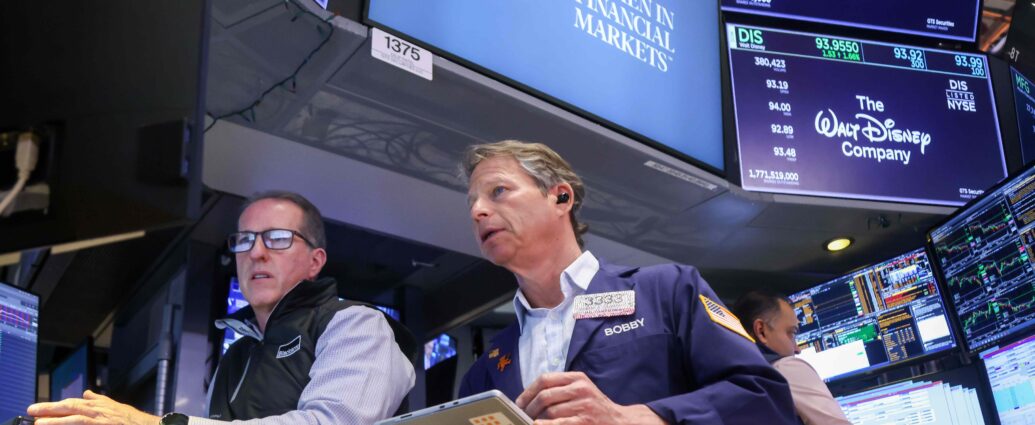
Stock Market Today: Futures Rise to Begin New Quarter After Major Indexes Have Best Day Since May
This post was originally published here

Annuity Taxes: Essential Insights for Retirement Planning
This post was originally published here

Start Your Online Business: Step-by-Step Guide
This post was originally published here

Launch a Business Without Money: Strategies for Success
This post was originally published here

The 4% Rule May No Longer Work for Retirement—Here’s What to Do Instead
This post was originally published here

Tesla Owners Sell Amid Concerns About Elon Musk’s Impact
This post was originally published here


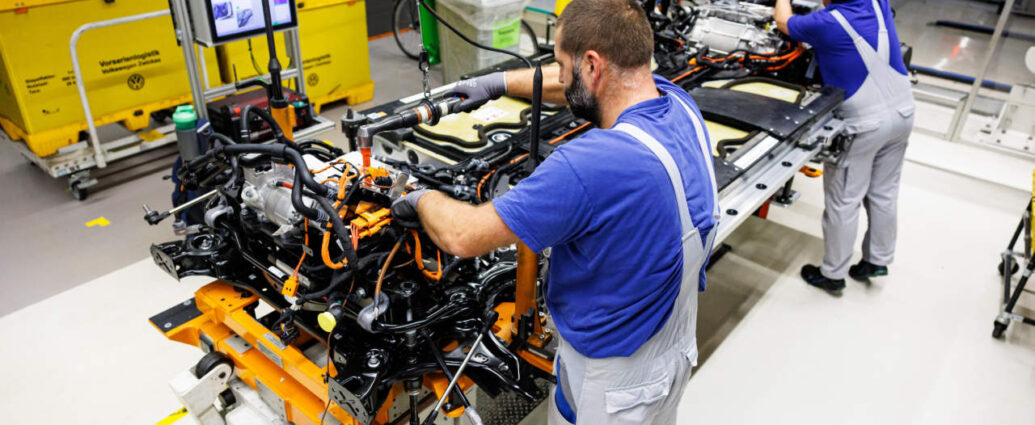



Inside Delta CEO Ed Bastian’s turnaround playbook—from bankruptcy to most profitable U.S. airline
- In today’s CEO Daily: Fortune Editor-in-Chief Alyson Shontell sits down with Delta CEO Ed Bastian.
- The big leadership story: Fortune ranks the 100 Best Companies to Work For.
- The markets: A global rally is underway as Trump says the Iran war will end within weeks.
- Plus: All the news and watercooler chat from Fortune.
Good morning. Ed Bastian has been the CEO of Delta Air Lines for a decade and an executive at the company for almost 30 years. As CFO and president, Bastian led the airline through a significant turnaround that began with filing for bankruptcy in 2008. It all paid off: Today, Delta is the most profitable airline in America.
Delta enjoys this title despite the fact that it gives away a chunk of profits to its 100,000 employees every year—and thanks in part to a long-term partnership with American Express, which Bastian has nurtured to be extremely lucrative. Delta-Amex cards are now responsible for over 10% of Delta’s total revenue.

I flew to Delta’s headquarters in Atlanta to interview Bastian for the Fortune 500: Titans and Disruptors of Industry podcast, and we sat among historic planes in the airline’s corporate museum hangar and talked for nearly an hour about his leadership playbook. When we spoke about his turnaround strategy, Bastian cited two other micro-turnarounds that reoriented the company: a brand overhaul and the rebuilding of team culture:
Creating a brand instead of a commodity. Two decades ago, “When you asked people why they chose an airline for their specific flight, 80% of the time it would be whoever had the lowest price,” Bastian told me. “Today, if you ask people why they choose Delta, 80% would say [it’s] because it’s Delta, because of the experience, the brand; 20% is the other stuff. So just a total flip. And so that was the most important thing, getting paid for the great service that our people do.”
Giving Delta’s people a reason to believe and the responsibility to make it work. “You have to let your people know that you’re supporting them and putting them out front, rather than the management being out front,” Bastian said. “We’re not obsessing on customers, per se, at the leadership levels, because we want to obsess over our own people, so that they can obsess over you as a customer. When your people know that you’ve got their back, amazing things can happen. That had been lost, and bringing that back, and getting their confidence and trust back, was really key.”
Given that latter point, it’s no surprise that Delta is in the top 10 of the newest edition of the Fortune 100 Best Companies to Work For. You can find that list here.
For more on how Bastian leads, where he sees the airline industry heading, and why AI won’t knock him off his people-first approach at Delta, listen to our full interview here.—Alyson Shontell
Contact CEO Daily via Diane Brady at diane.brady@fortune.com
This story was originally featured on Fortune.com
Stocks making the biggest moves after hours: Nike, Dave & Buster’s, RH and more
See which stocks are posting big moves after the bell.
This post was originally published here
Trump says he’s considering pulling U.S. out of ‘paper tiger’ NATO
The President’s comments are the latest threat to America’s allies after their reluctance to help reopen the Strait of Hormuz.
This post was originally published here



















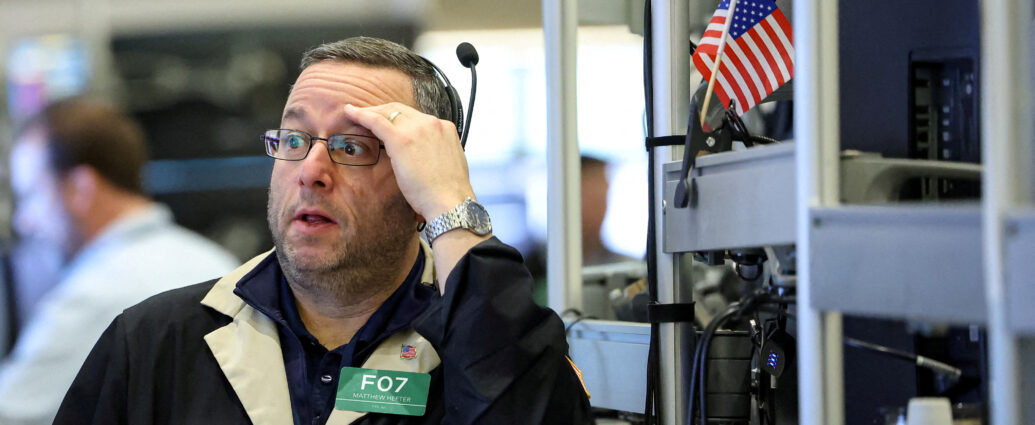










Several Baidu Apollo Go Robotaxis Freeze In China, Raising Concerns About AV Safety: Report
Multiple Baidu Inc. (NASDAQ:BIDU) Apollo Go Robotaxis reportedly froze in China’s Wuhan, sparking concerns about the safety of Robotaxis and autonomous vehicles around the world today.
Baidu Robotaxi Outage
On Tuesday, multiple Baidu Apollo Go Robotaxis were hit by a system outage that suddenly stopped the Robotaxis in their tracks in Wuhan, located in China’s Hubei Province, according to a statement by local authorities.
Baidu didn’t immediately respond to Benzinga‘s request for comment.
The incident left passengers stranded and a purported video of the crash shared by user Zeyi Yang on X showcased a car crashing into an Apollo Go Robotaxi on a highway.
This post was originally published here

Oil Could Spike To $372 Per Barrel In Worst Case Scenario, Says Paul Krugman: ‘Crisis Is About To Get Physical’
Nobel Prize-winning economist Paul Krugman is warning of a catastrophic global oil shock, cautioning that impending physical shortages could drive prices as high as $372 per barrel and trigger a worldwide recession.
The End Of Grace Period
Despite current Brent crude futures hovering around $103 per barrel, Krugman warns that the market is severely underestimating a looming supply crunch.
In a Substack analysis, he noted that the initial price spike following Middle Eastern disruptions was largely speculative, buffered by oil already in transit at sea. However, with tanker deliveries to Asian markets ending this week and European deliveries halting the next, the situation is drastically shifting.
“The oil crisis is about to get physical,” Krugman wrote. Once the oil stops flowing, political “jawboning” will fail, and prices will be forced to rise to whatever level destroys enough demand to match restricted supply.
The $372 Worst-Case Scenario
Based on the historically low price elasticity of crude demand, Krugman modeled several potential price impacts.
In his “high disruption” scenario—where global supply falls by 16% …
This post was originally published here

Jim Cramer Calls March 31 Market Rally A ‘Dry Run,’ Says These 3 Major Shifts Are Coming If Iran War Ends
CNBC “Mad Money” host Jim Cramer has proposed three potential market shifts that could occur if the U.S.-Iran war comes to an end.
Cramer referred to Tuesday’s market activity as a “dry run” for what might transpire when the war eventually subsides. The S&P 500 and Nasdaq Composite ended 2.91% and 3.83% higher, respectively, following news suggesting a possible de-escalation in the Middle East.
He predicts three significant market shifts if the war concludes.
First, he foresees a drop in rates, marking a notable reversal for the 10-year Treasury since the war began. This is attributed to the realization of inflation risks stemming from the war, not just from heightened oil prices but also from the effect on ancillary products from the Gulf.
Second, Cramer expects a revival in growth stocks, as demonstrated by Tuesday’s gains in Nvidia (NASDAQ:NVDA) and Marvell Technology (NASDAQ:MRVL), which closed 5.9% and 12.8% higher, respectively. He suggests that as rates decline, investors …
This post was originally published here
5 Stocks In The Spotlight From Wall Street’s Most Accurate Analysts Last Month
U.S. stocks settled higher on Tuesday, with the Dow Jones index gaining more than 1,100 points during the session as President Donald Trump signaled a potential end to military operations in Iran within weeks.
However, stocks recorded losses last month, with the S&P 500 losing 5.1%, logging its worst monthly performance since 2022. The Dow dipped 5.4%, while the Nasdaq fell 4.8% in March.
Wall Street analysts make new stock picks on a daily basis. Unfortunately for investors, not all analysts have particularly impressive track records at predicting market movements. Even when it comes to one single stock, analyst ratings and price targets can vary widely, leaving investors confused about which analyst’s opinion to trust.
Benzinga’s Analyst Ratings API is a collection of the highest-quality stock ratings curated by the Benzinga news desk via direct partnerships with major sell-side banks. Benzinga displays overnight ratings changes on a daily basis three hours prior to the U.S. equity market opening. Data specialists at investment dashboard provider Toggle.ai recently uncovered that the analyst insights Benzinga Pro subscribers and Benzinga readers regularly receive can successfully be used as trading indicators to outperform the stock market.
Top Analyst Picks: Fortunately, any Benzinga reader can access the latest analyst …
This post was originally published here

Top 3 Consumer Stocks That Are Preparing To Pump This Quarter
The most oversold stocks in the consumer discretionary sector presents an opportunity to buy into undervalued companies.
The RSI is a momentum indicator, which compares a stock’s strength on days when prices go up to its strength on days when prices go down. When compared to a stock’s price action, it can give traders a better sense of how a stock may perform in the short term. An asset is typically considered oversold when the RSI is below 30, according to Benzinga Pro.
Here’s the latest list of major oversold players in this sector, having an RSI near or below 30.
Standard Motor Products Inc (NYSE:SMP)
- On Feb. 26, Standard Motor Products reported worse-than-expected fourth-quarter sales results. Mr. Eric Sills, Standard Motor Products’ Chairman and Chief Executive Officer said, “We were very pleased with our results in the period as the strong performance we experienced throughout the year continued. Sales for the quarter were up 12.2%, and up 22.4% for the full year. Excluding the impact of Nissens Automotive, sales for the quarter and year were up 4.3% and 4.0%, respectively. Adjusted …
This post was originally published here
Apple Turns 50: From Garage Startup To $3.73 Trillion Giant—Here’s How Much A $1,000 Investment At Its IPO Would Be Worth Today
On Wednesday, April 1, 2026, Apple Inc. (NASDAQ:AAPL) celebrates 50 years of innovation, culture-shaping products, and unprecedented financial growth.
From Garage Beginnings to Global Tech Powerhouse
In 1976, Steve Jobs and Steve Wozniak turned a garage in California into the birthplace of Apple.
Wozniak had designed a computer circuit board for hobbyists and Jobs saw an opportunity to sell it commercially.
Apple Computer Inc. was officially incorporated the following year, setting the stage for decades of innovation.
To mark its 50th anniversary, Apple has refreshed its homepage with a special animation showcasing some of its most iconic products.
Celebrating Innovation with Iconic Products
The sketch-style video features the original Mac, iMac, iPod, App Store, Apple Watch, iPhone 17 Pro, Vision Pro and more in a creative, illustrative design.
The homepage states, “50 Years of Thinking Different At 50 years, it’s only natural to look back. But Apple has always looked forward, …
This post was originally published here

Tesla Rival Nio’s March Deliveries Jump 136%
Nio Inc. (NYSE:NIO) shares are up during Wednesday’s premarket session as the company reported impressive delivery results for March and the first quarter of 2026.
The stock’s rise follows a significant increase in vehicle deliveries, which has contributed to a positive sentiment around the electric vehicle sector, as broader markets also show gains.
In March 2026, Nio, a major rival of Tesla, Inc. (NASDAQ:TSLA), delivered 35,486 vehicles, marking a remarkable 136.0% year-over-year increase. In the first quarter, total deliveries reached 83,465 vehicles, reflecting 98.3% year-over-year growth and showcasing the company’s strong market performance. Cumulative deliveries reached 1,081,057 as of March 31, 2026.
The company’s flagship premium SUV, the All-New ES8, achieved its 80,000th delivery within just 181 days, reinforcing its position as a leader in China’s large SUV segment.
“Driven by its differentiated product capabilities and sustained user demand, the All-New ES8 continues to strengthen its leadership in the large SUV market,” the company said in a press release.
Nio’s Latest Earnings Results
In March, the Chinese electric vehicle maker released its fourth-quarter results.
The company reported quarterly revenue of 34.65 billion yuan ($4.95 billion), up 75.9% year over year and 59.0% sequentially. The figure exceeded the analyst consensus estimate of …
This post was originally published here

CFTC Targets Insider Trading As Prediction Markets Come Under Scrutiny
The Commodity Futures Trading Commission is stepping up oversight as prediction markets surge in popularity, warning traders that insider trading will not be tolerated.
CFTC Cracks Down On Prediction Market Insider Trading
Speaking Tuesday at New York University’s School of Law, CFTC enforcement chief David Miller said insider trading on platforms like Kalshi and Polymarket is illegal and will be a top enforcement priority, reported Business Insider.
“A myth has spread that insider trading is permissible, or even encouraged, in the prediction markets,” Miller said.
He added, “Prominent individuals in finance, media, and particularly on social media, have contended that insider trading law does not apply to these markets.”
He continued, “These comments all suggest that insider trading is an important and acceptable part of the prediction market ecosystem. Not so.”
Miller said the CFTC will hire more staff to investigate cases and negotiate settlements, emphasizing that the agency has the resources to enforce rules despite …
This post was originally published here
Nature boys and girls – here’s your chance to get published in the Guardian
Our wildlife series Young Country Diary is looking for articles written by children, about their spring encounters with nature
Once again, the Young Country Diary series is open for submissions! Every three months we ask you to send us an article written by a child aged 8-14.
The article needs to be about a recent encounter they’ve had with nature – whether it’s a marauding toad, a fascinating flower or a garden bird.
This post was originally published here
Man charged with 10 firearms offences after Dover counter-terror police arrest
Khalid Ahmed, 24, from Ealing in west London, also charged with one count of possession of prohibited ammunition
A 24-year-old man who was stopped at Dover has been charged with 10 counts of possession of a firearm.
Khalid Ahmed, from Ealing in west London, who is a dual Dutch and Irish national, is to appear at Westminster magistrates court on Wednesday, where he will also face one charge of possession of prohibited ammunition.
This post was originally published here
US tech firm Oracle cuts thousands of jobs as it steps up AI spending
Company chaired by Trump ally Larry Ellison seeks to reassure investors that bet on AI infrastructure will pay off
Oracle is cutting thousands of jobs as the US technology company seeks to reassure investors that its bet on AI infrastructure will pay off.
The $420bn firm, headquartered in Austin, Texas, started letting employees go on Tuesday, with thousands of Oracle’s 160,000-strong workforce expected to leave.
This post was originally published here

Trump to address nation after saying U.S. may leave war within weeks
President Trump is set to address the nation on the Iran war at 9 p.m. Eastern time on Wednesday night, with White House press secretary Karoline Leavitt saying he would be providing “an important update,” without providing further details.
(Image credit: Alex Wong)

This post was originally published here