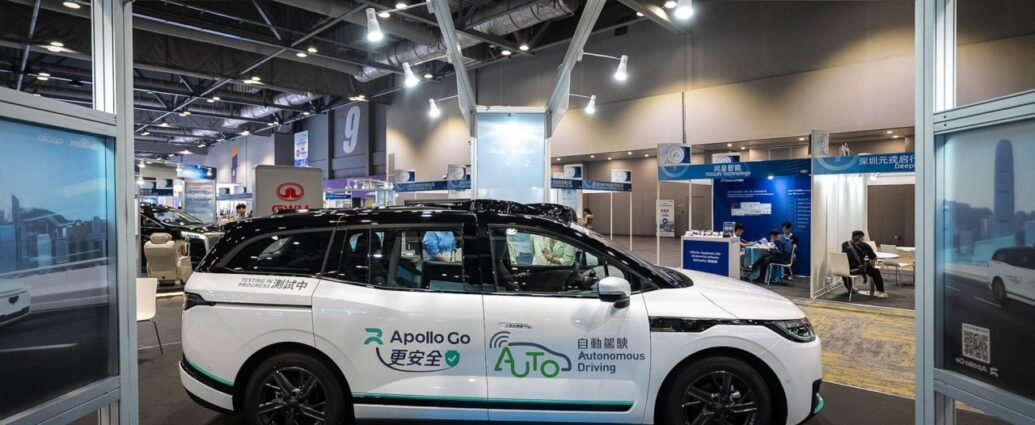
JFB Construction Holdings (NASDAQ:JFB) surged 2.29% to $6.26 in the pre-market session on Wednesday after its merger partner, Israeli drone maker XTEND, became the first U.S. company to receive U.S. Army Fuze Safety Board approval for its first-person view attack drone high-voltage safety system.

XTEND’s high-voltage safety system moves critical safety and arming functions into software, designed to eliminate the need for separate payload specialists and reduce preparation time through automated countdown and software-driven arming.

Defense Tailwinds Strengthen Merger Thesis

According to JFB Construction, U.S. defense budgets for tactical strike and unmanned systems programs are projected to exceed $100 billion annually in the coming years.

“This approval validates both our technology and the market shift …

Full story available on Benzinga.com

This post was originally published here

In the ever-evolving and intensely competitive business landscape, conducting a thorough company analysis is of utmost importance for investors and industry followers. In this article, we will carry out an in-depth industry comparison, assessing Tesla (NASDAQ:TSLA) alongside its primary competitors in the Automobiles industry. By meticulously examining key financial metrics, market positioning, and growth prospects, we aim to offer valuable insights to investors and shed light on company’s performance within the industry.

Tesla Background

Tesla is a vertically integrated battery electric vehicle automaker and developer of real world artificial intelligence software, which includes autonomous driving and humanoid robots. The company has multiple vehicles in its fleet, which include luxury and midsize sedans, crossover SUVs, a light truck, and a semi truck. Tesla also plans to begin selling a sports car and offer a robotaxi service. Global deliveries in 2025 were nearly 1.64 million vehicles. The company sells batteries for stationary storage for residential and commercial properties including utilities and solar panels and solar roofs for energy generation. Tesla also owns a fast-charging network and an auto insurance business.

Company P/E P/B P/S ROE EBITDA (in billions) Gross Profit (in billions) Revenue Growth
Tesla Inc 344.21 16.98 13.83 1.04% $2.91 $5.01 -3.14%
General Motors Co 22.78 1.10 0.39 -5.22% $0.42 $-1.12 -5.06%
Ferrari NV 32.97 13.35 7.37 9.89% $0.69 $0.93 3.79%
Thor Industries Inc 14.19 0.97 0.43 0.41% $0.1 $0.25 5.34%
Winnebago Industries Inc 21.08 0.71 0.30 0.39% $0.03 $0.09 6.0%
Workhorse Group Inc 0.04 0.83 0.19 -28.77% $-0.01 $-0.01 -4.97%
Average 18.21 3.39 1.74 -4.66% $0.25 $0.03 1.02%

Full story available on Benzinga.com

This post was originally published here

In today’s rapidly evolving and fiercely competitive business landscape, it is crucial for investors and industry analysts to conduct comprehensive company evaluations. In this article, we will undertake an in-depth industry comparison, assessing Micron Technology (NASDAQ:MU) alongside its primary competitors in the Semiconductors & Semiconductor Equipment industry. By meticulously examining crucial financial indicators, market positioning, and growth potential, we aim to provide valuable insights to investors and shed light on company’s performance within the industry.

Micron Technology Background

Micron is one of the largest semiconductor companies in the world, specializing in memory and storage chips. Its primary revenue stream comes from dynamic random access memory, or DRAM, and it also has minority exposure to not-and or NAND, flash chips. Micron serves a global customer base, selling chips into data centers, mobile phones, consumer electronics, and industrial and automotive applications. The firm is vertically integrated.

Company P/E P/B P/S ROE EBITDA (in billions) Gross Profit (in billions) Revenue Growth
Micron Technology Inc 15.94 5.26 6.59 21.0% $18.48 $17.75 196.29%
NVIDIA Corp 35.59 26.94 19.80 31.11% $51.28 $51.09 73.21%
Broadcom Inc 60.33 18.35 22.06 9.12% $11.15 $13.16 29.47%
Advanced Micro Devices Inc 77.94 5.26 9.61 2.44% $2.86 $5.58 34.11%
Texas Instruments Inc 35.62 10.86 10.02 7.03% $2.07 $2.47 10.38%
Analog Devices Inc 58.16 4.60 13.39 2.46% $1.52 $2.04 30.42%
Qualcomm Inc 25.96 5.96 3.14 13.57% $4.11 $6.68 5.0%
Marvell Technology Inc 32.26 6.05 10.51 2.79% $0.75 $1.15 22.08%
Monolithic Power Systems Inc 85.02 15.21 18.93 4.95% $0.21 $0.41 20.83%
NXP Semiconductors NV 24.76 4.95 4.08 4.53% $0.98 $1.81 7.2%
GLOBALFOUNDRIES Inc 27.97 2.05 3.65 1.68% $0.73 $0.51 0.0%
ON Semiconductor Corp 213.52 3.18 4.25 2.33% $0.45 $0.55 -11.17%
First Solar Inc 13.88 2.22 4.06 5.62% $0.7 $0.67 11.15%
Tower Semiconductor Ltd 90.45 6.76 12.73 2.78% $0.13 $0.09 11.26%
Astera Labs Inc 89.84 13.68 23.08 3.41% $0.07 $0.2 91.77%
MACOM Technology Solutions Holdings Inc 100.48 12.31 16.31 3.64% $0.07 $0.15 24.52%
Credo Technology Group Holding Ltd 51.58 9.36 16.32 10.03% $0.16 $0.28 201.49%
Lattice Semiconductor Corp 4638.50 17.78 24.51 -1.08% $0.01 $0.1 24.16%
Rambus Inc 40.77 6.82 13.28 4.81% $0.09 $0.15 18.09%
Average 316.81 9.57 12.76 6.18% $4.3 $4.84 33.55%

Full story available on Benzinga.com

This post was originally published here

In today’s rapidly changing and fiercely competitive business landscape, it is essential for investors and industry enthusiasts to thoroughly analyze companies. In this article, we will conduct a comprehensive industry comparison, evaluating Amazon.com (NASDAQ:AMZN) against its key competitors in the Broadline Retail industry. By examining key financial metrics, market position, and growth prospects, we aim to provide valuable insights for investors and shed light on company’s performance within the industry.

Amazon.com Background

Amazon is the leading online retailer and marketplace for third party sellers. Retail related revenue represents approximately 74% of total, followed by Amazon Web Services (17%), and advertising services (9%). International segments constitute 22% of Amazon’s total revenue, led by Germany, the United Kingdom, and Japan.

Company P/E P/B P/S ROE EBITDA (in billions) Gross Profit (in billions) Revenue Growth
Amazon.com Inc 29.05 5.44 3.15 5.43% $46.76 $103.43 13.63%
MercadoLibre Inc 43.88 12.99 3.03 8.62% $1.07 $3.78 44.56%
eBay Inc 21.37 8.84 3.84 11.31% $0.8 $2.12 14.97%
Coupang Inc 171.64 7.47 1.01 -0.56% $0.17 $2.54 10.92%
Dillard’s Inc 15.71 5.02 1.36 10.66% $0.3 $0.72 -3.03%
Ollie’s Bargain Outlet Holdings Inc 23.66 2.97 2.15 4.6% $0.13 $0.31 16.82%
Global E Online Ltd 79.10 5.54 5.64 6.69% $0.13 $0.15 28.05%
Macy’s Inc 7.80 0.98 0.22 11.04% $0.9 $2.97 -1.14%
Kohl’s Corp 5.42 0.36 0.09 3.13% $0.39 $1.85 -4.15%
Savers Value Village Inc 53.14 2.65 0.72 5.28% $0.07 $0.26 15.59%
Hour Loop Inc 35.30 8.88 0.44 -8.96% $-0.0 $0.03 3.03%
Average 45.7 5.57 1.85 5.18% $0.4 $1.47 12.56%

Full story available on Benzinga.com

This post was originally published here

US president’s claim that conflict is nearing end prompts 15% drop in Brent crude and stock market climb in Asia

Oil prices tumbled and stock markets rallied across the world on Wednesday after Donald Trump said the war in Iran would end in “two to three weeks”.

Brent crude, the international benchmark for oil, dropped to $99.78 a barrel, down more than 15% compared with its price on Tuesday – its lowest level in a week.

Continue reading…

This post was originally published here

US president’s claim that conflict is nearing end prompts 15% drop in Brent crude and stock market climb in Asia

Oil prices tumbled and stock markets rallied across the world on Wednesday after Donald Trump said the war in Iran would end in “two to three weeks”.

Brent crude, the international benchmark for oil, dropped to $99.78 a barrel, down more than 15% compared with its price on Tuesday – its lowest level in a week.

Continue reading…

This post was originally published here

State department says it is working to ensure release of freelancer ‘as soon as possible’ after abduction in Baghdad

An American journalist, Shelly Kittleson, has been kidnapped in Baghdad by a suspected Iranian-backed Iraqi armed group, the US has said, as regional security deteriorates after the US-Israeli attack on Iran.

Kittleson is a longtime freelancer in the region, reporting extensively from Syria, Iraq and Lebanon.

Continue reading…

This post was originally published here

State department says it is working to ensure release of freelancer ‘as soon as possible’ after abduction in Baghdad

An American journalist, Shelly Kittleson, has been kidnapped in Baghdad by a suspected Iranian-backed Iraqi armed group, the US has said, as regional security deteriorates after the US-Israeli attack on Iran.

Kittleson is a longtime freelancer in the region, reporting extensively from Syria, Iraq and Lebanon.

Continue reading…

This post was originally published here

North Korean hackers allegedly hit U.S. firms in supply-chain attacks to steal cryptocurrency for the regime’s nuclear funding, according to a report published Tuesday.

Are North Korean Hackers Chasing Crypto?

The hackers reportedly targeted Axios, a software program that connects applications and ‌web services, according to CNBC. The hackers controlled the software developer’s account for three hours on Tuesday morning, during which malicious updates were sent to organizations that downloaded the software.

Axios is also used by cryptocurrency firms, blockchain developers and tech firms active in the cryptocurrency industry.

Security experts told CNBC that this could be part of a “long-term campaign” by the North Korean regime to steal cryptocurrency, which is then used …

Full story available on Benzinga.com

This post was originally published here

I know the demands CEOs face because I am one.

Right now, we’re racing to get the right AI tools into our people’s hands so our organizations can grow.

In conversations with other CEOs, they tell me their tech stack is strong. Their training is rolling out. Every IT box is checked. And yet, adoption is slow. The investment isn’t paying off. Frustration and fear are high.

Leaders point to employee readiness as the problem. They want to know: How can I get my people on board?”

Here’s what many leaders miss: People don’t change until their leaders do.

We want our people to be agile, innovative, and ready to “meet the moment.” But while we’re looking at them, they’re looking at us — for clarity, confidence, direction, and care.

This is what stalls success. If adoption is slow, it’s not an AI problem. It’s a leadership problem. AI success isn’t only a test of your technology. It’s a test of your leadership.

Our Great Place To Work® 2025 global workforce study of nearly 10,000 employees across 25 countries shows that 85% of the global workforce has access to AI technology. But only 44% feel excited about using it or trust their employer to use it responsibly.

Employees aren’t lacking tools. They’re lacking trust, clarity, and support. Our survey shows that employees who have received no AI training are enthusiastic about AI if they believe that their leaders will get them trained the right way at the right time. This is all about trust, not training. If people don’t trust their leaders, they feel anxious, unprepared, or left out of decisions that affect them. They worry AI will replace them. That fear doesn’t get solved with software. It gets solved with trust and psychological safety.

This is why so many organizations haven’t scaled beyond pilot projects. They’re stuck, looking outward for solutions — more spending and more tools — and not inward at how they lead.

So, when CEOs ask me, “Why isn’t AI use translating into real business impact?” I answer their question with more questions:

  • Do your people trust you?
  • Are you addressing fear directly?
  • Do people understand how AI helps their careers?
  • Are they afraid of losing their job?
  • Do they feel safe experimenting and learning?

These are questions I don’t need to ask leaders at the 2026 Fortune 100 Best Companies To Work For®, because I know the experience their people are having. These companies outperform their peers on employee experience — from agility and innovation to leadership behaviors.

At the 100 Best, 81% of employees say their workplace is psychologically safe, compared to 56% at typical workplaces. When people feel psychologically safe, they are 44% more likely to feel confident in their leaders, and more than twice as likely to stay.

High-trust leaders don’t hand people AI tools and hope for the best. They lead. They use AI and talk about it. They explain what’s changing and why. They address fear directly. That doesn’t mean promising there won’t be layoffs. If you do, you’ll lose credibility. Layoffs are part of business, and they were long before AI. But they should be the last resort, not the plan.

If your story is “we cut costs,” you’re missing the point. The best protection against layoffs is growth, and AI should help you do that.

It’s about doing more with the people you have so you can grow your business. Talk to me about how AI is raising revenue per employee, not how much you’ve slashed costs.

The 100 Best leaders focus on what’s effective, not simply efficient — on outcomes, not just usage. Growth, not cuts. Safety, not fear. More humanity, not less. AI is used to make work better for all — not scarier. 

When leaders create that environment for every working person, resistance fades. People believe AI will improve their work, their jobs, and their careers. Trust grows, and business performance follows.

Our research shows AI adoption is 2.5 times more likely when leaders talk openly about AI and encourage its use — and 2.1 times more likely when they explain how it helps employees’ careers. Employees who use AI at least monthly are more adaptable, more committed, and give extra effort.

At Synchrony, No. 1 on the list, employees are nine times more likely to embrace AI when leaders connect it to growth conversations and four times more likely when they understand how AI creates new growth opportunities for the company. With strong communication and training, Synchrony employees report 70% higher innovation.

This is the equation that never fails: Leaders shape the employee experience, and that experience drives business performance. It’s The Great Place To Work Effect.

Five ways 100 Best leaders build trust around AI

Leaders often assume their experience at work mirrors everyone else’s. It doesn’t. The experience worsens as you move down the org chart.

AI is no different. Enthusiasm, encouragement, access, and adoption all drop the further you get from the top.

Too often, AI isn’t reaching frontline workers — not because they’re resistant, but because they’re not getting trust, support, or access from their supervisor, who might not be getting those things from their supervisor.

Executives think they’re communicating clearly about AI. Frontline employees disagree. While 83% of executives say the message is clear, only 37% of frontline workers agree, according to our global survey. Similarly, 81% of executives believe they’re supportive, but only 33% of frontline employees feel encouraged to use AI.

Access tells a similar story. While 82% of executives say their company provides AI tools to help people do their job better, only 48% of frontline managers and 38% of individual contributors say the same.

AI only creates value when it’s used consistently, confidently, and by many people across the organization. Here’s how high-trust leaders close these gaps and make that happen:

1. Dispel the fear

Explain what’s changing — and why.

Two in three frontline workers worry that AI could replace their jobs. When people fear being replaced or don’t know what’s coming, trust erodes. Fear slows adoption and success. Transparency builds trust.

High-trust leaders set clear expectations; share privacy guiderails; and are transparent about what data AI uses, how it’s used, and how it’s protected. They share use cases, wins, and lessons learned from across the organization.

When employees understand the purpose, trust the guardrails, and feel involved in shaping how AI is used in their roles, they are far more likely to use AI. Desk workers with clear AI guidelines are six times more likely to have experimented with AI tools.

Edward Jones developed five guiding principles to help employees understand AI’s purpose and boundaries: human-centered, accountable, trustworthy, and inclusive. The company uses multi-channel updates like “Decisions Unpacked” sessions, town halls, and office hours to get feedback and engage employees.

2. Make learning role relevant

People are more likely to use AI if training is tied directly to their jobs.

Employees with AI training are more than twice as likely to actively use AI in their work compared to those without training, according to our global survey.

At the 100 Best, 85% of employees say training and development furthers them professionally, making innovation opportunities 87% more likely.

At Capital One, employees get personalized genAI learning paths and a skills snapshot so they can identify gaps, upskill, and apply AI in their day-to-day work.

3. Keep humans in the loop

AI should support judgment, not replace it. When employees are involved in decisions that impact their work, they adapt faster and are 41% more likely to embrace change.

Bank of America emphasizes human oversight, transparency, and accountability for AI outcomes across the bank. Navy Federal Credit Union uses AI to augment work under human oversight and is transparent about when AI is involved.

4. Create space for peer learning

People are far more likely to try new technology when they feel supported and part of a trusted group. Curiosity turns into confidence, and confidence drives action.

In our global study, 89% of employee resource group members use AI at least once a month, compared to 67% of non-members at typical workplaces.

Salesforce runs companywide “agentforce” learning days showcasing real examples and organizes collaborative forums for peer-to-peer learning. MetLife uses internal networks and playbooks to spread what’s working across teams, with leaders and ambassadors amplifying success.

5. Share progress

The best workplaces track and share progress around AI use and confidence.  

Marriott International gives managers data on engagement, learning gaps, and behavior shifts using a dashboard in its learning platform.

Build trust — and they will come

CEOs love to say challenges are opportunities. They are, but not just for our teams. For us, too.

This moment calls on leaders to build trust, reduce fear, and create confidence.

When people trust their leaders, they trust how AI will be used. And trust that layoffs are a last resort.

In business, the workforce grows, and the workforce shrinks; everyone knows that. What your people really want to know is whether you are doing everything you can to help them grow at your organization, or the next one. Your transparent words and equitable actions will inform them.

Let’s be real and enable people to make the world better with AI.

Michael C. Bush is the CEO of Great Place To Work and co-author of “A Great Place to Work For All.” Follow him on LinkedIn, and subscribe to the Great Place To Work LinkedIn newsletter to learn how to boost business performance.

Do you have what it takes to make a Best Workplace list? Find out.

This story was originally featured on Fortune.com

In 2025 alone, over 11.7 million Instagram posts carried the hashtag #nostalgia, Google searches for “90s movies” had doubled since 2015, and Y2K aesthetic searches had spiked 891% since November 2024.  I had chronicled the growing interest in vinyl, CDs and analog experiences among Gen Z, “this wave of anemoia — longing for a past you never lived — makes perfect sense once you hear Gen Z explain it themselves.”

My conversations with 13- to 25-year-olds revealed the core tension: a longing for a past when they were tech-free and owned their own attention.

“I am nostalgic for a time when I was present, when my generation was between 5 and 10, when we were still doing things in the real world,” shared 19-year-old Nancy, a university student in London, “I don’t remember what I watched yesterday on TikTok, but I remember what I did years ago when I didn’t have a phone.”

“That looked like a better time than today,” she says. That sentiment helps explain why searches for Y2K aesthetics  shot up 891% since November 2024. 

At a recent sleepover, my 15-year-old son and his 14-year-old friend Charlie, driven by a pang of nostalgia, chose to watch the opening ceremony of the London 2012 Olympics on YouTube.  Charlie spoke longingly about a time when he didn’t have a phone. “I felt so free then, not worried about anything like school, just playing. There was no social media. Now I worry about the world, about online hostility and my appearance.”

Nona (25), a marketing professional  in London, shares this feeling of nostalgia for  the pre-Amazon time of friction and waiting — when slowness felt like breathing room, not failure. This digital nostalgia is unique to the digitally native Gen Z, and alien to previous generations like mine. It centres around what some call the “Tumblr era” [between about 2011 and 2014], when smartphones and apps were still a novelty. “My own son mourns the pre-TikTok YouTube era — when content was shared and discussed rather than endlessly, solitarily scrolled.” 

The numbers confirm this is no fringe feeling. Pew Research from 2024 shows that almost half of US 13-17-year-olds (48%) view social media’s effects as mostly negative — up from 32% two years prior — and 44% have actively cut back on smartphone use.  Ipsos polling in the UK shows 72% of Britons support an age-verification law barring under-16s from social media, with strong backing from 18-34-year-olds. Deloitte research documents a parallel surge in app deletions and screentime limits among Gen Z themselves.

That pushback against the perceived digital prison is now a market. Analog and “pre-smartphone” experiences — digital detox cabins, phone-free clubs, dumb phones —  are scaling fast. Unplugged, the UK’s first digital-detox cabin company, has expanded from a handful of locations in 2020 to over 50 in 2026.

Nona  cut her daily screentime from roughly ten hours to two or three after a tech-free Unplugged stay — armed with only a paper map,a Nokia brick phone and her boyfriend’s good company. “[It] made us realize how addicted we are to our phones but also that actually we can very much get away without them,”  she says. “It reminded us how much we value undivided attention — and how much our phones steal it.” 

According to Vertu research, more and more Gen Z adults are reclaiming their reality by switching to dumb phones or maintaining dual dumb-smartphone setups, and spending more time in tech-free or digitally minimalist spaces. Offline movements like Offline Club (launched in Amsterdam, now in 19 cities) and Luddite Club offer tech-free communities  built around presence, not content.

Similarly, apps like Opal help users scale down social media consumption. The category is exploding: the global social-media-blocker app market is projected to grow from $1.47 billion in 2025 to $5 billion by 2035.

Other analog experiences are  booming. Escape rooms, paintballing, and live music are all projected to grow considerably through 2035. 

Government is catching up. From Australia and France to Denmark, Norway, Malaysia, Indonesia, India’s Karnataka and China, governments worldwide are  restricting social media access for minors — accelerating the analog pivot for the next generation.

Gen Z didn’t choose digital overload. They inherited it. But they are now doing something no previous generation has done: deliberately dismantling the attention economy from the inside — one dumb phone, one detox cabin, one conversation, one deleted app at a time. The analog future isn’t a retreat. It’s a correction.

The opinions expressed in Fortune.com commentary pieces are solely the views of their authors and do not necessarily reflect the opinions and beliefs of Fortune.

This story was originally featured on Fortune.com

Ketamine treatment clinics have proliferated following the Food and Drug Administration’s approval of the drug as a remedy for acute depression in 2019, leading to a Wild West of infusion clinics that have expanded treatment access for many Americans without much regulation. 

Providers are split on whether ketamine should be used strictly as a pharmacological intervention, or whether psychotherapy or other types of monitoring should be incorporated alongside the drug’s administration. Studies have shown that giving ketamine without psychological support can reduce depressive symptoms and suicidality within hours.

But some researchers suspect this pharmacological-only viewpoint could leave benefits on the table. A group of scientists announced on Tuesday a clinical trial at Massachusetts General Hospital that they hope will answer what, exactly, ketamine and its resulting trip provides.

Continue to STAT+ to read the full story…

This post was originally published here. 

It is perhaps not surprising that the director of the National Institutes of Health would invoke the name of a man revered by scientists as the architect of a policy widely credited with driving the United States’ global supremacy in biomedical research. But Jay Bhattacharya’s claim over the weekend that the Trump administration is pursuing a vision articulated eight decades ago by that scientific leader, Vannevar Bush, has provoked pushback — even outrage — in scientific circles.

Standing before one of the country’s largest annual gatherings  of conservative political activists, Bhattacharya attempted to make the case that the administration’s science policies — particularly its efforts to diminish the research dominance of elite universities and spread federal funding more broadly across the country — are rooted in the ideas Bush proposed at the end of World War II. 

“I want to tell you a great story about how we can make America healthy again. I’m going to begin with a perspective from 1944 that still challenges us today,” he began his speech at the Conservative Political Action Conference on Saturday in Dallas, Texas. “There was a man named Vannevar Bush. He wrote a book called ‘The Endless Frontier’ that warned that the scientific progress in the United States was becoming unevenly distributed. Too much research capacity, he argued, was concentrated in a small number of institutions.”

Continue to STAT+ to read the full story…

This post was originally published here. 

Here is STAT’s biotech scorecard, our regular ledger of stock-moving biotech events, for the second quarter:

Abivax: Maintenance outcomes from the Phase 3 ABTECT study of obefazimod in ulcerative colitis.

Allogene Therapeutics: Interim analysis of the ALPHA3 study of cema-cel as a frontline consolidation treatment for B-cell lymphoma. A preview can be read here.

Continue to STAT+ to read the full story…

This post was originally published here. 

Few things will give a man as much of an insight into the female body as growing up with sisters. Painful, irregular periods, body hair, skin trouble: Al Barrus, a 43-year-old veteran and communications specialist from New Mexico, heard all about it growing up, the only male of three siblings. He’s also known for a while that one of his sisters had been diagnosed with polycystic ovary syndrome, an endocrinological disorder and leading cause of infertility associated with a range of issues including high androgen levels, insulin resistance, and enlarged ovaries. His other sister, too, had some PCOS symptoms. 

Recently, he’s begun to wonder: Could he have it, too? 

Read the rest…

This post was originally published here. 

The Centers for Medicare and Medicaid Services has decided to include ostomy supplies in its competitive bidding program (CBP), limiting supplier choice in the name of cost savings. Finalized last November, the policy is already moving toward implementation with key decisions on pricing and the number of contracts to award for each product category expected as soon as this spring.

The goal is understandable. The reasoning is not.

Read the rest…

This post was originally published here. 

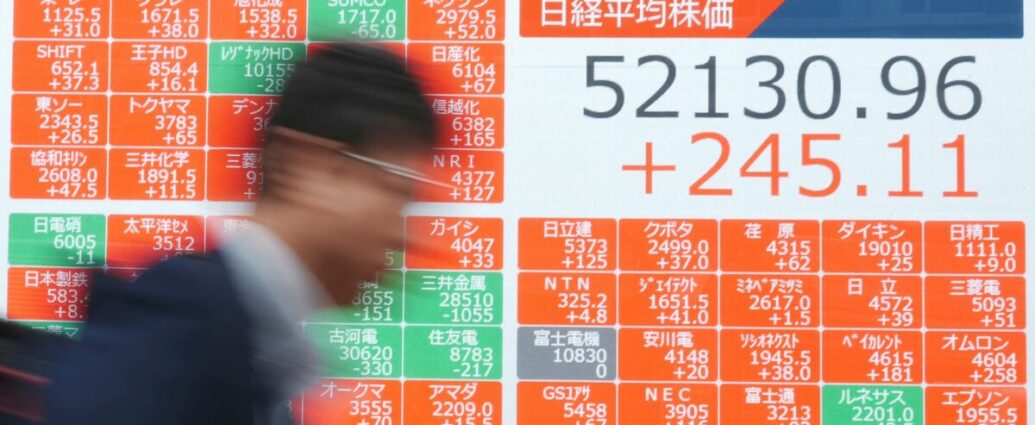
The CNN Money Fear and Greed index showed some easing in the overall fear level, while the index remained in the “Extreme Fear” zone on Tuesday.

U.S. stocks settled higher on Tuesday, with the Dow Jones index gaining more than 1,100 points during the session as President Donald Trump signaled a potential end to military operations in Iran within weeks.

However, stocks recorded losses last month, with the S&P 500 losing 5.1%, logging its worst monthly performance since 2022. The Dow dipped 5.4%, while the Nasdaq fell 4.8% in March.

U.S. major averages also recorded losses last quarter, with the Nasdaq dipping more than 7%. The S&P 500 fell 4.6%, while the Dow tumbled 3.6% during the quarter.

In earnings, FactSet Research Systems Inc. (NYSE:FDS) on Tuesday reported upbeat results for the second quarter and raised its outlook. TD SYNNEX Corp. …

Full story available on Benzinga.com

This post was originally published here

The National Transportation Safety Board (NTSB) has held Ford Motor Co. (NYSE:F) liable for two fatal collisions involving its BlueCruise Driver Assistance system.

Two 2024 Fatal Crashes

In a statement released on Tuesday by the agency, the NTSB said that Ford’s BlueCruise system failed to “stop for stationary vehicles” in 2024. The probe found that the system was ineffective in detecting driver distraction or disengagement and that it failed to differentiate between attention to the road and attention to objects blocking visibility.

The first incident took place in February 2024 in San Antonio with a stationary vehicle, which resulted in the death of the driver, while the Ford driver sustained minor injuries. The second crash happened in March 2024 when a Ford vehicle struck two cars in Philadelphia on Interstate 95, causing them to collide with a third vehicle.

The drivers of the Prius and Elantra, struck by the Ford vehicle, died in the accident, while the Ford driver sustained minor injuries. The third vehicle’s driver was uninjured. …

Full story available on Benzinga.com

This post was originally published here

On Tuesday, Telegram founder Pavel Durov highlighted reports that Apple Inc. (NASDAQ:AAPL) had removed multiple VPN and proxy applications from its Russian App Store.

Apple Pulls VPN Apps Amid Rising Censorship

The affected apps, including Streisand, V2Box, v2RayTun and Happ Proxy Utility, allowed users to connect through private servers or configure custom proxies, giving them more control than mainstream VPNs, Russian tech outlet Kod Durova reported.

“Apple just banned several VPN apps from the Russian App Store — targeting those that helped users bypass Russia’s DPI-based censorship. That’s not cool, Applee,” Durov wrote on X.

Full story available on Benzinga.com

This post was originally published here

Warren Buffett has voiced his apprehension regarding the escalating menace of nuclear weaponry, saying the prospect of Iran acquiring a bomb would heighten the risk of a dangerous conflict.

Buffett, the chairman and former CEO of Berkshire Hathaway (NYSE:BRK), speaking on CNBC’s “Squawk Box” on Tuesday, cautioned that the growing number of nuclear-armed nations is fundamentally altering the global risk scenario. He specifically highlighted the escalating geopolitical tensions involving Iran and North Korea.

“Just think of how you’d feel with North Korea having it and Iran wanting to get it,” the billionaire investor said. He also warned about the risks of a nuclear-armed leader acting under personal or political pressure.

 “The most dangerous thing is, actually, somebody that’s got their hand on the switch, who is dying themselves, or is facing enormous embarrassment,” Buffett said.

The 95-year-old has consistently expressed his concerns about nuclear proliferation, believing that the spread of nuclear capabilities heightens the chances of a catastrophic event. …

Full story available on Benzinga.com

This post was originally published here

Shares of nCino Inc (NASDAQ:NCNO) rose sharply in pre-market trading after the company reported better-than-expected fourth-quarter financial results and issued first-quarter sales guidance above estimates. Also, the company issued FY27 sales guidance with its midpoint above estimates.

nCino posted non-GAAP EPS of $0.37, far surpassing the $0.15 analyst estimate by 146.67%, marking its third straight quarter of triple-digit EPS beats.

Fourth-quarter revenue for the company grew 6% year over year to $149.7 million, exceeding the $147.57 million analyst estimate by 1.44%.

nCino shares jumped 18% to $17.68 in pre-market trading.

Here are some other stocks moving in pre-market trading.

Gainers

  • Hub Cyber Security Ltd (NASDAQ:HUBC) gained 56.7% to $0.16 in pre-market trading after the company announced leadership transition.
  • Binah Capital Group Inc (NASDAQ:BCG) gained 52.8% to $3.07 in pre-market trading after the independent financial advisor network reported fourth-quarter revenue growth of 13.2% and generally accepted accounting principles profitability in its first full year as a public company.
  • Xiao-I Corp (NASDAQ:AIXI) gained 37.5% to $0.16 in pre-market trading. Xiao-I shares gained 18% on Tuesday after the company issued an additional material update on its variable interest entity’s ongoing patent infringement lawsuit against Apple.
  • DeFi Technologies Inc (NASDAQ:DEFT) rose 35.4% to …

Full story available on Benzinga.com

This post was originally published here

He doesn’t know where the toilet paper is. He doesn’t know who the pediatrician is. He has never planned a meal, started a load of laundry, or thought about what time school pickup is. And somehow, none of that is considered a problem. Weaponized incompetence, or the practice of being so helpless that the labor simply falls on someone else, has long been a feature of domestic life.

But Wharton economist Corinne Low has spent years researching the data proving what many women have quietly suspected: it isn’t a quirk, a personality flaw, or a bad habit particular to certain men. It is, at this point, a structural constant. And it’s getting worse as women enter the workforce in greater numbers than their male counterparts and outearn them in greater numbers.

Low, an Associate Professor of Business Economics and Public Policy at the Wharton School who has been at the school since 2014, is the author of Having It All: What Data Tells Us About Women’s Lives and Getting the Most Out of Yours. The book details her research in how the division of labor in the household overwhelmingly falls on women’s shoulders, even as women continued to earn more. For Low, not only have we long moved past the idea of a stay-at-home wife waiting for her breadwinning husband to come home from work or the Marge Simpsons or Betty Drapers of the world, but we now are entering a cultural dynamic where women out-earn, outwork, and outperform their male counterparts, and still are putting in more labor at home.

“Men’s time doing housework is about the same as it was in the 1970s,” she told Fortune, “and that’s true whether or not the woman earns more money or the man earns more money.” That stagnation, she argued, is the central reason women feel like progress has stalled, because it has, at least on one side of the equation.

The assumption based off classical economic theory was that as women earned more, the domestic scales would naturally balance out. More income meant more leverage, the thinking went, and more ability to negotiate a fairer split of the cooking, the cleaning, the laundry, the kids, the pets, the hosting (the whole laundry list), the mental load of running a household. And despite this, Low said, that hasn’t changed even though external factors on labor have.

Working in the office and working at home

Even when a wife out-earns her husband, she still does almost twice as much cooking and cleaning as her lower-earning partner. Low used a real-world scenario from her research: a couple consisting of a nurse and an Uber driver, where the woman earns four times more per hour than the man, and yet, she still carries the heavier domestic load while he logs more hours at work. “The programming is there,” Low explained, describing how deeply ingrained gender expectations lead men to equate contribution with paid work hours, even when the math argues against it. “It would actually be more helpful if he stayed home, took the kids off from daycare so she could pick up a shift as a nurse, and the whole household would be richer.”

There’s also been a dramatic transformation in how Americans parent. Parenting time has exploded since the 1990s, and the burden has not been shared equally. “Working moms today are spending more time with their kids than stay-at-home moms when we were kids,” she said. Men have increased their parenting involvement somewhat, but Low said that doesn’t equate to the effort moms are putting in. When men cite dropping kids at daycare or trading off bedtime stories as evidence they’re doing their part, the data, Low said, te glls a different story. Because overall parenting time has risen so dramatically for everyone, “the gap with their wives has actually widened instead of narrowed. But when it comes to that more routine household drudgery, men’s time has not changed at all.”

Now, with AI reshaping labor markets and displacing the higher-paying, male-dominated jobs in tech and adjacent fields, Low sees the stakes getting higher. The old household logic of he earns more, so she handles more at home is being upended. Low argued that the cultural infrastructure to absorb that shift doesn’t yet exist. That result is corroborated by new economic data proving the trend of the stay-at-home boyfriend is here to stay—and likely permanently. Laura Ullrich, Director of Economic Research at Indeed Hiring Lab, recently authored a report showing for the third time ever, women outnumber men in the workforce, and unlike the last two times (the 2008 financial crisis and Covid-19), this time it’s here to stay.

For Low, that’s troubling because men (who do go to work) are opting for largely male-dominated roles that may not fit today’s workforce—and are keeping the same mentality at home. “I think it is an existential problem for men to learn to step into new roles and to actually pull their weight at home,” she said. “Because suddenly she’s her household’s breadwinner, but he’s claiming he’s useless in the kitchen, and he doesn’t know where the toilet paper is. He doesn’t know who the kid’s pediatrician is.”

When Fortune likened her comments to weaponized incompetence, Low, 41, couldn’t help but agree. Perhaps she is emblematic of Having It All: she spoke with Fortune while on vacation at Disney World, watching her 10-month-old while her eight-year-old was on a ride with her wife.

The consequences of that weaponized incompetence, Low argued, are evident in marriage and birth rates. As women’s earning power grows, their tolerance for an unequal domestic arrangement is shrinking. “When I have my own paycheck, and now I’m seeing men who have been laid off or their jobs have been displaced, why am I going to accept that he’s not going to pull his weight around the house? That doesn’t work for me,” Low said.

What concerns her most is that the current moment is reshuffling economic roles without doing the deeper cultural work. “What I’d like to see is that we are actually reshaping gender roles more deeply, and not just reshaping earning power,” she said. “What’s shifting is earning power, but the deeper gender roles actually aren’t being reshaped.” Until that changes, women will keep doing what Low describes as playing the career game on the hardest possible difficulty setting, with no cheat codes and none of the behind-the-scenes support that makes it look easy for everyone else. 

This story was originally featured on Fortune.com

The last time an energy crisis pushed Southeast Asia to consider nuclear energy, it led to a $2.2 billion plant in the Philippines that never got switched on.

Half a century later, a new crisis is pressing the region to start thinking about nuclear again. Global oil and gas prices have surged since Iran closed the Strait of Hormuz, the world’s most critical energy chokepoint. Southeast Asia, comprised mainly of net energy importers, has been hit especially hard by rising energy prices, accelerating plans to drive down energy usage. 

On March 23, Vietnam and Russia signed a deal to build a nuclear power plant in Vietnam’s Ninh Thuan province. The plant, set to come online in a decade, will be Southeast Asia’s first modern nuclear power plant. Malaysia, Indonesia, Thailand, and the Philippines have also signaled their intention to build nuclear capacity.

“Previously, the clean energy transition in the region was mainly driven by economic considerations—particularly the growing expectations from companies for access to low-carbon electricity,” Tan-Soo Jie Sheng, a professor at the Lee Kuan Yew School of Public Policy in the National University of Singapore (NUS), tells Fortune. “However, geopolitical shocks like the Iran war bring the energy security dimension back into sharper focus.”

Southeast Asia’s previous attempt to go nuclear

The region’s first attempt at nuclear power, the Bataan Nuclear Power Plant, was built in the Philippines in 1976. Commissioned by President Ferdinand Marcos in the wake of the 1973 oil shock, the plant was completed in 1984 at a cost of roughly $2.2 billion. But the plant was never used, due to accusations of government corruption and waning public support for nuclear energy following the Chernobyl disaster in 1986. 

“Marcos’ successor said that the plant was corruption-tainted—which is true—and claimed it was substandard and too dangerous to operate,” says Julius Cesar I. Trajano, a research fellow at Singapore’s Nanyang Technological University.

In recent years, rising energy demand, spurred in part by an explosion of AI data centers, is pushing several Southeast Asian nations to start reconsidering nuclear energy. In 2024, data centers consumed 415TWh, or 1.5% of the world’s electricity, according to the International Energy Agency; the organization also noted power usage had risen by 12% annually over the past five years.

“Unlike weather-dependent renewables like solar and wind energy, nuclear gives round-the-clock low-carbon electricity,” explains Tan-Soo of NUS. “That matters in Southeast Asia because electricity demand is rising fast, grids are uneven and governments want cleaner power without sacrificing reliability.”

Indonesia added nuclear power to its energy plan last year, with hopes to build two small modular reactors (SMRs) by 2034. Thailand wants to add 600 MW of nuclear generating capacity by 2037. 

Advances in nuclear technology, like SMRs, have made modern nuclear plants safer, according to Alvin Chew, a senior research fellow at NTU. SMRs are reactors of up to 300 MW per unit, which are about one third the size of conventional large reactors. SMRs could be better suited to Southeast Asia, as they can be added to remote areas like islands and be connected to smaller or less-developed grids.

Major challenges

Yet experts caution against being too optimistic about nuclear power, due to gaps in technological and institutional development.

Many SMR designs are still in the early stages of commercialization, so “there is no guarantee they will be cheaper, more mobile and safer,” Ian Storey, a principal fellow from Singapore’s ISEAS-Yusof Ishak Institute, explains. “There are only two experimental SMRs in operation, one in China and one in Russia. The rest exist only on paper.”

Others, like Joshua Kurlantzick, a senior fellow at the Council on Foreign Relations, point to low public acceptance for nuclear. “In most of Southeast Asia, except the Philippines where there is very strong support for nuclear energy, members of the public remain cautious about it, especially in countries like Indonesia which have a history of earthquakes and tsunamis,” he explains.

A 2021 survey from NTU reported low support for nuclear energy among the region’s population. Indonesia was the most receptive to nuclear, with 39% support; Thailand had the lowest share of support, at just 3%.

Public concerns may rise once nuclear projects get started. “The public’s rating of the risks of nuclear energy will likely change dramatically when presented with an imminent reality closer to home,” suggests Catherine Wong, an environmental sociologist from the University of Amsterdam.

Nuclear plants are also capital-intensive and time-consuming to build. “Nuclear is hard to do well,” explains Tan-Soo. “It requires a capable regulator, long-term political continuity, strong utilities, grid readiness, emergency planning, waste arrangements, and financing discipline. For many countries, those institutional requirements are often more difficult than the technology itself.”

Finally, there’s the security dimension. “The 21st century era of drone and cyber warfare makes nuclear power even harder to secure,” Wong suggests. That’s in contrast to more decentralized renewable energy: “You can take out five or even fifty wind turbines, and there will still be hundreds more spread across the country supplying electricity to the population.”

This story was originally featured on Fortune.com

This blog is now closed

The makers of Claude.ai will become the first company to sign on to Australia’s national AI plan after a meeting with Anthony Albanese this morning.

Anthropic, one of the world’s largest AI companies, will meet with the prime minister, science minister, Tim Ayres, and assistant science minister, Andrew Charlton, to sign a memorandum of understanding.

The Australian government and Anthropic are working together to harness AI responsibly – securing investment into Australia’s energy grid, driving economic resilience and safety for all Australians.

What we’re announcing today will make our systems more flexible, our supply chains more responsive, and also businesses more supportive as well.

Obviously, there is a threshold for where this kind of concessional treatment will be provided, but the ATO is prepared to provide that kind of support in circumstances which are obviously because of what we’re seeing in the Middle East.

Continue reading…

This post was originally published here

Former Infowars video editor and field producer spoke on his experience working on the show in an NPR interview

A former video editor and field producer for Alex Jones’s Infowars has said his work for the notorious conspiracy theorist was “nonsense” and “lies”, but he kept at it for four years in his 20s because the far-right media company’s founder was a magnetic presence and it earned him good money.

Josh Owens made those revealing remarks in an NPR interview published on Tuesday promoting his new memoir about once having been an employee of Jones and Infowars – a conversation that also detailed the hand he said he had in fabricating a video of an operative of the Islamic State (IS) terror group sneaking into the US from Mexico immediately after a beheading.

Continue reading…

This post was originally published here

nCino Inc. (NASDAQ:NCNO) shares rose 19.23% in after-hours trading on Tuesday to $17.86 after the cloud banking software company reported a strong fourth quarter, with non-GAAP EPS beating analyst estimates by nearly 147% and unveiling a $100 million accelerated share repurchase program.

nCino announced fourth quarter and fiscal year 2026 financial results for the period ended Jan. 31.

What Do Q4 Results Say?

nCino posted non-GAAP EPS of $0.37, far surpassing the $0.15 analyst estimate by 146.67%, marking its third straight quarter of triple-digit EPS beats.

Fourth-quarter revenue for the company grew 6% year over year to $149.7 million, exceeding the $147.57 million analyst estimate by 1.44%.

Non-GAAP operating income jumped 42% to $34.7 million.

In the third quarter, nCino reported revenue of $141.37 million.

What Does Full-Year Fiscal 2026 Reflect?

For the full year, the North Carolina-based company’s revenue rose 10% to …

Full story available on Benzinga.com

This post was originally published here

Prime minister says months ahead ‘may not be easy’ and urges Australians to ‘think of others in your community, in the bush and in critical industries’

My fellow Australians.

By nature, we’re an optimistic country. But I understand that right now it’s hard to be positive.

Continue reading…

This post was originally published here

JPMorgan Chase (NYSE:JPM) CEO Jamie Dimon is once again stepping into the role of capitalism’s most prominent defender, calling critiques of the U.S. economic system as no longer working for ordinary Americans “dead wrong” in a CBS News interview on Tuesday.

A self-described “red-blooded American patriot capitalist,” Dimon has long identified more with an economic philosophy than a political party. A recent CBS News poll found that most Americans believe it is harder to buy a home, raise a family and get a good job than it was for past generations.

‘Not Because Of Capitalism’

Dimon acknowledged capitalism has its drawbacks but argued it has lifted billions out of poverty. “Some businesses do bad things and …

Full story available on Benzinga.com

This post was originally published here
Ncino (NASDAQ:NCNO) held its fourth-quarter earnings conference call on Tuesday. Below is the complete transcript from the call.

This transcript is brought to you by Benzinga APIs. For real-time access to our entire catalog, please visit https://www.benzinga.com/apis/ for a consultation.

View the webcast at https://edge.media-server.com/mmc/p/qhrskam4/

Full Transcript

OPERATOR

Good day and thank you for standing by. Welcome to the Ncino 4th Quarter and Fiscal Year 2026 Financial Results Conference call. At this time all participants are in a listen only mode. Please be advised that today’s conference is being recorded. After the speaker’s presentation there will be a question and answer session. To ask a question, please press star 11 on your telephone and wait for your name to be announced. To withdraw your question, please press star 11 again. I would now like to hand the conference over to your speaker today. Harrison Masters, Vice President of Investor Relations Good

Harrison Masters

afternoon and welcome to Ncino’s fourth quarter and fiscal year 2026 earnings call. With me on today’s call are Sean Desmond, Ncino’s Chief Executive Officer and Greg Orenstein, Ncino’s Chief Financial Officer. During the course of this conference call we will make forward looking statements regarding trends, strategies and the anticipated performance of our business. These forward looking statements are based on management’s current views and expectations, entails certain assumptions made as of today’s date and are subject to various risks and uncertainties described in our SEC filings and other publicly available documents, the financial services industry and global economic conditions. Encino disclaims any obligation to update or revise any forward looking statements. Further on today’s call we will also discuss certain non GAAP metrics that we believe aid in the understanding of our financial results. A reconciliation to comparable GAAP metrics can be found in today’s earnings release which is available on our website and as an exhibit to the Form 8K furnished with the SEC just before this call as well as the earnings presentation on our investor relations website@investor.in with that I will turn the call over to Sean.

Sean Desmond

Thank you Harrison and thank you all for joining us today. I want to start by saying how proud I am of the entire Ncino team for the results we achieved in fiscal 26 and especially in the fourth quarter. We exceeded our financial guidance across every key metric and delivered an exceptional ACV result up 17% year over year, which we believe was largely driven by customers embracing our AI strategy and product innovation. The team executed incredibly well and we’re seeing the momentum in the market as more prospects are engaging with and choosing Ncino and existing customers are expanding and deepening their commitments with us in large part because of how we are embedding AI throughout the Ncino platform. I’ll get into the details shortly, but with over 170 customers of all sizes, including global enterprise, regional and community banks and credit unions, Having already purchased AI intelligence units as of the end of fiscal 26 we believe Ncino is rapidly becoming the de facto AI platform for financial institutions across the globe. For those of you just getting familiar with our story, Ncino plays a mission critical role for our customers and the global financial services market. Financial institutions will continue to struggle with legacy fragmented systems that limit growth, hinder financial performance, restrict their ability to leverage data as a competitive advantage and create poor user experiences. Ncino solves these problems with AI powered intelligent automation on a unified scalable platform. We are the only platform for managing lending, onboarding, account opening and portfolio management across all major lines of business for financial institutions across the globe. This is why the Ncino platform serves as a system of record for the most critical operations of banks, credit unions and IMBs of all sizes in now over 25 countries. Throughout fiscal 26 I talked about the confidence I had in our team, our technology and strategy and our market leading position. I also said the foundation was in place and that our fiscal 26 performance would come down to execution, including against our AI strategy. This past year’s results only strengthened my conviction about what’s ahead for Ncino as we walk hand in hand with our customers into a new era of AI where data, context, guardrails, security, trust and a deep understanding of how financial institutions operate matter more than ever as banks further embrace automation and think about using AI as an accelerant. To do this, they’re choosing Ncino because Ncino is their process. We connect their data, operate as their system of record and enable them to comply with numerous rules and regulations. Ncino is an essential Tier 1 mission critical platform that amplifies their ability to more profitably generate revenues in a regulatory compliant manner. At the start of fiscal 26 I laid out a few strategic initiatives where I believed we had an opportunity to excel with focused execution. I am very proud of what the team delivered in these areas and the fourth quarter put an exclamation point on what was a tremendous year for the company. First, in the US Enterprise market we delivered our best sales quarter in over four years which included a mortgage expansion with the top 40 bank and cross selling commercial to our largest consumer lending customer. Second, in emea we leaned in with new leadership, a new go to market strategy and a clear execution plan. We delivered our largest deal of the year with a marquee net new customer win in Austria and I’m thrilled with the momentum the EMEA team is seeing. I’m also thrilled with momentum we continue to see in Japan as highlighted by the fourth quarter signing of one of the largest banks in the world for a commercial lending transformation. I want to congratulate the Japanese team for tripling their total ACV in fiscal 26 from fiscal 25. Third, it’s gratifying to see our existing customers continue to validate our AI strategy as they move to our new platform pricing framework to access our growing AI capabilities. We saw expanded commitments from some of our largest accounts and our ACV net retention rate improved to 112% or 109% organically and in constant currency, up from 106% in fiscal 25. Consistent with what we saw throughout fiscal 26. We closed a number of early renewals in the fourth quarter, including a fresh five year commitment from our largest customer by ACV. And those customer commitments go beyond dollars. Critically, they come with trust More and more customers are choosing to share data with us because they want the insights and benchmarking that only Ncino can deliver. Today, almost 500 financial institution customers representing over $11 trillion in assets have granted Ncino the right to process their data into a proprietary and anonymized data set, one that powers the development of our products, fuels best in class industry insights and sharpens the accuracy of our intelligent services. This proprietary data set that Ncino has carefully aggregated and curated for the better part of a decade gives Ncino a unique, unmatched global perspective on how to more profitably and efficiently operate a financial institution, how work moves seamlessly through the bank, where bottlenecks form, where exceptions happen, and what great looks like at scale. We have already put this data set to work through our product called Ncino Operations analytics, which helps customers pinpoint inefficiencies, track cycle times and win rates and benchmark performance against anonymized peers. That benchmarking provides valuable and actionable insights as customers get a true baseline, a clear path to ongoing operational and process improvements, and real time demonstrable ROI as they adopt our AI capabilities. It also informs how we build AI and deploy agents that are practical, relevant, reliable and trustworthy in real bank environments. And it goes a step further. Because of our API foundation and Integration gateway, we can seamlessly connect data across a bank’s technology stack as well as the key third parties. That broad 360 degree view of a financial institution’s customers has been Ncino’s calling card in the market since we started the company. Before I turn things over to Greg to talk through our financials in more detail, I want to spend a few minutes addressing the elephant in the room as we have all heard the narrative that AI will replace SaaS for some categories of software. That may very well be true. But the highly regulated business of banking is different. And Ncino’s position and value proposition in banking is different from what you’re seeing across the broader SaaS landscape. Bottom line is, we believe AI will be a tremendous tailwind for Ncino as it becomes central to how financial institutions operate and compete and how we’re scaling and operating the company. Here’s how we see the world evolving and how Ncino fits in. AI is moving quickly from help me write and help me search to help me complete meaningful productive tasks so I can focus on other work to grow my business more efficiently and profitably. And in a financial institution, the work is not generic. It’s onboarding, it’s underwriting, it’s credit reviews, it’s monitoring, assessing and managing risk, it’s opening accounts, it’s work where the data is sensitive. Strictly adhering to the rules is essential. Regulatory compliance is non negotiable and the cost of being wrong can be extremely high, not only financially, but reputationally. To make all this work, AI needs a foundation to run on. In banking, that foundation is the data and regulatory infrastructure Ncino provides. That’s why we feel extremely confident about our position. We are the system of record and user experience for many of the most important processes in a financial institution. And every capability has been built with regulatory compliance in mind. As AI becomes more capable, that makes our platform even more relevant. Because AI needs a place where it can safely understand context and then take action in an efficient, controlled, secure, trusted and regulatory compliant way. You’ll hear a lot of discussion in the market about AI commoditizing the application layer. We understand why people raise that point because it’s undeniable that AI driven software makes writing code easier and cheaper. But in the highly regulated, mission critical world of banking, deploying that code in a safe and compliant way is harder. Because of this, we believe AI agents actually increase the value of our underlying platform and system of record. An agent can’t operate in a vacuum. It needs trusted data, industry contacts and guardrails. And it needs to be traceable and auditable. And the platform that connects the user to the data and records the actions taken becomes the natural home for these AI driven experiences. Ncino is that platform. All this leads to how we’re approaching AI agents. Our role based agents, what we call digital partners, were designed to work alongside banking professionals inside the Ncino platform. Guided by what we’ve learned from almost a decade and a half of usage patterns across our lending customer base and what those patterns mean for speed, consistency and results. Now let me connect that strategy to what we’re seeing in the business today. First, adoption is real and usage is growing. While much of the SaaS industry continues to debate how best to respond to the agent economy, community, regional enterprise and global banks, credit unions and IMBs are already using Ncino’s AI capabilities in production today, not just as a pilot or beta, but as part of how they do lending and banking work. Customers are not just buying AI access, they’re using it, and we can see that directly in the increasing consumption of intelligence units on our platform. With Banking Advisor Usage up over 25 times in March compared to usage in October for years we have said that Encino is not only in the software business, we are in the change management business and moving every customer from contract signing to implementation to pilot to using Ncino’s AI in production as an integral part of the day job is the sole focus of our forward deployed engineering team. We also continue to see the halo effect we talked about before. Encino’s AI innovation and product strategy is showing up as a clear differentiator in competitive conversations. I have mentioned over the past couple of quarters that it’s helping drive earlier renewals and it’s becoming another reason new customers are engaging with and choosing Encino and current customers are expanding their relationship with Encino. Second, when we talk about AI, we try to keep it simple. We care about outcomes. The question isn’t how many features or how many agents exist. The question is how much time and money did the financial institution save? How much risk was serviced earlier and mitigated, and how much did consistency, efficiency and profitability improve, all while helping to ensure the financial institution operates and in accordance with various rules and regulations and provides an enjoyable and compelling user experience for its customers. That’s why when we look at Banking Advisor and our digital partners, we focus on practical wins. In the past, a single relationship review meant painstakingly pulling documentation from systems, manually identifying the relevant data points, followed by hours and hours of analysis with agenti credit reviews released as part of the analyst digital partner family last quarter, Encino summarizes in seconds what changed, highlights the drivers, cites the underlying data and helps draft the follow ups. And the work stays inside Encino. With the right permissions, the right documentation and the right audit trail, the bank gets faster answers, more consistent reviews and more capacity for higher value work like being in front of customers and growing relationships. This focus on outcomes is exactly why we transitioned our pricing model and I’m pleased to report that as of the end of fiscal 26 we have already moved approximately 38% of our ACV away from seed based pricing to platform pricing. Third, our data is not just a competitive moat, it is the foundation for a new category of proprietary intelligence capabilities benchmarking, predictive risk operations, analytics and other capabilities and products you will hear about as the year progresses that we believe will create entirely new value for our customers and new revenue streams for Encino. We strongly believe that proprietary domain specific real world data is the most valuable asset in an AI economy and no other company has the data Encino has and that data mode compounds with every customer we add and every line of business we expand into. Finally, I want to emphasize something that is especially important in banking trust in a regulated environment, close enough isn’t good enough. AI has to be deployed in a way that respects policies and data privacy aligns with the bank’s risk tolerance which varies from institution to institution and produces results both the institution and regulators can confidently rely on. One of our stockholders recently conveyed they were reminded how embedded Ncino is within a bank’s internal and external controls, risk management and governance processes When a top five US bank explained to them that they have over 500 exemption workflows configured in Encino that guide every deterministic step of the lending process and that they rely on that process to manage risk, regulatory compliance and audit trails. That’s why we’re building AI into the Ncino platform where our customers already have the industry context, the controls and the ability to measure outcomes over time. As the agentic operating system for financial institutions, Encino will be the backbone delivering AI with the same compliance guardrails, the same regulatory audit trails, the same institutional policy logic and the same lending decision framework they have grown to trust and rely on. And that’s also why we believe our approach will uniquely scale not by asking banks to bolt generic AI onto complex processes, but by delivering banking specific AI that reflects how banks actually operate on a platform that has demonstrated time after time the ability to scale to support some of the largest financial institutions in the world. So stepping back, we feel really good about where we are. While still early, we’re seeing strong excitement and increasing momentum in AI adoption and growth in usage as measured by intelligence unit consumption. Our sales pipeline looks great and we believe our AI agents make Encino even more valuable and sticky to our customers because we connect the user, the process and the data in a trusted, controlled, regulatory compliant environment. In summary, we believe the agent economy expands our addressable market, the outperformance against our financial guidance, the acceleration of ACV bookings, the RE acceleration of subscription revenue growth, and the improvement and strength of our retention KPIs are all reflections of the impact AI is already having on the business. And we’re just getting started. As I wrap up my prepared remarks, I want to welcome a new member to the Encino Leadership team. I cannot be prouder of how our sales and marketing teams performed in fiscal 26 and to build on that momentum, we are further investing in our Go to Market organization. Today we are excited to announce that Encino has hired Keith Cattell as our new Chief Revenue Officer. Keith is a seasoned operator who brings deep financial services, enterprise sales, large global company and scaling expertise to the company. We believe Keith’s experience and vision are a great addition to the company to help us further accelerate our subscription revenues growth and take Encino to the next level. With that, I’ll hand the call over to Greg to walk through our financial results.

Greg Orenstein

Thank you Sean and thanks everyone for joining us this afternoon to review our fourth quarter and fiscal year 2026 financial results. Please note that all numbers referenced in my remarks are on a non GAAP basis unless otherwise stated. A reconciliation to comparable GAAP metrics can be found in today’s earnings release, which is available on our website and as an exhibit to the Form 8K furnished with the SEC just before this call. Turning to our fourth quarter results, total revenues were $149.7 million, an increase of 6% year over year and $594.8 million for fiscal 26, an increase of 10% over fiscal 25. Subscription revenues were $133.4 million in the fourth quarter, an increase of 7% year over year and $523.1 million for the full year, an increase of 12% over fiscal 25. Organic subscription revenues were $132.2 million in the fourth quarter, up 6% year over year, and $505.9 million for fiscal 26, an increase Of 8% year over year. As a reminder, our fourth quarter organic subscription revenues comparison is negatively impacted by an approximately 3% headwind resulting from one time subscription revenues that occurred in our international business in the fourth quarter of fiscal 25 as the result of a contract buyout. Please see Slide 14 of our fourth quarter earnings presentation for additional details on the components of our subscription revenues over performance. International Total revenues were $32.9 million in the fourth quarter, down 1% year over year or down 6% in constant currency. International total revenues were $131.5 million in fiscal 26, up 13% year over year or 11% in constant currency. International subscription revenues were $28.4 million in the fourth quarter, up 1% year over year or down 4% in constant currency. In light of the difficult comparison from the one time contract buyout last year previously noted, international subscription revenues were $109.5 million in fiscal 26, up 19% year over year or 16% in constant currency and 5% organically. We had our largest international gross bookings year in company history and with ACV as a leading indicator of future subscription revenues growth, we look forward to our international subscription revenues growth rate once again being accretive. Professional services revenues were $16.3 million in the fourth quarter, a decrease of 1% year over year. Full year professional services revenues were $71.6 million flat year over year. As we have previously highlighted, we are emphasizing professional services gross profit growth over professional services revenues growth and expect to see this reflected within our financial Results by the second half of fiscal 27, due in large part to our ongoing initiatives leveraging AI to accelerate our implementations. Non GAAP operating income for the fourth quarter of fiscal 26 was $34.7 million, or 23% of total revenues, compared with $24.4 million or 17% of total revenues in the fourth quarter of fiscal 25. Please see slide 14 of our fourth quarter earnings presentation for additional details on the components of our non GAAP operating income over performance. Non GAAP operating income for the full year was $129.4 million, or 22% of total revenues, compared with $96.2 million, or 18% of total revenues in fiscal 25. Non GAAP net income attributable to Ncino for the fourth quarter of fiscal 26 was $42.8 million, or $0.37 per diluted share, compared to $22 million or $0.19 per diluted share in the fourth quarter of fiscal 25. Non GAAP net Income attributable to Ncino for fiscal 26 was $122.7 million, or $1.07 per diluted share compared to $84.5 million or $0.72 per diluted share in fiscal 25. As expected, churn year over year continued to trend down …

Full story available on Benzinga.com

This post was originally published here

Beyond Meat (NASDAQ:BYND) held its fourth-quarter earnings conference call on Tuesday. Below is the complete transcript from the call.

This content is powered by Benzinga APIs. For comprehensive financial data and transcripts, visit https://www.benzinga.com/apis/.

View the webcast at https://edge.media-server.com/mmc/p/mcowxzh9/

Full Transcript

OPERATOR

Thank you everyone and welcome to the Beyond Me Inc. 2025 fourth quarter conference call. At this time, all participants are in listen only mode. Later, you’ll have the opportunity to ask questions during the question and answer session. Should you need assistance, please signal a conference specialist by pressing the Star key followed by zero. To ask a question, you may press Star then one on your touchtone phone. To withdraw your question, please press Star then two. Please note this event is being recorded. It is now my pleasure to turn today’s conference over to Rafael Gross, Partner of ICR Inc. Please go ahead.

Rafael Gross

Thank you. Hello everyone and thank you for participating in today’s call. Joining me are Ethan Brown, Founder, President and Chief Executive Officer and Luby Katua, Chief Financial Officer and Treasurer, Chief Financial Officer and Trustee, Treasurer. By now everyone should have Access to our fourth quarter and full year 2025 earnings press release filed today after market close. This document is available in the Investor Relations section of Beyond Meat’s website at www.BeyondMeet.com. before we begin, please note that during the course of this call management may make forward looking statements within the meaning of the federal securities laws. These statements are based on management’s current expectations and beliefs and involve risks and uncertainties that could cause actual results to differ materially from those described in these forward looking statements. Forward looking statements in our earnings release along with the comments on this call are made only as of today and will not be updated as actual events unfold. We refer you to today’s press release, our quarterly report on Form 10Q for the quarter ended September 27, 2025 and our annual report on Form 10K for the fiscal year ended December 31, 2025 to be filed with the SEC along with other filings with the SEC for a detailed discussion of the risks that could cause actual results to differ materially from those expressed or implied in any forward looking statements today. Please note that on today’s call management may reference adjusted ebitda, adjusted loss from operations and adjusted Net loss which are non GAAP financial measures. While we believe these non GAAP financial measures provide useful information for investors, any reference to this information is not intended to be considered in isolation or as a substitute for the financial information presented in accordance with gaap. Please refer to today’s press release for a reconciliation of these non GAAP financial measures to their most comparable GAAP measures. And with that, I’d now like to turn the call over to Ethan Brown.

Ethan Brown

Thank you Rafe and hello everyone. We entered a challenging year for our brand with an equally challenging quarter. We used this period however to accomplish a series of foundational building blocks for the company. First, we retired the majority of our 2027 convertible debt notes and second, we raised significant capital, two measures that fundamentally changed and strengthened our balance sheet. Third, we invested in an enterprise wide transformation initiative with a focus on rightsizing our operations and expanding our margins. Fourth, and as you will see reflected in our Q4 2025 numbers, we took another hard look at the assets, products and inventories we believe are not needed going forward and took action to disposition them. Fifth, we continue to lead the category in bringing clean plant based meats to the consumer while hammering away at persistent misinformation promulgated by the incumbent industry. Finally, we laid the groundwork for repositioning Beyond Meat to Beyond the Plant Protein Company so that we can bring the strength of our brand, technology and expertise to adjacent categories. Having touched on the significant actions we took to strengthen our balance sheet through the elimination of approximately $900 million in debt in the addition of approximately $149 million in cash on our previous earnings call, I will forego further detail here. Instead, I will focus my comments on a quick financial review of Q4 2025 before turning to our transformation work product narrative and our brand repositioning and entry into adjacent markets. What I hope will be clear from these comments, especially for the investor who desires to drill down a level deeper than headline numbers, is that we are highly focused on reducing baseline operating expense and cash use, increasing conversion efficiency in our production facilities and addressing category headwinds straight on even as we take significant steps to diversify beyond it. Financial results for the fourth quarter 2025 reflect persistent weak demand in the plant based meat category, resulting in lower volumes, the impact of which ripple throughout our P and L. This negative pressure was coupled with a number of significant nonroutine charges, many of which, though not all, stem from our transformation activities. Sales were 61.6 million, down 19.7% from the year ago period. Lower sales led to lower overhead absorption which together with higher trade negatively impacted gross margin. More significant, however, for large non routine or unusual items. These include such items as increased provision for inventory obsolescence, partly reflecting the strategic discontinuation of certain lower profit products and accelerated depreciation related to the cessation of our operational activities in China. The net result was a reported gross margin of 2.3%. Similarly, despite progress in reducing the baseline cost of operating our business, significant non routine items including large non cash charges increased our reporting operating expenses to 134.2 million versus $47.8 million in the year ago period. These included $48.1 million in non cash charges related to the write down to fair value of certain of the company’s long lived assets, a $38.9 million litigation related accrual and higher non cash stock compensation expense of approximately $13.3 million related to our convertible debt exchange transaction. Stripping out these non routine items and the impact of the transaction related change in non cash stock compensation, one can see that the run rate operating expense of our business is down considerably year over year. Finally, also reflecting the aforementioned transaction net income was $409.9 million in the fourth quarter of 2025 compared to a loss of $44.9 million in the year ago period, reflecting a $548.7 million gain on debt restructuring. To summarize, our fourth quarter 2025 results reflect both continuing challenges in the category as well as substantial noise in our reported numbers due to, among other factors, several of our transformation initiatives. I will now turn to this transformation activity where we are encouraged by the progress of our Transformation Office led by our Interim Chief Transformation Officer John Boken. As I noted, we’ve seen further reduction in underlying operating expenses excluding the nonroutine items and transaction related stock compensation increase for both the fourth quarter and full year 2025 on a year over year basis and we are pursuing other cost reduction measures going forward. Also setting aside certain non routine charges. We believe we are making progress against our goal to sustainably return to healthy gross margins. As previously shared, we’ve largely completed the consolidation of our production network and continue to improve asset utilization at our manufacturing facilities. Further, we’re now in the process of optimizing our new continuous production line at our facility in Columbia, Missouri and are investing in automation. These and other measures are already showing up in a year over year improvement in conversion costs across our network, a key component of our cogs reduction initiatives. Further, through our Transformation Office, we are seeking to reduce material costs through RFP actions, the cultivation of secondary sources and formulation improvements. We are further consolidating our warehouse network and reducing logistics expenses. We are exiting less profitable product lines and we are making substantial progress on driving down inventory. Finally, we remain very focused on cash management and significantly reduced our baseline cash use in the fourth quarter compared to prior periods excluding extraordinary items. I’ll now turn briefly to our ongoing efforts to dispel the persistent cloud of misinformation regarding our products. As I have noted countless times in these calls, the incumbent industry did a masterful job of seeding doubt in the mind of the consumer for the time being. We operate in an upside down world where protein from peas, lentils, fava beans and brown rice mixed with avocado oil and a limited number of other clean ingredients is disingenuously, though broadly cast as less than healthy. I believe this confusion will ultimately clear in the interim. We remain focused on innovating around taste and health and helping to communicate the latter via various accreditations and certifications, including our now 20 plus certifications from the Clean Label Project for our latest center of the plate innovations such as Beyond Steak Filet or Beyond Ground Fava. Consumers can now order directly from Beyond Test Kitchen, our direct to consumer platform. These products, their great taste, simple and clean ingredients and the impressive macronutrient content are winning accolades from consumers even before they reach retail stores. Beyond Steak Filet boasts 28 grams of protein, baba beans, wheat, gluten and mycelium and only 1 gram of saturated fat from avocado oil while boasting zero cholesterol and only 230 calories. Beyond Ground Fava delivers 27 grams of protein from fava beans and potato, 4 grams of fiber from psyllium husk, has no saturated fat or cholesterol and is only 140 calories. Moreover, Beyond Ground fava is made from only four ingredients, water, fava protein, potato protein and psyllium husk, and performs extremely well in dishes such as tacos, bolognese and protein bowls. Finally, I’ll now turn to a key and central communication. Notwithstanding the many changes occurring through our Transformation Office that I’ve discussed above, when I noted late last year that going forward you should not expect more of the same, I was most of all referring to the broadening of the aperture that you see as we move from beyond meat to beyond the plant protein company. I believe that no company has innovated with plants under more scrutiny than Beyond Ever. We’re now bringing the resulting hard fought expertise and capabilities, our commitment to health and clean ingredients, and our brand to adjacent categories where we believe we can be disruptive and win. Our first foray in this broader delivery of the power of plants to consumers is our exciting new drink platform Beyond Immerse. The Beyond Immerse platform, a clear and slightly carbonated beverage, is designed to provide the consumer with protein, fiber, antioxidants and electrolytes, effectively immersing the body in the nutritional benefits of plants. We launched Beyond Immersed as we now plan to do with all new retail innovation on the Beyond Test Kitchen to early fanfare and excitement, generating over 3 billion media impressions and selling out of our first limited run inventory quickly. Beyond Immerse is formulated to support muscle health and recovery, gut health, immune function and hydration. Each serving contains 10 or 20 grams of protein, 7 grams of fiber and only 60 or 100 calories depending on the level of protein. Beyond Immerse is made without added sugar, sugar, alcohols, artificial sweeteners or flavors, stabilizers, carrageenan and many other ingredients present in many popular protein drinks. Easier to drink than a thick protein shake and made without whey so it is dairy free. The product is designed for the casual to competitive athlete as well as the busy student or professional who wants protein, fiber, antioxidants and electrolytes at the gym, home, work or on the go. Moreover, we believe it is particularly well suited for DLP1 users. I personally find it satisfying post workout at breakfast or late afternoon when I’d like a boost between meals. It’s been fun to watch consumers enjoy it and like all things beyond, we continue to innovate and iterate based on what we believe is a state of the art science and consumer use and suggestions. Far from stepping away from our mission to change the source of protein at the center of the plate from animals to plants, we reaffirm it and take to these promising adjacencies to introduce our brand to a much larger number of consumers and currently participating in a plant based meat category. We do so not to dabble, but with a firm and serious belief that our technology, our brand, and our commitment to human health and the power of plants allows us to successfully deliver unique and compelling value within the certain segments we’ve identified. In the end, it is our aspiration that, though indirect, this expansion will lead more consumers back to beyond at the center of the plate as they enjoy our brand, clean ingredients and commitment to their health in less controversial, more convenient products like Beyond Immerse. As such, I close today’s comments as I have many others that we remain focused on building tomorrow’s global protein company of size and significance. With that, I’ll now turn the call over to Luby.

Luby Katua

Thank you Ethan and good afternoon everyone. I’ll begin with a review of our fourth quarter financial results before providing some brief comments on our outlook and additional matters regarding some of our recent disclosures. Total company net revenues decreased 19.7% to 61.6 million in the fourth quarter of 2025 from 76.7 million in the year ago period. The decrease was primarily driven by a 22.4% decrease in volume of products sold, partially offset by a 3.5% increase in net revenue per pound. Ongoing softness in volume of products sold primarily reflects weak category demand in many of our key geographies and channels and lower sales of chicken and burger products to QSR customers both in the US and abroad. Net revenue per pound increased primarily as a result of changes in product sales mix, favorable changes in foreign exchange exchange rates and price increases of certain of our products, partially offset by higher trade discounts. Breaking this down by channel US retail channel net revenues decreased 6.5% to 31.7 million in the fourth quarter of 2025 compared to 33.9 million in the year ago period. The decrease was primarily volume driven, which again largely reflects weak category demand, while net revenue per pound was flat. Although volume headwinds persist, we are beginning to see some benefit from recently announced distribution gains in the mass channel, which is helping to mitigate the general softness in US foodservice. Net revenues decreased 23.7% to 8 million in the fourth quarter of 2025 compared to 10.5 million in the year ago period. The decrease was primarily driven by a 25.1% decrease in volumes of products sold, partially offset by a slight year over year increase in net revenue per pound. Although category dynamics in the foodservice channel also remain weak, much of the decline in our business was due to the lapping of sales of chicken products to a US QSR customer in the year ago period. Turning to international international retail channel, net revenues decreased 32.5% to 8.8 million in the fourth quarter of 2025 compared to 13.1 million in the year ago period. The decrease in net revenues was primarily driven by a 33.5% decrease in volume of products sold, partially offset by a 1.5% increase in net revenue per pound. The decrease in volume of products sold was primarily driven by reduced burger sales in the EU and certain retail channels in Canada. Although our Canadian business generally remains healthy year over year, comparisons were negatively impacted in part by stocking activity in the year ago period in anticipation of potential tariffs. Finally, in international foodservice, net revenues decreased 31.8% to 13.1 million in the fourth quarter of 2025 from 19.3 million in the year ago period. The decrease in net revenues was driven by a 34.1% decrease …

Full story available on Benzinga.com

This post was originally published here

On Tuesday, Ncino (NASDAQ:NCNO) discussed fourth-quarter financial results during its earnings call. The full transcript is provided below.

This transcript is brought to you by Benzinga APIs. For real-time access to our entire catalog, please visit https://www.benzinga.com/apis/ for a consultation.

The full earnings call is available at https://edge.media-server.com/mmc/p/qhrskam4/

Full Transcript

OPERATOR

Good day and thank you for standing by. Welcome to the Ncino 4th Quarter and Fiscal Year 2026 Financial Results Conference call. At this time all participants are in a listen only mode. Please be advised that today’s conference is being recorded. After the speaker’s presentation there will be a question and answer session. To ask a question, please press star 11 on your telephone and wait for your name to be announced. To withdraw your question, please press star 11 again. I would now like to hand the conference over to your speaker today. Harrison Masters, Vice President of Investor Relations Good

Harrison Masters

afternoon and welcome to Ncino’s fourth quarter and fiscal year 2026 earnings call. With me on today’s call are Sean Desmond, Ncino’s Chief Executive Officer and Greg Orenstein, Ncino’s Chief Financial Officer. During the course of this conference call we will make forward looking statements regarding trends, strategies and the anticipated performance of our business. These forward looking statements are based on management’s current views and expectations, entails certain assumptions made as of today’s date and are subject to various risks and uncertainties described in our SEC filings and other publicly available documents, the financial services industry and global economic conditions. Encino disclaims any obligation to update or revise any forward looking statements. Further on today’s call we will also discuss certain non GAAP metrics that we believe aid in the understanding of our financial results. A reconciliation to comparable GAAP metrics can be found in today’s earnings release which is available on our website and as an exhibit to the Form 8K furnished with the SEC just before this call as well as the earnings presentation on our investor relations website@investor.in with that I will turn the call over to Sean.

Sean Desmond

Thank you Harrison and thank you all for joining us today. I want to start by saying how proud I am of the entire Ncino team for the results we achieved in fiscal 26 and especially in the fourth quarter. We exceeded our financial guidance across every key metric and delivered an exceptional ACV result up 17% year over year, which we believe was largely driven by customers embracing our AI strategy and product innovation. The team executed incredibly well and we’re seeing the momentum in the market as more prospects are engaging with and choosing Ncino and existing customers are expanding and deepening their commitments with us in large part because of how we are embedding AI throughout the Ncino platform. I’ll get into the details shortly, but with over 170 customers of all sizes, including global enterprise, regional and community banks and credit unions, Having already purchased AI intelligence units as of the end of fiscal 26 we believe Ncino is rapidly becoming the de facto AI platform for financial institutions across the globe. For those of you just getting familiar with our story, Ncino plays a mission critical role for our customers and the global financial services market. Financial institutions will continue to struggle with legacy fragmented systems that limit growth, hinder financial performance, restrict their ability to leverage data as a competitive advantage and create poor user experiences. Ncino solves these problems with AI powered intelligent automation on a unified scalable platform. We are the only platform for managing lending, onboarding, account opening and portfolio management across all major lines of business for financial institutions across the globe. This is why the Ncino platform serves as a system of record for the most critical operations of banks, credit unions and IMBs of all sizes in now over 25 countries. Throughout fiscal 26 I talked about the confidence I had in our team, our technology and strategy and our market leading position. I also said the foundation was in place and that our fiscal 26 performance would come down to execution, including against our AI strategy. This past year’s results only strengthened my conviction about what’s ahead for Ncino as we walk hand in hand with our customers into a new era of AI where data, context, guardrails, security, trust and a deep understanding of how financial institutions operate matter more than ever as banks further embrace automation and think about using AI as an accelerant. To do this, they’re choosing Ncino because Ncino is their process. We connect their data, operate as their system of record and enable them to comply with numerous rules and regulations. Ncino is an essential Tier 1 mission critical platform that amplifies their ability to more profitably generate revenues in a regulatory compliant manner. At the start of fiscal 26 I laid out a few strategic initiatives where I believed we had an opportunity to excel with focused execution. I am very proud of what the team delivered in these areas and the fourth quarter put an exclamation point on what was a tremendous year for the company. First, in the US Enterprise market we delivered our best sales quarter in over four years which included a mortgage expansion with the top 40 bank and cross selling commercial to our largest consumer lending customer. Second, in emea we leaned in with new leadership, a new go to market strategy and a clear execution plan. We delivered our largest deal of the year with a marquee net new customer win in Austria and I’m thrilled with the momentum the EMEA team is seeing. I’m also thrilled with momentum we continue to see in Japan as highlighted by the fourth quarter signing of one of the largest banks in the world for a commercial lending transformation. I want to congratulate the Japanese team for tripling their total ACV in fiscal 26 from fiscal 25. Third, it’s gratifying to see our existing customers continue to validate our AI strategy as they move to our new platform pricing framework to access our growing AI capabilities. We saw expanded commitments from some of our largest accounts and our ACV net retention rate improved to 112% or 109% organically and in constant currency, up from 106% in fiscal 25. Consistent with what we saw throughout fiscal 26. We closed a number of early renewals in the fourth quarter, including a fresh five year commitment from our largest customer by ACV. And those customer commitments go beyond dollars. Critically, they come with trust More and more customers are choosing to share data with us because they want the insights and benchmarking that only Ncino can deliver. Today, almost 500 financial institution customers representing over $11 trillion in assets have granted Ncino the right to process their data into a proprietary and anonymized data set, one that powers the development of our products, fuels best in class industry insights and sharpens the accuracy of our intelligent services. This proprietary data set that Ncino has carefully aggregated and curated for the better part of a decade gives Ncino a unique, unmatched global perspective on how to more profitably and efficiently operate a financial institution, how work moves seamlessly through the bank, where bottlenecks form, where exceptions happen, and what great looks like at scale. We have already put this data set to work through our product called Ncino Operations analytics, which helps customers pinpoint inefficiencies, track cycle times and win rates and benchmark performance against anonymized peers. That benchmarking provides valuable and actionable insights as customers get a true baseline, a clear path to ongoing operational and process improvements, and real time demonstrable ROI as they adopt our AI capabilities. It also informs how we build AI and deploy agents that are practical, relevant, reliable and trustworthy in real bank environments. And it goes a step further. Because of our API foundation and Integration gateway, we can seamlessly connect data across a bank’s technology stack as well as the key third parties. That broad 360 degree view of a financial institution’s customers has been Ncino’s calling card in the market since we started the company. Before I turn things over to Greg to talk through our financials in more detail, I want to spend a few minutes addressing the elephant in the room as we have all heard the narrative that AI will replace SaaS for some categories of software. That may very well be true. But the highly regulated business of banking is different. And Ncino’s position and value proposition in banking is different from what you’re seeing across the broader SaaS landscape. Bottom line is, we believe AI will be a tremendous tailwind for Ncino as it becomes central to how financial institutions operate and compete and how we’re scaling and operating the company. Here’s how we see the world evolving and how Ncino fits in. AI is moving quickly from help me write and help me search to help me complete meaningful productive tasks so I can focus on other work to grow my business more efficiently and profitably. And in a financial institution, the work is not generic. It’s onboarding, it’s underwriting, it’s credit reviews, it’s monitoring, assessing and managing risk, it’s opening accounts, it’s work where the data is sensitive. Strictly adhering to the rules is essential. Regulatory compliance is non negotiable and the cost of being wrong can be extremely high, not only financially, but reputationally. To make all this work, AI needs a foundation to run on. In banking, that foundation is the data and regulatory infrastructure Ncino provides. That’s why we feel extremely confident about our position. We are the system of record and user experience for many of the most important processes in a financial institution. And every capability has been built with regulatory compliance in mind. As AI becomes more capable, that makes our platform even more relevant. Because AI needs a place where it can safely understand context and then take action in an efficient, controlled, secure, trusted and regulatory compliant way. You’ll hear a lot of discussion in the market about AI commoditizing the application layer. We understand why people raise that point because it’s undeniable that AI driven software makes writing code easier and cheaper. But in the highly regulated, mission critical world of banking, deploying that code in a safe and compliant way is harder. Because of this, we believe AI agents actually increase the value of our underlying platform and system of record. An agent can’t operate in a vacuum. It needs trusted data, industry contacts and guardrails. And it needs to be traceable and auditable. And the platform that connects the user to the data and records the actions taken becomes the natural home for these AI driven experiences. Ncino is that platform. All this leads to how we’re approaching AI agents. Our role based agents, what we call digital partners, were designed to work alongside banking professionals inside the Ncino platform. Guided by what we’ve learned from almost a decade and a half of usage patterns across our lending customer base and what those patterns mean for speed, consistency and results. Now let me connect that strategy to what we’re seeing in the business today. First, adoption is real and usage is growing. While much of the SaaS industry continues to debate how best to respond to the agent economy, community, regional enterprise and global banks, credit unions and IMBs are already using Ncino’s AI capabilities in production today, not just as a pilot or beta, but as part of how they do lending and banking work. Customers are not just buying AI access, they’re using it, and we can see that directly in the increasing consumption of intelligence units on our platform. With Banking Advisor Usage up over 25 times in March compared to usage in October for years we have said that Encino is not only in the software business, we are in the change management business and moving every customer from contract signing to implementation to pilot to using Ncino’s AI in production as an integral part of the day job is the sole focus of our forward deployed engineering team. We also continue to see the halo effect we talked about before. Encino’s AI innovation and product strategy is showing up as a clear differentiator in competitive conversations. I have mentioned over the past couple of quarters that it’s helping drive earlier renewals and it’s becoming another reason new customers are engaging with and choosing Encino and current customers are expanding their relationship with Encino. Second, when we talk about AI, we try to keep it simple. We care about outcomes. The question isn’t how many features or how many agents exist. The question is how much time and money did the financial institution save? How much risk was serviced earlier and mitigated, and how much did consistency, efficiency and profitability improve, all while helping to ensure the financial institution operates and in accordance with various rules and regulations and provides an enjoyable and compelling user experience for its customers. That’s why when we look at Banking Advisor and our digital partners, we focus on practical wins. In the past, a single relationship review meant painstakingly pulling documentation from systems, manually identifying the relevant data points, followed by hours and hours of analysis with agenti credit reviews released as part of the analyst digital partner family last quarter, Encino summarizes in seconds what changed, highlights the drivers, cites the underlying data and helps draft the follow ups. And the work stays inside Encino. With the right permissions, the right documentation and the right audit trail, the bank gets faster answers, more consistent reviews and more capacity for higher value work like being in front of customers and growing relationships. This focus on outcomes is exactly why we transitioned our pricing model and I’m pleased to report that as of the end of fiscal 26 we have already moved approximately 38% of our ACV away from seed based pricing to platform pricing. Third, our data is not just a competitive moat, it is the foundation for a new category of proprietary intelligence capabilities benchmarking, predictive risk operations, analytics and other capabilities and products you will hear about as the year progresses that we believe will create entirely new value for our customers and new revenue streams for Encino. We strongly believe that proprietary domain specific real world data is the most valuable asset in an AI economy and no other company has the data Encino has and that data mode compounds with every customer we add and every line of business we expand into. Finally, I want to emphasize something that is especially important in banking trust in a regulated environment, close enough isn’t good enough. AI has to be deployed in a way that respects policies and data privacy aligns with the bank’s risk tolerance which varies from institution to institution and produces results both the institution and regulators can confidently rely on. One of our stockholders recently conveyed they were reminded how embedded Ncino is within a bank’s internal and external controls, risk management and governance processes When a top five US bank explained to them that they have over 500 exemption workflows configured in Encino that guide every deterministic step of the lending process and that they rely on that process to manage risk, regulatory compliance and audit trails. That’s why we’re building AI into the Ncino platform where our customers already have the industry context, the controls and the ability to measure outcomes over time. As the agentic operating system for financial institutions, Encino will be the backbone delivering AI with the same compliance guardrails, the same regulatory audit trails, the same institutional policy logic and the same lending decision framework they have grown to trust and rely on. And that’s also why we believe our approach will uniquely scale not by asking banks to bolt generic AI onto complex processes, but by delivering banking specific AI that reflects how banks actually operate on a platform that has demonstrated time after time the ability to scale to support some of the largest financial institutions in the world. So stepping back, we feel really good about where we are. While still early, we’re seeing strong excitement and increasing momentum in AI adoption and growth in usage as measured by intelligence unit consumption. Our sales pipeline looks great and we believe our AI agents make Encino even more valuable and sticky to our customers because we connect the user, the process and the data in a trusted, controlled, regulatory compliant environment. In summary, we believe the agent economy expands our addressable market, the outperformance against our financial guidance, the acceleration of ACV bookings, the RE acceleration of subscription revenue growth, and the improvement and strength of our retention KPIs are all reflections of the impact AI is already having on the business. And we’re just getting started. As I wrap up my prepared remarks, I want to welcome a new member to the Encino Leadership team. I cannot be prouder of how our sales and marketing teams performed in fiscal 26 and to build on that momentum, we are further investing in our Go to Market organization. Today we are excited to announce that Encino has hired Keith Cattell as our new Chief Revenue Officer. Keith is a seasoned operator who brings deep financial services, enterprise sales, large global company and scaling expertise to the company. We believe Keith’s experience and vision are a great addition to the company to help us further accelerate our subscription revenues growth and take Encino to the next level. With that, I’ll hand the call over to Greg to walk through our financial results.

Greg Orenstein

Thank you Sean and thanks everyone for joining us this afternoon to review our fourth quarter and fiscal year 2026 financial results. Please note that all numbers referenced in my remarks are on a non GAAP basis unless otherwise stated. A reconciliation to comparable GAAP metrics can be found in today’s earnings release, which is available on our website and as an exhibit to the Form 8K furnished with the SEC just before this call. Turning to our fourth quarter results, total revenues were $149.7 million, an increase of 6% year over year and $594.8 million for fiscal 26, an increase of 10% over fiscal 25. Subscription revenues were $133.4 million in the fourth quarter, an increase of 7% year over year and $523.1 million for the full year, an increase of 12% over fiscal 25. Organic subscription revenues were $132.2 million in the fourth quarter, up 6% year over year, and $505.9 million for fiscal 26, an increase Of 8% year over year. As a reminder, our fourth quarter organic subscription revenues comparison is negatively impacted by an approximately 3% headwind resulting from one time subscription revenues that occurred in our international business in the fourth quarter of fiscal 25 as the result of a contract buyout. Please see Slide 14 of our fourth quarter earnings presentation for additional details on the components of our subscription revenues over performance. International Total revenues were $32.9 million in the fourth quarter, down 1% year over year or down 6% in constant currency. International total revenues were $131.5 million in fiscal 26, up 13% year over year or 11% in constant currency. International subscription revenues were $28.4 million in the fourth quarter, up 1% year over year or down 4% in constant currency. In light of the difficult comparison from the one time contract buyout last year previously noted, international subscription revenues were $109.5 million in fiscal 26, up 19% year over year or 16% in constant currency and 5% organically. We had our largest international gross bookings year in company history and with ACV as a leading indicator of future subscription revenues growth, we look forward to our international subscription revenues growth rate once again being accretive. Professional services revenues were $16.3 million in the fourth quarter, a decrease of 1% year over year. Full year professional services revenues were $71.6 million flat year over year. As we have previously highlighted, we are emphasizing professional services gross profit growth over professional services revenues growth and expect to see this reflected within our financial Results by the second half of fiscal 27, due in large part to our ongoing initiatives leveraging AI to accelerate our implementations. Non GAAP operating income for the fourth quarter of fiscal 26 was $34.7 million, or 23% of total revenues, compared with $24.4 million or 17% of total revenues in the fourth quarter of fiscal 25. Please see slide 14 of our fourth quarter earnings presentation for additional details on the components of our non GAAP operating income over performance. Non GAAP operating income for the full year was $129.4 million, or 22% of total revenues, compared with $96.2 million, or 18% of total revenues in fiscal 25. Non GAAP net income attributable to Ncino for the fourth quarter of fiscal 26 was $42.8 million, or $0.37 per diluted share, compared to $22 million or $0.19 per diluted share in the fourth quarter of fiscal 25. Non GAAP net Income attributable to Ncino for fiscal 26 was $122.7 million, or $1.07 per diluted share compared to $84.5 million or $0.72 per diluted share in fiscal 25. As expected, churn year over year continued to …

Full story available on Benzinga.com

This post was originally published here

Tesla Inc. (NASDAQ:TSLA) CEO Elon Musk has said that the automaker has officially ended production of the premium Model S and X lines.

The Ending Of An Era

In the early hours of Wednesday, Musk marked the occasion via a post on the social media platform X. “Custom orders of the Tesla Model S & X have come to an end,” he said in the post. He added that Tesla still had units left in the inventory. Tesla will host a ceremony for the outgoing models, Musk confirmed in the post.

“We will have an official ceremony to mark the ending of an era. I love those cars,” he said, sharing a picture of himself during the product launch of the vehicles 14 years ago.

Tesla Model S and Model X Inventory, History

It’s worth noting that the official Tesla website still …

Full story available on Benzinga.com

This post was originally published here

UniFirst Corporation (NYSE:UNF) will release earnings for its second quarter before the opening bell on Wednesday, April 1.

Analysts expect the Wilmington, Massachusetts-based company to report quarterly earnings of $1.21 per share. That’s down from the $1.40 per share in the year-ago period. The consensus estimate for UniFirst’s quarterly revenue is $614.91 million (it reported $602.22 million last year), according to Benzinga Pro.

On March 11, UniFirst announced it will be acquired by Cintas (NASDAQ:CTAS).

Shares of UniFirst gained 0.9% to close at $251.59 on Tuesday.

Benzinga readers can access the latest analyst ratings on the Analyst Stock Ratings page. Readers can sort by stock ticker, company name, analyst firm, rating change or other …

Full story available on Benzinga.com

This post was originally published here

Iranian Foreign Minister Seyed Abbas Araghchi has leveled scathing accusations against U.S. Secretary of War Pete Hegseth, seizing on reports of an attempted multimillion-dollar defense investment to frame the ongoing conflict as a cynical “war of choice” for profit.

‘America First’ Under Fire

In a provocative social media post late Tuesday, Araghchi used a Financial Times report to attack the ethical foundations of the Donald Trump administration’s foreign policy.

The Foreign Minister suggested that the alleged attempt by Hegseth’s broker to buy into a defense fund while planning military action exposed a deeper, predatory motive behind the hostilities.

“Nothing says ‘America First’ like launching a war for a foreign regime while trying to profit as young soldiers are sent off to die,” Araghchi wrote. He further characterized the five-week-old conflict as a “war of choice” that has been “imposed on both Americans and Iranians.”

Full story available on Benzinga.com

This post was originally published here
While foreign central banks have rapidly liquidated $82 billion in U.S. Treasuries amid the Middle East conflict, according to a FT report, top financial experts are dismissing fears of a market collapse.

A ‘Feared’ Defense Against Bond Vigilantes

While the sudden offloading of U.S. debt by oil-importing nations has raised international alarms, Louis Navellier, founder and chief investment officer of Navellier & Associates, considers the drop largely “insignificant” at this time.

He argues that opportunistic traders looking to capitalize on the nation’s $39 trillion debt load will be stopped in their tracks by the current Treasury leadership.

“Treasury Secretary Scott Bessent is very well respected and even feared around the world, since he helped George Soros make $1 billion on the prediction that the Bank of England would have to unwind its currency peg,” Navellier told Benzinga.

While there are “bond vigilantes” preying on the demographic woes of Japan, Britain, and France, Navellier noted that Bessent is fully expected “to make sure that the bond vigilantes do not successfully attack U.S. Treasury securities.”

The Dollar Remains An ‘Oasis’

Currently, the 10-year Treasury yield has settled at 4.29%. Navellier attributes recent …

Full story available on Benzinga.com

This post was originally published here

Conagra Brands, Inc. (NYSE:CAG) will release earnings for its third quarter before the opening bell on Wednesday, April 1.

Analysts expect the Chicago, Illinois-based company to report quarterly earnings of 40 cents per share. That’s down from the 51 cents per share in the year-ago period. The consensus estimate for Conagra’s quarterly revenue is $2.76 billion (it reported $2.84 billion last year), according to Benzinga Pro.

On March 31, Conagra Brands announced a quarterly dividend payment of 35 cents per share.

Shares of Conagra fell 0.1% to close at $15.72 on Tuesday.

Benzinga readers can access the latest analyst ratings on the Analyst Stock Ratings page. Readers can sort by stock ticker, company name, analyst firm, rating change or other variables.

Let’s have a look at how Benzinga’s most-accurate analysts have rated the company …

Full story available on Benzinga.com

This post was originally published here

Lamb Weston Holdings, Inc. (NYSE:LW) will release earnings for its third quarter before the opening bell on Wednesday, April 1.

Analysts expect the Eagle, Idaho-based company to report quarterly earnings of 61 cents per share, down from $1.10 per share in the year-ago period. The consensus estimate for Lamb Weston’s quarterly revenue is $1.49 billion (it reported $1.52 billion last year), according to Benzinga Pro.

On Dec. 19, the company reported second-quarter net sales growth of 1% year-over-year to $1.62 billion, ahead of the $1.59 billion estimate.

Lamb Weston shares gained 3.2% to close at $42.26 on Tuesday.

Benzinga readers can access the latest analyst ratings on the Analyst Stock Ratings page. Readers can sort by stock ticker, company name, analyst firm, rating change or other variables.

Let’s have a look at how Benzinga’s …

Full story available on Benzinga.com

This post was originally published here
MSC Industrial Direct Co., Inc. (NYSE:MSM) will release earnings for its second quarter before the opening bell on Wednesday, April 1.

Analysts expect the Melville, New York-based company to report quarterly earnings of 84 cents per share, up from 72 cents per share in the year-ago period. The consensus estimate for MSC Industrial Direct’s quarterly revenue is $931.83 million (it reported $891.72 million last year), according to Benzinga Pro.

On March 19, MSC Industrial Supply declared a cash dividend of 87 cents per share.

MSC Industrial Direct shares gained 2.6% to close at $92.27 on Tuesday.

Benzinga readers can access the latest analyst ratings on the Analyst Stock Ratings page. Readers can sort by stock ticker, …

Full story available on Benzinga.com

This post was originally published here

Dogecoin (CRYPTO: DOGE) tried to prank unsuspecting folks on social media for April Fools’ Day. We’re telling you early, so you don’t get tricked and look dumb later.

Dogecoin Without Shiba Inu?

The official X handle of Dogecoin went full satire mode with a fake “restructuring” announcement, updating their bio and everything.

The so-called DogeCoin Financial Solutions LLC proposed changes such as ditching the Shiba Inu logo for a “navy blue emblem” and banning meme words like “wow.”

Seriously bro? That ain’t never happening!

Dogecoin used stiff business jargon, such as a “67-page whitepaper” and “stakeholder” rebranding. No way our lil’ Shiba friend is signing up for this—we know it.

Full story available on Benzinga.com

This post was originally published here

Two-thirds of teenagers are still on social media platforms included in the ban, according to the eSafety commissioner

When the age assurance technology trial released its final report before Australia’s under-16s social media ban came into effect last year, its first finding was: age assurance can be done privately, efficiently and effectively.

Four months since the ban came into effect, we can say that was – to paraphrase Yes Minister – a courageous statement.

Continue reading…

This post was originally published here

Sow Good Inc. (NASDAQ:SOWG) plunged 59.10% in after-hours trading on Tuesday, falling to $0.16, after the freeze-dried candy manufacturer disclosed a $3 million private securities offering and significant leadership changes in a Form 8-K filing with the U.S. Securities and Exchange Commission.

SOWG closed the regular session at $0.40, down 2.72%.

Overview

Sow Good stock has declined sharply over the past year, trading near its 52-week low of $0.23 compared to a high of $2.12. The latest after-hours sell-off comes as investors react to dilution risks and major corporate restructuring.

Dilution Concerns

The company issued 1.5 million shares of Series AAA Convertible Redeemable Preferred Stock for $3 million. The preferred shares are convertible into common stock at a fixed conversion price, subject to …

Full story available on Benzinga.com

This post was originally published here

Government keen to avoid panic as oil price surges, but perhaps households need advice on reducing consumption

Labour ministers sent out in recent days to respond to the looming energy crisis sparked by the Iran war have essentially stuck to that reassuring wartime slogan: keep calm and carry on.

“I think people should go about their lives as normal, knowing that the government is taking action to bring energy bills down,” James Murray, the chief secretary to the Treasury, told BBC Radio 4’s Today programme on Tuesday.

Continue reading…

This post was originally published here

Potential challengers given only 36 hours to prepare for a rerun after the winner was deemed ineligible

Moira Deeming could secure the top spot on a Victorian Liberal ticket – if she still wants it – after potential challengers were given only 36 hours to prepare nominations for a rerun preselection ballot, in what some insiders call a “stitch up”.

It came after Deeming was on Sunday ousted from the number one spot for the western metropolitan region by Dinesh Gourisetty. But by Monday night, the Victorian Liberal party executive resolved to hold a fresh preselection, after Gourisetty was deemed ineligible to stand as a candidate at the November state election due to a character reference he provided for a friend convicted of sexually assaulting a child.

Continue reading…

This post was originally published here

Sow Good Inc. (NASDAQ:SOWG) plunged 59.10% in after-hours trading on Tuesday, falling to $0.16, after the freeze-dried candy manufacturer disclosed a $3 million private securities offering and significant leadership changes in a Form 8-K filing with the U.S. Securities and Exchange Commission.

SOWG closed the regular session at $0.40, down 2.72%.

Overview

Sow Good stock has declined sharply over the past year, trading near its 52-week low of $0.23 compared to a high of $2.12. The latest after-hours sell-off comes as investors react to dilution risks and major corporate restructuring.

Dilution Concerns

The company issued 1.5 million shares of Series AAA Convertible Redeemable Preferred Stock for $3 million. The preferred shares are convertible into common stock at a fixed conversion price, subject to …

Full story available on Benzinga.com

U Power Ltd. (NASDAQ:UCAR) shares jumped 20% in after-hours trading on Tuesday to $0.046 ahead of the company’s 10-for-1 reverse stock split, which takes effect at Wednesday’s market open.

According to Benzinga Pro data, stock of the Chinese energy technology company closed the regular session at $0.038, down 30.02%.

Split Details

According to a Mar. 25 Securities and Exchange Commission filing, the reverse split was originally scheduled for Monday before being postponed.

Post-consolidation, UCAR will trade under the same Nasdaq ticker but a new CUSIP number.

The filing states that fractional shares will not be paid in cash; instead, shareholders will have their holdings rounded up to …

Full story available on Benzinga.com

This post was originally published here
With U.S. stock futures trading higher this morning on Wednesday, some of the stocks that may grab investor focus today are as follows:

  • Wall Street expects UniFirst Corp. (NYSE:UNF) to report quarterly earnings at $1.21 per share on revenue of $614.92 million for the quarter, before the opening bell, according to data from Benzinga Pro. UniFirst shares rose 0.9% to close at $251.59 on Tuesday.
  • RH (NYSE:RH) reported worse-than-expected fourth-quarter financial results and issued FY26 sales guidance below estimates. RH said it expects fiscal 2026 revenue in a range of $3.58 billion to $3.72 billion, compared to the …

Full story available on Benzinga.com

This post was originally published here

On Tuesday, Metatek-Group (TSX:MTEK) discussed fourth-quarter financial results during its earnings call. The full transcript is provided below.

Benzinga APIs provide real-time access to earnings call transcripts and financial data. Visit https://www.benzinga.com/apis/ to learn more.

The full earnings call is available at https://www.gowebcasting.com/events/metatek-group-ltd/2026/03/31/fourth-quarter-and-fiscal-year-2025-results-conference-call/play

Full Transcript

Mark

The momentum we’ve seen is reflected in the growth of our Adjusted Backlog. Since early March, Adjusted Backlog has increased by approximately 23 million USD to around 69 million. Importantly, that increase was driven primarily by repeat business with an existing nation state customer in Africa. That’s a pattern we see consistently. Clients typically begin with a regional survey, then return to high grade priority areas and over time the work evolves into broader multi year programs. To date, every customer we’ve worked with has signed up for repeat work and our Adjusted Backlog continues to provide visibility into what we expect to convert over the next 12 to 18 months. Our results are driven primarily by how we deploy and sequence capacity rather than by underlying demand. Therefore, growth in the business is not linear. Through the year, activity builds as systems are deployed and projects progress, which means results tend to be weighted towards the middle and back half of the year in early 2026. That dynamic reflects deployment timing and external factors. Our second system, the DFTG system, was deployed during the second half of Q1 to its first customer, contracted in the UAE and operated as planned, completing approximately 12% of the scheduled data acquisition before the project was paused due to regional events. We have now agreed with a client to return once conditions are low, and in the meantime, the DFTG system is being redeployed to another region with its next project expected to begin in the second quarter. Importantly, this kind of flexibility is fundamental to how we operate the business as we routinely move capacity across regions and as conditions evolve. The ability to redeploy systems, manage risk and keep assets productive across regions is exactly how we nearly doubled our revenue in 2025. To summarize, fiscal 2025 was the year Metatek-Group showed that its operating model works at scale, and this model is ready to be expanded today. Demand is not the constraint. Capacity is. With two instruments now in the field and a growing backlog driven by repeat soaring customers, the opportunity ahead is about execution and scaling that capacity against sustained demand. Through our recent IPO, we successfully raised the capital we set out to raise, giving us exactly what we need to execute our plans. That capital strengthens our balance sheet and allows us to accelerate deployment, add capacity, and convert backlog in a disciplined way as the business scales. With that, I’ll turn it over to Nick., who will walk through the financial results in more detail, discuss capital allocation, and provide additional color on geographic performance, margins and costs. Nick.

Nick

thanks Mark. I’ll spend a few minutes walking through the financials, but rather than running line by line through the income statement, I wanted to focus on what actually mattered during 2025, what drove the results, what changed structurally in that business, and how that sets us up for future Full-year revenue for 2025 was 23.7 million, up 99% year over year. From a geographic standpoint, the mix shifted materially through the year. Approximately 59% of revenue was generated in Southeast Asia compared with 2024 when Africa represented 58% of revenue. That shift reflects the greater diversification of our client base and the expanding number of regions where we’re executing sovereign level programs. What 2025 clearly demonstrated is the revenue generating capacity of a single system when it’s deployed consistently against sufficient backlog. Almost 90% of the 23.7 million revenue was generated by the ESTG alone, operating across multiple regions over the course of the year at steady utilization. One system is capable of generating in the order of 20 to 25 million of annual revenue depending on project mix and operating conditions. And that’s not theoretical, that’s what we delivered in practice in 2025. Looking specifically at the fourth quarter, revenue was 7.5 million, up 69% year over year, driven primarily by work in Southeast Asia. That included project activity across Malaysia and Singapore and illustrates our ability to work across multiple nation state customers within a region and keep a system productively deployed as projects move through different phases. Achieving this level of income with one system is important because it shows how the business grows from here. As we move into 26 and 2027, growth is driven less by changing the model, but more by adding capacity. The DFTG as Mark described is now in service, having deployed recently in the second half of Q1 and our older ISTG instrument, which is currently being refurbished by Lockheed Martin and is capable of adding further revenue capacity of a similar order of magnitude is targeted for deployment at the beginning of 2027. Moving down the income statement, gross profit for the year was 14.2 million, or 60% of revenue, compared to 51% for the prior year and for the fourth quarter represented 62% of revenue. The margin expansion is primarily a function of scale and utilization, and we are pleased to have gross profit margins already at our long term operating target. It’s also worth noting that gross profit reflects the direct operating cost of running the aircraft and instruments, including crews, logistics, insurance and maintenance required to keep those assets productive in the field. In addition, certain projects executed through local partners, including work in Nigeria, carry a different cost structure where some in country costs are borne by the partner. In those instances, cost reported revenues are lower, but our gross margins are higher. Adjusted EBITDA for the year was 9.2 million, representing an adjusted EBITDA margin of 39% compared with 18% in 2024. For the fourth quarter, adjusted EBITDA margin was 44%. …



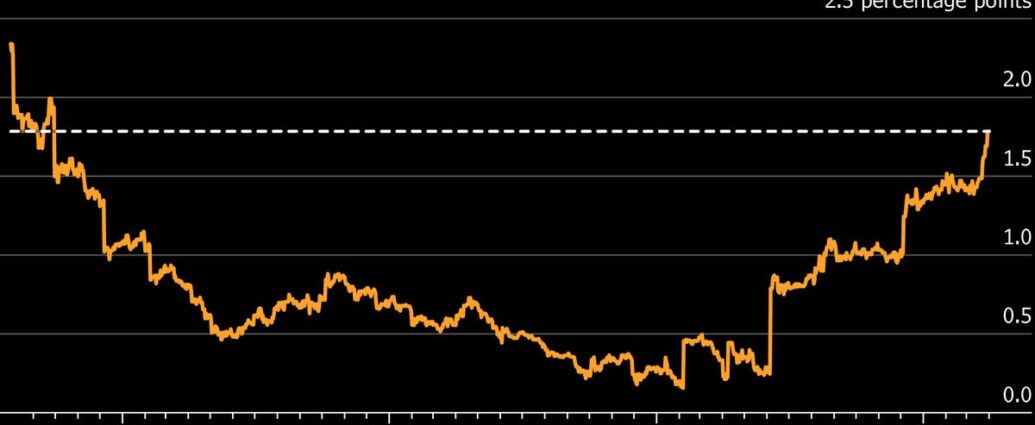


Full story available on Benzinga.com

This post was originally published here