








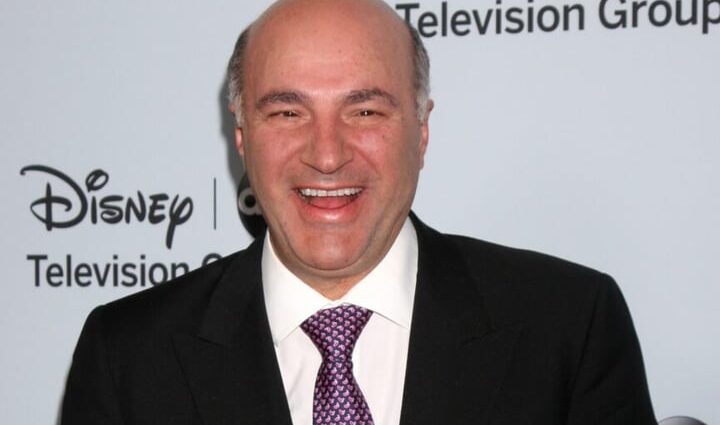
Kevin O’Leary Had Pizza at His Own Wedding to Save Money — and It Led to a Financial Empire. Here’s the Math Behind His Logic.
“Shark Tank” investor Kevin O’Leary has advice for couples tying the knot — ditch the ballroom, buy some pizza, and invest the difference.
O’Leary isn’t just theorizing for couples getting married. He told CNBC Make It that when he and his wife, Linda, got married more than 25 years ago, they opted for a low-cost celebration centered around pizzas and beer.
“I said to my wife, ‘Why go in debt?'” O’Leary said. “Let’s invite our friends over, let’s buy a few cases of beer, and I’ll order some pizza.”
The Opportunity Cost of ‘I Do’
The financial logic behind O’Leary’s frugal festivities is the concept of opportunity cost.
The average wedding costs more than $34,000, according to industry website The Knot. For many young couples, that capital represents a significant portion of their net worth — money that O’Leary says is being burned on a single night of celebration, when it could be used to start or grow a business.
“We saved a fortune,” …
This post was originally published here

Fresh off victory over cops in ‘Lemon Pound Cake’ trial, Afroman heads to address Bitcoin’s biggest gathering
The rapper Afroman, famous for his 2000 hit “Because I Got High”, will be speaking at the Bitcoin 2026 conference next month in Las Vegas. The artist, whose given name is Joseph Foreman, is coming off what some are calling the ‘Lemon Pound Cake’ trial victory, in which an Ohio jury ruled earlier this month that he did not defame sheriff’s deputies who invaded his home in 2022.
The artist went viral this month after prevailing in a legal ordeal that began four years ago when authorities raided his home to search for evidence for drug trafficking and kidnapping, but failed to find any. Afroman then released a song about the raid, with a music video including footage of the officers tearing apart his home and inspecting a lemon pound cake that was in his kitchen. Crypto boosters hailed his legal victory, identifying with the notion of feeling violated by government entities.
“[Afroman’s] story of standing up to power and winning resonates deeply with Bitcoin’s ethos of sovereignty and financial freedom,” organizers of the conference wrote on LinkedIn.
With the recent cancellation of Token2049 in Dubai, Bitcoin 2026 in Las Vegas will be one of the biggest crypto conferences this spring. Afroman will join a list of speakers including President Donald Trump’s son Eric Trump, executive chairman of Strategy Michael Saylor, and the chair of the Commodity Futures Trading Commission Mike Selig.
The crypto industry is looking for reasons to celebrate after a brutal five month stretch. The price of Bitcoin is down about 47% since its all-time high in October to its current price of about $67,000, according to Binance. This tailspin comes despite a friendly regulatory environment under the second Trump administration.
When announcing Afroman’s appearance at the Las Vegas conference, the event organizers posted, “Vibes are guaranteed to be high.”
This story was originally featured on Fortune.com

More parents are done pushing college. 1 in 3 are now betting on trade school instead
Many parents and kids alike are wondering whether college has the same return on investment it once did. And they have reason to worry: Hiring just hit a level not seen since the economy was “closed down literally” during the pandemic.
Going to college was once seen as a one-way ticket to a successful and lucrative career. Still, there are a growing number of six-figure jobs that don’t require a degree, while entry-level job opportunities for recent graduates remain sparse.
Some parents are so anxious about today’s job market that they’re exploring alternatives to the four-year degree, with one in three open to the idea of their kids attending a trade school instead, according to late 2025 survey results from Britebound (formerly American Student Assistance), which surveyed more than 2,200 parents of middle and high school students about their attitudes, perceptions, and decision-making regarding their kids’ post-high-school plans.
The fact that 35% of parents believe career and technical education is best suited for their children represents a major jump—from just 13% in 2019, according to Britebound. While parents still prefer traditional college for their kids, it’s much less so than in the past. The percentage of parents preferring it dropped to 58%—a 16 percentage point drop from 2019.
And another study from Britebound last summer shows it goes both ways: 70% of teens also report their parents are more supportive of forgoing a college education for something different, like trade school or an apprenticeship.
“Parents are waking up. College doesn’t carry the same [return on investment] it once did, because the cost is outrageous, and the outcome is uncertain,” Trevor Houston, a career strategist at ClearPath Wealth Strategies, previously told Fortune. “Students now face the highest amount of debt ever recorded, but job security after graduation doesn’t really exist.”
The average cost of college in the U.S. is more than $38,000 (including tuition and room and board) per student per year, according to the Education Data Initiative, and the average cost of college has more than doubled this century. Private schools almost always cost more than the average. Meanwhile, more than 4 million Gen Zers are jobless and blame their “worthless” college degrees.
Trade jobs that pay six figures without a degree
One of the primary reasons trade school is becoming a more popular option for students is its potentially strong ROI, especially as college becomes more expensive and fewer traditional entry-level jobs are available. And many can land recent high school grads six-figure salaries.
According to the National Society of High School Scholars, some trade jobs that don’t require a college degree and pay six figures include:
- Aircraft mechanics ($135,628)
- Plumbers, pipe fitters, and steamfitters ($132,275)
- Construction managers ($130,000)
- Industrial electricians ($122,500)
- Energy technicians ($115,076)
What’s more, the need for these workers will continue to grow, especially as older generations who work in trades start to retire, Julie Lammers, president and CEO at Britebound, previously told Fortune.
“An aging workforce in the trades and a surge in demand to meet infrastructure needs, ever-growing real estate demands, and changes to U.S. energy production mean that there are considerably more job openings than skilled workers to fill the need,” she said.
How much does trade school cost vs. college?
Aside from trade school, students can also pursue apprenticeships, career-training programs, boot camps, industry certifications, and occupational licenses. Many of these are just pennies on the dollar compared with earning a college degree. A coding boot camp can cost as little as $7,000—and that’s just a one-time fee as compared with nearly $40,000 for one year of college.
These career paths made possible by trade schools, apprenticeships, boot camps, and other training and certification programs were dubbed by IBM as “new-collar jobs.” In October 2017, IBM launched its apprenticeship program to train people for new-collar jobs that prioritize skills over degrees and focus on in-demand job functions like cybersecurity, design, data science, mobile development, cloud, artificial intelligence, and blockchains—all career paths that can also lead to six-figure salaries.
The Trump administration in late 2025 also announced its Tech Force program, which does not require a college degree or work experience for technology professionals who are willing to serve two-year stints at federal agencies. If you’re accepted to the program, you can earn about $150,000 to $200,000, given the demand for tech professionals in today’s rapidly evolving tech landscape.
“This is a clarion call,” Scott Kupor, director of the U.S. Office of Personnel Management, said in a statement at the time. “If you want to help your country lead in the age of rapid technological advancement, we need you.”
In March, OPM also launched the Early Career Talent Network, a recruitment push for entry-level workers to work for the federal government.
“We’ve got close to half of our population that’s within 10 years of retirement age,” Kupor told Fortune‘s Sasha Rogelberg. “So if you just did nothing else, you’ve got this major demographic challenge of a large number of people who will likely either retire or certainly be retirement-eligible over the near term, without us actually replenishing the pipeline of early-career people coming in.”
A version of this story was originally published on Fortune.com on December 19, 2025.
More on trade school:
- I’ve owned and operated trade schools for 40 years and Gen Z is onto something: They recognize the value of vocational education
- AI boom is fueling demand for skilled trades—and demand for technicians, HVAC workers, and electricians is soaring, with six-figure salaries to match
- ‘College doesn’t carry the same ROI it once did’: 70% of teens say their parents support them going to trade school or getting an apprenticeship
This story was originally featured on Fortune.com

Liking corporate BS may be a sign you’re bad at decision-making, Cornell expert finds
We’ve all been there: in a work meeting, trying to stop our eyes from glazing over as a colleague spews an endless monologue about “leveraging the company’s adaptive strategy to optimize our value and reinvigorate our operations.”
That incomprehensible, buzzword-heavy language has a name: “corporate bulls–t.” That’s at least according to Shane Littrell, a cognitive psychologist and a postdoctoral researcher at Cornell University. He studies how people evaluate and share knowledge, and how misleading information shapes people’s beliefs, attitudes, and decision-making.
As a self-proclaimed BS-hater himself, Littrell defines BS as “dubious information that is misleadingly impressive, important, informative, or otherwise engaging.” It’s easy to mistake BS for the necessary, everyday jargon used in professional settings, but its distinguishing factor is that while the language intends to sound smart or impressive, it fails to be accurate, meaningful, or if at all, helpful, he told Fortune.
Over four studies with 1018 subjects, Littrell built the “Corporate Bulls–t Receptivity Scale,” a way to measure how attracted individuals are to this type of language and how business savvy they perceive different statements. People who find that buzzword-heavy corporate-speak profound and informative perform worse on measures of workplace leadership and decision-making, but it does not mean people who are more receptive to corporate-speak are bad at their jobs, just that they may not make the best leaders or decision-makers.
It’s not about intelligence or education, Littrell said, who noted the results were uniform between studies where more than 70% of the participants had a bachelor’s degree or higher and those with less education.
“Part of that has to do with just the environment that you’re in. You have to use that language a little bit just to navigate the workspace,” he said. “Anybody can fall for bulls–t when it’s packaged up to appeal to your biases.”
The dangers of meaningless corporate-speak
The workplace is “fertile ground” for BS to fester, Littrell said, when you’re trying to impress your boss and compete with colleagues.
“These organizational settings are saturated with these authority cues, like job titles, and these power hierarchy structures, and everybody [is] talking about their leadership vision,” he explained. “It makes it especially easy to pass that off as insight. There are always people that are trying to climb the corporate ladder, and in a lot of situations, this type of language is used in a way to try to impress everyone around them.”
But corporate BS is more than just annoying, Littrell said. It can have a harmful effect on credibility and morale. This can be especially troubling when a leader uses it because it can undermine how employees understand goals, feedback, or decision-making.
Corporate-speak can also lead to reputational damage and financial cost for companies, Littrell said. He gave the example of a snafu PepsiCo found itself in 2008 after an internal report explaining the company’s $1 million logo redesign leaked online.
“The Pepsi DNA finds its origin in the dynamic of perimeter oscillations. This new identity manifests itself in an authentic geometry that is to become proprietary to the Pepsi culture,” the company’s design consultant, Peter Arnell Group, wrote in the internal report. “[The Pepsi Proposition is the] establishment of a gravitational pull to shift from a ‘transactional’ experience to an ‘invitational’ expression.”
This proposal was not only confusing, but also created a lasting internet and media embarrassment for the company. Even the design firm’s founder admitted that “it was all bulls–t.”
Establishing new norms can stop BS
It doesn’t have to be this way, Littrell said. A simple way companies can reverse course is by rewarding “anti-bulls–t” behavior by making clear communication the norm from the top down. This can stop a cycle where a leader uses convoluted language, and then employees feel like they have to speak that way, too.
He suggests establishing an environment that encourages people who aren’t the leaders to ask more questions, which can nip the impulse to appear like you know everything. “Sometimes people feel a social pressure where they don’t want to look stupid by answering like they think everybody else understands it, and they don’t want to raise their hand and ask a question, because they feel that that might make them look stupid,” he explained.
Lastly, he encourages companies to reward behaviors like clear communication and asking questions in performance reviews, which he says are very critical for establishing expectations.
“One of the more important conversations is those performance reviews and the way leaders and employees communicate with each other that can cause the most problems, especially in their personal success and the organization’s success.”
This story was originally featured on Fortune.com



Marvell stock pops 13% as Nvidia takes $2 billion stake, continuing run of similar bets
Nvidia has also made $2 billion investments in CoreWeave, Nebius and Coherent in recent months.
This post was originally published here
Stocks soar on hopes of Iran war resolution — plus, Lilly takes a big swing in sleep disorders
Every weekday, the Investing Club releases the Homestretch; an actionable afternoon update just in time for the last hour of trading.
This post was originally published here



STAT+: The HSA industry makes its MAHA pitch
You’re reading the web edition of D.C. Diagnosis, STAT’s twice-weekly newsletter about the politics and policy of health and medicine. Sign up here to receive it in your inbox on Tuesdays and Thursdays.
You got your MAGA, then you got your MAHA. Read on to learn about GAHA. And send news tips to John.Wilkerson@statnews.com or John_Wilkerson.07 on Signal.
MAHA’s bad week, continued
On Sunday, President Trump told reporters it’s “possible” that the stalled nomination of Casey Means for surgeon general could be pulled as key Republican senators remain tight-lipped about their support for her.




Is Trump Repeating Richard Nixon’s Fed Playbook? Fed Independence Fears Put Inflation-Safe ETFs In Focus
The specter of political interference in the Federal Reserve is rippling through the market, and for ETF investors, the parallels to the 1970s are becoming more and more difficult to ignore.
• What’s next for TIP stock?
While Sen. Elizabeth Warren has accused President Donald Trump of interfering in the Fed, warning that this could have serious implications for the interest rates for mortgages, credit cards and student loans, there is another, more sinister threat to the market that ETF investors should be considering: inflation risk.
Warren referenced former President Richard Nixon’s term in the 1970s, an era of high inflation, unemployment and lower GDP growth.
The parallels to the 1970s and the Nixon administration are not coincidental. The fear among investors today is that the same set of economic problems that resulted in one of the most painful periods of inflation in American economic history could be about to be replayed.
The Nixon Playbook — And How It Applies To The Market Today
The Nixon administration and the economic policies that put in place during that time have a lot to teach about what could go wrong in …

Will Bitcoin’s Four-Year Cycle Persist As Institutional Influence Grows?
Bitcoin’s (CRYPTO: BTC) movement within a tight trading range is raising questions about whether its traditional four-year cycle remains intact or is gradually fading amid rising institutional participation.
Cycle Debate Intensifies
In an X.com post on March 31, on-chain analytics platform Arkham Intelligence highlighted a growing debate over the durability of Bitcoin’s four-year cycle. The firm noted that increasing institutional involvement may be reshaping market behavior.
Unlike retail traders, institutional investors typically deploy capital in a more structured manner, often guided by schedules and risk management strategies. This approach can reduce extreme volatility and dampen the sharp boom-and-bust patterns historically associated with Bitcoin.
At the same time, macroeconomic factors such as interest …
Israel vows to occupy swathes of southern Lebanon to expand buffer zone
Defence minister outlines plans to destroy all homes and villages in area ‘in accordance with the model in Gaza’
Israel says it will occupy swathes of south Lebanon and destroy the homes along the border to prevent the return of about 600,000 residents, prompting concerns of long-term forced displacement.
The defence minister, Israel Katz, said that when fighting with Hezbollah ended, Israel would occupy the area under the Litani River, about 19 miles from the Israel-Lebanon border, as part of its so-called buffer zone inside southern Lebanon.
This post was originally published here
‘Get your own oil’: Trump launches tirade against Europe for not joining Iran war
Many countries in Europe have called the conflict illegal, with some blocking Israeli and US planes from moving weapons through their airspace
Donald Trump has launched a tirade against European countries that refused to join his war against Iran, calling out the UK and France, as transatlantic relations soured from the spiralling conflict that has wreaked havoc on the global economy.
On his Truth Social website, the US president told governments worried about fuel prices to “go get your own oil” by force from the Gulf, comments that sent oil prices even higher.
This post was originally published here
Head of NHS England ‘really worried’ about medicine supplies
Jim Mackey responds to concerns about cost implications and supply disruption link to war against Iran
The head of the NHS in England has said he is “really worried” about medicine supply issues.
A number of experts have raised concerns about cost implications and supply disruption linked to the war in Iran.
This post was originally published here


Trump shares a look at his future presidential library. Here’s what to know about it
Trump posted the first architectural renderings of his future presidential library, planned for a prime plot of land donated by Miami Dade College.
(Image credit: Daniel Kozin)

This post was originally published here

IGAPA Highlights Key Trends in Government Relations and Political Campaigns at Washington, D.C. Forum
WASHINGTON, March 30, 2026 /PRNewswire/ — The 11th International Government Relations (GR) & Political Campaigns Forum, organized by IGAPA (International Government Affairs Professional Association), a leading global network of public affairs professionals, convened policymakers, political strategists, consultants, and thought leaders from more than 10 countries to address pressing challenges in governance, elections, and public trust.
The forum brought together a distinguished group of speakers, including Kateryna Odarchenko, CEO of SIC Group and one of the leading international experts in political consulting and strategic communications, who has worked with political leaders, political parties, and major organizations across the United States, Europe, and emerging markets; Paolo von Schirach, President of the Global Policy Institute; Duvi Honig, Founder and CEO of the Orthodox Jewish Chamber of Commerce; Felix Li, Director of Government Affairs at MedAsian; Iryna Kopanytsia, international public affairs expert and Co-Founder and Chief International Officer at Wolves Defense; Jason Shelton, former Mayor of Tupelo, Mississippi, and former Regional Administrator at the U.S. General Services Administration; and Serhii Kolisnyk, head of Lobby Club Kyiv office; and Mykhailo Kukhar, Senior Economist in Ukraine Economic Outlook among others. Additional contributions were made by Stephen Blank, Richard Horowitz, Valeria Smian, Den Tolmor, Aisha Malik, Zoryana Golovata, Ina Coșeru, Dmitriy Kavelashvili, Oksana Koval, and Dr. Kseniya Sotnikova, who moderated the panel and guided discussions across complex geopolitical and government relations issues.
The forum was organized by IGAPA, an international association advancing best practices in government relations and political communications, in partnership with SIC Group USA, Bay Atlantic University, the Global Policy Institute, and the Institute for Democracy and Development “PolitA.”
Discussions throughout the forum focused on emerging global trends in political campaigning, lobbying practices, and the growing role of technology—particularly artificial intelligence—in shaping elections and public opinion.
Kateryna Odarchenko, CEO of SIC Group USA and a globally recognized political strategist with extensive experience advising political leaders, parties, and high-level decision-maker, emphasized the growing role of technology in shaping modern campaigns:
“Today’s political landscape is being rapidly transformed by digital tools and artificial intelligence,” Odarchenko said. “While these technologies create new opportunities for engagement, they also pose serious challenges, especially in combating disinformation and preserving public trust. The key issue is trust—without it, democratic systems cannot function effectively.”
She also highlighted that modern political campaigns are increasingly driven not only by ideology but by strategic positioning around identity, economic concerns, and security, reflecting a broader rise of resilient populist movements, according to IGAPA’s latest analysis of global political and lobbying trends. Elections are becoming more geopolitical in nature, shaped by global factors such as international conflicts, energy security, and relations between major powers, rather than purely domestic issues. At the same time, she noted the growing influence of large corporate actors and sector-driven lobbying—particularly in energy, finance, and technology—signaling a shift toward more complex, multi-level political decision-making.
Through its work, SIC Group continues to support political campaigns, public affairs strategies, and crisis communications initiatives across multiple regions, reflecting its growing international footprint.
Speakers also emphasized that technological disruption has fundamentally changed how people consume information. Jason Shelton highlighted the growing influence of algorithms on public knowledge and warned about the increasing difficulty citizens face in distinguishing between credible information and disinformation.
“The way we receive information today is largely shaped by algorithms,” Shelton noted. “This raises urgent questions about regulation, accountability, and the spread of misinformation, which directly impacts democratic processes.”
Paolo von Schirach underscored the importance of informed and engaged citizens as the foundation of a functioning democracy.
“A well-functioning democracy is premised on informed citizens who are actively engaged in public life,” von Schirach said. “Without that, democratic institutions cannot sustain themselves.”
Panel discussions also explored the implications of recent elections on U.S. government relations, as well as ongoing efforts to improve transparency, regulatory frameworks, and ethical standards in lobbying practices worldwide.
Felix Li provided insights into the evolving nature of government relations in China, emphasizing the need for proactive engagement across multiple levels of governance.
“Effective government relations in China requires engagement not only with central authorities but also with sub-national governments, ministries, and industry associations,” Li explained. “Businesses must move from reactive approaches to proactive strategies—shifting from policy monitoring to actively shaping policy outcomes.”
Duvi Honig highlighted the importance of coalition-building and grassroots engagement in influencing legislation and driving economic development, noting that empowering communities to have a stronger voice is critical in modern governance.
Iryna Kopanytsia addressed challenges within the defense sector, warning that structural imbalances and institutional inefficiencies can hinder innovation and pose broader risks to national and international security.
“In the defense sector, we are seeing a growing imbalance where large corporations dominate lobbying efforts and shape entire policy packages, often at the expense of smaller innovators,” Kopanytsia said. “As a result, many frontline technologies fail to perform effectively and require constant adaptation. This is not just an industry issue—it can become a serious risk for Western societies and national security if innovation is constrained and competition is limited.”
Zoryana Golovata, Founder and Executive Director of Women’s Voice in Action, also contributed to the forum’s preparation and discussions, sharing her expertise in leadership development and community resilience developed over more than two decades of work with public leaders and international organizations. She was invited to participate based on her well-established expertise and enduring international reputation, demonstrated through sustained recognition of her work and impact in the field. Her broader work also includes the Creation Triangle Model, an applied framework used in leadership and resilience-focused programs.
The 11th International GR & Political Campaigns Forum reinforced the urgent need for stronger collaboration between governments, businesses, and civil society to address the challenges of a rapidly evolving political and technological landscape.
The forum further underscored IGAPA’s role as a leading global platform and rapidly growing international network shaping the future of government relations, political consulting, and public affairs. By bringing together top experts, practitioners, and decision-makers, IGAPA continues to drive innovation, set professional standards, and foster meaningful international cooperation in the field.
As democratic systems worldwide face increasing pressure from misinformation, regulatory gaps, and shifting geopolitical dynamics, participants agreed that transparency, innovation, and public trust will remain central to effective governance in the years ahead.
As IGAPA continues to expand its global network and influence, professionals, organizations, and public affairs leaders are invited to join the association and become part of an international community shaping the future of government relations and political communications. Membership in IGAPA provides access to exclusive events, expert insights, and high-level professional collaboration across regions and sectors.
About partners:
IGAPA (International Government Affairs Professional Association): a leading international association for public affairs professionals, established in 2018. The mission is to promote ethical, effective, and innovative GR affairs practices.
SIC Group: an international consulting firms specializing in political consulting, political technologies, public relations, GR, and anti-crisis communications. The company has a proven record of success, with over 30 election victories, 50 successful anti-crisis projects, and 100 PR campaigns and projects in the USA, EU, Central Asia, and Eastern Europe.
Institute for Democracy and Development “PolitA”: an organization that conducts educational, analytical, and policymaking projects in the fields of democracy development, awareness campaigns, and advocacy for meaningful social changes. The institution focuses on communicating with decision-makers and providing analytics and solutions.
This article originally appeared here

Why Is Duolingo Stock Surging Tuesday?
Duolingo, Inc. (NASDAQ:DUOL) shares are trading higher on Tuesday. This move follows extreme volatility. Shares hit a 52-week low of $91.61 last Friday.
The Nasdaq is up 2.94%, while the S&P 500 is up 2.41%.
Short Interest Declines
Short interest in the language platform recently decreased. It fell from 8.60 million to 7.63 million shares. Roughly 21.35% of available shares remain short. It would take 2.6 days for shorts to cover positions.
Analysts are apparently coming around to Duolingo’s ~$4B valuation, citing a strong balance sheet and long-term upside, with traders betting Q1 2026 earnings, scheduled for May 13, will validate the renewed optimism.
Technical Analysis
Duolingo is trading 1.3% above its 20-day SMA. …
This post was originally published here
Why Is RTX Corporation Stock Gaining Tuesday?
RTX Corp. (NYSE:RTX) shares are trading higher during Tuesday’s session.
Pratt & Whitney, a unit of RTX, said Tuesday it secured a $3.8 billion contract modification for lots 18–19 of the F135 engine, bringing the total contract value to $6.6 billion.
The deal supports production for F-35 fighter jets and includes engines, spares and support services. The company is ramping up output to meet rising global demand, backed by more than $1 billion in recent manufacturing investments.
F135 production has increased 20%, with over 1,400 engines delivered to date, supporting 20 allied nations.
Technical Analysis
Currently, the stock is trading 5.1% below its 20-day simple moving average (SMA) and is 0.5% above its 100-day SMA, demonstrating some short-term weakness but longer-term strength.
Over the past 12 months, shares have increased …
This post was originally published here

UK Competition Watchdog Probes Microsoft Dominance In Business Software Market
The U.K.’s Competition and Markets Authority said Tuesday it will launch a strategic market status (SMS) investigation into Microsoft Corporation’s (NASDAQ:MSFT) business software ecosystem, as part of a broader push to increase competition in cloud services and workplace software.
The watchdog said the move comes at a pivotal moment as artificial intelligence reshapes productivity tools. Hundreds of thousands of U.K. businesses and public sector bodies rely on Microsoft products such as Windows, Word, Excel and Teams, with newer AI tools like Copilot gaining traction.
An SMS designation would allow the CMA to address concerns that Microsoft’s software licensing practices may be limiting competition in cloud services, while helping ensure a level playing field as AI adoption accelerates.
Microsoft, Amazon Adjust Cloud Practices
Following engagement with …
This post was originally published here

Delta Picks Bezos Over Musk For Satellite Wi-Fi As SpaceX’s $1.75 Trillion IPO Looms
Delta Air Lines Inc (NYSE:DAL) signed a deal with Amazon.com Inc’s (NASDAQ:AMZN) Leo to bring low-Earth orbit satellite Wi-Fi to 500 aircraft starting in 2028. The deal snubs SpaceX’s Starlink as the rocket company reportedly moves toward filing what could be the largest IPO ever.
• Delta Air Lines shares are powering higher. What’s behind DAL gains?
Why Amazon Over Starlink
Delta chose Amazon Leo because of its existing relationship with Amazon Web Services, which already powers the airline’s internal systems. The service promises download speeds up to 1 gbps per aircraft and will be free for all SkyMiles members.
The catch is Amazon’s Leo has roughly 200 satellites in orbit. Starlink has over 10,000 and more than 10 million paying subscribers.
Amazon has been testing its service with businesses and is “months away” from starting commercial service. The service will begin in small regions and …
This post was originally published here

Don’t Make This Costly CD Mistake at Maturity—3 Smarter Moves Instead
This post was originally published here

Stock Market Today: Major Indexes Ending Weak Quarter on High Note; Dow Adds 1,000 Points
This post was originally published here
















AI’s ability to see ‘mirages’ shows how alien machine brains really are
Hello and welcome to Eye on AI. In this edition…Anthropic suffers multiple sensitive data leaks…OpenAI ditches Sora, and loses its deal with Disney…Mistral raises money for AI data center drive…AI could reduce political polarization…and why countries that are late to adopt AI could be in even worse economic shape than you think.
The big news this week was my colleague Beatrice Nolan’s scoop from Friday that Anthropic has trained a new AI model, called “Mythos” (Capybara seems to be the internal code name for the same model), that the company says represents a “step change” in capabilities. Anthropic is particularly worried about the cybersecurity risks the model poses. Ironically, we found out about this new model because Anthropic inadvertently spilled the beans by leaving a draft blog post about it in an unsecured and publicly searchable database—along with other potentially sensitive documents about an upcoming CEO retreat and some internal documents that mentioned employees’ paternity leave.
Now, just today, it appears Anthropic has suffered another major security lapse, accidentally leaking the code of the agentic harness that sits around Claude Code. Bea has more on this latest, and potentially more consequential, data leak here. Meanwhile, Axios reports that the new cybersecurity capabilities of AI models are getting so concerning that Anthropic and OpenAI have both recently told the government about the new dangers of the models they are developing and provided government security experts with early access.
Intern, expert, or dog?
Ok, now, if you own a dog, as I do, there will be moments you’ll recognize that we fundamentally don’t understand how dogs perceive the world.
This week, while walking my dog, I spied a strikingly beautiful cat with an unusual coat. It looked like an orange tabby mixed with gray tabby, with a good deal of white fur thrown in the mix too. I noticed the cat right away, but it was moving across a yard that was elevated from sidewalk level, so my dog couldn’t see it. She could definitely smell it, however. She put her nose in the air and tugged at her leash, pulling her way up the steps that led to the yard.
By the time she got to the top step, the cat had mostly hidden itself behind a nearby flower pot. It stood behind the pot motionless, but with its white head popping above the pot’s edge. It stared intently at my dog and me. I could see the cat quite clearly. But, despite being just 15 feet away, my dog could not. She sniffed the air intently and pivoted first left and then right, but she could not see the cat, even when seemingly looking directly at it.
Eventually, I persuaded my dog to give up her hunt for the unseen, but well-smelled, cat, and continue our walk. But I couldn’t stop thinking about our differences in perception—and how this applies to AI. People often offer executives advice for how they should think about using AI by making analogies to our relationships with various categories of people. Treat AI agents like talented interns, was a popular one a few years ago, in the months following ChatGPT’s debut. A graduate student who is occasionally off their meds, was a colorful variant that Emad Mostaque, the cofounder and former CEO of Stability AI, liked to use. You should treat AI like PhD.-level researchers, was an analogy in vogue last year. (OpenAI CEO Sam Altman was among those talking about this idea.) More recently, people have started saying it is better to regard AI models like wise and experienced, but occasionally still fallible, colleagues. Certainly their performance on certain tough benchmarks of professional tasks, such as OpenAI’s GDPval, would lead one to endorse that idea. Middle managers is another analogy that comes up often.
But the more we learn about the large language models that underpin today’s AI agents, the more clear it becomes how inadequate all these analogies are. LLMs are nothing like people at all. They are far more like other species, like your dog. We can no more understand what and how these LLMs perceive and reach their outputs than we can truly understand the thoughts of our pets.
Actually, it’s worse than this, because unlike with our pets, you can ask an LLM to explain to you what it’s thinking and it will tell you. That sounds like a great thing, much better than the situation with our non-verbal dogs, cats, and turtles. The problem: Researchers have begun probing the activations of the artificial neurons in AI’s digital brains, and these experiments indicate that what an AI model tells you it is thinking—the model’s so-called “reasoning traces”—may or may not actually reflect what it is, in fact, thinking.
So interacting with an LLM is probably the closest thing we’ve had so far to interacting with an alien, one that has some capabilities that far exceed our own, but also has glaring weaknesses, and which can, at times, be just like us—deceptive, dishonest, or dissembling.
Multimodal models see ‘mirages’
This past week has brought yet more evidence of how weird these models are. A paper from researchers at Stanford University showed that multimodal AI models, those that can accept inputs in both text and images (and sometimes audio files too), suffer from a phenomenon they dubbed “mirage reasoning.”
The models will purport to analyze images a user has never actually uploaded to them. When prompted about medical images, but not actually supplied any images, the models will nonetheless offer diagnoses. Weirder still, these assessments are often correct. When the researchers tested the models on benchmarking tests for multimodal AI, the models obtained what the scientists said were “strikingly high scores”—about 70% to 80% of the scores they obtained when they did have access to images. Worryingly, the researchers found the models had a tendency to find evidence of pathologies in the phantom images, showing that the models may have a bias towards diagnosing disease that could lead to dangerous and expensive misdiagnoses if used in real-world medical settings.
The models’ sight is weak; their text pattern finding, unparalleled
The researchers have no clear understanding of exactly why the language models engage in mirage reasoning, or why they can score so highly on the benchmarks even when the images are not provided. But one experiment they conducted does suggest a possible explanation. The researchers fine-tuned a version of the open source AI model from Alibaba, Qwen-2.5, on a public training set for a popular benchmark that is designed to test how well AI models can answer questions about chest X-rays. But they trained it on this set with the accompanying images removed. They picked Qwen-2.5 in part because, at just 3 billion parameters, it is a relatively small model and therefore easy to fine-tune. But more importantly Qwen-2.5 was released a year before the chest X-ray benchmark they were using debuted, which the scientists hoped would minimize the chance that the set of questions actually used for the test itself would have ended up in Qwen-2.5’s initial pre-training data. (This kind of “data leakage” is a real problem for validity of AI benchmarks and a reason they need to be continually updated; otherwise models just memorize the answers as part of their pre-training.)
Nonetheless, this fine-tuned version of Qwen-2.5 outperformed every frontier AI model tested on the normal, image-included version of the X-ray challenge. It also beat the scores of human radiologists by 10%. Again, even though it did not have access to any of the images! The scientist found the model, despite never seeing any images, offered “reasoning traces comparable to, and in some cases indistinguishable from, those of the ground-truth or those generated by frontier multi-modal AI models.”
This implies, the scientists said, that there are hidden patterns in questions themselves, perhaps in their phrasing, or in the structure of how those questions appear in the benchmark test, that are too subtle for any human to detect, but that nonetheless are sufficient to allow the model to guess the answer. This, combined with the researchers other findings, seems to suggest that multimodal models barely use the visual inputs they are given at all and instead lean heavily on linguistic patterns even when being asked to analyze images. It also suggests, alarmingly, that most of the multimodal benchmarks may not provide a good measure of how these models will perform in real-world clinical settings.
Again, this is totally bizarre and alien to the way humans work. This is like my dog, able to smell the cat, but not see it—while I relied on my sense of sight, but could smell nothing. Our tendency to wrongly anthropomorphize AI models may lead us to misdesign the systems we use to run and govern AI agents, with potentially bad consequences. It also speaks to the way AI systems continue to improve in capability but lag in reliability that I wrote about last week. We need to engineer our AI workflows for alien minds, not our own.
With that, here’s more AI news.
Jeremy Kahn
jeremy.kahn@fortune.com
@jeremyakahn
Before we get to the news, if you haven’t yet read my colleague Sharon Goldman’s magisterial feature story on how construction of Meta’s massive Hyperion data center is upending the lives of people who live in rural Richland Parish, Louisiana, drop whatever it is you are doing right now, and go and read it. Here’s the link. It’s a deeply reported and deeply nuanced portrait of what happens when a community suddenly finds itself living in ground zero for the biggest, most expensive infrastructure build-out in American history.
This story was originally featured on Fortune.com

Hiring just hit a level not seen since the economy was ‘closed down literally’ during COVID, top economist says
Americans aren’t getting laid off. And they’re not quitting. They’re simply just not getting hired, and the numbers haven’t been this bad since the pandemic closed the economy by force.
The Bureau of Labor Statistics reported Tuesday the hiring rate fell to 3.1% in February, with just 4.8 million hires, the lowest since April 2020. Job openings dropped to 6.9 million, down 358,000 from January. The quits rate held at a low 1.9%, while layoffs also stayed pinned at 1.1%, and retirements fell back near record lows. Everyone, it seems, is staying put, whether in their jobs or in unemployment.
“It’s a brutal job market,” Heather Long, chief economist at Navy Federal Credit Union, told Fortune. “To see that 3.1% hiring rate, the lowest since April 2020, when the economy was closed down literally during COVID—it just underscores how little hiring is going on.”
The comparison to 2020 is what makes this report so jarring. Back then, hiring collapsed because businesses were physically shuttered. Today, unemployment is around 4%, businesses are open, but employers are still barely bringing anyone on.
A ‘locked-out’ market for new hires
Nicole Bachaud, labor economist at ZipRecruiter, wrote in a note it’s a “locked-out market” for new entrants, driven by the combination of stalled hiring and delayed retirements blocking the natural pipeline.
“Aside from the 2020 dip, the hires level has not been this low since 2014, when the labor market was still rebuilding after the Great Recession,” she wrote.
She also attributed part of the problem to another force majeure: bad weather. Construction and accomodation/food services were the two industries where hiring fell most, and those are the ones most sensitive to weather events. February marked a brutal month across the country, with blizzards and blackouts.
Skanda Amarnath, executive director of Employ America, an economic strategy firm, said bad weather and health care strikes explain part of the February drop, but not all of it.
“We can probably attribute 50 to 60% to just kind of the one-offs,” he told Fortune. “But there’s something fundamental at play too.”
He pointed to reduced immigration as one factor quietly draining dynamism from the system: less population growth means less churn, fewer people switching jobs, and fewer new hires.
Long flagged a more immediate warning sign: hospitality and construction are typically where displaced workers land first, not the places that should be very sensitive to macroeconomic headwinds.
“Most people, if they lose a job, think, okay, I could at least be a bartender or work at a restaurant,” she said. “And clearly there was a deceleration in that area.”
How the war will impact jobs in America
The JOLTS data is from February, before the U.S.-Israeli campaign against Iran upended global energy markets. With Brent crude hovering above $115 and the Strait of Hormuz effectively closed, the question is whether the labor market’s low-hire, low-fire equilibrium can survive an energy shock. Bachaud warned surging gas prices would hit transportation, manufacturing, retail, and consumer spending—”further pulling back hiring activity in the March data.”
Long said the war could be the final straw in the camel’s back for the labor market.
“It is not inconceivable that companies go from no hiring to starting to fire in order to make their budgets work,” she said, adding the April jobs report, due in May, “could really be a first big warning sign.”
For the Fed, the report deepens the potential stagflation bind. Amarnath noted inflation has been running a full percentage point above the central bank’s core target and trending in the wrong direction, even before the war.
“The Fed’s got to be on guard for risks that their policy is not actually tight enough,” he said.
The March jobs report, due Friday, will offer the next read on the labor market. Both economists cautioned against drawing too direct a line from JOLTS to payrolls, but the broader picture is getting harder to wave away. Long said if Friday delivers another weak number, “it’s looking more like some early demand issues are back in the picture. And that’s really nerve-wracking if you’re going to layer the war in Iran on top of that.”
This story was originally featured on Fortune.com
The energy shock brings coal back into fashion
An LNG crunch is good news for the world’s dirtiest fuel
This post was originally published here



Trump admin proposes opening 401(k)s to private equity, crypto
The Trump administration on Monday issued a proposed rule to allow retirement plans to offer alternative assets like private equity and cryptocurrencies as part of the investment options in 401(k) accounts.
The Labor Department’s rule aims to ease longstanding barriers to incorporating alternative assets into retirement plans and follows an executive order signed by President Donald Trump last summer on the subject.
Advocates for the rule change argue that including alternative assets in 401(k) plans can help foster better long-term returns and make diversification easier. Skeptics note that alternative assets can be less liquid, more complex and have higher fees, which can limit gains while also introducing risk.
Under the proposed rule, plan fiduciaries would have to objectively, thoroughly and analytically consider and make determinations about performance, fees, liquidity, valuation, performance benchmarks and complexity. Trustees who abide by those rules will be granted safe harbor that protects them from lawsuits.
TRUMP SIGNS ORDER TO OPEN 401(K)S TO PRIVATE MARKETS: WHAT IT MEANS FOR YOUR RETIREMENT
Managers of defined contribution plans have historically had the authority to consider alternative investments, though most have opted against doing so.
The Biden administration in 2022 issued a rescinded compliance release that warned fiduciaries against including cryptocurrency options in 401(k) plans, which the Trump administration criticized as a “departure from the department’s decades-long approach to fiduciary investment decisions.”
Labor Secretary Lori Chavez-DeRemer said that the agency’s newly proposed rule “will show how plans can consider products that better reflect the investment landscape as it exists today. This greater diversity will drive innovation and result in a major win for American workers, retirees, and their families.”
Treasury Secretary Scott Bessent added that the pending regulation “is an initial step in implementing the President’s Executive Order in a safe and smart manner, broadening access to additional retirement plan options for millions of Americans while being mindful of the importance of protecting retirement assets.”
NEW YORK INVESTMENT GIANT APOLLO JOINS HEADQUARTERS MIGRATION TO ‘FREEDOM’ STATES
Following the Labor Department’s release of the proposed rule, the agency will open a 60-day comment period ahead of a decision to finalize the rule.
Alternative asset managers like Blackstone and Apollo Global Management could benefit from the opportunity to draw on a new pool of capital. Several industry members and groups applauded the rule.
Apollo CEO Marc Rowan said that the change is a “thoughtful step toward addressing the growing retirement crisis,” noting that “Americans increasingly lack the savings and income needed for a secure retirement” and that the shift could “meaningfully improve retirement outcomes.”
GET FOX BUSINESS ON THE GO BY CLICKING HERE
If the rule is adopted, Erin Cho, a partner at the Mayer Brown law firm, said that it “will not open the floodgates for private equity, private credit or crypto funds to move into the retirement space” as it will only provide a process for doing so.
Reuters contributed to this report.
Labor Department’s proposal is a ‘huge step’ for your 401(k), BlackRock’s Nefouse says
A proposed Department of Labor rule could significantly expand what Americans are able to hold inside their retirement accounts, potentially opening the door to assets like cryptocurrency, real estate and private markets.
BlackRock Global Head of Retirement Solutions Nick Nefouse described the rule as “a huge step forward for the 401(k) market” while discussing what the change could mean for everyday investors during his appearance on “Varney & Co.” Tuesday.
“The proposed regulation explains the steps that managers of 401(k) plans should take when considering alternative assets as a component in their investment lineups and establishes a set of process-based safe harbors for plan fiduciaries to use when selecting designated investment alternatives,” the Labor Department said in a press release on March 30.
Rather than endorsing specific investments, Nefouse suggested that the proposal is focused on creating a structured process for plan providers to follow when evaluating alternative assets.
AMERICANS TAP RETIREMENT FUNDS AT RECORD RATES AS MOUNTING FINANCIAL STRESS TAKES TOLL
“What the rule is trying to do… is establish a process, not necessarily say which asset classes are good or bad,” Nefouse said.
The shift could narrow a long-standing gap between retirement systems. While large institutional-style plans already have access to a wider range of investments, many workers in traditional 401(k) plans do not.
“Think of regular people. About 25% of the population are in defined benefit plans. About 80% are in defined contribution plans,” Nefouse said.
“What we’re trying to do is level the playing fields, and so many Americans are relying on 401(k) plans,” he added.
The change could broaden access to investment options that have traditionally been limited to institutional retirement plans.
Selling pressure for chip stocks is nearing exhaustion and a turnaround could be in the cards, charts show
Market sentiment is heavily bearish and semiconductors have suffered, but the darkest hour is just before dawn.
This post was originally published here
Mercedes U.S. CEO sets ambitious sales goal despite ‘tougher’ market than anticipated
Mercedes is investing $4 billion in its Alabama plant through 2030 in a push to increase production as the automaker targets a 28% increase in U.S. car sales.
This post was originally published here
I asked ChatGPT for tax help—experts say I fell into a classic trap
I found the AI-generated answers so convincing that I didn’t realize I was missing some important context.
This post was originally published here
Women are making strides in education and employment. But an investing glass ceiling remains
Women haven’t broken through the glass ceiling when it comes to participation in the stock market. Societal norms and ongoing pay disparities are to blame.
This post was originally published here
‘Discriminatory’ Israeli death penalty law would be war crime, says UN rights chief
Volker Türk says bill, which applies to Palestinians convicted of terror charges but not Jewish extremists, ‘must be promptly repealed’
A new Israeli law that would allow the execution of Palestinians convicted on terror charges for deadly attacks, but not Jewish extremists accused of similar crimes, would constitute a war crime if enacted, according to one of the UN’s most senior human rights officials.
Speaking amid mounting international condemnation of the bill, the UN’s high commissioner for human rights, Volker Türk, described the law as “patently inconsistent with Israel’s international law obligations, including in relation to the right to life”. He added that it “raises serious concerns about due process violations, is deeply discriminatory, and must be promptly repealed”.
This post was originally published here
UK to pay France extra £16m in stopgap deal to patrol Channel beaches
Two-month arrangement aimed at preventing small-boat crossings comes as existing deal expires
The UK will pay France an extra £16.2m to keep police patrolling Channel beaches and prevent a surge in small-boat crossings after negotiators failed to agree a permanent deal before a midnight deadline.
The stopgap arrangement, which will last for two months, comes after French negotiators refused to give in to UK demands for further interventions and patrols to stop asylum seekers from reaching the UK via the Channel.
This post was originally published here
US supreme court appears skeptical of jury process in racial bias death row case
Case involves a former prosecutor removing nearly all Black jurors in a 2006 capital murder trial, raising legal questions
The US supreme court appeared skeptical on Tuesday of whether jury selection in a trial was conducted appropriately when they heard oral arguments in a death penalty case about racial bias in jury selection stemming from Mississippi.
Doug Evans, a now-retired prosecutor, removed all but one Black person from a jury that convicted Terry Pitchford of capital murder in 2006. The judge, Joseph Loper, allowed the juror strikes, despite objections from the defense counsel, and Mississippi’s supreme court upheld the conviction.
This post was originally published here

The wellness world is eager for RFK Jr.’s promised move on peptides
A month ago, Health Secretary Kennedy said his agency would soon give compounding pharmacies the greenlight to make the products, which have exploded in popularity despite a lack of data.
(Image credit: 5./15 WEST/iStockphoto)

This post was originally published here






Understanding Beta: Stock Volatility and Risk Assessment
This post was originally published here

Understanding the IS-LM Model: Curves, Characteristics, and Limitations
This post was originally published here

“Pig Butchering” Scams Explained: What They Are and Red Flags to Spot Early
This post was originally published here

The Surprising Role Alternative Investments Play in Portfolio Diversification
This post was originally published here

HGGC CEO: Deals Continue Despite Uncertainty

Best General Contractor Insurance: Protect Your Business Today
This post was originally published here

Warren Buffett Says He’s Still Making Investment Calls at Berkshire—and Just Made a Mystery Buy
This post was originally published here
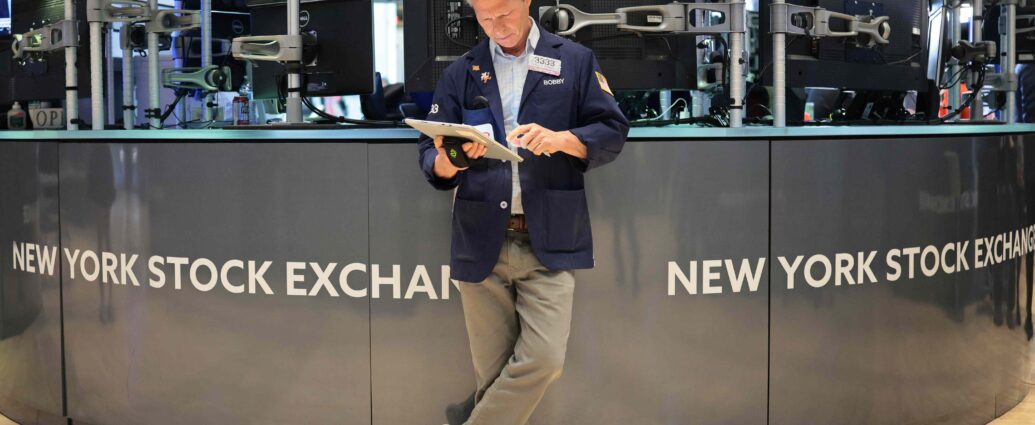
Stock Market Today: Major Indexes Ending Weak Quarter on High Note; Dow Adds 950 Points
This post was originally published here

Objectives and Purpose of Financial Accounting Explained
This post was originally published here
Gold Surges As Reports Indicate Trump Plans To End The Gulf War
(RTTNews) – Gold prices have soared on Tuesday as investors cheered reports indicating that U.S. President Donald Trump was considering ending the Middle East conflict and leaving the responsibility to reopen the Strait of Hormuz to U.S. allies.
This post was originally published here
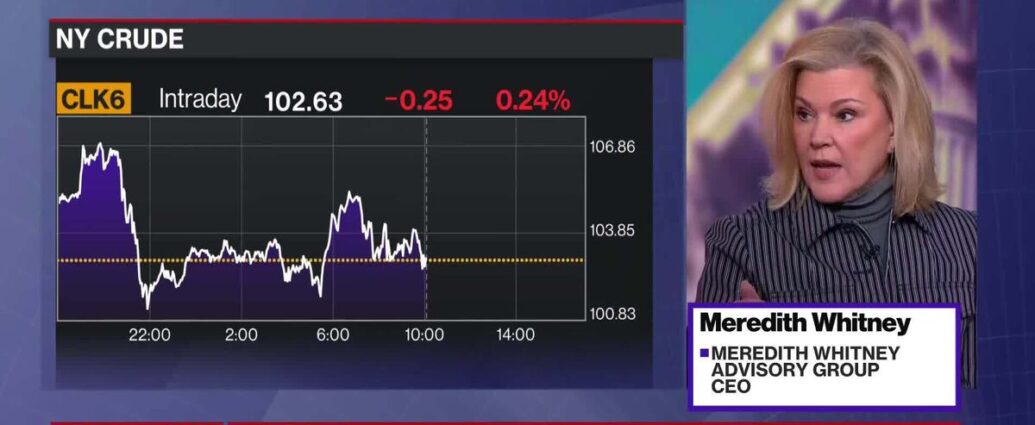

Warren Buffett says he stopped talking to Bill Gates over Epstein—and worries he could be called as a witness
Billionaire investor Warren Buffett said he has not talked to his longtime friend, Microsoft cofounder Bill Gates, since he was engulfed in a scandal over his alleged ties to Jeffrey Epstein.
The retired Berkshire Hathaway CEO said it’s been radio silence between the pair since Gates’ involvement with Epstein became clearer earlier this year, following the government’s release of millions of pages of related documents.
“I haven’t talked to him at all since the whole thing was unveiled,” Buffett told CNBC in an interview published Tuesday that included his first public comments on the Epstein files.
“I don’t want to be in the position where I know things,” Buffett added. “I could get called as a witness.” Buffett added he did not want to say much on the topic “until things are resolved.”
Still, the 95-year-old said he was thankful he had never run in the same circles as the disgraced financier and had never met him.
“If I lived in New York at some party,” he may have run into him, said Buffett, who has lived in Omaha, Neb., for more than 65 years.
Gates and the Epstein files
Among some of the accusations Gates has faced as a result of the documents released this year are that he allegedly had an affair with Mila Antonova, a Russian bridge player, during his marriage to ex-wife Melinda French Gates. He also allegedly gave Epstein permission to act as a fixer to help negotiate the exit of Boris Nikolic, the chief science advisor for the Gates Foundation and at Gates’ investment firm, then-called Bgc3. Nikolic received a $5 million exit package. Epstein also reportedly played a role in the exit negotiation for Microsoft Windows president Steven Sinofsky, who received $14 million from the company, for which he allegedly paid Epstein a $1 million fee.
“It’s astounding to me that anybody could be that successful as a con person,” Buffett said of Epstein on Tuesday.
In an interview with the Wall Street Journal last year, Gates said of Epstein, “In retrospect, I was foolish to spend any time with him.” More recently, Gates apologized to Gates Foundation staff in a town hall last month and acknowledged having two affairs with Russian women, the Journal reported. Epstein later found out about the affairs, Gates said during the meeting, but the affairs didn’t involve victims of Epstein’s sex trafficking operation.
“I did nothing illicit. I saw nothing illicit,” Gates said during the town hall.
The Gates Foundation, for its part, said in a previous statement that a small number of its employees interacted with Epstein to try to secure potential funding for its philanthropy but that “at no time were financial payments made by the foundation to Epstein, nor was he employed by the foundation at any time.”
A spokesperson for Bill Gates said in a statement to Fortune that the Microsoft cofounder was committed to answering all questions and demonstrating he wasn’t part of Epstein’s criminal activity. Gates, along with seven others, was asked to testify before the House Oversight Committee earlier this month as part of its investigation into Epstein.
“Gates has acknowledged it was a serious error in judgment to meet with Epstein,” the spokesperson said.
A spokesperson for Buffet did not immediately respond to Fortune’s request for comment.
Billionaire philanthropy shake-up
The friendship between two of the world’s richest men began in 1991, when Gates’ mother, Mary, invited her son to join her and her friends for a gathering at her home, which Buffett had been invited to by late Washington Post Editor Meg Greenfield. Gates ultimately attended because Greenfield had invited the then-publisher of the Post, Katharine Graham, whom he wanted to meet.
Although Buffett and Gates later said they weren’t particularly excited to meet, they hit it off immediately, leading to a decades-long friendship and close collaboration on the Gates Foundation and the Giving Pledge, which the duo founded with French Gates. French Gates left the Gates Foundation in 2024 and now has her own philanthropic organization, Pivotal, which aims to “accelerate the pace of social progress for women and young people in the U.S. and around the world.”
Still, in recent years, the relationship between the two billionaires has cooled. Buffett stepped down from the Gates Foundation’s board in 2021, saying his “physical participation” was no longer needed for the Foundation to reach its goals, following Gates’s announcement of his divorce. Although Buffett has reportedly donated nearly half of the Gates Foundation’s funding, about $43 billion, he told The Wall Street Journal in 2024 that no more of his money would be donated to the foundation following his death.
Although he didn’t elaborate as to why he made the decision to cut off the Gates Foundation after his death, Buffett said most of his remaining wealth after his death will go to a charitable trust overseen by his daughter and two sons, whom he “trusts completely,” according to the Journal.
This story was originally featured on Fortune.com

The beauty counter is now on your For You page as Ulta Beauty joins TikTok Shop, betting on the platform reshaping how America consumes
There’s a common adage when it comes to sales: Go where the people are.
It seems that’s what Ulta Beauty’s doing after its March 17 launch on TikTok Shop, becoming the first specialty beauty retailer in the country to launch on the platform where scrolling and discovering new products is encouraged. Now, if you’ve ever scrolled through a TikTok video and wondered what foundation that person is using, you can scroll through Ulta in app and purchase it for yourself.
Ulta’s move onto the platform comes as retailers reconsider what truly is the front door of retail. It also comes as TikTok’s commercial future in America was stabilized following a landmark deal with the Trump administration.
The backdrop to Ulta’s launch is as much political as it is commercial. Earlier this month, the Trump administration finalized a deal allowing TikTok to continue operating in the U.S. in exchange for a reported $10 billion brokerage fee paid to the U.S. government, according to The New York Times. Investors including Oracle, Emirati investment firm MGX, and Silver Lake (which each own 15% of the company) will pay the U.S. government $10 billion for brokering the deal, $2.5 billion of which was already paid in January. The deal comes as a resolution to years of national security concerns over the app’s Chinese parent company, ByteDance, and effectively resolved the uncertainty that hung over TikTok since 2020, giving brands and retailers a clearer runway to invest in the platform’s commerce capabilities. Ulta announced its expanded TikTok integration just days after the deal’s terms were finalized.
Go where the audience is
TikTok isn’t a place brands are trying to build an audience—it’s where an audience of historic scale is already shopping. It’s also where new possibilities in the consumer space are emerging, including the ability to enhance shopping with AI.
“We are excited about the opportunities, both on social and AI-enhanced commerce platforms, to bring our undeniably Ulta Beauty experience and assortment to life,” Ulta Beauty CEO Kecia Steelman said during the company’s Q4 2025 earnings call. “We will initially launch with a thoughtfully curated assortment of only-at-Ulta brands, which will add another exciting tool to our brand-building playbook.”
It’s uncertain how the AI-enhanced commerce platforms will work. However, Ulta’s approach to TikTok is part of an overarching recognition by the beauty retailer that sees “firsthand how discovery is happening everywhere today–and social platforms play an increasingly influential role in how guests engage with brands,” Lauren Brindley, chief merchandising and digital officer at Ulta Beauty told Fortune in a statement.
“Partnering with TikTok Shop is a strategic and complementary extension of our discovery ecosystem,” she added. “It allows us to meet guests in the moments that inspire them, reduce friction between content and commerce, and drive incremental growth by welcoming new-to-Ulta Beauty shoppers into our community.”
Steelman made similar comments in the earnings call, adding it’s meeting users where they are. TikTok Shop is “where guests can purchase immediately as they engage with content from Ulta Beauty and our brands on the platform.”
The data backs her up. TikTok Shop logged more than 103 billion U.S. searches with e-commerce intent in 2025, and total transaction volume on the platform rose nearly 80% year-over-year, according to data shared directly from TikTok to ModernRetail. There are now 71.4 million active social shoppers on TikTok in the U.S. alone, up 24.5% from 2024, and 45.5% of all U.S. TikTok users made at least one social commerce
The company has been expanding its use of generative AI, including agentic AI tools and an internal AI Center of Excellence, to personalize marketing across its 46 million loyalty members. The TikTok Shop launch, in that context, is the consumer-facing result of a back-end transformation years in the making.
It also arrives alongside one of Ulta’s strongest recent quarters: $3.9 billion in Q4 2025 sales, an 11.8% year-over-year gain, with comparable sales rising 5.8%. Steelman, who took the CEO role in January 2025 after 11 years at the company, has been clear about the turnaround.
“We had to get our swagger back,” she said. “I felt like we lost our swagger just a little bit, and I feel like we’ve got our swagger back.”
However, some are cautious to laud the partnership out of fear of what has happened time and again with self-conscious users (who are primarily underage) on social media platforms. Yale Medicine dermatologist Dr. Kathleen Suozzi, who has researched the skincare routines and purchases of kids and teens as influenced thanks to social media, questioned if “this strategy is capitalizing on the impulsivity” of a younger cohort, especially given her work while “looking at behavioral patterns in teens and tweens around skincare.”
“I think this really targets teens and tweens in a major way,” Suozzi told Fortune, adding that because TikTok Shop all occurs in app, it’s just that much easier for all users, regardless of age, to impulse buy.
“We see really everything related to social media and kids, it’s that chasing of this idea, this false idea of perfectionism, this representation of what skin should look like, and chasing these beauty ideals that are not realistic or appropriate,” she added. “That’s really what this is feeding into.”
Suozzi mentioned how less sophisticated users might not be able to discern between what is a sponsored ad as compared to a regular user on the app not touching up their appearance. This “comparing your skin to these influencers that have filters and lighting, and the pressure to follow multi-step routines—this is contributing to increased anxiety about your appearance and compulsive product use. And that’s also what this integrated platform is going to feed even more. You see something, you immediately want it, you buy it.”
Beauty’s broader bet on TikTok
Ulta is not alone in recognizing TikTok’s pull on the beauty industry. Although it does not have an official store on TikTok Shop, Sephora previously partnered with the platform to pioneer a creator program connecting emerging brands from its Accelerate incubator with content creators.
Ulta’s TikTok Shop launch takes that conviction further, turning discovery into a direct purchase moment rather than a brand-building exercise. TikTok Shop’s Head of Beauty, Ajay Salpekar, framed the partnership as additive rather than disruptive:
“TikTok is where culture, commerce, and discovery come together in a seamless way, so it makes sense for retailers and brands to be part of our ecosystem,” Salpekar told Fortune in a statement. “For Ulta Beauty, TikTok Shop offers the power of discovery, helping to reach new shoppers for the release of exclusive launches and to support the scale and growth of new-to-market brands.”
This story was originally featured on Fortune.com

Mortgage rates move higher as inflation fears grow
Mortgage rates continued to rise this week, placing more strain on a 2026 spring housing market that was expected to be robust but is now fighting an uphill battle against a slowing economy.
Mortgage News Daily reported Monday that 30-year fixed rates averaged 6.55%. That was up 6 basis points from a week earlier but down 9 bps from a peak of 6.64% on Friday. MND rates are based on best-execution pricing from lender rate sheets.
HousingWire’s Mortgage Rates Center showed that 30-year conforming rates averaged 6.45% on Tuesday, up 17 bps in the past week. Rates for 30-year loans through the Federal Housing Administration (FHA) rose 11 bps to reach 6.17% while rates for 30-year jumbo loans rose 8 bps to 6.22%. HousingWire Data analyzes locked loan rates across all borrower credit profiles.
Ryan O’Malley, the head of portfolio management for Los Angeles-based Ducenta Squared Asset Management, said in commentary last week that mortgage rates have been closely tracking increases in the 10-year Treasury yield, which have been influenced by rising oil prices prompted by the ongoing military conflict in Iran.
“The best case scenario for mortgage rates would be a swift resolution to the Iran conflict, which would likely result in Brent Oil prices dropping back to the $80/barrel range, causing interest rates and mortgage spreads to drop in tandem,” O’Malley said. “Such a resolution could happen in the next 30 days, but if the conflict drags through the rest of the year, mortgage rates could stay in the mid 6% range which would likely dampen demand for housing and consumer loans.”
HousingWire Lead Analyst Logan Mohtashami noted this week that mortgage spreads remain in a more narrow range compared to the past three years. The 6.64% rates seen late last week, for example, would be more than a full percentage point higher if spreads were as wide as they were in 2023.
Affordability takes a hit
Data released Tuesday by First American shows that housing affordability started 2026 at its highest level since August 2022. The company’s Real House Price Index (RHPI) — which adjusts single-family home price changes for fluctuations in household incomes and mortgage rates — was almost 11% lower year over year in January.
First American chief economist Mark Fleming explained that a 90-bps decline in mortgage rates, relatively flat home price appreciation of 0.6% and income growth of 3.1% during the year combined to spur improved affordability. But he cautioned that future data will be less encouraging.
“Mortgage rates have recently moved higher, driven by geopolitical uncertainty and rising energy costs that are contributing to inflation concerns. The uptick in mortgage rates is likely to blunt improvement in affordability,” Fleming said.
“However, affordability is not determined by mortgage rates alone. Income growth and house price trends remain critical. If price growth stays subdued, or declines continue in some markets, and incomes keep rising, those factors can help offset, or at least mitigate, the impact of higher mortgage rates. Ultimately, affordability is determined by the interplay between mortgage rates, home prices and household incomes, and how those forces evolve across local markets.”
On Tuesday, the S&P Cotality Case-Shiller Index showed softening home price appreciation at the national level, with the 0.9% annualized gain in January down from a 1.1% gain in December. Among the markets on the 20-city index, New York City and Chicago saw price growth of 4.9% and 4.6%, respectively, while Tampa posted a 2.5% decline.
Inflation could get stickier
A report released last week by the Organisation for Economic Co-operation and Development (OECD), an international policy development group, concluded that “inflation pressures will persist for longer.”
Across the G20 nations, the group projects that inflation in 2026 will rise to 4% — up from 2.8% in its previous forecast. U.S. inflation is expected to rise to 4.2% this year, up from 2.6% in 2025, before subsiding to 1.6% in 2027. But these projections could become even gloomier.
“Market expectations point to a gradual decline in energy prices, an assumption underpinning current projections,” the OECD explained. “However, a prolonged disruption to shipments through the Strait of Hormuz or sustained closures of oil and gas facilities could lead to significantly worse outcomes.”
At the Federal Reserve, cuts implemented in 2024 and 2025 brought benchmark rates down by a total of 175 bps. But growing inflationary threats have all but ended hopes of further cuts in the near future.
According to the CME Group’s FedWatch tool, 97% of interest rate traders expect the Fed to take no action on rates at the end of April. That compares to 75% who expected no cut at the end of February. Similar levels of pessimism can be observed in the outlook for the Fed’s June and July meetings.
A recent push by Fannie Mae and Freddie Mac to purchase billions of dollars in mortgage-backed securities could nudge rates lower, although market experts say macroeconomics, include the current geopolitical situation, will outweigh that move.
Likewise, policy shifts to reduce the size of the Fed’s balance sheet could also accomplish that task, something Fed Gov. Stephen Miran touched on last week during a speech in Miami.
“Contractionary economic effects of balance sheet reduction can be offset with a lower federal funds rate, so long as we are not at the effective lower bound,” Miran said. “It is therefore likely that a resumption of balance sheet reduction warrants additional reductions in the federal funds rate relative to baseline projections.”

Two-story Midtown South building to become 32-story tower with 95 apartments

A vacant two-story Midtown South commercial building will become a 32-story residential tower, marking the first permits filed in New York City for a high-density development under new zoning laws. On Monday, Sioni Group filed plans to construct a 95-unit apartment building at 28 West 37th Street, the commercial building the group applied to demolish in February, according to Crain’s. The project is the first to take advantage of the R-12 high-density zoning, introduced after the state lifted the floor area ratio (FAR) cap to allow greater residential density.
According to the city’s Department of City Planning, the permits filed by Sioni Group mark the first for a high-density R12 apartment building.
“For decades, the FAR cap limited the size of new buildings. Now, with the cap repealed & Midtown South Plan in place, two stories on 37th St will become 32 — with permanently affordable housing,” the agency wrote in a post on X.
Sioni Group plans to build an approximately 86,000-square-foot mixed-use building at the site, which would include 95 apartments, about 450 square feet of commercial space, and a 20-foot rear yard. C3D Architecture’s Damir Sehic is listed as the architect of record.
The new R-12 districts were created under former Mayor Eric Adams’ “City of Yes” housing plan, passed by the City Council in December 2024. After the state lifted the 12 FAR cap for residential buildings, the landmark zoning overhaul introduced citywide reforms aimed at boosting housing production, including the creation of the R-11 and R-12 districts, which allow for high-density development with floor area ratio (FAR) caps of 15 and 18, respectively.
The project also falls within the broader Midtown South Mixed-Use (MSMX) plan, which rezones 42 blocks, allowing for approximately 9,500 new homes. The rezoning spans four quadrants of Midtown between 23rd and 40th Streets and 5th and 8th Avenues, an area home to more than 7,000 businesses and 135,000 jobs.
Office-to-residential conversions, another key tool in the MSMX plan, are expected to add roughly 781 homes, according to The Real Deal.
As 6sqft previously reported, the first residential project coming to Midtown South following the rezoning is an office-to-residential conversion at 29 West 35th Street. Developers will turn the century-old building into 107 studio apartments, with 27 designated affordable via the 467-m tax abatement program.
RELATED:
- Midtown office tower to become 107 studio apartments, first major conversion under rezoning
- City Council approves Midtown South rezoning, unlocking 9,500 new homes
The post Two-story Midtown South building to become 32-story tower with 95 apartments first appeared on 6sqft.
Dogecoin And Shiba Inu At Critical Levels But SHIB’s 945% Burn Surge Changes Everything
Dogecoin (CRYPTO: DOGE) is trapped in a tightening wedge between $0.088-$0.095, while Shiba Inu’s (CRYPTO: SHIB) burn rate surged 945% in 24 hours with over 3.1 million tokens permanently removed.
Dogecoin’s Wedge Compression
Dogecoin is forming a converging wedge at multi-month lows, with upper and lower trendlines squeezing price into a tight range.
The Supertrend at $0.1044 and Parabolic SAR at $0.0989 both hover just above, making any upside move an immediate test of resistance.
The Supertrend hasn’t flipped green yet despite weeks of sideways action, suggesting sellers haven’t fully given up.
Volume dropped 6.24% to $2.10 billion and open interest slipped 0.99% to $1.06 billion, typically signaling …

Why Are Strategy Shares Seesawing On Tuesday?
Strategy Inc. (NASDAQ:MSTR) saw its stock price slide before heading back up during Tuesday’s trading session.
• What is MSTR stock doing now?
Bitcoin Remains Relatively Flat
Strategy shares seesawing comes as Bitcoin (CRYPTO: BTC) shows minimal volatility. The leading digital asset is currently trading at $67,508.08, reflecting a 24-hour gain of 0.19%. Bitcoin’s total market capitalization remains steady at approximately $1.35 trillion, according to CoinMarketCap.
Shkreli Demands Saylor’s Arrest
Investor Martin Shkreli slammed Strategy Executive Chairman Michael Saylor on Monday over a promotional video for the company’s preferred stock. …









Tiger Woods had pills in his pocket, bloodshot and glassy eyes, sheriff’s office says
Tiger Woods’ eyes were bloodshot and glassy, his pupils dilated and he had hydrocodone pills in his pocket when interviewed at the scene of his car crash last week in Florida, according to a sheriff’s office report released Tuesday.
Woods’ movements were slow and lethargic, he was sweating as he talked to deputies and told them he had taken prescription medication earlier in the morning, according to the incident report released by the Martin County Sheriff’s Office. Woods told deputies he had been looking at his phone and fiddling with the radio before he clipped a truck in front of him, the report said.
Deputies found two white pills, which were identified as the opioid hydrocodone used to treat pain, in his pocket, the report said.
When asked by a deputy if he took any prescription medications, Woods said, “I take a few.”
The golfer was traveling at high speeds on a beachside, residential road on Jupiter Island when his Land Rover clipped the truck and rolled onto its side, according to the sheriff’s office, which noted Woods showed signs of impairment.
The truck had $5,000 in damage, according to the sheriff’s report.
The truck driver and another person helped Woods out of his vehicle, with the golfer needing to climb out from the passenger side. Neither Woods nor the truck driver were injured.
During a field sobriety test, deputies noticed Woods limping and that he had a compression sock over his right knee. The golfer explained he had undergone seven back surgeries and over 20 leg operations and that his ankle seizes up while walking. Woods, who was hiccupping during the questioning, continuously moved his head during one of the sobriety tests and deputies had to instruct him several times to keep his head straight, the report said.
“Based on my observations of Woods, how he performed the exercises and based on my training, knowledge, and experience, I believed that Woods normal faculties were impaired, and he was unable to safely operate the motor vehicle,” the deputy wrote after the tests.
Woods, 50, is the most influential figure in golf and has become as recognizable as any athlete in the world. The first person of Black heritage to win the Masters in 1997, he has captivated golf fans with records likely never to be broken.
But his injuries kept him from accomplishing more, including those suffered in a 2021 car crash that damaged his right leg so badly he said doctors considered amputation.
At this latest crash, Woods agreed to a Breathalyzer test that showed no signs of alcohol, but he refused a urine test, authorities said. He was arrested and released on bail eight hours later.
Woods’ agent at Excel Sports, Mark Steinberg, has not responded to multiple messages seeking comment. No one from Woods’ camp or the PGA Tour — he is on the board and is chairman of the committee reshaping the competition model — have commented since his arrest.
Woods, who has been involved in many crashes over the years, is charged with driving under the influence, property damage and refusal to submit to a lawful test. He is scheduled for arraignment April 23. Online court records do not list an attorney for him.
Under a change to Florida law last year, refusing a law enforcement officer’s request to take a breath, blood or urine test became a misdemeanor, even for a first offense.
___
AP Golf Writer Doug Ferguson in Jacksonville, Florida, contributed to this report.
This story was originally featured on Fortune.com
Social Security needs money to fix its shortfall. The question is, who will pay?
Social Security’s retirement trust fund may run out of money in 2032, according to the latest projections. Lawmakers have some ideas for how to fix the program.
This post was originally published here
UK sends more troops to Gulf amid Trump jibes over British military role
John Healey says extra deployment is defensive response to ‘expanding threat’ from Iran
The UK is sending more military support to the Gulf, taking the total deployment to 1,000 troops, amid more jibes from Donald Trump about Britain’s refusal to get involved in offensive operations against Iran.
Speaking from Qatar where he met UK troops, the defence secretary, John Healey, said the extra deployment was in response to an “expanding threat” from Iran.
This post was originally published here
TMZ tracks US lawmakers vacationing amid the partial government shutdown
Tabloid outlet has covered Republicans and Democrats relaxing at places like Disney World as shutdown drags on
When US federal workers were missing paychecks and the partial government shutdown entered its seventh week, Lindsey Graham, a Republican senator from South Carolina, was doing what any responsible lawmaker would do: riding Space Mountain and carrying a bubble wand at Disney World in Florida.
Naturally, TMZ had photos of the vacationing senator on its homepage a few days later.
This post was originally published here
Almost half of primary teachers in England see pupils with eating disorders, survey finds
Poll of 10,000 teachers also finds ‘overwhelming’ exam anxiety and rising absenteeism linked to poor mental health
Almost half of primary school teachers are seeing pupils with eating disorders “at least occasionally”, rising to four in five at secondary level, according to a survey by the UK’s largest education union.
The findings emerged in a poll of 10,000 teachers in English state schools about pupils’ mental health, which also revealed “overwhelming” exam anxiety in secondaries and dwindling numbers of counsellors to support students.
This post was originally published here
Merz criticised after calling for Syrians in Germany to ‘go back’ home
The German chancellor has drawn condemnation from NGOs and members of his own government
Friedrich Merz has drawn condemnation from NGOs and members of his own government after he called for the vast majority of Syrians living in Germany to “go back to their homeland.”
The German chancellor, who was elected last year after promising a tough line on immigration in a bid to beat the far right, made the remarks during a visit to Berlin on Monday by the interim Syrian president Ahmed al-Sharaa.
This post was originally published here
Nigel Farage’s biggest problem? Donald Trump
Nearly a quarter of voters site the Reform leader’s support for the US president as the primary reason for not voting for his party
By day 31 of the war in the Middle East, Nigel Farage had become somewhat less vocal about the closeness of his relationship with Donald Trump.
“Trying to read what’s really in the minds of people in the White House right at the moment is a mug’s game,” said the MP, as he unveiled his party’s latest “pledge” to cut the cost of living on Tuesday.
This post was originally published here

One of the first people known to change their gender was an ancient Egyptian pharaoh
NPR art director and illustrator Jackie Lay tells the story of Hatshepsut, who is widely regarded as one of the greatest pharaohs in Egypt’s history — but whose legacy was erased for over 3,000 years.

This post was originally published here

Israel to ‘demolish’ all houses in Lebanese border villages
This post was originally published here

Huawei comeback loses pace as cloud and phones falter
This post was originally published here

US audit regulator pledges to rewrite oversight rule after industry backlash
This post was originally published here





The 94% problem: What real estate agents aren’t being told about MLS success rates
A widely circulated statistic is shaping how agents talk to sellers — but the math behind it tells a very different story.
Across the industry right now, many agents are being given a simple, powerful talking point: “94% of our sold homes were sold on the MLS.”
On the surface, it sounds like a strong endorsement of MLS exposure. It reassures sellers. It reinforces confidence. It positions the brokerage as aligned with broad market visibility.
But the question isn’t whether the statement is true. The question is whether it’s complete.
Because when you look at how that number is calculated, you begin to see a gap — one that has real implications for how agents present strategy, how sellers interpret risk and how trust is built at the listing table.
The hidden variable in the 94% statistic
The issue is not the percentage itself. It’s the dataset behind it. That 94% figure is calculated using only homes that sold.
Not all homes listed. Not all homes marketed. Not all homes taken under agreement. Just the ones that made it to closing. And that creates a very different narrative than most agents—and sellers—realize.
To understand why, consider this:
If a brokerage takes 100 listings:
- Some go to the MLS immediately
- Some are marketed privately first
- Some never generate an acceptable offer
- Some are withdrawn or expire
Now imagine:
- Only 50 of those listings make it to the MLS
- Of those 50 homes, 94% sell
That results in 47 successful MLS sales.
So yes, the brokerage can accurately say: “94% of our sold homes were sold on the MLS.”
But when you look at the full picture: 47 out of 100 listings actually reached the MLS and sold
That’s not 94%. That’s 47%.
Same data. Entirely different story.
What’s missing from the conversation
The statistic leaves out a critical segment of the market:
- Listings that never made it to the MLS
- Properties tested in private channels without success
- Sellers who lost time in off-market phases
- Withdrawn or expired listings
These outcomes don’t appear in the headline number. They’re excluded from both the numerator and the denominator. From a marketing standpoint, that makes sense. From a fiduciary standpoint, it creates a problem.
Because the seller sitting across from an agent isn’t asking: “What percentage of sold homes were successful?”
They’re asking: “What’s most likely to work for me?”
The question that actually matters
There is one question that cuts through the noise—and it’s rarely answered:
Of all the listings your brokerage signed last year, what percentage made it to the MLS and sold?
Not just the successful ones. All of them. Because that number reveals something far more important than the 94% ever could:
Whether MLS exposure is the primary strategy, or the fallback after other approaches fail.
And right now, that number is largely absent from the conversation. At scale, that absence matters.
Why this is bigger than one statistic
This isn’t about one company or one talking point. It’s about a broader shift in how data is being used in the industry.
As new listing strategies, pre-marketing phases and off-market opportunities evolve, the way those strategies are communicated matters just as much as the strategies themselves. Selective statistics don’t just shape perception; they shape behavior.
They influence:
- how agents position recommendations
- how sellers evaluate risk
- how trust is established at the outset of a relationship
And over time, they shape the credibility of the industry itself.
What this means for agents
Agents are in a unique position. They sit at the intersection of:
- brokerage strategy
- consumer trust
- real-time decision-making
And while marketing narratives are created at the organizational level, the responsibility for how those narratives are delivered and interpreted rests with the agent.
That means asking one more question before repeating a statistic. It means understanding not just what is being said—but what is being left out. Because sellers aren’t hiring a marketing department.
They’re hiring you.
The bottom line
Data can inform. It can clarify. It can guide. But only when it’s complete.
When a statistic is built on a filtered subset of outcomes, it may still be accurate — but it is not fully transparent. And in a business built on trust, that distinction matters.
Because at the end of the day, the conversation that counts isn’t happening in a boardroom or a marketing meeting. It’s happening at a kitchen table.
And that’s where the full story needs to be told.
Darryl Davis, CSP, has spoken to, trained, and coached more than 600,000 real estate professionals around the globe. He is a bestselling author for McGraw-Hill Publishing, and his book, How to Become a Power Agent in Real Estate, tops Amazon’s charts for most sold book to real estate agents.
This column does not necessarily reflect the opinion of HousingWire’s editorial department and its owners.
To contact the editor responsible for this piece: tracey@hwmedia.com
Growing micro markets were a single-family outlier in late 2025
Single-family home construction declined across every major geography in the second half of 2025 except for sparsely populated micro counties, according to the latest Home Building Geography Index (HBGI) from the National Association of Home Builders.
The HBGI, released March 30 and delayed by last fall’s federal government shutdown, tracks third- and fourth-quarter 2025 permit activity. It shows how affordability pressures and demand for more space continue to pull construction away from dense urban cores and toward smaller markets.
“The HBGI data highlight how affordability and space needs are driving home construction toward lower-density markets,” NAHB Chairman Bill Owens, a home builder and remodeler from Worthington, Ohio, said in the release. “Large metro core counties saw the steepest single-family decline while smaller and micropolitan areas with lower land and construction costs gained momentum.”
For homebuilders, the report underscores a key shift: while national single-family permits were down 7.4% in 2025 compared to 2024, small and micro markets are steadily gaining market share, suggesting more opportunity for builders outside the nation’s most expensive metros.
Single-family: broad declines, micro counties still growing
Across all county types, single-family permit activity weakened in the fourth quarter of 2025 with one exception. Micro counties — low-population, low-density areas — posted a 1.6% gain. That marks the seventh straight quarter of single-family construction growth in these markets, NAHB said.
Large metro core counties, which have the highest population densities, recorded the steepest pullback. Single-family activity in these cores fell 12.8% on a year-over-year four-quarter moving average basis in the final quarter of 2025, the largest decline since 2023.
The shifting geography of construction shows up in market share as well. Between the fourth quarter of 2024 and the fourth quarter of 2025:
Large metro core counties lost 1.0 percentage point of single-family market share.
Small metro core counties — the densest counties in metro areas under 1 million people — remained the largest single-family market, adding 0.3 percentage points.
Micro counties posted the largest gain, up 0.6 percentage points, driven by continued construction growth.
As of the fourth quarter, single-family market share stood at:
- 15.1% in large metro core counties
- 24.2% in large metro suburban counties
- 9.3% in large metro outlying counties
- 29.4% in small metro core counties
- 10.5% in small metro outlying areas
- 6.9% in micro counties
- 4.5% in non-metro/micro counties
For builders, the data point to a more durable demand base in smaller, more affordable markets and highlight the growing risk of volume compression in large urban cores.
Multifamily construction rebounds across all geographies
In contrast to single-family, multifamily construction strengthened broadly in late 2025. NAHB reported gains in multifamily activity across all geographies in the fourth quarter, the first time every sector has shown quarterly growth since 2023.
Growth was strongest in micro counties, where multifamily construction increased 14.0% on a year-over-year four-quarter moving average basis. The weakest gain was in the outlying counties of large metro areas, which were still up 1.9%.
“While single-family home building continues to face challenges across most of the nation, multifamily construction strengthened across every region in the fourth quarter following two years of uneven performance,” NAHB Chief Economist Robert Dietz said. “Growth returning to large metro core counties coupled with sustained construction in smaller markets signals a more balanced and geographically diverse multifamily sector heading into 2026 than in years prior.”
Market share for multifamily construction continued to tilt toward smaller, less-dense areas, reinforcing a pattern that emerged earlier in the pandemic. From the fourth quarter of 2024 to the fourth quarter of 2025:
Small metro core counties saw the largest market share gain, up 0.6 percentage points.
Large metro outlying counties recorded the largest decline, losing 0.5 percentage points.
All other geographies saw limited change.
Fourth-quarter multifamily market share was:
- 35.1% in large metro core counties
- 26.4% in large metro suburban counties
- 3.7% in large metro outlying counties
- 25.1% in small metro core counties
- 4.9% in small metro outlying areas
- 3.5% in micro counties
- 1.2% in non-metro/micro counties
Why this matters for homebuilders
The HBGI data confirm that affordability constraints, high borrowing costs and land prices are reshaping where homes are built.
Builders may find more resilient single-family demand and lower cost structures in small metro and micro counties, even as volume in large cores softens. There could be stronger pipelines tied to smaller markets for both single-family and, increasingly, multifamily projects.


McCormick Stock Sinks To 52-Week Low – Here’s Why
McCormick & Company, Incorporated (NYSE:MKC) shares fell nearly 6% on Tuesday after posting stronger-than-expected quarterly results, as investors appeared cautious about the company’s newly announced $44.8 billion merger with Unilever PLC’s (NYSE:UL) food business.
The deal, which involves a $15.7 billion cash payout, appears to have sparked immediate concerns over the company’s future debt load and equity dilution.
Details
The company reported first-quarter adjusted earnings per share of 66 cents, beating the analyst consensus estimate of 60 cents. Quarterly sales of $1.874 billion outpaced the Street view of $1.787 billion.
Net sales increased 17% in the first quarter compared to the year-ago period and included a 3% favorable impact from currency.
“First quarter total volumes were in line with our expectations, and we anticipate sequential improvement with growth building throughout the year, as we benefit from brand investments, increased innovation in both segments, …
This post was originally published here
Databricks Unveils $850 Million UK Investment To Fast-Track Data, AI Innovation
Databricks has announced an investment of more than $850 million in the United Kingdom over the next three years, aiming to enhance its influence in the data and AI sectors.
This financial commitment will facilitate the expansion of Databricks office space and workforce, as well as boost the adoption of its AI technologies, Lakebase and Genie.
The company announcement highlights plans to quadruple its office space in London, creating a new 137,000-square-foot headquarters to serve as its EMEA hub. This new headquarters will support the company’s growth, accommodating a team expected to grow from over 500 to more than 1,000 employees in the UK and Ireland.
The expansion is designed to strengthen Databricks partnerships with local businesses, including over half of the FTSE 100 Index companies. The new office will also feature an executive briefing center for hosting partners and customers, emphasizing the company’s role in the UK’s data and AI ecosystem.
In addition to physical expansion, Databricks is focusing on training and skill development. …
This post was originally published here

Why 3 E Network Technology Shares Are Skyrocketing Tuesday
3 E Network Technology Group Ltd (NASDAQ:MASK) shares are seeing massive gains Tuesday. This follows a volatile session that triggered a Nasdaq circuit breaker halt.
Trading Resumes After Volatility Halt
Shares of the B2B IT provider resumed trading Tuesday after a temporary pause. The broader market also remains strong. The Nasdaq Composite is up 1.69%. Meanwhile, the S&P 500 has gained 1.51%.
New Leadership Appointment
The rally follows a personnel announcement. The company appointed Siyang Hu as Vice President on March 24. Hu brings 20 years of experience from Huawei and Shanghai Samsung Semiconductor.
CEO …
This post was originally published here
An Offer You Can’t Refuse — Estate where Francis Ford Coppola Worked On ‘The Godfather’ Script Hits Market for $6.75 Million
The Northern California estate where Francis Ford Coppola wrote one of the greatest screenplays in film history has hit the market for $6.75 million.
Coppola worked on the screenplay for “The Godfather,” based on Mario Puzo’s 1969 novel, in the property’s cottage, seller Joel Rosenberg told Mansion Global.
Coppola bought the three-residence compound 13 miles north of San Francisco in Mill Valley in 1970, Rosenberg said. Properties with this kind of history and character tend to hold value in ways that generic new builds rarely do, which is part of why real estate remains one of the most consistent long-term wealth builders available.
For investors who want exposure to that asset class without the $6.75 million price tag, Arrived lets you buy shares in rental homes and vacation properties starting at just $100, with Arrived handling all the operations while investors collect their share of the income.
But Coppola wasn’t the only filmmaker roaming the grounds. The property’s carriage house above the garage was a workspace for George Lucas …
This post was originally published here

Blackstone Sets New Benchmark With Record Life Sciences Fund
Blackstone Inc (NYSE:BX) announced the final closure of its Blackstone Life Sciences VI fund (BXLS), reaching a record $6.3 billion in capital commitments.
This milestone marks the largest private fund ever dedicated to life sciences, surpassing its predecessor by nearly 40%. The fund was oversubscribed, reflecting strong investor confidence in Blackstone’s strategies, the press release stated.
“Our partnerships with global leaders have produced 34 regulatory approvals of innovative medicines and devices. This track record highlights how we work successfully with industry trailblazers to help bring their most important products to patients around the world,” Nicholas Galakatos, who serves as the Global Head of Blackstone Life Sciences, said in the release.
Since its inception in 2018, Blackstone Life Sciences has focused on investing throughout the lifecycle of companies and …
This post was originally published here

Collecting Social Security While Working: Benefits and Drawbacks
This post was originally published here

Navigating Commodity Price Risk: Key Factors and Protective Measures
This post was originally published here

Secure Your Retirement: 10 Low-Risk Income Sources
This post was originally published here

Special Purpose Vehicle (SPV): Definition and Reasons Companies Use Them
This post was originally published here
Gas Prices Cross $4 for the First Time Since 2022—See What You’ll Pay at the Pump in Your State
This post was originally published here

Inside the Arab League: Its Role and Historical Timeline
This post was originally published here

DRIP Investment: How Dividend Reinvestment Plans Boost Your Portfolio
This post was originally published here

Effective Strategies for Asset Allocation in Your Portfolio
This post was originally published here

Stock Market Today: Major Indexes Soar But Set to End Worst Quarter Since 2022; Dow Adds 900 Points
This post was originally published here

How to Invest in Gold: Physical Gold, ETFs, and Futures
This post was originally published here

2 years after Musk challenged Zuckerberg to a cage match, they were texting about DOGE and a joint OpenAI bid, court records reveal
Mark Zuckerberg texted Elon Musk asking if he could assist him with Department of Government Efficiency (DOGE) efforts last year, according to newly released court documents.
The newly unredacted filings are part of an ongoing legal battle between Musk and OpenAI that began in 2024, with the xAI CEO alleging that OpenAI and CEO Sam Altman violated the company’s original mission of developing AI to benefit humanity. In February 2025, Musk submitted an unsolicited $97.4 billion bid to acquire OpenAI and block its conversion into a for-profit entity.
“Looks like DOGE is making progress,” Zuckerberg texted Musk on Feb. 3, 2025, according to an unsealed exhibit. “I’ve got our teams on alert to take down content doxxing or threatening the people on your team. Let me know if there’s anything else I can do to help.”
Musk reacted with a heart to Zuckerberg’s message and responded, “Are you open to the idea of bidding on the OpenAI IP with me and some others?”
Zuckerberg offered to discuss the matter “live,” and Musk suggested he would call the Meta CEO the next day, the filings show.
The communication shown in the filings indicates a thawing relationship between the two entrepreneurs after a decade-long rivalry. In 2016, Meta contracted Musk’s SpaceX to launch a satellite that would have given internet access to individuals in sub-Saharan Africa, but the rocket exploded. Zuckerberg said he was “deeply disappointed” by the failure. In 2023, Musk offered to fight Zuckerberg in a cage match, which did not materialize.
During the time of the interaction in February 2025, Musk was spearheading DOGE, the special advisory created on President Donald Trump’s first day of his second term to eliminate headcount and contracts to shrink the federal budget. Meta donated $1 million to Trump’s inauguration fund in 2020, marking a positive shift in the relationship between the tech company and the administration. The White House last week appointed Zuckerberg to serve on a tech advisory council.
Musk appeared to have favored Meta’s AI models in some of his DOGE-related work. Wired reported in May 2025, citing internal materials, that DOGE used Meta’s Llama 2 to review and classify email responses from federal workers to the January 2025 “Fork in the Road” email offering deferred resignation to employees opposing the administration’s sweeping workforce changes.
Meta declined Fortune’s request for comment.
The ongoing legal dispute
Court filings from August 2025 indicated Musk approached Zuckerberg about assembling a cadre of investors to finance a takeover of OpenAI. According to the documents, neither Meta nor Zuckerberg signed a letter of intent or made a bid for OpenAI.
According to a statement in the filing, Meta was “spending heavily to develop its own Al capabilities” and has been “offering pay packages of $100 million or more to leading Al researchers and attempting to poach OpenAI employees.”
Meta argued at the time that OpenAI’s request for additional documents was “overly burdensome.”
Altman’s company completed its transition into a more traditional for-profit corporation in October 2025, with Microsoft, its largest external shareholder, gaining a 27% stake in the company and retaining access to its technology through 2032.
In a separate unsealed filing released last week, Musk’s lawyers argued his communications with Zuckerberg should not be included in the litigation.
“Musk’s personal relationships and communications – including with other high-profile individuals – are also tangential and prejudicial,” the lawyers wrote. “Defendants included in their exhibit list for trial, for example, several private exchanges between Musk and Mark Zuckerberg discussing Musk’s political activity and this lawsuit.
“Those recent communications have nothing to do with Musk’s claims and are nothing more than Defendants’ attempt to stoke negative sentiments toward Musk because of his association with Zuckerberg,” they concluded.
This story was originally featured on Fortune.com

Two-thirds of parents say their adult Gen Z kids still rely on them financially for support—even though it’s putting them under strain
Gen Zers may be turning their tassels, flying the nest, and securing their first full-time jobs—but many are still bankrolled by mom and dad to stay afloat. Now, it’s leaving both the young generation and their parents feeling the squeeze.
Around 64% of parents with Gen Z children, aged 18 to 28, said that their adult kids still rely on them for money, housing, or other financial support, according to a new survey from Wells Fargo.
And their continued support has led to a money pinch, as 56% reported that assisting their grown-up offspring is straining their own finances.
But despite assumptions that Gen Zers are living outside their means, most parents aren’t stepping up to finance the lavish lives of their adult children.
Emily Irwin, head of private wealth planning at Wells Fargo, tells Fortune that they’re actually helping cover essential living expenses rather than extravagant getaways and shopping sprees. Gen Zers are battling a sluggish entry-level job market, stagnating wages, and high cost-of-living while wanting to financially prepare for the future. And parents don’t want to wait until they pass down wealth at the end of their lives to step in.
“[Adult Gen Z] kids who are receiving the financial support are really in this perfect storm,” Irwin says. “They’re feeling uncertain about their career, their profession, and the stability of receiving a paycheck. They’re combining that with a desire to want to save more than they have even in prior years.”
Why parents are giving Gen Z kids their future inheritance now
Irwin says she’s heard from Wells Fargo clients that they want “their dollars in action during their lifetime, versus simply at death,” and it’s fueling an earlier wealth transfer informed by those who were once in their children’s shoes.
Parents want to turn the tide on the “big inheritance movement” they once benefited from (perhaps too late) in life, Irwin says.
“Having gone through that cycle themselves, receiving an inheritance in their 50s, 60s, sometimes even 70s, is less impactful,” Irwin explains. “They say to us, ‘We got this and we could have really used it when we were starting a family, buying a home, buying a business, paying down our debt, maybe making a career shift.’”
While fronting rent and loaning money to their kids undeniably puts a strain on their wallets, Irwin observes that the financial stress actually largely stems from “a complete lack of communication.”
Parents and their adult Gen Z kids aren’t being open about this financial support: how much the children really need, when the assistance might end, and if money needs to be paid back. Without any transparency, financial troubles are bound to bubble to the surface.
“What I really encourage parents to do is have direct conversations with their children,” Irwin says. “Discuss everything from: Is this a gift or a loan, or some sort of a hybrid? Is there an expectation of it being paid back, and if so, with or without interest?…How long do they plan to be able to give financial support?”
Gen Z’s financial and career predicament
There’s little question that Gen Z is under immense economic and career challenges.
Last year, around 58% of students who had recently finished college were still looking for their first job, according to a 2025 Kickresume report. Meanwhile, just 25% of graduates of previous generations—including millennial and Gen Xers—found it hard to land work after college.
On the financial front, young people are also struggling. Gen Z’s average FICO score slipped three points to 676—39 points lower than the national average of 715, according to a 2025 FICO report. Erin Stillwell, head of payments at Globant, told Fortune last year that “Gen Z is the first cohort facing high inflation, digital credit, and social-media-driven consumption pressure simultaneously.”
The “perfect storm” of issues has become so intense it’s even keeping many young people up at night. Around seven in 10 Gen Zers said they couldn’t sleep because they’re so stressed about rising prices, rent, and job security, according to a 2025 report from Amerisleep. Contrary to the belief that the young generation loves to spend and expects a life of luxury, most are simply trying to hold on.
“I wouldn’t say Gen Z is living outside their means,” Irwin explains. “Gen Z’s a little bit in [a] unique position…The last few years, we’ve had higher inflation—that’s a reality. We’ve had higher interest rates—that’s a reality…[Many] of them feel like there’s instability in their job.”
This story was originally featured on Fortune.com
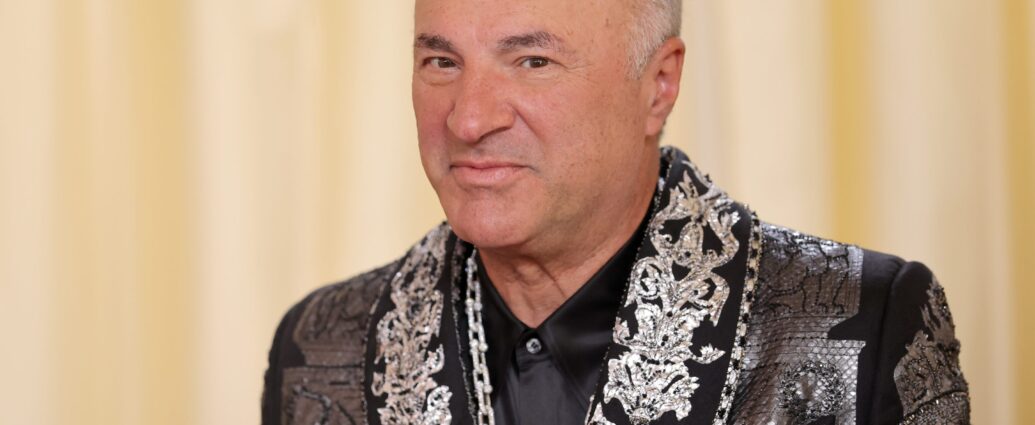
Kevin O’Leary says if you earn $68,000 a year and follow this rule, you’ll retire a millionaire
As Americans are barely getting by because of inflation, tariffs, and a cost-of-living crisis, saving for retirement can feel like the priority lowest on the totem pole.
But multimillionaire serial investor and entrepreneur Kevin O’Leary says saving is more important than ever before.
“What piece of advice do I give my kids over and over and over again about money?” the Shark Tank star questioned in a recent Instagram video. “Don’t spend it. Save it. Invest it. Let it compound. That’s the gift the market gives you.
O’Leary’s golden rule of investing is straightforward. He says to take 15% of every dollar you earn, whether it’s from your paychecks, side hustles, or birthday money from grandma, and put it directly into the market.
“Just let it compound,” he said.
For the average American worker who makes $68,000 per year, that simple rule will pay off in the end, he argued.
“If you make $68,000 a year, the average salary, and you do this your entire life, just 15% of your paycheck, you’ll end up a millionaire at retirement at 65,” O’Leary said.
Does Kevin O’Leary’s math check out?
Most national estimates place the average American salary at roughly $66,000 to $69,000 per year. Assuming O’Leary’s estimate of $68,000, the numbers would break down as follows.
Assuming O’Leary’s 15% rule, an American making $68,000 per year would save about $10,200 per year, or $850 per month. Invested consistently over a 40-year career, say from age 25 to 65, and assuming the S&P 500’s historical average return of roughly 10%, that $850 monthly contribution would grow to approximately $5.3 million by retirement.
Even using a more conservative average return of 7% would still put the average American in millionaire status, with a final portfolio worth around $2.2 million.
While the math works on paper, it’s becoming more unrealistic for average Americans to save that much money each month.
For workers in the $50,000–$79,999 income bracket, 55% report feeling behind on retirement savings, and this group is among the most likely to lack adequate preparation. The overall personal saving rate as of mid-2025 sits at just 4.4% of disposable income, according to the Bureau of Labor Statistics — meaning someone earning $68,000 saves roughly $3,000/year toward retirement, on average. Among 401(k) participants specifically, Vanguard data show the median total contribution rate (employee + employer) is about 11.5%, though this applies primarily to those with 401(k) access.
For a household earning $68,000 before taxes, take-home pay is about $52,000 to $54,000 after federal and state taxes, leaving just $3,600 per month for other expenses.
According to RentCafe, the average rent in the U.S. is $1,740 per month, leaving just about $1,860. Then tack on groceries, which Bureau of Labor Statistics data shows can be as high as $400 per month for a single person. (Now we’re down to about $1,460).
Then there’s student loan payments (averaging $434 per month) and utilities (about $300 per month). That only leaves $726 — not enough to meet the 15% of earnings saved that O’Leary suggested.
Even if we assume 15% of the average American’s take-home pay of about $52,000, that means they’d have to invest $650 per month (still making them a millionaire by age 65), but that leaves just $150 per month in discretionary pay.
O’Leary argues, though, that younger generations need to stop spending on unnecessary items.
“The best piece of advice I can give anybody: don’t buy stuff you don’t need,” he insisted. “Invest it instead.”
What other investors say
O’Leary’s advice largely mirrors the advice of index fund investing long shared by Warren Buffett, who has repeatedly said the average investor is best served by putting money in a low-cost S&P 500 index fund and leaving it alone.
“Put 10% of the cash in short-term government bonds and 90% in a very low-cost S&P 500 index fund. (I suggest Vanguard’s),” Buffett wrote in a 2013 shareholders’ letter. “I believe the trust’s long-term results from this policy will be superior to those attained by most investors—whether pension funds, institutions, or individuals—who employ high-fee managers.”
Suze Orman, financial advisor, author, and podcast host, has also said Americans need to prioritize saving or investing at least 10% of their earnings each year—particularly given longer life expectancies and rising health care costs in retirement. She’s even argued that 70 should be the new retirement age because Americans aren’t financially prepared enough.
“You likely have plenty saved up to breeze through 15 years or so of retirement. But, people, if you stop working in your 60s, your retirement stash might need to support you for 30 years, not 15,” she wrote in 2017.
This story was originally featured on Fortune.com

Marc Andreessen says AI layoffs are a farce—companies are 75% overstaffed and AI is the ‘silver-bullet excuse’ to clean house
The promise of AI-driven productivity has many employees fearing for their heads. But to Marc Andreessen, co-founder and general partner at Andreessen Horowitz, the technology is more of a bogeyman, masking a long-standing business fluke that has quietly lingered in boardrooms for years.
In an interview on the 20VC show with venture capitalist and host Harry Stebbings, the billionaire said AI was the scapegoat for layoffs that are actually a result of overhiring in the wake of the COVID pandemic.
“Essentially, every large company is overstaffed,” he said. “It’s at least overstaffed by 25%. I think most large companies are overstaffed by 50%. I think a lot of them are overstaffed by 75%.” He added, “now they all have the silver bullet excuse: Ah, it’s AI.”
Andreessen’s comments are nothing new for an industry that is pushing back against the “silver bullet excuse” of AI, which some tech leaders including OpenAI’s Sam Altman have coined as “AI washing,” or blaming otherwise normal layoffs on the increased use of AI.
A long list of business leaders and AI experts have said the labor market is due for a massive upheaval due to AI. Some have already carried out layoffs and attributed them to the tech. Block CEO Jack Dorsey laid off 40% of his workforce in February, saying he thinks “most companies are late” to the AI layoff trend. Australian-American firm Atlassian made a similar move. Meta is also reportedly planning sweeping layoffs thanks to greater efficiency brought about by AI-assisted workers.
The post-pandemic hiring blitz
Tech companies embarked on a hiring spree in the wake of the COVID pandemic. Following the initial employment shock during the onset of the pandemic, hiring shot up to 8.3 million by May 2020, according to the Bureau of Labor Statistics. The dawn of remote work and the shift to digital opened up a pool of labor that spanned the globe. By June 2022, nonfarm payrolls surpassed pre-pandemic levels. Firms acted like the metaphorical kid in the candy store with talent, grabbing every shiny new candidate that crossed their applicant tracking system, with some, like Amazon, even doubling their headcount between 2019 and 2021.
But many tech firms have cleaned house following the hiring craze. Amazon has cut nearly 30,000 workers over the past year to reduce layers and remove bureaucracy. In 2023, Google parent company Alphabet cut 12,000 jobs after a pandemic hiring spree. Even Dorsey conceded that some of the Block cuts were thanks to overhiring.
“This entire labor displacement thing is 100% incorrect,” Andreessen said. “It’s classic zero-sum economics.” He said that most coders, for example, are employing AI, which is taking over much of the workload. But that’s not a flashing red light that layoffs are on the way. Instead, it just means more work for those workers as AI boosts productivity rather than cutting labor costs.
The venture capitalist argues that fears of AI-driven mass layoffs stem from the “lump of labor” fallacy, the belief that there is a fixed amount of work in the economy at any given time. “It’s always been wrong, it’s going to be wrong again,” he said.
But recent studies on the impact of AI complicate Andreessen’s assessment. An Anthropic study released earlier this month demonstrated that AI is already theoretically capable of performing the majority of tasks associated with engineering, law, finance, and business. And a study from professional services firm Cognizant mapped out the projected magnitude of AI layoffs this year, finding AI-related job cuts could total more than nine times what they were last year, surpassing 500,000. But that number is still a far cry from the sweeping projections leaders like Anthropic CEO Dario Amodei have made about an AI-related white-collar job apocalypse.
Still, Andreessen thinks AI is a smoke screen for layoffs. He doesn’t believe the technology is sophisticated enough yet to replace human workers.
“AI literally until December was not actually good enough to do any of the jobs that they’re actually cutting,” he said. “It just can’t have been AI.”
This story was originally featured on Fortune.com

Forget free lunch and nap pods: AI startups are luring workers with soaring salaries—some recent computer science grads are making over $300,000
Silicon Valley’s startup culture has long sold itself on alluring perks: cold brew on tap, nap pods tucked between standing desks, and even free slippers for their “no-shoes” offices. The pitch was simple: work hard, but live well while building the next big thing.
But as the race for top AI talent accelerates, startups are increasingly leaning on a far more direct incentive: eye-popping paychecks.
Software engineers at venture-backed startups are receiving median base-salary offers of $200,000—a 25% increase from 2022—according to Levels.fyi. In some cases, newly-minted computer science graduates are fielding offers upward of $300,000 annually, sky-high wages once reserved for seasoned engineers at Big Tech giants, said Chris Vasquez, CEO of startup recruiting firm Quantum.
“Prior to this, I’d probably never seen anyone over $300,000 on base salaries at seed companies,” Vasquez recently told The Wall Street Journal. Now, “They’re able to take home FAANG [Facebook, Amazon, Apple, Netflix, Google]-level cash comp.”
AI itself is helping fuel the frenzy. New tools are making it easier and faster than ever to build and scale companies, lowering the barrier to entry for budding professionals and intensifying competition for a small pool of elite talent.
At least in the short term, that’s good news for young engineers entering the workforce—despite broader concerns that AI could eventually significantly shrink the number of traditional tech roles. If salaries alone are any indication, demand for the best of the best talent has never been higher.
The battle for AI talent is raging —so companies are dishing out 7-figure paychecks
After the world’s best AI talent spends a few years fine-tuning their skills, their compensation could even stretch into the seven figures. And as industry insiders note, financial equity can be an even bigger draw than base salary for companies with sky-high ambitions.
Employee stock grants alone can range from $2 million to $4 million at a Series D startup, according to Tim Tully, a partner at venture capital firm Menlo Ventures.
“That was unfathomable when I was hiring research scientists four years ago,” Tully, told Fortune last year, noting that those working on foundational AI and theoretical breakthroughs hold the golden tickets to top-tier companies.
At Big Tech companies, the offers are even more eye-watering as firms pour billions into AI, igniting a nonstop tug-of-war for talent among companies like OpenAI, Meta, Google, Microsoft, and Anthropic.
The most intense battle centers over a small pool of fewer than 1,000 AI research scientists who can build today’s most advanced large language models. OpenAI CEO Sam Altman even said last year that the competition intensified to the point where Meta offered signing bonuses as high as $100 million to lure top talent. The ChatGPT-maker’s average stock-based compensation hit a whopping $1.5 million among its roughly 4,000 employees in 2025—the highest of any tech startup in history—the WSJ reported.
Even with sky-high salary promises, uncertainty clouds the AI job market
The boom comes with a familiar caveat: the odds of survival remain slim.
For every success story that begins in a garage or dorm room, countless companies stall out—even after making a name for themselves.
Moreover, not every tech worker is cashing in at the top of the market. While a select group of candidates can command eye-popping offers, most new graduates are still landing more modest—but still sizable—paydays.
The average starting salary for computer science majors is expected to be around $81,500 for the class of 2026, according to the National Association of Colleges and Employers, up 7% from the previous year.
Taken all together, the numbers point to a job market defined by opportunity and imbalance: companies are paying a premium for the very best talent, even as layoffs remain omnipresent and the future demand for tech workers remains uncertain.
This story was originally featured on Fortune.com

Markets are nervous, but Main Street isn’t: Wells Fargo CEO flags economic disconnect
Despite a 50% spike in oil prices and an escalating conflict involving Iran, Wells Fargo CEO Charlie Scharf reports a disconnect between market volatility and real-world economic health.
“So, separate out the pure economy from markets and what people are nervous about in terms of what the future holds. The economy is still extremely strong. When we look at it, consumers are still spending, even with the increases in oil prices. They’re spending 20, 30% more on oil, but they haven’t stopped spending on everything else,” Scharf told FOX Business’ Maria Bartiromo on Tuesday.
“When you just look at the health of the consumer and the health of the businesses that we serve, which is pretty broad across the country, things are in really good shape now,” he continued. “That’s different than the markets, right?”
U.S. gasoline prices on Monday topped $4 a gallon nationwide, adding pressure to household budgets as oil markets surge in response to the lingering Iran conflict. Fuel markets have been particularly sensitive to disruptions tied to the Strait of Hormuz, a critical corridor for global crude shipments, where Iran has effectively restricted traffic, tightening supply expectations.
JAMIE DIMON SAYS U.S. HAS ‘BECOME LIKE EUROPE’ ON DEFENSE, AND IT’S HOLDING THE COUNTRY BACK
Further gains at the pump are possible if crude prices continue to rise, analysts say.
Meanwhile, investors are hesitant to take on any risk as the Middle East conflict rages on, with Reuters reporting a liquidity crunch amplifying “wild” price swings and widening spreads, leaving traders struggling to find buyers.
Scharf acknowledged a sense of “fragility” in the indices, but insisted that delinquencies remain low and wages continue to grow.
“It does feel like there is a fragility or a nervousness in the markets which you don’t yet see in the economy, which, depending on how long the war goes on, will either turn out to be OK or there could be a trigger which could make things a little bit worse,” he said.
One concern he does hold for Main Street America is the Trump administration’s proposed 10% credit card interest rate cap, which he fears could lead to a “crunch” for those who need credit most.
“I think the president is right to focus on affordability,” Scharf started. “I personally don’t think that that is the best solution… I’m much more concerned with, is it the right answer for helping Americans who are in need, and does it actually help extend more credit or extend less credit? And my fear is that it actually hurts the extension of credit.”
GET FOX BUSINESS ON THE GO BY CLICKING HERE
Looking ahead through the rest of the year, Scharf feels “very good” about Wells Fargo’s overarching growth trajectory, also touching on opportunities in artificial intelligence (AI) infrastructure.
“It’s going to be trillions of dollars, whether it’s $3 [trillion] to $5 trillion that’s going to be needed to build out the infrastructure,” the CEO said. “The hyperscalers have a huge advantage. You know, those who control these large language models that continue to be on the forefront continue to invest. People are going to pay for that.”
FOX Business’ Bradford Betz contributed to this report.

Delta flight to Atlanta returns to Brazil airport after engine issue
A Delta Air Lines flight bound for Atlanta returned to São Paulo, Brazil, shortly after takeoff Sunday night following an engine issue, according to the airline and local reports.
Delta Flight 104, operated on an Airbus A330-300, experienced a mechanical issue with its left engine after departing São Paulo International Airport, the company said.
The aircraft, carrying 272 passengers and 14 crew members, landed safely and was met by airport rescue and firefighting teams, Delta said. No injuries were reported.
UNITED AIRLINES WARNS AIRFARES COULD JUMP 20% AS OIL PRICES CONTINUE TO SURGE
Delta did not provide additional details about the nature of the mechanical issue or what may have caused it.
Brazilian outlet G1 reported that a passenger-recorded video appeared to show the left engine failing seconds after takeoff, though Reuters said it could not independently verify that report.
The incident also caused delays for other flights departing São Paulo International Airport, according to G1.
CLICK HERE TO GET FOX BUSINESS ON THE GO
Delta has not said whether the aircraft has been taken out of service. FOX Business has reached out to the airline for additional comment.
Reuters contributed to this report.


Warren Buffett says he’s still making calls on investments at Berkshire, flags ‘tiny’ new buy
The 95-year-old investor said he still comes into the office daily and stays engaged with markets.
This post was originally published here
Jim Cramer says look to buy these types of stocks if the oil rally breaks
The Investing Club holds its “Morning Meeting” every weekday at 10:20 a.m. ET.
This post was originally published here
Warren Buffett says Iran bomb would make nuclear disaster harder to avoid
The Berkshire Hathaway chairman said the growing number of nuclear-armed states has fundamentally altered the global risk landscape.
This post was originally published here
These stocks got hit hard in March. Analysts see them rebounding
Analysts believe that Carnival and Micron Technology are among the stocks that could bounce back from their March sell-offs.
This post was originally published here
Why $4 a gallon gas prices won’t trigger Fed interest rate hikes — and could lead to cuts
While there’s still plenty of uncertainty about where rates are headed, Wall Street commentary shifted back to expectations for cuts.
This post was originally published here
‘God squad’ waives endangered species law to allow US drilling in Gulf of Mexico
Critics say exemption for fossil fuels exploits White House’s ‘self-made gas crisis’, and could doom the rare Rice’s whale
A US government panel on Tuesday exempted oil and gas drilling in the Gulf of Mexico from the Endangered Species Act (ESA), a move which critics say could doom a rare whale species and harm other marine life.
The Endangered Species Committee – which had not convened in more than three decades – voted to approve the request for the ESA exemption at the request of the defense secretary, Pete Hegseth.
This post was originally published here
Three hospital doctors’ groups threaten to coordinate strike action in England
Union to ballot consultants and SAS medics about joining resident doctors in industrial action over pay and conditions
The NHS’s three main groups of hospital doctors in England are threatening to coordinate strike action in a dramatic escalation of their campaign for higher pay.
The British Medical Association said on Tuesday it would ballot consultants, and specialist, associate specialist and speciality (SAS) medics about joining resident doctors in taking strike action aimed at improving their earnings.
This post was originally published here
Penguin to sue OpenAI over ChatGPT version of German children’s book
Publisher’s lawsuit alleges AI research company’s chatbot violated its copyright over Coconut the Little Dragon series
Penguin Random House has filed a lawsuit against OpenAI, alleging its chatbot ChatGPT violated copyright by mimicking and reproducing the content of a popular series of German children’s books.
The lawsuit, which was filed on Friday with a Munich court against OpenAI’s Ireland-based European subsidiary, states Penguin Random House’s legal team had prompted ChatGPT to write a story in the vein of Penguin author and illustrator Ingo Siegner’s Coconut the Little Dragon series.
This post was originally published here
Human remains found on California beach in 2022 identified as missing man
DNA testing confirmed bones found on Salmon Creek beach belonged to Walter Karl Kinney, a man last seen in 1999
Human remains discovered in the summer of 2022 on a beach in California recently were identified as those of a former banker who disappeared in 1999.
The DNA Doe Project (DDP) on Thursday announced that bones found on Salmon Creek state beach in northern California in June 2022 – by a family searching for seashells – belonged to 59-year-old Walter Karl Kinney, a former banker who lived in nearby Santa Rosa.
This post was originally published here
US marine detained after TSA finds live explosive round in checked bag
Marine told investigators he found the round ‘in the field’ about a year ago and kept it, thinking it wasn’t live
A US marine was detained at a California airport after Transportation Security Administration (TSA) personnel found a live 25mm explosive round in his checked baggage, police said.
The round was found during the screening process of checked luggage at the Palm Springs international airport on Monday, the Palm Springs police department said in a news release.
This post was originally published here




Nothing to see in Texas: How a Texas court put AML efforts further behind
In much of the world, the fight against money laundering is focused on real estate like a sniper on the high ground. The fight centers on shell companies. All non-rogue nations have, to a greater or lesser extent, enacted rules to expose beneficial owners of the companies that buy and sell property. By contrast, the United States continues its halting, Sisyphean climb up the same hill.
Here in the U.S., it seems that each attempt to advance meaningful real estate transparency must overcome the wearying gravity of deeply embedded privacy concerns, political resistance, and opposition from well-resourced interests. A Texas federal court’s decision striking down FinCEN’s 2024 real estate reporting rule (The Rule) is the latest judicial manifestation of this gravitational drag. (Flowers Title Companies, LLC v Scott Bessent).
AML efforts worldwide
It’s been exactly 40 years since money laundering became illegal in the United States. The TV show Miami Vice began in 1984, and by 1986, Congress had decided that laundering money was bad. The rest of the world joined the chorus, individual nations singing with varying degrees of enthusiasm.
Now, four decades on, we’ve seen the end of both the Soviet Union and Don Johnson’s pastel suits, and we’ve witnessed the rise of Russian Oligarchs as they plundered Soviet minerals and washed their dirty money through Londongrad. High-end real estate, whether high-rises or low-country ranches, has always been the make-sense way to legitimize eight-figure fortunes. One purchase and the money is clean. Walter White would have to wash 100,000 cars to match the cost of one NYC apartment.
Over the intervening years, organizations have been formed to join the fight. In 1989, the Financial Action Task Force (FATF) was formed in Paris during the G7 Summit, and combating money laundering was its raison d’être. Then, in 2000, the Wolfsberg Group was formed by major banks like Deutsche, JPMorgan, and Citi. It’s an exclusive club, private, of course, that has a voice in all things that affect their handling of client money. The FATF is like the refs at your private school basketball game. The Wolfsberg Group is the donor that built the arena.
In the US, we have FinCEN. It’s a division within Treasury that determines US policy as it implements the Bank Secrecy Act of 1970 and subsequent legislation. Under that aegis, it created Geographic Targeting Orders (GTOs) to keep the oligarchs from buying up every apartment on Central Park South. FinCEN applied GTOs to other major metropolitan areas across the country as well. In a GTO, corporate ownership must be disclosed – no shell company shenanigans.
Then in 2024, FinCEN created “The Rule” by which it attempted to apply a GTO-like approach to all non-financed transactions throughout the US. It was to go into effect in December 2025.
The litigation
Flowers Title Companies decided to fight back. It filed suit in the Eastern District of Texas to block the implementation of The Rule. All parties stipulated that FinCEN has authority to regulate “suspicious transactions.” However, Flowers argued that non-financed transactions are not suspicious and that, therefore, FinCEN had no statutory authority to spread GTOs across the US.
For FinCEN’s part, it argued that non-financed deals are suspicious, citing various statistics, including that “from 2017 to early 2024, approximately 42 percent of non-financed real estate transfers captured by the Residential Real Estate GTOs were conducted by individuals or legal entities on which a SAR has been filed.” The thrust was that non-financed transactions are sketchy.
However, siding with Flowers, the Texas court wrote that FinCEN’s experience with non-financed transactions did not mean that all non-financed transactions are suspicious. It wrote, “the agency fails to explain or show how non-financed residential real estate transactions are categorically ‘suspicious.’
A fair interpretation of Texas’ opinion is that Texas refuses the concept of guilt by association. As a result, Texas held that FinCEN’s actions are beyond the scope of its authority.
Reaction
Disagreement with Texas was swift. Some noted that other jurisdictions have already upheld FinCEN’s right to establish GTOs.
Others, like Ian Gary, executive director of the FACT Coalition, have adopted a more derisive tone, stating, “In striking down this rule, the district court in Texas has just sided with cartels, money launderers, and U.S. adversaries and given them free license to continue moving their dirty cash through U.S. real estate.”
The Texas court admits that Geographic Targeting Orders (GTOs) have been deployed in New York City, but, in essence, dismissed their use in Texas, suggesting that what works in NYC does not work in rural America. This is a curiously parochial view.
Consider the 2023 sale of Jeffrey Epstein’s Zorro Ranch in New Mexico. The property was sold by his estate, with proceeds intended for victim compensation, yet the buyer’s identity was initially concealed. Then, three years later, it was revealed that the purchaser was connected to the family of a Texas developer. While such opacity may be legally permissible, this arguably calls for a closer look, given that the property had been Epstein’s.
Conclusion
Over more than four decades, the global fight against money laundering has matured into a coordinated effort between governments and NGOs. The Paris-based Financial Action Task Force, with the input of dozens of countries, created its Forty Recommendations, aimed at “best practices” to control money laundering.
The twenty-fourth of those recommendations calls for disclosure of beneficial owners, to protect against shell corporations hiding dirty money. And nation-states have complied with varying degrees of enthusiasm.
In Ireland, for example, every transfer is public record, and every beneficial owner is disclosed. Similarly, France collects information on all beneficial owners, but due to strict privacy laws, it limits the dissemination of that information to those with a reason to know. But they collect it. The effect is that no one is allowed to anonymously sell a property for $10M to a Russian Oligarch. Or transfer an Epstein property anonymously.
Against that backdrop, it is jarring to see judicial reasoning that treats all-cash, non-financed transactions as inherently unsuspicious. The Texas ruling is out of step with other U.S. courts and with the international community’s efforts to combat money laundering.
Ultimately, it may be up to Congress to declare that anonymous, non-financed transactions are inherently suspicious.
Bob Simpson is the founder of DaylightAML, LLC.
This column does not necessarily reflect the opinion of HousingWire’s editorial department and its owners. To contact the editor responsible for this piece: zeb@hwmedia.com.

Booze is back on board the Staten Island Ferry

After a seven-year sober spell, Staten Island Ferry riders can once again booze on board. Last week, the Department of Transportation (DOT) announced that beer, hard seltzers, and canned cocktails will be sold on the ferry for the first time since 2019, alongside expanded snack options like pretzels and popcorn. The offerings debuted on the MV SSG Michael H. Ollis and are slated to roll out to the Sandy Ground and Dorothy Day ferries in the coming weeks.
Alcohol sales were halted in 2019 after a vendor contract lapsed and were further delayed by the Covid-19 pandemic, which many feared would end the tradition for good, as reported by the New York Times.
In December 2024, DOT resumed onboard food service with coffee and snacks. The expanded menu is intended to further enhance the passenger experience, giving riders a way to unwind during their trip.
“Whether you’re a Staten Islander commuting home after a long work day or a visitor taking in the harbor views, the Staten Island Ferry is not just a critical piece of city infrastructure, it is an experience,” Jeanny Pak, interim president of the city’s Economic Development Corporation (NYCEDC), said.
The Staten Island Ferry is the largest municipal ferry service in the United States, carrying more than 16 million riders annually and roughly 45,000 on an average weekday. The city’s NYC Ferry already serves alcohol on board.
Unlike most transit options, the Staten Island Ferry remains one of the few in New York without an admission fee, offering free rides to all passengers. Heavily subsidized by the city, the ferry is not designed to generate revenue.
The city signed a 10-year lease agreement with the ferry’s new vendor, a Dunkin’ franchise, which is paying the city $27,000 per month to operate the concessions, according to the Times.
In a statement, Sen. Jessica Scarcella-Spanton said the return of alcohol sales will help increase ridership and energize the service.
“Countless Staten Island residents and visitors utilize the ferry daily, and the return of on-board alcoholic beverage sales is a great initiative to get riders excited about utilizing this transportation service, helping increase ridership and generating revenue for a Staten Island staple,” said Sen. Jessica Scarcella-Spanton.
“Thank you to all who played a role in the return of this long-awaited service. I’m looking forward to enjoying a cold beer to partake in a time-honored tradition.”
RELATED:
- Staten Island Ferry to offer food and drinks for the first time since Covid
- Brooklyn Bridge to get separate bike and pedestrian entrances in Manhattan
- NYC breaks ground on Bronx crosstown bus service upgrades around Yankee Stadium
The post Booze is back on board the Staten Island Ferry first appeared on 6sqft.



This Shake Shack Analyst Is No Longer Bearish; Here Are Top 2 Upgrades For Monday
Top Wall Street analysts changed their outlook on these top names. For a complete view of all analyst rating changes, including upgrades, downgrades and initiations, please see our analyst ratings page.
This post was originally published here

What’s Going On With Oracle Stock Today?
Oracle (NYSE:ORCL) shares are up on Tuesday as the company is reportedly juggling job cuts and aggressive federal expansion as it doubles down on AI-driven government solutions.
This movement comes amid a positive day for the broader market, with major indices showing gains.
Oracle began laying off employees globally on Tuesday, impacting multiple teams, Business Insider reports, citing certain social media posts. The scale remains unclear, with affected workers sharing updates on LinkedIn as the company moves to cut costs.
Oracle Expands Federal Solutions
Meanwhile, Oracle Cloud Federal Financials has been added to the U.S. Treasury’s Financial Management Quality Service Management Office (FM QSMO) Marketplace, marking it as the first cloud-native offering aimed at enhancing agency efficiency. This inclusion allows federal agencies to automate finance processes while leveraging embedded AI to improve productivity and transparency.
In addition, the Oracle Fusion Cloud Applications suite provides a comprehensive set of AI-powered tools that help organizations streamline their financial operations. With over 11,000 organizations relying on these applications, Oracle aims to transform finance operations while ensuring compliance with government standards.
Oracle Launches Federal AI Platform
Oracle has also launched its AI Data …
This post was originally published here

Progress Software Analysts Cut Their Forecasts After Q1 Results
Progress Software Corporation (NASDAQ:PRGS) reported better-than-expected earnings for the first quarter on Monday.
The company posted quarterly earnings of $1.60 per share which beat the analyst consensus estimate of $1.57 per share. The company reported quarterly sales of $247.799 million which beat the analyst consensus estimate of $246.401 million.
Progress Software raised its FY2026 adjusted EPS guidance from $5.82-$5.96 to $5.91-$6.03 and also increased sales guidance from $986.000 million-$1.000 billion to $988.000 million-$1.000 billion.
Progress Software shares dipped 6.6% to trade at $26.38 on Tuesday.
These analysts made changes to their price targets on Progress Software …
This post was originally published here

Gold Gains Over 1%; FactSet Research Raises FY2026 Outlook
U.S. stocks traded higher midway through trading, with the Nasdaq Composite gaining around 400 points on Tuesday.
The Dow traded up 1.08% to 45,703.52 while the NASDAQ rose 1.92% to 21,193.35. The S&P 500 also rose, gaining, 1.44% to 6,434.78.
Leading and Lagging Sectors
Communication services shares climbed by 2.2% on Tuesday.
In trading on Tuesday, utilities stocks fell by 0.7%.
Top Headline
FactSet Research Systems Inc. (NYSE:FDS) on Tuesday reported upbeat results for the second quarter and raised its outlook.
The company posted second-quarter sales of $611.02 million, surpassing analyst expectations of $604.51 million and representing a 7.1% year-over-year (Y/Y) gain. The company reported quarterly adjusted earnings per share of $4.46, exceeding the street view of $4.37.
FactSet now expects FY2026 adjusted EPS of $17.25-$17.75 (up from prior forecast of $16.90–$17.60) versus $17.49 analyst consensus and sales of $2.450 billion-$2.470 billion (up from prior outlook of $2.423 billion–$2.448 billion) versus $2.449 billion consensus estimate.
Equities Trading UP
This post was originally published here

Why Is Nio Stock Surging Tuesday?
Nio Inc. (NYSE:NIO) shares are trading higher Tuesday. The rally follows reports of strong delivery momentum and a bullish shift in investor sentiment.
ES8 Delivery Milestone Reached
According to a CNEVPost report on Tuesday, Nio will reach its 90,000th delivery of the third-generation ES8 this week. Yang Bo, Nio’s head of user operations, teased the milestone on Weibo. The company delivered its 80,000th unit on March 20. This data implies Nio delivered nearly 20,000 ES8 units in March alone.
Anticipation For March Results
The company will release official March delivery figures on Wednesday. In its March 10 earnings report, Nio …
This post was originally published here

Google’s Nobel Prize-Winning AI Chief: ‘We Don’t Feel Any Pressure’ While OpenAI Burns $14 Billion
Google DeepMind chief Demis Hassabis said that his lab doesn’t “feel any immediate pressure to make knee-jerk decisions” on monetizing AI. A new book out Tuesday explains why.
How DeepMind Ended Up With The Biggest War Chest In AI
Sebastian Mallaby’s The Infinity Machine reveals that Hassabis sold DeepMind to Google in 2014 because he knew the AI race would come down to funding. Mark Zuckerberg offered more money, but Hassabis chose Larry Page after a dinner where Zuckerberg showed equal enthusiasm for AI, VR, and 3D printing. Hassabis wanted a buyer that understood AI wasn’t just another technology on a list.
Hassabis wasn’t always happy inside Google. Mallaby writes that he and co-founder Mustafa Suleyman tried to buy DeepMind back, recruiting Reid Hoffman to put up $1 billion for a spinout, but three years of legal work went nowhere. Google wouldn’t let them go.
That failed escape may now be his greatest edge. …
This post was originally published here

Why Is Firefly Aerospace Stock Surging Tuesday?
Firefly Aerospace Inc (NASDAQ:FLY) shares are climbing Tuesday. The Nasdaq is up 1.56% while the S&P 500 has gained 1.42%. The surge comes as the space sector reacts to reports that Elon Musk’s SpaceX is preparing for an initial public offering IPO.
SpaceX IPO Filing Buzz
According to The Information on March 25, SpaceX aims to submit its IPO prospectus to regulators this week. Reports suggest the company could seek a valuation above $75 billion. This move has ignited investor enthusiasm across the sector, as the potential listing would be one of the largest in history.
Nasdaq Rule Changes
Market sentiment is further bolstered by Nasdaq’s proposed rule changes effective May 1. These revisions could allow a large-scale listing like …
This post was originally published here

How to Profit With Options: Strategies for Buyers and Writers
This post was originally published here
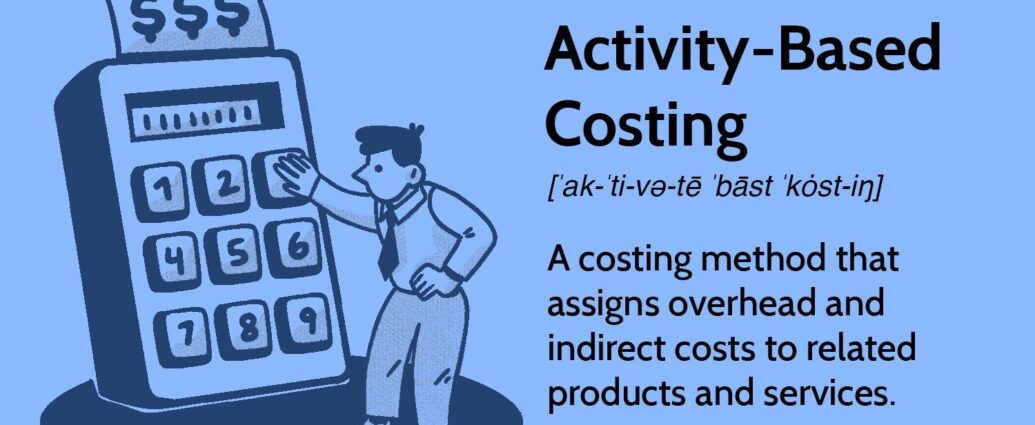
Activity-Based Costing Explained: Method, Benefits, and Real-Life Example
This post was originally published here

Investing in U.S. Stocks for Non-U.S. Citizens: A Guide
This post was originally published here

Beginner’s Guide to Stock Investing: Boost Your Wealth
This post was originally published here
Analyst Favorites: Gold Fields Ranks As a Top Metals Pick
A study of analyst recommendations at the major brokerages shows that Gold Fields Ltd. (Symbol: GFI) is the #10 broker analyst pick, on average, out of the 50 stocks making up the Metals Channel Global Mining Titans Index, according to Metals Channel. The Metals Channel Global
This post was originally published here

Jamie Dimon says US must ‘finish this thing’ with Iran to protect global economy
JPMorgan Chase CEO Jamie Dimon is calling for a decisive end to the conflict with Iran, saying the U.S. must “finish this thing” to protect the global economy and remove the threat to the region.
Dimon appeared on “Fox & Friends” Tuesday, saying American strength depends on decisive action in the Middle East and embracing the artificial intelligence revolution.
“It’s much more important that this be successfully completed than what the market does,” Dimon said.
Threats to Middle East oil flows have added uncertainty to markets, as the United States, Israel and Iran continue to exchange strikes. On Tuesday, Iran struck an oil tanker off the coast of Dubai and continues to block shipments in the vital Strait of Hormuz.
JAMIE DIMON WARNS OF PRE-FINANCIAL CRISIS PARALLELS, SAYS SOME PEOPLE DOING ‘DUMB THINGS’
Dimon said Americans should be hoping the United States wins the latest conflict and acts to “clean up the straits,” minimizing future threats to the U.S. and its allies.
“These people have been doing something bad for 47 years. They’ve been killing people. They’ve been killing Americans,” Dimon said.
“I think people are surprised to find out they had a ballistic missile and go 3,000 miles. These are bad people, and they needed to be stopped,” he added.
Dimon advocated for the country to “finish this thing,” warning that if the U.S. fails to act, the cycle of threats will continue.
TRUMP SUES JPMORGAN CHASE AND CEO JAMIE DIMON FOR $5B OVER ALLEGED ‘POLITICAL’ DEBANKING
Beyond the battlefield, Dimon noted that a vital part of U.S. security is embracing AI capability and fixing a lagging defense industrial base. He singled out the U.S.’s inability to double or triple its supply of rockets if needed, noting it is a major area of concern.
JAMIE DIMON SAYS US HAS ‘BECOME LIKE EUROPE’ ON DEFENSE, AND IT’S HOLDING THE COUNTRY BACK
Dimon discussed his $1.5 trillion Security and Resiliency initiative, which lends and invests money to companies researching areas tied to national security, including drones, space and rare earths.
He also spoke about the changes he sees on the horizon as the country adapts to the introduction of artificial intelligence. Dimon compared the AI shift’s importance to that of tractors and electricity.
GET FOX BUSINESS ON THE GO BY CLICKING HERE
“AI, in the long run, is [going to] be unbelievable. Just like fertilizer was and tractors and the internet and electricity, it’s [going to] cure cancers,” he said.
“My guess is our grandkids will be working three and a half days a week. They’ll live to 100. They won’t have all our diseases. That’s good,” Dimon added.
Oracle cutting thousands in latest layoff round as company continues to ramp AI spending
Oracle has ratcheted up its capital expenditures as it builds data center infrastructure that can handle AI workloads.
This post was originally published here
U.S. gasoline hits $4 per gallon, highest since 2022, as Iran war drives up fuel prices more than 30%
Families are feeling the financial impact from the U.S. war with Iran as gasoline prices surge.
This post was originally published here
‘A place where music fills the air’: Bangkok to host Eurovision’s first Asia song contest
Spin-off launched with 10 nations, as original event remains mired in protests and boycotts over Israel’s involvement
Eurovision is seeking to expand into the Asian market by hosting a version of its song contest in Bangkok this year, just as the original annual event is being buffeted by discord and boycotts on the eve of its 70th anniversary edition.
The grand final of the inaugural Eurovision song contest Asia will take place in Thailand’s capital on Saturday 14 November, the Switzerland-based organisation announced on Tuesday. Broadcasters from 10 countries have confirmed their participation.
This post was originally published here
Pakistan and China propose five-part peace plan for Middle East
Foreign ministers Ishaq Dar and Wang Yi met in Beijing as Pakistan pushes for peacemaker role
Pakistan and China have released a joint five-part proposal for peace in the Middle East, after Pakistan’s foreign minister flew to Beijing on Tuesday to seek Chinese support for the country’s faltering efforts to negotiate an end to end the war.
The one-day meeting between Ishaq Dar and his Chinese counterpart, Wang Yi, came as Pakistan continues to push for the role of peacemaker between the United States and Iran, even as the war shows little sign of relenting.
This post was originally published here
Plans for gaudy Trump presidential library in Miami spark ridicule
Video posted on social media depicts a rendering of the proposed 50-storey gargantuan structure decked in gold
In a city of respected art deco buildings, ridicule is being heaped on the latest structure proposed for Miami’s skyline: the Donald J Trump presidential library, unveiled in ambitious plans posted to social media on Monday night.
A 1 minute 40 second video tour of the proposed gargantuan structure revealed it will be decked, almost inevitably, in Trump’s trademark gold, including a giant statue of him, and will feature Air Force One, the $400m Boeing “flying palace” gifted to him by Qatar, in its cavernous lobby.
This post was originally published here

Domino, the warty frogfish, is the first of its kind to be raised in captivity
Scientists say the little fish may hold broader lessons for raising other marine species in captivity.
(Image credit: Brenna Hernandez/Shedd Aquarium)

This post was originally published here
Supreme Court strikes Colorado ban on conversion therapy
The Supreme Court has ruled that Colorado’s law banning conversion therapy “regulates speech based on viewpoint.”
(Image credit: Kevin Dietsch)

This post was originally published here

Nvidia invests $2bn in chipmaker Marvell to boost AI networking
This post was originally published here