





How to Start a Business: Essential Steps and Key Considerations
This post was originally published here

Safely Apply for Online Loans: Identify Legitimate Lenders
This post was originally published here

Fixed Assets in Accounting: Types and Balance Sheet Examples
This post was originally published here

Chief Executive Officer (CEO): Roles and Responsibilities vs. Other Chief Roles
This post was originally published here

Functions of Federal Reserve Banks: A Comprehensive Overview
This post was originally published here

Understanding Stock Ratings: Buy, Sell, and Hold Explained
This post was originally published here

Best Landlord Insurance for 2026—Affordable & Reliable Protection
This post was originally published here
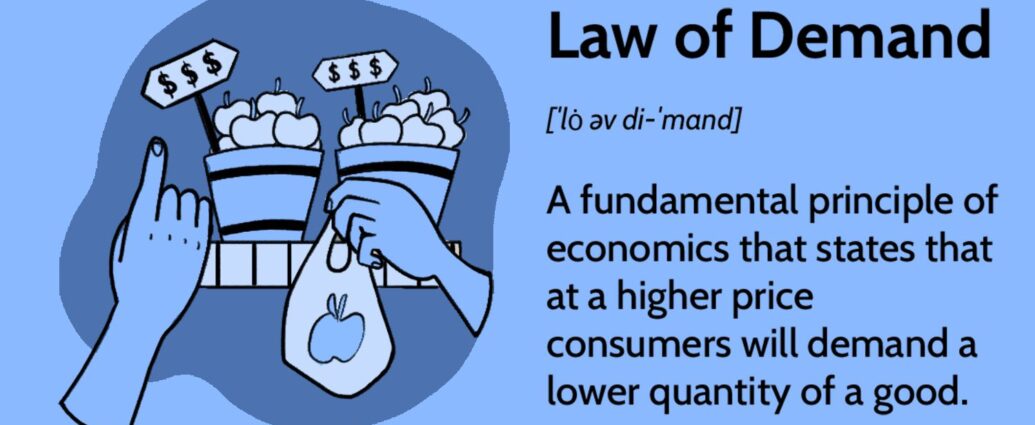
What Is the Law of Demand in Economics, and How Does It Work?
This post was originally published here
Roth and Traditional IRA Limits: Contribution Rules and Tips
This post was originally published here

Stock Market Today: Major Indexes Jump But Set to End Worst Quarter Since 2022; Trump Reportedly Willing to End War Without Reopening Strait of Hormuz
This post was originally published here
Four Trends in AI Experimentation, Adoption, and Transformation – SPONSOR CONTENT FROM CAPTECH
Sponsor Content from CapTech.
This post was originally published here
Boards Need to Rethink How They Advise CEOs
Three strategies to inspire better questions and more strategic conversations.
This post was originally published here






Lilly to spend up to $7.8 billion to acquire Centessa, a maker of experimental sleep disorder drugs
Centessa is one of several companies working on a new class of drugs to treat narcolepsy, a condition that makes it difficult for people to stay awake.
This post was originally published here
While low-income consumers struggle with rising gas prices, higher earners grow nervous as markets fall
Bank of America data reveals lower-income consumers are already pulling back on spending. Consumer sentiment shows higher earners are feeling less confident.
This post was originally published here
Chart analysts warn Iran war sell-off isn’t over — even as stocks try to rebound Tuesday
Equities got a jolt after a report said President Donald Trump was open to ending U.S. involvement in the conflict in the Middle East.
This post was originally published here
Best investment property mortgage lenders of April 2026
Dreaming about flipping your next house? Here are the lenders you should consider.
This post was originally published here
Attack on US radar plane at Saudi base raises concern over Iran’s capabilities
Ukraine says Russian spy satellite had photographed base before strike, as Moscow accused of helping Tehran
The destruction of a US E-3 Sentry airborne warning and control system (AWACS) aircraft in an Iranian strike on a Saudi Arabian airbase has raised questions over how a critical surveillance asset was left unprotected, and how Iran was able to launch a direct strike on the plane.
The plane was one of 16 operational E-3s, which first went into production in the 1960s and carry sophisticated monitoring equipment that allow them to warn of airborne threats such as missiles, as well as surveil and monitor their assigned battle space including communications, troop and equipment movements and air defence sites.
This post was originally published here
UK billionaire Chris Rokos donates record £190m to Cambridge University
Single biggest donation to a UK university in modern times will establish a new school of government bearing his name
The British billionaire hedge fund manager Chris Rokos has donated a record £190m to the University of Cambridge to establish a new school of government, which will bear his name.
It is believed to be the single biggest donation to any UK university in modern times and is intended to support Cambridge to become a leading training ground for future world leaders.
This post was originally published here
‘There’s no safe place here’: Kuwaiti tanker hit by Iranian drone attack in Dubai port
Dozens of other vessels leave area after drone strike causes fire onboard tanker owned by Kuwait’s state oil company
When Iran attacked a fully loaded crude oil tanker anchored at Dubai port on Monday night, damaging the vessel’s hull, hundreds of seafarers stranded on tankers anchored nearby were close enough to watch as the vessel burned.
Thousands more were able to listen to radio messages sent from the tanker to port authorities, as the latest strike on a merchant vessel during the US-Israel war on Iran reignited fears for the civilian maritime workers trapped in a war zone.
This post was originally published here
US megachurch pastor released from jail after pleading guilty to child sex abuse
Robert Morris, who started Gateway church, pleaded guilty in October to sexually abusing girl in the 1980s
The founder and former pastor of one of the US’s largest megachurches has been released from an Oklahoma jail six months after pleading guilty to sexually abusing a 12-year-old girl in the 1980s.
Robert Morris, 64, who started Texas’s Gateway church and also once served as a White House spiritual adviser during Donald Trump’s first presidency, pleaded guilty in early October in Osage county district court on five counts of lewd or indecent acts with a child.
This post was originally published here
UK’s smallest bird of prey among 200 species at risk of extinction, study finds
Merlin could disappear in worst-case scenario, with British isles facing ecological ‘point of no return’
The merlin, Britain’s smallest bird of prey, is one of more than 200 species that will become extinct in the UK if action is not taken to curb emissions and unsustainable land use, a study has claimed.
According to the UK Centre for Ecology & Hydrology (UKCEH), there is a 20-year window in which decisions on climate and land use will determine the fate of dozens of Britain’s native species.
This post was originally published here

Trump rebukes France as tensions rise with Europe over Iran war
This post was originally published here

STAT+: Baby KJ scientists hit speed bump in quest to scale custom gene editor
The scientists behind treating Baby KJ say they’ve hit a stumbling block in their efforts to create more custom gene editing treatments for children with rare diseases.
Food and Drug Administration reviewers, they say, are imposing high manufacturing and quality control standards that could make it too expensive and complicated for them — or any academics — to bring such bespoke therapies to approval.
Instead, they warned, such efforts could require the resources of industry.
Homeowner Assistance Fund backstopped vulnerable borrowers, study finds
A new report from the Mortgage Bankers Association’s (MBA) Research Institute for Housing America (RIHA), MBA’s 501(c)(3) trust fund that supports independent research on housing finance and policy, found that while pandemic-era forbearance helped most borrowers avoid foreclosure, the federal Homeowner Assistance Fund (HAF) became a critical backstop for more vulnerable homeowners who needed help beyond traditional loss mitigation.
The study, released Tuesday, examines the $10 billion federal program created in 2021 to assist homeowners affected by COVID-19 and analyzes how HAF dollars were distributed nationwide, how states implemented their programs and the characteristics of borrowers who received assistance.
By the end of 2021, more than 80% of borrowers who entered pandemic forbearance had exited and either resumed payments or paid off their loans, according to the report. Those who continued to struggle often turned to HAF, which was designed to supplement – not replace – existing forbearance and loss mitigation options.
“There has been a lot of attention to COVID-19 era mortgage forbearance policies that are now a permanent part of the loss mitigation waterfall for homeowners with federally backed mortgages,” said Dr. Stephanie Moulton, professor and associate dean for faculty and research at the John Glenn College of Public Affairs at The Ohio State University. “This is the first study to examine the $10 billion HAF program and the homeowners who benefited. The insights from this report help us think about potential gaps in the loss mitigation waterfall and the types of homeowners who may benefit from targeted support when they experience a crisis.”
HAF dollars highly targeted to lower-income households
The RIHA report finds that HAF dollars were highly targeted to lower-income and financially distressed households. More than 90% of HAF funds nationwide went to homeowners with incomes below their area median income.
Beneficiaries were concentrated in communities hit hardest by the pandemic, with higher unemployment and higher mortgage delinquency rates. While most funds were used to cure past-due or cover future mortgage payments, programs also paid non-mortgage housing costs including utilities and property taxes.
HAF assisted not only traditional first-lien mortgages but also reverse mortgages, land contracts and loans with complex title situations securing a principal residence.
For servicers and housing counselors, the data underscores that HAF effectively reached borrowers at the margins of the standard servicing system – including those with non-traditional financing structures and those whose housing costs went beyond the first mortgage payment.
Ohio homeowners studied
The report includes a detailed comparison of Ohio homeowners who received COVID-era mortgage forbearance and those who received HAF, either in addition to or instead of forbearance. More than one in 10 of the roughly 100,000 Ohio homeowners with mortgages at year-end 2019 who later received assistance for missed mortgage payments during the pandemic used HAF in addition to or instead of forbearance.
About 16% of Ohio HAF recipients had previously received mortgage payment forbearance before getting HAF support. Ohio homeowners in forbearance disproportionately held government-backed FHA, VA or GSE loans, consistent with the reach of federal loss mitigation programs.
About one-third of Ohio homeowners receiving HAF assistance had no evidence of a mortgage on their credit file, suggesting use of nontraditional financing, heirs’ property or other complex ownership structures.
Among Ohio homeowners receiving HAF for non-mortgage expenses, 80% had no mortgage appearing on their credit file.
For servicers operating in states with similar HAF designs, the Ohio findings point to a distinct population that may not surface through traditional credit file or agency-loan channels but still faces homeownership instability.
The RIHA research positions HAF as a complement to the now-standard loss mitigation waterfall that emerged during the pandemic. Broad-based tools like across-the-board forbearance stabilized the mortgage market, while HAF addressed more idiosyncratic or structural barriers that forbearance alone could not solve.
“Pandemic-era housing policy interventions proved highly effective in stabilizing the mortgage market and helping the vast majority of homeowners avoid foreclosure during an unprecedented economic shock,” said Edward Seiler, executive director of RIHA and MBA’s associate vice president, housing economics. “The research highlights not only the success of broad-based relief efforts like forbearance, but also the critical role of targeted programs such as the Homeowner Assistance Fund in supporting more vulnerable borrowers. As we look ahead, these findings offer important lessons for how policymakers and industry stakeholders can respond to future economic disruptions while promoting sustainable homeownership.”
This article was generated using HousingWire Automation and reviewed by a HousingWire editor before publication. The system helps convert company announcements and industry data into HousingWire-style news coverage.
Cleveland Remains a Beacon of Affordability for Homebuyers
As many Americans consider buying a home this spring, they may want to take a closer look at the Cleveland metro area. Not only is it home to one of Redfin’s latest and most unique listings—the Cleveland Cavaliers’ Rocket Arena—it’s also one of the most affordable markets in the country.
The typical Cleveland home sold for $230,000 in February, the latest month for which data is available. Among the 50 most populous U.S. metros, only Detroit had a lower median sale price ($181,250).
Eight other Midwest locales, including fellow Ohio cities Columbus and Cincinnati, also ranked in the bottom 15 when it came to median sale price in February. This affordability is the beating heart of the great Midwestern migration that’s been taking place since the pandemic—a trend that Redfin’s own chief economist, Daryl Fairweather, has joined in on.
“We initially left to avoid a smoke event from nearby wildfires,” Fairweather said about her family’s 2020 move from Seattle to Wisconsin. “We ended up staying in Wisconsin because we liked the simpler lifestyle, being close to family, and the lower cost of living. Remote work enabled me to keep my career, too.”
Those interested in following a similar path to Fairweather may be wise to act sooner rather than later—especially if Cleveland is their desired Great Lakes destination. Median home sale prices in the city have been growing at a much higher rate than the country as a whole since 2024; the year-over-year growth in Cleveland home prices was 4.6% as of February, nearly five times the 0.9% nationwide rate.
Beyond general demand for affordable homes, another driver of Cleveland’s rapid price growth is low inventory. The number of homes for sale in the area rose by only 0.5% year over year, the smallest positive change among major Midwest metros during the period.
Low inventory is also making Cleveland one of the fastest markets in the region. The typical home that went under contract there in February spent 44 days on the market. Warren, MI (42) and St. Louis (40) were the only other major Midwest metros where homes sold faster.
But despite these signs of heat, the Cleveland median sale price ($230,000) is still roughly half of the national median sale price ($429,259)—further confirmation that the city is a beacon of affordability.
Cleveland is also one of only a handful of U.S. metros where the average household currently earns enough money to afford the median-priced home. What’s more—the margin between its median income ($76,912) and the amount needed to buy the typical home there ($66,725) is quite healthy at over $10,000.
Jerry Quade, a Redfin principal agent based in Cleveland, weighed in on what else makes the city’s affordability unique: “Cleveland has simply always been an affordable place,” he said. “We don’t have big ups and downs like some markets in Texas or Florida or Las Vegas. Everyone says nothing is affordable anymore, but Cleveland is—and it’s just a nice place to live.”
February 2026 Housing Market Highlights: Cleveland
| February 2026 | Year-over-year change | |
|---|---|---|
| Median sale price | $230,000 | 4.6% |
| Pending home sales | 1,938 | -7.6% |
| Homes sold | 1,364 | -8.6% |
| New listings | 1,774 | -4.5% |
| Total homes for sale (active listings) | 5,659 | 1.9% |
| Inventory | 3,708 | .5% |
| Months of supply | 2.7 | 0.2 |
| Median days on market | 44 | 4 |
| Share of homes that sold above final list price | 27.9% | -3.4 ppts |
| Average sale-to-final-list-price ratio | 97.7% | -0.4 ppts |
| Pending sales that fell out of contract, as % of overall pending sales |
16.4% |
0.3 ppts |
This report is based on a Redfin analysis of MLS data across the 50 most populous U.S. metropolitan areas.
The post Cleveland Remains a Beacon of Affordability for Homebuyers appeared first on Redfin Real Estate News.

Jamie Dimon Warns Markets Won’t Calm Until Iran Conflict Ends
JPMorgan Chase & Co. (NYSE:JPM) CEO Jamie Dimon said on Tuesday that global markets will remain volatile until the conflict with Iran concludes. While noting the economy remains resilient, Dimon expressed caution regarding the geopolitical environment.
“The markets will be concerned until it’s over,” Dimon told “FOX & Friends.” He emphasized that the successful completion of the war is more critical than short-term market fluctuations.
Dimon Hopeful for Victory and Open Straits
The ongoing conflict has heavily impacted global trade routes, specifically the Strait of Hormuz. Dimon noted that market participants are currently pricing in the risk of further escalations.
“We should all hope that… we win this thing and clean up the straits and that Iran …
This post was originally published here
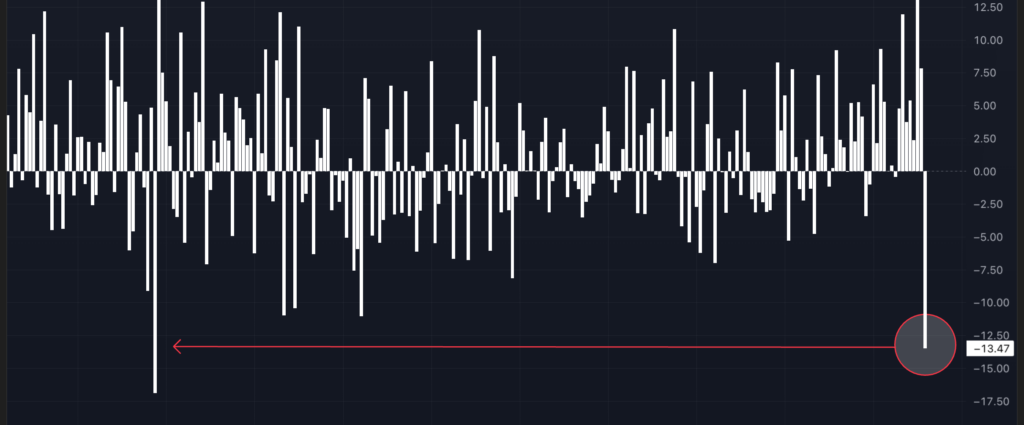
Trump’s Iran War Broke Gold’s Safe-Haven Status — Here’s What The Last 50 Years Say Happens Next
Gold is down 13% in March, on track for its steepest monthly decline since October 2008, when Lehman Brothers collapsed and global markets were in freefall.
The SPDR Gold Shares (NYSE: GLD) recorded over $8 billion in outflows during the month — more than double its prior largest monthly withdrawal, set in February 2021.
A war is raging in the Middle East. The world’s oldest safe haven is supposed to thrive in exactly this environment — so why isn’t gold working? And what does history say about what comes next after selloffs this violent?
Gold Had Its Worst Month Since 2008 – A Safe Haven That Failed To Show Up
The paradox is the story. Gold entered 2026 among Wall Street’s hottest consensus trades.
Gold had rallied 64.6% in 2025 — the bullion’s best annual return since 1979 — and by late January, spot gold reached an all-time high of $5,589 per ounce.
The bullish thesis was straightforward: falling inflation, multiple Fed rate cuts ahead, and insatiable central bank demand.
A month after President Donald Trump launched Operation Fury, the Strait of Hormuz remains closed, Brent crude trades above $110, and gold, the world’s oldest safe haven, is collapsing.
The answer is not geopolitics. It’s interest rates.
Gold is not an outright war hedge — it is an interest-rate-sensitive asset.
The conflict reignited the very inflation pressures markets had spent months assuming were behind them. The rate cuts that underpinned gold’s historic bull run have evaporated.
The Fed held rates at 3.50%–3.75% at its March 18 meeting and penciled in just one 25-basis-point cut for the year.
Yet traders went further: Polymarket traders now assign a 35% probability to zero cuts in 2026 — the single most likely …
Ripple Prime Expands Hyperliquid Integration, Unlocks Institutional Access To Tokenized Commodities Trading
Ripple Prime has expanded its integration with HyperliquidX, incorporating HIP-3 products to broaden institutional access to tokenized markets.
Ripple Prime’s Major Move
In an X post on Monday, Ripple Prime executive Mike Higgins said that the integration allows institutional investors to trade tokenized commodities such as gold, silver, and oil 24/7 on-chain perpetual contracts. The expansion is expected to increase activity within the HYPE token ecosystem and further advance the market for tokenized real-world assets.
HIP-3 products on Hyperliquid have experienced rapid growth, with daily trading volume reaching $2.30 billion and open interest at $1.99 billion.
These products now account for nearly 40% of daily trading volume and about 28% of total open interest …

McCormick combines with Unilever’s food division and adds Hellmann’s and Knorr to its brands
Spice and flavorings company McCormick announced on Tuesday that it’s combining with Unilever’s foods division, which includes household names like Hellmann’s and Knorr.
The combined company will maintain McCormick’s name and leadership. But upon closing, Unilever and its shareholders are expected to own 65% of the food company’s outstanding equity, amounting $29.1 billion. Unilever would also get $15.7 billion in cash. Meanwhile, McCormick shareholders will own 35.0%.
Unilever and McCormick confirmed they were in talks about a deal earlier this month, with Unilever attempting to streamline its business and focus on beauty and personal care products.
McCormick and its red-capped array of spices is a $15 billion company and the stable of brands it’s adding from Unilever are worth billions more. The companies said on Tuesday that McCormick and Unilever would have a combined revenue of $20 billion for the 2025 fiscal year.
The transaction is expected to close by mid-2027, the companies said Tuesday, pending both shareholder and regulatory approval. The deal excludes Unilever’s food business in India, Nepal and Portugal.
McCormick CEO Brendan Foley said in a prepared statement that the deal “accelerates McCormick’s strategy and reinforces our continued focus on flavor.” He added that McCormick has “long admired Unilever’s foods business, which has a “portfolio that complements our existing business, capabilities and long-term vision.”
Unilever, which is based in London, was founded nearly a century ago when Dutch margarine maker Margarine Unie merged with British soap maker Lever Brothers. The conglomerate now makes dozens of different brands, including Dove soap, Vaseline, Hellmann’s mayonnaise, Liquid I.V. hydration, Axe body spray and Pepsodent toothpaste.
In 2024, Unilever announced it was spinning off its ice cream business, which included the Ben & Jerry’s, Magnum and Breyers brands. That business became the Magnum Ice Cream Co., which is based in Amsterdam. Last year, Unilever sold The Vegetarian Butcher, a plant-based meat brand, and Graze, a healthy snacking brand.
McCormick, based in Hunt Valley, Maryland, has been expanding its portfolio to take advantage of consumers’ growing interest in global flavors and sauces. The 137-year-old company bought Reckitt Benckiser’s food division — including the French’s mustard and Frank’s RedHot sauce brands — in 2017. In 2020, it bought Cholula, a Mexican hot sauce brand.
Shares of both companies rose slightly before the opening bell Tuesday.
This story was originally featured on Fortune.com

Exclusive: Former Stripe and Coinbase employees raise $8 million for Latitude, a startup whose core product is stablecoin-based ‘Global Payouts’
When a business sends money internationally, the process can be slow and expensive. This is the gap that Latitude aims to fill by helping firms make fast and affordable international payments by using stablecoin rails while abstracting away the complexity.
On Tuesday, Latitude announced that it raised $8 million in a round led by NEA with participation from Lightspeed Faction, Coinbase, Paxos, and Solana Foundation, among others. Cyril Mathew, the startup’s CEO, did not disclose the company’s valuation in an interview with Fortune.
“We really want to make global payments simple for everybody and enable small businesses to reach everyone in the world,” said Vivek Morzaria, who started Latitude along with co-founders Brian Wrightson, and Mathew.
Latitude’s main product is what it calls Global Payouts, which allows U.S. businesses to make payments to individuals in over 50 countries. When an American firm sends U.S. dollars through Latitude, the startup’s network converts that money into stablecoins and then converts them back into the local currency of the destination. One of Latitude’s clients is Zencastr, a content creator company that has podcasters around the world. Through Latitude’s network, this company can pay its content creators in India and in other countries.
The startup’s second product serves more crypto-native apps or platforms that want to offer stablecoin access to international users. For example, if a prediction market company wants to expand internationally to, say Mexico or the Philippines, its users could convert local currency into stablecoins through Latitude’s infrastructure.
The three co-founders have worked at companies like Uber, Coinbase, Meta, and Stripe. They say that this experience in crypto, tech, and payments has taught them the importance of moving money efficiently around the world.
Latitude is currently in a beta launch, where it generates revenue through transaction fees. The company has 11 employees.
Mathew says that Latitude’s competition is traditional banks who facilitate foreign exchange transactions through legacy rails like Swift. The startup says that it has newer, more efficient rails than these institutions.
Small businesses are “paying too much and getting too little” from the incumbent system, Morzaria says.
This story was originally featured on Fortune.com

Markets cheer as Trump threatens to abandon Iran War, but Jamie Dimon sides with allies: ‘win this thing and clean up the straits’
The stock market ripped Monday morning after the White House signaled it may no longer be America’s job to reopen the Strait of Hormuz.
The S&P 500 rose more than 1.5%, while the Nasdaq climbed nearly 2%.
Overnight, a Wall Street Journal report indicated that President Trump would be ready to walk away from the war in Iran; by the morning, Trump all but confirmed the reporting, telling allies on social media that they should “build up some delayed courage, go to the Strait, and just TAKE IT.”
“You’ll have to start learning how to fight for yourself, the U.S.A. won’t be there to help you anymore, just like you weren’t there for us,” Trump wrote on his social media platform, Truth Social.
Meanwhile, the average price of gas in the U.S. crossed $4 a gallon Tuesday, up more than a dollar from $2.98 on February 27, the day before the war began. It’s the first time gas prices have crossed the $4 threshold since 2022, when Russia’s invasion of Ukraine triggered an energy crisis. At the same time, Trump’s approval rating is tanking, with Nate Silver putting it at -16.7, a record low for his second term and worse even that Joe Biden’s -11.7 at the same point in his presidency.
Throughout the war, the White House has catered its messaging to the stock market, which is desperately trying to hold onto its years-long rally, even as consumer costs climb. And while Americans face pain at the pump, Southeast Asia is confronting fuel shortages that are forcing people to work from home or even wear short sleeves to conserve air conditioning.
As Trump continues to optimize for the American market, he reinforces a type of “America-first” trade, where those who are invested win while other nations absorb the cost. Recently, Gulf allies have implored Trump to continue the war until the Iranian regime is fully crippled, and they are unable to fund their proxies or continue to hold the Strait as a point of leverage. JPMorgan CEO Jamie Dimon echoed this view during an interview with Brian Kilmeade on Fox News on Tuesday morning, saying that “it’s much more important that this be successfully completed than what the market does.”
“We should all hope that these bad people, that we win this thing and clean up the straits and that Iran is no longer a threat to everybody,” Dimon said.
However, the White House, on multiple fronts, has tried to tamp down expectations for the Strait of Hormuz. White House Press Secretary Karoline Leavitt confirmed Monday that reopening the Strait of Hormuz is not one of the “core objectives” Trump has set for the military campaign, and Defense Secretary Pete Hegseth reinforced the message Tuesday morning at a very friendly presser at the Pentagon, listing the destruction of Iran’s missiles, drones, and navy as the mission’s goal, but not Hormuz.
“This Strait of Hormuz issue is not just a United States of America problem,” Hegseth said.
Leavitt added Tuesday that once the war is over, gas prices “will plummet back to the multi-year lows American drivers enjoyed before these short-term disruptions.”
The stock market appeared to read Trump’s post as deescalation: if the U.S. pulls out, it removes the worst-case scenario of a prolonged ground campaign that sends oil even higher. But walking away doesn’t solve the underlying problem; the price of oil also climbed Tuesday as West Texas Intermediate now sits at $103 at the time of writing, nearly double where it started this year. BlackRock CEO Larry Fink warned this week that oil could hit $150 and cause a global recession if Iran remains a threat to Hormuz after the war ends.
The damage to the real economy is already compounding. Ultimately, even as the U.S. leverages its strategic reserves, oil is a global commodity, and as commodities researcher Rory Johnston likes to say, “a barrel of oil lost anywhere is a barrel of oil lost everywhere.” Oxford Economics cut its global industrial growth forecast to 2.5% this year, warning that energy-intensive sectors like transport, utilities, and petrochemicals face severe cost spikes and production declines. Their senior economist Nico Palesch warned in a note Tuesday morning of the potential for “supply chain disruptions on par with what was seen in the Covid-19 pandemic” if the strait’s closure isn’t resolved.
The United Nations Development Programme also warned Tuesday that the war could push up to 4 million people in the Middle East into poverty, with the region facing GDP losses of $120 billion to $194 billion. More than 3,000 people have been killed across the Middle East since the war began: 1,900 in Iran, 1,200 in Lebanon, 19 in Israel, and 13 U.S. service members.
Meanwhile, on the other side of its mouth, the administration keeps ramping up its threats on Iran. Trump shared a video on Truth Social Monday night showing a massive ammunition depot in Isfahan being hit by American bombers, an attack Hegseth confirmed involved 2,000-pound bunker busters to destroy missiles. The chairman of the Joint Chiefs added that the U.S. has begun flying B-52 bombers over Iran, aircraft capable of carrying nuclear weapons.
On the ground, thousands of special operations forces—Navy SEALs, Army Rangers, Marines—are in the region. Hegseth said strikes will intensify if no deal is reached with Iran soon, while Trump himself has threatened to “obliterate” Iran’s power plants, oil wells, and Kharg Island—and “possibly all desalination plants,” which millions of people across the Middle East depend on for drinking water. Human Rights Watch has said bombing them would constitute a war crime. Asked about it, the chairman of the Joint Chiefs said only that the military would run any such target through its “normal procedures.”
Meanwhile, Iran has little incentive to negotiate. Daily ship traffic through the strait has fallen roughly 90% to 95% since the war began. Iran’s parliament has approved a plan to formalize tolls on vessels passing through, codifying its control over the chokepoint, which it has already reaped the benefits of: Iran is earning far more per barrel than before the war. With those sorts of incentives to keep it closed, Tehran might not be in the negotiating mood.
No other country has stepped up to take charge of opening up the Strait. Trump railed against allies on Truth Social, particularly France, which he said has been “VERY UNHELPFUL” as they blocked Israeli planes carrying fuel from flying over their airspace. “THE USA WILL REMEMBER!!”
This story was originally featured on Fortune.com








STAT+: OpenEvidence inks deal with major health system
You’re reading the web edition of STAT’s Health Tech newsletter, our guide to how technology is transforming the life sciences. Sign up to get it delivered in your inbox every Tuesday and Thursday.
Good morning health tech readers!
In today’s newsletter: mental health fundraising, a letter from Health Gorilla to ASTP, OpenEvidence’s new hospital partner, a big AI drug deal, and new AI doctor pilots. Whew!
Supreme Court rules against Colorado ban on ‘conversion therapy’ for LGBTQ kids
WASHINGTON — The Supreme Court on Tuesday ruled against a law banning “conversion therapy” for LGBTQ+ kids in Colorado, one of about two dozen states that ban the discredited practice.
An 8-1 high court majority sided with a Christian counselor who argues the law banning talk therapy violates the First Amendment. The justices agreed that the law raises free speech concerns and sent it back to a lower court to decide if it meets a legal standard that few laws pass.

Case-Shiller index shows home price growth cooled further in January
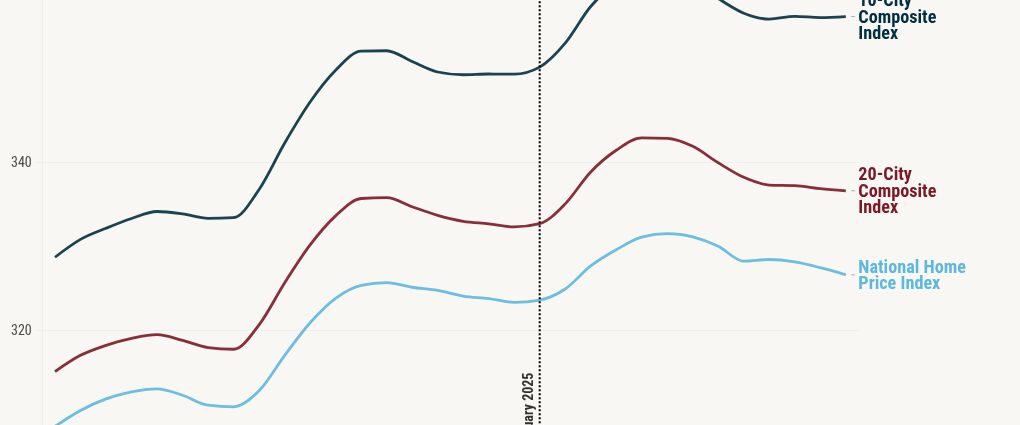
Home price growth continued to cool at the start of the year, according to the S&P Cotality Case-Shiller Index released on Tuesday.
The national home price index rose just 0.9% annually in January to a reading of 326.61, down from the 1.1% yearly increase recorded in December. Both the 10-city composite index (357.44) and the 20-city composite index (336.64) also showed softer home price appreciation in January rising on an annual basis just 1.7% and 1.2% respectively, down from annual increases of 2.0% and 1.4%, respectively, a month prior.
On a monthly basis, after seasonal adjustment, all three indices reported a month-over-month gain of 0.2%.
Looking back at 2025, Nicholas Godec, the head of fixed income tradables and commodities at S&P Dow Jones Indices, said splitting the year into two halves helps provide a clearer picture to where we started 2026.
“The National Index rose 2.2% over the first six months of the period, then fell 1.3% over the most recent six — a swing that explains why annual gains have compressed to under 1% despite prices remaining historically elevated,” Godec said in a statement.
Lisa Sturtevant, the chief economist at Bright MLS, added that the data for January marks the weakest start to a year for home prices since the early 2010s.
“While mortgage rates reached their lowest levels in more than three years in early 2026, the reprieve on rates was short-lived as the conflict with Iran has driven rates up in recent weeks. Affordability continues to be a major constraint on the housing market,” Sturtevant said in a statement. “Prospective buyers are waiting for both lower rates and slower price growth and are increasingly asking for concessions from sellers, leading to a more balanced negotiating environment between buyers and sellers.”
January also marked the eighth consecutive month inflation outpaced annual home price growth, as the Consumer Price Index was up 1.5 percentage points compared to the 0.9% yearly increase for home price appreciation.
“In real terms, home values have declined modestly over the past year,” Godec said.
Among the 20 cities in the 20-city index, New York moved up one place from December to take the top-spot recording the largest annual price gain at 4.9%, followed by December’s frontrunner Chicago at 4.6% and Cleveland at 3.6%. At the other end, Tampa yet again posted the largest annual decline, falling 2.5% in January, followed by Denver (-2.05%) and Phoenix (-1.59%).
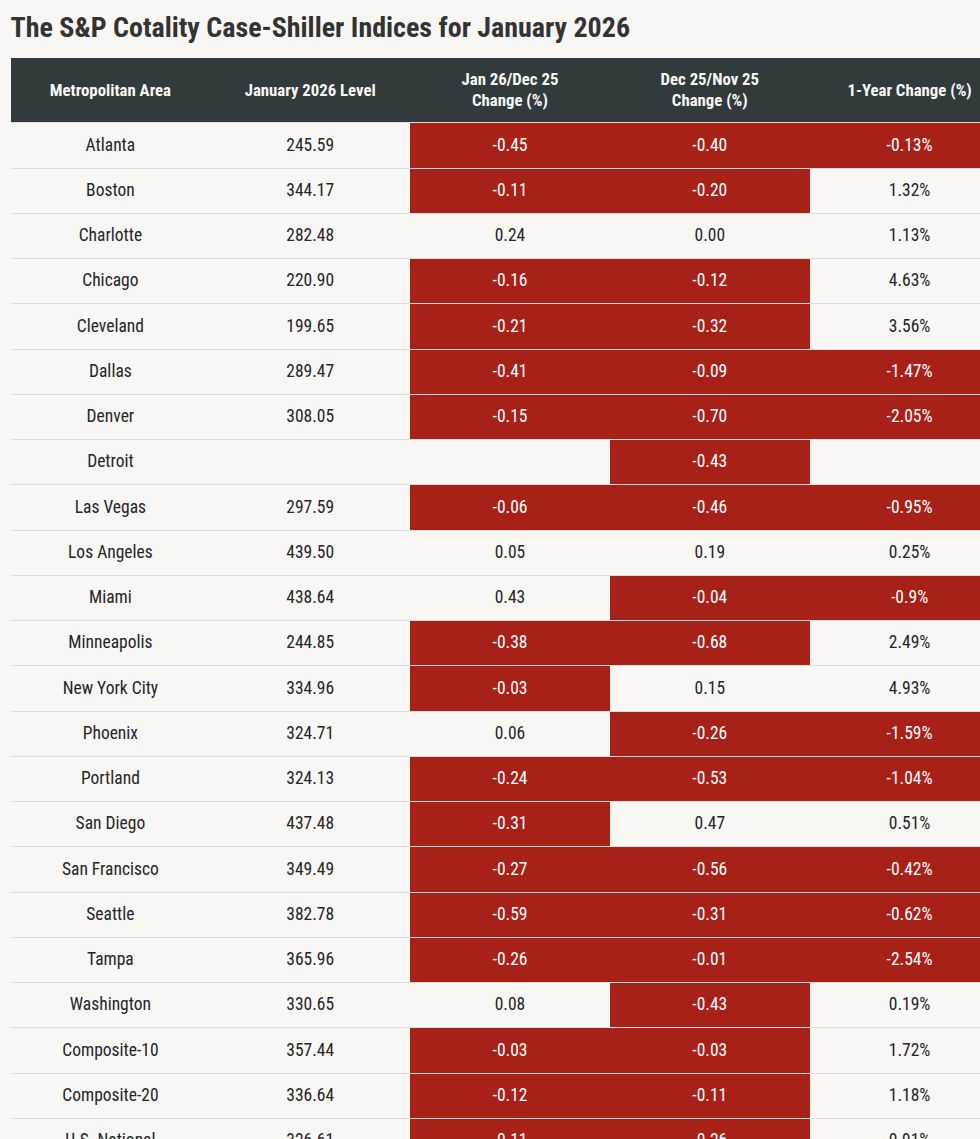
“The national average masks a stark regional divide that continues to define the 2026 housing market. Markets in the Northeast and Midwest continued to post year-over-year home price gains,” Sturtevant said. “Prices fell in markets where inventory has increased the fastest and where demand has cooled.”
As economists look ahead, they say the outlook for the spring housing market remains iffy.
“While there had been promising signs that affordability was improving, higher rates and growing uncertainty are creating headwinds in the market. Even with cooler demand, home prices are likely to be stable this spring due to the ongoing supply shortfall,” Sturtevant said. “However, expect significant variation across markets, with stronger price appreciation in the Northeast and Midwest where inventory remains constrained, and slower price growth and price declines in markets in the South and West where inventory has climbed.”





Why It Matters Who Builds AI

Nike Earnings Prediction Market Preview: What Will Elliott Hill Say On The Earnings Call?
Nike Inc (NYSE:NKE) reports fiscal Q3 2026 results after the bell today, with Wall Street expecting $11.27 billion in revenue, essentially flat year-over-year. The stock is near an eight-and-a-half-year low around $51, down 20% year-to-date.
Polymarket traders are pricing an 82% chance Nike beats the $0.28 EPS consensus. That’s well below the near-certainty levels seen in other mega-cap earnings markets. Nike beat last quarter’s estimate by nearly 40%, so the market may be underpricing the company’s ability to clear a low bar.
Kalshi has a market with $72,000 in volume where traders are betting on what specific words will come up on the earnings call.
“China” is at 98%. No surprise. Greater China revenue plunged 16% last quarter, and CEO Elliott Hill called the recovery “not happening at the level or pace we need.”
“Tariff” at 93% has a new dimension. The Supreme Court struck down Trump’s IEEPA tariffs on Feb. 20, and a federal judge has ruled that all importers are entitled to refunds. Nike previously estimated $1.5 billion in annualized …
This post was originally published here


XRP Holds $1.30 As Binance Accumulation Surges—What’s Next?
XRP (CRYPTO: XRP) slipped 0.5% but Binance outflow transactions surged above 4,000 daily since late February, signaling mid-sized investors are accumulating despite XRP ETF outflows hitting $2.31 million on March 30.
The Binance Accumulation Signal
Binance on-chain activity shows a clear resurgence since the end of February.
Outflow transactions have consistently exceeded 4,000 per day, with some peaks reaching close to 6,000 transactions in a single day.
Most of this activity stems from transactions ranging between 1,000 and 100,000 XRP, which typically corresponds to mid-sized investors rather than large whales.
Increased outflow transactions often suggest investors are withdrawing tokens from exchanges to hold them elsewhere, indicating a gradual accumulation phase.
XRP has traded in a well-defined range between $1.30 and $1.50 for several months. While the …



Stock Market Today: Major Indexes Soar But Set to End Worst Quarter Since 2022; Trump Reportedly Willing to End War Without Reopening Strait of Hormuz
This post was originally published here



Prices of Eggs and Meat Are Now Almost as Important as Housing Costs in Decisions on Where to Move
This post was originally published here

Compare Current Jumbo Mortgage Rates Today – March 31, 2026
This post was originally published here



Greg Abel’s Strategy for Berkshire: The Role of Cash in Buffett’s Empire
This post was originally published here

Compare Current Mortgage Rates Today – March 31, 2026
This post was originally published here


Does Pet Insurance Include ACL Surgery Coverage? Essential Details
This post was originally published here
























Goldman is betting Nvidia will get a boost from health care as industry builds out AI capabilities
Nvidia is looking to increase the adoption of AI by biotechnology companies, which could boost its shares, per Goldman Sachs.
This post was originally published here
Unilever’s $16 billion move shows a shift is happening in consumer products
The tie-up between Unilever and McCormick highlights a shift in strategy among consumer goods companies that prioritizes dominating specific categories
This post was originally published here
Epstein files: Buffett says he hasn’t talked to Bill Gates ‘since the whole thing was unveiled’
Microsoft founder Bill Gates is one of many high-profile people who have suffered reputational fallout from their relationship with Jeffrey Epstein.
This post was originally published here
‘Project Hail Mary’ is the box office proof point Amazon MGM has been waiting for
Amazon and MGM promised to spend around $1 billion each year on theatrical releases, a figure that would fund between 12 and 15 films annually.
This post was originally published here
Should you ‘buy the dip’ amid the latest stock market volatility? What experts say
Should you ‘buy the dip’ amid stock market volatility from the U.S.-Iran war? Here’s what financial experts say about the strategy.
This post was originally published here
Texas student shoots teacher at high school before killing himself
No other injuries were reported after the attack at a small Bulverde campus, where classes were cancelled
A 15-year-old student shot a teacher at a Texas high school and then fatally shot himself on Monday, according to authorities, who were still investigating what led to the early morning attack.
No other injuries were reported at Hill Country college preparatory high school in Bulverde, a small but growing city near San Antonio.
This post was originally published here
Masked men force delivery driver to take bomb to County Armagh police station
Homes evacuated in Lurgan as police carry out controlled explosion on ‘crude but viable’ device
Masked men hijacked a car, placed a “crude but viable” explosive device inside and forced the occupant to drive the vehicle to a police station in Northern Ireland on Monday, prompting a security alert and the evacuation of about 100 homes, police have said.
Some streets in Lurgan, County Armagh, remained shut on Tuesday morning as police investigated the scene.
This post was originally published here
Labor’s draft party platform more assertive on China and omits mandatory jail term stance
Exclusive: the 2026 document is designed to provide ‘scaffolding’ for a long-term Labor government
-
Get our breaking news email, free app or daily news podcast
Labor’s longstanding opposition to mandatory jail terms has been omitted from the first draft of its new national party platform, after the Albanese government backed minimum sentences on several occasions.
An early working draft of the ALP’s updated platform also includes more assertive language on China and seeks to position Australia as an “active middle power” in an increasingly fraught and contested world.
This post was originally published here
Energy bills in Great Britain forecast to hit almost £2,000 a year this summer
Consumers brace for ‘awful April’ and Iran war cost hikes, which have pushed UK’s gas market past three-year highs
Households in Great Britain could see their energy bills increase by about £290 a year to almost £2,000 from this summer in a “tough pill to swallow” for consumers already braced for a volley of “awful April” cost hikes from Wednesday.
A typical gas and electricity bill is now forecast to reach £1,929 a year from July under the industry regulator Ofgem’s quarterly price cap, according to analysis by the energy consultancy Cornwall Insight.
This post was originally published here

Former Alex Jones employee says: ‘It was nonsense, it was lies’
Josh Owens spent four years as a video editor and field producer for Jones’ Infowars media company. “It was all about making things look cinematic,” he says. Owens’ memoir is The Madness of Believing.
(Image credit: Joe Buglewicz)

This post was originally published here

Energy Crisis: Gas Tops $4 a Gallon in US

Trump’s Shocking 1987 Take On Iran Oil Resurfaces As Ongoing War Escalates— ‘Grab It And Keep It’
President Donald Trump has brought a decades-old interview back into the limelight, where he proposed that the U.S. should take control of Iranian oil facilities if attacked.
Trump, on Monday, took to his Truth Social to share a snippet from a 1987 interview he had with the late Barbara Walters. The original interview, aired on ABC’s 20/20, features a young Trump criticizing what he perceived as American weakness and advocating for a strong response to Iranian aggression.
The interview took place during the Iran–Iraq War, several years after the Iran hostage crisis. In it, Trump suggested that if Iran attacked the U.S., Washington should retaliate. …
This post was originally published here

Dow Jumps 400 Points; TD Synnex Posts Upbeat Earnings
U.S. stocks traded higher this morning, with the Dow Jones index gaining around 400 points on Tuesday.
Following the market opening Tuesday, the Dow traded up 0.90% to 45,625.16 while the NASDAQ rose 1.61% to 21,128.95. The S&P 500 also rose, gaining, 1.23% to 6,421.63.
Leading and Lagging Sectors
Communication services shares climbed by 1.8% on Tuesday.
In trading on Tuesday, utilities stocks fell by 0.6%.
Top Headline
TD SYNNEX Corporation (NYSE:SNX) posted better-than-expected earnings for the first quarter on Tuesday.
The company posted adjusted EPS of $4.73, beating market estimates of $3.31. The company’s sales came in at $17.161 billion, versus estimates of $15.591 billion.
TD Synnex said it sees second-quarter adjusted EPS of $3.75-$4.25, versus market estimates of $3.45. The company sees sales of $16.100 billion-$16.900 billion, versus expectations of $15.798 billion.
Equities Trading UP
- Apellis Pharmaceuticals Inc (NASDAQ:APLS) shares shot up 136% to $40.42 after …
This post was originally published here

Warren Buffett Says He’d Buy ‘A Whole Lot’ Of Apple If It Gets Cheaper— And He’s Not Losing Sleep Over Cashing Out $100 Billion Stake
Warren Buffett said he would buy “a whole lot” of Apple Inc. (NASDAQ:AAPL) stock if prices decline, signaling continued confidence in the iPhone maker even after Berkshire Hathaway (NYSE:BRK) (NYSE:BRK) cashed out roughly $100 billion worth of shares last year.
On Tuesday, the former CEO of Berkshire on Tuesday joined CNBC ‘Squawk Box’ on the sidelines of the charity lunch auction with NBA superstar Stephen Curry. He lauded Apple CEO Tim Cook for his leadership at the tech giant.
Buffett suggested that Cook has outperformed the late Steve Jobs, Apple’s co-founder and former boss, describing Apple’s products as “remarkable” and voicing his confidence in the company’s future.
“I sold Apple Too Soon,” said Buffett, but added that he doesn’t regret it. Despite selling Apple stock worth $100 billion pre-tax last year, he emphasized that Apple remains Berkshire’s “largest single investment.”
Speaking about tech regulations, he …
This post was originally published here

US-Iran War Updates March 31: Iran Denies Turkiye Missile Attack, EU Urges Iran To Ease Regional Tensions (UPDATED)
Here are the latest developments in the U.S.–Israel–Iran war on Tuesday at 9.30 AM ET, as the conflict enters its 33rd day.
On Monday, President Donald Trump warned Iran that the U.S. could destroy its key infrastructure if the Strait of Hormuz is not reopened immediately. While optimistic about ongoing talks with Iran’s new regime to halt military operations, he cautioned that failing to reach a deal soon would carry severe consequences.
Meanwhile, Iran’s foreign minister, Abbas Araghchi, called on Saudi Arabia to “eject” U.S. troops from the kingdom, following an Iranian strike on a major American air base. While emphasizing respect for Saudi Arabia as a “brotherly nation,” he said Iran’s actions targeted “enemy aggressors” and highlighted recent attacks on U.S. military assets.
Iran Denies Turkiye Missile Attack
Iran’s FM Mohammad Araghchi called reports of missiles fired at Turkiye “completely baseless” and offered joint technical cooperation to investigate any claims, warning against potential false-flag operations, reported Al Jazeera.
US Seeks ‘Unpredictable’ Approach on Ground Troops: Hegseth
Defense Secretary Pete Hegseth expressed confidence in Trump’s ability to handle a potential ground invasion of Iran, emphasizing that unpredictability in military options is key and that action may not even be necessary.
EU Urges Iran To Ease Regional Tensions
European Council President Antonio Costa urged Iran’s President Masoud Pezeshkian to halt attacks in the region and pursue diplomacy, emphasizing UN-led efforts to secure freedom of navigation in the Strait of Hormuz.
US Hits Isfahan Depot With Bunker Bombs: Report
The U.S. targeted a major ammunition depot in Iran’s Isfahan province using heavy bunker-buster bombs, part of a broader campaign …
This post was originally published here

Apellis Pharmaceuticals, Centessa Pharmaceuticals, Agios Pharmaceuticals And Other Big Stocks Moving Higher On Tuesday
U.S. stocks were higher, with the Dow Jones index gaining more than 600 points on Tuesday.
Shares of Apellis Pharmaceuticals Inc (NASDAQ:APLS) rose sharply during Tuesday’s session after the company announced that it will be acquired by Biogen (NASDAQ:BIIB) for $41 per share.
Apellis Pharmaceuticals shares jumped 136.4% to $40.40 on Tuesday.
Here are some other big stocks recording gains in today’s session.
- Centessa Pharmaceuticals PLC – ADR (NASDAQ:CNTA) gained 45.7% to $40.18 after the company announced that it will be acquired by Eli Lilly for as much as $47 per share.
- Annexon Inc (NASDAQ:ANNX) gained 19.5% to $5.92 following fourth-quarter earnings.
- Agios Pharmaceuticals Inc (NASDAQ:AGIO) shares jumped 16.3% to $34.44 after the company announced that it will pursue accelerated FDA approval for mitapivat, an oral pyruvate kinase activator in sickle cell disease, …
This post was originally published here
What’s Going On With CrowdStrike Stock Tuesday?
CrowdStrike Holdings, Inc. (NASDAQ:CRWD) shares are up during Tuesday’s premarket session.
CrowdStrike and HCLTech on Tuesday expanded their partnership with the launch of AI-powered Continuous Threat Exposure Management services.
The partnership will integrate HCLTech’s AI solutions with CrowdStrike’s Falcon platform, enabling real-time identification and remediation of security threats across various enterprise environments. This strategic move is expected to provide organizations with enhanced visibility and faster response times to potential cyber threats.
In addition, the collaboration leverages advanced adversary intelligence and AI-driven threat detection, which aims to operationalize real-time insights for better risk management. The joint offering is designed to help enterprises maintain an always-on view of their exposure and address risks more effectively.
Technical Analysis
Currently, CrowdStrike is trading 6.7% below its 20-day simple moving average (SMA) and 15.3% below its 100-day SMA, suggesting some short-term weakness. Shares have increased 7.79% over the past 12 months and are currently positioned closer to …
This post was originally published here

Bitcoin Holds $60K–$70K Range As Analysts Warn Gold’s Rally Is Over And Worse Is Coming
Bitcoin (CRYPTO: BTC) trades within the $60,000-$70,000 range as commodity analyst Mike McGlone warns gold’s rally is over and predicts both gold and Bitcoin will languish for potentially a decade after their historic runs.
The Gold Reversal Call
McGlone argues gold’s significant rally is finished after making multi-decade highs.
Gold peaked at $5,600 before crashing 27% to $4,100, marking what he calls the end of an era that began in 1997.
“The rally to me is over,” McGlone said. “Gold’s going to languish between $3,000 and $5,000 potentially for a decade. That’s just the way it always does.”
He points to extreme positioning as evidence. Gold’s 180-day volatility moved to 2.5 times that of the S&P 500 (NYSE:SPY), a ratio that has only occurred a few times in history.
When it does, gold shifts from a safe haven to …
This post was originally published here

The 9-Minute Threat: Why Google’s Bitcoin Quantum Warning Is a Wake-Up Call for Investors
A new warning from Google (NASDAQ:GOOG) (NASDAQ:GOOGL) is making crypto investors face a threat they have always thought was still far off: quantum computing.
For a long time, the threat posed by quantum computers on Bitcoin (CRYPTO: BTC) security has largely remained a theoretical threat. However, new research from Google indicates this threat may not be as far off as we think and may come sooner than we expect.
A Faster Timeline Than Expected
At the heart of this concern is the method by which Bitcoin secures transactions. The method is based on a cryptographic system that is theoretically uncrackable by traditional computers. It allows for the creation of private keys from public ones.
However, Google’s latest research into the matter revealed that quantum computing could soon make such systems less complex to crack. The company believes that future quantum computers could have the ability to breach the cryptographic foundations of Bitcoin far sooner than previously thought.
One of the most worrying consequences of this is speed. According to the research, a sufficiently powerful quantum computer could theoretically crack a Bitcoin private key in less than 9 minutes. This could lead to what is known as an ‘on-spend’ attack, which could allow hackers to interfere with transactions before they are made.
Whilst such technology is not yet …



Washington’s ‘God Squad’ assembles to debate the fate of a rare endangered whale and drilling in the Gulf of Mexico
A U.S. government panel was due to convene Tuesday for the first time since 1992 to consider exempting oil and gas drilling in the Gulf of Mexico from the Endangered Species Act due to unspecified national security concerns, a move critics say could doom a rare whale species and harm other marine life.
Nicknamed the “God Squad” by groups who say it can decide a species’ fate, the Endangered Species Committee comprises several Trump administration officials and is chaired by Interior Secretary Doug Burgum.
Republican President Donald Trump has made increased fossil fuel production a central focus of his second term. He wants to open new areas of the Gulf off the Florida coast to drilling, and has proposed sweeping rollbacks of environmental regulations disliked by industry.
Defense Secretary Pete Hegseth notified Burgum on March 13 that an Endangered Species Act exemption for oil and gas drilling in the Gulf was “necessary for reasons of national security,” according to a court filing from the administration.
Government officials have not disclosed the rationale for the request, which came amid global oil shocks and soaring energy prices brought on by the Iran war. Experts say the administration must specify the military need that would endanger a species to make a case for the national security exemption.
The Gulf of Mexico is one of the nation’s top oil-producing regions. It accounts for more than 10% of crude pumped annually in the U.S., plus a small share of domestic natural gas production.
But the Gulf also has been the scene of environmental disasters such as BP’s Deepwater Horizon blowout in 2010 that killed 11 workers and spilled 134 million gallons (500 million liters) of oil. A spill in the Gulf earlier this month spread 373 miles (600 kilometers), contaminating at least six species and polluting seven protected natural reserves.
The Trump administration in mid-March approved BP’s new $5 billion ultra-deepwater drilling project in the Gulf.
Environmental groups sought unsuccessfully to block Tuesday’s meeting. They claimed an exemption would doom the rare Rice’s whale to extinction. Only about 50 remain in the Gulf.
A judge who struck down the environmentalists’ request suggested it was premature since officials had not yet acted on the proposed exemption.
A 2025 National Marine Fisheries Service analysis determined the Gulf oil and gas program was likely to harm several species of whales, sea turtles and Gulf sturgeon that face potential harm from ship strikes, oil spills and other impacts.
The Endangered Species Committee was established in 1978 as a way to exempt projects from the Endangered Species Act, which makes it illegal to harm or kill species on a protected list, if no alternative would provide the same economic benefits in a region or if it was in the nation’s best interest.
The panel has convened just three times in its 53-year history and issued only two exemptions. The first was in 1979 to allow construction on a dam on the Platte River in Wyoming, home to the whooping crane. It last met in 1992, allowing logging in northern spotted owl habitats in Oregon. That exemption request was later withdrawn.
Its latest meeting follows a federal judge’s ruling on Monday that struck down attempts during Trump’s first term to weaken rules for endangered species.
The panel’s members include the secretaries of agriculture, interior and the Army, the chairperson of the Council of Economic Advisers, and the administrators of both the Environmental Protection Agency and the National Oceanic and Atmospheric Administration.
The Associated Press left email and telephone messages with Interior and Defense Department officials requesting comment.
This story was originally featured on Fortune.com

Meet a professor fed up with AI slop who made her whole class use typewriters instead of computers
The scene is right out of the 1950s with students pecking away at manual typewriters, the machines dinging at the end of each line.
Once each semester, Grit Matthias Phelps, a German language instructor at Cornell University, introduces her students to the raw feeling of typing without online assistance. No screens, online dictionaries, spellcheckers or delete keys.
The exercise started in spring 2023 as Phelps grew frustrated with the reality that students were using generative AI and online translation platforms to churn out grammatically perfect assignments.
“What’s the point of me reading it if it’s already correct anyway, and you didn’t write it yourself? Could you produce it without your computer?” said Phelps.
She wanted students to understand what writing, thinking and classrooms were like before everything turned digital. So, she found a few dozen old manual typewriters, in thrift shops and online marketplaces, and created what her syllabus simply calls an “analog” assignment.
It might be premature to say that typewriters are making a comeback beyond Cornell’s campus. But the revival is part of a national trend toward old-school testing methods like in-class pen-and-paper exams and oral tests to prevent AI use for assignments on laptops.
Typewriters bring ‘old days’ taste of doing one thing at a time
Students arrived for class on a recent analog day to find typewriters at the desks, some with German and some QWERTY keyboards.
“I was so confused. I had no idea what was happening. I’d seen typewriters in movies, but they don’t tell you how a typewriter works,” said Catherine Mong, 19, a freshman in Phelps’ Intro to German class. “I didn’t know there was a whole science to using a typewriter.”
Like a rotary phone, the manual typewriter appears simple but is not intuitive to the smartphone generation. Phelps demonstrated how to feed the paper manually, striking the keys with force but not so hard the letters would smudge. She explained that the dinging bell signifies the end of a line and the need to manually return the carriage to start the next line. (“Oh,” said one student, “that’s why it’s called ‘return.’”)
“Everything slows down. It’s like back in the old days when you really did one thing at a time. And there was joy in doing it,” said Phelps, who brings in her two children, aged 7 and 9, to serve as “tech support” and ensure no one has their phones out.
Students welcomed having fewer distractions
The assignment carries lessons beyond simply how to use a typewriter, which is the whole point.
“It dawned on me that the difference with typing on a typewriter is not just how you interact with the typewriter, but how you interact with the world around you,” said computer science major Ratchaphon Lertdamrongwong, a sophomore, whose class had to write a critique of a German movie they’d watched.
In the absence of screens, there are no notifications to distract you as you write, and without every answer readily available at his fingertips, he asked his classmates for help, which Phelps heartily encouraged.
“While writing the essay, I had to talk a lot more, socialize a lot more, which I guess was normal back then,” Lertdamrongwong said, referring to the typewriter era. “But it’s drastically different from how we interact within the classroom in modern times. People are always on a laptop, always on the phone.”
Without a delete key and the ability to correct every mistake, he paused to think more intentionally about his writing.
“This might sound bad, but I was forced to actually think about the problem on my own instead of delegating to AI or Google search,” he said.
Manual machines were a workout for pinky fingers
Most students found their pinkies weren’t strong enough to touch-type, so they typed more slowly, pecking at the keyboard with their index fingers.
Mong, the freshman, faced an added challenge with a recently broken wrist, requiring her to use just one hand. The self-described perfectionist was initially frustrated with how messy her page looked with odd spacing between certain letters and misspellings. (Phelps told students to backspace and type ‘X’s over errors.)
“This thing I handed in had pencil marks all over it and definitely did not look clean or finished. But it’s part of the process of learning that you’re going to make mistakes,” said Mong, who found the assignment of typing a poem “fun and challenging.”
She embraced the odd spacing and played with the visual boundaries of the page to indent and fragment lines in the style of poet E.E. Cummings. It took several sheets of paper and many mistakes, all of which Mong saved.
“I’m probably going to hang them on my wall,” Mong said. I’m kind of fascinated by typewriters. I told all my friends, I did a German test on a typewriter!”
___
The Associated Press’ education coverage receives financial support from multiple private foundations. AP is solely responsible for all content. Find AP’s standards for working with philanthropies, a list of supporters and funded coverage areas at AP.org.
This story was originally featured on Fortune.com

I was rejected 33 times and built a $390 million company — at 48 years old. Age bias in tech is costing us all
I was 48 years old when I left my job and enrolled in the Entrepreneurial Studies program at Stanford.
Most people at that stage of their careers are trying to reduce risk, not introduce it. They have steady income. They have dependents. In tech, the unspoken assumption is that if you were going to take a big swing, you should have done it already. I decided to swing anyway.
For most of my career, I watched Silicon Valley celebrate a particular kind of ambition: the kind that belongs to the young. We applaud founders who drop out of school, and prodigies building in dorm rooms. Those stories are real and extraordinary. But beneath them is a quiet counter-narrative: the idea that reinvention later in life is unusual, and that seasoned operators who know an industry’s flaws intimately and set out to fix them are somehow the exception.
When I speak with seasoned executives considering school or startups, the hesitation is rarely about ability or potential. It’s about perception. Risk after 40 is more often dismissed as a “midlife crisis” than embraced as a calculated choice. That’s not just unfair—it’s economically shortsighted.
What Two Decades in the Industry Taught Me
Before Stanford, I spent decades in enterprise storage. Early in my career, I joined a small company and was sent to help expand the business across Asia Pacific. I had to sit across from customers in markets like Japan and speak as the company’s storage expert—except I wasn’t, not at the beginning. I had to learn fast. I had to admit what I did not know. There were plenty of moments where I was right at the edge of my capability.
Over time, those uncomfortable moments compound. One day you wake up and realize you actually do understand the system. You know why certain architectures fail—you have seen enough cycles to recognize patterns. By my late forties, I had that pattern recognition on autopilot. What I no longer had was the spark that discomfort once fueled.
A friend who had gone through the Sloan Fellowship at Stanford suggested I apply. His advice was simple: put yourself back in an environment where you are not the expert, and be deliberate about what comes next.
I applied. I was accepted. I was the oldest person in the program.
Shortly after the program began, I received a call from an engineer I had worked with years earlier. He had developed a new approach to cloud file access that challenged deeply held assumptions about how storage systems needed to work. He showed me a prototype that defied what conventional wisdom said was possible.
At 28, I probably would have rushed in. At 48, experience pushed me to slow down and test it from every angle before moving forward. We spent months pressure-testing the idea before fully committing. After graduation, we started pitching investors and were rejected 33 times. That’s not easy, but I had watched enough cycles to know that investor consensus and customer reality are not always aligned. We kept on.
The conviction to persist did not come from blind optimism. It came from having watched this problem surface repeatedly over two decades. I had seen the clunky workarounds. I had sat through the budget conversations. I knew this pain was structural, not temporary. Eventually, we found an investor who saw it the same way.
Today, LucidLink serves thousands of companies—including Paramount, Adobe, Shopify, and Spotify—and has grown into a global business last valued in 2023 at $390 million. We won an Emmy last year for transforming the way entertainment gets made.
I do not tell this story to suggest that starting a company at 48 guarantees success. It does not. I tell it because that company would not exist if I had accepted the commonly held idea that my window had closed.
Why This Is a Business Problem, Not a Cultural One
As AI reshapes white-collar work, more professionals will reach inflection points. Some will be displaced. Others will realize that the roles they mastered are evolving faster than expected. Economic pressures are simultaneously pushing many to extend their working lives. Later-stage reinvention will become more common, not less. The question is whether the tech ecosystem treats that reinvention as an asset or a liability.
Age bias is usually framed as a cultural problem. It is also a business problem. We lose out when experience is dismissed. When later-stage operators are subtly discouraged from building, we narrow the range of problems being addressed. In industries like infrastructure, healthcare, media, and enterprise software, depth matters. Pattern recognition matters. Having lived through downturns matters.
This is not an argument against young founders. Many transformative companies were built by people in their twenties. It is an argument against assuming that innovation belongs to a single demographic. Ambition doesn’t expire. Experience, combined with a willingness to be uncomfortable again can be a competitive advantage.
If we want the next generation of companies to solve harder, more systemic problems, we should normalize career reinvention at every stage. Not because it feels inclusive, but because it makes economic sense.
Some of the most important companies of the next decade will be built by people who have already had one or two careers. The real risk is not that they try and fail. It’s that they decide, before they even begin, that they’ve already missed their moment.
The opinions expressed in Fortune.com commentary pieces are solely the views of their authors and do not necessarily reflect the opinions and beliefs of Fortune.
This story was originally featured on Fortune.com

Amazon robotaxi product lead quits to become the new business operations president for the Florida Panthers
Michael White got a call a few weeks ago from someone in Italy who was offering to provide any insight he could about how the Florida Panthers do business.
The caller was Bill Zito, the Panthers’ hockey operations president.
And that’s when White knew he’d fit in as the team’s business operations president.
The Panthers officially announced White, who has spent a 25-year career working in the technology and guest experience worlds, as their new business chief on Tuesday. He will oversee “all business aspects,” the team said, of its four facilities — Amerant Bank Arena, Baptist Health IcePlex, Panthers IceDen and War Memorial Auditorium.
White said the idea to work alongside Zito, the architect of the team that won Stanley Cup titles in 2024 and 2025, was a major factor. Zito called him last month from Italy, where he was part of the leadership for the U.S. men’s hockey team that won gold at the Milan Cortina Olympics. They’ve been off and running ever since.
“We clicked automatically. Our first meeting was supposed to be 30 minutes, went an hour and a half and we probably could have talked another two hours,” White said. “And we just stayed in touch throughout the process. I would say that we’re off to a really great start together and he was one of the primary reasons I came over here. He’s one of one, a legend, but also somebody that you want to partner with.”
White came to the Panthers after most recently serving as Chief Product Officer at Amazon’s autonomous vehicle company, Zoox — helping to develop an autonomous robotaxi. Zambonis still require drivers when they touch up the ice at hockey rinks, but the Panthers said White’s ability to launch strategies in many ways helped set him apart.
“After a diligent and comprehensive search, we are confident that Michael is the right fit to lead our organization into continued success,” said Michael Viola, part of the Panthers’ ownership family. “He brings to our club a proven record in consumer experience, partnership growth and product development for some of the world’s most successful companies and invaluable capabilities of organizational leadership and visionary innovation.”
It won’t take long for White to tackle one key issue for the Panthers’ future. The team has until the fall of 2028 to propose development plans to Broward County officials for property that surrounds Amerant Bank Arena, where the team plays games.
White has also worked for The Walt Disney Company in several senior leadership roles, even playing a role in the execution of the restart of the 2019-20 NBA season that was played in a bubble on the Disney campus near Orlando, Florida, after the COVID-19 pandemic essentially stopped the world in its tracks.
He introduced himself to the majority of the Panthers’ employees on Monday.
“The organization is world-class,” White said. “My previous job was great. Then I met the Violas and I’m like, ‘Wow, this is fantastic. Unbelievable ownership.’ Obviously, the winning that the team has done, and Bill’s done, the culture … it just permeates through. I just met 300 of the front-office folks and everyone literally introduced themselves and you could just feel the culture. For me, it’s a little bit of a listening journey to start and then we’ll see what we can do next. It’s a fantastic foundation and we’ll look for areas where we can amplify that.”
White is replacing Matthew Caldwell, who stepped down as Florida’s business head in August to become CEO of the NBA’s Minnesota Timberwolves and the WNBA’s Minnesota Lynx.
This story was originally featured on Fortune.com

Trump’s plan to drill for oil in the Gulf of Mexico could be foiled by just 50 survivors of a rare whale species
One of the world’s rarest whales lives in only one place: the Gulf of Mexico, where the Trump administration wants to expand oil and gas drilling that scientists fear could push the giant mammal to extinction.
Endangered Rice’s whales live their entire lives in the gulf, where they’re vulnerable to vessel strikes, noise pollution, oil spills and climate change -– all of which could increase with more drilling, scientists said. Other animals, including threatened manatees and endangered sea turtles, also could be put at risk, experts said.
As the Iran war pushes energy prices sharply higher, Defense Secretary Pete Hegseth invoked national security in seeking an exemption from endangered species laws, which make it illegal to harm or kill species on a protected list.
The Interior Department on Tuesday will consider the request at a meeting of the seldom-used Endangered Species Committee — nicknamed the “God Squad” because it can approve federal projects even they could cause extinction. The department did not immediately respond to an email seeking comment.
What is known about the Rice’s whale?
It’s the only whale species that lives year-round in the Gulf of Mexico, where there are fewer than 100 — and possibly fewer than 50 — left, scientists said.
Recognized as a distinct species in 2021, the Rice’s whale is usually found in a narrow area in the northeastern part of the Gulf, in waters 100 to 400 meters deep.
They’re fairly picky eaters, diving to the gulf floor for fatty fish — mainly silver-rag driftfish — during the day and then resting close to the surface at night, meaning that they are “quite living on the edge,” said Jeremy Kiszka, a biological sciences professor at Florida International University.
That’s because they undertake strenuous dives for a specific kind of food that also might be affected by more drilling and other changes in the gulf, and they’re vulnerable to vessel strikes at night, Kiszka said.
How else could oil and gas drilling put them at risk?
Noise could disrupt the whales’ foraging behavior, while increased global warming — tied to the burning of fossil fuels, including oil and gas — could change where their prey fish live, Kiszka said. The whales also are susceptible to pollution, with a significant portion of an already-small population believed to have been killed by the 2010 Deepwater Horizon oil spill.
“What we see today is just a species … that is unlucky in many ways: small home, specialized diet and living in a place that is not easy in the first place,” because of human impacts, Kiszka said.
Many climate change impacts are “baked in,” meaning they will persist even if fossil fuels were eliminated today, said Letise LaFeir, chief of conservation and stewardship at the New England Aquarium.
But the Trump administration proposal “is just compounding the immediate risks locally and the longer term risks,” LaFeir said.
What about other species?
Although a government filing specifically mentions Rice’s whales, other threatened and endangered animals also could be harmed by oil spills or other dangers, scientists said.
“The ocean is connected, so when there is this kind of action somewhere else, it does have implications across the waters,” LaFeir said.
For example, hundreds of sea turtles — including endangered Kemp’s Ridley and loggerheads — are rescued and rehabilitated every year before they are released into the Atlantic Ocean and swim for their nesting grounds in the gulf, she said.
Michael Jasny, director of the Natural Resources Defense Council’s marine mammal protection project, said consequences could be far-reaching.
“It’s … sea turtles, it’s manatees, it’s whooping cranes, it’s various seabirds, it’s Rice’s whales, it’s sperm whales, it is endangered corals,” he said. “It is every endangered or threatened species in the Gulf of Mexico.”
What is the ‘God Squad?’
It was established in 1978 as a way to exempt projects from Endangered Species Act protections if a cost-benefit analysis concluded it was the only way to achieve net economic benefits in the national or regional interest.
The seven-member committee is led by the secretary of the Interior, with five other federal officials and with affected states getting one shared vote. Five votes are required for an exemption.
The committee has only issued exemptions twice. The first was for construction of a dam on a section of the Platte River considered critical habitat for whooping cranes, though a negotiated settlement won significant protections that led to overall ecosystem improvements. The second was for logging in northern spotted owl habitat, but the request was withdrawn after environmental groups sued, arguing that the committee’s decision was political and violated legal procedures.
Jasny fears the Trump administration wants to eliminate rigorous scrutiny of future exemptions and “turn this … into a thing that could be invoked at any time, almost for any purpose.”
If it can be done for drilling in the Gulf, he said, “why not California? Why not Alaska?”
“If you can declare an emergency to just kill sea turtles and manatees and whales in the Gulf, you know no species is safe.”
___
The Associated Press’ climate and environmental coverage receives financial support from multiple private foundations. AP is solely responsible for all content. Find AP’s standards for working with philanthropies, a list of supporters and funded coverage areas at AP.org.
This story was originally featured on Fortune.com

Democrats in disarray as rank and file clash with Chuck Schumer’s plan to run elderly moderates in must-win races
Democrats’ hopes of reclaiming the U.S. Senate are colliding with a fight within their own party.
In Maine, Senate Minority Leader Chuck Schumer has thrown his weight behind Gov. Janet Mills in a crucial race, but some of his Senate colleagues are backing insurgent candidate Graham Platner in a rebuke of his strategic vision. A similar dynamic is playing out in other battlegrounds, including Michigan and Minnesota, where progressives senators are endorsing non-establishment candidates.
At stake is more than any single race. Democrats are fighting over whether the party’s traditional playbook still works in a country that elected Donald Trump for a second time — and whether leaders like Schumer should remain in charge.
“Clearly there’s a disagreement of strategy here,” said New Mexico Sen. Martin Heinrich, who has endorsed Platner.
He added that “the business-as-usual calculation for what is going to be successful in a given election cycle does not necessarily, in my view, meet the moment.”
The divide reflects a Democratic base frustrated after the last presidential election, when President Joe Biden ran for a second term despite widespread concerns about his age. He dropped out and endorsed Vice President Kamala Harris, who lost to Trump.
Nan Whaley, a Democratic strategist in Ohio who ran for governor four years ago, said the debate is no longer about progressive or moderate.
“It’s really about, who do you trust? Establishment or not establishment,” she said. “And frankly, the establishment hasn’t given us a lot to trust these past few years.”
‘A rebuke of Schumer’
In Maine, Schumer and the Democratic Senatorial Campaign Committee, or DSCC, have backed Mills, a 78-year-old moderate in her second term.
Platner, a veteran and oyster farmer, quickly won the backing of Sen. Bernie Sanders, I-Vt., just days after launching his campaign. His bid has since gained momentum despite scrutiny over past controversial comments and a tattoo resembling a Nazi symbol.
In recent weeks, Heinrich, Arizona Sen. Ruben Gallego and Massachusetts Sen. Elizabeth Warren have endorsed Platner as he builds support on Capitol Hill. Heinrich and Rhode Island Sen. Sheldon Whitehouse held a fundraiser for him, too.
Gallego, a first-term senator who won a battleground race in 2024, downplayed the endorsements as a broader critique of party leadership.
“Senate leadership didn’t back me at the beginning. So I didn’t take that as a critique,” Gallego said.
Michigan also has a contentious primary, with three high-profile candidates. State Sen. Mallory McMorrow has said she would not support Schumer as the caucus leader if Democrats regain the majority, and she’s been endorsed by four senators.
Abdul El-Sayed, running further to the left, has been endorsed by Sanders and has also run on an anti-establishment platform.
U.S. Rep. Haley Stevens has aligned with establishment figures, working with a former DSCC executive director and securing support from two senators.
Democratic strategist Lis Smith said the endorsements in races like Maine and Michigan are “as much as a rebuke of Schumer as it is an endorsement of these candidates.”
“It’s pretty uncommon for sitting senators to endorse against the Senate leader,” Smith said. “Senators are reading the tea leaves and are getting feedback from the grassroots that they are dissatisfied with Schumer’s performance as leader.”
In Minnesota, an open-seat race has similarly emerged as a test of the party’s direction. Rep. Angie Craig is seen as the centrist candidate in the primary, with endorsements from House Democratic Leader Hakeem Jeffries and Rep. Nancy Pelosi. Lt. Gov. Peggy Flanagan, the more progressive candidate, has been backed by Sanders, Warren and others, including Minnesota Sen. Tina Smith, who is vacating the seat.
“She understands that right now what we need are fierce fighters, people who are willing to stand up to the status quo,” Smith said in her endorsement.
‘The election may impact’ Schumer’s time as leader
Some tensions trace to March 2025, when Schumer voted with Republicans to end a government shutdown, drawing backlash from Democrats who argued he did not push hard enough against Trump’s agenda.
Later that year, Democrats held firm in a record-long shutdown fight, helping regain some ground with activists and progressives. But divisions resurfaced when a group of moderates ultimately sided with Republicans, fueling renewed frustration with party leadership even as Schumer opposed the move.
Since he became Senate leader in 2017, Schumer’s record in elections has been mixed. He led Democrats back to the majority in 2020 and expanded it in 2022 but lost ground in both 2018 and 2024.
“Leader Schumer’s North Star is taking back the Senate and is pursuing a path to do just that,” said Allison Biasotti, a spokesperson for Schumer.
He’s recruited high-profile candidates this year in tough Senate races, such as Alaska, Ohio and North Carolina. Maeve Coyle, communications director for the DSCC, said Schumer “created a path to win a Democratic Senate majority this cycle” with the recruitment.
“Senate Democrats overperformed in the last four election cycles and in 2026, we will win seats and flip the majority,” she added.
David Axelrod, who served as a top strategist for President Barack Obama, said that being Senate leader is never easy, and that Schumer “has been under fire for some time, particularly from progressives in the party.”
Schumer’s time as leader, Axelrod added, is likely directly linked to the outcome of the 2026 midterms.
“There’s questions as to whether he’ll run in 2028. There’s even questions as to whether he might be challenged as leader,” he said. “I think the results of this election may impact that.”
For now, Schumer’s caucus is tentatively standing behind him. None have explicitly called for him to step aside. But discontent has lingered, with some openly questioning whether the party needs a new direction.
“How people did politics in the 1990s is going to feel different than in the 2020s,” said Heinrich.
This story was originally featured on Fortune.com

The supervisor class: how AI agents are remaking the developer’s career
For decades, the image of the software developer has been one of a solitary architect hunched over a glowing integrated development environment (IDE) and terminal, translating complex business logic into thousands of lines of syntax. Success was often measured by a developer’s ability to act as a living dictionary of commands and a precise debugger of semicolons. But we are entering a new era. The introduction of agentic tools and AI-assisted “vibe coding” is fundamentally transforming the developer workflow. We are witnessing the rise of the “Supervisor Class” — a shift where the developer’s primary value is no longer the manual production of code, but the high-level orchestration of autonomous agents.
The Rise of the Supervisor Class
The developer’s role is moving to a higher plane. Previously, a workflow involved understanding a business need, drafting high-level and low-level designs, and then typing out every single line of code. Today, the last two steps are largely handled by agents. A developer now prompts a system with goals and requirements, allowing the agent to complete the task.
In this new reality, the terminal is becoming a more powerful tool than traditional UI builders because it acts as the central hub for overseeing autonomous loops. The developer no longer just writes; they review, refine, and direct. The core value proposition has shifted from the rote memorization of syntax to the application of high-level judgment.
The Death of Syntax and the Birth of Agent Skills
In this reimagined workflow, remembering 50 or 60 specific terminal commands is no longer a bottleneck. While fundamental knowledge of what these commands do remains necessary, the need to memorize granular syntax is fading. In its place, the industry is adopting agent skills — modular, natural-language instructions that teach an agent how to bridge its own knowledge gaps.
Agent skills solve one of the most persistent frustrations in early AI coding: the “forgetting” problem. Standard prompts are transient, and large language models (LLMs) suffer from limited context windows; once a conversation gets too long, the model loses its edge. Agent skills act as a modular, indexed framework — much like the chapters of a book — allowing an agent to pull in only the specific knowledge it needs for a task. This allows developers to build a persistent “second brain” within their project repositories, ensuring that if an agent learns a best practice or a project-specific architectural rule once, it retains it going forward.
Vibe Coding with Guardrails
The shift toward vibe coding has its skeptics. Without structure, vibe coding can lead to low-quality AI output, the so-called “slop,” producing code that looks right but fails to meet production security or performance standards. The new architecture of collaboration requires reimagining the Software Development Life Cycle (SDLC) with built-in guardrails. Enterprises are now embedding linters, security scanners, and deterministic workflows directly into the agentic loop.
The need for a structured foundation is why the myth that SaaS platforms are irrelevant is at odds with enterprise reality. When developers vibe code an entire architecture from scratch, they inadvertently create a massive hidden tax: a sprawling surface area of raw code that they must then maintain, secure, and operate. The resulting management overhead — spending elite engineering time correcting outputs and paying the high token costs of ungrounded prompts — eventually outweighs the initial speed of creation.
Agentic SaaS platforms provide the necessary metadata and secure infrastructure that allow agents to execute tasks — from billing support to promotional queries — with the accuracy required for production. Agent skills are still valuable. When deployed within a platform where the security and scalability foundations are already established, agent skills become a massive accelerator for developers to rapidly build high-value capabilities on top of the platform.
Managing a Team of Sub-Agents
The modern developer’s daily life is increasingly spent managing a flat team of specialized sub-agents. Rather than one monolithic AI agent, developers are orchestrating sequential or parallel workflows between agents specialized in front-end code, security reviews, or testing.
We see this shift in how organizations are already scaling. Lennar, one of the largest homebuilders in the U.S., now deploys 1.1 million agentic workflows per month to help keep more customers engaged, increase conversion rates, and shorten the sales cycle. Similarly, paper tablet maker reMarkable launched its first AI agent in just three weeks; it has resolved more than 10,500 customer inquiries with an NPS score that matches its human support team.
For companies like these, the supervisor class of developers isn’t just writing code; they are building the skills and orchestration layers that allow these agents to function as a seamless extension of the workforce.
From Productivity to Quality: The New Metrics
If an agent can generate 1,000 lines of code in ten seconds, lines of code and raw velocity are no longer meaningful metrics for a developer’s productivity. In fact, more code often means more surface area for bugs.
We must shift our focus to the Agentic Work Unit, — the discrete task accomplished by an AI agent. At Salesforce, our own agentic implementation highlights this shift. Our support agents now handle 96% of cases autonomously, and we’ve saved over 50,000 seller hours by letting agents handle the “admin” of sales.
For developers, the Agentic Work Unit means measuring how they can leverage agents to solve complex problems with minimal friction. Success should be measured by software quality: Have we reduced the bug count? Is the architecture more resilient? Are we shipping features that actually solve user problems, rather than just filling repositories?
By moving away from token consumption as a metric and toward work quality, we empower developers to focus on what humans do best: exercise judgment, apply empathy to user needs, and design systems that are built to last.
The Enduring Need for Human Intent
We are in the early days of this transition, reminiscent of when developers first began sharing modules on Node Package Manager (NPM) or Maven. Soon, we will see global “Agent Skill Exchanges” where developers share modular agent instructions for everything from technical blogging to SEO and complex algorithmic logic.
The future belongs to the developer who masters the ability to break down human expertise into reusable agent skills. By stepping into the role of the supervisor, developers aren’t being replaced. They are finally being freed from the drudgery of syntax to focus on the one thing AI cannot replicate: the high-level judgment required to build the future of software.
The opinions expressed in Fortune.com commentary pieces are solely the views of their authors and do not necessarily reflect the opinions and beliefs of Fortune.
This story was originally featured on Fortune.com





STAT+: Pharmalittle: We’re reading about pharma delaying launches in Europe, Lilly and Biogen deals, and more
Rise and shine, everyone, another busy day is on the way. And it is getting off to a good start here on the Pharmalot campus, where clear blue skies and balmy breezes are greeting us. Who could ask for anything more? Actually, we could — it is time to reheat the kettle for another cuppa stimulation. Our choice today is raspberry hibiscus. And here is a helpful tip — a teaspoon of honey enhances the flavors splendidly. Of course, you are invited to join us. For the full experience, we are now hawking replicas — take a look. Meanwhile, here are a few tidbits to help you along. As always, do keep in touch. We appreciate feedback, criticism, and tips. …
Drugmakers are delaying launches of some new medicines in Europe as the industry grapples with U.S. pressure and pricing policy shifts from President Trump, according to Reuters. The White House has been pushing to lower the cost of prescription drugs in the U.S., which has traditionally paid significantly more than other wealthy countries. Trump says the industry has been unfair to U.S. consumers and has sought to tie the cost for Americans to what is paid elsewhere, including in Europe, known as most-favored-nation pricing. That has led drugmakers to press pause on bringing some drugs to European markets, where health spending is lower, to avoid lowering prices in the $700 billion U.S. market. It has also created a complex balancing act for chief executive officers and Europe’s health care policy makers.
Eli Lilly agreed to buy Centessa Pharmaceuticals, the maker of an experimental drug meant to combat sleeping conditions, for roughly $6.3 billion in cash, STAT notes. Centessa, which was publicly launched in 2021, started with more than a dozen programs across a range of diseases, but over the years it has focused on disorders that leave people struggling to stay awake. Its lead drug has been tested in Phase 2 studies in different types of narcolepsy and idiopathic hypersomnia. Centessa is behind Takeda Pharmaceuticals, which has submitted a drug for narcolepsy type 1 to regulators for review, and Alkermes, which plans to start a Phase 3 program for its narcolepsy treatment this year.
























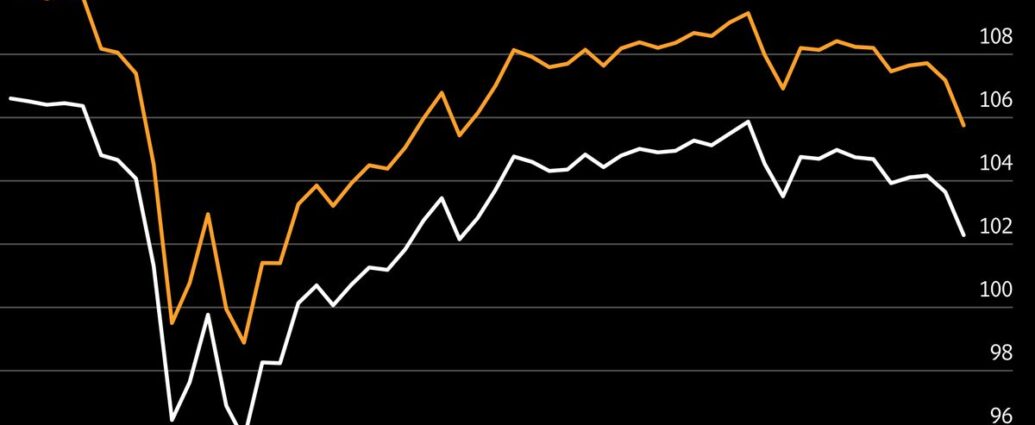

Opinion | What Is Trump’s Iran Plan?


Understanding Expansionary Fiscal Policy: Key Risks and Real-Life Examples
This post was originally published here
Quasi Contract: Definition, Function, and Comparison to Traditional Contracts
This post was originally published here

Health Insurance Exclusions: Key Services Not Covered
This post was originally published here
Stock Market Today: Major Indexes Soar at Open But Set to End Worst Quarter Since 2022; Trump Reportedly Willing to End War Without Reopening Strait
This post was originally published here


Best Reverse Mortgage Companies: 2026’s Top Picks
This post was originally published here
A Better Strategy for Location-Based Advertising
New research finds that ad effectiveness depends on more than just how close a consumer is to your store—it matters how close they are to your rival.
This post was originally published here
Building a Sustainability Strategy Around Customers
A conversation with IMD’s Goutam Challagalla about how to drive better value with sustainable goods and services.
This post was originally published here
These stocks are flying under the radar as U.S.-Iran war continues and could see big gains, says Citi
As the weekslong Middle East conflict worries investors, analyst Richard Schlatter set out to found names that can sidestep recent volatility.
This post was originally published here
Stocks, bonds and commodities: How global markets have traded the Iran war
Assets across the board have been turbulent in the month since the war began.
This post was originally published here
Warren Buffett says he sold Apple too soon and would buy more of it, though not in this market
Apple remains Berkshire Hathaway’s largest holding even after the conglomerate trimmed its stake at the end of last year.
This post was originally published here
Moscow is profiting from the Iran war for now — but experts say Russia’s economy is in the ‘death zone’
The Iran war has caused energy prices to surge, directly benefiting — and filling the coffers — of major oil and gas producers like Russia.
This post was originally published here
Washington state’s ‘historic’ millionaire tax takes aim at super-rich – will it succeed?
As living costs rise, the state where Gates and Bezos made billions is targeting top earners – could other states follow?
Noel Frame knows exactly how difficult it is to raise taxes on the ultra-wealthy, because she has been trying to do just that – first as an activist, then as a state legislator – for the past 15 years. And until recently almost all of her efforts ended in failure.
She lives in Washington, a solid blue state that should, in theory, be hospitable to the idea of more progressive taxation and has plenty of multi-millionaires to target, since it is the home of Microsoft, Amazon and an array of other tech-driven corporations. While the wealth of these tech giants has grown exponentially in recent decades, the state – which levies no income taxes – has struggled to bring in enough revenue to pay for basic services like public schooling and long-term healthcare.
This post was originally published here
Deepwater discoveries: scientists find more than 110 new fish and invertebrate species in the Coral Sea
Brittlestars, sea anemones and a catshark among new-to-science species collected during expedition off the Queensland coast
-
Get our breaking news email, free app or daily news podcast
Marine scientists have discovered more than 110 new fish and invertebrate species in the Coral Sea – a figure they believe could exceed 200 as more are identified.
The species were found in waters between 200 metres and 3km deep in the Coral Sea marine park, Australia’s largest marine protected area, which spans nearly 1m sq km to the east of the Great Barrier Reef.
This post was originally published here
ICE agents will screen attendees of Marine Corps graduation ceremonies
Families fear undocumented relatives could be turned away or detained at recruit celebrations in South Carolina
Federal immigration agents will be stationed at Marine Corps graduation events this week, the service has announced, raising fears that undocumented relatives celebrating their loved ones’ achievements will be seized and deported.
The service is presenting the unusual move as a security enhancement for family events over the next few days at the Parris Island Marine Corps recruiting depot in South Carolina.
This post was originally published here
Italy denies use of Sicily airbase to US planes carrying weapons for Iran war
Defence ministry says US failed to request authorisation in time for parliament to give approval as required by international treaty
Italy has denied the use of an airbase in Sicily to US military planes carrying weapons for the war in Iran after the US did not follow the required authorisation procedure.
A source at the Italian defence ministry confirmed a report in Corriere della Sera that “some US bombers” had been due to land at Sigonella – one of seven US navy bases in Italy – before heading to the Middle East, but that use of the base had been denied because the US sought authorisation to land only while the aircraft were already en route to Sicily.
This post was originally published here
Steel bosses warn ‘back door’ loophole in UK trade rules could lead to job cuts and closures
New measures will protect Tata and British Steel but allow foreign pre-made parts into the UK, say industry bosses
Steel bosses have warned ministers that a “back door” in new trade rules could hit British manufacturers and lead to job cuts and factory closures by allowing a vast array of foreign products to still enter the UK tax-free.
The loophole means pre-made steel parts ranging from bridge sections, columns and door frames, all the way to smaller rods and tubes used in buildings, will escape recently announced import tariffs, the Guardian understands.
This post was originally published here
Karl Turner has Labour whip suspended after criticism of Starmer and No 10
MP for Hull East had recently given interview with Jody McIntyre, campaigner who stood against Jess Phillips in 2024
The MP Karl Turner has lost the Labour whip, after making a series of interventions criticising Keir Starmer and No 10, especially changes to jury trials.
Turner had been informed by the chief whip, Jonathan Reynolds, that he had had the whip suspended because of his conduct, a Labour source said. Turner denied he had been informed by the whips and said he had learnt about his suspension from journalists.
This post was originally published here
Marmite maker Unilever agrees $44.8bn deal to combine food arm with McCormick
Core focus will be on beauty, personal care and home products after spinning off brands such as Hellmann’s and Pot Noodle
Unilever has agreed to combine its food business with US-based McCormick in a $44.8bn deal that will give the Marmite-to-Hellmann’s mayonnaise owner majority control of a food empire.
Under the agreement, McCormick will pay London-listed Unilever $15.7bn in cash and the equivalent of $29.1bn in shares for most of the Anglo-Dutch company’s food arm.
This post was originally published here
King Charles’s state visit to US will be ‘humiliation’ amid Iran war
Visit with Camilla to go ahead in late April despite calls for delay over conflict and Trump-Starmer tensions
King Charles will go ahead with a state visit to the US in April, Buckingham Palace has confirmed, despite some politicians saying the trip will be a “humiliation” while Donald Trump’s war with Iran is ongoing.
The Liberal Democrat leader, Ed Davey, said Keir Starmer had shown he was not prepared to stand up to the US president and cancel the visit.
This post was originally published here

Gas crosses $4 a gallon in U.S. for the first time in 3 years
The war with Iran has driven up gas prices at a time when affordability is high on people’s minds.
(Image credit: Ronaldo Schemidt)

This post was originally published here


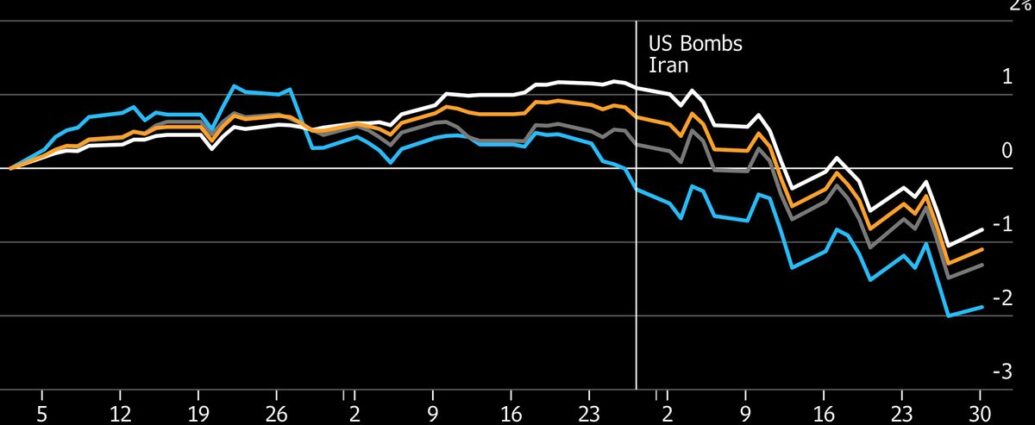
Study: Most real estate deals require multiple curative steps before title insurance
The American Land Title Association (ALTA) released a new study measuring the complexity of title production, underscoring how much research and curative work title professionals complete before a real estate transaction can close.
The report, titled Measuring the Complexity of Title Production: A Study of Operational Demands, Risks, and Curative Challenges, surveyed 449 title professionals across 47 states, according to the association’s announcement. The research focuses on the work required to identify risks, review property records and resolve issues before issuing title insurance.
“Technology and artificial intelligence are helping the title industry become more efficient, and our members are embracing those innovations,” ALTA CEO Chris Morton said in the announcement. “But the work required to identify and resolve issues in a property’s ownership history still depends on professional expertise. Title experts play a critical role in protecting consumers by resolving problems before closing and ensuring buyers receive clear and insurable title.”
What the study found
- More than 80% of purchase transactions require reviewing at least 11 documents, while 21% involve reviewing more than 50 records tied to a property’s ownership history.
- Nearly 60% of transactions require clearing three to five title issues before closing.
- More than half of title professionals spend at least 11 hours each month on fraud prevention, including wire fraud, identity theft and forged property documents.
- Mortgage payoffs occur in more than 90% of transactions.
- HOA dues and transfer fees appear in nearly 57% of transactions and must be resolved before closing.
- In the curative process, 59% of title professionals identified securing releases for prior mortgages as the most significant challenge.
Title production typically begins with a comprehensive search and examination of a property’s history, often spanning decades of public and private records. Title professionals review deeds, mortgages, liens, easements and probate filings to flag issues that could affect ownership rights.
Once problems are identified, curative work can include resolving unpaid liens, correcting legal descriptions, addressing gaps in the chain of title and coordinating with lenders and government offices to obtain releases for prior mortgages.
Why this matters for housing professionals
The findings come as lenders, real estate agents and title companies face elevated fraud risk and pressure to shorten closing timelines. While automation and AI tools are increasingly used to search and organize records, the study emphasizes that much of the value in title insurance still lies in human judgment and problem-solving during curative work.
For originators and real estate agents, the data helps explain why title timelines can vary and why early file delivery and clear payoff information matter for closing efficiency. For title and settlement companies, the study offers benchmark data on typical document loads, issue counts and time devoted to fraud prevention.
Despite heavier operational demands and growing fraud risks, ALTA said investments in technology and process modernization have improved title production efficiency. Citing industry analysis of NAIC Form 9 annual statements, the association noted that the cost of title insurance coverage has decreased by about 5% in recent years, even as the cost of many other insurance products has climbed.
Title insurance protects buyers and lenders from losses tied to title defects such as liens, ownership disputes, recording errors or undisclosed heirs. Unlike other forms of insurance that respond after a loss, title work is designed to identify and clear issues before closing.
“The title process is far more than a document check,” Morton said. “It’s a detailed review of a property’s history and a problem-solving process that helps ensure buyers can take ownership with confidence.”
The full study is available at alta.org.
This article was generated using HousingWire Automation and reviewed by a HousingWire editor before publication. The system helps convert company announcements and industry data into HousingWire-style news coverage.
DC-area agent launches hyperlocal site to explain post-NAR commission changes
Maryland-based real estate agent Irina Norrell has launched a hyperlocal education platform for buyers and sellers in the Washington, D.C., region, aiming to close a growing knowledge gap around agency, commissions and transaction costs in the wake of the National Association of Realtors’ (NAR) commission settlement.
The site, irinanorrell.com, covers Washington, D.C., Maryland and Virginia and is designed as a process-focused resource rather than a lead-generation or search portal, according to a release from Norrell, a real estate advisor with Compass DMV. The launch comes about 18 months after the NAR settlement effectively decoupled buyer and seller agent compensation and accelerated the use of written buyer agency agreements and separate commission negotiations.
Industry surveys and on-the-ground reports suggest many consumers still do not understand the basics of how buyer and seller agents are paid, which services are covered and which requirements stem from the settlement versus local market practice. Norrell’s goal is to offer clear explanations with cited sources and local detail so consumers can navigate those changes with more confidence.
What the platform includes
The site bundles several tools and explainers in one place for the D.C. metro area, including:
- Step-by-step buyer and seller “blueprints” that cover pricing, timelines, typical costs and what listing and buyer agents actually do for clients
- A proprietary calculator that models closing costs for both buyers and sellers side by side across D.C., Maryland and Virginia so users can compare scenarios by jurisdiction
- Monthly market analysis that interprets local data, explains trends and highlights where Norrell sees opportunities for buyers and sellers
Norrell said the resource is intended to fill a gap left by national search portals, brokerage sites and agent marketing pages that tend to prioritize listings and branding over process education and local nuance.
“Ever since I got into real estate, I’ve been trying to build a resource like this — but limited resources meant accepting a result that never matched the vision,” Norrell said in the announcement. “Everyone was asking how AI could help agents — I think I found one way. This site is what happens when an agent and AI collaborate to build something useful for consumers — at a scale that wasn’t possible for a small team before.”
One former client, Tina Revazi, said the platform “answers every question we ever asked you — and ones we didn’t know to ask.”
AI and hyperlocal content
According to the announcement, Norrell used artificial intelligence tools to help design and build the 97-plus-page site, including custom calculators, data visualizations and written analysis. The team argues that AI lowered the time and cost barriers that previously kept small teams from developing consumer-facing resources at this depth.
For housing professionals, the move reflects a broader shift in how AI is being deployed at the agent level: less for generic marketing content and more for packaging local data, documents and compliance requirements into structured consumer education. As buyer agency agreements and fee-for-service options become more common, clear explanations of who pays what, when and why may also support conversations about compensation and value.
Why this matters for the industry
The post-settlement environment is forcing brokers and agents to document their value and fee structures more explicitly, while consumers are being asked to sign buyer representation agreements earlier in the process. That combination has heightened scrutiny of agent fees but has not always been paired with clear explanations of services, cost differences by jurisdiction or how new rules interact with long-standing local customs.
Hyperlocal resources like Norrell’s could become a model for how smaller teams respond: by publishing concrete, jurisdiction-specific breakdowns of closing costs, contract structures and strategic trade-offs rather than relying solely on national guidance or brokerage-wide materials. For lenders and title companies operating in the D.C. metro, this type of consumer education may also help set expectations around fees, timelines and documentation before a file reaches underwriting or closing.
“Consumers have been asking for transparency — and until the industry provides it, the disconnect between what agents do and what consumers think they do will only grow,” Norrell said. “A resource like this benefits everyone: informed clients make better decisions, and agents can deliver the strategic value they were hired for.”
This article was generated using HousingWire Automation and reviewed by a HousingWire editor before publication. The system helps convert company announcements and industry data into HousingWire-style news coverage.

Upper West Side affordable senior housing project breaks ground

Work has begun on the second phase of a long-awaited Upper West Side development offering affordable homes for low-income and formerly homeless seniors. On Friday, the West Side Federation for Senior and Supportive Housing (WSFSSH) announced the start of the second phase of its West 108 development, an 84-unit permanently supportive housing project at 105 West 108th Street. The 22 studios and 61 one-bedrooms will be set aside for seniors ages 62 and older earning at or below 50 percent of the area median income, as well as adults ages 55 and older who have experienced homelessness and are living with serious mental health or substance use disorders.

First announced in 2016, the development replaces a city-owned, long-vacant parking garage. Some residents contested the project for removing affordable parking from the neighborhood, but the building received approvals in 2018.
The project’s first phase, the Valley Lodge, opened in October 2022. The 193,000-square-foot complex at 145 West 108th Street includes on-site supportive services, a range of amenities, and 199 homes for low-income families and formerly homeless seniors.

Designed by Dattner Architects to meet Passive House energy standards, the new building will achieve a 30 percent reduction in energy use compared to a typical NYC residential building.
Residents will benefit from on-site social services, property management, a 24/7 staffed front desk, a community room, a landscaped rear yard, and communal laundry facilities. The building is also located near public transit, NYC older adult centers, and the adjacent Aníbal Avilés Park.
Tenants will pay no more than 30 percent of their income in rent through project-based Section 8 vouchers. Of the 83 units, 40 are set aside for formerly unhoused individuals through the city’s Department of Homeless Services and the Human Resources Administration.

The remaining 43 units will be available through NYC Housing Connect, the city’s affordable housing lottery system. The project’s first phase launched a lottery for 79 affordable apartments, which received more than 60,000 applications.
WSFSSH at West 108 addresses the city’s ongoing shortage of affordable senior housing. More than 520,000 applications are currently on file citywide, including about 300,000 people on waitlists for subsidized apartments, according to a 2024 report by LiveOn NY.
“With the average rents in Manhattan hitting $5,000 for the first time, it has never been so important to create deeply affordable, supportive housing for older New Yorkers,” NYC Comptroller Mark Levine said.
“I have long supported this project, because WSFSSH at West 108 will help ensure that seniors—including those who have experienced homelessness—can age with dignity, stability, and access to the care they deserve. WSFSSH continues to lead the way in showing how thoughtful investment can strengthen communities and change lives.”
The project is financed through a subsidy from the city’s Department of Housing Preservation and Development under the Senior Affordable Rental Apartments program, and a discretionary capital award from Levine and Council Member Shaun Abreu.
Additional funding sources include a construction loan from JPMorgan Chase, a Freddie Mac forward commitment from Bellwether Enterprise, and equity from Enterprise Community Partners and the HPD-NYSERDA Future Housing Initiative.
The project will also receive 9 percent federal Low-Income Housing Tax Credits and 83 Section 8 project-based vouchers covering all rental units, along with funding from the New York State Office of Temporary and Disability Assistance Homeless Housing Assistance Program.
RELATED:
- 199-unit supportive housing complex for seniors and families opens on the Upper West Side
- Affordable housing lottery opens for 79 units on the Upper West Side, from $456/month
- Mamdani pitches 12,000-unit Sunnyside Yard development to Trump
The post Upper West Side affordable senior housing project breaks ground first appeared on 6sqft.

Top 2 Financial Stocks That Are Ticking Portfolio Bombs
As of March 31, 2026, two stocks in the financial sector could be flashing a real warning to investors who value momentum as a key criteria in their trading decisions.
The RSI is a momentum indicator, which compares a stock’s strength on days when prices go up to its strength on days when prices go down. When compared to a stock’s price action, it can give traders a better sense of how a stock may perform in the short term. An asset is typically considered overbought when the RSI is above 70, according to Benzinga Pro.
Here’s the latest list of major overbought players in this sector.
Compass Diversified Holdings (NYSE:CODI)
- On March 30, Compass Diversified Holdings announced a definitive deal to sell its Sterno food service business for …
This post was originally published here

Bicara Therapeutics To Rally Around 121%? Here Are 10 Top Analyst Forecasts For Tuesday
Top Wall Street analysts changed their outlook on these top names. For a complete view of all analyst rating changes, including upgrades and downgrades, please see our analyst ratings page.
- BTIG cut the price target for Abbott Laboratories (NYSE:ABT) from $140 to $131. BTIG analyst Marie Thibault maintained a Buy rating. Abbott shares closed at $101.88 on Monday. See how other analysts view this stock.
- HC Wainwright & Co. cut BTCS Inc. (NASDAQ:BTCS) price target from $7 to $5. HC Wainwright & Co. analyst Kevin Dede maintained a Buy rating. BTCS shares closed at $1.29 on Monday. See how other analysts view this stock.
- Needham slashed price target for Phreesia, Inc. (NYSE:PHR) from $35 to $14. Needham analyst Ryan MacDonald maintained a Buy rating. Phreesia shares closed at $11.41 on Monday. See how other analysts view this stock.
- HC Wainwright & Co. raised the price target for Bicara Therapeutics Inc.
This post was originally published here

Tilray’s Shock Top Unveils Its Strongest Beer Ever
Tilray Brands, Inc. (NASDAQ:TLRY) shares are moving higher in Tuesday’s premarket session. The move follows the launch of a product from Shock Top, a craft beer brand owned by Tilray Beverages.
The company introduced Shock Top’s first-ever high-ABV offering, High Voltage, as part of its broader push to expand and innovate within the beverage segment. The product is a double wheat beer with a 9.6% ABV, featuring bold orange flavors and real orange peel.
This new product is expected to roll out in stores nationwide starting at $2.99, reflecting the brand’s commitment to meeting consumer demand for high-ABV options.
The launch will begin in Southern California before expanding further, showcasing Shock Top’s strategy to capture market share in the craft beer segment. The brand aims to resonate with consumers seeking fun and energetic experiences, aligning with current trends in the beverage industry.
Technical Analysis
Currently, Tilray is trading 10.9% below its 20-day simple moving average (SMA) and 30.4% below its 100-day SMA, suggesting that the stock is struggling to regain upward momentum. Shares have decreased 8.90% over the past 12 months and are currently positioned closer to their 52-week lows than …
This post was originally published here

Here’s Where $140B In Tax Refunds Actually Went – One Company Profits Either Way
This week’s Wolf Pick: FirstCash Holdings (FCFS)
A 40% spike in oil prices has done something no pawnbroker marketing budget ever could. It made tax refund season profitable for the pawn shop.
This week’s Wolf Pick looks at FirstCash Holdings (NASDAQ:FCFS), a $8.4 billion operator of more than 3,000 pawn stores across the U.S., Latin America, and the U.K., and why the Iran conflict may have structurally broken the seasonal model that Wall Street has used to forecast this business for a decade.
The seasonal playbook, broken
Here’s how pawn lending is supposed to work in Q1. Tax refunds arrive. Consumers walk in, redeem their pawned jewelry, and pawn loan balances (called PLO, or Pawn Loans Outstanding) roll off. The historical median Q1 paydown is about 12%. Analysts model for this. It’s as reliable as the calendar.
The problem: that refund money has somewhere else to go this year.
According to independent research shared with Wolf Financial, Americans collectively spend roughly $350 billion on gasoline annually under normal conditions. With WTI crude above $100 and Brent pushing $115 on the back of the Strait of Hormuz closure, a 40%-plus oil spike translates to approximately $140 billion in incremental pump spending absorbed in a single year. That’s money that was previously available for debt paydown, discretionary purchases, or redeeming pawned collateral. The tax refund check clears and goes directly into the gas tank.
The downstream effect on FCFS is mechanical. Consumers who would ordinarily redeem their pawned items don’t have the cash. The loan stays active longer, and pawn service charge (PSC) fee income runs hotter. At the same time, customers …
This post was originally published here

These Analysts Slash Their Forecasts On Phreesia Following Q4 Results
Phreesia, Inc. (NYSE:PHR) reported mixed fourth-quarter financial results and cut its FY27 sales guidance on Monday.
Phreesia reported fourth-quarter earnings of 2 cents, missing the consensus of 7 cents. Sales reached $127.07 million, up 16% year-over-year, beating the consensus of $126.62 million.
The average number of healthcare service clients (AHSCs) was 4,658 in the quarter, up 7% year-over-year.
Phreesia on Monday lowered its fiscal 2027 revenue outlook to $510–$520 million, down from $545–$559 million, citing reduced visibility into pharma client spending and weaker-than-expected commitments for the second half of the year.
“We achieved several critical financial milestones ahead of our internal targets, including achieving positive GAAP net income ($2.3 million) and crossing $100 million of Adjusted EBITDA1 and $50 million of free cash flow2 ($78.8 …
This post was originally published here

Gas Prices Breach $4, GasBuddy’s Patrick De Haan Says ‘Don’t Settle For Once-A-Day Data’
The national average for regular gasoline hit $4.008 per gallon on Tuesday morning, marking a significant psychological and economic milestone for American consumers.
According to data from GasBuddy, this level represents the highest average since August 2022, fueled by a historic monthly surge.
Historic Monthly Spikes Hit Consumers
The current price action reflects the largest monthly increase ever recorded by GasBuddy. Gasoline prices have climbed $1.059 per gallon over the last 30 days, while diesel has soared by $1.701.
Real-Time Volatility In Florida and Midwest
Patrick De Haan, Head of Petroleum Analysis at GasBuddy pushed the importance of monitoring live updates rather than daily reports.
“Don’t settle for once-a-day data… been watching real-time updates every 5 min,” De Haan wrote on X. He specifically highlighted Florida, where prices soared after stations jumped to $4.299 per …
This post was originally published here

Bitcoin Holds $66,000 As Ethereum, XRP, Dogecoin Slip On Quantum Security Concerns
Bitcoin held steady near $66,000 despite a broader market pullback triggered by concerns over quantum computing risks; liquidations stand at $268.43 million over the past 24 hours.
Bitcoin ETFs saw $69.4 million in net inflows on Monday, while Ethereum ETFs reported $4.96 million in net inflows.
Cryptocurrency |
Ticker | Price |
| Bitcoin | (CRYPTO: BTC) | $66,725.24 |
| Ethereum | (CRYPTO: ETH) | $2,039.05 |
| Solana | (CRYPTO: SOL) | $80.68 |
| XRP | (CRYPTO: XRP) | $1.31 |
| Dogecoin | (CRYPTO: DOGE) | $0.09038 |
| Shiba Inu | (CRYPTO: SHIB) | $0.055900 |
Meme coin …

Exclusive: Former a16z crypto investor raises $10 million to launch stablecoin clearinghouse Better Money
In the last two years, stablecoins have become one of the hottest fields in crypto—so hot that one venture capitalist at a16z crypto decided to leave and launch his own stablecoin startup. The former investor, Sam Broner, announced on Tuesday that he and a college friend raised $10 million for what they call The Better Money Company, which aims to create a stablecoin clearinghouse, or locale that lets customers cheaply exchange different dollar-backed tokens.
Broner’s former employer, a16z crypto, led the seed round, with participation from BoxGroup and Sunflower Capital, along with notable angel investors like the Circle cofounder Sean Neville and Charlie Songhurst, a former Microsoft executive. Broner and his cofounder Adam Zuckerman declined to say at what valuation they raised their capital.
Andreessen Horowitz’s crypto arm backed The Better Money Company because of Broner, said Ali Yahya, a general partner at Andreessen Horowitz. “He very quickly became our stablecoin expert and taught us a lot about stablecoins,” he said in an interview with Fortune. “So primarily, it’s an investment in him, and that tends to be usually the way that we underwrite early-stage investments.”
Token clearinghouse
Even as prices for blue-chip cryptocurrencies like Bitcoin and Ethereum remain far below their 2025 all-time highs, investor fervor for stablecoins hasn’t waned. Proponents for the tokens, which are pegged to real-world assets like the U.S. dollar, say they can speed up transactions as well as reduce fees. Financial goliaths are taking notice. In March, the payments titan Mastercard agreed to spend up to $1.8 billion to acquire the stablecoin startup BVNK.
“The drumbeat has gotten louder and the urgency has gotten more clear for how they need to integrate stablecoins into their products,” said Broner.
Broner’s new firm is entering an increasingly crowded stablecoin field. There are the mainstays like Circle’s USDC and Tether’s USDT, but more recently large companies like Klarna, Cloudflare, Sony, and Fiserv launched their own tokens or signaled they intend to do so. Broner and Zuckerman aim to create a lane for themselves with a clearinghouse to help companies navigate the cluster of new coins.
“If you want to have a growing stablecoin ecosystem, you need to have one place to access the breadth of what’s out there,” said Broner.
Broner, who started his career as a software developer at GE and Microsoft, specialized in investing in stablecoin startups at a16z crypto. During his more-than-two-year tenure at the venture giant, he backed the stablecoin remittance startup Zar as well as a slew of startups from a16z crypto’s accelerator. Meanwhile, Zuckerman worked at the law firm Latham & Watkins before leaving to work as general counsel at the crypto startup Eigen Labs. The two originally met while studying for their undergraduate degrees in Massachusetts.
Launching a stablecoin clearinghouse requires developing partnerships with stablecoin issuers. Broner and Zuckerman plan to create accounts with different crypto companies that let them put in orders for new tokens more cheaply than buying or selling stablecoins on the open market. Since they founded their startup in November, they’ve since received commitments from a number of issuers who intend to join the clearinghouse, including Paxos, Stripe’s Bridge, MoonPay, and others.
They intend to support any token compliant with the Genius Act, recently signed-into-law legislation that regulates the burgeoning stablecoin ecosystem. That notably excludes USDT, the largest stablecoin on the market, but not its American version, USAT.
They haven’t launched their product publicly yet but plan to let customers use their clearinghouse in the coming weeks, said Broner. “The mission is making stablecoins better money,” added Zuckerman.
This story was originally featured on Fortune.com

Current price of oil as of March 31, 2026
As of 8:30 a.m. Eastern Time today, oil is trading at $110.69 per barrel, based on the Brent benchmark we’ll explain in a bit. That’s 41 cents below yesterday morning’s level—but about $35 higher than where it stood a year ago.
Will oil prices go up?
No one can say for sure where oil prices will go next. Many forces shape the market—but at the core, it’s still about supply and demand. When risks like a potential recession or war ramp up, oil prices can change direction quickly.
How oil prices translate to gas pump prices
When you buy gas at the pump, you’re covering more than the cost of crude oil. You’re also paying for every step in the process, including refineries, wholesalers, taxes, and the markup your local gas station adds.
Even so, crude oil has the biggest influence on what you pay, often making up more than half the cost per gallon. When oil prices jump, gas prices usually climb right along with them. But when oil falls, gas prices often slip much more slowly—a pattern sometimes called “rockets and feathers.”
The role of the U.S. Strategic Petroleum Reserve
If an emergency hits, the U.S. keeps a backup supply of crude oil called the Strategic Petroleum Reserve. It’s mainly there to protect energy security during crises, such as sanctions, catastrophic storm damage, even war. It can also help cushion the blow when supply shocks send prices soaring.
It’s not meant to solve long-term problems. Instead, it provides quick relief for consumers and helps keep vital parts of the economy moving, like essential industries, emergency services, and public transit.
How oil and natural gas prices are linked
Oil and natural gas are two of the world’s primary energy sources. A big change in oil prices can affect natural gas by extension. For example, if oil prices increase, some industries may swap natural gas for some segments of their operations where possible, which which increases demand for natural gas.
Historical performance of oil
When looking at how oil performs, two main benchmarks stand out:
- Brent crude oil is the main global oil benchmark.
- West Texas Intermediate (WTI) is the main benchmark of North America.
Of the two, Brent gives a better picture of global oil performance because it prices a large share of the world’s traded crude. It’s also the go-to for tracking oil’s historical trends. In fact, even the U.S. Energy Information Administration now relies on Brent as its primary reference in its Annual Energy Outlook.
If you look at the Brent benchmark over several decades, oil has been far from stable. It has experienced sharp rises tied to wars and supply cuts, along with steep drops linked to global recessions and oversupply (called a “glut”). For example:
- The early 1970s delivered the first major oil shock when the Middle East slashed exports and placed an embargo on the U.S. and others during the Yom Kippur War.
- Prices fell in the mid-1980s due to lower demand and an influx of non-OPEC oil producers joining the market.
- Prices surged again in 2008 as global demand grew, but then crashed alongside the global financial crisis.
- During the 2020 COVID lockdown, oil demand plummeted like never before—pushing prices below $20 per barrel.
To sum up, oil’s historical performance has been anything but smooth. Again, it’s heavily influenced by wars, recessions, OPEC whims, shifting energy policies, and much more.
Energy coverage from Fortune
Looking to stay up-to-date regarding the latest energy developments? Check out our recent coverage:
- India seeks U.S. help to produce more oil and wean itself off Russia, Middle East reliance
- S&P set for another loss following worst week since Iran War began as oil keeps climbing
- Trump said the Iran war was ‘very complete’ three weeks ago. Oil has surged 50% since
Frequently asked questions
How is the current price of oil per barrel actually determined?
The current price of oil per barrel depends largely on supply and demand, including news about potential future supply and demand (geopolitics, decisions made by OPEC+, etc.). In the U.S., prices also move based on how friendly an administration is to drilling, as it can affect future supply. For example, 2025 saw the Trump administration move to reopen more than 1.5 million acres in the Coastal Plain of the Arctic National Wildlife Refuge for oil and gas leasing, reversing the Biden administration’s policy of limiting oil drilling in the Arctic.
How often does the price of oil change during the day?
The price of oil updates constantly when the “futures” markets are open. A futures market is effectively an auction where people agree to buy or sell oil in the future. As long as people and companies are trading contracts, the oil price is changing.
How does U.S. shale oil production affect the current price of oil?
In short, shale is rock that contains oil and natural gas. Think of shale as energy yet to be tapped. The more shale the U.S. accesses, the more energy we’ll have—and the more easily oil prices can keep from spiking as much thanks to a greater supply.
How does the current price of oil impact inflation and the broader economy?
When oil is expensive, it tends to make everyday items cost more. This can be related to energy (your heating, gas utilities, etc.), but it’s also due to the logistics involved with making those items accessible to you. Shipping, for example, can affect the price of things at the grocery store, as it’s more expensive to get those products from warehouses and farms onto the shelf.
This story was originally featured on Fortune.com

Gas prices under Trump just hit a benchmark from the Biden inflation era
U.S. gas prices jumped past an average of $4 a gallon for the first time since 2022 on Tuesday as the Iran war pushed fuel prices to soar worldwide.
According to motor club AAA, the national average for a gallon of regular gasoline is now $4.02 — over a dollar more than before the war began. The last time U.S. drivers were collectively paying this much at the pump was nearly four years ago, following Russia’s invasion of Ukraine.
The price is a national average, meaning drivers in some states have been paying well over $4 a gallon for a while now. Prices vary from state to state due to factors ranging from nearby supply to differing tax rates.
Since the U.S. and Israel launched a joint war against Iran on Feb. 28, the cost of crude oil — the main ingredient in gasoline — has spiked and swung rapidly. That’s because the conflict has caused deep supply chain disruptions and cuts from major oil producers across the Middle East.
Motorists around the world are also coping with higher gas prices due to the war. In Paris, for example, gas is at 2.34 euros per liter ($2.68), which is about $10.27 a gallon.
Expensive gas could drag on the economy and drive up other prices
Higher gas prices are impacting consumers and businesses as many households continue to face wider cost of living strains. And as drivers pay more to cover necessities like gas, many may be forced to cut their budgets in other places.
More expensive fuel can also push up other spending, from utility bills to the price of many goods consumers buy each day.
Consumer prices and the cost of living already have become flashpoints in this midterm election year, with Democrats especially hammering Trump and Republicans as the GOP tries to hold majorities on Capitol Hill. A recent AP-NORC poll found that 45% of U.S. adults are “extremely” or “very” concerned about being able to afford gas in the next few months, up from 30% shortly after Trump won the 2024 presidential election with promises to lower costs.
In the immediate future, analysts point to groceries, which have to be restocked frequently and could also see price hikes as businesses’ transportation costs pile up.
But hauling other cargo and packages has also been impacted. The United Postal Service, for example, is seeking a temporary 8% added charge on some of its popular products including Priority Mail.
U.S. diesel prices — the fuel used for many freight and delivery trucks — is now going for an average of $5.45 a gallon, up from about $3.76 a gallon before the war began, per AAA.
If the war drags on, it’s possible that those prices could tick up even higher. Most tanker movement in the key Strait of Hormuz, where roughly one-fifth of the world’s oil typically sails through, remains at a halt. That’s led to cuts from major producers in the region who have no way of getting their crude to market. Meanwhile, Iran, Israel and the U.S. have all struck oil and gas facilities, worsening supply concerns.
Reserves open in an effort to cut prices
In a search for some relief, the International Energy Agency pledged to release 400 million barrels of oil from emergency stockpiles of member nations. That includes the U.S., despite Trump initially downplaying the need for reserve oil.
The Trump administration has also eased sanctions to free up some oil from Venezuela, and temporarily Russia. The White House also says it’s waiving maritime shipping requirements under a more than century-old law, known as the Jones Act, for 60 days.
It’s not yet clear if those efforts will bring relief for consumers. A lot of factors contribute to gas prices.
Refineries buy crude oil in advance, meaning some could be work with more expensive oil for a while, and it will take time for any new supply to trickle down to consumers.
And while steep crude prices are a leading driver behind today’s surge, U.S. gas prices typically tick up a bit at this time of year. More drivers are hitting the road and trying to fuel up while they can, so there’s higher demand. Warming weather also brings a shift to summer blend fuel, which is more expensive to produce than winter blend.
The US is an oil exporter, but it’s still affected by global prices
The U.S., which is a net oil exporter, hasn’t seen as stark a shock as other parts of the world that rely more heavily on fuel imports from the Middle East, notably Asia. But that doesn’t mean America is immune to price spikes.
Oil is a globally-traded commodity. And most of what the U.S. produces is light, sweet crude — but refineries on the East and West coasts are primarily designed to process heavier, sour product. As a result, the country also needs imports.
Escalating geopolitical conflicts have disrupted oil flows and contributed to a surge in gas prices in the past. The U.S. average for regular gasoline climbed to its highest level of more than $5 a gallon in June 2022, nearly four months after the Ukraine war began and world leaders imposed sanctions against Russia, a leading oil producer.
Prices at the pump later fell from that record. Before Tuesday, per AAA data, the national average had stayed below the $4 mark since mid-August of 2022.
___
Associated Press journalists Angela Charlton in Paris and Bill Barrow in Washington contributed to this report.
This story was originally featured on Fortune.com