

The Best Retirement Is No Retirement at All
FedEx has started delivering ‘promotion-ready’ AI training to over 400,000 workers
Inside a FedEx AI literacy initiative being delivered across half a million employees around the world.
This post was originally published here
Walmart digital price labels are coming to every store shelf in U.S. by end of 2026
Walmart is rolling out digital shelf labels and expects it to be in all U.S. stores by year’s end. Is it surge pricing in disguise or just new tech efficiency?
This post was originally published here

Alabama student reportedly fell to his death in Barcelona waters by accident
Autopsy reveals James ‘Jimmy’ Gracey’s injuries consistent with repeatedly hitting breakwater’s rocks, Spanish media report
A University of Alabama student who was found dead in Barcelona after going missing while vacationing evidently fell into the sea on accident in view of surveillance cameras – and an autopsy revealed injuries on his body that were consistent with having repeatedly struck a breakwater’s rocks.
Such details about James “Jimmy” Gracey surfaced in the Spanish media as a spokesperson for police in Barcelona told the Associated Press that “all signs point” to the 20-year-old’s death as having been an accident.
This post was originally published here

1 in 7 Americans Borrowed for Healthcare — 11% Even Skipped Meals to Pay Medical Bills
A new report from West Health and Gallup shows how routine healthcare costs are reshaping household finances for tens of millions of Americans.
Instead of drawing on savings, many are borrowing, cutting back on basics or postponing major decisions to stay current on medical bills.
According to the survey, about 1 in 7 Americans had to borrow money in the past year to cover healthcare expenses. That translates to an estimated tens of billions of dollars in medical borrowing, much of it on credit cards or personal loans, for routine care rather than big-ticket procedures. For households already carrying other balances, some are now looking at consolidation tools that match borrowers with lenders for a personal loan aimed at simplifying payments and potentially lowering their rate.
The report also found that 15% of Americans have rationed prescriptions—skipping doses, splitting pills or not filling a prescription—in order to manage costs. That behavior shows up across income groups and carries clear clinical risks, since untreated or under-treated conditions often lead to more intensive and expensive care later.
In practice, that means the same families juggling co-pays and deductibles are also deciding which bills to prioritize each month, a calculation that could call on a restructure of high-interest medical and household debt into a single, fixed-rate loan.
In total, about one-third of adults—more than 80 million people—reported making at least one significant trade-off in the last year to pay for healthcare. Those decisions range from cutting back on everyday …
This post was originally published here


End of an heir-a: The U.K. abolishes aristocrats’ right to inherit Parliament seats
The British Parliament still has 92 unelected lawmakers who inherit seats by bloodline. They’re all older white men. A new law now phases them out, for the first time in nearly 1,000 years.
(Image credit: Susannah Ireland for NPR)

This post was originally published here
‘Tax resistance’ gains attention amid ICE protests, Iran war — and IRS penalties could follow
Tax protesters often withhold taxes due to moral objections to certain government programs, such as the Iran war. But there can be IRS penalties, experts say.
This post was originally published here














Nissan’s new hybrid is a U.S.-first that mixes EV driving with a gas engine
Nissan plans to introduce a new type of hybrid for the U.S. market that drives like an all-electric vehicle but is powered by a traditional gas-powered engine.
This post was originally published here



The one skill that separates people who get smarter with AI from everyone else
After three years of widespread generative AI adoption, our data reveals only a small percentage of U.S. employees use AI in such a way that it enhances their thinking. Most workers either resist the technology entirely or use it passively. A small group — call them fluent users — does something fundamentally different.
So, what sets them apart? It’s not IQ. It’s not a technical skill. When we ask people how they’re using AI to make themselves smarter, their descriptions coalesce around a particular skill that rejects asking AI for direct answers to complex problems. These fluent users are thinking about their own thinking, casting AI in a supportive role, not a guiding one.
What they are describing is the act of metacognition.
The skill that unlocks smarter AI use
Metacognition is a fundamental concept in psychology that involves a distinctly human ability: reflecting on our own stream of thoughts, mulling them over, revisiting assumptions, and folding in new ideas to evolve our mental model. When we ask ourselves, “What am I missing?” or “What’s another way of looking at this problem?” We are engaging in metacognitive acts.
Few people practice metacognition deliberately, which makes fluent AI users look almost magical to their peers — the way a polyglot seems effortless to someone who only speaks one language. But here’s the good news: the skill is highly learnable. With the right principles and enough practice, anyone can use AI to make themselves smarter.
Based on our research, AI fluent users represent between 5–30% of employees at a given organization, depending on industry and role. They don’t ask the chatbot to generate a plan and pass it off as their own. Instead, they remain in the driver’s seat, starting conversations with prompts like:
I’ve created a marketing plan that I need help refining. I’m fairly confident it needs to reach mid-career professionals between 28–45 years old, but I could be missing something because of my unconscious bias around the topic. Without providing specific suggestions, can you help me think through my various options for improving the attached plan?
There are several things going on here. Most importantly, notice that the prompt doesn’t hand control to the AI. In our example, the user explicitly tells the AI not to offer suggestions — signaling that the user intends to remain the intellectual authority in the conversation.
Three metacognitive habits fluent users share
First, the prompt demonstrates humility. The user acknowledges they don’t have all the answers, using certain hedge phrases, such as “I’m fairly confident” and “could be missing something.” These signal a growth mindset, or the belief that one’s skills can be improved over time. Without it, the ego stays in self-protection mode — and learning stops.
Second, the prompt shows flexibility. The user acknowledges their point of view isn’t the only valid one. With a bit of digging, other options will come into view, expanding their perspective on the matter. From a neuroscience perspective, cognitive flexibility in AI usage enables us to be adaptive and open to multiple perspectives. Cognitive flexibility is thought to involve an expansive network of brain regions involved in cognitive control, including regions of the prefrontal cortex.
Third, the prompt shows the user taking an active role in driving their search for new perspectives — a form of vigilance. The user prioritizes getting it right over feeling right.
Bias is a quiet saboteur. Without pausing to question blind spots, users risk having AI simply repackage flawed assumptions in new wrapping. Also, a sense of vigilance is crucial for mitigating any biases that may be embedded in the AI’s answers — including biases baked into the AI itself.
The most encouraging finding from our research: metacognition isn’t an innate talent. It’s a trainable skill. The more deliberately you practice thinking about your own thinking, the more natural it becomes — and the more likely you are to walk away from every AI conversation sharper than when you started. In an era when most people worry AI will make them dumber, fluent users are quietly proving the opposite.
The opinions expressed in Fortune.com commentary pieces are solely the views of their authors and do not necessarily reflect the opinions and beliefs of Fortune.
This story was originally featured on Fortune.com




Anger grows among UK ministers amid fears Iran war could jeopardise Britain’s fragile finances
Some in cabinet in despair over possible impact of war begun by Donald Trump, who branded Nato allies ‘cowards’
Donald Trump has branded the UK and other Nato allies “cowards” as anger grows among cabinet ministers that his war in Iran could jeopardise Britain’s fragile finances.
Senior members of the UK government are in despair about the potential effects on the economy, with experts warning of higher energy prices and increased mortgage and borrowing costs.
This post was originally published here






SA state election 2026: Peter Malinauskas makes passionate call for unity after thumping South Australia win marked by One Nation advance
Labor secures landslide win, but One Nation vote tops 20%, leaving Liberals devastated and eating into ALP territory in outer suburbs
-
I’m going to leave you some land mines, Hanson warns premier
-
Get our breaking news email, free app or daily news podcast
South Australia’s Peter Malinauskas has used Labor’s landslide state election victory to urge a kinder and more inclusive politics, reaching out to disaffected One Nation voters and promising to work across politics lines in his second term.
The Labor leader increased his majority in Saturday’s vote, with One Nation’s support surging and the Liberal opposition reduced to a handful of seats.
This post was originally published here


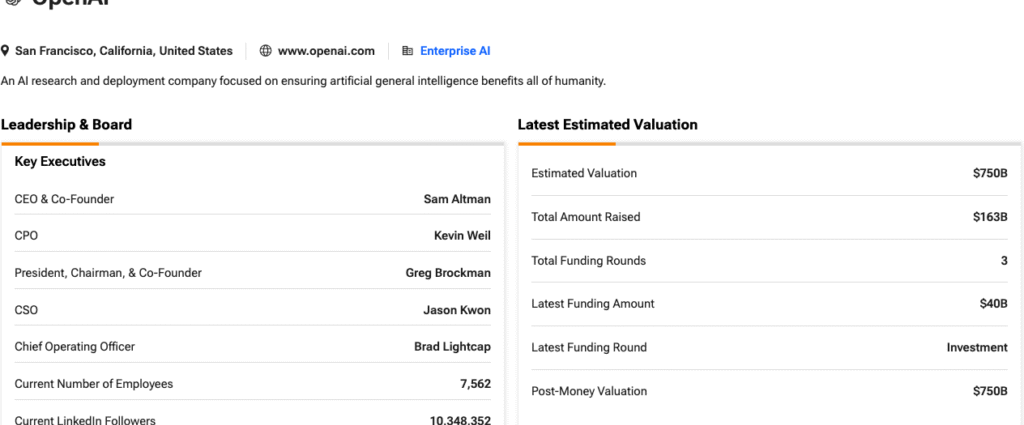
OpenAI to nearly double workforce to 8,000 by end-2026, FT reports
OpenAI plans to deploy most of the new hires across product development, engineering, research and sales, the Financial Times said.
This post was originally published here






Buffett defends ‘Giving Pledge’ against Thiel and ‘billionaire backlash’
Warren Buffett is defending the philanthropic initiative he co-founded with Bill Gates almost 15 years ago.
This post was originally published here



Benzinga Bulls And Bears: FedEx, Micron, SoFi — And Markets Volatile As Iran War Continues
Benzinga examined the prospects for many investors’ favorite stocks over the last week — here’s a look at some of our top stories.
Markets ended the week under pressure as escalating geopolitical tensions and rising inflation concerns weighed on investor sentiment. The Dow Jones Industrial Average, S&P 500 and Nasdaq Composite struggled to maintain momentum, with volatility increasing as the ongoing Iran conflict pushed energy prices higher and complicated the Federal Reserve’s policy outlook. Investors reacted cautiously to the combination of persistent inflation and slowing economic signals, raising doubts about the timing of any potential rate cuts.
Inflation fears intensified as the war-driven oil shock continued to ripple through global markets, reinforcing expectations that interest rates may stay elevated for longer. The disruption of energy supplies through the Strait of Hormuz — which typically handles about 20% of global oil flows — has fueled concerns about sustained price pressures and tighter financial conditions. Strait of Hormuz This backdrop has led to increased volatility across equities, with investors reassessing risk amid higher yields and uncertain monetary policy direction.
Sector performance reflected the shifting macro landscape, with energy stocks benefiting from higher crude prices while rate-sensitive and consumer-focused sectors lagged. Broader market sentiment remained fragile as traders weighed geopolitical risks, inflation data and central bank expectations, suggesting that markets could remain choppy in the near term as multiple macro headwinds converge.
Benzinga provides daily reports on the stocks most popular with investors. Here are a few of this past week’s most bullish and bearish posts that are worth another look.
The Bulls
“FedEx Tops Q3 Estimates, Freight Spin-Off Remains On Track,” by Adam Eckert, reports that FedEx Corp. (NYSE:FDX) delivered a third-quarter earnings and …
This post was originally published here
Dairy Queen CEO says he learned from Warren Buffett being the ‘smartest person in the world’ isn’t the most important attribute for success
Many businesses are birthed from a bright idea—but that isn’t enough to take a company big-time. Dairy Queen CEO Troy Bader said Warren Buffett taught him that zeal for the mission is more important than anything else; being “smartest person in the world” won’t outperform “somebody who has that passion.”
“Anybody you meet, I don’t care who they are—they know something you don’t,” Bader told Business Insider last year.
It’s just one of the two takeaways that have stuck with Bader since his job interview with Buffett in 2017 to become CEO of the billion-dollar ice cream giant. And as the serial investor stepped down from his six-decade rein over Berkshire Hathaway at the end of 2025, his words of wisdom seem to carry even more weight. The Dairy Queen CEO was shown that even the most successful people still have things to learn, and passion triumphs wits in growing a business.
What it’s like to be interviewed by Warren Buffett
Bader admitted it was daunting to come face-to-face with Buffett; especially after Berkshire Hathaway shelled out $600 million to take Dairy Queen company private in 1998. The business mogul has long had a soft spot for Dairy Queen, both in business and in life. So the sweet treat CEO felt the pressure to impress during their interview.
“It was the fall of 2017, I’ll never forget the day,” Bader told Business Insider. “I was very anxious going in because OK, I felt like I knew our business, but you’re sitting down with Warren Buffett.”
Buffett wasn’t the type to act “very arrogant” in the meetings as one might expect, Bader said. Instead, the Oracle of Omaha spent the first 15 or 20 minutes asking the Dairy Queen executive about something relevant to another business deal in his pipeline. Buffett figured Bader could teach him a thing or two, which ironically taught him a valuable lesson back: that anyone you meet knows something you don’t, regardless of stature.
“Warren is a constant learner,” Bader said. “He wants to know what you know and what he can learn from you.”
During their conversation, Bader noticed Buffett was “digging for something more, that energy, that passion, that connection to the business.” That spurred a second revaluation—that Buffett wanted spirit and enthusiasm from the executives he was meeting with. When it comes to running a successful business, passion tops intelligence in getting the job done right. The power of a can-do, passionate attitude in business has been echoed by other executives like Amazon CEO Andy Jassy and Cisco’s U.K. chief Sarah Walker.
Buffett’s advice for CEOs and billionaire philanthropists
Buffett’s words have impacted more than just the people he interviews. Even some of the world’s most respected leaders see the billionaire as a north star in navigating the rollercoaster of entrepreneurship.
Early on in Melinda French Gates’ philanthropic career running the Gates Foundation with her then-husband Bill Gates, the Berkshire Hathaway boss gave her some advice on managing the stress—and she still swears by it.
“Warren Buffett once said to us early in the [Gates] Foundation’s life, ‘Find your bull’s-eye of what you’re working on, and let the other things fall away. You’ll feel better if you keep your talents in that bull’s-eye, keep working those issues, and you’ll feel less bad about letting other things go,’” French Gates told LinkedIn in 2024. “And I think that’s true.”
American Express CEO Stephen Squeri also said he soaked up advice from Buffett during their bimonthly calls. In an interview with Barrons in 2023, the financial services executive recalled getting important guidance from the Omaha entrepreneur during the COVID-19 pandemic when no one was in public cashing out their Amex cards. Buffett advised him to hold two things down pat; it could mean a difference between boom and bust.
“His advice to me is, protect two things—protect your customers and protect your brand,” Squeri said.
A version of this story was published on Fortune.com on May 21, 2025.
This story was originally featured on Fortune.com


Scale AI Launches ‘Voice Showdown’ To Rival OpenAI, xAI, Anthropic In Voice AI Models
Scale AI has released Voice Showdown, a platform for evaluating voice AI models, as it seeks to compete with rivals such as OpenAI, xAI, and Anthropic.
Voice Showdown is the first global preference arena for voice AI. This new methodology involves users interacting with voice models via Scale’s platform ChatLab to provide a real-world context for these evaluations, the company noted in a press release.
The model has two evaluation modes: Dictate, where users speak and text appears and Speech-to-Speech, a back and forth conversation.
The company is in the process of developing a third mode, Full Duplex, “where interruptions, barge-ins, and overlapping speech emerge naturally and cannot be reduced to side-by-side preference judgments,” the company …
This post was originally published here
A slew of consumer stocks are now oversold as S&P 500 falls for a fourth week in a row
General Mills, McCormick & Company and Conagra Brands top of the list of most oversold stocks in the S&P 500.
This post was originally published here
A slew of consumer stocks are now oversold as S&P 500 falls for a fourth week in a row
General Mills, McCormick & Company and Conagra Brands top of the list of most oversold stocks in the S&P 500.

‘Godfather of AI’ says tech companies aren’t concerned with the AI endgame. They’re focused on short-term profits instead
Elon Musk has a moonshot vision of life with AI: The technology will take all our jobs, while a “universal high income” will mean anyone can access a theoretical abundance of goods and services. Provided Musk’s lofty dream could even become a reality, there would, of course, be a profound existential reckoning.
“The question will really be one of meaning,” Musk said at the Viva Technology conference in May 2024. “If a computer can do—and the robots can do—everything better than you … does your life have meaning?”
But most industry leaders aren’t asking themselves this question about the endgame of AI, according to Nobel laureate and “godfather of AI” Geoffrey Hinton. When it comes to developing AI, Big Tech is less interested in the long-term consequences of the technology—and more concerned with quick results.
“For the owners of the companies, what’s driving the research is short-term profits,” Hinton, a professor emeritus of computer science at the University of Toronto, told Fortune.
And for the developers behind the technology, Hinton said, the focus is similarly on the work immediately in front of them, not on the final outcome of the research itself.
“Researchers are interested in solving problems that have their curiosity. It’s not like we start off with the same goal of, what’s the future of humanity going to be?” Hinton said.
“We have these little goals of, how would you make it? Or, how should you make your computer able to recognize things in images? How would you make a computer able to generate convincing videos?” he added. “That’s really what’s driving the research.”
Hinton has long warned about the dangers of AI without guardrails and intentional evolution, estimating a 10% to 20% chance of the technology wiping out humans after the development of superintelligence.
In 2023—10 years after he sold his neural network company DNNresearch to Google—Hinton left his role at the tech giant, wanting to freely speak out about the dangers of the technology and fearing the inability to “prevent the bad actors from using it for bad things.”
What are the risks of unregulated AI?
For Hinton, the dangers of AI fall into two categories: the risk the technology itself poses to the future of humanity, and the consequences of AI being manipulated by people with bad intent.
“There’s a big distinction between two different kinds of risk,” he said. “There’s the risk of bad actors misusing AI, and that’s already here. That’s already happening with things like fake videos and cyberattacks, and may happen very soon with viruses. And that’s very different from the risk of AI itself becoming a bad actor.”
In November 2025, Anthropic said it disrupted “the first documented case of a large-scale AI cyberattack executed without substantial human intervention,” identifying a Chinese state-sponsored group that manipulated Claude Code in an attempt to infiltrate around 30 tech companies, financial institutions, government agencies, and chemical manufacturers, the AI company said in a blog post.
The disruption has led cybersecurity experts to believe Iran could use AI to conduct a largely automated cyberattack against the U.S.
Beyond advocating for more regulation, Hinton’s call to action to address AI’s potential for misdeeds is a steep battle because each problem with the technology requires a discrete solution, he said. He envisions a provenance-like authentication of videos and images in the future that would combat the spread of deepfakes.
Just as printers added names to their works after the advent of the printing press hundreds of years ago, media sources will similarly need to find a way to add their signatures to their authentic works. But Hinton said fixes can only go so far.
“That problem can probably be solved, but the solution to that problem doesn’t solve the other problems,” he said.
For the risk AI itself poses, Hinton believes tech companies need to fundamentally change how they view their relationship to AI. When AI achieves superintelligence, he said, it will not only surpass human capabilities, but have a strong desire to survive and gain additional control. The current framework around AI—that humans can control the technology—will therefore no longer be relevant.
Hinton posits AI models need to be imbued with a “maternal instinct” so it can treat the less-powerful humans with sympathy, rather than desire to control them.
Invoking ideals of traditional femininity, he said the only example he can cite of a more intelligent being falling under the sway of a less intelligent one is a baby controlling a mother.
“And so I think that’s a better model we could practice with superintelligent AI,” Hinton said. “They will be the mothers, and we will be the babies.”
A version of this story was published on Fortune.com on Aug. 15, 2025.
More on the future of AI:
- Jensen Huang just painted the most bold image of AI’s future: 7.5 million agents, 75,000 humans—100 AI workers for every person
- Fortune 500 firm updates AI price tag to $4.5 trillion, estimating 93% of jobs vulnerable to disruption
- AI was supposed to kill off consultants. It’s not happening, Capgemini’s strategy chief says
This story was originally featured on Fortune.com
‘Her warmth filled the kitchen every morning’: the magic – and tenacity – of Jenni Murray
The Woman’s Hour host, who has died aged 75, could talk about hydrangeas, campaign against domestic abuse, then tear a strip off a politician – all within a few minutes
Before she took over Woman’s Hour in 1987, Jenni Murray was a presenter on the Today programme. She had joined the BBC in Bristol in 1973, and became a TV reporter and presenter for South Today, so arrived with solid news credentials. But Today in the 1980s was inveterately sexist – the guys took the politics, the women mopped up the rest – that the format was just too small for her.
Woman’s Hour, on the other hand, was absolutely reshaped in her image: there was no preconception of tone, and nothing was too serious or too light for it. Murray, who has died at the age of 75, could tear a strip off a politician, talk about hydrangeas, then campaign against domestic abuse, all within a few minutes. She was instinctively open and generous about her personal experience, but never solipsistic – an incredibly fine balance.
This post was originally published here

Bank of America says these stocks have plenty of upside, including one Magnificent Seven name
Bank of America named five stocks that are well positioned despite a turbulent macroeconomy.
This post was originally published here

Super Micro Computer, Micron Technology And More: 5 Stocks Investors Couldn’t Stop Buzzing About This Week
Retail investors talked up five hot stocks this week (March 9 to March 13) on X and Reddit’s r/WallStreetBets, driven by retail hype, earnings, AI buzz, and corporate news flow.
Super Micro Computer Inc. (NASDAQ:SMCI), Micron Technology Inc. (NASDAQ:MU), Ulta Beauty Inc. (NASDAQ:ULTA), CF Industries Holdings Inc. (NYSE:CF), Nvidia Corp. (NASDAQ:NVDA), spanning software, semiconductors, online retail, agriculture and fertilizers, and AI reflected diverse investor interests.
Super Micro Computer
- The U.S. federal government charged three individuals tied to Super Micro Computer—including co-founder and board member Yih-Shyan “Wally” Liaw—for allegedly conspiring to smuggle billions of dollars worth, around $2.5 billion, of restricted Nvidia Corp. (NASDAQ:NVDA) AI servers and high-performance GPUs to China in violation of U.S. export controls. The scheme reportedly involved shell companies in Southeast Asia, falsified documents, fake “dummy” servers to evade audits, and even using hair dryers to swap serial numbers, with shipments peaking at about $510 million in just weeks during 2025.
- Some retail investors were questioning multiple fallacies at SMCI, with its issues in earnings reporting in 2024 and 2025 to the current issue of chip smuggling.

- The stock had a 52-week range of $27.60 to $62.36, trading around $23 to $30 per share, as of the publication of this article. It fell 23.22% over the year and fell 32.79% over the last six months.
- SMCI had a weaker price trend in the short, medium, and long term, with a solid value ranking, as per Benzinga’s Edge Stock Rankings.
Micron Technology
- MU reported fiscal second-quarter 2026 earnings this week, driven by explosive AI-driven demand for memory chips, with revenue surging to $23.9 billion, adjusted EPS at $12.20, and record highs across DRAM, NAND, HBM, and business units. Guidance for the third quarter was exceptionally strong at ~$33.5 billion in revenue with ~81% gross margins and EPS around $19.15, signaling continued …
This post was originally published here
5m tonnes of CO2 emitted in just 14 days of US war on Iran, analysis finds
Exclusive: War in the Middle East is draining the global carbon budget faster than 84 countries combined
The US-Israel war on Iran is a disaster for the climate, according to an analysis that finds it is draining the global carbon budget faster than 84 countries combined.
As warplanes, drones and missiles kill thousands of people, level infrastructure and turn the Middle East into a gigantic environmental sacrifice zone, the first analysis of the climate cost has found the conflict led to 5m tonnes of greenhouse gas emissions in its first 14 days.
This post was originally published here
UK government yet to trial OpenAI tech months after signing partnership
FoI request reveals no evidence of testing despite ministers hailing agreement as key to delivering AI-led public service reform
When the UK government signed a memorandum of understanding with OpenAI, the tech firm behind ChatGPT, the partnership was hailed as one that could harness artificial intelligence to “address society’s greatest challenges”.
But eight months on from the fanfare of that announcement, the government has yet to hold any trials involving the firm’s tech.
This post was originally published here

Not All Malls Are Struggling
OpenClaw’s ChatGPT moment sparks concern that AI models are becoming commodities
At Nvidia’s GTC conference this week, CEO Nvidia Jensen Huang dedicated a major part of his keynote to OpenClaw, a technology that didn’t exist six months ago.
This post was originally published here
Analysis: Trump’s unshackled presidency puts him at the center of the economy
The president’s unprecedented use of executive power has made him a driving force behind oil prices, the Federal Reserve’s interest rates and more.
This post was originally published here
Analysis: Trump’s unshackled presidency puts him at the center of the economy
The president’s unprecedented use of executive power has made him a driving force behind oil prices, the Federal Reserve’s interest rates and more.
GLP-1 drugs are changing how Americans eat. Food companies are racing to catch up
For restaurants and food companies, the increasing adoption of GLP-1 drugs present both an opportunity and a threat to their businesses.
This post was originally published here

Uncertain Fed Meets an Uncertain AI Future





Companies are now on the front lines of war. They need to act like it
On March 1, Iranian drones struck three data centers operated by a major U.S. hyperscaler in the Gulf—two in the UAE, one in Bahrain. Banking apps went dark. Payment platforms failed. Ride-hailing services crashed. It was the first time a U.S. data center had been hit by military action, and it sent an unmistakable message: in modern conflict, corporations are targets.
This is not an anomaly. It’s a strategy.
Since the dawn of modern warfare, armed forces fought other armed forces. Private companies were affected, but they operated on the periphery of the battlefield. That assumption is now obsolete.
Iran’s current campaign reflects a deliberate shift toward attacking economic infrastructure and commercial actors. Data centers in the Gulf have faced physical, cyber, and hybrid strikes aimed at disrupting the digital backbone of global commerce.
Tourism hubs in Dubai and Abu Dhabi have been hit by missile and drone strikes on hotels and airports—designed to erode confidence and kill visitor demand.
Oil tankers and commercial vessels tied to the global energy trade have been harassed in the Strait of Hormuz, while Iran’s Houthi proxies in Yemen have targeted shipping in the Red Sea. These attacks are not random. They are a coordinated effort to impose economic costs, manufacture uncertainty, and pressure governments by targeting the private systems that sustain modern economies.
This reality demands a fundamentally new approach to corporate security—one that treats geopolitical risk as an operational issue, not a compliance checkbox.
Real-time intelligence. Quarterly risk assessments and static security reviews are relics of a different era. In a dynamic conflict environment, businesses need continuous situational awareness— live information on cyber threats, physical attacks, regional instability, and supply chain disruptions.
Physical and digital hardening. Data centers, ports, logistics hubs, energy infrastructure, and commercial campuses are now legitimate military targets. Resilience planning—redundant networks, reinforced facilities, physical security improvements to redundancy in digital networks and supply chains—has become a board-level governance issue.
Active defensive capabilities. The proliferation of drone and missile technologies means counter-drone and counter-missile systems are no longer exclusively military concerns. In high-risk sectors and regions, companies may need to evaluate both kinetic and non-kinetic defensive tools to protect critical infrastructure.
None of this means corporations should replace governments as security providers. Militaries will still field the most advanced anti-missile and anti-drone systems. But the traditional boundary between national security and corporate risk management is dissolving fast.
The companies best positioned to navigate this era will be those that build genuine partnerships with governments, intelligence professionals, and national security advisors—and that design practical mitigation strategies before the next strike, not after.
The front lines of modern conflict no longer run only through military bases. They run through ports, data centers, shipping lanes, and corporate networks.
And the companies that depend on them must be prepared to defend themselves.
This story was originally featured on Fortune.com

OpenAI to double workforce as business push intensifies
This post was originally published here
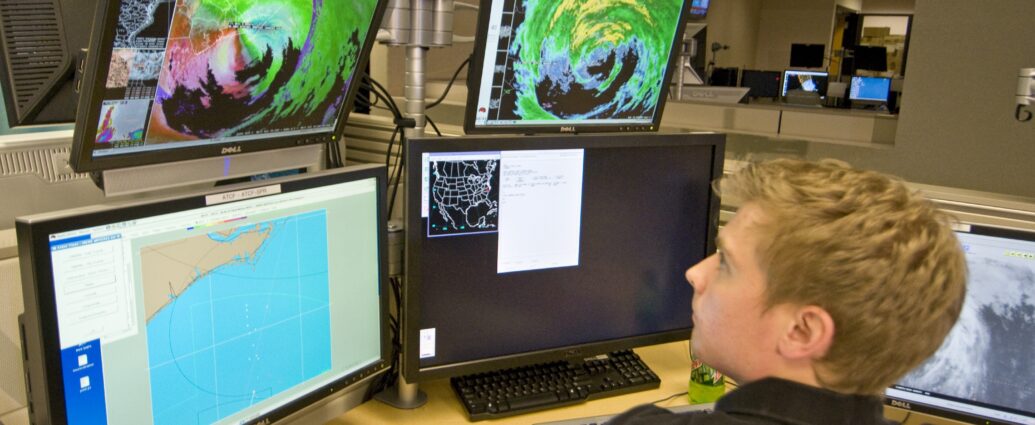
Opinion: Lessons from a bad weather forecast
Residents in and around Washington braced themselves for damaging storms earlier this week, but turns out it was a forecast flop. One local meteorologist apologized.
(Image credit: Andy Newman/ASSOCIATED PRESS)

This post was originally published here


In South Australia One Nation has put meat on the bones of its polling surge – now both major parties need to respond
The SA election result is devastating for the Liberals, but there are warning signs for Labor too in One Nation’s startling rise, which has rocked Australian politics
Labor secures overwhelming victory in SA election
Rarely – perhaps never – has the winner of an election felt more like a subplot to a bigger and more consequential narrative than in South Australia on Saturday night.
The ABC called the result for Peter Malinauskas and his Labor government less than 90 minutes after the polls closed, validating the opinion polls that had long forecast a landslide victory.
This post was originally published here
A geopolitical fog has enveloped the stock market. Three things investors should do now
This post was originally published here











The Strait of Hormuz is the fourth large supply shock this decade. Welcome to the new era of global disorder
In 2020, Covid shut down global supply chains and sent inflation surging. In 2022, Russia’s invasion of Ukraine triggered a global energy and food price shock. U.S. tariff policies in 2025 disrupted global trade and helped to stall a long-awaited retreat in domestic inflation. Now, in 2026, we have war in the Persian Gulf. Commerce has frozen in the Strait of Hormuz — and the script looks eerily familiar.
Gasoline prices are rising — up more than 30% in a month, the largest increase in such a short span since Hurricane Katrina in 2005. Fertilizer is stuck at Middle East export hubs, potentially disrupting planting seasons from Iowa to Africa. Stock prices are falling. Economists are again talking about recession risks. Diesel is up nearly 40%, topping $5 a gallon — a serious problem for an economy where trucks, ships, trains, and farm equipment all run on it.
Four supply shocks in six years. At some point, you have to stop calling it bad luck.
It is time to start asking whether supply shocks are coincidence – a series of uncorrelated, unfortunate events – or whether something larger is going on that has changed the economic landscape for the long-term. If something has changed, then we need to start rethinking our models for how business and the economy work.
A pattern the Fed has missed
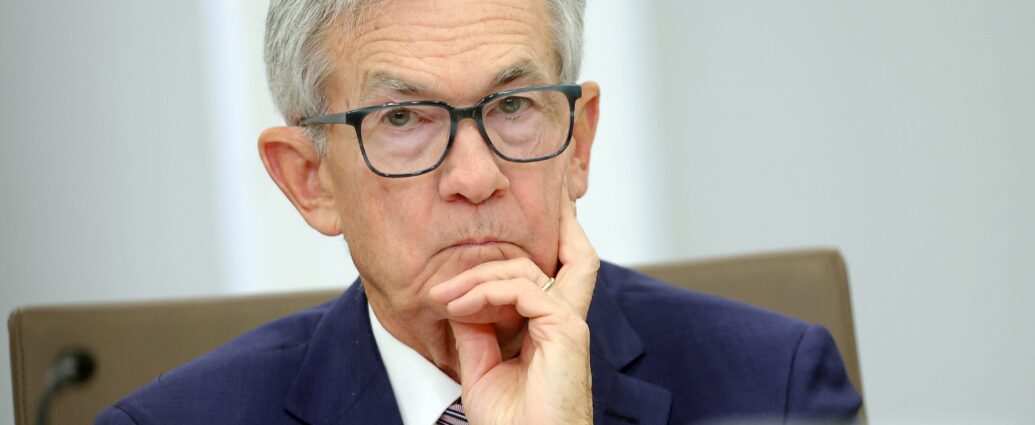
The need for a rethink starts at the world’s most consequential economic institution: The Federal Reserve. When asked at a press conference this week to make sense of serial supply shocks, the U.S. central bank chairman, Jerome Powell, seemed to miscalculate the common denominator. “I don’t know that the world has changed in a way that there will be more supply shocks,” he said.
In central bank parlance, the Fed still seems to think it might be able to “look through” yet another one of these events.
That’s a dangerous world view — and it’s one the Fed has reached before. After Covid, the Fed called inflation “transitory” and was slow to raise interest rates. Tariffs – a manmade form of supply shock designed to reorder global trade and raise prices – have been written off as another one-off event, even though they keep coming back. Now, facing the Hormuz disruption, Powell held out a possibility that this too shall pass, and inflation might revert to a norm that may no longer exist.
If the Fed is wrong again, the consequences for American consumers — already living with inflation above target for five straight years — could worsen.
A rupture, not a run of bad luck
The Fed is a large, inertial institution. It takes time to incorporate deviations from recent norms into its models. Officials tend to want to avoid getting ahead of themselves; they lean on established thinking.
Now is time for the Fed to start updating its thinking about supply shocks.
Repeated rounds of tariffs are human choices, as are wars in Iran and Ukraine, not some storm that blew in from nowhere. The Covid crisis certainly did have a large random element to it, but it also had common global denominators – it was propagated through a global order that didn’t respond well to the need for collaboration and containment required by a viral intruder.
Mark Carney, a former central banker who is now Prime Minister of Canada, put his finger on something important in comments in Davos early this year. These crises, he said, are symptoms of a “rupture in the world order,” a breakdown in global, rules-based cooperation and norms that in the past facilitated global integration and commerce.
Over decades, multinational businesses built and operated global supply chains that depended on cooperation and integration to function properly. When cooperation breaks down, the supply chains become vulnerable. They are now transmitting shocks rather than just facilitating commerce. Tariffs and war are examples, as was the chaotic global response to the Covid virus and its aftermath.
“A series of crises in finance, health, energy and geopolitics have laid bare the risks of extreme global integration,” said Carney, a long-time friend of Powell. “More recently, great powers have begun using economic integration as weapons, tariffs as leverage, financial infrastructure as coercion, supply chains as vulnerabilities to be exploited.” The result: Nations increasingly see themselves as fortresses, which counterintuitively makes them more fragile to economic shock.
Remarkably, Carney didn’t call for a return to the old order of global cooperation that, among other things, held down inflation and lifted billions of humans out of poverty in the past quarter century. A realist, he instead tried to see a way through a new era of fracture by seeking to band together with others like Canada caught in the middle of a deepening disorder.
An indefensible posture
The Fed’s models, and its way of thinking, were built during a period of global integration, stable supply chains, and cooperative international norms. As that world frays, the central bank runs the risk of making mistakes. It needs to develop a coherent, updated view of how the global economy is changing.
If supply shocks are a feature of a new global economic disorder, then inflation could prove more stubborn than the Fed’s old models project. That, in turn, could lead the central bank to keep interest rates lower than they ought to be, based on an expectation that inflation will revert to norms that no longer exist. That could make the stubborn economic challenge of inflation even worse.
The Fed was right to keep interest rates unchanged at its policy meeting this week. Expecting each new crisis to be a one-off event is no longer a defensible posture. We may be discovering that nagging inflation is a function of the rupture that Powell’s old friend Carney described just a few weeks earlier.
The opinions expressed in Fortune.com commentary pieces are solely the views of their authors and do not necessarily reflect the opinions and beliefs of Fortune.
This story was originally featured on Fortune.com



Tory peer accuses Nick Timothy of ‘instilling fear’ over Islamic prayers
Exclusive: Tariq Ahmad says he has raised concerns with party leadership after shadow justice secretary’s remarks
The shadow justice secretary, Nick Timothy, has been accused by a Conservative peer and former counter-extremism minister of “instilling fear” among Muslims with his comments about public prayer.
British Muslims were openly talking about leaving the Conservative party, added Tariq Ahmad, who said he had raised his concerns with the party leadership and expected action to be taken.
This post was originally published here


Elon Musk offers to pay TSA workers’ salaries amid DHS budget standoff
Elon Musk offered to cover the salaries of Transportation Security Administration (TSA) personnel during the ongoing government funding standoff.
“I would like to offer to pay the salaries of TSA personnel during this funding impasse that is negatively affecting the lives of so many Americans at airports throughout the country,” Musk said in an X post on Saturday morning.
Musk’s offer comes as a partial government shutdown passes one month, with lawmakers unable to reach a deal to fund the Department of Homeland Security (DHS), which oversees the TSA.
HOW MUCH DO GOVERNMENT SHUTDOWNS COST AMERICAN TAXPAYERS?
The DHS shutdown has left TSA agents working without pay, triggering staffing shortages and long airport lines nationwide, while raising concerns about the ability to prevent attacks.
Republicans have pushed to fund DHS, while Democrats have sought standalone funding for agencies like TSA that would exclude immigration operations.
TSA officers are considered essential employees and are required to report to work even during a shutdown, though pay can be delayed.
Musk’s offer appeared aimed at easing the strain as airport lines grow and staffing pressures build.
Major U.S. airports have experienced severe delays, with security wait times exceeding 3 hours in some cases, due to high TSA officer absenteeism. Hardest-hit airports include Houston (HOU, IAH), Atlanta (ATL), New Orleans (MSY), and Philadelphia (PHL).
Footage from PHL, shot early Thursday morning, showed hundreds of passengers waiting on elevators and escalators to clear a security checkpoint.
GET FOX BUSINESS ON THE GO BY CLICKING HERE
It comes as a top TSA union leader warned Thursday that airport security risks linked to the shutdown are set to “get worse,” given that TSA has been under a hiring freeze since last year.
It remains unclear how Musk’s proposed arrangement would work or whether it would be legally possible for a private individual to fund federal workers.
Fox News’ Ashley J. DiMella and Taylor Penley contributed to this report.
US interest in electric vehicles surges as gas prices jump amid Iran war
Online searches for electric and hybrid cars increase as war-linked fuel prices hit highest levels in nearly three years
US car buyers are showing a surge in interest in electric vehicles after Donald Trump’s decision to attack Iran helped cause a major jump in gasoline prices.
The cost to refuel a vehicle in the US is at its highest level in nearly three years, with the average national price of gas standing at $3.90 a gallon on Friday.
This post was originally published here
From Goop to gavel: Gwyneth Paltrow’s wardrobe clearout heads to auction
Nearly 300 of the actor’s items, from designer gowns to everyday basics, to be sold in Los Angeles, with some lots under $100
A customised sunhat. A slogan sweatshirt. A “mom” necklace. An old copy of Cosmopolitan. If these sound like items found in many homes today, they’re actually the castoffs of a household name: Gwyneth Paltrow.
Next week, nearly 300 pieces owned by Paltrow will be on sale as part of an auction at Julien’s, the Los Angeles auction house that has sold big-ticket items such as Marilyn Monroe’s so-called “naked” dress and the leather jacket worn by Olivia Newton-John in Grease. But, while those items went for six-figure prices, Paltrow’s sale is a little more affordable, with estimates starting at about $50 (£37) to $75 (£56) for some of Paltrow’s personalised stationery.
This post was originally published here
‘Frustration, anger, confusion’: Trump administration leaves millions without clear path to paying off student loans
Court’s decision to eliminate Save plan and internal shuffling on who handles what when it comes to student loans presents new challenges for borrowers
Many Americans with student debt are again facing future upheaval after a federal appeals court recently ordered the end of a Biden-era student loan repayment program, known as the Saving on a Value Education (Save) Plan, a move that coincided with another grim revelation: new education department data shows that by the end of 2025, 7.7 million borrowers had defaulted on $181bn in federal student loans.
The Save plan, which was launched in 2023, is an income-driven repayment program created with the goal of cutting undergraduate loans in half, bringing some borrowers’ monthly payments to $0, and offering early forgiveness for low-balance borrowers. Shortly after the program was announced, Republican attorneys general across the country sued to get it killed, arguing that it was an overstep of executive power and imposed heavy taxpayer costs.
This post was originally published here
Dave Ramsey warns young hopefuls locked out of housing market: ‘Corporate America has screwed you’
Young Americans are increasingly finding themselves shut out of the housing market as rising debt levels and lingering affordability pressures reshape the path to homeownership.
“The Ramsey Show” host Dave Ramsey joined FOX Business’ Cheryl Casone on the FOX Business In Depth Special, “Hitting Home: Rebuilding the Dream,” to break down the financial realities facing first-time buyers and why many are falling behind.
Ramsey pointed to a combination of record-high consumer debt and shifting economic conditions that have eroded buying power across younger generations.
“I’m afraid I have to tell you the truth. . . . Corporate America has screwed you,” Ramsey said.
“Car debt is at an all-time high. . . . Student loan debt is at an all-time high. . . . And, of course, credit card debt . . . is at a all-time high.”
MIAMI OVERTAKES LOS ANGELES AND NEW YORK AS WORLD’S RISKIEST HOUSING MARKET FOR BUBBLE RISK
Those pressures, he explained, are leaving many without the financial flexibility to enter the housing market, as disposable income is increasingly consumed by monthly obligations.
“When you’re drowning in personal debt, you can’t afford to buy a freaking house,” Ramsey said.
Beyond debt, Ramsey also highlighted the post-pandemic housing surge as a key factor pushing first-time-buyer ages higher, noting that supply shortages and elevated prices continue to weigh on affordability.
MORTGAGE RATES JUMP TO HIGHEST LEVEL IN OVER 3 MONTHS
Despite the challenges, Ramsey pushed back on the idea that homeownership is out of reach, arguing that progress is still possible for those willing to aggressively tackle debt.
“Our message to Gen Z and to millennials . . . is: clear this debt, get rid of the stupidity, and chop up the cards and work your way through it. . . . Once you do that, you can get there,” Ramsey said.

US fertiliser bosses cash in as Iran war boosts shares
This post was originally published here

Canada’s oil producers in line for C$90bn windfall from Iran war
This post was originally published here


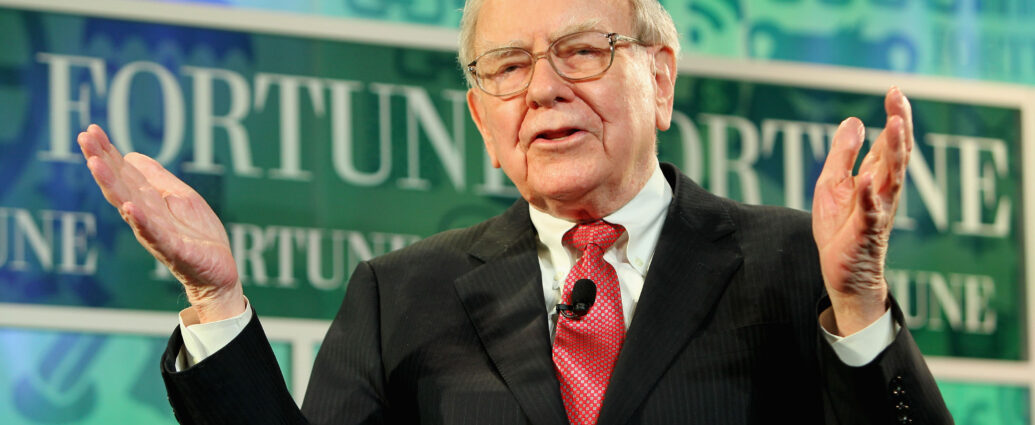



Costco CEO promises the $1.50 hot dog isn’t going away: ‘The price will not change as long as I’m around’
There’s no better way to fuel up for traipsing the Costco aisles for hours than a $1.50 hot dog and a soda.
It’s been a staple of the bargain shopping club for four decades, and Costco’s president and CEO, Ron Vachris, recently confirmed it’s a deal that’s never going away, at least under his watch.
“The hot dog price will not change as long as I’m around,” Vachris said in an Instagram video posted this week.
Costco executives have long assured customers the bargain won’t go away, but they’ve ramped up that messaging in the past couple of years as consumers continue to be strained by tariffs, inflation, and a high cost of living.
Richard Galanti, who stepped down in 2024 as chief financial officer, told Fortune’s Phil Wahba that deals as well as Costco’s $5 rotisserie chicken are “foundational” to the warehouse chain’s success—and even told The Wall Street Journal in 2022 the $1.50 hot dog was “sacrosanct,” and its price would stay fixed “forever.” In 2024, Galanti’s successor, Gary Millerchip, said, “I also want to confirm the $1.50 hot dog price is safe.”
And as Irina Ivanova reported for Fortune, Costco is also committed to keeping the soda part of the combo cheap. When Costco’s contract with Coca-Cola was up for renewal a decade ago, the company switched to Pepsi to save on prices, although they’re back to serving Coke products now.
K-shaped economy food prices
The timing of Vachris’s reassurance isn’t coincidental, could be seen as strategic. American consumers face mounting financial pressure, so even a modest, decades-old hot dog deal has become a symbol of economic stability in an otherwise turbulent economy.
“Food away from home” prices rose about 4.1% from December 2024 to December 2025, according to the U.S. Consumer Price Index. That means a budget staple like Costco’s $1.50 combo, which has been unchanged since 1985, represents something increasingly rare: a price point that hasn’t budged while nearly everything else has.
The broader backdrop is a K-shaped economy that has split American consumers into two diverging realities. According to a Moody’s analysis of Federal Reserve data, lower-income earners have spent only in line with inflation since the pandemic, with all real spending growth coming from the top 20%.
“Looking at the data, it’s not a mystery why most Americans feel like the economy isn’t working for them,” Moody’s chief economist Mark Zandi wrote in a 2025 report. “For those in the bottom 80% of the income distribution, those making less than approximately $175,000 a year, their spending has simply kept pace with inflation since the pandemic.”
“The 20% of households that make more have done much better,” he continued, “and those in the top 3.3% of the distribution have done much, much, much better.”
Spending among top-income consumers grew 4% in November 2025 year-over-year—nearly four times the pace of the lowest-income bracket, according to the Bank of America Institute. For the consumers trending downward on the K-curve, every dollar counts.
This phenomenon has triggered other food-industry companies to create deals for consumers. McDonald’s extended its meal deal well beyond its original run and launched a “McValue” menu with buy-one-get-one-for-$1 offers. Wendy’s rolled out $4, $6, and $8 mix-and-match value tiers; KFC introduced a $5 offering; and Taco Bell launched Cravings Boxes starting at $5. Even Sweetgreen, a notoriously expensive fast-casual chain, began offering $10 loyalty-member bowls, a roughly $6 discount, to stay competitive.
But Costco doesn’t need a limited-time promotion to signal it’s on the consumer’s side. It’s been doing that for 40 years by consistently selling $1.50 hot dogs, so customers know what to expect.
This story was originally featured on Fortune.com
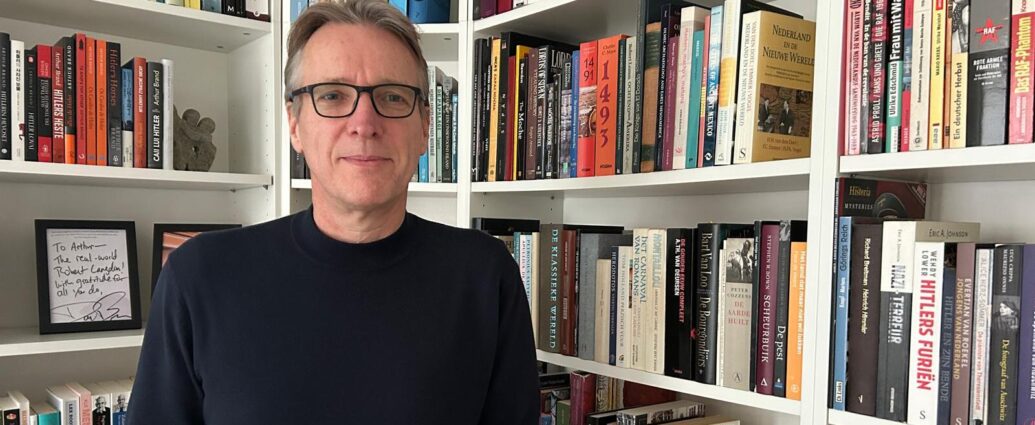
Meet the Dutch art detective who tracks down stolen masterpieces
For 20 years, Dutch art detective Arthur Brand has acted as an intermediary between the police and people who know where stolen artwork might be hiding. He says patience and trust are everything.

This post was originally published here

When health insurance costs $2,500 per month, families make tough choices
A self-employed couple already had to dip into retirement savings for health costs. Now, they are skipping vacations and canceling streaming to afford health insurance.
(Image credit: Jarod Lew for NPR)

This post was originally published here



At least 14 people killed in fire at South Korean car parts factory
Almost 60 injured in blaze in Daejeon with footage seemingly showing people jumping from burning building to escape
A fire at a car parts factory in South Korea has killed 14 people and injured almost 60 others.
Firefighters said all of the missing are now accounted for after a search operation of the wreckage of the three-storey building.
This post was originally published here














Iranian among two charged over alleged attempt to enter UK nuclear submarine base
Police say two people tried to enter Faslane base in Scotland, home to core of UK’s submarine fleet and Trident nuclear weapons
Two people have been charged, one of them Iranian, after they allegedly tried to enter HM Naval Base Clyde in Scotland, which houses the UK’s nuclear Trident submarines.
A 34-year-old man and a 31-year-old woman were charged after the incident at the base, which is known as Faslane. Police Scotland said inquiries were continuing and that the pair were due to appear at Dumbarton sheriff court on Monday.
This post was originally published here

Covid gave us hybrid work. The Iran War might give us a four-day week—and this time, experts say it could stick
COVID-19 gave us hybrid work. The Iran War might give us a three-day weekend. That’s because, as Sri Lanka, the Philippines, and Pakistan move to a 4-day work week because of the war in Iran, experts say we’re the closest we’ve ever been to a permanent shorter workweek.
It started in Asia, but now major governments around the world are once again mandating that workers stay home to save on fuel and survive an energy crisis as the war in the Middle East threatens vital oil shipments through the Strait of Hormuz.
What began as an emergency measure in the developing world is now spreading globally. Sound familiar? We’ve been here before: The last time the world was forced to shift en masse—the pandemic—the changes we thought would be temporary became permanent. Hybrid work didn’t die when offices reopened. Instead, it reshaped how we work.
Now, with governments reaching for the same lever again, experts say something similar could happen with a four-day workweek. But it’ll come with major consequences for those who can’t take their jobs home, like drivers, baristas, window cleaners, pet sitters, and more.
Will an overnight emergency four-day week come to the West?
Although Brits and Australians are being urged to work from home, Dr. Wladislaw Rivkin, Professor in Organisational Behaviour at Trinity Business School, told Fortune that a global three-day weekend currently looks unlikely—at least not at the click of the government’s fingers.
That’s because a permanent restructuring of how work is organized is a far heavier lift than an overnight shift to working from a makeshift home office. “I do not see this as a model for the U.S. and U.K., at least in the long term, because the current sharp rise in fuel costs is temporary,” Rivkin says.
Professor Roberta Aguzzoli at Durham University Business School says she wouldn’t rule out the West moving to shorter workweeks to save fuel, but she argues better infrastructure should minimise that need.
“Public transport systems in large European cities are generally more developed and less reliant on individual transport use than those in certain emerging economies,” she says, adding that limited transport infrastructure and higher exposure to fuel price volatility make last-minute policy changes more necessary.
On that basis, she says a permanent four-day week in the near term is more likely to become the new norm in developing countries. But there’s a big but. The mere fact that millions of workers are about to spend an extended period proving they can get the job done in four days could be the tipping point the movement has been waiting for.
Why Asia’s four-day week could permanently change how the world works
Whether Asia’s emergency four‑day workweek will have the same lasting effect as the pandemic’s work-from-home mandate, or even ripple into Europe and the U.S., remains to be seen. But once workers get a taste of a shorter week—even a forced one—it’s a hard sell to go back to the old one.
“Remote work didn’t spread because companies planned it,” says William Self, chief workforce strategist at Mercer. “It spread because the pandemic crisis forced the experiment, the experiment worked, and workers weren’t willing to give back what they’d gained. The same logic applies here.”
Self argues that once the experiment runs, the burden of proof flips. “If employers experiment with a four-day workweek and employees show they can deliver in four days what they previously delivered in five, management has to justify the fifth day rather than the other way around.”
What makes this moment historically distinct, he says, is the convergence of two previously separate conversations. “Previously, a four-day workweek was mostly theoretical or confined to a handful of pilot programmes. Now you have some governments weighing in as a matter of public policy and major employers adopting it, and they’re doing so in the same news cycle. That’s a different situation than we’ve been in before.” Add AI rewriting what productivity means, a cost-of-living crisis, stagnant wages and workers who’ve already had a taste of flexibility, and the pressure for more flexible ways of working is converging from every direction at once.
Emergency or not, Aguzzoli argues that research shows we’re already heading that way anyway.
According to CIPD, the four-day workweek has the potential to become a new norm. There is a growing global trend in this direction, with organisations across different countries volunteering to test the effectiveness of such policies.
Thankfully for workers, the fuel crisis isn’t the sole reason for this shift, making it more likely to stick—but it’s also why you shouldn’t expect it to explode overnight like hybrid working during the pandemic.
“The discussion around the four-day workweek is still at an early stage, with companies and researchers continuing to assess its long-term impact on performance,” Aguzzoli added. “While there are several initiatives moving in this direction, most involve large organisations with well-developed human resource management systems that are better equipped to plan for and manage such changes.”
Who gets left behind: why the four-day week could make inequality worse
Perhaps the most uncomfortable truth about the four-day workweek is who it would actually benefit—and who it would leave behind.
For office workers, the transition is relatively seamless and largely welcomed.
But workers in lower-skilled, customer-facing, or physically demanding roles—delivery drivers, construction workers, care workers, retail staff—face a fundamentally different reality. Compressing the same output into fewer hours doesn’t mean more rest, Aguzzoli argues. It means more strain, greater fatigue, and a higher risk of workplace accidents. Plus, for those already on low wages with little bargaining power, a forced compression of hours could also mean a direct hit to their income.
Ultimately, Aguzzoli says that although a four-day workweek could help reduce the current gender gap, it could “widen disparities between skilled and low-skilled workers.“
The divisions don’t stop there. Rivkin warns that the four-day workweek could fracture workplaces from the inside out. “For example, if an administrative worker in a hospital works 4 days a week, while a nurse has to work 5 days a week.”
The result isn’t a more equitable workplace—it’s a more resentful one. Rather than levelling the playing field, a four-day rollout could make physically demanding professions even less attractive, harder to staff, and more dangerous than they already are.
This story was originally featured on Fortune.com




Record deaths in US immigration custody expose systemic failures
Families, advocates and lawmakers say poor care, opaque investigations and bureaucracy leave deaths unexplained
The circumstances of many of the record number of deaths in US immigration custody under the second Trump administration have left loved ones often searching in vain for answers amid a lack of transparency over key investigations.
Immigration and Customs Enforcement (ICE) reports mandated by Congress, autopsy reports and 911 calls collected by the Guardian raise questions about the quality of medical care, allegedly inadequate or haphazard responses to emergencies, and contraction of diseases and infections inside detention facilities that in some cases contributed to detainee deaths.
This post was originally published here









DHS shutdown hurts families’ access to detention facilities, Democrat says
The difficulties for families adds to the patchwork of complaints about immigration oversight and other issues while the department remains without government funding for five weeks.
(Image credit: Andrew Caballero-Reynolds)

This post was originally published here



Iran war enters its fourth week with no clear end in sight
As the war in the Middle East enters its fourth week, President Trump says the U.S. is considering “winding down” military efforts, as it also seeks to ease the energy crisis by lifting sanctions on Iranian oil stranded at sea.
(Image credit: Amir Levy)

This post was originally published here


The entry-level job market is the worst it’s been in 37 years. Stop blaming Gen Z
Months of hot takes have blamed Gen Z for bad attitudes, no work ethic, and too many demands. But labor market data tells a far less convenient story. The entry-level rungs of the employment ladder are splintering beneath America’s youngest workers — and the data makes clear this isn’t a generational character flaw. It’s a structural collapse.
Headline indicators suggest a strong labor market. Under the hood, persistent weaknesses are festering. The “low-hire, low-fire” market means employers are hesitant to make any changes to their payroll. For mid-career employees, that stability is a relief. For young people trying to land a first job, it’s a dead end.
In 2025, the share of unemployed Americans who are new workforce entrants hit a 37-year high, peaking at 13.3% in July before settling at 10.6% this February. That is still higher than at any point during the Great Recession. When hiring slows, the door closes first on recent graduates and those new to the workforce.
[Moved the 37-year high stat up and made it the paragraph’s lead — it’s the piece’s most alarming single data point and was previously buried as a supporting detail. “That’s still higher than any point during the Great Recession” elevated to its own sentence for emphasis.]
The Jobs That Were Supposed to Be Theirs Have Vanished
Today’s labor market gains are isolated and uneven, largely bypassing young workers. Job gains have been narrowly concentrated in health care and social services. Meanwhile, finance and information services — industries that once provided an on-ramp for the lion’s share of recent college graduates — are hemorrhaging jobs, shedding an average of 9,000 jobs per month since 2023. Before the pandemic, those same industries were adding 44,000 jobs per month. Young workers are refreshing job boards only to find a shrinking pool of openings. A record number of new workers are arriving at the doorstep of the labor market just as employers are pulling the door shut.
Gen Z doesn’t lack hustle. As this generation tries to find their footing in the traditional market, many are turning to side hustles. More than half — 57% — of Gen Zers now juggle additional work such as making content, selling crafts, and working in the gig economy, compared to just 21% of Baby Boomers. There’s real entrepreneurship in the side-hustle surge, but there’s also a warning sign. Across the economy, a ballooning share of workers are cobbling together part-time or multiple jobs to stay afloat. In this context, the boom in side-hustle culture reflects a generation piecing together income in a market that offers too little stability and too few pathways to advancement.
The College Degree No Longer Guarantees What It Once Did
What labor economists first documented among Black college graduates a decade ago — that doing everything “right” still didn’t guarantee stable employment — has since rippled across the entire labor market.
A college diploma no longer guarantees a job or a better shot at a stable paycheck. Since the Great Recession, the gap in unemployment rates between college graduates and those without degrees has been narrowing. Now, recent college graduates are actually more likely to be unemployed than the overall workforce.
Perhaps most striking: for six months in 2025, workers with an occupational associate’s degree in skilled trades — plumbers, electricians, pipe fitters — posted slightly better employment outcomes than college graduates. This marks the first time college graduates have lost their employment advantage since the federal government began tracking these data in the 1990s.
AI Is Threatening to Lock the Door From the Inside
As the labor market door swings shut on young people, artificial intelligence threatens to turn the deadbolt from the inside. AI-driven mass unemployment has not yet arrived — but early warning signs are flashing for workers at the start of their careers. A recent Stanford University study found that workers ages 22 to 25 in highly AI-exposed occupations — software development, customer service — experienced a 13% drop in employment since 2022.
Even tech leaders are sounding the alarm. Anthropic CEO Dario Amodei has warned that AI could wipe out roughly half of entry-level white-collar jobs in the next five years. Taken together, young workers without experience face outsized risk of labor market scarring — entering a workforce that is simultaneously contracting at the entry level and automating the roles that remain.
This uncertainty is weighing on young workers. The Conference Board finds that just 57% of workers under 25 report being satisfied with their jobs, compared to 72% for workers over 55. In a year marked by the fastest single-year gain in job satisfaction ever recorded, young workers were the only group whose satisfaction declined.
What Actually Needs to Change
Blaming Gen Z is easy. The data shows it’s also wrong. This generation is coming of age in a labor market that is less secure, less dynamic, and less predictable than the ones their parents entered — one where workplaces increasingly deploy surveillance technology and retirement benefits are eroding. What’s needed is not a lecture about work ethic. We need an economy that offers multiple, durable pathways to middle-class security.
We can reinvigorate the promise of a four-year degree while investing in apprenticeships, public service programs, and other proven on-ramps to stable employment. And as AI reshapes the workforce, policymakers must ensure that workers have a voice in how it’s deployed — and that the benefits it creates are broadly shared rather than concentrated among the few.
Gen Z is not unemployable. They are knocking on locked doors. The task before us is to reopen them — and to make sure that a shot at the middle class doesn’t become a relic of the past.
The opinions expressed in Fortune.com commentary pieces are solely the views of their authors and do not necessarily reflect the opinions and beliefs of Fortune.
This story was originally featured on Fortune.com


Women are avoiding the very technology that threatens them most, as expert warns of a ‘two-tiered AI economy’ approaching
Artificial intelligence is moving even faster than many thought. In the span of three years, the world went from wearily experimenting with OpenAI’s ChatGPT to entire companies integrating Anthropic’s Claude Code into their workflows. The speed of AI’s progression, technologically and culturally, has surprised many—including Anthropic CEO Dario Amodei, who warned in a 20,000-word essay in January that society could experience catastrophic impacts within a year or two.
But experts warn this fast-paced innovation is leaving one essential group behind: women.
The jobs women hold are three times more likely to be automated by AI. Despite this fact, women are using AI at a rate 25% lower than men on average. This paradox is compounded by the fact that women are underrepresented in AI leadership and development, even as some of the companies with the most advanced AI adoption are led by women.
Women are more hesitant about using AI
Leaving women out of a major technological transition could have long-term economic consequences, says workplace AI adoption strategist Mara Bolis, who warned the issue doesn’t rest with a woman’s ability to use the technology, but rather, their willingness.
“This is not a lack of competence,” Bolis told Fortune. “This is discernment, in terms of how we want our economies and our societies to evolve.”
“I’m really worried that we’re at risk of creating a two-tiered AI economy if we don’t engage women more actively and really respect the unique skills and expertise that they bring to the field, skills that are critically important to making sure that AI evolves safely and equitably,” Bolis said.
Bolis thinks hesitancy is a wise response to AI hype. After a stint as an economic analyst at the New York Federal Reserve, Bolis spent 11 years working on women’s economic empowerment at Oxfam. While completing a fellowship at the Harvard Kennedy School in 2023, she noticed how gender was missing from the conversation around AI policy. She founded First Prompt, an inclusive AI adoption lab that advises businesses globally on how to address and prevent inequitable AI adoption.
Researchers at Stanford University, Harvard University, and the University of California, Berkeley found that women are less familiar with how to use AI tools and are less persistent with the technology when they use it. They are more likely to be concerned with the ethical implications of AI and about how it will affect their jobs and livelihoods.
Women are also less certain about the benefits of AI adoption, according to Beatrice Magistro and Sophie Borwein, assistant professors of political science at Northeastern University and the University of British Columbia, respectively. The two researched how women’s risk aversion affects their skepticism toward AI’s economic benefits.
Whether their jobs were highly complementary to AI or at risk of automation, women still perceived the technology as riskier than men did, Borwein said.
And there’s good reason for that caution: women face a higher risk of punishment for using AI at work. A Harvard Business Review study found that female engineers are penalized more and are seen as less competent than otherwise-identical male colleagues when they produce identical AI-assisted work.
Women’s jobs will face the brunt of AI disruption
Of the 6.1 million workers whose jobs are the most likely to be disrupted by AI and least likely to adapt, 86% are women, a Brookings analysis found. These are roles like administrative assistants, receptionists, office and legal clerks, which are positions often held by older women. Whereas men in highly AI-exposed jobs are likely to change jobs, women are most likely to completely exit the labor market rather than find new employment, Brookings found.
“Those types of jobs that are really good, middle-class jobs. They’re well-paying jobs, they’re white-collar jobs, and they’re going to go away,” Bolis said. “They’re going to fall into less well paid, less secure work as that entire sector falls away, unless we focus intentionally on creating policies and programs that help them weather this change.”
While gender disparities in AI usage persist, the gap does appear to be closing. In 2018, only 12% of machine learning engineers were women, WIRED reported. Now, 30.5% of AI professionals are women, researchers at Stanford University found.
A September 2025 OpenAI report that analyzed 1.5 million conversations found that the gap between users with masculine and feminine names was closing. In January 2024, the company reported 37% of users had typically feminine names. By July 2025, that share had risen to 52%.
Bolis said women are in a position to find gaps with AI because they didn’t build this system. She advocates for people to approach the technology with “fierce ambivalence.”
“People think that [ambivalence] means that you don’t care, which is not what it means at all. It means holding divergent attitudes at once, which I think is very uncomfortable for people,” she said. “We need to be using AI to empower ourselves and others, while we hold the creators of this technology and the people who are setting up policies and governance to the highest possible standards to ensure that these technologies are rolled out in a way that’s safe and efficient and equitable.”
Both women and men support AI adoption when they are certain that the net effects will be positive, Magistro and Borwein’s research showed.
“This ambivalence is not fixed. Women can lose that ambivalence if they are convinced that the net benefits are there,” Magistro said.
This story was originally featured on Fortune.com







Why Block’s COO is tracking ‘gross profit per employee’—and how AI is on track to double it to $2 million
When the fintech Block recently announced it was cutting nearly half its workforce, many questioned whether it was another tech company cleaning up a pandemic-era hiring binge. But CFO and COO Amrita Ahuja offered a data point to consider.
Block generated roughly $500,000 in gross profit per employee in 2019—a figure that barely budged even as headcount ballooned from a few thousand to around 13,000 during the hyper-growth years, Ahuja noted in a recent interview with Fortune. Then something changed.
As AI tools embedded more deeply into the company’s workflows, that metric began climbing: $750,000 per employee in 2024, $1 million in 2025. And if Block hits the targets the targets in its 2026 outlook—now expecting gross profit to grow 18% year over year and profits to climb 54%—gross profit per employee will reach approximately $2 million in 2026, double last year’s level.
“I don’t think this is about bloat,” Ahuja said. “This is about empowering our teams with the most world-class and powerful tools.”
Central to that shift is Block’s internally built AI agent, code-named Goose, which has been running in production for 18 months. Since September, developer productivity has jumped 40% per engineer. One risk underwriting model that previously took a full quarter to build was completed in a fraction of the time. The productivity math is what gave leadership confidence to cut 4,000 jobs from a position of strength, Ahuja said. The decision was part of a longer transformation. “This is a two-year journey for us,” she said. “This was not an overnight decision.”
Even with potential productivity gains from AI, research finds that AI adoption alone doesn’t automatically translate to higher profits per employee—it demands a reimagining of how work gets done. In addition, broader market conditions, product expansion, and strategic cost management all play a role. But Block’s case illustrates how targeted AI implementation can significantly amplify human output.
This story was originally featured on Fortune.com













Why K-Pop Is Hitting a Roadblock in China


Iran war is making the world a little less sweet as oil soars at the worst possible time for sugar
Sugar and gasoline don’t have a lot in common, unless you’re in a sugarcane mill in Brazil, in which case they’re literally the same plant. Usually that’s a fun fact, but right now it’s a problem.
Brazil is the world’s dominant sugar exporter—roughly 45% of everything traded globally. Every harvest, mills decide how much sugarcane goes to sugar and how much goes to ethanol. When oil prices are low, the math favors sugar. When oil spikes, ethanol gets more profitable, and cane gets pulled away from sweetener production.
The Strait of Hormuz disruptions have now tipped that math, as oil is hovering around $100 a barrel. The government is considering raising the maximum ethanol blend in flex fuel from 30% to 35%, a move that would funnel significantly more sugarcane away from sugar and into fuel.
At the same time, Brazil’s truckers threatened to strike this week over high diesel prices — and the government scrambled, cutting fuel taxes and drafting proposals to let states slash fuel levies. The last time Brazilian truckers walked off the job, in 2018, it paralyzed Latin America’s largest economy for days: fuel shortages, and empty supermarket shelves abounded.
If a strike happens, the timing couldn’t be worse. Sugarcane, when it’s harvested, has to be immediately trucked from fields to mills, then trucked from mills to ports. A trucker strike would halt that process during the most critical time of year. Brazil’s new sugarcane harvest starts April 1, and the first three months are when the bulk of the crop is processed. That means the decision about how much cane goes to sugar versus ethanol is being made right now, as the Strait of Hormuz is a war zone.
“If this is a problem for the next few months, with the war and oil prices being high, then the majority of the biggest bulk of the harvest is going to swing to ethanol, away from sugar,” Judith Ganes, an independent commodities analyst with four decades in soft commodity markets, told Fortune. Six months from now, when 75% of the crop is already in, it wouldn’t matter that much, she added.
Sugar prices are already anticipating that mix. White refined sugar in London hit $451 per ton on Friday—-its highest since October and up 8% since the war in Iran began. Ganes sees raw sugar heading to 18 to 19 cents per pound, up from the 13- to 14.5-cent range where it had been stuck for “months and months and months.”
The logistics of it all are making it worse. Persian Gulf refineries that import Brazilian raw sugar and process it into refined products for the region are seeing their expected shipments delayed or rerouted as the Strait of Hormuz remains largely closed.
That makes the problem two-sided: refined sugar gets scarce across the Middle East, East Africa, and parts of Asia, while raw sugar backs up at its origin in Brazil with nowhere to go.
“It creates a tightness in refining of white sugar and shortfall in the region, but then leaves the exporter with—uh oh, where’s the sugar going?” Ganes said.
At the 18-cent price range, she doesn’t imagine consumers will feel any effect. Sugar prices were already depressed all year, and cocoa prices have also come down hard after some tariff relief, easing some pressure on manufacturers of baked goods.
But beyond the war, the longer-term picture isn’t reassuring. Ganes flagged a strong probability of an El Niño weather pattern in 2026/27, which would bring drought conditions to Southeast Asia and threaten production in Thailand and India—the other two pillars of global sugar supply. Replanting has already slowed after years of depressed prices. In a scenario of a severe El Niño, “Any cushion is done,” she said.
At the Federal Reserve on Wednesday, Chair Jerome Powell acknowledged the broader commodity bleed from the Iran war. He noted that oil and its derivatives feed into production and transportation costs across the economy, with effects that “leak into core” inflation. But he stressed the uncertainty: “We’re right at the beginning of this, and we don’t know how big this will be and how long it lasts.”
This story was originally featured on Fortune.com